

The DOI matches its Crossref record; 63 of the 67 references it cites were found in a registry or an index.
Uberon, an integrative multi-species anatomy ontology
Open accessAbstract
We present Uberon, an integrated cross-species ontology consisting of over 6,500 classes representing a variety of anatomical entities, organized according to traditional anatomical classification criteria. The ontology represents structures in a species-neutral way and includes extensive associations to existing species-centric anatomical ontologies, allowing integration of model organism and human data. Uberon provides a necessary bridge between anatomical structures in different taxa for cross-species inference. It uses novel methods for representing taxonomic variation, and has proved to be essential for translational phenotype analyses. Uberon is available at http://uberon.org.
Overview
The claims and statistics of this paper haven’t been checked yet.
Run the check — free, no account needed. It reads the open-access text and checks the sources it cites.
Integrity signals
Registry
Cites
Statistics
Figures
Verification
Claims the paper makes
The claims and statistics of this paper haven’t been checked yet.
Run the check — free, no account needed. It reads the open-access text and checks the sources it cites.
Claims other papers make about this one
Each is checked against this paper’s own text: does it say what the citing paper says it does?
In the citing paper
“When possible, all source tissues have been mapped to standardized Uberon (38) identifiers, enabling us to merge repetitive tissues.”
From TCRD and pharos 2021: mining the human proteome for disease biology (2021) · cites this paper as [38]
Self-check
Percentages, sums and reported differences re-computed from the paper’s own numbers.
The self-check needs the paper’s full text.
Citations
Cites
An algorithm for suffix stripping
Porter, M. F. (1980) · Program · doi:10.1108/eb046814 · Cited by 8,096 · cited 1×
“Using the Blipkit framework [67], we took the names and synonyms from each ontology, tokenized them, and performed Porter-stemming [68], removed certain tokens such as ‘of’ and ‘the’, and matched two classes if the set of stemmed tokens from any label was identical.”
MethodThe OBO Foundry: coordinated evolution of ontologies to support biomedical data integration
Smith, B., Ashburner, M., Rosse, C., Bard, J., Bug, W. J., Ceusters, W. M., Goldberg, L. J., Eilbeck, K. L., Ireland, A., Mungall, C., et al. (2007) · Nature Biotechnology · doi:10.1038/nbt1346 · Cited by 2,546 · cited 1×
“We believe that Uberon meets the current need for an integrative cross-species anatomy ontology amongst the OBO Foundry suite [66].”
BackgroundDBpedia - A crystallization point for the Web of Data
Bizer, C., Lehmann, J., Kobilarov, G., Auer, S., Becker, C., Richard Cyganiak, A., & Hellmann, S. (2009) · Journal of Web Semantics · doi:10.1016/j.websem.2009.07.002 · Cited by 2,144 · cited 6×
“It is important to track the provenance of all information collected in an ontology, and this is particularly important for an ontology such as Uberon, which as a matter of expedience frequently includes ‘tertiary sources’ such as Wikipedia, and other ontologies.”
BackgroundInfluentialA reference ontology for biomedical informatics: the Foundational Model of Anatomy
Rosse, C., & Mejino, J. L. (2003) · Journal of Biomedical Informatics · doi:10.1016/j.jbi.2003.11.007 · Cited by 1,167 · cited 19×
“However, the FMA is designed primarily to represent post-embryonic human structures, and would be unsuitable for annotating zebrafish genes expressed in an embryonic fin bud.”
BackgroundInfluentialChEBI: a database and ontology for chemical entities of biological interest
Degtyarenko, K. N., de Matos, P., Ennis, M., Hastings, J., Zbinden, M., McNaught, A., Alcántara, R., Darsow, M., Guedj, M., & Ashburner, M. (2007) · Nucleic Acids Research · doi:10.1093/nar/gkm791 · Cited by 1,130 · cited 1×
“We have included relationships and other logical axioms that reference other ontologies in Uberon, such as the GO, the Neuro Behavior Ontology (NBO) [30], the CL [15], the Protein Ontology [31] and CHEBI [32].”
MethodThe human phenotype ontology: a tool for annotating and analyzing human hereditary disease
Robinson, P. N., Köhler, S., Bauer, S., Seelow, D., Horn, D., & Mundlos, S. (2008) · The American Journal of Human Genetics · doi:10.1016/j.ajhg.2008.09.017 · Cited by 1,034 · cited 2×
“We used the MPO [74] and the Human Phenotype Ontology [58] in a method analogous to the one described for GO, above.”
MethodRelations in biomedical ontologies
Smith, B., Ceusters, W. M., Klagges, B. R. E., Köhler, J., Kumar, A., Lomax, J., Mungall, C., Neuhaus, F., Rector, A. L., & Rosse, C. (2005) · Genome biology · doi:10.1186/gb-2005-6-5-r46 · Cited by 1,030
FaCT++ Description Logic Reasoner: System Description
Tsarkov, D., & Horrocks, I. (2006) · Lecture notes in computer science · doi:10.1007/11814771_26 · Cited by 805
The Gene Ontology project in 2008
The Gene Ontology Consortium (2007) · Nucleic Acids Research · doi:10.1093/nar/gkm883 · Cited by 776
Systematic determination of patterns of gene expression during Drosophila embryogenesis
Tomančák, P., Beaton, A., Weiszmann, R., Kwan, E., Shu, S., Lewis, S., Richards, S., Ashburner, M., Hartenstein, V., Celniker, S., et al. (2002) · Genome biology · doi:10.1186/gb-2002-3-12-research0088 · Cited by 725 · cited 1×
“4 [80] to encode GCIs and other advanced OWL features within OBO format.”
BackgroundModeling sample variables with an Experimental Factor Ontology
Malone, J., Holloway, E., Adamusiak, T., Kapushesky, M., Zheng, J., Kolesnikov, N. N., Zhukova, A., Brāzma, A., & Parkinson, H. (2010) · Bioinformatics · doi:10.1093/bioinformatics/btq099 · Cited by 570
The origin and evolution of animal appendages
Panganiban, G. E. F., Irvine, S. M., Lowe, C. J., Roehl, H. H., Lavine, L. C., Sherbon, B. J., Grenier, J. K., Fallon, J. F., Kimble, J. E., Walker, M. H., et al. (1997) · Proceedings of the National Academy of Sciences · doi:10.1073/pnas.94.10.5162 · Cited by 446 · cited 1×
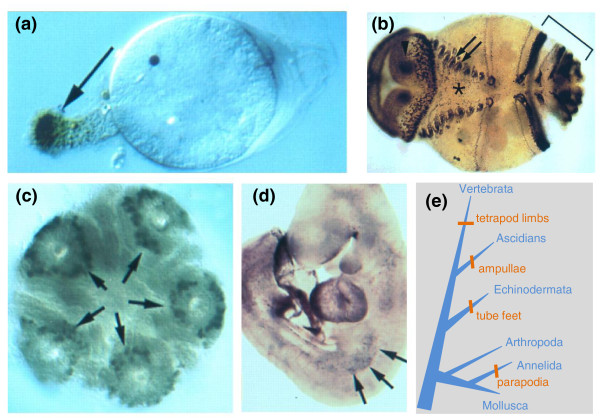
“Similarly, the Dll gene orthologs are implicated in the development of tetrapod limbs, ascidian ampullae, annelid parapodia, and echinoderm tubefeet (Figure 5) [48].”
BackgroundSmith, C. L., Goldsmith, C.-A. W., & Eppig, J. T. (2004) · Genome Biology · doi:10.1186/gb-2004-6-1-r7 · Cited by 417 · cited 4×
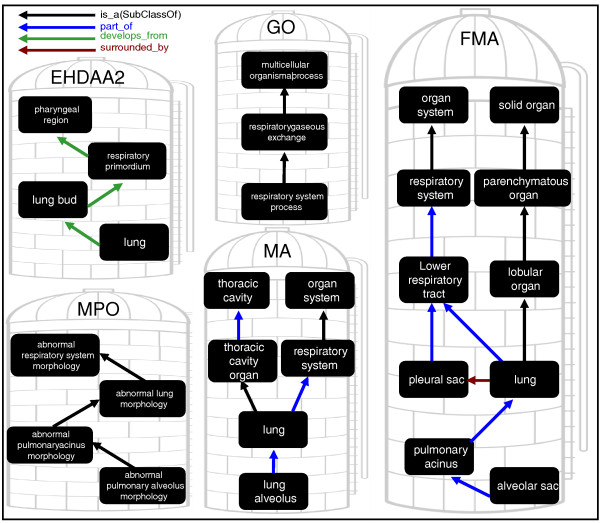
“In constructing Uberon, we have revealed inconsistencies in related ontologies such as GO, MPO, CL and others.”
MethodInfluentialBard, J., Rhee, S. Y., & Ashburner, M. (2005) · Genome biology · doi:10.1186/gb-2005-6-2-r21 · Cited by 416 · cited 3×
“Similarly, GO and CL [15] classes such as ‘blood vessel development’, or ‘cerebellar granule cell’ are applicable across multiple species, and need to be defined in terms of generic anatomical classes rather than species-specific classes.”
BackgroundMethodBRENDA, AMENDA and FRENDA the enzyme information system: new content and tools in 2009
Chang, A., Scheer, M. P., Grote, A., Schomburg, D., & Schomburg, D. (2008) · Nucleic Acids Research · doi:10.1093/nar/gkn820 · Cited by 357 · cited 3×
“The closest has been the Brenda Tissue Ontology (BTO) [22], a terminology applicable across plants, fungi and animals, including gross anatomy, as well as cell types and diseases.”
BackgroundInfluentialMatthew Horridge, A., Drummond, N., Goodwin, J., Rector, A. L., Stevens, R., & Wang, H. H. (2006) · Cited by 299
Integrating phenotype ontologies across multiple species
Mungall, C., Gkoutos, G. V., Smith, C. L., Haendel, M. A., Lewis, S. E., & Ashburner, M. (2010) · Genome biology · doi:10.1186/gb-2010-11-1-r2 · Cited by 284 · cited 1×
“In a previous study we described a methodology for enhancing and connecting animal phenotype ontologies [57].”
MethodModeling biomedical experimental processes with OBI
Brinkman, R. R., Courtot, M., Derom, D., Fostel, J. M., He, Y. O., Lord, P., MALONE, J. M., Parkinson, H., Peters, B., Rocca‐Serra, P., et al. (2010) · Journal of Biomedical Semantics · doi:10.1186/2041-1480-1-s1-s7 · Cited by 281 · cited 2×
“Such an ontology would also form a vital building block in the modular development of a number of ontologies, such as Gene Ontology (GO), the Cell Ontology (CL) and the Ontology of Biomedical Investigations (OBI), each of which has a need to reference anatomical terms representing multiple species or taxa [15-17].”
BackgroundLinking Human Diseases to Animal Models Using Ontology-Based Phenotype Annotation
Washington, N. L., Haendel, M. A., Mungall, C., Ashburner, M., Westerfield, M., & Lewis, S. (2009) · PLoS Biology · doi:10.1371/journal.pbio.1000247 · Cited by 277
OBO-Edit—an ontology editor for biologists
Day-Richter, J., Harris, M. A., Haendel, M. A., The Gene Ontology OBO-Edit Working Group, & Lewis, S. (2007) · Bioinformatics · doi:10.1093/bioinformatics/btm112 · Cited by 277
Rector, A. L. (2003) · International Conference on Knowledge Capture · doi:10.1145/945645.945664 · Cited by 237 · cited 1×
“We consider definitions to be of central importance in all ontologies; textual definitions allow human annotators to reliably disambiguate similar terms, and computable definitions allow the use of automated methods to assist in ontology construction and data integration [39].”
MethodFlyBase: anatomical data, images and queries
Grumbling, G. B. (2005) · Nucleic Acids Research · doi:10.1093/nar/gkj068 · Cited by 214 · cited 1×
“In order to serve the needs of their communities, model organism databases have developed dedicated species-centric anatomical ontologies (scAOs) such as the Zebrafish Anatomy Ontology (ZFA) [3], Xenopus Anatomy Ontology (XAO) [4] and the Fly Anatomy Ontology (FBbt) [5].”
BackgroundSubfunctionalization of Duplicated Zebrafish pax6 Genes by cis-Regulatory Divergence
Kleinjan, D. A., Bancewicz, R. M., Gautier, P. E., Dahm, R., Schönthaler, H. B., Damante, G., Seawright, A., Hever, A. M., Yeyati, P. L., van Heyningen, V., et al. (2008) · PLoS Genetics · doi:10.1371/journal.pgen.0040029 · Cited by 183 · cited 1×
“For example, the Pax6 master regulator gene is active in eye development in species as diverse as Drosophila and humans [45-47].”
BackgroundThe Adult Mouse Anatomical Dictionary: a tool for annotating and integrating data
Hayamizu, T. F., Mangan, M. E., Corradi, J., Kadin, J. A., & Ringwald, M. (2005) · Genome biology · doi:10.1186/gb-2005-6-3-r29 · Cited by 181 · cited 1×
“The Mouse Anatomy Ontology (MA) [6] has inguinal, cervical, thoracic and abdominal mammary glands represented as distinct classes.”
BackgroundMIREOT: The minimum information to reference an external ontology termPreprint
Courtot, M., Gibson, F., Lister, A., MALONE, J. M., Schober, D., Brinkman, R. R., & Ruttenberg, A. (2009) · Nature Precedings · doi:10.3233/ao-2011-0087 · Cited by 175 · cited 1×
“Additionally, rather than our current practice of using cross-references to capture these links, we will import classes from domain-specific ontologies, such as the NIF neuroscience, skeletal, and arthropod ontologies, and use their IDs directly using the MIREOT approach to reference external ontology terms [52].”
MethodSprague, J., Bayraktaroglu, L., Bradford, Y. M., Conlin, T., Dunn, N., Fashena, D. S., Frazer, K., Haendel, M. A., Howe, D. G., Knight, J., et al. (2007) · Nucleic Acids Research · doi:10.1093/nar/gkm956 · Cited by 169 · cited 6×
“The Uberon class ‘pelvic girdle’ (UBERON:0001271) subsumes the FMA and ZFA classes, and includes a generalized definition that is derived from the FMA definition, but has been modified to be applicable across vertebrates.”
BackgroundInfluentialThe NIFSTD and BIRNLex Vocabularies: Building Comprehensive Ontologies for Neuroscience
Bug, W. J., Ascoli, G. A., Grethe, J. S., Gupta, A., Fennema‐Notestine, C., Laird, A. R., Larson, S., Rubin, D. L., Shepherd, G. M., Turner, J. A., et al. (2008) · Neuroinformatics · doi:10.1007/s12021-008-9032-z · Cited by 157 · cited 2×
“In cases such as the NIF neuroscience ontologies [9], where domain experts are already constructing ontologies covering particular anatomical sub-domains, our practice is to provide cross-references to these resources.”
BackgroundLogical Development of the Cell Ontology
Meehan, T. F., Masci, A. M., Abdulla, A., Cowell, L. G., Blake, J. A., Mungall, C., & Diehl, A. D. (2011) · BMC Bioinformatics · doi:10.1186/1471-2105-12-6 · Cited by 138 · cited 2×
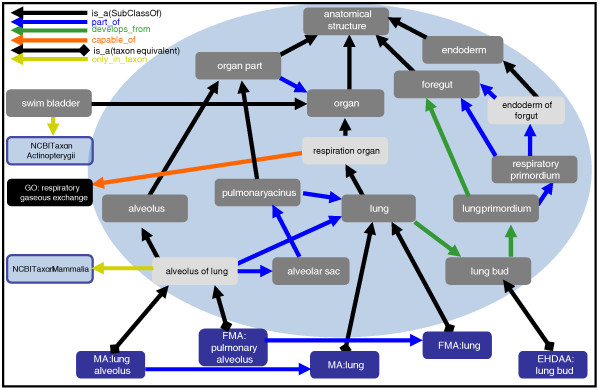
“augmentation is underway, and CL is adding computable definitions using Uberon and other OBO ontologies [33] using the capable_of relationship and the has_function_in relationships [33].”
MethodEMAP and EMAGE: A Framework for Understanding Spatially Organized Data
Baldock, R. A., Bard, J. B. L., Burger, A., Burton, N., Christiansen, J., Feng, G., Hill, B., Houghton, D., Kaufman, M., Rao, J., et al. (2003) · Neuroinformatics · doi:10.1385/ni:1:4:309 · Cited by 130
Cross-Product Extensions of the Gene Ontology
Mungall, C., Bada, M. A., Berardini, T., Deegan, J., Ireland, A., Harris, M. A., Hill, D. P., & Lomax, J. (2009) · Journal of Biomedical Informatics · doi:10.1016/j.jbi.2010.02.002 · Cited by 127 · cited 2×
“We first generated a set of computable definitions for GO biological processes using Uberon (previously described in [38]).”
BackgroundMethodGoals for concept representation in the GALEN project.
Rector, A. L., Nowlan, W. A., & Glowinski, A. (1993) · PubMed · Cited by 125
Obol: integrating language and meaning in bio‐ontologies
Mungall, C. (2004) · Comparative and Functional Genomics · doi:10.1002/cfg.435 · Cited by 110
The Plant Structure Ontology, a Unified Vocabulary of Anatomy and Morphology of a Flowering Plant
Ilic, K., Kellogg, E. A., Jaiswal, P., Zapata, F., Stevens, P. F., Vincent, L., Avraham, S., Reiser, L., Pujar, A., Sachs, M. M., et al. (2006) · PLANT PHYSIOLOGY · doi:10.1104/pp.106.092825 · Cited by 107 · cited 1×
“The Plant Structure Ontology (PO) [21] was originally developed to cover angiosperms, and is being generalized to be applicable across Viridiplantae.”
BackgroundDeep homology: A view from systematics
Scotland, R. W. (2010) · BioEssays · doi:10.1002/bies.200900175 · Cited by 105 · cited 1×
“Why are these eyes and appendages similar? In some cases there may be homology of anatomical parts, biochemical pathways, or molecules that are at a level more granular than what has been studied using comparative anatomical phylogeny reconstruction (deep homology) [49].”
BackgroundCARO – The Common Anatomy Reference Ontology
Haendel, M. A., Neuhaus, F., Osumi-Sutherland, D., Mabee, P., Mejino, J. L. V., Mungall, C., & Smith, B. (2007) · Computational biology · doi:10.1007/978-1-84628-885-2_16 · Cited by 103 · cited 5×
“CARO is currently being revised to better represent community needs following implementation in various AOs over the past few years.”
BackgroundInfluentialDigital Atlasing and Standardization in the Mouse Brain
Hawrylycz, M., Baldock, R., Burger, A., Hashikawa, T., Johnson, G. A., Martone, M. E., Ng, L., Lau, C., Larsen, S. D., Nissanov, J., et al. (2011) · PLoS Computational Biology · doi:10.1371/journal.pcbi.1001065 · Cited by 101 · cited 2×
“Many of these axioms in the neural portion of Uberon were derived from the Allen Brain Atlas [36], and have proved useful in fixing problems with the ontology and individual species ontologies.”
MethodFramework for a Protein Ontology
Natale, D. A., Arighi, C. N., Barker, W. C., Blake, J. A., Chang, T., Hu, Z.-Z., Liu, H., Smith, B., & Wu, C. H. (2007) · BMC Bioinformatics · doi:10.1186/1471-2105-8-s9-s1 · Cited by 100 · cited 1×
“We have included relationships and other logical axioms that reference other ontologies in Uberon, such as the GO, the Neuro Behavior Ontology (NBO) [30], the CL [15], the Protein Ontology [31] and CHEBI [32].”
MethodWorm Phenotype Ontology: Integrating phenotype data within and beyond the C. elegans community
Schindelman, G., Fernandes, J. S., Bastiani, C. A., Yook, K., & Sternberg, P. W. (2011) · BMC Bioinformatics · doi:10.1186/1471-2105-12-32 · Cited by 94
The Teleost Anatomy Ontology: Anatomical Representation for the Genomics Age
Dahdul, W., Lundberg, J. G., Midford, P. E., Balhoff, J. P., Lapp, H., Vision, T., Haendel, M. A., Westerfield, M., & Mabee, P. (2010) · Systematic Biology · doi:10.1093/sysbio/syq013 · Cited by 89 · cited 4×
“However, we do not include ‘Weberian apparatus’ because this structure is not found outside Otophysi, and this clade is already within the scope covered by the multi-species TAO.”
MethodInfluentialThe NCI Thesaurus quality assurance life cycle
de Coronado, S., Wright, L. W., Fragoso, G., Haber, M. W., Hahn-Dantona, E. A., Hartel, F. W., Quan, S. L., Safran, T., Thomas, N., & Whiteman, L. (2009) · Journal of Biomedical Informatics · doi:10.1016/j.jbi.2009.01.003 · Cited by 82 · cited 1×
“Other ontologies such as GALEN [10] and the National Cancer Institute Thesaurus [11] are not strictly anatomical ontologies, but include AOs as subontologies.”
MethodExperience in Aligning AnatomicalOntologies
Zhang, S., & Bodenreider, O. (2007) · International Journal on Semantic Web and Information Systems · doi:10.4018/jswis.2007040101 · Cited by 76
The FaceBase Consortium: A comprehensive program to facilitate craniofacial research
Hochheiser, H., Aronow, B. J., Artinger, K., Beaty, T. H., Brinkley, J. F., Chai, Y., Clouthier, D. E., Cunningham, M. L., Dixon, M. J., Donahue, L. R., et al. (2011) · Developmental Biology · doi:10.1016/j.ydbio.2011.02.033 · Cited by 71 · cited 1×
“Facebase [64] is a consortium that aims to consolidate and make queryable data regarding neural crest development and craniofacial diseases.”
BackgroundBUILDING MOUSE PHENOTYPE ONTOLOGIES
Gkoutos, G. V., Green, E. C. J., Mallon, A., Hancock, J. M., & Davidson, D. R. (2003) · Pacific Symposium on Biocomputing (PSB) · doi:10.1142/9789812704856_0018 · Cited by 58
Transcriptional Control of Neural Crest Development
Nelms, B. L., & Labosky, P. A. (2010) · Colloquium Series on Developmental Biology · doi:10.4199/c00010ed1v01y201003deb001 · Cited by 58 · cited 1×
“For example, the adenohypophysis has different developmental origins in different species-while in most basal fish and tetrapods the adenohypophyseal anlagen invaginates to form Rathke’s pouch, in teleost fish the adenohypophyseal placode does not invaginate but rather maintains its initial organization, forming a sol…”
BackgroundAn ontology for Xenopus anatomy and development
Segerdell, E., Bowes, J. B., Pollet, N., & Vize, P. D. (2008) · BMC Developmental Biology · doi:10.1186/1471-213x-8-92 · Cited by 54 · cited 2×
“In order to serve the needs of their communities, model organism databases have developed dedicated species-centric anatomical ontologies (scAOs) such as the Zebrafish Anatomy Ontology (ZFA) [3], Xenopus Anatomy Ontology (XAO) [4] and the Fly Anatomy Ontology (FBbt) [5].”
BackgroundDeegan, J., Dimmer, E. C., & Mungall, C. (2010) · BMC Bioinformatics · doi:10.1186/1471-2105-11-530 · Cited by 53 · cited 2×
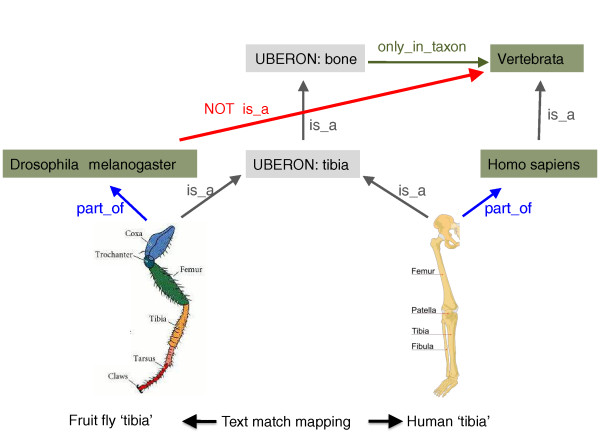
“We have adopted the GO system of taxonomic constraints [37], and added 216 only_in_taxon and never_in_taxon to constraints to the ontology.”
MethodTranscriptional Control of Neural Crest Development
Nelms, B. L., & Labosky, P. A. (2010) · Cited by 51
Interoperability between phenotype and anatomy ontologies
Hoehndorf, R., Oellrich, A., & Rebholz‐Schuhmann, D. (2010) · Bioinformatics · doi:10.1093/bioinformatics/btq578 · Cited by 51 · cited 2×
“We created computable definitions for existing phenotype ontologies such as the MPO, the Human Phenotype Ontology (HPO) [58-60] and the Worm Phenotype Ontology (WPO) [61].”
MethodRelationship of Pax6 Activity Levels to the Extent of Eye Development in the Mouse, Mus musculus
Favor, J., Gloeckner, C. J., Neuhäuser-Klaus, A., Pretsch, W., Sandulache, R., Saule, S., & Zaus, I. (2008) · Genetics · doi:10.1534/genetics.108.088591 · Cited by 46
AN ANATOMICAL ONTOLOGY FOR AMPHIBIANS
Maglia, A. M., Leopold, J. L., Púgener, L. A., & Gauch, S. (2006) · Pacific Symposium on Biocomputing (PSB) · doi:10.1142/9789812772435_0035 · Cited by 44 · cited 2×
“More recently, this has been complemented by ontologies developed by the evolutionary biology community, such as the Teleost Anatomy Ontology (TAO) [19], the Amphibian Anatomy Ontology [20], which provide an integrative layer for particular vertebrate taxa.”
MethodAnatomics: the intersection of anatomy and bioinformatics
Bard, J. (2005) · Journal of Anatomy · doi:10.1111/j.0021-8782.2005.00376.x · Cited by 43 · cited 1×
“These representations have proven vital for databasing and bioinformatics analyses in fields including medical informatics, genomics, systems biology, neuroscience and comparative morphology [1].”
BackgroundA common layer of interoperability for biomedical ontologies based on OWL EL
Hoehndorf, R., Dumontier, M., Oellrich, A., Wimalaratne, S., Rebholz‐Schuhmann, D., Schofield, P. N., & Gkoutos, G. V. (2011) · Bioinformatics · doi:10.1093/bioinformatics/btr058 · Cited by 42 · cited 2×
“We created computable definitions for existing phenotype ontologies such as the MPO, the Human Phenotype Ontology (HPO) [58-60] and the Worm Phenotype Ontology (WPO) [61].”
MethodMapping Composition for Matching Large Life Science Ontologies.
Groß, A., Hartung, M., Kirsten, T., & Rahm, E. (2011) · Cited by 38
vHOG, a multispecies vertebrate ontology of homologous organs groups
Niknejad, A., Comte, A., Parmentier, G., Roux, J., Bastian, F., & Robinson‐Rechavi, M. (2012) · Bioinformatics · doi:10.1093/bioinformatics/bts048 · Cited by 24
Experiences Using Logic Programming in Bioinformatics
Mungall, C. (2009) · Lecture notes in computer science · doi:10.1007/978-3-642-02846-5_1 · Cited by 21 · cited 1×
“Using the Blipkit framework [67], we took the names and synonyms from each ontology, tokenized them, and performed Porter-stemming [68], removed certain tokens such as ‘of’ and ‘the’, and matched two classes if the set of stemmed tokens from any label was identical.”
MethodParmentier, G., Bastian, F., & Robinson‐Rechavi, M. (2010) · Bioinformatics · doi:10.1093/bioinformatics/btq283 · Cited by 17 · cited 3×
“Neither does Homolonto distinguish structures by ontogeny-thus, ‘gonad’ and ‘gonad primordium’ in different species are placed into the same group.”
MethodLessons learned from cross-validating alignments between large anatomical ontologies.
Zhang, S., & Bodenreider, O. (2007) · PubMed · Cited by 13
Simplified ontologies allowing comparison of developmental mammalian gene expression
Kruger, A., Hofmann, O., Carninci, P., Hayashizaki, Y., & Hide, W. (2007) · Genome biology · doi:10.1186/gb-2007-8-10-r229 · Cited by 13 · cited 1×
“At this time, these relations are course-grained, that is, we do not attempt to subsume individual Thelier and Carnegie stages [29].”
BackgroundA knowledge based approach to matching human neurodegenerative disease and animal models
Maynard, S. M., Mungall, C., Lewis, S., Imam, F. T., & Martone, M. E. (2013) · Frontiers in Neuroinformatics · doi:10.3389/fninf.2013.00007 · Cited by 11 · cited 1×
“We have recently leveraged Uberon for the purposes of querying across species and anatomical granularity in a neurodegenerative disease knowledgebase [63] Similarly, other projects requiring cross-species inference to investigate animal models of disease are beginning to use Uberon.”
BackgroundAn ontology-based comparative anatomy information system
Travillian, R. S., Diatchka, K., Judge, T. K., Wilamowska, K., & Shapiro, L. G. (2010) · Artificial Intelligence in Medicine · doi:10.1016/j.artmed.2010.10.001 · Cited by 11 · cited 5×
“Additionally, rather than our current practice of using cross-references to capture these links, we will import classes from domain-specific ontologies, such as the NIF neuroscience, skeletal, and arthropod ontologies, and use their IDs directly using the MIREOT approach to reference external ontology terms [52].”
MethodInfluentialFRAGS: estimation of coding sequence substitution rates from fragmentary data
Swart, E. C., Hide, W. A., & Seoighe, C. (2004) · BMC Bioinformatics · doi:10.1186/1471-2105-5-8 · Cited by 6 · cited 1×
“We used the SWI-Prolog semweb library [76] to issue iterative SPARQL queries to extract all RDF triples for all instances of the DBPedia ontology class ‘dbpedia:AnatomicalStructure’.”
MethodFUNCARO: A Functional Extension to CARO.
Osumi-Sutherland, D. (2011) · ICBO · Cited by 2
Osumi-Sutherland, D. (2011) · ICBO · Cited by 2
Research works printed but not linked: 4
- Travillian R, Malone J, Pang C, Hancock J, Holland PW, Schofield P, Parkinson H: The Vertebrate Bridging Ontology (VBO). Proceedings of the Second International Conference on Biomedical Ontology: July 26-30, 2011; Buffalo, NY. 2011, [http://icbo.buffalo.edu/ICBO-2011_Proceedings.pdf]
- Osumi-Sutherland D: CARO 2.0. Proceedings of the Second International Conference on Biomedical Ontology: July 26-30, 2011; Buffalo, NY. 2011, [http://icbo.buffalo.edu/ICBO-2011_Proceedings.pdf]
- Torniai C, Brush M, Vasilevsky N, Segerdell E, Wilson ML, Johnson T, Corday K, Shaffer C, Haendel M: Developing an application ontology for biomedical resource annotation and retrieval: Challenges and lessons learned. Proceedings of the Second International Conference on Biomedical Ontology: July 26-30, 2011; Buffalo, NY. 2011, [http://icbo.buffalo.edu/ICBO-2011_Proceedings.pdf]
- Segerdell E, Wilson ML, Bashor T, Bourges-Waldegg D, Corday K, Frost HR, Johnson T, Shaffer CJ, Stone L, Torniai C, Haendel MA: eagle-i: an ontology-driven framework for biomedical resource annotation and discovery. Nat Precedings. 2010, [http://precedings.nature.com/documents/5176/version/1/files/npre20105176-1.pdf]
Cited by
Sorted by citations
The Gene Ontology Resource: 20 years and still GOing strong
The Gene Ontology Consortium (2019) · Nucleic Acids Research · doi:10.1093/nar/gky1055 · Cited by 4,747
“GO imports subsets of these external ontologies that include information about anatomical structures, cell types, chemicals and taxonomic groupings: Uberon (14), Protein Ontology (15), Plant Ontology (16) (23) and MetaCyc (24).”
BackgroundGene Ontology Consortium: going forward
The Gene Ontology Consortium (2015) · Nucleic Acids Research · doi:10.1093/nar/gku1179 · Cited by 3,492
“…phase of apoptosis’ A version of the ontology containing all relationships, including information from the Uberon anatomy (or stage) ontology (7), the Chemical Entities of Biological Inter-est ontology (ChEBI; (8)), the Plant Ontology for plant structure / stage (PO; (9)), the Phenotypic…”
A communal catalogue reveals Earth's multiscale microbial diversity
Thompson, L. R., Sanders, J. G., McDonald, D., Amir, A., Ladau, J., Locey, K. J., Prill, R. J., Tripathi, A., Gibbons, S. M., Ackermann, G., et al. (2017) · Nature · doi:10.1038/nature24621 · Cited by 2,684
The Gene Ontology knowledgebase in 2023
Aleksander, S., Balhoff, J. P., Carbon, S., Cherry, J. M., Drabkin, H., Ebert, D., Feuermann, M., Gaudet, P., Harris, N. L., Hill, D. P., et al. (2023) · Genetics · doi:10.1093/genetics/iyad031 · Cited by 2,873
“Uberon (Mungall et al. 2012) for most vertebrates, other metazoan ontologies such as the Drosophila anatomy ontology (Costa et al.”
BackgroundGaulton, A., Hersey, A., Nowotka, M., Bento, A. P., Chambers, J. K., Méndez, D., Mutowo, P., Atkinson, F. L., Bellis, L. J., Cibrián–Uhalte, E., et al. (2016) · Nucleic Acids Research · doi:10.1093/nar/gkw1074 · Cited by 2,394
“It should be noted that the aim here is not to create new cell-line/tissue ontologies – entries in the ChEMBL dictionaries are imported from established vocabularies and ontologies wherever possible (e.g. Cell Line Ontology (23), Experimental Factor Ontology (EFO) (24), Cellosaurus (http://web.expasy.org/cellosaurus/)…”
Background
Metadata
- Authors
- Mungall, C. J., Torniai, C., Gkoutos, G. V., Lewis, S. E., & Haendel, M. A.
- Affiliations
- Oregon Health & Science University (US)
- University of Cambridge (GB)
- Lawrence Berkeley National Laboratory (US)
- Venue
- Genome biology
- Published
- 2012-01-31
- Volume
- 13
- Issue
- 1
- Pages
- R5-R5
- ISSN
- 1465-6906 (ISSN-L)
- 1474-760X
- PMC
- PMC3334586
- OpenAlex
- W2116034137
- Cited by
- 732
- References
- 67
- Citations by year
- 2026: 60 · 2025: 69 · 2024: 55 · 2023: 66 · 2022: 55 · 2021: 51 · 2020: 46 · 2019: 45 · 2018: 55 · 2017: 46 · 2016: 49 · 2015: 50 · 2014: 34 · 2013: 28 · 2012: 21
- FWCI
- 17.73
- Type
- journal article
- Language
- en
- Open access
- gold
- doi.org
- Locations
- Genome biology (publishedVersion, cc-by)
- Europe PMC (PubMed Central) (publishedVersion, cc-by)
- PubMed Central (publishedVersion, cc-by)
- PubMed (publishedVersion)
- OSTI OAI (U.S. Department of Energy Office of Scientific and Technical Information) (submittedVersion)
- University of Birmingham Research Portal (University of Birmingham) (submittedVersion)
- Funders
- U.S. Department of Energy (-AC02-05CH11231, 05CH11231, DE AC02 05CH11231, DE-AC02-)
- National Institutes of Health (2p41hg002273-07, 5u24rr029825-02, DE-AC02–05CH11231)
- Office of Science (DEAC02–05CH11231, AC02-05CH11231, DE-AC02, 05CH11231)
- National Human Genome Research Institute (U41HG002273, R01HG004838, P41HG002273-09S1, P41-HG002273)
- National Center for Research Resources (1U24RR029825-01)
- Basic Energy Sciences (DE-AC02, DE-AC02-05CH11231., AC02–05CH11231)
- Topics
- Health Sciences › Medicine › Health Informatics › Biomedical Text Mining and Ontologies
- Physical Sciences › Computer Science › Artificial Intelligence › Semantic Web and Ontologies
- Life Sciences › Biochemistry, Genetics and Molecular Biology › Molecular Biology › Bioinformatics and Genomic Networks
- Keywords
- UBERON, anatomy ontology, anatomical classification, taxonomic variation, human anatomy
- MeSH terms
- Anatomy, Comparative, Classification, Humans, Phenotype, Software, Species Specificity, Databases, Factual, Computational Biology
About these checks
Registry, retraction, Cites and statistics results are computed, not judged, with one exception: a printed reference that no index lists is read once by a model before it counts as a citation error. Claims are extracted by a model and kept only when their quote appears verbatim in the text; each cited source is then checked, with a model’s help, for whether it says what the claim relies on. Those verdicts can be wrong — read the claim’s quote and the cited source before relying on one.
Statistics and arithmetic are recomputed, not judged.
Confidence bands are shown only for fields calibrated on our annotated test set. None is calibrated yet, so no band is shown.
What counts as a claim ›How we measure confidence ›How we check this ›
Are you an author, or do you see a problem with this page? Request a review
