

voom: precision weights unlock linear model analysis tools for RNA-seq read counts
Open accessThe DOI matches its Crossref record; 65 of the 67 references it cites were found in a registry or an index; 1 of the 51 sources its claims cite were checked for support.
Abstract
New normal linear modeling strategies are presented for analyzing read counts from RNA-seq experiments. The voom method estimates the mean-variance relationship of the log-counts, generates a precision weight for each observation and enters these into the limma empirical Bayes analysis pipeline. This opens access for RNA-seq analysts to a large body of methodology developed for microarrays. Simulation studies show that voom performs as well or better than count-based RNA-seq methods even when the data are generated according to the assumptions of the earlier methods. Two case studies illustrate the use of linear modeling and gene set testing methods.
Overview
CoChat Summary
TL;DR
voom estimates the mean-variance relationship of log-counts per million and generates observation-level precision weights for limma, allowing normal-based linear model analysis of RNA-seq read counts. Simulations and case studies show voom controls error rates well and often has better power or lower FDR than negative binomial/Poisson methods, especially when library sizes are unequal.
Key findings
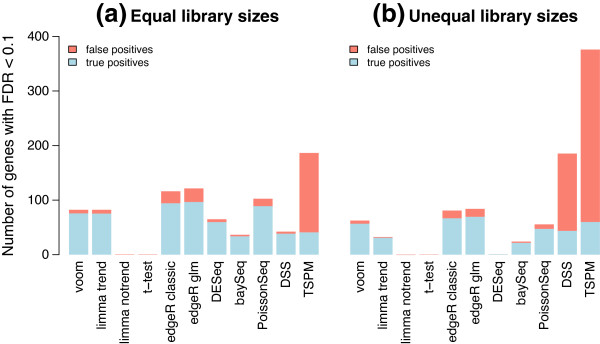
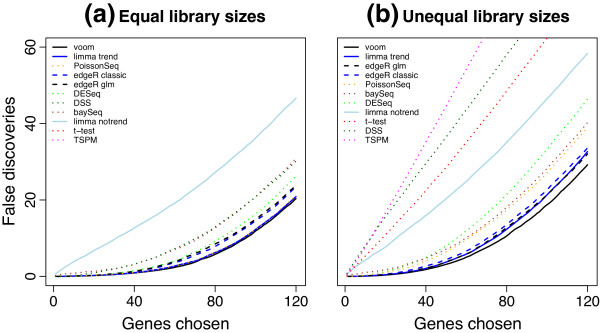
- In simulations with 6 libraries, 10,000 genes, and 100 upregulated plus 100 downregulated genes, voom had the best power among methods that controlled type I and FDR error rates; with unequal library sizes, voom had the best power except for edgeR while maintaining low FDR. edgeR and PoissonSeq were somewhat liberal, while DESeq and DSS became very conservative when library sizes were unequal.
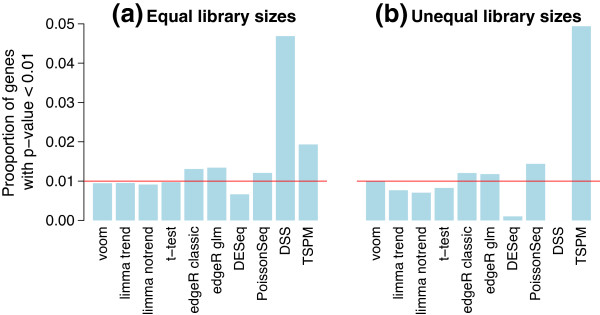
- For type I error at P<0.01, NB/Poisson methods did not control error accurately; voom was close to the nominal rate in both equal and unequal library size scenarios, while limma-trend was similar when sizes were equal but conservative when unequal. In SEQC HBRR technical replicates, voom returned no DE genes at 5% FDR for 6 of 7 possible partitions.
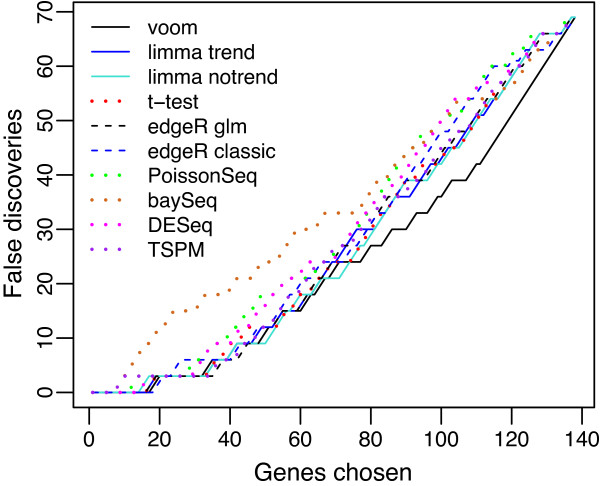
- voom had the lowest FDR at any cutoff in simulations and in SEQC spike-in data; the spike-in analysis used 138 transcripts, half truly DE and half non-DE.
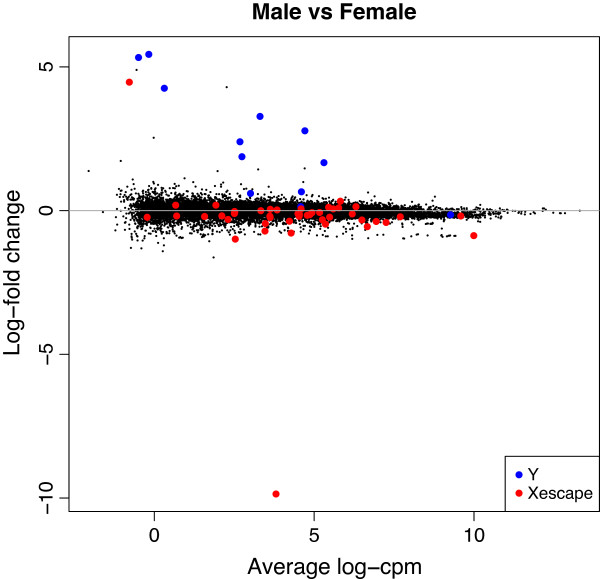
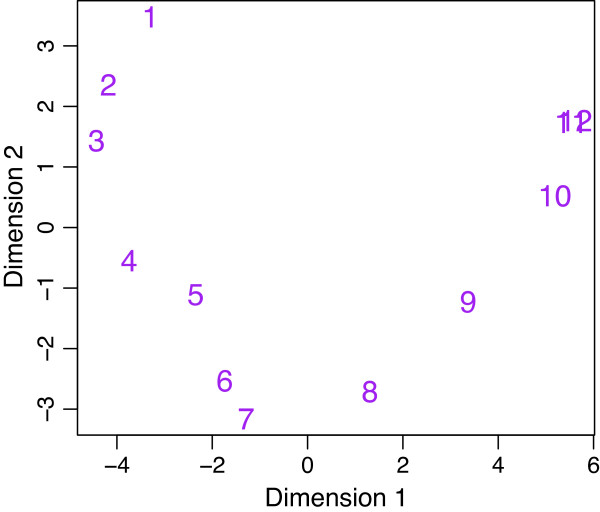
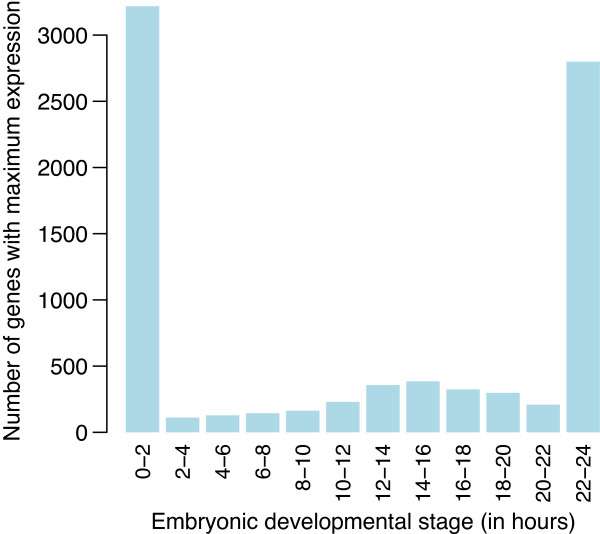
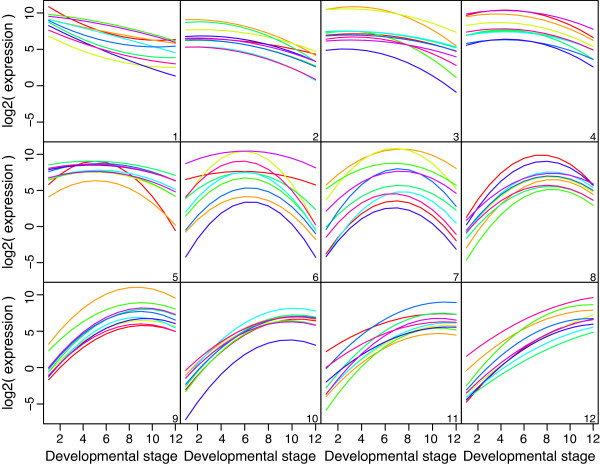
- In the Nigerian lymphoblastoid dataset (29 males, 40 females), voom found 16 genes upregulated in males and 43 upregulated in females at 5% FDR, with XIST the top gene; ROAST and CAMERA confirmed male-specific Y chromosome genes and X-inactivation escape genes. In Drosophila embryonic stages, 8,366 of 14,869 expressed genes showed a significant trend at 5% FDR.
Methods
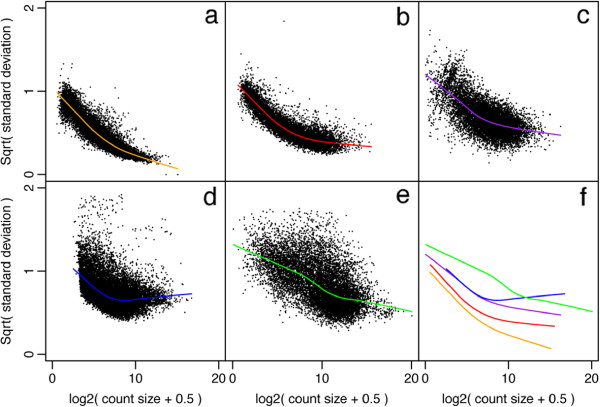
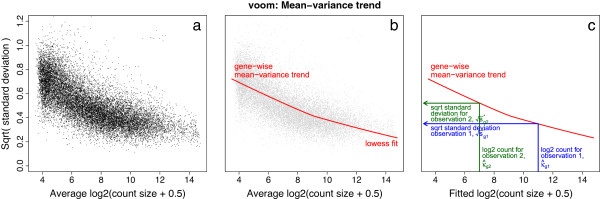
- voom works on log-cpm values: fit gene-wise linear models, estimate residual standard deviations as a function of average log-count using a robust LOWESS trend, interpolate that trend to each observation’s predicted count, and use inverse squared predicted standard deviation as a precision weight in limma’s empirical Bayes pipeline. limma-trend applies the mean-variance trend at the gene level instead.
- Simulations generated NB counts for 6 libraries and 10,000 genes, with baseline cpm distribution matched to real data and dispersion trend ψ^1/2 = 0.2 + λ^-1/2; gene-wise dispersions were drawn from an inverse chi-square with 40 degrees of freedom. Equal library sizes used 11 million reads per library; unequal sizes used 20 million for odd libraries and 2 million for even libraries. Results were averaged over 100 simulations and compared with edgeR, DESeq, baySeq, TSPM, PoissonSeq, and DSS.
- Case studies used SEQC pilot libraries (16 libraries in groups A–D; 4 HBRR libraries; 92 spike-in transcripts expanded to 138), Nigerian lymphoblastoid cell lines from 69 unrelated individuals, Drosophila melanogaster embryonic stages (12 libraries), and C57BL/6J versus DBA/2J mouse striatum data. Gene set testing used ROAST and CAMERA.
Limitations
- Stated: gene-level analysis does not allow different isoforms of the same gene to be differentially expressed in different directions, though voom can be run at exon level. The Drosophila quadratic time trends do not match all intricacies of gene expression over time. Simulations were generated under NB assumptions, and other scenarios may differ. baySeq was excluded from the type I error comparison because it does not return P values.
- Evident: the Drosophila analysis has no replicate libraries, so variances are estimated by assuming smooth expression over time and fitting quadratic trends. Performance comparisons rely on specific simulation settings and default software pipelines, and the case studies illustrate use rather than provide independent experimental validation.
Model-written summary. Check it against the paper before relying on it.
Integrity signals
Registry
Cites
Statistics
Figures
Verification
Claims the paper makes
1 Valid · 4 Not valid · 34 Not checked · 142 Own results and interpretations
The cited sources support only part of this claim — read each source’s verdict below.
In the paper
“voom and limma could be used to analyze any gene-level RNA-seq differential expression experiment, including those with multiple experimental factors [34].”
§ voom: precision weights unlock linear model analysis tools for RNA-seq read counts > Results > Development stages of Drosophila melanogaster
What the sources say
- Partly supportedcites [34] McCarthy DJ Chen Y Smyth GK Differential expression analysis of multifactor RNA-Seq experiments with respect to biological variation Nucleic Acids Res 2012 40 4288 4297 10.1093/nar/gks042 22287627 PMC3378882 sourceExperimental — accuracy not yet measured
Our copy of McCarthy et al. (2012) supports the scope part of the claim: the INTRODUCTION states 'The methodology provides a pipeline for analysing arbitrarily complex RNA-Seq experiments provided that there is some degree of biological replication', the Abstract describes analysis of 'complex experiments involving multiple treatment conditions and blocking variables', and the article's focus is gene-level counts ('For simplicity... counts are summarized at the gene level', RESULTS > Technical and biological variation). However, the capability is attributed to negative-binomial generalized linear models implemented in the edgeR package (DISCUSSION: 'The methods described in this article are implemented in the software package edgeR'), and no passage of our copy mentions voom or limma at all — the closest the paper comes to normal-linear-model analysis of transformed counts is a critique in the INTRODUCTION that transforming counts to approximate normality and analysing as for microarray data 'is however not fully tuned to the characteristics of read count data'. Thus the specific tools named in the citing sentence (voom and limma) are not this paper's methods, while the multifactor/gene-level applicability is. (LLM, conf=0.72)
hedged- Asserted: passes — The authors put it forward as true.
- Checkable: passes — It can be checked against evidence.
- Load-bearing: unclear — It is unclear whether the paper’s conclusions depend on it.
- Based: passes — The paper gives a reason why it holds.
- Rests on an assumption not shown here.
- Partly supported
A result the paper reports from its own data — it cites no other source for it, so there is none to check. The quote shows it is in the paper.
In the paper
“When the library sizes are unequal, DSS and DESeq became extremely conservative.”
§ voom: precision weights unlock linear model analysis tools for RNA-seq read counts > Results > voom and limma-trend control the type I error rate correctly
plainstates a cause- Asserted: passes — The authors put it forward as true.
- Checkable: passes — It can be checked against evidence.
- Load-bearing: unclear — It is unclear whether the paper’s conclusions depend on it.
- Based: passes — The paper gives a reason why it holds.
A result the paper reports from its own data — it cites no other source for it, so there is none to check. The quote shows it is in the paper.
In the paper
“Figures 3 and 4 together show that voom has the best power of those methods that correctly control the type I and FDR error rates.”
§ voom: precision weights unlock linear model analysis tools for RNA-seq read counts > Results > voom has the best power of methods that control the type I error rate
plain- Asserted: passes — The authors put it forward as true.
- Checkable: passes — It can be checked against evidence.
- Load-bearing: passes — The paper’s conclusions depend on it.
- Based: passes — The paper gives a reason why it holds.
- Rests on an assumption not shown here.
A result the paper reports from its own data — it cites no other source for it, so there is none to check. The quote shows it is in the paper.
In the paper
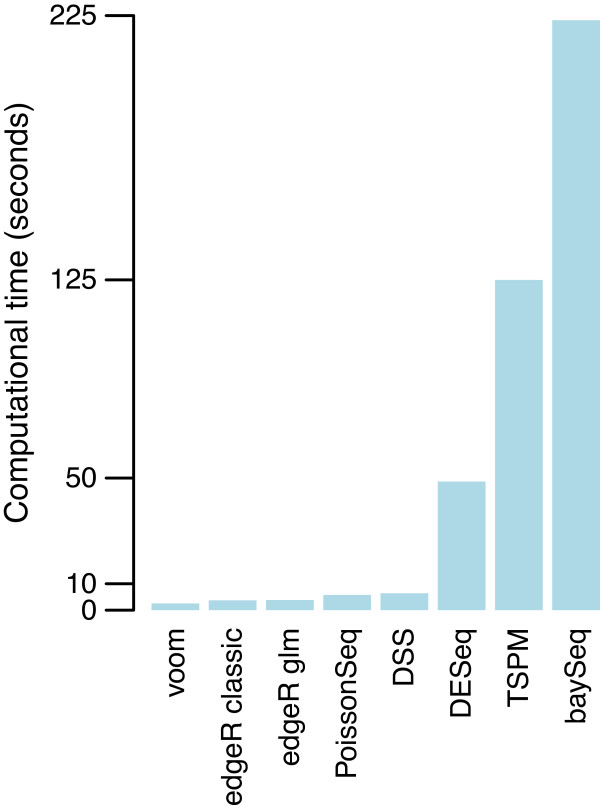
“voom is easily the fastest of the methods compared, with edgeR-classic next fastest (Figure 7).”
§ voom: precision weights unlock linear model analysis tools for RNA-seq read counts > Results > voom and limma-trend are faster than specialist RNA-seq methods
plain- Asserted: passes — The authors put it forward as true.
- Checkable: passes — It can be checked against evidence.
- Load-bearing: unclear — It is unclear whether the paper’s conclusions depend on it.
- Based: passes — The paper gives a reason why it holds.
A result the paper reports from its own data — it cites no other source for it, so there is none to check. The quote shows it is in the paper.
In the paper
“Genes peaking at the last stage tended to be associated with precursor metabolites and energy, the oxidation-reduction process and with metabolic pathways.”
§ voom: precision weights unlock linear model analysis tools for RNA-seq read counts > Results > Development stages of Drosophila melanogaster
plainstates an association- Asserted: passes — The authors put it forward as true.
- Checkable: passes — It can be checked against evidence.
- Load-bearing: unclear — It is unclear whether the paper’s conclusions depend on it.
- Based: passes — The paper gives a reason why it holds.
79 more claims
Create a free account to see all 181 claims and to verify the 45 references still open.
- It may state two separate claims as one. 48
- Probably not a substantial claim. 68
- The quote only partly states this claim. 2
Claims other papers make about this one
Each is checked against this paper’s own text: does it say what the citing paper says it does?
The source backs part of the claim, not all of it — or backs it for a different population, condition or comparison.
In the citing paper
“First, specific caution is needed with all the methods when the number of replicate samples is very small or for genes that are expressed at very low levels [55, 64, 209].”
From A survey of best practices for RNA-seq data analysis (2016) · cites this paper as [55]
Experimental — accuracy not yet measuredThe cited source says what the claim attributes to it.
In the citing paper
“Methods for transforming normalized counts of RNA-seq reads while learning the variance structure of the data have been shown to perform well in comparison to the discrete distribution approaches described above [55, 56].”
From A survey of best practices for RNA-seq data analysis (2016) · cites this paper as [55]
The cited source says what the claim attributes to it.
In the citing paper
“First, the global variance estimate can now incorporate a mean-variance trend (10,17,18).”
From limma powers differential expression analyses for RNA-sequencing and microarray studies (2015) · cites this paper as [10]
The cited source says what the claim attributes to it.
In the citing paper
“This approach is commonly applied in learning error models for bulk RNA-seq in the context of differential expression analysis [22–25], but to our knowledge has not been previously applied in this context for single-cell normalization.”
From Normalization and variance stabilization of single-cell RNA-seq data using regularized negative binomial regression (2019) · cites this paper as [25]
The check wasn’t confident either way, so it gives no verdict — never disputed.
In the citing paper
“SAMseq performs well in terms of FDR but presents an acceptable sensitivity when the number of replicates is relatively high, at least 10 [20, 55, 209].”
From A survey of best practices for RNA-seq data analysis (2016) · cites this paper as [55]
Experimental — accuracy not yet measured
12 more claims about this paper
Create a free account to see every claim other papers make about this one.
Self-check
Percentages, sums and reported differences re-computed from the paper’s own numbers.
Each contradiction between two passages listed here was confirmed by an independent check.
Rated minor: it would not touch a result — a value no result rests on, a p-value that stays on the same side of the significance level, or a conflict that is clerical, resolved elsewhere in the paper, or outside its own findings.
In the paper
§ voom: precision weights unlock linear model analysis tools for RNA-seq read counts > Materials and methods > Lymphoblastoid cell lines from Nigerian individuals
“Read counts, summarized by Ensembl gene, and transcript annotations were obtained from version 1.0.9 of the tweeDEseqCountData Bioconductor package [43]”
§ voom: precision weights unlock linear model analysis tools for RNA-seq read counts > Materials and methods > Software
“The results presented in this article were obtained using R version 3.0.0 and the software packages limma 3.16.2, edgeR 3.2.3, baySeq 1.14.1, DESeq 1.12.0, DSS 1.4.0, PoissonSeq 1.1.2 and tweeDEseqCountData 1.0.8.”
Citations
Cites
Subramanian, A., Tamayo, P., Mootha, V. K., Mukherjee, S., Ebert, B. L., Gillette, M. A., Paulovich, A., Pomeroy, S. L., Golub, T. R., Lander, E. S., et al. (2005) · Proceedings of the National Academy of Sciences · doi:10.1073/pnas.0506580102 · Cited by 53,625 · cited 1×
“This includes methods for differential expression analysis [1, 2, 3], random effects [4, 5], gene set enrichment [6], gene set testing [7, 8] and so on.”
MethodRobinson, M. D., McCarthy, D. J., & Smyth, G. K. (2010) · Bioinformatics · doi:10.1093/bioinformatics/btp616 · Cited by 41,364 · cited 2×
“Specifically we used the goodTuringProportions function of the edgeR package [12], which implements the Good-Turing algorithm [55], to predict the true proportion of total RNA attributable to each gene.”
BackgroundMethodSelf-citationfeatureCounts: an efficient general purpose program for assigning sequence reads to genomic features
Liao, Y., Smyth, G. K., & Shi, W. (2014) · Bioinformatics · doi:10.1093/bioinformatics/btt656 · Cited by 27,219
Self-citation(2005) · Statistics for Biology and Health · doi:10.1007/0-387-27255-0_9 · Cited by 20,133
McCullagh, P., & Nelder, J. A. (1989) · doi:10.1007/978-1-4899-3242-6 · Cited by 16,836
Differential expression analysis for sequence count data
Anders, S., & Huber, W. (2010) · Genome Biology · doi:10.1186/gb-2010-11-10-r106 · Cited by 15,581
Mapping and quantifying mammalian transcriptomes by RNA-Seq
Mortazavi, A., Williams, B. A., McCue, K., Schaeffer, L., & Wold, B. (2008) · Nature Methods · doi:10.1038/nmeth.1226 · Cited by 13,696
RNA-Seq: a revolutionary tool for transcriptomics
Wang, Z., Gerstein, M., & Snyder, M. (2009) · Nature Reviews Genetics · doi:10.1038/nrg2484 · Cited by 13,174 · cited 1×
“olutionary new technology for expression profiling [10].”
Bioconductor: open software development for computational biology and bioinformatics
Gentleman, R. C., Carey, V. J., Bates, D. M., Bolstad, B., Dettling, M., Dudoit, S., Ellis, B., Gautier, L., Ge, Y., Gentry, J., et al. (2004) · Genome Biology · doi:10.1186/gb-2004-5-10-r80 · Cited by 12,172 · cited 1×
“All of these packages are part of the Bioconductor project [67,68], except for PoissonSeq, which is part of the Comprehensive R Archive Network [69].”
BackgroundSelf-citationSmyth, G. K. (2004) · Statistical Applications in Genetics and Molecular Biology · doi:10.2202/1544-6115.1027 · Cited by 11,829
Self-citation
Research works printed but not linked: 2
- Law CW Chen Y Shi W Smyth GK Supplementary information for ‘Voom: precision weights unlock linear model analysis tools for RNA-seq read counts’ [ http://bioinf.wehi.edu.au/voom] PMC4053721 24485249
- Frazee A Langmead B Leek J ReCount: a multi-experiment resource of analysis-ready RNA-seq gene count datasets [ http://bowtie-bio.sourceforge.net/recount] PMC3229291 22087737
Cited by
Items 2,201–2,300 of 7,059
Developmental plasticity of epithelial stem cells in tooth and taste bud renewal
Bloomquist, R. F., Fowler, T. E., An, Z., Yu, T. Y., Abdilleh, K., Fraser, G. J., Sharpe, P. T., & Streelman, J. T. (2019) · Proceedings of the National Academy of Sciences · doi:10.1073/pnas.1821202116 · Cited by 26
Cooke, E. J., Wyseure, T. L., Zhou, J. Y., Gopal, S., Nasamran, C. A., Fisch, K. M., Manon‐Jensen, T., Karsdal, M. A., Mosnier, L. O., & von Drygalski, A. (2019) · Journal of Thrombosis and Haemostasis · doi:10.1111/jth.14567 · Cited by 26
Characterizing Variability and Uncertainty Associated with Transcriptomic Dose–Response Modeling
Ewald, J., Basu, N., Crump, D., Boulanger, E., & Head, J. A. (2022) · Environmental Science & Technology · doi:10.1021/acs.est.2c04665 · Cited by 26
voomDDA: discovery of diagnostic biomarkers and classification of RNA-seq data
Zararsız, G., Göksülük, D., Klaus, B., Korkmaz, S., Eldem, V., Karabulut, E., & Ozturk, A. B. (2017) · PeerJ · doi:10.7717/peerj.3890 · Cited by 26
Benard, C., Loarer, F. L., Gomez‐Brouchet, A., Azmani, R., Garcia, J., Perret, R. E., Pinieux, G. D. B. D., Miquelestorena‐Standley, E., Weingertner, N., Karanian, M., et al. (2024) · The American Journal of Surgical Pathology · doi:10.1097/pas.0000000000002260 · Cited by 26
Tian, S., Wang, C., & An, M. (2015) · Biology Direct · doi:10.1186/s13062-015-0051-z · Cited by 26
AXL targeting reduces fibrosis development in experimental unilateral ureteral obstruction
Landolt, L. Z., Furriol, J., Bábíčková, J., Ahmed, L., Eikrem, Ø., Skogstrand, T., Scherer, A., Suliman, S., Leh, S. M., Lorens, J. B., et al. (2019) · Physiological Reports · doi:10.14814/phy2.14091 · Cited by 26
β-Cyanoalanine synthase protects mites against Arabidopsis defenses
Dixit, S., Widemann, É., Bensoussan, N., Salehipourshirazi, G., Bruinsma, K. A., Milojevic, M., Shukla, A., Romero, L. C., Zhurov, V., Bernards, M. A., et al. (2022) · PLANT PHYSIOLOGY · doi:10.1093/plphys/kiac147 · Cited by 26
An intrinsic cell cycle timer terminates limb bud outgrowth
Pickering, J., Rich, C. A., Stainton, H., Aceituno, C., Chinnaiya, K., Saiz-López, P., Ros, M. A., & Towers, M. (2018) · eLife · doi:10.7554/elife.37429 · Cited by 26
Norwegian e-Infrastructure for Life Sciences (NeLS)
Tekle, K., Gundersen, S., Klepper, K., Bongo, L. A., Raknes, I. A., Li, X., Wei, Z., Andreetta, C., Mulugeta, T. D., Kalaš, M., et al. (2018) · F1000Research · doi:10.12688/f1000research.15119.1 · Cited by 26
Hallock, H. L., Quillian, H. M., Maynard, K. R., Mai, Y., Chen, H.-Y., Hamersky, G. R., Shin, J. H., Maher, B. J., Jaffe, A. E., & Martinowich, K. (2020) · Biological Psychiatry · doi:10.1016/j.biopsych.2020.04.014 · Cited by 25
Nguyen, T. M., Kabotyanski, E. B., Dou, Y., Reineke, L. C., Zhang, P., Zhang, X. H.-F., Malovannaya, A., Jung, S. Y., Mo, Q., Roarty, K. P., et al. (2018) · Cancer Research · doi:10.1158/0008-5472.can-18-0631 · Cited by 25
Self-citationG-CSF drives autoinflammation in APLAID
Mulazzani, E., Kong, K., Aróstegui, J. I., Ng, A. P., Ranathunga, N., Abeysekera, W., Garnham, A. L., Ng, S.-L., Baker, P. J., Jackson, J. T., et al. (2023) · Nature Immunology · doi:10.1038/s41590-023-01473-6 · Cited by 25
Developmental Profile of Psychiatric Risk Associated With Voltage-Gated Cation Channel Activity
Clifton, N. E., Collado‐Torres, L., Burke, E. E., Pardiñas, A. F., Harwood, J. C., Florio, A. D., Walters, J., Owen, M. J., O’Donovan, M. C., Weinberger, D. R., et al. (2021) · Biological Psychiatry · doi:10.1016/j.biopsych.2021.03.009 · Cited by 25
Liu, H., Barnes, J., Pedrosa, E., Herman, N. S., Salas, F., Wang, P., Zheng, D., & Lachman, H. M. (2020) · Journal of Neurodevelopmental Disorders · doi:10.1186/s11689-020-09317-2 · Cited by 25
Danckert, N. P., Freidin, M. B., Smith, I. G., Wells, P. M., Naeini, M. K., Visconti, A., Compte, R., MacGregor, A. J., & Williams, F. M. K. (2024) · Rheumatology · doi:10.1093/rheumatology/keae045 · Cited by 25
Navrazhina, K., Renert‐Yuval, Y., Khattri, S., Hamade, H., Meariman, M., Andrews, E., Kim, M., NandyMazumdar, M., Gour, D. S., Bose, S. N., et al. (2023) · Journal of the American Academy of Dermatology · doi:10.1016/j.jaad.2023.11.048 · Cited by 25
Deng, L., Vrieling, F., Stienstra, R., Hooiveld, G. J. E. J., Feitsma, A. L., & Kersten, S. (2022) · PLoS Biology · doi:10.1371/journal.pbio.3001516 · Cited by 25
Topa, H., Benoit‐Pilven, C., Tukiainen, T., & Pietiläinen, O. P. H. (2024) · Genome biology · doi:10.1186/s13059-024-03286-8 · Cited by 25
van der Velden, B. H. M., Elias, S. G., Bismeijer, T., Loo, C. E., Viergever, M. A., Wessels, L. F. A., & Gilhuijs, K. G. A. (2017) · Clinical Cancer Research · doi:10.1158/1078-0432.ccr-17-0176 · Cited by 25
A Statistical Perspective on the Challenges in Molecular Microbial Biology
Jeganathan, P., & Holmes, S. (2021) · Journal of Agricultural Biological and Environmental Statistics · doi:10.1007/s13253-021-00447-1 · Cited by 25
Dong, Y., Saglietti, C., Bayard, Q., Espín-Pérez, A., Carpentier, S., Buszta, D., Tissot-Renaud, S., Dubois, R., Kamburov, A., Kang, S., et al. (2025) · Nature Communications · doi:10.1038/s41467-025-59005-9 · Cited by 25
Vo, T., Balderson, B., Jones, K., Ni, G., Crawford, J., Millar, A., Tolson, E., Singleton, M., Mulay, O., Walters, S. B., et al. (2023) · Genome Medicine · doi:10.1186/s13073-023-01185-4 · Cited by 25
Yoon, S., & Nam, D. (2017) · BMC Genomics · doi:10.1186/s12864-017-3809-0 · Cited by 25
Zheng, Y., Jongejan, A., Mulder, C. L., Mastenbroek, S., Repping, S., Wang, Y., Li, J., & Hamer, G. (2017) · Reproduction · doi:10.1530/rep-17-0173 · Cited by 25
Hilbold, E. A., Distl, O., Hoedemaker, M., Wilkening, S., Behr, R., Rajkovic, A., Langeheine, M., Rode, K., Jung, K., Metzger, J., et al. (2020) · Cells · doi:10.3390/cells9030676 · Cited by 25
Zhao, Q., Xie, J., Xie, J., Zhao, R., Song, C., Wang, H., Rong, J., Yan, L., Song, Y., Wang, F., et al. (2021) · Cancer Biomarkers · doi:10.3233/cbm-200594 · Cited by 25
DREAMSeq: An Improved Method for Analyzing Differentially Expressed Genes in RNA-seq Data
Gao, Z., Zhao, Z., & Tang, W. (2018) · Frontiers in Genetics · doi:10.3389/fgene.2018.00588 · Cited by 25
McIntyre, R. L., Denis, S. W., Kamble, R., Molenaars, M., Petr, M. A., Schomakers, B. V., Rahman, M., Gupta, S. D., Tóth, M. L., Vanapalli, S. A., et al. (2021) · Aging Cell · doi:10.1111/acel.13381 · Cited by 25
BET Inhibition Enhances TNF-Mediated Antitumor Immunity
Wellinger, L. C., Hogg, S. J., Newman, D. M., Friess, T., Geiss, D., Michie, J., Ramsbottom, K. M., Bacac, M., Fauti, T., Marbach, D., et al. (2022) · Cancer Immunology Research · doi:10.1158/2326-6066.cir-21-0224 · Cited by 25
A time-resolved meta-analysis of consensus gene expression profiles during human T-cell activation
Rade, M., Böhlen, S., Neuhaus, V., Löffler, D., Blumert, C., Merz, M., Koehl, U., Dehmel, S., Sewald, K., & Reiche, K. (2023) · Genome biology · doi:10.1186/s13059-023-03120-7 · Cited by 25
Strategies for Taxonomic and Functional Annotation of Metagenomes
Bengtsson‐Palme, J. (2017) · Elsevier eBooks · doi:10.1016/b978-0-08-102268-9.00003-3 · Cited by 25
Cho, E., Rowan‐Carroll, A., Williams, A., Corton, J. C., Li, H., Fornace, A. J., Hobbs, C. A., & Yauk, C. L. (2021) · Archives of Toxicology · doi:10.1007/s00204-021-03014-2 · Cited by 25
Identifying the combinatorial control of signal-dependent transcription factors
Wang, N., Lefaudeux, D., Mazumder, A., Li, J. J., & Hoffmann, A. (2021) · PLoS Computational Biology · doi:10.1371/journal.pcbi.1009095 · Cited by 25
McCaffrey, T. A., Laurent, G. S., Shtokalo, D. N., Антонец, Д., Vyatkin, Y. V., Jones, D. R., Battison, E., & Nigg, J. T. (2020) · BMC Medical Genomics · doi:10.1186/s12920-020-00808-8 · Cited by 25
deepMc: Deep Matrix Completion for Imputation of Single-Cell RNA-seq Data
Mongia, A., Sengupta, D., & Majumdar, A. (2019) · Journal of Computational Biology · doi:10.1089/cmb.2019.0278 · Cited by 25
Fajardo-Cavazos, P., Morrison, M. D., Miller, K. M., Schuerger, A. C., & Nicholson, W. L. (2018) · Scientific Reports · doi:10.1038/s41598-018-33140-4 · Cited by 25
Changes in gene expression during female reproductive development in a color polymorphic insect
Willink, B., Duryea, M. C., Wheat, C. W., & SVENSSON, E. I. (2020) · Evolution · doi:10.1111/evo.13979 · Cited by 25
A diagnostic classifier for gene expression-based identification of early Lyme disease
Servellita, V., Bouquet, J., Rebman, A. W., Yang, T., Samayoa, E., Miller, S. A., Stone, M., Lanteri, M. C., Busch, M. P., Tang, P., et al. (2022) · Communications Medicine · doi:10.1038/s43856-022-00127-2 · Cited by 25
Kaserman, J. E., Werder, R. B., Wang, F., Matte, T. M., Higgins, M. I., Dodge, M., Lindstrom-Vautrin, J., Bawa, P., Hinds, A., Bullitt, E., et al. (2022) · Cell Reports · doi:10.1016/j.celrep.2022.111775 · Cited by 25
Kozjek, K., Manoharan, L., Ahrén, D., & Hedlund, K. (2022) · Soil Biology and Biochemistry · doi:10.1016/j.soilbio.2022.108650 · Cited by 25
Characterization of TNNC1 as a Novel Tumor Suppressor of Lung Adenocarcinoma.
Kim, S., Kim, J., Jung, Y., Jun, Y., Jung, Y., Lee, H.-Y., Keum, J., Park, B. J., Lee, J., Kim, J., et al. (2020) · PubMed Central · doi:10.14348/molcells.2020.0075 · Cited by 25
Morovat, P., Morovat, S., Hosseinpour, M., Moslabeh, F. G. Z., Kamali, M. J., & Samadani, A. A. (2022) · Journal of Cell Communication and Signaling · doi:10.1007/s12079-022-00697-9 · Cited by 25
Identification of cancer related genes using feature selection and association rule mining
Gakii, C., & Rimiru, R. M. (2021) · Informatics in Medicine Unlocked · doi:10.1016/j.imu.2021.100595 · Cited by 25
Schvarcz, C. A., Danics, L., Krenács, T., Viana, P. H. L., Béres, R., Vancsik, T., Nagy, Á., Gyenesei, A., Kun, J., Fonovič, M., et al. (2021) · Cancers · doi:10.3390/cancers13071744 · Cited by 25
Lo, J. O.-T., Schabel, M. C., Roberts, V. H. J., Morgan, T. K., Fei, S. S., Gao, L., Ray, K., Lewandowski, K. S., Newman, N., Bohn, J. A., et al. (2021) · American Journal of Obstetrics and Gynecology · doi:10.1016/j.ajog.2021.07.028 · Cited by 25
Developmentally regulated long non-coding RNAs in Xenopus tropicalis
Forouzmand, E., Owens, N. D. L., Blitz, I. L., Paraiso, K. D., Khokha, M. K., Gilchrist, M. J., Xie, X. S., & Cho, K. W. Y. (2016) · Developmental Biology · doi:10.1016/j.ydbio.2016.06.016 · Cited by 25
Uncovering Plaque-Glia Niches in Human Alzheimer’s Disease Brains Using Spatial Transcriptomics
Avey, D. R., Ng, B., Vialle, R. A., Kearns, N. A., de Paiva Lopes, K., Iatrou, A., De Tissera, S., Vyas, H., Saunders, D. M., Flood, D. J., et al. (2024) · doi:10.1101/2024.09.05.611566 · Cited by 24
Pohóczky, K., Kun, J., Szentes, N., Aczél, T., Urbán, P., Gyenesei, A., Bölcskei, K., Szőke, É., Sensi, S., Dénes, Á., et al. (2022) · Pharmacological Research · doi:10.1016/j.phrs.2022.106347 · Cited by 24
SREBP modulates the NADP+/NADPH cycle to control night sleep in Drosophila
Mariano, V., Kanellopoulos, A. K., Aiello, G., Lo, A. C., Legius, E., Achsel, T., & Bagni, C. (2023) · Nature Communications · doi:10.1038/s41467-022-35577-8 · Cited by 24
Neto, C. C., Mortzfeld, B. M., Turbitt, J. R., Bhattarai, S. K., Yeliseyev, V., DiBenedetto, N., Bry, L., & Bucci, V. (2021) · Microbial Cell · doi:10.15698/mic2021.06.752 · Cited by 24
Xu, W., Wang, T., Wang, N., Zhang, H., Zha, Y., Ji, L., Chu, Y., & Ning, K. (2023) · Briefings in Bioinformatics · doi:10.1093/bib/bbad178 · Cited by 24
Kerstein, P. C., Leffler, J., Sivyer, B., Taylor, W. R., & Wright, K. M. (2020) · Cell Reports · doi:10.1016/j.celrep.2020.108382 · Cited by 24
Woolfson, K. N., Zhurov, V., Wu, T., Kaberi, K. M., Wu, S., & Bernards, M. A. (2022) · Phytochemistry · doi:10.1016/j.phytochem.2022.113529 · Cited by 24
Feiglin, A., Allen, B. K., Kohane, I. S., & Kong, S. W. (2017) · Cell Systems · doi:10.1016/j.cels.2017.06.016 · Cited by 24
Impact of endurance exercise training on adipocyte microRNA expression in overweight men
Tsiloulis, T., Pike, J., Powell, D., Rossello, F. J., Canny, B. J., Meex, R. C. R., & Watt, M. J. (2016) · The FASEB Journal · doi:10.1096/fj.201600678r · Cited by 24
Olfactory receptor subgenome and expression in a highly olfactory procellariiform seabird
Sin, S. Y. W., Cloutier, A., Nevitt, G. A., & Edwards, S. V. (2021) · Genetics · doi:10.1093/genetics/iyab210 · Cited by 24
Lu, G., Hickey, J. W., Haist, M., Qin, X., Zhao, E., Naveed, A., Forgó, E., Baertsch, M., Mani, L., Rovira‐Clavé, X., et al. (2026) · Nature Biotechnology · doi:10.1038/s41587-026-03152-x · Cited by 24
Das, S., Shyamal, S., & Durica, D. S. (2016) · Integrative and Comparative Biology · doi:10.1093/icb/icw117 · Cited by 24
Sebastian, A., Hum, N. R., Morfin, C., Murugesh, D. K., & Loots, G. G. (2018) · Gene · doi:10.1016/j.gene.2018.06.079 · Cited by 24
Remote effects of kidney drug transporter OAT1 on gut microbiome composition and urate homeostasis
Ermakov, V. S., Granados, J. C., & Nigám, S. K. (2023) · JCI Insight · doi:10.1172/jci.insight.172341 · Cited by 24
Single-Cell Analysis in the Omics Era: Technologies and Applications in Cancer
Massimino, M., Martorana, F., Stella, S., Vitale, S. R., Tomarchio, C., Manzella, L., & Vigneri, P. G. (2023) · Genes · doi:10.3390/genes14071330 · Cited by 24
Xu, H., Thomas, M. J., Kaul, S., Kallinger, R., Ouweneel, A. B., Maruko, E. C., Oussaada, S. M., Jongejan, A., Cense, H. A., Nieuwdorp, M., et al. (2021) · Arteriosclerosis Thrombosis and Vascular Biology · doi:10.1161/atvbaha.121.316615 · Cited by 24
Deng, Y., Diepstraten, S. T., Potts, M. A., Giner, G., Trezise, S., Ng, A. P., Healey, G., Kane, S. R., Cooray, A., Behrens, K., et al. (2022) · Nature Communications · doi:10.1038/s41467-022-32485-9 · Cited by 24
Tuong, Z. K., Nöske, K., Kuo, P., Bashaw, A. A., Teoh, S. M., & Frazer, I. H. (2017) · Papillomavirus Research · doi:10.1016/j.pvr.2017.10.001 · Cited by 24
McEvoy, C. R. E., Holliday, H., Thio, N., Mitchell, C., Choong, D., Yellapu, B., Leong, H. S., Xu, H., Lade, S., Browning, J., et al. (2020) · Laboratory Investigation · doi:10.1038/s41374-020-00484-3 · Cited by 24
Ning, B., Tilston-Lünel, A., Simonetti, J., Hicks‐Berthet, J., Matschulat, A. M., Pfefferkorn, R., Spira, A. E., Edwards, M., Mazzilli, S. A., Lenburg, M. E., et al. (2023) · Journal of Experimental & Clinical Cancer Research · doi:10.1186/s13046-023-02674-5 · Cited by 24
Caspase-2 protects against ferroptotic cell death
Dawar, S., Benitez, M. C., Lim, Y. P., Dite, T. A., Yousef, J. M., Thio, N., Garciaz, S., Jackson, T. D., Milne, J. V., Dagley, L. F., et al. (2024) · Cell Death and Disease · doi:10.1038/s41419-024-06560-6 · Cited by 24
Mohammadalipour, A., Diaz, M. F., Livingston, M. K., Ewere, A., Zhou, A. L., Horton, P. D., Olamigoke, L. T., Lamar, J. M., Hagan, J. P., Lee, H. J., et al. (2022) · FASEB BioAdvances · doi:10.1096/fba.2021-00055 · Cited by 25
Li, J., Varghese, R. S., & Ressom, H. W. (2024) · Methods in molecular biology · doi:10.1007/978-1-0716-3918-4_18 · Cited by 24
Direct targeting and regulation of RNA polymerase II by cell signaling kinases
Dabas, P., Cutrona, M. B., Rosikiewicz, W., Kempen, R. P., Rodrigues, P., Bowling, J. J., Prater, M. S., Lang, W. H., Danda, A., Zhi, Y., et al. (2025) · Science · doi:10.1126/science.ads7152 · Cited by 24
Cappella, M., Perfetti, A., Cardinali, B., García-Manteiga, J. M., Carrara, M., Provenzano, C., Fuschi, P., Cardani, R., Renna, L. V., Meola, G., et al. (2018) · Cell Death and Disease · doi:10.1038/s41419-018-0769-5 · Cited by 24
McIntyre, R. L., Molenaars, M., Schomakers, B. V., Gao, A. W., Kamble, R., Jongejan, A., van Weeghel, M., Kuilenburg, A. B. P., Possemato, R., Houtkooper, R. H., et al. (2022) · Cell Reports · doi:10.1016/j.celrep.2022.111928 · Cited by 24
Proteasome inhibition targets the KMT2A transcriptional complex in acute lymphoblastic leukemia
Kamens, J. L., Nance, S., Koss, C., Xu, B., Cotton, A., Lam, J. W., Garfinkle, E. A. R., Nallagatla, P., Smith, A. M. R., Mitchell, S., et al. (2023) · Nature Communications · doi:10.1038/s41467-023-36370-x · Cited by 24
SMSPL: Robust Multimodal Approach to Integrative Analysis of Multiomics Data
Yang, Z., Wu, N., Liang, Y. Q., Zhang, H., & Ren, Y. (2020) · IEEE Transactions on Cybernetics · doi:10.1109/tcyb.2020.3006240 · Cited by 24
Burdett, N. L., Willis, M. O., Pandey, A., Twomey, L., Alaei, S., Australian Ovarian Cancer Study Group, Management Group, Bowtell, D. D. L., Chenevix‐Trench, G., Green, A. C., et al. (2024) · Nature Communications · doi:10.1038/s41467-024-50137-y · Cited by 24
IFNγ regulates NAD+ metabolism to promote the respiratory burst in human monocytes
McCann, K. J., Christensen, S. M., Colby, D. H., McGuire, P. J., Myles, I. A., Zerbe, C. S., Dalgard, C. L., Sukumar, G., Leonard, W. J., McCormick, B. A., et al. (2022) · Blood Advances · doi:10.1182/bloodadvances.2021005776 · Cited by 24
Finno, C. J., Bordbari, M. H., Gianino, G., Ming-Whitfield, B., Burns, E., Merkel, J., Britton, M., Durbin-Johnson, B. P., Sloma, E. A., McMackin, M. Z., et al. (2018) · Free Radical Biology and Medicine · doi:10.1016/j.freeradbiomed.2018.02.037 · Cited by 24
Stability of methods for differential expression analysis of RNA-seq data
Lin, B., & Pang, Z. (2019) · BMC Genomics · doi:10.1186/s12864-018-5390-6 · Cited by 24
Co-expression analysis to identify key modules and hub genes associated with COVID-19 in platelets
Alarabi, A. B., Mohsen, A. S., Mizuguchi, K., Alshbool, F. Z., & Khasawneh, F. T. (2022) · BMC Medical Genomics · doi:10.1186/s12920-022-01222-y · Cited by 24
Serum Protein Exposure Activates a Core Regulatory Program Driving Human Proximal Tubule Injury
Lidberg, K. A., Muthusamy, S., Adil, M., Mahadeo, A., Yang, J., Patel, R. S., Wang, L., Bammler, T. K., Reichel, J. B., Yeung, C. K., et al. (2022) · Journal of the American Society of Nephrology · doi:10.1681/asn.2021060751 · Cited by 25
Rodenes-Gavidia, A., Lamelas, A., Bloor, S., Hobson, A. R., Treadway, S., Haworth, J. J., Vijayakumar, V., Naghibi, M., Day, R. O., & Chenoll, E. (2023) · Frontiers in Cellular and Infection Microbiology · doi:10.3389/fcimb.2023.1240267 · Cited by 24
Han, K. K., Singh, K., Rodman, M. J., Hassanzadeh, S., Baumer, Y., Huffstutler, R. D., Chen, J., Candia, J., Cheung, F., Stagliano, K. E., et al. (2021) · Nutrients · doi:10.3390/nu13051492 · Cited by 24
del Fierro, A. T., den Hamer, B., Benetti, N., Jansz, N., Chen, K., Beck, T. J., Vanyai, H. K., Gurzau, A. D., Daxinger, L., Xue, S., et al. (2023) · Nature Communications · doi:10.1038/s41467-023-40992-6 · Cited by 24
Reduced PRC2 function alters male germline epigenetic programming and paternal inheritance
Stringer, J. M., Forster, S. C., Qu, Z., Prokopuk, L., O’Bryan, M. K., Gardner, D. K., White, S. J., Adelson, D. L., & Western, P. S. (2018) · BMC Biology · doi:10.1186/s12915-018-0569-5 · Cited by 24
Genome‑wide DNA methylation regulation analysis of long non‑coding RNAs in glioblastoma
Ji, J., Zhao, L., Zhao, X., Li, Q., An, Y., Li, L., & Li, D. (2020) · International Journal of Molecular Medicine · doi:10.3892/ijmm.2020.4579 · Cited by 24
Szabó, A., Akkouh, I. A., Osete, J. R., de Assis, D. R., Kondratskaya, E., Hughes, T., Ueland, T., Andreassen, O. A., & Djurovic, S. (2024) · Brain Behavior and Immunity · doi:10.1016/j.bbi.2024.11.030 · Cited by 24
Polyphenic trait promotes liver cancer in a model of epigenetic instability in mice
Cassano, M., Offner, S., Planet, E., Piersigilli, A., Jang, S. M., Henry, H., Geuking, M. B., Mooser, C., McCoy, K. D., Macpherson, A. J., et al. (2017) · Hepatology · doi:10.1002/hep.29182 · Cited by 24
Osabe, T., Shimizu, K., & Kadota, K. (2019) · Bioinformatics and Biology Insights · doi:10.1177/1177932219860817 · Cited by 24
Grouper: graph-based clustering and annotation for improved de novo transcriptome analysis
Malik, L. I., Almodaresi, F., & Patro, R. (2018) · Bioinformatics · doi:10.1093/bioinformatics/bty378 · Cited by 24
Li, Q.-G., He, Y., Wu, H., Yang, C., Pu, S.-Y., Fan, S., Jiang, L., Shen, Q., Wang, X., Chen, X., et al. (2017) · Theranostics · doi:10.7150/thno.19425 · Cited by 24
Self-citationTranscriptomic and neurochemical analysis of the stellate ganglia in mice highlights sex differences
Bayles, R., Olivas, A., Denfeld, Q. E., Woodward, W. R., Fei, S. S., Gao, L., & Habecker, B. A. (2018) · Scientific Reports · doi:10.1038/s41598-018-27306-3 · Cited by 24
lmerSeq: an R package for analyzing transformed RNA-Seq data with linear mixed effects models
Vestal, B. E., Wynn, E. A., & Moore, C. M. (2022) · BMC Bioinformatics · doi:10.1186/s12859-022-05019-9 · Cited by 24
Yang, Q., & Al-Hendy, A. A. (2023) · International Journal of Molecular Sciences · doi:10.3390/ijms24097957 · Cited by 24
Chen, Y., Chen, S., & Lei, E. P. (2022) · Bioinformatics · doi:10.1093/bioinformatics/btac498 · Cited by 24
Self-citationDepletion of the MFAP1/SPP381 Splicing Factor Causes R-Loop-Independent Genome Instability
Salas‐Armenteros, I., Barroso, S. I., Rondón, A. G., Pérez-Alegre, M., Andújar, E., Luna, R., & Aguilera, A. (2019) · Cell Reports · doi:10.1016/j.celrep.2019.07.010 · Cited by 24
Kingsley, E. P., Hager, E. R., Lassance, J., Turner, K. M., Harringmeyer, O. S., Kirby, C., Neugeboren, B. I., & Hoekstra, H. E. (2024) · Nature Ecology & Evolution · doi:10.1038/s41559-024-02346-3 · Cited by 24
Qi-Shun, G. E. N. G., Rui-Juan, L. I. U., Zhi-Bo, S. H. E. N., Qian, W. E. I., ZHENG, Y.-Y., Lan-Qi, J. I. A., Long-Hao, W. A. N. G., Li-Feng, L. I., Jun, L. I., & Wen-Hua, X. U. E. (2021) · Chinese Journal of Natural Medicines · doi:10.1016/s1875-5364(22)60150-x · Cited by 24
Kelly, M. W., Padilla‐Gamiño, J. L., & Hofmann, G. E. (2015) · ICES Journal of Marine Science · doi:10.1093/icesjms/fsv184 · Cited by 24
Executable pathway analysis using ensemble discrete-state modeling for large-scale data
Palli, R., Palshikar, M. G., & Thakar, J. (2019) · PLoS Computational Biology · doi:10.1371/journal.pcbi.1007317 · Cited by 24
Metadata
- Authors
- Law, C. W., Chen, Y., Shi, W., & Smyth, G. K.
- Affiliations
- The University of Melbourne (AU)
- Corresponding author
- Smyth, Gordon K
- Venue
- Genome Biology
- Published
- 2014-02-03
- Volume
- 15
- Issue
- 2
- Pages
- R29-R29
- ISSN
- 1465-6906 (ISSN-L)
- 1474-760X
- PMC
- PMC4053721
- OpenAlex
- W2137526110
- Semantic Scholar
- f85a6cb90dbe6f064e37b427a129e3976e87a86d
- Cited by
- 6,155
- References
- 67
- Citations by year
- 2026: 472 · 2025: 640 · 2024: 713 · 2023: 671 · 2022: 664 · 2021: 761 · 2020: 586 · 2019: 471 · 2018: 420 · 2017: 307 · 2016: 241 · 2015: 145 · 2014: 52
- FWCI
- 101.89
- Type
- journal article
- Language
- en
- Open access
- gold
- doi.org
- Licence
- cc-by
- creativecommons.org/licenses/by/2.0/ (tdm)
- creativecommons.org/licenses/by/2.0/ (vor)
- Locations
- Genome biology (publishedVersion, cc-by)
- Europe PMC (PubMed Central) (publishedVersion, cc-by)
- PubMed Central (publishedVersion, cc-by)
- PubMed (publishedVersion)
- Minerva Access (University of Melbourne) (submittedVersion, cc-by)
- Topics
- Life Sciences › Biochemistry, Genetics and Molecular Biology › Molecular Biology › Gene expression and cancer classification
- Life Sciences › Biochemistry, Genetics and Molecular Biology › Molecular Biology › Genomics and Phylogenetic Studies
- Life Sciences › Biochemistry, Genetics and Molecular Biology › Molecular Biology › Single-cell and spatial transcriptomics
- Keywords
- RNA-seq read counts, mean-variance relationship, limma, empirical Bayes, linear modeling, differential gene expression
- MeSH terms
- Algorithms, Base Sequence, Bayes Theorem, Computer Simulation, RNA, Linear Models, Sequence Analysis, RNA, Gene Expression Profiling, High-Throughput Nucleotide Sequencing
About these checks
Registry, retraction, Cites and statistics results are computed, not judged, with one exception: a printed reference that no index lists is read once by a model before it counts as a citation error. Claims are extracted by a model and kept only when their quote appears verbatim in the text; each cited source is then checked, with a model’s help, for whether it says what the claim relies on. Those verdicts can be wrong — read the claim’s quote and the cited source before relying on one.
The claim verdicts this report counts are experimental: their accuracy is not yet measured.
A language model drew the claims from the paper on 2026-11-23, under version 3 of the claim definition (model deepseek-v4.1-flash, prompt extract-v3).
A second model labelled each claim on 2026-11-23 (model jev-1.13-20260917, definition revision gold-guideline-v0.2).
Cited sources are checked with a language model’s help (qwen3.8-omni-flash).
Statistics and arithmetic are recomputed, not judged.
Confidence bands are shown only for fields calibrated on our annotated test set. None is calibrated yet, so no band is shown.
What counts as a claim ›How we measure confidence ›How we check this ›
Are you an author, or do you see a problem with this page? Request a review
Data sources
Bibliographic data: Semantic Scholar, OpenAlex, Crossref.
Contains information from the Semantic Scholar Academic Graph Datasets, made available under the ODC Attribution License (ODC-BY 1.0).
Semantic Scholar’s data is described in: Kinney, R., et al. (2023). The Semantic Scholar Open Data Platform. arXiv:2301.10140.
