

Single-pulse transcranial magnetic stimulation (sTMS) for the acute treatment of migraine: evaluation of outcome data for the UK post market pilot program
Open accessThe DOI matches its Crossref record; 30 of the 31 references it cites were found in a registry or an index.
Abstract
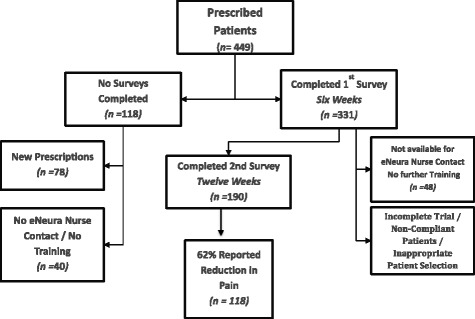
Background: Single pulse transcranial magnetic stimulation (sTMS) is a novel treatment for acute migraine. Previous randomised controlled data demonstrated that sTMS is effective and well tolerated in the treatment of migraine with aura. The aim of the programme reported here was to evaluate patient responses in the setting of routine clinical practice. Methods: Migraine patients with and without aura treating with sTMS had an initial review (n = 426) and training call, and then participated in telephone surveys at week six (n = 331) and week 12 during a 3-month treatment period (n = 190). Results: Of patients surveyed with 3 month data (n = 190; episodic, n = 59; chronic, n = 131), 62 % reported pain relief, finding the device effective at reducing or alleviating migraine pain; in addition there was relief reported of associated features: nausea- 52 %; photophobia- 55 %; and phonophobia- 53 %. At 3 months there was a reduction in monthly headache days for episodic migraine, from 12 (median, 8–13 IQ range) to 9 (4–12) and for chronic migraine, a reduction from 24 (median, 16–30 IQ range) to 16 (10–30). There were no serious or unanticipated adverse events. Conclusion: sTMS may be a valuable addition to options for the treatment of both episodic and chronic migraine.
Overview
The claims and statistics of this paper haven’t been checked yet.
Free: it reads the open-access text and checks the first 5 claims that cite a source we can check. Create a free account to check every claim.
Integrity signals
Registry
Cites
Statistics
Figures
Verification
Claims the paper makes
The claims and statistics of this paper haven’t been checked yet.
Free: it reads the open-access text and checks the first 5 claims that cite a source we can check. Create a free account to check every claim.
Claims other papers make about this one
Each is checked against this paper’s own text: does it say what the citing paper says it does?
The source backs part of the claim, not all of it — or backs it for a different population, condition or comparison.
In the citing paper
“In migraines, especially with aura, single-pulse TMS studies report significant reductions in monthly headache days, sustained up to 12 months in difficult-to-treat cohorts [107,108,109,110,111,119,120,121,122], while results for chronic migraine remain inconclusive [117,122].”
From The Heart’s Electromagnetic Field in Emotions, Empathy and Human Connection: Biosensor-Derived Insights into Heart–Brain Axis Mechanisms and a Basis for Novel BioMagnetoTherapies (2026) · cites this paper as [121]
Experimental — accuracy not yet measured
Self-check
Percentages, sums and reported differences re-computed from the paper’s own numbers.
The self-check needs the paper’s full text.
Citations
Cites
Murray, C. J. L., Vos, T., Lozano, R., Naghavi, M., Flaxman, A. D., Michaud, C., Ezzati, M., Shibuya, K., Salomon, J. A., Abdalla, S., et al. (2012) · The Lancet · doi:10.1016/s0140-6736(12)61689-4 · Cited by 8,888
The International Classification of Headache Disorders, 3rd edition (beta version)
Headache Classification Committee of the International Headache Society (IHS) (2013) · Cephalalgia · doi:10.1177/0333102413485658 · Cited by 8,229
NON-INVASIVE MAGNETIC STIMULATION OF HUMAN MOTOR CORTEX
Barker, A. T., Jalinous, R., & Freeston, I. L. (1985) · The Lancet · doi:10.1016/s0140-6736(85)92413-4 · Cited by 4,460 · cited 1×
“Transcranial magnetic stimulation (TMS) was first described in 1985 [8] and followed seminal work by Merton, Morton and Marsden [9] who had used electrical stimulation of the cortex to dissect questions around the cortical influence on motor reflexes [9–11], and had found the stimulus painful to subjects.”
BackgroundInterplay between Cortical Spreading Depolarization and Seizures
Kramer, D. R., Fujii, T., Ohiorhenuan, I., & Liu, C. Y. (2017) · Stereotactic and Functional Neurosurgery · doi:10.1159/000452841 · Cited by 3,696
Migraine — Current Understanding and Treatment
Goadsby, P. J., Lipton, R. B., & Ferrari, M. D. (2002) · New England Journal of Medicine · doi:10.1056/nejmra010917 · Cited by 1,918
Self-citationTranscranial magnetic stimulation in neurology
Kobayashi, M., & Pascual-Leone, A. (2003) · The Lancet Neurology · doi:10.1016/s1474-4422(03)00321-1 · Cited by 1,297 · cited 2×
“This frequency was 11 [6, 16] at 6 weeks and 8 [3, 13] at 12 weeks.”
BackgroundPathophysiology of the migraine aura: The spreading depression theory
Lauritzen, M. (1994) · Brain · doi:10.1093/brain/117.1.199 · Cited by 1,151
An international study to assess reliability of the Migraine Disability Assessment (MIDAS) score
Stewart, W. F., Lipton, R. B., Whyte, J., Dowson, A., Kolodner, K., Liberman, J. N., & Sawyer, J. (1999) · Neurology · doi:10.1212/wnl.53.5.988 · Cited by 621 · cited 1×
“Over time, it also became important to measure the impact of the benefit to patients [25].”
BackgroundThe clinical diagnostic utility of transcranial magnetic stimulation: Report of an IFCN committee
Chen, R., Cros, D., Curra, A., Di Lazzaro, V., Lefaucheur, J.-P., Magistris, M. R., Mills, K., Rösler, K. M., Triggs, W. J., Ugawa, Y., et al. (2008) · Clinical Neurophysiology · doi:10.1016/j.clinph.2007.10.014 · Cited by 612
Diencephalic and brainstem mechanisms in migraine
Akerman, S., Holland, P. R., & Goadsby, P. J. (2011) · Nature Reviews Neuroscience · doi:10.1038/nrn3057 · Cited by 532 · cited 1×
“While much has been determined about the biology of migraine in recent times [4], and the future is promising [5], much needs to be done for the burden on patients and society that migraine brings.”
BackgroundSelf-citation
Research works printed but not linked: 4
- Mohammad YM Kothari R Hughes G Krumah MN Fischell S Fischell R Transcranial magnetic stimulation (TMS) relieves migraine headache Eur J Neurol 2006 13 Suppl 2 23
- Holland PR Schembri C Fredrick J Goadsby PJ Transcranial magnetic stimulation for the treatment of migraine aura? Cephalalgia 2009 29 Suppl 1 22
- Bhola R Lipscombe S Giffin N Elrington G Weatherall M Ahmed F Update of the UK post market pilot programme with single pulse transcranial magnetic stimulation (sTMS) for acute treatment of migraine Cephalalgia 2013 33 973
- Ahmed F, Goadsby PJ, Bhola R, Reinhold T, Bruggenjurgen B. Treatment cost analysis of refractory chronic migraine patients in a UK NHS setting [Abstract]. Cephalalgia. 2015;35:in press.
Cited by
Pathophysiology of migraine: a disorder of sensory processing
Goadsby, P. J., Holland, P. R., Martins-Oliveira, M., Hoffmann, J., Schankin, C., & Akerman, S. (2017) · Physiological Reviews · doi:10.1152/physrev.00034.2015 · Cited by 1,998
“Moreover, it can be shown in rat that transcranial magnetic stimulation, which is effective for acute migraine with aura (537) and probably as a preventive when used regularly (94), can block CSD effects on trigeminothalamic neurons after a single pulse (45).”
BackgroundSelf-citationChronic migraine: risk factors, mechanisms and treatment
May, A., & Schulte, L. H. (2016) · Nature Reviews Neurology · doi:10.1038/nrneurol.2016.93 · Cited by 630
Treatment of Cluster Headache: The American Headache Society Evidence‐Based Guidelines
Robbins, M. S., Starling, A. J., Pringsheim, T. M., Becker, W. J., & Schwedt, T. J. (2016) · Headache: The Journal of Head and Face Pain · doi:10.1111/head.12866 · Cited by 258
Migraine: from pathophysiology to treatment
Puledda, F., Silva, E. M., Suwanlaong, K., & Goadsby, P. J. (2023) · Journal of Neurology · doi:10.1007/s00415-023-11706-1 · Cited by 187
“A handheld sTMS device is now approved in the USA and Europe for the acute and preventive treatment of migraine, following positive results as an acute migraine treatment in a RCT involving 164 migraineurs with aura [203] and subsequent post-marketing survey [204] and open-label study [205] demonstrating an effect on…”
BackgroundSelf-citationStarling, A. J., Tepper, S. J., Marmura, M. J., Shamim, E. A., Robbins, M. S., Hindiyeh, N., Charles, A. C., Goadsby, P. J., Lipton, R. B., Silberstein, S. D., et al. (2018) · Cephalalgia · doi:10.1177/0333102418762525 · Cited by 162
“Additional analyses compared ESPOUSE results to post market observational data collected in the UK study for preventive treatment of chronic migraine (16).”
BackgroundMethodResultInfluentialSelf-citationYang, S., & Chang, M. C. (2020) · Frontiers in Neurology · doi:10.3389/fneur.2020.00114 · Cited by 182
An update on migraine: current understanding and future directions
Puledda, F., Messina, R., & Goadsby, P. J. (2017) · Journal of Neurology · doi:10.1007/s00415-017-8434-y · Cited by 181
“Moreover, a post-marketing phone-based survey [119] on 190 episodic and chronic migraine patients revealed that 62% had a reduction in their migraine headaches and 59% reported a decrease in the number of headache days after a 12-week treatment.”
BackgroundSelf-citationAndreou, A. P., Holland, P. R., Akerman, S., Summ, O., Fredrick, J., & Goadsby, P. J. (2016) · Brain · doi:10.1093/brain/aww118 · Cited by 145
“Our data suggest that such thalamic modulation may explain the efficacy of single pulse TMS in migraine pain as seen in clinical settings (Bhola et al., 2015).”
BackgroundSelf-citationNon-Pharmacological Approaches for Migraine
Puledda, F., & Shields, K. G. (2018) · Neurotherapeutics · doi:10.1007/s13311-018-0623-6 · Cited by 160
“A UK open-label study [59] was performed to review the post-market use of SpringTMS ®device (eNeura, Baltimore, USA) in a large number of episodic and chronic migraineurs, both with and without aura.”
MethodLeung, A., Shirvalkar, P. R., Chen, R. E., Kuluva, J. E., Vaninetti, M., Bermudes, R. A., Poree, L. R., Wassermann, E. M., Kopell, B. H., & Levy, R. M. (2020) · Neuromodulation Technology at the Neural Interface · doi:10.1111/ner.13094 · Cited by 132
“Migraine Prevention A postmarketing survey in the United Kingdom (class IV study) (50) reported decreased number of headache days for those with episodic or chronic migraine compared to baseline.”
Stilling, J., Monchi, O., Amoozegar, F., & Debert, C. T. (2019) · Headache The Journal of Head and Face Pain · doi:10.1111/head.13479 · Cited by 125
Transcranial Magnetic Stimulation as Treatment in Multiple Neurologic Conditions
Iglesias, A. H. (2020) · Current Neurology and Neuroscience Reports · doi:10.1007/s11910-020-1021-0 · Cited by 132
Is There a Future for Non-invasive Brain Stimulation as a Therapeutic Tool?
Terranova, C., Rizzo, V., Cacciola, A., Chillemi, G., Calamuneri, A., Milardi, D., & Quartarone, A. (2019) · Frontiers in Neurology · doi:10.3389/fneur.2018.01146 · Cited by 114
“These results have been confirmed by another subsequent study (75).”
ResultTranscranial Magnetic Stimulation: Basic Principles and Clinical Applications in Migraine
Barker, A. T., & Shields, K. G. (2016) · Headache The Journal of Head and Face Pain · doi:10.1111/head.13002 · Cited by 115
“In the first article, a UK study in 2015, investigators sought to assess patient response to sTMS in conventional clinical settings.(35) The study allowed migraine patients with and without aura to participate.”
BackgroundResultNeurostimulation methods in the treatment of chronic pain
Moisset, X., Lantéri‐Minet, M., & Fontaine, D. (2019) · Journal of Neural Transmission · doi:10.1007/s00702-019-02092-y · Cited by 100
New strategies for the treatment and prevention of primary headache disorders
Schuster, N. M., & Rapoport, A. M. (2016) · Nature Reviews Neurology · doi:10.1038/nrneurol.2016.143 · Cited by 97
Hyperacusis in chronic pain: neural interactions between the auditory and nociceptive systems
Suhnan, A. P., Finch, P. M., & Drummond, P. D. (2017) · International Journal of Audiology · doi:10.1080/14992027.2017.1346303 · Cited by 69
“…n er v o u s sy st em ar e in v o lv ed in m ig ra in e the cortex as a novel form of acute migraine treatment; a recent study found that in addition to migraine pain reduction, 53% of participants also reported noticeable relief from phonophobia over a 3-month treatment period (Bhola et al, 2015).”
BackgroundShirahige, L., Melo, L., Nogueira, F., Rocha, S., & Monte‐Silva, K. (2016) · Headache: The Journal of Head and Face Pain · doi:10.1111/head.12981 · Cited by 69
Akerman, S., Romero‐Reyes, M., & Holland, P. R. (2016) · Pharmacology & Therapeutics · doi:10.1016/j.pharmthera.2016.12.005 · Cited by 73
An Update on Non‐Pharmacological Neuromodulation for the Acute and Preventive Treatment of Migraine
Puledda, F., & Goadsby, P. J. (2017) · Headache The Journal of Head and Face Pain · doi:10.1111/head.13069 · Cited by 77
Self-citationNeurostimulation in the treatment of primary headaches
Miller, S., Sinclair, A. J., Davies, B., & Matharu, M. S. (2016) · Practical Neurology · doi:10.1136/practneurol-2015-001298 · Cited by 68
Kalita, J., Laskar, S., Bhoi, S. K., & Misra, U. K. (2016) · Journal of Neurology · doi:10.1007/s00415-016-8257-2 · Cited by 65
“Single pulse transcranial magnetic stimulation (sTMS) is now an approved therapy for acute migraine with aura in Europe and in USA [9].”
BackgroundNoninvasive neurostimulation methods for migraine therapy: The available evidence
Schoenen, J. E., Baschi, R., Magis, D., & Coppola, G. (2016) · Cephalalgia · doi:10.1177/0333102416636022 · Cited by 59
“(5) evaluated sTMS in 190 episodic (EM) or chronic migraine (CM) patients who had previously found acute medications intolerable, ineffective, or contraindicated.”
BackgroundArguments against the role of cortical spreading depression in migraine
Borgdorff, P. (2018) · Neurological Research · doi:10.1080/01616412.2018.1428406 · Cited by 60
Transcranial Magnetic Stimulation for Migraine Prevention in Adolescents: A Pilot Open‐Label Study
Irwin, S. L., Qubty, W. F., Allen, I. E., Patniyot, I. R., Goadsby, P. J., & Gelfand, A. A. (2018) · Headache The Journal of Head and Face Pain · doi:10.1111/head.13284 · Cited by 57
“5), 12-17 Sex: females (% females), males 14 females (67%), 7 males Age of first headaches: mode, average (range) (years) 5, 9 (3-15) Age headaches became troublesome: mode, average (range) (years) 14, 11 (5-15) Family history of headaches: n (%) 19 (90%) Family history of migraine: n (%) 17 (81%) Weight: mean (SD) (k…”
Self-citationGranato, A., Fantini, J., Monti, F., Furlanis, G., Ilbeh, S. M., Semenic, M., & Manganotti, P. (2018) · Journal of Clinical Neuroscience · doi:10.1016/j.jocn.2018.09.021 · Cited by 54
Grazzi, L., Toppo, C., D’Amico, D., Leonardi, M., Martelletti, P., Raggi, A., & Guastafierro, E. (2021) · International Journal of Environmental Research and Public Health · doi:10.3390/ijerph18041503 · Cited by 51
“Other studies [30,31], conducted on episodic migraine and CM, presented encouraging results such as reduction in headache days per month after a period of neurostimulation treatment.”
BackgroundTreatment Update of Chronic Migraine
Cho, S., Song, T., & Chu, M. K. (2017) · Current Pain and Headache Reports · doi:10.1007/s11916-017-0628-6 · Cited by 56
Goadsby, P. J. (2016) · Brain · doi:10.1093/brain/aww236 · Cited by 46
“Transcranial magnetic stimulation (TMS) Single pulse TMS (Lipton et al., 2010; Bhola et al., 2015) Marketed”
BackgroundSelf-citationManagement of primary headaches during pregnancy, postpartum, and breastfeeding: A systematic review
Saldanha, I. J., Cao, W., Bhuma, M. R., Konnyu, K. J., Adam, G. P., Mehta, S., Zullo, A. R., Chen, K. K., Roth, J. L., & Balk, E. M. (2021) · Headache The Journal of Head and Face Pain · doi:10.1111/head.14041 · Cited by 56
Tepper, S. J. (2019) · Neurologic Clinics · doi:10.1016/j.ncl.2019.07.006 · Cited by 42
Wu, D., Zhou, Y., Xiang, J., Tang, L., Liu, H., Huang, S., Wu, T., Chen, Q., & Wang, X. (2016) · The Journal of Headache and Pain · doi:10.1186/s10194-016-0636-7 · Cited by 41
“For example, the repetitive transcranial magnetic stimulation (rTMS) is thought to be effective and well tolerated in the treatment of migraine with aura [43] because high-frequency rTMS increases and low-frequency rTMS decreases the neural excitability of the stimulated cortex [44–46].”
BackgroundViganò, A., Toscano, M., Puledda, F., & Piero, V. D. (2019) · Frontiers in Pharmacology · doi:10.3389/fphar.2019.00032 · Cited by 53
“LTP and LTD are mathematically predicted by the Bienenstock–Cooper–Munro (BCM) theory (Bienenstock et al., 1982).”
MethodMigraine and Tension-Type Headache
Kahriman, A., & Zhu, S. (2018) · Seminars in Neurology · doi:10.1055/s-0038-1673683 · Cited by 53
Neuromodulation for the Acute and Preventive Therapy of Migraine and Cluster Headache
Singh, R. B. H., Ailani, J., & Robbins, M. S. (2019) · Headache The Journal of Head and Face Pain · doi:10.1111/head.13586 · Cited by 36
“A postmarketing study of single-pulse transcranial magnetic stimulation in the United Kingdom did include 3 pregnant women with frequent episodic or chronic migraine who used the device.(60) All 3 patients treated their attacks repeatedly during pregnancy and reported some degree of benefit, with no labor or delivery…”
BackgroundExcitation-Inhibition Imbalance in Migraine: From Neurotransmitters to Brain Oscillations
O’Hare, L., Tarasi, L., Asher, J. M., Hibbard, P. B., & Romei, V. (2023) · International Journal of Molecular Sciences · doi:10.3390/ijms241210093 · Cited by 44
“The treatment is to apply either single or double pulses up to a maximum of 16 in total per day to the occipital cortex and has beem shown to have benefits reducing pain and other symptoms of migraine such as nausea [244].”
BackgroundPrimary headache disorders: Five new things
Goadsby, P. J. (2019) · Neurology Clinical Practice · doi:10.1212/cpj.0000000000000654 · Cited by 36
Self-citationPeripheral Neuromodulation for the Management of Headache
Urits, I., Schwartz, R. H., Smoots, D., Koop, L., Veeravelli, S., Orhurhu, V., Cornett, E. M., Manchikanti, L., Kaye, A. D., Imani, F., et al. (2020) · Anesthesiology and Pain Medicine · doi:10.5812/aapm.110515 · Cited by 35
Non-pharmacological Approaches for Headaches in Young Age: An Updated Review
Andrasik, F., Grazzi, L., Sansone, E., D’Amico, D., Raggi, A., & Grignani, E. (2018) · Frontiers in Neurology · doi:10.3389/fneur.2018.01009 · Cited by 33
Cortical Mechanisms of Single-Pulse Transcranial Magnetic Stimulation in Migraine
Lloyd, J. O., Chisholm, K. I., Oehle, B., Jones, M. G., Okine, B. N., Al-Kaisy, A. A., Lambru, G., McMahon, S. B., & Andreou, A. P. (2020) · Neurotherapeutics · doi:10.1007/s13311-020-00879-6 · Cited by 34
Robbins, M. S. (2018) · CONTINUUM Lifelong Learning in Neurology · doi:10.1212/con.0000000000000642 · Cited by 43
Migraine with and without aura—two distinct entities? A narrative review
Grodzka, O., Dzagoevi, K., Rees, T. A., Cabral, G., Chądzyński, P. R., Antonio, S. D., Sochań, P., MaassenVanDenBrink, A., & Lampl, C. (2025) · The Journal of Headache and Pain · doi:10.1186/s10194-025-01998-1 · Cited by 41
“Moreover, studies suggest that sTMS can be a valuable option in the therapy of both episodic and chronic migraine regardless of the aura presence [180, 181].”
Neuromodulation for Chronic Daily Headache
Coppola, G., Magis, D., Casillo, F., Sebastianelli, G., Abagnale, C., Cioffi, E., Lenola, D. D., Lorenzo, C. D., & Serrao, M. (2022) · Current Pain and Headache Reports · doi:10.1007/s11916-022-01025-x · Cited by 32
Antal, A., Bischoff, R., Stephani, C., Czesnik, D., Klinker, F., Timäus, C., Chaieb, L., & Paulus, W. (2020) · Brain Sciences · doi:10.3390/brainsci10110888 · Cited by 27
“Based on telephone interviews, single pulse TMS in 190 episodic or chronic migraine patients reduced the number of headache days after 12 weeks of treatment in nearly 60% of patients in whom acute medications were contraindicated or ineffective [42].”
BackgroundNon-Pharmacological Treatment for Chronic Migraine
Han, X., & Yu, S. (2023) · Current Pain and Headache Reports · doi:10.1007/s11916-023-01162-x · Cited by 29
“Strong evidence for the efficacy and tolerability of sTMS for acute and preventive treatment of migraine has been provided by a randomized open-label study from the UK [10] and a multicenter, prospective, open-label, observational study from the USA [11].”
BackgroundA new era in headache treatment
Vikelis, M., Spingos, K. C., & Rapoport, A. M. (2018) · Neurological Sciences · doi:10.1007/s10072-018-3337-y · Cited by 25
Transcranial Magnetic Stimulation for the Treatment of Pediatric Neurological Disorders
Malone, L. A., & Sun, L. R. (2019) · Current Treatment Options in Neurology · doi:10.1007/s11940-019-0600-3 · Cited by 24
Lloyd, J. O., Hill, B., Murphy, M., Al-Kaisy, A., Andreou, A. P., & Lambru, G. (2022) · The Journal of Headache and Pain · doi:10.1186/s10194-022-01428-6 · Cited by 21
Yuan, H., Orr, S. L., Al‐Karagholi, M. A., Ashina, M., Cohen, F., Diener, H., Dodick, D. W., Jensen, R., Marmura, M. J., Martinelli, D., et al. (2025) · Cephalalgia · doi:10.1177/03331024251388377 · Cited by 26
“SAVI Dual can be an option for the treatment of acute migraine attacks in subjects with EM without aura or chronic migraine (CM) with/without aura (31).”
Current concepts in migraine and their relevance to pregnancy
Afridi, S. K. (2018) · Obstetric Medicine · doi:10.1177/1753495x18769170 · Cited by 23
Noninvasive Neuromodulation in Migraine
Blech, B., & Starling, A. J. (2020) · Current Pain and Headache Reports · doi:10.1007/s11916-020-00914-3 · Cited by 21
Non-Invasive Neurostimulation Methods for Acute and Preventive Migraine Treatment—A Narrative Review
Evers, S. (2021) · Journal of Clinical Medicine · doi:10.3390/jcm10153302 · Cited by 27
“patients experienced pain relief and a reduction in monthly headache days in both episodic and chronic migraine [32].”
BackgroundMigraine and Neuromodulation: A Literature Review
Tiwari, V., & Agrawal, S. (2022) · Cureus · doi:10.7759/cureus.31223 · Cited by 21
“With the evidence of an improved benefit at twelve weeks compared with six weeks, patients should routinely utilize the instrument for at least three months before evaluating its effectiveness [25].”
BackgroundHeadaches Through a Woman's Life
Bushman, E. T., Varner, M. W., & Digre, K. B. (2018) · Obstetrical & Gynecological Survey · doi:10.1097/ogx.0000000000000540 · Cited by 19
“Although poorly studied in pregnancy, there has been 1 report of 3 women who received transcranial magnetic stimulation during pregnancy, and all 3 women showed improvement.(49) A neurologist should evaluate patients prior to initiation of nerve stimulation to see if this form of treatment would be a good therapeutic…”
BackgroundNon-Invasive Neuromodulation for Headache Disorders
Zhu, S., & Marmura, M. J. (2016) · Current Neurology and Neuroscience Reports · doi:10.1007/s11910-015-0620-7 · Cited by 19
Non-invasive Neuromodulation in Primary Headaches
Miller, S., & Matharu, M. S. (2017) · Current Pain and Headache Reports · doi:10.1007/s11916-017-0608-x · Cited by 17
Arca, K. N., Lambru, G., & Starling, A. J. (2024) · Handbook of clinical neurology · doi:10.1016/b978-0-12-823357-3.00003-3 · Cited by 16
Vollbracht, S., & Rapoport, A. M. (2014) · Neurological Sciences · doi:10.1007/s10072-014-1747-z · Cited by 18
Noninvasive neuromodulation in migraine and cluster headache
Starling, A. J. (2018) · Current Opinion in Neurology · doi:10.1097/wco.0000000000000557 · Cited by 18
Managing migraine in pregnancy and breastfeeding
Parikh, S. K., Delbono, V., & Silberstein, S. D. (2020) · Progress in brain research · doi:10.1016/bs.pbr.2020.07.011 · Cited by 25
Migraine: navigating the hormonal minefield
Afridi, S. K. (2019) · Practical Neurology · doi:10.1136/practneurol-2019-002332 · Cited by 17
Emerging Treatments in Episodic Migraine
Grimsrud, K. W., & Singh, R. B. H. (2018) · Current Pain and Headache Reports · doi:10.1007/s11916-018-0716-2 · Cited by 15
Noninvasive Neuromodulation in Headache: An Update
Lloyd, J. O., Biloshytska, M. V., Andreou, A. P., & Lambru, G. (2021) · Neurology India · doi:10.4103/0028-3886.315998 · Cited by 15
Migraine: a brain state amenable to therapy
Eller, M., & Goadsby, P. J. (2019) · The Medical Journal of Australia · doi:10.5694/mja2.50435 · Cited by 16
Self-citationManagement of Primary Headaches in Pregnancy
Saldanha, I. J., Roth, J. L., Chen, K. K., Zullo, A. R., Adam, G. P., Konnyu, K. J., Cao, W., Bhuma, M. R., Kimmel, H. J., Mehta, S., et al. (2020) · doi:10.23970/ahrqepccer234 · Cited by 17
The complex landscape of TMS devices: A brief overview
Gutiérrez-Muto, A. M., Bestmann, S., de la Torre, R. S., Pons, J. L., Oliviero, A., & Tornero, J. (2023) · PLoS ONE · doi:10.1371/journal.pone.0292733 · Cited by 20
Neurostimulation Treatment in Chronic Cluster Headache—a Narrative Review
Evers, S., & Summ, O. (2021) · Current Pain and Headache Reports · doi:10.1007/s11916-021-00989-6 · Cited by 12
Hulla, R., & Dougall, A. L. (2019) · Cephalalgia Reports · doi:10.1177/2515816319889971 · Cited by 12
Central and Peripheral Neural Targets for Neurostimulation of Chronic Headaches
Leone, M., & Cecchini, A. P. (2017) · Current Pain and Headache Reports · doi:10.1007/s11916-017-0616-x · Cited by 12
Lau, C. I., Chen, W., & Walsh, V. (2020) · Progress in brain research · doi:10.1016/bs.pbr.2020.05.018 · Cited by 11
Emerging Treatment Options for Migraine
Zhao, Y. J., Ong, J. J., & Goadsby, P. J. (2020) · Annals of the Academy of Medicine Singapore · doi:10.47102/annals-acadmed.sg.2019255 · Cited by 10
Self-citationBrüggenjürgen, B., Baker, T., Bhogal, R., & Ahmed, F. (2016) · SpringerPlus · doi:10.1186/s40064-016-2924-8 · Cited by 15
“TMS patients reported minor neurologic symptoms only lasting up to 30 min after applying the first pulse (20 %) (Bhola et al. 2015).”
BackgroundSelf-citationApplications of transcranial magnetic stimulation in migraine: Evidence from a scoping review
Calabrò, R. S., Billeri, L., Manuli, A., Iacono, A., & Naro, A. (2022) · Journal of Integrative Neuroscience · doi:10.31083/j.jin2104110 · Cited by 9
“The subjects reported a significant clinical improvement in 62% of patients, including the reduction in monthly headache days and attack duration in both episodic and chronic migraine, in addition to a reduction in disability [32].”
BackgroundGrazzi, L., Sansone, E., & Rizzoli, P. B. (2018) · Current Pain and Headache Reports · doi:10.1007/s11916-018-0654-z · Cited by 11
von Deneen, K. M., Zhao, L., & Liu, J. (2019) · Brain Science Advances · doi:10.26599/bsa.2019.9050021 · Cited by 8
“TMS can be used both diagnostically and therapeutically to prevent and treat migraine [24].”
BackgroundUnique Populations with Episodic Migraine: Pregnant and Lactating Women
Parikh, S. K. (2018) · Current Pain and Headache Reports · doi:10.1007/s11916-018-0737-x · Cited by 9
Migraine management during pregnancy, breastfeeding and in women planning pregnancy
Ornello, R., MaassenVanDenBrink, A., Puledda, F., Sandoe, C. H., Iannone, L. F., Pelzer, N., Lee, M. J., Haghdoost, F., Gómez‐Dabó, L., Pozo‐Rosich, P., et al. (2025) · Cephalalgia · doi:10.1177/03331024251393945 · Cited by 10
“One post-marketing study analyzing the effect of TMS for migraine reported three women who used the device in the second trimester of pregnancy, with no adverse events (123).”
Transcranial Magnetic Stimulation in Neuropsychiatry
Rabins, P. V. (2001) · American Journal of Psychiatry · doi:10.1176/appi.ajp.158.10.1753-a · Cited by 7
Personalized TMS: role of RNA genotyping
Chan, S. T., & Bota, R. G. (2019) · Mental Illness · doi:10.1108/mij-10-2019-0004 · Cited by 7
Puledda, F., Moreno‐Ajona, D., & Goadsby, P. J. (2021) · European Journal of Neurology · doi:10.1111/ene.14747 · Cited by 6
“This is a noninvasive and safe technique that has shown great potential in the treatment of migraine [7] Although the randomised controlled trial for the eNeura sTMS only included migraine patients with aura [8] subsequent open- label data showed that subjects without aura can also benefit from the device [9] The init…”
MethodSelf-citationСорокина, Н. Д., Pertsov, S. S., & Selitsky, G. V. (2018) · I P Pavlov Russian Medical Biological Herald · doi:10.23888/pavlovj2018263417-429 · Cited by 9
“On the basis of the obtained data the authors came to conclusion that sTMS is an effective means of treatment both for chronic and episodic migraine, with and without aura [24].”
BackgroundMaasumi, K., Tepper, S. J., & Rapoport, A. M. (2017) · Neurological Sciences · doi:10.1007/s10072-017-2910-0 · Cited by 7
“, is effective and FDA approved for acute treatment for migraine with aura [49].”
BackgroundMethodThe Use of Electroceuticals and Neuromodulation in the Treatment of Migraine and Other Headaches
Miller, S., & Matharu, M. S. (2017) · Springer eBooks · doi:10.1007/978-3-319-28612-9_1 · Cited by 5
“An open-label post-marketing survey included data on the acute treatment of migraine with and without aura in 190 patients who used the device for three months.(86) At the end of follow-up, 105 patients had discontinued the treatment mainly due to lack of efficacy, cost or convenience.”
MethodCheng, C.-T., Law, G. T. W. M., Roman, C., Tan, G. A., & Mitra, B. (2016) · Journal of emergency medicine, trauma & acute care · doi:10.5339/jemtac.2016.10 · Cited by 5
“In addition, the use of transcutaneous magnetic stimulation has also demonstrated pain relief at two hours post-treatment but this is only currently available in the United Kingdom and United States.(27,28) In addition, alternative therapies such as acupuncture and mindfulness meditation have been documented to be use…”
MethodHyperacusis questionnaire and event-related potential correlation in migraine patients
Qi, L., Jilei, Z., Yu, L., & Jing, Y. (2024) · Scientific Reports · doi:10.1038/s41598-024-65014-3 · Cited by 5
“This suggests that pain and auditory sensitivities in migraine patients may be related to cortical hyperexcitability 3 .”
BackgroundPeripheral Neuromodulation for the Treatment of Migraine and Headache: Recent Advances
Hou, A. Y., Chen, A. Y., Yuan, H., & Silberstein, S. D. (2019) · Bioelectronics in Medicine · doi:10.2217/bem-2019-0024 · Cited by 6
New Advancements in Migraine Assessment and Treatment
Beres, S., & Liu, G. T. (2016) · Advances in Ophthalmology and Optometry · doi:10.1016/j.yaoo.2016.03.005 · Cited by 3
Rao, V. P., Kim, Y. K., Ghazi, A., Park, J. Y., & Munir, K. M. (2023) · Pain Practice · doi:10.1111/papr.13269 · Cited by 4
“15,16 Despite its unclear mechanism, TCMS has shown efficacy in providing analgesia for migraines, 17 fibromyalgia, 18 osteo-arthritis, 19 and various types of neuropathic pain.”
The Use of Transcutaneous Magnetic Stimulation to Treat Painful Diabetic Neuropathy
Rao, V. P., Satyarengga, M., Lamos, E. M., & Munir, K. M. (2021) · Journal of Diabetes Science and Technology · doi:10.1177/19322968211026943 · Cited by 3
Therapeutic Management: When and What
Mavridis, T., Breza, M., Deligianni, C. I., & Mitsikostas, D. D. (2020) · IntechOpen eBooks · doi:10.5772/intechopen.93096 · Cited by 3
Management of medication overuse headache
D’Amico, D., Grazzi, L., & Tepper, S. J. (2024) · Handbook of clinical neurology · doi:10.1016/b978-0-12-823357-3.00026-4 · Cited by 3
Non-Pharmacological Treatments of Migraine: Current Evidence and Clinical Practice
Onan, D., Christensen, R. H., Kodounis, M., Krøll, L. S., Szabó, E., Ornello, R., Al‐Khazali, H. M., Robinson, C. L., & Ashina, S. (2026) · Current Pain and Headache Reports · doi:10.1007/s11916-026-01531-2 · Cited by 2
Neuromodulation in the Treatment of Migraine: Progress in Nerve Stimulation
Samsam, M., & Ahangari, R. (2016) · Neuro - Open Journal · doi:10.17140/noj-3-122 · Cited by 2
Paramatic design of transranial magnetic stimulation coil based on VB and Ansoft Maxwell
Yu, L., Xiong, W., Zhang, H., Zhao, W. X., Yuan, Y., Liang, Z., Xiaoli Li, A., & Li, Y. (2017) · Chinese Automation Congress · doi:10.1109/cac.2017.8243570 · Cited by 2
Holdridge, A., Buczyner, J., Cabret-Aymat, C., & Le, A. (2022) · Seminars in Neurology · doi:10.1055/s-0042-1758781 · Cited by 3
Special considerations in migraine during pregnancy and lactation
Afridi, S. K., & Dassan, P. (2024) · Handbook of clinical neurology · doi:10.1016/b978-0-12-823357-3.00025-2 · Cited by 2
Medical Hypothesis: Deep Brain Stimulation for Intractable Migraine
Gazerani, P., & Cairns, B. E. (2021) · OBM Neurobiology · doi:10.21926/obm.neurobiol.2101082 · Cited by 2
“Two studies from 2015 [62] and 2018 [63] also reported efficacy and tolerability of the device in migraineurs with or without aura.”
BackgroundThe Role of Noninvasive Neuromodulation in Migraine Management
Puledda, F., & Goadsby, P. J. (2016) · European Neurological Review · doi:10.17925/enr.2016.11.02.106 · Cited by 2
Self-citationWong, H. T., & Ahmed, F. (2019) · Headache · doi:10.1007/978-3-030-14121-9_18 · Cited by 2
Self-citationPalantzas, A., & Anagnostouli, M. (2026) · Sensors · doi:10.3390/s26051738 · Cited by 1
Metadata
- Authors
- Bhola, R., Kinsella, E., Giffin, N., Lipscombe, S., Ahmed, F., Weatherall, M., & Goadsby, P. J.
- Affiliations
- Royal United Hospital (GB)
- Royal Sussex County Hospital (GB)
- Hull Royal Infirmary (GB)
- Charing Cross Hospital (GB)
- King's College London (GB)
- Corresponding author
- Goadsby, Peter J
- Venue
- The Journal of Headache and Pain
- Published
- 2015-06-03
- Volume
- 16
- Issue
- 1
- Pages
- 535-535
- ISSN
- 1129-2369 (ISSN-L)
- 1129-2377
- PMC
- PMC4463955
- OpenAlex
- W1509044825
- Cited by
- 138
- References
- 31
- Citations by year
- 2026: 6 · 2025: 9 · 2024: 6 · 2023: 9 · 2022: 8 · 2021: 16 · 2020: 14 · 2019: 18 · 2018: 21 · 2017: 10 · 2016: 19
- FWCI
- 13.52
- Type
- journal article
- Language
- en
- Open access
- gold
- doi.org
- Locations
- The Journal of Headache and Pain (publishedVersion, cc-by)
- PubMed Central (publishedVersion, cc-by)
- PubMed (publishedVersion)
- eScholarship (California Digital Library) (submittedVersion)
- Research Portal (King's College London) (submittedVersion, cc-by)
- Topics
- Health Sciences › Medicine › Clinical Neurology › Migraine and Headache Studies
- Life Sciences › Neuroscience › Neurology › Transcranial Magnetic Stimulation Studies
- Health Sciences › Dentistry › Oral Surgery › Temporomandibular Joint Disorders
- Keywords
- single-pulse transcranial magnetic stimulation, acute migraine treatment, migraine with aura, episodic migraine, chronic migraine, headache days, analgesia, photophobia, phonophobia, nausea, real-world effectiveness, patient-reported outcomes
- MeSH terms
- Adult, Double-Blind Method, Female, Humans, Male, Middle Aged, Migraine Disorders, Nausea, Pilot Projects, Hyperacusis, Outcome Assessment, Health Care, Photophobia, Transcranial Magnetic Stimulation
About these checks
Registry, retraction, Cites and statistics results are computed, not judged, with one exception: a printed reference that no index lists is read once by a model before it counts as a citation error. Claims are extracted by a model and kept only when their quote appears verbatim in the text; each cited source is then checked, with a model’s help, for whether it says what the claim relies on. Those verdicts can be wrong — read the claim’s quote and the cited source before relying on one.
Statistics and arithmetic are recomputed, not judged.
Confidence bands are shown only for fields calibrated on our annotated test set. None is calibrated yet, so no band is shown.
What counts as a claim ›How we measure confidence ›How we check this ›
Are you an author, or do you see a problem with this page? Request a review
Data sources
Bibliographic data: Semantic Scholar, OpenAlex, Crossref.
Contains information from the Semantic Scholar Academic Graph Datasets, made available under the ODC Attribution License (ODC-BY 1.0).
Semantic Scholar’s data is described in: Kinney, R., et al. (2023). The Semantic Scholar Open Data Platform. arXiv:2301.10140.
