

Effects of resistance training in healthy older people with sarcopenia: a systematic review and meta-analysis of randomized controlled trials.
Open accessThe DOI matches its Crossref record; 61 of the 61 references it cites were found in a registry or an index.
Abstract
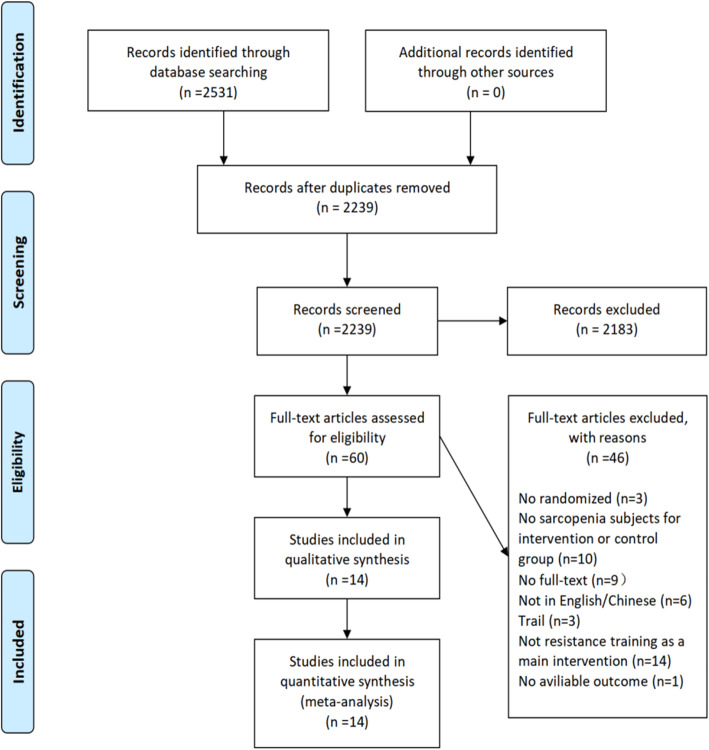
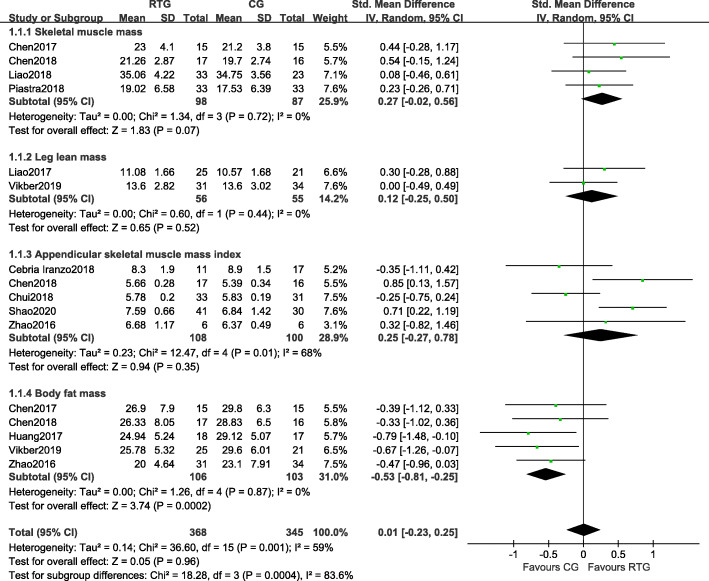
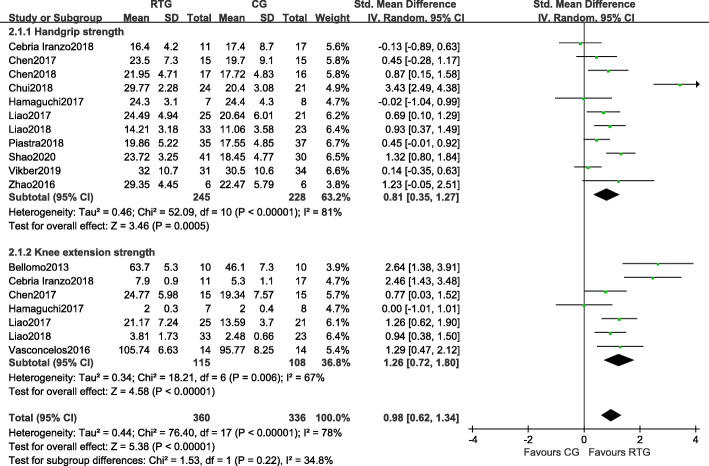
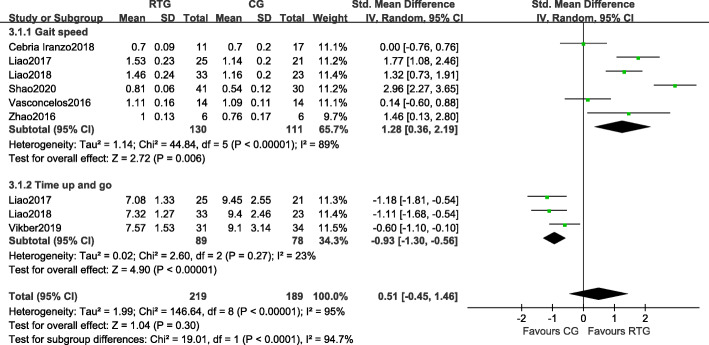
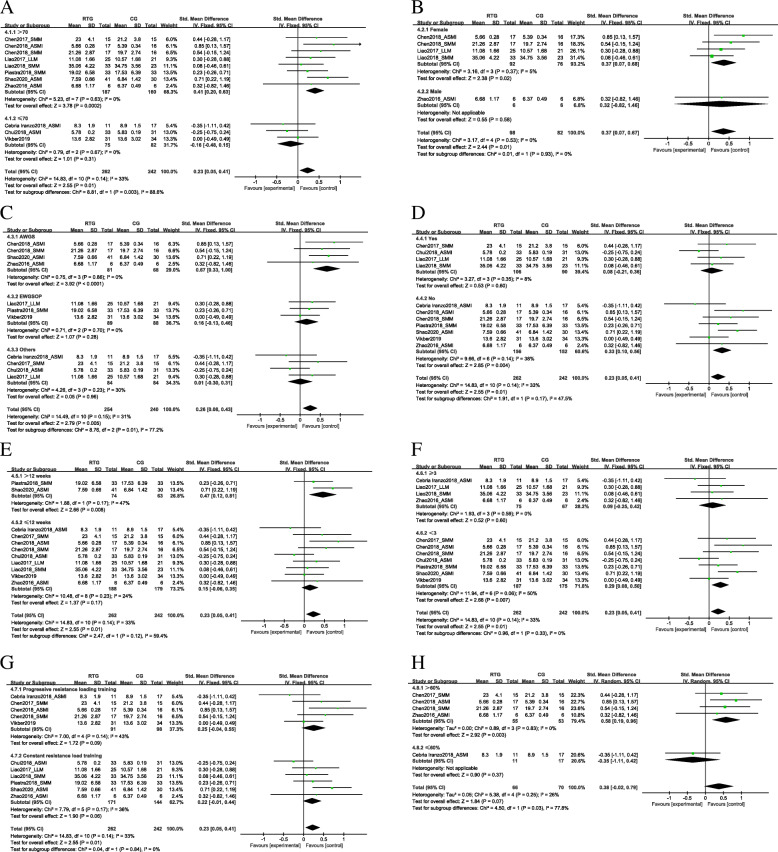
Objective: We conducted a meta-analysis to analyze the effects of resistance training on measures of body composition, muscle strength, and muscle performance in older people with sarcopenia. Methods: All randomized controlled trials on the effects of resistance training on outcome variables in older people with sarcopenia were searched on Pubmed, Embase, Cochrane Library, the China National Knowledge Infrastructure (CNKI), and Wanfang. Data from January 2010 to October 2020 were reviewed. Two researchers extracted data and evaluated the quality of the studies that met the inclusion criteria independently. Meta-analysis for pre-post changes were calculated as standardized mean difference (SMD) with 95% confidence intervals (CI). Results: Fourteen studies meeting inclusion criteria included 561 healthy older adults (age 65.8 to 82.8) with sarcopenia. Compared with the control group, resistance training had positive effects on body fat mass (SMD = -0.53, 95% CI − 0.81 to − 0.25, p = 0.0002, I 2 = 0%), handgrip strength (SMD = 0.81, 95%CI 0.35 to 1.27, p = 0.0005, I 2 = 81%), knee extension strength (SMD = 1.26, 95% CI 0.72 to 1.80, p < 0.0001, I 2 = 67%), gait speed (SMD = 1.28, 95%CI 0.36 to 2.19, p = 0.006, I 2 = 89%), and the timed up and go test (SMD = -0.93, 95% CI − 1.30 to − 0.56, p < 0.0001, I 2 = 23%). Resistance training had no effects on appendicular skeletal muscle mass (SMD = 0.25, 95% CI − 0.27 to 0.78, p = 0.35, I 2 = 68%), skeletal muscle mass (SMD = 0.27, 95% CI − 0.02 to 0.56, p = 0.07, I 2 = 0%) and leg lean mass (SMD = 0.12, 95% CI − 0.25 to 0.50, p = 0.52, I 2 = 0%). Old people with sarcopenia of different ages, genders or diagnostic criteria and weights have different gains in muscle mass, handgrip strength, knee extension strength and muscle performance after different intervention duration, frequencies, mode and intensity resistance training. Conclusion: Resistance training is an effective treatment to improve body fat mass, muscle strength, and muscle performance in healthy older people with sarcopenia.
Overview
The claims and statistics of this paper haven’t been checked yet.
Free: it reads the open-access text and checks the first 5 claims that cite a source we can check. Create a free account to check every claim.
Integrity signals
Registry
Cites
Statistics
Figures
Verification
Claims the paper makes
The claims and statistics of this paper haven’t been checked yet.
Free: it reads the open-access text and checks the first 5 claims that cite a source we can check. Create a free account to check every claim.
Claims other papers make about this one
Each is checked against this paper’s own text: does it say what the citing paper says it does?
In the citing paper
“Compared with no exercise (control), RT significantly improved muscle strength, size (hypertrophy), power, endurance, contraction velocity, gait speed, balance, and multiple physical function outcomes.”
In the citing paper
“Compared with CTRL, muscle hypertrophy was positively affected by standard RT (17,24,30,32,33,37,38,40,42–47,50,127), circuit RT (57,58), and elastic band RT (60,62).”
In the citing paper
“Compared with CTRL, TUG was impacted by standard RT (30,32,33,36,38,47,50,152,154,156).”
In the citing paper
“Compared with CTRL, gait speed was impacted by standard RT (17,30,32,33,36–38,47,53,152–155).”
In the citing paper
“However, evidence of the effectiveness of resistance training in achieving increased muscle mass is inconsistent.51,52”
From Nutritional and exercise interventions in individuals with sarcopenic obesity around retirement age: a systematic review and meta-analysis (2023) · cites this paper as [51]
Self-check
Percentages, sums and reported differences re-computed from the paper’s own numbers.
The self-check needs the paper’s full text.
Citations
Cites
Sarcopenia: revised European consensus on definition and diagnosis
Cruz-Jentoft, A. J., Bahat, G., Bauer, J., Boirie, Y., Bruyère, O., Cederholm, T., Cooper, C., Landi, F., Rolland, Y., Sayer, A. A., et al. (2019) · Age and Ageing · doi:10.1093/ageing/afy169 · Cited by 13,818 · cited 12×
“In Urumqi (China), China the prevalence of sarcopenia in persons aged ≥60 years ranged from 4.6 to 24.5% depending on the criteria used to define sarcopenia from three organizations (EWGSOP, the International Working Group on Sarcopenia (IGWS), and the Asian Working Group for Sarcopenia (AGWS)) [3].”
BackgroundMethodInfluentialSarcopenia: European consensus on definition and diagnosis
Cruz-Jentoft, A. J., Baeyens, J. P., Bauer, J. M., Boirie, Y., Cederholm, T., Landi, F., Martin, F. C., Michel, J.-P., Rolland, Y., Schneider, S. M., et al. (2010) · Age and Ageing · doi:10.1093/ageing/afq034 · Cited by 11,601 · cited 1×
“Introduction Sarcopenia is an age-related syndrome characterized by a progressive, generalized loss of skeletal muscle mass, combined with a decline in muscle strength and performance [1].”
BackgroundGarber, C. E., Blissmer, B., Deschenes, M. R., Franklin, B. A., Lamonte, M. J., Lee, I.-M., Nieman, D. C., & Swain, D. P. (2011) · Medicine & Science in Sports & Exercise · doi:10.1249/mss.0b013e318213fefb · Cited by 9,319 · cited 1×
“It promotes improvements in body composition and muscle strength, thereby attenuating the harmful effects of aging [15].”
BackgroundReliability of the PEDro Scale for Rating Quality of Randomized Controlled Trials
Maher, C. G., Sherrington, C., Herbert, R. D., Moseley, A. M., & Elkins, M. (2003) · Physical Therapy · doi:10.1093/ptj/83.8.713 · Cited by 4,808 · cited 1×
“Quality assessment Two reviewers (NC and XH) independently assessed the methodological quality of the studies using the Physiotherapy Evidence Database (PEDro) scale [28].”
MethodSarcopenia in Asia: Consensus Report of the Asian Working Group for Sarcopenia
Chen, L.-K., Liu, L.-K., Woo, J., Assantachai, P., Auyeung, T.-W., Bahyah, K. S., Chou, M.-Y., Chen, L.-Y., Hsu, P.-S., Krairit, O., et al. (2014) · Journal of the American Medical Directors Association · doi:10.1016/j.jamda.2013.11.025 · Cited by 4,051 · cited 8×
“In Urumqi (China), China the prevalence of sarcopenia in persons aged ≥60 years ranged from 4.6 to 24.5% depending on the criteria used to define sarcopenia from three organizations (EWGSOP, the International Working Group on Sarcopenia (IGWS), and the Asian Working Group for Sarcopenia (AGWS)) [3].”
MethodInfluentialEpidemiology of Sarcopenia among the Elderly in New Mexico
Baumgartner, R. N., Koehler, K. M., Gallagher, D., Romero, L., Heymsfield, S. B., Ross, R. R., Garry, P. J., & Lindeman, R. D. (1998) · American Journal of Epidemiology · doi:10.1093/oxfordjournals.aje.a009520 · Cited by 4,004 · cited 1×
“The diagnostic criteria for sarcopenia in the 14 studies was adopted from the following: EWGSOP [20, 21] (4 studies), AWGS [20] (3 studies), and Centers for Disease Control and Prevention [23] [CDC] (1 study).”
MethodSarcopenia: revised European consensus on definition and diagnosis
Cruz-Jentoft, A. J., Bahat, G., Bauer, J., Boirie, Y., Bruyère, O., Cederholm, T., Cooper, C., Landi, F., Rolland, Y., Sayer, A. A., et al. (2019) · Age and Ageing · doi:10.1093/ageing/afz046 · Cited by 3,803
Janssen, I., Heymsfield, S. B., & Ross, R. (2002) · Journal of the American Geriatrics Society · doi:10.1046/j.1532-5415.2002.50216.x · Cited by 3,139 · cited 1×
“Janssen [24] United States [(height(2)/BIA-resistance*0.”
Meaningful change and responsiveness in common physical performance measures in older adults.
Perera, S., Mody, S. H., Woodman, R. C., & Studenski, S. A. (2006) · Journal of the American Geriatrics Society · doi:10.1111/j.1532-5415.2006.00701.x · Cited by 2,513
Cruz-Jentoft, A. J., Landi, F., Schneider, S. M., Zuniga, C., Arai, H., Boirie, Y., Chen, L.-K., Fielding, R. A., Martin, F. C., Michel, J.-P., et al. (2014) · Age and Ageing · doi:10.1093/ageing/afu115 · Cited by 1,963
Research works printed but not linked: 4
- Vlietstra L Hendrickx W Waters DL Exercise interventions in healthy older adults with sarcopenia: a systematic review and meta-analysis 2018 29638028
- Wei-Hua S Li-Xia G Su-Xing W Cai-Xia L Li-Xia Y Shao-Bing L Effects of vitamin D combined with resistance training on skeletal muscle mass, activities of daily living and serological indices in elderly patients with sarcopenia Chin J Mult Organ Dis Elderly. 2020 19 09 656 60
- Vasconcelos K Dias J Araújo M Pinheiro AC Moreira BS Dias RC Effects of a progressive resistance exercise program with high-speed component on the physical function of older women with sarcopenic obesity: a randomized controlled trial Braz J Phys Ther. 2016 20 5 432 40 10.1590/bjpt-rbf.2014.0174 27410162 PMC5123261 · DOI · Paper page
- Borde R Hortobágyi T Granacher U Dose–Response Relationships of Resistance Training in Healthy Old Adults: A Systematic Review and Meta-Analysis Sports Med 2015 45 12 1693 1720 10.1007/s40279-015-0385-9 26420238 PMC4656698 · DOI · Paper page
Cited by
Items 101–179 of 179
Kalantarhormozi, M., Afshar, A., Hajeb, F., Bahreini, R., & Afshari, N. (2024) · Медицинский журнал Западного Казахстана · doi:10.18502/wkmj.v66i3.16629 · Cited by 2
“Longitudinal engagement in resistance training is emphasized as crucial for combating age-related muscle strength decline [88, 89].”
BackgroundLate‐onset primary muscle diseases mimicking sarcopenia
Yamashita, S. (2024) · Geriatrics and gerontology international/Geriatrics & gerontology international · doi:10.1111/ggi.15000 · Cited by 3
“88 Interest-ingly, aerobic exercise is most effective in enhancing muscle strength and overall physical performance.”
Park, H. S., Yoon, J.-H., & Oh, J. (2025) · Journal of Clinical Medicine · doi:10.3390/jcm14020615 · Cited by 3
Vladutu, B. M., Matei, D. V., Amzolini, A. M., Kamal, C., & Trăistaru, M. R. (2025) · Life · doi:10.3390/life15040609 · Cited by 4
“Nutritional interventions, ensuring optimal protein intake and correcting frequent vitamin D deficiency in older adults [33].”
Thompson, L. V. (2025) · Advances in experimental medicine and biology · doi:10.1007/978-3-031-88361-3_15 · Cited by 2
Hidayat, R., Wan-gang, L., Li, D., & Goodall, S. (2025) · BMC Sports Science Medicine and Rehabilitation · doi:10.1186/s13102-025-01401-1 · Cited by 5
Sarkopenie – was sollte der Orthopäde wissen?
Bauer, J. M., Grund, S., & Hauer, K. A. (2022) · Der Orthopäde · doi:10.1007/s00132-021-04211-8 · Cited by 2
“Seine Wirksamkeit bei Sarkopenie wurde in einer kürzlich publizierten Metaanalyse eindrucksvoll bestätigt [8].”
BackgroundErcan, S., Yalçınol, T., & Öngel, Ö. (2025) · International Journal of Environmental Research and Public Health · doi:10.3390/ijerph22091344 · Cited by 2
“Evidence also supports that regular exercise mitigates the risk of developing sarcopenia as individuals age [23].”
Association of Low Muscle Mass, Weak Grip Strength, and Neutrophil-to-Lymphocyte Ratio in Old Ages
Park, J., Kim, H. J., Kong, M. H., & Moon, J. H. (2025) · Journal of Bone Metabolism · doi:10.11005/jbm.25.853 · Cited by 2
Jang, E.-H., & Lee, S. (2025) · Nutrients · doi:10.3390/nu17183008 · Cited by 3
“…review and meta-analysis reported that resistance exercise interventions longer than 12 weeks led to significant gains in muscle mass, whereas shorter interventions showed no effect [38], implying that the 12-week duration of our study may have been too short to detect meaningful changes.”
Li, H., Zhang, R., Ma, Y., He, J., Li, G., Sun, J. P., & DuanyingLi (2025) · Archives of Gerontology and Geriatrics · doi:10.1016/j.archger.2025.106063 · Cited by 6
Impact of Physical Therapy on Empowering Neurological Aging: A Narrative Review
Baladaniya, M., Baldania, S., Gandhi, N. V., & Hait, A. (2025) · Cureus · doi:10.7759/cureus.95640 · Cited by 1
“…(SMD = 0.81, 95% CI 0.35 to 1.27, p = 0.0005), knee extension strength (SMD = 1.26, 95% CI 0.72 to 1.80, p 0.0001), gait speed (SMD = 1.28, 95% CI 0.36 to 2.19, p = 0.006), and Timed Up-and-Go test performance (SMD = −0.93, 95% CI −1.30 to −0.56, p 0.0001) compared to control groups [43].”
InfluentialShibuya, K., Asano, Y., Nagata, K., Tsuji, T., Kawajiri, K., & Okura, T. (2025) · PLoS ONE · doi:10.1371/journal.pone.0335601 · Cited by 2
“Sarcopenia is associated with poor prognosis, interventions such as resistance training, exercise, and nutritional have been suggested by previous studies to improve early-stage sarcopenia; therefore, early detection and intervention are important issues [8,9].”
Álvarez‐Bustos, A., Aguiar, S. D. S., Gonçalves, I. D. O., Rodríguez-Sánchez, I., Marzetti, E., & Coelho‐Júnior, H. J. (2025) · Journal of Clinical Medicine · doi:10.3390/jcm14217839 · Cited by 6
Luo, W., Zhang, Y., Liu, X., Yan, Y., Zhang, W., Ke, S., Zhao, S., Yuan, T., Wang, L., Yang, M., et al. (2025) · BMC Public Health · doi:10.1186/s12889-025-25635-3 · Cited by 2
“For muscle strength enhancement, resistance training and aerobic exercise are recommended [43, 44].”
Wheat peptides improved sarcopenia by enhancing muscle protein synthesis in mice and zebrafish
Wang, Q., Du, J., Ye, E., Bao, Z., Zhao, M., Wang, J., Feng, F., Min, W., & Yang, H. (2025) · Food Bioscience · doi:10.1016/j.fbio.2025.107717 · Cited by 3
Li, H., Chen, Z., & Songlin, X. (2026) · Cell Biochemistry and Biophysics · doi:10.1007/s12013-026-02004-4 · Cited by 2
Lan, L., Liu, C., & Wu, W. (2026) · Experimental Gerontology · doi:10.1016/j.exger.2026.113085 · Cited by 2
Beom, J., Lim, J.-Y., & Lee, S. G. L. S. G. (2026) · Scientific Reports · doi:10.1038/s41598-026-45710-y · Cited by 2
“…magnitude of improvement in physical performance observed in our meta-analysis was comparable to that reported for progressive resistance exercise 39 , suggesting that WBV training may be a feasible alternative or complement for individuals who cannot adhere to traditional strengthening exercise…”
Radiographic paraspinal muscle size in adult spinal deformity: a systematic review and meta-analysis
Yamanouchi, K., de Oliveira, R. G., Younus, I., Nguyen, K. T., Reed, T. F., Bansal, A., Nemani, V. M., Leveque, J.-C. A., & Louie, P. K. (2026) · Spine Deformity · doi:10.1007/s43390-026-01341-x · Cited by 2
Deng, Y., Xu, L., Martín-Payo, R., Deng, K., Huang, L., Yang, Y., Xie, Z., Qiu, M., Li, C., & Zhang, F. (2026) · Frontiers in Public Health · doi:10.3389/fpubh.2026.1758325 · Cited by 1
Dharmansyah, D., Rahayuwati, L., Pramukti, I., & Mutyara, K. (2026) · The journal of nutrition health & aging · doi:10.1016/j.jnha.2026.100862 · Cited by 2
“First, population characteristics varied considerably: mean participant ages ranged from approximately 60 – 89 years across reviews, with some reviews restricting inclusion to specific subpopulations (e.g., community-dwelling older adults only in Chen N et al. [44]).”
InfluentialLiu, X., Jiang, Z., Liu, P., Chen, S., Wu, Y., Meng, J., & Gao, S. (2026) · Clinical Therapeutics · doi:10.1016/j.clinthera.2026.07.003 · Cited by 1
Praneetvatakul, Y., Larpjit, S., Jongcherdchootrakul, K., & Lertwanichwattana, T. (2023) · Journal of Southeast Asian Medical Research · doi:10.55374/jseamed.v7.167 · Cited by 6
“(24, 25) Regular exercise, especially the resistance training program, promotes muscle anabolism and protein metabolism and decreases sarcopenia and malnutrition risk.(26) muscle strength, and muscle performance in older people with sarcopenia.”
BackgroundLetter: Combatting sarcopenia to improve clinical outcomes in inflammatory bowel disease
Tassone, D., Hartley, I., & Ding, N. S. (2023) · Alimentary Pharmacology & Therapeutics · doi:10.1111/apt.17596 · Cited by 1
Doctor, A. K., Monnig, J. M., Kerr, C. N., Bagg, A. M., Pickering, C. E., & Reidy, P. T. (2022) · Nutrition and Healthy Aging · doi:10.3233/nha-220183
“Longer RCT RET duration may [49–51] or may not [52] impact strength and muscle mass gain [50].”
BackgroundLista, A., da Fonseca, C. J. V., Correia, T., & de Pinho, L. G. (2023) · Lecture notes in bioengineering · doi:10.1007/978-3-031-29067-1_35 · Cited by 1
Santos, V. R. D. S., Damasceno, A. W. C., da Silva, M. J. G., Cabral, D. F., & de Oliveira, A. C. A. (2023) · REVISTA CIÊNCIAS EM SAÚDE · doi:10.21876/rcshci.v13i1.1358 · Cited by 2
Nikolian, V. C., Rahman, S., & Martindale, R. G. (2023) · Current Surgery Reports · doi:10.1007/s40137-023-00367-8
Phosphoproteomics Analysis of Elderly people with sarcopeniaPreprint
尤, 聪., Zhao, Y.-D., Yang, T.-Y., & Zhang, Y. (2024) · Research Square · doi:10.21203/rs.3.rs-4091734/v1 · Cited by 1
Okoye, C., Morelli, V., Franchi, R., Mazzarone, T., Guarino, D., Maccioni, L., Cargiolli, C., Calsolaro, V., Niccolai, F., & Virdis, A. (2024) · Research Square · doi:10.21203/rs.3.rs-4223789/v1
Macrophages and the musculoskeletal system
Gallo, J., & Goodman, S. B. (2024) · Elsevier eBooks · doi:10.1016/b978-0-12-821754-2.00002-3 · Cited by 1
Drey, M., & Bauer, J. M. (2023) · Springer Reference Medizin · doi:10.1007/978-3-642-54676-1_101-1
Kim, J.-H. (2024) · The Journal of Korean Academy of Physical Therapy Science · doi:10.26862/jkpts.2024.09.31.4.77
Impact de l’APA sur les performances fonctionnelles chez les patients âgés sarcopéniques
Lilamand, M., Decaix, T., Chatenet, F., Laganier, J., Sindzingre, L., & François, V. (2025) · Soins Gérontologie · doi:10.1016/j.sger.2025.02.007
Chen, J., Qianwen, Y., Li, Z., Xiao, L., Kun, P., Li, J., & Linan, Z. (2025) · Research Square · doi:10.21203/rs.3.rs-6429780/v1
MRI-based Assessment of Disease-Specific Risk Profiles for Sarcopenia in Chronic Liver DiseasePreprint
Yasutomi, M., Saito, K., Araki, Y., Sugimoto, K., Yoshimaru, D., Shibukawa, S., & Ishida, M. (2025) · Research Square · doi:10.21203/rs.3.rs-7581643/v1
Shafi, H., Awan, W. A., Olsen, S., Siddiqi, F. A., Rashid, U., & Niazi, I. K. (2025) · Frontiers in Aging · doi:10.3389/fragi.2025.1645026
Establishing Ultrasound Thresholds for Sarcopenia Diagnosis in Older Brazilian Adults
Dantas, S. Z., Evangelista, D. C. M., Nogueira, B. Z., Bechara, M. D., Barbalho, S. M., Chagas, E. F. B., Araújo, A. C., Guiguer, É. L., Arruda, C. M. D., de Souza, J. D. S. S., et al. (2025) · Muscles · doi:10.3390/muscles4040057 · Cited by 1
“To mitigate the disease’s adverse clinical outcomes, early diagnosis with targeted interventions is essential [39].”
Park, J. H., Lim, N.-K., & Park, H.-Y. (2024) · Figshare · doi:10.6084/m9.figshare.26690084
Park, J. H., Lim, N.-K., & Park, H.-Y. (2024) · Figshare · doi:10.6084/m9.figshare.26690087
Park, J. H., Lim, N.-K., & Park, H.-Y. (2024) · Figshare · doi:10.6084/m9.figshare.26690081
Park, J. H., Lim, N.-K., & Park, H.-Y. (2024) · Figshare · doi:10.6084/m9.figshare.26690078
Park, J. H., Lim, N.-K., & Park, H.-Y. (2024) · Figshare · doi:10.6084/m9.figshare.26690090
Preventing sarcopenia in older adults: the role of strength training
Lipska, P. O., Lazarchuk, I., Stołecka, G., Plizga, W., Sydor, M., Iwaszkiewicz, P., & Iwanowski, R. (2025) · Medical Journal of Cell Biology · doi:10.2478/acb-2025-0008
A powerlifting-based exercise program for community-dwelling older adults: A case series
de Lucena, E. G. P., Cannavan, L. G. P., Mendes, G. S., Silva, G. B., & Uchida, M. C. (2025) · Journal of Bodywork and Movement Therapies · doi:10.1016/j.jbmt.2025.12.034
Ji, W., weiwei, H., Luo, Z. L., Shi, S., Zhang, T., He, M., Zhao, Y., Xu, L., Cairong, Z., & Wu, S. (2026) · Journal of Back and Musculoskeletal Rehabilitation · doi:10.1177/10538127261415998 · Cited by 1
“19,51 While resistance training demonstrates potent effects on muscle hypertrophy, high-intensity regimens often face challenges regarding patient adherence and injury risks in frail populations.”
Demonceau, C., Beaudart, C., Mbayo, T. M., Monseur, J., Reginster, J., & Bruyère, O. (2026) · European Geriatric Medicine · doi:10.1007/s41999-026-01415-z · Cited by 2
“Indeed, treatments or interventions such as physiotherapy or nutritional support may have affected muscle strength, muscle mass and physical performance, and consequently quality of life [37, 38].”
Trends in research combining resistance training and nutrition: a bibliometric analysis (2010–2024)
Bassami, M., Karimi, M., Poorhabibi, H., Sadeghi, A., & Amini, M. A. (2026) · Sport Sciences for Health · doi:10.1007/s11332-026-01653-5
“For example, Nunes et al. [37] emphasized protein intake for adult populations, while Kraemer et al. [36] and Chen et al. [38] highlighted the potential benefits of RT for adolescents and clinical populations, respectively, indicating a need for further exploration.”
Malatyali, A., Xie, R., Ojo, E. O., Lopez, J., Diniz, B. S., Kim, D., Cidav, T., & Thiamwong, L. (2026) · BMC Geriatrics · doi:10.1186/s12877-026-07127-0
“This association complements the existing literature, emphasizing the physiological adaptations to activity levels, as higher-intensity activities can improve endurance by enhancing oxygen delivery to working muscles and maintaining balance for longer durations [35].”
Siddiqui, R., Guruprasad, S., & Arul, J. (2025) · Journal of Ecophysiology and Occupational Health · doi:10.18311/jeoh/2025/47079
Kanakala, S., Mahmud, A. M. S., Ali, I., Tahir, H., Patel, R. H., Brkljac, M., & Lindsay, T. (2026) · Scientific Reports · doi:10.1038/s41598-026-44749-1
“Sarcopenia has been shown to be difficult to reverse, particularly in older adults, as muscle mass gains remain limited even with targeted resistance training 34 .”
Current Research Status and Advances in Clinical Management of Sarcopenia
唐, 诗. (2026) · Advances in Clinical Medicine · doi:10.12677/acm.2026.1641537
李红芳, Ma, F., Li, Y., Su, Z., & Wang, X. (2026) · Frontiers in Cardiovascular Medicine · doi:10.3389/fcvm.2025.1635863
Sherieva, N., Garipov, M., Kaipova, S., Арстанбекова, М. А., Смаилова, Д. К., & Mamatov, S. (2026) · Evrazijskij žurnal zdravoohraneniâ. · doi:10.54890/1694-8882-2025-4-168
Ramirez, C. T. V., Torres, E., Ortega, P., & Mendes, S. (2026) · Bulletin of pioneering researches of medical and clinical science · doi:10.51847/2bvoipymjg
Deller, M., Weiershaus, J., Held, S., & Brinkmann, C. K. (2026) · Diabetes Obesity and Metabolism · doi:10.1111/dom.70873
Sarcopenia and its negative impact on well-being
Papadopoulou, S. K., Voulgaridou, G., Detopoulou, P., & Magni, O. (2026) · Elsevier eBooks · doi:10.1016/b978-0-443-27346-9.00022-4
Vaquero‐Barbosa, N., Castillo‐Martínez, L., Garduño‐Espinosa, J., Aguilar-Curiel, J. V., Gavia-García, G., Flores-Bello, C., Correa‐Muñoz, E., & Mendoza-Núñez, V. M. (2026) · Sports · doi:10.3390/sports14090372
“However, the results contrast with the systematic review conducted by Chen et al. (2021), as they did not find statistically significant positive effects on SMM with physical exercise in the sum of 14 studies analyzed in healthy older adults [13].”
Tømmerdal, K. H., Nauman, J., Madssen, E., Laukkanen, J. A., Tjønna, A. E., Wisløff, U., & Berg, J. (2026) · BMC Geriatrics · doi:10.1186/s12877-026-07747-6
Harini, M., Wardoyo, N. V., Zulfansyah, H., Ramadhany, M., Lauvita, J., Wahusna, Fransisca, V. W., & Lucky, S. S. (2026) · Journal of The Indian Academy of Geriatrics · doi:10.4103/jiag.jiag_11_26
Riebe, D. A., Magal, M., Kaminsky, L. A., Ross, R. R., Phillips, S. M., Alhassan, S., Arena, R. A., Behm, D. G., Camhi, S. M., Church, T. S., et al. (2026) · Medicine & Science in Sports & Exercise · doi:10.1249/mss.0000000000003997 · Cited by 5
Bridging assessment, biomarkers, and interventions: progress in muscle health research
Oranchuk, D. J., DeFreitas, J. M., Nelson, A. R., & Harris‐Love, M. O. (2026) · Frontiers in Rehabilitation Sciences · doi:10.3389/fresc.2026.1874273
Hormonal dimorphism in sarcopenia disease
Menard, R., & Madelaine, R. (2026) · Aging · doi:10.18632/aging.206392 · Cited by 2
“Progressive resistance-training protocols consistently show significant improvements through enhanced muscle-protein synthesis, satellite-cell activation, and improved mitochondrial function [6, 64].”
Tang, Y., Su, W., Zhang, Y., Lv, Y., He, L., & Yu, L. (2026) · Journal of the American Medical Directors Association · doi:10.1016/j.jamda.2026.106351
Omar Váldes, T., Chalchat, É., Rehbein, C. O., Nuñez, O., García-Vicencio, S., Martin, V., Ramírez‐Campillo, R., & Peñailillo, L. (2026) · Sports Medicine · doi:10.1007/s40279-026-02476-7
“…resistance training is an effective method to increase force production [3, 4] during voluntary movements involved in analytic (i.e. isometric and dynamic isolated contractions) or functional (i.e. lifting or moving a box with both arms) tasks [5] in healthy [6] and clinical populations [7, 8].”
Shoukat, F., & Rehman, S. S. U. (2026) · JMIR Aging · doi:10.2196/78426 · Cited by 2
“Evidence-based systematic reviews and meta-analyses of randomized controlled trials have shown that multicomponent exercises have a positive impact on muscle mass, strength, balance, and physical performance [19-21].”
MEN’S HEALTH IN AUTOIMMUNE RHEUMATIC DISEASES: AGING, IMMUNITY, AND HORMONAL INTERACTIONS
Sabbah, L., Khouri, E., & Alnaimat, F. (2026) · Anti-Aging Eastern Europe · doi:10.56543/aaeeu.2026.5.2.04
Shivgulam, M. E., Halliwell, C., Theou, O., & O'Brien, M. W. (2026) · Archives of Gerontology and Geriatrics · doi:10.1016/j.archger.2026.106363
Saez-Berlanga, Á., Gené‐Morales, J., Juesas, Á., Gargallo, P., Garrigues-Pelufo, L., Alix‐Fages, C., Jiménez‐Martínez, P., Teixeira, A. M., Castuera, R. J., García‐Ramos, A., et al. (2026) · Applied Sciences · doi:10.3390/app16157656
Lungu, I.-D., Ilie, A. C., Ștefăniu, R., Albişteanu, S.-M., Turcu, A.-M., Grigoraș, G., Constantinescu, D.-G., Pîslaru, A. I., & Alexa, I. D. (2026) · Journal of Clinical Medicine · doi:10.3390/jcm15156101
“…older adults, Chen et al. stated that resistance training has beneficial effects on indices such as body fat mass, handgrip strength, knee extension strength, gait speed and the timed up and go test and no effects on skeletal muscle mass, leg lean mass or appendicular skeletal muscle mass [38].”
Wang, X. (2026) · Research Square · doi:10.21203/rs.3.rs-10696437/v1
Leung, W. K. C., Ching, Y. Y., Chan, B. C. L., Wong, Y. Y. Y., Chow, J. N. L., Lam, S. C., & Suen, L. K. P. (2026) · Journal of Exercise Science & Fitness · doi:10.1016/j.jesf.2026.200514
“12 In older adults with SO, elastic band resistance training ameliorated physical performance, including dynamic balance, gait speed, and agility 14 – 18 .”
Exercise promotion as a strategy for preventing sarcopenia and reducing elderly abuse in Nigeria
Ogunleye, O. R., & Makinde, O. A. (2026) · Scientific Journal of Sport and Performance · doi:10.55860/sqcy3684
He, M., Zhang, Y., Pan, Y., Chen, L., Huang, M., & Wei, W. (2026) · Research Square · doi:10.21203/rs.3.rs-10680264/v1
Ercan, S., & Öngel, Ö. (2026) · Open Journal of Orthopedics and Rheumatology · doi:10.17352/ojor.000057
Ondrak, K. S., Seicshnaydre, E. A., Duffy, S., Rodriguez, C. L., Scott, C., Gladish, S., & Byerley, L. O. (2026) · Nutrients · doi:10.3390/nu18193300
“…metabolites, targeted probiotic strains, and microbiome-directed nutritional strategies suggests that microbiome modulation may eventually become an important component of strategies aimed at preserving skeletal muscle mass, metabolic function, and physical performance throughout aging [21,87,93].”
InfluentialZhang, Y., Liu, X., Tian, C., Tao, S., & Wang, H. (2026) · Frontiers in Physiology · doi:10.3389/fphys.2026.1882998
Chang, Y.-A., Yen, H., Nhu, N. T., Wu, J., & Hou, W. (2026) · Patient Education and Counseling · doi:10.1016/j.pec.2026.110364
Metadata
- Authors
- Chen, N., He, X., Feng, Y., Ainsworth, B. E., & Liu, Y.
- Affiliations
- Shanghai Jiao Tong University (CN)
- Arizona State University (US)
- Shanghai University of Sport (CN)
- Corresponding author
- Liu, Yu
- Venue
- European Review of Aging and Physical Activity
- Published
- 2021-11-11
- Volume
- 18
- Issue
- 1
- Pages
- 23-23
- ISSN
- 1813-7253 (ISSN-L)
- 1861-6909
- PMC
- PMC8588688
- OpenAlex
- W3212643929
- Semantic Scholar
- 803d59388e44e2f82edfa8420514278b069452b9
- Cited by
- 178
- References
- 60
- Citations by year
- 2026: 48 · 2025: 48 · 2024: 37 · 2023: 33 · 2022: 12
- FWCI
- 2.73
- Type
- journal article
- Language
- en
- Open access
- gold
- doi.org
- Licence
- cc-by
- creativecommons.org/licenses/by/4.0 (tdm)
- creativecommons.org/licenses/by/4.0 (vor)
- Locations
- European Review of Aging and Physical Activity (publishedVersion, cc-by)
- PubMed Central (publishedVersion, cc-by)
- PubMed (publishedVersion)
- Funders
- Shanghai Municipal Health Bureau (2020YJZX0137)
- Topics
- Health Sciences › Medicine › Physiology (medical) › Nutrition and Health in Aging
- Health Sciences › Medicine › Geriatrics and Gerontology › Frailty in Older Adults
- Life Sciences › Biochemistry, Genetics and Molecular Biology › Molecular Biology › Muscle Physiology and Disorders
- Keywords
- resistance training, sarcopenia, older adults, muscle strength, grip strength, quadriceps strength, muscle performance, walking speed, body composition, fat mass, appendicular skeletal muscle mass, Timed Up and Go test, exercise intervention, healthy aging, sarcopenic obesity, sarcopenic frailty
About these checks
Registry, retraction, Cites and statistics results are computed, not judged, with one exception: a printed reference that no index lists is read once by a model before it counts as a citation error. Claims are extracted by a model and kept only when their quote appears verbatim in the text; each cited source is then checked, with a model’s help, for whether it says what the claim relies on. Those verdicts can be wrong — read the claim’s quote and the cited source before relying on one.
Statistics and arithmetic are recomputed, not judged.
Confidence bands are shown only for fields calibrated on our annotated test set. None is calibrated yet, so no band is shown.
What counts as a claim ›How we measure confidence ›How we check this ›
Are you an author, or do you see a problem with this page? Request a review
Data sources
Bibliographic data: Semantic Scholar, OpenAlex, Crossref.
Contains information from the Semantic Scholar Academic Graph Datasets, made available under the ODC Attribution License (ODC-BY 1.0).
Semantic Scholar’s data is described in: Kinney, R., et al. (2023). The Semantic Scholar Open Data Platform. arXiv:2301.10140.
