

Effects of resistance training in healthy older people with sarcopenia: a systematic review and meta-analysis of randomized controlled trials.
Open accessThe DOI matches its Crossref record; 61 of the 61 references it cites were found in a registry or an index.
Abstract
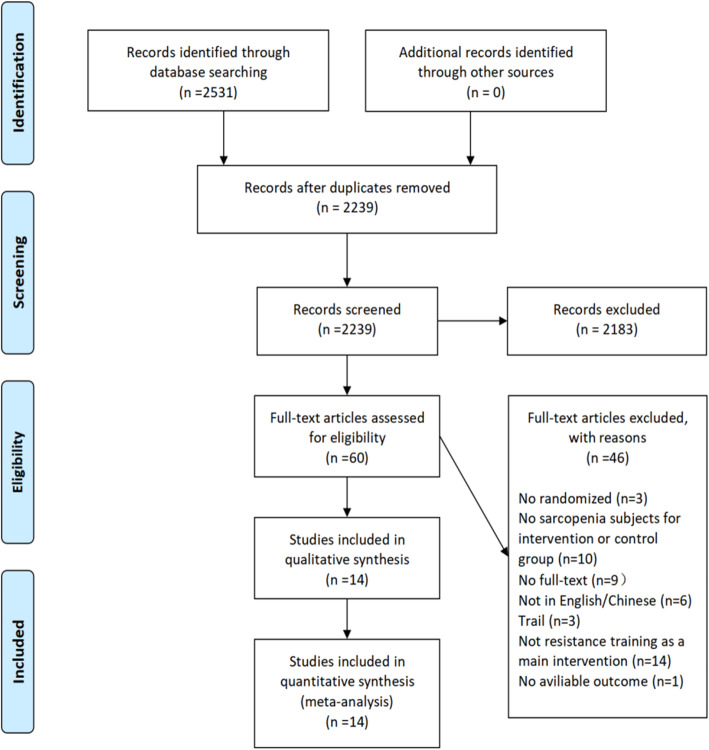
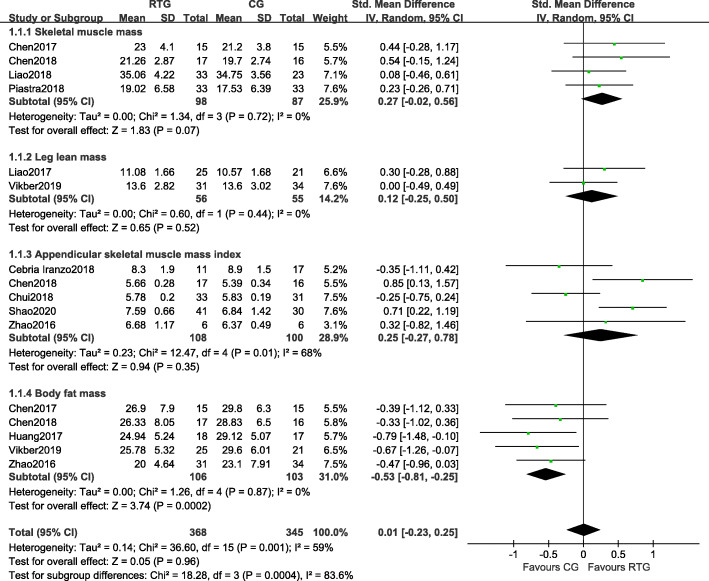
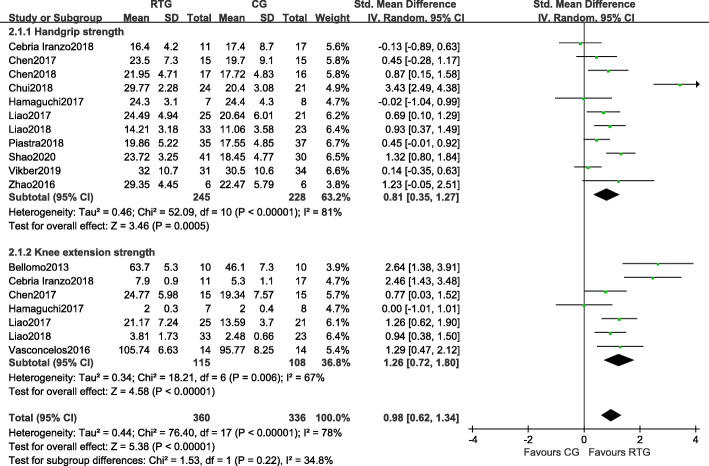
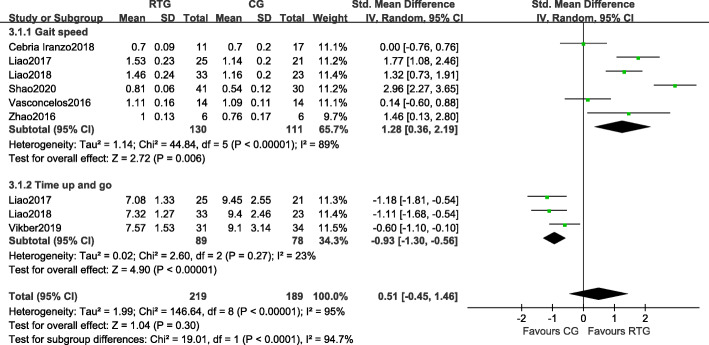
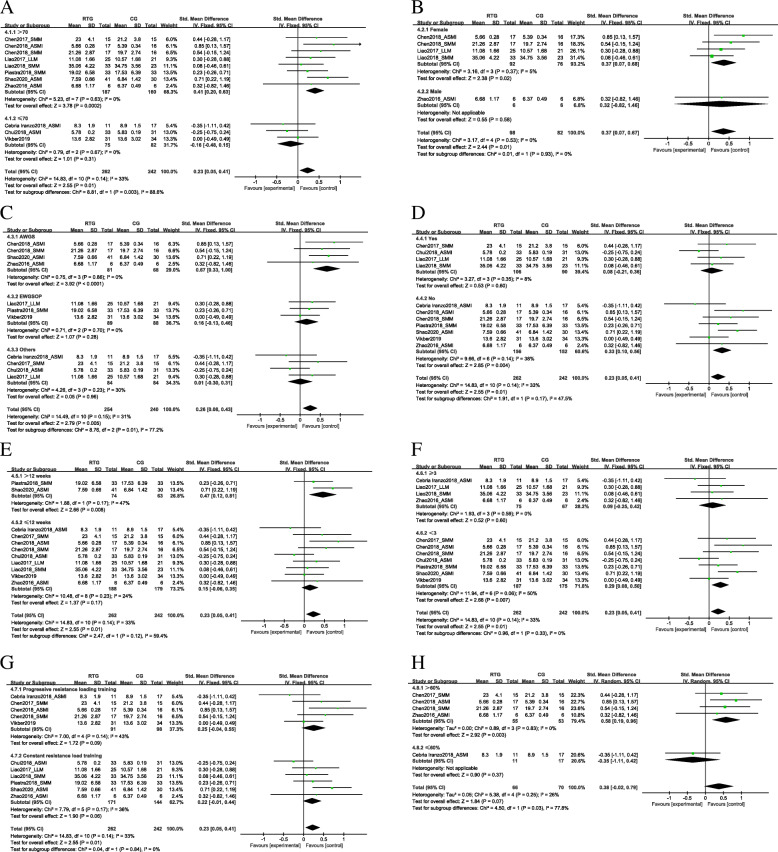
Objective: We conducted a meta-analysis to analyze the effects of resistance training on measures of body composition, muscle strength, and muscle performance in older people with sarcopenia. Methods: All randomized controlled trials on the effects of resistance training on outcome variables in older people with sarcopenia were searched on Pubmed, Embase, Cochrane Library, the China National Knowledge Infrastructure (CNKI), and Wanfang. Data from January 2010 to October 2020 were reviewed. Two researchers extracted data and evaluated the quality of the studies that met the inclusion criteria independently. Meta-analysis for pre-post changes were calculated as standardized mean difference (SMD) with 95% confidence intervals (CI). Results: Fourteen studies meeting inclusion criteria included 561 healthy older adults (age 65.8 to 82.8) with sarcopenia. Compared with the control group, resistance training had positive effects on body fat mass (SMD = -0.53, 95% CI − 0.81 to − 0.25, p = 0.0002, I 2 = 0%), handgrip strength (SMD = 0.81, 95%CI 0.35 to 1.27, p = 0.0005, I 2 = 81%), knee extension strength (SMD = 1.26, 95% CI 0.72 to 1.80, p < 0.0001, I 2 = 67%), gait speed (SMD = 1.28, 95%CI 0.36 to 2.19, p = 0.006, I 2 = 89%), and the timed up and go test (SMD = -0.93, 95% CI − 1.30 to − 0.56, p < 0.0001, I 2 = 23%). Resistance training had no effects on appendicular skeletal muscle mass (SMD = 0.25, 95% CI − 0.27 to 0.78, p = 0.35, I 2 = 68%), skeletal muscle mass (SMD = 0.27, 95% CI − 0.02 to 0.56, p = 0.07, I 2 = 0%) and leg lean mass (SMD = 0.12, 95% CI − 0.25 to 0.50, p = 0.52, I 2 = 0%). Old people with sarcopenia of different ages, genders or diagnostic criteria and weights have different gains in muscle mass, handgrip strength, knee extension strength and muscle performance after different intervention duration, frequencies, mode and intensity resistance training. Conclusion: Resistance training is an effective treatment to improve body fat mass, muscle strength, and muscle performance in healthy older people with sarcopenia.
Overview
The claims and statistics of this paper haven’t been checked yet.
Free: it reads the open-access text and checks the first 5 claims that cite a source we can check. Create a free account to check every claim.
Integrity signals
Registry
Cites
Statistics
Figures
Verification
Claims the paper makes
The claims and statistics of this paper haven’t been checked yet.
Free: it reads the open-access text and checks the first 5 claims that cite a source we can check. Create a free account to check every claim.
Claims other papers make about this one
Each is checked against this paper’s own text: does it say what the citing paper says it does?
In the citing paper
“Compared with no exercise (control), RT significantly improved muscle strength, size (hypertrophy), power, endurance, contraction velocity, gait speed, balance, and multiple physical function outcomes.”
In the citing paper
“Compared with CTRL, muscle hypertrophy was positively affected by standard RT (17,24,30,32,33,37,38,40,42–47,50,127), circuit RT (57,58), and elastic band RT (60,62).”
In the citing paper
“Compared with CTRL, TUG was impacted by standard RT (30,32,33,36,38,47,50,152,154,156).”
In the citing paper
“Compared with CTRL, gait speed was impacted by standard RT (17,30,32,33,36–38,47,53,152–155).”
In the citing paper
“However, evidence of the effectiveness of resistance training in achieving increased muscle mass is inconsistent.51,52”
From Nutritional and exercise interventions in individuals with sarcopenic obesity around retirement age: a systematic review and meta-analysis (2023) · cites this paper as [51]
Self-check
Percentages, sums and reported differences re-computed from the paper’s own numbers.
The self-check needs the paper’s full text.
Citations
Cites
Sarcopenia: revised European consensus on definition and diagnosis
Cruz-Jentoft, A. J., Bahat, G., Bauer, J., Boirie, Y., Bruyère, O., Cederholm, T., Cooper, C., Landi, F., Rolland, Y., Sayer, A. A., et al. (2019) · Age and Ageing · doi:10.1093/ageing/afy169 · Cited by 13,818 · cited 12×
“In Urumqi (China), China the prevalence of sarcopenia in persons aged ≥60 years ranged from 4.6 to 24.5% depending on the criteria used to define sarcopenia from three organizations (EWGSOP, the International Working Group on Sarcopenia (IGWS), and the Asian Working Group for Sarcopenia (AGWS)) [3].”
BackgroundMethodInfluentialSarcopenia: European consensus on definition and diagnosis
Cruz-Jentoft, A. J., Baeyens, J. P., Bauer, J. M., Boirie, Y., Cederholm, T., Landi, F., Martin, F. C., Michel, J.-P., Rolland, Y., Schneider, S. M., et al. (2010) · Age and Ageing · doi:10.1093/ageing/afq034 · Cited by 11,601 · cited 1×
“Introduction Sarcopenia is an age-related syndrome characterized by a progressive, generalized loss of skeletal muscle mass, combined with a decline in muscle strength and performance [1].”
BackgroundGarber, C. E., Blissmer, B., Deschenes, M. R., Franklin, B. A., Lamonte, M. J., Lee, I.-M., Nieman, D. C., & Swain, D. P. (2011) · Medicine & Science in Sports & Exercise · doi:10.1249/mss.0b013e318213fefb · Cited by 9,319 · cited 1×
“It promotes improvements in body composition and muscle strength, thereby attenuating the harmful effects of aging [15].”
BackgroundReliability of the PEDro Scale for Rating Quality of Randomized Controlled Trials
Maher, C. G., Sherrington, C., Herbert, R. D., Moseley, A. M., & Elkins, M. (2003) · Physical Therapy · doi:10.1093/ptj/83.8.713 · Cited by 4,808 · cited 1×
“Quality assessment Two reviewers (NC and XH) independently assessed the methodological quality of the studies using the Physiotherapy Evidence Database (PEDro) scale [28].”
MethodSarcopenia in Asia: Consensus Report of the Asian Working Group for Sarcopenia
Chen, L.-K., Liu, L.-K., Woo, J., Assantachai, P., Auyeung, T.-W., Bahyah, K. S., Chou, M.-Y., Chen, L.-Y., Hsu, P.-S., Krairit, O., et al. (2014) · Journal of the American Medical Directors Association · doi:10.1016/j.jamda.2013.11.025 · Cited by 4,051 · cited 8×
“In Urumqi (China), China the prevalence of sarcopenia in persons aged ≥60 years ranged from 4.6 to 24.5% depending on the criteria used to define sarcopenia from three organizations (EWGSOP, the International Working Group on Sarcopenia (IGWS), and the Asian Working Group for Sarcopenia (AGWS)) [3].”
MethodInfluentialEpidemiology of Sarcopenia among the Elderly in New Mexico
Baumgartner, R. N., Koehler, K. M., Gallagher, D., Romero, L., Heymsfield, S. B., Ross, R. R., Garry, P. J., & Lindeman, R. D. (1998) · American Journal of Epidemiology · doi:10.1093/oxfordjournals.aje.a009520 · Cited by 4,004 · cited 1×
“The diagnostic criteria for sarcopenia in the 14 studies was adopted from the following: EWGSOP [20, 21] (4 studies), AWGS [20] (3 studies), and Centers for Disease Control and Prevention [23] [CDC] (1 study).”
MethodSarcopenia: revised European consensus on definition and diagnosis
Cruz-Jentoft, A. J., Bahat, G., Bauer, J., Boirie, Y., Bruyère, O., Cederholm, T., Cooper, C., Landi, F., Rolland, Y., Sayer, A. A., et al. (2019) · Age and Ageing · doi:10.1093/ageing/afz046 · Cited by 3,803
Janssen, I., Heymsfield, S. B., & Ross, R. (2002) · Journal of the American Geriatrics Society · doi:10.1046/j.1532-5415.2002.50216.x · Cited by 3,139 · cited 1×
“Janssen [24] United States [(height(2)/BIA-resistance*0.”
Meaningful change and responsiveness in common physical performance measures in older adults.
Perera, S., Mody, S. H., Woodman, R. C., & Studenski, S. A. (2006) · Journal of the American Geriatrics Society · doi:10.1111/j.1532-5415.2006.00701.x · Cited by 2,513
Cruz-Jentoft, A. J., Landi, F., Schneider, S. M., Zuniga, C., Arai, H., Boirie, Y., Chen, L.-K., Fielding, R. A., Martin, F. C., Michel, J.-P., et al. (2014) · Age and Ageing · doi:10.1093/ageing/afu115 · Cited by 1,963
Research works printed but not linked: 4
- Vlietstra L Hendrickx W Waters DL Exercise interventions in healthy older adults with sarcopenia: a systematic review and meta-analysis 2018 29638028
- Wei-Hua S Li-Xia G Su-Xing W Cai-Xia L Li-Xia Y Shao-Bing L Effects of vitamin D combined with resistance training on skeletal muscle mass, activities of daily living and serological indices in elderly patients with sarcopenia Chin J Mult Organ Dis Elderly. 2020 19 09 656 60
- Vasconcelos K Dias J Araújo M Pinheiro AC Moreira BS Dias RC Effects of a progressive resistance exercise program with high-speed component on the physical function of older women with sarcopenic obesity: a randomized controlled trial Braz J Phys Ther. 2016 20 5 432 40 10.1590/bjpt-rbf.2014.0174 27410162 PMC5123261 · DOI · Paper page
- Borde R Hortobágyi T Granacher U Dose–Response Relationships of Resistance Training in Healthy Old Adults: A Systematic Review and Meta-Analysis Sports Med 2015 45 12 1693 1720 10.1007/s40279-015-0385-9 26420238 PMC4656698 · DOI · Paper page
Cited by
Exercise for sarcopenia in older people: A systematic review and network meta‐analysis
Shen, Y., Shi, Q., Nong, K., Li, S., Yue, J., Huang, J., Dong, B., Beauchamp, M., & Hao, Q. (2023) · Journal of Cachexia, Sarcopenia and Muscle · doi:10.1002/jcsm.13225 · Cited by 464
“…review proved that resistance training had positive effects on body fat mass, handgrip strength, knee extension strength, gait speed and the timed up and go (TUG) test, 22 whereas another review reported that aerobic exercise was most effective to improve muscle strength and physical performance.”
Resistance exercise as a treatment for sarcopenia: prescription and delivery
Hurst, C., Robinson, S. M., Witham, M. D., Dodds, R. M., Granic, A., Buckland, C., De Biase, S., Finnegan, S., Rochester, L., Skelton, D. A., et al. (2022) · Age and Ageing · doi:10.1093/ageing/afac003 · Cited by 319
“However, it appears that at least 12 weeks of RE is necessary based on the evidence presented in this paper [70].”
BackgroundBernabei, R., Landi, F., Calvani, R., Cesari, M., Del Signore, S., Anker, S. D., Bejuit, R., Bordes, P., Cherubini, A., Cruz-Jentoft, A. J., et al. (2022) · BMJ · doi:10.1136/bmj-2021-068788 · Cited by 318
Paluch, A. E., Boyer, W. R., Franklin, B. A., Laddu, D., Lobelo, F., Lee, D.-C., McDermott, M. M., Swift, D. L., Webel, A. R., Lane, A., et al. (2024) · Circulation · doi:10.1161/cir.0000000000001189 · Cited by 290
“…per exercise) and intensity (55%–80% of 1 repetition maximum [RM]), compared with lower volume (1 set per exercise) and intensity (<55% of 1-RM) resulted in greater reductions in total body fat mass and waist circumference 55,60 and enhanced muscle quality, mass, strength, and functional status.”
BackgroundCornish, S. M., Cordingley, D. M., Shaw, K. A., Forbes, S. C., Leonhardt, T., Bristol, A., Candow, D. G., & Chilibeck, P. D. (2022) · Nutrients · doi:10.3390/nu14112221 · Cited by 79
Exercise to Prevent and Manage Frailty and Fragility Fractures
Dent, E., Daly, R. M., Hoogendijk, E. O., & Scott, D. S. (2023) · Current Osteoporosis Reports · doi:10.1007/s11914-023-00777-8 · Cited by 106
Eglseer, D., Traxler, M., Schoufour, J. D., Weijs, P. J. M., Voortman, T., Boirie, Y., Cruz-Jentoft, A. J., Reiter, L., Bauer, S., for the SO-NUTS Consortium, et al. (2023) · Nutrition Reviews · doi:10.1093/nutrit/nuad007 · Cited by 68
“Other systematic reviews investigating healthy older persons with sarcopenia, but not obesity, underline the improvements shown in body fat and muscle function.(51,52) International guidelines also recommend the implementation of resistance-based exercise (and a protein-rich diet) to counteract sarcopenia.”
BackgroundAdvances in the management of osteoporosis
Hoong, C. W. S., Saul, D., Khosla, S., & Sfeir, J. G. (2025) · BMJ · doi:10.1136/bmj-2024-081250 · Cited by 103
Labata-Lezaun, N., González-Rueda, V., Llurda-Almuzara, L., López-de-Celis, C., Rodríguez-Sanz, J., Bosch, J., Vicente-Rodríguez, G., Gorczakowska, D., Araluze-Arizti, P., & Pérez-Bellmunt, A. (2023) · Archives of Gerontology and Geriatrics · doi:10.1016/j.archger.2022.104838 · Cited by 62
CURRIER, B. S., D’SOUZA, A. C., SINGH, M. A. F., LOWISZ, C. V., RAWSON, E. S., SCHOENFELD, B. J., SMITH-RYAN, A. E., STEEN, J. P., THOMAS, G. A., TRIPLETT, N. T., et al. (2026) · Medicine & Science in Sports & Exercise · doi:10.1249/mss.0000000000003897 · Cited by 105
“Compared with CTRL, TUG was impacted by standard RT (30,32,33,36,38,47,50,152,154,156).”
Liu, Z., Guo, Y., & Zheng, C. (2024) · Frontiers in Endocrinology · doi:10.3389/fendo.2024.1375610 · Cited by 80
Marques, D. L., Neiva, H. P., Marinho, D. A., & Marques, M. C. (2022) · Sports Medicine · doi:10.1007/s40279-022-01769-x · Cited by 55
McKendry, J., Coletta, G., Nunes, E. A., Lim, C., & Phillips, S. M. (2024) · Experimental Physiology · doi:10.1113/ep091937 · Cited by 52
“Recent evidencesuggestsRTcanbeaseffectiveasaerobicexerciseinreducing cancer risks, delaying mortality, mitigating the progression of chronic diseases and preventing functional declines (Chen et al., 2021; Mende et al., 2022).”
BackgroundEpidemiology and Cardiovascular Benefits of Physical Activity and Exercise
Mi, M., Perry, A., Krishnan, V., & Nayor, M. G. (2025) · Circulation Research · doi:10.1161/circresaha.125.325526 · Cited by 70
Muscle–Brain crosstalk in cognitive impairment
Han, X., Ashraf, M., Tipparaju, S. M., & Xuan, W. (2023) · Frontiers in Aging Neuroscience · doi:10.3389/fnagi.2023.1221653 · Cited by 47
“RE improves muscle strength, muscle quality, and muscle performance in elderly adults with sarcopenia (Chen et al., 2021; Mende et al., 2022; Zhao et al., 2022).”
BackgroundGold, S. L., Raman, M., Sands, B. E., Ungaro, R. C., & Sabino, J. (2023) · Alimentary Pharmacology & Therapeutics · doi:10.1111/apt.17498 · Cited by 48
Sarcopenia and type 2 diabetes: Pathophysiology and potential therapeutic lifestyle interventions
Marcotte‐Chénard, A., Oliveira, B., Little, J. P., & Candow, D. G. (2023) · Diabetes & Metabolic Syndrome Clinical Research & Reviews · doi:10.1016/j.dsx.2023.102835 · Cited by 47
Zhang, M., Song, Y., Zhu, J., Ding, P., & Chen, N. (2024) · Scientific Reports · doi:10.1038/s41598-024-79506-9 · Cited by 60
Self-citationA review of the components of exercise prescription for sarcopenic older adults
Kumar, P., Umakanth, S., & Girish, N. (2022) · European Geriatric Medicine · doi:10.1007/s41999-022-00693-7 · Cited by 37
Advances in exercise to alleviate sarcopenia in older adults by improving mitochondrial dysfunction
Zhu, Y., Zhou, X., Zhu, A., Xiong, S., Xie, J., & Bai, Z. (2023) · Frontiers in Physiology · doi:10.3389/fphys.2023.1196426 · Cited by 38
Ali, S. R., Nkembo, A. T., Tipparaju, S. M., Ashraf, M., & Xuan, W. (2024) · Canadian Journal of Physiology and Pharmacology · doi:10.1139/cjpp-2024-0201 · Cited by 40
The Coming of Age of Resistance Exercise as a Primary Form of Exercise for Health
Phillips, S. M., Ma, J. K., & Rawson, E. S. (2023) · ACSMʼs Health & Fitness Journal · doi:10.1249/fit.0000000000000916 · Cited by 37
Lai, X., Zhu, H., Wu, Z. H., Chen, B., Jiang, Q., Du, H., & Huo, X. (2023) · Journal of Cachexia Sarcopenia and Muscle · doi:10.1002/jcsm.13359 · Cited by 47
“Previous studies on the reduction of skeletal muscles, regimens of resistance training in older adults and exercises with a resistance band 18,19 provided theoretical evidence for designing the resistance band exercise strategy.”
BackgroundValdés-Badilla, P., Guzmán-Muñoz, E., Hernández-Martínez, J., Núñez-Espinosa, C. A., Delgado‐Floody, P., Herrera-Valenzuela, T., Branco, B. H. M., Zapata-Bastías, J., & Nobarı, H. (2023) · BMC Public Health · doi:10.1186/s12889-023-17014-7 · Cited by 47
“Considering previous studies [24, 25], we hypothesis that, as compared to a group-based dance, the usage of elastic bands during exercise training is expected to provide noticeably greater gains in fat-free mass, HGS (in both dominant and non-dominant hands), and leg strength.”
ResultRadaelli, R., Rech, A., Molinari, T., Markarian, A. M., Πετροπούλου, Μ., Granacher, U., Hortobágyi, T., & López, P. (2024) · Sports Medicine · doi:10.1007/s40279-024-02123-z · Cited by 46
Yang, Y. S., Pan, N., Luo, J., Liu, Y., & Ossowski, Z. M. (2025) · Nutrients · doi:10.3390/nu17142342 · Cited by 42
“In addition, this conclusion is based on limited research data and needs to be validated in future high-quality clinical trials [68].”
Self-citationCheah, K. J., & Cheah, L. J. (2023) · Nutrition Journal · doi:10.1186/s12937-023-00880-7 · Cited by 29
“By incorporating resistance exercise, which promotes muscle growth and strength [43], with whey protein supplementation, providing essential amino acids for muscle protein synthesis [28, 44], SO individuals have the potential to enhance muscle mass and function while managing their weight.”
BackgroundZhuang, M., Gu, Y., Wang, Z., He, X., & Chen, N. (2025) · Scientific Reports · doi:10.1038/s41598-025-91644-2 · Cited by 40
“Previous meta-analyses have indicated that the effect size of RT on KES in older people is 1.26 10 .”
InfluentialSelf-citationSong, Z., Pan, T., Tong, X., Yang, Y., & Zhang, Z. (2023) · Frontiers in Nutrition · doi:10.3389/fnut.2023.1109789 · Cited by 32
Cao, X., & Thyfault, J. P. (2023) · Experimental Gerontology · doi:10.1016/j.exger.2023.112178 · Cited by 25
Zhang, L., Zhang, X., Zhang, T., Guo, Y., Pei, W., Liu, R., Chang, M., & Wang, X. (2023) · Food & Function · doi:10.1039/d2fo02974j · Cited by 26
Nuñez-Lisboa, M., Valero‐Breton, M., & Dewolf, A. H. (2023) · Frontiers in Physiology · doi:10.3389/fphys.2023.1194889 · Cited by 26
“Physical training is reported as an effective treatment for maintaining muscular function (Kraemer et al., 2002; Chen et al., 2021; el Hadouchi et al., 2022; Markov et al., 2022).”
BackgroundZhang, L., Ge, Y., Zhao, W., Shu, X., Kang, L., Wang, Q., & Liu, Y. (2025) · Journal of Medical Internet Research · doi:10.2196/67846 · Cited by 39
Self-citationVeronese, N., Koyanagi, A., Soysal, P., Sapienza, V., Ragusa, F. S., Bolzetta, F., Dominguez, L. J., Barbagallo, M., & Smith, L. (2023) · Aging Clinical and Experimental Research · doi:10.1007/s40520-023-02455-2 · Cited by 27
“For example, resistance training could be particularly important since this kind of intervention could decrease body fat mass and at the same time increase muscle strength, and muscle performance [39].”
BackgroundYan, R., Chen, Y., Zhang, R., He, J., Lin, W., Sun, J., & Li, D. (2025) · Aging Clinical and Experimental Research · doi:10.1007/s40520-025-03235-w · Cited by 22
Staempfli, J. S., Kistler-Fischbacher, M., Gewiess, J., Bastian, J. D., & Stuck, A. K. (2024) · Clinical Interventions in Aging · doi:10.2147/cia.s463917 · Cited by 28
“8,9 In the diagnostic work-up of sarcopenia, muscle mass is recognized as a key criterion.”
BackgroundSarcopenia in interstitial lung disease
Sheehy, R. D., McCormack, S. R., Fermoyle, C. C., & Corte, T. J. (2024) · European Respiratory Review · doi:10.1183/16000617.0126-2024 · Cited by 31
“Furthermore, meta-analysis has suggested that resistance training in older people with sarcopenia improves muscle functionality, muscle strength and reduces adiposity; however, it demonstrated inconsistent effects on lean muscle mass [81].”
l-Arginine and Beetroot Extract Supplementation in the Prevention of Sarcopenia
Córdova-Martínez, A., Caballero-García, A., Bello, H. J., Pons-Biescas, A., Noriega, D. C., & Roche, E. (2022) · Pharmaceuticals · doi:10.3390/ph15030290 · Cited by 21
“Resistance training is an effective treatment to optimize body fat mass, improve muscle strength and performance, and maintain muscle mass and flexibility in healthy elders, delaying sarcopenia [41].”
BackgroundSun, R., Wan, J., Tang, J., Deng, Y., Zhang, M., Li, J., Li, J., & Zhang, Q. (2024) · Archives of Gerontology and Geriatrics · doi:10.1016/j.archger.2024.105595 · Cited by 31
Nguyen, B. T. T., Lin, A. P., Yang, W.-W., Cheng, S.-J., Kuo, Y.-J., Nguyen, T. T., & Chen, Y.-P. (2024) · Aging Clinical and Experimental Research · doi:10.1007/s40520-024-02902-8 · Cited by 20
Kim, S., Wang, S., Kang, D. W., Um, Y. H., Yoon, H. M., Lee, S., Choe, Y. S., Kim, R. E. Y., Kim, D., Lee, C. U., et al. (2024) · Alzheimer s & Dementia · doi:10.1002/alz.14054 · Cited by 24
“…associations between sarcopenia sub-components and brain pathologies, interventions aimed at preventing or treating sarcopenia, such as resistance training, 40,52 ambulatory rehabilitation, 53 nutritional support, 53–56 and mixed programs, 57 may have potential benefits for dementia prevention.”
BackgroundHurst, C., & Sayer, A. A. (2022) · The Journal of the Royal College of Physicians of Edinburgh · doi:10.1177/14782715221104859 · Cited by 22
Hanada, M., Tanaka, T. I., Kozu, R., Ishimatsu, Y., Sakamoto, N., Orchanian‐Cheff, A., Rozenberg, D., & Reid, W. D. (2023) · Journal of Thoracic Disease · doi:10.21037/jtd-23-209 · Cited by 25
“Exercise programs have the potential to support muscle function in older people with sarcopenia (151,152).”
BackgroundZhuang, M., Jin, M., Lu, T., Lu, L., Ainsworth, B. E., Liu, Y., & Chen, N. (2022) · Frontiers in Physiology · doi:10.3389/fphys.2022.917525 · Cited by 18
Self-citationLi, M., Kor, P. P. K., Sui, Y.-F., & Liu, J. Y. W. (2023) · Experimental Gerontology · doi:10.1016/j.exger.2023.112128 · Cited by 22
Marcos-Pardo, P. J., Espeso-García, A., Vaquero‐Cristóbal, R., Abelleira-Lamela, T., & González-Gálvez, N. (2024) · Healthcare · doi:10.3390/healthcare12070726 · Cited by 26
“This form of exercise involves gradually increasing the resistance during workouts, thereby stimulating muscle growth, promoting overall strength, and helping to improve the functional capacity, muscle mass, and quality of life of older adults [6].”
BackgroundResultInfluentialWollesen, B., Herden, M., Lamberti, N., & Giannaki, C. D. (2024) · European Review of Aging and Physical Activity · doi:10.1186/s11556-024-00337-8 · Cited by 23
Ferrari, L., Bochicchio, G., Bottari, A., Scarton, A. M., Cavedon, V., Milanese, C., Lucertini, F., & Pogliaghi, S. (2024) · Archives of Gerontology and Geriatrics · doi:10.1016/j.archger.2024.105559 · Cited by 19
Exploration of Pathogenesis and Cutting-Edge Treatment Strategies of Sarcopenia: A Narrative Review
Yin, G., Liu, D., Xiao, Q., Huang, S., Li, L., Xie, B., Zhou, L., Qi, Y. P., & Liu, Y. (2025) · Clinical Interventions in Aging · doi:10.2147/cia.s517833 · Cited by 27
“152 Evidence suggests that a resistance training regimen consisting of upper-and lower-body exercises, performed with moderate to high effort for 1–3 sets of 6–12 repetitions, can be highly effective.”
Self-citationNutrition and exercise for sarcopenia treatment
Kim, H., Kim, J., Lee, C., & Kim, S. Y. (2025) · Osteoporosis and Sarcopenia · doi:10.1016/j.afos.2025.05.008 · Cited by 22
“Several systematic reviews found that resistance training (RT) positively affected body fat mass, handgrip strength (HGS), knee extension strength (KES), gait speed, and the Timed Up and Go (TUG) test [8,18].”
Rocha, J. N. D. S., Pereira-Monteiro, M. R., Vasconcelos, A. B. S., Pantoja-Cardoso, A., Aragão-Santos, J. C., & Da Silva-Grigoletto, M. E. (2024) · Archives of Gerontology and Geriatrics · doi:10.1016/j.archger.2023.105303 · Cited by 15
Coelho‐Júnior, H. J., & Marzetti, E. (2025) · The Lancet Healthy Longevity · doi:10.1016/j.lanhl.2025.100756 · Cited by 18
Smith, L., Sánchez, G. F. L., Veronese, N., Soysal, P., Kostev, K., Jacob, L., Rahmati, M., Kujawska, A., Tully, M. A., Butler, L., et al. (2023) · The Journals of Gerontology Series A · doi:10.1093/gerona/glad002 · Cited by 17
Phillips, N., Gray, S. R., Combet, E., & Witard, O. C. (2023) · Current Opinion in Clinical Nutrition & Metabolic Care · doi:10.1097/mco.0000000000000986 · Cited by 17
Cheng, K. Y.-K., Bao, Z., Long, Y., Liu, C., Huang, T., Cui, C., Chow, S. K.-H., Wong, R. M. Y., & Cheung, W.-H. (2023) · Subcellular Biochemistry · doi:10.1007/978-3-031-26576-1_6 · Cited by 14
The role of physical activity in mitigating age-related changes in the neuromuscular control of gait
Nuñez-Lisboa, M., & Dewolf, A. H. (2025) · npj Aging · doi:10.1038/s41514-025-00239-8 · Cited by 19
“…mitigate the age-related modi fi cation of kinematic coordination and distal-to-proximal redistribution 49 , referring to the shift in mechanical work and power generation from distal joints (such as the ankle) to more proximal joints (such as the hip) during walking 25 , suggesting that there…”
Research hotspots and trends of exercise for sarcopenia: A bibliometric analysis
Xiang, Q., Hu, Y., Zheng, J., Liu, W., & Tao, J. (2023) · Frontiers in Public Health · doi:10.3389/fpubh.2023.1106458 · Cited by 17
Debes, W., Sadaqa, M., Németh, Z., Aldardour, A., Prémusz, V., & Hock, M. (2024) · Journal of Clinical Medicine · doi:10.3390/jcm13020441 · Cited by 11
“One study reported significant improvement for handgrip and knee extensor strength after resistance exercise training [53], while a meta-analysis by Vlietstra et al. revealed improvement only in knee extensor strength and not in handgrip strength [54].”
BackgroundAlghannam, A. F., Alharbi, D. S., & Al-Hazzaa, H. M. (2024) · Saudi Journal of Medicine and Medical Sciences · doi:10.4103/sjmms.sjmms_54_23 · Cited by 14
Peng, D., Zhang, Y., Wang, L., & Zhang, S. (2024) · Geriatric Nursing · doi:10.1016/j.gerinurse.2024.09.016 · Cited by 16
Zhang, Q., Guo, Y., Zhang, H., Xu, W., & Yin, L. (2025) · Frontiers in Physiology · doi:10.3389/fphys.2025.1702669 · Cited by 19
Sarcopenia in Rheumatic Diseases: A Hidden Issue of Concern
Pardali, E. C., Klonizakis, M., Goulis, D. G., Papadopoulou, S. Κ., Cholevas, C., Giaginis, C., Tsigalou, C., Bogdanos, D. P., & Grammatikopoulou, M. G. (2025) · Diseases · doi:10.3390/diseases13050134 · Cited by 17
“It has also been linked to better body performance and a reduction in fat mass [179].”
Global research trends in sarcopenia: a bibliometric analysis of exercise and nutrition (2005–2025)
Zhang, R., Wang, J., Xi, H., Cheng, Y., & Han, B. (2025) · Frontiers in Nutrition · doi:10.3389/fnut.2025.1579572 · Cited by 17
Liu, Z., Lei, T., Guo, Y., & Zheng, C. (2024) · Frontiers in Pharmacology · doi:10.3389/fphar.2024.1377666 · Cited by 11
Are strategies to increase muscle mass and strength as effective in people with type 2 diabetes?
Al-Awadi, A. A., Gray, S. R., & Al‐Ozairi, E. (2025) · Reviews in Endocrine and Metabolic Disorders · doi:10.1007/s11154-025-09947-8 · Cited by 12
Okoye, C., Morelli, V., Franchi, R., Mazzarone, T., Guarino, D., Maccioni, L., Cargiolli, C., Calsolaro, V., Niccolai, F., & Virdis, A. (2024) · European Geriatric Medicine · doi:10.1007/s41999-024-01054-2 · Cited by 9
“Moreover, a multimodal, multidisciplinary assessment, based on physical activity and dietary recommendation has been proven to be effective in reducing poor outcomes in vulnerable older people [41], with women experiencing greater benefits than men [42, 43].”
Impacts of sarcopenia and resistance exercise training on mitochondrial quality control proteins
Springer, C. B., Ogbara, O., Addison, O. R., Kuzmiak‐Glancy, S., & Prior, S. J. (2025) · The Journal of Frailty & Aging · doi:10.1016/j.tjfa.2025.100090 · Cited by 8
Sarcopenia in older people with multiple sclerosis: A cross-sectional study
Gaemelke, T., Pedersen, I. S., Dalgas, U., & Hvid, L. G. (2024) · Multiple Sclerosis and Related Disorders · doi:10.1016/j.msard.2024.106190 · Cited by 8
Electroacupuncture treatment for sarcopenia: study protocol for a randomized controlled trial
Li, H., Li, Z., Zhang, X., Wen, Q., Tian, L., Han, Y., Chen, X., Yuan, J., Li, N., Zhu, B., et al. (2024) · BMC Complementary Medicine and Therapies · doi:10.1186/s12906-024-04723-8 · Cited by 8
Zhang, L., Okazaki, T., Ebihara, S., & Izumi, S. (2024) · Journal of Oral Rehabilitation · doi:10.1111/joor.13761 · Cited by 7
Qin, X., Liu, B., & García‐Ramos, A. (2025) · BMC Sports Science Medicine and Rehabilitation · doi:10.1186/s13102-025-01098-2 · Cited by 5
“Resistance training (RT) is widely recognized as a fundamental component of physical conditioning, playing a crucial role in promoting muscular development, enhancing athletic performance, and improving overall health [1–3].”
McBride, J. M., Bauer, E. C., Kaufmann, N. C., Triplett, N. T., & Shanely, R. A. (2025) · The Journal of Strength and Conditioning Research · doi:10.1519/jsc.0000000000005089 · Cited by 7
“Handgrip strength has been shown to have positive effects on leg strength after resistance training (SMD 5 0.81), which could translate into general levels of increased physical activity, health, and well-being (8).”
InfluentialGuerra, M., Garcia, D., Daniele, T. M. D. C., Berglind, D., Guerra, J., Evangelista, B. P., Oliveira, F. G. L., Marques, M. B., Barbosa, R. G. B., & Coutinho, J. F. V. (2025) · BMC Public Health · doi:10.1186/s12889-025-25158-x · Cited by 11
“Sustaining regular physical activity, particularly through resistance training, has a crucial role in preserving muscle mass and strength across the lifespan [13, 14].”
Dam, D. L., Christensen, J. A., Olsen, P. Ø., Wilson, J. J., Tully, M. A., Buhl, S. F., & Caserotti, P. (2025) · Journal of Ageing and Longevity · doi:10.3390/jal5010004 · Cited by 8
Franco-García, J. M., Pérez‐Gómez, J., Castillo-Paredes, A., Redondo, P. C., Rojo-Ramos, J., Mayordomo-Pinilla, N., Villafaina, S., Gómez-Álvaro, M. C., Melo-Alonso, M., & Carlos‐Vivas, J. (2025) · Geriatrics · doi:10.3390/geriatrics10010022 · Cited by 5
“Strength training, using weights or elastic bands, increases muscle strength and the ability to perform the activities of daily living by preventing or improving sarcopenia [24,25].”
Ağır, H., & Ayhan, N. A. (2025) · Medicine · doi:10.1097/md.0000000000044241 · Cited by 6
“[4] On the other hand, another review reported that aerobic exercise was the most effective exercise for improving muscle strength and physical performance.”
Yazdanpanah, Z., Sobhani, H., Vossoughinia, S., Sahebi, S., Jalali, J., & Rahbardar, M. G. (2026) · Phytomedicine · doi:10.1016/j.phymed.2026.157958 · Cited by 5
Exercise Interventions for the Management of Sarcopenia: Possibilities and Challenges
Edwards, H., Jones, H. S., Moseley, J., Marshall, T., El‐Khamisy, S. F., Aung, M. N., & Farrow, M. (2023) · Physical & Occupational Therapy In Geriatrics · doi:10.1080/02703181.2023.2220738 · Cited by 5
“70 Demonstrating this, a 2021 study identified that females with sarcopenia exhibited increased hand grip strength (HGS), gait speed, and isometric muscle strength following a sixteen-week RT programme.”
BackgroundSun, P., Yang, J., Li, N., Yang, W., Yang, J., Ran, J., Cheng, F., & Liao, Y. (2025) · BMJ Open · doi:10.1136/bmjopen-2024-085474 · Cited by 6
Jansson, A. K., Beacroft, S., Mattern, V., & Plotnikoff, R. C. (2025) · Journal of Physical Activity and Health · doi:10.1123/jpah.2025-0021 · Cited by 4
Lee, H., Ha, H., Shin, H., Park, B.-J., Kang, N., Park, K., Kim, R., & Byun, K. (2025) · Frontiers in Neurology · doi:10.3389/fneur.2025.1591330 · Cited by 4
Research Progress on Patients of Esophageal Cancer Complicated with Sarcopenia
Fu, P., & Xiao, X. (2024) · British Journal of Hospital Medicine · doi:10.12968/hmed.2024.0281 · Cited by 7
Characteristics of peer-led physical activity programs for older adults: a scoping review
Aprobato, G. S. D. O., Lorenzi, L. J., Sobrinho, A. C. D. S., Ferreira, L. K., Schwenger, L. L., Coco, T. G. D. S., Guerra, P. H., & Gomes, G. A. D. O. (2024) · Geriatrics Gerontology and Aging · doi:10.53886/gga.e0000154_en · Cited by 6
“This is in line with recommendations for physical activity for the older adults and studies analyzed in systematic reviews and meta-analyses on the topic, 17,18 as resistance training is widely recognized as effective for maintaining muscle mass and preventing sarcopenia.”
ResultKaczmarczyk, K., Płoszczyca, K., Jaskulski, K., & Czuba, M. (2024) · Journal of Clinical Medicine · doi:10.3390/jcm14010174 · Cited by 6
“It has been suggested that a longer duration of resistance training program is more effective than a shorter duration in improving muscle mass, body fat mass, and muscle strength in elderly adults, and the duration of training intervention should be at least 12 weeks [35,36].”
Lee, J. H., Lee, H., Kim, H.-M., Kim, R.-K., Lee, T. L., Ko, D.-K., Lee, H., & Kang, N. (2024) · EXCLI journal · doi:10.17179/excli2023-6777 · Cited by 9
Grzywacz, Ż., Jaśniewicz, J., Koziarska, A., Macierzyńska, J., & Majorczyk, E. (2026) · Journal of Clinical Medicine · doi:10.3390/jcm15020621 · Cited by 7
“In contrast, traditional resistance and multicomponent exercise programs, considered the cornerstone of sarcopenia management, typically rely on structured protocols and progressive overload and have demonstrated robust improvements in muscle strength and functional performance in older adults [32].”
Álvarez‐Bustos, A., Coelho-Junior, H. J., Carnicero, J. A. C., Sepúlveda‐Loyola, W., García‐García, F. J., & Rodriguez-Mañas, L. (2026) · The journal of nutrition health & aging · doi:10.1016/j.jnha.2026.100803 · Cited by 3
“For instance, exercise training and protein supplementation [46,47] might improve sarcopenic aspects and might contribute to weight loss [48,49], if adequately prescribed.”
Pedersen, B. S., Kodal, L. S., Kaalund, A. B., Holm-Yildiz, S. D., Pedersen, M. M., & Dysgaard, T. (2023) · Frontiers in Physiology · doi:10.3389/fphys.2023.1158039 · Cited by 5
“and functional outcomes in healthy young and older adults (de Vos et al., 2005; Liu and Latham, 2009; Garber et al., 2011; Raymond et al., 2013; Borde et al., 2015; Hvid et al., 2016; Chen et al., 2021), patients with stroke (Hill et al.”
BackgroundSarkopenie – Ein geriatrisches Syndrom mit hoher Relevanz für die Gefäßchirurgie
Bauer, J. M., Benzinger, P., Bischoff, M. S., & Becker, C. (2022) · Gefässchirurgie · doi:10.1007/s00772-022-00938-6 · Cited by 2
Liang, B., Hou, D., Li, J., Chen, G., & Pei, L. (2025) · BMC Geriatrics · doi:10.1186/s12877-025-06360-3 · Cited by 3
“Tailored physical activity programs and behavioral sleep interventions have demonstrated benefits in improving muscle strength and sleep efficiency, respectively [54, 55], and may synergistically support successful aging in older adults.”
Matsumoto, T., Takamaru, Y., Nakayama, C., Sawada, S., & Machida, S. (2025) · Journal of Functional Morphology and Kinesiology · doi:10.3390/jfmk10030355 · Cited by 3
“Recent meta-analyses have shown that resistance training significantly improves various functional outcomes in older adults, including grip strength, knee extensor strength, gait speed, and performance in the timed up-and-go test [6].”
Su, S., Liu, J.-Y., Yu, C. C.-W., Ngai, S. P. C., & Fu, S. N. (2025) · European Review of Aging and Physical Activity · doi:10.1186/s11556-025-00381-y · Cited by 4
“These domains collectively determine an individual’s capacity to perform daily activities independently, with moderate-to-vigorous-intensity exercise being the conventional approach linked to enhanced fitness [9, 10].”
Yasutomi, M., Saito, K., Araki, Y., Sugimoto, K., Yoshimaru, D., Shibukawa, S., & Ishida, M. (2026) · Diagnostics · doi:10.3390/diagnostics16020306 · Cited by 2
“Previous studies have shown that resistance training combined with metabolic interventions effectively improves muscle strength and function in patients with NAFLD/MASH [20,21].”
Aminirakan, D., Linnhoff, D., & Wollesen, B. (2026) · European Review of Aging and Physical Activity · doi:10.1186/s11556-026-00403-3 · Cited by 4
“Maintaining physical fitness is essential for an independent lifestyle, especially as older adults often experience reduced muscle strength and a decline in skeletal muscle mass, factors associated with increased fall risk, long-term care needs, and higher mortality rates [9–11].”
Yu, J., Li, X., Yu, H., & Huang, Y. (2026) · Frontiers in Public Health · doi:10.3389/fpubh.2026.1775783 · Cited by 2
“From a mechanistic standpoint, RT may decrease fat mass indirectly by increasing lean tissue and improving metabolic efficiency, whereas MC may exert broader effects on body fat percentage through its more comprehensive and functionally oriented training structure (22, 23, 26).”
Guidelines for Rehabilitation Interventions in Older Adults With Sarcopenia (2025 Edition)
Li, Y., Wang, S., Wang, X., Liu, Z., Wang, R., Liang, Y. T., Li, Y., Yu, Y., Zhang, L., Kirk, B., et al. (2026) · Journal of Evidence-Based Medicine · doi:10.1111/jebm.70131 · Cited by 3
Sarcopenia in pediatric gastroenterology and hepatology: an updated review
Yodoshi, T. (2026) · Korean Journal of Pediatrics · doi:10.3345/cep.2026.00234 · Cited by 2
Sarcopenia in cognitive disorders: Toward a shared pathophysiological framework
Liu, Y., Chua, K. H. C., Qi, C. G. Y., & Wang, J. D. J. (2026) · Osteoporosis and Sarcopenia · doi:10.1016/j.afos.2026.04.001 · Cited by 2
Self-citationPark, J. H., Lim, N.-K., & Park, H. (2024) · European Review of Aging and Physical Activity · doi:10.1186/s11556-024-00339-6 · Cited by 6
Förderung und Aufrechterhaltung der Bewegung geriatrischer Patient*innen
Pauls, M., & Benzinger, P. (2024) · Geriatrie up2date · doi:10.1055/a-2331-0035 · Cited by 2
Metadata
- Authors
- Chen, N., He, X., Feng, Y., Ainsworth, B. E., & Liu, Y.
- Affiliations
- Shanghai Jiao Tong University (CN)
- Arizona State University (US)
- Shanghai University of Sport (CN)
- Corresponding author
- Liu, Yu
- Venue
- European Review of Aging and Physical Activity
- Published
- 2021-11-11
- Volume
- 18
- Issue
- 1
- Pages
- 23-23
- ISSN
- 1813-7253 (ISSN-L)
- 1861-6909
- PMC
- PMC8588688
- OpenAlex
- W3212643929
- Cited by
- 178
- References
- 60
- Citations by year
- 2026: 48 · 2025: 48 · 2024: 37 · 2023: 33 · 2022: 12
- FWCI
- 2.73
- Type
- journal article
- Language
- en
- Open access
- gold
- doi.org
- Licence
- cc-by
- creativecommons.org/licenses/by/4.0 (tdm)
- creativecommons.org/licenses/by/4.0 (vor)
- Locations
- European Review of Aging and Physical Activity (publishedVersion, cc-by)
- PubMed Central (publishedVersion, cc-by)
- PubMed (publishedVersion)
- Funders
- Shanghai Municipal Health Bureau (2020YJZX0137)
- Topics
- Health Sciences › Medicine › Physiology (medical) › Nutrition and Health in Aging
- Health Sciences › Medicine › Geriatrics and Gerontology › Frailty in Older Adults
- Life Sciences › Biochemistry, Genetics and Molecular Biology › Molecular Biology › Muscle Physiology and Disorders
- Keywords
- resistance training, sarcopenia, older adults, muscle strength, grip strength, quadriceps strength, muscle performance, walking speed, body composition, fat mass, appendicular skeletal muscle mass, Timed Up and Go test, exercise intervention, healthy aging, sarcopenic obesity, sarcopenic frailty
About these checks
Registry, retraction, Cites and statistics results are computed, not judged, with one exception: a printed reference that no index lists is read once by a model before it counts as a citation error. Claims are extracted by a model and kept only when their quote appears verbatim in the text; each cited source is then checked, with a model’s help, for whether it says what the claim relies on. Those verdicts can be wrong — read the claim’s quote and the cited source before relying on one.
Statistics and arithmetic are recomputed, not judged.
Confidence bands are shown only for fields calibrated on our annotated test set. None is calibrated yet, so no band is shown.
What counts as a claim ›How we measure confidence ›How we check this ›
Are you an author, or do you see a problem with this page? Request a review
Data sources
Bibliographic data: Semantic Scholar, OpenAlex, Crossref.
Contains information from the Semantic Scholar Academic Graph Datasets, made available under the ODC Attribution License (ODC-BY 1.0).
Semantic Scholar’s data is described in: Kinney, R., et al. (2023). The Semantic Scholar Open Data Platform. arXiv:2301.10140.
