

Effects of resistance training in healthy older people with sarcopenia: a systematic review and meta-analysis of randomized controlled trials.
Open accessThe DOI matches its Crossref record; 61 of the 61 references it cites were found in a registry or an index.
Abstract
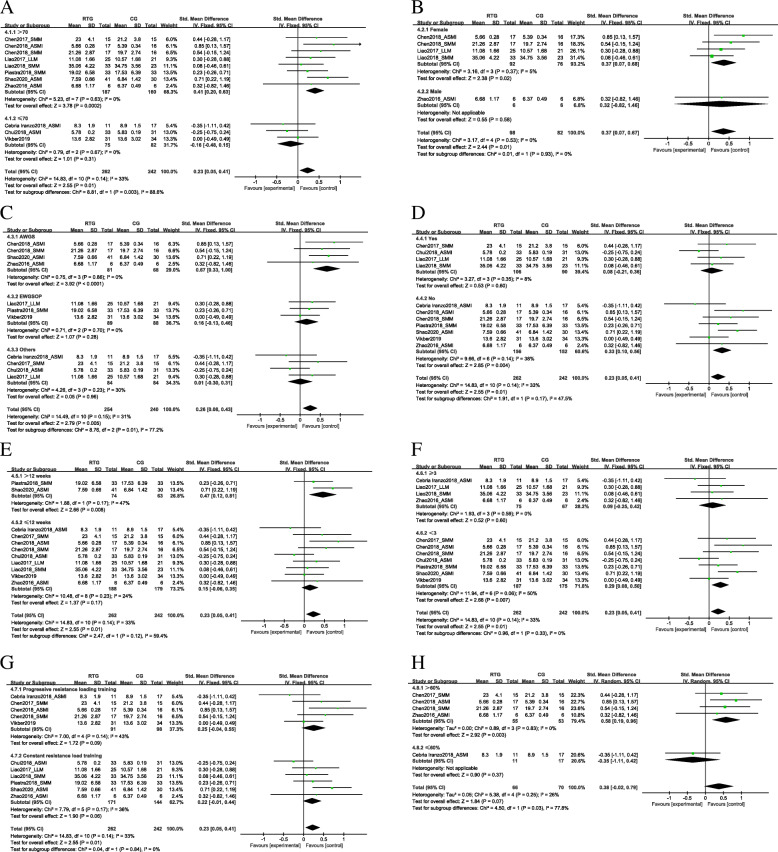
Objective: We conducted a meta-analysis to analyze the effects of resistance training on measures of body composition, muscle strength, and muscle performance in older people with sarcopenia. Methods: All randomized controlled trials on the effects of resistance training on outcome variables in older people with sarcopenia were searched on Pubmed, Embase, Cochrane Library, the China National Knowledge Infrastructure (CNKI), and Wanfang. Data from January 2010 to October 2020 were reviewed. Two researchers extracted data and evaluated the quality of the studies that met the inclusion criteria independently. Meta-analysis for pre-post changes were calculated as standardized mean difference (SMD) with 95% confidence intervals (CI). Results: Fourteen studies meeting inclusion criteria included 561 healthy older adults (age 65.8 to 82.8) with sarcopenia. Compared with the control group, resistance training had positive effects on body fat mass (SMD = -0.53, 95% CI − 0.81 to − 0.25, p = 0.0002, I 2 = 0%), handgrip strength (SMD = 0.81, 95%CI 0.35 to 1.27, p = 0.0005, I 2 = 81%), knee extension strength (SMD = 1.26, 95% CI 0.72 to 1.80, p < 0.0001, I 2 = 67%), gait speed (SMD = 1.28, 95%CI 0.36 to 2.19, p = 0.006, I 2 = 89%), and the timed up and go test (SMD = -0.93, 95% CI − 1.30 to − 0.56, p < 0.0001, I 2 = 23%). Resistance training had no effects on appendicular skeletal muscle mass (SMD = 0.25, 95% CI − 0.27 to 0.78, p = 0.35, I 2 = 68%), skeletal muscle mass (SMD = 0.27, 95% CI − 0.02 to 0.56, p = 0.07, I 2 = 0%) and leg lean mass (SMD = 0.12, 95% CI − 0.25 to 0.50, p = 0.52, I 2 = 0%). Old people with sarcopenia of different ages, genders or diagnostic criteria and weights have different gains in muscle mass, handgrip strength, knee extension strength and muscle performance after different intervention duration, frequencies, mode and intensity resistance training. Conclusion: Resistance training is an effective treatment to improve body fat mass, muscle strength, and muscle performance in healthy older people with sarcopenia.
Overview
The claims and statistics of this paper haven’t been checked yet.
Free: it reads the open-access text and checks the first 5 claims that cite a source we can check. Create a free account to check every claim.
Integrity signals
Registry
Cites
Statistics
Figures
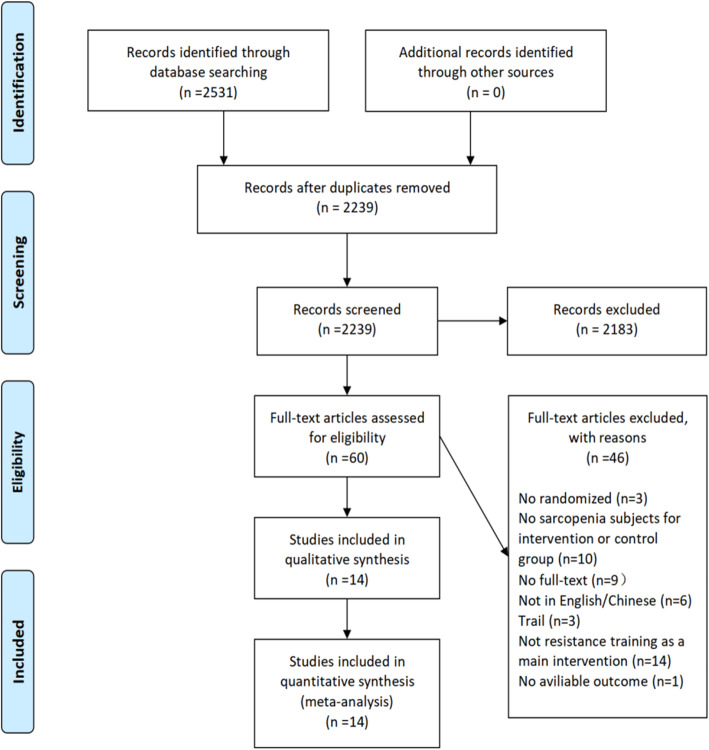
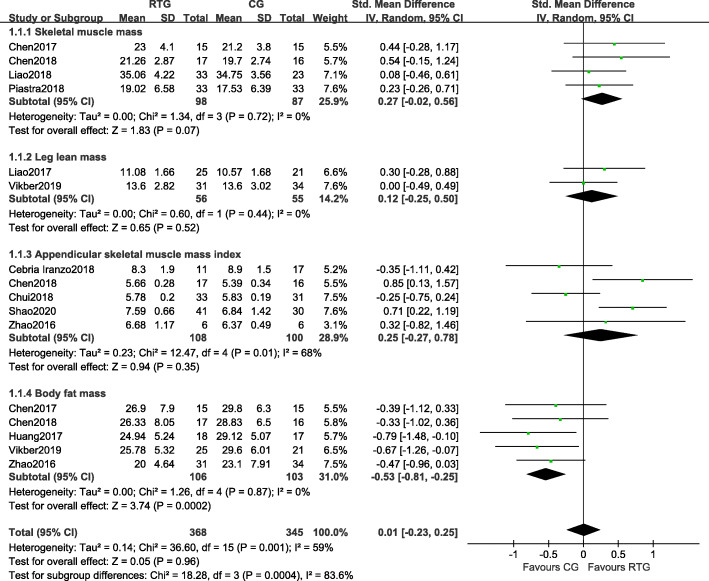
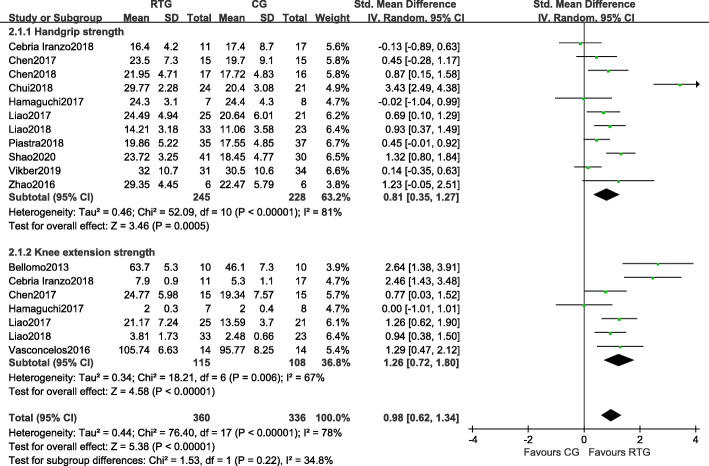
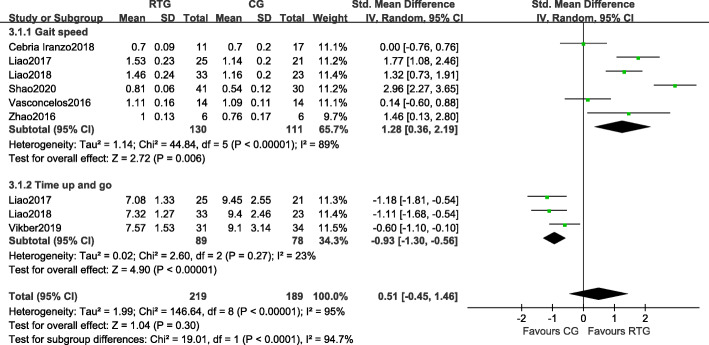
Verification
Claims the paper makes
The claims and statistics of this paper haven’t been checked yet.
Free: it reads the open-access text and checks the first 5 claims that cite a source we can check. Create a free account to check every claim.
Claims other papers make about this one
Each is checked against this paper’s own text: does it say what the citing paper says it does?
In the citing paper
“Compared with no exercise (control), RT significantly improved muscle strength, size (hypertrophy), power, endurance, contraction velocity, gait speed, balance, and multiple physical function outcomes.”
In the citing paper
“Compared with CTRL, muscle hypertrophy was positively affected by standard RT (17,24,30,32,33,37,38,40,42–47,50,127), circuit RT (57,58), and elastic band RT (60,62).”
In the citing paper
“Compared with CTRL, TUG was impacted by standard RT (30,32,33,36,38,47,50,152,154,156).”
In the citing paper
“Compared with CTRL, gait speed was impacted by standard RT (17,30,32,33,36–38,47,53,152–155).”
In the citing paper
“However, evidence of the effectiveness of resistance training in achieving increased muscle mass is inconsistent.51,52”
From Nutritional and exercise interventions in individuals with sarcopenic obesity around retirement age: a systematic review and meta-analysis (2023) · cites this paper as [51]
Self-check
Percentages, sums and reported differences re-computed from the paper’s own numbers.
The self-check needs the paper’s full text.
Citations
Cites
Sarcopenia: revised European consensus on definition and diagnosis
Cruz-Jentoft, A. J., Bahat, G., Bauer, J., Boirie, Y., Bruyère, O., Cederholm, T., Cooper, C., Landi, F., Rolland, Y., Sayer, A. A., et al. (2019) · Age and Ageing · doi:10.1093/ageing/afy169 · Cited by 13,818 · cited 12×
“In Urumqi (China), China the prevalence of sarcopenia in persons aged ≥60 years ranged from 4.6 to 24.5% depending on the criteria used to define sarcopenia from three organizations (EWGSOP, the International Working Group on Sarcopenia (IGWS), and the Asian Working Group for Sarcopenia (AGWS)) [3].”
BackgroundMethodInfluentialSarcopenia: European consensus on definition and diagnosis
Cruz-Jentoft, A. J., Baeyens, J. P., Bauer, J. M., Boirie, Y., Cederholm, T., Landi, F., Martin, F. C., Michel, J.-P., Rolland, Y., Schneider, S. M., et al. (2010) · Age and Ageing · doi:10.1093/ageing/afq034 · Cited by 11,601 · cited 1×
“Introduction Sarcopenia is an age-related syndrome characterized by a progressive, generalized loss of skeletal muscle mass, combined with a decline in muscle strength and performance [1].”
BackgroundGarber, C. E., Blissmer, B., Deschenes, M. R., Franklin, B. A., Lamonte, M. J., Lee, I.-M., Nieman, D. C., & Swain, D. P. (2011) · Medicine & Science in Sports & Exercise · doi:10.1249/mss.0b013e318213fefb · Cited by 9,319 · cited 1×
“It promotes improvements in body composition and muscle strength, thereby attenuating the harmful effects of aging [15].”
BackgroundReliability of the PEDro Scale for Rating Quality of Randomized Controlled Trials
Maher, C. G., Sherrington, C., Herbert, R. D., Moseley, A. M., & Elkins, M. (2003) · Physical Therapy · doi:10.1093/ptj/83.8.713 · Cited by 4,808 · cited 1×
“Quality assessment Two reviewers (NC and XH) independently assessed the methodological quality of the studies using the Physiotherapy Evidence Database (PEDro) scale [28].”
MethodSarcopenia in Asia: Consensus Report of the Asian Working Group for Sarcopenia
Chen, L.-K., Liu, L.-K., Woo, J., Assantachai, P., Auyeung, T.-W., Bahyah, K. S., Chou, M.-Y., Chen, L.-Y., Hsu, P.-S., Krairit, O., et al. (2014) · Journal of the American Medical Directors Association · doi:10.1016/j.jamda.2013.11.025 · Cited by 4,051 · cited 8×
“In Urumqi (China), China the prevalence of sarcopenia in persons aged ≥60 years ranged from 4.6 to 24.5% depending on the criteria used to define sarcopenia from three organizations (EWGSOP, the International Working Group on Sarcopenia (IGWS), and the Asian Working Group for Sarcopenia (AGWS)) [3].”
MethodInfluentialEpidemiology of Sarcopenia among the Elderly in New Mexico
Baumgartner, R. N., Koehler, K. M., Gallagher, D., Romero, L., Heymsfield, S. B., Ross, R. R., Garry, P. J., & Lindeman, R. D. (1998) · American Journal of Epidemiology · doi:10.1093/oxfordjournals.aje.a009520 · Cited by 4,004 · cited 1×
“The diagnostic criteria for sarcopenia in the 14 studies was adopted from the following: EWGSOP [20, 21] (4 studies), AWGS [20] (3 studies), and Centers for Disease Control and Prevention [23] [CDC] (1 study).”
MethodSarcopenia: revised European consensus on definition and diagnosis
Cruz-Jentoft, A. J., Bahat, G., Bauer, J., Boirie, Y., Bruyère, O., Cederholm, T., Cooper, C., Landi, F., Rolland, Y., Sayer, A. A., et al. (2019) · Age and Ageing · doi:10.1093/ageing/afz046 · Cited by 3,803
Janssen, I., Heymsfield, S. B., & Ross, R. (2002) · Journal of the American Geriatrics Society · doi:10.1046/j.1532-5415.2002.50216.x · Cited by 3,139 · cited 1×
“Janssen [24] United States [(height(2)/BIA-resistance*0.”
Meaningful change and responsiveness in common physical performance measures in older adults.
Perera, S., Mody, S. H., Woodman, R. C., & Studenski, S. A. (2006) · Journal of the American Geriatrics Society · doi:10.1111/j.1532-5415.2006.00701.x · Cited by 2,513
Cruz-Jentoft, A. J., Landi, F., Schneider, S. M., Zuniga, C., Arai, H., Boirie, Y., Chen, L.-K., Fielding, R. A., Martin, F. C., Michel, J.-P., et al. (2014) · Age and Ageing · doi:10.1093/ageing/afu115 · Cited by 1,963
Sarcopenia: Aging-Related Loss of Muscle Mass and Function
Larsson, L., Degens, H., Li, M., Salviati, L., Lee, Y. I., Thompson, W., Kirkland, J. L., & Sandri, M. (2019) · Physiological Reviews · doi:10.1152/physrev.00061.2017 · Cited by 1,797 · cited 1×
“Among possible interventions, physical training has been demonstrated as one of the promising method to reduce age-related loss of muscle mass and strength [13].”
MethodResistance exercise for muscular strength in older adults: a meta-analysis
Peterson, M. D., Rhea, M. R., Sen, A., & Gordon, P. M. (2010) · Ageing Research Reviews · doi:10.1016/j.arr.2010.03.004 · Cited by 808 · cited 1×
“showed that resistance training significantly improved KES scores in healthy older people with [11] and without [56] sarcopenia.”
BackgroundBorde, R., Hortobágyi, T., & Granacher, U. (2015) · Sports Medicine · doi:10.1007/s40279-015-0385-9 · Cited by 737
Preferred Reporting Items for Systematic Reviews and Meta-Analyses
Vrabel, M. (2015) · Oncology Nursing Forum · doi:10.1188/15.onf.552-554 · Cited by 669 · cited 1×
“Material and methods Search strategy This systematic review and meta-analysis was registered (PROSPERO registration number: CRD42020221250), and it was reported in accordance with the Preferred Reporting Items for Systematic Review and MetaAnalysis (PRISMA) statement [27].”
MethodInfluence of Resistance Exercise on Lean Body Mass in Aging Adults: A Meta-Analysis
PETERSON, M. D., SEN, A., & GORDON, P. M. (2011) · Medicine & Science in Sports & Exercise · doi:10.1249/mss.0b013e3181eb6265 · Cited by 558 · cited 1×
“In a meta-analysis reported by Peterson and Gordon, resistance training significantly increased muscle mass in older people [46].”
Beaudart, C., Rolland, Y., Cruz-Jentoft, A. J., Bauer, J. M., Sieber, C., Cooper, C., Al-Daghri, N., Araujo de Carvalho, I., Bautmans, I., Bernabei, R., et al. (2019) · Calcified Tissue International · doi:10.1007/s00223-019-00545-w · Cited by 528 · cited 2×
“Muscle performance is a multidimensional concept, defined as an objectively measured whole body function related with mobility that involves many organs and systems of the body” [59].”
BackgroundMcLean, R. R., Shardell, M. D., Alley, D. E., Cawthon, P. M., Fragala, M. S., Harris, T. B., Kenny, A. M., Peters, K. W., Ferrucci, L., Guralnik, J. M., et al. (2014) · The Journals of Gerontology: Series A · doi:10.1093/gerona/glu012 · Cited by 475
Association Between Sarcopenia and Cognitive Impairment: A Systematic Review and Meta-Analysis
Chang, K.-V., Hsu, T.-H., Wu, W.-T., Huang, K.-C., & Han, D.-S. (2016) · Journal of the American Medical Directors Association · doi:10.1016/j.jamda.2016.09.013 · Cited by 448 · cited 1×
“Sarcopenia increases the risks of adverse outcomes such as falls and fractures [4] and is associated with cognitive impairment [5], respiratory [6] and sleep disorders [7], poor quality of life, and premature death [8, 9].”
BackgroundKim, K. M., Jang, H. C., & Lim, S. (2016) · The Korean Journal of Internal Medicine · doi:10.3904/kjim.2016.015 · Cited by 403 · cited 1×
“Therefore, when quantifying muscle mass, the absolute level of SMM or ASM can be adjusted according to body size in different ways [45].”
BackgroundDose-Response Relationship of Resistance Training in Older Adults: A Meta-Analysis
STEIB, S., SCHOENE, D., & PFEIFER, K. (2010) · Medicine & Science in Sports & Exercise · doi:10.1249/mss.0b013e3181c34465 · Cited by 378 · cited 1×
“According to the results of our subgroup analysis, resistance training should be kept at a moderatehigh intensity (> 60% 1RM), two meta-analyses have also shown that high-intensity (> 70–75%1RM) resistance training is more effective in improving muscle strength and performance in older people than lower-intensity exer…”
ResultExercise interventions for the prevention and treatment of sarcopenia. A systematic umbrella review.
Beckwée, D., Delaere, A., Aelbrecht, S., Baert, V., Beaudart, C., Bruyere, O., de Saint-Hubert, M., & Bautmans, I. (2019) · The Journal of nutrition, health and aging · doi:10.1007/s12603-019-1196-8 · Cited by 330 · cited 4×
“First, an inconsistency of diagnostic criteria and indicators for measuring sarcopenia makes it difficult to study sarcopenia studied in systematic reviews [18, 19].”
BackgroundInfluentialChen, H., Chung, Y., Chen, Y., Ho, S., & Wu, H. (2017) · Journal of the American Geriatrics Society · doi:10.1111/jgs.14722 · Cited by 317 · cited 1×
“Some of the studies included in our meta-analysis involved resistance movements that specifically improved handgrip strength, neither of which were included in the two previously mentioned metaanalysis studies that failed to show improvements in the HGS scores [39].”
ResultChelly, M. S., Fathloun, M., Cherif, N., Amar, M. B., Tabka, Z., & Van Praagh, E. (2009) · Journal of Strength and Conditioning Research · doi:10.1519/jsc.0b013e3181b86c40 · Cited by 313 · cited 1×
“For novices, improvements in muscle strength during the first 8 weeks of resistance training programs are usually attributed to improved neural adaptations rather than changes in muscle structural [50].”
BackgroundOptimal management of sarcopenia
Sumukadas, D. (2010) · Clinical Interventions in Aging · doi:10.2147/cia.s11473 · Cited by 303
Chung, J.-Y., Kang, H.-T., Lee, D.-C., Lee, H.-R., & Lee, Y.-J. (2013) · Archives of Gerontology and Geriatrics · doi:10.1016/j.archger.2012.09.007 · Cited by 283 · cited 1×
“Chung [26] Korea ASM/weight(2)*100% by DXA, M: ≤32.”
Vikberg, S., Sörlén, N., Brandén, L., Johansson, J., Nordström, A., Hult, A., & Nordström, P. (2019) · Journal of the American Medical Directors Association · doi:10.1016/j.jamda.2018.09.011 · Cited by 261
Hsu, K.-J., Liao, C.-D., Tsai, M.-W., & Chen, C.-N. (2019) · Nutrients · doi:10.3390/nu11092163 · Cited by 258
Quality of life and physical components linked to sarcopenia: The SarcoPhAge study
Beaudart, C., Reginster, J. Y., Petermans, J., Gillain, S., Quabron, A., Locquet, M., Slomian, J., Buckinx, F., & Bruyère, O. (2015) · Experimental Gerontology · doi:10.1016/j.exger.2015.05.003 · Cited by 248 · cited 1×
“Sarcopenia increases the risks of adverse outcomes such as falls and fractures [4] and is associated with cognitive impairment [5], respiratory [6] and sleep disorders [7], poor quality of life, and premature death [8, 9].”
BackgroundExercise attenuates the weight-loss-induced reduction in muscle mass in frail obese older adults
FRIMEL, T. N., SINACORE, D. R., & VILLAREAL, D. T. (2008) · Medicine & Science in Sports & Exercise · doi:10.1249/mss.0b013e31816a85ce · Cited by 230 · cited 1×
“For example, increases in muscle mass in older adults have been observed in studies using a longer exercise intervention period (at least 6 months) as compared with shorter exercise intervention periods [48].”
BackgroundPijnappels, M., Reeves, N. D., Maganaris, C. N., & van Dieën, J. H. (2008) · Journal of Electromyography and Kinesiology · doi:10.1016/j.jelekin.2007.06.004 · Cited by 227 · cited 1×
“The KES test also reflects the muscle strength of lower limbs and is related to locomotion, activities of daily living, and the risk of falling accidents [55].”
BackgroundVlietstra, L., Hendrickx, W., & Waters, D. L. (2018) · Australasian Journal on Ageing · doi:10.1111/ajag.12521 · Cited by 216 · cited 3×
“First, an inconsistency of diagnostic criteria and indicators for measuring sarcopenia makes it difficult to study sarcopenia studied in systematic reviews [18, 19].”
BackgroundGrgic, J., Garofolini, A., Orazem, J., Sabol, F., Schoenfeld, B. J., & Pedisic, Z. (2020) · Sports Medicine · doi:10.1007/s40279-020-01331-7 · Cited by 208 · cited 1×
“, also showed no effects of resistance training on HGS scores in very old people [57].”
BackgroundLiao, C.-D., Tsauo, J.-Y., Lin, L.-F., Huang, S.-W., Ku, J.-W., Chou, L.-C., & Liou, T.-H. (2017) · Medicine · doi:10.1097/md.0000000000007115 · Cited by 201
De Buyser, S. L., Petrovic, M., Taes, Y. E., Toye, K. R. C., Kaufman, J.-M., Lapauw, B., & Goemaere, S. (2016) · Age and Ageing · doi:10.1093/ageing/afw071 · Cited by 198 · cited 1×
“Sarcopenia increases the risks of adverse outcomes such as falls and fractures [4] and is associated with cognitive impairment [5], respiratory [6] and sleep disorders [7], poor quality of life, and premature death [8, 9].”
BackgroundLiao, C.-D., Tsauo, J.-Y., Huang, S.-W., Ku, J.-W., Hsiao, D.-J., & Liou, T.-H. (2018) · Scientific Reports · doi:10.1038/s41598-018-20677-7 · Cited by 180 · cited 1×
“It should be noted that, while hand grip strength may reflect overall body strength, increases in hand grip strength following resistance training are minimal in older people [40].”
BackgroundMuscle, Health and Costs: A Glance at their Relationship
Mijnarends, D. M., Luiking, Y. C., Halfens, R. J. G., Evers, S. M. A. A., Lenaerts, E. L. A., Verlaan, S., Wallace, M., Schols, J. M. G. A., & Meijers, J. M. M. (2018) · The Journal of nutrition, health and aging · doi:10.1007/s12603-018-1058-9 · Cited by 173 · cited 1×
“This brings a heavy economic burden to societies and families if sarcopenia is untreated [10].”
BackgroundKerr, Z. Y., Collins, C. L., & Dawn Comstock, R. (2010) · The American Journal of Sports Medicine · doi:10.1177/0363546509351560 · Cited by 145 · cited 1×
“We suggest that the older people should choose the elastic band as much as possible, because they are more likely to suffer injuries with weight machines than young people [63].”
BackgroundChen, H.-T., Wu, H.-J., Chen, Y.-J., Ho, S.-Y., & Chung, Y.-C. (2018) · Experimental Gerontology · doi:10.1016/j.exger.2018.09.015 · Cited by 137
Martins, W. R., de Oliveira, R. J., Carvalho, R. S., Damasceno, V. D. O., Maldaner, V., & Silva, M. S. (2013) · Archives of Gerontology and Geriatrics · doi:10.1016/j.archger.2013.03.002 · Cited by 132 · cited 1×
“A meta-analysis conducted by Martins indicated that exercise interventions had no effect on ASMI in older people [47].”
MethodHuang, S.-W., Ku, J.-W., Lin, L.-F., Liao, C.-D., Chou, L.-C., & Liou, T.-H. (2017) · European Journal of Physical and Rehabilitation Medicine · doi:10.23736/s1973-9087.17.04443-4 · Cited by 120
Vasconcelos, K. S. S., Dias, J. M. D., Araújo, M. C., Pinheiro, A. C., Moreira, B. S., & Dias, R. C. (2016) · Brazilian Journal of Physical Therapy · doi:10.1590/bjpt-rbf.2014.0174 · Cited by 97
Lei, Y., Yao, X., Shen, J., Sun, G., Sun, Q., Tian, X., Li, X., Li, X., Ye, L., Zhang, Z., et al. (2019) · Experimental Gerontology · doi:10.1016/j.exger.2019.110798 · Cited by 88 · cited 1×
“5% depending on the criteria used to define sarcopenia from three organizations (EWGSOP, the International Working Group on Sarcopenia (IGWS), and the Asian Working Group for Sarcopenia (AGWS)) [3].”
MethodResistance training and sarcopenia
Giallauria, F., Cittadini, A., Smart, N. A., & Vigorito, C. (2016) · Monaldi Archives for Chest Disease · doi:10.4081/monaldi.2015.738 · Cited by 87 · cited 1×
“Of the training modes, resistance training is the most effective in increasing muscle mass and strength in older persons [14].”
BackgroundThe role of muscle mass and body fat on disability among older adults: A cross-national analysis
Tyrovolas, S., Koyanagi, A., Olaya, B., Ayuso‐Mateos, J. L., Miret, M., Chatterji, S., Tobiasz‐Adamczyk, B., Koskinen, S. V. P., Leonardi, M., & Haro, J. M. (2015) · Experimental Gerontology · doi:10.1016/j.exger.2015.06.002 · Cited by 86 · cited 1×
“Tyrovolas [25] countries from Asia, Africa, Europe, and Latin America ASM/BMI by BIA, M: ≤0.”
BackgroundRhea, M. R., Kenn, J. G., & Dermody, B. M. (2009) · The Journal of Strength and Conditioning Research · doi:10.1519/jsc.0b013e3181b3e1b6 · Cited by 86 · cited 1×
“It is demonstrate that neural mechanisms and muscular innervation, such as adaptations in activation, synchronization, and rate coding, rather than muscular hypertrophy, are the most likely reasons of increased muscle strength [49].”
BackgroundHu, X., Jiang, J., Wang, H., Zhang, L., Dong, B., & Yang, M. (2017) · Medicine · doi:10.1097/md.0000000000006268 · Cited by 83
Moon, J. H., Kong, M. H., & Kim, H. J. (2015) · Journal of Korean Medical Science · doi:10.3346/jkms.2015.30.11.1682 · Cited by 72 · cited 1×
“Sarcopenia increases the risks of adverse outcomes such as falls and fractures [4] and is associated with cognitive impairment [5], respiratory [6] and sleep disorders [7], poor quality of life, and premature death [8, 9].”
BackgroundSantos, L., Ribeiro, A. S., Schoenfeld, B. J., Nascimento, M. A., Tomeleri, C. M., Souza, M. F., Pina, F. L. C., & Cyrino, E. S. (2017) · European Journal of Sport Science · doi:10.1080/17461391.2016.1273394 · Cited by 72
Negaresh, R., Ranjbar, R., Baker, J., Habibi, A., Mokhtarzade, M., Gharibvand, M., & Fokin, A. (2019) · International Journal of Preventive Medicine · doi:10.4103/ijpvm.ijpvm_310_17 · Cited by 68 · cited 1×
“[17] demonstrated that an 8-week progressive resistance training program could significantly improve the appendicular skeletal muscle mass index (ASMI) in healthy older men with sarcopenia.”
BackgroundPiastra, G., Perasso, L., Lucarini, S., Monacelli, F., Bisio, A., Ferrando, V., Gallamini, M., Faelli, E., & Ruggeri, P. (2018) · BioMed Research International · doi:10.1155/2018/5095673 · Cited by 66
Recent advances in pharmacological, hormonal, and nutritional intervention for sarcopenia
Sakuma, K., & Yamaguchi, A. (2017) · Pflügers Archiv - European Journal of Physiology · doi:10.1007/s00424-017-2077-9 · Cited by 63 · cited 1×
“Without effective pharmacological interventions for sarcopenia, non-pharmacological interventions are an effective alternative to decelerate further progression of sarcopenia [12].”
BackgroundChiu, S.-C., Yang, R.-S., Yang, R.-J., & Chang, S.-F. (2018) · BMC Geriatrics · doi:10.1186/s12877-018-0714-6 · Cited by 63
Hamaguchi, K., Kurihara, T., Fujimoto, M., Iemitsu, M., Sato, K., Hamaoka, T., & Sanada, K. (2017) · BMC Geriatrics · doi:10.1186/s12877-017-0490-8 · Cited by 53
Cebrià i Iranzo, M. À., Balasch-Bernat, M., Tortosa-Chuliá, M. Á., & Balasch-Parisi, S. (2018) · Journal of Aging and Physical Activity · doi:10.1123/japa.2017-0268 · Cited by 50
Xu, H., Shi, J., Shen, C., Liu, Y., Liu, J., & Zheng, X.-Y. (2018) · Archives of Osteoporosis · doi:10.1007/s11657-018-0545-2 · Cited by 47
Self-citationBellomo, R. G., Iodice, P., Maffulli, N., Maghradze, T., Coco, V., & Saggini, R. (2013) · European Journal of Inflammation · doi:10.1177/1721727x1301100118 · Cited by 45
Ruffolo, J. J. (1974) · Transactions of the American Microscopical Society · doi:10.2307/3225229 · Cited by 40
Evaluation of sarcopenia in patients with distal radius fractures
Roh, Y. H., Koh, Y. D., Noh, J. H., Gong, H. S., & Baek, G. H. (2016) · Archives of Osteoporosis · doi:10.1007/s11657-016-0303-2 · Cited by 31 · cited 1×
“Sarcopenia increases the risks of adverse outcomes such as falls and fractures [4] and is associated with cognitive impairment [5], respiratory [6] and sleep disorders [7], poor quality of life, and premature death [8, 9].”
BackgroundEffect of Squat Exercises on Lung Function in Elderly Women with Sarcopenia
Jeon, Y. K., Shin, M., Kim, C., Lee, B., Kim, S., Chae, D., Park, J., So, Y. S., Park, H., Lee, C. H., et al. (2018) · Journal of Clinical Medicine · doi:10.3390/jcm7070167 · Cited by 26 · cited 2×
“[16] showed that a 6-week squat exercise routine could improve hand grip strength (HGS) and knee extensor strength (KES) in older women with sarcopenia.”
BackgroundLi, C., Kang, B., Zhang, T., Gu, H., Man, Q., Song, P., Liu, Z., Chen, J., Wang, X., Xu, B., et al. (2020) · Healthcare · doi:10.3390/healthcare8040479 · Cited by 20 · cited 1×
“Older people with sarcopenia tend to show high levels of body fat and visceral fat [52].”
BackgroundEffects of Chinese massage and resistance exercise on ADL in elderly Chinese sarcopenic men
Zhao, Y., Zhang, Y., Guo, Y., Yan-li, D., Zhao, J., & He, Y. (2016) · Zhongguo kangfu yixue zazhi · Cited by 3
Research works printed but not linked: 4
- Vlietstra L Hendrickx W Waters DL Exercise interventions in healthy older adults with sarcopenia: a systematic review and meta-analysis 2018 29638028
- Wei-Hua S Li-Xia G Su-Xing W Cai-Xia L Li-Xia Y Shao-Bing L Effects of vitamin D combined with resistance training on skeletal muscle mass, activities of daily living and serological indices in elderly patients with sarcopenia Chin J Mult Organ Dis Elderly. 2020 19 09 656 60
- Vasconcelos K Dias J Araújo M Pinheiro AC Moreira BS Dias RC Effects of a progressive resistance exercise program with high-speed component on the physical function of older women with sarcopenic obesity: a randomized controlled trial Braz J Phys Ther. 2016 20 5 432 40 10.1590/bjpt-rbf.2014.0174 27410162 PMC5123261 · DOI · Paper page
- Borde R Hortobágyi T Granacher U Dose–Response Relationships of Resistance Training in Healthy Old Adults: A Systematic Review and Meta-Analysis Sports Med 2015 45 12 1693 1720 10.1007/s40279-015-0385-9 26420238 PMC4656698 · DOI · Paper page
Cited by
Exercise for sarcopenia in older people: A systematic review and network meta‐analysis
Shen, Y., Shi, Q., Nong, K., Li, S., Yue, J., Huang, J., Dong, B., Beauchamp, M., & Hao, Q. (2023) · Journal of Cachexia, Sarcopenia and Muscle · doi:10.1002/jcsm.13225 · Cited by 464
“…review proved that resistance training had positive effects on body fat mass, handgrip strength, knee extension strength, gait speed and the timed up and go (TUG) test, 22 whereas another review reported that aerobic exercise was most effective to improve muscle strength and physical performance.”
Resistance exercise as a treatment for sarcopenia: prescription and delivery
Hurst, C., Robinson, S. M., Witham, M. D., Dodds, R. M., Granic, A., Buckland, C., De Biase, S., Finnegan, S., Rochester, L., Skelton, D. A., et al. (2022) · Age and Ageing · doi:10.1093/ageing/afac003 · Cited by 319
“However, it appears that at least 12 weeks of RE is necessary based on the evidence presented in this paper [70].”
BackgroundBernabei, R., Landi, F., Calvani, R., Cesari, M., Del Signore, S., Anker, S. D., Bejuit, R., Bordes, P., Cherubini, A., Cruz-Jentoft, A. J., et al. (2022) · BMJ · doi:10.1136/bmj-2021-068788 · Cited by 318
Paluch, A. E., Boyer, W. R., Franklin, B. A., Laddu, D., Lobelo, F., Lee, D.-C., McDermott, M. M., Swift, D. L., Webel, A. R., Lane, A., et al. (2024) · Circulation · doi:10.1161/cir.0000000000001189 · Cited by 290
“…per exercise) and intensity (55%–80% of 1 repetition maximum [RM]), compared with lower volume (1 set per exercise) and intensity (<55% of 1-RM) resulted in greater reductions in total body fat mass and waist circumference 55,60 and enhanced muscle quality, mass, strength, and functional status.”
BackgroundCornish, S. M., Cordingley, D. M., Shaw, K. A., Forbes, S. C., Leonhardt, T., Bristol, A., Candow, D. G., & Chilibeck, P. D. (2022) · Nutrients · doi:10.3390/nu14112221 · Cited by 79
Metadata
- Authors
- Chen, N., He, X., Feng, Y., Ainsworth, B. E., & Liu, Y.
- Affiliations
- Shanghai Jiao Tong University (CN)
- Arizona State University (US)
- Shanghai University of Sport (CN)
- Corresponding author
- Liu, Yu
- Venue
- European Review of Aging and Physical Activity
- Published
- 2021-11-11
- Volume
- 18
- Issue
- 1
- Pages
- 23-23
- ISSN
- 1813-7253 (ISSN-L)
- 1861-6909
- PMC
- PMC8588688
- OpenAlex
- W3212643929
- Cited by
- 178
- References
- 60
- Citations by year
- 2026: 48 · 2025: 48 · 2024: 37 · 2023: 33 · 2022: 12
- FWCI
- 2.73
- Type
- journal article
- Language
- en
- Open access
- gold
- doi.org
- Licence
- cc-by
- creativecommons.org/licenses/by/4.0 (tdm)
- creativecommons.org/licenses/by/4.0 (vor)
- Locations
- European Review of Aging and Physical Activity (publishedVersion, cc-by)
- PubMed Central (publishedVersion, cc-by)
- PubMed (publishedVersion)
- Funders
- Shanghai Municipal Health Bureau (2020YJZX0137)
- Topics
- Health Sciences › Medicine › Physiology (medical) › Nutrition and Health in Aging
- Health Sciences › Medicine › Geriatrics and Gerontology › Frailty in Older Adults
- Life Sciences › Biochemistry, Genetics and Molecular Biology › Molecular Biology › Muscle Physiology and Disorders
- Keywords
- resistance training, sarcopenia, older adults, muscle strength, grip strength, quadriceps strength, muscle performance, walking speed, body composition, fat mass, appendicular skeletal muscle mass, Timed Up and Go test, exercise intervention, healthy aging, sarcopenic obesity, sarcopenic frailty
About these checks
Registry, retraction, Cites and statistics results are computed, not judged, with one exception: a printed reference that no index lists is read once by a model before it counts as a citation error. Claims are extracted by a model and kept only when their quote appears verbatim in the text; each cited source is then checked, with a model’s help, for whether it says what the claim relies on. Those verdicts can be wrong — read the claim’s quote and the cited source before relying on one.
Statistics and arithmetic are recomputed, not judged.
Confidence bands are shown only for fields calibrated on our annotated test set. None is calibrated yet, so no band is shown.
What counts as a claim ›How we measure confidence ›How we check this ›
Are you an author, or do you see a problem with this page? Request a review
Data sources
Bibliographic data: Semantic Scholar, OpenAlex, Crossref.
Contains information from the Semantic Scholar Academic Graph Datasets, made available under the ODC Attribution License (ODC-BY 1.0).
Semantic Scholar’s data is described in: Kinney, R., et al. (2023). The Semantic Scholar Open Data Platform. arXiv:2301.10140.
