

The DOI matches its Crossref record; 39 of the 39 references it cites were found in a registry or an index.
Arbaclofen in fragile X syndrome: results of phase 3 trials
Open accessAbstract
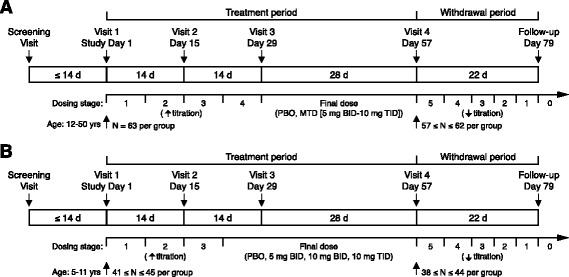
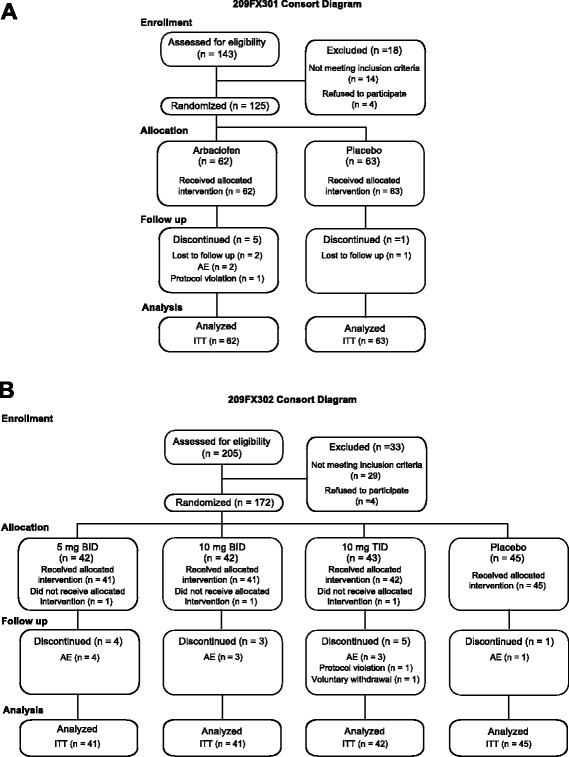
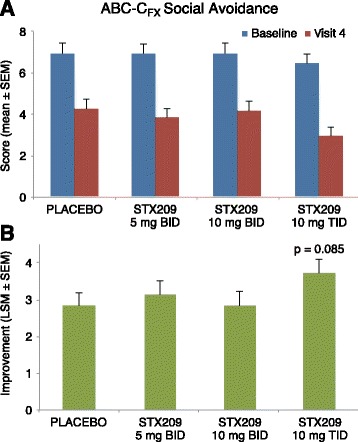
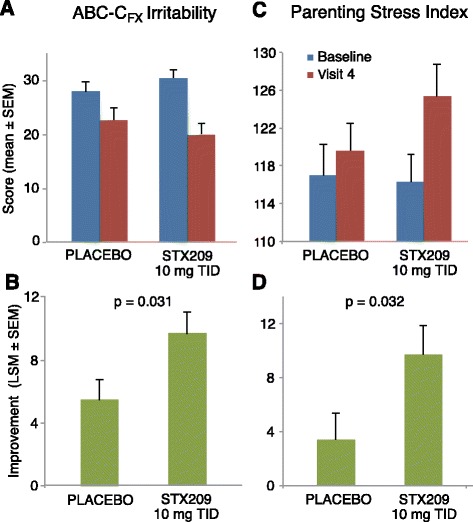
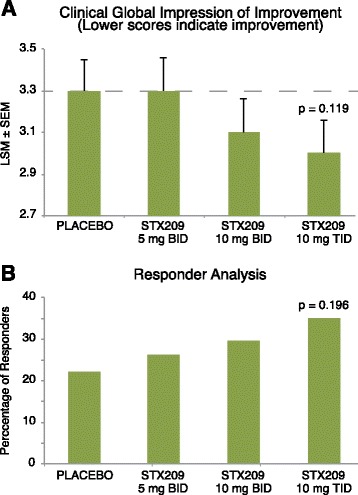
Arbaclofen improved multiple abnormal phenotypes in animal models of fragile X syndrome (FXS) and showed promising results in a phase 2 clinical study. The objective of the study is to determine safety and efficacy of arbaclofen for social avoidance in FXS. Two phase 3 placebo-controlled trials were conducted, a flexible dose trial in subjects age 12–50 (209FX301, adolescent/adult study) and a fixed dose trial in subjects age 5–11 (209FX302, child study). The primary endpoint for both trials was the Social Avoidance subscale of the Aberrant Behavior Checklist-Community Edition, FXS-specific (ABC-C FX ). Secondary outcomes included other ABC-C FX subscale scores, Clinical Global Impression-Improvement (CGI-I), Clinical Global Impression-Severity (CGI-S), and Vineland Adaptive Behavior Scales, Second Edition (Vineland-II) Socialization domain score. A total 119 of 125 randomized subjects completed the adolescent/adult study ( n = 57 arbaclofen, 62 placebo) and 159/172 completed the child study (arbaclofen 5 BID n = 38; 10 BID n = 39; 10 TID n = 38; placebo n = 44). There were no serious adverse events (AEs); the most common AEs included somatic (headache, vomiting, nausea), neurobehavioral (irritability/agitation, anxiety, hyperactivity), decreased appetite, and infectious conditions, many of which were also common on placebo. In the combined studies, there were 13 discontinuations ( n = 12 arbaclofen, 1 placebo) due to AEs (all neurobehavioral). The adolescent/adult study did not show benefit for arbaclofen over placebo for any measure. In the child study, the highest dose group showed benefit over placebo on the ABC-C FX Irritability subscale ( p = 0.03) and Parenting Stress Index (PSI, p = 0.03) and trends toward benefit on the ABC-C FX Social Avoidance and Hyperactivity subscales (both p < 0.1) and CGI-I ( p = 0.119). Effect size in the highest dose group was similar to effect sizes for FDA-approved serotonin reuptake inhibitors (SSRIs). Arbaclofen did not meet the primary outcome of improved social avoidance in FXS in either study. Data from secondary measures in the child study suggests younger patients may derive benefit, but additional studies with a larger cohort on higher doses would be required to confirm this finding. The reported studies illustrate the challenges but represent a significant step forward in translating targeted treatments from preclinical models to clinical trials in humans with FXS.
Overview
The claims and statistics of this paper haven’t been checked yet.
Run the check — free, no account needed. It reads the open-access text and checks the sources it cites.
Integrity signals
Registry
Cites
Statistics
Figures
Verification
Claims the paper makes
The claims and statistics of this paper haven’t been checked yet.
Run the check — free, no account needed. It reads the open-access text and checks the sources it cites.
Claims other papers make about this one
Each is checked against this paper’s own text: does it say what the citing paper says it does?
In the citing paper
“In the phase III study, children receiving the highest dose of arbaclofen also showed improvement over placebo on the secondary end points of the ABC-CFX Irritability subscale (P = 0.03) and the Parenting Stress Index (P = 0.03).”
From Drug development for neurodevelopmental disorders: lessons learned from fragile X syndrome (2018) · cites this paper as [72]
In the citing paper
“In the phase III study carried out in children, the primary end point (ABC-CFX Social Avoidance subscale) narrowly missed significant improvement (P = 0.08)72.”
From Drug development for neurodevelopmental disorders: lessons learned from fragile X syndrome (2018) · cites this paper as [72]
In the citing paper
“This trial was limited by a lack of full enrolment due to financial issues for the sponsor, the use of fixed rather than flexible dosing and possible inflation of symptoms by families in order to meet inclusion criteria72.”
From Drug development for neurodevelopmental disorders: lessons learned from fragile X syndrome (2018) · cites this paper as [72]
In the citing paper
“However, the adult studies of FXS did not demonstrate efficacy and the pediatric trials did not reach significance for the primary outcome measure, but did show limited improvements in secondary measures including the Parenting Stress Index because of lowered irritability in the children [132].”
From An Update on Psychopharmacological Treatment of Autism Spectrum Disorder (2022) · cites this paper as [132]
In the citing paper
“The promising mouse studies led to human trials in FXS [131] that initially showed improvements in those with ASD plus FXS leading to phase 3 trials in FXS [132].”
From An Update on Psychopharmacological Treatment of Autism Spectrum Disorder (2022) · cites this paper as [132]
Self-check
Percentages, sums and reported differences re-computed from the paper’s own numbers.
The self-check needs the paper’s full text.
Citations
Cites
(1976) · Medical Entomology and Zoology · Cited by 8,899
Owens, J. A., Spirito, A., & McGuinn, M. (2000) · Sleep · doi:10.1093/sleep/23.8.1d · Cited by 2,535
Selective publication of antidepressant trials and its influence on apparent efficacy
Turner, E. H., Matthews, A. M., Linardatos, E., Tell, R. A., & Rosenthal, R. (2008) · New England Journal of Medicine · doi:10.1056/nejmsa065779 · Cited by 2,435
Risperidone in Children with Autism and Serious Behavioral Problems
McCracken, J. T., McGough, J., Shah, B., Cronin, P., Hong, D., Aman, M. G., Arnold, L. E., Lindsay, R., Nash, P., Hollway, J., et al. (2002) · New England Journal of Medicine · doi:10.1056/nejmoa013171 · Cited by 1,574
Size of Treatment Effects and Their Importance to Clinical Research and Practice
KRAEMER, H. C., & Kupfer, D. J. (2005) · Biological Psychiatry · doi:10.1016/j.biopsych.2005.09.014 · Cited by 850
Devys, D., Lutz, Y., Rouyer, N., Bellocq, J., & Mandel, J. (1993) · Nature Genetics · doi:10.1038/ng0893-335 · Cited by 781
Advances in the Treatment of Fragile X Syndrome
Hagerman, R. J., Berry-Kravis, E., Kaufmann, W. E., Ono, M. Y., Tartaglia, N., Lachiewicz, A., Kronk, R., Delahunty, C., Hessl, D., Visootsak, J., et al. (2009) · Pediatrics · doi:10.1542/peds.2008-0317 · Cited by 596
Self-citationEpidemiology of fragile X syndrome: A systematic review and meta‐analysis
Hunter, J. E., Rivero‐Arias, O., Angelov, A., Kim, E., Fotheringham, I., & Leal, J. (2014) · American Journal of Medical Genetics Part A · doi:10.1002/ajmg.a.36511 · Cited by 464
Psychometric characteristics of the aberrant behavior checklist.
Aman, M. G., Singh, N. N., Stewart, A. W., & Field, C. J. (1985) · PubMed · Cited by 458
Autism Profiles of Males With Fragile X Syndrome
Harris, S. W., Hessl, D., Goodlin-Jones, B., Ferranti, J., Bacalman, S., Barbato, I., Tassone, F., Hagerman, P. J., Herman, K., & Hagerman, R. J. (2008) · American Journal on Mental Retardation · doi:10.1352/2008.113:427-438 · Cited by 396
Self-citation
Research works printed but not linked: 7
- Qin M, Huang T, Kader M, Krych L, Xia Z, Burlin T, Zeidler Z, Zhao T, Smith CB. R-Baclofen Reverses a Social Behavior Deficit and Elevated Protein Synthesis in a Mouse Model of Fragile X Syndrome. Int J Neuropsychopharmacol. 2015;18(9). · DOI · Paper page
- Sparrow S, Cicchetti D, Balla D. Vineland adaptive behavior scales, second edition (Vineland II). Survey interview form/caregiver rating form. Livonia: Pearson Assessments; 2005.
- Kaufmann WE, Walton-Bowen K, Kuriyama N, Cherubini M, Carpenter RL, Bear MF PW. Randomized, controlled, phase 2 trial of STX209 (arbaclofen) for social function in autism spectrum disorder. Ann Neurol (Suppl). 2013;74:S130.
- Snape M, Horrigan J, Glass L, Berry-Kravis E, Hatti S, Visootsak J, Frazier J, Tranfaglia M, Jones N. Development of the fragile X syndrome rating scale. In: IMFAR. 2014.
- Sansone SM, Berry-Kravis E, Crestodina C, McLennan Y, Hagerman R, Hessl D. Sensitivity of an eye tracking paradigm as an outcome measure in a fragile X syndrome targeted treatment clinical trial. In: 49th Annual Gatlinburg conference on research and theory in intellectual and developmental disabilities; San Diego. 2016.
- De Sonia A, Visootsak J, Smith M, Budimirovic D, Tartaglia N, Welnik N, et al. Analysis of arbaclofen responses in fragile X syndrome. In: 14th International Fragile X Conference; Orange County, CA. 2014.
- Berry-Kravis E, Erickson CA, Kolevzon A, N T, Hagerman R, Hatti S, Frazier J, Sanders K, Challman T, Needelman H, et al: The treatment of fragile X syndrome with Trofinetide (NNZ-2566). In Proceedings of the 15th international fragile X conference; San Antonio. 2016
Cited by
Sorted by citations
Items 101–183 of 183
Sharghi, S., Flunkert, S., Daurer, M., Rabl, R., Chagnaud, B. P., Leopoldo, M., Lacivita, E., Hutter‐Paier, B., & Prokesch, M. (2023) · Frontiers in Neuroscience · doi:10.3389/fnins.2023.1087788 · Cited by 12
Boutet, I., Collin, C. A., MacLeod, L. S., Messier, C., Holahan, M. R., Berry‐Kravis, E., Gandhi, R., & Kogan, C. S. (2018) · Frontiers in Molecular Neuroscience · doi:10.3389/fnmol.2018.00099 · Cited by 13
Self-citationA MEG Study of Acute Arbaclofen (STX-209) Administration
Roberts, T. P. L., Bloy, L., Blaskey, L. G., Kuschner, E. S., Gaetz, L., Anwar, A., Ku, M., DiPiero, M. A., Bennett, A. E., & Edgar, J. C. (2019) · Frontiers in Integrative Neuroscience · doi:10.3389/fnint.2019.00069 · Cited by 13
Fragile X Syndrome: Lessons Learned and What New Treatment Avenues Are on the Horizon
Hagerman, R. J., & Hagerman, P. J. (2021) · The Annual Review of Pharmacology and Toxicology · doi:10.1146/annurev-pharmtox-052120-090147 · Cited by 12
Self-citationKruizinga, M. D., Zuiker, R. G. J. A., Sali, E., de Kam, M. L., Doll, R. J., Groeneveld, G. J., Santen, G. W. E., & Cohen, A. F. (2020) · Neurotherapeutics · doi:10.1007/s13311-020-00868-9 · Cited by 11
Targeted Treatments for Fragile X Syndrome
Johnson, D., Clark, C. J., & Hagerman, R. J. (2023) · Advances in neurobiology · doi:10.1007/978-3-031-21054-9_10 · Cited by 10
Self-citationPersico, A. M., Asta, L., Chehbani, F., Mirabelli, S., Parlatini, V., Cortese, S., Arango, C., & Vitiello, B. (2024) · Progress in Neuro-Psychopharmacology and Biological Psychiatry · doi:10.1016/j.pnpbp.2024.111176 · Cited by 11
Impact on GABA systems in monogenetic developmental CNS disorders: Clues to symptomatic treatment
Benke, D., & Möhler, H. (2017) · Neuropharmacology · doi:10.1016/j.neuropharm.2017.07.030 · Cited by 10
Fragile X Syndrome and Targeted Treatments
Tassanakijpanich, N., Cabal-Herrera, A. M., Salcedo‐Arellano, M. J., & Hagerman, R. J. (2020) · Journal of Biomedicine and Translational Research · doi:10.14710/jbtr.v6i1.7321 · Cited by 10
Self-citationBudimirovic, D. B., & Duy, P. Q. (2015) · Engrami · doi:10.5937/engrami1504005b · Cited by 9
Self-citationEllis, C. L., Ahmad, J., Zoumpoulaki, A., Dimitrov, M., Velthuis, H., Pereira, A. C., Wong, N. M. L., Ponteduro, F. M., Kowalewski, Ł., Leonard, A., et al. (2023) · medRxiv · doi:10.1101/2023.06.19.23291507 · Cited by 9
Early metformin treatment: An effective approach for targeting fragile X syndrome pathophysiology
Choi, J., Marsal-García, L., Peraldi, E., Walters, C., Huang, Z., Gantois, I., & Sonenberg, N. (2024) · Proceedings of the National Academy of Sciences · doi:10.1073/pnas.2407546121 · Cited by 8
Role of FMRP in rapid antidepressant effects and synapse regulation
Heaney, C. F., Namjoshi, S. V., Uneri, A., Bach, E. C., Weiner, J. L., & Raab‐Graham, K. F. (2021) · Molecular Psychiatry · doi:10.1038/s41380-020-00977-z · Cited by 10
Studying child development in genetic models of ASD
Garg, S., & Green, J. (2018) · Progress in brain research · doi:10.1016/bs.pbr.2018.09.009 · Cited by 8
Ramesh, V., Tsoukala, E., Kougianou, I., Kozić, Z., Burr, K., Viswanath, B., Hampton, D. W., Story, D., Reddy, B. K., Pal, R., et al. (2025) · Glia · doi:10.1002/glia.24680 · Cited by 7
From Discovery to Innovative Translational Approaches in 80 Years of Fragile X Syndrome Research
van der Lei, M. B., & Kooy, R. F. (2025) · Biomedicines · doi:10.3390/biomedicines13040805 · Cited by 6
Wang, P., & Sun, J. (2025) · Frontiers in Psychiatry · doi:10.3389/fpsyt.2025.1587432 · Cited by 11
Self-citationRaspa, M., Wheeler, A., Okoniewski, K. C., Edwards, A., & Scott, S. (2022) · Journal of Developmental & Behavioral Pediatrics · doi:10.1097/dbp.0000000000001134 · Cited by 6
Emerging autism and Fragile X syndrome treatments
Parkhill, M., Salmaso, N., D’Angiulli, A., Lee, V., & Aguilar‐Valles, A. (2025) · Trends in Pharmacological Sciences · doi:10.1016/j.tips.2025.02.004 · Cited by 7
Kordás, K. S., Kis-Varga, Á., Varga, A., Eldering, H., Bulthuis, R., Lendvai, B., Lévay, G. I., & Román, V. (2020) · Journal of Neuroscience Methods · doi:10.1016/j.jneumeth.2020.108841 · Cited by 7
Towards Preclinical Validation of Arbaclofen (R-baclofen) Treatment for 16p11.2 Deletion SyndromePreprint
Gundersen, B. B., O’Brien, W. T., Schaffler, M. D., Schultz, M. N., Tsukahara, T., Lorenzo, S. M., Nalesso, V., Clayton, A. L., Abel, T. G., Crawley, J. N., et al. (2023) · bioRxiv (Cold Spring Harbor Laboratory) · doi:10.1101/2023.05.01.538987 · Cited by 8
Watkins, L. V., Moon, S., Burrows, L., Tromans, S. J., Barwell, J., & Shankar, R. (2024) · Expert Opinion on Pharmacotherapy · doi:10.1080/14656566.2024.2323605 · Cited by 6
Thom, R. P., Warren, T. L., Khan, S., Muhle, R., Wang, P. P., Brennand, K., Zürcher, N. R., Veenstra-VanderWeele, J. M., & Hoffman, E. J. (2025) · Journal of Child and Adolescent Psychopharmacology · doi:10.1089/cap.2025.0023 · Cited by 5
Self-citationThe inhibition of NCS-1 binding to Ric8a rescues fragile X syndrome mice model phenotypes
Cogram, P., Fernández-Beltrán, L. C., Casarejos, M. J., Sánchez-Yepes, S., Rodríguez‐Martín, E., García‐Rubia, A., Sánchez-Barrena, M. J., Gil, C., Martı́nez, A., & Mansilla, A. (2022) · Frontiers in Neuroscience · doi:10.3389/fnins.2022.1007531 · Cited by 6
From Genes to Therapy in Autism Spectrum Disorder
Vorstman, J. A. S., Freitag, C. M., & Persico, A. M. (2022) · Genes · doi:10.3390/genes13081377 · Cited by 6
Human pluripotent stem cell (hPSC)-derived models for autism spectrum disorder drug discovery
Nie, L., Irwin, C. L., Geahchan, S., & Singh, K. K. (2024) · Expert Opinion on Drug Discovery · doi:10.1080/17460441.2024.2416484 · Cited by 4
Ciranna, L., & Costa, L. (2025) · International Journal of Molecular Sciences · doi:10.3390/ijms26062495 · Cited by 5
Overview of Targeted Double-Blind, Placebo-Controlled Clinical Trials in Fragile X Syndrome
Ligsay, A., Hagerman, R. J., & Berry‐Kravis, E. (2017) · Elsevier eBooks · doi:10.1016/b978-0-12-804461-2.00019-6 · Cited by 4
Self-citationHarkins, C. M., Dominick, K. C., Wink, L. K., Pedapati, E. V., Shaffer, R. C., Fitzpatrick, S. E., Davenport, M. H., Sweeney, J. A., & Erickson, C. A. (2017) · Pharmaceutical Medicine · doi:10.1007/s40290-017-0199-1 · Cited by 4
Pharmacological Treatments for Fragile X Syndrome Based on Synaptic Dysfunction
Telias, M. (2019) · Current Pharmaceutical Design · doi:10.2174/1381612825666191102165206 · Cited by 4
Fragile X: Autism in the Setting of a Known Genetic Syndrome
Simberlund, J., & Veenstra-VanderWeele, J. M. (2018) · Springer eBooks · doi:10.1007/978-3-032-10099-3_17 · Cited by 4
Emerging Therapeutic Strategies for Fragile X Syndrome: Q&A
Alusi, G., Berry‐Kravis, E., Nelson, D. L., Orefice, L. L., & Booker, S. A. (2022) · ACS Chemical Neuroscience · doi:10.1021/acschemneuro.2c00674 · Cited by 4
Self-citationCarai, M. A. M. (2024) · The Receptors · doi:10.1007/978-3-031-67148-7_3 · Cited by 3
Stanfield, A. C., & McKechanie, A. G. (2025) · Expert Review of Neurotherapeutics · doi:10.1080/14737175.2025.2510408 · Cited by 3
A Review of Therapeutic Approaches for Autism Spectrum Disorder
Hai, Y., Bai, S., Qiao, H., Li, D., Wang, D., & Xia, M. (2025) · Brain Sciences · doi:10.3390/brainsci15121280 · Cited by 5
Disruptions in chloride transporter activity in autism spectrum disorders
Ferrari, D. C., & Ben‐Ari, Y. (2020) · Elsevier eBooks · doi:10.1016/b978-0-12-815318-5.00020-0 · Cited by 3
Arpone, M., Bretherton, L., Amor, D. J., Hearps, S. J. C., Rogers, C., Field, M. J., Hunter, M. F., Maria, L. S., Alliende, A. M., Slee, J., et al. (2022) · Research in Developmental Disabilities · doi:10.1016/j.ridd.2022.104338 · Cited by 3
Molecular mechanisms for targeted treatments in fragile X syndrome
Miranda, I., & Hagerman, R. J. (2023) · Rare Disease and Orphan Drugs Journal · doi:10.20517/rdodj.2023.21 · Cited by 3
Self-citationIntellectual disability: A potentially treatable condition
Donoghue, S. E., & Amor, D. J. (2024) · Journal of Paediatrics and Child Health · doi:10.1111/jpc.16598 · Cited by 4
Oberman, L. M., Berry‐Kravis, E., Budimirovic, D. B., Erickson, C. A., Hagerman, R. J., Harris, H. K., Hessl, D. R., Lozano, R., Thurm, A., Tartaglia, N. R., et al. (2025) · Journal of Child and Adolescent Psychopharmacology · doi:10.1089/cap.2024.0147 · Cited by 3
Self-citationFrom bedside to bench and back: Translating ASD models
Drozd, H. P., Karathanasis, S. F., Molosh, A. I., Lukkes, J. L., Clapp, D. W., & Shekhar, A. (2018) · Progress in brain research · doi:10.1016/bs.pbr.2018.10.003 · Cited by 3
Nelson, M. A., Schmitt, L., Horn, P. S., Berry‐Kravis, E., Hessl, D. R., Shaffer, R. C., Carpenter, R., Budimirovic, D. B., Wang, P., Reisinger, D. L., et al. (2024) · Journal of Autism and Developmental Disorders · doi:10.1007/s10803-024-06634-6 · Cited by 2
Self-citationTabatadze, N., Koniashvili, O., Melikishvili, G., Bienvenu, T., Cuisset, L., Tassone, F., Protic, D. D., Naneishvili, N., Zarandia, M., Gverdtsiteli, S., et al. (2025) · Frontiers in Pediatrics · doi:10.3389/fped.2025.1645386 · Cited by 2
Self-citationA human electrophysiological signature of Fragile X pathophysiology is shared in V1 of Fmr1-/y mice
Kornfeld-Sylla, S. S., Gelegen, Ç., Norris, J. E., Chaloner, F. A., Lee, M., Khela, M., Heinrich, M. J., Finnie, P. S. B., Ethridge, L. E., Erickson, C. A., et al. (2026) · Nature Communications · doi:10.1038/s41467-026-69243-0 · Cited by 3
Self-citationClinical Trial Designs for Rare Disorders
Steenbergen, A. V., Kaur, M., Rubanarayana, K., & Bolduc, F. V. (2026) · Neurology Genetics · doi:10.1212/nxg.0000000000200373 · Cited by 2
Synaptic protein mutations in autism
Sauer, A. K., Walsh, J. A., Curran, D., Zohourian, N., Stanton, J. E., Zabetakis, I., Brown, J. A. L., & Grabrucker, A. M. (2026) · Neurobiology of Disease · doi:10.1016/j.nbd.2026.107365 · Cited by 4
Berry‐Kravis, E. (2022) · American Journal on Intellectual and Developmental Disabilities · doi:10.1352/1944-7558-127.2.90 · Cited by 2
Self-citationBudimirovic, D. B., & Protic, D. D. (2016) · Vojnosanitetski pregled · doi:10.2298/vsp161006315b · Cited by 2
Self-citationАлымов, А. А., Капица, И. Г., & Воронина, Т. А. (2021) · Neurochemical Journal · doi:10.1134/s1819712421020033 · Cited by 2
Huang, Q., Velthuis, H., Pereira, A. C., Ahmad, J., Cooke, S. F., Ellis, C. L., Ponteduro, F. M., Puts, N. A. J., Dimitrov, M., Batallé, D., et al. (2023) · medRxiv · doi:10.1101/2023.02.15.23285928 · Cited by 2
Deslauriers, J. C., Ghotkar, R. P., Russ, L. A., Jarman, J. A., Martin, R. M., Tippett, R. G., Sumathipala, S. H., Burton, D. F., Cole, D., & Marsden, K. C. (2023) · bioRxiv (Cold Spring Harbor Laboratory) · doi:10.1101/2023.12.22.573054 · Cited by 3
Metformin treatment in young children with fragile X syndrome
Biag, H. M. B., La, P., & Wilkins, E. A. (2020) · Yearbook of pediatric endocrinology · doi:10.1530/ey.17.12.8 · Cited by 1
Lye, V., Hassiotis, A., Timmerman, A., Alqazlan, S., Dimitrova, E., Vegh, B., & Totsika, V. (2025) · BJPsych Open · doi:10.1192/bjo.2025.10871 · Cited by 4
Novel therapeutics in autism spectrum disorder
Kevelson, S. D., Elmaghraby, R., Patel, F., Brown, H. R., Gorenstein, M., Bain, J., Grinspan, Z. M., Pedapati, E. V., Veenstra-VanderWeele, J. M., & Vandana, P. (2026) · Neurotherapeutics · doi:10.1016/j.neurot.2026.e00857 · Cited by 5
Autism Spectrum Disorder: Integrating Genetic and Environmental Risk
Kamijo, S., Miwa, H., & Ikeda, K. (2026) · Cells · doi:10.3390/cells15110985 · Cited by 2
Induction of reversible bidirectional social approach bias by olfactory conditioning in male mice
Chan, J., Stout, D., Pittenger, S. T., Picciotto, M. R., & Lewis, A. S. (2019) · Social Neuroscience · doi:10.1080/17470919.2019.1644370 · Cited by 1
Implication of the endocannabidiome and metabolic pathways in fragile X syndrome pathophysiology
Dionne, O., Abolghasemi, A., Corbin, F., & Çaku, A. (2024) · Psychiatry Research · doi:10.1016/j.psychres.2024.115962 · Cited by 1
Zappia, K. J., & Erickson, C. A. (2025) · Springer eBooks · doi:10.1007/978-3-031-78143-8_12 · Cited by 1
Medical use of cannabidiol in fragile X syndrome
Johnson, D., & Hagerman, R. J. (2023) · Elsevier eBooks · doi:10.1016/b978-0-323-90036-2.00029-6 · Cited by 1
Self-citationTranslation in fragile X: no home runs in the first at-bat
Veenstra-VanderWeele, J. M. (2017) · Journal of Neurodevelopmental Disorders · doi:10.1186/s11689-017-9204-y · Cited by 1
Koleilat, A., Dugdale, J. A., Christenson, T. A., Bellah, J. L., Lambert, A. M., Masino, M. A., Ekker, S. C., & Schimmenti, L. A. (2019) · bioRxiv (Cold Spring Harbor Laboratory) · doi:10.1101/2019.12.16.878231 · Cited by 1
Drugs development and fragile X syndrome translational success story
Budimirovic, D. B., & Protic, D. D. (2016) · Medicinski podmladak · doi:10.5937/mp67-12697
Self-citationEpigenetic dysregulation in the fragile X-related disorders
Usdin, K., & Kumari, D. (2019) · Elsevier eBooks · doi:10.1016/b978-0-12-813796-3.00012-2
Síndrome X frágil y otras patologías asociadas al gen FMR1
Juárez, J. C. C., de León, M. J. Z., Díaz, D. J. S., Alvarado, C. G. B., García, D. A. S., & Arévalo, G. S. (2021) · Revista Med · doi:10.18359/rmed.5262 · Cited by 1
Fragile X clinical features and neurobiology
Leigh, M. J., & Hagerman, R. J. (2020) · Elsevier eBooks · doi:10.1016/b978-0-12-813955-4.00022-2
Self-citationFragile X syndrome - insight into what we know and prospects
Strzoda, A. J., Kamińska, M., Strzoda, A., Strzoda, A., Sowiński, W. J., Zdybel, M., Agata, J. U. D. A., & Rojek, K. (2023) · Journal of Education Health and Sport · doi:10.12775/jehs.2023.19.01.006
Multi-lab study hints at benefits of long-tested autism drug
Askham, A. V. (2023) · The Transmitter · doi:10.53053/trdi3756
Steenbergen, A. V., Minhas, A., Lin, T. R., Kaur, M., & Bolduc, F. V. (2023) · Research Square · doi:10.21203/rs.3.rs-3439158/v1
Fragile X clinical features and neurobiology
Leigh, M. J., & Hagerman, R. J. (2024) · Elsevier eBooks · doi:10.1016/b978-0-443-19041-4.00036-4
Self-citationTreatment of Neurodevelopmental Disorders
van Karnebeek, C., Berry‐Kravis, E., & Gropman, A. L. (2024) · Elsevier eBooks · doi:10.1016/b978-0-443-10944-7.00079-2
Self-citationDionne, O., Gaudreau, G.-L., Bergis, C., Avino, M., Sabatié, S., Corbin, F., & Laurent, B. (2025) · bioRxiv (Cold Spring Harbor Laboratory) · doi:10.1101/2025.08.31.673358
The endocannabinoid system in intellectual disability
Vázquez-Oliver, A., Reyes‐Ramírez, L. D. L., Galera-López, L., & Ozaita, A. (2025) · Handbook of behavioral neuroscience · doi:10.1016/b978-0-443-13908-6.00022-0
Heinrich, M. J., & Bear, M. F. (2025) · Journal of Neurophysiology · doi:10.1152/jn.00241.2025
Self-citationProtic, D. D., Stojković, M., & Budimirovic, D. B. (2025) · Medicinska istrazivanja · doi:10.5937/medi0-60213 · Cited by 1
Self-citationMann, R. S., Pineda, H. C., & Schmid, S. (2026) · Neuroscience · doi:10.1016/j.neuroscience.2026.02.029
Merikle, E. P., Tich, N., Sebree, T. B., Hagerman, R. J., O’Quinn, S., Nomikos, G. G., & Bzdek, K. G. (2026) · Journal of Patient-Reported Outcomes · doi:10.1186/s41687-026-01054-9
Self-citationRea, H. M., Mattson, J. T., Arutiunian, V., Verdes, A., Bhattachan, S., Santhosh, M., Garcia, A., Ajwani, A., Bowen, M., Faja, S., et al. (2026) · Expert Review of Neurotherapeutics · doi:10.1080/14737175.2026.2655767
Self-citationEllis, C. L., Ahmad, J., Zoumpoulaki, A., Dimitrov, M., Velthuis, H., Pereira, A. C., Wong, N. M. L., Ponteduro, F. M., Kowalewski, Ł., Leonard, A., et al. (2026) · Journal of Psychopharmacology · doi:10.1177/02698811261449378 · Cited by 8
Swarup, V., Deepika, D., Garg, D., & Srivastava, A. K. (2026) · Clinical Pharmacology & Therapeutics · doi:10.1002/cpt.70445
Xu, D., Zhang, B., Jiang, P., Zhu, P., Mi, D., Huang, W., Ba, R., & Zhao, C. (2026) · Neuroscience Bulletin · doi:10.1007/s12264-026-01727-x
Metadata
- Authors
- Berry-Kravis, E., Hagerman, R., Visootsak, J., Budimirovic, D., Kaufmann, W. E., Cherubini, M., Zarevics, P., Walton-Bowen, K., Wang, P., Bear, M. F., & Carpenter, R. L.
- Affiliations
- University of California Davis Medical Center (US)
- Emory University (US)
- Kennedy Krieger Institute (US)
- Boston Children's Hospital (US)
- Seaside Therapeutics (United States) (US)
- Simons Foundation (US)
- Autism Speaks (US)
- Massachusetts Institute of Technology (US)
- Rett Syndrome Research Trust (US)
- Venue
- Journal of Neurodevelopmental Disorders
- Published
- 2017-06-12
- Volume
- 9
- Issue
- 1
- Pages
- 3-3
- ISSN
- 1866-1947 (ISSN-L)
- 1866-1955
- PMC
- PMC5467054
- OpenAlex
- W2576165191
- Cited by
- 183
- References
- 39
- Citations by year
- 2026: 11 · 2025: 16 · 2024: 16 · 2023: 13 · 2022: 22 · 2021: 21 · 2020: 24 · 2019: 23 · 2018: 17 · 2017: 11
- FWCI
- 13.61
- Type
- journal article
- Language
- en
- Open access
- gold
- doi.org
- Licence
- cc-by
- Locations
- Journal of Neurodevelopmental Disorders (publishedVersion, cc-by)
- Europe PMC (PubMed Central) (publishedVersion, other-oa)
- PubMed Central (publishedVersion, cc-by)
- PubMed (publishedVersion)
- DOAJ (DOAJ: Directory of Open Access Journals) (submittedVersion)
- DSpace@MIT (Massachusetts Institute of Technology) (submittedVersion, cc-by-nc)
- eScholarship (California Digital Library) (submittedVersion)
- eScholarship (California Digital Library) (submittedVersion, cc-by)
- Funders
- Seaside Therapeutics, Inc.
- Topics
- Life Sciences › Biochemistry, Genetics and Molecular Biology › Genetics › Genetics and Neurodevelopmental Disorders
- Life Sciences › Neuroscience › Cognitive Neuroscience › Autism Spectrum Disorder Research
- Life Sciences › Neuroscience › Developmental Neuroscience › Williams Syndrome Research
- Keywords
- fragile X syndrome, social avoidance, irritability, hyperactivity, parental stress, adaptive behavior, adverse events, dose-response relationship, children and adolescents, serotonin reuptake inhibitors, NMDA receptor antagonists, behavioral phenotypes, drug safety and efficacy
About these checks
Registry, retraction, Cites and statistics results are computed, not judged, with one exception: a printed reference that no index lists is read once by a model before it counts as a citation error. Claims are extracted by a model and kept only when their quote appears verbatim in the text; each cited source is then checked, with a model’s help, for whether it says what the claim relies on. Those verdicts can be wrong — read the claim’s quote and the cited source before relying on one.
Statistics and arithmetic are recomputed, not judged.
Confidence bands are shown only for fields calibrated on our annotated test set. None is calibrated yet, so no band is shown.
What counts as a claim ›How we measure confidence ›How we check this ›
Are you an author, or do you see a problem with this page? Request a review
