

Postural control processes during standing and step initiation in autism spectrum disorder
Open accessThe DOI matches its Crossref record; 70 of the 70 references it cites were found in a registry or an index.
Abstract
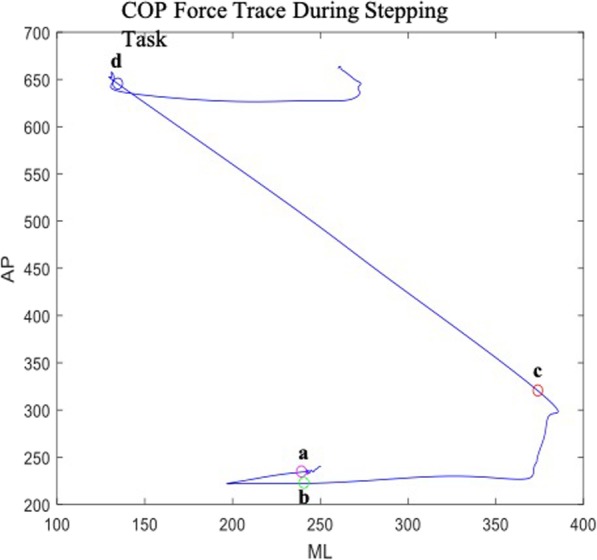
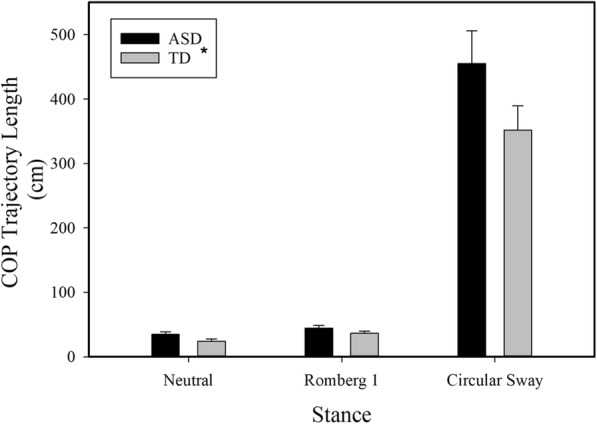
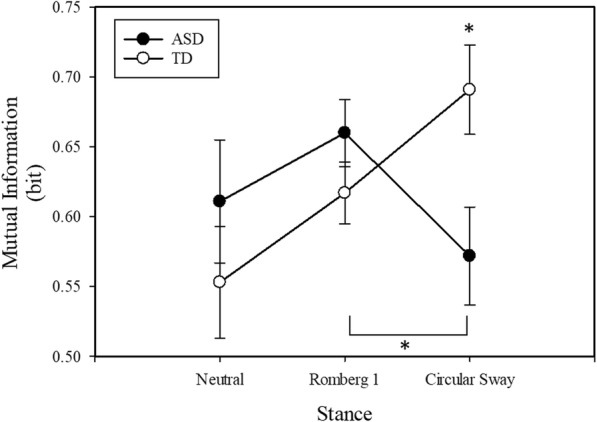
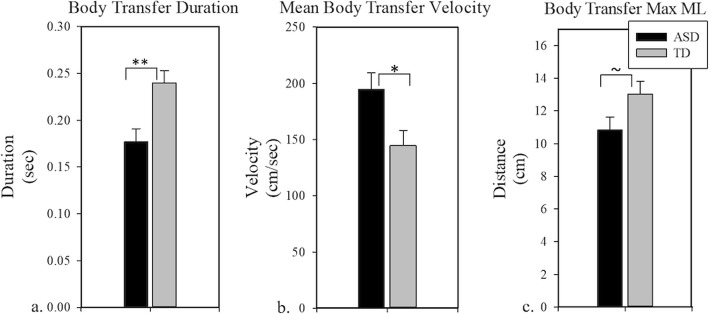
Background: Individuals with autism spectrum disorder (ASD) show a reduced ability to maintain postural stability, though motor control mechanisms contributing to these issues and the extent to which they are associated with other gross motor activities (e.g., stepping) are not yet known. Methods: Seventeen individuals with ASD and 20 typically developing (TD) controls (ages 6–19 years) completed three tests of postural control during standing. During the neutral stance, individuals stood with their feet shoulder width apart. During the Romberg one stance, they stood with feet close together. During the circular sway, participants stood with feet shoulder width apart and swayed in a circular motion. The standard deviation (SD) of their center of pressure (COP) in the mediolateral (ML) and anteroposterior (AP) directions and the COP trajectory length were examined for each stance. We also assessed mutual information (MI), or the shared dependencies between COP in the ML and AP directions. Participants also completed a stepping task in which they stepped forward from one force platform to an adjacent platform. The amplitude and duration of anticipatory postural adjustments (APAs) were examined, as were the maximum lateral sway, duration, and velocity of COP adjustments following the initial step. We examined stepping variables using separate one-way ANCOVAs with height as a covariate. The relationships between postural control and stepping measures and ASD symptom severity were assessed using Spearman correlations with scores on the Autism Diagnostic Observation Schedule–Second Edition (ADOS-2) and the Autism Diagnostic Interview-Revised (ADI-R). Results: Individuals with ASD showed increased COP trajectory length across stance conditions (p = 0.05) and reduced MI during circular sway relative to TD controls (p = 0.02). During stepping, groups did not differ on APA amplitude (p = 0.97) or duration (p = 0.41), but during their initial step, individuals with ASD showed reduced ML sway (p = 0.06), reduced body transfer duration (p < 0.01), and increased body transfer velocity (p = 0.02) compared to controls. Greater neutral stance COP ML variability (r = 0.55, p = 0.02) and decreased lateral sway (r = − 0.55, p = 0.02) when stepping were associated with more severe restricted and repetitive behaviors in participants with ASD. Conclusions: We found that individuals with ASD showed reduced MI during circular sway suggesting a reduced ability to effectively coordinate joint movements during dynamic postural adjustments. Additionally, individuals with ASD showed reduced lateral sway when stepping indicating that motor rigidity may interfere with balance and gait. Postural control and stepping deficits were related to repetitive behaviors in individuals with ASD indicating that motor rigidity and key clinical issues in ASD may represent overlapping pathological processes.
Overview
The claims and statistics of this paper haven’t been checked yet.
Free: it reads the open-access text and checks the first 5 claims that cite a source we can check. Create a free account to check every claim.
Integrity signals
Registry
Cites
Statistics
Figures
Verification
Claims the paper makes
The claims and statistics of this paper haven’t been checked yet.
Free: it reads the open-access text and checks the first 5 claims that cite a source we can check. Create a free account to check every claim.
Claims other papers make about this one
Each is checked against this paper’s own text: does it say what the citing paper says it does?
The source backs part of the claim, not all of it — or backs it for a different population, condition or comparison.
In the citing paper
“Children with ASD generally exhibit an incorrect arrangement of body segments relative to each other [12,13,14].”
From Postural Differences in Speaking Versus Non-Speaking Children with Autism Spectrum Disorder (2025) · cites this paper as [12]
Experimental — accuracy not yet measuredThe source backs part of the claim, not all of it — or backs it for a different population, condition or comparison.
In the citing paper
“Most studies reported deficits, particularly under multisensory or cognitively demanding conditions. [23–25, 28–33, 36]”
From Static and dynamic balance in children and adolescents with autism spectrum disorder compared with typically developing peers: a systematic review and meta-analysis (2026) · cites this paper as [30]
Experimental — accuracy not yet measuredThe source backs part of the claim, not all of it — or backs it for a different population, condition or comparison.
In the citing paper
“Anteroposterior displacement showed a large effect (SMD = 0.97; I2 = 70%), [26, 27, 30, 37, 40, 47, 49]”
From Static and dynamic balance in children and adolescents with autism spectrum disorder compared with typically developing peers: a systematic review and meta-analysis (2026) · cites this paper as [30]
Experimental — accuracy not yet measuredThe cited source says what the claim attributes to it.
In the citing paper
“Bojanek et al. [30] reported reduced motor coordination, linking motor rigidity in ASD to balance deficits and repetitive behaviours.”
The check wasn’t confident either way, so it gives no verdict — never disputed.
In the citing paper
“Other studies have also shown that children on the autism spectrum who walked on their toes also had a reduced range of dorsiflexion motion [4,12,19].”
From Postural Differences in Speaking Versus Non-Speaking Children with Autism Spectrum Disorder (2025) · cites this paper as [12]
Experimental — accuracy not yet measured
2 more claims about this paper
Create a free account to see every claim other papers make about this one.
Self-check
Percentages, sums and reported differences re-computed from the paper’s own numbers.
The self-check needs the paper’s full text.
Citations
Cites
Statistical Power Analysis for the Behavioral Sciences
Muller, K. (1989) · Technometrics · doi:10.1080/00401706.1989.10488618 · Cited by 99,167
Statistical power analysis for the behavioral sciences
(1990) · Computers, Environment and Urban Systems · doi:10.1016/0198-9715(90)90050-4 · Cited by 65,269
Statistical Power Analysis for the Behavioral Sciences (2nd ed.).
Lachenbruch, P. A., & Cohen, J. (1989) · Journal of the American Statistical Association · doi:10.2307/2290095 · Cited by 37,395
Lord, C., Rutter, M., & Le Couteur, A. (1994) · Journal of Autism and Developmental Disorders · doi:10.1007/bf02172145 · Cited by 9,065
Wechsler Abbreviated Scale of Intelligence
Dumont, R., Willis, J. O., Veizel, K., & Zibulsky, J. (2014) · Encyclopedia of Special Education · doi:10.1002/9781118660584.ese2519 · Cited by 5,521
Wechsler Abbreviated Scale of Intelligence
Wechsler, D. (2012) · PsycTESTS Dataset · doi:10.1037/t15170-000 · Cited by 4,596
Human balance and posture control during standing and walking
Winter, D. (1995) · Gait & Posture · doi:10.1016/0966-6362(96)82849-9 · Cited by 3,421
Horak, F. B. (2006) · Age and Ageing · doi:10.1093/ageing/afl077 · Cited by 2,758
The role of the basal ganglia in habit formation
Yin, H. H., & Knowlton, B. J. (2006) · Nature Reviews Neuroscience · doi:10.1038/nrn1919 · Cited by 2,402
Measures of postural steadiness: differences between healthy young and elderly adults
Prieto, T. E., Myklebust, J. B., Hoffmann, R. G., Lovett, E. G., & Myklebust, B. M. (1996) · IEEE Transactions on Biomedical Engineering · doi:10.1109/10.532130 · Cited by 1,863
Research works printed but not linked: 1
- American Psychiatric Association Diagnostic and Statistical Manual of Mental Disorders (DSM-5®): American Psychiatric Publishing 2013
Cited by
Motor Skill Differences in Autism Spectrum Disorder: a Clinically Focused Review
Zampella, C., Wang, L. A. L., Haley, M., Hutchinson, A. G., & de Marchena, A. B. (2021) · Current Psychiatry Reports · doi:10.1007/s11920-021-01280-6 · Cited by 186
Wang, L. A. L., Petrulla, V., Zampella, C., Waller, R. E., & Schultz, R. T. (2022) · Psychological Bulletin · doi:10.1037/bul0000358 · Cited by 179
Identifying Autism with Head Movement Features by Implementing Machine Learning Algorithms
Zhao, Z., Zhu, Z., Zhang, X., Tang, H., Xing, J., Hu, X., Lu, J., & Qu, X. (2021) · Journal of Autism and Developmental Disorders · doi:10.1007/s10803-021-05179-2 · Cited by 61
Motor skills predict adaptive behavior in autistic children and adolescents
Fears, N. E., Palmer, S. A., & Miller, H. L. (2022) · Autism Research · doi:10.1002/aur.2708 · Cited by 45
“…skills, researchers have measured differences in quiet standing (Lim et al., 2017), leaning (Miller et al., 2019; Wang et al., 2016), stepping (Bojanek et al., 2020), reaching (Glazebrook et al., 2006), grasping (Carment et al., 2020; Mosconi et al., 2015; Travers et al., 2017), catching…”
BackgroundPostural balance control interventions in autism spectrum disorder (ASD): A systematic review
Date, S. S., Munn, E. E., & Frey, G. C. (2024) · Gait & Posture · doi:10.1016/j.gaitpost.2024.01.034 · Cited by 56
Atypical Head Movement during Face‐to‐Face Interaction in Children with Autism Spectrum Disorder
Zhao, Z., Zhu, Z., Zhang, X., Tang, H., Xing, J., Hu, X., Lu, J., Peng, Q., & Qu, X. (2021) · Autism Research · doi:10.1002/aur.2478 · Cited by 48
Lepping, R. J., McKinney, W. S., Magnon, G. C., Keedy, S., Wang, Z., Coombes, S. A., Vaillancourt, D. E., Sweeney, J. A., & Mosconi, M. W. (2021) · Human Brain Mapping · doi:10.1002/hbm.25692 · Cited by 46
“2014), increased postural sway (Wang et al. 2016; Bojanek et al. 2020), and dyspraxia (MacNeil and Mostofsky 2012).”
BackgroundSelf-citationSensory Phenotypes in Autism: Making a Case for the Inclusion of Sensory Integration Functions
Schaaf, R. C., Mailloux, Z., Ridgway, E. M., Berruti, A. S., Dumont, R. L., Jones, E. A., Leiby, B. E., Sancimino, C., Yi, M., & Molholm, S. (2022) · Journal of Autism and Developmental Disorders · doi:10.1007/s10803-022-05763-0 · Cited by 39
“The postural adjustments needed to maintain balance require integration of vestibular, visual, proprioceptive, and tactile information for the execu - tion of adaptive postural and equilibrium responses (Bojanek et al., 2020).”
BackgroundMotor synergies: Evidence for a novel motor signature in autism spectrum disorder
Emanuele, M., Nazzaro, G., Marini, M., Veronesi, C., Boni, S., Polletta, G., D’Ausilio, A., & Fadiga, L. (2021) · Cognition · doi:10.1016/j.cognition.2021.104652 · Cited by 36
Unruh, K. E., Bartolotti, J., McKinney, W. S., Schmitt, L., Sweeney, J. A., & Mosconi, M. W. (2023) · Cerebral Cortex · doi:10.1093/cercor/bhad177 · Cited by 17
Self-citationFears, N. E., Sherrod, G., Templin, T. N., Bugnariu, N., Patterson, R. M., & Miller, H. L. (2023) · Autism Research · doi:10.1002/aur.2889 · Cited by 18
“In the few studies on dynamic postural control in autism that have been reported, autistic individuals have exhibited less efficient dynamic postural control compared to neurotypical individuals (Bojanek et al., 2020; Fournier et al., 2010; Miller et al., 2019; Wang et al., 2016).”
BackgroundFunctional and Neuropathological Evidence for a Role of the Brainstem in Autism
Baizer, J. S. (2021) · Frontiers in Integrative Neuroscience · doi:10.3389/fnint.2021.748977 · Cited by 18
“…Ciaranello, 1995; Teitelbaum et al., 1998; Dawson et al., 2000; Ming et al., 2007; Albinali et al., 2009; Boyd et al., 2012; MacDonald et al., 2012; Marko et al., 2015; Hannant et al., 2016; Eggleston et al., 2017; Bruchage et al., 2018; Bell et al., 2019; Neely et al., 2019; Bojanek et al., 2020).”
BackgroundFears, N. E., Templin, T. N., Sherrod, G., Bugnariu, N., Patterson, R. M., & Miller, H. L. (2022) · Journal of Autism and Developmental Disorders · doi:10.1007/s10803-022-05523-0 · Cited by 13
“, 2016), stepping (Bojanek et al., 2020), reaching (Glazebrook et al.”
Rodrigues, L. M., FERREIRA, R. M. D. O., Franco, T. M., & Camilo, F. C. S. M. (2024) · Biosciences and Health · doi:10.62331/2965-758x.v2.2024.43 · Cited by 41
Zhao, Z., Tang, H., Alviar, C., Kello, C. T., Zhang, X., Hu, X., Qu, X., & Lu, J. (2021) · Autism Research · doi:10.1002/aur.2646 · Cited by 15
Neuroanatomy of autism: what is the role of the cerebellum?
Baizer, J. S. (2024) · Cerebral Cortex · doi:10.1093/cercor/bhae050 · Cited by 19
Martín‐Díaz, P., Cuesta‐Gómez, A., Fernádez‐González, P., & Carratlá‐Tejada, M. (2024) · Autism Research · doi:10.1002/aur.3181 · Cited by 10
“ASD, autism spectrum disorder; PBS, pediatric balance scale.”
InfluentialInitial action output and feedback-guided motor behaviors in autism spectrum disorder
Unruh, K. E., McKinney, W. S., Bojanek, E. K., Fleming, K., Sweeney, J. A., & Mosconi, M. W. (2021) · Molecular Autism · doi:10.1186/s13229-021-00452-8 · Cited by 12
Self-citationKonishi, S., Kuwata, M., Matsumoto, Y., Yoshikawa, Y., Takata, K., Haraguchi, H., Kudo, A., Ishiguro, H., & Kumazaki, H. (2024) · Frontiers in Psychiatry · doi:10.3389/fpsyt.2024.1249000 · Cited by 9
“Individuals with ASD exhibit abnormalities in posture (50) and coordination of balance (51).”
BackgroundThe neural mechanisms of developmental motor disorders in children with autism spectrum disorder
Wang, L., Wang, Z., & Hongjing, W. A. N. G. (2021) · Advances in Psychological Science · doi:10.3724/sp.j.1042.2021.01239 · Cited by 10
Self-citationAutomatic speaker diarization for natural conversation analysis in autism clinical trials
O’Sullivan, J., Bogaarts, G., Schoenenberger, P., Tillmann, J., Slater, D., Mesgarani, N., Eule, E., Kilchenmann, T., Murtagh, L., Hipp, J. F., et al. (2023) · Scientific Reports · doi:10.1038/s41598-023-36701-4 · Cited by 10
Lyu, B., Ba, Y., Ma, D., Liu, N., Fu, L., & Xue, Y. (2025) · Frontiers in Psychiatry · doi:10.3389/fpsyt.2025.1623149 · Cited by 10
“Maintaining balance necessitates the integration of diverse information from the vestibular, visual, and proprioceptive systems to effectively sustain equilibrium (49).”
Lewis, G. F., daSilva, E. B., Aghajani, M., Date, S. S., & Jaime, M. (2024) · Frontiers in Integrative Neuroscience · doi:10.3389/fnint.2024.1364249 · Cited by 11
“Prior movement studies have focused on similar ROIs, such as gait (Gong et al., 2020), balance (Kohen-Raz et al., 1992; Memari et al., 2014; Bojanek et al., 2020), upper limb movements (Mari et al., 2003; Wedyan and Al-Jumaily, 2016; Gamez Corral et al., 2020), and head movements (Vabalas et al.,…”
Rochat, M. J., & Gallese, V. (2022) · Psychoanalytic Inquiry · doi:10.1080/07351690.2022.2007022 · Cited by 8
“…during a bimanual load-lifting task (but see Arthur et al., 2020, where in ASD young adults this deficit only appears when context-dependent), Bojanek et al. (2020) showed reduced postural control during standing with or without disturbance (i.e. joint feet or circular sway), while Torres et…”
BackgroundTouali, R., Zerouaoui, J., Chakir, E. M., Bui, H. T., Leone, M., & Allisse, M. (2025) · JMIR Formative Research · doi:10.2196/65767 · Cited by 9
“However, the underlying causes of these impairments remain a topic of debate within the scientific community [21-24].”
Melnikov, E. Y., Ходасевич, Л. С., Polyakova, A. V., & Legkaya, E. F. (2023) · Problems of Balneology Physiotherapy and Exercise Therapy · doi:10.17116/kurort202310004154 · Cited by 11
Giminiani, R. D., Greca, S. L., Marinelli, S., Attanasio, M., Masedu, F., Mazza, M., & Valenti, M. (2024) · Journal of Functional Morphology and Kinesiology · doi:10.3390/jfmk9040185 · Cited by 8
“When comparing our results with published findings, we must consider the age of the participants because altered postural control in individuals with ASD is most evident in children before the critical period of sensorimotor development [17,50–53].”
BackgroundResultPark, S., Cardinaux, A. L., Crozier, D., Russo, M., Bond, S. F., Kjelgaard, M., Sinha, P., & Sternad, D. (2024) · Autism Research · doi:10.1002/aur.3246 · Cited by 5
“…of motor differences, ranging from motor control/coordination, such as gait, postural planning, and anticipatory muscle activation and muscle tone (Bojanek et al., 2020; Fournier et al., 2010; Gowen & Hamilton, 2012; Jansiewicz et al., 2006; Licari et al., 2020; Miller et al., 2023; Schmitz et…”
Schreider, S., de Souza, J. C., Freitas, É. V. D. S., Panceri, J. A. C., Caldeira, E. M. D. O., & Bastos-Filho, T. (2024) · Research on Biomedical Engineering · doi:10.1007/s42600-024-00358-3 · Cited by 4
“Early intervention with physical therapy promotes improvement in the motor pattern, especially in relation to postural balance and gait (Paquet et al. 2017) (Bojanek et al. 2020).”
Fears, N. E., Hirsch, S. B., Tamplain, P. M., Templin, T. N., Sherrod, G., Bugnariu, N., Patterson, R. M., & Miller, H. L. (2024) · Research in Autism · doi:10.1016/j.rasd.2024.102374 · Cited by 6
Qu, H., Wang, J., Shirley, D. J., Gemmell, H. M., Christensen, D., Orlando, A., Romero, R. A. A., Zielinski, B. A., & Wang, Z. (2025) · Autism Research · doi:10.1002/aur.70024 · Cited by 4
Self-citationMonteleone, V., Presti, L. L., Cascia, M. L., Gauthier, S., Xavier, J., Zaoui, M., Berthoz, A., Cohen, D., Chétouani, M., & Anzalone, S. M. (2020) · IEEE Transactions on Cognitive and Developmental Systems · doi:10.1109/tcds.2020.3023196 · Cited by 4
Dimitri, D., Delia, G., Arduino, M., Turco, N., & Fioretto, F. (2023) · Frontiers in Child and Adolescent Psychiatry · doi:10.3389/frcha.2023.1052115 · Cited by 4
BENEFÍCIOS DA EQUOTERAPIA NO DESENVOLVIMENTO PSICOMOTOR DE UMA CRIANÇA COM ESPECTRO AUTISTA
Chaves, S., Camargo, A. T., & Ribas, D. I. R. (2022) · Cadernos da Escola de Saúde · doi:10.25192/1984-7041.v21i26331 · Cited by 3
Reguera-García, M. M., Fernández-Baró, E., Díez-Vega, I., Varona-Echave, I., & Seco‐Calvo, J. (2023) · Brain Sciences · doi:10.3390/brainsci13081213 · Cited by 5
“Physical characteristics of Down syndrome such as muscular hypotonia, severe obesity in Prader–Willi syndrome, or poor coordination in the upper and lower extremities seen in autism spectrum disorder, justify the importance of studying postural control deficits in this population [15,16].”
BackgroundPecukonis, M., Gerson, J., Gustafson-Alm, H., Wood, M., Yücel, M. A., Boas, D. A., & Tager-Flusberg, H. B. (2025) · Molecular Autism · doi:10.1186/s13229-025-00655-3 · Cited by 19
Dynamic Postural Control in Children with Autism Spectrum Disorder: A Systematic Review
Gardinal, M., Fiebrantz, A. L. D. S., Viana, M. O., Rodacki, A. L. F., & Pavão, S. L. (2025) · Physical & Occupational Therapy In Pediatrics · doi:10.1080/01942638.2025.2564233 · Cited by 2
“The secondary outcomes included IQ measures (Bojanek et al., 2020; Fisher et al., 2018; Fournier et al., 2010; Wang et al., 2016), ASD support level (Wang et al., 2016), components of the visual system, such as visual acuity, edge contrast sensitivity and depth perception (Perin et al., 2020),…”
InfluentialNicklas, P., Cruz, L. N., Terilli, C., Bojanek, E. K., Sanctis, P. D., Freedman, E. G., Molholm, S., & Foxe, J. J. (2026) · Journal of Neurodevelopmental Disorders · doi:10.1186/s11689-026-09677-1 · Cited by 4
“These functional domains are atypical in many individuals with ASD, and it has been proposed that motor, cognitive and sensory processing challenges, alone or in tandem, contribute to the social and communication differences in ASD [36, 53, 69–76].”
Self-citationBlock, A. R., Skaletski, E. C., Sheedy, C. M., Vanderpool, E. A., & Travers, B. G. (2026) · Autism Research · doi:10.1002/aur.70211 · Cited by 2
Restricted Kinematics in Children With Autism in the Execution of Complex Oscillatory Arm Movements
Zhao, Z., Zhang, X., Tang, H., Hu, X., Qu, X., Lu, J., & Peng, Q. (2021) · Frontiers in Human Neuroscience · doi:10.3389/fnhum.2021.708969 · Cited by 2
Qiu, K., Wang, H., Liu, F., Dong, Y., & Yu, D. (2023) · Cross Strait Radio Science and Wireless Technology Conference (CSRSWTC) · doi:10.1109/csrswtc60855.2023.10427347 · Cited by 2
“Numerous studies have shown that children with ASD may exhibit impaired motor functioning and atypical motor patterns [2-5].”
BackgroundPostural Differences in Speaking Versus Non-Speaking Children with Autism Spectrum Disorder
Będziechowska-Czyżewska, M., Malak, R., Romanowski, M., Andrusiewicz, M., Samborski, W., & Baum, E. (2025) · Children · doi:10.3390/children12020145 · Cited by 4
“The average age of the studied boys was 10 ± 3.3 years ( Me = 9.5 [7–12] years, ranging from 6 to 17 years).”
InfluentialStania, M., Emich-Widera, E., Kamieniarz-Olczak, A., Kazek, B., Swatowska-Wenglarczyk, M., & Juras, G. (2024) · Clinical Biomechanics · doi:10.1016/j.clinbiomech.2024.106251 · Cited by 1
Influence of loud auditory noise on postural stability in autistic children: an exploratory study
Siqueiros, J., Holloway, K., Lin, M., Neely, L. C., Cordova, A., Land, W. M., Oyama, S., & Park, S. (2025) · Scientific Reports · doi:10.1038/s41598-025-04686-x · Cited by 4
“Studies have reported postural challenges in autism spectrum disorder (ASD) in quiet standing 26,27 and dynamic postural control 28–30 , which may influence gross motor skills and social interactions 31–35 .”
Zhao, Z., Qiu, Z., Zhang, X., Qu, X., Hu, X., & Lu, J. (2025) · IEEE Transactions on Human-Machine Systems · doi:10.1109/thms.2025.3595901 · Cited by 1
Trzmielewska, W. D., Duras, J., Juchacz, A., & Rak, T. (2025) · Roczniki Psychologiczne · doi:10.18290/rpsych2024.0019 · Cited by 1
“We note that in our repetitive behavior condition, only a few motor behaviors typical of neuroatypical people were selected, and we excluded more complex behaviors such as deficits in postural control (Bojanek et al., 2020; Nwaordu & Charlton, 2024).”
Postural sway dynamics in adults across the autism spectrum: a multifactor approach
Bloomer, B. F., Bolbecker, A. R., Gildea, E., Kennedy, D. P., Wisner, K., O’Donnell, B. F., & Hetrick, W. P. (2025) · Molecular Autism · doi:10.1186/s13229-025-00676-y · Cited by 2
Martín-Díaz, P., Carratalá-Tejada, M., Navarro-López, V., Fernández-González, P., & Cuesta-Gómez, A. (2026) · European Journal of Pediatrics · doi:10.1007/s00431-026-06871-0
“[23–25, 28–33, 36] Mediolateral COM displacement showed large (eyes open, SMD = 0.83) and moderate (eyes closed, SMD = 0.56) effects [27, 30, 37, 40, 42, 47, 49] particularly in stable, eyes-open conditions, aligning with Lidstone et al. [36] Lim et al. attributed null findings in younger samples…”
InfluentialAssessment of postural control in children
Вячеславовна, С. Т., Андреевич, К. В., Назаров, С. Б., & Ryl’skaya, Y. A. (2022) · Rossiyskiy Vestnik Perinatologii i Pediatrii (Russian Bulletin of Perinatology and Pediatrics) · doi:10.21508/1027-4065-2022-67-5-27-33
Xu, J., Zhou, D., & Xu, F. (2022) · doi:10.2196/preprints.45401
Souza, T. M., Andrade, E. S., Costa, M. A., Abreu, F. A., & Boffino, C. C. (2024) · Revista de Epidemiologia e Saúde Pública - RESP · doi:10.59788/resp.v2i3.82 · Cited by 1
Torabi, F., Bonab, H. S., & Sharifi, F. (2025) · Journal of Assessment and Research in Applied Counseling · doi:10.61838/kman.jarac.7.1.3
Is There a Specific Motor Signature of Autism? Exploratory Studies From Human–Machine Interaction
Gauthier, S., Anzalone, S. M., Xavier, J., Boucenna, S., Berthoz, A., Chétouani, M., & Cohen, D. (2025) · IEEE Transactions on Cognitive and Developmental Systems · doi:10.1109/tcds.2025.3610280
“…notably encompass atypical development and impairments of gross and fine manual dexterity [38], [42], [43], [44], including handwriting [45]; as well as oromotor skills [46]; balance [8], [38], [44], [47], [48], [49], [50], [51] and gait [52], [53], impacting global motor performance [54].”
Aydın, A. S., Söyler, M., Zileli, R., Halmatov, M., Gürkan, A. C., Akcan, İ. O., & Yılmaz, C. (2026) · BMC Sports Science Medicine and Rehabilitation · doi:10.1186/s13102-026-01541-y
“These mechanisms are particularly associated with balance and reaction time parameters [4–6].”
Postural balance in children and adolescents with Autism Spectrum Disorder: a systematic review
Helena, R. C. S., Borges, V. M. S., & Sleifer, P. (2025) · Audiology - Communication Research · doi:10.1590/2317-6431-2024-2945en
Tisserand, R., Benchekri, A., Doat, E., Amestoy, A., Lemonnier, É., Cottenceau, H., Perrochon, A., Jaber, M., Cazalets, J., Bidet-Ildei, C., et al. (2026) · Research in Autism · doi:10.1016/j.reia.2026.202913 · Cited by 1
Gait variability development in autistic individuals across childhood and adulthoodPreprint
Shafer, R. L., Wang, J., Qu, H., Simpson, J. P., Terza, M. J., Shirley, D. J., McKinney, W. S., Pulver, S. L., Orlando, A., Romero, R. A. A., et al. (2026) · Research Square · doi:10.21203/rs.3.rs-9622252/v1
“While this correlation was marginally significant and should be interpreted with caution, it is consistent with findings from other studies demonstrating a relationship between motor variability and repetitive behaviors in autistic individuals 85,100 .”
Self-citationAban: Predicting ADOS Score from Upper-Body Movements and Eye Gaze for Autism Severity Assessment
Almarri, B. A., Alsalman, S., ALDulami, M., Alobaid, N., Almaghlouth, J., Aljamea, S., & Alkhateeb, A. (2026) · IEEE International Conference on Computing and Machine Intelligence (ICMI) · doi:10.1109/icmi68585.2026.11539903
“In particular, prior work has documented atypical gait patterns, joint instability, and postural differences in children with ASD [3], as well as measurable differences in postural control that correlate with ASD symptom severity [33].”
Gnazzo, M., Bargiacchi, G., Gallai, B., Spoto, G., Rosa, G. D., Baldini, V., Parisi, L., Maltese, A., Roccella, M., Germanò, E., et al. (2026) · Medicina · doi:10.3390/medicina62091764
“More broadly, motor-control and postural-control differences are well-documented features of the ASD phenotype, with atypical mediolateral postural sway during standing having been shown to correlate directly with the severity of restricted and repetitive behaviors [39].”
Wang, Z., Onal, S., Pandit, P., Gladfelter, A., & Buac, M. (2026) · International Journal of Developmental Disabilities · doi:10.1080/20473869.2026.2737775
Self-citation
Metadata
- Authors
- Bojanek, E. K., Wang, Z., White, S. P., & Mosconi, M. W.
- Affiliations
- University of Kansas (US)
- University of Florida Health (US)
- Emory University (US)
- Corresponding author
- Mosconi, Matthew W.
- Venue
- Journal of Neurodevelopmental Disorders
- Published
- 2020-01-06
- Volume
- 12
- Issue
- 1
- Pages
- 1-1
- ISSN
- 1866-1947 (ISSN-L)
- 1866-1955
- PMC
- PMC6945692
- OpenAlex
- W2999302956
- Cited by
- 57
- References
- 70
- Citations by year
- 2026: 8 · 2025: 11 · 2024: 12 · 2023: 7 · 2022: 8 · 2021: 10 · 2020: 1
- FWCI
- 3.50
- Type
- journal article
- Language
- en
- Open access
- gold
- doi.org
- Licence
- cc-by
- creativecommons.org/licenses/by/4.0/ (tdm)
- creativecommons.org/licenses/by/4.0/ (vor)
- Locations
- Journal of Neurodevelopmental Disorders (publishedVersion, cc-by)
- PubMed Central (publishedVersion, cc-by)
- PubMed (publishedVersion)
- DOAJ (DOAJ: Directory of Open Access Journals) (submittedVersion)
- KU ScholarWorks (The University of Kansas) (submittedVersion, cc-by)
- Funders
- NIH (R01 MH112734-01)
- NIMH (MH092696)
- NICHD (HD090216-01)
- Topics
- Life Sciences › Neuroscience › Cognitive Neuroscience › Autism Spectrum Disorder Research
- Health Sciences › Health Professions › Physical Therapy, Sports Therapy and Rehabilitation › Balance, Gait, and Falls Prevention
- Life Sciences › Neuroscience › Cognitive Neuroscience › Motor Control and Adaptation
- Keywords
- autism spectrum disorder, postural control, center of pressure, anticipatory postural adjustments, stepping, postural stability, mutual information, restricted and repetitive behaviors, ASD severity
- MeSH terms
- Autism Spectrum Disorder, Standing Position, Adolescent, Child, Postural Balance, Female, Gait, Humans, Male, Case-Control Studies, Young Adult
About these checks
Registry, retraction, Cites and statistics results are computed, not judged, with one exception: a printed reference that no index lists is read once by a model before it counts as a citation error. Claims are extracted by a model and kept only when their quote appears verbatim in the text; each cited source is then checked, with a model’s help, for whether it says what the claim relies on. Those verdicts can be wrong — read the claim’s quote and the cited source before relying on one.
Statistics and arithmetic are recomputed, not judged.
Confidence bands are shown only for fields calibrated on our annotated test set. None is calibrated yet, so no band is shown.
What counts as a claim ›How we measure confidence ›How we check this ›
Are you an author, or do you see a problem with this page? Request a review
Data sources
Bibliographic data: Semantic Scholar, OpenAlex, Crossref.
Contains information from the Semantic Scholar Academic Graph Datasets, made available under the ODC Attribution License (ODC-BY 1.0).
Semantic Scholar’s data is described in: Kinney, R., et al. (2023). The Semantic Scholar Open Data Platform. arXiv:2301.10140.
