

Deep learning versus parametric and ensemble methods for genomic prediction of complex phenotypes
Open accessThe DOI matches its Crossref record; 49 of the 52 references it cites were found in a registry or an index.
Abstract
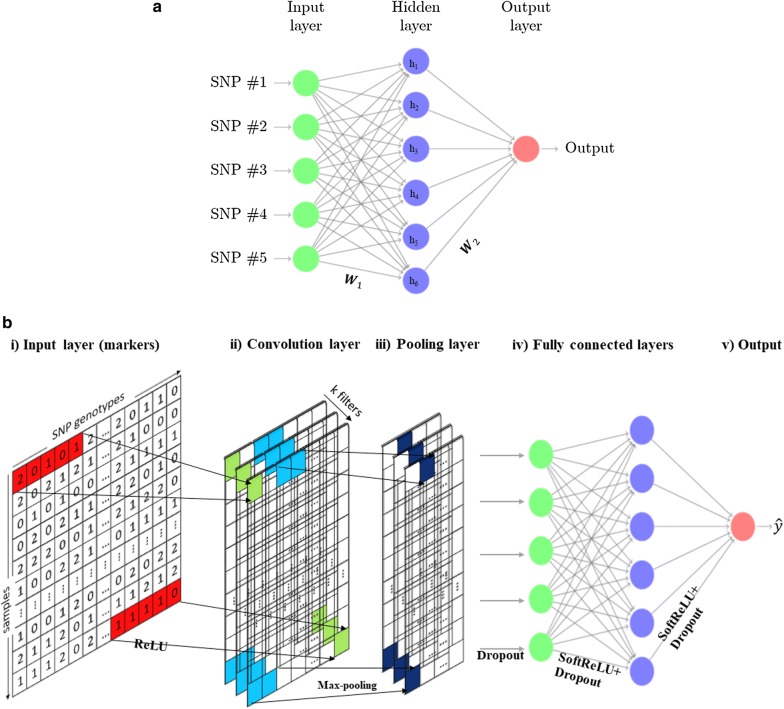
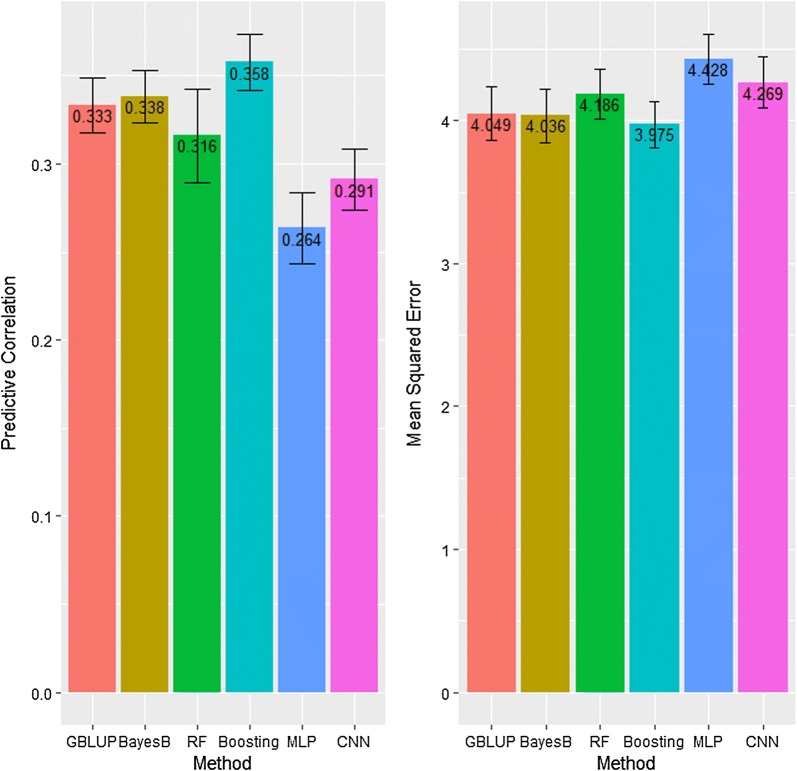
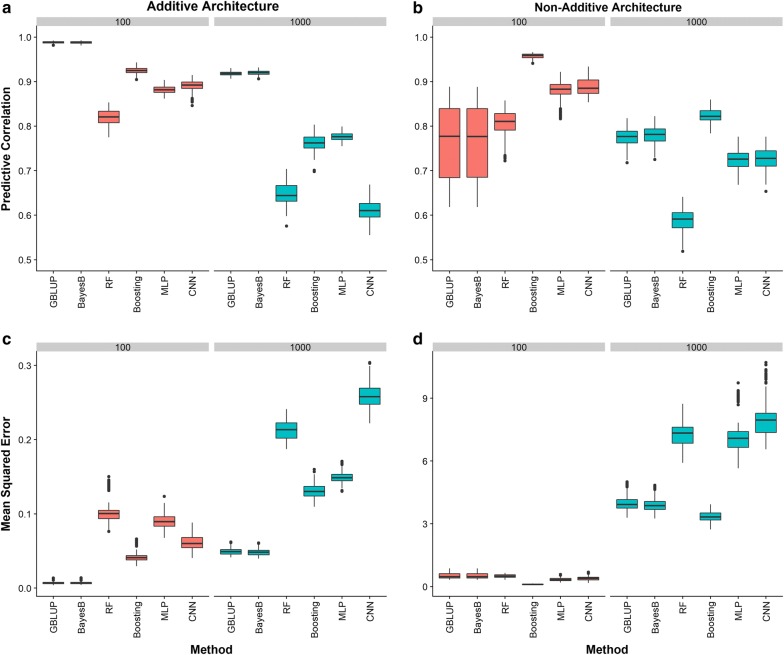
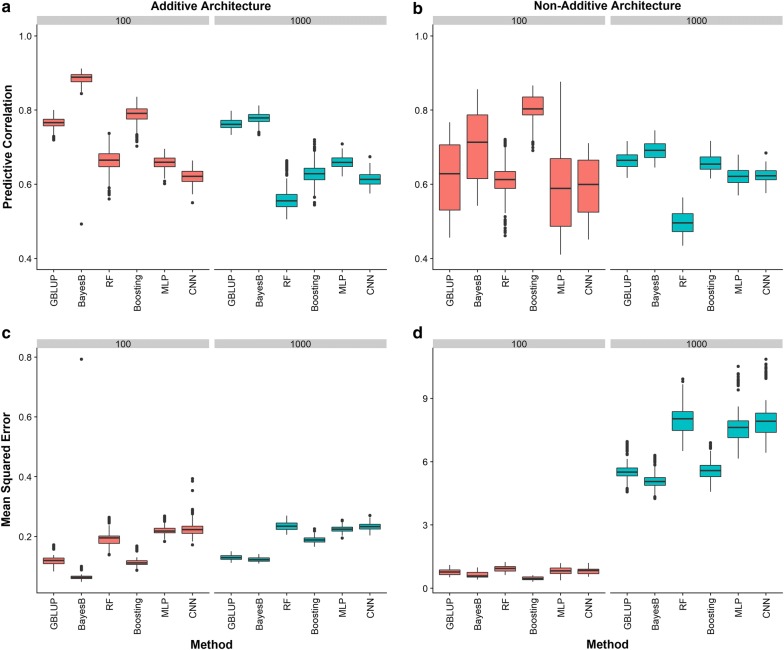
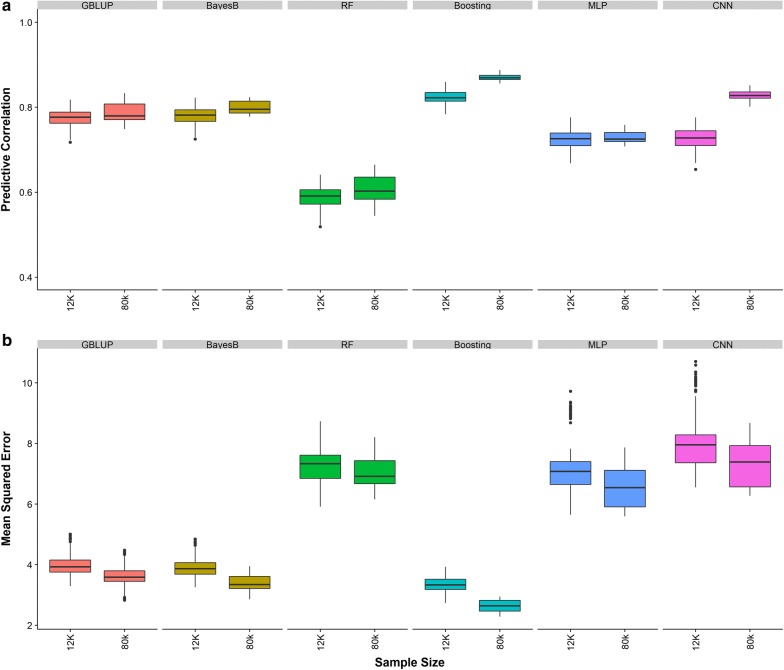
Background: Transforming large amounts of genomic data into valuable knowledge for predicting complex traits has been an important challenge for animal and plant breeders. Prediction of complex traits has not escaped the current excitement on machine-learning, including interest in deep learning algorithms such as multilayer perceptrons (MLP) and convolutional neural networks (CNN). The aim of this study was to compare the predictive performance of two deep learning methods (MLP and CNN), two ensemble learning methods [random forests (RF) and gradient boosting (GB)], and two parametric methods [genomic best linear unbiased prediction (GBLUP) and Bayes B] using real and simulated datasets. Methods: The real dataset consisted of 11,790 Holstein bulls with sire conception rate (SCR) records and genotyped for 58k single nucleotide polymorphisms (SNPs). To support the evaluation of deep learning methods, various simulation studies were conducted using the observed genotype data as template, assuming a heritability of 0.30 with either additive or non-additive gene effects, and two different numbers of quantitative trait nucleotides (100 and 1000). Results: In the bull dataset, the best predictive correlation was obtained with GB (0.36), followed by Bayes B (0.34), GBLUP (0.33), RF (0.32), CNN (0.29) and MLP (0.26). The same trend was observed when using mean squared error of prediction. The simulation indicated that when gene action was purely additive, parametric methods outperformed other methods. When the gene action was a combination of additive, dominance and of two-locus epistasis, the best predictive ability was obtained with gradient boosting, and the superiority of deep learning over the parametric methods depended on the number of loci controlling the trait and on sample size. In fact, with a large dataset including 80k individuals, the predictive performance of deep learning methods was similar or slightly better than that of parametric methods for traits with non-additive gene action. Conclusions: For prediction of traits with non-additive gene action, gradient boosting was a robust method. Deep learning approaches were not better for genomic prediction unless non-additive variance was sizable.
Overview
The claims and statistics of this paper haven’t been checked yet.
Free: it reads the open-access text and checks the first 5 claims that cite a source we can check. Create a free account to check every claim.
Integrity signals
Registry
Cites
Statistics
Figures
Verification
Claims the paper makes
The claims and statistics of this paper haven’t been checked yet.
Free: it reads the open-access text and checks the first 5 claims that cite a source we can check. Create a free account to check every claim.
Claims other papers make about this one
Each is checked against this paper’s own text: does it say what the citing paper says it does?
In the citing paper
“Additionally, Abdollahi-Arpanahi et al. (2020) reported that DL methods did not improve prediction accuracy compared to Gradient Boosting, random forest (RF), GBLUP, and Bayes B.”
From A review of multimodal deep learning methods for genomic-enabled prediction in plant breeding (2024) · cites this paper as Abdollahi-Arpanahi et al. (2020)
Self-check
Percentages, sums and reported differences re-computed from the paper’s own numbers.
The self-check needs the paper’s full text.
Citations
Cites
Breiman, L. (2001) · Machine Learning · doi:10.1023/a:1010933404324 · Cited by 133,538
Gradient-based learning applied to document recognition
Lecun, Y., Bottou, L., Bengio, Y., & Haffner, P. (1998) · Proceedings of the IEEE · doi:10.1109/5.726791 · Cited by 58,805
XGBoost: A Scalable Tree Boosting System
Chen, T., & Guestrin, C. (2016) · Proceedings of the 22nd ACM SIGKDD International Conference on Knowledge Discovery and Data Mining · doi:10.1145/2939672.2939785 · Cited by 54,569
Learning representations by back-propagating errors
Rumelhart, D. E., Hinton, G. E., & Williams, R. J. (1986) · Nature · doi:10.1038/323533a0 · Cited by 31,892
Greedy function approximation: A gradient boosting machine
Friedman, J. H. (2001) · The Annals of Statistics · doi:10.1214/aos/1013203451 · Cited by 30,731
The Elements of Statistical Learning
Hastie, T., Friedman, J., & Tibshirani, R. (2001) · Springer Series in Statistics · doi:10.1007/978-0-387-21606-5 · Cited by 24,162
A decision-theoretic generalization of on-line learning and an application to boosting
Freund, Y., & Schapire, R. E. (1997) · Journal of Computer and System Sciences · doi:10.1006/jcss.1997.1504 · Cited by 20,466
Classification and Regression by randomForest
Liaw, A. I., & Wiener, M. C. (2007) · Cited by 18,594
Second-generation PLINK: rising to the challenge of larger and richer datasets
Chang, C. C., Chow, C. C., Tellier, L. C., Vattikuti, S., Purcell, S. M., & Lee, J. J. (2015) · Gigascience · doi:10.1186/s13742-015-0047-8 · Cited by 12,709
(2016) · Cited by 11,679
Cited by
Xu, Y., Zhang, X., Li, H., Zheng, H., Zhang, J., Olsen, M. S., Varshney, R. K., Prasanna, B. M., & Qian, Q. (2022) · Molecular Plant · doi:10.1016/j.molp.2022.09.001 · Cited by 363
A review of deep learning applications for genomic selection
Montesinos-López, O. A., Montesinos-López, A., Pérez-Rodríguez, P., Barrón-López, J. A., Martini, J. W. R., Fajardo-Flores, S. B., Gaytan-Lugo, L. S., Santana-Mancilla, P. C., & Crossa, J. (2021) · BMC Genomics · doi:10.1186/s12864-020-07319-x · Cited by 361
LightGBM: accelerated genomically designed crop breeding through ensemble learning
Yan, J., Xu, Y., Cheng, Q., Jiang, S., Wang, Q., Xiao, Y., Ma, C., Yan, J., & Wang, X. (2021) · Genome Biology · doi:10.1186/s13059-021-02492-y · Cited by 320
“When applying ANN or CNN for genomic prediction, the algorithm performs feature extraction by first estimating a weight for each SNP and then computing a reformed, grand feature based on the sum of the weighted features to represent a set of neighboring SNPs within a predefined genomic region [24, 25].”
BackgroundInfluentialMachine learning in plant science and plant breeding
van Dijk, A. D. J., Kootstra, G., Kruijer, W., & de Ridder, D. (2021) · iScience · doi:10.1016/j.isci.2020.101890 · Cited by 320
“In particular, DL improved accuracy for a number of simulated and real animal traits measured on large populations, in the presence of strong epistatic and dominance effects (Abdollahi-Arpanahi et al., 2020; Waldmann 2018).”
BackgroundArtificial intelligence in plant breeding
Farooq, M. A., Gao, S., Hassan, M. A., Huang, Z., Rasheed, A., Hearne, S., Prasanna, B., Li, X., & Li, H. (2024) · Trends in Genetics · doi:10.1016/j.tig.2024.07.001 · Cited by 288
DNNGP, a deep neural network-based method for genomic prediction using multi-omics data in plants
Wang, K., Abid, M. A., Rasheed, A., Crossa, J., Hearne, S., & Li, H. (2023) · Molecular Plant · doi:10.1016/j.molp.2022.11.004 · Cited by 278
“Machine learning (ML) methods are capable of capturing non-linear relationships within genotypes while requiring no prior knowledge of potential genetic models (González-Recio et al., 2014; Ma et al., 2014; Abdollahi-Arpanahi et al., 2020).”
MethodFast-forward breeding for a food-secure world
Varshney, R. K., Bohra, A., Roorkiwal, M., Barmukh, R., Cowling, W. A., Chitikineni, A., Lam, H.-M., Hickey, L. T., Croser, J. S., Bayer, P. E., et al. (2021) · Trends in Genetics · doi:10.1016/j.tig.2021.08.002 · Cited by 182
“Besides its role in genotype–phenotype associations, the performance of ML tools has been assessed for genomewide predictions [24], and ‘deepGS’ has outperformed the traditional genomic selection (GS) models in cases where nonadditive variances had significant influence [25].”
BackgroundSandhu, K. S., Patil, S. S., Pumphrey, M., & Carter, A. H. (2021) · The Plant Genome · doi:10.1002/tpg2.20119 · Cited by 174
Chakraborty, D., Başağaoğlu, H., & Winterle, J. R. (2020) · Expert Systems with Applications · doi:10.1016/j.eswa.2020.114498 · Cited by 158
Deep learning for predicting complex traits in spring wheat breeding program
Sandhu, K. S., Lozada, D. N., Zhang, Z., Pumphrey, M. O., & Carter, A. H. (2021) · Frontiers in Plant Science · doi:10.3389/fpls.2020.613325 · Cited by 147
Modern Strategies to Assess and Breed Forest Tree Adaptation to Changing Climate
Cortés, A. J., Restrepo-Montoya, M., & Bedoya-Canas, L. E. (2020) · Frontiers in Plant Science · doi:10.3389/fpls.2020.583323 · Cited by 162
Harnessing Crop Wild Diversity for Climate Change Adaptation
Cortés, A. J., & López-Hernández, F. (2021) · Genes · doi:10.3390/genes12050783 · Cited by 166
A gene prioritization method based on a swine multi-omics knowledgebase and a deep learning model
Fu, Y., Xu, J., Tang, Z., Wang, L., Yin, D., Fan, Y., Zhang, D., Deng, F., Zhang, Y., Zhang, H., et al. (2020) · Communications Biology · doi:10.1038/s42003-020-01233-4 · Cited by 102
Machine learning algorithms translate big data into predictive breeding accuracy
Crossa, J. L., Montesinos-López, O. A., Costa‐Neto, G., Vitale, P., Martini, J. W. R., Runcie, D. E., Fritsche‐Neto, R., Montesinos‐López, A., Pérez‐Rodríguez, P., Gerard, G., et al. (2024) · Trends in Plant Science · doi:10.1016/j.tplants.2024.09.011 · Cited by 133
Reviewing methods of deep learning for intelligent healthcare systems in genomics and biomedicine
Zafar, I., Anwar, S., kanwal, F., Yousaf, W., Nisa, F. U., Kausar, T., Ain, Q. U., Unar, A., Kamal, M. A., Rashid, S., et al. (2023) · Biomedical Signal Processing and Control · doi:10.1016/j.bspc.2023.105263 · Cited by 124
A review of machine learning models applied to genomic prediction in animal breeding
Chafai, N., Hayah, I., Houaga, I., & Badaoui, B. (2023) · Frontiers in Genetics · doi:10.3389/fgene.2023.1150596 · Cited by 118
Westhues, C. C., Mahone, G. S., Silva, S. D., Thorwarth, P., Schmidt, M., Richter, J.-C., Simianer, H., & Beissinger, T. M. (2021) · Frontiers in Plant Science · doi:10.3389/fpls.2021.699589 · Cited by 95
“In the field of genomic prediction, ensemble methods have progressively been used, as they appear especially interesting for capturing non-additive effects such as epistasis or dominance effects, which can be important for predicting complex phenotypic traits (Ogutu et al., 2011; González-Recio et al., 2013; Azodi et…”
BackgroundApplications of machine learning and deep learning in agriculture: A comprehensive review
Waqas, M., Naseem, A., Humphries, U. W., Hlaing, P. T., Dechpichai, P., & Wangwongchai, A. (2025) · Green Technologies and Sustainability · doi:10.1016/j.grets.2025.100199 · Cited by 120
Using machine learning to improve the accuracy of genomic prediction of reproduction traits in pigs
Wang, X., Shi, S., Wang, G., Luo, W., Xia, W., Qiu, A., Luo, F., & Ding, X. (2022) · Journal of Animal Science and Biotechnology/Journal of animal science and biotechnology · doi:10.1186/s40104-022-00708-0 · Cited by 88
“[47] reported that the gradient boosting method yielded the best prediction performance in comparison with GBLUP, BayesB, RF, convolutional neural networks (CNN) and multilayer perceptron (MLP) in the genomic prediction of the sire conception rate (SCR) of Holstein bulls.”
MethodPhenomic selection is competitive with genomic selection for breeding of complex traits
Zhu, X., Leiser, W. L., Hahn, V., & Würschum, T. (2021) · The Plant Phenome Journal · doi:10.1002/ppj2.20027 · Cited by 79
Digitalizing breeding in plants: A new trend of next-generation breeding based on genomic prediction
Jeon, D., Kang, Y., Lee, S., Choi, S., Sung, Y., Lee, T., & Kim, C. (2023) · Frontiers in Plant Science · doi:10.3389/fpls.2023.1092584 · Cited by 94
“However, these networks are prone to overfitting during the training process, so there is a problem in that the accuracy decreases in real data (Abdollahi-Arpanahi et al., 2020).”
BackgroundCortés, A. J., López-Hernández, F., & Blair, M. W. (2022) · Frontiers in Genetics · doi:10.3389/fgene.2022.910386 · Cited by 77
Using Local Convolutional Neural Networks for Genomic Prediction
Pook, T., Freudenthal, J. A., Korte, A., & Simianer, H. (2020) · Frontiers in Genetics · doi:10.3389/fgene.2020.561497 · Cited by 69
Heuristic hyperparameter optimization of deep learning models for genomic prediction
Han, J., Gondro, C., Reid, K. N., & Steibel, J. P. (2021) · G3 Genes Genomes Genetics · doi:10.1093/g3journal/jkab032 · Cited by 68
Predicting phenotypes from genetic, environment, management, and historical data using CNNs
Washburn, J. D., Cimen, E., Ramstein, G., Reeves, T., O’Briant, P., McLean, G., Cooper, M., Hammer, G., & Buckler, E. S. (2021) · Theoretical and Applied Genetics · doi:10.1007/s00122-021-03943-7 · Cited by 57
Li, J., Zhang, D., Yang, F., Zhang, Q., Pan, S., Zhao, X., Zhang, Q., Han, Y., Yang, J., Wang, K., et al. (2024) · Plant Communications · doi:10.1016/j.xplc.2024.100975 · Cited by 76
“The basic algorithm of TrG2P was constructed on a CNN (Lecun et al., 1998), which is a method commonly used in G2P (Abdollahi-Arpanahi et al., 2020; Pook et al., 2020; Wang et al., 2023).”
The Quest for Genes Involved in Adaptation to Climate Change in Ruminant Livestock
Passamonti, M. M., Somenzi, E., Barbato, M., Chillemi, G., Colli, L., Joost, S., Milanesi, M., Negrini, R., Santini, M., Vajana, E., et al. (2021) · Animals · doi:10.3390/ani11102833 · Cited by 74
Predicting for disease resistance in aquaculture species using machine learning models
Palaiokostas, C. (2021) · Aquaculture Reports · doi:10.1016/j.aqrep.2021.100660 · Cited by 73
Multi-Trait Genomic Prediction of Yield-Related Traits in US Soft Wheat under Variable Water Regimes
Guo, J. X., Khan, J., Pradhan, S., Shahi, D., Khan, N., Avci, M., McBreen, J. C., Harrison, S., Brown‐Guedira, G., Murphy, J. P., et al. (2020) · Genes · doi:10.3390/genes11111270 · Cited by 58
Togninalli, M., Wang, X., Kucera, T., Shrestha, S., Juliana, P., Mondal, S., Pinto, F., Govindan, V., Crespo-Herrera, L., Huerta-Espino, J., et al. (2023) · Bioinformatics · doi:10.1093/bioinformatics/btad336 · Cited by 49
Deep neural networks for genomic prediction do not estimate marker effects
Ubbens, J. R., Parkin, I. A. P., Eynck, C., Stavness, I., & Sharpe, A. (2021) · The Plant Genome · doi:10.1002/tpg2.20147 · Cited by 47
“Several authors have suggested that this advantage makes deep neural networks promising candidates for performing GP (5, 8, 9).”
BackgroundResultInfluentialA review of multimodal deep learning methods for genomic-enabled prediction in plant breeding
Montesinos-López, O. A., Chavira-Flores, M., Kiasmiantini, Crespo-Herrera, L., Saint Piere, C., Li, H., Fritsche-Neto, R., Al-Nowibet, K., Montesinos-López, A., & Crossa, J. (2024) · GENETICS · doi:10.1093/genetics/iyae161 · Cited by 47
A transformer-based genomic prediction method fused with knowledge-guided module
Wu, C., Zhang, Y., Ying, Z., Li, L., Wang, J., Yu, H., Zhang, M., Feng, X., Wei, X., & Xu, X. (2023) · Briefings in Bioinformatics · doi:10.1093/bib/bbad438 · Cited by 65
“Machine learning (ML) methods do not require prior knowledge of the distribution of variables or the genetic effects of target traits, breaking the restrictions of mixed linear models (MLMs) and Bayesian assumptions [10].”
Lopez-Cruz, M. A., Aguate, F. M., Washburn, J. D., de León, N., Kaeppler, S. M., Lima, D. C., Tan, R., Thompson, A., Bretonne, L. W. D. L., & Campos, G. D. L. (2023) · Nature Communications · doi:10.1038/s41467-023-42687-4 · Cited by 55
Barreto, C. A. V., Dias, K. O. D. G., de Sousa, I. C., Azevedo, C. F., Nascimento, A. C. C., Guimarães, L. J. M., Guimarães, C. T., Pastina, M. M., & Nascimento, M. (2024) · Scientific Reports · doi:10.1038/s41598-024-51792-3 · Cited by 62
“If the relationship between trait and response is close to a linear model, then a linear approach will probably work well and be superior to a method like a regression tree that does not explore this linear structure 22,60 .”
MethodJohn, M., Haselbeck, F., Dass, R., Malisi, C., Ricca, P., Dreischer, C., Schultheiß, S. J., & Grimm, D. G. (2022) · Frontiers in Plant Science · doi:10.3389/fpls.2022.932512 · Cited by 50
“For complex traits in Holstein bulls, DL-based approaches were outperformed by XGB (Abdollahi-Arpanahi et al., 2020).”
MethodStacked kinship CNN vs. GBLUP for genomic predictions of additive and complex continuous phenotypes
Nazzicari, N., & Biscarini, F. (2022) · Scientific Reports · doi:10.1038/s41598-022-24405-0 · Cited by 44
Mota, L. F. M., Pegolo, S., Baba, T., Peñagaricano, F., Morota, G., Bittante, G., & Cecchinato, A. (2021) · Journal of Dairy Science · doi:10.3168/jds.2020-19861 · Cited by 47
Self-citationLeveraging Multiple Layers of Data To Predict Drosophila Complex Traits
Morgante, F., Huang, W., Sørensen, P. B., Maltecca, C., & Mackay, T. F. C. (2020) · G3 Genes Genomes Genetics · doi:10.1534/g3.120.401847 · Cited by 42
Deep‐learning power and perspectives for genomic selection
Montesinos-López, O. A., Montesinos‐López, A., Hernández-Suárez, C., Barrón‐López, J. A., & Crossa, J. L. (2021) · The Plant Genome · doi:10.1002/tpg2.20122 · Cited by 41
“However, when there was nonadditive action, predictive ability depended on the number of loci controlling the trait (Abdollahi-Arpanahi et al., 2020).”
BackgroundGenomics in animal breeding from the perspectives of matrices and molecules
Johnsson, M. (2023) · Hereditas · doi:10.1186/s41065-023-00285-w · Cited by 49
“This is not for lack of trying; early work included attempts at using kernel methods 493 [68,69], tree regression [70] and neural networks [71], and later efforts have been made 494 with deep learning [72,73].”
MethodPan, S., Liu, Z., Han, Y., Zhang, D., Zhao, X., Li, J., & Wang, K. (2024) · Frontiers in Plant Science · doi:10.3389/fpls.2024.1480463 · Cited by 60
Naser, M. Z. (2023) · Journal of Infrastructure Intelligence and Resilience · doi:10.1016/j.iintel.2023.100028 · Cited by 39
Fab Advances in Fabaceae for Abiotic Stress Resilience: From ‘Omics’ to Artificial Intelligence
Singh, D., Chaudhary, P., Taunk, J., Singh, C. K., Singh, D., Tomar, R. S. S., Aski, M. S., Konjengbam, N. S., Raje, R. S., Konjengbam, N. S., et al. (2021) · International Journal of Molecular Sciences · doi:10.3390/ijms221910535 · Cited by 40
Xu, Y., Vuckovic, D., Ritchie, S. C., Akbari, P., Jiang, T., Grealey, J., Butterworth, A. S., Ouwehand, W. H., Roberts, D. J., Angelantonio, E. D., et al. (2022) · Cell Genomics · doi:10.1016/j.xgen.2021.100086 · Cited by 32
“8 Cell Genomics 2, 100086, January 12, 2022 their potential in genetic prediction.(19,32,33) The present study is limited to two specific but common deep learning models; thus, we cannot make conclusive suggestions on the applications of the whole line of deep learning methods for PGS development of blood cell traits.”
BackgroundPerez, B. C., Bink, M. C. A. M., Svenson, K. L., Churchill, G. A., & Calus, M. P. L. (2022) · G3 Genes Genomes Genetics · doi:10.1093/g3journal/jkac039 · Cited by 38
Applications of Artificial Intelligence for Heat Stress Management in Ruminant Livestock
Rebez, E. B., Sejian, V., Silpa, M. V., Kalaignazhal, G., Thirunavukkarasu, D., Devaraj, C., Nikhil, K. T., Jacob, N., SAHOO, A., Lacetera, N., et al. (2024) · Sensors · doi:10.3390/s24185890 · Cited by 45
“Thus, there are various applications of AI in genetic evaluation, with a plethora of ML algorithms [62,79] in use and new DL models being validated with further research concerns [80].”
Prediction of Hanwoo Cattle Phenotypes from Genotypes Using Machine Learning Methods
Srivastava, S., Lopez, B. I., Kumar, H., Jang, M., Chai, H., Park, W., Park, J., & Lim, D. (2021) · Animals · doi:10.3390/ani11072066 · Cited by 36
“[28], who reported that GBLUP and Bayes B had a higher predictive correlation and lower MSE value than RF using a real dataset of Holstein bulls with sire conception rate records, genotyped for 58k SNPs.”
MethodThapa, I., & Ghani, S. (2025) · Applied Soft Computing · doi:10.1016/j.asoc.2025.113275 · Cited by 30
Zhao, T., Fernando, R. L., & Cheng, H. (2021) · G3 Genes Genomes Genetics · doi:10.1093/g3journal/jkab228 · Cited by 30
da Silva, É. D. B., Xavier, A., & Faria, M. V. (2021) · Frontiers in Genetics · doi:10.3389/fgene.2021.637133 · Cited by 31
Pedrosa, V. B., Chen, S., Glória, L. S., Doucette, J. S., Boerman, J. P., Rosa, G. J. M., & Brito, L. F. (2024) · Journal of Dairy Science · doi:10.3168/jds.2023-24082 · Cited by 32
Liu, B., Liu, H., Tu, J., Xiao, J., Yang, J., He, X., & Zhang, H. (2024) · Poultry Science · doi:10.1016/j.psj.2024.104489 · Cited by 32
Improved genomic prediction performance with ensembles of diverse models
Tomura, S., Wilkinson, M. J., Cooper, M., & Powell, O. M. (2025) · G3 Genes Genomes Genetics · doi:10.1093/g3journal/jkaf048 · Cited by 32
“Among various Bayesian models, BayesB was selected in this study because it has been widely used as one of the standard models in genomic prediction (Abdollahi-Arpanahi et al. 2020; Farooq et al. 2022; John et al. 2022; Meher et al. 2022; Plavšin et al. 2022).”
Bargelloni, L., Tassiello, O., Babbucci, M., Ferraresso, S., Franch, R., Montanucci, L., & Carnier, P. (2021) · Aquaculture Reports · doi:10.1016/j.aqrep.2021.100661 · Cited by 24
Enhancing genomic prediction with Stacking Ensemble Learning in Arabica Coffee
Nascimento, M., Nascimento, A. C. C., Azevedo, C. F., de Oliveira, A. C. B., Caixeta, E. T., & Jarquín, D. (2024) · Frontiers in Plant Science · doi:10.3389/fpls.2024.1373318 · Cited by 30
Alves, A. A. C., da Costa, R. M., Bresolin, T., Júnior, G. A. F., Espigolan, R., Ribeiro, A. M. F., Carvalheiro, R., & de Albuquerque, L. G. (2020) · Journal of Animal Science · doi:10.1093/jas/skaa179 · Cited by 26
A joint learning approach for genomic prediction in polyploid grasses
Aono, A. H., Ferreira, R. C. U., Moraes, A. D. C. L., Lara, L. A. D. C., Pimenta, R. J. G., Costa, E. A., Pinto, L. R., Landell, M. G. D. A., Santos, M. F., Jank, L., et al. (2022) · Scientific Reports · doi:10.1038/s41598-022-16417-7 · Cited by 24
Kick, D. R., & Washburn, J. D. (2023) · in silico Plants · doi:10.1093/insilicoplants/diad015 · Cited by 25
Mota, L. F. M., Arikawa, L. M., Santos, S. W. B., Júnior, G. A. F., Alves, A. A. C., Rosa, G. J. M., Mercadante, M. E. Z., Cyrillo, J. N. D. S. G., Carvalheiro, R., & de Albuquerque, L. G. (2024) · Scientific Reports · doi:10.1038/s41598-024-57234-4 · Cited by 30
“In order to take advantage of nonlinear relations between genomic information and phenotypes, nonparametric methods as machine learning techniques without prior knowledge about the distribution of the SNP marker effects have been exploited 18,20,51,72 .”
MethodAssociation Studies and Genomic Prediction for Genetic Improvements in Agriculture
Zhang, Q., Zhang, Q., & Jensen, J. (2022) · Frontiers in Plant Science · doi:10.3389/fpls.2022.904230 · Cited by 23
Prado, K., Holland, B. L., Gardener, B. M., Lundquist, P. K., Santiago, J. P., VanBuren, R., & Rhee, S. Y. (2025) · Journal of Experimental Botany · doi:10.1093/jxb/eraf111 · Cited by 33
Genomic selection in pig breeding: comparative analysis of machine learning algorithms
Su, R., Lv, J., Xue, Y., Jiang, S., Zhou, L., Jiang, L., Tan, J., Shen, Z., Zhong, P., & Liu, J. (2025) · Genetics Selection Evolution · doi:10.1186/s12711-025-00957-3 · Cited by 23
“Abdollahi-Arp Anahi et al. [13] compared the performance of six methods on real and simulated datasets, including the multilayer perceptron network (MLP), convolutional neural network (CNN), RFR, gradient boosting (GB), GBLUP and BayesB).”
Lell, M., Gogna, A., Kloesgen, V., Avenhaus, U., Dörnte, J., Eckhoff, W. M., Eschholz, T., Gils, M., Kirchhoff, M., Koch, M., et al. (2025) · Plant Biotechnology Journal · doi:10.1111/pbi.70095 · Cited by 19
Mollandin, F., Rau, A., & Croiseau, P. (2021) · G3 Genes Genomes Genetics · doi:10.1093/g3journal/jkab225 · Cited by 20
Xiang, Y., Xia, C., Li, L., Wei, R., Rong, T., Liu, H., & Lan, H. (2024) · Frontiers in Plant Science · doi:10.3389/fpls.2024.1441555 · Cited by 21
Santamaría-García, H., Baez, S., Aponte-Canencio, D. M., Pasciarello, G. O., Donnelly-Kehoe, P. A., Maggiotti, G., Matallana, D., Hesse, E., Neely, A., Zapata, J. G., et al. (2021) · Patterns · doi:10.1016/j.patter.2020.100176 · Cited by 18
“This approach has been classically used in different fields, including neurocognitive studies (see Hutzler for a review)(71) or genetic studies assessingmassive data to identify particular loci that more accurately predict a clinical outcome.(72,73) Moreover, similar frameworks have been implemented in studies assessi…”
MethodGenome-Enabled Prediction Methods Based on Machine Learning
Reinoso-Peláez, E. L., Gianola, D., & González-Recio, Ó. (2022) · Methods in molecular biology · doi:10.1007/978-1-0716-2205-6_7 · Cited by 27
Nguyen, N. H., Vu, N. T., Patil, S. S., & Sandhu, K. S. (2022) · Aquaculture · doi:10.1016/j.aquaculture.2022.738229 · Cited by 21
Machine Learning for the Genomic Prediction of Growth Traits in a Composite Beef Cattle Population
Hay, E. H. (2024) · Animals · doi:10.3390/ani14203014 · Cited by 22
Advancements in Animal Breeding: From Mendelian Genetics to Machine Learning
Panigrahi, M., Rajawat, D., Nayak, S. S., Bose, A., Bharia, N., Singh, S., Sharma, A., & Dutt, T. (2025) · International Journal of Molecular Sciences · doi:10.3390/ijms262311352 · Cited by 20
“A dataset comprising 2000 samples from several cattle populations was assembled, each labeled according to the presence or absence of specific diseases such as milk fever, milk clots, watery milk, blisters, lameness, and various gastrointestinal and metabolic conditions.”
Chen, C., Powell, O. M., Dinglasan, E. G., Ross, E. M., Yadav, S., Wei, X., Atkin, F., Deomano, E. C., & Hayes, B. J. (2023) · The Plant Genome · doi:10.1002/tpg2.20390 · Cited by 20
“…prediction including radial basis function neural networks, probabilistic neural network classifiers, and convolutional neural networks (CNNs) (Abdollahi-Arpanahi et al., 2020; Crossa et al., 2019; Jubair et al., 2021; Montesinos-López et al., 2018; Sandhu et al., 2021; Wilson & Izmailov,…”
BackgroundGenomic prediction for sugarcane diseases including hybrid Bayesian-machine learning approaches
Chen, C., Bhuiyan, S. A., Ross, E. M., Powell, O. M., Dinglasan, E. G., Wei, X., Atkin, F., Deomano, E. C., & Hayes, B. J. (2024) · Frontiers in Plant Science · doi:10.3389/fpls.2024.1398903 · Cited by 27
Jacob, M. S., Xu, A., Qian, K., Qi, Z.-X., Li, X., & Zhang, B. (2025) · Journal of Fungi · doi:10.3390/jof11110758 · Cited by 27
“AI offers powerful tools to bridge this gap by modeling nonlinear relationships between genes, regulatory elements, and morphological or biochemical traits [112].”
Perez, B. C., Bink, M. C. A. M., Svenson, K. L., Churchill, G. A., & Calus, M. P. L. (2022) · G3 Genes Genomes Genetics · doi:10.1093/g3journal/jkac258 · Cited by 21
de Sousa, I. C., Nascimento, M., Sant’Anna, I. D. C., Caixeta, E. T., Azevedo, C. F., Cruz, C. D., da Silva, F. L., Alkimim, E. R., Nascimento, A. C. C., & Serão, N. V. L. (2022) · PLoS ONE · doi:10.1371/journal.pone.0262055 · Cited by 16
“Methodologies based on machine learning, as Artificial Neural Networks (ANN), has been successfully used to predict the genetic merit in animals [2, 3] and plants [4, 5].”
MethodIntegrating Bioinformatics and Machine Learning for Genomic Prediction in Chickens
Li, X., Chen, X., Wang, Q., Yang, N., & Sun, C. (2024) · Genes · doi:10.3390/genes15060690 · Cited by 15
Hybrid Deep Learning Approaches for Improved Genomic Prediction in Crop Breeding
Li, R., Zhang, D., Han, Y., Liu, Z., Zhang, Q., Zhang, Q., Wang, X., Pan, S., Sun, J., & Wang, K. (2025) · Agriculture · doi:10.3390/agriculture15111171 · Cited by 20
Islam, T., Kim, C. H., Iwata, H., Shimono, H., & Kimura, A. (2023) · IEEE Transactions on Computational Biology and Bioinformatics · doi:10.1109/tcbb.2022.3231466 · Cited by 13
“…performance of two deep learning methods (multilayer perceptron [MLP] and convolutional neural network [CNN]), two ensemble learning methods (RF and gradient boosting), and two parametric methods (genomic best linear unbiased prediction [GBLUP] and BayesB) using real and simulated data-sets [33].”
MethodGenoDrawing: An Autoencoder Framework for Image Prediction from SNP Markers
Jurado-Ruiz, F., Rousseau, D., Botía, J. A., & Aranzana, M. J. (2023) · Plant Phenomics · doi:10.34133/plantphenomics.0113 · Cited by 14
Alves, A. A. C., Andrietta, L. T., Lopes, R. Z., Bussiman, F. D. O., Silva, F. F. E., Carvalheiro, R., Brito, L. F., Balieiro, J. C. D. C., de Albuquerque, L. G., & Ventura, R. V. (2021) · Frontiers in Animal Science · doi:10.3389/fanim.2021.681557 · Cited by 14
López-Hernández, F., Villanueva-Mejía, D. F., Rivera, A. P. T., & Cortés, A. J. (2025) · International Journal of Molecular Sciences · doi:10.3390/ijms26157370 · Cited by 13
“Meanwhile, innovative genomic-assisted predictive methods have been developed under classic machine learning algorithms such as Random Forest [58], Support Vector Machine [59], boosting family [60], and deep learning [61].”
Condotta, I. C. F. D. S., & Tedeschi, L. O. (2025) · Journal of Animal Science · doi:10.1093/jas/skaf441 · Cited by 18
Liu, X., Li, C., Liu, D., Grieneisen, M. L., Yang, F., Chen, C., & Zhan, Y. (2022) · Atmospheric Research · doi:10.1016/j.atmosres.2022.106339 · Cited by 13
Liang, M., Cao, S., Deng, T., Du, L., Li, K., An, B., Du, Y., Xu, L., Zhang, L., Gao, X., et al. (2023) · Briefings in Bioinformatics · doi:10.1093/bib/bbad043 · Cited by 14
Heilmann, P. G., Frisch, M., Abbadi, A., Kox, T., & Herzog, E. (2023) · Frontiers in Plant Science · doi:10.3389/fpls.2023.1178902 · Cited by 16
Mohammadi, S. A., Alijani, S., Rafat, S. A., & Abdollahi-Arpanahi, R. (2022) · Livestock Science · doi:10.1016/j.livsci.2022.104971 · Cited by 14
Self-citationBanana breeding by genome design
Arshad, R., Razzaq, T., Ahmad, B., Hou, T., Li, C., Jin, Z., Zhang, W., Liu, Z., Huang, H.-R., Lü, P., et al. (2025) · Journal of Integrative Plant Biology · doi:10.1111/jipb.70025 · Cited by 15
“…design with pangenomics and GWAS will provide an alternative route to engineer designer bananas, along with other widely used breeding technologies (e.g., deep ‐ GS: Abdollahi ‐ Arpanahi et al., 2020; haplotype ‐ based breeding: Brinton et al., 2020; and speed breeding: Alahmad et al., 2018).”
Mancin, E., Mota, L. F. M., Tuliozi, B., Verdiglione, R., Mantovani, R., & Sartori, C. (2022) · Frontiers in Genetics · doi:10.3389/fgene.2022.814264 · Cited by 12
“, 2017) do not seem to bring any concrete improvement for livestock traits (Abdollahi-Arpanahi et al., 2020).”
BackgroundMultiomics for Crop Improvement
Chaturvedi, P., Pierides, I., Zhang, S., Schwarzerová, J., Ghatak, A., & Weckwerth, W. (2024) · Sustainability Sciences in Asia and Africa · doi:10.1007/978-981-99-4673-0_6 · Cited by 17
Wang, X., Shi, S., Khan, M. Y. A., Zhang, Z., & Zhang, Y. (2024) · Journal of Animal Science and Biotechnology/Journal of animal science and biotechnology · doi:10.1186/s40104-024-01044-1 · Cited by 16
“Moreover, it remains a relatively fast algorithm in ensemble methods even when dealing with a large number of covariates and interactions, making it suitable for both classification and regression problems [15].”
BackgroundMethodTrends in tree improvement methods: from classical breeding to genomic technologies
Chakrabarty, S., & Külheim, C. (2025) · Tree Genetics & Genomes · doi:10.1007/s11295-025-01698-6 · Cited by 16
“The bioinformatics tools developed using artificial intelligence (AI) methods are more powerful for the analysis of big genomic data sets and genomic prediction of complex phenotypes (Abdollahi-Arpanahi et al. 2020).”
Ji, L., Hou, W., Zhou, H., Xiong, L., Liu, C., Yuan, Z., & Li, L. (2025) · Theoretical and Applied Genetics · doi:10.1007/s00122-025-04894-z · Cited by 16
“A plenty of previous studies has delved into comparisons between statistical models, machine learning (ML) models, and DL models (Abdollahi-Arpanahi et al. 2020; Azodi et al. 2019; Gill et al. 2022).”
InfluentialMota, L. F. M., Giannuzzi, D., Pegolo, S., Sturaro, E., Gianola, D., Negrini, R., Trevisi, E., Ajmone‐Marsan, P., & Cecchinato, A. (2024) · Genetics Selection Evolution · doi:10.1186/s12711-024-00903-9 · Cited by 13
“In general, the traditional approaches (i.e., GBLUP and Bayesian regression) used in GP might not adequately capture the complexity of the genetic architecture of traits (e.g., dominance and epistasis) [27, 30, 60, 61].”
MethodWu, H., Jin, S., Xiang, C. J., Tang, J., Xian, J., Zhang, J., Zhao, J., Feng, X., Jiang, D., Wu, Y., et al. (2025) · Plant Communications · doi:10.1016/j.xplc.2025.101416 · Cited by 13
“Machine learning (ML) has become a powerful tool for multi-omics data analysis, capable of autonomous pattern recognition and model optimization (Ma et al., 2014; Abdollahi-Arpanahi et al., 2020).”
Naser, M. Z. (2022) · Journal of Structural Engineering · doi:10.1061/(asce)st.1943-541x.0003399 · Cited by 13
Yu, W., Wang, X., Wang, H., Wang, W., Cheng, H., Mei, D., Jiang, L., Hu, Q., & Liu, J. (2025) · Horticulture Research · doi:10.1093/hr/uhaf115 · Cited by 12
“In other cases, such as predicting bull conception rates, ML models like GBDT have achieved marginally higher accuracy than traditional models, though the difference may not always be statistically significant [73].”
Accurate prediction of quantitative traits with failed SNP calls in canola and maize
Weber, S. E., Chawla, H. S., Roscher-Ehrig, L., Hickey, L. T., Frisch, M., & Snowdon, R. J. (2023) · Frontiers in Plant Science · doi:10.3389/fpls.2023.1221750 · Cited by 14
Cui, S., Gao, R., Kuang, J., Yang, L., Qiu, H., & Wei, X. (2025) · Decision Support Systems · doi:10.1016/j.dss.2025.114404 · Cited by 11
Automated Machine Learning: A Case Study of Genomic “Image-Based” Prediction in Maize Hybrids
Galli, G., Sabadin, F., Yassue, R. M., Galves, C., Carvalho, H. F., Crossa, J. L., Montesinos-López, O. A., & Fritsche‐Neto, R. (2022) · Frontiers in Plant Science · doi:10.3389/fpls.2022.845524 · Cited by 20
Metadata
- Authors
- Abdollahi-Arpanahi, R., Gianola, D., & Peñagaricano, F.
- Affiliations
- University of Florida (US)
- Corresponding author
- Peñagaricano, Francisco
- Venue
- Genetics Selection Evolution
- Published
- 2020-02-24
- Volume
- 52
- Issue
- 1
- Pages
- 12-12
- ISSN
- 0999-193X (ISSN-L)
- 1297-9686
- PMC
- PMC7038529
- OpenAlex
- W3012909962
- Cited by
- 228
- References
- 52
- Citations by year
- 2026: 39 · 2025: 47 · 2024: 36 · 2023: 31 · 2022: 29 · 2021: 32 · 2020: 13
- FWCI
- 15.39
- Type
- journal article
- Language
- en
- Open access
- gold
- doi.org
- Licence
- cc-by
- creativecommons.org/licenses/by/4.0/ (tdm)
- creativecommons.org/licenses/by/4.0/ (vor)
- Locations
- Genetics Selection Evolution (publishedVersion, cc-by)
- PubMed Central (publishedVersion, cc-by)
- PubMed (publishedVersion)
- HAL (submittedVersion, other-oa)
- DOAJ (DOAJ: Directory of Open Access Journals) (submittedVersion, cc-by-sa)
- Topics
- Life Sciences › Biochemistry, Genetics and Molecular Biology › Genetics › Genetic and phenotypic traits in livestock
- Life Sciences › Biochemistry, Genetics and Molecular Biology › Genetics › Genetic Mapping and Diversity in Plants and Animals
- Life Sciences › Biochemistry, Genetics and Molecular Biology › Genetics › Genetic Associations and Epidemiology
- Keywords
- genomic prediction, complex traits, deep learning, multilayer perceptron, convolutional neural networks, random forest, gradient boosting, genomic best linear unbiased prediction, BayesB, Holstein bulls, non-additive gene action, dominance effects, epistasis, simulated data, prediction accuracy
- MeSH terms
- Deep Learning, Animals, Bayes Theorem, Cattle, Genotype, Models, Genetic, Phenotype, Quantitative Trait, Heritable, Multifactorial Inheritance, Polymorphism, Single Nucleotide, Genomics
About these checks
Registry, retraction, Cites and statistics results are computed, not judged, with one exception: a printed reference that no index lists is read once by a model before it counts as a citation error. Claims are extracted by a model and kept only when their quote appears verbatim in the text; each cited source is then checked, with a model’s help, for whether it says what the claim relies on. Those verdicts can be wrong — read the claim’s quote and the cited source before relying on one.
Statistics and arithmetic are recomputed, not judged.
Confidence bands are shown only for fields calibrated on our annotated test set. None is calibrated yet, so no band is shown.
What counts as a claim ›How we measure confidence ›How we check this ›
Are you an author, or do you see a problem with this page? Request a review
Data sources
Bibliographic data: Semantic Scholar, OpenAlex, Crossref.
Contains information from the Semantic Scholar Academic Graph Datasets, made available under the ODC Attribution License (ODC-BY 1.0).
Semantic Scholar’s data is described in: Kinney, R., et al. (2023). The Semantic Scholar Open Data Platform. arXiv:2301.10140.
