

Genome-wide characterization and expression analysis of MYB transcription factors in Gossypium hirsutum
Open accessThe DOI matches its Crossref record; 59 of the 61 references it cites were found in a registry or an index.
Abstract
BACKGROUND: MYB family proteins are one of the most abundant transcription factors in the cotton plant and play diverse roles in cotton growth and evolution. Previously, few studies have been conducted in upland cotton, Gossypium hirsutum. The recent release of the G. hirsutum genome sequence provides a great opportunity to identify and characterize the entire upland cotton MYB protein family. RESULTS: In this study, we undertook a comprehensive genome-wide characterization and expression analysis of the MYB transcription factor family during cotton fiber development. A total of 524 non-redundant cotton MYB genes, among 1986 MYB and MYB-related putative proteins, were identified and classified into four subfamilies including 1R-MYB, 2R-MYB, 3R-MYB, and 4R-MYB. Based on phylogenetic tree analysis, MYB transcription factors were divided into 16 subgroups. The results showed that the majority (69.1 %) of GhMYBs genes belong to the 2R-MYB subfamily in upland cotton. CONCLUSION: Our comparative genomics analysis has provided novel insights into the roles of MYB transcription factors in cotton fiber development. These results provide the basis for a greater understanding of MYB regulatory networks and to develop new approaches to improve cotton fiber development.
Overview
The claims and statistics of this paper haven’t been checked yet.
Free: it reads the open-access text and checks the first 5 claims that cite a source we can check. Create a free account to check every claim.
Integrity signals
Registry
Cites
Statistics
Figures
Verification
Claims the paper makes
The claims and statistics of this paper haven’t been checked yet.
Free: it reads the open-access text and checks the first 5 claims that cite a source we can check. Create a free account to check every claim.
Claims other papers make about this one
Each is checked against this paper’s own text: does it say what the citing paper says it does?
The source backs part of the claim, not all of it — or backs it for a different population, condition or comparison.
In the citing paper
“Evolutionary analysis revealed that segmental types of gene duplication were the primary force underlying CDK genes expansion.”
From Whole Genome Analysis of Cyclin Dependent Kinase (CDK) Gene Family in Cotton and Functional Evaluation of the Role of CDKF4 Gene in Drought and Salt Stress Tolerance in Plants (2018) · cites this paper as [38]
Experimental — accuracy not yet measuredIn the citing paper
“The majority of the duplicated CDK genes were segmental as compared to the tandem type of duplication, this implied that segmental gene duplication had a major contributing factor during the evolution time [38].”
Self-check
Percentages, sums and reported differences re-computed from the paper’s own numbers.
The self-check needs the paper’s full text.
Citations
Cites
Analysis of Relative Gene Expression Data Using Real-Time Quantitative PCR and the 2−ΔΔCT Method
Livak, K. J., & Schmittgen, T. D. (2001) · Methods · doi:10.1006/meth.2001.1262 · Cited by 180,860
Controlling the False Discovery Rate: A Practical and Powerful Approach to Multiple Testing
Benjamini, Y., & Hochberg, Y. (1995) · Journal of the Royal Statistical Society Series B: Statistical Methodology · doi:10.1111/j.2517-6161.1995.tb02031.x · Cited by 109,482 · cited 1×
“The resulting P-values were adjusted using Benjamini’s and Hochberg’s method to control the false rate [39].”
MethodDnaSP v5: a software for comprehensive analysis of DNA polymorphism data
Librado, P., & Rozas, J. (2009) · Bioinformatics · doi:10.1093/bioinformatics/btp187 · Cited by 16,017
MYB transcription factors in Arabidopsis
Dubos, C., Stracke, R., Grotewold, E., Weisshaar, B., Martin, C., & Lepiniec, L. (2010) · Trends in Plant Science · doi:10.1016/j.tplants.2010.06.005 · Cited by 4,865 · cited 7×
“In contrast, the C-terminal promoter domain of different MYB proteins is quite diverse, leading to the broad variety of regulatory roles of the MYB gene family [7, 8].”
BackgroundResultInfluentialMutation of the mouse klotho gene leads to a syndrome resembling ageing
Kuro-o, M., Matsumura, Y., Aizawa, H., Kawaguchi, H., Suga, T., Utsugi, T., Ohyama, Y., Kurabayashi, M., Kaname, T., Kume, E., et al. (1997) · Nature · doi:10.1038/36285 · Cited by 3,837
Arabidopsis Transcription Factors: Genome-Wide Comparative Analysis Among Eukaryotes
Riechmann, J. L., Heard, J., Martin, G., Reuber, L., Jiang, C.-Z., Keddie, J., Adam, L., Pineda, O., Ratcliffe, O. J., Samaha, R. R., et al. (2000) · Science · doi:10.1126/science.290.5499.2105 · Cited by 2,807 · cited 2×
“Transcription factors play a key role in the regulation of gene transcription and commonly comprise four distinct domains: a DNA-binding domain, a nuclear localization signal, a transcription activation domain, and an oligomerization site [1].”
BackgroundThe R2R3-MYB gene family in Arabidopsis thaliana
Stracke, R., Werber, M., & Weisshaar, B. (2001) · Current Opinion in Plant Biology · doi:10.1016/s1369-5266(00)00199-0 · Cited by 2,197 · cited 4×
“Each repeat is comprised of 50–53 amino acids which encode three αhelices, the second and third of which form a helix–turn– helix (HTH) structure [4].”
BackgroundResultInfluentialHow eukaryotic transcriptional activators work
Ptashne, M. (1988) · Nature · doi:10.1038/335683a0 · Cited by 1,825
Zhang, T., Hu, Y., Jiang, W., Fang, L., Guan, X., Chen, J., Zhang, J., Saski, C. A., Scheffler, B. E., Stelly, D. M., et al. (2015) · Nature Biotechnology · doi:10.1038/nbt.3207 · Cited by 1,722 · cited 4×
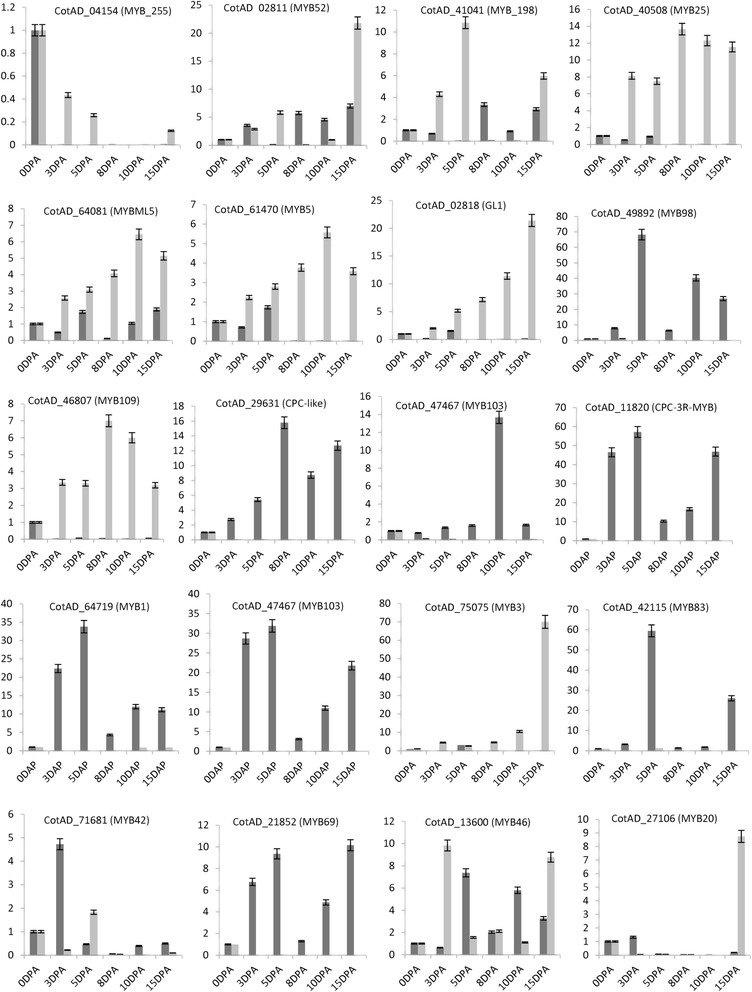
“In addition, MYB109 and CotAD_02818 (GL1) promoted cotton fiber development [29].”
BackgroundResultInfluentialEvolutionary and comparative analysis of MYB and bHLH plant transcription factors
Feller, A., Machemer, K., Braun, E. L., & Grotewold, E. (2011) · The Plant Journal · doi:10.1111/j.1365-313x.2010.04459.x · Cited by 1,348 · cited 1×
“This result was similar to Stracke and Dubos who suggested that if MYB genes from the same subgroup share similar protein motifs they probably share similar functions [8, 46].”
Result
Cited by
MicroRNA and Transcription Factor: Key Players in Plant Regulatory Network
Samad, A. F. A., Sajad, M., Nazaruddin, N., Fauzi, I. A., Murad, A. M. A., Zainal, Z., & Ismail, I. (2017) · Frontiers in Plant Science · doi:10.3389/fpls.2017.00565 · Cited by 388
“…and Chen, 2013; Boeva, 2016 Family classification Based on sequence conservation Based on DNA-binding domain Kozomara and Griffiths-Jones, 2014; Salih et al., 2016 Interaction between miR156-SPL and miR172-AP2 leads plant transition from juvenile to adult; miR156-SPL, miR172-AP2, and…”
BackgroundTranscription factors as key molecular target to strengthen the drought stress tolerance in plants
Manna, M., Thakur, T., Chirom, O., Mandlik, R., Deshmukh, R., & Salvi, P. (2021) · Physiologia Plantarum · doi:10.1111/ppl.13268 · Cited by 378
Recent Advances and Future Perspectives in Cotton Research
Huang, G., Huang, J.-Q., Chen, X.-Y., & Zhu, Y.-X. (2021) · Annual Review of Plant Biology · doi:10.1146/annurev-arplant-080720-113241 · Cited by 314
Magwanga, R. O., Lu, P., Kirungu, J. N., Lu, H., Wang, X., Cai, X., Zhou, Z., Zhang, Z., Salih, H., Wang, K., et al. (2018) · BMC Genetics · doi:10.1186/s12863-017-0596-1 · Cited by 285
Self-citationPlant Low-Temperature Stress: Signaling and Response
Aslam, M., Fakher, B., Ashraf, M. A., Cheng, Y., Wang, B., & Qin, Y. (2022) · Agronomy · doi:10.3390/agronomy12030702 · Cited by 210
“Structurally, TFs are multidomain proteins with DNA-binding domain and activation domain [79].”
BackgroundLi, Y., Fang, J., Qi, X., Lin, M., Zhong, Y., Sun, L., & Cui, W. (2018) · International Journal of Molecular Sciences · doi:10.3390/ijms19051471 · Cited by 199
Diverse roles of MYB transcription factors in plants
Zhang, D., Zhou, H., Zhang, Y., Zhao, Y., Zhang, Y., Feng, X., & Lin, H. (2025) · Journal of Integrative Plant Biology · doi:10.1111/jipb.13869 · Cited by 169
Sun, W., Ma, Z., Chen, H., & Liu, M. (2019) · International Journal of Molecular Sciences · doi:10.3390/ijms20194847 · Cited by 175
Liu, C., Xie, T., Chen, C., Luan, A., Long, J., Li, C., Ding, Y., & He, Y. (2017) · BMC Genomics · doi:10.1186/s12864-017-3896-y · Cited by 166
Wang, W., Zhang, X., Deng, F., Yuan, R., & Shen, F. (2017) · BMC Genomics · doi:10.1186/s12864-017-3768-5 · Cited by 157
“during different developmental stages [93], and several”
Mmadi, M. A., Dossa, K., Wang, L., Zhou, R., Wang, Y., Cissé, N., Sy, M. O., & Zhang, X. (2017) · Genes · doi:10.3390/genes8120362 · Cited by 117
“For example, the genes ZmMYBC1, ZmMYBPL from maize and PhMYBAN2 from Petunia are structurally related and play the same function: control of anthocyanin synthesis [7].”
BackgroundInfluentialLi, W., Ding, Z., Ruan, M., Yu, X., Peng, M., & Liu, Y. (2017) · Scientific Reports · doi:10.1038/s41598-017-16905-1 · Cited by 96
Nagaraju, M., Kumar, S., Reddy, P. S., Kumar, A., Rao, D. M., & Kishor, P. B. K. (2019) · PLoS ONE · doi:10.1371/journal.pone.0209980 · Cited by 138
Magwanga, R. O., Lu, P., Kirungu, J. N., Cai, X., Zhou, Z., Wang, X., Diouf, L., Xu, Y., Hou, Y., Hu, Y., et al. (2018) · International Journal of Molecular Sciences · doi:10.3390/ijms19092625 · Cited by 88
“The majority of the duplicated CDK genes were segmental as compared to the tandem type of duplication, this implied that segmental gene duplication had a major contributing factor during the evolution time [38].”
BackgroundAbbas, F., Ke, Y., Zhou, Y., Yu, Y., Waseem, M., Ashraf, U., Wang, C., Wang, X., Li, X., Yue, Y., et al. (2021) · Frontiers in Plant Science · doi:10.3389/fpls.2021.623742 · Cited by 100
Billah, M., Li, F., & Yang, Z. (2021) · Frontiers in Plant Science · doi:10.3389/fpls.2021.759245 · Cited by 91
Yuan, Y., Zhang, J., Liu, X., Meng, M., Wang, J., & Lin, J. (2019) · Genomics · doi:10.1016/j.ygeno.2019.10.010 · Cited by 95
The pivotal role of MYB transcription factors in plant disease resistance
Yu, Y., Zhang, S., Yu, Y., Cui, N., Yu, G., Zhao, H., Meng, X., & Fan, H. (2023) · Planta · doi:10.1007/s00425-023-04180-6 · Cited by 76
“Thereafter, many MYB TFs have been identified and characterized in plants, such as those in Arabidopsis thaliana, Gossypium hirsutum, Oryza sativa, Triticum aestivum, and Solanum lycopersicum (Katiyar et al. 2012; Zhao et al. 2014; Salih et al. 2016; Wei et al. 2020).”
BackgroundMsMYB741 is involved in alfalfa resistance to aluminum stress by regulating flavonoid biosynthesis
Su, L., Lv, A., Wen, W., Fan, N., Li, J., Gao, L., Zhou, P., & An, Y. (2022) · The Plant Journal · doi:10.1111/tpj.15977 · Cited by 76
Li, J., Liu, H., Yang, C., Wang, J., Yan, G., Si, P., Bai, Q., Lu, Z., Zhou, W., & Xu, L. (2019) · Industrial Crops and Products · doi:10.1016/j.indcrop.2019.111924 · Cited by 74
Hajiebrahimi, A., Owji, H., & Hemmati, S. (2017) · Genome · doi:10.1139/gen-2017-0059 · Cited by 81
Lin, W., Li, Y., Lu, Q., Lu, H., & Li, J. (2020) · International Journal of Molecular Sciences · doi:10.3390/ijms21041337 · Cited by 67
“TFs are necessary for the regulation of gene expression [55].”
BackgroundShao, D., Li, Y., Zhu, Q., Zhang, X., Liu, F., Xue, F., & Sun, J. (2021) · Plant Science · doi:10.1016/j.plantsci.2021.110827 · Cited by 69
Self-citationLu, P., Magwanga, R. O., Guo, X., Kirungu, J. N., Lu, H., Cai, X., Zhou, Z., Wei, Y., Wang, X., Zhang, Z., et al. (2018) · G3 Genes|Genomes|Genetics · doi:10.1534/g3.118.200232 · Cited by 62
Salih, H., Odongo, M. R., Gong, W., He, S., & Du, X. (2019) · BMC Plant Biology · doi:10.1186/s12870-019-2003-8 · Cited by 75
“The detailed information of RT-qPCR procedure and gene expression analysis was done as described by Salih et al. 2016 [44].”
MethodSelf-citationZhang, M., Wang, J., Luo, Q., Yang, C., Yang, H., & Cheng, Y. (2021) · Journal of Plant Physiology · doi:10.1016/j.jplph.2021.153472 · Cited by 57
Yang, K., Li, Y., Wang, S., Xu, X., Sun, H., Zhao, H., Li, X., & Gao, Z. (2019) · PeerJ · doi:10.7717/peerj.6242 · Cited by 55
“To date, many members of the MYB TF family have been recognized and studied in many crops and horticultural plants, such as Arabidopsis, poplar, maize, soybean, pineapple, upland cotton and beet (Wilkins et al., 2009; Dubos et al., 2010; Du et al., 2012a, 2012b; Stracke et al., 2014; Salih et al., 2016; Liu et al., 20…”
BackgroundHuang, J., Guo, Y., Sun, Q., Zeng, W., Li, J., Li, X., & Xu, W. (2018) · Plant and Cell Physiology · doi:10.1093/pcp/pcy238 · Cited by 54
Iorizzo, M., Cavagnaro, P. F., Bostan, H., Zhao, Y., Zhang, J., & Simon, P. W. (2019) · Frontiers in Plant Science · doi:10.3389/fpls.2018.01927 · Cited by 57
Pucker, B., Pandey, A. K., Weißhaar, B., & Stracke, R. (2020) · PLoS ONE · doi:10.1371/journal.pone.0239275 · Cited by 54
“Copy numbers 75 range from 45 unique R2R3-MYBs in Ginkgo biloba [10] to 360 in Mexican cotton 76 (Gossypium hirsutum) [11].”
BackgroundJi, Q., Dawei, W., Zhou, J., Xu, Y., Shen, B., & Fan, Z. (2019) · PeerJ · doi:10.7717/peerj.6353 · Cited by 59
“) (Salih et al., 2016), and zero 4R-MYB proteins in sesame (Mmadi et al.”
BackgroundZhou, Q., Jia, C., Ma, W., Cui, Y., Jin, X., Luo, D., Min, X., & Liu, Z. (2019) · PeerJ · doi:10.7717/peerj.7714 · Cited by 51
“Of these 265 MsMYBs, the R2R3-MYB family is the most abundant MYB TF, which is consistent with previous studies of many plants (Salih et al., 2016; Wang & Li, 2017; Du et al., 2012).”
BackgroundLiu, J., Wang, J., Wang, M., Zhao, J., Zheng, Y., Zhang, T., Xue, L., & Lei, J. (2021) · Frontiers in Plant Science · doi:10.3389/fpls.2021.702160 · Cited by 51
“…have been identified, including FaMYB1, FaMYB5, FaMYB9, FaMYB10, and FaMYB11, of which FaMYB10 was found to be a key gene regulating anthocyanin synthesis in the strawberry fruit (Aharoni et al., 2001; Schaart et al., 2013; Medina-Puche et al., 2014; Wang et al., 2020; Zhang et al., 2020).”
BackgroundWang, L., Gao, W., Wu, X., Zhao, M., Qu, J., Huang, C., & Zhang, J. (2018) · International Journal of Molecular Sciences · doi:10.3390/ijms19072052 · Cited by 51
“Indica [32], Glycine max [44], Gossypium hirsutum [45], and Chinese cabbage [46].”
BackgroundLú, Q., Shí, Y., Xiāo, X., Li, P., Gōng, J., Gǒng, W., Liú, À., Shāng, H., Lǐ, J., Gě, Q., et al. (2017) · G3 Genes Genomes Genetics · doi:10.1534/g3.117.300108 · Cited by 54
“Transcription factors also regulate fiber strength (Salih et al. 2016).”
Cai, X., Magwanga, R. O., Xu, Y., Zhou, Z., Wang, X., Hou, Y., Wang, Y., Zhang, Y., Liu, F., & Wang, K. (2019) · AoB Plants · doi:10.1093/aobpla/plz045 · Cited by 56
Zhou, L., Yarra, R., Jin, L., & Cao, H. (2020) · Environmental and Experimental Botany · doi:10.1016/j.envexpbot.2020.104245 · Cited by 48
Xu, F., Liu, H., Xu, Y., Zhao, J.-R., Guo, Y.-W., Long, L., Gao, W., & Song, C. (2017) · Plant Cell Tissue and Organ Culture (PCTOC) · doi:10.1007/s11240-017-1357-6 · Cited by 50
“To date, upland cotton has been determined to contain 524 MYB genes in its genome, and 360 of them are R2R3-MYB genes (Salih et al. 2016).”
BackgroundZhang, T., Cui, Z., Li, Y., Kang, Y., Song, X., Wang, J., & Zhou, Y. (2021) · Frontiers in Genetics · doi:10.3389/fgene.2021.714696 · Cited by 41
“R2R3-MYB proteins in plant species can be classified into 25 or more classes (Li and Lu, 2014; Feng et al., 2015; Salih et al., 2016).”
BackgroundMethodHong, Y., Ahmad, N., Zhang, J., Lv, Y., Zhang, X., Ma, X., Xiuming, L., & Yao, N. (2022) · Molecular Genetics and Genomics · doi:10.1007/s00438-021-01839-1 · Cited by 51
“The R2R3-MYB was the most widespread group of these identified 272 CtMYBs which correspond to earlier studies on different plant species(Salih et al. 2016; Du et al. 2012).”
ResultWang, T., Song, H., Zhang, B., Lú, Q., Liu, Z., Zhang, S., Guo, R., Wang, C., Zhao, Z., Liu, J., et al. (2018) · 3 Biotech · doi:10.1007/s13205-018-1502-x · Cited by 50
Salih, H., Gong, W., Mkulama, M., & Du, X. (2018) · Genome · doi:10.1139/gen-2017-0237 · Cited by 37
Self-citationLiu, Z., Xie, J., Wang, H., Zhong, X., Li, H., Yu, J., & Kang, J. (2019) · 3 Biotech · doi:10.1007/s13205-019-1714-8 · Cited by 40
Wang, Z., Peng, Z., Khan, S., Qayyum, A., Rehman, A., & Du, X. (2024) · International Journal of Biological Macromolecules · doi:10.1016/j.ijbiomac.2024.133885 · Cited by 39
Self-citationCotton functional genomics reveals global insight into genome evolution and fiber development
Wu, Z., Yang, Y., Huang, G., Lin, J., Xia, Y., & Zhu, Y. (2017) · Journal of genetics and genomics/Journal of Genetics and Genomics · doi:10.1016/j.jgg.2017.09.009 · Cited by 36
“%) of GhMYB genes belonging to reveals global insight into genome evolution and fiber development, 17.09.009 2R-MYB subfamily (Salih et al., 2016).”
BackgroundInfluentialWang, N., Ma, Q., Ma, J., Pei, W., Liu, G., Cui, Y., Wu, M., Zang, X., Zhang, J., Yu, S., et al. (2019) · Frontiers in Genetics · doi:10.3389/fgene.2019.00741 · Cited by 45
Zhang, H., Liu, Z., Luo, R., Sun, Y., Yang, C., Li, X., Gao, A., & Pu, J. (2022) · Plants · doi:10.3390/plants11223141 · Cited by 33
“Members of the same group may have experienced common evolutionary origins and conserved functional domains [10].”
BackgroundUnraveling Cotton Fiber Development Using Fiber Mutants in the Post‐Genomic Era
Fang, D. D., Naoumkina, M. A., & Kim, H. J. (2018) · Crop Science · doi:10.2135/cropsci2018.03.0184 · Cited by 30
Liu, Z., Zhang, Y., Altaf, M. A., Hao, Y., Zhou, G., Li, X., Zhu, J., Ma, W., Wang, Z., & Bao, W. (2022) · Frontiers in Plant Science · doi:10.3389/fpls.2022.979988 · Cited by 28
“, 2012), two in Gossypium hirsutum (Salih et al., 2016), and four in Brassica rapa (Saha et al.”
BackgroundSequencing Multiple Cotton Genomes Reveals Complex Structures and Lays Foundation for Breeding
Pan, Y., Meng, F., & Wang, X. (2020) · Frontiers in Plant Science · doi:10.3389/fpls.2020.560096 · Cited by 27
Nazir, M. F., He, S., Ahmed, H., Sarfraz, Z., Jia, Y., Li, H., Sun, G., Iqbal, M. S., Pan, Z., & Du, X. (2021) · Journal of genetics and genomics/Journal of Genetics and Genomics · doi:10.1016/j.jgg.2021.04.009 · Cited by 28
Self-citationZhou, X., Li, J., Wang, H., Han, J., Zhang, K., Dong, S., Zhang, Y., Ya, H., Cheng, Y., & Sun, S. (2021) · Molecular Ecology Resources · doi:10.1111/1755-0998.13529 · Cited by 32
“In this study, we identified 110 MYB orthologues in the genome of R. henanense, which is quite smaller than other plant species such as Gossypium hirsutum, Brassica rapa ssp. pekinensis, A. thaliana, Pyrus bretschneideri (Chen et al., 2006; Li et al., 2016; Saha et al., 2016; Salih et al., 2016).”
BackgroundTranscriptome Time-Course Analysis in the Whole Period of Cotton Fiber Development
Zhang, J., Mei, H., Lu, H., Chen, R., Hu, Y., & Zhang, T. (2022) · Frontiers in Plant Science · doi:10.3389/fpls.2022.864529 · Cited by 33
Zinc finger transcription factor ZAT family genes confer multi-tolerances in Gossypium hirsutum L.
Fan, Y., Zhang, Y., Rui, C., Xu, N., Zhang, H., Wang, J., Malik, W. A., Han, M., Zhao, L., Lu, X., et al. (2021) · Journal of Cotton Research · doi:10.1186/s42397-021-00098-0 · Cited by 27
“This finding was consistent with a recent study that MYB transcription factor genes were mostly evolved under negative selection (Salih et al. 2016).”
ResultTian, Q., Han, L., Zhu, X., Zhang, C., Li, Y., Xue, X., Wang, Y., Wang, D., Niu, J., Hua, W., et al. (2022) · Metabolites · doi:10.3390/metabo12100968 · Cited by 24
“Now, more and more MYB gene families have been identified from different species, including Solanum lycopersicum [38], Gossypium hirsutum [39], Prunus persica [40], Solanum tuberosum [41], Medicago sativa [42], and so on.”
BackgroundComparative analysis of the MYB gene family in seven Ipomoea species
Si, Z., Wang, L., Ji, Z., Zhao, M., Zhang, K., & Qiao, Y. (2023) · Frontiers in Plant Science · doi:10.3389/fpls.2023.1155018 · Cited by 26
“hirsutum (Salih et al., 2016), Prunus salicina (Liu et al.”
BackgroundInfluentialFine mapping and identification of the fuzzless gene GaFzl in DPL972 (Gossypium arboreum)
Feng, X., Cheng, H., Zuo, D., Zhang, Y., Wang, Q., Liu, K., Ashraf, J., Yang, Q., Li, S., Chen, X., et al. (2019) · Theoretical and Applied Genetics · doi:10.1007/s00122-019-03330-3 · Cited by 26
“GhMYB2 (GL1), GhMYB25/MIXTA, GhTTG1 and GhHOX3 (GL2) are essential for fiber initiation and development (Walford et al. 2012; Wang et al. 2014; Salih et al. 2016).”
BackgroundBhat, Z. Y., Mohiuddin, T., Kumar, A., Jiménez, A. J. L., & Ashraf, N. (2021) · Plant Molecular Biology · doi:10.1007/s11103-021-01180-6 · Cited by 24
Salih, H., He, S., Li, H., Peng, Z., & Du, X. (2020) · Plants · doi:10.3390/plants9010128 · Cited by 22
“The transcriptome assembly and expression counts were gained using STRINGTIE [38].”
MethodSelf-citationWang, X., Zhao, S., Zhou, R., Liu, Y., Guo, L., & Hu, H.-L. (2023) · BMC Plant Biology · doi:10.1186/s12870-023-04296-7 · Cited by 21
“Currently, the MYB genes have been evaluated in about 74 species with sequenced genomes [38], such as Arabidopsis [9], upland cotton [12], cassava [13], soybean [14], apple [37], and populus [15].”
InfluentialWang, L., Huang, Q., Zhang, L., Wang, Q., Liang, L., & Liao, B. (2020) · G3 Genes Genomes Genetics · doi:10.1534/g3.120.401372 · Cited by 27
Genome‑wide analysis of the MYB gene family in pumpkin
Xu, M., Fu, J., Ni, Y., & Zhang, C. (2024) · PeerJ · doi:10.7717/peerj.17304 · Cited by 19
“…residues, which congregate within the hydrophobic core of each repeat, thereby stabilizing the AtMYBs ) [14], Oryza sativa (197 OsMYBs ) [15], Glycine max (252 GmMYBs ) [2], Gossypium hirsutum (524 GhMYBs ) [16], Solanum tuberosum (253 StMYBs ) [17], Pyrus bretschneideri (129 PbMYBs ) [18].”
Zhu, Y., & Bao, Y. (2021) · Biochemical Genetics · doi:10.1007/s10528-021-10027-0 · Cited by 19
Mo, H., Wang, L., Ma, S., Yu, D., Lu, L., Yang, Z., Yang, Z., & Li, F. (2019) · Gene · doi:10.1016/j.gene.2019.02.091 · Cited by 22
Lee, S., Völz, R., Song, H., Harris, W., & Lee, Y. (2021) · Frontiers in Microbiology · doi:10.3389/fmicb.2021.721530 · Cited by 20
Shen, J., Xu, Y., Yuan, S., Jin, F., Huang, Y., Chen, H., Shan, Z., Yang, Z., Chen, S., Zhou, X., et al. (2023) · International Journal of Molecular Sciences · doi:10.3390/ijms241612878 · Cited by 19
“replication and evolution after ancestor differentiation [45].”
MethodBaytar, A. A., Peynircioğlu, C., Sezener, V., Frary, A., & Doğanlar, S. (2022) · Physiology and Molecular Biology of Plants · doi:10.1007/s12298-022-01184-6 · Cited by 14
“Moreover, as compared to the A genome, the D genome harbors more transcription factors that are involved in biotic and abiotic stress responses (He et al. 2016; Salih et al. 2016; Xu et al. 2015).”
BackgroundXiāo, X., Liu, R., Gōng, J., Li, P., Li, Z., Gǒng, W., Liú, À., Gě, Q., Deng, X., Li, S., et al. (2023) · Theoretical and Applied Genetics · doi:10.1007/s00122-023-04247-8 · Cited by 15
Shalby, N., Mohamed, I. A. A., Xiong, J., Hu, K., Yang, Y., Nishawy, E., Yi, B., Wen, J., Ma, C., Shen, J., et al. (2021) · International Journal of Molecular Sciences · doi:10.3390/ijms22179246 · Cited by 15
Wang, F., & Li, X. (2017) · Genes & Genomics · doi:10.1007/s13258-017-0544-5 · Cited by 15
“This result was similar to that described in Arabidopsis, Vitis vinifera, Eucalyptus grandis and Gossypium hirsutum (Matus et al. 2008; Soler et al. 2015; Salih et al. 2016).”
ResultLi, A., Wu, X., Huang, Y., Pan, X., Yao, K., Liu, Z., Wang, C., & Liao, W. (2023) · Food Quality and Safety · doi:10.1093/fqsafe/fyad071 · Cited by 14
Wang, W., Fang, H., Aslam, M. A., Du, H., Chen, J., Luo, H., Chen, W., & Liu, X. (2021) · Journal of Phycology · doi:10.1111/jpy.13217 · Cited by 16
Independent Evolution of the MYB Family in Brown Algae
Zeng, Q., Liu, H., Chu, X., Niu, Y., Wang, C., Markov, G. V., & Teng, L. (2022) · Frontiers in Genetics · doi:10.3389/fgene.2021.811993 · Cited by 14
Genome-wide identification and expression profiling of MYB transcription factors in Artemisia argyi
Peng, S., Zhang, Q., Yang, Y., Li, Y., Feng, W., Zhao, D., Huang, B., Liu, D., & Miao, Y. (2025) · BMC Genomics · doi:10.1186/s12864-025-11441-z · Cited by 13
Rao, S., Balyan, S. C., Jha, S., Bansal, C., Das, J. R., Gupta, A., & Mathur, S. (2020) · Springer eBooks · doi:10.1007/978-981-15-9380-2_8 · Cited by 13
Pawełkowicz, M. E., Skarzyńska, A., Koter, M. D., Turek, S., & Pląder, W. (2022) · International Journal of Molecular Sciences · doi:10.3390/ijms23084317 · Cited by 13
“In the molecular function category are also proteins connected with nucleic acid binding and transcription factors, which are essential for the regulation of gene expression and usually belong to members of multigene families [51].”
BackgroundSalih, H., Wang, X. Q., Chen, B., Jia, Y., Gong, W., & Du, X. (2020) · Genomics · doi:10.1016/j.ygeno.2020.12.023 · Cited by 12
Self-citationDomestication over Speciation in Allopolyploid Cotton Species: A Stronger Transcriptomic Pull
Jareczek, J. J., Grover, C. E., Hu, G., Xiong, X., Arick, M. A., Peterson, D. G., & Wendel, J. F. (2023) · Genes · doi:10.3390/genes14061301 · Cited by 10
Su, J., Zhan, N., Cheng, X., Song, S., Dong, T., Ge, X., & Duan, H. (2023) · Plant and Cell Physiology · doi:10.1093/pcp/pcad125 · Cited by 12
Wang, P., Zhang, T., Li, Y., Zhao, X., Liu, W., Hu, Y., Wang, J., & Zhou, Y. (2023) · International Journal of Biological Macromolecules · doi:10.1016/j.ijbiomac.2023.129001 · Cited by 12
Wang, P., Li, Y., Zhang, T., Kang, Y., Li, W., Wang, J., Yu, W., & Zhou, Y. (2023) · Agronomy · doi:10.3390/agronomy13010236 · Cited by 13
Krivmane, B., Šņepste, I., Šķipars, V., Yakovlev, I., Fossdal, C. G., Vivian‐Smith, A., & Rungis, D. E. (2020) · Forests · doi:10.3390/f11040384 · Cited by 11
“Transcription factors (TFs) are essential for the regulation of gene expression, and usually belong to members of multigene families [80].”
BackgroundWu, H., Wang, L., Zhao, S., Gao, M., Cao, J., Hao, Y., Yu, L., Zhao, T., Wang, S., Han, J., et al. (2025) · Advanced Science · doi:10.1002/advs.202414175 · Cited by 11
Novel Structural Variation and Evolutionary Characteristics of Chloroplast tRNA in Gossypium Plants
Zhang, T., Yang, Y., Song, X., Gao, X., Zhang, X., Zhao, J., Zhou, K., Zhao, C., Li, W., Yang, D., et al. (2021) · Genes · doi:10.3390/genes12060822 · Cited by 8
Shrestha, N., Zhang, K., Gowda, S. A., Abdelraheem, A., Jones, D. C., & Kuraparthy, V. (2023) · Crop Science · doi:10.1002/csc2.20937 · Cited by 9
miRNAs and genes as molecular regulators of rice grain morphology and yield
Kumar, S., Sharma, N., Sopory, S. K., & Mishra, N. S. (2024) · Plant Physiology and Biochemistry · doi:10.1016/j.plaphy.2024.108363 · Cited by 12
Fang, Y. V., Cao, D., Yang, H., Guo, W., Ouyang, W., Chen, H., Shan, Z., Yang, Z., Chen, S., Li, X., et al. (2021) · International Journal of Molecular Sciences · doi:10.3390/ijms222212515 · Cited by 9
Salih, H., Gong, W., He, S., Mustafa, N. S., & Du, X. (2018) · Molecular Genetics and Genomics · doi:10.1007/s00438-018-1482-x · Cited by 8
Self-citationRecent trends in transcriptional regulation of cold stress tolerance in plants
Gupta, K., Wani, S. H., Razzaq, A., Reyes, V. P., Dubey, N. K., Panigrahi, J., Kumar, A., Kaur, S., Rahimi, M., Kumar, A., et al. (2025) · Discover Sustainability · doi:10.1007/s43621-025-01718-4 · Cited by 8
“…Oryza sativa [118], Triticum aestivum [119], Brassica napus [120], Medicago truncatula [121, 122], Glycine max [123], Jatropha curcas [124, 125], Beta vulgaris [126], Brachypodium dis-tachyon [127], Musa acuminata [128], Solanum lycopersicum [129], Gossypium hirsutum [130] and Fragaria vesca [131].”
Li, H., Yang, X., Niyitanga, S., He, Q., Chen, S., Xu, J., Qi, J., Tao, A., Fang, P., & Zhang, L. (2022) · Tropical Plant Biology · doi:10.1007/s12042-022-09320-y · Cited by 8
Lei, S., Li, G., Jiang, D., Yuan, F., Zhou, X., Zheng, Y., Zhang, H., & Cao, B. (2024) · Horticulturae · doi:10.3390/horticulturae10040325 · Cited by 7
Recent Developments in Fiber Genomics of Tetraploid Cotton Species
Sobitjonovich, A. M., Abdurakhmonov, I. Y., Sripathi, V. R., Saha, S., Norov, T. M., Buriev, Z. T., Shermatov, S. E., Ubaydullaeva, K. A., McCarty, J. C., Deng, D. D., et al. (2018) · InTech eBooks · doi:10.5772/intechopen.72922 · Cited by 7
Cotton Fiber Genes and Stable Quantitative Trait Loci
Fang, D. D. (2018) · Springer eBooks · doi:10.1007/978-3-030-00871-0_8 · Cited by 7
Ecological Genomics of Plant-Insect Interactions: The Case of Wasp-Induced Galls
Kariñho‐Betancourt, E., Soto, P. H., Cortés, N. C., Rendón‐Anaya, M., Herrera‐Estrella, A., & Oyama, K. (2020) · Springer eBooks · doi:10.1007/978-3-030-46012-9_17 · Cited by 9
Genome-Wide Analysis of Specific PfR2R3-MYB Genes Related to Paulownia Witches’ Broom
Zhao, X., Li, B., Zhai, X., Liu, H., Deng, M., & Fan, G. (2022) · Genes · doi:10.3390/genes14010007 · Cited by 6
“thaliana) [5], Gossypium (cotton) [6], Glycine max (soybean) [7], Populus trichocarpa (populus) [8] and Ziziphus jujube (Chinese jujube) [9].”
BackgroundYuan, Q., Zhang, J., Wang, S., Zhang, M., & Nie, J. (2023) · Scientia Horticulturae · doi:10.1016/j.scienta.2023.112615 · Cited by 6
Zhang, X., Xu, Z., Liu, B., Xiao, Y., Chai, L., Zhong, L., Huo, H., Liu, L., Yang, H. Y., & Liu, H. (2024) · Molecular Biology Reports · doi:10.1007/s11033-023-09019-7 · Cited by 6
“We identified 219 MaMYB genes in the M. alternifolia genome, which falls between the number found in Phyllostachys edulis (85) [29] and Gossypium hirsutum (524) [30].”
Genome-Wide Identification and Analysis of MYB Transcription Factor Family in Hibiscus hamabo
Liu, D., Gu, C., Fu, Z., & Wang, Z. (2023) · Plants · doi:10.3390/plants12071429 · Cited by 6
“With the increasing number of sequenced plant genomes, members of the MYB family have been systematically identified in various plant species [17,26].”
Caliskan, I. T., Ametefe, G. D., Caliskan, A., Lau, S.-E., Liew, Y. J. M., Ikram, N. K. K., & Tan, B. C. (2025) · Phyton · doi:10.32604/phyton.2025.067225 · Cited by 5
Wang, T., Zhao, S., Wang, B., Li, J., Ye, Z., Zhang, F., Ma, H., & Zhou, G. (2025) · Frontiers in Plant Science · doi:10.3389/fpls.2025.1558321 · Cited by 6
“In contrast, there are 524 in Gossypium hirsutum L (Salih et al., 2016).”
Metadata
- Authors
- Salih, H., Gong, W., He, S., Sun, G., Sun, J., & Du, X.
- Affiliations
- Huazhong Agricultural University (CN)
- Chinese Academy of Agricultural Sciences (CN)
- Anyang Institute of Technology (CN)
- Corresponding author
- Sun, Junling
- Du, Xiongming
- Venue
- BMC Genetics
- Published
- 2016-09-09
- Volume
- 17
- Issue
- 1
- Pages
- 129-129
- ISSN
- 1471-2156 (ISSN-L)
- PMC
- PMC5017022
- OpenAlex
- W2512789814
- Cited by
- 146
- References
- 61
- Citations by year
- 2026: 6 · 2025: 12 · 2024: 10 · 2023: 22 · 2022: 18 · 2021: 19 · 2020: 13 · 2019: 22 · 2018: 13 · 2017: 11
- FWCI
- 17.92
- Type
- journal article
- Language
- en
- Open access
- gold
- doi.org
- Licence
- cc-by
- Locations
- BMC Genetics (publishedVersion, cc-by)
- PubMed Central (publishedVersion, cc-by)
- PubMed (publishedVersion)
- Funders
- China Scholarship Council
- National Science and Technology Program during the Twelfth Five-year Plan Period
- Topics
- Life Sciences › Agricultural and Biological Sciences › Plant Science › Research in Cotton Cultivation
- Life Sciences › Biochemistry, Genetics and Molecular Biology › Molecular Biology › Plant Gene Expression Analysis
- Life Sciences › Agricultural and Biological Sciences › Plant Science › Plant Molecular Biology Research
- Keywords
- MYB transcription factors, Gossypium hirsutum, cotton fiber development, phylogenetic classification, gene family evolution, comparative genomics, gene expression
- MeSH terms
- Chromosome Mapping, Gossypium, Multigene Family, Phylogeny, Plant Proteins, Transcription Factors, Conserved Sequence, Gene Expression Regulation, Plant, Genome, Plant, Computational Biology, Proto-Oncogene Proteins c-myb, Gene Expression Profiling, Genomics, Databases, Nucleic Acid, Cotton Fiber, Genome-Wide Association Study, Genetic Association Studies, Molecular Sequence Annotation, High-Throughput Nucleotide Sequencing, Nucleotide Motifs
About these checks
Registry, retraction, Cites and statistics results are computed, not judged, with one exception: a printed reference that no index lists is read once by a model before it counts as a citation error. Claims are extracted by a model and kept only when their quote appears verbatim in the text; each cited source is then checked, with a model’s help, for whether it says what the claim relies on. Those verdicts can be wrong — read the claim’s quote and the cited source before relying on one.
Statistics and arithmetic are recomputed, not judged.
Confidence bands are shown only for fields calibrated on our annotated test set. None is calibrated yet, so no band is shown.
What counts as a claim ›How we measure confidence ›How we check this ›
Are you an author, or do you see a problem with this page? Request a review
Data sources
Bibliographic data: Semantic Scholar, OpenAlex, Crossref.
Contains information from the Semantic Scholar Academic Graph Datasets, made available under the ODC Attribution License (ODC-BY 1.0).
Semantic Scholar’s data is described in: Kinney, R., et al. (2023). The Semantic Scholar Open Data Platform. arXiv:2301.10140.
