

The DOI matches its Crossref record; 2 of the 2 references it cites were found in a registry or an index.
Effects of HTR1B 3′ region polymorphisms and functional regions on gene expression regulation
Open accessPublished version of a preprint
Abstract
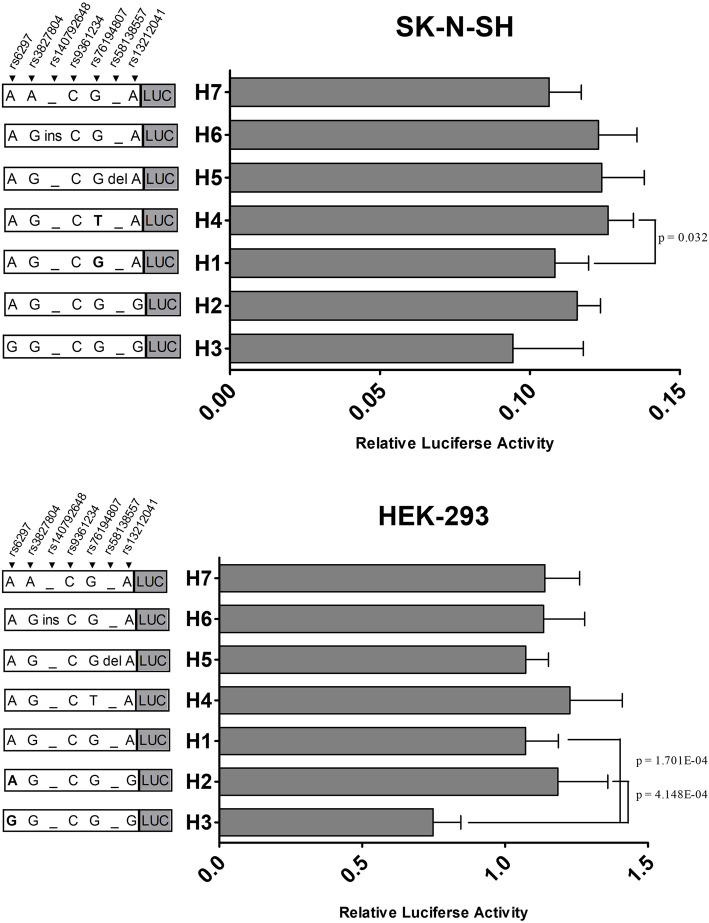
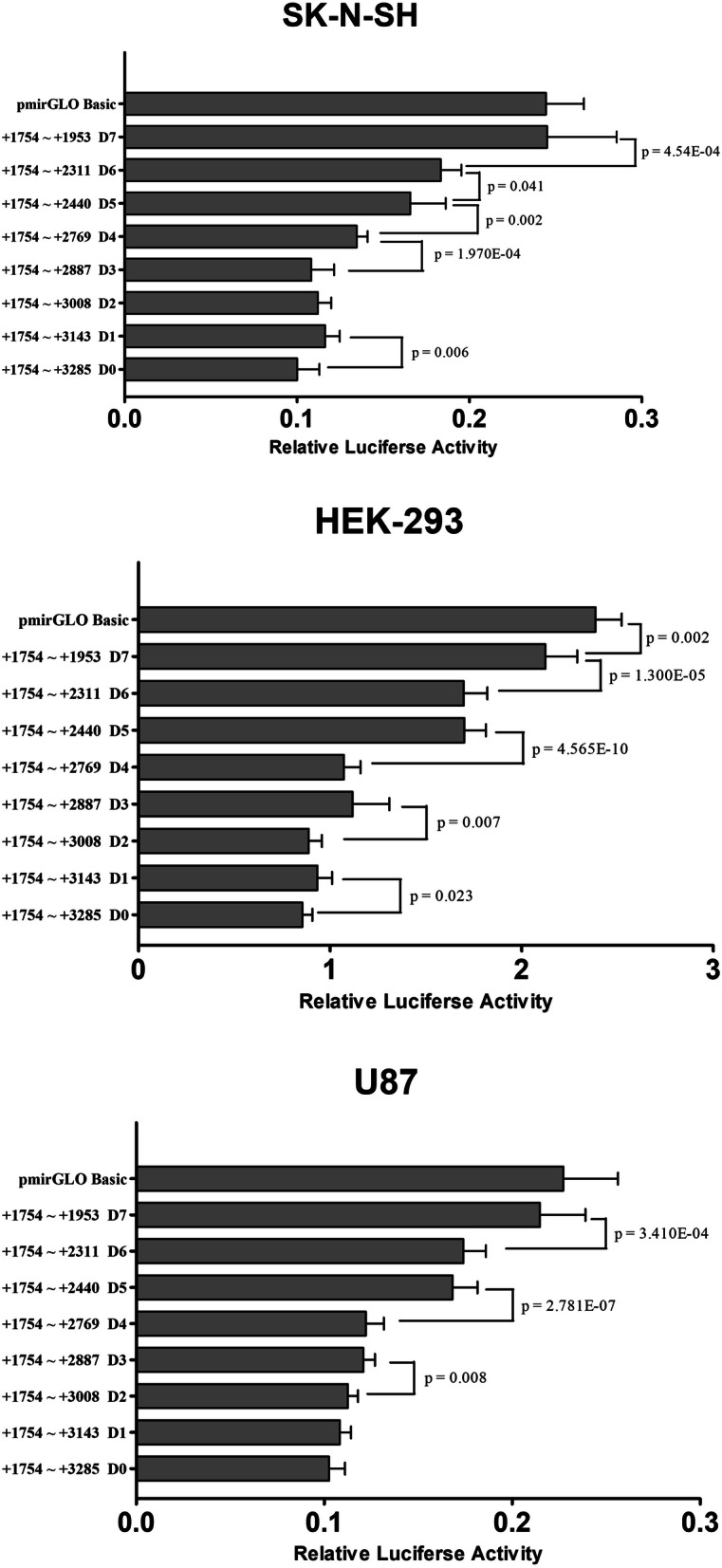
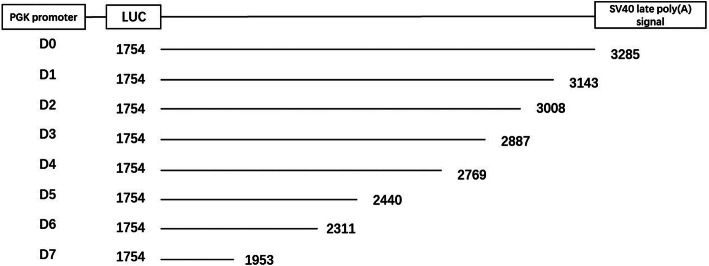
Background: The HTR1B gene encodes the 5-hydroxytryptamine (5-HT1B) receptor, which is involved in a variety of brain activities and mental disorders. The regulatory effects of non-coding regions on genomic DNA are one of many reasons for the cause of genetic-related diseases. Post-transcriptional regulation that depends on the function of 3′ regulatory regions plays a particularly important role. This study investigated the effects, on reporter gene expression, of several haplotypes of the HTR1B gene (rs6297, rs3827804, rs140792648, rs9361234, rs76194807, rs58138557, and rs13212041) and truncated fragments in order to analyze the function of the 3′ region of HTR1B . Results: We found that the haplotype, A-G-Del-C-T-Ins-A, enhanced the expression level compared to the main haplotype; A-G-Del-C-G-Ins-A; G-G-Del-C-G-Ins-G decreased the expression level. Two alleles, rs76194807T and rs6297G, exhibited different relative luciferase intensities compared to their counterparts at each locus. We also found that + 2440 ~ + 2769 bp and + 1953 ~ + 2311 bp regions both had negative effects on gene expression. Conclusions: The 3′ region of HTR1B has a regulatory effect on gene expression, which is likely closely associated with the interpretation of HTR1B -related disorders. In addition, the HTR1B 3′ region includes several effector binding sites that induce an inhibitory effect on gene expression.
Overview
The claims and statistics of this paper haven’t been checked yet.
Run the check — free, no account needed. It reads the open-access text and checks the sources it cites.
Integrity signals
Registry
Cites
Statistics
Figures
Verification
Claims the paper makes
The claims and statistics of this paper haven’t been checked yet.
Run the check — free, no account needed. It reads the open-access text and checks the sources it cites.
Self-check
Percentages, sums and reported differences re-computed from the paper’s own numbers.
The self-check needs the paper’s full text.
Citations
Cites
Global quantification of mammalian gene expression control
Schwanhäusser, B., Busse, D., Li, N., Dittmar, G., Schuchhardt, J., Wolf, J., Chen, W., & Selbach, M. (2011) · Nature · doi:10.1038/nature10098 · Cited by 6,566
Saus, E., Soria, V., Escaramís, G., Vivarelli, F., Crespo, J. M., Kagerbauer, B., Menchón, J. M., Urretavizcaya, M., Gratacòs, M., & Estivill, X. (2010) · Human Molecular Genetics · doi:10.1093/hmg/ddq316 · Cited by 163
Research works printed but not linked: 24
- Steri M, Idda ML, Whalen MB, Orru V. Genetic variants in mRNA untranslated regions. Wiley Interdiscip Rev RNA. 2018;9(4):e1474. · DOI
- Duchaine TF, Fabian MR. Mechanistic Insights into MicroRNA-Mediated Gene Silencing. Cold Spring Harb Perspect Biol. 2019;11(3). · DOI
- Hentze MW, Castello A, Schwarzl T, Preiss T. A brave new world of RNA-binding proteins. Nat Rev Mol Cell Biol. 2018;19(5):327–41. · DOI · Paper page
- Sullivan PF, Kendler KS, Neale MC. Schizophrenia as a complex trait: evidence from a meta-analysis of twin studies. Arch Gen Psychiatry. 2003;60(12):1187–92. · DOI · Paper page
- Hindorff LA, Sethupathy P, Junkins HA, Ramos EM, Mehta JP, Collins FS, Manolio TA. Potential etiologic and functional implications of genome-wide association loci for human diseases and traits. Proc Natl Acad Sci U S A. 2009;106(23):9362–7. · DOI · Paper page
- Winter J, Jung S, Keller S, Gregory RI, Diederichs S. Many roads to maturity: microRNA biogenesis pathways and their regulation. Nat Cell Biol. 2009;11(3):228–34. · DOI
- Sethupathy P, Collins FS. MicroRNA target site polymorphisms and human disease. Trends Genet. 2008;24(10):489–97. · DOI
- Gong Y, Wu CN, Xu J, Feng G, Xing QH, Fu W, Li C, He L, Zhao XZ. Polymorphisms in microRNA target sites influence susceptibility to schizophrenia by altering the binding of miRNAs to their targets. Eur Neuropsychopharmacol. 2013;23(10):1182–9. · DOI
- Manley W, Moreau MP, Azaro M, Siecinski SK, Davis G, Buyske S, Vieland V, Bassett AS, Brzustowicz L. Validation of a microRNA target site polymorphism in H3F3B that is potentially associated with a broad schizophrenia phenotype. PLoS One. 2018;13(3):e194233. · DOI
- Gilabert-Juan J, Ivorra JL, Tolosa A, Gratacos M, Costas J, Sanjuan J, Molto MD. Potential involvement of serotonin receptor genes with age of onset and gender in schizophrenia: a preliminary study in a Spanish sample. Psychiatry Res. 2011;186(1):153–4. · DOI
- Jensen KP, Covault J, Conner TS, Tennen H, Kranzler HR, Furneaux HM. A common polymorphism in serotonin receptor 1B mRNA moderates regulation by miR-96 and associates with aggressive human behaviors. Mol Psychiatry. 2009;14(4):381–9. · DOI
- Bidwell LC, Gray JC, Weafer J, Palmer AA, de Wit H, MacKillop J. Genetic influences on ADHD symptom dimensions: examination of a priori candidates, gene-based tests, genome-wide variation, and SNP heritability. Am J Med Genet B Neuropsychiatr Genet. 2017;174(4):458–66. · DOI
- Sanders AR, Cao Q, Taylor J, Levin TE, Badner JA, Cravchik A, Comeron JM, Naruya S, Del RA, Salvi DA, et al. Genetic diversity of the human serotonin receptor 1B (HTR1B) gene. Genomics. 2001;72(1):1–14. · DOI
- Xia X, Ding M, Xuan JF, Xing JX, Pang H, Wang BJ, Yao J. Polymorphisms in the human serotonin receptor 1B (HTR1B) gene are associated with schizophrenia: a case control study. BMC Psychiatry. 2018;18(1):303. · DOI
- Kosaka N, Iguchi H, Ochiya T. Circulating microRNA in body fluid: a new potential biomarker for cancer diagnosis and prognosis. Cancer Sci. 2010;101(10):2087–92. · DOI · Paper page
- Chen Q, Lang L, Xiao B, Lin H, Yang A, Li H, Tang S, Huang H. HTR1B gene variants associate with the susceptibility of Raynauds’ phenomenon in workers exposed hand-arm vibration. Clin Hemorheol Microcirc. 2016;63(4):335–47. · DOI
- Liu S, Zhang F, Wang X, Shugart YY, Zhao Y, Li X, Liu Z, Sun N, Yang C, Zhang K, et al. Diagnostic value of blood-derived microRNAs for schizophrenia: results of a meta-analysis and validation. Sci Rep. 2017;7(1):15328. · DOI
- Xie L, Chen J, Ding YM, Gui XW, Wu LX, Tian S, Wu W. MicroRNA-26a-2 maintains stress resiliency and antidepressant efficacy by targeting the serotonergic autoreceptor HTR1A. Biochem Biophys Res Commun. 2019;511(2):440–6. · DOI
- Bandres E, Agirre X, Bitarte N, Ramirez N, Zarate R, Roman-Gomez J, Prosper F, Garcia-Foncillas J. Epigenetic regulation of microRNA expression in colorectal cancer. Int J Cancer. 2009;125(11):2737–43. · DOI
- Sanchez-Mora C, Ramos-Quiroga JA, Garcia-Martinez I, Fernandez-Castillo N, Bosch R, Richarte V, Palomar G, Nogueira M, Corrales M, Daigre C, et al. Evaluation of single nucleotide polymorphisms in the miR-183-96-182 cluster in adulthood attention-deficit and hyperactivity disorder (ADHD) and substance use disorders (SUDs). Eur Neuropsychopharmacol. 2013;23(11):1463–73. · DOI
- Banks SA, Pierce ML, Soukup GA. Sensational MicroRNAs: neurosensory roles of the MicroRNA-183 family. Mol Neurobiol. 2019. · DOI
- Kaushik G, Xia Y, Pfau JC, Thomas MA. Dysregulation of autism-associated synaptic proteins by psychoactive pharmaceuticals at environmental concentrations. Neurosci Lett. 2017;661:143–8. · DOI
- Salim K, Fenton T, Bacha J, Urien-Rodriguez H, Bonnert T, Skynner HA, Watts E, Kerby J, Heald A, Beer M, et al. Oligomerization of G-protein-coupled receptors shown by selective co-immunoprecipitation. J Biol Chem. 2002;277(18):15482–5. · DOI
- Karagkouni D, Paraskevopoulou MD, Chatzopoulos S, Vlachos IS, Tastsoglou S, Kanellos I, Papadimitriou D, Kavakiotis I, Maniou S, Skoufos G, et al. DIANA-TarBase v8: a decade-long collection of experimentally supported miRNA-gene interactions. Nucleic Acids Res. 2018;46(D1):D239–45. · DOI · Paper page
Metadata
- Authors
- Xia, X., Ding, M., Xuan, J.-F., Xing, J.-X., Pang, H., Yao, J., Wu, X., & Wang, B.-J.
- Affiliations
- China Medical University (CN)
- Venue
- BMC Genetics
- Published
- 2020-07-20
- Volume
- 21
- Issue
- 1
- Pages
- 79-79
- ISSN
- 1471-2156 (ISSN-L)
- PMC
- PMC7372893
- OpenAlex
- W3045354361
- Cited by
- 4
- References
- 2
- Citations by year
- 2026: 1 · 2025: 1 · 2024: 1 · 2022: 1
- FWCI
- 0.11
- Type
- journal article
- Language
- en
- Open access
- gold
- doi.org
- Locations
- BMC Genetics (publishedVersion, cc-by)
- Research Square (acceptedVersion, cc-by)
- PubMed Central (publishedVersion, cc-by)
- PubMed (publishedVersion)
- DOAJ (DOAJ: Directory of Open Access Journals) (submittedVersion, cc-by-sa)
- Funders
- China Medical University
- Topics
- Life Sciences › Neuroscience › Cellular and Molecular Neuroscience › Neurotransmitter Receptor Influence on Behavior
- Life Sciences › Biochemistry, Genetics and Molecular Biology › Genetics › Genetic Associations and Epidemiology
- Life Sciences › Biochemistry, Genetics and Molecular Biology › Molecular Biology › RNA Research and Splicing
- Keywords
- 5-HT1B receptor, 3' untranslated region, genetic polymorphism, haplotypes, post-transcriptional regulation, gene expression regulation, transcriptional repression, binding sites, reporter gene expression
- MeSH terms
- Alleles, Cell Line, Gene Expression Regulation, Haplotypes, Humans, Polymorphism, Genetic, MicroRNAs, Receptor, Serotonin, 5-HT1B
About these checks
Registry, retraction, Cites and statistics results are computed, not judged, with one exception: a printed reference that no index lists is read once by a model before it counts as a citation error. Claims are extracted by a model and kept only when their quote appears verbatim in the text; each cited source is then checked, with a model’s help, for whether it says what the claim relies on. Those verdicts can be wrong — read the claim’s quote and the cited source before relying on one.
Statistics and arithmetic are recomputed, not judged.
Confidence bands are shown only for fields calibrated on our annotated test set. None is calibrated yet, so no band is shown.
What counts as a claim ›How we measure confidence ›How we check this ›
Are you an author, or do you see a problem with this page? Request a review
