

Functional characterization of the Mycobacterium abscessus genome coupled with condition specific transcriptomics reveals conserved molecular strategies for host adaptation and persistence
Open accessThe DOI matches its Crossref record; 41 of the 41 references it cites were found in a registry or an index.
Abstract
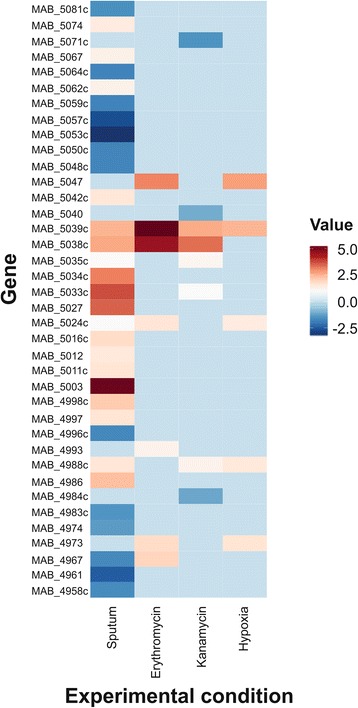
BACKGROUND: Mycobacterium abscessus subsp. abscessus (MAB) is a highly drug resistant mycobacterium and the most common respiratory pathogen among the rapidly growing non-tuberculous mycobacteria. MAB is also one of the most deadly of the emerging cystic fibrosis (CF) pathogens requiring prolonged treatment with multiple antibiotics. In addition to its "mycobacterial" virulence genes, the genome of MAB harbours a large accessory genome, presumably acquired via lateral gene transfer including homologs shared with the CF pathogens Pseudomonas aeruginosa and Burkholderia cepacia. While multiple genome sequences are available there is little functional genomics data available for this important pathogen. RESULTS: We report here the first multi-omics approach to characterize the primary transcriptome, coding potential and potential regulatory regions of the MAB genome utilizing differential RNA sequencing (dRNA-seq), RNA-seq, Ribosome profiling and LC-MS proteomics. In addition we attempt to address the genomes contribution to the molecular systems that underlie MAB's adaptation and persistence in the human host through an examination of MABs transcriptional response to a number of clinically relevant conditions. These include hypoxia, exposure to sub-inhibitory concentrations of antibiotics and growth in an artificial sputum designed to mimic the conditions within the cystic fibrosis lung. CONCLUSIONS: Our integrated map provides the first comprehensive view of the primary transcriptome of MAB and evidence for the translation of over one hundred new short open reading frames (sORFs). Our map will act as a resource for ongoing functional genomics characterization of MAB and our transcriptome data from clinically relevant stresses informs our understanding of MAB's adaptation to life in the CF lung. MAB's adaptation to growth in artificial CF sputum highlights shared metabolic strategies with other CF pathogens including P. aeruginosa and mirrors the transcriptional responses that lead to persistence in mycobacteria. These strategies include an increased reliance on amino acid metabolism, and fatty acid catabolism and highlights the relevance of the glyoxylate shunt to growth in the CF lung. Our data suggests that, similar to what is seen in chronically persisting P. aeruginosa, progression towards a biofilm mode of growth would play a more prominent role in a longer-term MAB infection. Finally, MAB's transcriptional response to antibiotics highlights the role of antibiotic modifications enzymes, active transport and the evolutionarily conserved WhiB7 driven antibiotic resistance regulon.
Overview
The claims and statistics of this paper haven’t been checked yet.
Free: it reads the open-access text and checks the first 5 claims that cite a source we can check. Create a free account to check every claim.
Integrity signals
Registry
Cites
Statistics
Figures
Verification
Claims the paper makes
The claims and statistics of this paper haven’t been checked yet.
Free: it reads the open-access text and checks the first 5 claims that cite a source we can check. Create a free account to check every claim.
Claims other papers make about this one
Each is checked against this paper’s own text: does it say what the citing paper says it does?
The source backs part of the claim, not all of it — or backs it for a different population, condition or comparison.
In the citing paper
“The application of RNA-profiling techniques (RNA-seq and Ribo-seq) in M. smegmatis, M. tuberculosis, and M. abscessus (61–64) has emphasized a startling difference in the gene architecture of mycobacteria compared with the textbook model organisms; the presence of leaderless mRNAs (LLmRNA).”
From Mycobacterium smegmatis: The Vanguard of Mycobacterial Research (2023) · cites this paper as [62]
Experimental — accuracy not yet measured
Self-check
Percentages, sums and reported differences re-computed from the paper’s own numbers.
The self-check needs the paper’s full text.
Citations
Cites
ARG-ANNOT, a new bioinformatic tool to discover antibiotic resistance genes in bacterial genomes
Gupta, S. K., Padmanabhan, B. R., Diene, S. M., Lopez-Rojas, R., Kempf, M., Landraud, L., & Rolain, J.-M. (2014) · Antimicrobial Agents and Chemotherapy · doi:10.1128/aac.01310-13 · Cited by 1,476 · cited 1×
“Differentially expressed genes from both antibiotic exposures were analysed with ARG-ANNOT [19] to identify homologs of known antibiotic resistance genes.”
Betts, J. C., Lukey, P. T., Robb, L. C., McAdam, R. A., & Duncan, K. (2002) · Molecular Microbiology · doi:10.1046/j.1365-2958.2002.02779.x · Cited by 1,395 · cited 4×
“Our analysis also shows that the response to SCFM2 triggers the activation of metabolic pathways that are required in MTB for growth in human macrophages and pave the way for the development of persistence [22].”
InfluentialIngolia, N. T., Brar, G. A., Rouskin, S., McGeachy, A. M., & Weissman, J. S. (2012) · Nature Protocols · doi:10.1038/nprot.2012.086 · Cited by 1,259 · cited 1×
“Ribosome protected fragments were prepared for high throughput sequencing according to a protocol reported elsewhere [41].”
Inhibition of Respiration by Nitric Oxide Induces a Mycobacterium tuberculosis Dormancy Program
Voskuil, M. I., Schnappinger, D., Visconti, K. C., Harrell, M. I., Dolganov, G. M., Sherman, D. R., & Schoolnik, G. K. (2003) · The Journal of Experimental Medicine · doi:10.1084/jem.20030205 · Cited by 966 · cited 1×
“in MTB is the activation of a dormancy (DosR) regulon, which is important for its long-term persistence within the host [13].”
Mycobacterium abscessus: a new antibiotic nightmare
Nessar, R., Cambau, E., Reyrat, J. M., Murray, A., & Gicquel, B. (2012) · Journal of Antimicrobial Chemotherapy · doi:10.1093/jac/dkr578 · Cited by 799 · cited 2×
“The incidence of disease caused by Mycobacterium abscessus (MAB) is increasing and it is emerging as an important cystic fibrosis (CF) pathogen with a high innate antibiotic resistance rendering it refractory to most antimicrobial therapies [1].”
Ribosome Profiling Reveals Pervasive Translation Outside of Annotated Protein-Coding Genes
Ingolia, N. T., Brar, G. A., Stern-Ginossar, N., Harris, M. S., Talhouarne, G. J. S., Jackson, S. E., Wills, M. R., & Weissman, J. S. (2014) · Cell Reports · doi:10.1016/j.celrep.2014.07.045 · Cited by 652 · cited 3×
“Ribo-seq in eukaryotes has found that ribosome isolation by sedimentation isolates both ribosomes and Ribonucleoproteins (RNPs) resulting in the ribosomal protection of some prominent classical noncoding RNAs [10].”
Nash, K. A., Brown-Elliott, B. A., & Wallace, R. J. (2009) · Antimicrobial Agents and Chemotherapy · doi:10.1128/aac.01275-08 · Cited by 638 · cited 2×
“Under conditions previously described [1, 17] we subjected MAB to a short (1 h) exposure to 1 μM erythromycin or 1 μM kanamycin.”
The anti-Shine–Dalgarno sequence drives translational pausing and codon choice in bacteria
Li, G.-W., Oh, E., & Weissman, J. S. (2012) · Nature · doi:10.1038/nature10965 · Cited by 637 · cited 1×
“coli indicates that the large majority of its characterized ncRNAs display a ribosome footprint (data not shown) [11].”
Essential genome of Pseudomonas aeruginosa in cystic fibrosis sputum
Turner, K. H., Wessel, A. K., Palmer, G. C., Murray, J. L., & Whiteley, M. (2015) · Proceedings of the National Academy of Sciences · doi:10.1073/pnas.1419677112 · Cited by 432 · cited 6×
“Following NO induced hypoxia using a 40 min pulse of diethylenetriamine/nitric oxide (DETA/NO) (Additional file 4: Document S1), we observed strong up-regulation of the entire MAB predicted DosR regulon including Dos S & R (MAB_3890, MAB_3891), the nitroreductase (MAB_3903), USPs (MAB_2489 & MAB_3904) and an ortholog…”
InfluentialIntracellular Mycobacterium tuberculosis Exploits Host-derived Fatty Acids to Limit Metabolic Stress
Lee, W., VanderVen, B. C., Fahey, R. J., & Russell, D. G. (2013) · Journal of Biological Chemistry · doi:10.1074/jbc.m112.445056 · Cited by 424 · cited 1×
“In MTB, propionyl-CoA generated from metabolism of host lipids is used as a substrate to generate cell wall lipids which represents an important adaptation and is essential for survival within the host [29].”
Non Mycobacterial Virulence Genes in the Genome of the Emerging Pathogen Mycobacterium abscessus
Ripoll, F., Pasek, S., Schenowitz, C., Dossat, C., Barbe, V., Rottman, M., Macheras, E., Heym, B., Herrmann, J.-L., Daffé, M., et al. (2009) · PLoS ONE · doi:10.1371/journal.pone.0005660 · Cited by 388 · cited 1×
“Comparison of the genomes of multiple MAB strains have highlighted the presence of a large number of accessory genes likely acquired through horizontal gene transfer [2].”
Small Proteins Can No Longer Be Ignored
Storz, G., Wolf, Y. I., & Ramamurthi, K. S. (2014) · Annual Review of Biochemistry · doi:10.1146/annurev-biochem-070611-102400 · Cited by 359 · cited 14×
“This phenomenon has not been analyzed in prokaryotes however an inspection of published Ribo-seq data from E. coli indicates that the large majority of its characterized ncRNAs display a ribosome footprint (data not shown) [11].”
InfluentialThe Response of Mycobacterium Tuberculosis to Reactive Oxygen and Nitrogen Species
Voskuil, M. I., Bartek, I. L., Visconti, K., & Schoolnik, G. K. (2011) · Frontiers in Microbiology · doi:10.3389/fmicb.2011.00105 · Cited by 348 · cited 2×
“Members of the mycobactin cluster mbtG and mbtH which are up-regulated upon NO exposure in MTB [16] were both upregulated.”
Son, M. S., Matthews, W. J., Kang, Y., Nguyen, D. T., & Hoang, T. T. (2007) · Infection and Immunity · doi:10.1128/iai.01807-06 · Cited by 280 · cited 15×
“Mycobacteria have both anaerobic and aerobic pathways for arginine metabolism and SCFM2 exposure caused strong induction of genes associated with the aerobic arginase pathway that facilitates the conversion of arginine to glutamate.”
InfluentialA Balancing Act: Efflux/Influx in Mycobacterial Drug Resistance
Louw, G. E., Warren, R. M., Gey van Pittius, N. C., McEvoy, C. R. E., Van Helden, P. D., & Victor, T. C. (2009) · Antimicrobial Agents and Chemotherapy · doi:10.1128/aac.01577-08 · Cited by 263
Bacterial Mg2+Homeostasis, Transport, and Virulence
Groisman, E. A., Hollands, K., Kriner, M. A., Lee, E.-J., Park, S.-Y., & Pontes, M. H. (2013) · Annual Review of Genetics · doi:10.1146/annurev-genet-051313-051025 · Cited by 262
Adaptation of Pseudomonas aeruginosa during persistence in the cystic fibrosis lung
Hogardt, M., & Heesemann, J. (2010) · International Journal of Medical Microbiology · doi:10.1016/j.ijmm.2010.08.008 · Cited by 257 · cited 2×
“Comparison with transcriptional data from other CF pathogens clearly indicates a convergence in metabolic strategies towards adaption to the CF lung [12, 23, 32].”
Arnvig, K. B., Comas, I., Thomson, N. R., Houghton, J., Boshoff, H. I., Croucher, N. J., Rose, G., Perkins, T. T., Parkhill, J., Dougan, G., et al. (2011) · PLoS Pathogens · doi:10.1371/journal.ppat.1002342 · Cited by 243 · cited 2×
“RVBD_1144Ac falls between Rv1144 and Rv1145, in a highly transcriptionally active region which has been reported to contain a predicted ncRNA MTS0900 [5].”
Shell, S. S., Wang, J., Lapierre, P., Mir, M., Chase, M. R., Pyle, M. M., Gawande, R., Ahmad, R., Sarracino, D. A., Ioerger, T. R., et al. (2015) · PLOS Genetics · doi:10.1371/journal.pgen.1005641 · Cited by 238
Reed, M. B., Gagneux, S., DeRiemer, K., Small, P. M., & Barry, C. E. (2007) · Journal of Bacteriology · doi:10.1128/jb.01670-06 · Cited by 238 · cited 1×
“tuberculosis is thought to confer an adaptive advantage for growth in microaerophilic or anaerobic environments [36].”
Bhatt, A., Molle, V., Besra, G. S., Jacobs, W. R., & Kremer, L. (2007) · Molecular Microbiology · doi:10.1111/j.1365-2958.2007.05761.x · Cited by 234 · cited 1×
“Downregulation or deficiency in kasA/B has been associated with altered colony morphology in MTB [30] and in MSMEG, in which the transition to a ‘biofilm phase’ involves reduction in levels of the KasA protein [31].”
Separable roles for Mycobacterium tuberculosis ESX-3 effectors in iron acquisition and virulence
Tufariello, J. M., Chapman, J. R., Kerantzas, C. A., Wong, K.-W., Vilchèze, C., Jones, C. M., Cole, L. E., Tinaztepe, E., Thompson, V., Fenyö, D., et al. (2016) · Proceedings of the National Academy of Sciences · doi:10.1073/pnas.1523321113 · Cited by 215 · cited 1×
“The ESX-3 locus is proposed to be involved with acquisition of divalent metal ions however it is also proposed to play other roles in virulence [33].”
Pawlik, A., Garnier, G., Orgeur, M., Tong, P., Lohan, A., Le Chevalier, F., Sapriel, G., Roux, A., Conlon, K., Honoré, N., et al. (2013) · Molecular Microbiology · doi:10.1111/mmi.12387 · Cited by 194 · cited 2×
“We find 43 % (22 of 51) of the hypoxic response including the entire DosR regulon is upregulated in MAB strains with a Rough morphotype, a link that is pronounced in clinical strains with the potential for persistence [35].”
Self-citationBalganesh, M., Dinesh, N., Sharma, S., Kuruppath, S., Nair, A. V., & Sharma, U. (2012) · Antimicrobial Agents and Chemotherapy · doi:10.1128/aac.06003-11 · Cited by 176 · cited 1×
“These included MAB_2640c, a homolog of the multidrug resistance protein (MMR) previously shown to mediate the efflux of several different antibiotics [21] and MMPL13b of the mycobacterial membrane protein large (MmpL) family both induced in response to erythromycin.”
Hoboth, C., Hoffmann, R., Eichner, A., Henke, C., Schmoldt, S., Imhof, A., Heesemann, J., & Hogardt, M. (2009) · The Journal of Infectious Diseases · doi:10.1086/599360 · Cited by 176 · cited 1×
“aeruginosa is thought to contribute to anaerobic CF lung adaptation [24].”
A Phosphorylated Pseudokinase Complex Controls Cell Wall Synthesis in Mycobacteria
Gee, C. L., Papavinasasundaram, K. G., Blair, S. R., Baer, C. E., Falick, A. M., King, D. S., Griffin, J. E., Venghatakrishnan, H., Zukauskas, A., Wei, J.-R., et al. (2012) · Science Signaling · doi:10.1126/scisignal.2002525 · Cited by 169
Fung, C., Naughton, S., Turnbull, L., Tingpej, P., Rose, B., Arthur, J., Hu, H., Harmer, C., Harbour, C., Hassett, D. J., et al. (2010) · Journal of Medical Microbiology · doi:10.1099/jmm.0.019984-0 · Cited by 145
Burian, J., Yim, G., Hsing, M., Axerio-Cilies, P., Cherkasov, A. R., Spiegelman, G. B., & Thompson, C. J. (2013) · Nucleic Acids Research · doi:10.1093/nar/gkt751 · Cited by 112 · cited 1×
“In MTB WhiB7 is induced by both antibiotics and acts in conjunction with the primary sigma factor SigA to activate a discreet regulon of 12 genes controlling intrinsic antibiotic resistance [37].”
A Bacterial mRNA Leader that Employs Different Mechanisms to Sense Disparate Intracellular Signals
Park, S.-Y., Cromie, M. J., Lee, E.-J., & Groisman, E. A. (2010) · Cell · doi:10.1016/j.cell.2010.07.046 · Cited by 111
Bartek, I. L., Woolhiser, L. K., Baughn, A. D., Basaraba, R. J., Jacobs, W. R., Lenaerts, A. J. M., & Voskuil, M. I. (2014) · mBio · doi:10.1128/mbio.01106-14 · Cited by 106 · cited 1×
“Lsr2 works mainly to repress gene transcription through binding AT-rich sequences in MTB and is critical for persistence and a shift from aerobic to anaerobic respiration [34].”
Regulation of proline metabolism in mycobacteria and its role in carbon metabolism under hypoxia
Berney, M., Weimar, M. R., Heikal, A., & Cook, G. M. (2012) · Molecular Microbiology · doi:10.1111/j.1365-2958.2012.08053.x · Cited by 76 · cited 2×
“In a nutrient starvation model of persistence in MTB sigma factors (sigB, sigE, sigF and sigD) are significantly up-regulated while the rpoA subunit of RNA polymerase is down-regulated [25].”
Comparative Genomics of the Dormancy Regulons in Mycobacteria
Gerasimova, A. V., Kazakov, A. E., Arkin, A. P., Dubchak, I. L., & Gelfand, M. S. (2011) · Journal of Bacteriology · doi:10.1128/jb.00179-11 · Cited by 69 · cited 1×
“MAB displays cross-reactive immunity to DosR regulon-encoded antigens [14] and is predicted to contain the smallest and minimal DosR regulon consisting of 5 DosR regulated operons [15].”
Akhtar, S., Khan, A., Sohaskey, C. D., Jagannath, C., & Sarkar, D. M. (2013) · Journal of Bacteriology · doi:10.1128/jb.00698-13 · Cited by 67 · cited 1×
“We saw up-regulation of the operon MAB_3521c-MAB_3520c containing nirD which is important during in vitro dormancy of MTB [27] downstream of the nitrogen responsive transcription factor nnaR.”
Lin, M. Y., Reddy, T. B. K., Arend, S. M., Friggen, A. H., Franken, K. L. M. C., van Meijgaarden, K. E., Verduyn, M. J. C., Schoolnik, G. K., Klein, M. R., & Ottenhoff, T. H. M. (2009) · Infection and Immunity · doi:10.1128/iai.00457-09 · Cited by 55
Duan, X., Li, Y., Du, Q., Huang, Q., Guo, S., Xu, M., Lin, Y., Liu, Z., & Xie, J. (2016) · Scientific Reports · doi:10.1038/srep19695 · Cited by 42 · cited 1×
“LAT is involved in the conversion of lysine to glutamate and is associated with persister cell formation following nutrient starvation [26].”
Tsai, S.-H., Lai, H., & Hu, S.-T. (2015) · Antimicrobial Agents and Chemotherapy · doi:10.1128/aac.01132-15 · Cited by 39 · cited 1×
“whiB7 in MAB is also induced in response to sub-inhibitory concentrations of the aminoglycoside amikacin [38] and is the second most strongly induced gene in response to kanamycin exposure.”
Ghosh, S., Indi, S. S., & Nagaraja, V. (2013) · Journal of Bacteriology · doi:10.1128/jb.02081-12 · Cited by 37 · cited 1×
“Down-regulation or deficiency in kasA/B has been associated with altered colony morphology in MTB [30] and in MSMEG, in which the transition to a ‘ biofilm phase ’ involves reduction in levels of the KasA protein [31].”
Maurer, F. P., Bruderer, V. L., Castelberg, C., Ritter, C., Shcherbakov, D., Bloemberg, G. V., & Böttger, E. C. (2015) · Journal of Antimicrobial Chemotherapy · doi:10.1093/jac/dku550 · Cited by 33 · cited 1×
“Resistance to AGA is thought to be mediated through a number of aminoglycosidemodifying enzymes (AME), including an aminoglycoside2-acetyltransferase, Aac(2′) [18].”
Dinan, A. M., Tong, P., Lohan, A. J., Conlon, K. M., Miranda-CasoLuengo, A. A., Malone, K. M., Gordon, S. V., & Loftus, B. (2014) · mBio · doi:10.1128/mbio.01169-14 · Cited by 26 · cited 2×
“Sample preparation for dRNAseq and TSS sequencing was carried out by Vertis Biotechnologie AG [40].”
Self-citationCrespo, E., de Ronde, H., Kuijper, S., Pol, A., Kolk, A. H. J., Cristescu, S. M., Anthony, R. M., & Harren, F. J. M. (2012) · Rapid Communications in Mass Spectrometry · doi:10.1002/rcm.6139 · Cited by 21 · cited 1×
“MddA has been shown to catalyze production of the volatile compound dimethyl sulphide (DMS) which has been used as a volatile biomarker for differentiating between the growth of different mycobacterial species [39].”
Miranda-CasoLuengo, R., Miranda-CasoLuengo, A. A., O’Connell, E., Fahey, R. J., Boland, C. A., Vázquez‐Boland, J. A., & Meijer, W. G. (2011) · Microbiology · doi:10.1099/mic.0.049759-0 · Cited by 15 · cited 1×
“Although the exact function of VcgB is unknown it is up-regulated upon entry into macrophages and is regulated by increases in temperature and changes in pH levels [9].”
Self-citation
Cited by
Non-tuberculous mycobacterial pulmonary disease
Cowman, S., van Ingen, J., Griffith, D. E., & Loebinger, M. R. (2019) · European Respiratory Journal · doi:10.1183/13993003.00250-2019 · Cited by 302
NTM drug discovery: status, gaps and the way forward
Wu, M.-L., Aziz, D. B., Dartois, V., & Dick, T. (2018) · Drug Discovery Today · doi:10.1016/j.drudis.2018.04.001 · Cited by 276
Jean Beltran, P. M., Federspiel, J. D., Sheng, X., & Cristea, I. M. (2017) · Molecular Systems Biology · doi:10.15252/msb.20167062 · Cited by 212
“…is also integrated with transcriptomic analyses to improve the annotation of pathogen genomes, providing experimental evidence for genes, delineating intergenic events, and refining the boundaries of existing gene models of pathogens (Abd-Alla et al , 2016; Miranda-CasoLuengo et al , 2016).”
Mycobacterium smegmatis: The Vanguard of Mycobacterial Research
Sparks, I. L., Derbyshire, K. M., Jacobs, W. R., & Morita, Y. S. (2023) · Journal of Bacteriology · doi:10.1128/jb.00337-22 · Cited by 149
A Literature Review of Gene Function Prediction by Modeling Gene Ontology
Zhao, Y., Wang, J., Chen, J., Zhang, X., Guo, M., & Yu, G. (2020) · Frontiers in Genetics · doi:10.3389/fgene.2020.00400 · Cited by 126
Metadata
- Authors
- Miranda-CasoLuengo, A. A., Staunton, P. M., Dinan, A. M., Lohan, A. J., & Loftus, B. J.
- Affiliations
- University College Dublin (IE)
- University College Cork (IE)
- Corresponding author
- Loftus, Brendan J.
- Venue
- BMC Genomics
- Published
- 2016-08-05
- Volume
- 17
- Issue
- 1
- Pages
- 553-553
- ISSN
- 1471-2164 (ISSN-L)
- PMC
- PMC4974804
- OpenAlex
- W2492836473
- Cited by
- 81
- References
- 41
- Citations by year
- 2026: 7 · 2025: 10 · 2024: 4 · 2023: 7 · 2022: 6 · 2021: 9 · 2020: 10 · 2019: 15 · 2018: 7 · 2017: 6
- FWCI
- 8.74
- Type
- journal article
- Language
- en
- Open access
- gold
- doi.org
- Licence
- cc-by
- Locations
- BMC Genomics (publishedVersion, cc-by)
- PubMed Central (publishedVersion, cc-by)
- PubMed (publishedVersion)
- Cork Open Research Archive (University College Cork, Ireland) (publishedVersion, other-oa)
- Arrow@dit (Dublin Institute of Technology) (submittedVersion, cc-by)
- Funders
- science foundation ireland (05/RP1/B908 and 05/RP1/908/EC07)
- wellcome trust (099817/Z/12/Z)
- Topics
- Health Sciences › Medicine › Epidemiology › Mycobacterium research and diagnosis
- Life Sciences › Biochemistry, Genetics and Molecular Biology › Molecular Biology › Genomics and Phylogenetic Studies
- Health Sciences › Medicine › Infectious Diseases › Tuberculosis Research and Epidemiology
- Keywords
- Mycobacterium abscessus, cystic fibrosis lung infection, small open reading frames, ribosome profiling, antibiotic stress response, hypoxia, host adaptation, bacterial persistence, fatty acid degradation, amino acid metabolism, glyoxylate cycle, biofilm formation, horizontal gene transfer, accessory genome, Pseudomonas aeruginosa, Burkholderia cepacia
- MeSH terms
- Adaptation, Biological, Hypoxia, Anti-Bacterial Agents, Fatty Acids, Iron, Mycobacterium, RNA, Bacterial, Stress, Physiological, Gene Expression Regulation, Bacterial, Open Reading Frames, Genome, Bacterial, Siderophores, Evolution, Molecular, Protein Isoforms, Gene Expression Profiling, Drug Resistance, Bacterial, Host-Pathogen Interactions, High-Throughput Nucleotide Sequencing, Transcriptome
About these checks
Registry, retraction, Cites and statistics results are computed, not judged, with one exception: a printed reference that no index lists is read once by a model before it counts as a citation error. Claims are extracted by a model and kept only when their quote appears verbatim in the text; each cited source is then checked, with a model’s help, for whether it says what the claim relies on. Those verdicts can be wrong — read the claim’s quote and the cited source before relying on one.
Statistics and arithmetic are recomputed, not judged.
Confidence bands are shown only for fields calibrated on our annotated test set. None is calibrated yet, so no band is shown.
What counts as a claim ›How we measure confidence ›How we check this ›
Are you an author, or do you see a problem with this page? Request a review
Data sources
Bibliographic data: Semantic Scholar, OpenAlex, Crossref.
Contains information from the Semantic Scholar Academic Graph Datasets, made available under the ODC Attribution License (ODC-BY 1.0).
Semantic Scholar’s data is described in: Kinney, R., et al. (2023). The Semantic Scholar Open Data Platform. arXiv:2301.10140.
