

Slingshot: cell lineage and pseudotime inference for single-cell transcriptomics
Open accessPublished version of a preprint
The DOI matches its Crossref record; 39 of the 39 references it cites were found in a registry or an index.
Abstract
BACKGROUND: Single-cell transcriptomics allows researchers to investigate complex communities of heterogeneous cells. It can be applied to stem cells and their descendants in order to chart the progression from multipotent progenitors to fully differentiated cells. While a variety of statistical and computational methods have been proposed for inferring cell lineages, the problem of accurately characterizing multiple branching lineages remains difficult to solve. RESULTS: We introduce Slingshot, a novel method for inferring cell lineages and pseudotimes from single-cell gene expression data. In previously published datasets, Slingshot correctly identifies the biological signal for one to three branching trajectories. Additionally, our simulation study shows that Slingshot infers more accurate pseudotimes than other leading methods. CONCLUSIONS: Slingshot is a uniquely robust and flexible tool which combines the highly stable techniques necessary for noisy single-cell data with the ability to identify multiple trajectories. Accurate lineage inference is a critical step in the identification of dynamic temporal gene expression.
Overview
The claims and statistics of this paper haven’t been checked yet.
Free: it reads the open-access text and checks the first 5 claims that cite a source we can check. Create a free account to check every claim.
Integrity signals
Registry
Cites
Statistics
Figures
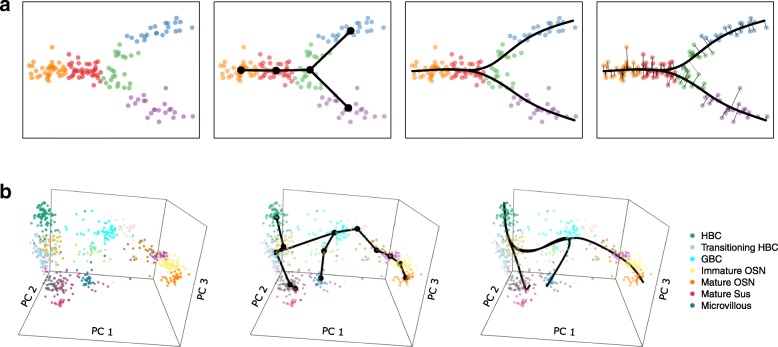
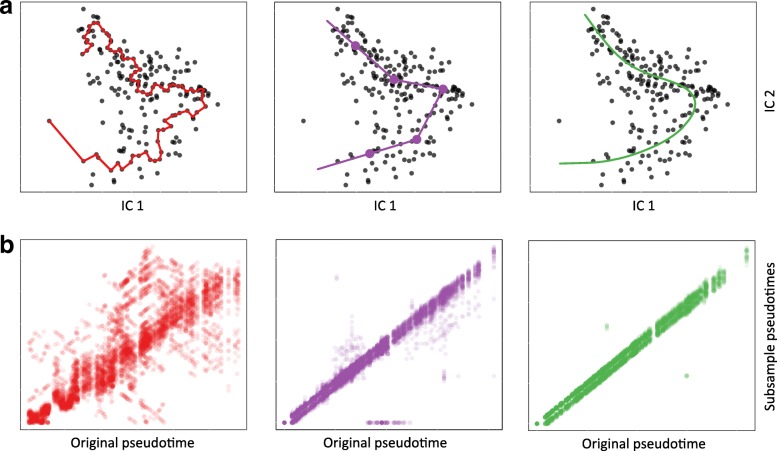
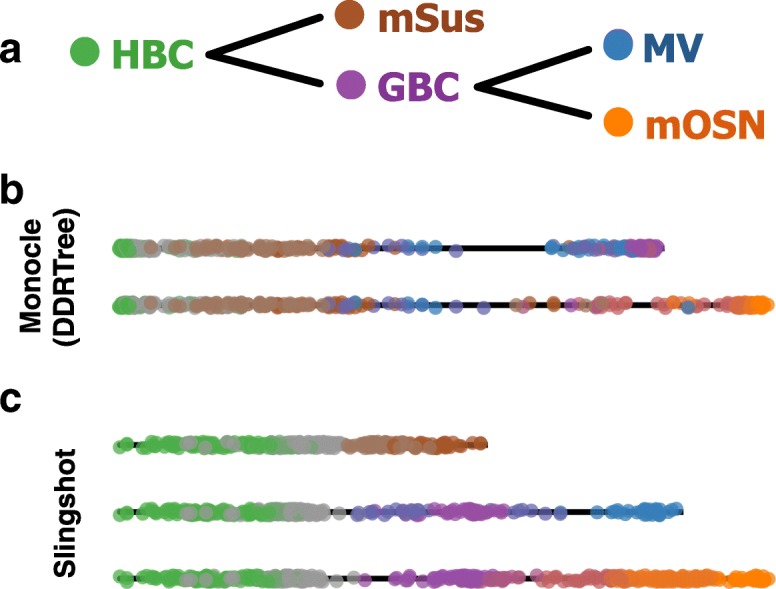
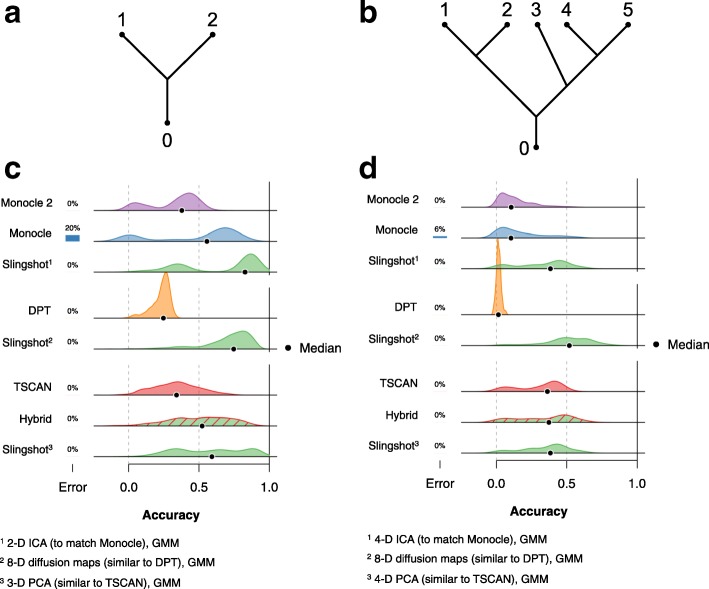
Verification
Claims the paper makes
The claims and statistics of this paper haven’t been checked yet.
Free: it reads the open-access text and checks the first 5 claims that cite a source we can check. Create a free account to check every claim.
Claims other papers make about this one
Each is checked against this paper’s own text: does it say what the citing paper says it does?
The source backs part of the claim, not all of it — or backs it for a different population, condition or comparison.
In the citing paper
“There is currently no consensus on whether or not to perform normalization over genes.”
From Current best practices in single-cell RNA-seq analysis: a tutorial (2019) · cites this paper as Street et al, 2018
Experimental — accuracy not yet measuredThe cited source says what the claim attributes to it.
In the citing paper
“Cluster similarity (partition-based graph abstraction (PAGA)) and pseudotime (slingshot.R)18 analyses indicate that immature monocytes differentiate into S100hi, ISGhi or inflammatory or intermediate monocytes, with S100hi and inflammatory clusters most strongly connecting to the differentiating monocyte cluster (Fig. 2h,i)”
From Single-cell atlas of human liver and blood immune cells across fatty liver disease stages reveals distinct signatures linked to liver dysfunction and fibrogenesis (2025) · cites this paper as [18]
Experimental — accuracy not yet measuredThe cited source says what the claim attributes to it.
In the citing paper
“Cell velocity (velocyto.R)20 and unbiased pseudotime (slingshot.R)18 analyses implied a de-differentiation pathway away from macrophages to the differentiating monocyte cluster that intensified in advanced MASH compared with early MASH (Extended Data Fig. 6)”
The cited source says what the claim attributes to it.
In the citing paper
“A slingshot pseudotime trajectory analysis54 revealed that factor 3 was a strong driver for the separation of RLs from foamy MLs, while ALs and MLs with nonfoamy microglia were more closely related to RLs (Fig. 5f).”
From Foamy microglia link oxylipins to disease progression in multiple sclerosis (2026) · cites this paper as [54]
The check wasn’t confident either way, so it gives no verdict — never disputed.
In the citing paper
“Selecting homeostatic microglia as the origin cluster, pseudotime analysis revealed a sequential developmental trajectory of homeostatic microglia into intermediate and DMAM0 microglia (Figure 1H). From the DMAM0 state, activated microglia then diverged into DMAM1 or DMAM2 states (Figure 1, H–J).”
From Peroxisomal integrity in demyelination-associated microglia enables cellular debris clearance and myelin renewal in mice (2026) · cites this paper as [17]
Experimental — accuracy not yet measured
2 more claims about this paper
Create a free account to see every claim other papers make about this one.
Self-check
Percentages, sums and reported differences re-computed from the paper’s own numbers.
The self-check needs the paper’s full text.
Citations
Cites
(2008) · Journal of Machine Learning Research · Cited by 33,051
Laplacian Eigenmaps for Dimensionality Reduction and Data Representation
Belkin, M., & Niyogi, P. (2003) · Neural Computation · doi:10.1162/089976603321780317 · Cited by 7,621
Trapnell, C., Cacchiarelli, D., Grimsby, J., Pokharel, P., Li, S., Morse, M., Lennon, N. J., Livak, K. J., Mikkelsen, T. S., & Rinn, J. L. (2014) · Nature Biotechnology · doi:10.1038/nbt.2859 · Cited by 7,314 · cited 19×
“For example, [3] examined the differentiation pattern of skeletal myoblasts, showing that their development into myocytes and mature myotubes follows a continuous lineage, rather than discrete steps.”
BackgroundMethodResultInfluentialOn the generalized distance in statistics
Mahalanobis, P. C. (1936) · DOAJ (DOAJ: Directory of Open Access Journals) · Cited by 6,068
mclust 5: Clustering, Classification and Density Estimation Using Gaussian Finite Mixture Models
Scrucca, L., Fop, M., Murphy, T., & Raftery, A. (2016) · The R Journal · doi:10.32614/rj-2016-021 · Cited by 2,892
Single-cell mRNA quantification and differential analysis with Census
Qiu, X., Hill, A., Packer, J., Lin, D., Ma, Y.-A., & Trapnell, C. (2017) · Nature Methods · doi:10.1038/nmeth.4150 · Cited by 1,918
Stochastic mRNA Synthesis in Mammalian Cells
Raj, A., Peskin, C. S., Tranchina, D., Vargas, D. Y., & Tyagi, S. (2006) · PLoS Biology · doi:10.1371/journal.pbio.0040309 · Cited by 1,737
A comparison of single-cell trajectory inference methods
Saelens, W., Cannoodt, R., Todorov, H., & Saeys, Y. (2019) · Nature Biotechnology · doi:10.1038/s41587-019-0071-9 · Cited by 1,670
The Technology and Biology of Single-Cell RNA Sequencing
Kolodziejczyk, A. A., Kim, J. K., Svensson, V., Marioni, J. C., & Teichmann, S. A. (2015) · Molecular Cell · doi:10.1016/j.molcel.2015.04.005 · Cited by 1,487 · cited 1×
“Newly-developed single-cell assays can give us a much more detailed picture [1].”
BackgroundDiffusion pseudotime robustly reconstructs lineage branching
Haghverdi, L., Büttner, M., Wolf, F. A., Buettner, F., & Theis, F. J. (2016) · Nature Methods · doi:10.1038/nmeth.3971 · Cited by 1,385
Cited by
Items 101–200 of 1,017
Androgen conspires with the CD8 + T cell exhaustion program and contributes to sex bias in cancer
Kwon, H., Schafer, J. M., Song, N.-J., Kaneko, S., Li, A., Xiao, T., Ma, A., Allen, C., Das, K., Zhou, L., et al. (2022) · Science Immunology · doi:10.1126/sciimmunol.abq2630 · Cited by 244
Concepts and limitations for learning developmental trajectories from single cell genomics
Tritschler, S., Büttner, M., Fischer, D. S., Lange, M., Bergen, V., Lickert, H., & Theis, F. J. (2019) · Development · doi:10.1242/dev.170506 · Cited by 241
“Therefore, data integration is moving to the forefront of the single cell field (Stuart and Satija, 2019; Butler et al., 2018; Haghverdi et al., 2018).”
BackgroundDefining the role of pulmonary endothelial cell heterogeneity in the response to acute lung injury
Niethamer, T. K., Stabler, C. T., Leach, J. P., Zepp, J. A., Morley, M. P., Babu, A., Zhou, S., & Morrisey, E. E. (2020) · eLife · doi:10.7554/elife.53072 · Cited by 241
“Feature plots demonstrate the expression level of each of the top 15 differentially expressed genes along curve 1 of the Slingshot pseudotime trajectory, superimposed on UMAP space to demonstrate cluster(s) in which each gene is expressed.”
MethodResultInfluentialIdentifying multicellular spatiotemporal organization of cells with SpaceFlow
Ren, H., Walker, B. L., Cang, Z., & Nie, Q. (2022) · Nature Communications · doi:10.1038/s41467-022-31739-w · Cited by 237
“To test the capability of SpaceFlow on single-cell resolution ST data with a large number of cells, we evaluated SpaceFlow on a Stereo-seq dataset from mouse olfactory bulb tissue, capturing 28243 genes across 18197 cells 7 , comparing with traditional pseudotime methods Seurat, Monocle, and Slingshot.”
MethodInfluentialA multidimensional coding architecture of the vagal interoceptive system
Zhao, Q., Yu, C. D., Wang, R., Xu, Q. J., Dai Pra, R., Zhang, L., & Chang, R. B. (2022) · Nature · doi:10.1038/s41586-022-04515-5 · Cited by 237
CellRank 2: unified fate mapping in multiview single-cell data
Weiler, P., Lange, M., Klein, M., Pe’er, D., & Theis, F. (2024) · Nature Methods · doi:10.1038/s41592-024-02303-9 · Cited by 236
Goldfarbmuren, K. C., Jackson, N. D., Sajuthi, S. P., Dyjack, N., Li, K. S., Rios, C. L., Plender, E. G., Montgomery, M. T., Everman, J. L., Bratcher, P. E., et al. (2020) · Nature Communications · doi:10.1038/s41467-020-16239-z · Cited by 235
Xu, G., Qi, F., Li, H., Yang, Q., Wang, H., Wang, X., Liu, X., Zhao, J., Liao, X., Liu, Y., et al. (2020) · Cell Discovery · doi:10.1038/s41421-020-00225-2 · Cited by 233
Lopez-Anido, C. B., Vatén, A., Smoot, N. K., Sharma, N., Guo, V., Gong, Y., Anleu Gil, M. X., Weimer, A. K., & Bergmann, D. C. (2021) · Developmental Cell · doi:10.1016/j.devcel.2021.03.014 · Cited by 231
A spatially resolved brain region- and cell type-specific isoform atlas of the postnatal mouse brain
Joglekar, A., Prjibelski, A., Mahfouz, A., Collier, P., Lin, S., Schlusche, A. K., Marrocco, J., Williams, S. R., Haase, B., Hayes, A., et al. (2021) · Nature Communications · doi:10.1038/s41467-020-20343-5 · Cited by 229
Self-citationObservation weights unlock bulk RNA-seq tools for zero inflation and single-cell applications
Van den Berge, K., Perraudeau, F., Soneson, C., Love, M. I., Risso, D., Vert, J.-P., Robinson, M. D., Dudoit, S., & Clement, L. (2018) · Genome Biology · doi:10.1186/s13059-018-1406-4 · Cited by 228
Self-citationWhittle Pseudo-Maximum Likelihood Estimation for Nonstationary Time Series
Velasco, C., & Robinson, P. M. (2000) · Journal of the American Statistical Association · doi:10.1080/01621459.2000.10474323 · Cited by 228
Sun, S., Zhu, J., Ma, Y., & Zhou, X. (2019) · Genome biology · doi:10.1186/s13059-019-1898-6 · Cited by 225
Tietscher, S., Wagner, J., Anzeneder, T., Langwieder, C., Rees, M., Sobottka, B., de Souza, N., & Bodenmiller, B. (2023) · Nature Communications · doi:10.1038/s41467-022-35238-w · Cited by 221
Systemic vaccination induces CD8+ T cells and remodels the tumor microenvironment
Baharom, F., Ramirez-Valdez, R. A., Khalilnezhad, A., Khalilnezhad, S., Dillon, M., Hermans, D., Fussell, S., Tobin, K. K. S., Dutertre, C.-A., Lynn, G. M., et al. (2022) · Cell · doi:10.1016/j.cell.2022.10.006 · Cited by 219
Karacosta, L. G., Anchang, B., Ignatiadis, N., Kimmey, S. C., Benson, J. A., Shrager, J. B., Tibshirani, R., Bendall, S. C., & Plevritis, S. K. (2019) · Nature Communications · doi:10.1038/s41467-019-13441-6 · Cited by 218
Advances and Opportunities in Single-Cell Transcriptomics for Plant Research
Seyfferth, C., Renema, J., Wendrich, J. R., Eekhout, T., Seurinck, R., Vandamme, N., Blob, B., Saeys, Y., Helariutta, Y., Birnbaum, K. D., et al. (2021) · Annual Review of Plant Biology · doi:10.1146/annurev-arplant-081720-010120 · Cited by 215
Refining colorectal cancer classification and clinical stratification through a single-cell atlas
Khaliq, A. M., Erdogan, C., Kurt, Z., Turgut, S. S., Grunvald, M. W., Rand, T., Khare, S., Borgia, J. A., Hayden, D. M., Pappas, S. G., et al. (2022) · Genome Biology · doi:10.1186/s13059-022-02677-z · Cited by 214
“We performed slighshot wrapper function with the UMAP dimensionality reduction and cluster labels as in Seurat object objects to identify the trajectory in our study [41].”
MethodThe molecular evolution of spermatogenesis across mammals
Murat, F., Mbengue, N., Winge, S. B., Trefzer, T., Leushkin, E., Sepp, M., Cardoso-Moreira, M., Schmidt, J., Schneider, C., Mößinger, K., et al. (2023) · Nature · doi:10.1038/s41586-022-05547-7 · Cited by 210
Benchmarking Computational Doublet-Detection Methods for Single-Cell RNA Sequencing Data
Xi, N. M., & Li, J. J. (2021) · Cell Systems · doi:10.1016/j.cels.2020.11.008 · Cited by 208
PGE2 limits effector expansion of tumour-infiltrating stem-like CD8+ T cells
Lacher, S. B., Dörr, J., de Almeida, G. P., Hönninger, J., Bayerl, F., Hirschberger, A., Pedde, A.-M., Meiser, P., Ramsauer, L., Rudolph, T. J., et al. (2024) · Nature · doi:10.1038/s41586-024-07254-x · Cited by 207
Epigenetic regulation during cancer transitions across 11 tumour types
Terekhanova, N. V., Karpova, A., Liang, W.-W., Strzalkowski, A., Chen, S., Li, Y., Southard-Smith, A. N., Iglesia, M. D., Wendl, M. C., Jayasinghe, R. G., et al. (2023) · Nature · doi:10.1038/s41586-023-06682-5 · Cited by 207
“For the trajectory analysis of the nine paired primary/ metastatic snATAC-seq samples, we used the slingshot R-package (v.2.5.1), which implements a top performing trajectory inference method in a large trajectory inference benchmark 98,99 .”
MethodInfluentialBalzer, M. S., Doke, T., Yang, Y.-W., Aldridge, D. L., Hu, H., Mai, H., Mukhi, D., Ma, Z., Shrestha, R., Palmer, M. B., et al. (2022) · Nature Communications · doi:10.1038/s41467-022-31772-9 · Cited by 205
Single-cell analysis of prenatal and postnatal human cortical development
Velmeshev, D., Perez, Y., Yan, Z., Valencia, J. E., Castaneda-Castellanos, D. R., Wang, L., Schirmer, L., Mayer, S., Wick, B., Wang, S., et al. (2023) · Science · doi:10.1126/science.adf0834 · Cited by 204
Garcia-Bonilla, L., Shahanoor, Z., Sciortino, R., Nazarzoda, O., Racchumi, G., Iadecola, C., & Anrather, J. (2024) · Nature Immunology · doi:10.1038/s41590-023-01711-x · Cited by 200
Liu, Y., Dai, Y., & Wang, L. (2025) · Cancer Cell · doi:10.1016/j.ccell.2025.12.009 · Cited by 199
Tang, S., Yao, L., Ruan, J., Kang, J., Cao, Y., Nie, X., Lan, W., Zhu, Z., Han, W., Liu, Y., et al. (2024) · Science Translational Medicine · doi:10.1126/scitranslmed.adf4590 · Cited by 200
Conway, B. R., O’Sullivan, E. D., Cairns, C., O’Sullivan, J., Simpson, D. J., Salzano, A., Connor, K., Ding, P., Humphries, D., Stewart, K., et al. (2020) · Journal of the American Society of Nephrology · doi:10.1681/asn.2020060806 · Cited by 196
Temporal modelling using single-cell transcriptomics
Ding, J., Sharon, N., & Bar-Joseph, Z. (2022) · Nature Reviews Genetics · doi:10.1038/s41576-021-00444-7 · Cited by 195
Triana, S., Vonficht, D., Jopp-Saile, L., Raffel, S., Lutz, R., Leonce, D., Antes, M., Hernández-Malmierca, P., Ordoñez-Rueda, D., Ramasz, B., et al. (2021) · Nature Immunology · doi:10.1038/s41590-021-01059-0 · Cited by 195
Thomas, J. R., Appios, A., Zhao, X., Dutkiewicz, R., Donde, M., Lee, C. Y. C., Naidu, P., Lee, C., Cerveira, J., Liu, B., et al. (2021) · Journal of Experimental Medicine · doi:10.1084/jem.20200891 · Cited by 195
“with the Slingshot R package (Street et al., 2018), and the cal-”
MethodSingle nuclei RNA-seq of mouse placental labyrinth development
Marsh, B., & Blelloch, R. (2020) · eLife · doi:10.7554/elife.60266 · Cited by 194
The local microenvironment drives activation of neutrophils in human brain tumors
Maas, R. R., Soukup, K., Fournier, N., Massara, M., Galland, S., Kornete, M., Wischnewski, V., Lourenco, J., Croci, D., Álvarez-Prado, Á. F., et al. (2023) · Cell · doi:10.1016/j.cell.2023.08.043 · Cited by 194
“0).(92) Cluster 2 was selected as the origin.”
BackgroundMechanisms of stretch-mediated skin expansion at single-cell resolution
Aragona, M., Sifrim, A., Malfait, M., Song, Y., Van Herck, J., Dekoninck, S., Gargouri, S., Lapouge, G., Swedlund, B., Dubois, C., et al. (2020) · Nature · doi:10.1038/s41586-020-2555-7 · Cited by 193
Lange, M., Granados, A. A., VijayKumar, S., Bragantini, J., Ancheta, S., Kim, Y. J., Santhosh, S., Borja, M., Kobayashi, H., McGeever, A., et al. (2024) · Cell · doi:10.1016/j.cell.2024.09.047 · Cited by 189
Zhang, S., Cui, Y., Ma, X., Yong, J., Yan, L., Yang, M., Ren, J., Tang, F., Wen, L., & Qiao, J. (2020) · Nature Communications · doi:10.1038/s41467-020-19012-4 · Cited by 186
Distinct developmental pathways from blood monocytes generate human lung macrophage diversity
Evren, E., Ringqvist, E., Tripathi, K. P., Sleiers, N., Rives, I. C., Alisjahbana, A., Gao, Y., Sarhan, D., Halle, T., Sorini, C., et al. (2021) · Immunity · doi:10.1016/j.immuni.2020.12.003 · Cited by 185
Stévant, I., Kühne, F., Greenfield, A., Chaboissier, M.-C., Dermitzakis, E. T., & Nef, S. (2019) · Cell Reports · doi:10.1016/j.celrep.2019.02.069 · Cited by 185
Mapping spatially resolved transcriptomes in human and mouse pulmonary fibrosis
Franzén, L., Lindvall, M. O., Hühn, M. H., Ptasinski, V., Setyo, L. C., Keith, B. P., Collin, A., Oag, S., Volckaert, T., Borde, A., et al. (2024) · Nature Genetics · doi:10.1038/s41588-024-01819-2 · Cited by 184
An atlas of epithelial cell states and plasticity in lung adenocarcinoma
Han, G., Sinjab, A., Rahal, Z., Lynch, A. M., Treekitkarnmongkol, W., Liu, Y., Serrano, A. G., Feng, J., Liang, K., Khan, K., et al. (2024) · Nature · doi:10.1038/s41586-024-07113-9 · Cited by 183
“Slingshot (v.2.6.0) pseudotime prediction was performed using slingshot function with reduceDim parameter set to ‘PCA’ and other parameters set to defaults.”
MethodInfluentialGenomic, epigenomic, and biophysical cues controlling the emergence of the lung alveolus
Zepp, J. A., Morley, M. P., Loebel, C., Kremp, M. M., Chaudhry, F. N., Basil, M. C., Leach, J. P., Liberti, D. C., Niethamer, T. K., Ying, Y., et al. (2021) · Science · doi:10.1126/science.abc3172 · Cited by 183
Failure of human rhombic lip differentiation underlies medulloblastoma formation
Hendrikse, L. D., Haldipur, P., Saulnier, O., Millman, J., Sjoboen, A. H., Erickson, A. W., Ong, W., Gordon, V. D., Coudière-Morrison, L., Mercier, A. L., et al. (2022) · Nature · doi:10.1038/s41586-022-05215-w · Cited by 182
Heming, M., Li, X., Räuber, S., Mausberg, A. K., Börsch, A.-L., Hartlehnert, M., Singhal, A., Lu, I.-N., Fleischer, M., Szepanowski, F., et al. (2021) · Immunity · doi:10.1016/j.immuni.2020.12.011 · Cited by 182
Self-citationLiu, Z., Zhang, Y., Ma, N., Yang, Y., Ma, Y., Wang, F., Wang, Y., Wei, J., Chen, H., Tartarone, A., et al. (2023) · Cancer Cell · doi:10.1016/j.ccell.2023.09.011 · Cited by 182
Verginadis, I. I., Avgousti, H., Monslow, J., Skoufos, G., Chinga, F., Kim, K., Leli, N. M., Karagounis, I. V., Bell, B. I., Velalopoulou, A., et al. (2022) · Nature Cell Biology · doi:10.1038/s41556-022-00918-8 · Cited by 181
Trem2 promotes foamy macrophage lipid uptake and survival in atherosclerosis
Patterson, M. T., Firulyova, M. M., Xu, Y., Hillman, H., Bishop, C., Zhu, A., Hickok, G. H., Schrank, P. R., Ronayne, C. E., Caillot, Z., et al. (2023) · Nature Cardiovascular Research · doi:10.1038/s44161-023-00354-3 · Cited by 180
“To predict differentiation trajectories between intima myeloid cell subsets, we applied the slingshot algorithm from dynverse 30,31 to our integrated dataset.”
MethodDecoding the tumor microenvironment with spatial technologies
Walsh, L. A., & Quail, D. F. (2023) · Nature Immunology · doi:10.1038/s41590-023-01678-9 · Cited by 180
Optimized human intestinal organoid model reveals interleukin-22-dependency of paneth cell formation
He, G.-W., Lin, L., DeMartino, J., Zheng, X., Staliarova, N., Dayton, T., Begthel, H., van de Wetering, W. J., Bodewes, E., van Zon, J., et al. (2022) · Cell Stem Cell · doi:10.1016/j.stem.2022.08.002 · Cited by 178
High-throughput single-сell sequencing in cancer research
Jia, Q., Chu, H., Jin, Z., Long, H., & Zhu, B. (2022) · Signal Transduction and Targeted Therapy · doi:10.1038/s41392-022-00990-4 · Cited by 178
Cardiac fibroblasts regulate the development of heart failure via Htra3-TGF-β-IGFBP7 axis
Ko, T., Nomura, S., Yamada, S., Fujita, K., Fujita, T., Satoh, M., Oka, C., Katoh, M., Ito, M., Katagiri, M., et al. (2022) · Nature Communications · doi:10.1038/s41467-022-30630-y · Cited by 176
Farup, J., Just, J., de Paoli, F. V., Lin, L., Jensen, J., Billeskov, T. B., Sánchez-Román, I., Cömert, C., Møller, A. B., Madaro, L., et al. (2021) · Cell Metabolism · doi:10.1016/j.cmet.2021.10.001 · Cited by 176
A conserved superlocus regulates above- and belowground root initiation
Omary, M., Gil-Yarom, N., Yahav, C., Steiner, E., Hendelman, A., & Efroni, I. (2022) · Science · doi:10.1126/science.abf4368 · Cited by 176
Horgusluoglu, E., Neff, R., Song, W., Wang, M., Wang, Q., Arnold, M., Krumsiek, J., Galindo‐Prieto, B., Ming, C., Nho, K., et al. (2022) · Alzheimer's & Dementia · doi:10.1002/alz.12468 · Cited by 175
Single-cell CRISPR screens in vivo map T cell fate regulomes in cancer
Zhou, P., Shi, H., Huang, H., Sun, X., Yuan, S., Chapman, N. M., Connelly, J. P., Lim, S. A., Saravia, J., KC, A., et al. (2023) · Nature · doi:10.1038/s41586-023-06733-x · Cited by 175
Fiorenzano, A., Sozzi, E., Birtele, M., Kajtez, J., Giacomoni, J., Nilsson, F., Bruzelius, A., Sharma, Y., Zhang, Y., Mattsson, B., et al. (2021) · Nature Communications · doi:10.1038/s41467-021-27464-5 · Cited by 174
Kim, R., An, M., Lee, H., Mehta, A., Heo, Y. J., Kim, K.-M., Lee, S.-Y., Moon, J., Kim, S. T., Min, B.-H., et al. (2022) · Cancer Discovery · doi:10.1158/2159-8290.cd-21-0888 · Cited by 174
“37; Fig.”
Harris, L., Rigo, P., Stiehl, T., Gaber, Z. B., Austin, S. H. L., Masdeu, M. D. M., Edwards, A., Urbán, N., Marciniak-Czochra, A., & Guillemot, F. (2021) · Cell Stem Cell · doi:10.1016/j.stem.2021.01.003 · Cited by 173
A common framework of monocyte-derived macrophage activation
Sanin, D. E., Ge, Y., Marinković, E., Kabat, A. M., Castoldi, Â., Caputa, G., Grzes, K. M., Curtis, J. D., Thompson, E. A., Willenborg, S., et al. (2022) · Science Immunology · doi:10.1126/sciimmunol.abl7482 · Cited by 171
Tumour vasculature at single-cell resolution
Pan, X., Li, X., Dong, L., Liu, T., Zhang, M., Zhang, L., Zhang, X., Huang, L., Shi, W., Sun, H., et al. (2024) · Nature · doi:10.1038/s41586-024-07698-1 · Cited by 171
“Diffusion Map 14 , Slingshot 71 , Monocle3 72 and VIA 73 were used to perform cell trajectory inference.”
InfluentialMachado, L., Geara, P., Camps, J., Dos Santos, M., Teixeira-Clerc, F., Van Herck, J., Varet, H., Legendre, R., Pawlotsky, J.-M., Sampaolesi, M., et al. (2021) · Cell Stem Cell · doi:10.1016/j.stem.2021.01.017 · Cited by 170
“2) (Stuart et al., 2019), Pooling of intact and dissociated nuclei was performed by merging the raw data per tissue followed by normalisation.”
MethodA single-cell transcriptome atlas profiles early organogenesis in human embryos
Xu, Y., Zhang, T., Zhou, Q., Hu, M., Qi, Y., Xue, Y., Nie, Y., Wang, L., Bao, Z., & Shi, W. (2023) · Nature Cell Biology · doi:10.1038/s41556-023-01108-w · Cited by 170
Sci-fate characterizes the dynamics of gene expression in single cells
Cao, J., Zhou, W., Steemers, F., Trapnell, C., & Shendure, J. (2020) · Nature Biotechnology · doi:10.1038/s41587-020-0480-9 · Cited by 170
Multi-omic profiling reveals age-related immune dynamics in healthy adults
Gong, Q., Sharma, M., Glass, M. C., Kuan, E. L., Chander, A., Singh, M., Graybuck, L. T., Thomson, Z., LaFrance, C. M., Zaim, S. R., et al. (2025) · Nature · doi:10.1038/s41586-025-09686-5 · Cited by 169
Single-cell transcriptomic and spatial landscapes of the developing human pancreas
Olaniru, O. E., Kadolsky, U. D., Kannambath, S., Vaikkinen, H., Fung, K., Dhami, P., & Persaud, S. J. (2022) · Cell Metabolism · doi:10.1016/j.cmet.2022.11.009 · Cited by 168
Molecular and cellular dynamics of the developing human neocortex
Wang, L., Wang, C., Moriano, J. A., Chen, S., Zuo, G., Cebrián-Silla, A., Zhang, S., Mukhtar, T., Wang, S., Song, M., et al. (2025) · Nature · doi:10.1038/s41586-024-08351-7 · Cited by 167
A comprehensive human embryo reference tool using single-cell RNA-sequencing data
Zhao, C., Plaza Reyes, A., Schell, J. P., Weltner, J., Ortega, N. M., Zheng, Y., Björklund, Å. K., Baqué-Vidal, L., Sokka, J., Trokovic, R., et al. (2025) · Nature Methods · doi:10.1038/s41592-024-02493-2 · Cited by 167
“Pseudo-time trajectory was computed using the R package slingshot (v.2.6.0) 27 , facilitating computation of lineage structures in a low-dimensional space.”
InfluentialMazzurana, L., Czarnewski, P., Jonsson, V., Wigge, L., Ringnér, M., Williams, T. C., Ravindran, A., Björklund, Å. K., Säfholm, J., Nilsson, G., et al. (2021) · Cell Research · doi:10.1038/s41422-020-00445-x · Cited by 167
FOXA2 drives lineage plasticity and KIT pathway activation in neuroendocrine prostate cancer
Han, M., Li, F., Zhang, Y., Dai, P., He, J., Li, Y., Zhu, Y., Zheng, J., Huang, H., Bai, F., et al. (2022) · Cancer Cell · doi:10.1016/j.ccell.2022.10.011 · Cited by 166
De Vlaminck, K., Van Hove, H., Kancheva, D., Scheyltjens, I., Pombo Antunes, A. R., Bastos, J., Vara-Perez, M., Ali, L., Mampay, M., Deneyer, L., et al. (2022) · Immunity · doi:10.1016/j.immuni.2022.09.005 · Cited by 166
Single-Cell Immune Landscape of Human Recurrent Miscarriage
Wang, F., Jia, W., Fan, M., Shao, X., Li, Z., Liu, Y., Ma, Y., Li, Y.-X., Li, R., Tu, Q., et al. (2021) · Genomics, Proteomics & Bioinformatics · doi:10.1016/j.gpb.2020.11.002 · Cited by 166
“[26] and general additive model (GAM) presenting top 100 genes whose expression changed in a continuous manner over pseudotime of dNK development (Figure S4).”
BackgroundMutant EZH2 Induces a Pre-malignant Lymphoma Niche by Reprogramming the Immune Response
Béguelin, W., Teater, M., Meydan, C., Hoehn, K. B., Phillip, J. M., Soshnev, A. A., Venturutti, L., Rivas, M. A., Calvo-Fernández, M. T., Gutierrez, J., et al. (2020) · Cancer Cell · doi:10.1016/j.ccell.2020.04.004 · Cited by 165
Human Microglia Show Unique Transcriptional Changes in Alzheimer's Disease
Prater, K. E., Green, K. J., Mamde, S., Sun, W., Cochoit, A., Smith, C. L., Chiou, K. L., Heath, L., Rose, S. E., Wiley, J., et al. (2023) · Nature Aging · doi:10.1038/s43587-023-00424-y · Cited by 164
Deep generative modeling of transcriptional dynamics for RNA velocity analysis in single cells
Gayoso, A., Weiler, P., Lotfollahi, M., Klein, D., Hong, J., Streets, A., Theis, F. J., & Yosef, N. (2023) · Nature Methods · doi:10.1038/s41592-023-01994-w · Cited by 164
Self-citationSingle-cell genomics and regulatory networks for 388 human brains
Emani, P. S., Liu, J. J., Clarke, D., Jensen, M., Warrell, J., Gupta, C., Meng, R., Lee, C. Y., Xu, S., Dursun, C., et al. (2024) · Science · doi:10.1126/science.adi5199 · Cited by 163
Next-generation computational tools for interrogating cancer immunity
Finotello, F., Rieder, D., Hackl, H., & Trajanoski, Z. (2019) · Nature Reviews Genetics · doi:10.1038/s41576-019-0166-7 · Cited by 162
T resident helper cells promote humoral responses in the lung
Swarnalekha, N., Schreiner, D., Litzler, L. C., Iftikhar, S., Kirchmeier, D., Künzli, M., Son, Y. M., Sun, J., Moreira, E. A., & King, C. G. (2021) · Science Immunology · doi:10.1126/sciimmunol.abb6808 · Cited by 162
Polony gels enable amplifiable DNA stamping and spatial transcriptomics of chronic pain
Fu, X., Sun, L., Dong, R., Chen, J. Y., Silakit, R., Condon, L. F., Lin, Y., Lin, S., Palmiter, R. D., & Gu, L. (2022) · Cell · doi:10.1016/j.cell.2022.10.021 · Cited by 161
Interleukin-36γ–producing macrophages drive IL-17–mediated fibrosis
Sommerfeld, S. D., Cherry, C., Schwab, R. M., Chung, L., Maestas, D. R., Laffont, P., Stein, J. E., Tam, A., Ganguly, S., Housseau, F., et al. (2019) · Science Immunology · doi:10.1126/sciimmunol.aax4783 · Cited by 161
Vannan, A., Lyu, R., Williams, A. L., Negretti, N. M., Mee, E. D., Hirsh, J., Hirsh, S., Hadad, N., Nichols, D. S., Calvi, C. L., et al. (2025) · Nature Genetics · doi:10.1038/s41588-025-02080-x · Cited by 161
“36; Fig.”
Spatial oncology: Translating contextual biology to the clinic
Gong, D. H., Arbesfeld-Qiu, J. M., Perrault, E. N., Bae, J. W., & Hwang, W. L. (2024) · Cancer Cell · doi:10.1016/j.ccell.2024.09.001 · Cited by 160
Kalinski, A. L., Yoon, C., Huffman, L. D., Duncker, P. C., Kohen, R., Passino, R., Hafner, H., Johnson, C., Kawaguchi, R., Carbajal, K. S., et al. (2020) · eLife · doi:10.7554/elife.60223 · Cited by 160
Harnessing matrix stiffness to engineer a bone marrow niche for hematopoietic stem cell rejuvenation
Zhang, X., Cao, D., Xu, L., Xu, Y., Gao, Z., Pan, Y., Jiang, M. Z., Wei, Y., Wang, L., Liao, Y., et al. (2023) · Cell stem cell · doi:10.1016/j.stem.2023.03.005 · Cited by 160
Self-patterning of human stem cells into post-implantation lineages
Pedroza, M., Gassaloglu, S. I., Dias, N., Zhong, L., Hou, T.-C. J., Kretzmer, H., Smith, Z. D., & Sözen, B. (2023) · Nature · doi:10.1038/s41586-023-06354-4 · Cited by 161
Computational approaches and challenges in spatial transcriptomics
Fang, S., Chen, B., Zhang, Y., Sun, H., Liu, L., Liu, S., Li, Y., & Xu, X. (2023) · Genomics, Proteomics & Bioinformatics · doi:10.1016/j.gpb.2022.10.001 · Cited by 159
Defining the Identity and Dynamics of Adult Gastric Isthmus Stem Cells
한승민, Fink, J., Jörg, D. J., Lee, E., Yum, M. K., Chatzeli, L., Merker, S. R., Josserand, M., Trendafilova, T., Andersson-Rolf, A., et al. (2019) · Cell stem cell · doi:10.1016/j.stem.2019.07.008 · Cited by 159
Maitra, M., Mitsuhashi, H., Rahimian, R., Chawla, A., Yang, J., Fiori, L. M., Davoli, M. A., Perlman, K., Aouabed, Z., Mash, D. C., et al. (2023) · Nature Communications · doi:10.1038/s41467-023-38530-5 · Cited by 159
“We used “ slingshot ” 91 to build a pseudotime trajectory with our OL nuclei (Supplementary Fig.”
Gerber, D., Pereira, J. A., Gerber, J., Tan, G., Dimitrieva, S., Yángüez, E., & Suter, U. (2021) · eLife · doi:10.7554/elife.58591 · Cited by 156
Metformin prevents age-associated ovarian fibrosis by modulating the immune landscape in female mice
Landry, D. A., Yakubovich, E., Cook, D. P., Fasih, S., Upham, J., & Vanderhyden, B. C. (2022) · Science Advances · doi:10.1126/sciadv.abq1475 · Cited by 158
Cell lineage and communication network inference via optimization for single-cell transcriptomics
Wang, S., Karikomi, M., MacLean, A. L., & Nie, Q. (2019) · Nucleic Acids Research · doi:10.1093/nar/gkz204 · Cited by 154
Benchmarking principal component analysis for large-scale single-cell RNA-sequencing
Tsuyuzaki, K., Sato, H., Sato, K., & Nikaido, I. (2020) · Genome biology · doi:10.1186/s13059-019-1900-3 · Cited by 153
Tang, Z., Bai, Y., Fang, Q., Yuan, Y., Zeng, Q., Chen, S., Xu, T., Chen, J., Tan, L., Wang, C., et al. (2025) · Cancer Cell · doi:10.1016/j.ccell.2025.03.011 · Cited by 153
Carraro, G., Mulay, A., Yao, C., Mizuno, T., Konda, B., Petrov, M., Lafkas, D., Arron, J. R., Hogaboam, C. M., Chen, P., et al. (2020) · American Journal of Respiratory and Critical Care Medicine · doi:10.1164/rccm.201904-0792oc · Cited by 153
Lamarthée, B., Callemeyn, J., Herck, Y. V., Antoranz, A., Anglicheau, D., Boada, P., Becker, J. U., Debyser, T., Smet, F. D., Vusser, K. D., et al. (2023) · Nature Communications · doi:10.1038/s41467-023-39859-7 · Cited by 153
Miller, T. E., Lareau, C. A., Verga, J. A., DePasquale, E. A. K., Liu, V., Ssozi, D., Sandor, K., Yin, Y., Ludwig, L. S., El Farran, C. A., et al. (2022) · Nature Biotechnology · doi:10.1038/s41587-022-01210-8 · Cited by 152
Rodor, J., Chen, S.-H., Scanlon, J. P., Monteiro, J. P., Caudrillier, A., Sweta, S., Stewart, K. R., Shmakova, A., Dobie, R., Henderson, B. E. P., et al. (2021) · Cardiovascular Research · doi:10.1093/cvr/cvab296 · Cited by 152
Dissecting Cellular Heterogeneity Using Single-Cell RNA Sequencing.
Choi, Y. H., & Kim, J. K. (2019) · PubMed Central · doi:10.14348/molcells.2019.2446 · Cited by 152
Notaras, M., Lodhi, A., Dündar, F., Collier, P., Sayles, N. M., Tilgner, H., Greening, D., & Colak, D. (2022) · Molecular Psychiatry · doi:10.1038/s41380-021-01316-6 · Cited by 150
Stepwise cell fate decision pathways during osteoclastogenesis at single-cell resolution
Tsukasaki, M., Huynh, N. C., Okamoto, K., Muro, R., Terashima, A., Kurikawa, Y., Komatsu, N., Pluemsakunthai, W., Nitta, T., Abe, T., et al. (2020) · Nature Metabolism · doi:10.1038/s42255-020-00318-y · Cited by 148
Remodeling of light and dark zone follicular dendritic cells governs germinal center responses
Pikor, N. B., Mörbe, U., Lütge, M., Gil‐Cruz, C., Perez‐Shibayama, C., Novković, M., Cheng, H., Nombela‐Arrieta, C., Nagasawa, T., Linterman, M. A., et al. (2020) · Nature Immunology · doi:10.1038/s41590-020-0672-y · Cited by 148
scDesign3 generates realistic in silico data for multimodal single-cell and spatial omics
Song, D., Wang, Q., Yan, G., Liu, T., Sun, T., & Li, J. J. (2024) · Nature Biotechnology · doi:10.1038/s41587-023-01772-1 · Cited by 147
Metadata
- Authors
- Street, K., Risso, D., Fletcher, R. B., Das, D., Ngai, J., Yosef, N., Purdom, E., & Dudoit, S.
- Affiliations
- University of California, Berkeley (US)
- Weill Cornell Medicine (US)
- Corresponding author
- Dudoit, Sandrine
- ORCID
- Venue
- BMC Genomics
- Published
- 2018-06-19
- Volume
- 19
- Issue
- 1
- Pages
- 477-477
- ISSN
- 1471-2164 (ISSN-L)
- PMC
- PMC6007078
- OpenAlex
- W2951799803
- Cited by
- 3,159
- References
- 34
- Citations by year
- 2026: 596 · 2025: 605 · 2024: 606 · 2023: 409 · 2022: 379 · 2021: 312 · 2020: 174 · 2019: 49 · 2018: 24
- FWCI
- 50.51
- Type
- journal article
- Language
- en
- Open access
- gold
- doi.org
- Licence
- cc-by
- creativecommons.org/licenses/by/4.0/ (tdm)
- creativecommons.org/licenses/by/4.0/ (vor)
- Locations
- BMC Genomics (publishedVersion, cc-by)
- Europe PMC (PubMed Central) (publishedVersion, other-oa)
- PubMed Central (publishedVersion, cc-by)
- PubMed (publishedVersion)
- eScholarship (California Digital Library) (submittedVersion, cc-by)
- DOAJ (DOAJ: Directory of Open Access Journals) (submittedVersion, cc-by-sa)
- Padua Research Archive (University of Padova) (submittedVersion, cc-by)
- Funders
- National Institute of Mental Health (U01MH105979)
- National Institute on Deafness and Other Communication Disorders (RO1DC007235)
- National Center for Research Resources (S10RR029668)
- National Institute on Aging (K01AG045344)
- National Human Genome Research Institute (T32HG000047)
- Thomas and Stacey Siebel Foundation
- California Institute for Regenerative Medicine
- Topics
- Life Sciences › Biochemistry, Genetics and Molecular Biology › Molecular Biology › Single-cell and spatial transcriptomics
- Life Sciences › Biochemistry, Genetics and Molecular Biology › Molecular Biology › Gene Regulatory Network Analysis
- Life Sciences › Biochemistry, Genetics and Molecular Biology › Molecular Biology › Gene expression and cancer classification
- Keywords
- single-cell transcriptomics, stem cell differentiation, developmental trajectories, single-cell gene expression, temporal gene expression dynamics
- MeSH terms
- Humans, Software, Cluster Analysis, Cell Lineage, Gene Expression Profiling, Myoblasts, Skeletal, Single-Cell Analysis
About these checks
Registry, retraction, Cites and statistics results are computed, not judged, with one exception: a printed reference that no index lists is read once by a model before it counts as a citation error. Claims are extracted by a model and kept only when their quote appears verbatim in the text; each cited source is then checked, with a model’s help, for whether it says what the claim relies on. Those verdicts can be wrong — read the claim’s quote and the cited source before relying on one.
Statistics and arithmetic are recomputed, not judged.
Confidence bands are shown only for fields calibrated on our annotated test set. None is calibrated yet, so no band is shown.
What counts as a claim ›How we measure confidence ›How we check this ›
Are you an author, or do you see a problem with this page? Request a review
Data sources
Bibliographic data: Semantic Scholar, OpenAlex, Crossref.
Contains information from the Semantic Scholar Academic Graph Datasets, made available under the ODC Attribution License (ODC-BY 1.0).
Semantic Scholar’s data is described in: Kinney, R., et al. (2023). The Semantic Scholar Open Data Platform. arXiv:2301.10140.
