

Slingshot: cell lineage and pseudotime inference for single-cell transcriptomics
Open accessPublished version of a preprint
The DOI matches its Crossref record; 39 of the 39 references it cites were found in a registry or an index.
Abstract
BACKGROUND: Single-cell transcriptomics allows researchers to investigate complex communities of heterogeneous cells. It can be applied to stem cells and their descendants in order to chart the progression from multipotent progenitors to fully differentiated cells. While a variety of statistical and computational methods have been proposed for inferring cell lineages, the problem of accurately characterizing multiple branching lineages remains difficult to solve. RESULTS: We introduce Slingshot, a novel method for inferring cell lineages and pseudotimes from single-cell gene expression data. In previously published datasets, Slingshot correctly identifies the biological signal for one to three branching trajectories. Additionally, our simulation study shows that Slingshot infers more accurate pseudotimes than other leading methods. CONCLUSIONS: Slingshot is a uniquely robust and flexible tool which combines the highly stable techniques necessary for noisy single-cell data with the ability to identify multiple trajectories. Accurate lineage inference is a critical step in the identification of dynamic temporal gene expression.
Overview
The claims and statistics of this paper haven’t been checked yet.
Free: it reads the open-access text and checks the first 5 claims that cite a source we can check. Create a free account to check every claim.
Integrity signals
Registry
Cites
Statistics
Figures
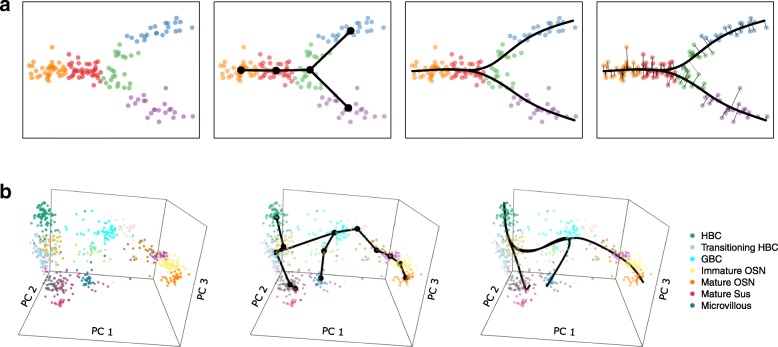
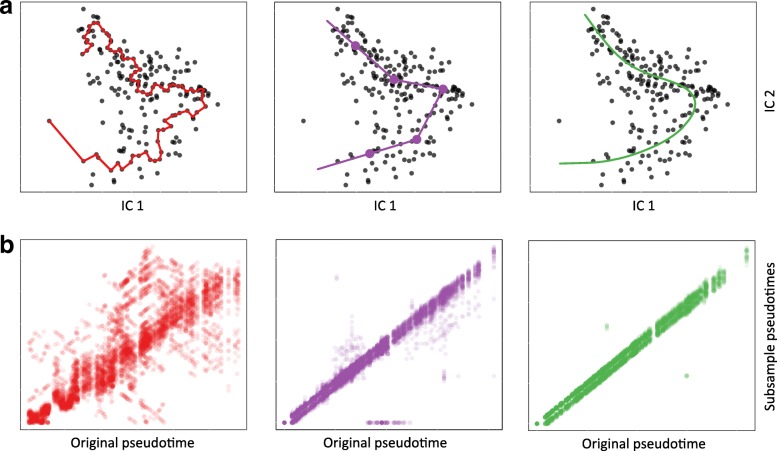
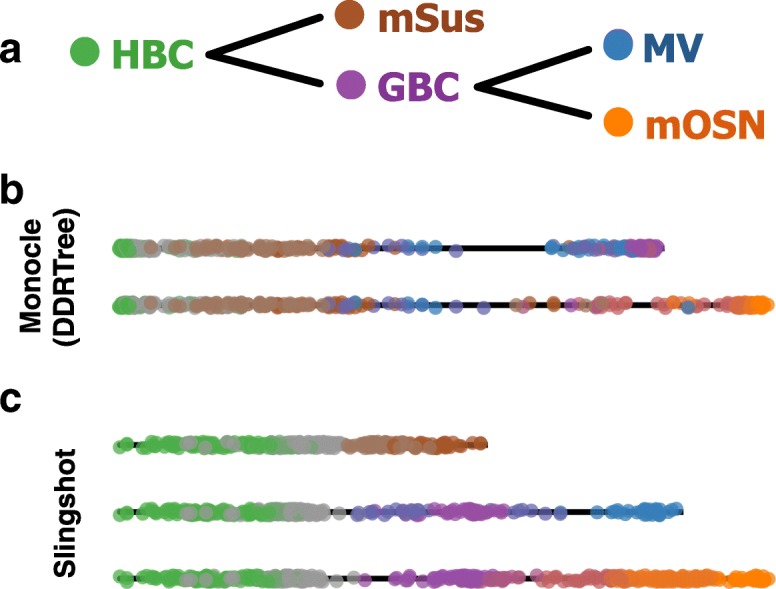
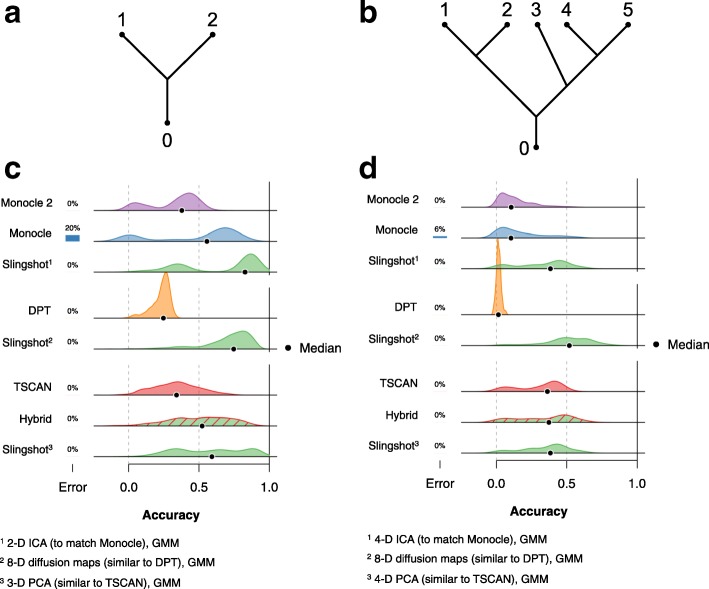
Verification
Claims the paper makes
The claims and statistics of this paper haven’t been checked yet.
Free: it reads the open-access text and checks the first 5 claims that cite a source we can check. Create a free account to check every claim.
Claims other papers make about this one
Each is checked against this paper’s own text: does it say what the citing paper says it does?
The source backs part of the claim, not all of it — or backs it for a different population, condition or comparison.
In the citing paper
“There is currently no consensus on whether or not to perform normalization over genes.”
From Current best practices in single-cell RNA-seq analysis: a tutorial (2019) · cites this paper as Street et al, 2018
Experimental — accuracy not yet measuredThe cited source says what the claim attributes to it.
In the citing paper
“Cluster similarity (partition-based graph abstraction (PAGA)) and pseudotime (slingshot.R)18 analyses indicate that immature monocytes differentiate into S100hi, ISGhi or inflammatory or intermediate monocytes, with S100hi and inflammatory clusters most strongly connecting to the differentiating monocyte cluster (Fig. 2h,i)”
From Single-cell atlas of human liver and blood immune cells across fatty liver disease stages reveals distinct signatures linked to liver dysfunction and fibrogenesis (2025) · cites this paper as [18]
Experimental — accuracy not yet measuredThe cited source says what the claim attributes to it.
In the citing paper
“Cell velocity (velocyto.R)20 and unbiased pseudotime (slingshot.R)18 analyses implied a de-differentiation pathway away from macrophages to the differentiating monocyte cluster that intensified in advanced MASH compared with early MASH (Extended Data Fig. 6)”
The cited source says what the claim attributes to it.
In the citing paper
“A slingshot pseudotime trajectory analysis54 revealed that factor 3 was a strong driver for the separation of RLs from foamy MLs, while ALs and MLs with nonfoamy microglia were more closely related to RLs (Fig. 5f).”
From Foamy microglia link oxylipins to disease progression in multiple sclerosis (2026) · cites this paper as [54]
The check wasn’t confident either way, so it gives no verdict — never disputed.
In the citing paper
“Selecting homeostatic microglia as the origin cluster, pseudotime analysis revealed a sequential developmental trajectory of homeostatic microglia into intermediate and DMAM0 microglia (Figure 1H). From the DMAM0 state, activated microglia then diverged into DMAM1 or DMAM2 states (Figure 1, H–J).”
From Peroxisomal integrity in demyelination-associated microglia enables cellular debris clearance and myelin renewal in mice (2026) · cites this paper as [17]
Experimental — accuracy not yet measured
2 more claims about this paper
Create a free account to see every claim other papers make about this one.
Self-check
Percentages, sums and reported differences re-computed from the paper’s own numbers.
The self-check needs the paper’s full text.
Citations
Cites
(2008) · Journal of Machine Learning Research · Cited by 33,051
Laplacian Eigenmaps for Dimensionality Reduction and Data Representation
Belkin, M., & Niyogi, P. (2003) · Neural Computation · doi:10.1162/089976603321780317 · Cited by 7,621
Trapnell, C., Cacchiarelli, D., Grimsby, J., Pokharel, P., Li, S., Morse, M., Lennon, N. J., Livak, K. J., Mikkelsen, T. S., & Rinn, J. L. (2014) · Nature Biotechnology · doi:10.1038/nbt.2859 · Cited by 7,314 · cited 19×
“For example, [3] examined the differentiation pattern of skeletal myoblasts, showing that their development into myocytes and mature myotubes follows a continuous lineage, rather than discrete steps.”
BackgroundMethodResultInfluentialOn the generalized distance in statistics
Mahalanobis, P. C. (1936) · DOAJ (DOAJ: Directory of Open Access Journals) · Cited by 6,068
mclust 5: Clustering, Classification and Density Estimation Using Gaussian Finite Mixture Models
Scrucca, L., Fop, M., Murphy, T., & Raftery, A. (2016) · The R Journal · doi:10.32614/rj-2016-021 · Cited by 2,892
Single-cell mRNA quantification and differential analysis with Census
Qiu, X., Hill, A., Packer, J., Lin, D., Ma, Y.-A., & Trapnell, C. (2017) · Nature Methods · doi:10.1038/nmeth.4150 · Cited by 1,918
Stochastic mRNA Synthesis in Mammalian Cells
Raj, A., Peskin, C. S., Tranchina, D., Vargas, D. Y., & Tyagi, S. (2006) · PLoS Biology · doi:10.1371/journal.pbio.0040309 · Cited by 1,737
A comparison of single-cell trajectory inference methods
Saelens, W., Cannoodt, R., Todorov, H., & Saeys, Y. (2019) · Nature Biotechnology · doi:10.1038/s41587-019-0071-9 · Cited by 1,670
The Technology and Biology of Single-Cell RNA Sequencing
Kolodziejczyk, A. A., Kim, J. K., Svensson, V., Marioni, J. C., & Teichmann, S. A. (2015) · Molecular Cell · doi:10.1016/j.molcel.2015.04.005 · Cited by 1,487 · cited 1×
“Newly-developed single-cell assays can give us a much more detailed picture [1].”
BackgroundDiffusion pseudotime robustly reconstructs lineage branching
Haghverdi, L., Büttner, M., Wolf, F. A., Buettner, F., & Theis, F. J. (2016) · Nature Methods · doi:10.1038/nmeth.3971 · Cited by 1,385
Cited by
Items 901–1,000 of 1,017
Mitoyan, L., Chevrier, V., Hernández‐Vargas, H., Ollivier, A., Homayed, Z., Pannequin, J., Poizat, F., Cador, C., Charafe‐Jauffret, E., Ginestier, C., et al. (2021) · Nature Communications · doi:10.1038/s41467-021-23034-x · Cited by 28
What has single‐cell RNA sequencing revealed about microglial neuroimmunology?
Kubick, N., Flournoy, P. C. H., Klimovich, P., Manda, G., & Mickael, M. (2020) · Immunity Inflammation and Disease · doi:10.1002/iid3.362 · Cited by 28
Orrapin, S., Thongkumkoon, P., Udomruk, S., Moonmuang, S., Sutthitthasakul, S., Yongpitakwattana, P., Pruksakorn, D., & Chaiyawat, P. (2023) · International Journal of Molecular Sciences · doi:10.3390/ijms241512337 · Cited by 28
Zhang, Q., Jiang, L., Wang, W., Huber, A. K., Valvo, V. M., Jungles, K. M., Holcomb, E. A., Pearson, A. N., The, S., Wang, Z., et al. (2024) · JCI Insight · doi:10.1172/jci.insight.168824 · Cited by 28
Singh, P. N. P., Gu, W., Madha, S., Lynch, A. W., Cejas, P., He, R., Bhattacharya, S., Gomez, M. M., Oser, M. G., Brown, M. A., et al. (2024) · Cell stem cell · doi:10.1016/j.stem.2024.04.015 · Cited by 28
Chen, Z., Chen, W., Li, Y., Moos, M. C., Xiao, D., & Wang, C. (2022) · iScience · doi:10.1016/j.isci.2022.104686 · Cited by 29
Revealing the heterogeneity of CD4+ T cells through single-cell transcriptomics
Morgan, D. M., Shreffler, W. G., & Love, J. C. (2022) · Journal of Allergy and Clinical Immunology · doi:10.1016/j.jaci.2022.08.010 · Cited by 28
Ayana, R., Zandecki, C., houcke, J. V., Mariën, V., Seuntjens, E., & Arckens, L. (2024) · Aging Cell · doi:10.1111/acel.14251 · Cited by 28
Tian, T., Zhong, C., Lin, X., Wei, Z., & Hakonarson, H. H. (2023) · Genome Research · doi:10.1101/gr.277068.122 · Cited by 28
Cui, P., Li, J., Tao, H., Li, X., Wu, L., Ma, J., Wang, H., Liu, T., Zhang, M., & Hu, Y. (2023) · Oncogene · doi:10.1038/s41388-023-02805-4 · Cited by 28
Decoding pancreatic endocrine cell differentiation and β cell regeneration in zebrafish
Mi, J., Liu, K., & Andersson, O. (2023) · Science Advances · doi:10.1126/sciadv.adf5142 · Cited by 28
Rao, D., Li, J., Zhang, M., Huang, S., Lu, M., Song, G., Ma, J., Wu, Y., Cheng, Y., Ji, S., et al. (2024) · Experimental Hematology and Oncology · doi:10.1186/s40164-024-00521-7 · Cited by 28
Smoking shifts human small airway epithelium club cells toward a lesser differentiated population
Rostami, M. R., LeBlanc, M. G., Strulovici‐Barel, Y., Zuo, W., Mezey, J. G., O’Beirne, S. L., Kaner, R. J., Leopold, P. L., & Crystal, R. G. (2021) · npj Genomic Medicine · doi:10.1038/s41525-021-00237-1 · Cited by 28
Tang, W., Watson, C. J., Olmstead, T., Allan, C. H., & Kwon, R. Y. (2022) · iScience · doi:10.1016/j.isci.2022.103784 · Cited by 28
New technologies to study helminth development and host-parasite interactions
Britton, C., Laing, R., McNeilly, T. N., Pérez, M. G., Otto, T. D., Hildersley, K. A., Maizels, R. M., Devaney, E., & Gillan, V. (2023) · International Journal for Parasitology · doi:10.1016/j.ijpara.2022.11.012 · Cited by 28
Modeling Cell Dynamics and Interactions with Unbalanced Mean Field Schrödinger Bridge
Zhang, Z., Wang, Z., Sun, Y., Li, T., & Zhou, P. (2025) · neural information processing systems · doi:10.52202/085713-4659 · Cited by 28
Spatiotemporal Omics-Refining the landscape of precision medicine
Zhang, J., Yin, J., Heng, Y., Xie, K., Chen, A., Amit, I., Bian, X.-W., & Xu, X. (2022) · Life Medicine · doi:10.1093/lifemedi/lnac053 · Cited by 27
Fu, M., Hua, X., Shu, S., Xu, X., Zhang, H., Peng, Z., Mo, H., Liu, Y., Chen, X., Yang, Y., et al. (2024) · BMC Medicine · doi:10.1186/s12916-023-03232-8 · Cited by 27
Fujii, T., Wada, S., Carballo, C. B., Bell, R. D., Morita, W., Nakagawa, Y., Liu, Y., Chen, D., Pannellini, T., Sokhi, U. K., et al. (2022) · JBMR Plus · doi:10.1002/jbm4.10635 · Cited by 27
MAIT cell plasticity enables functional adaptation that drives antibacterial immune protection
Wang, H., Souter, M. N. T., Moreira, M. L., Li, S., Zhou, Y., Nelson, A. G., Yu, J., Meehan, L. J., Meehan, B. S., Eckle, S. B. G., et al. (2024) · Science Immunology · doi:10.1126/sciimmunol.adp9841 · Cited by 27
Su, E. Y., Fread, K., Goggin, S. M., Zunder, E. R., & Cahan, P. (2024) · Scientific Data · doi:10.1038/s41597-024-03399-6 · Cited by 27
Rasetto, N. B., Giacomini, D., Berardino, A. A., Waichman, T. V., Beckel, M. S., Bella, D. J. D., Brown, J. R., Davies-Sala, M. G., Gerhardinger, C., Lie, D. C., et al. (2024) · Science Advances · doi:10.1126/sciadv.adp6039 · Cited by 27
Reconstructing complex lineage trees from scRNA-seq data using MERLoT
Parra, R. G., Papadopoulos, N., Ahumada-Arranz, L., Kholtei, J. E., Mottelson, N., Horokhovsky, Y., Treutlein, B., & Soeding, J. (2019) · Nucleic Acids Research · doi:10.1093/nar/gkz706 · Cited by 27
Sequence-Based Platforms for Discovering Biomarkers in Liquid Biopsy of Non-Small-Cell Lung Cancer
Brockley, L. J., Souza, V. G. P., Forder, A., Pewarchuk, M. E., Erkan, M., Telkar, N., Benard, K., Trejo, J., Stewart, M. D., Stewart, G. L., et al. (2023) · Cancers · doi:10.3390/cancers15082275 · Cited by 27
Pan, B., Wang, Z., Zhang, X., Shen, S., Ke, X., Qiu, J., Yao, Y., Wu, X., Wang, X., & Tang, N. (2023) · Communications Biology · doi:10.1038/s42003-023-04521-x · Cited by 27
Identification of glutamine as a potential therapeutic target in dry eye disease
Chen, X., Zhang, C., Peng, F., Wu, L., Zhuo, D., Wang, L., Zhang, M., Li, Z., Tian, L., Jie, Y., et al. (2025) · Signal Transduction and Targeted Therapy · doi:10.1038/s41392-024-02119-1 · Cited by 27
Integrating Dynamical Systems Modeling with Spatiotemporal scRNA-Seq Data Analysis
Zhang, Z., Sun, Y., Peng, Q., Li, T., & Zhou, P. (2025) · Entropy · doi:10.3390/e27050453 · Cited by 27
Learning cell dynamics with neural differential equations
Vinyard, M. E., Rasmussen, A. W., Li, R., Klein, A. M., Getz, G. A., & Pinello, L. (2025) · Nature Machine Intelligence · doi:10.1038/s42256-025-01150-3 · Cited by 27
Creating Lineage Trajectory Maps Via Integration of Single‐Cell RNA‐Sequencing and Lineage Tracing
Fletcher, R. B., Das, D., & Ngai, J. (2018) · BioEssays · doi:10.1002/bies.201800056 · Cited by 28
Self-citationTabula Microcebus: A transcriptomic cell atlas of mouse lemur, an emerging primate model organismPreprint
Ezran, C., Liu, S., Chang, S., Ming, J., Botvinnik, O. B., Penland, L., Tarashansky, A. J., de Morrée, A., Travaglini, K. J., Zhao, J., et al. (2021) · bioRxiv (Cold Spring Harbor Laboratory) · doi:10.1101/2021.12.12.469460 · Cited by 27
Liu, Z., Dai, H., Yao, L., Chen, W., Wang, Y., Ma, L.-Y., Li, X., Lin, S., He, M., Gao, P., et al. (2023) · Nature Communications · doi:10.1038/s41467-023-39750-5 · Cited by 27
Saldana-Guerrero, I. M., Montano-Gutierrez, L. F., Boswell, K., Hafemeister, C., Poon, E., Shaw, L. E., Stavish, D., Lea, R. A., Wernig-Zorc, S., Bozsaky, E., et al. (2024) · Nature Communications · doi:10.1038/s41467-024-47945-7 · Cited by 27
Simulation-based inference of differentiation trajectories from RNA velocity fields
Gupta, R., Cerletti, D., Gut, G., Oxenius, A., & Claassen, M. (2022) · Cell Reports Methods · doi:10.1016/j.crmeth.2022.100359 · Cited by 27
Savary, C., Luciana, L., Huchedé, P., Tourbez, A., Coquet, C., Broustal, M., Gonzalez, A. L., Deligne, C., Diot, T., Naret, O., et al. (2023) · Cell Reports Medicine · doi:10.1016/j.xcrm.2023.101339 · Cited by 27
TET2 and TET3 loss disrupts small intestine differentiation and homeostasis
Ansari, I., Solé‐Boldo, L., Ridnik, M., Gutekunst, J., Gilliam, O., Korshko, M., Liwinski, T., Jickeli, B., Weinberg-Corem, N., Shoshkes-Carmel, M., et al. (2023) · Nature Communications · doi:10.1038/s41467-023-39512-3 · Cited by 28
Alignment of single-cell trajectory trees with CAPITAL
Sugihara, R., Kato, Y., Mori, T., & Kawahara, Y. (2022) · Nature Communications · doi:10.1038/s41467-022-33681-3 · Cited by 27
Non-invasive monitoring of T cell differentiation through Raman spectroscopy
Pavillon, N., & Smith, N. I. (2023) · Scientific Reports · doi:10.1038/s41598-023-29259-8 · Cited by 27
Chibly, A. M., Patel, V. N., Aure, M. H., Pasquale, M. C., Core, N. G. A. C. B., Morell, R. J., Izquierdo, D. M., Boger, E. T., Martin, G. E., Ghannam, M., et al. (2023) · npj Regenerative Medicine · doi:10.1038/s41536-023-00290-7 · Cited by 27
Lando, D., Ma, X., Cao, Y., Jartseva, A., Stevens, T. J., Boucher, W., Reynolds, N., Montibus, B., Hall, D., Lackner, A., et al. (2024) · Molecular Cell · doi:10.1016/j.molcel.2024.02.015 · Cited by 27
Ni, G., Sun, Y., Jia, H., Xiahou, Z., Li, Y., Zhao, F. Q., & Zang, H. (2025) · Translational Oncology · doi:10.1016/j.tranon.2025.102280 · Cited by 27
Mullin, N. K., Voigt, A. P., Cooke, J. A., Bohrer, L. R., Burnight, E. R., Stone, E. M., Mullins, R. F., & Tucker, B. A. (2020) · Progress in Retinal and Eye Research · doi:10.1016/j.preteyeres.2020.100918 · Cited by 28
Wispelaere, W. D., Annibali, D., Tuyaerts, S., Messiaen, J., Antoranz, A., Shankar, G., Dubroja, N., Herreros‐Pomares, A., Baiden-Amissah, R. E. M., Orban, M., et al. (2024) · Clinical and Translational Medicine · doi:10.1002/ctm2.1655 · Cited by 27
Yao, L., Lu, J., Zhong, L., Wei, Y., Gui, T., Wang, L., Ahn, J., Boerckel, J. D., Rux, D. R., Mundy, C., et al. (2023) · eLife · doi:10.7554/elife.89822 · Cited by 27
Tick hemocytes have a pleiotropic role in microbial infection and arthropod fitness
Rolandelli, A., Laukaitis-Yousey, H. J., Bogale, H. N., Singh, N., Samaddar, S., O’Neal, A. J., Ferraz, C. R., Butnaru, M., Mameli, E., Xia, B., et al. (2024) · Nature Communications · doi:10.1038/s41467-024-46494-3 · Cited by 27
Early infiltrating NKT lymphocytes attenuate bone regeneration through secretion of CXCL2
Lin, W., Li, Q., Liu, L., Wang, Q., Zhang, D., Wang, F., Xu, R., Fan, Y., Xing, M. M. Q., Zhou, C., et al. (2024) · Science Advances · doi:10.1126/sciadv.adl6343 · Cited by 27
Xu, H., Chai, H., Chen, M., Zhu, R., Jiang, S., Liu, X., Wang, Y., Chen, J., Wei, J., Mao, Y., et al. (2024) · Biomarker Research · doi:10.1186/s40364-024-00662-1 · Cited by 27
Chen, W., Wang, X., Wei, G., Huang, Y., Shi, Y., Li, D., Qiu, S., Zhou, B., Cao, J., Chen, M., et al. (2020) · Frontiers in Genetics · doi:10.3389/fgene.2020.00867 · Cited by 26
The Macrophage Landscape Across the Lifespan of a Human Cardiac Allograft
Li, X., Turaga, D., Li, G., Tsai, C.-R., Quinn, J. N., Zhao, Y., Wilson, R., Carlson, K., Wang, J., Spinner, J. A., et al. (2024) · Circulation · doi:10.1161/circulationaha.123.065294 · Cited by 26
Wang, S., Hu, D., Wang, R., Huang, J., & Wang, B. (2025) · npj Precision Oncology · doi:10.1038/s41698-025-01027-z · Cited by 26
Bridging the dimensional gap from planar spatial transcriptomics to 3D cell atlases
Lin, S., Wang, Z., Cui, Y., Zou, Q., Han, C., Yan, R., Yang, Z., Zhang, W., Gao, R., Song, J., et al. (2025) · Nature Methods · doi:10.1038/s41592-025-02969-9 · Cited by 27
PCLAF-DREAM drives alveolar cell plasticity for lung regeneration
Kim, B.-J., Huang, Y., Ko, K.-P., Zhang, S., Zou, G., Zhang, J., Kim, M. J., Little, D. T., Ellis, L. V., Paschini, M., et al. (2024) · Nature Communications · doi:10.1038/s41467-024-53330-1 · Cited by 26
Leveraging multi-omics data to empower quantitative systems pharmacology in immuno-oncology
Arulraj, T., Wang, H., Ippolito, A., Zhang, S., Fertig, E. J., & Popel, A. S. (2024) · Briefings in Bioinformatics · doi:10.1093/bib/bbae131 · Cited by 26
Wang, H., Du, Y., Huang, S., Sun, X., Ye, Y., Sun, H., Chu, X., Shan, X., Yuan, Y., Shen, L., et al. (2024) · Nature Communications · doi:10.1038/s41467-024-48914-w · Cited by 26
Li, S., Luo, J., Liu, J., & He, D. (2024) · Frontiers in Immunology · doi:10.3389/fimmu.2024.1506256 · Cited by 26
Manivannan, S., Mansfield, C., Zhang, X., Kodigepalli, K. M., Majumdar, U., Garg, V., & Basu, M. (2022) · Communications Biology · doi:10.1038/s42003-022-03779-x · Cited by 26
Raynor, J. L., Collins, N., Shi, H., Guy, C. S., Saravia, J., Lim, S. A., Chapman, N. M., Zhou, P., Wang, Y., Sun, Y., et al. (2024) · Immunity · doi:10.1016/j.immuni.2024.09.013 · Cited by 26
Kim, W. K., Olson, A. W., Mi, J., Wang, J., Lee, D., Le, V. L., Hiroto, A., Aldahl, J., Nenninger, C. H., Buckley, A. J., et al. (2022) · Nature Communications · doi:10.1038/s41467-022-32119-0 · Cited by 26
Risley, C. A., Schultz, M. D., Allie, S. R., Liu, S., Peel, J. N., Nellore, A., Fucile, C., Scharer, C. D., Boss, J. M., Randall, T. D., et al. (2025) · Immunity · doi:10.1016/j.immuni.2025.05.021 · Cited by 26
James, C. A., Baer, J. M., Zou, C., Panni, U. Y., Knolhoff, B. L., Hogg, G. D., Kingston, N. L., Kang, L., Lander, V. E., Luo, J. R., et al. (2023) · Cancer Immunology Research · doi:10.1158/2326-6066.cir-21-0946 · Cited by 26
Torre, D., Fstkchyan, Y. S., Ho, J. S. Y., Cheon, Y., Patel, R. S., Degrace, E. J., Mzoughi, S., Schwarz, M., Mohammed, K., Seo, J.-S., et al. (2023) · Molecular Cell · doi:10.1016/j.molcel.2023.10.036 · Cited by 27
Spatial Transcriptomics Brings New Challenges and Opportunities for Trajectory Inference
Heitz, M., Ma, Y., Kubal, S., & Schiebinger, G. R. (2024) · Annual Review of Biomedical Data Science · doi:10.1146/annurev-biodatasci-040324-030052 · Cited by 26
Huuhtanen, J., Ilander, M. M., Yadav, B., Dufva, O., Lähteenmäki, H., Kasanen, T., Klievink, J., Olsson‐Strömberg, U., Stentoft, J., Richter, J., et al. (2022) · Journal of Clinical Investigation · doi:10.1172/jci152585 · Cited by 26
Ruberto, A. A., Bourke, C., Vantaux, A., Maher, S. P., Jex, A. R., Witkowski, B., Snounou, G., & Müeller, I. (2022) · PLoS neglected tropical diseases · doi:10.1371/journal.pntd.0010633 · Cited by 27
Xie, Y., Wang, Q., Yang, Y., Near, D., Wang, H., Colon, M., Nguyen, C., Slattery, C., Keepers, B., Farber, G., et al. (2023) · Nature Cardiovascular Research · doi:10.1038/s44161-023-00344-5 · Cited by 26
Ueberall, L., Mohammadian, H., Demmler, R., Ariza, Y., Tripal, P., Anchang, C. G., Weber, S., Angeli, M. R., Raimondo, M. G., Chang, J., et al. (2025) · Annals of the Rheumatic Diseases · doi:10.1016/j.ard.2025.05.016 · Cited by 26
Mitochondrial ROS drive foam cell formation via STAT5 signaling in atherosclerosis
Boccuni, L., Marka, F., Salzmann, M., Schirripa, A., Ableitner, E., Siller, M., Brekalo, M., Haider, P., Stojković, S., Neumayer, C., et al. (2025) · Science Advances · doi:10.1126/sciadv.adw9952 · Cited by 26
Distinct in vivo dynamics of donor-derived stem cell memory CAR T cells post-allogeneic HSCT relapse
Gattinoni, L., Inchingolo, G., Harrer, D. C., Susana, A., Puccio, S., Slavkovic‐Lukic, D., Natrakul, D. A., Strieder, N., Heuser-Loy, C., Baldwin, J., et al. (2026) · Cell · doi:10.1016/j.cell.2026.03.047 · Cited by 26
Establishment of a novel non-integrated human pluripotent stem cell-based gastruloid modelPreprint
Yuan, G., Wang, J., Liu, Z., Chen, M., Zhu, P., Zhang, H., Hu, Z., Cui, Y., Yuan, Y., & Sha, J. (2023) · bioRxiv (Cold Spring Harbor Laboratory) · doi:10.1101/2023.06.28.546720 · Cited by 26
Deciphering Mesenchymal Drivers of Human Dupuytren’s Disease at Single-Cell Level
Dobie, R., West, C. C., Henderson, B. E. P., Wilson‐Kanamori, J. R., Markose, D., Kitto, L. J., Portman, J. R., Beltrán, M., Sohrabi, S., Akram, A. R., et al. (2021) · Journal of Investigative Dermatology · doi:10.1016/j.jid.2021.05.030 · Cited by 26
Tanaka, M., Homme, M., Teramura, Y., Kumegawa, K., Yamazaki, Y., Yamashita, K., Osato, M., Maruyama, R., & Nakamura, T. (2023) · JCI Insight · doi:10.1172/jci.insight.160279 · Cited by 26
Defining cell types and lineage in the Drosophila midgut using single cell transcriptomics
Hung, R., Li, J. S. S., Liu, Y., & Perrimon, N. (2021) · Current Opinion in Insect Science · doi:10.1016/j.cois.2021.02.008 · Cited by 26
Lymphocyte subsets in Atlantic cod (Gadus morhua) interrogated by single-cell sequencing
Guslund, N. C., Krabberød, A. K., Nørstebø, S. F., Solbakken, M. H., Jakobsen, K. S., Johansen, F., & Qiao, S. (2022) · Communications Biology · doi:10.1038/s42003-022-03645-w · Cited by 26
Dumeaux, V., Massahi, S., Bettauer, V., Mottola, A., Dukovny, A., Khurdia, S. S., Costa, A. C. B. P., Omran, R. P., Simpson, S., Xie, J. L., et al. (2023) · eLife · doi:10.7554/elife.81406 · Cited by 25
Single-Cell Transcriptomics To Define Plasmodium falciparum Stage Transition in the Mosquito Midgut
Mohammed, M., Dziedziech, A., Sekar, V., Ernest, M., Alves E Silva, T. L., Balan, B., Emami, S. N., Biryukova, I., Friedländer, M. R., Jex, A., et al. (2023) · Microbiology Spectrum · doi:10.1128/spectrum.03671-22 · Cited by 25
Zhou, Q.-J., Liu, X., Zhang, L., Wang, R., Yin, T., Li, X., Li, G., He, Y., Ding, Z., Ma, P., et al. (2022) · National Science Review · doi:10.1093/nsr/nwac147 · Cited by 25
Neuronal differentiation strategies: insights from single-cell sequencing and machine learning
Konstantinides, N., & Desplan, C. (2020) · Development · doi:10.1242/dev.193631 · Cited by 26
GraphPCA: a fast and interpretable dimension reduction algorithm for spatial transcriptomics data
Yang, J., Wang, L., Liu, L. L., & Zheng, X. (2024) · Genome biology · doi:10.1186/s13059-024-03429-x · Cited by 25
TraSig: inferring cell-cell interactions from pseudotime ordering of scRNA-Seq data
Li, D., Velazquez, J. J., Ding, J., Hislop, J., Ebrahimkhani, M. R., & Bar‐Joseph, Z. (2022) · Genome biology · doi:10.1186/s13059-022-02629-7 · Cited by 25
Integrative single-cell RNA-seq analysis of vascularized cerebral organoids
Sato, Y., Asahi, T., & Kataoka, K. (2023) · BMC Biology · doi:10.1186/s12915-023-01711-1 · Cited by 25
Single-cell susceptibility to viral infection is driven by variable cell states
Reffsin, S., Miller, J., Ayyanathan, K., Dunagin, M. C., Heyman, Y., Jain, N., Schultz, D., Cherry, S. R., & Raj, A. (2025) · Cell · doi:10.1016/j.cell.2025.10.021 · Cited by 25
Deciphering cell-fate trajectories using spatiotemporal single-cell transcriptomic data
Zhang, Z., Wang, Z., Sun, Y., Shen, J., Peng, Q., Li, T., & Zhou, P. (2025) · npj Systems Biology and Applications · doi:10.1038/s41540-025-00624-9 · Cited by 25
Regeneration leads to global tissue rejuvenation in aging sexual planarians
Dai, X., Li, X., Tyshkovskiy, A., Zuckerman, C., Cheng, N., Lin, P., Paris, D., Qureshi, S., Kruglyak, L., Mao, X., et al. (2025) · Nature Aging · doi:10.1038/s43587-025-00847-9 · Cited by 26
Keenen, M. M., Yang, L., Liang, H., Farmer, V. J., Worota, R. E., Singh, R., Gladfelter, A. S., & Coyne, C. B. (2025) · eLife · doi:10.1101/2024.07.01.601571 · Cited by 25
Aberrant basal cell clonal dynamics shape early lung carcinogenesis
Gómez‐López, S., Alhendi, A. S. N., Przybilla, M. J., Bordeu, I., Whiteman, Z. E., Butler, T. M., Rouhani, M. J., Kalinke, L., Uddin, I., Otter, K. E. J., et al. (2025) · Science · doi:10.1126/science.ads9145 · Cited by 25
Wang, Z., Li, Z., Luan, T., Cui, G., Shu, S., Liang, Y., Zhang, K., Xiao, J., Yu, W., Cui, J., et al. (2024) · Developmental Cell · doi:10.1016/j.devcel.2024.06.016 · Cited by 25
Evolution of T cells in the cancer-resistant naked mole-rat
Lin, T., Rubinstein, N. D., Fong, N. L., Smith, M., Craft, W., Martin-McNulty, B., Perry, R., Delaney, M. A., Roy, M. A., & Buffenstein, R. (2024) · Nature Communications · doi:10.1038/s41467-024-47264-x · Cited by 25
Singh, A., Chia, J. J., Rao, D. S., & Hoffmann, A. (2025) · Blood · doi:10.1182/blood.2024025598 · Cited by 25
Wang, Y., Lian, B., Zhang, H., Zhong, Y., He, J. Y., Wu, F., Reinert, K., Shang, X., Yang, H., & Hu, J. (2023) · Bioinformatics · doi:10.1093/bioinformatics/btad005 · Cited by 25
Inferring single-cell gene regulatory network by non-redundant mutual information
Zeng, Y., He, Y., Zheng, R., & Li, M. (2023) · Briefings in Bioinformatics · doi:10.1093/bib/bbad326 · Cited by 25
Effector memory–type regulatory T cells display phenotypic and functional instability
Wendering, D. J., Amini, L., Schlickeiser, S., Farrera-Sal, M., Schulenberg, S., Peter, L., Mai, M., Vollmer, T., Du, W., Stein, M., et al. (2024) · Science Advances · doi:10.1126/sciadv.adn3470 · Cited by 25
Balasubramanian, I., Bandyopadhyay, S., Flores, J., Bianchi‐Smak, J., Lin, X., Liu, H., Sun, S., Golovchenko, N. B., Liu, Y., Wang, D., et al. (2023) · The EMBO Journal · doi:10.15252/embj.2023113975 · Cited by 25
Postnatal state transition of cardiomyocyte as a primary step in heart maturation
Zheng, L., Yao, F., Peng, Y., Li, D., Zhang, M., Mao, L., Shen, X., Ren, Z., Wang, L., & Zhou, B. (2022) · Protein & Cell · doi:10.1007/s13238-022-00908-4 · Cited by 25
Nguyen, T. H., Vicidomini, R., Choudhury, S. D., Han, T. H., Maric, D., Brody, T., & Serpe, M. (2024) · Developmental Cell · doi:10.1016/j.devcel.2024.03.016 · Cited by 25
Cao, L., Xu, L., Wang, X., Wu, H., & Miao, X. (2024) · Frontiers in Immunology · doi:10.3389/fimmu.2024.1475235 · Cited by 25
Hildersley, K. A., McNeilly, T. N., Gillan, V., Otto, T. D., Löser, S., Gerbe, F., Jay, P., Maizels, R. M., Devaney, E., & Britton, C. (2021) · Frontiers in Immunology · doi:10.3389/fimmu.2021.781108 · Cited by 26
Dong, J., Wu, X., Zhou, X., Gao, Y., Wang, C., Wang, W., He, W., Li, J., Deng, W., Liao, J., et al. (2022) · Protein & Cell · doi:10.1093/procel/pwac059 · Cited by 25
Peng, D., Gui, Z., Wei, W., Li, F., Gui, J., Wu, H., & Gong, J. (2025) · Nature Machine Intelligence · doi:10.1038/s42256-025-01112-9 · Cited by 25
Zhong, Y., Wei, B., Wang, W., Chen, J., Wu, W., Liang, L., Huang, X.-R., Szeto, C., Yu, X., Nikolic‐Paterson, D. J., et al. (2024) · International Journal of Biological Sciences · doi:10.7150/ijbs.98839 · Cited by 25
SGK1 drives hippocampal demyelination and diabetes-associated cognitive dysfunction in mice
Jiang, Z., Liu, B., Lu, T., Liu, X., Lv, R., Yuan, K., Zhu, M., Wang, X., Li, S., Xu, S., et al. (2025) · Nature Communications · doi:10.1038/s41467-025-56854-2 · Cited by 25
Immunomodulatory role of the stem cell circadian clock in muscle repair
Zhu, P., Pfrender, E. M., Steffeck, A. W. T., Reczek, C. R., Zhou, Y., Thakkar, A. V., Gupta, N. R., Kupai, A., Willbanks, A. R., Lieber, R. L., et al. (2025) · Science Advances · doi:10.1126/sciadv.adq8538 · Cited by 24
Metadata
- Authors
- Street, K., Risso, D., Fletcher, R. B., Das, D., Ngai, J., Yosef, N., Purdom, E., & Dudoit, S.
- Affiliations
- University of California, Berkeley (US)
- Weill Cornell Medicine (US)
- Corresponding author
- Dudoit, Sandrine
- ORCID
- Venue
- BMC Genomics
- Published
- 2018-06-19
- Volume
- 19
- Issue
- 1
- Pages
- 477-477
- ISSN
- 1471-2164 (ISSN-L)
- PMC
- PMC6007078
- OpenAlex
- W2951799803
- Cited by
- 3,159
- References
- 34
- Citations by year
- 2026: 596 · 2025: 605 · 2024: 606 · 2023: 409 · 2022: 379 · 2021: 312 · 2020: 174 · 2019: 49 · 2018: 24
- FWCI
- 50.51
- Type
- journal article
- Language
- en
- Open access
- gold
- doi.org
- Licence
- cc-by
- creativecommons.org/licenses/by/4.0/ (tdm)
- creativecommons.org/licenses/by/4.0/ (vor)
- Locations
- BMC Genomics (publishedVersion, cc-by)
- Europe PMC (PubMed Central) (publishedVersion, other-oa)
- PubMed Central (publishedVersion, cc-by)
- PubMed (publishedVersion)
- eScholarship (California Digital Library) (submittedVersion, cc-by)
- DOAJ (DOAJ: Directory of Open Access Journals) (submittedVersion, cc-by-sa)
- Padua Research Archive (University of Padova) (submittedVersion, cc-by)
- Funders
- National Institute of Mental Health (U01MH105979)
- National Institute on Deafness and Other Communication Disorders (RO1DC007235)
- National Center for Research Resources (S10RR029668)
- National Institute on Aging (K01AG045344)
- National Human Genome Research Institute (T32HG000047)
- Thomas and Stacey Siebel Foundation
- California Institute for Regenerative Medicine
- Topics
- Life Sciences › Biochemistry, Genetics and Molecular Biology › Molecular Biology › Single-cell and spatial transcriptomics
- Life Sciences › Biochemistry, Genetics and Molecular Biology › Molecular Biology › Gene Regulatory Network Analysis
- Life Sciences › Biochemistry, Genetics and Molecular Biology › Molecular Biology › Gene expression and cancer classification
- Keywords
- single-cell transcriptomics, stem cell differentiation, developmental trajectories, single-cell gene expression, temporal gene expression dynamics
- MeSH terms
- Humans, Software, Cluster Analysis, Cell Lineage, Gene Expression Profiling, Myoblasts, Skeletal, Single-Cell Analysis
About these checks
Registry, retraction, Cites and statistics results are computed, not judged, with one exception: a printed reference that no index lists is read once by a model before it counts as a citation error. Claims are extracted by a model and kept only when their quote appears verbatim in the text; each cited source is then checked, with a model’s help, for whether it says what the claim relies on. Those verdicts can be wrong — read the claim’s quote and the cited source before relying on one.
Statistics and arithmetic are recomputed, not judged.
Confidence bands are shown only for fields calibrated on our annotated test set. None is calibrated yet, so no band is shown.
What counts as a claim ›How we measure confidence ›How we check this ›
Are you an author, or do you see a problem with this page? Request a review
Data sources
Bibliographic data: Semantic Scholar, OpenAlex, Crossref.
Contains information from the Semantic Scholar Academic Graph Datasets, made available under the ODC Attribution License (ODC-BY 1.0).
Semantic Scholar’s data is described in: Kinney, R., et al. (2023). The Semantic Scholar Open Data Platform. arXiv:2301.10140.
