

Slingshot: cell lineage and pseudotime inference for single-cell transcriptomics
Open accessPublished version of a preprint
The DOI matches its Crossref record; 39 of the 39 references it cites were found in a registry or an index.
Abstract
BACKGROUND: Single-cell transcriptomics allows researchers to investigate complex communities of heterogeneous cells. It can be applied to stem cells and their descendants in order to chart the progression from multipotent progenitors to fully differentiated cells. While a variety of statistical and computational methods have been proposed for inferring cell lineages, the problem of accurately characterizing multiple branching lineages remains difficult to solve. RESULTS: We introduce Slingshot, a novel method for inferring cell lineages and pseudotimes from single-cell gene expression data. In previously published datasets, Slingshot correctly identifies the biological signal for one to three branching trajectories. Additionally, our simulation study shows that Slingshot infers more accurate pseudotimes than other leading methods. CONCLUSIONS: Slingshot is a uniquely robust and flexible tool which combines the highly stable techniques necessary for noisy single-cell data with the ability to identify multiple trajectories. Accurate lineage inference is a critical step in the identification of dynamic temporal gene expression.
Overview
The claims and statistics of this paper haven’t been checked yet.
Free: it reads the open-access text and checks the first 5 claims that cite a source we can check. Create a free account to check every claim.
Integrity signals
Registry
Cites
Statistics
Figures
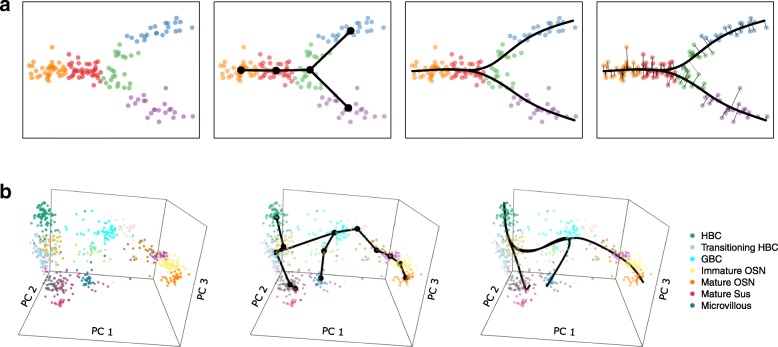
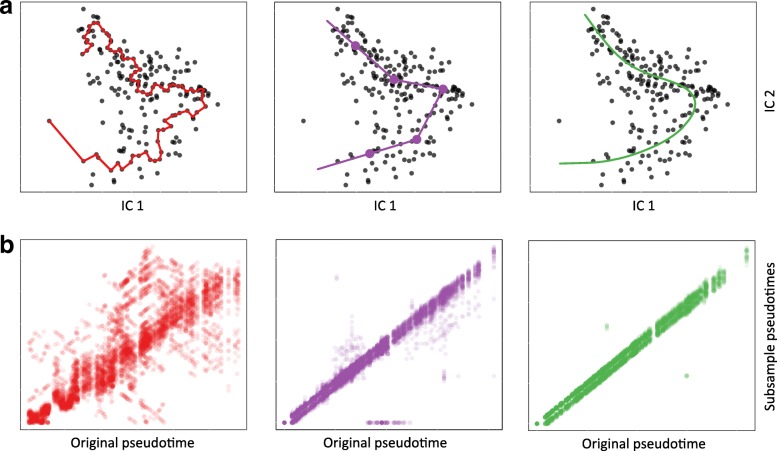
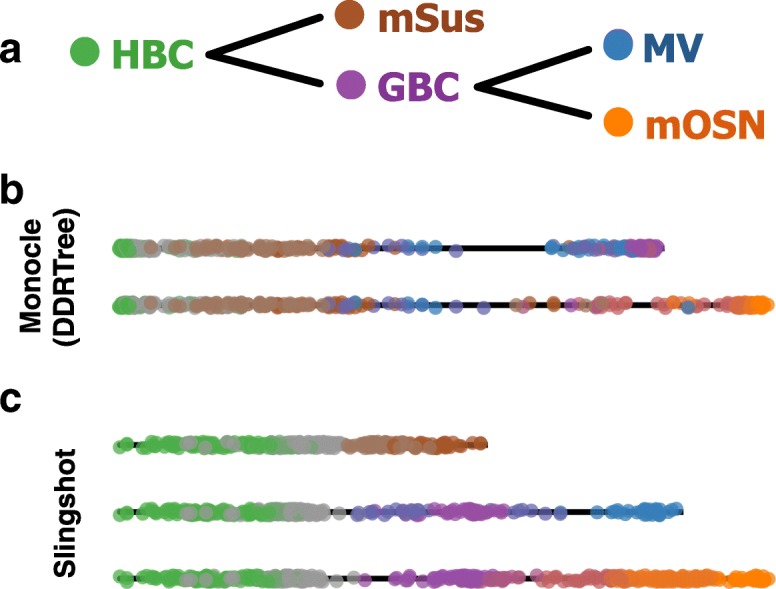
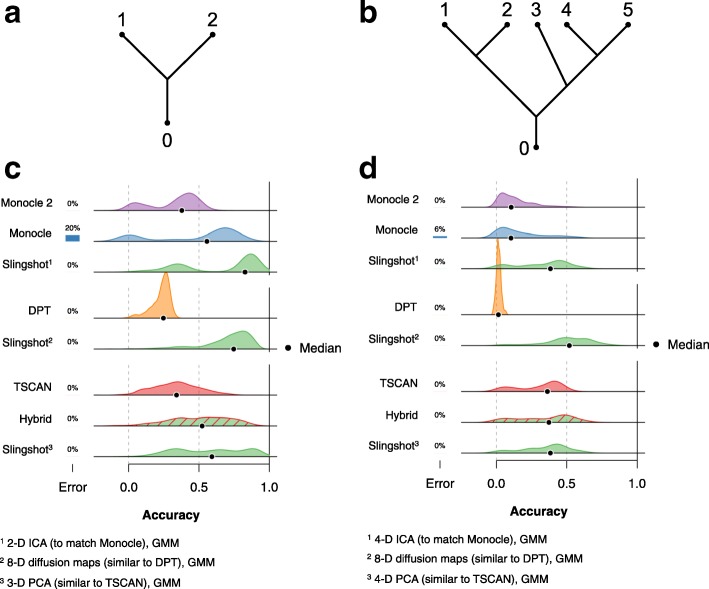
Verification
Claims the paper makes
The claims and statistics of this paper haven’t been checked yet.
Free: it reads the open-access text and checks the first 5 claims that cite a source we can check. Create a free account to check every claim.
Claims other papers make about this one
Each is checked against this paper’s own text: does it say what the citing paper says it does?
The source backs part of the claim, not all of it — or backs it for a different population, condition or comparison.
In the citing paper
“There is currently no consensus on whether or not to perform normalization over genes.”
From Current best practices in single-cell RNA-seq analysis: a tutorial (2019) · cites this paper as Street et al, 2018
Experimental — accuracy not yet measuredThe cited source says what the claim attributes to it.
In the citing paper
“Cluster similarity (partition-based graph abstraction (PAGA)) and pseudotime (slingshot.R)18 analyses indicate that immature monocytes differentiate into S100hi, ISGhi or inflammatory or intermediate monocytes, with S100hi and inflammatory clusters most strongly connecting to the differentiating monocyte cluster (Fig. 2h,i)”
From Single-cell atlas of human liver and blood immune cells across fatty liver disease stages reveals distinct signatures linked to liver dysfunction and fibrogenesis (2025) · cites this paper as [18]
Experimental — accuracy not yet measuredThe cited source says what the claim attributes to it.
In the citing paper
“Cell velocity (velocyto.R)20 and unbiased pseudotime (slingshot.R)18 analyses implied a de-differentiation pathway away from macrophages to the differentiating monocyte cluster that intensified in advanced MASH compared with early MASH (Extended Data Fig. 6)”
The cited source says what the claim attributes to it.
In the citing paper
“A slingshot pseudotime trajectory analysis54 revealed that factor 3 was a strong driver for the separation of RLs from foamy MLs, while ALs and MLs with nonfoamy microglia were more closely related to RLs (Fig. 5f).”
From Foamy microglia link oxylipins to disease progression in multiple sclerosis (2026) · cites this paper as [54]
The check wasn’t confident either way, so it gives no verdict — never disputed.
In the citing paper
“Selecting homeostatic microglia as the origin cluster, pseudotime analysis revealed a sequential developmental trajectory of homeostatic microglia into intermediate and DMAM0 microglia (Figure 1H). From the DMAM0 state, activated microglia then diverged into DMAM1 or DMAM2 states (Figure 1, H–J).”
From Peroxisomal integrity in demyelination-associated microglia enables cellular debris clearance and myelin renewal in mice (2026) · cites this paper as [17]
Experimental — accuracy not yet measured
2 more claims about this paper
Create a free account to see every claim other papers make about this one.
Self-check
Percentages, sums and reported differences re-computed from the paper’s own numbers.
The self-check needs the paper’s full text.
Citations
Cites
(2008) · Journal of Machine Learning Research · Cited by 33,051
Laplacian Eigenmaps for Dimensionality Reduction and Data Representation
Belkin, M., & Niyogi, P. (2003) · Neural Computation · doi:10.1162/089976603321780317 · Cited by 7,621
Trapnell, C., Cacchiarelli, D., Grimsby, J., Pokharel, P., Li, S., Morse, M., Lennon, N. J., Livak, K. J., Mikkelsen, T. S., & Rinn, J. L. (2014) · Nature Biotechnology · doi:10.1038/nbt.2859 · Cited by 7,314 · cited 19×
“For example, [3] examined the differentiation pattern of skeletal myoblasts, showing that their development into myocytes and mature myotubes follows a continuous lineage, rather than discrete steps.”
BackgroundMethodResultInfluentialOn the generalized distance in statistics
Mahalanobis, P. C. (1936) · DOAJ (DOAJ: Directory of Open Access Journals) · Cited by 6,068
mclust 5: Clustering, Classification and Density Estimation Using Gaussian Finite Mixture Models
Scrucca, L., Fop, M., Murphy, T., & Raftery, A. (2016) · The R Journal · doi:10.32614/rj-2016-021 · Cited by 2,892
Single-cell mRNA quantification and differential analysis with Census
Qiu, X., Hill, A., Packer, J., Lin, D., Ma, Y.-A., & Trapnell, C. (2017) · Nature Methods · doi:10.1038/nmeth.4150 · Cited by 1,918
Stochastic mRNA Synthesis in Mammalian Cells
Raj, A., Peskin, C. S., Tranchina, D., Vargas, D. Y., & Tyagi, S. (2006) · PLoS Biology · doi:10.1371/journal.pbio.0040309 · Cited by 1,737
A comparison of single-cell trajectory inference methods
Saelens, W., Cannoodt, R., Todorov, H., & Saeys, Y. (2019) · Nature Biotechnology · doi:10.1038/s41587-019-0071-9 · Cited by 1,670
The Technology and Biology of Single-Cell RNA Sequencing
Kolodziejczyk, A. A., Kim, J. K., Svensson, V., Marioni, J. C., & Teichmann, S. A. (2015) · Molecular Cell · doi:10.1016/j.molcel.2015.04.005 · Cited by 1,487 · cited 1×
“Newly-developed single-cell assays can give us a much more detailed picture [1].”
BackgroundDiffusion pseudotime robustly reconstructs lineage branching
Haghverdi, L., Büttner, M., Wolf, F. A., Buettner, F., & Theis, F. J. (2016) · Nature Methods · doi:10.1038/nmeth.3971 · Cited by 1,385
Cited by
Items 501–600 of 1,017
Xydia, M., Rahbari, R., Ruggiero, E., Macaulay, I. C., Tarabichi, M., Lohmayer, R., Wilkening, S., Michels, T., Brown, D. V., Vanuytven, S., et al. (2021) · Nature Communications · doi:10.1038/s41467-021-21297-y · Cited by 60
Unravelling the sex-specific diversity and functions of adrenal gland macrophages
Dolfi, B., Gallerand, A., Firulyova, M. M., Xu, Y., Merlin, J., Dumont, A., Castiglione, A., Vaillant, N., Quemener, S., Gerke, H., et al. (2022) · Cell Reports · doi:10.1016/j.celrep.2022.110949 · Cited by 60
Peripheral nervous system microglia-like cells regulate neuronal soma size throughout evolution
Wu, Z., Wang, Y., Chen, W., Sun, H., Chen, X., Li, X., Wang, Z., Liang, W., Wang, S.-Y., Luan, X., et al. (2025) · Cell · doi:10.1016/j.cell.2025.02.007 · Cited by 60
p57Kip2 imposes the reserve stem cell state of gastric chief cells
Lee, J., Kim, S., 한승민, Min, J., Caldwell, B. M., Bamford, A.-D., Batista-Rocha, A. S., Park, J., Lee, S., Wu, S.-H. S., et al. (2022) · Cell stem cell · doi:10.1016/j.stem.2022.04.001 · Cited by 60
Single-cell transcriptome analyses reveal microglia types associated with proliferative retinopathy
Liu, Z., Shi, H., Xu, J., Yang, Q., Ma, Q., Mao, X., Xu, Z., Zhou, Y., Da, Q., Cai, Y., et al. (2022) · JCI Insight · doi:10.1172/jci.insight.160940 · Cited by 60
Huuhtanen, J., Bhattacharya, D., Lönnberg, T., Kankainen, M., Kerr, C. M., Theodoropoulos, J., Rajala, H. L. M., Gurnari, C., Kasanen, T., Braun, T., et al. (2022) · Nature Communications · doi:10.1038/s41467-022-29173-z · Cited by 59
Valkiers, S., de Vrij, N., Gielis, S., Verbandt, S., Ogunjimi, B., Laukens, K., & Meysman, P. (2022) · ImmunoInformatics · doi:10.1016/j.immuno.2022.100009 · Cited by 61
Sensory input, sex and function shape hypothalamic cell type development
Kaplan, H. S., Logeman, B. L., Zhang, K., Yawitz, T. A., Santiago, C., Sohail, N., Talay, M., Seo, C., Naumenko, S., Sui, S. J. H., et al. (2025) · Nature · doi:10.1038/s41586-025-08603-0 · Cited by 59
Sarieva, K., Kagermeier, T., Khakipoor, S., Atay, E., Yentür, Z., Becker, K., & Mayer, S. (2023) · Molecular Psychiatry · doi:10.1038/s41380-023-01997-1 · Cited by 59
psupertime: supervised pseudotime analysis for time-series single-cell RNA-seq data
Macnair, W., Gupta, R., & Claassen, M. (2022) · Bioinformatics · doi:10.1093/bioinformatics/btac227 · Cited by 59
Shao, W., Lin, Z., Xiahou, Z., Zhao, F., Xu, J., Liu, X., & Cai, P. (2024) · Frontiers in Immunology · doi:10.3389/fimmu.2024.1438198 · Cited by 59
Wang, D., Li, Z., Huang, W., Cao, S., Xie, L., Chen, Y., Li, H., Wang, L., Chen, X., & Yang, J. (2023) · iScience · doi:10.1016/j.isci.2023.106692 · Cited by 59
Non-parametric modelling of temporal and spatial counts data from RNA-seq experiments
Bintayyash, N., Georgaka, S., John, S., Ahmed, S., Boukouvalas, A., Hensman, J. J., & Rattray, M. (2021) · Bioinformatics · doi:10.1093/bioinformatics/btab486 · Cited by 59
ヒトT細胞白血病ウイルスは感染CD4T細胞に、過剰なT細胞活性化を誘導し成人T細胞白血病を引き起こす
Benjy, T. J. Y., & ベンジー, タ. ジ. ヤ. (2022) · Institutional Repositories DataBase (IRDB) · Cited by 59
Han, X., Zhang, Y., Lou, Z., Li, J., Wang, Z., Gao, C., Liu, Y., Ren, Z., Liu, W., Li, B., et al. (2023) · Nature Plants · doi:10.1038/s41477-023-01544-4 · Cited by 59
Formation and function of the meningeal arachnoid barrier around the developing mouse brain
Derk, J., Como, C. N., Jones, H. E., Joyce, L. R., Kim, S., Spencer, B. L., Bonney, S., O’Rourke, R., Pawlikowski, B., Doran, K. S., et al. (2023) · Developmental Cell · doi:10.1016/j.devcel.2023.03.005 · Cited by 58
Brown adipose tissue monocytes support tissue expansion
Gallerand, A., Stunault, M. I., Merlin, J., Luehmann, H. P., Sultan, D. H., Firulyova, M. M., Magnone, V., Khedher, N., Jalil, A., Dolfi, B., et al. (2021) · Nature Communications · doi:10.1038/s41467-021-25616-1 · Cited by 58
Rabhi, N., Desevin, K., Belkina, A. C., Tilston-Lünel, A., Varelas, X., Layne, M. D., & Farmer, S. R. (2022) · Life Science Alliance · doi:10.26508/lsa.202101286 · Cited by 58
A branching model of lineage differentiation underpinning the neurogenic potential of enteric glia
Laddach, A., Chng, S. H., Lasrado, R., Progatzky, F., Shapiro, M., Erickson, A. G., Castañeda, M. S., Artemov, A. V., Bon‐Frauches, A. C., Amaniti, E.-M., et al. (2023) · Nature Communications · doi:10.1038/s41467-023-41492-3 · Cited by 58
Inferring cell trajectories of spatial transcriptomics via optimal transport analysis
Shen, X., Zuo, L., Ye, Z., Yuan, Z., Huang, K., Li, Z., Yu, Q., Zou, X., Wei, X., Xu, P., et al. (2025) · Cell Systems · doi:10.1016/j.cels.2025.101194 · Cited by 58
Shahan, R., Nolan, T. M., & Benfey, P. N. (2021) · Journal of Experimental Botany · doi:10.1093/jxb/erab228 · Cited by 58
Liu, Y., Dong, G., Yu, J., & Liang, P. (2025) · Journal of Translational Medicine · doi:10.1186/s12967-025-06192-0 · Cited by 58
Distinct adipose progenitor cells emerging with age drive active adipogenesis
Wang, G., Li, G., Song, A., Zhao, Y., Yu, J., Wang, Y., Dai, W., Salas, M. C., Qin, H., Medrano, L. J., et al. (2025) · Science · doi:10.1126/science.adj0430 · Cited by 57
D’Amato, G., Phansalkar, R., Naftaly, J. A., Fan, X., Amir, Z. A., Coronado, P. E. R., Cowley, D. O., Quinn, K. E., Sharma, B., Caron, K. M., et al. (2022) · Developmental Cell · doi:10.1016/j.devcel.2022.10.007 · Cited by 57
Technology meets TILs: Deciphering T cell function in the -omics era
Hudson, W. H., & Wieland, A. (2022) · Cancer Cell · doi:10.1016/j.ccell.2022.09.011 · Cited by 58
Zhao, F. Q., Hong, J., Zhou, G., Huang, T., Lin, Z., Zhang, Y., Liang, L., & Tang, H. (2024) · Frontiers in Immunology · doi:10.3389/fimmu.2024.1434450 · Cited by 57
A transcriptional switch controls sex determination in Plasmodium falciparum
Gomes, A., Marín-Menéndez, A., Adjalley, S. H., Bardy, C., Cassan, C., Lee, M., & Talman, A. M. (2022) · Nature · doi:10.1038/s41586-022-05509-z · Cited by 57
Verona, F., Bella, S. D., Schirano, R., Manfredi, C., Angeloro, F., Bozzari, G., Todaro, M., Giannini, G., Stassi, G., & Veschi, V. (2025) · Frontiers in Immunology · doi:10.3389/fimmu.2025.1529847 · Cited by 56
el Maaty, M. A. A., Terzic, J., Keime, C., Rovito, D., Lutzing, R., Yanushko, D., Parisotto, M., Grelet, É., Namer, I. J., Lindner, V., et al. (2022) · Science Advances · doi:10.1126/sciadv.abo2295 · Cited by 56
Dai, Y., Wang, J., Jeong, H.-H., Chen, W., Jia, P., & Zhao, Z. (2021) · Human Genetics · doi:10.1007/s00439-021-02305-z · Cited by 56
Plant single-cell solutions for energy and the environment
Cole, B., Bergmann, D. C., Blaby, C., Blaby, I. K., Bouchard, K. E., Brady, S. M., Ciobanu, D., Coleman‐Derr, D., Leiboff, S., Mortimer, J. C., et al. (2021) · Communications Biology · doi:10.1038/s42003-021-02477-4 · Cited by 56
Zinati, Y., Takiddeen, A., & Emad, A. (2024) · Nature Communications · doi:10.1038/s41467-024-48516-6 · Cited by 56
Worley, M. I., Everetts, N. J., Yasutomi, R., Chang, R. J., Saretha, S., Yosef, N., & Hariharan, I. K. (2022) · Current Biology · doi:10.1016/j.cub.2022.06.040 · Cited by 56
Self-citationTissue memory relies on stem cell priming in distal undamaged areas
Levron, C. L., Watanabe, M., Proserpio, V., Piacenti, G., Lauria, A., Kaltenbach, S., Tamburrini, A., Nohara, T., Anselmi, F., Duval, C., et al. (2023) · Nature Cell Biology · doi:10.1038/s41556-023-01120-0 · Cited by 56
Coverage-dependent bias creates the appearance of binary splicing in single cells
Buen Abad Najar, C. F., Yosef, N., & Lareau, L. F. (2020) · eLife · doi:10.7554/elife.54603 · Cited by 58
Self-citationSequential progenitor states mark the generation of pancreatic endocrine lineages in mice and humans
Yu, X., Qiu, W., Yang, L., Wang, Y., He, M., Wang, D., Zhang, Y., Li, L., Zhang, J., Wang, Y. H., et al. (2021) · Cell Research · doi:10.1038/s41422-021-00486-w · Cited by 56
Real age prediction from the transcriptome with RAPToR
Bulteau, R., & Francesconi, M. (2022) · Nature Methods · doi:10.1038/s41592-022-01540-0 · Cited by 55
Ruan, Z., Cao, G., Qian, Y., Fu, L., Hu, J., Xu, T., Wu, Y., & Lv, Y. (2023) · Journal of Neuroinflammation · doi:10.1186/s12974-023-02941-4 · Cited by 55
Kratchmarov, R., Djeddi, S., Dunlap, G. S., He, W., Jia, X., Burk, C. M., Ryan, T., McGill, A., Allegretti, J. R., Kataru, R. P., et al. (2024) · Nature Immunology · doi:10.1038/s41590-024-01803-2 · Cited by 55
Liu, Y., Zhang, M., Liao, Y., Chen, H., Su, D., Tao, Y., Li, J., Luo, K., Wu, L., Zhang, X., et al. (2023) · Frontiers in Immunology · doi:10.3389/fimmu.2023.1142088 · Cited by 55
Yoon, B. K., Kim, H., Oh, T. G., Oh, S. K., Jo, S., Kim, M., Chun, K.-H., Hwang, N., Lee, S., Jin, S., et al. (2023) · Proceedings of the National Academy of Sciences · doi:10.1073/pnas.2217826120 · Cited by 55
Ikeda, N., Kubota, H., Suzuki, R., Morita, M., Yoshimura, A., Osada, Y., Kishida, K., Kitamura, D., Iwata, A., Yotsumoto, S., et al. (2023) · Cell Reports · doi:10.1016/j.celrep.2023.112165 · Cited by 55
Leitão, A. B., Arunkumar, R., Day, J. P., Geldman, E. M., Morin-Poulard, I., Crozatier, M., & Jiggins, F. M. (2020) · eLife · doi:10.7554/elife.59095 · Cited by 55
Roehlen, N., Saviano, A., El Saghire, H., Crouchet, E., Nehme, Z., Del Zompo, F., Jühling, F., Oudot, M. A., Durand, S. C., Duong, F. H. T., et al. (2022) · Science Translational Medicine · doi:10.1126/scitranslmed.abj4221 · Cited by 54
Flynn, E., Almonte-Loya, A., & Fragiadakis, G. K. (2023) · Annual Review of Biomedical Data Science · doi:10.1146/annurev-biodatasci-020422-050645 · Cited by 54
RA3 is a reference-guided approach for epigenetic characterization of single cells
Chen, S., Yan, G., Zhang, W., Li, J., Jiang, R., & Lin, Z. (2021) · Nature Communications · doi:10.1038/s41467-021-22495-4 · Cited by 54
Li, X., Andrusivová, Ž., Czarnewski, P., Langseth, C. M., Andersson, A., Liu, Y., Gyllborg, D., Braun, E., Larsson, L., Hu, L., et al. (2023) · Nature Neuroscience · doi:10.1038/s41593-023-01312-9 · Cited by 54
Hall, T., Kim, H., Dabbah, M., Myers, J., Crawford, J. C., Morales‐Hernández, A., Caprio, C., Sriram, P., Kooienga, E., Derecka, M., et al. (2022) · Nature Communications · doi:10.1038/s41467-022-33092-4 · Cited by 54
Pilcher, W., Yao, L., Gonzalez‐Kozlova, E., Pita-Juárez, Y. H., Karagkouni, D., Acharya, C. R., Michaud, M. E., Hamilton, M., Nanda, S., Song, Y., et al. (2026) · Nature Cancer · doi:10.1038/s43018-025-01072-4 · Cited by 54
Single-Cell Analyses Identify Dysfunctional CD16+ CD8 T Cells in Smokers
Martos, S. N., Campbell, M. R., Lozoya, O. A., Wang, X., Bennett, B. D., Thompson, I. J. B., Wan, M., Pittman, G. S., & Bell, D. A. (2020) · Cell Reports Medicine · doi:10.1016/j.xcrm.2020.100054 · Cited by 54
Song, M., Yuan, X., Racioppi, C., Leslie, M., Stutt, N., Aleksandrova, A., Christiaen, L., Wilson, M. D., & Scott, I. C. (2022) · Science Advances · doi:10.1126/sciadv.abg0834 · Cited by 54
Dissecting embryonic and extraembryonic lineage crosstalk with stem cell co-culture
Wei, Y., Zhang, E., Yu, L., Ci, B., Sakurai, M., Guo, L., Zhang, X., Lin, S., Takii, S., Liu, L., et al. (2023) · Cell · doi:10.1016/j.cell.2023.11.008 · Cited by 54
Lin, Z., Garbern, J. C., Liu, R., Li, Q., Juncosa, E. M., Elwell, H., Sokol, M. K., Aoyama, J., Deumer, U.-S., Hsiao, E., et al. (2023) · Science Advances · doi:10.1126/sciadv.ade8513 · Cited by 54
Luo, Y., Yang, H., Wan, Y., Yang, S., Wu, J., Chen, S., Li, Y., Jin, H., He, Q., Zhu, D., et al. (2022) · Cell Death and Disease · doi:10.1038/s41419-022-04888-5 · Cited by 54
A conserved transcriptional program for MAIT cells across mammalian evolution
Bugaut, H., Morr, Y. E., Mestdagh, M., Darbois, A., Paiva, R. A., Salou, M., Perrin, L., Fürstenheim, M., du Halgouet, A., Mutala, L. B., et al. (2023) · The Journal of Experimental Medicine · doi:10.1084/jem.20231487 · Cited by 54
Lymph node medulla regulates the spatiotemporal unfolding of resident dendritic cell networks
Ugur, M., Labios, R. J., Fenton, C., Knöpper, K., Jobin, K., Imdahl, F., Golda, G., Hoh, K., Grafen, A., Kaisho, T., et al. (2023) · Immunity · doi:10.1016/j.immuni.2023.06.020 · Cited by 54
How to Get Started with Single Cell RNA Sequencing Data Analysis
Balzer, M. S., Ma, Z., Zhou, J., Abedini, A., & Suszták, K. (2021) · Journal of the American Society of Nephrology · doi:10.1681/asn.2020121742 · Cited by 52
Niethamer, T. K., Planer, J. D., Morley, M. P., Babu, A., Zhao, G., Basil, M. C., Cantu, E., Frank, D. B., Diamond, J. M., Nottingham, A. N., et al. (2025) · Cell stem cell · doi:10.1016/j.stem.2024.12.002 · Cited by 53
Benmebarek, M.-R., Oguz, C., Seifert, M., Ruf, B., Myojin, Y., Bauer, K. C., Huang, P., Ma, C., Villamor-Payà, M., Rodríguez-Matos, F., et al. (2025) · Immunity · doi:10.1016/j.immuni.2025.02.017 · Cited by 53
Deciphering Cell Fate Decision by Integrated Single-Cell Sequencing Analysis
Sagar, & Grün, D. (2020) · Annual Review of Biomedical Data Science · doi:10.1146/annurev-biodatasci-111419-091750 · Cited by 53
Scripture-Adams, D. D., Chesmore, K. N., Barthélémy, F., Wang, R. T., Nieves‐Rodriguez, S., Wang, D. W., Mokhonova, E. I., Douine, E. D., Wan, J., Little, I., et al. (2022) · Communications Biology · doi:10.1038/s42003-022-03938-0 · Cited by 53
Alveolar regeneration by airway secretory-cell-derived p63+ progenitors
Lv, Z., Liu, Z., Liu, K., Lin, X., Pu, W., Li, Y., Zhao, H., Xi, Y., Sui, P., Vaughan, A. E., et al. (2024) · Cell stem cell · doi:10.1016/j.stem.2024.08.005 · Cited by 53
Karademir, D., Todorova, V., Ebner, L. J. A., Samardzija, M., & Grimm, C. (2022) · BMC Biology · doi:10.1186/s12915-022-01280-9 · Cited by 53
Melsen, J. E., Dam, M. M. V. O.-T., Lankester, A. C., Schilham, M. W., & van den Akker, E. B. (2020) · The Journal of Immunology · doi:10.4049/jimmunol.1901530 · Cited by 53
Dysregulation of club cell biology in idiopathic pulmonary fibrosis
Zuo, W.-L., Rostami, M. R., LeBlanc, M. G., Kaner, R. J., O’Beirne, S. L., Mezey, J. G., Leopold, P. L., Quast, K., Visvanathan, S., Fine, J. S., et al. (2020) · PLoS ONE · doi:10.1371/journal.pone.0237529 · Cited by 53
Mechanisms of hematopoietic clonal dominance in VEXAS syndrome
Molteni, R., Fiumara, M., Campochiaro, C., Alfieri, R. R., Pacini, G., Licari, E., Tomelleri, A., Diral, E., Varesi, A., Weber, A., et al. (2025) · Nature Medicine · doi:10.1038/s41591-025-03623-9 · Cited by 52
Pentimalli, T. M., Schallenberg, S., León-Periñán, D., Legnini, I., Theurillat, I., Thomas, G., Boltengagen, A., Fritzsche, S., Nimo, J., Ruff, L., et al. (2025) · Cell Systems · doi:10.1016/j.cels.2025.101261 · Cited by 52
Casey, M. J., Stumpf, P. S., & MacArthur, B. D. (2019) · WIREs Systems Biology and Medicine · doi:10.1002/wsbm.1471 · Cited by 52
Sun, D., Zhang, K., Zheng, F., Yang, G., Yang, M., Xu, Y., Qin, Y., Lin, M., Li, Y., Tan, J., et al. (2024) · Advanced Materials · doi:10.1002/adma.202410802 · Cited by 52
Chen, H., Chew, G., Devapragash, N., Loh, J. Z., Huang, K. Y., Guo, J., Liu, S., Tan, E. L. S., Chen, S., Tee, N., et al. (2022) · Nature Communications · doi:10.1038/s41467-022-34971-6 · Cited by 52
Severe COVID-19 patients display hyper-activated NK cells and NK cell-platelet aggregates
Malengier‐Devlies, B., Filtjens, J., Ahmadzadeh, K., Boeckx, B., Vandenhaute, J., Visscher, A. D., Bernaerts, E., Mitera, T., Jacobs, C., Vanderbeke, L., et al. (2022) · Frontiers in Immunology · doi:10.3389/fimmu.2022.861251 · Cited by 53
Gliomagenesis mimics an injury response orchestrated by neural crest-like cells
Hamed, A. A., Hua, K., Trinh, Q. M., Simons, B. D., Marioni, J. C., Stein, L. D., & Dirks, P. B. (2025) · Nature · doi:10.1038/s41586-024-08356-2 · Cited by 52
Generation of specialized blood vessels via lymphatic transdifferentiation
Das, R. N., Tevet, Y., Safriel, S., Han, Y., Moshe, N., Lambiase, G., Bassi, I., Nicenboim, J., Brückner, M., Hirsch, D., et al. (2022) · Nature · doi:10.1038/s41586-022-04766-2 · Cited by 52
Ke, D., Cao, M., Ni, J., Yuan, Y., Deng, J.-Y., Chen, S., Dai, X., & Zhou, H. (2024) · Journal of Translational Medicine · doi:10.1186/s12967-024-05353-x · Cited by 51
Complex Analysis of Single-Cell RNA Sequencing Data
Khozyainova, A. A., Valyaeva, A. A., Arbatsky, M. S., Isaev, S. V., Iamshchikov, P. S., Volchkov, E., Sabirov, M. S., Zainullina, V. R., Chechekhin, V. I., Vorobev, R. S., et al. (2023) · Biochemistry (Moscow) · doi:10.1134/s0006297923020074 · Cited by 51
Panebianco, C. J., Dave, A., Charytonowicz, D., Sebra, R., & Iatridis, J. C. (2021) · The FASEB Journal · doi:10.1096/fj.202101149r · Cited by 51
A single cell atlas of sexual development in Plasmodium falciparum
Dogga, S. K., Rop, J., Cudini, J., Farr, E., Dara, A., Ouologuem, D., DJIMDÉ, A. A., Talman, A. M., & Lawniczak, M. (2024) · Science · doi:10.1126/science.adj4088 · Cited by 53
Studying stochastic systems biology of the cell with single-cell genomics data
Gorin, G., Vastola, J. J., & Pachter, L. S. (2023) · Cell Systems · doi:10.1016/j.cels.2023.08.004 · Cited by 51
Bosteels, C., Damme, K. F. A. V., Leeuw, E. D., Declercq, J., Maes, B., Bosteels, V., Hoste, L., Naesens, L., Debeuf, N., Deckers, J., et al. (2022) · Cell Reports Medicine · doi:10.1016/j.xcrm.2022.100833 · Cited by 51
Lin, J., Jiang, S., Chen, B., Du, Y., Qin, C., Song, Y., Peng, Y., Ding, M., Wu, J., Lin, Y., et al. (2024) · Advanced Science · doi:10.1002/advs.202410998 · Cited by 51
Zeng, L., Yang, K., Zhang, T., Zhu, X., Hao, W., Chen, H., & Ge, J. (2022) · Journal of Autoimmunity · doi:10.1016/j.jaut.2022.102919 · Cited by 50
A single cell transcriptional atlas of early synovial joint development
Bian, Q., Cheng, Y., Wilson, J. P., Su, E. Y., Kim, D. W., Wang, H., Yoo, S., Blackshaw, S., & Cahan, P. (2020) · Development · doi:10.1242/dev.185777 · Cited by 50
Ammons, D. T., Harris, R. A., Hopkins, L. S., Kurihara, J. N., Weishaar, K. M., & DOW, S. W. (2023) · Frontiers in Immunology · doi:10.3389/fimmu.2023.1162700 · Cited by 50
Fournier, A. P., Tastet, O., Charabati, M., Hoornaert, C., Bourbonnière, L., Klément, W., Larouche, S., Tea, F., Wang, Y. C., Larochelle, C., et al. (2022) · Neurology Neuroimmunology & Neuroinflammation · doi:10.1212/nxi.0000000000200046 · Cited by 50
Parisian, A. D., Koga, T., Miki, S., Johann, P. D., Kool, M., Crawford, J. R., & Furnari, F. B. (2020) · Genes & Development · doi:10.1101/gad.339978.120 · Cited by 50
BTG1 mutation yields supercompetitive B cells primed for malignant transformation
Mlynarczyk, C., Teater, M. R., Pae, J., Chin, C. R., Wang, L., Arulraj, T., Barišić, D., Papin, A., Hoehn, K. B., Kots, E. D., et al. (2023) · Science · doi:10.1126/science.abj7412 · Cited by 50
Xu, J. Z., Chen, C., Sussman, J., Yoshimura, S., Vincent, T. L., Pölönen, P., Hu, J., Bandyopadhyay, S., Elghawy, O., Yu, W., et al. (2024) · Nature Cancer · doi:10.1038/s43018-024-00863-5 · Cited by 50
Johnson, A. L., Laterra, J., & López-Bertoni, H. (2022) · Frontiers in Oncology · doi:10.3389/fonc.2022.995498 · Cited by 50
Early human fetal lung atlas reveals the temporal dynamics of epithelial cell plasticity
Quach, H., Farrell, S., Wu, M. J. M., Kanagarajah, K. R., Leung, J. W.-H., Xu, X., Kallurkar, P. S., Turinsky, A. L., Bear, C. E., Ratjen, F. A., et al. (2024) · Nature Communications · doi:10.1038/s41467-024-50281-5 · Cited by 50
Warrick, J. I., Hu, W., Yamashita, H., Walter, V., Shuman, L., Craig, J. M., Gellert, L. L., Castro, M. A. A., Robertson, A. G., Kuo, F., et al. (2022) · Nature Communications · doi:10.1038/s41467-022-34251-3 · Cited by 50
Namboori, S. C., Thomas, P., Ames, R. M., Hawkins, S., Garrett, L. O., Willis, C. R. G., Rosa, A., Stanton, L. W., & Bhinge, A. (2021) · Stem Cell Reports · doi:10.1016/j.stemcr.2021.10.010 · Cited by 50
Wang, X., Hallen, N. R., Lee, M., Samuchiwal, S. K., Ye, Q., Buchheit, K. M., Maxfield, A. Z., Roditi, R. E., Bergmark, R. W., Bhattacharyya, N., et al. (2022) · Journal of Allergy and Clinical Immunology · doi:10.1016/j.jaci.2023.01.030 · Cited by 50
Xie, L., Fletcher, R. B., Bhatia, D., Shah, D., Phipps, J. L., Deshmukh, S., Zhang, H., Ye, J., Lee, S., Le, L., et al. (2022) · Cellular and Molecular Gastroenterology and Hepatology · doi:10.1016/j.jcmgh.2022.05.003 · Cited by 50
Self-citationComputational Methods for Single-Cell Imaging and Omics Data Integration
Watson, E. R., Fard, A. T., & Mar, J. C. (2022) · Frontiers in Molecular Biosciences · doi:10.3389/fmolb.2021.768106 · Cited by 50
Nucleotide depletion promotes cell fate transitions by inducing DNA replication stress
Do, B. T., Hsu, P. P., Vermeulen, S. Y., Wang, Z., Hirz, T., Abbott, K. L., Aziz, N., Replogle, J. M., Bjelosevic, S., Paolino, J. D., et al. (2024) · Developmental Cell · doi:10.1016/j.devcel.2024.05.010 · Cited by 49
Unraveling the Heterogeneity and Ontogeny of Dendritic Cells Using Single-Cell RNA Sequencing
Chen, B., Zhu, L., Yang, S., & Su, W. (2021) · Frontiers in Immunology · doi:10.3389/fimmu.2021.711329 · Cited by 49
Developmental bifurcation of human T follicular regulatory cells
Kumar, S., Fonseca, V. R., Ribeiro, F., Basto, A. P., Agua‐Doce, A., Monteiro, M., Elessa, D., Miragaia, R. J., Gomes, T., Piaggio, E., et al. (2021) · Science Immunology · doi:10.1126/sciimmunol.abd8411 · Cited by 49
Capelle, C., Ciré, S., Hedin, F., Hansen, M., Pavelka, L., Grzyb, K., Kyriakis, D., Hunewald, O. E., Konstantinou, M., Revets, D., et al. (2023) · Nature Communications · doi:10.1038/s41467-023-43053-0 · Cited by 49
Worssam, M. D., & Jørgensen, H. F. (2021) · Biochemical Society Transactions · doi:10.1042/bst20210138 · Cited by 49
Tian, C., Zhang, Y., Tong, Y., Kock, K. H., Sim, D. Y., Liu, F., Dong, J., Jing, Z., Wang, W., Gao, J., et al. (2024) · Nature Genetics · doi:10.1038/s41588-024-02019-8 · Cited by 48
Metadata
- Authors
- Street, K., Risso, D., Fletcher, R. B., Das, D., Ngai, J., Yosef, N., Purdom, E., & Dudoit, S.
- Affiliations
- University of California, Berkeley (US)
- Weill Cornell Medicine (US)
- Corresponding author
- Dudoit, Sandrine
- ORCID
- Venue
- BMC Genomics
- Published
- 2018-06-19
- Volume
- 19
- Issue
- 1
- Pages
- 477-477
- ISSN
- 1471-2164 (ISSN-L)
- PMC
- PMC6007078
- OpenAlex
- W2951799803
- Cited by
- 3,159
- References
- 34
- Citations by year
- 2026: 596 · 2025: 605 · 2024: 606 · 2023: 409 · 2022: 379 · 2021: 312 · 2020: 174 · 2019: 49 · 2018: 24
- FWCI
- 50.51
- Type
- journal article
- Language
- en
- Open access
- gold
- doi.org
- Licence
- cc-by
- creativecommons.org/licenses/by/4.0/ (tdm)
- creativecommons.org/licenses/by/4.0/ (vor)
- Locations
- BMC Genomics (publishedVersion, cc-by)
- Europe PMC (PubMed Central) (publishedVersion, other-oa)
- PubMed Central (publishedVersion, cc-by)
- PubMed (publishedVersion)
- eScholarship (California Digital Library) (submittedVersion, cc-by)
- DOAJ (DOAJ: Directory of Open Access Journals) (submittedVersion, cc-by-sa)
- Padua Research Archive (University of Padova) (submittedVersion, cc-by)
- Funders
- National Institute of Mental Health (U01MH105979)
- National Institute on Deafness and Other Communication Disorders (RO1DC007235)
- National Center for Research Resources (S10RR029668)
- National Institute on Aging (K01AG045344)
- National Human Genome Research Institute (T32HG000047)
- Thomas and Stacey Siebel Foundation
- California Institute for Regenerative Medicine
- Topics
- Life Sciences › Biochemistry, Genetics and Molecular Biology › Molecular Biology › Single-cell and spatial transcriptomics
- Life Sciences › Biochemistry, Genetics and Molecular Biology › Molecular Biology › Gene Regulatory Network Analysis
- Life Sciences › Biochemistry, Genetics and Molecular Biology › Molecular Biology › Gene expression and cancer classification
- Keywords
- single-cell transcriptomics, stem cell differentiation, developmental trajectories, single-cell gene expression, temporal gene expression dynamics
- MeSH terms
- Humans, Software, Cluster Analysis, Cell Lineage, Gene Expression Profiling, Myoblasts, Skeletal, Single-Cell Analysis
About these checks
Registry, retraction, Cites and statistics results are computed, not judged, with one exception: a printed reference that no index lists is read once by a model before it counts as a citation error. Claims are extracted by a model and kept only when their quote appears verbatim in the text; each cited source is then checked, with a model’s help, for whether it says what the claim relies on. Those verdicts can be wrong — read the claim’s quote and the cited source before relying on one.
Statistics and arithmetic are recomputed, not judged.
Confidence bands are shown only for fields calibrated on our annotated test set. None is calibrated yet, so no band is shown.
What counts as a claim ›How we measure confidence ›How we check this ›
Are you an author, or do you see a problem with this page? Request a review
Data sources
Bibliographic data: Semantic Scholar, OpenAlex, Crossref.
Contains information from the Semantic Scholar Academic Graph Datasets, made available under the ODC Attribution License (ODC-BY 1.0).
Semantic Scholar’s data is described in: Kinney, R., et al. (2023). The Semantic Scholar Open Data Platform. arXiv:2301.10140.
