

The impact of mental fatigue on brain activity: a comparative study both in resting state and task state using EEG
Open accessThe DOI matches its Crossref record; 40 of the 40 references it cites were found in a registry or an index.
Abstract
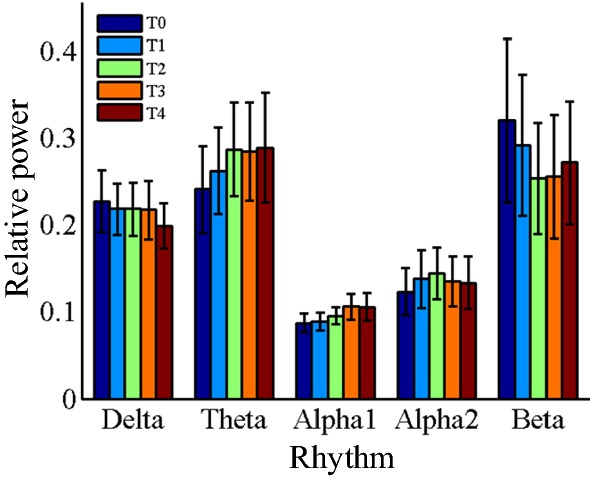
Background: Mental fatigue is usually caused by long-term cognitive activities, mainly manifested as drowsiness, difficulty in concentrating, decreased alertness, disordered thinking, slow reaction, lethargy, reduced work efficiency, error-prone and so on. Mental fatigue has become a widespread sub-health condition, and has a serious impact on the cognitive function of the brain. However, seldom studies investigate the differences of mental fatigue on electrophysiological activity both in resting state and task state at the same time. Here, twenty healthy male participants were recruited to do a consecutive mental arithmetic tasks for mental fatigue induction, and electroencephalogram (EEG) data were collected before and after each tasks. The power and relative power of five EEG rhythms both in resting state and task state were analyzed statistically. Results: The results of brain topographies and statistical analysis indicated that mental arithmetic task can successfully induce mental fatigue in the enrolled subjects. The relative power index was more sensitive than the power index in response to mental fatigue, and the relative power for assessing mental fatigue was better in resting state than in task state. Furthermore, we found that it is of great physiological significance to divide alpha frequency band into alpha1 band and alpha2 band in fatigue related studies, and at the same time improve the statistical differences of sub-bands. Conclusions: Our current results suggested that the brain activity in mental fatigue state has great differences in resting state and task state, and it is imperative to select the appropriate state in EEG data acquisition and divide alpha band into alpha1 and alpha2 bands in mental fatigue related researches.
Overview
The claims and statistics of this paper haven’t been checked yet.
Free: it reads the open-access text and checks the first 5 claims that cite a source we can check. Create a free account to check every claim.
Integrity signals
Registry
Cites
Statistics
Figures
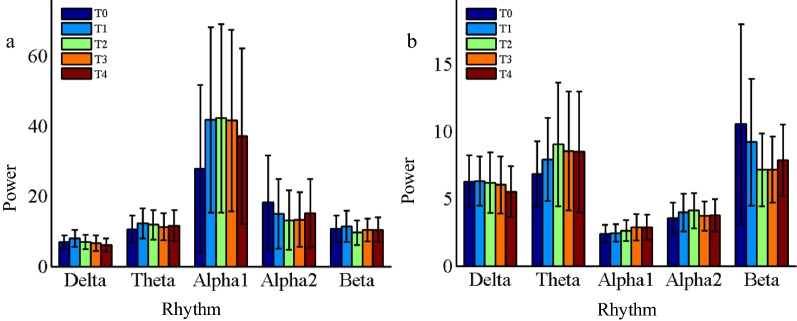
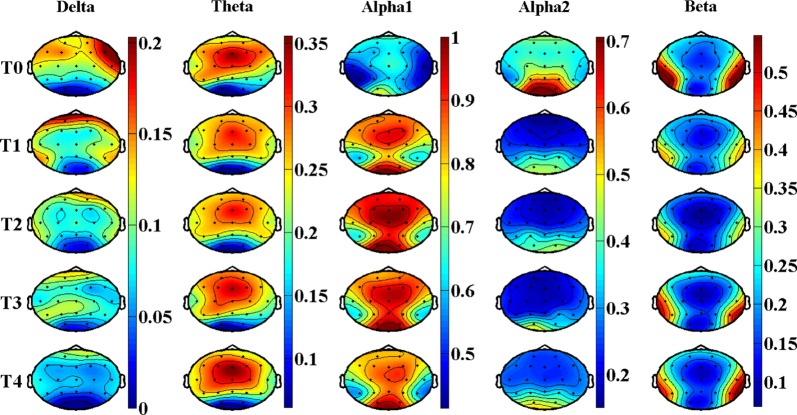
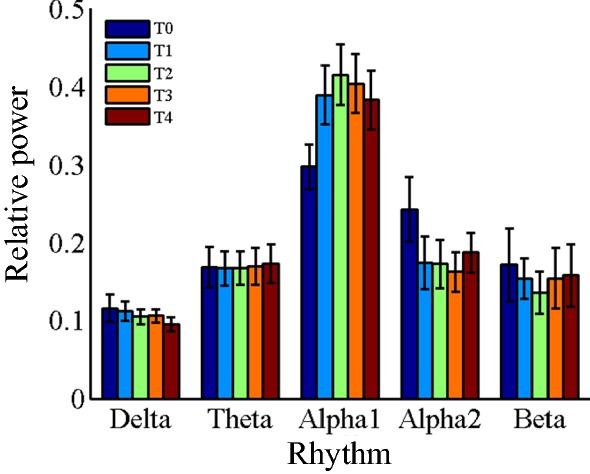
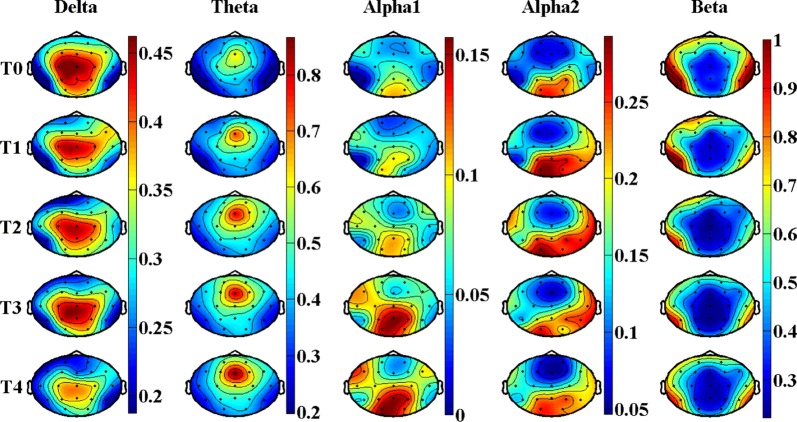

Verification
Claims the paper makes
The claims and statistics of this paper haven’t been checked yet.
Free: it reads the open-access text and checks the first 5 claims that cite a source we can check. Create a free account to check every claim.
Claims other papers make about this one
Each is checked against this paper’s own text: does it say what the citing paper says it does?
The cited source says what the claim attributes to it.
In the citing paper
“Therefore, excessive brain activity and stimulation can cause mental fatigue, akin to physical fatigue, making uncomplicated tasks increasingly difficult or even impossible [77].”
From A serial mediation model of social media addiction and college students' academic engagement: the role of sleep quality and fatigue (2023) · cites this paper as [77]
Self-check
Percentages, sums and reported differences re-computed from the paper’s own numbers.
The self-check needs the paper’s full text.
Citations
Cites
EEG alpha and theta oscillations reflect cognitive and memory performance: a review and analysis
Klimesch, W. (1999) · Brain Research Reviews · doi:10.1016/s0165-0173(98)00056-3 · Cited by 6,889
Subjective and objective sleepiness in the active individual
Åkerstedt, T., & Gillberg, M. (1990) · International Journal of Neuroscience · doi:10.3109/00207459008994241 · Cited by 3,088 · cited 1×
“Generally, theta rhythm is considered to reflect the early state of sleepiness [25], which is related to brain fatigue [26] Rhythm R el at iv e po w er”
Mental fatigue: Costs and benefits
Boksem, M. A. S., & Tops, M. (2008) · Brain Research Reviews · doi:10.1016/j.brainresrev.2008.07.001 · Cited by 1,099
Effects of mental fatigue on attention: An ERP study
Boksem, M. A. S., Meijman, T. F., & Lorist, M. M. (2005) · Cognitive Brain Research · doi:10.1016/j.cogbrainres.2005.04.011 · Cited by 1,088 · cited 1×
“In similar research results, it is also pointed out that alpha1 rhythm power increases with the increase of fatigue level [21, 30, 31], and alpha2 rhythm has the same changes in task state [30].”
A critical review of the psychophysiology of driver fatigue
Lal, S. K. L., & Craig, A. (2001) · Biological Psychology · doi:10.1016/s0301-0511(00)00085-5 · Cited by 1,001
SAUSENG, P., KLIMESCH, W., SCHABUS, M., & DOPPELMAYR, M. (2005) · International Journal of Psychophysiology · doi:10.1016/j.ijpsycho.2005.03.018 · Cited by 814
Using EEG spectral components to assess algorithms for detecting fatigue
Jap, B. T., Lal, S., Fischer, P., & Bekiaris, E. (2009) · Expert Systems with Applications · doi:10.1016/j.eswa.2007.12.043 · Cited by 729
Driver fatigue: Electroencephalography and psychological assessment
Lal, S. K. L., & Craig, A. (2002) · Psychophysiology · doi:10.1017/s0048577201393095 · Cited by 533
Neurofeedback training of the upper alpha frequency band in EEG improves cognitive performance
Zoefel, B., Huster, R. J., & Herrmann, C. S. (2011) · NeuroImage · doi:10.1016/j.neuroimage.2010.08.078 · Cited by 495
Electroencephalographic study of drowsiness in simulated driving with sleep deprivation
Eoh, H. J., Chung, M. K., & Kim, S.-H. (2005) · International Journal of Industrial Ergonomics · doi:10.1016/j.ergon.2004.09.006 · Cited by 482
Research works printed but not linked: 1
- Hartman AL: Atlas of EEG Patterns: Lippincott Williams & Wilkins; 2013.
Cited by
Items 101–151 of 151
Impact of expectancy on fatigue by exposure to the fifth generation of mobile communication signals
Yang, L., Ding, X., Zhang, S., & Wu, T. (2025) · Electromagnetic Biology and Medicine · doi:10.1080/15368378.2025.2496151 · Cited by 2
“Furthermore, Li et al. (2020) suggested that with the increase of mental fatigue, the power of the β band (13 ~ 30 hz) significantly decreased, supported by the other studies (Eoh et al. 2005; Jap et al. 2009).”
InfluentialHirosawa, T., Soma, D., Sano, M., Kameya, M., Yoshimura, Y., Iwasaki, S., Tanaka, S., & Kikuchi, M. (2025) · Frontiers in Psychiatry · doi:10.3389/fpsyt.2025.1600973 · Cited by 1
“Changes in vigilance are a well-known challenge in resting-state paradigms (81, 82), particularly in pediatric populations, and can affect both spectral power (83) and functional connectivity, especially when using coherence-based measures (84).”
Li, Y., Fang, W., Jiang, T. X., Yu, H., Zhao, R., Zhan, W., Sun, Z., & Li, Y. (2025) · Ergonomics · doi:10.1080/00140139.2025.2544814 · Cited by 4
“…decrease significantly in relative power as fatigue deepens, regardless of whether the eeG was recorded in resting-state or task-related conditions (li et al. 2020). however, li et al. (2020) proposed that resting-state beta band activity may not be sensitive to mental states. therefore, whether…”
He, Z., Zhang, C., Xie, T., & Ma, N. (2025) · Biological Psychology · doi:10.1016/j.biopsycho.2025.109138 · Cited by 1
Faro, H., Franchini, É., Albuquerque, M. R., Cavalcante-Silva, D., Pereira, D. C., de Lima, L. A. D., Machado, D. G. D. S., & Fortes, L. D. S. (2025) · Experimental Brain Research · doi:10.1007/s00221-025-07185-7 · Cited by 3
“We used three channel grouping: frontal (Fp1, Fp2, F3, F4, F7, F8, and Fz); central (C3, Cz, and C4); and parietal (P3, Pz, P4, P7, and P8) (Li et al. 2020).”
Oh, H., Lee, D., Song, J.-K., Baek, S., & Jin, I.-K. (2025) · Brain Sciences · doi:10.3390/brainsci15121332 · Cited by 4
“…using EEG. Cognitive fatigue can occur differentially depending on the type of task performed in therapy, resulting in changes in EEG rhythms, which make it difficult to quantify increases and decreases in specific frequency bands as integrated indicators of improvement in tinnitus symptoms [154].”
Alsalman, O. A., Li, W., & Figueiro, M. G. (2025) · Brain Topography · doi:10.1007/s10548-025-01159-2 · Cited by 1
“This aligns with prior findings demonstrating how efficient disengagement from microstate C may reflect reduced cognitive load and enhanced task-related resources allocation (Li et al. 2020 ).”
Ongtanasup, T., Manaspon, C., Suwannakul, N., & Eawsakul, K. (2025) · Carbohydrate Polymers · doi:10.1016/j.carbpol.2025.124860 · Cited by 2
Forecasting AI-induced technostress in healthcare: identifying techno-paralysis in decision-making
Jabbouri, R., Issa, H., & Jaber, J. (2026) · DECISION · doi:10.1007/s40622-025-00455-x · Cited by 2
Mental fatigue in football: methodology and experimental protocol
Aveiro, D., Martíns, F., Pereira, M. A. S., Coimbra, R., Mendes, R. J., Pinto, J., Kiely, J., & Campos, F. J. A. (2026) · Frontiers in Sports and Active Living · doi:10.3389/fspor.2026.1788854 · Cited by 1
“Topographic maps (topo plots) of cortical distribution by band and experimental moment will also be generated, allowing the spatial location of power changes in the scalp to be visualized and the neurophysiological dynamics associated with mental fatigue to be characterized (15, 19, 60, 66, 67).”
Cross-subject driving vigilance detection based on hybrid EEG-fNIRS brain-computer interface
Yuan, Z., Liu, X., Jia, X., Yuan, Z., Sun, Y., Hu, R., & Wang, H. (2026) · Expert Systems with Applications · doi:10.1016/j.eswa.2026.133793 · Cited by 1
Siravenha, A. C., Gomes, W. C., Tourinho, R. A., Viademonte, S., & Gomes, B. D. (2021) · Congresso Brasileiro de Inteligência Computacional (CBIC) · doi:10.21528/cbic2021-96 · Cited by 1
Neural interfaces to monitor Interventional Cardiologists' mental workload: GAME-ON SAGA
Scala, A., Campo, G. C., Tebaldi, M., Penzo, C., Tumscitz, C., Khokhar, A. A., Erriquez, A., RENZI, M., Luca, T., & Biscaglia, S. (2022) · Minerva Cardiology and Angiology · doi:10.23736/s2724-5683.22.06066-5 · Cited by 2
Mental Fatigue and Its Neural Mechanisms
黄, 俊. (2024) · Advances in Psychology · doi:10.12677/ap.2024.143171 · Cited by 1
Vahed, N., Zafarghandi, M. B. S., Bashirpour, H., Ahmadkhaniha, H., & Arezoomandan, R. (2024) · Journal of Clinical Neuroscience · doi:10.1016/j.jocn.2024.110982 · Cited by 1
Sendesen, E., & Türkyılmaz, M. D. (2025) · Brain and Behavior · doi:10.1002/brb3.70306 · Cited by 2
Gür, F., Gür, G. C., & Ayan, V. (2025) · Perspectives In Psychiatric Care · doi:10.1155/ppc/4997971 · Cited by 3
Hao, S., Lifei, X., Ruiying, X., Jian, W., Jiaxin, J., Siping, F., Xiaoqin, W., Xin, Q., & Yuhang, Z. (2025) · Human Factors and Ergonomics in Manufacturing & Service Industries · doi:10.1002/hfm.70010 · Cited by 1
“It helps in selectively attending to relevant information and suppressing distracting stimuli (Li et al. 2020).”
Automatic Mental Fatigue Detection in Real-Scene Classroom Learning
Li, S., Hu, X., Hu, Z., Chen, S., & Wen, W. (2022) · International Conference on Computer and Communication Systems (ICCCS) · doi:10.1109/icccs55155.2022.9845886 · Cited by 1
Examining Working Memory Performance in Adult Psychosomatic Inpatients
Held, J., Ramadani, L., Vîslă, A., Köllner, V., Hilpert, P., & Flückiger, C. (2021) · Frontiers in Psychology · doi:10.3389/fpsyg.2021.589809
Marjoribanks, C., Cummins, L., & Pai, P. (2023) · Health Education in Practice Journal of Research for Professional Learning · doi:10.33966/hepj.6.1.16582
Fatigue Detection Based on Multiple Eeg Features Machine Learning Results: A Follow-Up StudyPreprint
Zhan, C., Jiang, W., Xie, Y., Zhang, H., Chen, S., Xu, J., Sun, Y., Yu, H., Zhao, X., & Li, C. (2024) · SSRN Electronic Journal · doi:10.2139/ssrn.5022357
Detection of Mental Fatigue in Movement-Related Cortical Potential
Macias-Naranjo, E., Reyes-Jiménez, F., Pérez, W., Ibarra-Serna, L. E., Calles-Sánchez, D., Dueñas-Álvarez, K., Guzmán-Quezada, E., Vélez-Pérez, H. A., & Romo‐Vázquez, R. (2025) · World Congress on Medical Physics and Biomedical Engineering, September 7 - 12, 2009, Munich, Germany · doi:10.1007/978-3-031-82126-4_6
Wu, K., Gao, L., Zhao, F., Kakkos, I., Li, C., & Sun, Y. (2025) · Brain Research Bulletin · doi:10.1016/j.brainresbull.2025.111505 · Cited by 2
“This finding aligns with the recent effort utilizing occipital EEG signals for MF evaluation (Li et al., 2020).”
Shi, Y., Xie, X., Zhong, X., Zhang, H., Zhang, J., & Yin, Z. (2025) · IEEE Transactions on Instrumentation and Measurement · doi:10.1109/tim.2025.3600822
“The occipital cortex primarily processes visual information, while the parietal lobe is involved in spatial processing and integration [6].”
InfluentialSelf-citationDual-Brain EEG Decoding for Target Detection via Joint Learning in Shared and Private Spaces
He, B., Zhu, L., Li, J., Cichocki, A. S., & Kong, W. (2025) · IEEE Signal Processing Letters · doi:10.1109/lsp.2025.3601978
The impact of construction noise on mental fatigue: an event-related potential study
Yang, J., Ye, G., Shi, S., Bai, L., & Wang, J. (2025) · Engineering Construction & Architectural Management · doi:10.1108/ecam-12-2024-1656
VOLEYBOL HAKEMLİĞİNDE TECRÜBE VE BİLİŞSEL SÜREÇLERİN DİKKAT PERFORMANSINA ETKİSİ
Küçükçal, T., Koyuncu, M., Kaça, G., & Altıparmak, E. (2025) · Ankara Üniversitesi Beden Eğitimi ve Spor Yüksekokulu SPORMETRE Beden Eğitimi ve Spor Bilimleri Dergisi · doi:10.33689/spormetre.1623495
Valla, E., Väli, L., Nõmm, S., & Toomela, A. (2025) · Cognition Technology & Work · doi:10.1007/s10111-025-00829-2
Xu, C., Li, C., Cui, T., Li, S., Han, X., Wen, B., & Wei, C. (2025) · GeroScience · doi:10.1007/s11357-025-02042-5 · Cited by 1
“On the other hand, alpha2 rhythm is linked to memory and cognitive behavior [81], with higher SW in this band representing a functional counterpart of hippocampal atrophy and related-net-work disconnection [19, 82].”
Hunter, C. R. (2026) · Ear and Hearing · doi:10.1097/aud.0000000000001785
Liu, Z., Wei, A., Chen, K., Gao, X., Wei, Z., Qin, Y., Cui, B., Wang, T., & Wang, K. (2026) · Frontiers in Human Neuroscience · doi:10.3389/fnhum.2026.1684714 · Cited by 1
Otero, R. B., Moreno, F. C., Amado-Sánchez, Y., & Díaz-Secades, L. A. (2026) · Reliability Engineering & System Safety · doi:10.1016/j.ress.2026.112483
Keshvari, F., Farsi, A., Abdoli, B., & Alboghebeish, S. (2026) · Cognition & Emotion · doi:10.1080/02699931.2026.2639073
Basheer, F., & Balakrishnan, V. (2026) · Deviant Behavior · doi:10.1080/01639625.2026.2647429 · Cited by 1
Cognitive state analysis based on EEG using chaotic reservoir computing
Ogras, B., & Bayram, M. (2026) · Journal of King Saud University - Computer and Information Sciences · doi:10.1007/s44443-026-00669-8
“It rises when the brain shifts from rest mode to task mode, enabling concentration (Li et al. 2020).”
Rest Assured: Detecting Mental Fatigue and Recovery with EEG Headphones
Schick, L., Frey, E., Putze, F., & Knierim, M. T. (2026) · CHI Conference on Human Factors in Computing Systems · doi:10.1145/3772318.3791781
“Rest with minimal external stimulation has been found to be effective for short-term recovery [34, 61, 84], and brief mindfulness techniques have similarly been shown to reduce mental fatigue [7, 63].”
Does Acute Mental Fatigue Affect Service Performance in Recreational Tennis Players?
Önal, A., Kadı, M. N., & Deliceoğlu, G. (2026) · CBÜ Beden Eğitimi ve Spor Bilimleri Dergisi · doi:10.33459/cbubesbd.1661069
Tafazzoli, M., Haq, I., Naeijian, F., Goodarzi, M., Al-Bayati, A. J., & Kamari, M. (2026) · Buildings · doi:10.3390/buildings16112091
Bose, A., Gupta, P., Vemuri, K., Das, D., Ghosh, D., Dana, S. K., Saha, S., & Hens, C. (2026) · Chaos An Interdisciplinary Journal of Nonlinear Science · doi:10.1063/5.0314904
Yasumoto, M., Miyagishi, Y., Hirosawa, T., Ono, Y., Soma, D., Osaka, Y., Kameya, M., Yuasa, K., Sano, M., Takeuchi, R., et al. (2026) · Frontiers in Psychiatry · doi:10.3389/fpsyt.2026.1804124
Glen, B., WILLS, J. A., Wiggins, M., Campbell, R., Edmonds, R., Kirk, B. J. C., & Doyle, T. L. A. (2026) · Research Square · doi:10.21203/rs.3.rs-10021996/v1
Hu, J., Wang, Y., & Yu, H. (2026) · Neuroscience · doi:10.1016/j.neuroscience.2026.07.025
A Multi-Indicator Approach for Enhancing Real-time Worker Fatigue Monitoring in Mining Environments
Boakye, K., Afum, B. O., & Boakye, K. (2026) · Mining Metallurgy & Exploration · doi:10.1007/s42461-026-01643-8
“EEG studies have shown that as fatigue increases, theta waves (4–8 Hz) become more dominant, alpha waves (8–13 Hz) rise, beta waves (13–30 Hz) decrease, and in severe fatigue or microsleep cases, delta waves (0.5–4 Hz) may appear even while the person is awake (Li et al. 2020; Chen et al. 2013).”
InfluentialYao, Y.-H., XU, S., Kim, E.-S., Kim, E.-A., Wang, Y.-X., Kim, H.-S., Kim, H.-S., Liang, J., Shin, Y. K., & Kim, N. (2026) · JMIR Serious Games · doi:10.2196/95160
“Previous studies have identified hallmark network abnormalities in AD and MCI, including altered phase synchrony, reduced global efficiency (GE), disrupted modular organization, and interhemispheric connectivity imbalance [17,18].”
A dual-branch multidimensional attention fusion network for EEG-based fatigue classification
Lu, J., Liu, S., Li, W., Mu, C., Gong, D., & Yao, D. (2026) · Frontiers in Physiology · doi:10.3389/fphys.2026.1923970
Wu, Y., Zheng, S., Ren, Y., & Zhou, Y. (2026) · Energy and Buildings · doi:10.1016/j.enbuild.2026.118268
A Stable-Contact-Oriented In-Ear EEG Sensor With Contact-Mechanics-Guided Electrode Placement
Wu, W., Wang, T., Song, L., Fu, F., Liu, Z., Zhu, P., Yang, Y. M., Liu, S., & Ming, D. (2026) · IEEE Transactions on Instrumentation and Measurement · doi:10.1109/tim.2026.3736118 · Cited by 1
“Previous studies have reported that prolonged tasks, reduced vigilance, and mental fatigue can increase alpha activity, especially under eyes-open conditions [25], [26], [27].”
Zhe, J. L. W., Nisar, H., Yeap, K. H., & Shin, V. (2026) · IEEE International Conference on Signal and Image Processing Applications (ICSIPA) · doi:10.1109/icsipa69622.2026.11720083
“Collectively, these findings highlight the temporally dynamic and individualized nature of alpha modulation responses, which may not be fully reflected by conventional group-averaged analyses [7], [16].”
Molloy, J., & Doane, M. (2026) · European Journal of Anaesthesiology Intensive Care · doi:10.1097/ea9.0000000000000133
Metadata
- Authors
- Li, G., Huang, S., Xu, W., Jiao, W., Jiang, Y., Gao, Z., & Zhang, J.
- Affiliations
- Zhejiang Normal University (CN)
- Shandong University (CN)
- Corresponding author
- Huang, Shan
- Zhang, Jianhua
- Venue
- BMC Neuroscience
- Published
- 2020-05-12
- Volume
- 21
- Issue
- 1
- Pages
- 20-20
- ISSN
- 1471-2202 (ISSN-L)
- PMC
- PMC7216620
- OpenAlex
- W3027488724
- Cited by
- 151
- References
- 40
- Citations by year
- 2026: 26 · 2025: 48 · 2024: 24 · 2023: 22 · 2022: 22 · 2021: 9
- FWCI
- 12.82
- Type
- journal article
- Language
- en
- Open access
- gold
- doi.org
- Licence
- cc-by
- creativecommons.org/licenses/by/4.0 (tdm)
- creativecommons.org/licenses/by/4.0 (vor)
- Locations
- BMC Neuroscience (publishedVersion, cc-by)
- PubMed Central (publishedVersion, cc-by)
- PubMed (publishedVersion)
- DOAJ (DOAJ: Directory of Open Access Journals) (submittedVersion, cc-by-sa)
- Funders
- National Natural Science Foundation of China (51575497)
- Natural Science Foundation of Zhejiang Province (LQ19E050011)
- Zhejiang Province Public Welfare Technology Application Research Project (LGF19G010005)
- Topics
- Social Sciences › Psychology › Experimental and Cognitive Psychology › Sleep and Work-Related Fatigue
- Life Sciences › Neuroscience › Cognitive Neuroscience › EEG and Brain-Computer Interfaces
- Life Sciences › Neuroscience › Cognitive Neuroscience › Neural dynamics and brain function
- Keywords
- mental fatigue, EEG, resting state, task state, mental arithmetic, alpha band, relative power, brain activity, fatigue induction, cognitive function
- MeSH terms
- Adult, Brain, Brain Mapping, Electroencephalography, Mental Fatigue, Humans, Male, Rest, Wakefulness, Young Adult
About these checks
Registry, retraction, Cites and statistics results are computed, not judged, with one exception: a printed reference that no index lists is read once by a model before it counts as a citation error. Claims are extracted by a model and kept only when their quote appears verbatim in the text; each cited source is then checked, with a model’s help, for whether it says what the claim relies on. Those verdicts can be wrong — read the claim’s quote and the cited source before relying on one.
Statistics and arithmetic are recomputed, not judged.
Confidence bands are shown only for fields calibrated on our annotated test set. None is calibrated yet, so no band is shown.
What counts as a claim ›How we measure confidence ›How we check this ›
Are you an author, or do you see a problem with this page? Request a review
Data sources
Bibliographic data: Semantic Scholar, OpenAlex, Crossref.
Contains information from the Semantic Scholar Academic Graph Datasets, made available under the ODC Attribution License (ODC-BY 1.0).
Semantic Scholar’s data is described in: Kinney, R., et al. (2023). The Semantic Scholar Open Data Platform. arXiv:2301.10140.
