

The impact of mental fatigue on brain activity: a comparative study both in resting state and task state using EEG
Open accessThe DOI matches its Crossref record; 40 of the 40 references it cites were found in a registry or an index.
Abstract
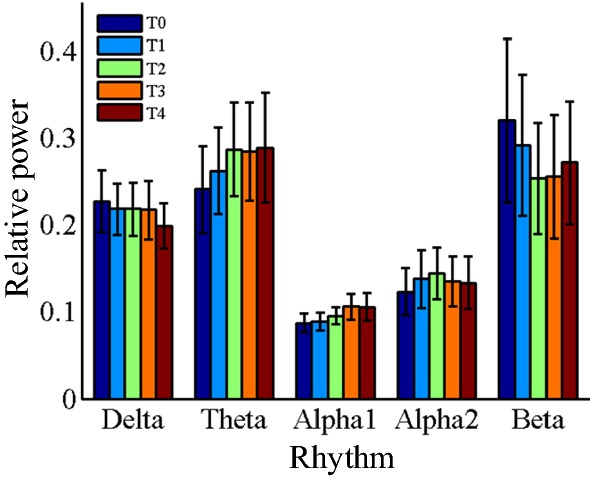
Background: Mental fatigue is usually caused by long-term cognitive activities, mainly manifested as drowsiness, difficulty in concentrating, decreased alertness, disordered thinking, slow reaction, lethargy, reduced work efficiency, error-prone and so on. Mental fatigue has become a widespread sub-health condition, and has a serious impact on the cognitive function of the brain. However, seldom studies investigate the differences of mental fatigue on electrophysiological activity both in resting state and task state at the same time. Here, twenty healthy male participants were recruited to do a consecutive mental arithmetic tasks for mental fatigue induction, and electroencephalogram (EEG) data were collected before and after each tasks. The power and relative power of five EEG rhythms both in resting state and task state were analyzed statistically. Results: The results of brain topographies and statistical analysis indicated that mental arithmetic task can successfully induce mental fatigue in the enrolled subjects. The relative power index was more sensitive than the power index in response to mental fatigue, and the relative power for assessing mental fatigue was better in resting state than in task state. Furthermore, we found that it is of great physiological significance to divide alpha frequency band into alpha1 band and alpha2 band in fatigue related studies, and at the same time improve the statistical differences of sub-bands. Conclusions: Our current results suggested that the brain activity in mental fatigue state has great differences in resting state and task state, and it is imperative to select the appropriate state in EEG data acquisition and divide alpha band into alpha1 and alpha2 bands in mental fatigue related researches.
Overview
The claims and statistics of this paper haven’t been checked yet.
Free: it reads the open-access text and checks the first 5 claims that cite a source we can check. Create a free account to check every claim.
Integrity signals
Registry
Cites
Statistics
Figures
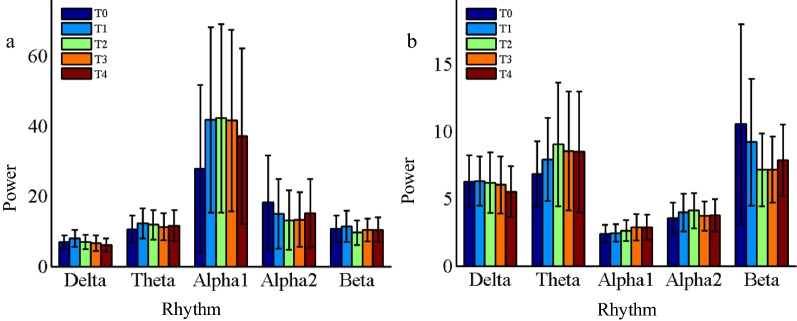
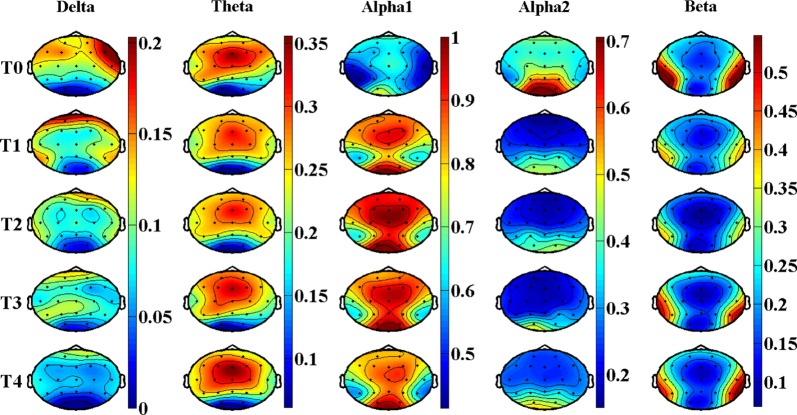
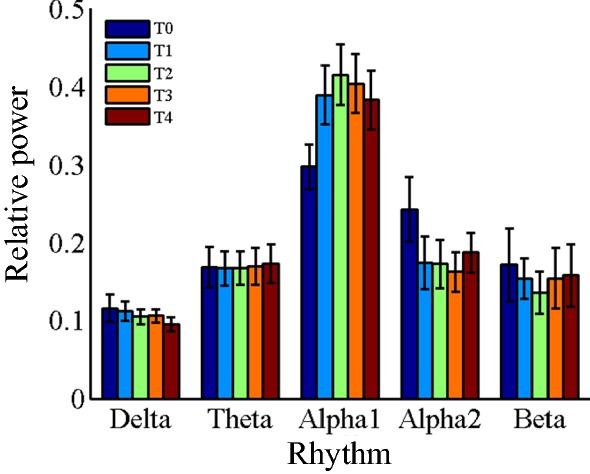
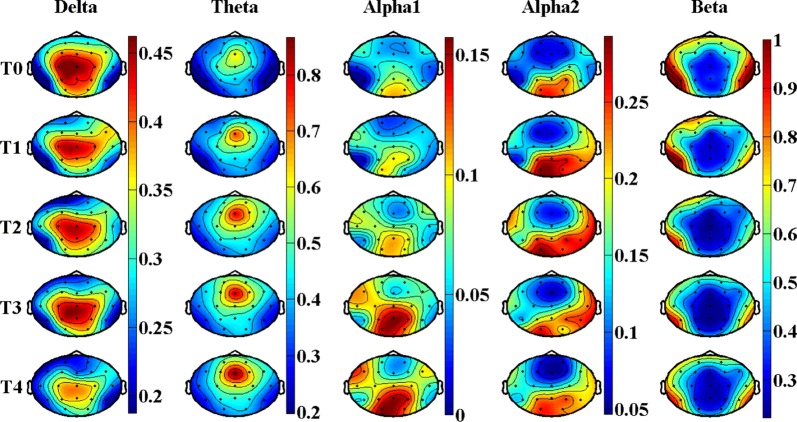

Verification
Claims the paper makes
The claims and statistics of this paper haven’t been checked yet.
Free: it reads the open-access text and checks the first 5 claims that cite a source we can check. Create a free account to check every claim.
Claims other papers make about this one
Each is checked against this paper’s own text: does it say what the citing paper says it does?
The cited source says what the claim attributes to it.
In the citing paper
“Therefore, excessive brain activity and stimulation can cause mental fatigue, akin to physical fatigue, making uncomplicated tasks increasingly difficult or even impossible [77].”
From A serial mediation model of social media addiction and college students' academic engagement: the role of sleep quality and fatigue (2023) · cites this paper as [77]
Self-check
Percentages, sums and reported differences re-computed from the paper’s own numbers.
The self-check needs the paper’s full text.
Citations
Cites
EEG alpha and theta oscillations reflect cognitive and memory performance: a review and analysis
Klimesch, W. (1999) · Brain Research Reviews · doi:10.1016/s0165-0173(98)00056-3 · Cited by 6,889
Subjective and objective sleepiness in the active individual
Åkerstedt, T., & Gillberg, M. (1990) · International Journal of Neuroscience · doi:10.3109/00207459008994241 · Cited by 3,088 · cited 1×
“Generally, theta rhythm is considered to reflect the early state of sleepiness [25], which is related to brain fatigue [26] Rhythm R el at iv e po w er”
Mental fatigue: Costs and benefits
Boksem, M. A. S., & Tops, M. (2008) · Brain Research Reviews · doi:10.1016/j.brainresrev.2008.07.001 · Cited by 1,099
Effects of mental fatigue on attention: An ERP study
Boksem, M. A. S., Meijman, T. F., & Lorist, M. M. (2005) · Cognitive Brain Research · doi:10.1016/j.cogbrainres.2005.04.011 · Cited by 1,088 · cited 1×
“In similar research results, it is also pointed out that alpha1 rhythm power increases with the increase of fatigue level [21, 30, 31], and alpha2 rhythm has the same changes in task state [30].”
A critical review of the psychophysiology of driver fatigue
Lal, S. K. L., & Craig, A. (2001) · Biological Psychology · doi:10.1016/s0301-0511(00)00085-5 · Cited by 1,001
SAUSENG, P., KLIMESCH, W., SCHABUS, M., & DOPPELMAYR, M. (2005) · International Journal of Psychophysiology · doi:10.1016/j.ijpsycho.2005.03.018 · Cited by 814
Using EEG spectral components to assess algorithms for detecting fatigue
Jap, B. T., Lal, S., Fischer, P., & Bekiaris, E. (2009) · Expert Systems with Applications · doi:10.1016/j.eswa.2007.12.043 · Cited by 729
Driver fatigue: Electroencephalography and psychological assessment
Lal, S. K. L., & Craig, A. (2002) · Psychophysiology · doi:10.1017/s0048577201393095 · Cited by 533
Neurofeedback training of the upper alpha frequency band in EEG improves cognitive performance
Zoefel, B., Huster, R. J., & Herrmann, C. S. (2011) · NeuroImage · doi:10.1016/j.neuroimage.2010.08.078 · Cited by 495
Electroencephalographic study of drowsiness in simulated driving with sleep deprivation
Eoh, H. J., Chung, M. K., & Kim, S.-H. (2005) · International Journal of Industrial Ergonomics · doi:10.1016/j.ergon.2004.09.006 · Cited by 482
Sleepiness on the job: continuously measured EEG changes in train drivers
Torsvall, L., & åAkerstedt, T. (1987) · Electroencephalography and Clinical Neurophysiology · doi:10.1016/0013-4694(87)90096-4 · Cited by 466
Regional brain wave activity changes associated with fatigue
Craig, A., Tran, Y., Wijesuriya, N., & Nguyen, H. (2012) · Psychophysiology · doi:10.1111/j.1469-8986.2011.01329.x · Cited by 359
Brain oscillations and human memory: EEG correlates in the upper alpha and theta band
Klimesch, W., Doppelmayr, M., Pachinger, T., & Ripper, B. (1997) · Neuroscience Letters · doi:10.1016/s0304-3940(97)00771-4 · Cited by 347
Strijkstra, A. M., Beersma, D. G. M., Drayer, B., Halbesma, N., & Daan, S. (2003) · Neuroscience Letters · doi:10.1016/s0304-3940(03)00033-8 · Cited by 319
EEG signal analysis for the assessment and quantification of driver’s fatigue
Kar, S., Bhagat, M., & Routray, A. (2010) · Transportation Research Part F: Traffic Psychology and Behaviour · doi:10.1016/j.trf.2010.06.006 · Cited by 292
Event-related desynchronization in the alpha band and the processing of semantic information
Klimesch, W., Doppelmayr, M., Pachinger, T., & Russegger, H. (1997) · Cognitive Brain Research · doi:10.1016/s0926-6410(97)00018-9 · Cited by 283
Ahn, S., Nguyen, T., Jang, H., Kim, J. G., & Jun, S. C. (2016) · Frontiers in Human Neuroscience · doi:10.3389/fnhum.2016.00219 · Cited by 254 · cited 1×
“Mental fatigue has become a popular sub-healthy state in nowadays, which has effects on almost all aspects of cognitive functions of human brain [2], such as driving fatigue [3].”
Upper alpha ERD and absolute power: their meaning for memory performance
Klimesch, W., Doppelmayr, M., & Hanslmayr, S. (2006) · Progress in Brain Research · doi:10.1016/s0079-6123(06)59010-7 · Cited by 206
Phase synchronization between theta and upper alpha oscillations in a working memory task
SCHACK, B., KLIMESCH, W., & SAUSENG, P. (2005) · International Journal of Psychophysiology · doi:10.1016/j.ijpsycho.2005.03.016 · Cited by 185
Sun, Y., Lim, J., Kwok, K., & Bezerianos, A. (2014) · Brain and Cognition · doi:10.1016/j.bandc.2013.12.011 · Cited by 179
Hu, J., & Min, J. (2018) · Cognitive Neurodynamics · doi:10.1007/s11571-018-9485-1 · Cited by 168
Dimitrakopoulos, G. N., Kakkos, I., Dai, Z., Wang, H., Sgarbas, K., Thakor, N., Bezerianos, A., & Sun, Y. (2018) · IEEE Transactions on Neural Systems and Rehabilitation Engineering · doi:10.1109/tnsre.2018.2791936 · Cited by 163 · cited 2×
“These changes in EEG can be used to detect mental fatigue [11, 16], which is especially important and meaningful for driving fatigue estimation [8, 12].”
Neural effects of mental fatigue caused by continuous attention load: A magnetoencephalography study
Tanaka, M., Ishii, A., & Watanabe, Y. (2014) · Brain Research · doi:10.1016/j.brainres.2014.03.009 · Cited by 153
Neural Mechanisms of Mental Fatigue Revisited: New Insights from the Brain Connectome
Qi, P., Ru, H., Gao, L., Zhang, X., Zhou, T., Tian, Y., Thakor, N., Bezerianos, A., Li, J., & Sun, Y. (2019) · Engineering · doi:10.1016/j.eng.2018.11.025 · Cited by 135
EEG-based upper alpha neurofeedback training improves working memory performance
Escolano, C., Aguilar, M., & Minguez, J. (2011) · 2011 Annual International Conference of the IEEE Engineering in Medicine and Biology Society · doi:10.1109/iembs.2011.6090651 · Cited by 134
Reproducibility of the spectral components of the electroencephalogram during driver fatigue
Lal, S., & Craig, A. R. (2004) · International Journal of Psychophysiology · doi:10.1016/j.ijpsycho.2004.07.001 · Cited by 130
Discriminative Analysis of Brain Functional Connectivity Patterns for Mental Fatigue Classification
Sun, Y., Lim, J., Meng, J., Kwok, K., Thakor, N. V., & Bezerianos, A. (2014) · Annals of Biomedical Engineering · doi:10.1007/s10439-014-1059-8 · Cited by 80
Detecting alpha spindle events in EEG time series using adaptive autoregressive models
Lawhern, V. J., Kerick, S. E., & Robbins, K. A. (2013) · BMC Neuroscience · doi:10.1186/1471-2202-14-101 · Cited by 66
Pallebage-Gamarallage, M., Foxley, S., Menke, R. A. L., Huszar, I. N., Jenkinson, M., Tendler, B. C., Wang, C., Jbabdi, S., Turner, M. R., Miller, K. L., et al. (2018) · BMC Neuroscience · doi:10.1186/s12868-018-0416-1 · Cited by 64
Neural effects of prolonged mental fatigue: A magnetoencephalography study
Ishii, A., Tanaka, M., Shigihara, Y., Kanai, E., Funakura, M., & Watanabe, Y. (2013) · Brain Research · doi:10.1016/j.brainres.2013.07.022 · Cited by 59
Effects of Mental Fatigue on Small-World Brain Functional Network Organization
Li, G., Luo, Y., Zhang, Z., Xu, Y., Jiao, W., Jiang, Y., Huang, S., & Wang, C. (2019) · Neural Plasticity · doi:10.1155/2019/1716074 · Cited by 59
Self-citationEEG alpha activity is associated with individual differences in post-break improvement
Lim, J., Quevenco, F., & Kwok, K. (2013) · NeuroImage · doi:10.1016/j.neuroimage.2013.03.018 · Cited by 54
Graph analysis of functional brain network topology using minimum spanning tree in driver drowsiness
Chen, J., Wang, H., Hua, C., Wang, Q., & Liu, C. (2018) · Cognitive Neurodynamics · doi:10.1007/s11571-018-9495-z · Cited by 48
Abnormal Reorganization of Functional Cortical Small-World Networks in Focal Hand Dystonia
Jin, S., Lin, P. T., & Hallett, M. (2011) · PLoS ONE · doi:10.1371/journal.pone.0028682 · Cited by 44 · cited 1×
“Mental fatigue has become a popular sub-healthy state in nowadays, which has effects on almost all aspects of cognitive functions of human brain [2], such as driving fatigue [3].”
A New Method for Human Mental Fatigue Detection with Several EEG Channels
Li, G., Li, B., Wang, G., Zhang, J., & Wang, J. (2017) · Journal of Medical and Biological Engineering · doi:10.1007/s40846-017-0224-6 · Cited by 44
Self-citationAlpha attenuation soon after closing the eyes as an objective indicator of sleepiness
Putilov, A. A., & Donskaya, O. G. (2014) · Clinical and Experimental Pharmacology and Physiology · doi:10.1111/1440-1681.12311 · Cited by 40
Mental Fatigue Estimation Using EEG in a Vigilance Task and Resting States
Tian, S., Wang, Y., Dong, G., Pei, W., & Chen, H. (2018) · Annual International Conference of the IEEE Engineering in Medicine and Biology Society (EMBC) · doi:10.1109/embc.2018.8512666 · Cited by 24 · cited 2×
“These changes in EEG can be used to detect mental fatigue [11, 16], which is especially important and meaningful for driving fatigue estimation [8, 12].”
Huang, J., Ulke, C., Sander, C., Jawinski, P., Spada, J., Hegerl, U., & Hensch, T. (2018) · BMC Neuroscience · doi:10.1186/s12868-018-0419-y · Cited by 22
Li, G., Jiang, Y., Jiao, W., Xu, W., Huang, S., Gao, Z., Zhang, J., & Wang, C. (2020) · Brain Sciences · doi:10.3390/brainsci10020092 · Cited by 18
Self-citationA new method for automatically modelling brain functional networks
Li, G., Li, B., Jiang, Y., Jiao, W., Hu, L., & Zhu, C. (2018) · Biomedical Signal Processing and Control · doi:10.1016/j.bspc.2018.05.024 · Cited by 17
Self-citation
Research works printed but not linked: 1
- Hartman AL: Atlas of EEG Patterns: Lippincott Williams & Wilkins; 2013.
Cited by
Understanding mental fatigue and its detection: a comparative analysis of assessments and tools
Kunasegaran, K., Ismail, A. M. H., Ramasamy, S., Gnanou, J. V., Caszo, B. A., & Chen, P. L. (2023) · PeerJ · doi:10.7717/peerj.15744 · Cited by 225
“A recent study on the impact of mental fatigue on brain activity showed that when using the entire EEG setup, the EEG relative power index was better at assessing mental fatigue when individuals were in a resting state compared to when they were actively performing a task (Li et al., 2020).”
BackgroundReview of electroencephalography signals approaches for mental stress assessment
Attar, E. T. (2022) · Neurosciences · doi:10.17712/nsj.2022.4.20220025 · Cited by 135
Attention Detection in Virtual Environments Using EEG Signals: A Scoping Review
Souza, R. H. C. E., & Naves, E. L. M. (2021) · Frontiers in Physiology · doi:10.3389/fphys.2021.727840 · Cited by 102
“…α – alpha waves (low alpha 8–11 Hz and high alpha 11.1–13 Hz) has been the main physiological indicator of low anxiety state, especially high alpha (Li et al., 2020c) which indicates also cognitive idleness, being a marker of external stimuli suppression capable of reorienting the individual’s…”
BackgroundInfluentialZhuang, J., Mou, Q., Zheng, T., Gao, F., Zhong, Y., Lu, Q., Gao, Y., & Zhao, M. (2023) · BMC Psychiatry · doi:10.1186/s12888-023-04799-5 · Cited by 104
Effects of the indoor environment on EEG and thermal comfort assessment in males
Pan, L., Zheng, H., & Li, T. (2022) · Building and Environment · doi:10.1016/j.buildenv.2022.109761 · Cited by 79
Metadata
- Authors
- Li, G., Huang, S., Xu, W., Jiao, W., Jiang, Y., Gao, Z., & Zhang, J.
- Affiliations
- Zhejiang Normal University (CN)
- Shandong University (CN)
- Corresponding author
- Huang, Shan
- Zhang, Jianhua
- Venue
- BMC Neuroscience
- Published
- 2020-05-12
- Volume
- 21
- Issue
- 1
- Pages
- 20-20
- ISSN
- 1471-2202 (ISSN-L)
- PMC
- PMC7216620
- OpenAlex
- W3027488724
- Cited by
- 151
- References
- 40
- Citations by year
- 2026: 26 · 2025: 48 · 2024: 24 · 2023: 22 · 2022: 22 · 2021: 9
- FWCI
- 12.82
- Type
- journal article
- Language
- en
- Open access
- gold
- doi.org
- Licence
- cc-by
- creativecommons.org/licenses/by/4.0 (tdm)
- creativecommons.org/licenses/by/4.0 (vor)
- Locations
- BMC Neuroscience (publishedVersion, cc-by)
- PubMed Central (publishedVersion, cc-by)
- PubMed (publishedVersion)
- DOAJ (DOAJ: Directory of Open Access Journals) (submittedVersion, cc-by-sa)
- Funders
- National Natural Science Foundation of China (51575497)
- Natural Science Foundation of Zhejiang Province (LQ19E050011)
- Zhejiang Province Public Welfare Technology Application Research Project (LGF19G010005)
- Topics
- Social Sciences › Psychology › Experimental and Cognitive Psychology › Sleep and Work-Related Fatigue
- Life Sciences › Neuroscience › Cognitive Neuroscience › EEG and Brain-Computer Interfaces
- Life Sciences › Neuroscience › Cognitive Neuroscience › Neural dynamics and brain function
- Keywords
- mental fatigue, EEG, resting state, task state, mental arithmetic, alpha band, relative power, brain activity, fatigue induction, cognitive function
- MeSH terms
- Adult, Brain, Brain Mapping, Electroencephalography, Mental Fatigue, Humans, Male, Rest, Wakefulness, Young Adult
About these checks
Registry, retraction, Cites and statistics results are computed, not judged, with one exception: a printed reference that no index lists is read once by a model before it counts as a citation error. Claims are extracted by a model and kept only when their quote appears verbatim in the text; each cited source is then checked, with a model’s help, for whether it says what the claim relies on. Those verdicts can be wrong — read the claim’s quote and the cited source before relying on one.
Statistics and arithmetic are recomputed, not judged.
Confidence bands are shown only for fields calibrated on our annotated test set. None is calibrated yet, so no band is shown.
What counts as a claim ›How we measure confidence ›How we check this ›
Are you an author, or do you see a problem with this page? Request a review
Data sources
Bibliographic data: Semantic Scholar, OpenAlex, Crossref.
Contains information from the Semantic Scholar Academic Graph Datasets, made available under the ODC Attribution License (ODC-BY 1.0).
Semantic Scholar’s data is described in: Kinney, R., et al. (2023). The Semantic Scholar Open Data Platform. arXiv:2301.10140.
