

The DOI matches its Crossref record.
LY86 facilitates ox-LDL-induced lipid accumulation in macrophages by upregulating SREBP2/HMGCR expression
Abstract
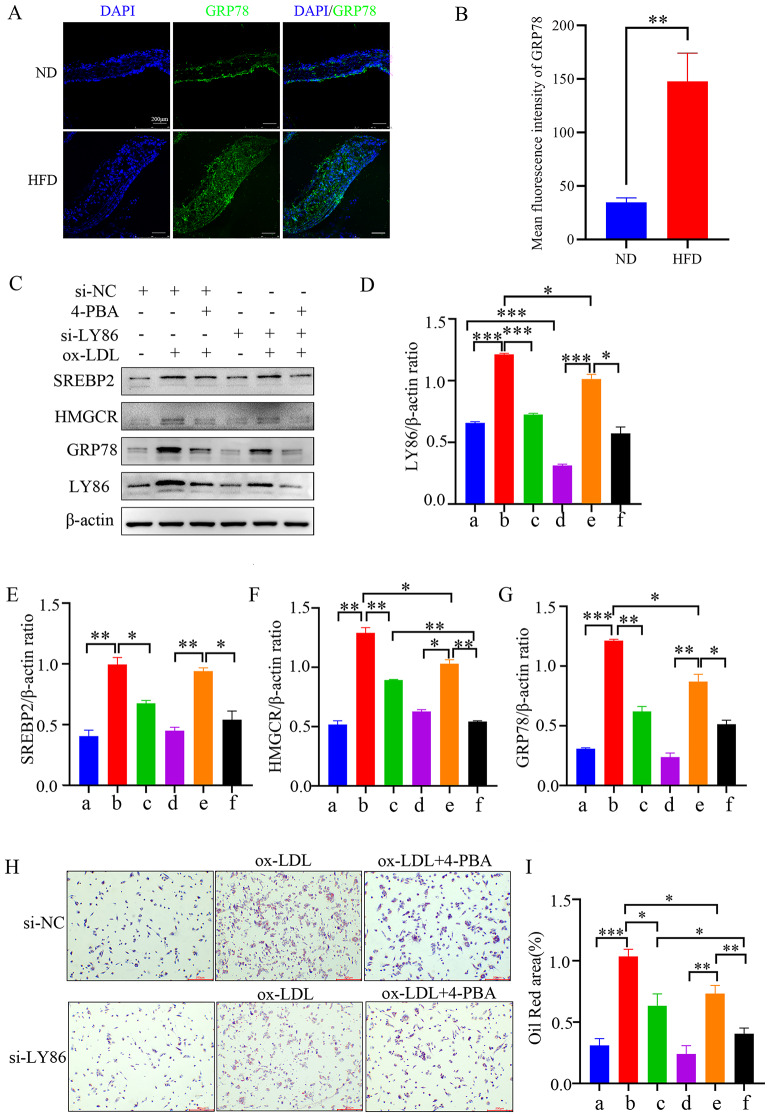
LY86, also known as MD1, has been implicated in various pathophysiological processes including inflammation, obesity, insulin resistance, and immunoregulation. However, the role of LY86 in cholesterol metabolism remains incompletely understood. Several studies have reported significant up-regulation of LY86 mRNA in atherosclerosis; nevertheless, the regulatory mechanism by which LY86 is involved in this disease remains unclear. In this study, we aimed to investigate whether LY86 affects ox-LDL-induced lipid accumulation in macrophages. Firstly, we confirmed that LY86 is indeed involved in the process of atherosclerosis and found high expression levels of LY86 in human atherosclerotic plaque tissue. Furthermore, our findings suggest that LY86 may mediate intracellular lipid accumulation induced by ox-LDL through the SREBP2/HMGCR pathway. This mechanism could be associated with increased cholesterol synthesis resulting from enhanced endoplasmic reticulum stress response.
Overview
The claims and statistics of this paper haven’t been checked yet.
Run the check — free, no account needed. It reads the open-access text and checks the sources it cites.
Integrity signals
Registry
Cites
Statistics
Figures
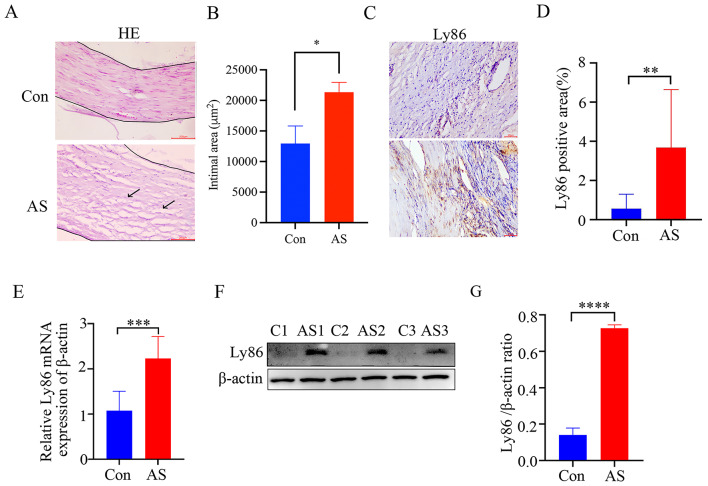
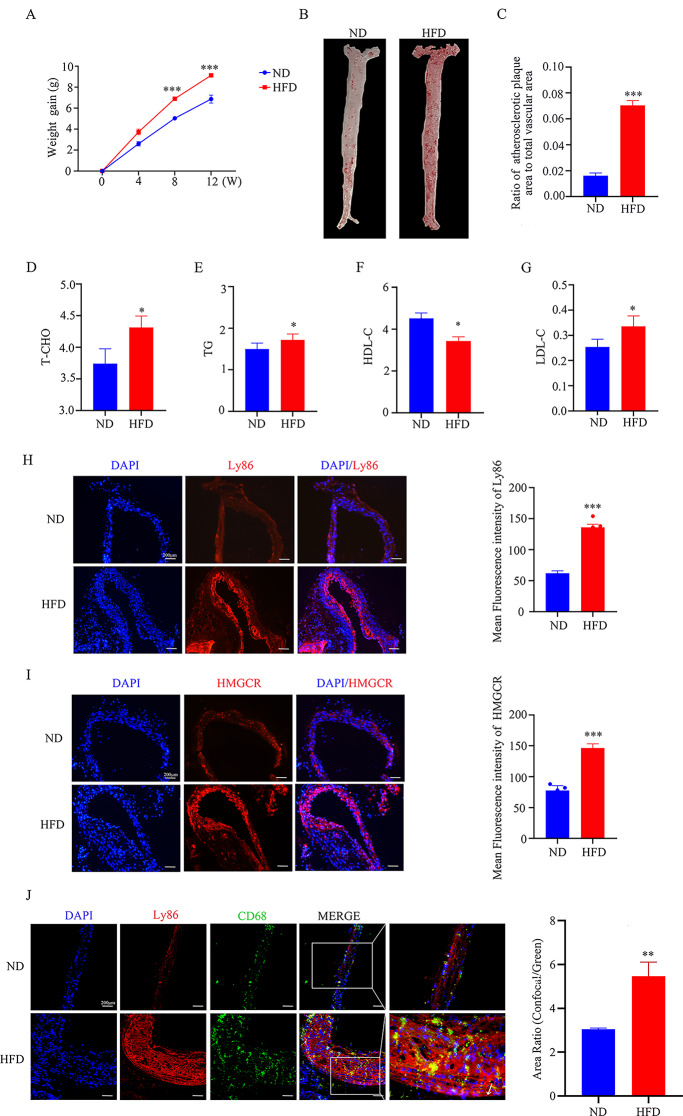
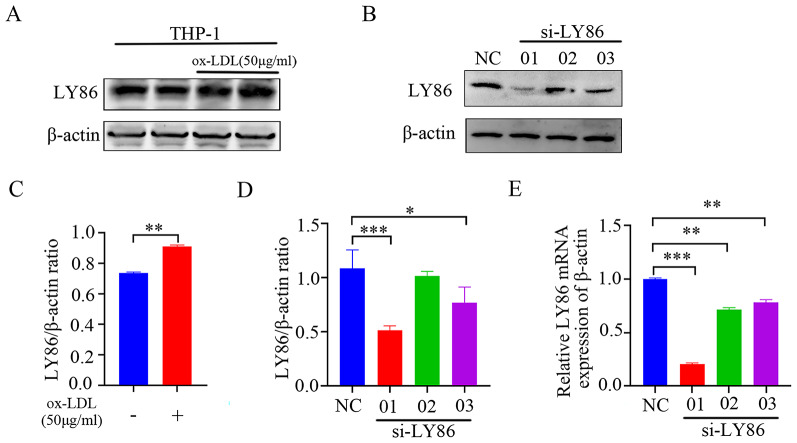
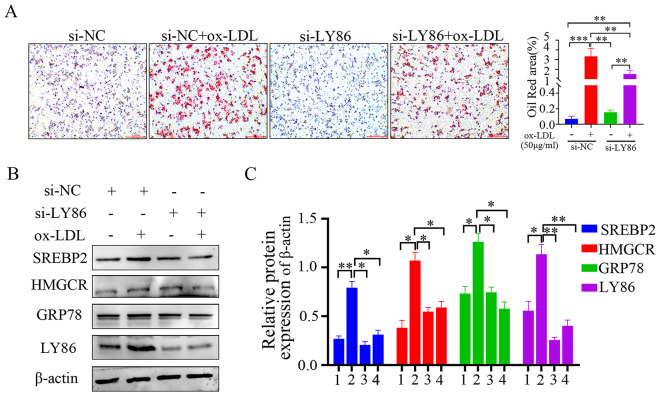
Verification
Claims the paper makes
The claims and statistics of this paper haven’t been checked yet.
Run the check — free, no account needed. It reads the open-access text and checks the sources it cites.
Claims other papers make about this one
Each is checked against this paper’s own text: does it say what the citing paper says it does?
The source backs part of the claim, not all of it — or backs it for a different population, condition or comparison.
In the citing paper
“Based on reports that INSIG1 loss activates SREBP2 and upregulates cholesterol biosynthetic genes (e.g., HMGCR, HMGCS1) and increases cholesterol production53,54”
From Macrophage INSIG1 deficiency drives psoriasiform dermatitis via the SREBP2-STAT1 axis (2026) · cites this paper as [53]
Experimental — accuracy not yet measured
Self-check
Percentages, sums and reported differences re-computed from the paper’s own numbers.
The self-check needs the paper’s full text.
Citations
Cites
No references could be resolved yet.
Research works printed but not linked: 41
- Feng LA, Shi J, Guo JY, Wang SF. Recent strategies for improving hemocompatibility and endothelialization of cardiovascular devices and inhibition of intimal hyperplasia. J Mater Chem B. 2022;10(20):3781–92. · DOI
- Fan J, Watanabe T. Atherosclerosis: known and unknown. PATHOL INT. 2022;72(3):151–60. · DOI
- Zhu Y, Xian X, Wang Z, Bi Y, Chen Q, Han X, Tang D, Chen R. Research Progress on the relationship between atherosclerosis and inflammation. Biomolecules. 2018;23(3):80. · DOI
- Liu YX, Liu XW, Yang YJ, Li SH, Bai LX, Ge WB, Xu X, Li C, Li JY, Qin Z. AEE alleviates ox-LDL-induced lipid accumulation and inflammation in macrophages. Biomed Pharmacother. 2023;167:115486. · DOI
- Chen JH, Tsai CW, Wang CP, Lin HH. Anti-atherosclerotic potential of gossypetin via inhibiting LDL oxidation and foam cell formation. Toxicol Appl Pharmacol. 2013;272(2):313–24. · DOI
- Vozenilek AE, Navratil AR, Green JM, Coleman DT, Blackburn CMR, Finney AC, Pearson BH, Chrast R, Finck BN, Klein RL, Orr AW, Woolard MD. Macrophage-Associated Lipin-1 enzymatic activity contributes to Modified Low-Density Lipoprotein-Induced Proinflammatory Signaling and Atherosclerosis. Arterioscler Thromb Vasc Biol. 2018;38(2):324–34. · DOI
- Ross R. The pathogenesis of atherosclerosis: a perspective for the 1990s. Nature. 1993;362(6423):801–9. · DOI
- Razmkhah F, Ghasemi S, Soleimani M, Amini Kafi-Abad S. LY86, LRG1 and PDE9A genes overexpression in umbilical cord blood hematopoietic stem progenitor cells by acute myeloid leukemia (M3) microvesicles. Exp Hematol Oncol. 2019;18:8:23. · DOI
- Xiong X, Liu Y, Mei Y, Peng J, Wang Z, Kong B, Zhong P, Xiong L, Quan D, Li Q, Wang G, Huang H. Novel protective role of myeloid differentiation 1 in pathological cardiac remodelling. Sci Rep. 2017;7:41857. · DOI
- Peng J, Liu Y, Xiong X, Huang C, Mei Y, Wang Z, Tang Y, Ye J, Kong B, Liu W, Wang T, Huang H. Loss of MD1 exacerbates pressure overload-induced left ventricular structural and electrical remodelling. Sci Rep. 2017;7(1):5116. · DOI
- Divanovic S, Trompette A, Atabani SF, Madan R, Golenbock DT, Visintin A, Finberg RW, Tarakhovsky A, Vogel SN, Belkaid Y, Kurt-Jones EA, Karp CL. Inhibition of TLR-4/MD-2 signaling by RP105/MD-1. J Endotoxin Res. 2005;11(6):363–8. · DOI
- Shuai W, Kong B, Fu H, Shen C, Jiang X, Huang H. MD1 Deficiency promotes inflammatory Atrial Remodelling Induced by High-Fat diets. Can J Cardiol. 2019;35(2):208–16. · DOI
- Xu J, Chen C, Yang Y. Identification and validation of candidate Gene Module along with Immune cells infiltration patterns in atherosclerosis progression to Plaque rupture via Transcriptome Analysis. Front Cardiovasc Med. 2022;9:894879. · DOI
- Zhang L, Gu J, Wang S, He F, Gong K. Identification of key differential genes in intimal hyperplasia induced by left carotid artery ligation. PeerJ. 2022;10:e13436. · DOI
- Tian L, Luo N, Klein RL, Chung BH, Garvey WT, Fu Y. Adiponectin reduces lipid accumulation in macrophage foam cells. Atherosclerosis. 2009;202(1):152–61. · DOI
- Xu L, Wang YR, Li PC, Feng B. Advanced glycation end products increase lipids accumulation in macrophages through upregulation of receptor of advanced glycation end products: increasing uptake, esterification and decreasing efflux of cholesterol. Lipids Health Dis. 2016;15(1):161. · DOI
- Sozen E, Ozer NK. Impact of high cholesterol and endoplasmic reticulum stress on metabolic diseases: an updated mini-review. Redox Biol. 2017;12:456–61. · DOI
- Kamtchum-Tatuene J. Epidemiology of carotid atherosclerosis in Africa: a blind spot. Lancet Glob Health. 2020;8:e996. · DOI
- Libby P. The changing landscape of atherosclerosis. Nature. 2021;592:524–33. · DOI · Paper page
- Chen FH, Liu T, Xu L, Zhang L, Zhou XB. Association of serum vitamin D level and carotid atherosclerosis: a systematic review and meta-analysis. J Ultrasound Med. 2018;37:1293–303. · DOI
- Zhao M, Liu A, Mo L, Wan G, Lu F, Chen L, Fu S, Chen H, Fu T, Deng H. Higher expression of PLEK and LY86 as the potential biomarker of carotid atherosclerosis. Med (Baltim). 2023;102(42):e34445. · DOI
- Luo J, Yang H, Song BL. Mechanisms and regulation of cholesterol homeostasis. Nat Rev Mol Cell Biol. 2020;21(4):225–45. · DOI · Paper page
- Cardoso D, Perucha E. Cholesterol metabolism: a new molecular switch to control inflammation. Clin Sci (Lond). 2021;135(11):1389–408. · DOI
- Goldstein JL, Brown MS. The LDL receptor Arterioscler. Thromb Vasc Biol. 2009;29(4):431–8. · DOI · Paper page
- Mineo C. Lipoprotein receptor signalling in atherosclerosis. Cardiovasc Res. 2020;116(7):1254–74. · DOI
- Bah SY, Dickinson P, Forster T, Kampmann B, Ghazal P. Immune oxysterols: role in mycobacterial infection and inflammation. J Steroid Biochem Mol Biol. 2017;169:152–63. · DOI
- Kang MH, Singaraja R, Hayden MR. Adenosine-triphosphate-binding cassette transporter-1 trafficking and function. Trends Cardiovasc Med. 2010;20(2):41–9. · DOI
- Phillips MC. Molecular mechanisms of cellular cholesterol efflux. J Biol Chem. 2014;289(35):24020–9. · DOI
- Chang TY, Li BL, Chang CC, Urano Y. Acyl-coenzyme A: cholesterol acyltransferases. Am J Physiol Endocrinol Metab. 2009;297:E1–9. · DOI · Paper page
- Bensinger SJ, Tontonoz P. Integration of metabolism and inflammation by lipid-activated nuclear receptors. Nature. 2008;454(7203):470–7. · DOI
- Wang D, Yang Y, Lei Y, Tzvetkov NT, Liu X, Yeung AWK, Xu S, Atanasov AG. Targeting foam cell formation in atherosclerosis: therapeutic potential of natural products. Pharmacol Rev. 2019;71(4):596–670. · DOI
- Luo G, Xiang L, Yao P, Xiao L. Quercetin attenuates atherosclerosis in ApoE KO mice by regulating macrophage cholesterol homeostasis. Chin Pharmacol Bull. 2022;38(9):1395–400.
- Lebeaupin C, Vallée D, Hazari Y, Hetz C, Chevet E, Bailly-Maitre B. Endoplasmic reticulum stress signalling and the pathogenesis of non-alcoholic fatty liver disease. J Hepatol. 2018;69(4):927–47. · DOI
- Mota M, Banini BA, Cazanave SC, Sanyal AJ. Molecular mechanisms of lipotoxicity and glucotoxicity in nonalcoholic fatty liver disease. Metabolism. 2016;65(8):1049–61. · DOI · Paper page
- Nasiri-Ansari N, Nikolopoulou C, Papoutsi K, Kyrou I, Mantzoros CS, Kyriakopoulos G, Chatzigeorgiou A, Kalotychou V, Randeva MS, Chatha K, Kontzoglou K, Kaltsas G, Papavassiliou AG, Randeva HS, Kassi E. Empagliflozin attenuates non-alcoholic fatty liver Disease (NAFLD) in High Fat Diet Fed ApoE(-/-) mice by activating Autophagy and reducing ER stress and apoptosis. Int J Mol Sci. 2021;22(2):818. · DOI
- Ozcan U, Cao Q, Yilmaz E, Lee AH, Iwakoshi NN, Ozdelen E, Tuncman G, Görgün C, Glimcher LH, Hotamisligil GS. Endoplasmic reticulum stress links obesity, insulin action, and type 2 diabetes. Science. 2004;306(5695):457–61. · DOI · Paper page
- Myoishi M, Hao H, Minamino T, Watanabe K, Nishihira K, Hatakeyama K, Asada Y, Okada K, Ishibashi-Ueda H, Gabbiani G, Bochaton-Piallat ML, Mochizuki N, Kitakaze M. Increased endoplasmic reticulum stress in atherosclerotic plaques associated with acute coronary syndrome. Circulation. 2007;116(11):1226–33. · DOI
- Kolb PS, Ayaub EA, Zhou W, Yum V, Dickhout JG, Ask K. The therapeutic effects of 4-phenylbutyric acid in maintaining proteostasis. Int J Biochem Cell Biol. 2015;61:45–52. · DOI
- Yang HJ, Kong B, Shuai W, Zhang JJ, Huang H. MD1 deletion exaggerates cardiomyocyte autophagy induced by heart failure with preserved ejection fraction through ROS/MAPK signalling pathway. J Cell Mol Med. 2020;24(16):9300–12. · DOI
- Strandberg TE. Role of statin therapy in primary Prevention of Cardiovascular Disease in Elderly patients. Curr Atheroscler Rep. 2019;21(8):28. · DOI
- Averna M, Banach M, Bruckert E, Drexel H, Farnier M, Gaita D, Magni P, März W, Masana L, Mello E, Silva A, Reiner Z, Ros E, Vrablik M, Zambon A, Zamorano JL, Stock JK, Tokgözoğlu LS, Catapano AL. Practical guidance for combination lipid-modifying therapy in high- and very-high-risk patients: a statement from a European Atherosclerosis Society Task Force. Atherosclerosis. 2021;325:99–109. · DOI
Cited by
Sorted by citations
Macrophage INSIG1 deficiency drives psoriasiform dermatitis via the SREBP2-STAT1 axis
Li, X., Zang, Y., Li, X., Sheng, T., Liu, S., Chen, L., Xu, X., Wang, L., Long, R., Zhang, M., et al. (2026) · Nature Communications · doi:10.1038/s41467-026-73278-8 · Cited by 1
Metadata
- Authors
- Jiang, G., Li, J., Niu, S., Dong, R., Chen, Y., & Bi, W.
- Venue
- BMC Cardiovascular Disorders
- Published
- 2024-05-31
- Volume
- 24
- Issue
- 1
- ISSN
- 1471-2261
- PMC
- PMC11140969
- Cited by
- 12
- References
- 0
- Language
- en
- Funders
- Hebei Medical Science Research Project (20190383)
About these checks
Registry, retraction, Cites and statistics results are computed, not judged, with one exception: a printed reference that no index lists is read once by a model before it counts as a citation error. Claims are extracted by a model and kept only when their quote appears verbatim in the text; each cited source is then checked, with a model’s help, for whether it says what the claim relies on. Those verdicts can be wrong — read the claim’s quote and the cited source before relying on one.
Statistics and arithmetic are recomputed, not judged.
Confidence bands are shown only for fields calibrated on our annotated test set. None is calibrated yet, so no band is shown.
What counts as a claim ›How we measure confidence ›How we check this ›
Are you an author, or do you see a problem with this page? Request a review
