

Characterising and justifying sample size sufficiency in interview-based studies: systematic analysis of qualitative health research over a 15-year period
Open accessThe DOI matches its Crossref record; 71 of the 71 references it cites were found in a registry or an index.
Abstract
BACKGROUND: Choosing a suitable sample size in qualitative research is an area of conceptual debate and practical uncertainty. That sample size principles, guidelines and tools have been developed to enable researchers to set, and justify the acceptability of, their sample size is an indication that the issue constitutes an important marker of the quality of qualitative research. Nevertheless, research shows that sample size sufficiency reporting is often poor, if not absent, across a range of disciplinary fields. METHODS: A systematic analysis of single-interview-per-participant designs within three health-related journals from the disciplines of psychology, sociology and medicine, over a 15-year period, was conducted to examine whether and how sample sizes were justified and how sample size was characterised and discussed by authors. Data pertinent to sample size were extracted and analysed using qualitative and quantitative analytic techniques. RESULTS: Our findings demonstrate that provision of sample size justifications in qualitative health research is limited; is not contingent on the number of interviews; and relates to the journal of publication. Defence of sample size was most frequently supported across all three journals with reference to the principle of saturation and to pragmatic considerations. Qualitative sample sizes were predominantly - and often without justification - characterised as insufficient (i.e., 'small') and discussed in the context of study limitations. Sample size insufficiency was seen to threaten the validity and generalizability of studies' results, with the latter being frequently conceived in nomothetic terms. CONCLUSIONS: We recommend, firstly, that qualitative health researchers be more transparent about evaluations of their sample size sufficiency, situating these within broader and more encompassing assessments of data adequacy. Secondly, we invite researchers critically to consider how saturation parameters found in prior methodological studies and sample size community norms might best inform, and apply to, their own project and encourage that data adequacy is best appraised with reference to features that are intrinsic to the study at hand. Finally, those reviewing papers have a vital role in supporting and encouraging transparent study-specific reporting.
Overview
The claims and statistics of this paper haven’t been checked yet.
Free: it reads the open-access text and checks the first 5 claims that cite a source we can check. Create a free account to check every claim.
Integrity signals
Registry
Cites
Statistics
Figures
Verification
Claims the paper makes
The claims and statistics of this paper haven’t been checked yet.
Free: it reads the open-access text and checks the first 5 claims that cite a source we can check. Create a free account to check every claim.
Claims other papers make about this one
Each is checked against this paper’s own text: does it say what the citing paper says it does?
The source backs part of the claim, not all of it — or backs it for a different population, condition or comparison.
In the citing paper
“However, a recent systematic review showed that in order to reach saturation at least 12 participants per focus group are required (Vasileiou et al., 2018).”
From Involving patients' perspective in the development of an internet- and mobile-based CBT intervention for adolescents with chronic medical conditions: Findings from a qualitative study (2021) · cites this paper as Vasileiou et al., 2018
Experimental — accuracy not yet measuredThe source backs part of the claim, not all of it — or backs it for a different population, condition or comparison.
In the citing paper
“Following Vasileiou et al. (2018) saturation for AYA with chronic medical conditions could have likely been reached with a total of at least 36 participants.”
From Involving patients' perspective in the development of an internet- and mobile-based CBT intervention for adolescents with chronic medical conditions: Findings from a qualitative study (2021) · cites this paper as Vasileiou et al., 2018
Experimental — accuracy not yet measuredThe source backs part of the claim, not all of it — or backs it for a different population, condition or comparison.
In the citing paper
“This meant that the final sample size of 7 was within the realm of acceptability according to guidelines [27], in addition to being in accordance with the minimum acceptable sample size suggested by meta-analyses of published qualitative studies in the field of psychology [26].”
From Experiences of gamified and automated virtual reality exposure therapy for spider phobia: qualitative study (2020) · cites this paper as [26]
Experimental — accuracy not yet measuredThe source backs part of the claim, not all of it — or backs it for a different population, condition or comparison.
In the citing paper
“Even though our sample size is small, we consider our participant group sufficient for this study, given their extensive expertise and potential to provide valuable insights [72].”
From A Data Visualization Tool for Patients and Healthcare Providers to Communicate during Inpatient Stroke Rehabilitation (2024) · cites this paper as [72]
Experimental — accuracy not yet measuredThe cited source says what the claim attributes to it.
In the citing paper
“The structure of questions in qualitative interviewing and the type of questions in fl uence the richness of data generated (Vasileiou et al., 2018).”
From Quality Criteria: General and Specific Guidelines for Qualitative Approaches in Psychology Research. A Concise Guide for Novice Researchers and Reviewers (2024) · cites this paper as Vasileiou et al., 2018
4 more claims about this paper
Create a free account to see every claim other papers make about this one.
Self-check
Percentages, sums and reported differences re-computed from the paper’s own numbers.
The self-check needs the paper’s full text.
Citations
Cites
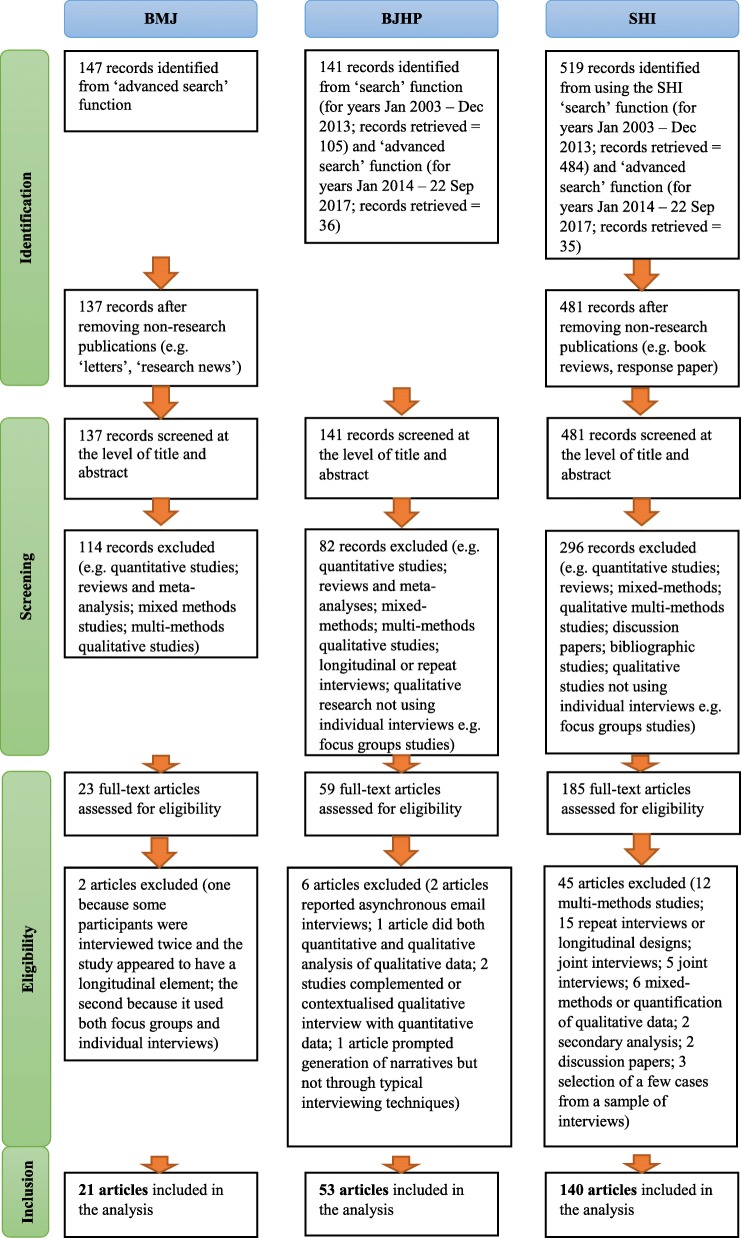
Preferred Reporting Items for Systematic Reviews and Meta-Analyses: the PRISMA statement
Moher, D., Liberati, A., Tetzlaff, J., Altman, D. G., & for the PRISMA Group (2009) · BMJ · doi:10.1136/bmj.b2535 · Cited by 83,823
Preferred Reporting Items for Systematic Reviews and Meta-Analyses: The PRISMA Statement
Moher, D., Liberati, A., Tetzlaff, J., Altman, D. G., & The PRISMA Group (2009) · PLoS Medicine · doi:10.1371/journal.pmed.1000097 · Cited by 64,042
The Discovery of Grounded Theory: Strategies for Qualitative Research.
Wagner, H. R., Glaser, B. G., & Strauss, A. L. (1968) · Social Forces · doi:10.2307/2575405 · Cited by 46,361
Lincoln, Y. S., Guba, E. G., & Pilotta, J. J. (1985) · International Journal of Intercultural Relations · doi:10.1016/0147-1767(85)90062-8 · Cited by 45,787
Preferred reporting items for systematic reviews and meta-analyses: the PRISMA Statement.
(2009) · PubMed Central · Cited by 44,859
Three Approaches to Qualitative Content Analysis
Hsieh, H.-F., & Shannon, S. E. (2005) · Qualitative Health Research · doi:10.1177/1049732305276687 · Cited by 44,601 · cited 1×
“To examine the kinds of sample size justifications provided by articles, an inductive content analysis [54] was initially conducted.”
MethodThe Discovery of Grounded Theory; Strategies for Qualitative Research
Glaser, B. G., Strauss, A. L., & Strutzel, E. (1968) · Nursing Research · doi:10.1097/00006199-196807000-00014 · Cited by 39,449
(1990) · Cited by 24,217
Qualitative Inquiry and Research Design: Choosing Among Five Approaches
Lewis, S. (2015) · Health Promotion Practice · doi:10.1177/1524839915580941 · Cited by 22,105
How Many Interviews Are Enough?: An Experiment with Data Saturation and Variability
Guest, G., Bunce, A., & Johnson, L. (2006) · Field Methods · doi:10.1177/1525822x05279903 · Cited by 20,808
Research works printed but not linked: 2
- Guetterman TC. Descriptions of sampling practices within five approaches to qualitative research in education and the health sciences. Forum Qual Soc Res. 2015;16(2):25. http://nbn-resolving.de/urn:nbn:de:0114-fqs1502256. Accessed 17 May 2018.
- Mason M. Sample size and saturation in PhD studies using qualitative interviews. Forum Qual Soc Res 2010;11(3):8. http://nbn-resolving.de/urn:nbn:de:0114-fqs100387. Accessed 17 May 2018.
Cited by
Items 401–500 of 1,010
Parent-Reported Experience Measures of Care for Children With Serious Illnesses: A Scoping Review
Ang, F. J. L., Finkelstein, E. A., & Gandhi, M. (2022) · Pediatric Critical Care Medicine · doi:10.1097/pcc.0000000000002996 · Cited by 16
“Researchers may refer to the Survey Development Guidance for Medical Education Researchers (36) or a series of publications by the Mayo/FDA Patient-Reported Outcomes Consensus Meeting Group (37) for more guidance on these steps; 2) Follow evaluative guidelines for the assessment of psychometric properties (step 6) to…”
BackgroundMethodOnline mentoring: Challenges and strategies
Jan, S., & Mahboob, U. (2022) · Pakistan Journal of Medical Sciences · doi:10.12669/pjms.38.8.5804 · Cited by 21
Wallbank, G., Haynes, A. S., Tiedemann, A., Sherrington, C., & Grunseit, A. C. (2022) · BMC Public Health · doi:10.1186/s12889-022-14237-y · Cited by 19
“, we judged during our analysis that we had sufficient rich data across our sample with which to answer our research questions [27, 28].”
MethodOptimal Forest Road Density as Decision-Making Factor in Wood Extraction
Simões, D., Cavalcante, F. S., Lima, R. C. A., Rocha, Q. S., Pereira, G., & Miyajima, R. H. (2022) · Forests · doi:10.3390/f13101703 · Cited by 18
Off, C. A., Leyhe, A. A., Baylor, C. R., Griffin-Musick, J. R., & Murray, K. (2022) · Aphasiology · doi:10.1080/02687038.2022.2153327 · Cited by 17
“While debate remains in the literature about how to appropriately characterize sample sizes in qualitative research using interviews (Vasileiou et al., 2018), the homogeneity of demographic variables in this sample including race, ethnicity, and sex threatens validity and reduces the…”
BackgroundMcDarby, M., Russell, D., King, L., Kozlov, E., & Luth, E. A. (2023) · Journal of the American Geriatrics Society · doi:10.1111/jgs.18254 · Cited by 16
“Our target recruitment goal of 40 FCP was determined based on our plan to quota sample both Black and White participants and on standards for conducting qualitative research with the goal of reaching thematic saturation.(21) FCPs were approached by phone, email, or mail through a hospice agency (n = 27) or outpatient…”
MethodOyake, K., Sue, K., Sumiya, M., & Tanaka, S. (2023) · Physical Therapy · doi:10.1093/ptj/pzad034 · Cited by 17
Maas, V. K., Dibbets, F. H., Peters, V. J. T., Meijboom, B. R., & van Bijnen, D. (2023) · PLoS ONE · doi:10.1371/journal.pone.0285872 · Cited by 23
“In addition, research has indicated that sample size should not be considered alone but be embedded in the more encompassing examination of data adequacy [29].”
BackgroundSianturi, M., Lee, J., & Cumming, T. M. (2023) · International Journal of Intercultural Relations · doi:10.1016/j.ijintrel.2023.101892 · Cited by 35
Qualitative assessment of a challenge-based learning and teamwork applied in electronics program
Romero, S., Fonseca, D., Aláez, M., & Amo, D. (2023) · Heliyon · doi:10.1016/j.heliyon.2023.e22739 · Cited by 23
“The aim of qualitative research is to understand people ’ s perceptions in depth and to develop a detailed description [69].”
BackgroundCuesta-Martínez, R., Sanz, P. G., Torner, R. D. R., Herrera, M., Aguarón-García, M. J., Lorenzo‐Allegue, L., & Font‐Jiménez, I. (2024) · Nurse Education Today · doi:10.1016/j.nedt.2024.106234 · Cited by 19
Avant, N. D., Penm, J. H.-D., Hincapie, A. L., Huynh, V. W., & Gillespie, G. L. (2020) · Currents in Pharmacy Teaching and Learning · doi:10.1016/j.cptl.2020.05.007 · Cited by 19
Vesnaver, E., Goldman, M., O’Brien, S. F., MacPherson, P. A., Butler‐Foster, T., Lapierre, D., Otis, J., Devine, D. V., Germain, M., Rosser, A., et al. (2020) · Health Research Policy and Systems · doi:10.1186/s12961-020-00643-4 · Cited by 15
“Given that data collection and analysis are concurrent, informational and thematic redundancy [42, 43] will be assessed on an ongoing basis and the number of interviews will largely be driven by the quality and richness of data [44].”
BackgroundBringmann, H. C., Bringmann, N., Jeitler, M., Brunnhuber, S., Michalsen, A., & Sedlmeier, P. (2021) · Complementary Therapies in Medicine · doi:10.1016/j.ctim.2020.102598 · Cited by 16
Oo, W. H., Hoban, E., Gold, L. H., Than, K. K., La, T., Thi, A., & Fowkes, F. J. I. (2021) · Malaria Journal · doi:10.1186/s12936-020-03555-4 · Cited by 18
Villegas, E., Fonseca, D., Peña, E., Bonet, P., & Fernández‐Guinea, S. (2021) · Sensors · doi:10.3390/s21072556 · Cited by 24
Okafor, U. B., & Goon, D. T. (2021) · Nigerian Journal of Clinical Practice · doi:10.4103/njcp.njcp_486_20 · Cited by 25
Müller, A., Melzow, F. S., Göstemeyer, G., Paris, S., & Schwendicke, F. (2021) · International Journal of Environmental Research and Public Health · doi:10.3390/ijerph18115710 · Cited by 20
“In interview studies, for example, saturation may occur after only a handful of interviews—depending on the question and analytic method employed—or may require a much higher number, especially for more complex and ambivalent topics [24].”
BackgroundAnalysis of enterprise risk management practices in Malaysianwaqfinstitutions
Yakob, R., Abdullah, M. H. S. B., Yakob, S., Yakob, N., Razali, N. H. M., & Mohamad, H. (2021) · International Journal of Islamic and Middle Eastern Finance and Management · doi:10.1108/imefm-07-2020-0330 · Cited by 29
Milligan, C., Chalfont, G. E., Kaley, A., & Lobban, F. A. (2021) · Social Science & Medicine · doi:10.1016/j.socscimed.2021.114411 · Cited by 39
Huang, D., Loughney, S., & Wang, J. (2021) · Maritime Policy & Management · doi:10.1080/03088839.2021.2017037 · Cited by 16
“This is the case in this study where specific knowledge of China’s STPs is essential to the research (Cohen, Manion, and Morrison 2018; Vasileiou et al. 2018).”
BackgroundLafferty, A., Phillips, D., Fealy, G., Paul, G., Duffy, C., Dowling‐Hetherington, L., Fahy, M., Moloney, B., & Kroll, T. (2022) · Community Work & Family · doi:10.1080/13668803.2022.2043826 · Cited by 17
“While sample size in qualitative research has received much debate (Guest et al., 2020; Morrow, 2005; Tuckett, 2004; Vasileiou et al., 2018), there is no clear definitive answer as to what constitutes an ‘adequate’ sample size.”
BackgroundYong, S. M. (2023) · Information Management and Business Review · doi:10.22610/imbr.v15i2(i)si.3429 · Cited by 42
Malling, G. M. H., Schmidt, L., Pitsillos, T., Hammarberg, K., Tydén, T., Friberg, B., Jensen, I., & Ziebe, S. (2020) · Human Fertility · doi:10.1080/14647273.2020.1798516 · Cited by 21
“The recruitment of informants continued until new gathered information resembled the data collected in previous interviews (Saunders et al., 2018; Vasileiou et al., 2018).”
ResultZhang, Z., Gao, M., Fang, Z., Chen, X., Shen, Q., & Gao, Y. (2024) · Journal of Nursing Management · doi:10.1155/2024/3682609 · Cited by 29
Gbahabo, D. D., & Duma, S. E. (2021) · Heliyon · doi:10.1016/j.heliyon.2021.e07471 · Cited by 29
“According to (Boddy, 2016; Dworkin, 2012; Vasileiou et al., 2018); a small sample is considered adequate to provide in-depth understanding of a phenomenon in focus, for instance, TI; it is acceptable in qualitative studies when the focus of the study is to have a deeper understanding of a complex phenomenon from parti…”
BackgroundParchem, B., & Molock, S. D. (2021) · AIDS Care · doi:10.1080/09540121.2021.1975627 · Cited by 17
“The study determined the sample size based on the quantitative analyses conducted, but qualitative data saturation is typically achieved with 12–40 participants (Vasileiou et al., 2018).”
BackgroundEstrella, M. J., Kirsh, B. H., Kontos, P., Grigorovich, A., Colantonio, A., Chan, V., & Nalder, E. J. (2021) · International Journal of Environmental Research and Public Health · doi:10.3390/ijerph182212211 · Cited by 21
Stevens, E. R., Lei, L., Cleland, C. M., Vojjala, M., Shahawy, O. E., Berger, K. I., Kirchner, T., & Sherman, S. E. (2022) · Addiction Science & Clinical Practice · doi:10.1186/s13722-021-00284-0 · Cited by 15
“A sample of 20 interviews was determined a priori to potentially achieve theme saturation [54].”
BackgroundHandayani, P. W., Azzizah, S. F., & Annisa, A. (2022) · Cogent Business & Management · doi:10.1080/23311975.2022.2133797 · Cited by 25
Frush, J. M., Ming, D. Y., Crego, N., Paden, M. E., Jones‐Hepler, B., Misiewicz, R., Jarrett, V., & Docherty, S. L. (2023) · Journal of Pediatric Health Care · doi:10.1016/j.pedhc.2022.12.009 · Cited by 19
Barreto, E. F., Chitre, P., Pine, K. H., Shepel, K. K., Rule, A. D., Al‐Shaer, M. H., Abdul-Aziz, M. H., Roberts, J. A., Scheetz, M. H., Ausman, S. E., et al. (2023) · Therapeutic Drug Monitoring · doi:10.1097/ftd.0000000000001059 · Cited by 17
Corser, J., Caes, L., Bateman, S., Noel, M. E., & Jordan, A. L. (2023) · European Journal of Pain · doi:10.1002/ejp.2140 · Cited by 16
“The sample size for the larger study was informed by the various characteristics of that study such as the nature of the study aims, researcher qualitative expertise and data quality richness (Vasileiou et al., 2018).”
BackgroundHa, D. M., Nunnery, M. A., Klocko, R. P., Haverhals, L. M., Bekelman, D. B., New, M. L., Randhawa, S. K., Stevens‐Lapsley, J. E., Studts, J. L., Prochazka, A. V., et al. (2023) · BMJ Open · doi:10.1136/bmjopen-2023-073251 · Cited by 17
Elghobashy, M., Lau, G. M., Davitadze, M., Gillett, C. D. T., O’Reilly, M., Arlt, W., PCOS SEva Working Group, Lindenmeyer, A., & Kempegowda, P. (2023) · Frontiers in Endocrinology · doi:10.3389/fendo.2023.1175548 · Cited by 25
Waghid, Y. (2023) · Cogent Education · doi:10.1080/2331186x.2023.2251757 · Cited by 33
“Despite the small size of the sample used in this study, samples in qualitative research tend to be small in order to enable the richness of case-oriented analysis that is inherent to this method of inquiry (Vasileiou et al., 2018).”
MethodAvazpour, B., Osmond, P., & Corkery, L. (2023) · Cities · doi:10.1016/j.cities.2023.104615 · Cited by 21
Cambaço, O., Cossa, H., Farnham, A., Macete, E., Winkler, M. S., Groß, K., & Munguambe, K. (2024) · Global Health Action · doi:10.1080/16549716.2024.2305506 · Cited by 17
“These findings align with what has been documented in the wider context of qualitative health research studies [58].”
ResultExploring the causes of COPD misdiagnosis in primary care: A mixed methods study
Patel, K. K., Smith, D. J., Huntley, C., Channa, S., Pye, A., Dickens, A., Gale, N. K., & Turner, A. M. (2024) · PLoS ONE · doi:10.1371/journal.pone.0298432 · Cited by 15
Mateko, F. M. (2024) · The Electronic Journal of Information Systems in Developing Countries · doi:10.1002/isd2.12321 · Cited by 28
“Kindsiko and Poltimäe (2019), Lichtman (2010, p. 142), Vasileiou et al. (2018) and Sandelowski (1995, p. 179) postulated that no specific numerical number can be used as a guide for qualitative research, but the researcher's judgment determines the sample size that will meet the research objectives.”
Women’s experiences of attempted suicide in the perinatal period (ASPEN-study) – a qualitative study
Backer, K. D., Pali, A., Challacombe, F. L., Hildersley, R., Newburn, M., Silverio, S. A., Sandall, J., Howard, L. M., & Easter, A. (2024) · BMC Psychiatry · doi:10.1186/s12888-024-05686-3 · Cited by 23
“Recruitment was finalised when no new themes were being generated from data analysis of the last two interviews [34].”
BackgroundResultBenton, M., Hotung, N., Bird, J., Ismail, K., & Silverio, S. A. (2025) · Journal of Health Psychology · doi:10.1177/13591053241241863 · Cited by 15
“Theoretical saturation (Vasileiou et al., 2018) was understood to be achieved when data driven themes were adequately supported with quotations to enable theory formation.”
Adeoti, O. S., Kandasamy, J., & Vigneswaran, S. (2024) · Water Science & Technology Water Supply · doi:10.2166/ws.2024.127 · Cited by 15
Schulz, F., Nguyen, Q., Baetzner, A. S., Sjöberg, D., & Gyllencreutz, L. (2024) · BMJ Open · doi:10.1136/bmjopen-2024-084925 · Cited by 17
Boldi, A., Rapp, A., & Birk, M. V. (2024) · International Journal of Human-Computer Interaction · doi:10.1080/10447318.2024.2423343 · Cited by 18
“The sample size aligns with the standard of qualitative research (Marshall et al., 2013), which tends to involve a small number of participants to enable in-depth data analysis (Ritchie et al., 2003; Vasileiou et al., 2018).”
Nordhoff, S., Hagenzieker, M., Lee, Y. M., Wilbrink, M., Merat, N., & Oehl, M. (2025) · Transportation Research Part F Traffic Psychology and Behaviour · doi:10.1016/j.trf.2025.01.024 · Cited by 19
Bayram, H. M., Çelik, Z. M., & Güzeldere, H. K. B. (2025) · Nutrition and Health · doi:10.1177/02601060251329070 · Cited by 21
“Literature suggests that for expert-based evaluations, a panel of 3 – 5 experts is generally considered suf fi cient (Bertens et al., 2013; Vasileiou et al., 2018).”
Berwick, R., Gauntlett, W., Silverio, S. A., Wallace, H., Mercer, S. J., Brown, J., Sandars, J. E., Morton, B., & Groom, P. (2019) · Anaesthesia and Intensive Care · doi:10.1177/0310057x19861978 · Cited by 18
“The sample size of ten participants was chosen based on advice for minimal numbers for useability testing(19) and credibility of qualitative data collection and analysis.(20,21)”
MethodSivaratnam, C. S., Howells, K., Stefanac, N., Reynolds, K., & Rinehart, N. (2020) · International Journal of Environmental Research and Public Health · doi:10.3390/ijerph17031102 · Cited by 17
van Lill, R., & Bakker, T. M. (2020) · Emerging Adulthood · doi:10.1177/2167696820937879 · Cited by 29
“Deciding on strategies to determine a sample size is a complicated matter in qualitative research (Vasileiou et al., 2018).”
BackgroundUllrich, C., Stürmlinger, A., Wensing, M., & Krug, K. (2020) · BMC Medical Research Methodology · doi:10.1186/s12874-020-01186-6 · Cited by 25
Sargent, G. M., McQuoid, J., Dixon, J., Banwell, C. L., & Strazdins, L. M. (2020) · Work Employment and Society · doi:10.1177/0950017020954750 · Cited by 15
“While this is a small sample size by quantitative research standards, studies have shown that purposively recruited small samples can supply sufficient data from in-depth interviews to address empirical research questions and advance theory (Vasileiou et al., 2018).”
BackgroundRaghuraman, S., & Tischler, V. (2021) · Dementia · doi:10.1177/14713012211020143 · Cited by 22
“Accordingly, we believed we achieved ‘data adequacy’ in accessing the perspectives of senior, experienced MBP trainers, practitioners and stakeholders in the UK (Levitt et al., 2013; Vasileiou et al., 2018).”
BackgroundAndersson, M., Rubertsson, C., & Hansson, S. R. (2021) · European Journal of Midwifery · doi:10.18332/ejm/139488 · Cited by 21
Seguin, R., Lefsrud, M. G., Delormier, T., & Adamowski, J. (2021) · Agricultural Systems · doi:10.1016/j.agsy.2021.103268 · Cited by 21
Carneiro, M. J., Alves, J., Eusébio, C., Saraiva, L., & Teixeira, L. (2021) · European Journal of Tourism Research · doi:10.54055/ejtr.v30i.2153 · Cited by 13
“The saturation point varies from research to research (Vasileiou et al., 2018).”
BackgroundOluwoye, O. A., & Stokes, B. (2021) · Schizophrenia Research · doi:10.1016/j.schres.2021.11.004 · Cited by 15
Webinar among Indonesian academics during Covid-19, embracing the audiences
Priatmoko, S., Hossain, M. B., Rahmawati, W., Winarno, S. B., & Dávid, L. D. (2022) · PLoS ONE · doi:10.1371/journal.pone.0265257 · Cited by 24
“Generalization is the ability to make conclusions from the sample to the larger study population, and less frequently to other populations or cultures, was primarily envisaged in nomothetic terms [32].”
BackgroundDancing for Parkinson’s Disease Online: Clinical Trial Process Evaluation
Morris, M. E., McConvey, V., Wittwer, J. E., Slade, S. C., Blackberry, I., Hackney, M. E., Haines, S. J., Brown, L., & Collin, E. (2023) · Healthcare · doi:10.3390/healthcare11040604 · Cited by 18
“The PD dancers were recruited by Fight Parkinson’s using convenience sampling [52].”
MethodYeung, N. C. Y., Cheung, K. C., Chau, H. C., Leung, A. W. K., Li, C. K., Lam, T. N., Cheng, H. Y., & Cheung, Y. T. (2021) · International Journal of Environmental Research and Public Health · doi:10.3390/ijerph18157815 · Cited by 20
“Research evaluating sample-size requirements in qualitative studies has shown that data saturation often occurs at approximately the 12th to 16th respondent in a homogenous group [27].”
BackgroundKipkogei, E., Arango-Argoty, G., Kagiampakis, I., Patra, A., & Jacob, E. (2021) · medRxiv · doi:10.1101/2021.10.11.21264761 · Cited by 21
Chen, F., Ou, M., Xia, W., & Xu, X. (2024) · BMJ Open · doi:10.1136/bmjopen-2023-080220 · Cited by 14
Key Success Factors for Implementation of Service-Learning Projects: Community Perspectives
Mohd Naufal, W. N. A. D., Syed Aris, S. R., Wahi, R., Mohamed, A. M. D., Zulkipli, Z. A., Awang Hashim, R., M Si, E., & Mohd Yusof, M. M. (2024) · Asian Journal of University Education · doi:10.24191/ajue.v20i1.25824 · Cited by 14
“In contrast, Vasileiou, Barnett, and Thorpe (2018) suggest that a sample size of at least 12 is required to achieve data saturation.”
Corporate Diplomacy: How Multinational Corporations Gain Organizational Legitimacy
Marschlich, S. (2022) · Organisationskummunikation · doi:10.1007/978-3-658-36818-0 · Cited by 29
Qualitative Analysis of Workplace Assault Outcomes from the Perspectives of Emergency Nurses
Gillespie, G. L., & Berry, P. A. (2022) · Journal of Emergency Nursing · doi:10.1016/j.jen.2022.09.015 · Cited by 14
Bolt, G. L., Piercy, H., Barnett, A., & Manning, V. (2022) · Addictive Behaviors Reports · doi:10.1016/j.abrep.2022.100471 · Cited by 19
Lundgren, J., Thiblin, E., Lutvica, N., Reuther, C., Farrand, P. A., Woodford, J., & von Essén, L. (2022) · Psycho-Oncology · doi:10.1002/pon.6074 · Cited by 18
The healthcare system and client failures contributing to maternal mortality in rural Kenya
Masaba, B. B., Mmusi-Phetoe, R., Rono, B., Moraa, D., Moturi, J. K., Kabo, J. W., Oyugi, S. O., & Taiswa, J. (2022) · BMC Pregnancy and Childbirth · doi:10.1186/s12884-022-05259-w · Cited by 16
Poku, O. B., Eschliman, E. L., Entaile, P., Rampa, S., Mehta, H. T., Tal, D., Silvert, L. W., Li, T., Becker, T. D., Govindasamy, D., et al. (2023) · AIDS and Behavior · doi:10.1007/s10461-023-03980-x · Cited by 15
“In addition, we originally aimed for a minimum of 20 participants of each of these two genders given that saturation has been posited to occur at approximately 20 or so interviews for research related to health constructs [31, 32].”
BackgroundRamirez, M., Duran, M. C., Penfold, R. B., Pabiniak, C. J., Hansen, K. E., & Ornelas, I. J. (2023) · Translational Behavioral Medicine · doi:10.1093/tbm/ibad028 · Cited by 13
DiStefano, A. S., & Yang, J. S. (2023) · Field Methods · doi:10.1177/1525822x231194515 · Cited by 43
“During this period, there were few guidelines on how to track and con fi rm saturation (Guest et al. 2006; Morse 1995), and existing recommendations tended to be short on detail and based mainly on convention rather than empirical assessment (Hennink and Kaiser 2022; Vasileiou et al. 2018).”
BackgroundThe measurement, tracking and development practices of English professional football academies
Layton, M., Taylor, J. A., & Collins, D. J. (2023) · Journal of Sports Sciences · doi:10.1080/02640414.2023.2289758 · Cited by 30
“Similarly, whilst study size is not considered a limitation in qualitative research (Vasileiou et al., 2018) and, whilst widespread generalisation is not an aim of this study, grounded generalisations (Smith, 2018) are made based on the data presented.”
BackgroundIsmail, N. A. S., Mageswaran, N., Bujang, S. M., & Besar, M. N. A. (2024) · Frontiers in Medicine · doi:10.3389/fmed.2024.1375982 · Cited by 26
Burakgazi, S. G., & Reiss, M. J. (2024) · Sustainability · doi:10.3390/su16114742 · Cited by 14
“We acknowledge that this sample size is not large, but it is not atypical for a qualitative case study [28], and our findings revealed considerable commonalities among the interviewee responses, which we will go on to discuss, indicating that a quite high degree of data saturation had been reached.”
Zhang, R. P., Holdsworth, S., Turner, M., & Andamon, M. M. (2024) · Women s Studies International Forum · doi:10.1016/j.wsif.2024.102926 · Cited by 20
The “what, why, and how?” of story completion in health services research: a scoping review
Pong, C. Y., Roberts, N., & Lum, E. (2024) · BMC Medical Research Methodology · doi:10.1186/s12874-024-02274-7 · Cited by 18
“In contrast, the average sample size was between 18 and 45 in a recent systematic analysis of sample sizes for interview-based studies published over a 15-year period in health research journals [43].”
BackgroundBlythe, R. D., Naicker, S., White, N. M., Donovan, R., Scott, I. A., Mckelliget, A., & McPhail, S. (2024) · BMC Medical Informatics and Decision Making · doi:10.1186/s12911-024-02647-4 · Cited by 19
“An anticipated target sample size of 15 participants was established prior to recruitment, based on expected constraints in recruitment due to clinician workloads and the expected length of interviews relative to their scope, as guided by prior research [22].”
BackgroundFailure mode effect analysis use and limitations in medical device risk management
Nolan, N. P., & McDermott, O. (2024) · Journal of Open Innovation Technology Market and Complexity · doi:10.1016/j.joitmc.2024.100439 · Cited by 24
Appleton, P. L., Hung, I., & Barratt, C. C. (2021) · Clinical Child Psychology and Psychiatry · doi:10.1177/13591045211005827 · Cited by 16
“…the role of apparent ‘inconsistency’ and anger may be of ‘general’ value in advancing understanding of self-reliance during the transition from care (Vasileiou et al., 2018), we are also committed to the expectation and hope that different demographic and cultural contexts are likely to be…”
BackgroundNielsen, S. S., Christensen, J. R., Søndergaard, J., Mogensen, V. O., Enemark Larsen, A., Skou, S. T., & Simonÿ, C. (2021) · International Journal of Qualitative Studies on Health and Well-being · doi:10.1080/17482631.2021.1949900 · Cited by 14
Moniz, T., Melro, C. M., Warren, A. E., & Watling, C. (2021) · Medical Education · doi:10.1111/medu.14625 · Cited by 14
Nguyen, T. H., Pham, T. N. D., Tang, H., Phan, L. T. B., Mize, G. W., Lee, W. M., Gish, R. G., Trang, A., Le, A., Phan, H. T., et al. (2021) · BMJ Open · doi:10.1136/bmjopen-2021-052668 · Cited by 16
Environmental factors that impact the eating behavior of home-living older adults
Kvalsvik, F., Øgaard, T., & Jensen, Ø. (2021) · International Journal of Nursing Studies Advances · doi:10.1016/j.ijnsa.2021.100046 · Cited by 24
“However, the adequate sample size needed for qualitative research findings to have some validity is difficult to estimate (Vasileiou et al., 2018).”
BackgroundIndigenous Women’s Experiences of Lateral Violence: A Systematic Literature Review
Jaber, L. S., Stirbys, C., Scott, J., & Foong, E. (2022) · Trauma Violence & Abuse · doi:10.1177/15248380221077316 · Cited by 25
“However, as noted by Stoor et al. (2019) and others (Vasileiou et al., 2018), data saturation is often prioritized over sample size per se in qualitative research.”
BackgroundVogt, K. S., Harper, M., & Griffin, B. L. (2022) · British Journal of Health Psychology · doi:10.1111/bjhp.12594 · Cited by 18
Experiences of COVID ‐19 survivors: A qualitative study based on Watson's Theory of Human Caring
Muslu, L., Kolutek, R., & Fidan, G. (2022) · Nursing and Health Sciences · doi:10.1111/nhs.12979 · Cited by 16
“When the data obtained began to be repeated, the inclusion of more participants in the study was terminated because data saturation was reached (Vasileiou et al., 2018).”
Drew, S. E., Khutsoane, K., Buwu, N., Gregson, C. L., Micklesfield, L. K., Ferrand, R. A., & Gooberman‐Hill, R. (2022) · Social Sciences · doi:10.3390/socsci11040143 · Cited by 16
Factors influencing implementation of food and food-related waste audits in hospital foodservices
Cook, N., Collins, J., Goodwin, D. M., & Porter, J. A. (2022) · Frontiers in Nutrition · doi:10.3389/fnut.2022.1062619 · Cited by 20
Factors Influencing the Growth of Small and Medium Construction Firms in Northern Ghana
Moo, F., & Eyiah, A. K. (2019) · Journal of African Business · doi:10.1080/15228916.2019.1641306 · Cited by 20
Making Thematic Analysis Systematic: The Seven Deadly Sins
Coker, D. C. (2021) · Journal of Studies in Education · doi:10.5296/jse.v11i3.18882 · Cited by 25
“Vasileiou et al. (2018) points out the problem in trying to apply quantitative rules to qualitative research.”
BackgroundSebihi, A., Schoelen, L., & Uwamwezi, B. (2025) · Discover Education · doi:10.1007/s44217-025-00576-6 · Cited by 13
Burden of administrative responsibilities in primary care: Qualitative study
Brown, J. B., Thorpe, C. F., Bal, S. K., George, C., Jan, S. H., Mathews, M., Premji, K., Ryan, B. L., & Terry, A. L. (2025) · Canadian Family Physician · doi:10.46747/cfp.7106e148 · Cited by 19
“24-26 We enhanced trustworthiness by audiorecording and transcribing the interviews verbatim, completing field notes after each interview, and conducting individual and team analysis.”
Experience of epilepsy: Coping strategies and health outcomes among Ghanaians living with epilepsy
Deegbe, D. A., Aziato, L., & Attiogbe, A. (2020) · Epilepsy & Behavior · doi:10.1016/j.yebeh.2020.106900 · Cited by 15
Cohen, F., Hermosilla, S., Knox, J., Agaba, G. S., Obalim, G., Kajungu, R., Mangen, P. O., & Stark, L. (2021) · BMC Public Health · doi:10.1186/s12889-021-10921-7 · Cited by 13
“Sample sizes for qualitative data collection will be oriented with the aim of reaching saturation [42].”
BackgroundGareau, E., & Phillips, K. P. (2022) · BMC Health Services Research · doi:10.1186/s12913-022-07542-0 · Cited by 13
“Given that key informants were drawn solely from organizations based in the Ottawa-region, and that there are limited such travel services which provide guidance and counselling related to health and wellness, this sample size was deemed adequate [36] to reflect a diverse”
BackgroundThey didn't ask: Online innovation communities as a latent dynamic capability
Orelj, A., & Torfason, M. Þ. (2022) · Technological Forecasting and Social Change · doi:10.1016/j.techfore.2022.121738 · Cited by 15
Nnama-Okechukwu, C. U., McLaughlin, H., Okoye, U. O., Hendricks, E. A., Imaan, L. M., Malinga, T., Wizi-Kambala, A. G., Ebimgbo, S. O., Veta, O. D., & Imo, N. (2022) · International Social Work · doi:10.1177/00208728221098511 · Cited by 14
Graham, F., Martin, H., Lecouturier, J., O'Donnell, A. J., Tang, M. Y., Jackson, K., Sniehotta, F. F., & Kaner, E. (2022) · BMC Family Practice · doi:10.1186/s12875-022-01790-z · Cited by 13
“there was enough data and commonalities across codes to meet the aims of the research [9].”
BackgroundUnderstanding perspectives on health-promoting behaviours among older adults with hypertension
Chantakeeree, C., Sormunen, M., Jullamate, P., & Turunen, H. E. (2022) · International Journal of Qualitative Studies on Health and Well-Being · doi:10.1080/17482631.2022.2103943 · Cited by 13
“A purposive sampling strategy was used (Polit & Beck, 2017), and 40 participants from urban (n = 20) and rural (n = 20) were interviewed to reach the data saturation (Vasileiou et al., 2018).”
MethodUsing Narrative Inquiry to Understand Anti-Muslim Racism in Canadian Nursing
Saleh, N., Clark, N., Bruce, A., & Moosa-Mitha, M. (2022) · Canadian Journal of Nursing Research · doi:10.1177/08445621221129689 · Cited by 16
“In qualitative research, the concept of data saturation is often used as determining sample size (Vasileiou et al., 2018).”
Method
Metadata
- Authors
- Vasileiou, K., Barnett, J., Thorpe, S., & Young, T.
- Affiliations
- University of Bath (GB)
- Newcastle University (GB)
- Brunel University of London (GB)
- Corresponding author
- Vasileiou, Konstantina
- Venue
- BMC Medical Research Methodology
- Published
- 2018-11-21
- Volume
- 18
- Issue
- 1
- Pages
- 148-148
- ISSN
- 1471-2288 (ISSN-L)
- PMC
- PMC6249736
- OpenAlex
- W2900619723
- Cited by
- 3,115
- References
- 71
- Citations by year
- 2026: 427 · 2025: 582 · 2024: 660 · 2023: 523 · 2022: 416 · 2021: 324 · 2020: 157 · 2019: 23 · 2018: 1
- FWCI
- 410.25
- Type
- journal article
- Language
- en
- Open access
- gold
- doi.org
- Licence
- cc-by
- creativecommons.org/licenses/by/4.0/ (tdm)
- Locations
- BMC Medical Research Methodology (publishedVersion, cc-by)
- Europe PMC (PubMed Central) (publishedVersion, cc-by)
- PubMed Central (publishedVersion, cc-by)
- PubMed (publishedVersion)
- DOAJ (DOAJ: Directory of Open Access Journals) (submittedVersion, cc-by-sa)
- Brunel University Research Archive (BURA) (Brunel University London) (submittedVersion)
- Pure (University of Bath) (submittedVersion, cc-by)
- Newcastle University ePrints (Newcastle Univesity) (cc-by)
- Funders
- Engineering and Physical Sciences Research Council (EP/F063822/1 and EP/G012393/1)
- Topics
- Social Sciences › Education › Qualitative Research Methods and Applications
- Social Sciences › Sociology and Political Science › Focus Groups and Qualitative Methods
- Social Sciences › Sociology and Political Science › Qualitative Research Methods and Ethics
- Keywords
- sample size justification, qualitative health research, saturation, data adequacy, sample size reporting, generalizability, validity, research transparency, peer review
- MeSH terms
- Systematic Reviews as Topic, Humans, Interviews as Topic, Periodicals as Topic, Research Personnel, Sample Size, Researcher-Subject Relations, Qualitative Research
About these checks
Registry, retraction, Cites and statistics results are computed, not judged, with one exception: a printed reference that no index lists is read once by a model before it counts as a citation error. Claims are extracted by a model and kept only when their quote appears verbatim in the text; each cited source is then checked, with a model’s help, for whether it says what the claim relies on. Those verdicts can be wrong — read the claim’s quote and the cited source before relying on one.
Statistics and arithmetic are recomputed, not judged.
Confidence bands are shown only for fields calibrated on our annotated test set. None is calibrated yet, so no band is shown.
What counts as a claim ›How we measure confidence ›How we check this ›
Are you an author, or do you see a problem with this page? Request a review
Data sources
Bibliographic data: Semantic Scholar, OpenAlex, Crossref.
Contains information from the Semantic Scholar Academic Graph Datasets, made available under the ODC Attribution License (ODC-BY 1.0).
Semantic Scholar’s data is described in: Kinney, R., et al. (2023). The Semantic Scholar Open Data Platform. arXiv:2301.10140.
