

Characterising and justifying sample size sufficiency in interview-based studies: systematic analysis of qualitative health research over a 15-year period
Open accessThe DOI matches its Crossref record; 71 of the 71 references it cites were found in a registry or an index.
Abstract
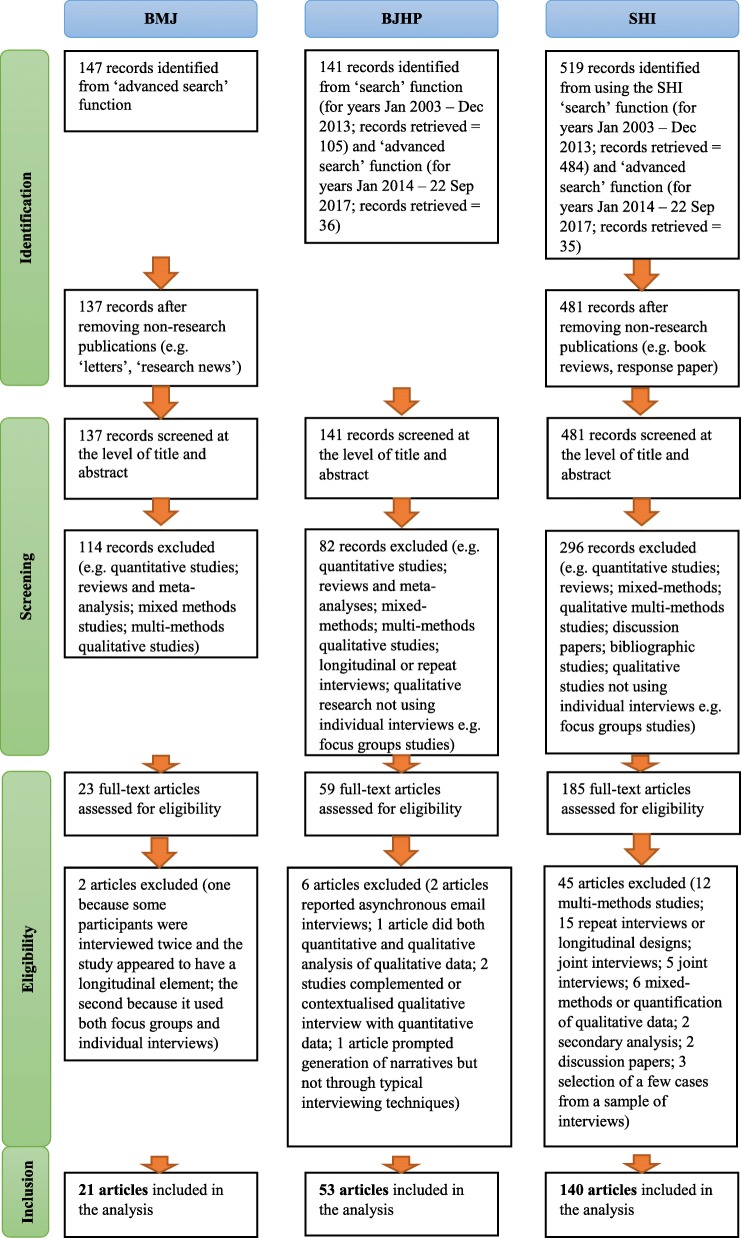
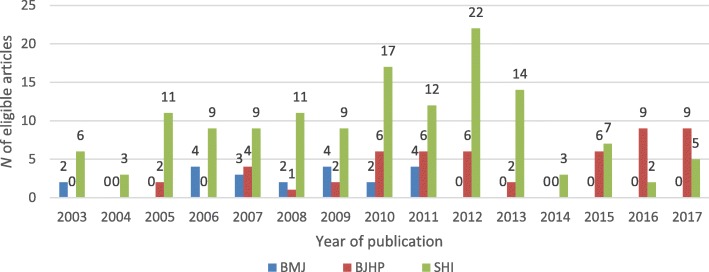
BACKGROUND: Choosing a suitable sample size in qualitative research is an area of conceptual debate and practical uncertainty. That sample size principles, guidelines and tools have been developed to enable researchers to set, and justify the acceptability of, their sample size is an indication that the issue constitutes an important marker of the quality of qualitative research. Nevertheless, research shows that sample size sufficiency reporting is often poor, if not absent, across a range of disciplinary fields. METHODS: A systematic analysis of single-interview-per-participant designs within three health-related journals from the disciplines of psychology, sociology and medicine, over a 15-year period, was conducted to examine whether and how sample sizes were justified and how sample size was characterised and discussed by authors. Data pertinent to sample size were extracted and analysed using qualitative and quantitative analytic techniques. RESULTS: Our findings demonstrate that provision of sample size justifications in qualitative health research is limited; is not contingent on the number of interviews; and relates to the journal of publication. Defence of sample size was most frequently supported across all three journals with reference to the principle of saturation and to pragmatic considerations. Qualitative sample sizes were predominantly - and often without justification - characterised as insufficient (i.e., 'small') and discussed in the context of study limitations. Sample size insufficiency was seen to threaten the validity and generalizability of studies' results, with the latter being frequently conceived in nomothetic terms. CONCLUSIONS: We recommend, firstly, that qualitative health researchers be more transparent about evaluations of their sample size sufficiency, situating these within broader and more encompassing assessments of data adequacy. Secondly, we invite researchers critically to consider how saturation parameters found in prior methodological studies and sample size community norms might best inform, and apply to, their own project and encourage that data adequacy is best appraised with reference to features that are intrinsic to the study at hand. Finally, those reviewing papers have a vital role in supporting and encouraging transparent study-specific reporting.
Overview
The claims and statistics of this paper haven’t been checked yet.
Free: it reads the open-access text and checks the first 5 claims that cite a source we can check. Create a free account to check every claim.
Integrity signals
Registry
Cites
Statistics
Figures
Verification
Claims the paper makes
The claims and statistics of this paper haven’t been checked yet.
Free: it reads the open-access text and checks the first 5 claims that cite a source we can check. Create a free account to check every claim.
Claims other papers make about this one
Each is checked against this paper’s own text: does it say what the citing paper says it does?
The source backs part of the claim, not all of it — or backs it for a different population, condition or comparison.
In the citing paper
“However, a recent systematic review showed that in order to reach saturation at least 12 participants per focus group are required (Vasileiou et al., 2018).”
From Involving patients' perspective in the development of an internet- and mobile-based CBT intervention for adolescents with chronic medical conditions: Findings from a qualitative study (2021) · cites this paper as Vasileiou et al., 2018
Experimental — accuracy not yet measuredThe source backs part of the claim, not all of it — or backs it for a different population, condition or comparison.
In the citing paper
“Following Vasileiou et al. (2018) saturation for AYA with chronic medical conditions could have likely been reached with a total of at least 36 participants.”
From Involving patients' perspective in the development of an internet- and mobile-based CBT intervention for adolescents with chronic medical conditions: Findings from a qualitative study (2021) · cites this paper as Vasileiou et al., 2018
Experimental — accuracy not yet measuredThe source backs part of the claim, not all of it — or backs it for a different population, condition or comparison.
In the citing paper
“This meant that the final sample size of 7 was within the realm of acceptability according to guidelines [27], in addition to being in accordance with the minimum acceptable sample size suggested by meta-analyses of published qualitative studies in the field of psychology [26].”
From Experiences of gamified and automated virtual reality exposure therapy for spider phobia: qualitative study (2020) · cites this paper as [26]
Experimental — accuracy not yet measuredThe source backs part of the claim, not all of it — or backs it for a different population, condition or comparison.
In the citing paper
“Even though our sample size is small, we consider our participant group sufficient for this study, given their extensive expertise and potential to provide valuable insights [72].”
From A Data Visualization Tool for Patients and Healthcare Providers to Communicate during Inpatient Stroke Rehabilitation (2024) · cites this paper as [72]
Experimental — accuracy not yet measuredThe cited source says what the claim attributes to it.
In the citing paper
“The structure of questions in qualitative interviewing and the type of questions in fl uence the richness of data generated (Vasileiou et al., 2018).”
From Quality Criteria: General and Specific Guidelines for Qualitative Approaches in Psychology Research. A Concise Guide for Novice Researchers and Reviewers (2024) · cites this paper as Vasileiou et al., 2018
4 more claims about this paper
Create a free account to see every claim other papers make about this one.
Self-check
Percentages, sums and reported differences re-computed from the paper’s own numbers.
The self-check needs the paper’s full text.
Citations
Cites
Preferred Reporting Items for Systematic Reviews and Meta-Analyses: the PRISMA statement
Moher, D., Liberati, A., Tetzlaff, J., Altman, D. G., & for the PRISMA Group (2009) · BMJ · doi:10.1136/bmj.b2535 · Cited by 83,823
Preferred Reporting Items for Systematic Reviews and Meta-Analyses: The PRISMA Statement
Moher, D., Liberati, A., Tetzlaff, J., Altman, D. G., & The PRISMA Group (2009) · PLoS Medicine · doi:10.1371/journal.pmed.1000097 · Cited by 64,042
The Discovery of Grounded Theory: Strategies for Qualitative Research.
Wagner, H. R., Glaser, B. G., & Strauss, A. L. (1968) · Social Forces · doi:10.2307/2575405 · Cited by 46,361
Lincoln, Y. S., Guba, E. G., & Pilotta, J. J. (1985) · International Journal of Intercultural Relations · doi:10.1016/0147-1767(85)90062-8 · Cited by 45,787
Preferred reporting items for systematic reviews and meta-analyses: the PRISMA Statement.
(2009) · PubMed Central · Cited by 44,859
Three Approaches to Qualitative Content Analysis
Hsieh, H.-F., & Shannon, S. E. (2005) · Qualitative Health Research · doi:10.1177/1049732305276687 · Cited by 44,601 · cited 1×
“To examine the kinds of sample size justifications provided by articles, an inductive content analysis [54] was initially conducted.”
MethodThe Discovery of Grounded Theory; Strategies for Qualitative Research
Glaser, B. G., Strauss, A. L., & Strutzel, E. (1968) · Nursing Research · doi:10.1097/00006199-196807000-00014 · Cited by 39,449
(1990) · Cited by 24,217
Qualitative Inquiry and Research Design: Choosing Among Five Approaches
Lewis, S. (2015) · Health Promotion Practice · doi:10.1177/1524839915580941 · Cited by 22,105
How Many Interviews Are Enough?: An Experiment with Data Saturation and Variability
Guest, G., Bunce, A., & Johnson, L. (2006) · Field Methods · doi:10.1177/1525822x05279903 · Cited by 20,808
Research works printed but not linked: 2
- Guetterman TC. Descriptions of sampling practices within five approaches to qualitative research in education and the health sciences. Forum Qual Soc Res. 2015;16(2):25. http://nbn-resolving.de/urn:nbn:de:0114-fqs1502256. Accessed 17 May 2018.
- Mason M. Sample size and saturation in PhD studies using qualitative interviews. Forum Qual Soc Res 2010;11(3):8. http://nbn-resolving.de/urn:nbn:de:0114-fqs100387. Accessed 17 May 2018.
Cited by
Items 501–600 of 1,010
Bonnard, M., Hui, C. E., Manganaro, M., & Anaby, D. (2022) · Journal of Occupational Therapy Schools & Early Intervention · doi:10.1080/19411243.2022.2156427 · Cited by 15
“Given the in-depth methods used, eight OTs were considered sufficient to reach saturation (Vasileiou, Barnett, Thorpe, & Young, 2018).”
MethodPaudel, U., Adhikari, S. R., & Pant, K. P. (2023) · Sustainability · doi:10.3390/su15032176 · Cited by 18
Māori aspirations following stroke: A pathway forward for the speech-language therapy field
Eustace, M., McGarr, K., & Theys, C. (2023) · Aphasiology · doi:10.1080/02687038.2023.2170695 · Cited by 16
“It is unlikely however that data saturation was reached (Vasileiou et al., 2018); findings present preliminary understandings.”
BackgroundIdentifying and removing ableism from Tier 1 school-wide positive behaviour support practices
Poed, S., & Fox, R. A. (2023) · International Journal of Developmental Disabilities · doi:10.1080/20473869.2022.2111969 · Cited by 14
“Selecting an appropriate sample size for qualitative research has been an area of uncertainty, with data adequacy, pragmatics, saturation, and generalisability of findings all considered by researchers when justifying the sample (Vasileiou et al. 2018).”
BackgroundBucalon, B., Whitelock-Wainwright, E., Williams, C., Conley, J., Veysey, M. J., Kay, J., & Shaw, T. J. (2023) · Journal of Medical Internet Research · doi:10.2196/40685 · Cited by 18
“The sample size was determined by the diversity of the roles of the participants and when no new insights emerged from the interviews [22].”
Feeling exhausted: How outpatient physical therapists perceive and manage job stressors
Ferguson, J. J., Fritsch, A., Rentmeester, C., Clewley, D. J., & Young, J. L. (2023) · Musculoskeletal Care · doi:10.1002/msc.1761 · Cited by 17
Valipoor, S., Bosch, S. J., & Chiu, L. Y. T. (2023) · HERD Health Environments Research & Design Journal · doi:10.1177/19375867231172222 · Cited by 13
“Samples in qualitative research tend to be small and purposive to allow deeper analysis and unfolding of a richly textured understanding of the phenomenon under study (Vasileiou et al., 2018).”
BackgroundKhatri, R. B., Assefa, Y. A., & Durham, J. (2023) · International Journal for Equity in Health · doi:10.1186/s12939-023-01905-7 · Cited by 25
“Sample size selection was guided by the principle of information saturation [37], and based on informational redundancy or saturation [38].”
BackgroundSmale, E. M., van der Werff, I. B., van den Bemt, B. J. F., & Bekker, C. L. (2023) · Research in Social and Administrative Pharmacy · doi:10.1016/j.sapharm.2023.06.004 · Cited by 16
Batani, J., & Maharaj, M. S. (2023) · Journal of Child Health Care · doi:10.1177/13674935231189790 · Cited by 13
“Sample adequacy was based on saturation (Vasileiou et al., 2018).”
Marlow, L. A. V., Schmeising-Barnes, N., Warwick, J., & Waller, J. (2023) · BMJ Open · doi:10.1136/bmjopen-2023-072657 · Cited by 15
Cook, N., Collins, J., Porter, J. A., & Goodwin, D. M. (2023) · Frontiers in Nutrition · doi:10.3389/fnut.2023.1204980 · Cited by 14
“To understand the sample size required, the concept of evidentiary adequacy was used (34).”
MethodMelles, G. B. (2023) · Sustainability · doi:10.3390/su151914160 · Cited by 16
AI micro-decisions in FinTechs: a mixed method research design
Issa, H., Jabbouri, R., & Mehanna, R.-A. (2023) · Management Decision · doi:10.1108/md-10-2022-1336 · Cited by 24
Fearnley, L., & Zheng, Z. (2023) · Preventive Veterinary Medicine · doi:10.1016/j.prevetmed.2023.106060 · Cited by 14
Barriers to PrEP Uptake in Young U.K. Men Who Have Sex With Men
Haggipavlou, L., & Hamshaw, R. J. T. (2023) · Journal of Prevention and Health Promotion · doi:10.1177/26320770231199419 · Cited by 14
“In aiming to be more transparent and open about data adequacy (see Vasileiou et al., 2018), the decision to cease data collection and proceed to analysis was based on several factors: the researchers’ previous experience with similar projects, reflections on the more sensitive nature of our topic…”
BackgroundAlzahrani, A. S., Greenfield, S., Shrestha, S., & Paudyal, V. (2024) · BMC Complementary Medicine and Therapies · doi:10.1186/s12906-024-04385-6 · Cited by 21
“Ten participants were initially recruited, and then a further 3 participants were interviewed until data saturation was achieved at 22 interviews, i.e., no new themes emerged [19, 20].”
BackgroundRoennfeldt, H., Hamilton, B. E., Hill, N., Castles, C., Glover, H., Byrne, L., & Roper, C. (2024) · Health Expectations · doi:10.1111/hex.14122 · Cited by 14
“This sample size is consistent with recommendations for exploratory, qualitative interviews with a heterogeneous sample [35].”
Bagherpasandi, M., Salehi, M., Hajiha, Z., & Hejazi, R. (2024) · Benchmarking An International Journal · doi:10.1108/bij-12-2023-0846 · Cited by 16
Carter, A., Klinner, C., Young, A. M., Strnadová, I., Wong, H. T. H., Vujovich‐Dunn, C., Newman, C. E., Davies, C., Skinner, S. R., Danchin, M. H., et al. (2024) · Vaccines · doi:10.3390/vaccines12080922 · Cited by 14
Sampling Thoughtfully in Qualitative Research: Hallmarks of Rigour in Health Professions Education
Merkebu, J., Geringer, J. L., & Samuel, A. (2025) · The Clinical Teacher · doi:10.1111/tct.70145 · Cited by 19
“Sampling is an emergent process that takes into consideration the intrinsic parameters of the study such as context, scope, nature and design of the research [30].”
InfluentialCasilang, C. G., Stonbraker, S., Japa, I., Halpern, M., Messina, L., Steenhoff, A. P., Lowenthal, E. D., & Fleisher, L. G. (2020) · JMIR Pediatrics and Parenting · doi:10.2196/20312 · Cited by 18
“The sample size was established based on the study team’s experiences in group design sessions as well as recommendations for sample sizes in qualitative research [34-36].”
Verweij, L., Spoon, D., Terbraak, M. S., Jepma, P., Peters, R. J. G., Reimer, W. J. M. S. O., Latour, C. H. M., & Buurman, B. M. (2021) · Journal of Advanced Nursing · doi:10.1111/jan.14786 · Cited by 17
“Interviews were stopped when theoretical saturation was reached and no new codes and themes were formed (van Rijnsoever, 2017; Vasileiou et al., 2018).”
BackgroundUnderstanding regional food environments: A qualitative exploration of food purchasing behaviour
Dangerfield, F., Ball, K., Dickson‐Swift, V., & Thornton, L. E. (2021) · Health & Place · doi:10.1016/j.healthplace.2021.102652 · Cited by 16
Murphy, J., Hörberg, A., Rådestad, M., Kurland, L., Rüter, A., & Jirwe, M. (2021) · Nursing Open · doi:10.1002/nop2.1066 · Cited by 13
Papadopoulos, I., Wright, S., Lazzarino, R., Koulouglioti, C., Aagard, M., Akman, Ö., Alpers, L., Apostolara, P., Araneda-Bernal, J., Biglete‐Pangilinan, S., et al. (2021) · BMJ Leader · doi:10.1136/leader-2020-000385 · Cited by 16
Ries, N. M., Johnston, B., & Jansen, J. (2021) · Health Expectations · doi:10.1111/hex.13395 · Cited by 16
“tative study, in line with contemporary research methods guidance.(18,56) Our findings reflect consumer experiences in a high income, Western country.”
ResultParamedic-delivered teleconsultations: a grounded theory study
Armour, R., Helmer, J. S., & Tallon, J. M. (2021) · Canadian Journal of Emergency Medicine · doi:10.1007/s43678-021-00224-6 · Cited by 13
“Sample size determination in qualitative research is less linear than in quantitative research [19], as it is driven by data saturation rather than data volume [19, 20].”
BackgroundLea, A. N., Altschuler, A., Leibowitz, A., Levine‐Hall, T., McNeely, J., Silverberg, M. J., & Satre, D. D. (2022) · Addiction Science & Clinical Practice · doi:10.1186/s13722-022-00293-7 · Cited by 15
“Interviews were conducted until study investigators believed thematic saturation was reached [36, 37] based on the concepts of data adequacy [38–40] and data source triangulation [41].”
MethodMizuno, C. K., & Xu, L. (2022) · The Journal of Creative Behavior · doi:10.1002/jocb.540 · Cited by 19
Harm reduction acceptability and feasibility in a North American indigenous reserve community
Goldstein, S. C., Spillane, N. S., Nalven, T., & Weiss, N. H. (2022) · Journal of Community Psychology · doi:10.1002/jcop.22859 · Cited by 17
Shrestha, P., Rasmussen, S. E. V. P., Fazal, M. S., Chu, N. M., Garonzik‐Wang, J., Gordon, E. J., McAdams‐DeMarco, M., & Humbyrd, C. J. (2022) · AJOB Empirical Bioethics · doi:10.1080/23294515.2022.2090460 · Cited by 14
Cook, N., Goodwin, D. M., Collins, J., & Porter, J. A. (2022) · Nutrition & Dietetics · doi:10.1111/1747-0080.12762 · Cited by 17
Toja, E., Abebe, A., Mekonnen, N., & Baza, D. (2022) · International Journal of Women s Health · doi:10.2147/ijwh.s365244 · Cited by 14
Bass, S. B., Kelly, P. J. A., Pandit-Kerr, S., Pilla, J., Morris, K., Larsen, E., Wisdom, J. P., & Torralva, P. R. (2022) · Frontiers in Public Health · doi:10.3389/fpubh.2022.882421 · Cited by 17
Involving autism stakeholders in identifying priorities for interventions based on augmented reality
Pino, M. C., Vagnetti, R., Tiberti, S., Valenti, M., & Mazza, M. (2022) · Disability and Rehabilitation Assistive Technology · doi:10.1080/17483107.2022.2120103 · Cited by 17
“Themes saturation was assessed by specifying a priori an initial analysis sample of ten interviews ( N ¼ 10) and a stopping criterion of 5 [64].”
MethodMonaghan, M., & Doyle, L. (2022) · International Journal of Mental Health Nursing · doi:10.1111/inm.13068 · Cited by 22
Johnson, A. M., Tandon, P. S., Hafferty, K. R., Senturia, K., Garrett, K., Bollinger, B. J., & Kroshus, E. (2022) · Health Education Research · doi:10.1093/her/cyac036 · Cited by 16
Needs and expectations of family caregivers of cancer patients in palliative care: A study protocol
Fernandes, J. B., Domingos, J., Castro, C., Simões, A., Fernandes, S., Almeida, A. S., Bernardes, C., Miranda, L., Risso, S., Ferreira, R., et al. (2023) · Frontiers in Psychology · doi:10.3389/fpsyg.2022.1071711 · Cited by 13
“Rather than setting a fixed sample size, we will focus on the richness of data than on the sample size (Gupta et al., 2018; Vasileiou et al., 2018) and consider saturation, as proposed by Glaser and Strauss (2017).”
Sari, N. M., Devansyah, S., Modjaningrat, I. F., Suryawan, N., Susanah, S., Rakhmillah, L., Wahyudi, K., & Kaspers, G. J. L. (2023) · Pediatric Blood & Cancer · doi:10.1002/pbc.30192 · Cited by 17
Buljevac, M., Babić, M. M., & Leutar, Z. (2020) · International Journal of Disability Development and Education · doi:10.1080/1034912x.2020.1736522 · Cited by 21
Spontaneous Music-Evoked Autobiographical Memories in Individuals Experiencing Depression
Sakka, L. S., & Saarikallio, S. H. (2020) · Music & Science · doi:10.1177/2059204320960575 · Cited by 16
“The small sample, although not uncommon in qualitative research (Vasileiou et al., 2018), should also be considered when interpreting the results from the thematic analysis.”
BackgroundO’Rourke, H. M., Sidani, S., Jeffery, N., Prestwich, J., & McLean, H. (2020) · International Journal of Nursing Studies Advances · doi:10.1016/j.ijnsa.2020.100009 · Cited by 12
Palimaru, A. I., McBain, R. K., McDonald, K., Batra, P., & Hunter, S. B. (2021) · Housing and Society · doi:10.1080/08882746.2021.1928853 · Cited by 17
“…25 participants, because, as indicated by systematic reviews of qualitative research, this number would be sufficient for thematic and meaning saturation, i.e., the point at which gathering data provides no new codes and no new theoretical insights (Saunders et al., 2018; Vasileiou et al., 2018).”
BackgroundAlmoajil, H., Toyé, F., Dawes, H., Pierce, J. R., Meaney, A., Baklouti, A., Poverini, L., Hopewell, S., & Theologis, T. N. (2022) · Health Expectations · doi:10.1111/hex.13428 · Cited by 15
“There are no agreed criteria for determining sample size in qualitative research.(19) Participants were included in the study until data saturation was reached.”
BackgroundLee, C., Lee, C., Lee, J., Jang, G., Kim, B., & Park, S. (2022) · Medicina · doi:10.3390/medicina58050690 · Cited by 12
“These factors may limit the generalizability of our results [14,15].”
BackgroundKiiski, A., Luoma, E., Airaksinen, M. S. A., Pohjanoksa-Mäntylä, M., Desselle, S. P., & Kivelä, S. (2025) · BMJ Open · doi:10.1136/bmjopen-2024-093122 · Cited by 19
Roache, M., & McSherry, D. (2021) · Child Abuse & Neglect · doi:10.1016/j.chiabu.2021.105329 · Cited by 19
Tembo, T., Dale, H., Muttau, N., Itoh, M., Williamson, D., Mwamba, C., Manasyan, A., Beard, R. S., Cox, M. H., & Herce, M. E. (2022) · Global Health Science and Practice · doi:10.9745/ghsp-d-21-00723 · Cited by 13
“Purposive sampling was used to select participants from among the limited number of available HCWs and study staff and for MIPs meeting various high-risk criteria based on study eligibility criteria.(26,27) Since sample size in qualitative research is not set a priori, we continued recruitment until thematic saturatio…”
MethodBasilio, D. D., Guglielmucci, F., & Livanou, M. (2022) · Frontiers in Psychology · doi:10.3389/fpsyg.2022.919943 · Cited by 25
“Although there are no standardised guidelines for selecting a suitable sample in qualitative research (Baker and Edwards, 2012; Vasileiou et al., 2018), there is consensus that when deciding on sample size, qualitative researchers should refer to studies that used the same research design and wherein data saturation w…”
BackgroundLubaki, J.-P. F., Omole, O. B., & Francis, J. M. (2022) · PLoS ONE · doi:10.1371/journal.pone.0268177 · Cited by 10
Developing Islamic sustainable and responsible investment criteria: an overview
Wahab, M. Z. H., & Naim, A. M. (2022) · International Journal of Ethics and Systems · doi:10.1108/ijoes-06-2021-0120 · Cited by 18
Jackson, A., Green, M. J., & Kaler, J. (2022) · Frontiers in Veterinary Science · doi:10.3389/fvets.2022.995240 · Cited by 15
Qualitative exploration of melanoma awareness in black people in the USA
Hunt, I. D. V., Owen, S., Amuzie, A. U., Nava, V., Tomz, A., Barnes, L. A., Robinson, J. K., Lester, J., Swetter, S. M., & Linos, E. (2023) · BMJ Open · doi:10.1136/bmjopen-2022-066967 · Cited by 10
Lived experiences of young adults facing a recent diagnosis of cancer: A phenomenological study
Shahmari, M., Nasrabadi, A. N., Rezaie, E., Dashti, S., Nasiri, E., & Zare, L. (2023) · Health Expectations · doi:10.1111/hex.13793 · Cited by 15
Characterizing rural families’ experiences receiving pediatric surgical care: A qualitative study
Georgeades, C., Young, S., Nataliansyah, M. M., & Arendonk, K. J. V. (2023) · The Journal of Rural Health · doi:10.1111/jrh.12777 · Cited by 13
Global use of electronic patient-reported outcome systems in nephrology: a mixed methods study
Anderson, N. E., Kyte, D. G., McMullan, C., Cockwell, P., Aiyegbusi, O. L., Verdi, R., & Calvert, M. (2023) · BMJ Open · doi:10.1136/bmjopen-2022-070927 · Cited by 12
Salcedo‐Pérez‐Juana, M., Palacios‐Ceña, D., San-Martín-Gómez, A., Aledo‐Serrano, Á., & Florêncio, L. L. (2023) · Frontiers in Pediatrics · doi:10.3389/fped.2023.1285377 · Cited by 14
Adapting and blending grounded theory with case study: a practical guide
Dahwa, C. (2023) · Quality & Quantity · doi:10.1007/s11135-023-01783-9 · Cited by 24
“Conversely, Vasileiou et al. (2018) argue that in grounded theory sample size cannot be predetermined as this is an outcome of theoretical sampling.”
Manyara, A. M., Mwaniki, E., Gill, J. M. R., & Gray, C. M. (2024) · PLoS ONE · doi:10.1371/journal.pone.0297779 · Cited by 17
Shi, Y., Haller, A., Reeson, A. F., Li, X., & Li, C. (2024) · Behaviour and Information Technology · doi:10.1080/0144929x.2024.2316287 · Cited by 16
“Data saturation is typically achieved when new data no longer contribute additional insights or themes (Vasileiou et al. 2018).”
Swain, T. A., McNarry, M. A., & Mackintosh, K. A. (2024) · JMIR Formative Research · doi:10.2196/56784 · Cited by 18
“Although data saturation is commonly used to ensure an adequate sample size within qualitative research [39], it was not conducive to the analytical approach used in this study [40].”
MethodKrieger, T., Jozwiak, L., Ebersbach, G., Suess, T., Falkenburger, B. H., Feige, T., Eggers, C., Warnecke, T., Scholl, W., Schmidt-Heisch, C., et al. (2024) · BMC Neurology · doi:10.1186/s12883-024-03696-y · Cited by 15
“In qualitative research, the concept of sample adequacy concerns the suitability of the composition and size of the sample [29].”
BackgroundExploring the multifunctional landscapes model in areas dominated by non-native tree plantations
Ortiz, A. M. D., Gayó, E. M., Henríquez, N. G. C., Henríquez, B. J., & Pauchard, A. (2024) · Trees Forests and People · doi:10.1016/j.tfp.2024.100617 · Cited by 16
Inclusive education and related policies in special needs schools in South Africa
Mahlaule, A. P., McCrindle, C. M. E., & Napoles, L. (2024) · African Journal of Disability · doi:10.4102/ajod.v13i0.1358 · Cited by 12
“When there are no further dimensions on the problem, the data are considered to have reached a saturation level (Vasileiou et al. 2018).”
BackgroundRoutray, R., & Khandelwal, K. (2024) · Asian Education and Development Studies · doi:10.1108/aeds-06-2024-0115 · Cited by 30
Sampene, A. K., Li, C., & Wiredu, J. (2024) · BMC Public Health · doi:10.1186/s12889-024-20265-7 · Cited by 21
Factors influencing equine veterinarians' job satisfaction and retention: A focus group study
Whitaker, K., Burnette, A., Tan, J., Graves, M. T., Hunt, J., Devine, E., Anderson, S. L., Kirkendall, K., & Wisnieski, L. C. (2025) · Equine Veterinary Journal · doi:10.1111/evj.14467 · Cited by 12
Improving the freight transport of a developing economy: a case of Boankra inland port
Ansah, R. K., Obiri‐Yeboah, K., & Akipelu, G. (2020) · Journal of Shipping and Trade · doi:10.1186/s41072-020-00065-z · Cited by 12
Hiller, R. M., Halligan, S. L., Meiser‐Stedman, R., Elliott, E. J., Rutter-Eley, E. L., & Hutt, T. (2021) · BMJ Open · doi:10.1136/bmjopen-2020-038461 · Cited by 18
Women’s empowerment and transnational consumption of Hallyu in Vietnam
Jang, H., Nguyen, N. T. O., & Kwon, S. (2021) · Asian Journal of Women s Studies · doi:10.1080/12259276.2021.1924482 · Cited by 12
“A minimum sample size was set at 10 in the light of time and financial constraints and difficulties in recruiting participants (Vasileiou et al., 2018).”
BackgroundWink, G., Fransen, G. A. J., Huisman, M., Boersma, S. N., van Disseldorp, L., van der Velden, K., Wagemakers, A., & van den Muijsenbergh, M. E. T. C. (2021) · International Journal of Environmental Research and Public Health · doi:10.3390/ijerph18158145 · Cited by 15
“This combination of pragmatic and theoretical justifications for sample size is frequently applied in qualitative research [29].”
BackgroundCOVID-19 disaster response: South African disaster managers’ faith in mandating legislation tested?
Kunguma, O., Ncube, A., & Mokhele, M. O. (2021) · Jàmbá Journal of Disaster Risk Studies · doi:10.4102/jamba.v13i1.1099 · Cited by 12
“Scholars like Vasileiou et al. (2018) suggested that a qualitative study should not conduct more than 50 interviews if they want to manage the complexity of analysing.”
BackgroundBeliefs About Worry and Pain Amongst Adolescents With and Without Chronic Pain
Wainwright, E. M., Jordan, A. L., Fisher, E., Wilson, C. E., Mullen, D., & Madhavakkannan, H. (2021) · Journal of Pediatric Psychology · doi:10.1093/jpepsy/jsab109 · Cited by 14
Tiernan, G., Freeman, V., Morrow, A., Hogden, E., Canfell, K., Kang, Y., & Taylor, N. J. (2021) · Psycho-Oncology · doi:10.1002/pon.5840 · Cited by 11
Mwila, K., Mudenda, S., Kampamba, M., Mufwambi, W., Lufungulo, E. S., Phiri, M. L., & Hikaambo, C. N. (2021) · Epidemiology - Open Journal · doi:10.17140/epoj-6-124 · Cited by 15
Lefeuvre, C., Pauw, H. D., Banaszuk, A.-S., Pivert, A., Ducancelle, A., Rexand-Galais, F., & Arbyn, M. (2022) · International Journal of Public Health · doi:10.3389/ijph.2022.1604284 · Cited by 15
Abu‐Odah, H., Molassiotis, A., & Liu, J. Y. W. (2022) · BMC Palliative Care · doi:10.1186/s12904-022-00936-1 · Cited by 16
“Data saturation was less applicable or appropriate in this study [21].”
MethodSethi, B. (2022) · Wellbeing Space and Society · doi:10.1016/j.wss.2022.100083 · Cited by 16
Male pre-service teachers: navigating masculinities on campus and on placement
Eldred, L., Gough, B., & Glazzard, J. (2022) · Gender and Education · doi:10.1080/09540253.2022.2078794 · Cited by 15
“Qualitative samples are often purposive in that participants are selected due to their ability to provide ‘richly-textured information, relevant to the phenomenon’ (Vasileiou et al. 2018, 2).”
BackgroundSay what you mean, mean what you say: The importance of language in the treatment of obesity
Fearon, N. M., Sudlow, A. C., le Roux, C. W., Pournaras, D. J., & Welbourn, R. (2022) · Obesity · doi:10.1002/oby.23446 · Cited by 16
“The number of participants is traditionally limited to allow for a focus on in-depth analysis to synthesize common themes and responses to a cohesive message (11).”
BackgroundPsychosocial Well-Being Determinants and Occupants’ Happiness in a Green Neighbourhood/Community
Ekhaese, E. N., & Husain, W. (2022) · Frontiers in Built Environment · doi:10.3389/fbuil.2022.816390 · Cited by 13
“…backgrounds were targets for the assessments, and the researchers selected a representative sample of 50 respondents in the five (5) provinces of Pakistan since sample sizes for phenomenological and ground theory approaches are often also larger—between 20 and 60 (Vasileiou et al., 2018).”
BackgroundBhatt, N. S., Shipman, K. J., Rosenberg, A. R., Jenssen, K. M., Ballard, S., Baker, K. S., & Barton, K. S. (2023) · Pediatric Blood & Cancer · doi:10.1002/pbc.30510 · Cited by 12
Baber, F., Gillison, F., & Grey, E. (2023) · BMC Public Health · doi:10.1186/s12889-023-16267-6 · Cited by 14
“We aimed to conduct 10 to 20 interviews with each participant group, stopping recruitment when the dataset was considered adequate for exploration of both parents’ and PHPs’ perceptions [26].”
MethodDavies, B., Turner, M., & Udell, J. E. (2023) · Computers in Human Behavior · doi:10.1016/j.chb.2023.107999 · Cited by 18
Higson‐Sweeney, N., Loades, M. E., Hiller, R. M., & Read, R. K. (2019) · Clinical Child Psychology and Psychiatry · doi:10.1177/1359104519838573 · Cited by 16
Iyanna, S., Bosangit, C., Lazell, J., & Carrigan, M. (2019) · International Journal of Nonprofit and Voluntary Sector Marketing · doi:10.1002/nvsm.1668 · Cited by 12
Multidimensional eHealth Literacy for Infertility
Sykes, S., Wills, J., Frings, D., Church, S., & Wood, K. V. (2020) · International Journal of Environmental Research and Public Health · doi:10.3390/ijerph17030966 · Cited by 17
“While these data may not be generalizable to the whole population experiencing infertility, the recurrent appearance of themes and absence of new codes being generated towards the end of the analysis process, as well as the similar sample size to other studies in this area [11,34], means that data adequacy can be seen…”
ResultSingh, H., Collins, K., Flett, H. M., Jaglal, S. B., & Musselman, K. E. (2021) · Disability and Rehabilitation · doi:10.1080/09638288.2021.1904013 · Cited by 12
“, limited new insights would be generated with additional interviews), we sought a sample size between 20 and 30 participants [16].”
BackgroundGibson, M., Williamson, L. E., Henwood, G., Chalmers, D., & Dell, C. A. (2021) · Journal of Veterans Studies · doi:10.21061/jvs.v7i1.200 · Cited by 12
Impact of COVID-19 on the Postoperative Bariatric Surgery Patient Experience
Murtha, J. A., Alagöz, E., Breuer, C. R., Eierman, L., Jawara, D., Farrar‐Edwards, D., Voils, C. I., & Funk, L. M. (2022) · Annals of Surgery · doi:10.1097/sla.0000000000005446 · Cited by 14
Wissel, D., Rowson, D., & Boeva, V. (2021) · bioRxiv (Cold Spring Harbor Laboratory) · doi:10.1101/2021.09.16.460589 · Cited by 15
Im, J. H. B., Escudero, C., Zhang, K., Choi, D., Sivakumar, A., Booth, G. L., Sale, J., Pritlove, C., Advani, A., & Yu, C. H. (2022) · Canadian Journal of Diabetes · doi:10.1016/j.jcjd.2021.10.006 · Cited by 11
The experiences of daily smartphone use among older adults in Brazil: A grounded theory analysis
Gallo, A. M., Laranjeira, C., Araújo, J. P., Marques, F. R. D. M., Baccon, W. C., Salci, M. A., & Carreira, L. (2024) · Heliyon · doi:10.1016/j.heliyon.2024.e35120 · Cited by 11
“Sample size guidelines recommend a range of 20 – 30 participants to reach saturation in a grounded study should [35,36].”
Can Plantar Pressure Distribution During Gait Be Estimated from Quiet Stance in Healthy Individuals?
Mirando, M., Pavese, C., Pingue, V., Sozzi, S., & Nardone, A. (2025) · Journal of Functional Morphology and Kinesiology · doi:10.3390/jfmk10030301 · Cited by 11
“The sample size of 60 was an estimate based on what is usual in the field [25] and considering the aim of measuring a diverse age group of healthy volunteers.”
Wang, Q., Hunter, S., Lee, R., Wang, X., & Chan, S. W. (2021) · Journal of Clinical Nursing · doi:10.1111/jocn.16152 · Cited by 13
Schema therapists’ perceptions of the influence of their early maladaptive schemas on therapy
Pilkington, P. D., Spicer, L., & Wilson, M. (2022) · Psychotherapy Research · doi:10.1080/10503307.2022.2038804 · Cited by 18
“The survey was closed as the richness and volume of the data was sufficient, and analysis of new responses did not yield any novel themes or ideas (Guest et al., 2020; Vasileiou et al., 2018).”
BackgroundAbidin, A. N. I. Z., Ariffin, F., Badlishah-Sham, S. F., & Razali, S. (2022) · HIV/AIDS - Research and Palliative Care · doi:10.2147/hiv.s371554 · Cited by 16
“Purposive refers to a selection of participants based on their capacity to provide richly textured information relevant to the subject to be explored.(30) This method is typical for qualitative studies.”
MethodMusonda, I., & Okoro, C. S. (2022) · Business Process Management Journal · doi:10.1108/bpmj-11-2021-0694 · Cited by 24
Holloway, L., Mahon, N., Clark, B., & Proctor, A. (2022) · Journal of Rural Studies · doi:10.1016/j.jrurstud.2022.12.004 · Cited by 15
Metadata
- Authors
- Vasileiou, K., Barnett, J., Thorpe, S., & Young, T.
- Affiliations
- University of Bath (GB)
- Newcastle University (GB)
- Brunel University of London (GB)
- Corresponding author
- Vasileiou, Konstantina
- Venue
- BMC Medical Research Methodology
- Published
- 2018-11-21
- Volume
- 18
- Issue
- 1
- Pages
- 148-148
- ISSN
- 1471-2288 (ISSN-L)
- PMC
- PMC6249736
- OpenAlex
- W2900619723
- Cited by
- 3,115
- References
- 71
- Citations by year
- 2026: 427 · 2025: 582 · 2024: 660 · 2023: 523 · 2022: 416 · 2021: 324 · 2020: 157 · 2019: 23 · 2018: 1
- FWCI
- 410.25
- Type
- journal article
- Language
- en
- Open access
- gold
- doi.org
- Licence
- cc-by
- creativecommons.org/licenses/by/4.0/ (tdm)
- Locations
- BMC Medical Research Methodology (publishedVersion, cc-by)
- Europe PMC (PubMed Central) (publishedVersion, cc-by)
- PubMed Central (publishedVersion, cc-by)
- PubMed (publishedVersion)
- DOAJ (DOAJ: Directory of Open Access Journals) (submittedVersion, cc-by-sa)
- Brunel University Research Archive (BURA) (Brunel University London) (submittedVersion)
- Pure (University of Bath) (submittedVersion, cc-by)
- Newcastle University ePrints (Newcastle Univesity) (cc-by)
- Funders
- Engineering and Physical Sciences Research Council (EP/F063822/1 and EP/G012393/1)
- Topics
- Social Sciences › Education › Qualitative Research Methods and Applications
- Social Sciences › Sociology and Political Science › Focus Groups and Qualitative Methods
- Social Sciences › Sociology and Political Science › Qualitative Research Methods and Ethics
- Keywords
- sample size justification, qualitative health research, saturation, data adequacy, sample size reporting, generalizability, validity, research transparency, peer review
- MeSH terms
- Systematic Reviews as Topic, Humans, Interviews as Topic, Periodicals as Topic, Research Personnel, Sample Size, Researcher-Subject Relations, Qualitative Research
About these checks
Registry, retraction, Cites and statistics results are computed, not judged, with one exception: a printed reference that no index lists is read once by a model before it counts as a citation error. Claims are extracted by a model and kept only when their quote appears verbatim in the text; each cited source is then checked, with a model’s help, for whether it says what the claim relies on. Those verdicts can be wrong — read the claim’s quote and the cited source before relying on one.
Statistics and arithmetic are recomputed, not judged.
Confidence bands are shown only for fields calibrated on our annotated test set. None is calibrated yet, so no band is shown.
What counts as a claim ›How we measure confidence ›How we check this ›
Are you an author, or do you see a problem with this page? Request a review
Data sources
Bibliographic data: Semantic Scholar, OpenAlex, Crossref.
Contains information from the Semantic Scholar Academic Graph Datasets, made available under the ODC Attribution License (ODC-BY 1.0).
Semantic Scholar’s data is described in: Kinney, R., et al. (2023). The Semantic Scholar Open Data Platform. arXiv:2301.10140.
