

Abstract screening using the automated tool Rayyan: results of effectiveness in three diagnostic test accuracy systematic reviews
Open accessThe DOI matches its Crossref record; 16 of the 22 references it cites were found in a registry or an index; 11 of the 17 sources its claims cite were checked for support.
Abstract
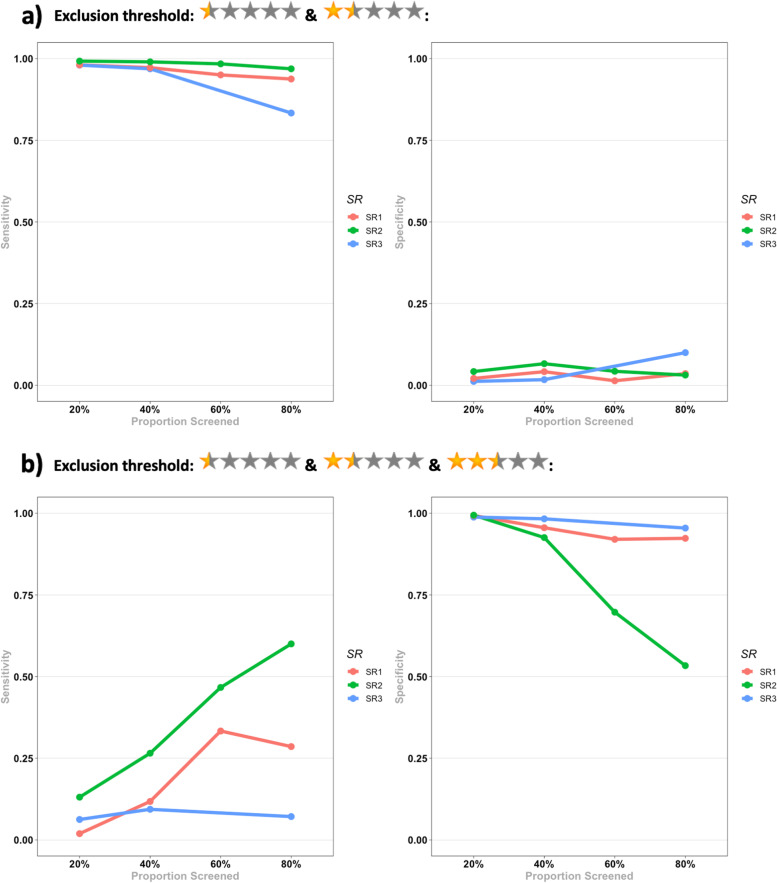
OBJECTIVE: To evaluate the performance of the automated abstract screening tool Rayyan. METHODS: The records obtained from the search for three systematic reviews were manually screened in four stages. At the end of each stage, Rayyan was used to predict the eligibility score for the remaining records. At two different thresholds (≤2.5 and < 2.5 for exclusion of a record) Rayyan-generated ratings were compared with the decisions made by human reviewers in the manual screening process and the tool's accuracy metrics were calculated. RESULTS: Two thousand fifty-four records were screened manually, of which 379 were judged to be eligible for full-text assessment, and 112 were eventually included in the final review. For finding records eligible for full-text assessment, at the threshold of < 2.5 for exclusion, Rayyan managed to achieve sensitivity values of 97-99% with specificity values of 19-58%, while at the threshold of ≤2.5 for exclusion it had a specificity of 100% with sensitivity values of 1-29%. For the task of finding eligible reports for inclusion in the final review, almost similar results were obtained. DISCUSSION: At the threshold of < 2.5 for exclusion, Rayyan managed to be a reliable tool for excluding ineligible records, but it was not much reliable for finding eligible records. We emphasize that this study was conducted on diagnostic test accuracy reviews, which are more difficult to screen due to inconsistent terminology.
Overview
CoChat Summary
TL;DR
This study evaluated Rayyan’s automated abstract-screening performance in three diagnostic test accuracy systematic reviews, comparing its ratings against manual reviewer decisions. Using a threshold of <2.5 stars for exclusion, Rayyan achieved very high sensitivity but weak specificity; using ≤2.5 stars reversed that tradeoff.
Key findings
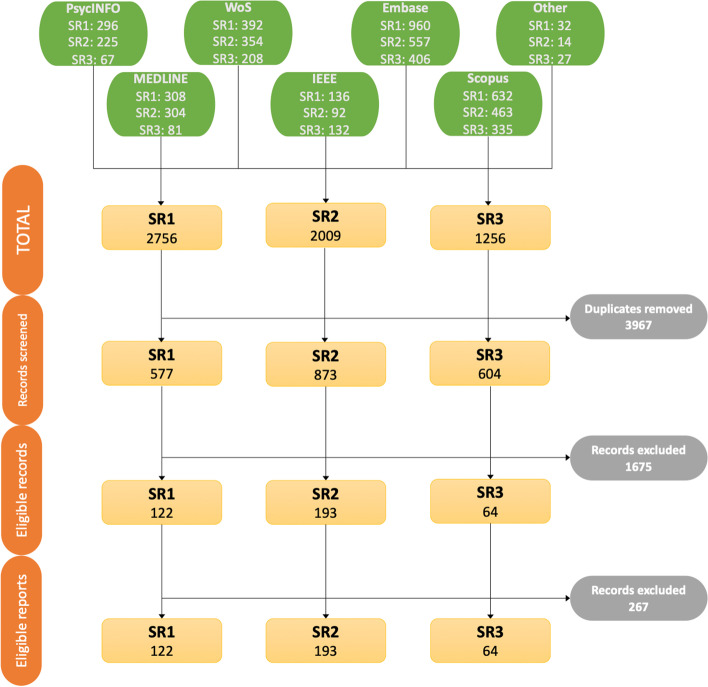
- A total of 2,054 records were screened manually; 379 were judged eligible for full-text assessment, and 112 reports were ultimately included in the final reviews.
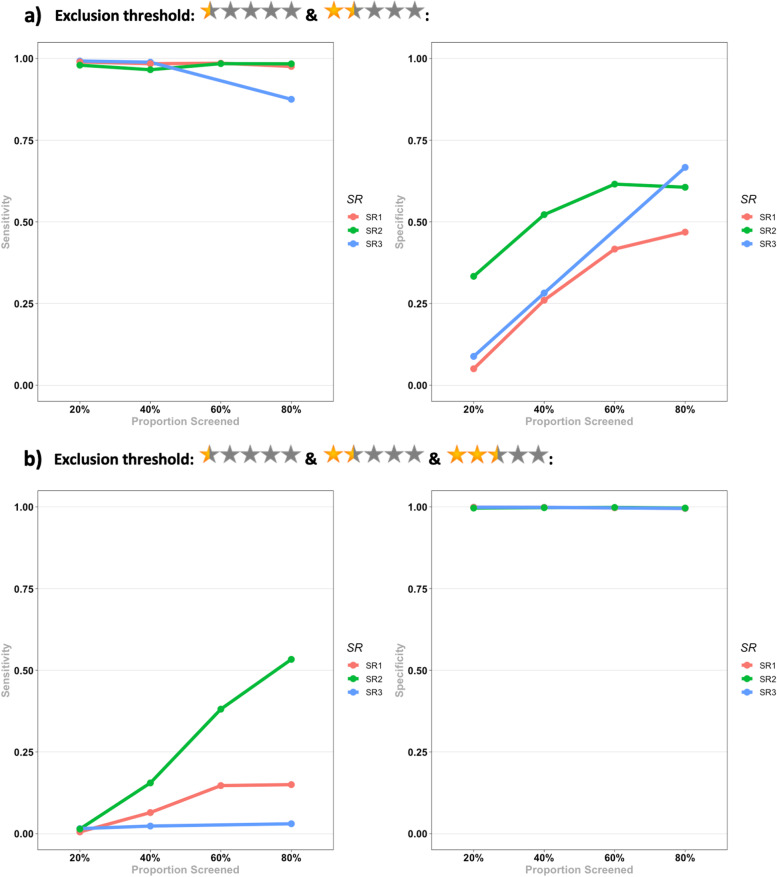
- For identifying eligible records, at the < 2.5 exclusion threshold Rayyan achieved sensitivity of 97–99% and specificity of 19–58%; at ≤ 2.5, it had specificity of 100% but sensitivity of 1–29%.
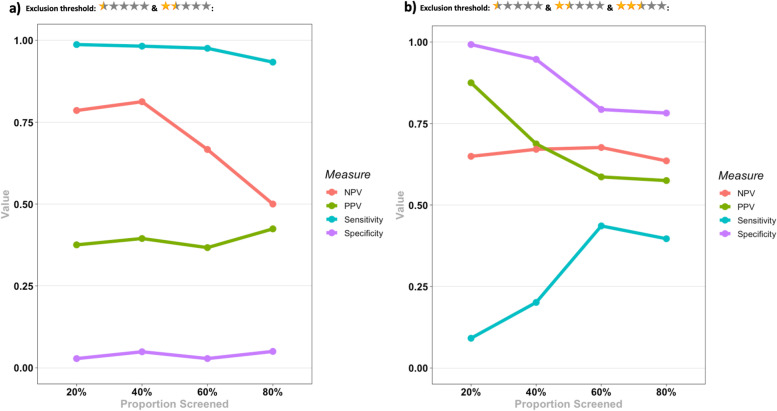
- For identifying eligible reports, at < 2.5 Rayyan had almost perfect sensitivity but very poor specificity (3–5%); at ≤ 2.5, it had specificity of 78–99% with sensitivity up to 44%.
- The authors conclude that < 2.5 is the better threshold when maximizing sensitivity is the priority, while ≤ 2.5 may be used when specificity is more important.
Methods
- The study evaluated Rayyan on three ongoing diagnostic test accuracy systematic reviews of autism spectrum disorder, differing by index test: sMRI, rs-fMRI, and EEG machine-learning studies.
- Search results were drawn from Embase, MEDLINE, APA PsycINFO, IEEE Xplore, Scopus, Web of Science, plus grey literature sources (OpenGrey, CRL, OATD).
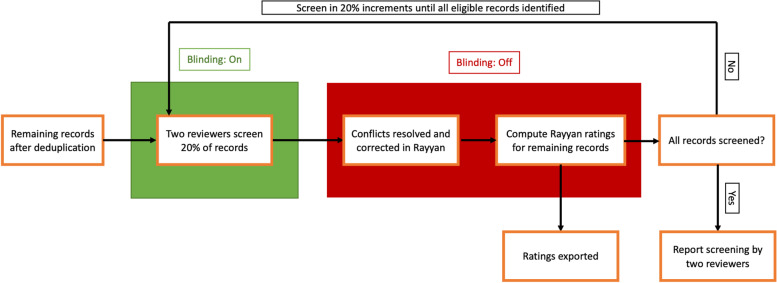
- Manual screening was done in four stages; Rayyan ratings were compared with human decisions using sensitivity, specificity, PPV, NPV, and F1 score at two exclusion thresholds: < 2.5 and ≤ 2.5.
Limitations
- The paper states that the reviews were all DTA reviews, which are harder to screen because of inconsistent terminology, limiting generalizability to other review types.
- Reviewers could see Rayyan’s computed ratings during screening, and although instructed to ignore them, the authors note some risk of bias may remain.
- The authors state they assessed only diagnostic accuracy measures and not other outcomes such as workload savings or user satisfaction.
- Evident from the text: the three reviews were on similar topics and machine-learning-based index tests, and data for the 3rd stage of the EEG review were missing because the results were accidentally lost.
Model-written summary. Check it against the paper before relying on it.
Integrity signals
Registry
Cites
Statistics
Figures
Verification
Claims the paper makes
6 Valid · 5 Not valid · 6 Not checked · 38 Own results and interpretations
A result the paper reports from its own data — it cites no other source for it, so there is none to check. The quote shows it is in the paper.
In the paper
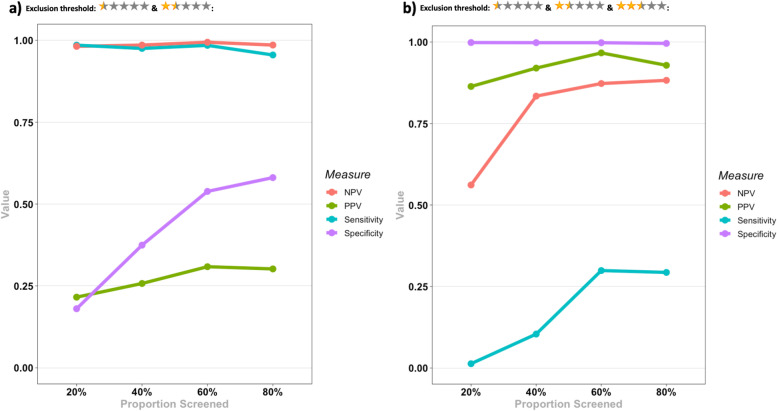
“The noticeable result was that NPV values remain consistent across all stages.”
§ Abstract screening using the automated tool Rayyan: results of effectiveness in three diagnostic test accuracy systematic reviews > Results > Test results
plain- Asserted: passes — The authors put it forward as true.
- Checkable: passes — It can be checked against evidence.
- Load-bearing: unclear — It is unclear whether the paper’s conclusions depend on it.
- Based: passes — The paper gives a reason why it holds.
A result the paper reports from its own data — it cites no other source for it, so there is none to check. The quote shows it is in the paper.
In the paper
“it seems that a threshold of < 2.5 (0.5 and 1.5) for exclusion is the optimal choice for record screening, as it achieved a good F1 score (0.354) with just 20% of the records manually screened.”
§ Abstract screening using the automated tool Rayyan: results of effectiveness in three diagnostic test accuracy systematic reviews > Discussion > Interpretation of the results
hedgedstates an association- Asserted: passes — The authors put it forward as true.
- Checkable: passes — It can be checked against evidence.
- Load-bearing: passes — The paper’s conclusions depend on it.
- Based: passes — The paper gives a reason why it holds.
In the paper
“In an analysis of 195 SRs in 2017 [3], the mean project length was 67.3 weeks with a range of 6–186 weeks.”
§ Abstract screening using the automated tool Rayyan: results of effectiveness in three diagnostic test accuracy systematic reviews > Background > Rationale A systematic review (SR) is a scientific investigation that focuses on a specific question and uses explicit, prespecified scientific methods to identify, select, assess, and summarize the findings of similar but separate studies [1]. SRs are considered to have the strongest level of evidence (level 1) in modern evidence-based medicine [2]. As the body of scientific literature is rapidly growing, SRs are more appreciated by healthcare decision-makers, due to providing brief robust reports of new interventions and phenomena. Unfortunately, current methods for conducting SRs are very time-consuming, resulting in the slow production of these important scientific reports. In an analysis of 195 SRs in 2017 [3], the mean project length was 67.3 weeks with a range of 6–186 weeks. In the same analysis, the number of studies found in the literature searches ranged from 27 to 92,020 with a mean of 1781. As a rough conservative estimate, it is believed that titles and abstracts of search results could be screened at a rate of 60–120 per hour [3]. With some basic calculations applied to the mean value of 1781, it results in about 14.8 to 29.6 hours of exhaustive work for reviewers with a maximum range of 766.8 to 1533.6 hours. Taking into consideration that most organizations prefer this task to be done in duplicate by at least two masked reviewers to minimize the risk of bias in study selection, the above numbers could be doubled. These numbers indicate the significant amount of time and energy a team of authors has to spend just selecting the potentially eligible studies. In recent years, a variety of automated tools have been introduced to facilitate the process of conduction of different parts of SRs, with different results. One of the main branches of these tools has been the study selection tools. Different automated tools have been developed for such tasks as Rayyan [4], Covidence [5], Abstrackr [6], Colandr [7], and EPPI-Reviewer [8]. These tools use text mining techniques to identify relevant information from text using statistical pattern learning that recognizes patterns in data. To achieve this, supervised learning algorithms are incorporated in their core, which tries to find patterns in the studies classified by the reviewers to predict the classification of unclassified records. These tools vary significantly in their core learning algorithm, offered features, and availability. In a scoping review in 2020 [9] Rayyan managed to get the highest score in weighted feature analysis and second place in the overall experience score (as rated by users in a survey) among these tools. Rayyan, a web-based automated screening tool, developed by Qatar Computing Research Institute (QCRI) was initially launched in 2014 and is currently accessible at www.rayyan.ai. It uses text mining methods to facilitate semi-automatic screening of records for SRs. As a reviewer screens some records and labels them for either inclusion, exclusion, or “maybe” relevant to the subject of the review, the tool thrives for finding patterns and similarities to give a similarity score to each of the remaining records as a five-star rating. Higher ratings reflect the computed underlying probabilities of the record being included are higher, and vice versa. The simplicity of using Rayyan, combined with its completely free access, has made it quite popular among users. It also provides some interesting features such as allowing independent masked screening of the records by more than one user, creating custom labels for records, highlighting words for inclusion and exclusion (which significantly assists manual screening), and choosing the reason(s) for excluding a record. Rayyan’s code is written in the open-source framework Ruby on Rails [10] and runs on Heroku [11] which is a Platform as a Service based on the cloud-hosting Amazon Web Services. The Rayyan classification system is described in a paper [4] by the developers as follows: Rayyan extracts all the words and pairs of words (bigrams) and MeSH terms following the removal of stop words and the stem of the remaining words from the titles/abstracts. These words are then used as features by the machine learning algorithm (support vector machine (SVM) classifier). As users label records as either excluded or included, the app uses the classifier to learn the features and build a model. The algorithm then runs on the records without a decision and gives a score to each of them, revealing how close it is to the include or exclude classes. That score is presented to the user as a five-star rating.
What the sources say
- Not checked — no full text of the sourcecites [3] Lefebvre C, et al. Searching for and selecting studies. Cochrane Handbook Syst Rev Intervent. 2019;67–107. source
plain- Asserted: passes — The authors put it forward as true.
- Checkable: passes — It can be checked against evidence.
- Load-bearing: passes — The paper’s conclusions depend on it.
- Based: passes — The paper gives a reason why it holds.
In the paper
“Such a significant imbalance could have strongly affected the training process of the learning algorithm.”
§ Abstract screening using the automated tool Rayyan: results of effectiveness in three diagnostic test accuracy systematic reviews > Discussion > Interpretation of the results
What the sources say
- Not checked — no full text of the sourcecites [22] Shultz, T. R. et al. Class imbalance problem. In encyclopedia of machine learning (eds. Sammut, C. & Webb, G. I.) 171–171 (Springer US, 2011).:10.1007/978-0-387-30164-8_110. source
hedgedstates a possible cause- Asserted: passes — The authors put it forward as true.
- Checkable: passes — It can be checked against evidence.
- Load-bearing: passes — The paper’s conclusions depend on it.
- Based: passes — The paper gives a reason why it holds.
A conclusion the paper draws from its own results — it cites no other source for it, so there is none to check. The quote shows it is in the paper.
In the paper
“Based on these results, Rayyan has the potential to reach acceptable PPV and NPV after manually screening 40% of records, considering a threshold of ≤2.5 for exclusion.”
§ Abstract screening using the automated tool Rayyan: results of effectiveness in three diagnostic test accuracy systematic reviews > Results > Test results
hedgedstates a possible cause- Asserted: passes — The authors put it forward as true.
- Checkable: passes — It can be checked against evidence.
- Load-bearing: passes — The paper’s conclusions depend on it.
- Based: passes — The paper gives a reason why it holds.
4 more claims
Create a free account to see all 55 claims and every source verdict.
- Probably not a substantial claim. 25
- It may state two separate claims as one. 30
- The quote only partly states this claim. 1
Claims other papers make about this one
Each is checked against this paper’s own text: does it say what the citing paper says it does?
The cited source says what the claim attributes to it.
In the citing paper
“Following deduplication of all retrieved records, the screening process was conducted using the Rayyan Professional systematic review platform (Valizadeh et al., 2022) to facilitate blinded and independent study selection.”
From Between cognitive offloading and critical autonomy: A systematic review of the epistemic implications of generative AI in higher education. (2026) · cites this paper as Valizadeh et al., 2022
In the citing paper
“Tools to streamline abstract screening are already in wide use but researchers using these tools are limited to a maximum rate of screening of around 2 abstracts per minute.”
From High-performance automated abstract screening with large language model ensembles (2025) · cites this paper as [8]
Citations
Cites
The PRISMA 2020 statement: An updated guideline for reporting systematic reviews
Page, M. J., McKenzie, J. E., Bossuyt, P. M., Boutron, I., Hoffmann, T. C., Mulrow, C. D., Shamseer, L., Tetzlaff, J. M., Akl, E. A., Brennan, S. E., et al. (2021) · BMJ · doi:10.1136/bmj.n71 · Cited by 108,283
PRISMA-P Group, Moher, D., Shamseer, L., Clarke, M., Ghersi, D., Liberati, A., Petticrew, M., Shekelle, P., & Stewart, L. A. (2015) · Systematic Reviews · doi:10.1186/2046-4053-4-1 · Cited by 26,223
Rayyan-a web and mobile app for systematic reviews.
Ouzzani, M., Hammady, H., Fedorowicz, Z., & Elmagarmid, A. (2016) · Systematic Reviews · doi:10.1186/s13643-016-0384-4 · Cited by 26,092 · cited 3×
“Different automated tools have been developed for such tasks as Rayyan [4], Covidence [5], Abstrackr [6], Colandr [7], and EPPI-Reviewer [8].”
BackgroundMethodThe PRISMA 2020 statement: an updated guideline for reporting systematic reviews
Page, M. J., McKenzie, J., Bossuyt, P., Boutron, I., Hoffmann, T., mulrow, C., Shamseer, L., Tetzlaff, J., Akl, E., Brennan, S. E., et al. (2020) · doi:10.31222/osf.io/v7gm2_v1 · Cited by 8,090
The PRISMA 2020 statement: an updated guideline for reporting systematic reviews
Page, M. J., McKenzie, J., Bossuyt, P., Boutron, I., Hoffmann, T., mulrow, C., Shamseer, L., Tetzlaff, J., Akl, E., Brennan, S. E., et al. (2020) · doi:10.31222/osf.io/v7gm2 · Cited by 5,177
Encyclopedia of Machine Learning
(2010) · Springer eBooks · doi:10.1007/978-0-387-30164-8 · Cited by 3,465
STARD 2015: An Updated List of Essential Items for Reporting Diagnostic Accuracy Studies
Bossuyt, P. M., Reitsma, J. B., Bruns, D. E., Gatsonis, C. A., Glasziou, P. P., Irwig, L., Lijmer, J. G., Moher, D., Rennie, D., de Vet, H. C. W., et al. (2015) · Clinical Chemistry · doi:10.1373/clinchem.2015.246280 · Cited by 984 · cited 1×
“This study’s design and methods are reported in line with the Standards for Reporting Diagnostic accuracy studies (STARD) checklist [13].”
MethodFinding What Works in Health Care: Standards for Systematic Reviews
Eden, J., Levit, L. A., Berg, A. O., & Morton, S. C. (2013) · Cited by 949
Searching for and selecting studies
Lefebvre, C., Glanville, J., Briscoe, S., Littlewood, A., Marshall, C., Metzendorf, M., Noel‐Storr, A., Rader, T., Shokraneh, F., Thomas, J., et al. (2019) · Cochrane Handbook for Systematic Reviews of Interventions · doi:10.1002/9781119536604.ch4 · Cited by 647 · cited 3×
“As a rough conservative estimate, it is believed that titles and abstracts of search results could be screened at a rate of 60–120 per hour [3].”
BackgroundMethodInfluentialHarrison, H., Griffin, S. J., Kuhn, I., & Usher-Smith, J. A. (2020) · BMC Medical Research Methodology · doi:10.1186/s12874-020-0897-3 · Cited by 449 · cited 1×
“In a scoping review in 2020 [9] Rayyan managed to get the highest score in weighted feature analysis and second place in the overall experience score (as rated by users in a survey) among these tools.”
Background
Research works printed but not linked: 3
- Covidence. Covidence systematic review software, veritas health innovation. Melbourne; 2021.
- Thomas J Brunton J EPPI-reviewer: software for research synthesis 2007
- Hupe M EndNote X9 J ElectroResources Med Lib 2019 16 117 119
Cited by
Items 101–156 of 156
da Conceição, M. M., de Camargo, C. L., Lacerda, M. R., Whitaker, M. C. O., da Cunha, K. S., Gomes, N. P., da Fonseca, E. R., & de Paula, C. C. (2024) · Online Brazilian Journal of Nursing · doi:10.17665/1676-4285.20246743
Ortiz, H. A. D. L. B., Maza, T. C. D. L., Gascón-Madrid, M. J., Hormazábal-Cerda, G., Arellano, A. D. M., & Chamorro-Lange, C. (2025) · Physiotherapy Quarterly · doi:10.5114/pq/192504 · Cited by 2
Global biological sample collections from tuberculosis studies: a scoping review
Adolph, C., Mendelsohn, S. C., Via, L. E., Martínez, L., Arlehamn, C. S. L., Lewinsohn, D. M., Torrelles, J. B., & Hill, P. C. (2025) · The Lancet Microbe · doi:10.1016/j.lanmic.2025.101287 · Cited by 1
Sistematización teórica de la Industria 4.0 en el área de logística.
Chicaiza, R. P. M., & Tipantasig, D. A. T. (2023) · Dilemas contemporáneos Educación Política y Valores · doi:10.46377/dilemas.v11i1.3766 · Cited by 2
Hasanah, I., Sari, A. S., Nursalam, N., Safinatunnaja, B., Krisnana, I., Basuni, H. L., Haikal, Z., & Ramdani, W. F. (2024) · Africa Journal of Nursing and Midwifery · doi:10.25159/2520-5293/15152 · Cited by 3
Kebede, M. A., Tor, D. S. G., Aklilu, T., Petros, A., Ifeanyichi, M., Aderaw, E., Bognini, M. S., Singh, D., Emodi, R., Hargest, R., et al. (2023) · Figshare · doi:10.6084/m9.figshare.24089414
Kebede, M. A., Tor, D. S. G., Aklilu, T., Petros, A., Ifeanyichi, M., Aderaw, E., Bognini, M. S., Singh, D., Emodi, R., Hargest, R., et al. (2023) · Figshare · doi:10.6084/m9.figshare.24089411
Evaluation of Systematic Reviews and Meta-analyses
Dziadkowiec, O. (2024) · Journal of Obstetric, Gynecologic & Neonatal Nursing · doi:10.1016/j.jogn.2024.07.006
Ortega, R. V., & González-Cañizalez, Y. (2024) · Reincisol · doi:10.59282/reincisol.v3(6)1871-1887
Arce‐Huamani, M. A. (2024) · Universidad Científica del Sur · doi:10.21142/tm.2024.3308
Evaluating the Reliability of a Custom GPT in Full-Text Screening of a Systematic ReviewPreprint
Davis, R. C., List, S. S., Chappell, K. G., Madar, A., Henjum, S., & Heen, E. (2025) · medRxiv · doi:10.1101/2025.02.04.25321655
Hadi, T. H. S., Santoso, B., Hardianto, G., et al. (2025) · Obstetrics & Gynecology Science · doi:10.5468/ogs.24282
“Three independent reviewers screened the study records by title and abstract while removing duplicates from the collected references using Rayyan [14].”
Body Representation in Stroke Patients: A Systematic Review of Human Figure Graphic Representation
Diyakonova, O., Habib, V., Germanotta, M., Taddei, K., Bruschetta, R., Pioggia, G., Tartarisco, G., & Aprile, I. G. (2025) · Journal of Clinical Medicine · doi:10.3390/jcm14093098 · Cited by 1
“Furthermore, we adopted the Rayyan.ai tool (Rayyan Systems, Cambridge, MA, USA), an AI-assisted tool that facilitated but did not replace manual screening [43,44].”
Shaping The Future of Education with Generative AI: Potential, Challenges, and Opportunities
Suganya, S., Kavitha, A. R., & Sahana, D. C. (2025) · International Conference on Data Science, Agents & Artificial Intelligence (ICDSAAI) · doi:10.1109/icdsaai65575.2025.11011822
Cavalcante, F. M. L., do Carmo, L. R. M., Santos, F. C. D. A., Bacigalupo, C. M., Pinto, C., & Barros, L. M. (2025) · Revista de Pesquisa Cuidado é Fundamental Online · doi:10.9789/2175-5361.rpcfo.v17.13892
Abdullaeva, A., & ZHUBANOVA, D. A. (2025) · Vestnik · doi:10.53065/kaznmu.2025.73.2.005
A systematic landscape review of global biological sample collections from tuberculosis studiesPreprint
Adolph, C., Mendelsohn, S. C., Via, L. E., Martínez, L., Arlehamn, C. S. L., Lewinsohn, D. M., Torrelles, J. B., & Hill, P. C. (2025) · doi:10.12688/verixiv.1257.1
Sinno, J., Logan, J. R., Carliner, J., Perez‐Brumer, A., Logie, C. H., & Grace, D. (2025) · Systematic Reviews · doi:10.1186/s13643-025-02917-w
Sanguino-Jaramillo, M., Domínguez-Vargas, A., Galeano-Lopez, J., & Cavadía-Carrascal, G. (2025) · Journal Français d Ophtalmologie · doi:10.1016/j.jfo.2025.104710
Dadfar, A., Ramklint, M., & Pachaly, S. V. W. (2025) · Scandinavian Journal of Child and Adolescent Psychiatry and Psychology · doi:10.2478/sjcapp-2025-0011
Nordmann, K., & Fischer, F. (2025) · BMC Health Services Research · doi:10.1186/s12913-025-13901-4 · Cited by 3
“…suggest leaving borderline cases to human researchers’ judgement, one possibility for identifying these cases might be to prompt tools based on large language models to use a rating scale from least relevant to most relevant, similar to the review-automa-tion tool Rayyan [7, 11, 12, 16, 36].”
Alamoudi, A., Aldahlawi, A. K., Almufarriji, N., et al. (2026) · Clinical ophthalmology · doi:10.2147/opth.s535477
Batista, J. P. B., Teixeira, M. M., Torre, C., Sepodes, B. M. N., Abecasis, A. B., & Mota‐Filipe, H. (2026) · BMJ Open · doi:10.1136/bmjopen-2025-105490
“32 The first stage of this scoping review will involve the screening of titles, abstracts and eligibility of studies by two reviewers.”
Babul, A., Ashraf, S., Free, L. L., Desai, J., Hussain, M., & Babul, N. (2026) · Cureus · doi:10.7759/cureus.101603 · Cited by 1
“Records were exported into Rayyan QCRI for duplication removal and blinded screening [27].”
Badran, E., Rayyan, A., Jaberi, M. A., et al. (2026) · Frontiers in Digital Health · doi:10.3389/fdgth.2025.1713089
Ojo, A., Osborne, A., Soladoye, A. A., Matope, E. M., Bamidele, D. B., & Olawade, D. B. (2026) · Intelligent Hospital · doi:10.1016/j.inhs.2026.100053
Rule-Based Classification and Clustering for Thematic Analysis of Research Papers
Abid, M. H., & Yao, J. (2026) · IEEE Annual Computing and Communication Workshop and Conference (CCWC) · doi:10.1109/ccwc67433.2026.11393808
“Rayyan supports efficient multi-reviewer screening and has demonstrated effectiveness in diagnostic-accuracy reviews [16].”
Pereira, C. C., Magalhães, L. S., Batista, S. R. R., Pagotto, V., & Guimarães, R. A. (2026) · PLoS ONE · doi:10.1371/journal.pone.0343166 · Cited by 1
“A single reviewer (CCP) has conducted the initial search, identified, and removed duplicates using Rayyan [38].”
Gilbert, D. J., Azumara, S. I., Wheatcroft, J. M., Steele, K. A., Cook, P. A., Mukherjee, R., Gudjonsson, G. H., & Brown, N. N. (2026) · Behavioral Sciences & the Law · doi:10.1002/bsl.70052 · Cited by 1
Nanotoxicology meets smart polymers: advancing safety-by-design nanomaterials
Tiwari, G., Tıwarı, R., Mundada, A. B., Mundada, P. A., Maheshwari, R. O. P. N., Rudrangi, S. R. S., Porika, M., Tippani, R., & Sharma, P. (2026) · Journal of Biomaterials Science Polymer Edition · doi:10.1080/09205063.2026.2635479 · Cited by 5
Chinchio, E., Casati, S., Clerbaux, L., & Bopp, S. K. (2026) · International Journal of Hygiene and Environmental Health · doi:10.1016/j.ijheh.2026.114784 · Cited by 1
Effect of Antihypertensive Drug Classes on Stroke Prevention: A Systematic Review and Meta-Analysis
Shams, Z. I., Maya, K. I. J., Shahid, S. T. B., Trina, T. I., Nisat, F. Y., Alam, F., Islam, A., Afsana, A., & Chowdhury, S. (2026) · Cureus · doi:10.7759/cureus.105452
“Titles and abstracts were first assessed, followed by the full-text evaluation of potentially eligible articles using Rayyan software (Rayyan Systems Inc., Cambridge, Massachusetts, United States) [7].”
Shetty, S., Ariga, P., Hegde, R., et al. (2026) · Advances in Human Biology · doi:10.4103/aihb.aihb_175_24
Generative AI and adaptive systems for customising help-seeking scaffolds: A systematic review
Jecha, J., Igweani, C. C., Banaras, A., Liang, Y., & Mwalyego, F. M. (2026) · Information Services & Use · doi:10.1177/18758789261486037
Systematic evidence-mapping of climate change adaptation challenges in urban water systemsPreprint
Nayak, S., Castillo, Z., Ekmekcioglu, R., Hanf, F. S., Kaul, N., Martes, L., Meier, L., Schön, F., von Szombathely, M., & Poschlod, B. (2026) · Research Square · doi:10.21203/rs.3.rs-9569973/v1 · Cited by 1
Wright, L. A., Meyerhoff, J., Zhang, Y., Evans, J., Guo, B., & Morriss, R. K. (2026) · Wellcome Open Research · doi:10.12688/wellcomeopenres.26220.1
Thind, A., Pisudde, P. M., & Kochhar, S. (2026) · Cureus · doi:10.7759/cureus.109256 · Cited by 1
“During screening and data extraction, two reviewers used Rayyan (Rayyan Systems Inc., Cambridge, MA, US) to perform all processes [11].”
Chen, Y., Wang, Y., Zhang, Y., & Chen, C. (2026) · International Journal of Mental Health and Addiction · doi:10.1007/s11469-026-01675-7 · Cited by 1
Jammer, B. D., Lombard, W. A., & Jordaan, H. (2026) · Heliyon · doi:10.1016/j.heliyon.2026.e45132
Bunz, M., Derhardt, R., Schreiber, F., Seehagen, S., & Schneider, S. (2026) · BMC Psychology · doi:10.1186/s40359-026-04935-2 · Cited by 1
“This is particularly concerning given the conceptual overlap of ER with related constructs such as temperament and coping [61, 247], making discriminant validity essential for clarifying construct boundaries [46, 165].”
Climatic Risks in South American Coastal Ecosystems: A Mixed-Methods Review
Nagy, G. J., Muñoz, N. S., Olivares, I., & Soto, I. L. (2026) · Advances in Environmental and Engineering Research · doi:10.21926/aeer.2603019
Birth Weight in Infants with a Cleft Lip and/or Palate: A Systematic Review and Meta-Analysis
Ormanidou, I., Kinter, S. L., Denno, D. M., Meehan, A., Masterson, S., Nylander, E. M., Heike, C. L., & McKinney, C. M. (2026) · The Journal of Pediatrics · doi:10.1016/j.jpeds.2026.115244 · Cited by 2
Mistilidou, D., Polyzou, C., Davidopoulou, S., Papadopoulos, M. A. A. P., & Chatzigianni, A. (2026) · International Orthodontics · doi:10.1016/j.ortho.2026.101215
Barragán, A. M., Bonett, S. E. O., Rodríguez-Grande, E.-I., Orjuela-Cañón, Á. D., Perdómo, O., & Sánchez, G. (2026) · Cochrane Evidence Synthesis and Methods · doi:10.1002/cesm.70098
“…standardization Stopping criteria [18, 41, 65, 96, 104, 187, 190, 192] Metrics in the evaluation of resources for automating SRL [32, 73, 119, 164, 177, 178, 183, 189] Benchmark data sets for evaluating resources against a gold standard [19, 53, 105, 179, 183] Study designs for evaluating…”
S, S. A., Kakada, P., & Yuwanati, M. B. (2026) · International Journal of Oral and Maxillofacial Surgery · doi:10.1016/j.ijom.2026.07.016
Telemental Health Approaches for Rural Opioid Use Treatment: An Integrative Review
Weber, J., Vandermause, R. K., & Schmidt, C. M. (2026) · Journal of the American Psychiatric Nurses Association · doi:10.1177/10783903261473928
Social Dimensions of Resilience in Older Adults: A Systematic Review
Mantere, E., Rostgaard, T., Perek-Białas, J. M., & Timonen, V. (2026) · Health & Social Care in the Community · doi:10.1155/hsc/3211500
Exercise and pathologic complete response to cancer treatment: a systematic review and meta-analysis
Rato, N. D., Garcia, C., Pinto, D., Guedes, H., Joaquim, A. V., Viamonte, S., Helguero, L. A., Viana, J. L., & Alves, A. J. (2026) · Supportive Care in Cancer · doi:10.1007/s00520-026-11156-1
“The RAYYAN software has been proven to be a reliable tool for excluding ineligible records based on the title and abstract screening [38], and the process followed the guidelines for the use of artificial intelligence for title and abstract screening [39].”
Nunnery, J. A. (2026) · Research Synthesis Methods · doi:10.1017/rsm.2026.10116 · Cited by 1
Laville, E., Rodrigues, A. P., & Mascarenhas, P. (2026) · Dentistry Journal · doi:10.3390/dj14090610
“Two reviewers independently screened titles and abstracts and assessed full texts; eligibility decisions were made by reviewers and not delegated to automated predictions [35].”
Yin, C., Jing, Z., & Zhang, Z. (2026) · medRxiv · doi:10.64898/2026.09.21.26363538
Carrión, N., Cabrera, C., Heredia, L., & Torrente, M. (2026) · Discover Neuroscience · doi:10.1186/s13064-026-00334-w
“Two investigators (N.C., C.C.) independently screened all titles and abstracts using Rayyan, an AI-powered systematic review management platform ( h t t p s : / / w w w . r a y y a n . a i / ) [16].”
Martin, P. A., Amirmohammedi, F., Barreto, C., Berger, I., Bissessur, P., Christie, A. P., Donoso, I., Furlan, V., Grainger, M., Hartup, J., et al. (2026) · Journal of Applied Ecology · doi:10.1111/1365-2664.70565 · Cited by 4
Khan, Z. A., Chowdhury, Z., Modi, R., Sumsuzzman, D. M., Ju, L.-S., Labala, R. K., Gravenstein, N. L., & Martynyuk, A. E. (2026) · Biology · doi:10.3390/biology15191730
Aldawsari, R., Buhalis, D., & Roushan, G. (2026) · Springer proceedings in business and economics · doi:10.1007/978-3-032-23925-9_12
Adam, G. P., Davies, M. C., Caputo, E. L., Mai, H. J., Coppola, E. L., Holmer, H. K., Kuhn, E., Balk, E. M., Trikalinos, T. A., Ivlev, I., et al. (2026) · Research Synthesis Methods · doi:10.1017/rsm.2026.10118
Metadata
- Authors
- Valizadeh, A., Moassefi, M., Nakhostin-Ansari, A., Hosseini Asl, S. H., Saghab Torbati, M., Aghajani, R., Maleki Ghorbani, Z., & Faghani, S.
- Affiliations
- Tehran University of Medical Sciences (IR)
- Exceptional Talents Development Center (IR)
- Corresponding author
- Valizadeh, Amir
- Venue
- BMC Medical Research Methodology
- Published
- 2022-06-02
- Volume
- 22
- Issue
- 1
- Pages
- 160-160
- ISSN
- 1471-2288 (ISSN-L)
- PMC
- PMC9161508
- OpenAlex
- W4281646566
- Semantic Scholar
- 54f23028ce10416b843ca7d660f10ada0623fff1
- Cited by
- 159
- References
- 21
- Citations by year
- 2026: 50 · 2025: 59 · 2024: 35 · 2023: 14 · 2022: 1
- Type
- conference abstract
- Language
- en
- Open access
- gold
- doi.org
- Licence
- cc-by
- creativecommons.org/licenses/by/4.0 (tdm)
- creativecommons.org/licenses/by/4.0 (vor)
- Locations
- BMC Medical Research Methodology (publishedVersion, cc-by)
- PubMed Central (publishedVersion, cc-by)
- PubMed (publishedVersion)
- DOAJ (DOAJ: Directory of Open Access Journals) (submittedVersion, cc-by-sa)
- Topics
- Social Sciences › Decision Sciences › Statistics, Probability and Uncertainty › Meta-analysis and systematic reviews
- Physical Sciences › Computer Science › Information Systems › Information Retrieval and Search Behavior
- Social Sciences › Library and Information Sciences › scientometrics and bibliometrics research
- Keywords
- Rayyan, systematic review screening, eligibility determination, sensitivity and specificity
- MeSH terms
- Delivery of Health Care, Diagnostic Tests, Routine, Humans, Research
About these checks
Registry, retraction, Cites and statistics results are computed, not judged, with one exception: a printed reference that no index lists is read once by a model before it counts as a citation error. Claims are extracted by a model and kept only when their quote appears verbatim in the text; each cited source is then checked, with a model’s help, for whether it says what the claim relies on. Those verdicts can be wrong — read the claim’s quote and the cited source before relying on one.
The claim verdicts this report counts are experimental: their accuracy is not yet measured.
A language model drew the claims from the paper on 2026-10-11, under version 3 of the claim definition (model deepseek-v4.1-flash, prompt extract-v3).
A second model labelled each claim on 2026-10-11 (model jev-1.13-20260917, definition revision gold-guideline-v0.2).
Statistics and arithmetic are recomputed, not judged.
Confidence bands are shown only for fields calibrated on our annotated test set. None is calibrated yet, so no band is shown.
What counts as a claim ›How we measure confidence ›How we check this ›
Are you an author, or do you see a problem with this page? Request a review
Data sources
Bibliographic data: Semantic Scholar, OpenAlex, Crossref.
Contains information from the Semantic Scholar Academic Graph Datasets, made available under the ODC Attribution License (ODC-BY 1.0).
Semantic Scholar’s data is described in: Kinney, R., et al. (2023). The Semantic Scholar Open Data Platform. arXiv:2301.10140.
