

The global prevalence of turnover intention among general practitioners: a systematic review and meta-analysis
Open accessThe DOI matches its Crossref record; 62 of the 64 references it cites were found in a registry or an index.
Abstract
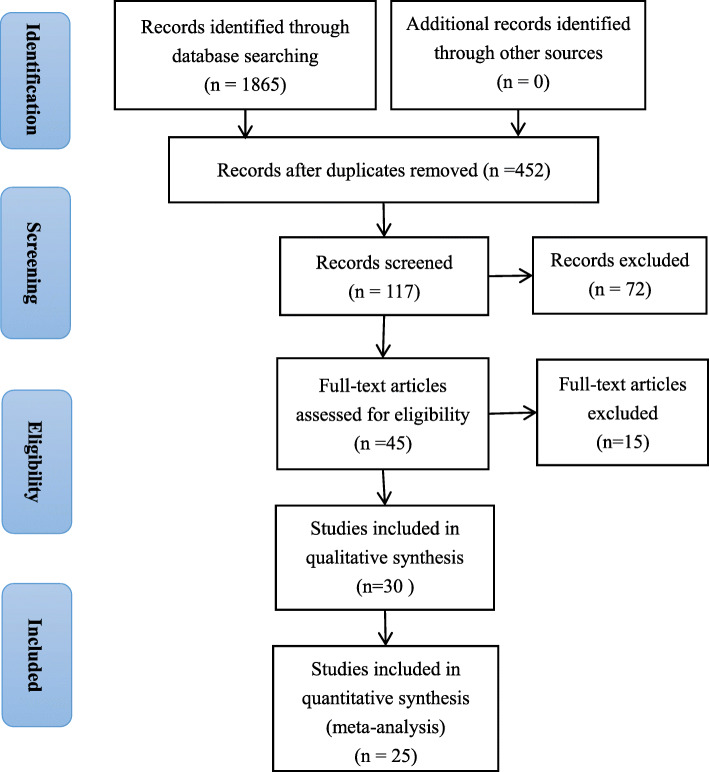
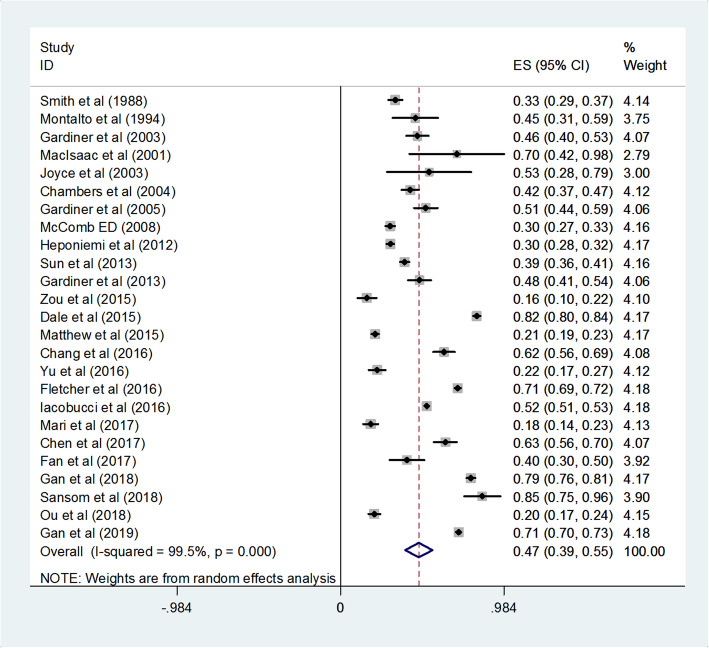
Background: General practitioners (GPs) are the foundation of any primary healthcare system. Their quality and quantity are directly associated with the effectiveness and quality of the health services of a nation. GPs’ shortage and turnover have become an important issue in developed and developing countries. An accurate estimate of turnover intention prevalence among GPs would have important health policy implications, but the overall prevalence is unknown. We aimed to summarize the global prevalence of turnover intention and associated factors among GPs. Methods: We systematically reviewed the PubMed, Embase, Web of Science and China National Knowledge Infrastructure (CNKI) databases from their inception up to May 2020, as well as the reference lists of all included studies. We included observational studies that reported data on turnover intention or their prevalence rate among GPs could be calculated based on the information provided. The prevalence rate of the turnover intentions was estimated using a random-effects meta-analysis. The heterogeneity was evaluated using I 2 statistic. Differences by study level characteristics were estimated via subgroup analysis and meta-regression. Results: A total of 25 cross-sectional studies were included (a total of 27,285 participants). The prevalence of turnover intention was 0.47 (95% CI: 0.39–0.55). Those having a lower level of salary (OR = 1.38, 95% CI: 1.13–1.63) and job satisfaction (OR = 1.35, 95% CI: 1.12–1.70) or having lower level of morale (OR = 2.68, 95% CI: 1.56–3.80) had a higher intention. In contrast, GPs with a lower level of professional title had a lower turnover intention (OR = 0.81, 95% CI: 0.65–0.98). Conclusions: In this systematic review, approximately half of the GPs had the intention to leave their current posts worldwide. The factors associated with turnover intention were higher professional title, lower income level, lower job satisfaction and lower morale.
Overview
The claims and statistics of this paper haven’t been checked yet.
Free: it reads the open-access text and checks the first 5 claims that cite a source we can check. Create a free account to check every claim.
Integrity signals
Registry
Cites
Statistics
Figures
Verification
Claims the paper makes
The claims and statistics of this paper haven’t been checked yet.
Free: it reads the open-access text and checks the first 5 claims that cite a source we can check. Create a free account to check every claim.
Claims other papers make about this one
Each is checked against this paper’s own text: does it say what the citing paper says it does?
The cited source says what the claim attributes to it.
In the citing paper
“A search for systematic reviews published in the last 10 years examining turnover intention among HCWs on PubMed, PROSPERO and Google Scholar produced nine relevant systematic reviews [11–19]”
From A global overview of healthcare workers’ turnover intention amid COVID-19 pandemic: a systematic review with future directions (2022) · cites this paper as [18]
The cited source says what the claim attributes to it.
In the citing paper
“and many of which were known factors prior to the pandemic [11–19].”
From A global overview of healthcare workers’ turnover intention amid COVID-19 pandemic: a systematic review with future directions (2022) · cites this paper as [18]
Self-check
Percentages, sums and reported differences re-computed from the paper’s own numbers.
The self-check needs the paper’s full text.
Citations
Cites
Preferred Reporting Items for Systematic Reviews and Meta-Analyses: the PRISMA statement
Moher, D., Liberati, A., Tetzlaff, J., Altman, D. G., & for the PRISMA Group (2009) · BMJ · doi:10.1136/bmj.b2535 · Cited by 83,823
Preferred Reporting Items for Systematic Reviews and Meta-Analyses: The PRISMA Statement
Moher, D., Liberati, A., Tetzlaff, J., Altman, D. G., & The PRISMA Group (2009) · PLoS Medicine · doi:10.1371/journal.pmed.1000097 · Cited by 64,042 · cited 1×
“A systematic review and meta-analysis following the PRISMA and MOOSE guidelines was performed to assess the status and factors related to GPs turnover intention [25, 26].”
Preferred reporting items for systematic reviews and meta-analyses: the PRISMA Statement.
(2009) · PubMed Central · Cited by 44,859
Quantifying heterogeneity in a meta‐analysis
Higgins, J. P. T., & Thompson, S. G. (2002) · Statistics in Medicine · doi:10.1002/sim.1186 · Cited by 36,763
PRISMA-P Group, Moher, D., Shamseer, L., Clarke, M., Ghersi, D., Liberati, A., Petticrew, M., Shekelle, P., & Stewart, L. A. (2015) · Systematic Reviews · doi:10.1186/2046-4053-4-1 · Cited by 26,223
Assessing Bias in Studies of Prognostic Factors
Hayden, J. A., van der Windt, D. A., Cartwright, J. L., Côté, P., & Bombardier, C. (2013) · Annals of Internal Medicine · doi:10.7326/0003-4819-158-4-201302190-00009 · Cited by 3,287
How should meta‐regression analyses be undertaken and interpreted?
Thompson, S. G., & Higgins, J. P. T. (2002) · Statistics in Medicine · doi:10.1002/sim.1187 · Cited by 3,026
An evaluation of precursors of hospital employee turnover.
Mobley, W. H., Horner, S. O., & Hollingsworth, A. T. (1978) · Journal of Applied Psychology · doi:10.1037//0021-9010.63.4.408 · Cited by 1,765
Undue reliance on I 2 in assessing heterogeneity may mislead
Rücker, G., Schwarzer, G., Carpenter, J. R., & Schumacher, M. (2008) · BMC Medical Research Methodology · doi:10.1186/1471-2288-8-79 · Cited by 1,287
Song, F., & Gilbody, S. M. (1998) · PubMed · Cited by 246
Research works printed but not linked: 5
- Digital N General practice workforce 30 June 2019 2019
- Lin OW Ping LK Qiong MM Li K Study on fatigue status and turnover intention of primary health care workers in Guangdong Guangdong Med J 2018 39 20 3081 3085
- En-fang F Yan Y Status of job burnout and turnover intention among general practitioners in suburb communities of Pudong District of Shanghai Occup Health. 2017 33 11 1473 1477
- Ming CG Shuo W De Xin M Juan WH Dong LQ Chao F Turnover intention of general practitioners and its influencing factors China Gen Pract 2016 19 25 3008 3012
- Yongli Y Yuejiao Q Yaoqiong Y Investigation on the status quo of general practitioners in the City Community health Service in Zhejiang Province Modern Hosp 2016 16 06 898 902
Cited by
Poon, Y.-S. R., Lin, Y. P., Griffiths, P., Yong, K. K., Seah, B., & Liaw, S. Y. (2022) · Human Resources for Health · doi:10.1186/s12960-022-00764-7 · Cited by 394
de Vries, N., Boone, A., Godderis, L., Bouman, J., Szemik, S., Matranga, D., & de Winter, P. (2023) · INQUIRY: The Journal of Health Care Organization, Provision, and Financing · doi:10.1177/00469580231159318 · Cited by 285
The quiet quitting scale: Development and initial validation
Galanis, P., Katsiroumpa, A., Vraka, I., Siskou, O., Konstantakopoulou, O., Moisoglou, I., Gallos, P., & Kaitelidou, D. (2023) · AIMS Public Health · doi:10.3934/publichealth.2023055 · Cited by 160
Roth, L., Saux, C. L., Gilles, I., & Peytremann‐Bridevaux, I. (2023) · Medical Care Research and Review · doi:10.1177/10775587231204105 · Cited by 60
“These challenges are likely to cause high turnover rates in HPs, creating a precarious situation that may lead to a dissatisfied and unprepared workforce (Halter et al., 2017; Shen et al., 2020).”
BackgroundA systematic review on pharmacists’ turnover and turnover intention
Thin, S. M., Chongmelaxme, B., Watcharadamrongkun, S., Kanjanarach, T., Sorofman, B. A., & Kittisopee, T. (2022) · Research in Social and Administrative Pharmacy · doi:10.1016/j.sapharm.2022.05.014 · Cited by 42
Fisher, R. F., Allen, L., Malhotra, A., & Alderwick, H. (2022) · doi:10.37829/hf-2022-p09 · Cited by 61
Village doctors' dilemma in China: A systematic evaluation of job burnout and turnover intention
Chen, Y., You, Y., Shen, Y., Du, Z., & Dai, T. (2022) · Frontiers in Public Health · doi:10.3389/fpubh.2022.970780 · Cited by 41
Quiet quitting among employees: a proposed cut-off score for the “Quiet Quitting” ScalePreprint
Galanis, P., Katsiroumpa, A., Vraka, I. S., Konstantakopoulou, O., Moisoglou, I., Gallos, P., & Καϊτελίδου, Δ. (2023) · Research Square · doi:10.21203/rs.3.rs-3076541/v1 · Cited by 53
Al-Surimi, K. M., Almuhayshir, A., Ghailan, K. Y., & Shaheen, N. A. (2022) · Risk Management and Healthcare Policy · doi:10.2147/rmhp.s390021 · Cited by 46
“The factors associated with this high turnover intention among general practitioners were lower income level, lower job, and heavy workload.(44) Workload and stress were also found among nurses and doctors.”
BackgroundFeng, J., Li, L., Wang, C., Pan, K., Jiang, H., Yin, X., & Lu, Z. (2022) · Journal of Global Health · doi:10.7189/jogh.12..04005 · Cited by 30
Self-citationParisi, R., Lau, Y., Bower, P., Checkland, K., Rubery, J., Sutton, M., Giles, S. J., Esmail, A., Spooner, S., & Kontopantelis, E. (2023) · BMJ Quality & Safety · doi:10.1136/bmjqs-2022-015353 · Cited by 27
Wang, A., Tang, C., Zhou, L., Lv, H., Song, J., Chen, Z., & Yin, W. (2023) · Human Resources for Health · doi:10.1186/s12960-023-00791-y · Cited by 35
“Family doctors with turnover intention result in lower morale, hidden absenteeism, and poor performance [22].”
BackgroundBalea, L. B., Gulestø, R. J. A., Xu, H., & Glasdam, S. (2025) · Frontiers in Antibiotics · doi:10.3389/frabi.2024.1507868 · Cited by 40
Self-citationParisi, R., Lau, Y., Bower, P., Checkland, K., Rubery, J., Sutton, M., Giles, S. J., Esmail, A., Spooner, S., & Kontopantelis, E. (2021) · BMJ Open · doi:10.1136/bmjopen-2021-049827 · Cited by 25
Feng, J. B., Sang, W., Lei, Z., Qu, G., Li, X., Ferrier, A., Jiang, H., Pu, B., & Gan, Y. (2022) · International Journal of Social Psychiatry · doi:10.1177/00207640221133939 · Cited by 35
“08% of the GPs had moderate or above turnover intention, which was much higher than the prevalence among GPs worldwide (47%) (Shen et al., 2020).”
BackgroundResultSelf-citationYan, S., Shen, X., Wang, R., Luo, Z., Han, X., Gan, Y., & Lv, C. (2021) · Human Resources for Health · doi:10.1186/s12960-021-00688-8 · Cited by 21
“Compared to previous studies of psychiatrists (20%) [23], general practitioners (47%) [24], and emergency department nurses (23%) [25], emergency physicians showed higher levels of turnover intention, which indicated that fully attention should be paid to this community.”
BackgroundResultSelf-citationLi, H., Yuan, B., Yu, Y., Li, J., & Meng, Q. (2022) · Risk Management and Healthcare Policy · doi:10.2147/rmhp.s366389 · Cited by 26
“Though there are no studies that directly measure motivation for PHWs in China, previous studies using job satisfaction as a proxy to measure reported similar findings: lower satisfaction as an important indicator of low motivation, was correlated with higher turnover intention no matter in China and other LMICs.(10,4…”
ResultInfluentialTurnover intention among healthcare workers in Ethiopia: a systematic review and meta-analysis
Gebrekidan, A. Y., Enaro, E. Y., Azeze, G. A., Adella, G. A., Kassie, G. A., Haile, K. E., & Asgedom, Y. S. (2023) · BMJ Open · doi:10.1136/bmjopen-2022-067266 · Cited by 22
A global prevalence of turnover intention among doctors: a systematic review and meta-analysis
Wang, J., Lv, H., Qin, Q., Jiang, H., Ren, W., & Shariff, N. M. (2025) · Scientific Reports · doi:10.1038/s41598-025-07019-0 · Cited by 26
Self-citationLi, X., Wang, J., He, L., Hu, Y., Li, C., Xie, Y., Wang, N. N., Luo, A., & Lu, Z. (2024) · BMJ Open · doi:10.1136/bmjopen-2024-084859 · Cited by 13
“18 Notably, an analysis of 16 cross-sectional studies from various regions of China revealed substantial inconsistencies stemming from differing research sites and participant demographics.”
Self-citationHuang, Y., Zhang, H., Qin, Z., Zou, Y., Feng, Z., & Jiao, C. (2023) · Human Resources for Health · doi:10.1186/s12960-023-00878-6 · Cited by 21
“Notably, the results of a global systematic review showed a 47.0% turnover rate for general practitioners (GPs) [4].”
BackgroundResultInfluentialKüppers, L., Göbel, J., Aretz, B., Rieger, M. A., & Weltermann, B. (2024) · Healthcare · doi:10.3390/healthcare12040479 · Cited by 12
“In addition, a systematic review and meta-analysis of 25 cross-sectional studies by Shen et al. found that lower salaries, low job satisfaction and bad morale caused turnover intentions in 46% of GPs between 1988 and 2019 [65].”
BackgroundRetention of ethnic minority staff is critical to resolving the NHS workforce crisis
Woolf, K., Papineni, P., Lagrata, S., & Pareek, M. (2023) · BMJ · doi:10.1136/bmj.p541 · Cited by 10
Leka, S., & Jain, A. (2025) · SSRN Electronic Journal · doi:10.2139/ssrn.5114626 · Cited by 10
Dias, I. W. H., Matijasevich, A., Russo, G., & Scheffer, M. C. (2023) · PLoS ONE · doi:10.1371/journal.pone.0271655 · Cited by 11
“Discussion Approximately half of the physicians in São Paulo appeared to have terminated their employment within approximately 11 months of their hire at a PHCU, which is consistent with the findings of other studies showing that the short tenure of physicians is a global phenomenon, which may be detrimental to PHC or…”
BackgroundResultInfluentialLin, T., Li, Y., Li, Y., Guo, W., Guo, X., & Tang, C. (2023) · Frontiers in Psychology · doi:10.3389/fpsyg.2023.1112057 · Cited by 9
“Moreover, we observed that the odds of turnover intention were in this region’s group with middle titles rather than in the group with primary titles in previous studies (Liu and Mao, 2016; Liu et al., 2019; Shen et al., 2020; Chen et al., 2021; Deng et al., 2022).”
BackgroundResultZhuge, R., Wang, Y., Gao, Y., Wang, Q., Wang, Y., Meng, N., Cui, Y., Huang, Q., Wang, K., & Wu, Q. (2024) · BMC Health Services Research · doi:10.1186/s12913-024-11738-x · Cited by 8
“First, the frequent turnover of CDC workers can compromise the delivery of primary care services [8].”
BackgroundDeng, Q., Liu, Y., Cheng, Z., Wang, Q., & Liu, J. (2024) · BMC Health Services Research · doi:10.1186/s12913-024-10792-9 · Cited by 16
“However, there is a global shortage of primary care professionals and a strong tendency to leave current posts [3].”
BackgroundFang, Y., Soljak, M., Tan, S. L. L., Peckham, S., Tan, T. L., & Smith, H. E. (2022) · BMC Family Practice · doi:10.1186/s12875-022-01774-z · Cited by 11
“A recent systematic review that included 25 studies worldwide showed that approximately half of the GPs expressed intentions to leave their current post [4].”
BackgroundInfluentialO'Callaghan, M. (2023) · Cogent Psychology · doi:10.1080/23311908.2023.2258475 · Cited by 12
“…industries, and occupations, for example, federal and private sectors (Hellman, 2010, Hur & Abner, 2023), information technology (Ladelsky & Lee, 2022, Joseph et al., 2007), manufacturing (Skelton et al., 2019), teachers (Li & Yao, 2022), and healthcare workers (Kim & Kim, 2021, Shen et al., 2020).”
BackgroundBurnout and Turnover Intention Among Community and Hospital Pharmacists in Metro Manila, Philippines
Carandang, R. R., Puguon, F., Santos, M. L., Ilagan, E., Gamboa, K. G., & Aquino, J. G. (2024) · Merits · doi:10.3390/merits4040033 · Cited by 17
Chen, Y., Xia, P., Liu, C., Ye, C., Zeng, Q., & Liang, B. (2024) · Frontiers in Public Health · doi:10.3389/fpubh.2024.1391036 · Cited by 11
Huang, G., Hung, W.-K., Ngolombe, R., Maona, C., Chiona, B. C., & Banda, K. J. (2025) · Journal of Global Health · doi:10.7189/jogh.15.04320 · Cited by 9
“Previous studies also highlight low morale, job dissatisfaction, poor pay, and limited career development as important drivers of turnover [ 46 , 53 – 55 ].”
Boy, Y., Sürmeli, M., & Çam, F. (2026) · BMC Psychology · doi:10.1186/s40359-026-04209-x · Cited by 4
“Although several instruments measure work-related variables such as job satisfaction, burnout, turnover intention, and work engagement [16, 17], only one instrument has been developed to date to measure QQ among employees [18].”
Global prevalence of midwives' turnover intention: A systematic review and meta-analysis
Zarei, E., Khabiri, R., & Stoll, K. H. (2026) · Women and Birth · doi:10.1016/j.wombi.2026.102190 · Cited by 3
Cohidon, C., Mahler, L., Broers, B., Favrod-Coune, T., Moussa, M. A. A., & Sebo, P. (2022) · International Journal of Public Health · doi:10.3389/ijph.2021.1604442 · Cited by 3
“In a context where many Western countries are reporting a shortage of GPs [25], this issue may be particularly critical.”
BackgroundSağlık Çalışanlarında İşten Ayrılma Niyeti: Bibliyometrik Bir Analiz
Buse, M. E. T. E. (2023) · MEYAD Akademi · doi:10.59007/meyadakademi.1272021 · Cited by 3
Asres, G. D., Gessesse, Y. K., & Tarekegn, M. (2024) · PLOS Global Public Health · doi:10.1371/journal.pgph.0003548 · Cited by 4
Peytremann‐Bridevaux, I., Jolidon, V., Jubin, J., Zuercher, E., Roth, L., Escasain, L., Carron, T., Courvoisier, N., Bachmann, A. O., & Gilles, I. (2024) · PLoS ONE · doi:10.1371/journal.pone.0309665 · Cited by 6
Sigurðsson, H., Guðmundsson, K. G., & Gestsdóttir, S. (2022) · Scandinavian Journal of Primary Health Care · doi:10.1080/02813432.2022.2097713 · Cited by 4
“recent systematic review [3] indicates that many GPs leave their current post due to higher professional titles,”
BackgroundCoumans, J. V. F., & Ciller, I. M. (2026) · Journal of Public Health · doi:10.1093/pubmed/fdag011 · Cited by 7
Guo, B., Li, Y., Fu, Y., Li, M., Wang, Y., Liu, S., Zhou, Y., Liu, Y., & Tang, P. (2025) · Frontiers in Public Health · doi:10.3389/fpubh.2025.1633175 · Cited by 5
Collin, S., Johnson, C., Dubé, A., Laforest, M.-E., Lauzier, M., Landry, M., Cormier, M., & Sonier-Ferguson, B. (2023) · JMIR Research Protocols · doi:10.2196/41485 · Cited by 2
Gyebi, P. W., & Bonsu, E. M. (2023) · Indonesian Journal of Social Research (IJSR) · doi:10.30997/ijsr.v5i2.314 · Cited by 7
Integrating place-based and virtual models of palliative care: A case report
Toll, K., Villis, A., & Moullin, J. C. (2024) · Journal of Telemedicine and Telecare · doi:10.1177/1357633x231222299 · Cited by 1
Tawiah, P. A., Emmanuel, B. A., Okyere, P., Adu-Fosu, G., & Ashinyo, M. E. (2026) · Heliyon · doi:10.1016/j.heliyon.2026.e45068 · Cited by 2
Sanseverino, D., Sacchi, A., & Ghislieri, C. (2026) · Healthcare · doi:10.3390/healthcare14060794 · Cited by 1
“Job satisfaction is a key determinant of healthcare professionals’ well-being and care quality, as it represents one of the main antecedents of reduced turnover intentions, lower burnout risk, and improved patient care [24–26].”
Zarchi, M. K. R., Heidari, E., Montazeralfaraj, R., & Farajkhoda, T. (2023) · Emergency Care Journal · doi:10.4081/ecj.2023.11644 · Cited by 2
High Performance Work System: A Competitive Advantage Chronicle for Management
Tiwari, S. (2024) · Advances in marketing, customer relationship management, and e-services book series · doi:10.4018/979-8-3693-6813-8.ch007 · Cited by 2
The key factors associated with public health workers' intention to leave a job
Tripković, K., & Santric-Milicevic, M. M. (2022) · Medicinski podmladak · doi:10.5937/mp73-38216 · Cited by 2
“alth professionals (including PHWs) support these allegations (6, 8, 9, 33, 35, 39, 42).”
BackgroundInfluentialZhou, X., Chen, M., Wang, Y., Li, Q., Huang, X., & Deng, H. (2024) · Research Square · doi:10.21203/rs.3.rs-3848184/v1 · Cited by 1
Investigating and Designing an Online Psychosocial Support Platform for Caregivers
Goli, F., Ghorbani-Zavareh, N. G.-Z., Mirramezan, M. S., Afshar, H., Wünsch, A., Sharbafchizadeh, M., Muller, A.-M., Bahrami, M., Alavi, M., Ahangar-Ahmadi, S., et al. (2021) · International journal of body, mind and culture · doi:10.22122/ijbmc.v8i2.304 · Cited by 2
The Correlation Between Work Motivation and Turnover Intention Among Primary Health Workers in ChinaPreprint
Li, H., Yuan, B., Yu, Y., Li, J., & Meng, Q. (2021) · Research Square · doi:10.21203/rs.3.rs-989449/v1
Differences Between Gender and Generations on the Intention to Quit Work Amongst Police Officers
Francis, B. R., bin Ahmad, R., & Abdullah, S. M. B. (2022) · International Journal of Academic Research in Business and Social Sciences · doi:10.6007/ijarbss/v12-i10/14906
Dias, I. W. H. (2023) · Digital Library of Theses and Dissertations (Universidade de São Paulo) · doi:10.11606/t.5.2023.tde-20092023-150215 · Cited by 1
Tawiah, P. A., Emmanuel, B. A., Okyere, P., Adu-Fosu, G., & Ashinyo, M. E. (2023) · SSRN Electronic Journal · doi:10.2139/ssrn.4656942
Lees, A. (2024) · SSRN Electronic Journal · doi:10.2139/ssrn.4834329
Intention of Retention and Its Predictors among PHC Workers in Buraidah, Saudi Arabia
Alrashdi, A., & Rabbani, U. (2024) · Saudi Journal of Health Systems Research · doi:10.1159/000540063
“The global prevalence of turnover intention among general practitioners was estimated to be 47% [25].”
Yang, C., Si, H., & Dong, Y. (2025) · BMC Public Health · doi:10.1186/s12889-025-25168-9
Deng, Q., Liu, Y., Cheng, Z., Wang, Q., & Liu, J. (2024) · Figshare · doi:10.6084/m9.figshare.25495150
Huang, Y., Zhang, H., Qin, Z., Zou, Y., Feng, Z., & Cheng, J. (2024) · Figshare · doi:10.6084/m9.figshare.26645602
Factors influencing turnover intention among midwives: a systematic review
Stoll, K. H., Kakemam, E., & Zarei, E. (2026) · Archives of Public Health · doi:10.1186/s13690-026-01983-3
“…programs [69, 70], fair and transparent compensation and recognition systems to ensure equity and alignment with professional responsibilities [71], clear career pathways and professional development opportunities [45, 69], and transformation of midwifery practice models to enhance autonomy…”
Zheng, Y., Yang, S., & Liu, P. L. (2026) · Health Communication · doi:10.1080/10410236.2026.2689185
Zhang, H., Zhou, L., Jin, Y., Yuan, Y., Zhang, L., Li, J., Jing, X., Sang, X., & Yu, Q. (2026) · Frontiers in Public Health · doi:10.3389/fpubh.2026.1934893
“While prior research has explored factors such as workload and income in relation to family doctors’ turnover intention (24, 25), comparatively less attention has been paid to how perceived fulfillment of different psychological contract responsibility domains is associated with burnout and…”
liu, M., Yu, W., Gao, Z., Zhao, D., Yan, W., wang, W., Gao, X., & Wang, Q. (2026) · Research Square · doi:10.21203/rs.3.rs-10549089/v1
Metadata
- Authors
- Shen, X., Jiang, H., Xu, H., Ye, J., Lv, C., Lu, Z., & Gan, Y.
- Affiliations
- Huazhong University of Science and Technology (CN)
- The University of Melbourne (AU)
- Wenzhou Medical University (CN)
- Chinese Academy of Medical Sciences & Peking Union Medical College (CN)
- Corresponding author
- Lv, Chuanzhu
- Lu, Zuxun
- Gan, Yong
- Venue
- BMC Family Practice
- Published
- 2020-11-30
- Volume
- 21
- Issue
- 1
- Pages
- 246-246
- ISSN
- 1471-2296 (ISSN-L)
- PMC
- PMC7702723
- OpenAlex
- W3107160292
- Cited by
- 65
- References
- 64
- Citations by year
- 2026: 9 · 2025: 6 · 2024: 15 · 2023: 18 · 2022: 13 · 2021: 4
- FWCI
- 1.95
- Type
- journal article
- Language
- en
- Open access
- gold
- doi.org
- Licence
- cc-by
- creativecommons.org/licenses/by/4.0/ (tdm)
- creativecommons.org/licenses/by/4.0/ (vor)
- Locations
- BMC Family Practice (publishedVersion, cc-by)
- PubMed Central (publishedVersion, cc-by)
- PubMed (publishedVersion)
- DOAJ (DOAJ: Directory of Open Access Journals) (submittedVersion, cc-by-sa)
- Funders
- National Natural Science Foundation of China (71804049, 19CGL061)
- Fundamental Research Funds for the Central Universities (2020kfyXJJS059)
- Topics
- Health Sciences › Medicine › Public Health, Environmental and Occupational Health › Global Health Workforce Issues
- Health Sciences › Medicine › Family Practice › Primary Care and Health Outcomes
- Health Sciences › Health Professions › General Health Professions › Healthcare professionals’ stress and burnout
- Keywords
- turnover intention, general practitioners, physician retention, primary care providers, prevalence, job satisfaction, morale, wages, professional titles, health workforce shortage
- MeSH terms
- Cross-Sectional Studies, Humans, Job Satisfaction, Personnel Turnover, Surveys and Questionnaires, Prevalence, Intention, General Practitioners
About these checks
Registry, retraction, Cites and statistics results are computed, not judged, with one exception: a printed reference that no index lists is read once by a model before it counts as a citation error. Claims are extracted by a model and kept only when their quote appears verbatim in the text; each cited source is then checked, with a model’s help, for whether it says what the claim relies on. Those verdicts can be wrong — read the claim’s quote and the cited source before relying on one.
Statistics and arithmetic are recomputed, not judged.
Confidence bands are shown only for fields calibrated on our annotated test set. None is calibrated yet, so no band is shown.
What counts as a claim ›How we measure confidence ›How we check this ›
Are you an author, or do you see a problem with this page? Request a review
Data sources
Bibliographic data: Semantic Scholar, OpenAlex, Crossref.
Contains information from the Semantic Scholar Academic Graph Datasets, made available under the ODC Attribution License (ODC-BY 1.0).
Semantic Scholar’s data is described in: Kinney, R., et al. (2023). The Semantic Scholar Open Data Platform. arXiv:2301.10140.
