

Screen time increases overweight and obesity risk among adolescents: a systematic review and dose-response meta-analysis
Open accessThe DOI matches its Crossref record; 91 of the 91 references it cites were found in a registry or an index.
Abstract
Background: Adolescence is a critical period in human life, associated with reduced physical activity and increased sedentary behaviors. In this systematic review and dose-response meta-analysis, we evaluated the association between screen time and risk of overweight/obesity among adolescents. Methods: A systematic search in electronic databases, including PubMed, Embase, and Scopus was performed up to September 2021. All published studies evaluating the association between screen time and risk of overweight/obesity among adolescents were retrieved. Finally, a total of 44 eligible studies were included in the meta-analysis. Results: The results of the two-class meta-analysis showed that adolescents at the highest category of screen time were 1.27 times more likely to develop overweight/obesity (OR = 1.273; 95% CI = 1.166–1.390; P < 0.001; I-squared (variation in ES attributable to heterogeneity) = 82.1%). The results of subgrouping showed that continent and setting were the possible sources of heterogeneity. Moreover, no evidence of non-linear association between increased screen time and risk of overweight/obesity among adolescents was observed (P-nonlinearity = 0.311). Conclusion: For the first time, the current systematic review and meta-analysis revealed a positive association between screen time and overweight/obesity among adolescents without any dose-response evidence. Trial registration: The protocol of the current work has been registered in the PROSPERO system (Registration number: CRD42021233899).
Overview
The claims and statistics of this paper haven’t been checked yet.
Free: it reads the open-access text and checks the first 5 claims that cite a source we can check. Create a free account to check every claim.
Integrity signals
Registry
Cites
Statistics
Figures
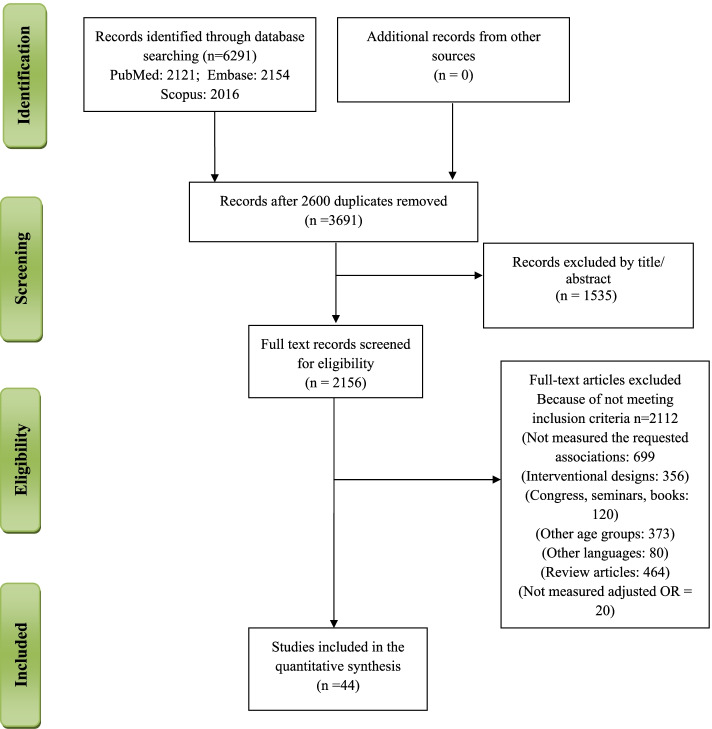
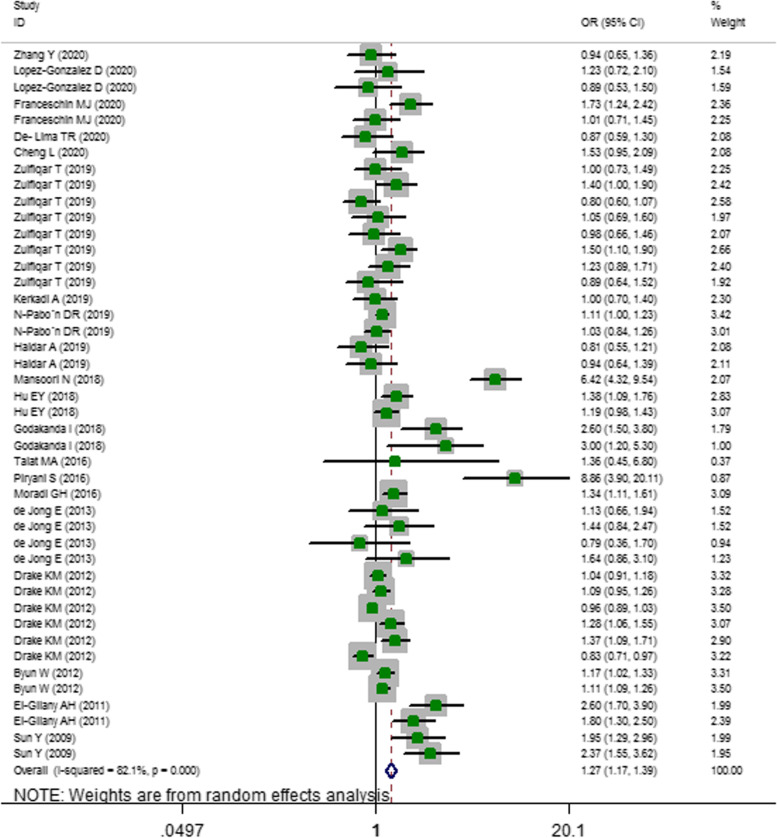
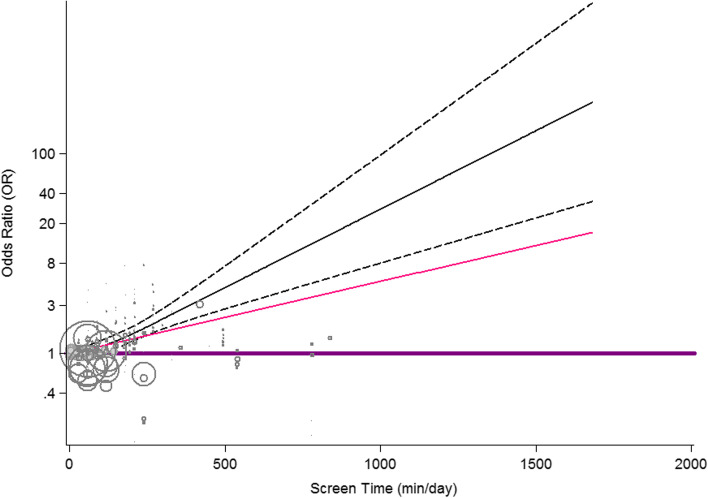
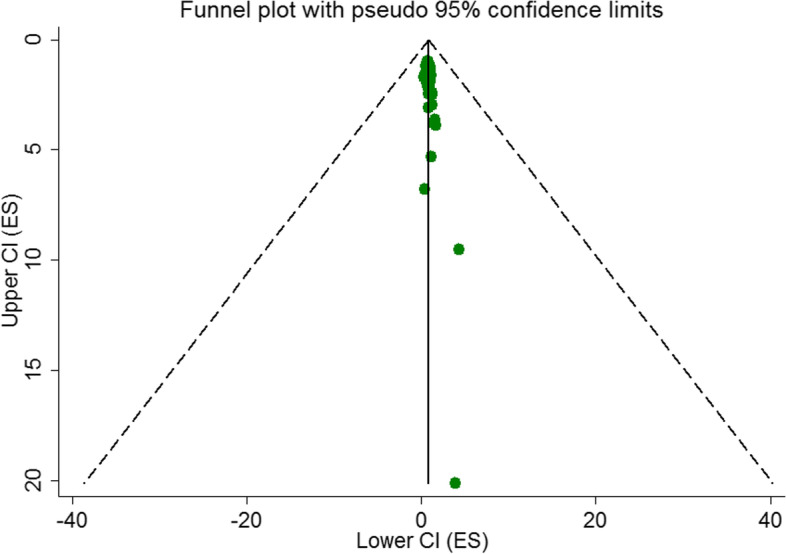
Verification
Claims the paper makes
The claims and statistics of this paper haven’t been checked yet.
Free: it reads the open-access text and checks the first 5 claims that cite a source we can check. Create a free account to check every claim.
Claims other papers make about this one
Each is checked against this paper’s own text: does it say what the citing paper says it does?
The source backs part of the claim, not all of it — or backs it for a different population, condition or comparison.
In the citing paper
“Decades of observational research has demonstrated correlation between screen media duration and higher risk of adiposity and unhealthy weight among children and teens.247,248”
From Digital Ecosystems, Children, and Adolescents: Technical Report (2026) · cites this paper as [247]
Experimental — accuracy not yet measured
Self-check
Percentages, sums and reported differences re-computed from the paper’s own numbers.
The self-check needs the paper’s full text.
Citations
Cites
Preferred reporting items for systematic reviews and meta-analyses: The PRISMA statement
Moher, D., Liberati, A., Tetzlaff, J., Altman, D. G., & the PRISMA Group* (2009) · Annals of Internal Medicine · doi:10.7326/0003-4819-151-4-200908180-00135 · Cited by 37,554
Establishing a standard definition for child overweight and obesity worldwide: international survey
Cole, T. J. (2000) · BMJ · doi:10.1136/bmj.320.7244.1240 · Cited by 16,480 · cited 2×
“Overweight and obesity were defined as follows: (a) as Z score for the body mass index (BMI) for age with the cut-off points of > 1 to ≤2 standard deviations for overweight and values > 2 standard deviations for obesity [58]; (b) as the international age and sex specific cut-offs of BMI [≥85th percentile and less than…”
MethodHilpert, M., Brockmeier, K., Dordel, S., Koch, B., Weiß, V., Ferrari, N., Tokarski, W., & Graf, C. (2017) · Obesity Facts · doi:10.1159/000464105 · Cited by 1,185
The common sense census: media use by tweens and teens
Rideout, V. (2015) · Cited by 1,129
Twenge, J. M., Martin, G. N., & Campbell, W. K. (2018) · Emotion · doi:10.1037/emo0000403 · Cited by 750
Canadian Sedentary Behaviour Guidelines for Children and Youth
Tremblay, M. S., LeBlanc, A. G., Janssen, I., Kho, M. E., Hicks, A., Murumets, K., Colley, R. C., & Duggan, M. (2011) · Applied Physiology, Nutrition, and Metabolism · doi:10.1139/h11-012 · Cited by 548 · cited 1×
“Sedentary behavior guidelines recommend less than 2h per day of recreational screen time for the youth [13].”
BackgroundAssociation of Sedentary Behaviour with Metabolic Syndrome: A Meta-Analysis
Edwardson, C. L., Gorely, T., Davies, M. J., Gray, L. J., Khunti, K., Wilmot, E. G., Yates, T., & Biddle, S. J. H. (2012) · PLoS ONE · doi:10.1371/journal.pone.0034916 · Cited by 535
Role of Video Games in Improving Health-Related Outcomes
Primack, B. A., Carroll, M. V., McNamara, M., Klem, M. L., King, B., Rich, M., Chan, C. W., & Nayak, S. (2012) · American Journal of Preventive Medicine · doi:10.1016/j.amepre.2012.02.023 · Cited by 465 · cited 1×
“, video games were associated with 69% improve in psychological therapy outcomes and 50% improve in physical activity outcomes [77].”
BackgroundCho, C. E., Taesuwan, S., Malysheva, O. V., Bender, E., Tulchinsky, N. F., Yan, J., Sutter, J. L., & Caudill, M. A. (2017) · Molecular Nutrition & Food Research · doi:10.1002/mnfr.201600324 · Cited by 405 · cited 1×
“The methodological quality of studies were assessed using the Agency for Healthcare Research and Quality (AHRQ) checklist [54] (Table 2).”
MethodPate, R. R., Mitchell, J. A., Byun, W., & Dowda, M. (2011) · British Journal of Sports Medicine · doi:10.1136/bjsports-2011-090192 · Cited by 375 · cited 1×
“Background Adolescence is a critical period regarding physical activity-related behaviors since regular physical activity decreases and sedentary behavior increases in this period [1, 2].”
Background
Research works printed but not linked: 11
- Lutz M Vargas C Stojanova J Arancibia M Diet and depressive disorders Arch Clin Psychiatry (São Paulo) 2021 48 117 122
- Currie C Zanotti C Morgan A Social determinants of health and well-being among young people health behaviour in school-aged children (HBSC): international report from the 2009/2010 survey Health policy for children and adolescents 2012 WHO Regional Office for Europe 1 252
- Putrawan HA Antariksa B Yunus F Basalamah MA Nurwidya F Prevalence of pulmonary hypertension in indonesian patients with stable chronic obstructive pulmonary disease J Nat Sci Biol Med 2019 10 1 49
- Alyoubi RA Kobeisy SA Souror HN Alkhaldi FA Aldajam MA Allebdi KS Active screen time habits and headache features among adolescents and young adults in Saudi Arabia Int J Pharm Res Allied Sci 2020 9 4 81 86
- Talat MA El Shahat E Prevalence of overweight and obesity among preparatory school adolescents in urban Sharkia governorate, Egypt Egypt Pediatr Assoc Gaz 2016 64 1 20 25
- Oxford University Press Oxford English Dictionary 2020 Oxford Oxford University Press
- World Health Organization Guidelines on physical activity, sedentary behaviour and sleep for children under 5 years of age 2020 31091057
- Organization, W.H Adolescent health in the South-East Asia region 2020
- DO., M The new WHO child growth standards Paediatr Croat Suppl 2008 52 SUPP.1 13 17
- Mariona P Roy A Survey on lifestyle and food habits of patients with PCOS and obesity J Complement Med Res 2021 11 5 93
- Fulton JE Wang X Yore MM Carlson SA Galuska DA Caspersen CJ Television viewing, computer use, and BMI among US children and adolescents J Phys Act Health 2009 6 s1 S28 S35 10.1123/jpah.6.s1.s28 19998847 · DOI · Paper page
Cited by
Items 101–149 of 149
The Correlation between Hygiene Habit and Body Mass Index of Healthy People
Widyaatmadja, S. T., Kim, Y., & Byun, K. (2024) · Jurnal Penelitian Pendidikan IPA · doi:10.29303/jppipa.v10i11.8737
“Evidence has emerged identifying habitual sedentary behavior (prolonged sitting) as a significant concern (Okely et al., 2021; Haghjoo et al., 2022; Liu et al., 2023).”
Gale, E. L., Williams, A. J., & Cecil, J. E. (2024) · Research Square · doi:10.21203/rs.3.rs-5386674/v1
Akua, B. A., & Samek, D. R. (2025) · The Journal of Early Adolescence · doi:10.1177/02724316251343100
“Recent systematic reviews and meta-analyses have also linked excessive screentime to metabolic syndrome (Jahangiry et al., 2022) and obesity (Haghjoo et al., 2022).”
Nabi, R. L. (2024) · The Conversation · doi:10.64628/aai.dgwcs6cja
Ramírez-Coronel, A. A., Abdu, W. J., Alshahrani, S. H., Treve, M., Jalil, A. T., Alkhayyat, A. S., & Singer, N. (2023) · Figshare · doi:10.6084/m9.figshare.22611884
Ding, X., Ji, Y., Dong, Y., Li, Z., & Zhang, Y. (2024) · Figshare · doi:10.6084/m9.figshare.26129716
Assadullah, Vaqar, A., Vaqar, R., Bosan, M. A., Khan, M., & Zaman, B. (2025) · Pakistan Journal of Health Sciences · doi:10.54393/pjhs.v6i7.3112
Sutandhya, C. A., Angelia, T., Miranda, E., & Khoharjo, V. P. (2025) · International Conference on Digital Transformation and Applications (ICDXA) · doi:10.1109/icdxa69105.2025.11329683
van Rooij, A. J., van der Rijst, V. G., Date, M., Tuijnman, A., Oostenbach, K. P. J., Carras, M. C., & Thrul, J. (2026) · Royal Society Open Science · doi:10.1098/rsos.250969 · Cited by 1
SVERCHKOV, V. V., & Быков, Е. В. (2026) · Science for Education Today · doi:10.15293/2658-6762.2601.12 · Cited by 1
Moyon, L. (2024) · theses.fr (ABES) · doi:10.70675/dda3f186z5dddz49eaz8ec6z4d6a828f2f8b
Assessment of adolescent obesity from the perspective of the Kawa (River) Model: a case report
Yalçın, A., & Abaoğlu, H. (2026) · Cadernos Brasileiros de Terapia Ocupacional · doi:10.1590/2526-8910.cto.425942162 · Cited by 1
Son, P., Nie, Y., Tan, Q., Yang, P., Murray, P., Staiano, A. E., Wang, F., Hu, G., Gordon, S., & Chen, S. (2026) · PLoS ONE · doi:10.1371/journal.pone.0346235
“Studies have reported that screen time is a risk factor associated with obesity and chronic diseases across populations [5–10].”
Alhazmi, M. A., Löfstedt, P., Corell, M., Lissner, L., & Hunsberger, M. L. (2026) · BMC Public Health · doi:10.1186/s12889-026-27434-w
“Prior studies emphasize that the type and context of screen use are important, with passive modalities showing stronger connections to obesogenic behaviors [19, 35].”
The digital child and adolescent: a systematic review of digital screens and mental health outcomes
Amaad, H., & Mughal, H. (2026) · The Educational and Developmental Psychologist · doi:10.1080/20590776.2026.2662572
“…at: mixing endpoints (BMI, sleep, headaches, language, motor) with mental health claims (Alves et al., 2025; Bakht et al., 2025; Bhutani et al., 2024; Haghjoo et al., 2022; Jahangiry et al., 2022; Langdon et al., 2024), mixing populations (children – adults, special populations, pandemic-only…”
Łopatka, M., Bronikowski, M., Bronikowska, M., Korcz, A., Khorkova, M., Adamczak, D., & Krzysztoszek, J. (2026) · Biomedical Human Kinetics · doi:10.2478/bhk-2026-0011
“Haghjoo et al. (2022) reported a positive association between higher screen time and adolescent over-weight/obesity, and Nagata et al. (2023b) found that high screen time combined with low PA was strongly associated with higher overweight and obesity risk (Nagata et al., 2023b).”
Holistic Transcendent Parenting Theory Examines Parental Anxiety Levels and DeterminantsPreprint
Khomaeny, E. F. F., Dewi, R. S., Lubis, M., & Permana, R. (2026) · Research Square · doi:10.21203/rs.3.rs-9211941/v1
Associations among hedonic hunger, digital obesity, and type 2 diabetes self-management
Çamli, A., Pinar, A. A., & Terzi, M. (2026) · Frontiers in Nutrition · doi:10.3389/fnut.2026.1825423 · Cited by 1
Zhong, J., Wang, Y., Wu, H., Chen, H., & Li, M. (2026) · Frontiers in Physiology · doi:10.3389/fphys.2026.1791740
“It is particularly noteworthy that obesity is intimately associated with sedentary behavior and physical inactivity (Haghjoo et al., 2022).”
Linhares, R. F., Mazzaro, V. D. D. M., & Silva, L. I. D. (2026) · RECIMA21 - Revista Científica Multidisciplinar · doi:10.47820/recima21.v7i6.8131
Amini, M., Shafaatdoost, M., Ghodsi, D., Borazjani, M., Aghayan, M., & Shariátzadeh, N. (2026) · International Journal of Preventive Medicine · doi:10.4103/ijpvm.ijpvm_274_24
The effect of nutrition education on screen time behavior in overweight adolescents
NURAIS, U. K., INDRIASARI, R., JAFAR, N., Salam, A., Hidayanty, H., & Ibnu, I. F. (2026) · Gazzetta Medica Italiana Archivio per le Scienze Mediche · doi:10.23736/s0393-3660.25.06031-0
Wargers, A., Senequier, A., Elphick, C. M., Mölenberg, F. J. M., Williams, C. A., Llauradó, E., Solà, R., Μanios, Y., Mavrogianni, C., Murray, C., et al. (2026) · BMJ Open · doi:10.1136/bmjopen-2025-115125
Jakubiec, M. K., Gąsiorowska, E., Wawrzeczko, A., Górska, N., Jankowska, A., Gostół, M., Wójtowicz, K., Deska, G., Susek, M., & Furmanek, A. (2026) · International Journal of Innovative Technologies in Social Science · doi:10.31435/ijitss.1(49).2026.5004
de Freitas, M. C. M., da Costa, J. C., da Silva, D. R. P., Romanzini, C. L. P., Romanzini, M., & Ronque, Ê. R. V. (2026) · Ciência & Saúde Coletiva · doi:10.1590/1413-81232026315.08622024 · Cited by 2
Prabowo, T. A., Afifah, M., Indarto, A. V., Pahlavi, Z. Y. D., Zakaria, A., & Cahyo, F. D. (2026) · Pedagogy of Health · doi:10.15561/health.2026.0205
“Several studies have shown that sedentary behavior in school settings is associated with indicators of health and well-being among children and adolescents [4], whereas excessive screen time is associated with an increased risk of overweight and obesity among adolescents [5].”
Mariscal, E. R., Fernández, H. G., Gómez, E. G., Pérez, D. O., Perales, M., Fuenmayor, Y., Bailón, N. R., Preciado, M. M., Llauradó‐Serra, M., Jiménez, F. M., et al. (2026) · Gaceta Sanitaria · doi:10.1016/j.gaceta.2026.102636
Kusumoto, Y., Takahashi, E., Endo, Y., Okazaki, K., Asao, A., & Tanaka, Y. (2026) · Children · doi:10.3390/children13080980
“Excessive screen time can lead to obesity, depression, sleep disorders, and other health problems in children and adolescents [7,8].”
Digital exposure and health behaviours in adolescents: a cross-sectional study from South India
Dsouza, S., & Mendon, S. (2026) · Frontiers in Pediatrics · doi:10.3389/fped.2026.1883252
Al‐Motlaq, M., & Shields, L. E. (2026) · Journal of Pediatric Nursing · doi:10.1016/j.pedn.2026.07.060
Wang, W., Yan, L., Xu, B., Pang, X., Li, Q., Chen, K., & Ge, R. (2026) · Frontiers in Nutrition · doi:10.3389/fnut.2026.1853192
“Excessive screen time and longer homework duration were both associated with elevated over-weight/obesity risk, reflecting a “high cognitive load–low energy expenditure” composite effect (82).”
Bildschirmnutzung im Kindes- und Jugendalter: Evidenz und Empfehlungen
Aberle, J. S., & Felnhofer, A. (2026) · Monatsschrift Kinderheilkunde · doi:10.1007/s00112-026-02443-6
Leonita, E., Herniwanti, & Herniwanti (2026) · Jurnal Pengabdian Kesehatan Komunitas · doi:10.25311/jpkk.vol6.iss2.2602 · Cited by 2
Han, Y., Choi, Y., Yoon, S., Gwak, D., Lee, E.-Y., & Kim, Y. S. (2026) · Journal of School Health · doi:10.1111/josh.70214
“Given its link to obesity risk, this trend highlights the need for integrated strate - gies targeting both PA and screen time reduction [ 37].”
Katzmarzyk, P. T., Maia, J. A. R., Garbeloto, F., Hedeker, D., Barreira, T. V., Garganta, R., Farias, C. F. G., Tani, G., Chaput, J., & Pereira, S. (2026) · Pediatric Exercise Science · doi:10.1123/pes.2025-0016
An Innovative, Multimedia-Based Intervention for Promoting Changes in Lifestyle in Italian Families
Chinellato, I., Acquaviva, A., Lista, M., Nemi, L., Ros, E. D., Morlupi, B., Maione, M., Carraro, R., Lodi, L., Micozzi, A., et al. (2026) · Nutrients · doi:10.3390/nu18172851
“These findings are relevant because sedentary behaviors and excessive screen time have been associated with poorer diet quality, lower levels of physical activity, and an increased risk of overweight and obesity in pediatric populations [34,35].”
Liu, D., Ta, N., Yu, M., Liu, M., & Fu, Y. (2026) · Clinical Psychology Review · doi:10.1016/j.cpr.2026.102784
Helvich, J., Novák, L., Jozefiaková, B., Milková, E., & Tavel, P. (2026) · Cyberpsychology Journal of Psychosocial Research on Cyberspace · doi:10.5817/cp2026-4-12 · Cited by 1
“Meta-analytic evidence shows that PSMU is consistently linked to cardiovascular risks (Stiglic & Viner, 2019), obesity (Haghjoo et al., 2022), and somatic complaints (Nilsen et al., 2023).”
Ciriza-Barea, E., Carballal-Mariño, M., Díaz-Martínez, F., Núñez-Jiménez, C., Sanchez-Almeida, E., Balaguer-Martínez, J. V., García-Sánchez, J. A., Viver-Gómez, S., Gorrotxategi-Gorrotxategi, P. J., Sampera, E. C., et al. (2026) · Revista Española de Salud Pública · doi:10.67113/resp.v100i1.1544
SCREEN TIME AND SOMATIC HEALTH IN CHILDREN AND ADOLESCENTS: A NARRATIVE LITERATURE REVIEW
Zmysłowska, K., Stadnik, K. A., Szatkowska, A., Kwaśniewska, M., Hajdaniak, A., Kiersztyn, J. M., Grabowska, A., & Seńcio, N. (2026) · International Journal of Innovative Technologies in Social Science · doi:10.31435/ijitss.3(51).2026.6678
Roselló-Araya, M., Rivas, H. P. N., & Holst-Schumacher, I. I. (2026) · International Journal of Nutrition and Food Sciences · doi:10.11648/j.ijnfs.20261505.13
Alexander, J. D., Mills, S., Sumpter, K., Smith, C. J., Das, B., Fan, R., Hunt, E. T., Brown, S. A., Curtis, B. L., Cummins, K. M., et al. (2026) · Developmental Cognitive Neuroscience · doi:10.1016/j.dcn.2026.101826
“…smartphone adoption closely coincides with rising rates of adolescent anxiety and depression and significant associations have been observed between time spent using digital devices and youth mental and behavioral health concerns (Carter et al., 2016; Haghjoo et al., 2022; Santos et al., 2023).”
Zhang, X. (2026) · Frontiers in Nutrition · doi:10.3389/fnut.2026.1888958
“…digital engagement has also been associated with delayed bedtime, shorter sleep duration, and reduced sleep quality, although most evidence is observational and does not establish whether digital use precedes these behaviors or emerges in response to existing distress or disrupted routines (4–6).”
Kola, M., Phalle, A., & Gokhale, D. (2026) · Discover Public Health · doi:10.1186/s12982-026-02953-4
“However, contrary to past literature which has consistently identified sedentary behavior and excess screen time as crucial determinants of pediatric obesity [35–37], no significant association was observed in this study.”
Alkhraiji, M. H., & Alaqil, A. I. (2026) · Frontiers in Public Health · doi:10.3389/fpubh.2026.1980253
Padmapriya, N., Chandrasekaran, M., Khan, S. A., Nishika, R., Huiyun, G. L., Chong, D. Z. Y., Sanabria, A. S., Raeside, R., Holly, L., Chia, A., et al. (2026) · EClinicalMedicine · doi:10.1016/j.eclinm.2026.104225 · Cited by 1
Kranjac, A. W., & Kranjac, D. (2026) · Maternal and Child Health Journal · doi:10.1007/s10995-026-04333-5
Ismael, F. B., Wall, C. R., Lovell, A. L., & de Castro, T. G. (2026) · British Journal Of Nutrition · doi:10.1017/s0007114526108356
Metadata
- Authors
- Haghjoo, P., Siri, G., Soleimani, E., Farhangi, M. A., & Alesaeidi, S.
- Affiliations
- Guilan University of Medical Sciences (IR)
- AmirAlam Hospital (IR)
- Tabriz University of Medical Sciences (IR)
- Rheumatology Research Center (IR)
- Corresponding author
- Farhangi, Mahdieh Abbasalizad
- Venue
- BMC Primary Care
- Published
- 2022-06-28
- Volume
- 23
- Issue
- 1
- Pages
- 161-161
- ISSN
- 1471-2296 (ISSN-L)
- 2731-4553
- PMC
- PMC9238177
- OpenAlex
- W4283698857
- Cited by
- 150
- References
- 91
- Citations by year
- 2026: 51 · 2025: 43 · 2024: 28 · 2023: 24 · 2022: 4
- FWCI
- 4.91
- Type
- journal article
- Language
- en
- Open access
- gold
- doi.org
- Licence
- cc-by
- creativecommons.org/licenses/by/4.0 (tdm)
- creativecommons.org/licenses/by/4.0 (vor)
- Locations
- BMC Family Practice (publishedVersion, cc-by)
- PubMed Central (publishedVersion, cc-by)
- PubMed (publishedVersion)
- DOAJ (DOAJ: Directory of Open Access Journals) (submittedVersion, cc-by-sa)
- Funders
- Tabriz University of Medical Sciences
- University of Tabriz
- Student Research Committee, Tabriz University of Medical Sciences
- Topics
- Health Sciences › Medicine › Public Health, Environmental and Occupational Health › Obesity, Physical Activity, Diet
- Health Sciences › Medicine › Public Health, Environmental and Occupational Health › Physical Activity and Health
- Social Sciences › Education › Child Development and Digital Technology
- Keywords
- screen time, adolescent overweight, adolescent obesity, sedentary behavior, physical activity, dose-response relationship, nonlinear relationship, obesity risk
- MeSH terms
- Screen Time, Adolescent, Humans, Obesity, Exercise, Overweight
About these checks
Registry, retraction, Cites and statistics results are computed, not judged, with one exception: a printed reference that no index lists is read once by a model before it counts as a citation error. Claims are extracted by a model and kept only when their quote appears verbatim in the text; each cited source is then checked, with a model’s help, for whether it says what the claim relies on. Those verdicts can be wrong — read the claim’s quote and the cited source before relying on one.
Statistics and arithmetic are recomputed, not judged.
Confidence bands are shown only for fields calibrated on our annotated test set. None is calibrated yet, so no band is shown.
What counts as a claim ›How we measure confidence ›How we check this ›
Are you an author, or do you see a problem with this page? Request a review
Data sources
Bibliographic data: Semantic Scholar, OpenAlex, Crossref.
Contains information from the Semantic Scholar Academic Graph Datasets, made available under the ODC Attribution License (ODC-BY 1.0).
Semantic Scholar’s data is described in: Kinney, R., et al. (2023). The Semantic Scholar Open Data Platform. arXiv:2301.10140.
