

Screen time increases overweight and obesity risk among adolescents: a systematic review and dose-response meta-analysis
Open accessThe DOI matches its Crossref record; 91 of the 91 references it cites were found in a registry or an index.
Abstract
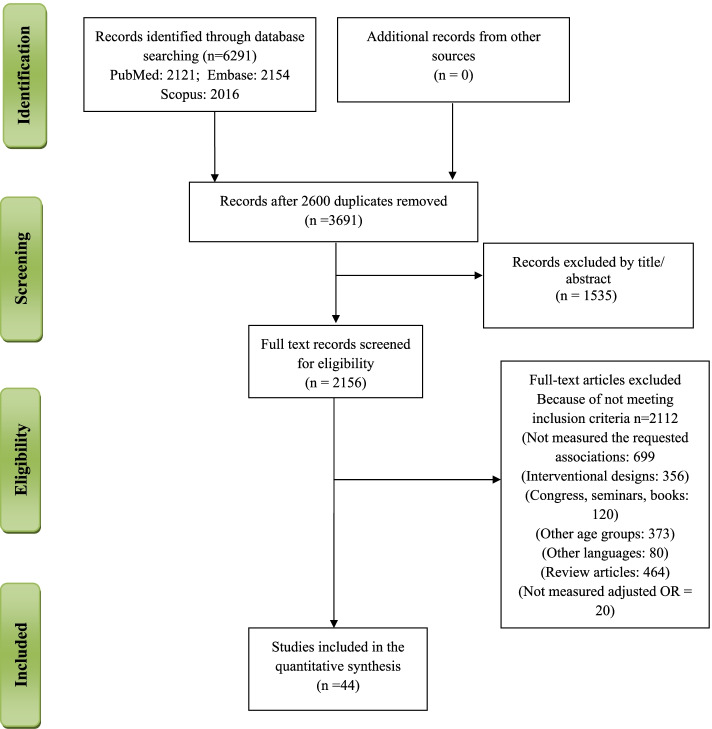
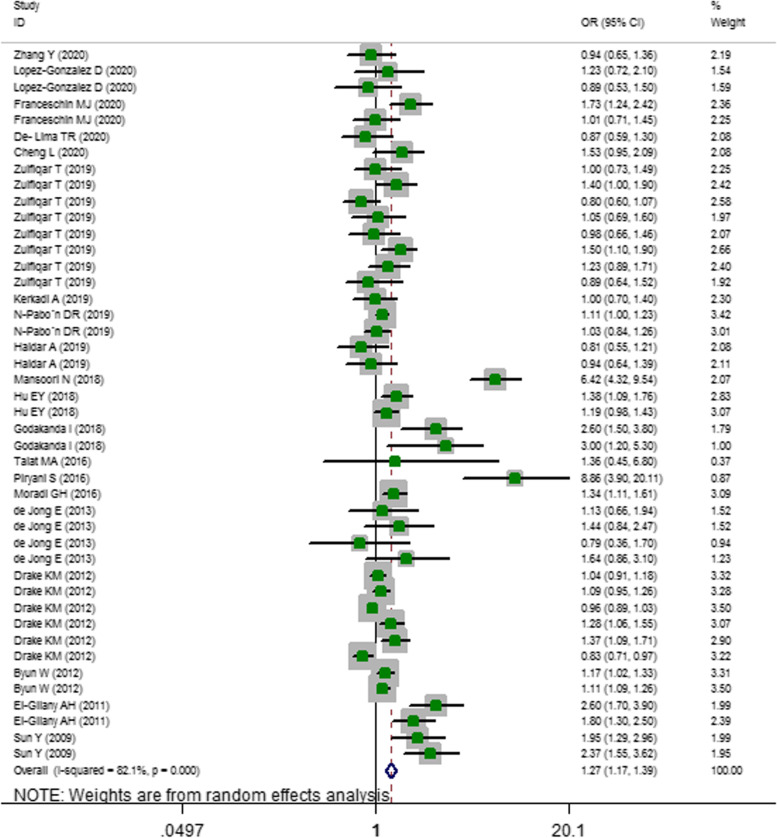
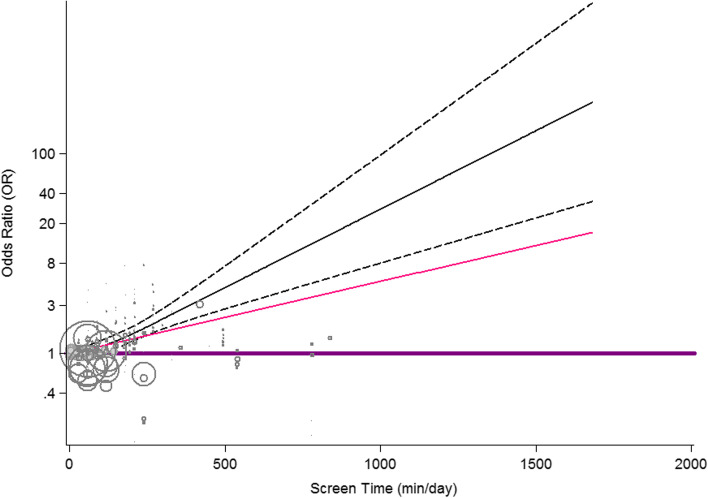
Background: Adolescence is a critical period in human life, associated with reduced physical activity and increased sedentary behaviors. In this systematic review and dose-response meta-analysis, we evaluated the association between screen time and risk of overweight/obesity among adolescents. Methods: A systematic search in electronic databases, including PubMed, Embase, and Scopus was performed up to September 2021. All published studies evaluating the association between screen time and risk of overweight/obesity among adolescents were retrieved. Finally, a total of 44 eligible studies were included in the meta-analysis. Results: The results of the two-class meta-analysis showed that adolescents at the highest category of screen time were 1.27 times more likely to develop overweight/obesity (OR = 1.273; 95% CI = 1.166–1.390; P < 0.001; I-squared (variation in ES attributable to heterogeneity) = 82.1%). The results of subgrouping showed that continent and setting were the possible sources of heterogeneity. Moreover, no evidence of non-linear association between increased screen time and risk of overweight/obesity among adolescents was observed (P-nonlinearity = 0.311). Conclusion: For the first time, the current systematic review and meta-analysis revealed a positive association between screen time and overweight/obesity among adolescents without any dose-response evidence. Trial registration: The protocol of the current work has been registered in the PROSPERO system (Registration number: CRD42021233899).
Overview
The claims and statistics of this paper haven’t been checked yet.
Free: it reads the open-access text and checks the first 5 claims that cite a source we can check. Create a free account to check every claim.
Integrity signals
Registry
Cites
Statistics
Figures
Verification
Claims the paper makes
The claims and statistics of this paper haven’t been checked yet.
Free: it reads the open-access text and checks the first 5 claims that cite a source we can check. Create a free account to check every claim.
Claims other papers make about this one
Each is checked against this paper’s own text: does it say what the citing paper says it does?
The source backs part of the claim, not all of it — or backs it for a different population, condition or comparison.
In the citing paper
“Decades of observational research has demonstrated correlation between screen media duration and higher risk of adiposity and unhealthy weight among children and teens.247,248”
From Digital Ecosystems, Children, and Adolescents: Technical Report (2026) · cites this paper as [247]
Experimental — accuracy not yet measured
Self-check
Percentages, sums and reported differences re-computed from the paper’s own numbers.
The self-check needs the paper’s full text.
Citations
Cites
Preferred reporting items for systematic reviews and meta-analyses: The PRISMA statement
Moher, D., Liberati, A., Tetzlaff, J., Altman, D. G., & the PRISMA Group* (2009) · Annals of Internal Medicine · doi:10.7326/0003-4819-151-4-200908180-00135 · Cited by 37,554
Establishing a standard definition for child overweight and obesity worldwide: international survey
Cole, T. J. (2000) · BMJ · doi:10.1136/bmj.320.7244.1240 · Cited by 16,480 · cited 2×
“Overweight and obesity were defined as follows: (a) as Z score for the body mass index (BMI) for age with the cut-off points of > 1 to ≤2 standard deviations for overweight and values > 2 standard deviations for obesity [58]; (b) as the international age and sex specific cut-offs of BMI [≥85th percentile and less than…”
MethodHilpert, M., Brockmeier, K., Dordel, S., Koch, B., Weiß, V., Ferrari, N., Tokarski, W., & Graf, C. (2017) · Obesity Facts · doi:10.1159/000464105 · Cited by 1,185
The common sense census: media use by tweens and teens
Rideout, V. (2015) · Cited by 1,120
Twenge, J. M., Martin, G. N., & Campbell, W. K. (2018) · Emotion · doi:10.1037/emo0000403 · Cited by 750
Canadian Sedentary Behaviour Guidelines for Children and Youth
Tremblay, M. S., LeBlanc, A. G., Janssen, I., Kho, M. E., Hicks, A., Murumets, K., Colley, R. C., & Duggan, M. (2011) · Applied Physiology, Nutrition, and Metabolism · doi:10.1139/h11-012 · Cited by 548 · cited 1×
“Sedentary behavior guidelines recommend less than 2h per day of recreational screen time for the youth [13].”
BackgroundAssociation of Sedentary Behaviour with Metabolic Syndrome: A Meta-Analysis
Edwardson, C. L., Gorely, T., Davies, M. J., Gray, L. J., Khunti, K., Wilmot, E. G., Yates, T., & Biddle, S. J. H. (2012) · PLoS ONE · doi:10.1371/journal.pone.0034916 · Cited by 535
Role of Video Games in Improving Health-Related Outcomes
Primack, B. A., Carroll, M. V., McNamara, M., Klem, M. L., King, B., Rich, M., Chan, C. W., & Nayak, S. (2012) · American Journal of Preventive Medicine · doi:10.1016/j.amepre.2012.02.023 · Cited by 465 · cited 1×
“, video games were associated with 69% improve in psychological therapy outcomes and 50% improve in physical activity outcomes [77].”
BackgroundCho, C. E., Taesuwan, S., Malysheva, O. V., Bender, E., Tulchinsky, N. F., Yan, J., Sutter, J. L., & Caudill, M. A. (2017) · Molecular Nutrition & Food Research · doi:10.1002/mnfr.201600324 · Cited by 405 · cited 1×
“The methodological quality of studies were assessed using the Agency for Healthcare Research and Quality (AHRQ) checklist [54] (Table 2).”
MethodPate, R. R., Mitchell, J. A., Byun, W., & Dowda, M. (2011) · British Journal of Sports Medicine · doi:10.1136/bjsports-2011-090192 · Cited by 375 · cited 1×
“Background Adolescence is a critical period regarding physical activity-related behaviors since regular physical activity decreases and sedentary behavior increases in this period [1, 2].”
BackgroundSteele, R. M., van Sluijs, E. M., Cassidy, A., Griffin, S. J., & Ekelund, U. (2009) · The American Journal of Clinical Nutrition · doi:10.3945/ajcn.2009.28153 · Cited by 263
Television watching increases motivated responding for food and energy intake in children
Temple, J. L., Giacomelli, A. M., Kent, K. M., Roemmich, J. N., & Epstein, L. H. (2007) · The American Journal of Clinical Nutrition · doi:10.1093/ajcn/85.2.355 · Cited by 259
Sisson, S. B., Church, T. S., Martin, C. K., Tudor-Locke, C., Smith, S. R., Bouchard, C., Earnest, C. P., Rankinen, T., Newton, R. L., & Katzmarzyk, P. T. (2009) · International Journal of Pediatric Obesity · doi:10.3109/17477160902934777 · Cited by 259 · cited 1×
“However, it has been estimated that more than 50% of adolescents exceed this time [14].”
BackgroundVideo game playing increases food intake in adolescents: a randomized crossover study
Chaput, J.-P., Visby, T., Nyby, S., Klingenberg, L., Gregersen, N. T., Tremblay, A., Astrup, A., & Sjödin, A. (2011) · The American Journal of Clinical Nutrition · doi:10.3945/ajcn.110.008680 · Cited by 229
de Jong, E., Visscher, T. L. S., HiraSing, R. A., Heymans, M. W., Seidell, J. C., & Renders, C. M. (2013) · International Journal of Obesity · doi:10.1038/ijo.2011.244 · Cited by 223 · cited 1×
“The studies had been performed in the United States [29, 41, 43, 74], Brazil [22, 27, 35, 47], Egypt [44, 52], China [26, 39], Iran [45], Indonesia [34], Japan [32], Nigeria [51], Pakistan [42], Nepal [75], Bangladesh [31], Qatar [30], Australia [33], Mexico [28], India [46], Finland [48], Netherland [40], Turkey [49]…”
BackgroundElectronic Games and Environmental Factors Associated with Childhood Obesity in Switzerland
Stettler, N., Signer, T. M., & Suter, P. M. (2004) · Obesity Research · doi:10.1038/oby.2004.109 · Cited by 214
Utter, J., Scragg, R., & Schaaf, D. (2006) · Public Health Nutrition · doi:10.1079/phn2005899 · Cited by 188
Burke, V, Beilin, L. J., Simmer, K., Oddy, W. H., Blake, K. V., Doherty, D., Kendall, G. E., Newnham, J. P., Landau, L. I., & Stanley, F. J. (2005) · International Journal of Obesity · doi:10.1038/sj.ijo.0802750 · Cited by 173
Ogilvie, S. (2020) · The Cambridge Companion to English Dictionaries · doi:10.1017/9781108553780.015 · Cited by 172
The Association of Television and Video Viewing with Fast Food Intake by Preschool‐Age Children
Taveras, E. M., Sandora, T. J., Shih, M., Ross‐Degnan, D., Goldmann, D. A., & Gillman, M. W. (2006) · Obesity · doi:10.1038/oby.2006.238 · Cited by 156
Guillaume, M., Lapidus, L., Björntorp, P., & Lambert, A. (1997) · Obesity Research · doi:10.1002/j.1550-8528.1997.tb00576.x · Cited by 151
Prevalência de tempo excessivo de tela e fatores associados em adolescentes
de Lucena, J. M. S., Cheng, L. A., Cavalcante, T. L. M., da Silva, V. A., & Júnior, J. C. D. F. (2015) · Revista Paulista de Pediatria · doi:10.1016/j.rpped.2015.04.001 · Cited by 146 · cited 1×
“The studies had been performed in the United States [29, 41, 43, 74], Brazil [22, 27, 35, 47], Egypt [44, 52], China [26, 39], Iran [45], Indonesia [34], Japan [32], Nigeria [51], Pakistan [42], Nepal [75], Bangladesh [31], Qatar [30], Australia [33], Mexico [28], India [46], Finland [48], Netherland [40], Turkey [49]…”
BackgroundOverweight and Obesity Among School Children in Jordan: Prevalence and Associated Factors
Khader, Y. S., Irshaidat, O., Khasawneh, M. A., Amarin, Z. O., Al‐Omari, M., & Batieha, A. M. (2008) · Maternal and Child Health Journal · doi:10.1007/s10995-008-0362-0 · Cited by 126
Haidar, A., Ranjit, N., Archer, N. P., & Hoelscher, D. M. (2019) · BMC Public Health · doi:10.1186/s12889-019-7001-0 · Cited by 119
Lifestyle and Overweight Among Japanese Adolescents: The Toyama Birth Cohort Study
Sun, Y., Sekine, M., & Kagamimori, S. (2009) · Journal of Epidemiology · doi:10.2188/jea.je20080095 · Cited by 118 · cited 3×
“[32], the positive association between video game playing and risk of obesity was only observed among girls and not boys.”
BackgroundInfluence of Sports, Physical Education, and Active Commuting to School on Adolescent Weight Status
Drake, K. M., Beach, M. L., Longacre, M. R., MacKenzie, T., Titus, L. J., Rundle, A. G., & Dalton, M. A. (2012) · Pediatrics · doi:10.1542/peds.2011-2898 · Cited by 117
The Relationship between Lifestyle Factors and Obesity Indices among Adolescents in Qatar
Kerkadi, A., Sadig, A. H., Bawadi, H. A., Thani, A. A. M. A., Al-Chetachi, W., Akram, H., Al-Hazzaa, H. M., & Musaiger, A. O. (2019) · International Journal of Environmental Research and Public Health · doi:10.3390/ijerph16224428 · Cited by 113 · cited 2×
“However, several other studies reported no significant association between obesity and screen time [30, 35, 41].”
BackgroundBingham, D. D., Varela‐Silva, M. I., Ferrão, M. M., Augusta, G., Mourão, I., Nogueira, H. G. D. S. M., Rosado‐Marques, V., & Padez, C. M. P. (2013) · American Journal of Human Biology · doi:10.1002/ajhb.22440 · Cited by 105
Television Viewing, Computer Use, and BMI Among U.S. Children and Adolescents
Fulton, J. E., Wang, X., Yore, M. M., Carlson, S. A., Galuska, D. A., & Caspersen, C. J. (2009) · Journal of Physical Activity and Health · doi:10.1123/jpah.6.s1.s28 · Cited by 102 · cited 1×
“Previous studies revealed that television watching increases motivated response to food intake and snacking behavior among children and adolescents [4, 84–87]; this is also true for video games [88–90] and personal computer use [91, 92].”
BackgroundEffects of dietary weight loss on obstructive sleep apnea: a meta-analysis
Anandam, A., Akinnusi, M., Kufel, T., Porhomayon, J., & El-Solh, A. A. (2013) · Sleep and Breathing · doi:10.1007/s11325-012-0677-3 · Cited by 95 · cited 1×
“Cochran’s Q and I-squared tests were used to identify between-study heterogeneity as follows: I2 <25%, no heterogeneity; I2 = 25–50%, moderate heterogeneity; and I2 > 50%, high heterogeneity [60].”
MethodKar, S., & Khandelwal, B. (2015) · Journal of Natural Science Biology and Medicine · doi:10.4103/0976-9668.160004 · Cited by 90
Piryani, S., Baral, K. P., Pradhan, B., Poudyal, A. K., & Piryani, R. M. (2016) · BMJ Open · doi:10.1136/bmjopen-2015-010335 · Cited by 86 · cited 1×
“The studies had been performed in the United States [29, 41, 43, 74], Brazil [22, 27, 35, 47], Egypt [44, 52], China [26, 39], Iran [45], Indonesia [34], Japan [32], Nigeria [51], Pakistan [42], Nepal [75], Bangladesh [31], Qatar [30], Australia [33], Mexico [28], India [46], Finland [48], Netherland [40], Turkey [49]…”
BackgroundCan Active Video Games Improve Physical Activity in Adolescents? A Review of RCT
Williams, W. M., & Ayres, C. G. (2020) · International Journal of Environmental Research and Public Health · doi:10.3390/ijerph17020669 · Cited by 86 · cited 1×
“In another study by Williams, active video games were introduced as effective tools to improve physical activity among adolescents and were considered as a more acceptable and sustainable approach than many conventional methods [78].”
Atividade física, horas de assistência à TV e composição corporal em crianças e adolescentes
Rivera, I. R., Silva, M. A. M. D., Silva, R. D. T. A., Oliveira, B. A. V. D., & Carvalho, A. C. C. (2010) · Arquivos Brasileiros de Cardiologia · doi:10.1590/s0066-782x2010005000065 · Cited by 85
Byun, W., Dowda, M., & Pate, R. R. (2012) · Journal of Korean Medical Science · doi:10.3346/jkms.2012.27.4.388 · Cited by 83 · cited 1×
“The studies had been performed in the United States [29, 41, 43, 74], Brazil [22, 27, 35, 47], Egypt [44, 52], China [26, 39], Iran [45], Indonesia [34], Japan [32], Nigeria [51], Pakistan [42], Nepal [75], Bangladesh [31], Qatar [30], Australia [33], Mexico [28], India [46], Finland [48], Netherland [40], Turkey [49]…”
BackgroundWeight status of adolescents in secondary schools in port Harcourt using Body Mass Index (BMI)
Adesina, A. F., Peterside, O., Anochie, I., & Akani, N. A. (2012) · The Italian Journal of Pediatrics/Italian journal of pediatrics · doi:10.1186/1824-7288-38-31 · Cited by 82 · cited 2×
“001) because at lower ages, children and adolescents have less structured time than older adolescents and most of this unstructured time is filled by watching TV [51, 79].”
BackgroundGoyal, J. P., Kumar, N., Parmar, I., Shah, V., & Patel, B. (2011) · Indian Journal of Community Medicine · doi:10.4103/0970-0218.91418 · Cited by 81 · cited 1×
“Most of the adolescents buy lunch at school canteen and restaurants and are more likely to develop overweight and obesity [80].”
BackgroundSedentary behaviours among Australian adolescents
Hardy, L. L., Dobbins, T., Booth, M. L., Denney‐Wilson, E., & Okely, A. D. (2006) · Australian and New Zealand Journal of Public Health · doi:10.1111/j.1467-842x.2006.tb00782.x · Cited by 77 · cited 1×
“Screen-related physical activities like television watching are very common among adolescents particularly in modern societies; it is reported that adolescents spend about 3h per day on screen activities [3].”
BackgroundPredicting Factors on Modeling Health Behavior: A Systematic Review
Leman, M. A., Claramita, M., & Rahayu, G. R. (2021) · American Journal of Health Behavior · doi:10.5993/ajhb.45.2.7 · Cited by 75
Throuvala, M. A., Griffiths, M. D., Rennoldson, M., & Kuss, D. J. (2020) · International Journal of Mental Health and Addiction · doi:10.1007/s11469-019-00213-y · Cited by 67 · cited 1×
“According to some recent evidence, increased screen-related sedentary behaviors led not only to obesity growth [7], but also to mental problems among adolescents [8–12].”
Backgroundda Costa Ribeiro, I., Taddei, J. A. A., & Colugnatti, F. (2003) · Public Health Nutrition · doi:10.1079/phn2003473 · Cited by 66
Martinez-Gomez, D., Rey-López, J. P., Chillón, P., Gómez-Martínez, S., Vicente-Rodríguez, G., Martín-Matillas, M., Garcia-Fuentes, M., Delgado, M., Moreno, L. A., Veiga, O. L., et al. (2010) · BMC Public Health · doi:10.1186/1471-2458-10-274 · Cited by 65
Food and beverage advertising on children's web sites
Ustjanauskas, A. E., Harris, J. L., & Schwartz, M. B. (2014) · Pediatric Obesity · doi:10.1111/j.2047-6310.2013.00185.x · Cited by 63
Ruckwongpatr, K., Fung, X. C. C., Lin, C., Latner, J. D., & O’Brien, K. (2021) · American Journal of Health Behavior · doi:10.5993/ajhb.45.5.3 · Cited by 63
Gilbert-Diamond, D., Emond, J. A., Lansigan, R. K., Rapuano, K. M., Kelley, W. M., Heatherton, T. F., & Sargent, J. D. (2017) · International Journal of Obesity · doi:10.1038/ijo.2016.163 · Cited by 62
Factors associated with obesity in Indonesian adolescents
Collins, A. E., Pakiz, B., & Rock, C. L. (2008) · International Journal of Pediatric Obesity · doi:10.1080/17477160701520132 · Cited by 59 · cited 1×
“The studies had been performed in the United States [29, 41, 43, 74], Brazil [22, 27, 35, 47], Egypt [44, 52], China [26, 39], Iran [45], Indonesia [34], Japan [32], Nigeria [51], Pakistan [42], Nepal [75], Bangladesh [31], Qatar [30], Australia [33], Mexico [28], India [46], Finland [48], Netherland [40], Turkey [49]…”
BackgroundScreen time, weight status and the self‐concept of physical attractiveness in adolescents
Suchert, V., Hanewinkel, R., & Isensee, B. (2016) · Journal of Adolescence · doi:10.1016/j.adolescence.2016.01.005 · Cited by 56 · cited 1×
“Background Adolescence is a critical period regarding physical activity-related behaviors since regular physical activity decreases and sedentary behavior increases in this period [1, 2].”
BackgroundDifferences in Overweight and Obesity between the North and South of China
Tang, D., Bu, T., Feng, Q., Liu, Y., & Dong, X. (2020) · American Journal of Health Behavior · doi:10.5993/ajhb.44.6.4 · Cited by 56 · cited 1×
“In a report from the Health Behavior in School-Age Children (HBSC), which was performed among adolescents aged 11, 13, and 15 years in 41 European and North American countries, 56–65% of the adolescents spent 2h or more per day watching television [15, 16].”
BackgroundVelásquez, C., Velásquez-Villa, M., Ocampo, L. G., & Bermúdez-Cardona, J. (2014) · BMC Pediatrics · doi:10.1186/1471-2431-14-258 · Cited by 51 · cited 3×
“The study by Velásquez-Rodríguez [48] reported separate results for healthy adolescents and adolescents with insulin resistance.”
BackgroundResultCoombs, N. A., & Stamatakis, E. (2015) · BMJ Open · doi:10.1136/bmjopen-2014-007172 · Cited by 47 · cited 1×
“5 metabolic equivalents) in a sitting position like television watching or other screen behaviors [17].”
BackgroundLee, B., Kim, H., Lee, S., Yoon, J., & Chung, S. (2014) · Appetite · doi:10.1016/j.appet.2014.06.103 · Cited by 46
Excessive recreational computer use and food consumption behaviour among adolescents
Shi, L., & Mao, Y. (2010) · The Italian Journal of Pediatrics/Italian journal of pediatrics · doi:10.1186/1824-7288-36-52 · Cited by 46 · cited 1×
“Previous studies revealed that television watching increases motivated response to food intake and snacking behavior among children and adolescents [4, 84–87]; this is also true for video games [88–90] and personal computer use [91, 92].”
BackgroundSleep is Inversely Associated with Sedentary Time among Youth with Obesity
Schroeder, K., Kubik, M., Sirard, J. R., Lee, J., & Fulkerson, J. A. (2020) · American Journal of Health Behavior · doi:10.5993/ajhb.44.6.2 · Cited by 44
Taylor, A. W., Winefield, H. R., Kettler, L. J., Roberts, R., & Gill, T. K. (2011) · Maternal and Child Health Journal · doi:10.1007/s10995-011-0792-y · Cited by 43
Ulaganathan, V., Kandiah, M., & Shariff, Z. M. (2018) · Journal of Carcinogenesis · doi:10.4103/jcar.jcar_2_18 · Cited by 43
Zhang, Y., Zhang, X., Li, J., Zhong, H., & Pan, C. (2020) · BMC Public Health · doi:10.1186/s12889-020-09897-7 · Cited by 43 · cited 2×
“According to the results, the studies that defined video games as their screen failed to reveal a positive association between screen time and obesity [31, 39, 41].”
BackgroundResultMota, J. A. P. S., Ribeiro, J. C., Carvalho, J., Santos, M. P., & Martins, J. (2010) · Pediatric Exercise Science · doi:10.1123/pes.22.2.245 · Cited by 42
Lifestyle factors associated with childhood obesity: a cross-sectional study in Shanghai, China
Li, L., Shen, T., Wen, L. M., Wu, M., He, P., Wang, Y., Qu, W., Tan, H., & He, G. (2015) · BMC Research Notes · doi:10.1186/s13104-014-0958-y · Cited by 41
López-González, D., Partida-Gaytán, A., Wells, J. C. K., Reyes-Delpech, P., Avila-Rosano, F., Ortiz-Obregon, M., Gomez-Mendoza, F., Díaz-Escobar, L., & Clark, P. (2020) · Nutrients · doi:10.3390/nu12030819 · Cited by 41
Prevalence of Obesity and Associated Risk Factors Among Adolescents in Ankara, Turkey.
Ercan, S., Dallar, Y. B., Önen, S., & Engiz, O. (2012) · Journal of Clinical Research in Pediatric Endocrinology · doi:10.4274/jcrpe.714 · Cited by 39 · cited 1×
“The studies had been performed in the United States [29, 41, 43, 74], Brazil [22, 27, 35, 47], Egypt [44, 52], China [26, 39], Iran [45], Indonesia [34], Japan [32], Nigeria [51], Pakistan [42], Nepal [75], Bangladesh [31], Qatar [30], Australia [33], Mexico [28], India [46], Finland [48], Netherland [40], Turkey [49]…”
BackgroundHu, E. Y., Ramachandran, S., Bhattacharya, K., & Nunna, S. (2018) · Preventing Chronic Disease · doi:10.5888/pcd15.180122 · Cited by 39 · cited 3×
“Also, some of the studies reported the results separately for both genders [28], or reported the separate results for each of the screen types [31, 33, 43, 46, 74], or according to overweight/obesity status [29, 41].”
BackgroundResultInfluentialPrevalence of obesity and its risk factors among school children in Karachi, Pakistan
Mansoori, N., Nisar, N., Shahid, N., Mubeen, S. M., & Ahsan, S. (2018) · Tropical Doctor · doi:10.1177/0049475518786664 · Cited by 38 · cited 1×
“The studies had been performed in the United States [29, 41, 43, 74], Brazil [22, 27, 35, 47], Egypt [44, 52], China [26, 39], Iran [45], Indonesia [34], Japan [32], Nigeria [51], Pakistan [42], Nepal [75], Bangladesh [31], Qatar [30], Australia [33], Mexico [28], India [46], Finland [48], Netherland [40], Turkey [49]…”
BackgroundZulfiqar, T., Strazdins, L. M., Dinh, H., Banwell, C. L., & D’Este, C. A. (2018) · Journal of Immigrant and Minority Health · doi:10.1007/s10903-018-0841-3 · Cited by 38 · cited 4×
“Also, some of the studies reported the results separately for both genders [28], or reported the separate results for each of the screen types [31, 33, 43, 46, 74], or according to overweight/obesity status [29, 41].”
BackgroundResultInfluentialDomoff, S. E., Sutherland, E. Q., Yokum, S., & Gearhardt, A. N. (2020) · Appetite · doi:10.1016/j.appet.2020.104990 · Cited by 38 · cited 1×
“Screen time constitutes an important part of adolescents’ life, and they are major TV users [4, 5].”
BackgroundFood intake response to exercise and active video gaming in adolescents: effect of weight status
Chaput, J., Tremblay, A., Pereira, B., Boirie, Y., Duclos, M., & Thivel, D. (2015) · British Journal Of Nutrition · doi:10.1017/s0007114515004602 · Cited by 37
INTERNET ADDICTION AMONG ADOLESCENTS IN A WESTERN BRAZILIAN AMAZONIAN CITY
Dalamaria, T., Pinto, W. D. J., Farias, E. D. S., & de Souza, O. F. (2020) · Revista Paulista de Pediatria · doi:10.1590/1984-0462/2021/39/2019270 · Cited by 37 · cited 3×
“adolescents had also elevated risk of obesity in one study [27].”
Godakanda, I., Abeysena, C., & Lokubalasooriya, A. (2018) · BMC Research Notes · doi:10.1186/s13104-018-3292-y · Cited by 36 · cited 3×
“Also, some of the studies reported the results separately for both genders [28], or reported the separate results for each of the screen types [31, 33, 43, 46, 74], or according to overweight/obesity status [29, 41].”
BackgroundResultInfluentialKoleilat, M., Harrison, G. G., Whaley, S. E., McGregor, S., Jenks, E., & Afifi, A. A. (2011) · Maternal and Child Health Journal · doi:10.1007/s10995-011-0774-0 · Cited by 34
Correlates of childhood obesity in Athens, Greece
Lagiou, A., & Parava, M. (2008) · Public Health Nutrition · doi:10.1017/s1368980008002462 · Cited by 33
The Role of Vegan Diets in Lipotoxicity-Induced Beta-Cell Dysfunction in Type-2-Diabetes
Storz, M. A. (2020) · Journal of Population Therapeutics and Clinical Pharmacology · doi:10.15586/jptcp.v27isp2.744 · Cited by 30
"You have to vape to make it through": E-cigarette Outcome Expectancies among Youth and Parents
Fairman, R. T., Weaver, S. R., Akani, B. C., Dixon, K., & Popova, L. (2021) · American Journal of Health Behavior · doi:10.5993/ajhb.45.5.13 · Cited by 29 · cited 1×
“Screen time constitutes an important part of adolescents’ life, and they are major TV users [4, 5].”
BackgroundBorghese, M. M., Tremblay, M. S., Leduc, G., Boyer, C., Bélanger, P., LeBlanc, A. G., Francis, C. E., & Chaput, J. (2015) · Journal of Nutritional Science · doi:10.1017/jns.2014.72 · Cited by 28
Early weaning and other potential risk factors for overweight among preschool children
Balaban, G., Motta, M. E. F. A., & Silva, G. A. P. (2010) · Clinics · doi:10.1590/s1807-59322010000200010 · Cited by 27
de Lima, T. R., Moraes, M. S., Andrade, J. H. C., de Farias, J. M., & Silva, D. A. S. (2020) · Revista Paulista de Pediatria · doi:10.1590/1984-0462/2020/38/2018332 · Cited by 26 · cited 3×
“[35], a non-significant reduced risk of excess weight was observed by increased screen time of more than 4h per day (P = 0.”
BackgroundEffects of video game play on snacking behavior.
Cessna, T., Raudenbush, B., Reed, A., & Hunker, R. (2007) · Appetite · doi:10.1016/j.appet.2007.03.044 · Cited by 18
Video Game Playing Effects on Obesity in an Adolescent with Autism Spectrum Disorder: A Case Study
Strahan, B. E., & Elder, J. H. (2015) · Autism Research and Treatment · doi:10.1155/2015/128365 · Cited by 17 · cited 1×
“[76], active video games reduced the chance of obesity among adolescents.”
BackgroundCheng, L., Li, Q., Hebestreit, A., Song, Y., Wang, D., Cheng, Y., & Wang, H. (2020) · Public Health Nutrition · doi:10.1017/s1368980019004592 · Cited by 17 · cited 5×
“For example, Cheng [26] included 2201 Chinese adolescents and reported increased odds of obesity for those with more than 2h of screen time per day (1.”
BackgroundInfluentialChinese Parental Awareness of Children's COVID-19 Protective Measures
Zhou, J., Li, Z., Meng, H., Chang, Y., Peng, N., & Wei, B. (2021) · American Journal of Health Behavior · doi:10.5993/ajhb.45.4.5 · Cited by 17
Storz, M. A. (2020) · PubMed · doi:10.15586/jptcp.v27sp2.744 · Cited by 16
Moradi, G., Mostafavi, F., Azadi, N., Esmaeilnasab, N., & Nouri, B. (2016) · Europe PMC (PubMed Central) · Cited by 15
Tempo de tela como discriminador de excesso de peso, obesidade e obesidade abdominal em adolescentes
Pitanga, F. J. G., Alves, C. F. A., Pamponet, M. L., Medina, M. G., & Aquino, R. (2016) · Brazilian Journal of Kinanthropometry and Human Performance · doi:10.5007/1980-0037.2016v18n5p539 · Cited by 15
Overweight and Obesity among Adolescent School Students in Mansoura, Egypt
El‐Gilany, A., & El-Masry, R. (2011) · Childhood Obesity · doi:10.1089/chi.2011.0008 · Cited by 14 · cited 1×
“The studies had been performed in the United States [29, 41, 43, 74], Brazil [22, 27, 35, 47], Egypt [44, 52], China [26, 39], Iran [45], Indonesia [34], Japan [32], Nigeria [51], Pakistan [42], Nepal [75], Bangladesh [31], Qatar [30], Australia [33], Mexico [28], India [46], Finland [48], Netherland [40], Turkey [49]…”
BackgroundRincón‐Pabón, D., Urazán-Hernández, Y., & González-Santamaría, J. (2019) · PLoS ONE · doi:10.1371/journal.pone.0216455 · Cited by 13
Vázquez, I. A., Peña, E., Errasti, J. M., & Busto, R. (2014) · Journal of Health Psychology · doi:10.1177/1359105314556161 · Cited by 12 · cited 1×
“Excessive screen time may have adverse health consequences because it replaces healthy behaviors and habits like physical activity and sleep routine [36, 37].”
BackgroundObesity and Its Risk Factors of among School Children in Sylhet, Bangladesh
Saha, M., Adhikary, D. K., Parvin, I., Sharma, Y. R., Akhter, F., & Majumder, M. (2018) · Journal of Nepal Health Research Council · doi:10.33314/jnhrc.v16i2.1382 · Cited by 12 · cited 3×
“According to the results, the studies that defined video games as their screen failed to reveal a positive association between screen time and obesity [31, 39, 41].”
BackgroundResultWatharkar, A., Nigam, S., Martolia, D. S., Varma, P., Barman, S., & Rp, S. (2015) · Indian Journal of Community Health (Indian Association of Preventive and Social Medicine) · Cited by 11
Safiri, S., Kelishadi, R., Qorbani, M., Abbasi-Ghahramanloo, A., MOTLAGH, M. E., Ardalan, G., Shafiee, G., Ahadi, Z., Sanaei, M., Asayesh, H., et al. (2015) · DOAJ (DOAJ: Directory of Open Access Journals) · Cited by 11
Kapil, U., Bhadoria, A. S., & Kaur, S. (2015) · International Journal of Preventive Medicine · doi:10.4103/2008-7802.164090 · Cited by 7
Franceschin, M. J., & da Veiga, G. V. (2020) · Brazilian Journal of Kinanthropometry and Human Performance · doi:10.1590/1980-0037.2020v22e60449 · Cited by 7 · cited 4×
“In adolescents, obesity is associated with dyslipidemia, glucose intolerance, and hypertension [22].”
BackgroundInfluentialAnalysis of TV, advertising and other behavioral determinants of overweight and obesity in childhood
Dibildox, J. (2013) · Salud Pública de México · doi:10.21149/spm.v56s2.5181 · Cited by 6
Alyoubi, R. A., Kobeisy, S. A., Souror, H. N., et al. (2000) · Time to knit · doi:10.51847/7mqb_5p · Cited by 6 · cited 1×
“Excessive screen time may have adverse health consequences because it replaces healthy behaviors and habits like physical activity and sleep routine [36, 37].”
Background
Research works printed but not linked: 11
- Lutz M Vargas C Stojanova J Arancibia M Diet and depressive disorders Arch Clin Psychiatry (São Paulo) 2021 48 117 122
- Currie C Zanotti C Morgan A Social determinants of health and well-being among young people health behaviour in school-aged children (HBSC): international report from the 2009/2010 survey Health policy for children and adolescents 2012 WHO Regional Office for Europe 1 252
- Putrawan HA Antariksa B Yunus F Basalamah MA Nurwidya F Prevalence of pulmonary hypertension in indonesian patients with stable chronic obstructive pulmonary disease J Nat Sci Biol Med 2019 10 1 49
- Alyoubi RA Kobeisy SA Souror HN Alkhaldi FA Aldajam MA Allebdi KS Active screen time habits and headache features among adolescents and young adults in Saudi Arabia Int J Pharm Res Allied Sci 2020 9 4 81 86
- Talat MA El Shahat E Prevalence of overweight and obesity among preparatory school adolescents in urban Sharkia governorate, Egypt Egypt Pediatr Assoc Gaz 2016 64 1 20 25
- Oxford University Press Oxford English Dictionary 2020 Oxford Oxford University Press
- World Health Organization Guidelines on physical activity, sedentary behaviour and sleep for children under 5 years of age 2020 31091057
- Organization, W.H Adolescent health in the South-East Asia region 2020
- DO., M The new WHO child growth standards Paediatr Croat Suppl 2008 52 SUPP.1 13 17
- Mariona P Roy A Survey on lifestyle and food habits of patients with PCOS and obesity J Complement Med Res 2021 11 5 93
- Fulton JE Wang X Yore MM Carlson SA Galuska DA Caspersen CJ Television viewing, computer use, and BMI among US children and adolescents J Phys Act Health 2009 6 s1 S28 S35 10.1123/jpah.6.s1.s28 19998847 · DOI · Paper page
Cited by
Sanders, T., Noetel, M., Parker, P., Del Pozo Cruz, B., Biddle, S., Ronto, R., Hulteen, R., Parker, R., Thomas, G., De Cocker, K., et al. (2023) · Nature Human Behaviour · doi:10.1038/s41562-023-01712-8 · Cited by 148
Screen Time and Its Health Consequences in Children and Adolescents
Priftis, N., & Panagiotakos, D. (2023) · Children · doi:10.3390/children10101665 · Cited by 100
“Smartphone use, when studied independently, is not correlated with reduced PA [63], unlike TV viewing [49] and nonspecific ST viewing [13,22,39].”
BackgroundResultInfluentialSocioeconomic Status and Obesity
Autret, K., & Bekelman, T. A. (2024) · Journal of the Endocrine Society · doi:10.1210/jendso/bvae176 · Cited by 118
“…the persistence of this patterning, the factors that mediate and modify these associations likely have evolved over time due to major shifts in urbanization, globalization, technologies of convenience, global nutrition transitions, and cultural ideals about food, exercise, and body type [32-34].”
BackgroundEthical considerations in AI for child health and recommendations for child-centered medical AI
Chng, S. Y., Tern, M. J. W., Lee, Y. S., Cheng, L. T., Kapur, J., Eriksson, J. G., Chong, Y. S., & Savulescu, J. (2025) · npj Digital Medicine · doi:10.1038/s41746-025-01541-1 · Cited by 109
“There have been multiple studies that have highlighted the adverse effect of prolonged screen time on the cognitive development and neurobehavioral development of children 30,31 , and on the development of obesity 32 , and its related complications.”
Screen time in children and youth during the pandemic: A systematic review and meta-analysis
Choi, E. J., King, G. K. C., & Duerden, E. G. (2023) · Global Pediatrics · doi:10.1016/j.gpeds.2023.100080 · Cited by 106
Metadata
- Authors
- Haghjoo, P., Siri, G., Soleimani, E., Farhangi, M. A., & Alesaeidi, S.
- Affiliations
- Guilan University of Medical Sciences (IR)
- AmirAlam Hospital (IR)
- Tabriz University of Medical Sciences (IR)
- Rheumatology Research Center (IR)
- Corresponding author
- Farhangi, Mahdieh Abbasalizad
- Venue
- BMC Primary Care
- Published
- 2022-06-28
- Volume
- 23
- Issue
- 1
- Pages
- 161-161
- ISSN
- 1471-2296 (ISSN-L)
- 2731-4553
- PMC
- PMC9238177
- OpenAlex
- W4283698857
- Cited by
- 150
- References
- 91
- Citations by year
- 2026: 51 · 2025: 43 · 2024: 28 · 2023: 24 · 2022: 4
- FWCI
- 4.91
- Type
- journal article
- Language
- en
- Open access
- gold
- doi.org
- Licence
- cc-by
- creativecommons.org/licenses/by/4.0 (tdm)
- creativecommons.org/licenses/by/4.0 (vor)
- Locations
- BMC Family Practice (publishedVersion, cc-by)
- PubMed Central (publishedVersion, cc-by)
- PubMed (publishedVersion)
- DOAJ (DOAJ: Directory of Open Access Journals) (submittedVersion, cc-by-sa)
- Funders
- Tabriz University of Medical Sciences
- University of Tabriz
- Student Research Committee, Tabriz University of Medical Sciences
- Topics
- Health Sciences › Medicine › Public Health, Environmental and Occupational Health › Obesity, Physical Activity, Diet
- Health Sciences › Medicine › Public Health, Environmental and Occupational Health › Physical Activity and Health
- Social Sciences › Education › Child Development and Digital Technology
- Keywords
- screen time, adolescent overweight, adolescent obesity, sedentary behavior, physical activity, dose-response relationship, nonlinear relationship, obesity risk
- MeSH terms
- Screen Time, Adolescent, Humans, Obesity, Exercise, Overweight
About these checks
Registry, retraction, Cites and statistics results are computed, not judged, with one exception: a printed reference that no index lists is read once by a model before it counts as a citation error. Claims are extracted by a model and kept only when their quote appears verbatim in the text; each cited source is then checked, with a model’s help, for whether it says what the claim relies on. Those verdicts can be wrong — read the claim’s quote and the cited source before relying on one.
Statistics and arithmetic are recomputed, not judged.
Confidence bands are shown only for fields calibrated on our annotated test set. None is calibrated yet, so no band is shown.
What counts as a claim ›How we measure confidence ›How we check this ›
Are you an author, or do you see a problem with this page? Request a review
Data sources
Bibliographic data: Semantic Scholar, OpenAlex, Crossref.
Contains information from the Semantic Scholar Academic Graph Datasets, made available under the ODC Attribution License (ODC-BY 1.0).
Semantic Scholar’s data is described in: Kinney, R., et al. (2023). The Semantic Scholar Open Data Platform. arXiv:2301.10140.
