

Screen time increases overweight and obesity risk among adolescents: a systematic review and dose-response meta-analysis
Open accessThe DOI matches its Crossref record; 91 of the 91 references it cites were found in a registry or an index.
Abstract
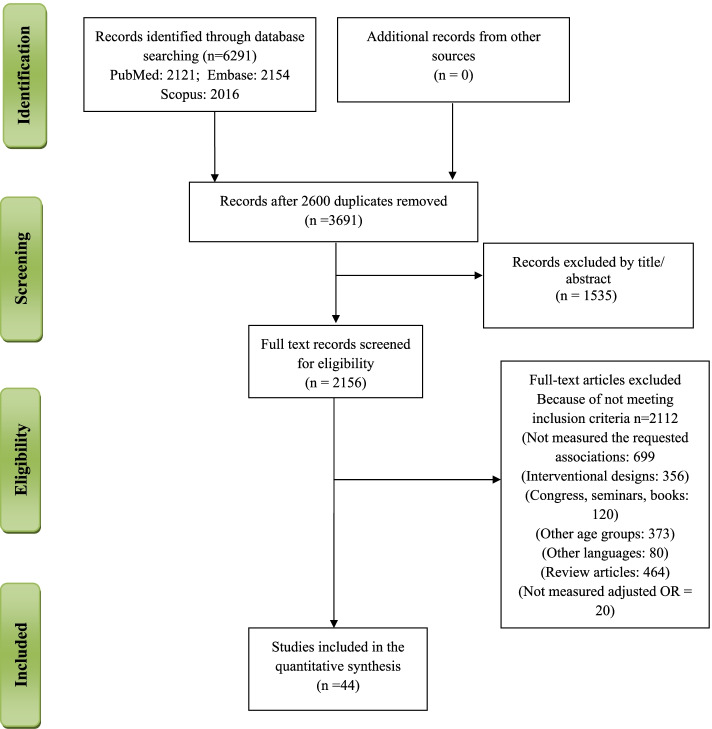
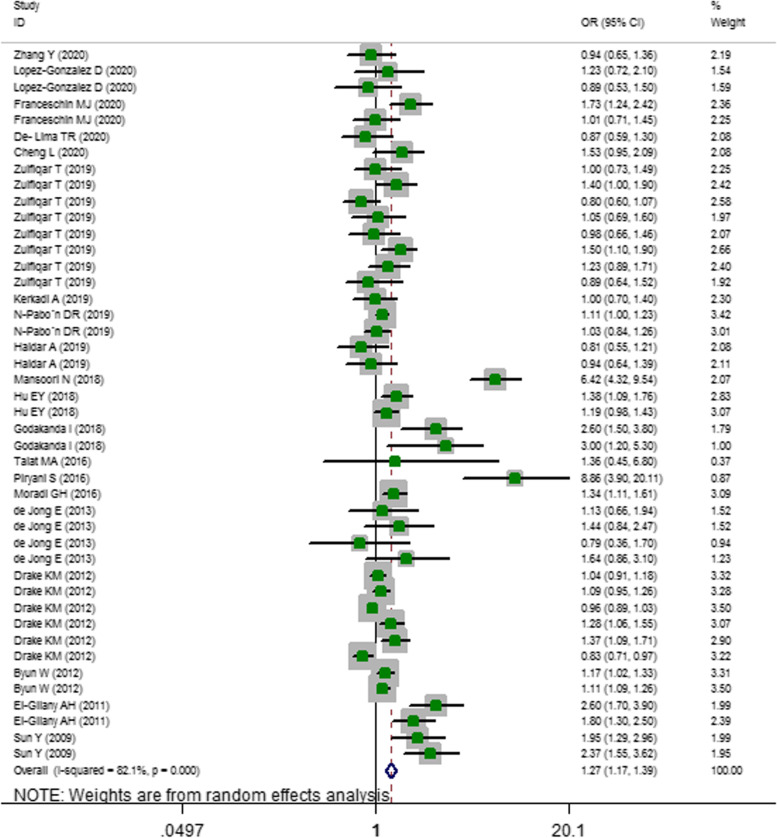
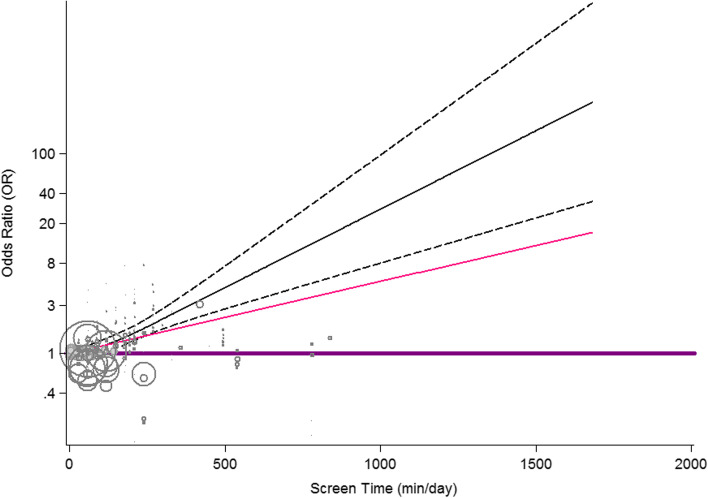
Background: Adolescence is a critical period in human life, associated with reduced physical activity and increased sedentary behaviors. In this systematic review and dose-response meta-analysis, we evaluated the association between screen time and risk of overweight/obesity among adolescents. Methods: A systematic search in electronic databases, including PubMed, Embase, and Scopus was performed up to September 2021. All published studies evaluating the association between screen time and risk of overweight/obesity among adolescents were retrieved. Finally, a total of 44 eligible studies were included in the meta-analysis. Results: The results of the two-class meta-analysis showed that adolescents at the highest category of screen time were 1.27 times more likely to develop overweight/obesity (OR = 1.273; 95% CI = 1.166–1.390; P < 0.001; I-squared (variation in ES attributable to heterogeneity) = 82.1%). The results of subgrouping showed that continent and setting were the possible sources of heterogeneity. Moreover, no evidence of non-linear association between increased screen time and risk of overweight/obesity among adolescents was observed (P-nonlinearity = 0.311). Conclusion: For the first time, the current systematic review and meta-analysis revealed a positive association between screen time and overweight/obesity among adolescents without any dose-response evidence. Trial registration: The protocol of the current work has been registered in the PROSPERO system (Registration number: CRD42021233899).
Overview
The claims and statistics of this paper haven’t been checked yet.
Free: it reads the open-access text and checks the first 5 claims that cite a source we can check. Create a free account to check every claim.
Integrity signals
Registry
Cites
Statistics
Figures
Verification
Claims the paper makes
The claims and statistics of this paper haven’t been checked yet.
Free: it reads the open-access text and checks the first 5 claims that cite a source we can check. Create a free account to check every claim.
Claims other papers make about this one
Each is checked against this paper’s own text: does it say what the citing paper says it does?
The source backs part of the claim, not all of it — or backs it for a different population, condition or comparison.
In the citing paper
“Decades of observational research has demonstrated correlation between screen media duration and higher risk of adiposity and unhealthy weight among children and teens.247,248”
From Digital Ecosystems, Children, and Adolescents: Technical Report (2026) · cites this paper as [247]
Experimental — accuracy not yet measured
Self-check
Percentages, sums and reported differences re-computed from the paper’s own numbers.
The self-check needs the paper’s full text.
Citations
Cites
Preferred reporting items for systematic reviews and meta-analyses: The PRISMA statement
Moher, D., Liberati, A., Tetzlaff, J., Altman, D. G., & the PRISMA Group* (2009) · Annals of Internal Medicine · doi:10.7326/0003-4819-151-4-200908180-00135 · Cited by 37,554
Establishing a standard definition for child overweight and obesity worldwide: international survey
Cole, T. J. (2000) · BMJ · doi:10.1136/bmj.320.7244.1240 · Cited by 16,480 · cited 2×
“Overweight and obesity were defined as follows: (a) as Z score for the body mass index (BMI) for age with the cut-off points of > 1 to ≤2 standard deviations for overweight and values > 2 standard deviations for obesity [58]; (b) as the international age and sex specific cut-offs of BMI [≥85th percentile and less than…”
MethodHilpert, M., Brockmeier, K., Dordel, S., Koch, B., Weiß, V., Ferrari, N., Tokarski, W., & Graf, C. (2017) · Obesity Facts · doi:10.1159/000464105 · Cited by 1,185
The common sense census: media use by tweens and teens
Rideout, V. (2015) · Cited by 1,129
Twenge, J. M., Martin, G. N., & Campbell, W. K. (2018) · Emotion · doi:10.1037/emo0000403 · Cited by 750
Canadian Sedentary Behaviour Guidelines for Children and Youth
Tremblay, M. S., LeBlanc, A. G., Janssen, I., Kho, M. E., Hicks, A., Murumets, K., Colley, R. C., & Duggan, M. (2011) · Applied Physiology, Nutrition, and Metabolism · doi:10.1139/h11-012 · Cited by 548 · cited 1×
“Sedentary behavior guidelines recommend less than 2h per day of recreational screen time for the youth [13].”
BackgroundAssociation of Sedentary Behaviour with Metabolic Syndrome: A Meta-Analysis
Edwardson, C. L., Gorely, T., Davies, M. J., Gray, L. J., Khunti, K., Wilmot, E. G., Yates, T., & Biddle, S. J. H. (2012) · PLoS ONE · doi:10.1371/journal.pone.0034916 · Cited by 535
Role of Video Games in Improving Health-Related Outcomes
Primack, B. A., Carroll, M. V., McNamara, M., Klem, M. L., King, B., Rich, M., Chan, C. W., & Nayak, S. (2012) · American Journal of Preventive Medicine · doi:10.1016/j.amepre.2012.02.023 · Cited by 465 · cited 1×
“, video games were associated with 69% improve in psychological therapy outcomes and 50% improve in physical activity outcomes [77].”
BackgroundCho, C. E., Taesuwan, S., Malysheva, O. V., Bender, E., Tulchinsky, N. F., Yan, J., Sutter, J. L., & Caudill, M. A. (2017) · Molecular Nutrition & Food Research · doi:10.1002/mnfr.201600324 · Cited by 405 · cited 1×
“The methodological quality of studies were assessed using the Agency for Healthcare Research and Quality (AHRQ) checklist [54] (Table 2).”
MethodPate, R. R., Mitchell, J. A., Byun, W., & Dowda, M. (2011) · British Journal of Sports Medicine · doi:10.1136/bjsports-2011-090192 · Cited by 375 · cited 1×
“Background Adolescence is a critical period regarding physical activity-related behaviors since regular physical activity decreases and sedentary behavior increases in this period [1, 2].”
Background
Research works printed but not linked: 11
- Lutz M Vargas C Stojanova J Arancibia M Diet and depressive disorders Arch Clin Psychiatry (São Paulo) 2021 48 117 122
- Currie C Zanotti C Morgan A Social determinants of health and well-being among young people health behaviour in school-aged children (HBSC): international report from the 2009/2010 survey Health policy for children and adolescents 2012 WHO Regional Office for Europe 1 252
- Putrawan HA Antariksa B Yunus F Basalamah MA Nurwidya F Prevalence of pulmonary hypertension in indonesian patients with stable chronic obstructive pulmonary disease J Nat Sci Biol Med 2019 10 1 49
- Alyoubi RA Kobeisy SA Souror HN Alkhaldi FA Aldajam MA Allebdi KS Active screen time habits and headache features among adolescents and young adults in Saudi Arabia Int J Pharm Res Allied Sci 2020 9 4 81 86
- Talat MA El Shahat E Prevalence of overweight and obesity among preparatory school adolescents in urban Sharkia governorate, Egypt Egypt Pediatr Assoc Gaz 2016 64 1 20 25
- Oxford University Press Oxford English Dictionary 2020 Oxford Oxford University Press
- World Health Organization Guidelines on physical activity, sedentary behaviour and sleep for children under 5 years of age 2020 31091057
- Organization, W.H Adolescent health in the South-East Asia region 2020
- DO., M The new WHO child growth standards Paediatr Croat Suppl 2008 52 SUPP.1 13 17
- Mariona P Roy A Survey on lifestyle and food habits of patients with PCOS and obesity J Complement Med Res 2021 11 5 93
- Fulton JE Wang X Yore MM Carlson SA Galuska DA Caspersen CJ Television viewing, computer use, and BMI among US children and adolescents J Phys Act Health 2009 6 s1 S28 S35 10.1123/jpah.6.s1.s28 19998847 · DOI · Paper page
Cited by
Sanders, T., Noetel, M., Parker, P., Del Pozo Cruz, B., Biddle, S., Ronto, R., Hulteen, R., Parker, R., Thomas, G., De Cocker, K., et al. (2023) · Nature Human Behaviour · doi:10.1038/s41562-023-01712-8 · Cited by 148
Screen Time and Its Health Consequences in Children and Adolescents
Priftis, N., & Panagiotakos, D. (2023) · Children · doi:10.3390/children10101665 · Cited by 100
“Smartphone use, when studied independently, is not correlated with reduced PA [63], unlike TV viewing [49] and nonspecific ST viewing [13,22,39].”
BackgroundResultInfluentialSocioeconomic Status and Obesity
Autret, K., & Bekelman, T. A. (2024) · Journal of the Endocrine Society · doi:10.1210/jendso/bvae176 · Cited by 118
“…the persistence of this patterning, the factors that mediate and modify these associations likely have evolved over time due to major shifts in urbanization, globalization, technologies of convenience, global nutrition transitions, and cultural ideals about food, exercise, and body type [32-34].”
BackgroundEthical considerations in AI for child health and recommendations for child-centered medical AI
Chng, S. Y., Tern, M. J. W., Lee, Y. S., Cheng, L. T., Kapur, J., Eriksson, J. G., Chong, Y. S., & Savulescu, J. (2025) · npj Digital Medicine · doi:10.1038/s41746-025-01541-1 · Cited by 109
“There have been multiple studies that have highlighted the adverse effect of prolonged screen time on the cognitive development and neurobehavioral development of children 30,31 , and on the development of obesity 32 , and its related complications.”
Screen time in children and youth during the pandemic: A systematic review and meta-analysis
Choi, E. J., King, G. K. C., & Duerden, E. G. (2023) · Global Pediatrics · doi:10.1016/j.gpeds.2023.100080 · Cited by 106
The Complex Effects of Light on Metabolism in Humans
Ishihara, A., Courville, A. B., & Chen, K. Y. (2023) · Nutrients · doi:10.3390/nu15061391 · Cited by 74
Arafa, A., Yasui, Y., Kokubo, Y., Kato, Y., Matsumoto, C., Teramoto, M., Nosaka, S., & Kogirima, M. (2024) · American Journal of Lifestyle Medicine · doi:10.1177/15598276241245941 · Cited by 97
Associations Between Screen Time Use and Health Outcomes Among US Teenagers
Zablotsky, B., Ng, A. E., Black, L. I., Haile, G., Bose, J., Jones, J. R., & Blumberg, S. J. (2025) · Preventing Chronic Disease · doi:10.5888/pcd22.240537 · Cited by 99
Hossian, M., Mielke, G. I., Nisar, M., Tremblay, M. S., & Khan, A. (2025) · International Journal of Behavioral Nutrition and Physical Activity · doi:10.1186/s12966-025-01809-5 · Cited by 53
“…63, 113], or substance use [63, 113] and weight status [62, 63, 82, 113, 131, 162] were strongly associated with lower likelihood of adherence with 24-h MB guidelines, as they may reduce the motivation for MVPA [211, 212], increase recreational ST [213, 214], and disrupt sleep patterns [215, 216].”
Impact of digital addiction on youth health: A systematic review and meta-analysis
Shiferaw, B. D., Tang, J., Wang, Y., Wang, Y., Wang, Y., Mackay, L. E., Luo, Y., Yan, N., Shen, X., Zhou, T., et al. (2025) · Journal of Behavioral Addictions · doi:10.1556/2006.2025.00081 · Cited by 68
Wójcik, M., Pitti, J. Á., Kozioł-Kozakowska, A., Brzeziński, M., Gabbianelli, R., Herceg-Čavrak, V., Wühl, E., Lucas, I., Radovanović, D. S., Melk, A., et al. (2023) · Frontiers in Cardiovascular Medicine · doi:10.3389/fcvm.2023.1268364 · Cited by 49
“Hagjoo et al. in a meta-analysis of a large sample size ( n = 112,489) also reported that high screen time is associated with a 1.27 times higher chance of overweight/obesity in adolescents, with TV watching being the most in fl uential factor (87).”
BackgroundInfluentialZong, B., Li, L., Cui, Y., & Shi, W. (2024) · Frontiers in Public Health · doi:10.3389/fpubh.2024.1434936 · Cited by 31
Trends in childhood obesity in Japan: A nationwide observational study from 2012 to 2021
Fujiwara, S., Harada, K., Hagiya, H., Koyama, T., Hasegawa, K., Tsukahara, H., & Otsuka, F. (2023) · Clinical Obesity · doi:10.1111/cob.12636 · Cited by 23
“Previous studies reported an association between increased screen time and physical inactivity, 25 as well as an increased risk of obesity in children with more than 2 h of screen time per day.”
BackgroundRamírez‐Coronel, A. A., Abdu, W. J., Alshahrani, S. H., Treve, M., Jalil, A. T., Alkhayyat, A. S., & Singer, N. (2023) · Journal of Health Population and Nutrition · doi:10.1186/s41043-022-00344-4 · Cited by 31
RetractedDing, X., Ji, Y., Dong, Y., Li, Z., & Zhang, Y. (2024) · BMC Public Health · doi:10.1186/s12889-024-19128-y · Cited by 31
“Ling and Gebremariam [7] recognized childhood obesity as an emerging significant public health concern globally, and excessive sedentary screen time has been identified as a substantial risk factor for weight challenges facing children and adolescents [8– 11].”
BackgroundHorner, D., Jahn, M., Bønnelykke, K., Chawes, B., Flensborg‐Madsen, T., Schoos, A. M., Stokholm, J., & Rasmussen, M. A. (2025) · Journal of the American Heart Association · doi:10.1161/jaha.125.041486 · Cited by 39
Toward an Integrated Consideration of 24 h Movement Guidelines and Nutritional Recommendations
Fournier, E., Łuszczki, E., Isacco, L., Chanséaume, E., Gryson, C., Chambrier, C., Drapeau, V., Chaput, J., & Thivel, D. (2023) · Nutrients · doi:10.3390/nu15092109 · Cited by 21
The influence of behavioral risk factors on outcomes of students’ health
Kuchma, V. R., Sokolova, S. B., Ik, R., & Чубаровский, В. В. (2022) · Hygiene and Sanitation · doi:10.47470/0016-9900-2022-101-10-1206-1213 · Cited by 18
Digital Ecosystems, Children, and Adolescents: Technical Report
Munzer, T., Milkovich, L. M., Madigan, S., Tomopoulos, S., Parga-Belinkie, J., Ajumobi, T., Cross, C., Gerwin, R., Council on Communications and Media, Radesky, J., et al. (2026) · Pediatrics · doi:10.1542/peds.2025-075321 · Cited by 14
AlKhenaizi, A. K., Shakeeb, F. N., Fredericks, S., & Gaynor, D. (2025) · BMJ Open · doi:10.1136/bmjopen-2024-093655 · Cited by 21
Feng, J., Huang, Y., Chen, Z., Jiao, J., Khan, A., Nisar, M., & Wong, S. H.-S. (2024) · Sports Medicine · doi:10.1007/s40279-024-02113-1 · Cited by 15
“…associated with both physical (e.g. bone health, body weight status) and mental health among children and adolescents [4–6], and prolonged sedentary behaviour and screen time are associated with a higher risk of being overweight/obese and worse mental health among children and adolescents [7, 8].”
Faust, A. M., Auerbeck, A., Lee, A. M., Kim, I., & Conroy, D. E. (2024) · Journal of Behavioral Medicine · doi:10.1007/s10865-024-00499-x · Cited by 16
“This finding is note - worthy because screen time has previously been used as an indicator of discretionary sedentary behavior (Biddle et al., 2017; Haghjoo et al., 2022; Prince et al., 2017; World Health Organization, 2019).”
Signal, L. N., Lowe, B., Smith, M., Jaine, R., Stanley, J., & Gage, R. (2023) · New Zealand Medical Journal · doi:10.26635/6965.6023 · Cited by 18
Votsi, I. C., & Koutelidakis, A. Ε. (2025) · Nutrients · doi:10.3390/nu17081311 · Cited by 17
Adolescent Nutritional Patterns and Health Behaviors in Romania: A Cross-Sectional Analysis
Lupu, C. E., Scafa‐Udriște, A., Matei, R. S., Licu, M., Stanciu, T. I., Stanciu, G., Hashemi, F., Mihai, A., Lupu, S., Ene, R., et al. (2025) · Nutrients · doi:10.3390/nu17091448 · Cited by 19
“Furthermore, dietary behaviors have been associated with emotional well-being, body image, and sedentary lifestyles, underscoring the need for a more integrated understanding of adolescent nutrition [6,14,17].”
Digital Media Use and Screen Time Exposure Among Youths: A Lifestyle-Based Public Health Concern
Khanani, M. I., Khan, M. R., Farooqi, M. F., Fazal, J., Aabideen, Z., & Kuwaiti, N. A. (2025) · Cureus · doi:10.7759/cureus.88373 · Cited by 39
“However, the authors did not find any dose-response evidence between screen time and obesity risk [38].”
Scoping review of interventions aimed at promoting healthy screen use among adolescents
Tock, W. L., Gauvin, L. I., Hudon, F., Tremblay, F., Bélanger, R. E., & Turcotte‐Tremblay, A. (2025) · BMJ Open · doi:10.1136/bmjopen-2025-103772 · Cited by 14
Oh, J., Mun, W.-L., Lee, Y.-E., Roh, S.-Y., & Kim, G. (2025) · Nutrients · doi:10.3390/nu17020253 · Cited by 12
“Furthermore, obese adolescents are more likely to experience mental health issues, such as depression and low self-esteem, than their non-obese peers [44].”
Kassim, P. S. J., Muhammad, N. A., Rahman, N. F. A., Sidik, S. M., Essau, C. A., & Shah, S. A. (2025) · Digital Health · doi:10.1177/20552076251314904 · Cited by 11
Yao, Y., & Fei, Y. (2025) · Youth · doi:10.3390/youth5040122 · Cited by 11
“Comorbidities with Physical Health Harm: Addictive digital engagement negatively impacts physical health, leading to sleep disruption, weight changes, and academic challenges (Nagata et al., 2023; Haghjoo et al., 2022).”
Hassanein, S. E., Khatib, A. A., AlMoosa, O., & Abdrbo, A. A. (2025) · Healthcare · doi:10.3390/healthcare13050528 · Cited by 8
“In contrast excessive exposure to screens led to unrelenting snacking and a sedentary lifestyle, which can ultimately result in obesity [24].”
InfluentialWang, H., Bragg, F., Guan, Y., Zhong, J., Li, N., Pan, J., & Yu, M. (2023) · Frontiers in Public Health · doi:10.3389/fpubh.2023.1138152 · Cited by 10
Drăgănescu, A. C., Dinulescu, A., Păcurar, D., Jinga, V., & Pleşca, D. A. (2025) · Journal of Clinical Medicine · doi:10.3390/jcm14103331 · Cited by 8
“A meta-analysis by Haghjoo et al. (2022), which included 44 studies, found that high screen time exposure was associated with a 27% increased risk of excess weight in children (OR = 1.273; 95% CI = 1.166–1.390; p < 0.001) [57].”
InfluentialHoseini, R., Hoseini, Z., Pourahmadi, D., & Kamangar, A. (2025) · BMC Public Health · doi:10.1186/s12889-025-23083-7 · Cited by 10
“Specifically, higher levels of physical activity were associated with lower BMI, consistent with previous research showing that increased physical activity reduces the risk of overweight and obesity [26, 27].”
Sigmund, E., Sigmundová, D., Pavelka, J., Kalman, M., Voráčová, J., Meier, Z., Kopčáková, J., & Baďura, P. (2023) · BMC Public Health · doi:10.1186/s12889-023-17010-x · Cited by 7
Gale, E. L., Williams, A. J., & Cecil, J. E. (2025) · BMC Global and Public Health · doi:10.1186/s44263-025-00160-y · Cited by 13
“Given the role of wellbeing as a mediator, future interventions should not solely focus on reducing screen time but also address psychological and emotional factors that influence sleep and obesity [118, 119].”
Al-Nuaim, A. A., & Safi, A. (2025) · International Journal of Environmental Research and Public Health · doi:10.3390/ijerph22050813 · Cited by 8
“As conducted in a previous study [21], for the dietary cut-off points, the percentage of adolescents who had a daily intake of breakfast, fruit, vegetables and milk was calculated for healthy dietary habits, whilst those who exceeded three days’ intake per week of fast food or sugary drinks were…”
InfluentialYewale, P., Rathi, R. B., & Mate, S. (2024) · JMIR Research Protocols · doi:10.2196/51833 · Cited by 9
Ma, J., & Li, S. (2024) · PLoS ONE · doi:10.1371/journal.pone.0311996 · Cited by 6
Association Between Time Spent on Electronic Devices and Body Mass Index in Young Adults
Rafique, N., Alkaltham, G. K. I., Almulhim, L. A. A., Asoom, L. I. A., Alsunni, A. A., Latif, R., AlSheikh, M. H., Yar, T., Ghamdi, K. S. A., Alabdulhadi, A. S., et al. (2022) · Journal of Multidisciplinary Healthcare · doi:10.2147/jmdh.s376689 · Cited by 9
“It was based on information from a few previous studies.(6,8,9,15,18) The questionnaire focused on the”
BackgroundMethodInfluentialRa, J. S., & Huyen, D. T. T. (2024) · Child Health Nursing Research · doi:10.4094/chnr.2023.057 · Cited by 4
“As sedentary behaviors involve low energy expenditure ( 5 metabolic equivalents), excessive screen-based sedentary behaviors increase adolescents’ risk of obesity [9 ].”
BackgroundInfluentialGender-based analysis of adolescent nutrition: diet, lifestyle factors, and socioeconomic influences
Mekonen, S., & Abebe, Z. (2025) · BMC Public Health · doi:10.1186/s12889-025-24792-9 · Cited by 7
Effect Of Screen-Time on Obesity: A Cross-Sectional Study
Mukhtar, S., Zubair, R., Masroor, S., Jaffar, S., Anjum, A., & Naqvi, S. (2023) · Pakistan Journal of Public Health · doi:10.32413/pjph.v13i2.1114 · Cited by 6
“(12-14) Obesity is a common medical condition in”
BackgroundRuda, I., Chellapandian, D. C., Scheid, S., Rott, M., & Freiherr, J. (2024) · Nutrients · doi:10.3390/nu16172871 · Cited by 7
“It is thus obvious to claim distracted eating as a contributing factor to the current obesity pandemic [10,11].”
BackgroundAl-Shoaibi, A. A. A., Helmer, C. K., Shim, J. E., Choi, W. W., Dooley, E. E., Gooding, H. C., Gabriel, K. P., Baker, F. C., & Nagata, J. M. (2025) · Childhood Obesity · doi:10.1089/chi.2025.0022 · Cited by 4
Moderating Role of Multiple Screen Addiction on High Body Mass
Mete, B., Demırhındı, H., & Makca, T. (2025) · Food Science & Nutrition · doi:10.1002/fsn3.70383 · Cited by 4
A systematic review on the eating behaviors of youth exceeding electronic device recommendations
Coleman, A., Neumann, D., Cole, A. S., Brady, C., Park, A., Odisho, J., Moschke, K., & Nauts, L. (2025) · Frontiers in Psychology · doi:10.3389/fpsyg.2025.1649571 · Cited by 7
Al-Shoaibi, A. A. A., Helmer, C. K., Ganson, K. T., Testa, A. M., Lavender, J. M., Dooley, E. E., Gabriel, K. P., Kiss, O., Baker, F. C., & Nagata, J. M. (2025) · International Journal of Obesity · doi:10.1038/s41366-025-01980-6 · Cited by 5
“While numerous studies have explored how screen time and sleep contribute to obesity risk [9 – 11], it remains unclear whether these factors in fl uence the likelihood of returning to a normal BMI among those who already have overweight/obesity.”
InfluentialInsomnia severity and obesity mediated by health behaviors in adolescents
Triplett, O. M., Morrell, H. E. R., & Dyk, T. R. V. (2024) · Journal of Pediatric Psychology · doi:10.1093/jpepsy/jsae098 · Cited by 4
Milner, E. K., Johnson, R., & Milner, K. A. (2024) · The Journal for Nurse Practitioners · doi:10.1016/j.nurpra.2024.105251 · Cited by 5
Soczewka, M., Waśniowska, J., Skowrońska, B., Szczepankiewicz, A., Wojsyk‐Banaszak, I., Kędzia, A. W., & Niechciał, E. (2025) · Nutrients · doi:10.3390/nu17111759 · Cited by 5
“In addition, prolonged use of screens can lead to sleep deprivation, reduced physical activity, and negative consequences for physical health [36].”
Alyami, R. A., & Alharbi, M. F. (2023) · International Journal of Environmental Research and Public Health · doi:10.3390/ijerph20054432 · Cited by 6
Obesity among school-age children from Zakho (Kurdistan, Iraq) is linked to viewing screen media
Armishty, F. S., Ibrahim, R. Y., Adam, A. J., Haji, R. S., Ghazi, Z. K., & Tahir, P. I. (2023) · CHILD`S HEALTH · doi:10.22141/2224-0551.18.6.2023.1628 · Cited by 3
Hạnh, N. T. H., Tuyết, L. T., Thu, N. T. T., Trang, D. T., Đào, D. T. A., Dung, L. T. T., & Tho, D. X. (2024) · Health Risk Analysis · doi:10.21668/health.risk/2024.1.16 · Cited by 2
Ramírez‐Coronel, A. A., Abdu, W. J., Alshahrani, S. H., Treve, M., Jalil, A. T., Alkhayyat, A. S., & Singer, N. (2023) · Journal of Health Population and Nutrition · doi:10.1186/s41043-023-00432-z · Cited by 3
RetractedImperiali, G., Martellucci, C. A., Fridel, M., Diegoli, G., Iaia, M., Carrozzi, G., Bechtold, P., Flacco, M. E., & Manzoli, L. (2025) · Nutrients · doi:10.3390/nu17183015 · Cited by 3
“This finding contrasts with a substantial body of research [83–85] and could merely reflect the uncertainties around the thresholds [86] and/or various information biases [87].”
Aychiluhm, S. B., Ross, A. G., Isaac, V., Thapa, S., & Ahmed, K. Y. (2025) · BMC Medicine · doi:10.1186/s12916-025-04538-5 · Cited by 8
“…obesity and youths residing in major cities is potentially reflecting lifestyle patterns, including greater exposure to ultra-processed foods, engage in more sedentary behaviours, and spend more time in screen-based activities, with fewer opportunities for outdoor physical activity [71, 72].”
Georgoulis, M., Grapsa, I., Arnaoutis, G., Karachaliou, A., Panagiotakos, D. B., Saltaouras, G., Bathrellou, E., Yannakoulia, M., Dimitrakopoulos, G., & Kontogianni, M. D. (2026) · Current Obesity Reports · doi:10.1007/s13679-025-00680-6 · Cited by 4
“In accordance with the present findings, previous systematic reviews and meta-analyses of epidemiological studies have revealed that a higher duration or frequency of screen time is linked to an unfavorable body weight status and composition in children and adolescents [18, 19].”
Zhang, J. M., Wang, B.-L., Jin, H. Y., Gu, J.-Y., Zhang, J.-H., Shou, G.-F., Wang, H., Zhang, P.-P., & Li, L. (2026) · Frontiers in Endocrinology · doi:10.3389/fendo.2025.1719372 · Cited by 4
Smartphone Acquisition and Use at Age 13 Years and Health Outcomes at Age 14 Years
Bren, Z., Tran, K. T., Visoki, E., Waasdorp, T. E., Moore, T. M., Pimentel, S. D., & Barzilay, R. (2026) · Archives of Pediatrics and Adolescent Medicine · doi:10.1001/jamapediatrics.2026.2118 · Cited by 5
Gutiérrez-Higuera, T., Zamarripa, J., Ochoa-Ávalos, M., & Gurrola, O. C. (2023) · Retos · doi:10.47197/retos.v48.97419 · Cited by 2
Factores asociados a la inactividad física en adolescentes colombianos: Estudio transversal
Flórez, J. E. S., Cardona, L. S. G., Yepes, M. M. S., Henao, A. F., López, M., Velandia, D. M., & Pérez, V. (2023) · Revista Española de Nutrición Humana y Dietética · doi:10.14306/renhyd.27.3.1906 · Cited by 4
Lu, L., Liu, C., Liu, K., Shi, C., Liu, Z., Jiang, X., & Wang, F. (2023) · Scientific Reports · doi:10.1038/s41598-023-40153-1 · Cited by 2
“These days, people spend more time than they did a decade ago participating in sedentary activities, which may be the result of an increase in screen-related physical activities such as watching television 19 .”
Saraswati, D., Hidayanti, L., & Aisyah, I. S. (2024) · AcTion Aceh Nutrition Journal · doi:10.30867/action.v9i2.1632 · Cited by 5
“( Haghjoo et al., 2022; Ramírez-Coronel et al., 2023) This study showed that the average duration of screen time in female adolescents was seven hours per day.”
BackgroundMorales‐Suárez‐Varela, M., Peraita‐Costa, I., Morales, A. L., & González, A. L. (2024) · Nutrients · doi:10.3390/nu16162649 · Cited by 9
Miedany, Y. M. E., Lotfy, H. M., Hegazy, L. A., Gaafary, M. M. E., Mahran, S., Plummer, S., & Elwakil, W. (2024) · Egyptian Rheumatology and Rehabilitation · doi:10.1186/s43166-024-00279-0 · Cited by 4
Abdelgadir, E., Rashid, F., Bashier, A. M., Zidan, M. A., Thalange, N. K. S., Hassanein, M. M., & Alawadi, F. (2025) · Diabetes Obesity and Metabolism · doi:10.1111/dom.16449 · Cited by 3
“10 The consumption of energy-dense foods, coupled with a shifting cultural landscape where these foods are heavily marketed, may also contribute to OAO.”
Netflix’s Adolescence : an unsettling reminder of the toxic effect of social media on children
McNamara, P., & Dunn, N. (2025) · British Journal of General Practice · doi:10.3399/bjgp25x742821 · Cited by 2
Basilico, S., Conti, M. V., Ardoino, I., Breda, C., Loperfido, F., Orsini, F., Fernandez, M. L. O., Pierini, L., Bonizzoni, S. C., Modena, E., et al. (2025) · Nutrients · doi:10.3390/nu17172778 · Cited by 3
“This shift has been linked to a higher risk of overweight and obesity, as well as negative effects on mental health and academic performance [17–19].”
Peixoto, V. A., Júnior, A. E. D. S., Ferro, D. C., Pereira, M. R., Paula, D. T. D. C., Praxedes, D. R. S., Macêna, M. D. L., & Bueno, N. B. (2025) · Nutrition Research · doi:10.1016/j.nutres.2025.10.002 · Cited by 7
Relación entre tiempo frente a pantalla y actividad física en adolescentes
Navarrete, H. P. (2023) · Revista Chilena de Rehabilitación y Actividad Física · doi:10.32457/reaf2.2081 · Cited by 6
Integration of Cyber-Physical Systems in the Advancement of Society 5.0 Healthcare Management
Damane, B. P., Kgokolo, M., Gaudji, G. R., Blenman, K., & Dlamini, Z. (2023) · Springer eBooks · doi:10.1007/978-3-031-36461-7_9 · Cited by 4
Understanding health behaviors that modify the risk for obesity in ADHD
Roberts, D. K., Sarver, D. E., Cash, A. R., Walker, B. H., & Lim, C. S. (2024) · Journal of Pediatric Psychology · doi:10.1093/jpepsy/jsae018 · Cited by 2
Screen Media, Obesity, and Nutrition
Staiano, A. E., Button, A. M., Goldfield, G. S., Robinson, T. N., Mota, J. A. P. S., Woolford, S. J., & Katzmarzyk, P. T. (2024) · Springer eBooks · doi:10.1007/978-3-031-69362-5_11 · Cited by 4
Body Weight Perception and Other Factors Associated with Overweight and Obesity in U.S. Adolescents
Shah, G. H., Karibayeva, I. K., Shankar, P., Mason, S., & Griffin, J. (2025) · Children · doi:10.3390/children12020169 · Cited by 1
“The influence of electronics and screen time has significantly contributed to the sedentary behavior of young children and adolescents [24].”
Banna, M. H. A., Hamiduzzaman, M., Akter, S., Seidu, A., Ayesha, B., Yeasmin, N., Kundu, S., Begum, M. U. H., Sultana, M. S., Kissi‐Abrokwah, B., et al. (2025) · Health Science Reports · doi:10.1002/hsr2.70454 · Cited by 4
Rahim, H., Ahmad, B., Rahim, K., Fatima, Z., Humayun, A., Nazir, H. A., Rahim, A., Shafiq, M., Azam, E., & Usman, M. (2025) · Irish Journal of Medical Science (1971 -) · doi:10.1007/s11845-025-03991-8 · Cited by 3
Liu, Y., Wang, K., Zhou, Y., Yan, S.-Y., Hebestreit, A., & Wang, H. (2025) · Nutrients · doi:10.3390/nu17182990 · Cited by 2
“Another systematic review assessing the relationship between screen time and the likelihood of being overweight/obesity in adolescents, included studies involving 10-to 20-year-olds, and found that adolescents with the highest screen time had a 1.27-fold increased risk of overweight or obesity [32].”
InfluentialCrouch, E. L., Shapiro, C. J., Boswell, E. K., Brown, M. J., & Bennett, K. J. (2025) · Journal of Child & Adolescent Trauma · doi:10.1007/s40653-025-00785-z · Cited by 2
“Heavy digital media use has also been associated with increased likelihood of overweight/obesity, hyperac - tivity, sleep problems, and lower academic performance (Haghjoo et al., 2022 ; Tandon et al., 2019 ; Twenge, Hisler et al., 2019a ; Howie et al., 2020).”
Moschonis, G., Halilagic, A., Argyropoulou, M., Balafouti, T., Roussos, R., Svolos, V., Dacaya, P., Androutsos, O., Mouratidou, T., & Μanios, Y. (2025) · Nutrients · doi:10.3390/nu17213486 · Cited by 2
The role of family meals in shaping adolescent health beliefs and cardiovascular behaviors
Taşdelen, Y., Aközlü, Z., & Şahin, Ö. Ö. (2025) · Discover Public Health · doi:10.1186/s12982-025-01054-y · Cited by 1
“Evidence from numerous studies shows that increased screen time poses various health risks for adolescents, including cardiometabolic disease risks, sleep problems, and psychosocial behavioral issues [52, 53].”
Blauzde, I., Dulskienė, V., Medžionienė, J., Dilys, L., & Kučienė, R. (2025) · Scientific Reports · doi:10.1038/s41598-025-29544-8 · Cited by 1
Thorat, S., Deshmukh, R., & Adhya, S. (2026) · Frontiers in Public Health · doi:10.3389/fpubh.2025.1682181 · Cited by 1
Chen, W., Xue, Q., Zhang, J., Wang, Q., & Guo, M. (2026) · Frontiers in Public Health · doi:10.3389/fpubh.2025.1644890 · Cited by 1
Özdemir, E. Z., & Bektaş, M. (2026) · Children · doi:10.3390/children13010123 · Cited by 2
Ayşin, N., & Koltaş, S. (2026) · BMC Psychology · doi:10.1186/s40359-026-04013-7 · Cited by 5
“Similarly, recent studies have also indicated that digital behaviours do not directly affect obesity but pose a risk through psychosocial processes [32, 42, 43].”
Mendoza, Y. I., Hernández, F. V., Zapata, D. A. B., Martínez, M. G. S., Cortes, L. R. G., Aguirre, E. V., Calderón, J. A. T., Jalpa, O. J., Cortés, E. G., Camarillo-Nava, V. M., et al. (2026) · PeerJ · doi:10.7717/peerj.20779 · Cited by 1
Kutwah, M. A., David-Kigaru, D. M., & Kobia, J. (2026) · BMC Nutrition · doi:10.1186/s40795-026-01276-6 · Cited by 3
Health problems in childhood: why not extend the pediatric age to eighteen years? A narrative review
Ferruzzi, A., Raitano, V., Lanzafame, R., Antoniazzi, F., Zoller, T., Rosa, S., Sboarina, A., PIACENTINI, G. L., Heymsfield, S. B., & Pietrobelli, A. (2026) · Health Policy and Technology · doi:10.1016/j.hlpt.2026.101194 · Cited by 1
Tølbøll, K. B. (2026) · Clinical Child and Family Psychology Review · doi:10.1007/s10567-026-00577-3 · Cited by 2
“However, the degree of sedentary vs. physically active screen use can change the relationship between screen use and obesity (Haghjoo et al., 2022 ).”
Garmy, P., Norell‐Clarke, A., & Sandlund, C. (2022) · Evidence-Based Nursing · doi:10.1136/ebnurs-2022-103586 · Cited by 1
Prabhakar, M., Prasad, H. G., & Reddy, R. S. (2023) · Telangana Journal of Psychiatry · doi:10.4103/tjp.tjp_6_23 · Cited by 2
Ayran, G., & KARACA, Ö. (2023) · Galician Medical Journal · doi:10.21802/e-gmj2023-a02 · Cited by 3
Pandey, A., & Todalabagi, P. (2024) · Cureus · doi:10.7759/cureus.68356 · Cited by 1
“A study done by Haghjoo et al. found that adolescents who use more screen time were 1.27 times more likely to develop overweight/obesity [23].”
MethodInfluentialTempo de tela e fatores associados em escolares do norte de Minas Gerais, Brasil
Braga, J. L., Neto, C. A. B., Ferreira, D. R. P., Nunes, M. S., Domingos, L. D. A., & de Oliveira, M. V. M. (2024) · DELOS Desarrollo Local Sostenible · doi:10.55905/rdelosv17.n62-215 · Cited by 2
Rodríguez-Cuenca, F., Sánchez-Úbeda, E. F., Portela, J., Roque, A. M. S., Guizien, V., Santiago, A. V., & Gonzalez, A. M. (2025) · Energy · doi:10.1016/j.energy.2025.135410 · Cited by 1
“For instance, excessive daily TV consumption has been linked to sedentary behavior and adverse health e ff ects [39, 37].”
InfluentialANALISIS PENGGUNAAN GADGET PADA SISWA SMP SELAMA PANDEMI DALAM KAITANNYA DENGAN STATUS GIZI
Ratnayani, Rahmi, A., Korimah, A., Lukiah, Fakhirani, N., & Handayani, W. (2022) · Jurnal Gizi dan Kuliner (Journal of Nutrition and Culinary) · doi:10.24114/jnc.v2i2.37766 · Cited by 6
Thien, T. M. (2023) · Queensland University of Technology · doi:10.5204/thesis.eprints.242765
Screens beyond good and evil: nuancing the evidence on children, screens and interaction
Samuelsson, R. (2024) · European Child & Adolescent Psychiatry · doi:10.1007/s00787-024-02446-2
Reducing screen time for health: Uniting against childhood obesity
Nair, G. R., & Akhil, R. (2024) · Journal of Family Medicine and Primary Care · doi:10.4103/jfmpc.jfmpc_384_24 · Cited by 2
Metadata
- Authors
- Haghjoo, P., Siri, G., Soleimani, E., Farhangi, M. A., & Alesaeidi, S.
- Affiliations
- Guilan University of Medical Sciences (IR)
- AmirAlam Hospital (IR)
- Tabriz University of Medical Sciences (IR)
- Rheumatology Research Center (IR)
- Corresponding author
- Farhangi, Mahdieh Abbasalizad
- Venue
- BMC Primary Care
- Published
- 2022-06-28
- Volume
- 23
- Issue
- 1
- Pages
- 161-161
- ISSN
- 1471-2296 (ISSN-L)
- 2731-4553
- PMC
- PMC9238177
- OpenAlex
- W4283698857
- Cited by
- 150
- References
- 91
- Citations by year
- 2026: 51 · 2025: 43 · 2024: 28 · 2023: 24 · 2022: 4
- FWCI
- 4.91
- Type
- journal article
- Language
- en
- Open access
- gold
- doi.org
- Licence
- cc-by
- creativecommons.org/licenses/by/4.0 (tdm)
- creativecommons.org/licenses/by/4.0 (vor)
- Locations
- BMC Family Practice (publishedVersion, cc-by)
- PubMed Central (publishedVersion, cc-by)
- PubMed (publishedVersion)
- DOAJ (DOAJ: Directory of Open Access Journals) (submittedVersion, cc-by-sa)
- Funders
- Tabriz University of Medical Sciences
- University of Tabriz
- Student Research Committee, Tabriz University of Medical Sciences
- Topics
- Health Sciences › Medicine › Public Health, Environmental and Occupational Health › Obesity, Physical Activity, Diet
- Health Sciences › Medicine › Public Health, Environmental and Occupational Health › Physical Activity and Health
- Social Sciences › Education › Child Development and Digital Technology
- Keywords
- screen time, adolescent overweight, adolescent obesity, sedentary behavior, physical activity, dose-response relationship, nonlinear relationship, obesity risk
- MeSH terms
- Screen Time, Adolescent, Humans, Obesity, Exercise, Overweight
About these checks
Registry, retraction, Cites and statistics results are computed, not judged, with one exception: a printed reference that no index lists is read once by a model before it counts as a citation error. Claims are extracted by a model and kept only when their quote appears verbatim in the text; each cited source is then checked, with a model’s help, for whether it says what the claim relies on. Those verdicts can be wrong — read the claim’s quote and the cited source before relying on one.
Statistics and arithmetic are recomputed, not judged.
Confidence bands are shown only for fields calibrated on our annotated test set. None is calibrated yet, so no band is shown.
What counts as a claim ›How we measure confidence ›How we check this ›
Are you an author, or do you see a problem with this page? Request a review
Data sources
Bibliographic data: Semantic Scholar, OpenAlex, Crossref.
Contains information from the Semantic Scholar Academic Graph Datasets, made available under the ODC Attribution License (ODC-BY 1.0).
Semantic Scholar’s data is described in: Kinney, R., et al. (2023). The Semantic Scholar Open Data Platform. arXiv:2301.10140.
