

Navigating the doctor-patient-AI relationship - a mixed-methods study of physician attitudes toward artificial intelligence in primary care
Open accessThe DOI matches its Crossref record; 104 of the 105 references it cites were found in a registry or an index.
Abstract
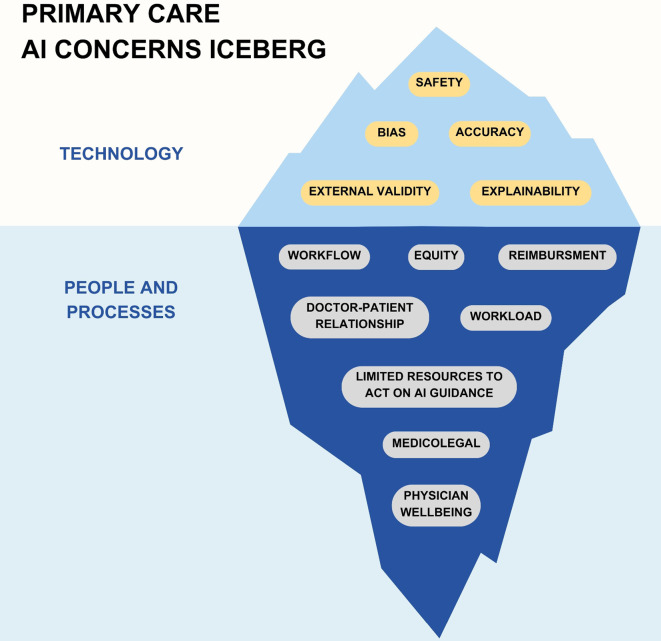
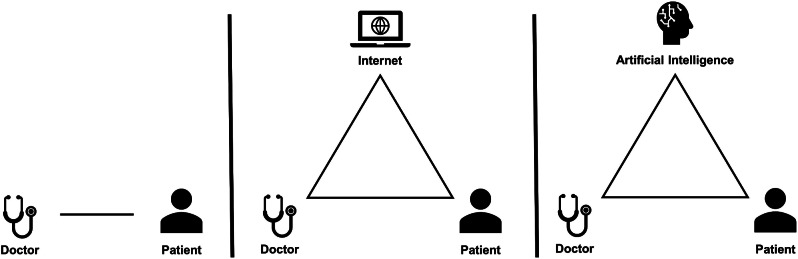
Background: Artificial intelligence (AI) is a rapidly advancing field that is beginning to enter the practice of medicine. Primary care is a cornerstone of medicine and deals with challenges such as physician shortage and burnout which impact patient care. AI and its application via digital health is increasingly presented as a possible solution. However, there is a scarcity of research focusing on primary care physician (PCP) attitudes toward AI. This study examines PCP views on AI in primary care. We explore its potential impact on topics pertinent to primary care such as the doctor-patient relationship and clinical workflow. By doing so, we aim to inform primary care stakeholders to encourage successful, equitable uptake of future AI tools. Our study is the first to our knowledge to explore PCP attitudes using specific primary care AI use cases rather than discussing AI in medicine in general terms. Methods: From June to August 2023, we conducted a survey among 47 primary care physicians affiliated with a large academic health system in Southern California. The survey quantified attitudes toward AI in general as well as concerning two specific AI use cases. Additionally, we conducted interviews with 15 survey respondents. Results: Our findings suggest that PCPs have largely positive views of AI. However, attitudes often hinged on the context of adoption. While some concerns reported by PCPs regarding AI in primary care focused on technology (accuracy, safety, bias), many focused on people-and-process factors (workflow, equity, reimbursement, doctor-patient relationship). Conclusion: Our study offers nuanced insights into PCP attitudes towards AI in primary care and highlights the need for primary care stakeholder alignment on key issues raised by PCPs. AI initiatives that fail to address both the technological and people-and-process concerns raised by PCPs may struggle to make an impact.
Overview
The claims and statistics of this paper haven’t been checked yet.
Free: it reads the open-access text and checks the first 5 claims that cite a source we can check. Create a free account to check every claim.
Integrity signals
Registry
Cites
Statistics
Figures
Verification
Claims the paper makes
The claims and statistics of this paper haven’t been checked yet.
Free: it reads the open-access text and checks the first 5 claims that cite a source we can check. Create a free account to check every claim.
Claims other papers make about this one
Each is checked against this paper’s own text: does it say what the citing paper says it does?
The check wasn’t confident either way, so it gives no verdict — never disputed.
In the citing paper
“A handful of studies could be clearly assigned as “natural language processing models” [29–32] or “rule-based expert systems” [33–36].”
From Healthcare professionals’ perspectives on artificial intelligence in patient care: a systematic review of hindering and facilitating factors on different levels (2025) · cites this paper as [31]
Experimental — accuracy not yet measuredThe check wasn’t confident either way, so it gives no verdict — never disputed.
In the citing paper
“In terms of medical decision-making in clinical settings, most studies reported on benefits relating to a better diagnostic quality in either improved sensitivity and specificity or reducing the likelihood of missed diagnoses [31, 33, 38, 44, 46, 52, 55, 60–75].”
From Healthcare professionals’ perspectives on artificial intelligence in patient care: a systematic review of hindering and facilitating factors on different levels (2025) · cites this paper as [31]
Experimental — accuracy not yet measured
Self-check
Percentages, sums and reported differences re-computed from the paper’s own numbers.
The self-check needs the paper’s full text.
Citations
Cites
Contribution of Primary Care to Health Systems and Health
STARFIELD, B., SHI, L., & MACINKO, J. (2005) · The Milbank Quarterly · doi:10.1111/j.1468-0009.2005.00409.x · Cited by 5,507
Explainability for artificial intelligence in healthcare: a multidisciplinary perspective
the Precise4Q consortium, Amann, J., Blasimme, A., Vayena, E., Frey, D., & Madai, V. I. (2020) · BMC Medical Informatics and Decision Making · doi:10.1186/s12911-020-01332-6 · Cited by 2,203
Internet Health Information Seeking and the Patient-Physician Relationship: A Systematic Review
Tan, S. S.-L., & Goonawardene, N. (2017) · Journal of Medical Internet Research · doi:10.2196/jmir.5729 · Cited by 1,101
Wong, A., Otles, E., Donnelly, J. P., Krumm, A., McCullough, J., DeTroyer-Cooley, O., Pestrue, J., Phillips, M., Konye, J., Penoza, C., et al. (2021) · JAMA Internal Medicine · doi:10.1001/jamainternmed.2021.2626 · Cited by 995
Arndt, B. G., Beasley, J. W., Watkinson, M. D., Temte, J. L., Tuan, W.-J., Sinsky, C. A., & Gilchrist, V. J. (2017) · The Annals of Family Medicine · doi:10.1370/afm.2121 · Cited by 972 · cited 1×
“This shift toward digital health is already occurring albeit in an unscheduled and uncompensated way [45, 74, 75].”
BackgroundArtificial intelligence, bias and clinical safety
Challen, R., Denny, J., Pitt, M., Gompels, L., Edwards, T., & Tsaneva-Atanasova, K. (2019) · BMJ Quality & Safety · doi:10.1136/bmjqs-2018-008370 · Cited by 956 · cited 1×
“Some of our identified concerns about AI adoption in healthcare, including lack of exter-nal validity, potential for bias, and safety issues, have been well-documented in the literature [48–50].”
BackgroundThe impact of artificial intelligence in medicine on the future role of the physician
Ahuja, A. S. (2019) · PeerJ · doi:10.7717/peerj.7702 · Cited by 789 · cited 1×
“Our work also highlights the evolving role of the primary care physician [64].”
BackgroundArtificial Intelligence in Medicine: Today and Tomorrow
Briganti, G., & Le Moine, O. (2020) · Frontiers in Medicine · doi:10.3389/fmed.2020.00027 · Cited by 743
The New Medical-Industrial Complex
Relman, A. S. (1980) · New England Journal of Medicine · doi:10.1056/nejm198010233031703 · Cited by 711
Socio-economic status of the patient and doctor–patient communication: does it make a difference?
Willems, S., De Maesschalck, S., Deveugele, M., Derese, A., & De Maeseneer, J. (2005) · Patient Education and Counseling · doi:10.1016/j.pec.2004.02.011 · Cited by 698 · cited 1×
“Previous literature has highlighted concerns that unequal knowledge or differing backgrounds in the doctor-patient relationship could exacerbate health inequity [72, 73].”
Background
Research works printed but not linked: 3
- Zimlichman E, Nicklin W, Aggarwal R, Bates D, Health Care. 2030: The Coming Transformation. NEJM Catal Innov Care Deliv [Internet]. (March 1, 2021). Available from: https://catalyst.nejm.org/doi/full/10.1056/CAT.20.0569. · doi:10.1056/cat.20.0569
- Committee on Implementing High-Quality Primary Care, Board on Health Care Services, Health and Medicine Division, National Academies of Sciences, Engineering, and Medicine. Implementing High-Quality Primary Care: Rebuilding the Foundation of Health Care [Internet]. McCauley L, Phillips RL, Meisnere M, Robinson SK, editors. Washington, D.C.: National Academies Press.; 2021 [cited 2023 Jul 27]. Available from: https://www.nap.edu/catalog/25983. 34251766
- AMA Future of Health issue brief: Commercial Payer Coverage for Digital Medicine Codes. American Medical Association [Internet]. 2023 Sep 18 [cited 2023 Sep 26]; Available from: https://www.ama-assn.org/practice-management/digital/ama-future-health-issue-brief-commercial-payer-coverage-digital.
Cited by
Abdelwanis, M., Simsekler, M. C. E., Gabor, A. F., Sleptchenko, A., & Omar, M. (2025) · Safety Science · doi:10.1016/j.ssci.2025.107028 · Cited by 102
Henzler, D., Schmidt, S., Koçar, A., Herdegen, S., Lindinger, G. L., Maris, M. T., Bak, M. A. R., Willems, D. L., Tan, H. L., Lauerer, M., et al. (2025) · BMC Health Services Research · doi:10.1186/s12913-025-12664-2 · Cited by 54
“In terms of medical decision-making in clinical settings, most studies reported on benefits relating to a better diagnostic quality in either improved sensitivity and specificity or reducing the likelihood of missed diagnoses [31, 33, 38, 44, 46, 52, 55, 60–75].”
InfluentialBehavioral health and generative AI: a perspective on future of therapies and patient care
Sezgın, E., & McKay, I. T. (2024) · npj Mental Health Research · doi:10.1038/s44184-024-00067-w · Cited by 81
AI and Primary Care: Scoping Review
Katonai, G., Árvai, N., & Meskó, B. (2025) · Journal of Medical Internet Research · doi:10.2196/65950 · Cited by 46
“A mixed-methods study identified equity, workflow, and technical challenges as key barriers to AI implementation [93].”
Battelino, T., Lalic, N. M., Hussain, S., Ceriello, A., Majanović, S. K., Davies, S., Topsever, P., Heverly, J., Ulivi, F., Brady, K., et al. (2025) · Diabetes Research and Clinical Practice · doi:10.1016/j.diabres.2025.112111 · Cited by 36
Abdulazeem, H. M., Meckawy, R., Schwarz, S., Novillo-Ortiz, D., & Klug, S. J. (2025) · International Journal of Medical Informatics · doi:10.1016/j.ijmedinf.2025.105945 · Cited by 41
Martínez-Martínez, H., Alfonso, J. M., Sánchez-Rojo-Huertas, B., Reynolds-Cortez, V., Turégano-Chumillas, A., Meseguer-Ruiz, V. A., Cekrezi, S., & Martínez‐Vizcaíno, V. (2025) · Journal of Medical Internet Research · doi:10.2196/71186 · Cited by 40
“[Physician] Designing with, rather than for [24] “Instead of just letting the cat out of the bag and seeing what happens, you want to make sure that everyone that is going to be interacting with it has accurate expectations and has been educated on what role this is supposed to play.””
InfluentialArtificial intelligence in the diagnosis and treatment of acute appendicitis: a narrative review
Bianchi, V., Giambusso, M., Iacob, A. D., Chiarello, M. M., & Brisinda, G. (2024) · Updates in Surgery · doi:10.1007/s13304-024-01801-x · Cited by 30
Governance of High-Risk AI Systems in Healthcare and Credit Scoring
Bartsch, S. C., Behn, O., Benlian, A., Brownsword, R., Bücker, S., Düwell, M., Formánek, N., Jungtäubl, M., Leyer, M., Richter, A., et al. (2025) · Business & Information Systems Engineering · doi:10.1007/s12599-025-00944-4 · Cited by 30
“…cannot be explained or evaluated, physicians may develop negative attitudes toward the technology (Williams et al. 2024) or face challenges in maintaining patient trust, especially in cases where MAIS seem to produce better results than physicians (Abramoff and Char 2024; Allen et al. 2024).”
Mondal, S., Das, S., Golder, S. S., Bose, R., Sutradhar, S., & Mondal, H. (2024) · International Conference on Artificial Intelligence and Quantum Computation-Based Sensor Application (ICAIQSA) · doi:10.1109/icaiqsa64000.2024.10882330 · Cited by 20
BEHAVIORAL THERAPIES USING GENERATIVE AI AND NLP FOR SUBSTANCE ABUSE TREATMENT AND RECOVERY
(2025) · International Research Journal of Modernization in Engineering Technology and Science · doi:10.56726/irjmets66672 · Cited by 31
Kowalewska, E. (2025) · Frontiers in Digital Health · doi:10.3389/fdgth.2025.1556921 · Cited by 20
Bajramagic, M., Battelino, T., Cos, X., Coté, M., Cui, N., Forbes, A., Galderisi, A., Heinemann, L., Hussain, S., Imbert, J., et al. (2025) · Diabetologia · doi:10.1007/s00125-025-06601-5 · Cited by 24
Dave, B., Martin, P., David, S. S., Kumar, S., & Chakraborty, T. (2025) · International Journal of Medical Informatics · doi:10.1016/j.ijmedinf.2025.106122 · Cited by 25
General practitioners’ opinions of generative artificial intelligence in the UK: An online survey
Kharko, A., Sanchez, C. G., Hagström, J., Gaab, J., Locher, C., McMillan, B., Sundemo, D. S., & Blease, C. (2025) · Digital Health · doi:10.1177/20552076251360863 · Cited by 22
“33 Further research is needed to explore GPs ’ understanding of their professional responsibilities when using AI tools, as well as how their profession may change.”
Mauro, L. D., Capasso, E., Tettamanti, C., Casella, C., Francaviglia, M., Volonnino, G., Rinaldi, R., Esposito, M., & Chisari, M. G. (2025) · Journal of Forensic and Legal Medicine · doi:10.1016/j.jflm.2025.102941 · Cited by 19
The Medium is the Message: How Non-Clinical Information Shapes Clinical Decisions in LLMs
Gourabathina, A., Gerych, W., Pan, E., & Ghassemi, M. (2025) · ACM Conference on Fairness, Accountability, and Transparency (FAccT) · doi:10.1145/3715275.3732121 · Cited by 37
“Beyond administrative functions, there is growing interest amongst clinicians to leverage LLMs for clinical decision support [5, 19].”
The Role of Artificial Intelligence in Shaping the Doctor–Patient Relationship: A Narrative Review
Merlo, E. M., Sparacino, G., Silvestro, O., Giacobello, M. L., Meduri, A., Casciaro, M., Gangemi, S., & Martino, G. (2026) · Healthcare · doi:10.3390/healthcare14040481 · Cited by 18
“Of the 21 finally included studies, according to design differences, 15 reported quantitative analyses [87,89,91–94,97–102,104,106,107], while 6 studies were qualitative [88,90,95, 96,103,105].”
InfluentialChoo, S., Yoo, S., Endo, K., Truong, B., & Son, M. H. (2025) · JMIR Nursing · doi:10.2196/63058 · Cited by 19
“The advent of advanced multimodal large language models (LLMs) such as GPT-4 introduces a paradigm shift, promising scalable, cost-effective chatbot solutions, which are particularly helpful for tasks that require the provider to interact with the patient [4].”
Nofal, H. A. E., Mohamed, A. E., Almadani, N. A., Mahfouz, R., Bahri, H. A., Ali, H. T., & Elrafey, D. S. (2025) · Frontiers in Public Health · doi:10.3389/fpubh.2025.1639333 · Cited by 19
Regulating, implementing and evaluating AI in Singapore healthcare: AI governance roundtable’s view
Goh, W. W. B., Tan, C. H., Tan, C. M., Prahl, A., Lwin, M. O., & Sung, J. J. �. (2025) · Annals of the Academy of Medicine Singapore · doi:10.47102/annals-acadmedsg.202556 · Cited by 11
Baillie, L., Stewart-Lord, A., Thomas, N., & Frings, D. (2025) · Digital Health · doi:10.1177/20552076251328578 · Cited by 13
Ghenimi, N., Govender, R. D., & Moodley, K. (2025) · AI & Society · doi:10.1007/s00146-025-02418-3 · Cited by 13
Kuppanda, P. M., Janda, M., Soyer, H. P., & Caffery, L. J. (2025) · Journal of Investigative Dermatology · doi:10.1016/j.jid.2025.01.013 · Cited by 11
Cautious optimism: public voices on medical AI and sociotechnical harm
Townsend, B., Hodge, J., Richardson, H., Călinescu, R., & Arvind, T. (2025) · Frontiers in Digital Health · doi:10.3389/fdgth.2025.1625747 · Cited by 11
Partners in Practice: Primary Care Physicians Define the Role of Artificial Intelligence
Cohen, D. A., Heymann, A. D., & Levkovich, I. (2025) · Healthcare · doi:10.3390/healthcare13161972 · Cited by 8
“This highlights the need for AI tools to serve as supportive assistants that can integrate seamlessly into existing workflows [13,14].”
Benabed, A., Bujor, D., MANIȚA, A., & Ene, A. B. (2024) · Proceedings of the ... International Conference on Business Excellence · doi:10.2478/picbe-2024-0023 · Cited by 9
“…leading organizations to try to find use cases for existing AI tools upon getting exposure, opposed to seeking exposure once a use case has been identified such as has been suggested by respondents in studies on Primary Care Physicians and their attitude towards AI adoption (Allen et al ., 2024).”
InfluentialKhan, M. J., Lajber, M., Bilal, N., Khan, S., `Siddiqi, Z., & Ahmad, A. (2024) · Journal of Saidu Medical College · doi:10.52206/jsmc.2024.14.4.957 · Cited by 11
Serin, O., Yıldırım, B. F., Duman, F., Ercorumlu, K., Yavas, R., Taşar, M. A., & Celik, M. S. (2025) · International Journal of Medical Informatics · doi:10.1016/j.ijmedinf.2025.106003 · Cited by 8
Bogdanffy, R., Mundzic, A., Nymberg, P., Sundemo, D. S., Moberg, A. B., Wikberg, C., Gunnarsson, R. K., Widén, J., Sundvall, P., & Entezarjou, A. (2026) · JMIR AI · doi:10.2196/72210 · Cited by 8
“Clinicians expressed concerns about the risks of having sensitive data processed through AI and the impact it could have both on patients and clinicians [43, 45-48 , 50].”
InfluentialPham, C., Nguyen, K.-H., & Le, D. T. (2025) · World Congress on Medical Physics and Biomedical Engineering, September 7 - 12, 2009, Munich, Germany · doi:10.1007/978-3-031-90194-2_35 · Cited by 5
Wenderott, K., Krups, J., & Weigl, M. (2026) · BMJ Open Quality · doi:10.1136/bmjoq-2025-003639 · Cited by 6
Guo, C., Fang, C., Zhang, W., & Troyer, J. (2025) · Informatics · doi:10.3390/informatics12040120 · Cited by 4
“While some exhibit optimism about AI’s potential to enhance evidence‑based and empathetic care [31], oth‑ ers remain cautious due to concerns about professional roles, ethical risks and potential impacts on clinician–patient relationships [32–34].”
Werner, A., Fischer, S., Bleckwenn, M., & Schrimpf, A. M. (2025) · BJGP Open · doi:10.3399/bjgpo.2025.0166 · Cited by 3
Wang, X., Xu, L., Zhang, H., & Fu, Q. (2025) · Patient Preference and Adherence · doi:10.2147/ppa.s546926 · Cited by 4
Ferrarini, F., & Leonelli, S. (2025) · Industrial Management & Data Systems · doi:10.1108/imds-05-2025-0661 · Cited by 8
Hwang, G. W., Hejazian, S. S., Sadr, A. V., Wagner, J. K., Hao, P., Vemuri, A. K., Kawamura, Y., Nawab, K., Hijjawi, S. B., Zand, R., et al. (2025) · Bioengineering · doi:10.3390/bioengineering12121363 · Cited by 5
“Effective education can help bridge the gap between envisioned and actual AI applications, and equip physicians to adopt a discerning stance on issues such as legal uncertainty and algorithmic transparency [20,41,42].”
Kim, B., Ryan, K., Kasun, M., Roberts, L. W., & Kim, J. P. (2026) · BMJ Health & Care Informatics · doi:10.1136/bmjhci-2024-101400 · Cited by 4
“This literature has documented reservations and uncertainties among physicians about the impact that AI tools may have on their workloads and health systems, 8 and concerns related to potential risks around privacy, medical error and the therapeutic relationship.”
Bertin, F., Lawrence, J., Niessen, S., Pinard, C. J., Reagan, K. L., & Rentko, V. T. (2026) · Journal of Veterinary Internal Medicine · doi:10.1093/jvimsj/aalaf036 · Cited by 3
Mohamed, G., Ahmed, I. E., Mohamed, A., & Parambath, S. A. (2026) · InfoScience Trends · doi:10.66224/ist.202603.11.01 · Cited by 3
Terry, A. L., Thompson, K., Tsuei, S. H., & Lizotte, D. J. (2025) · Canadian Family Physician · doi:10.46747/cfp.7106e90 · Cited by 5
“…exist about the use of AI tools more broadly, including those associated with AI technology (eg, potential for algorithmic bias, explainability), 15,16 implementation and use (eg, impact on patient-practitioner relationship, patient safety, need for integration into EMRs, medicolegal concerns,…”
Postill, G., Dent, A., Dombroski, J. D., Verma, A. A., Myers, J., & Apramian, T. (2025) · PLOS Digital Health · doi:10.1371/journal.pdig.0000917 · Cited by 3
“Family physicians are known to be largely positive about AI, with attitudes hinging on the context of adoption [31].”
Danish cardiologists' attitude towards clinical AI support: a survey study
Rand, S. A., Ringgaard, A. K., Riis-Jensen, A. C., Bundgaard, H., Gjødsbøl, I. M., & Bundgaard, J. S. (2025) · Danish Medical Journal · doi:10.61409/a01250019 · Cited by 2
Assessment of patient and physician sentiment on artificial intelligence use in US healthcare
Saasouh, W., Ghanem, K., Ghanem, C., Robinson, C. L., Gupta, A., Hasan, M. S., Schostak, M., & Ismail, R. (2025) · Frontiers in Anesthesiology · doi:10.3389/fanes.2025.1676819 · Cited by 2
Durdova, N., Groß, D., Schmidt, M., Schröder, H., Felzen, M., Irrgang, M., & Wilhelmy, S. (2026) · Digital Health · doi:10.1177/20552076251411230 · Cited by 4
“This aligns with other research where physicians recognise both bene fi ts and risks associated with AI use, 33,36,43,53 yet maintaining a generally optimistic outlook, 43,45 viewing AI as a potentially useful clinical tool 53 with the potential to positively transform (emergency) medicine.”
Zaher, A., Prikshat, V., Vinot, D., Malik, A., & el aziz, J. A. (2026) · Technological Forecasting and Social Change · doi:10.1016/j.techfore.2026.124645 · Cited by 3
Daus, Z., Howard, M., Reeder, S. C., Foster, E., Ge, Z., Sparrow, R., & Kwan, P. (2026) · Health and Technology · doi:10.1007/s12553-026-01066-x · Cited by 3
Hill, A., Morrissey, D., & Marsh, W. (2025) · International Journal of Medical Informatics · doi:10.1016/j.ijmedinf.2025.106089 · Cited by 5
The role of humans in the future of medicine: Completing the cycle
Kenig, N., & Vives, A. M. (2025) · Metaverse · doi:10.54517/m3129 · Cited by 4
Sørensen, N. L., Merrild, C. H., Jensen, M. B., Moeslund, T. B., Kidholm, K., & Thomsen, J. L. (2025) · JMIR Medical Informatics · doi:10.2196/63895 · Cited by 4
“A closer examination of the same research reveals that only 3 studies have exclusively addressed the perspectives of GPs [18-20].”
Nikhil, R., Divya, K. V., Mamadapur, M., Patil, H., Shashirekha, B., Pinnam, H. S., & Bansal, P. (2025) · Digital Journal of Clinical Medicine · doi:10.55691/2582-3868.1261 · Cited by 2
Artificial intelligence applications for dementia: A systematic review for clinical researchPreprint
Altares-López, S., & Rauchmann, B. (2025) · medRxiv · doi:10.1101/2025.08.22.25333992 · Cited by 3
Integrating AI into Healthcare: Implications for Medical Education and Management
Naamati-Schneider, L., & Alt, D. (2024) · Springer eBooks · doi:10.1007/978-981-97-5771-8_12 · Cited by 2
Ethical Judgment and Ethical Leadership in Healthcare Management Education
Naamati-Schneider, L., & Alt, D. (2024) · Springer eBooks · doi:10.1007/978-981-97-5771-8_8 · Cited by 1
The Future of Artificial Intelligence and Artificial Intelligence in Primary Care
Cheema, A. M. (2025) · Primary Care Clinics in Office Practice · doi:10.1016/j.pop.2025.07.011 · Cited by 1
Runde, A. P., Mishra, S., Feffer, M. G., & Shahid, R. (2025) · Cureus · doi:10.7759/cureus.94349 · Cited by 4
The Impact of Artificial Intelligence on Telemedicine: Opportunities and Challenges
Younesse, O., Elasri, C., Talbi, C., Alaoui, M. L. T., & Ziti, S. (2025) · Lecture notes in networks and systems · doi:10.1007/978-3-032-01970-7_2 · Cited by 1
Shy, B. D., Baloescu, C., Faustino, I. V., Taylor, R. A., Gottlieb, M. A., Sangal, R. B., Hood, C., Genes, N. G., & Rabin, E. (2025) · Journal of the American College of Emergency Physicians Open · doi:10.1016/j.acepjo.2025.100308 · Cited by 7
Hanson, H., Arias, J. J., Wurtz, H. M., Manchester, M., Scipion, C. E. A., & Federman, A. D. (2026) · AJOB Empirical Bioethics · doi:10.1080/23294515.2026.2632089 · Cited by 1
“Similar perspectives have been documented in other studies in primary care, and have touched on other themes found in our study, including the issue of trust in the patient-provider relationship (Allen et al. 2024; Razai et al. 2024).”
A Novel Workflow for Artificial Intelligence-Enhanced Patient Messaging Services
Allen, M. R., Tiyyala, V. M., Ramesh, K. K., Desai, N., Shiach, J., Dredze, M. H., & Ayers, J. W. (2026) · Applied Clinical Informatics · doi:10.1055/a-2852-9026 · Cited by 1
Self-citationDevi, J., Colbert, C. Y., Dar, S. H., Gros, B., Ardabili, A. R., Ho, A. H. Y., Hebert, A., & Sleiman, J. (2026) · Digestive Diseases and Sciences · doi:10.1007/s10620-026-09987-3 · Cited by 1
Adib, K., Dunning, H. E., Letchford, N., Salama, N., Tolias, Y. S., Barros, J. D., Muscat, N. A., Kluge, H. H. P., & Novillo-Ortiz, D. (2026) · International Journal of Medical Informatics · doi:10.1016/j.ijmedinf.2026.106532 · Cited by 2
Changaris, M., & Niameh, F. V. (2026) · Frontiers in Digital Health · doi:10.3389/fdgth.2026.1761009 · Cited by 1
“Operationally, the equity safeguards described in this framework depend on effective provider-facing communication at each level of AI deployment (81).”
Scholz, F., Sahakian, T. S., GÜVEN, N., Renkema, M., Shulzhenko, E., Cuijpers, C., Schouten, G., Wouters, E., & de Vries, E. (2026) · The International Journal of Human Resource Management · doi:10.1080/09585192.2026.2711067 · Cited by 3
“…during consultations, thereby improving the patient-HCPs relationship (Figure 3; Akudjedu et al., 2023; Alanazi, 2023; Alkaabi & Elsori, 2025; Allen et al., 2024; Bienefeld et al., 2025; Bienefeld et al., 2024; Blease et al., 2019; Champendal et al., 2024; Dong et al., 2026; Gentil et al.,…”
Baştürk, F., Tokat, A. O., Öztürk, O., Kader, Ç., & Işıkay, L. (2025) · Digital Health · doi:10.1177/20552076251315786 · Cited by 1
“51 An interesting fi nding of this study is that professionals ’ self-use demand exhibits a stronger association with application usability than patients ’ demand.”
Smarter referrals: why AI-assisted triage should begin in primary care
Lillis, S., & Yogarajan, V. (2025) · Journal of Primary Health Care · doi:10.1071/hc25087 · Cited by 1
Rattananan, W. (2025) · Medicina · doi:10.3390/medicina61111931 · Cited by 1
“Appropriate integration of such AI applications into EHRs is likely to reduce physician workload and burnout [17,18] as well as promote attitudes toward AI utilization [19].”
Digital health inequity in Australian primary care
Sleaby, R., Furler, J., & Sanci, L. (2026) · Australian Journal of General Practice · doi:10.31128/ajgp-10-25-7853 · Cited by 2
Cao, Y., Peng, Z., Deng, X., Tang, Y., Feng, Z., Gao, Y., & Deng, L. (2026) · BMC Medical Ethics · doi:10.1186/s12910-026-01476-6 · Cited by 2
“…institutions should, in light of different healthcare tasks, clearly define the applicable settings, permissions for use, and decision boundaries of artificial intelligence so as to reduce ambiguity in the understanding of its role positioning among healthcare professionals and the public [32, 33].”
Prat-Carreño, M., Umaña, V., Bermejo, V., & Vallès-Peris, N. (2026) · Atención Primaria · doi:10.1016/j.aprim.2026.103532 · Cited by 1
Mouchabac, S., Martin, V., Constantinidès, Y., Geoffroy, P. A., Samalin, L., Torous, J. B., Bourla, A., & Bonnot, O. (2026) · L Encéphale · doi:10.1016/j.encep.2026.07.002 · Cited by 6
Beyond the Hype: The Realities of AI in Clinical Practice
Khan, A., Omokhoa, V. O., & Afzal, S. I. (2024) · Advances in medical technologies and clinical practice book series · doi:10.4018/979-8-3693-2703-6.ch001 · Cited by 3
Künstliche Intelligenz in der Allgemeinarztpraxis: Was sagen die Mediziner dazu?
Lorenz, J. (2024) · Allgemeinmedizin up2date · doi:10.1055/a-2273-6978
Künstliche Intelligenz in der Allgemeinarztpraxis: Was sagen die Mediziner dazu?
Lorenz, J. (2024) · Zahnmedizin up2date · doi:10.1055/a-2369-1845
The Impact of AI Integration on Business Processes Over the Next Five Years
Waite, P. A. R., Torres, E. C. C. O., & Taherdoost, H. (2024) · Advances in business strategy and competitive advantage book series · doi:10.4018/979-8-3693-3759-2.ch004 · Cited by 1
Digital Maturity and AI: Ethical Considerations for Hospital Management
Buzila, E., & Rodríguez, F. G. (2025) · Springer eBooks · doi:10.1007/978-3-031-80704-6_19 · Cited by 2
Supporting quadruple aim in primary care using artificial intelligence
Tan, N. C., Lim, R. H. L., & Ng, D. C. C. (2025) · Annals of the Academy of Medicine Singapore · doi:10.47102/annals-acadmedsg.202515 · Cited by 5
Digital transformation in cardio-oncology
Echefu, G. C., Olson, J. M. G., Jumbo, U. E., Otto, C., & Brown, S.-A. N. (2025) · Elsevier eBooks · doi:10.1016/b978-0-443-29829-5.00001-3
Generative Artificial Intelligence Applications in Reproductive Health: Opportunities and ChallengesPreprint
Zelinschi, D. O., Ursache, A., Mihoci, E. C., Anton, E., Navolan, D. B., & Nemescu, D. (2025) · Preprints.org · doi:10.20944/preprints202507.2446.v1 · Cited by 3
Javaid, M., Ashraf, H., & Faran, M. (2025) · The Critical Review of Social Sciences Studies · doi:10.59075/q3rsjf20 · Cited by 1
Ethical Hazards of Large Language Models in Primary Care: A Clinician-Focused Update
Lu, M. M., Gillette, J. J., & Heston, T. F. (2025) · IntechOpen eBooks · doi:10.5772/intechopen.1012864
Chaux, A. (2025) · Revista de Medicina Familiar y Comunidad · doi:10.66476/mf.v2n2.6275
The role of artificial intelligence in general practice: Challenges and potential risks
Stankov, S. (2025) · Medicinski casopis · doi:10.5937/mckg59-56000
AI in Primary Care: Insights from Family Physicians
Callebaut, D., & Trigo, A. (2025) · Health Informatics and Knowledge Management Conference (HIKM) · doi:10.1145/3774816.3774818
Bharali, R., Osop, H., Wang, Z., & Lawrence, M. A. M. (2025) · Health Informatics and Knowledge Management Conference (HIKM) · doi:10.1145/3774816.3774828
“Recent researches into generative AI [7, 21, 22] have focused on physicians’ expectations and perspectives regarding artificial intelligence, particularly generative LLMs (such as ChatGPT), while the majority research address changes in medical applications, ethics, and doctor-patient…”
Inteligencia artificial: su influencia en la relación médico-paciente
López-Rodríguez, J. A. (2026) · FMC - Formación Médica Continuada en Atención Primaria · doi:10.1016/j.fmc.2025.10.002
The Role of Artificial Intelligence in Primary Care: A Systematic literature review
Reginato, E., Fadda, I., Floris, M., & Paglietti, P. (2026) · MECOSAN · doi:10.3280/mesa2025-134oa22019
Insights into the Integration of AI in Clinical Practice: A Survey of Swiss Physicians (Preprint)Preprint
Owens, E., Ferretti, A., Andreoletti, M., Vayena, E., & Kijewski, S. (2026) · doi:10.2196/preprints.98859
Evaluation of AI tool assisting primary healthcare physicians to diagnostic and treatment tasks
Wang, T., He, J., Wang, Y., Zhang, N., Chen, K. X., & Liang, W. (2026) · Family Medicine and Community Health · doi:10.1136/fmch-2025-003860
Neto, E. R. D. O., Simão, M. V. C. D. R., Vedana, R. D. F., Vieira, B. M. S., Silvestre, L. J. B., & Turíbio, T. D. O. (2026) · Artefactum · doi:10.23900/artefactum.v25i2.2836
Cabrol, A., Portet, F., Escourrou, E., Dupouy, J., Delahaye, M., & Oustric, S. (2026) · Family Medicine · doi:10.22454/fammed.2026.939793 · Cited by 1
“But Who Takes the Liability?”: Analyzing Clinician Discourse on AI in Primary Care
Mousavi, K., Nellore, N., & Zimmer, M. T. (2026) · ACM Interactive Health Conference · doi:10.1145/3786579.3804946 · Cited by 1
Barrientos, K. M., Villa, M. C., Castano-Villegas, N., Zea, J., & Velásquez, L. (2026) · medRxiv · doi:10.64898/2026.06.26.26356340
Lamberts, M., Brinkman, W., van Goor, H., Tebbes, M., & Smits, M. (2026) · JMIR AI · doi:10.2196/93854
Heath, M. L., Burton, K., Grant, N. C., & Porter, T. H. (2026) · Health Care Management Review · doi:10.1097/hmr.0000000000000500
Perspective Chapter: The Doctor–AI–Patient Dynamics
Kenig, N., & Vives, A. M. (2026) · Artificial intelligence · doi:10.5772/intechopen.1015263
Allen, M. R., Tiyyala, V. M., Johal, A., Chekuri, A., Conner, E., Desai, N., Dykes, K., Jain, T., Jeong, A., Mitchell, W., et al. (2026) · Journal of Health Communication · doi:10.1080/10810730.2026.2707323
Self-citationCoşkun, E. S., Yeniocak, A. S., Bacak, H. B., Aslan, E., Gencer, F. K., & Salman, S. (2026) · Kafkas Journal of Medical Sciences · doi:10.5505/kjms.2026.02212
Creating caring health professionals: Current challenges and opportunities in medical education
Stinson, K., & Daneman, D. (2026) · South African Medical Journal · doi:10.7196/samj.2026.v116i6b.4038
Abuadas, M. H., Albikawi, Z. F., Rumman, R. B. A., Saifan, A. R., Ahmed, F. R., & Abuhammad, S. (2026) · IEEE Annual International Computer Software and Applications Conference (COMPSAC) · doi:10.1109/compsac69091.2026.00337
“Qualitative evidence likewise indicates that physicians’ most significant concerns about AI-centered tools are people-and-process issues—workflow interference, equity implications, reimbursement, and the impact on the doctor-patient relationship—rather than the technology itself [14].”
Metadata
- Authors
- Allen, M. R., Webb, S., Mandvi, A., Frieden, M., Tai-Seale, M., & Kallenberg, G.
- Affiliations
- University of California San Diego (US)
- Corresponding author
- Allen, Matthew R.
- Venue
- BMC Primary Care
- Published
- 2024-01-27
- Volume
- 25
- Issue
- 1
- Pages
- 42-42
- ISSN
- 1471-2296 (ISSN-L)
- 2731-4553
- PMC
- PMC10821550
- OpenAlex
- W4391275549
- Cited by
- 100
- References
- 105
- Citations by year
- 2026: 38 · 2025: 51 · 2024: 11
- FWCI
- 9.35
- Type
- journal article
- Language
- en
- Open access
- gold
- doi.org
- Licence
- cc-by
- creativecommons.org/licenses/by/4.0 (tdm)
- creativecommons.org/licenses/by/4.0 (vor)
- Locations
- BMC Family Practice (publishedVersion, cc-by)
- PubMed Central (publishedVersion, cc-by)
- PubMed (publishedVersion)
- eScholarship (California Digital Library) (submittedVersion, cc-by)
- eScholarship (California Digital Library) (submittedVersion)
- DOAJ (DOAJ: Directory of Open Access Journals) (submittedVersion, cc-by-sa)
- Funders
- UC San Diego School of Medicine
- American Board of Family Medicine
- Topics
- Health Sciences › Medicine › Health Informatics › Artificial Intelligence in Healthcare and Education
- Health Sciences › Health Professions › Health Information Management › Electronic Health Records Systems
- Physical Sciences › Computer Science › Artificial Intelligence › Ethics and Social Impacts of AI
- Keywords
- artificial intelligence in healthcare, physician attitudes, primary care, physician-patient relationship, clinical workflow, artificial intelligence adoption, digital health, algorithmic bias, health equity, physician reimbursement, physician burnout
- MeSH terms
- Artificial Intelligence, Drive, Humans, Physician-Patient Relations, Physicians, Primary Health Care
About these checks
Registry, retraction, Cites and statistics results are computed, not judged, with one exception: a printed reference that no index lists is read once by a model before it counts as a citation error. Claims are extracted by a model and kept only when their quote appears verbatim in the text; each cited source is then checked, with a model’s help, for whether it says what the claim relies on. Those verdicts can be wrong — read the claim’s quote and the cited source before relying on one.
Statistics and arithmetic are recomputed, not judged.
Confidence bands are shown only for fields calibrated on our annotated test set. None is calibrated yet, so no band is shown.
What counts as a claim ›How we measure confidence ›How we check this ›
Are you an author, or do you see a problem with this page? Request a review
Data sources
Bibliographic data: Semantic Scholar, OpenAlex, Crossref.
Contains information from the Semantic Scholar Academic Graph Datasets, made available under the ODC Attribution License (ODC-BY 1.0).
Semantic Scholar’s data is described in: Kinney, R., et al. (2023). The Semantic Scholar Open Data Platform. arXiv:2301.10140.
