

A randomized placebo-controlled clinical trial of a multi-strain probiotic formulation (Bio-Kult®) in the management of diarrhea-predominant irritable bowel syndrome
Open accessThe DOI matches its Crossref record; 44 of the 44 references it cites were found in a registry or an index.
Abstract
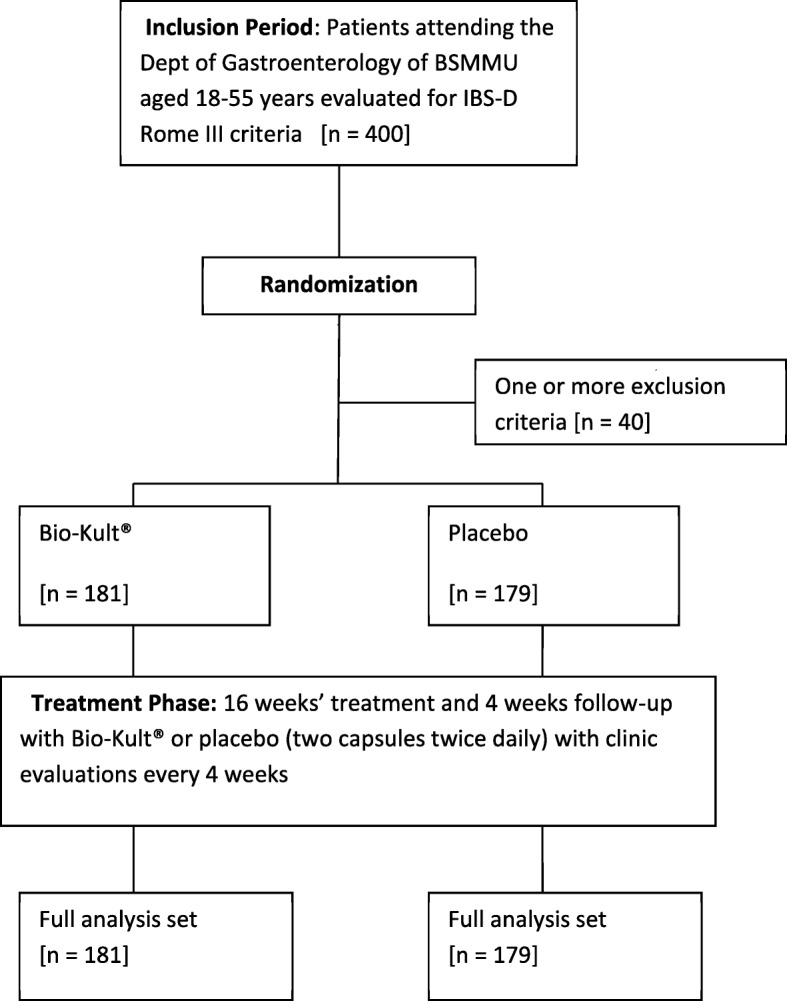
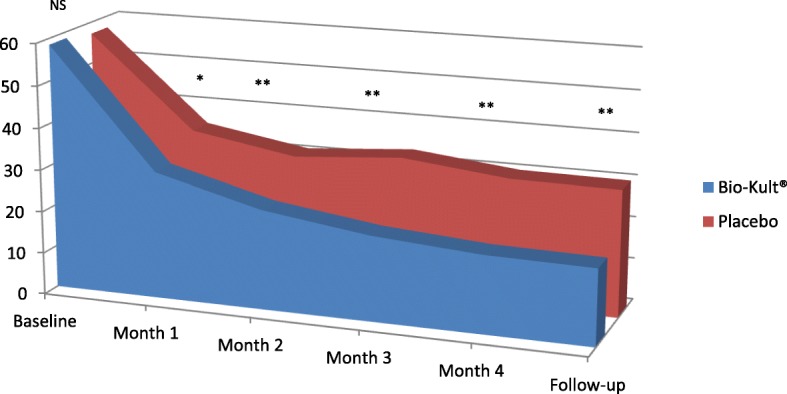
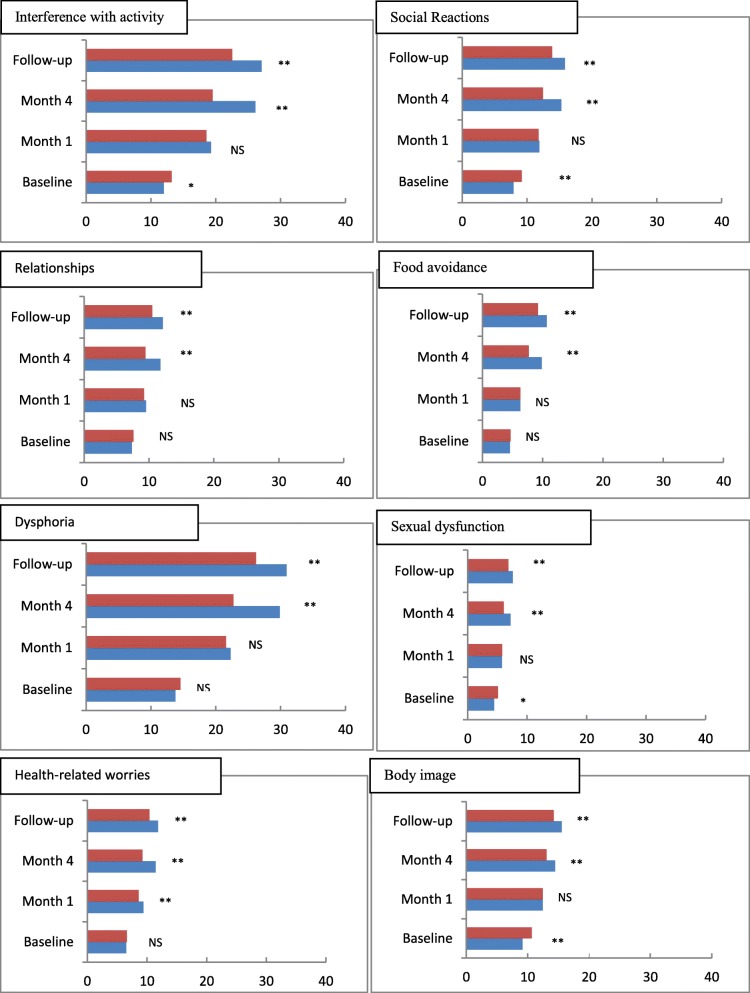
BACKGROUND: Accumulating evidence supports the view that an imbalance of gut bacteria contributes to IBS, and that increasing the mass of beneficial species may reduce the numbers of pathogenic bacteria and help alleviate symptoms. METHODS: In this double-blind trial 400 adult patients with moderate-to-severe symptomatic diarrhea-predominant IBS (IBS-D) were randomized to treatment with the multi-strain probiotic Bio-Kult® (14 different bacterial strains) or placebo for 16 weeks. The change in severity and frequency of abdominal pain was the primary outcome measure. RESULTS: Probiotic treatment significantly improved the severity of abdominal pain in patients with IBS-D. A 69% reduction for probiotic versus 47% for placebo (p < 0.001) equates to a 145 point reduction on the IBS-severity scoring system (IBS-SSS). The proportion of patients who rated their symptoms as moderate-to-severe was reduced from 100% at baseline to 14% for the multi-strain probiotic at follow-up (month 5) versus 48% for placebo (p < 0.001). Also, the number of bowel motions per day from month 2 onwards was significantly reduced in the probiotic group compared with the placebo group (p < 0.05). In addition to relieving symptoms, the probiotic markedly improved all dimensions of quality of life in the 34-item IBS-Quality of Life (IBS-QoL) questionnaire. No serious adverse events were reported. CONCLUSIONS: The multi-strain probiotic was associated with significant improvement in symptoms in patients with IBS-D and was well-tolerated. These results suggest that probiotics confer a benefit in IBS-D patients which deserves further investigation. TRIAL REGISTRATION: [Clinicaltrials.gov NCT03251625 ; retrospectively registered on August 9, 2017].
Overview
The claims and statistics of this paper haven’t been checked yet.
Free: it reads the open-access text and checks the first 5 claims that cite a source we can check. Create a free account to check every claim.
Integrity signals
Registry
Cites
Statistics
Figures
Verification
Claims the paper makes
The claims and statistics of this paper haven’t been checked yet.
Free: it reads the open-access text and checks the first 5 claims that cite a source we can check. Create a free account to check every claim.
Self-check
Percentages, sums and reported differences re-computed from the paper’s own numbers.
The self-check needs the paper’s full text.
Citations
Cites
Functional bowel disorders and functional abdominal pain
Thompson, W. G., Longstreth, G. F., Drossman, D. A., Heaton, K. W., Irvine, E. J., & Müller-Lissner, S. A. (1999) · Gut · doi:10.1136/gut.45.2008.ii43 · Cited by 2,440
Global Prevalence of and Risk Factors for Irritable Bowel Syndrome: A Meta-analysis
Lovell, R. M., & Ford, A. C. (2012) · Clinical Gastroenterology and Hepatology · doi:10.1016/j.cgh.2012.02.029 · Cited by 2,155 · cited 1×
“The prevalence of IBS varies between geographic regions and populations, and is also dependent upon the diagnostic criteria used [4].”
The microbiome and innate immunity
Thaiss, C. A., Zmora, N., Levy, M., & Elinav, E. (2016) · Nature · doi:10.1038/nature18847 · Cited by 2,012 · cited 1×
“It is undeniable that the gut microbiota has both direct and indirect effects on the immune system and inflammation [44, 45].”
The microbiota in adaptive immune homeostasis and disease
Honda, K., & Littman, D. R. (2016) · Nature · doi:10.1038/nature18848 · Cited by 1,846 · cited 1×
“It is undeniable that the gut microbiota has both direct and indirect effects on the immune system and inflammation [44, 45].”
FRANCIS, C. Y., MORRIS, J., & WHORWELL, P. J. (1997) · Alimentary Pharmacology & Therapeutics · doi:10.1046/j.1365-2036.1997.142318000.x · Cited by 1,708 · cited 3×
“The IBS-SSS is a 5-item instrument used to measure severity of abdominal pain, frequency of abdominal pain (number of days with abdominal pain over the last 10 days), severity of abdominal distension, dissatisfaction with bowel habits, and interference with quality of life, each on a 100-point scale [35].”
Towards positive diagnosis of the irritable bowel.
Manning, A. P., Thompson, W. G., Heaton, K. W., & Morris, A. F. (1978) · BMJ · doi:10.1136/bmj.2.6138.653 · Cited by 1,374
Irritable Bowel Syndrome: A Clinical Review
Chey, W. D., Kurlander, J., & Eswaran, S. (2015) · JAMA · doi:10.1001/jama.2015.0954 · Cited by 1,081
Gastrointestinal microbiome signatures of pediatric patients with irritable bowel syndrome
Saulnier, D. M., Riehle, K., Mistretta, T., Diaz, M., Mandal, D., Raza, S., Weidler, E. M., Qin, X., Coarfa, C., Milosavljevic, A., et al. (2011) · Gastroenterology · doi:10.1053/j.gastro.2011.06.072 · Cited by 672 · cited 1×
“A decreased abundance of Bifidobacterium and Lactobacillus species [22], and an increase in Gammaproteobacteria species (a family comprised of numerous pathogens) [23] is frequently reported in IBS studies.”
Irritable bowel syndrome in the general population.
Jones, R., & Lydeard, S. (1992) · BMJ · doi:10.1136/bmj.304.6819.87 · Cited by 636 · cited 1×
“Despite being highly symptomatic and negatively impacting the individual’s quality of life (QoL), it has been noted that only about one-third of patients present to their general practitioners [9].”
Sperber, A. D., Dumitrascu, D., Fukudo, S., Gerson, C., Ghoshal, U. C., Gwee, K. A., Hungin, A. P. S., Kang, J.-Y., Minhu, C., Schmulson, M., et al. (2017) · Gut · doi:10.1136/gutjnl-2015-311240 · Cited by 554 · cited 1×
“Background Irritable bowel syndrome (IBS) is a common highly prevalent functional gastrointestinal (GI) disorder that places an enormous burden on resource-challenged healthcare systems [1, 2].”
Research works printed but not linked: 1
- Drossman DA Richter JE Talley NJ The functional gastrointestinal bowel disorders, pathophysiology and treatment: a multinational consensus 1994 Boston Little Brown
Cited by
British Society of Gastroenterology guidelines on the management of irritable bowel syndrome
Vasant, D. H., Paine, P. A., Black, C. J., Houghton, L. A., Everitt, H. A., Corsetti, M., Agrawal, A., Aziz, I., Farmer, A. D., Eugenicos, M. P., et al. (2021) · Gut · doi:10.1136/gutjnl-2021-324598 · Cited by 592
World Gastroenterology Organisation Global Guidelines: Probiotics and Prebiotics
Guarner, F., Sanders, M. E., Szajewska, H., Cohen, H., Eliakim, R., Herrera-deGuise, C., Karakan, T., Merenstein, D., Piscoya, A., Ramakrishna, B., et al. (2024) · Journal of Clinical Gastroenterology · doi:10.1097/mcg.0000000000002002 · Cited by 209
Probiotics in Irritable Bowel Syndrome: An Up-to-Date Systematic Review
Dale, H. F., Rasmussen, S. H., Asiller, Ö. Ö., & Lied, G. A. (2019) · Nutrients · doi:10.3390/nu11092048 · Cited by 166
AGA Technical Review on the Role of Probiotics in the Management of Gastrointestinal Disorders
Preidis, G. A., Weizman, A. V., Kashyap, P. C., & Morgan, R. L. (2020) · Gastroenterology · doi:10.1053/j.gastro.2020.05.060 · Cited by 127
Johnson, D., Thurairajasingam, S., Letchumanan, V., Chan, K., & Lee, L. (2021) · Nutrients · doi:10.3390/nu13051728 · Cited by 139
Efficacy and Safety of Probiotics in Irritable Bowel Syndrome: A Systematic Review and Meta-Analysis
Li, B., Li, L., Deng, H., Guo, J., Shu, H., & Zhang, L. (2020) · Frontiers in Pharmacology · doi:10.3389/fphar.2020.00332 · Cited by 111
“…to the East Asian group; one trials (Niv et al., 2005) in Israel and one trials (Faghihi et al., 2015) in Iran to the West Asian group; and one trials (Ishaque et al., 2018) in Bangladesh to the South Asian group; and one trials (Stevenson et al., 2014) in South Africa to the South Africa group.”
InfluentialSkrzydło-Radomańska, B., Prozorow-Król, B., Cichoż‐Lach, H., Majsiak, E., Bierła, J. B., Kanarek, E., Sowińska, A., & Cukrowská, B. (2021) · Nutrients · doi:10.3390/nu13030756 · Cited by 103
“The study included female and male patients aged 18–70 years diagnosed with IBS-D according to the Rome III criteria [31], which means they passed at least one stool assessed in Bristol Stool Form Scale as type 5, 6, or 7 for at least 2 days a week [32].”
InfluentialProbiotics: Current Landscape and Future Horizons
Day, R. L., Harper, A. J., Woods, R. M., Davies, O. G., & Heaney, L. M. (2019) · Future Science OA · doi:10.4155/fsoa-2019-0004 · Cited by 106
Gupta, A. K., & Maity, C. (2021) · Medicine · doi:10.1097/md.0000000000023641 · Cited by 103
“Similarly, a multistrain probiotic Bio-Kult (14 different bacterial strains) also showed an improvement of 69% IBS-SSS compared to placebo (47%) after 16 weeks.([51]) Though a randomized triple-blind trial (n=340) conducted by Lyra et al([49]) which reported on relief of IBS severity in all three groups, viz, placebo,…”
Napolitano, M., Fasulo, E., Ungaro, F., Massimino, L., Sinagra, E., Danese, S., & Mandarino, F. V. (2023) · Microorganisms · doi:10.3390/microorganisms11102369 · Cited by 110
Asha, M. Z., & Khalil, S. F. H. (2020) · Sultan Qaboos University medical journal · doi:10.18295/squmj.2020.20.01.003 · Cited by 100
Cangemi, D. J., & Lacy, B. E. (2019) · Therapeutic Advances in Gastroenterology · doi:10.1177/1756284819878950 · Cited by 75
Gut Microbiota in NSAID Enteropathy: New Insights From Inside
Wang, X., Tang, Q., Hou, H., Zhang, W., Li, M., Chen, D., Gu, Y., Wang, B., Hou, J., Liu, Y., et al. (2021) · Frontiers in Cellular and Infection Microbiology · doi:10.3389/fcimb.2021.679396 · Cited by 86
“It has been documented that probiotics and prebiotics had a potential therapeutic effect in inflammatory bowel disease and irritable bowel syndrome (Segarra et al., 2016; Ishaque et al., 2018; Ballini et al., 2019).”
Yang, B. K., Yue, Y., Chen, Y., Ding, M., Li, B., Wang, L., Wang, Q., Stanton, C., Ross, R. P., Zhao, J., et al. (2021) · Frontiers in Immunology · doi:10.3389/fimmu.2021.746585 · Cited by 90
“Probiotics have shown the potential to alleviate the clinical symptoms of chronic diarrhea (22, 23).”
Effects of therapeutic probiotics on modulation of microRNAs
Davoodvandi, A., Marzban, H., Goleij, P., Sahebkar, A., Morshedi, K., Rezaei, S., Mahjoubin‐Tehran, M., Tarrahimofrad, H., Hamblin, M. R., & Mirzaei, H. (2021) · Cell Communication and Signaling · doi:10.1186/s12964-020-00668-w · Cited by 73
Varesi, A., Deumer, U.-S., Ananth, S. V., & Ricevuti, G. (2021) · Journal of Clinical Medicine · doi:10.3390/jcm10215077 · Cited by 73
Srivastava, S., Basak, U. O., Naghibi, M., Vijayakumar, V., Parihar, R., Patel, J. A., Jadon, P., Pandit, A., Dargad, R., Khanna, S., et al. (2024) · Gut Microbes · doi:10.1080/19490976.2024.2338322 · Cited by 80
“However, to our knowledge, this is the first RCT to demonstrate that the same strain of Bifidobacterium longum in both live probiotic and heat-treated postbiotic form is effective in reducing symptom severity in adults with IBS-D, highlighting the potential for use of these pro-and post-biotics in this population.”
Xu, H., Ma, C., Zhao, F., Chen, P., Liu, Y., Sun, Z., Cui, L., Kwok, L. Y., & Zhang, H. (2020) · European Journal of Nutrition · doi:10.1007/s00394-020-02437-4 · Cited by 64
Helmy, E. A. M., Soliman, S. A., Abdelghany, T. M., & Ganash, M. (2019) · Heliyon · doi:10.1016/j.heliyon.2019.e01649 · Cited by 68
“boulardii counting for their killer toxins and antimicrobial activities [18, 19, 20], indicated that S.”
Gut Microbiome and Modulation of CNS Function
Osadchiy, V., Martin, C. R., & Mayer, E. A. (2019) · Comprehensive Physiology · doi:10.1002/cphy.c180031 · Cited by 53
“A large ( n = 400) double-blind study evaluating a multistrain probiotic identified significant improvement of symptom severity and quality of life in the treatment group compared to placebo, but placebo showed improvement in these outcomes as well (65).”
Probiotics, Prebiotics, and Synbiotics in the Irritable Bowel Syndrome Treatment: A Review
Chlebicz-Wójcik, A., & Śliżewska, K. (2021) · Biomolecules · doi:10.3390/biom11081154 · Cited by 62
Xie, P., Luo, M., Deng, X., Fan, J., & Xiong, L. (2023) · Nutrients · doi:10.3390/nu15173856 · Cited by 50
Efficacy and safety of probiotics in irritable bowel syndrome: A systematic review and meta-analysis
Jia, L.-Q., Sun, J.-R., Kong, C.-F., Qu, X.-K., Deng, C., & Lou, Y.-N. (2020) · Saudi Journal of Gastroenterology · doi:10.4103/sjg.sjg_384_19 · Cited by 40
Irritable bowel syndrome: diagnosis and management
Masuy, I., Pannemans, J., & Tack, J. F. (2020) · Minerva Gastroenterologica e Dietologica · doi:10.23736/s1121-421x.19.02640-0 · Cited by 50
Hathi, Z. J., Mettu, S., Priya, A., Athukoralalage, S. S. A., Lam, T. N., Choudhury, N. R., Dutta, N. K., El-Omar, E. M., Gong, L., Mohan, G., et al. (2021) · Biochemical Engineering Journal · doi:10.1016/j.bej.2021.108199 · Cited by 47
Wu, Y., Fenfen, E., Wang, Y., Xu, M., Liu, S., Zhou, L., Song, G., Shang, X., Yang, C., Yang, K., et al. (2023) · Internet Interventions · doi:10.1016/j.invent.2023.100673 · Cited by 50
Gut microbiota and irritable bowel syndrome: status and prospect
Cheng, X., Ren, C., Mei, X., Jiang, Y., & Zhou, Y. (2024) · Frontiers in Medicine · doi:10.3389/fmed.2024.1429133 · Cited by 53
Sarkawi, M., Ali, R. A. R., Wahab, N. A., Rathi, N. D. M., & Mokhtar, N. M. (2024) · Scientific Reports · doi:10.1038/s41598-024-60029-2 · Cited by 44
“The findings were consistent with a prior trial of a 4-week placebo programme that successfully improved dysphoria and health worry aspects in IBS patients 23 .”
An Overview of Gut Microbiota and Colon Diseases with a Focus on Adenomatous Colon Polyps
Pop, O. L., Vodnar, D. C., Diaconeasa, Z. M., Istrati, M., Bințințan, A., Bintintan, V. V., Suharoschi, R., & Gabbianelli, R. (2020) · International Journal of Molecular Sciences · doi:10.3390/ijms21197359 · Cited by 37
“Bio-Kult® (14 different bacterial strains) Capsule; x 2/d for 4 wk The change in severity and frequency of abdominal pain on the IBS-severity scoring system (IBS-SSS) The change in other gastrointestinal symptom severity scores on the IBS-SSS, Quality of Life (QoL) [101]”
How can probiotic improve irritable bowel syndrome symptoms?
Horvat, I. B., Gobin, I., Kresović, A., & Hauser, G. (2021) · World Journal of Gastrointestinal Surgery · doi:10.4240/wjgs.v13.i9.923 · Cited by 40
Wang, M., Feng, X., Zhao, Y., Lan, Y., & Xu, H. (2023) · Food & Function · doi:10.1039/d3fo03585a · Cited by 37
Bacterial live therapeutics for human diseases
Frutos-Grilo, E., Ana, Y., Miguel, J. G.-D., Cardona-I-Collado, M., Rodríguez-Arce, I., & Serrano, L. (2024) · Molecular Systems Biology · doi:10.1038/s44320-024-00067-0 · Cited by 40
“Bio-Kult ® , a mix of 14 bacterial strains, was tested in patients with diarrhea-predominant IBD, signi fi cantly reducing abdominal pain, symptoms, and bowel motions per day without serious adverse events (NCT03251625) (Ishaque et al, 2018).”
An, J., Kim, H., & Yang, K. M. (2020) · Journal of Microbiology and Biotechnology · doi:10.4014/jmb.1912.12054 · Cited by 33
Fijan, S., Kocbek, P., Steyer, A., Vodičar, P. M., & Strauss, M. (2022) · Microorganisms · doi:10.3390/microorganisms10122518 · Cited by 38
Rawla, P., Sunkara, T., & Raj, J. P. (2018) · Life Sciences · doi:10.1016/j.lfs.2018.10.001 · Cited by 33
Dietary and Nutritional Interventions in Nonalcoholic Fatty Liver Disease in Pediatrics
Farías, C., Cisternas, C., Gana, J. C., Alberti, G., Echeverría, F., Videla, L. A., Mercado, L., Muñoz, Y., & Valenzuela, R. (2023) · Nutrients · doi:10.3390/nu15224829 · Cited by 30
Naghibi, M., Pont-Beltran, A., Lamelas, A., Llobregat, L., Martínez-Blanch, J. F., Rojas, A., Álvarez, B., Plaza, B. L., Arcos-Castellanos, L., Chenoll, E., et al. (2024) · Nutrients · doi:10.3390/nu16223952 · Cited by 29
Boucard, A.-S., Florent, I., Polack, B., Langella, P., & Bermúdez‐Humarán, L. G. (2022) · Microorganisms · doi:10.3390/microorganisms10020273 · Cited by 27
“Many studies have demonstrated the beneficial effects of probiotics in a wide range of conditions, such as irritable bowel syndrome (IBS) [3], cancer [4], food allergy [5], metabolic syndrome [6], inflammatory bowel disease (IBD) [7], depression [8], Clostridioides difficile infection [9] and Giardia infection [10], a…”
Rodenes-Gavidia, A., Lamelas, A., Bloor, S., Hobson, A. R., Treadway, S., Haworth, J. J., Vijayakumar, V., Naghibi, M., Day, R. O., & Chenoll, E. (2023) · Frontiers in Cellular and Infection Microbiology · doi:10.3389/fcimb.2023.1240267 · Cited by 24
Accomplishment of probiotics in human health pertaining to immunoregulation and disease control
Varsha, K. K., Arun Padmakumar, M., & Nampoothiri, K. M. (2021) · Clinical Nutrition ESPEN · doi:10.1016/j.clnesp.2021.06.020 · Cited by 28
ALZHEIMER’S DISEASE AND ITS RELATIONSHIP WITH THE MICROBIOTA-GUT-BRAIN AXIS
Faulin, T. D. E. S., & Estadella, D. (2023) · Arquivos de Gastroenterologia · doi:10.1590/s0004-2803.202301000-17 · Cited by 30
“There are studies that demonstrate the benefits of probiotics in gastrointestinal diseases, such as the improvement of symptoms in patients with irritable bowel syndrome (93,94) and prevention of diarrhea caused by Clostridium difficile in patients on antibiotic therapy (95) .”
Pagliai, G., Coman, M. M., Baldi, S., Dinu, M., Nannini, G., Russo, E., Curini, L., Colombini, B., Lotti, S., Pallecchi, M., et al. (2023) · Frontiers in Nutrition · doi:10.3389/fnut.2023.1142527 · Cited by 22
Zheng, Y., Xu, L., Zhang, S., Liu, Y., Ni, J., & Xiao, G. (2023) · Frontiers in Nutrition · doi:10.3389/fnut.2023.1196625 · Cited by 18
Martoni, C., Srivastava, S., Damholt, A. B., & Leyer, G. J. (2023) · World Journal of Gastroenterology · doi:10.3748/wjg.v29.i28.4451 · Cited by 31
Lactic Acid Bacteria: Lactobacillus acidophilus
Özoğul, F., Yazgan, H., & Özoğul, Y. (2020) · Elsevier eBooks · doi:10.1016/b978-0-12-818766-1.00015-5 · Cited by 21
Abdellah, S. A., Gal, C., Laterza, L., Velenza, V., Settanni, C. R., Napoli, M., Schiavoni, E., Mora, V., Petito, V., & Gasbarrini, A. (2022) · Digestive Diseases · doi:10.1159/000526712 · Cited by 17
Löwe, B., Nestoriuc, Y., Andresen, V., Vettorazzi, E., Zapf, A., Hübener, S., Maehder, K., Peters, L., & Lohse, A. W. (2022) · BMJ Open · doi:10.1136/bmjopen-2021-059529 · Cited by 15
Matsuura, N., Kanayama, M., Watanabe, Y., Yamada, H., Lili, L., & Torii, A. (2024) · Nutrients · doi:10.3390/nu16193333 · Cited by 20
Kemppinen, A., Howell, C., Allgar, V., Dodd, M., Gregson, J., Knowles, C., McLaughlin, J., Pandya, P., Whorwell, P., Markaryan, E., et al. (2020) · Trials · doi:10.1186/s13063-020-4069-x · Cited by 14
Al-Qysi, L., Mohammad, M., Al-iedani, A., & AbuKhader, M. (2020) · PharmaNutrition · doi:10.1016/j.phanu.2020.100202 · Cited by 18
Evaluation of the efficacy of probiotics as treatment in irritable bowel syndrome
Ruiz-Sánchez, C., Escudero‐López, B., & Fernández‐Pachón, M. (2024) · Endocrinología Diabetes y Nutrición (English ed ) · doi:10.1016/j.endien.2024.01.003 · Cited by 18
The efficacy of probiotics in the management of intra-oral halitosis: a systematic review
Tay, J. R. H., Ng, E., Lai, C. W. M., Lim, L. P., & Ong, M. M. A. (2022) · Clinical Oral Investigations · doi:10.1007/s00784-022-04522-w · Cited by 15
Meta-analysis of the efficacy of probiotics to treat diarrhea
Wang, F., Zhao, T., Wang, W., Dai, Q., & Ma, X. (2022) · Medicine · doi:10.1097/md.0000000000030880 · Cited by 14
“Ishaque et al 2018([29]) Dhaka, Bangladesh, 181/179 T:136/45”
Umeano, L., Iftikhar, S., Alhaddad, S. F., Paulsingh, C. N., Riaz, M. F., Garg, G., & Mohammed, L. (2024) · Cureus · doi:10.7759/cureus.58306 · Cited by 18
A long journey to treat epilepsy with the gut microbiota
Li, Q., Gu, Y., Liang, J., Yang, Z., & Qin, J. (2024) · Frontiers in Cellular Neuroscience · doi:10.3389/fncel.2024.1386205 · Cited by 15
Lei, Y., Sun, X., Ruan, T., Lu, W., Deng, B., Zhou, R., & Mu, D. (2025) · Nutrition Reviews · doi:10.1093/nutrit/nuae217 · Cited by 14
Rahmani, P., Moradzadeh, A., & Farahmand, F. (2019) · PharmaNutrition · doi:10.1016/j.phanu.2019.100164 · Cited by 11
Wu, X., Cao, Y., Liu, Y., & Zheng, J. (2024) · Nutrients · doi:10.3390/nu16183192 · Cited by 12
Gendi, R., & Jahan, N. (2020) · Cureus · doi:10.7759/cureus.9324 · Cited by 15
Marchix, J., Quénéhervé, L., Bordron, P., Aubert, P., Durand, T., Oullier, T., Blondeau, C., Abdellah, S. A., Varannes, S. B. D., Chaffron, S., et al. (2023) · Microorganisms · doi:10.3390/microorganisms11020277 · Cited by 9
“The clinical results are consistent with those of previous studies evaluating the combinations of several probiotic strains, some specifically in IBS-D patients [11,31,32].”
Controlling Intestinal Infections and Digestive Disorders Using Probiotics
Kumar, S., Ahmad, M. F., Nath, P., Roy, R., Bhattacharjee, R., Shama, E., Gahatraj, I., Sehrawat, M., Dasriya, V. L., Dhillon, H. S., et al. (2023) · Journal of Medicinal Food · doi:10.1089/jmf.2023.0062 · Cited by 11
Nobre, L. M. S., Fernandes, C., Florêncio, K. G. D., de Alencar, N. M. N., Wong, D. V. T., & Lima‐Júnior, R. C. P. (2022) · Brazilian Journal of Medical and Biological Research · doi:10.1590/1414-431x2022e12522 · Cited by 14
Sun, J., Zhang, M., Liu, W., Liu, Y., Zhang, D., Fan, X., Zhang, J., Li, T. X., & Lü, M. (2023) · Frontiers in Microbiology · doi:10.3389/fmicb.2023.1160783 · Cited by 11
Molino, S., Lellis, L. F. D., Morone, M. V., Cordara, M., Larsen, D. S., Piccinocchi, R., Piccinocchi, G., Baldi, A., Minno, A. D., El-Seedi, H. R., et al. (2025) · Nutrients · doi:10.3390/nu17030552 · Cited by 10
“Other treatments based on nutritional interventions such as dietary plans (i.e., FODMAPs) [6] or probiotics [31–34] may also partly rely on the rationale of restoring a healthy microbiota; however, the supplement tested in this study also combines specific action on intestinal permeability and…”
Bang, W. Y., Moon, J. S., Kim, H., Lee, H. B., Kim, D.-G., Shin, M., Jung, Y. H., Shin, J., & Yang, J. (2025) · Microorganisms · doi:10.3390/microorganisms13102283 · Cited by 10
The Science behind Probiotics: Exploring their Mechanisms and Therapeutic Potential
Entezami, A., & Zarrini, G. (2025) · Probiotics and Antimicrobial Proteins · doi:10.1007/s12602-025-10820-y · Cited by 9
Probiotics and Prebiotics for the Treatment of Irritable Bowel Syndrome—A Narrative Review
Lopes, C. M., Monteiro, C. S. D. J., Duarte, A. P., & dos Santos, J. L. (2024) · Journal of Clinical Medicine · doi:10.3390/jcm13216337 · Cited by 8
Stemboroski, L. N., & Schey, R. (2020) · Gastroenterology Clinics of North America · doi:10.1016/j.gtc.2020.05.001 · Cited by 6
Research status and development trends of probiotics in clinical applications
Li, Y., Yao, Y., Zhang, Z., & Gan, Y. (2025) · Frontiers in Nutrition · doi:10.3389/fnut.2025.1650883 · Cited by 13
Tang, A. S. P., Quek, J., Sulaimi, F., Sim, B., Kai, T. O. S., Soon, E. Y., Goh, C. N., Hsu, J. L. J., Lee, C. K. L., Chong, S. K. S., et al. (2026) · Journal of Gastroenterology and Hepatology · doi:10.1111/jgh.70322 · Cited by 8
Bineid, M. M., Liu, L., Ventura, E. F., Bansal, S., Curi-Quinto, K., del Valle-Mendoza, J., Walton, G., & Vimaleswaran, K. S. (2025) · Gut Microbiome · doi:10.1017/gmb.2024.12 · Cited by 9
Mohammed, C., Fuego, J. P., Garcia, K. V., Jamil, H., Rajesh, R. Y., Escobar, A. S., Hassan, M. J., & Rai, M. (2024) · Cureus · doi:10.7759/cureus.57055 · Cited by 9
“When patients received multi-strain antibiotic treatment, two investigations found no negative side effects [13,16].”
Boucard, A.-S., Kulakauskas, S., Alazzaz, J., Chaouch, S., Mammeri, M., Millán-Oropeza, A., Rodrigues, C. M., Henry, C., Péchoux, C., Richly, H., et al. (2025) · Gut Microbes · doi:10.1080/19490976.2025.2474149 · Cited by 8
Probiotic therapy in patients with irritable bowel syndrome: does it have a real role?
Montasser, I. F., ElGindy, E. M., Abdel-Samie, O. A. M., & Aly, H. I. S. (2021) · The Egyptian Journal of Internal Medicine · doi:10.1186/s43162-021-00051-2 · Cited by 6
Why Use Nutraceutical Strategies for the Irritable Bowel Syndrome?
di Michele, F. (2021) · Current Medicinal Chemistry · doi:10.2174/0929867328666210917115255 · Cited by 5
Poortmans, P. J., & Kindt, S. (2020) · VUBIR (Vrije Universiteit Brussel) · Cited by 9
Rokkas, T., Ekmektzoglou, K. A., Tsanou, E., Bricca, L., Menni, A.-E., Golfakis, P., & Kotzampassi, K. E. (2025) · European Journal of Gastroenterology & Hepatology · doi:10.1097/meg.0000000000003062 · Cited by 7
Oh, C. K., Park, J.-K., Kim, Y. J., & Kim, J. (2023) · Medicine · doi:10.1097/md.0000000000034899 · Cited by 4
Almabruk, B. A., Bajafar, A. A., Mohamed, A., Al-Zahrani, S. A., Albishi, N. M., Aljarwan, R. M., Aljaser, R. A., Alghamdi, L. I., Almutairi, T., Alsolami, A. S., et al. (2024) · Cureus · doi:10.7759/cureus.75954 · Cited by 10
Modern aspects of the management of patients with irritable bowel syndrome
Tsukanov, V. V., Vasyutin, A. V., & Tonkikh, Y. L. (2021) · Meditsinskiy sovet = Medical Council · doi:10.21518/2079-701x-2021-5-22-28 · Cited by 5
Anwar, D. F. F., Salma, Z. N., Oktaviani, S. D., Adiyatma, F. N., Tauhid, F. M., Mustofa, A., Saputra, P. B. T., Karimah, R., & Alkaff, F. F. (2025) · European Journal of Gastroenterology & Hepatology · doi:10.1097/meg.0000000000003074 · Cited by 3
Gut-brain axis targeting postbiotics for treatment of psychological and neurodegenerative disorders
Kamath, S., Sun, Y.-H., Wardill, H. R., & Joyce, P. M. (2026) · Food Bioscience · doi:10.1016/j.fbio.2026.108950 · Cited by 4
Panova, L. D. (2021) · Meditsinskiy sovet = Medical Council · doi:10.21518/2079-701x-2021-1-220-226 · Cited by 3
Shanshal, S. A., Alsaaty, M. H., Al-Qazaz, H., & Al-Zidan, R. N. (2023) · Česká a slovenská farmacie · doi:10.5817/csf2023-5-233 · Cited by 9
When to use probiotics in luminal gastrointestinal disorders?
Elangovan, A., & Fischer, M. (2020) · Current Opinion in Clinical Nutrition & Metabolic Care · doi:10.1097/mco.0000000000000674 · Cited by 4
Probiotics in current medical practice: From myths to scientific evidence
Plotnikova, E. Y., & Zakharova, Y. V. (2025) · Meditsinskiy sovet = Medical Council · doi:10.21518/ms2025-278 · Cited by 5
Tjandrawinata, R. R., Kartawijaya, M., Hartanti, A. W., & Hadianta, R. (2023) · Food Science and Technology · doi:10.5327/fst.129522 · Cited by 2
Yin, Y., & Fan, C.-F. (2023) · Patient Preference and Adherence · doi:10.2147/ppa.s438190 · Cited by 2
“17 However, the GI microbiota is related to GI motility, which may consequently lead to EFI; 18,19 (3) Mukbang watching makes viewers feel accompanied and alleviates loneliness and social isolation.”
B. subtilis Probiotics for Humans, Animals and Plants: Mechanisms, Applications and Prospects
Ergün, D., Tartar, G., & Karataş, A. Y. (2024) · IntechOpen eBooks · doi:10.5772/intechopen.1007721 · Cited by 3
Han, Y., Srinivasan, S., & Yun, C. C. (2023) · American Journal of Physiology-Endocrinology and Metabolism · doi:10.1152/ajpendo.00145.2023 · Cited by 2
Importance of the Microbiota in Early Life and Influence on Future Health
Collins, J. M., Cryan, J. F., & O’Mahony, S. M. (2024) · Elsevier eBooks · doi:10.1016/b978-0-323-99971-7.00017-5 · Cited by 3
Exploring the Health Benefits of Probiotics: Current Insights and Therapeutic Applications
Chandrasekaran, S., & Manoharan, K. (2026) · Biosciences Biotechnology Research Asia · doi:10.13005/bbra/3485 · Cited by 1
Biotic therapies for irritable bowel syndrome: current interventions
Wodarczyk, G., Winte, M. F., Mastellone, D., Singh, T., DeSipio, J., & Phadtare, S. (2026) · Gastroenterology report · doi:10.1093/gastro/goag062 · Cited by 1
“…· Did not improve quality of life according to IBS-QoL ( P =0.810) Lactobacillus , Bifidobacterium , Lactococcus , and Streptococcus · 360 adults [48] · IBS-D according to Rome III criteria · · 1mL/kg/day (with 50mL= 10 billion CFUs) for 12weeks · Follow-up for 4weeks · Reduced symptom severity…”
InfluentialZhong, J., Xu, Z., Chen, W., Jiang, Y., Ge, Q., Deng, Y., He, W., Mao, X., 朱雅碧, Sang, J., et al. (2026) · Journal of Gastroenterology and Hepatology · doi:10.1111/jgh.70672 · Cited by 1
Evaluation of Probiotics and Safety Concerns
Singh, B., Mal, G., Kalra, R. S., & Marotta, F. (2024) · Springer eBooks · doi:10.1007/978-3-031-65459-6_33 · Cited by 2
Probióticos en el síndrome de intestino irritable con predominio de diarrea
Camina, M., Alvarez, A. E. M., & Franco, J. V. A. (2020) · Evidencia actualizacion en la práctica ambulatoria · doi:10.51987/evidencia.v23i1.4274 · Cited by 2
Tripathy, S., Patel, A. R., Verma, D. K., Sıngh, S., Utama, G. L., Thakur, M., Niamah, A. K., Shah, N., Al‐Sahlany, S. T. G., Srivastav, P. P., et al. (2023) · Wiley eBooks · doi:10.1002/9781119874096.ch21 · Cited by 1
Cámara-Gómez, M., González-Centeno, R., & Ávila‐Escalante, M. L. (2023) · REVMEDUAS · doi:10.28960/revmeduas.2007-8013.v13.n3.013 · Cited by 1
Evaluación de la eficacia de los probióticos como tratamiento en el síndrome del intestino irritable
Ruiz-Sánchez, C., Escudero‐López, B., & Fernández‐Pachón, M. (2023) · Endocrinología Diabetes y Nutrición · doi:10.1016/j.endinu.2023.11.003 · Cited by 2
Metadata
- Authors
- Ishaque, S. M., Khosruzzaman, S. M., Ahmed, D. S., & Sah, M. P.
- Affiliations
- Bangladesh Medical University (BD)
- Corresponding author
- Ishaque, Shamsuddin M.
- Venue
- BMC Gastroenterology
- Published
- 2018-05-25
- Volume
- 18
- Issue
- 1
- Pages
- 71-71
- ISSN
- 1471-230X (ISSN-L)
- PMC
- PMC5970461
- OpenAlex
- W2807175397
- Cited by
- 109
- References
- 44
- Citations by year
- 2026: 11 · 2025: 10 · 2024: 19 · 2023: 22 · 2022: 7 · 2021: 16 · 2020: 16 · 2019: 7 · 2018: 1
- FWCI
- 9.53
- Type
- journal article
- Language
- en
- Open access
- gold
- doi.org
- Licence
- cc-by
- creativecommons.org/licenses/by/4.0/ (tdm)
- Locations
- BMC Gastroenterology (publishedVersion, cc-by)
- Europe PMC (PubMed Central) (publishedVersion, other-oa)
- PubMed Central (publishedVersion, cc-by)
- PubMed (publishedVersion)
- DOAJ (DOAJ: Directory of Open Access Journals) (submittedVersion, cc-by-sa)
- Topics
- Health Sciences › Medicine › Gastroenterology › Gastrointestinal motility and disorders
- Life Sciences › Agricultural and Biological Sciences › Food Science › Probiotics and Fermented Foods
- Life Sciences › Biochemistry, Genetics and Molecular Biology › Molecular Biology › Gut microbiota and health
- Keywords
- probiotics, multi-strain probiotics, diarrhea-predominant irritable bowel syndrome, abdominal pain, stool frequency, quality of life, gut microbiota, IBS symptom severity
- MeSH terms
- Gastrointestinal Microbiome, Adolescent, Adult, Diarrhea, Double-Blind Method, Female, Humans, Male, Middle Aged, Quality of Life, Severity of Illness Index, Abdominal Pain, Probiotics, Irritable Bowel Syndrome, Young Adult
About these checks
Registry, retraction, Cites and statistics results are computed, not judged, with one exception: a printed reference that no index lists is read once by a model before it counts as a citation error. Claims are extracted by a model and kept only when their quote appears verbatim in the text; each cited source is then checked, with a model’s help, for whether it says what the claim relies on. Those verdicts can be wrong — read the claim’s quote and the cited source before relying on one.
Statistics and arithmetic are recomputed, not judged.
Confidence bands are shown only for fields calibrated on our annotated test set. None is calibrated yet, so no band is shown.
What counts as a claim ›How we measure confidence ›How we check this ›
Are you an author, or do you see a problem with this page? Request a review
Data sources
Bibliographic data: Semantic Scholar, OpenAlex, Crossref.
Contains information from the Semantic Scholar Academic Graph Datasets, made available under the ODC Attribution License (ODC-BY 1.0).
Semantic Scholar’s data is described in: Kinney, R., et al. (2023). The Semantic Scholar Open Data Platform. arXiv:2301.10140.
