

Carbon tetrachloride (CCl4) accelerated development of non-alcoholic fatty liver disease (NAFLD)/steatohepatitis (NASH) in MS-NASH mice fed western diet supplemented with fructose (WDF)
Open accessPublished version of a preprint
The DOI matches its Crossref record; 49 of the 49 references it cites were found in a registry or an index.
Abstract
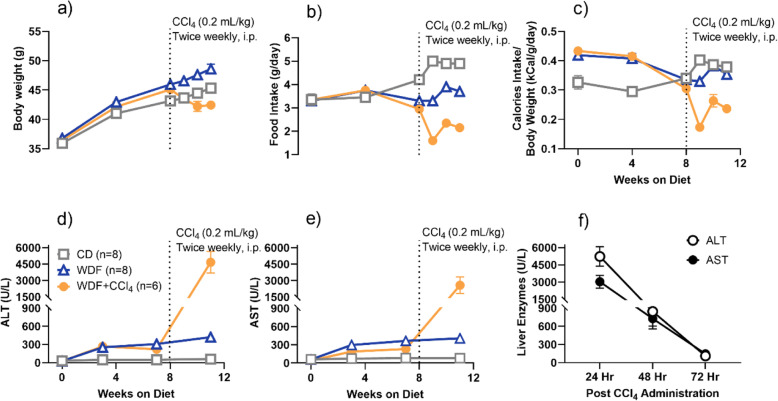
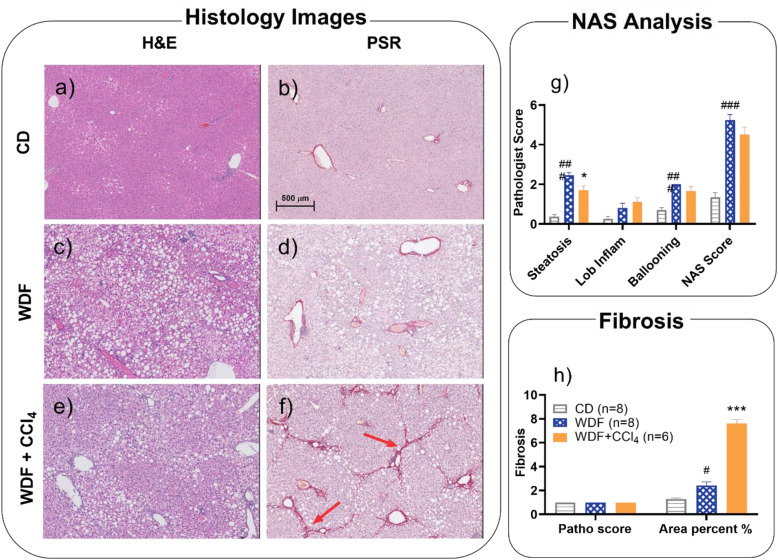
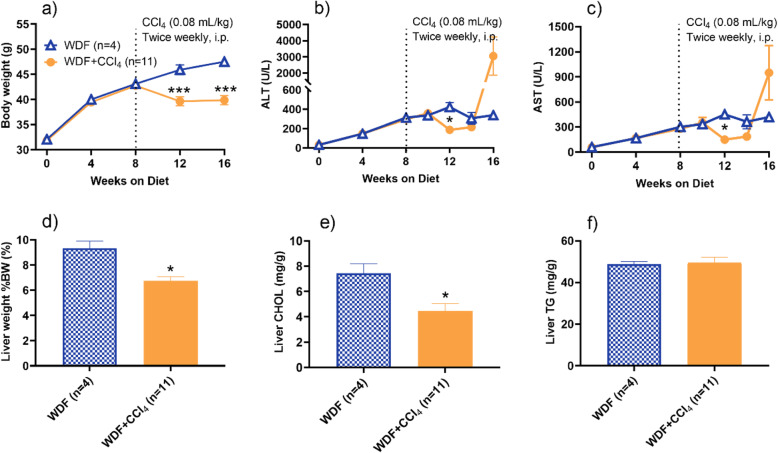
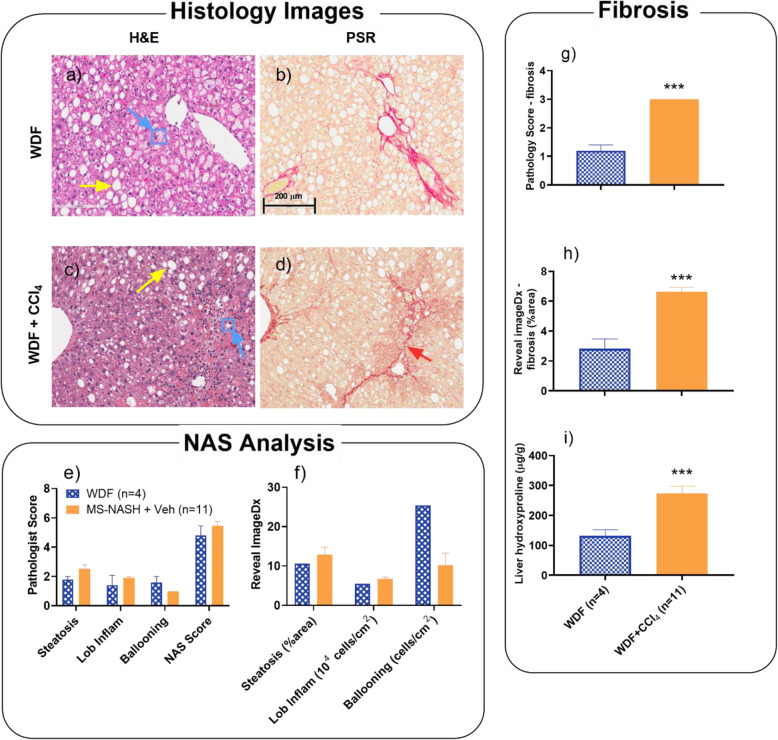
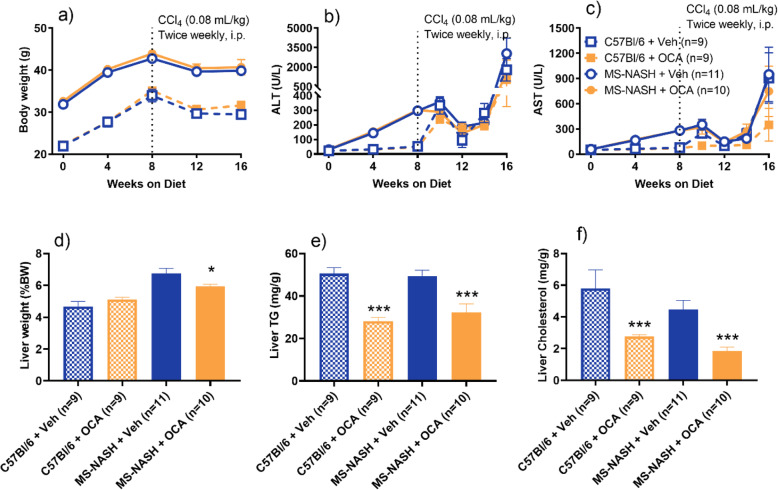
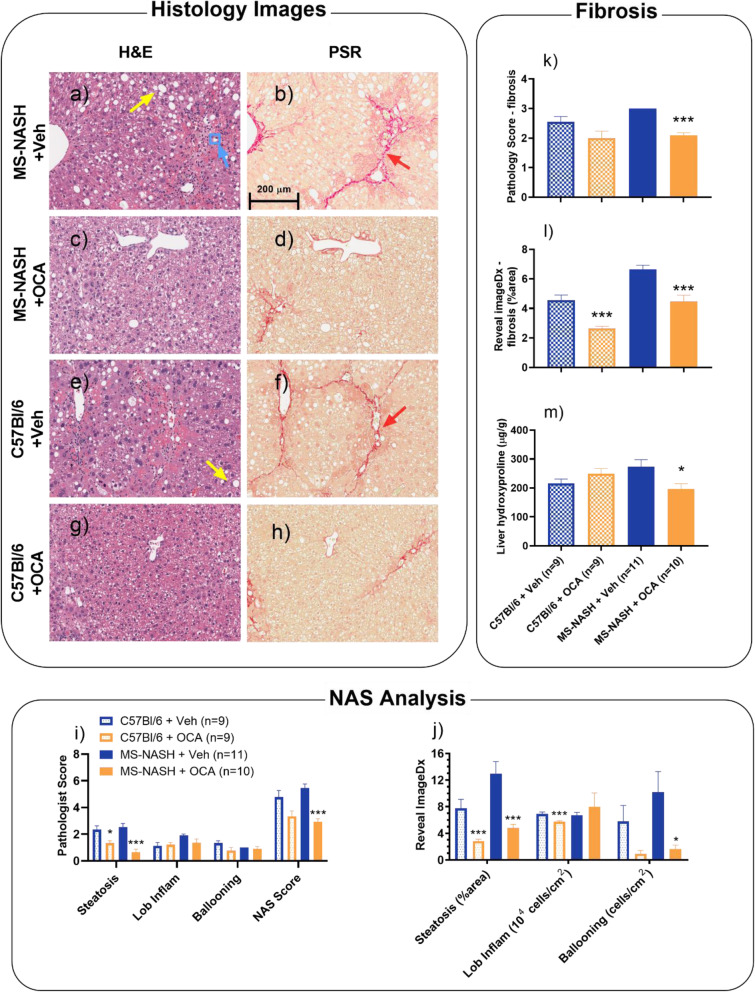
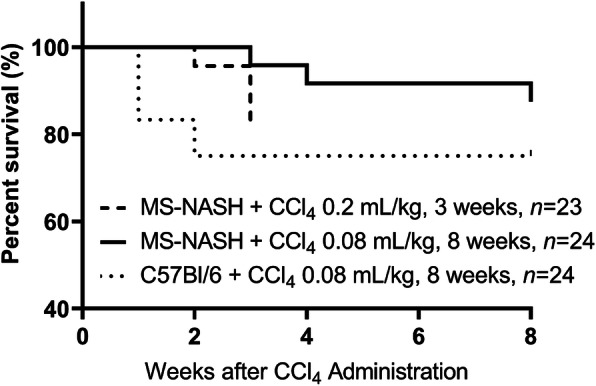
Background: Multiple murine models of nonalcoholic fatty liver disease/steatohepatitis (NAFLD/NASH) have been established by using obesogenic diets and/or chemical induction. MS-NASH mouse (formally FATZO) is a spontaneously developed dysmetabolic strain that can progress from hepatosteatosis to moderate fibrosis when fed a western diet supplemented with 5% fructose (WDF). This study aimed to use carbon tetrachloride (CCl 4 ) to accelerate and aggravate progression of NAFLD/NASH in MS-NASH mouse. Methods: Male MS-NASH mice at 8 weeks of age were fed WDF for the entire study. Starting at 16 weeks of age, CCl 4 was intraperitoneally administered twice weekly at a dose of 0.2 mL/kg for 3 weeks or 0.08 mL/kg for 8 weeks. Obeticholic acid (OCA, 30 mg/kg, QD) was administered in both MS-NASH and C57Bl/6 mice fed WDF and treated with CCl 4 (0.08 mL/kg). Results: WDF enhanced obesity and hepatosteatosis, as well as induced moderate fibrosis in MS-NASH mice similar to previous reports. Administration of CCl 4 accelerated liver fibrosis with increased bridging and liver hydroxyproline contents, but had no significant impact on liver steatosis and lipid contents. High dose CCl 4 caused high mortality and dramatic elevation of ALT and ASL, while low dose CCl 4 resulted in a moderate elevation of ALT and AST with low mortality. Compared to C57BI/6 mice with WDF and CCl 4 (0.08 mL/kg), MS-NASH mice had more prominent hepatosteatosis and fibrosis. OCA treatment significantly lowered liver triglycerides, steatosis and fibrosis in both MS-NASH and C57Bl/6 mice fed WDF with CCl 4 treatment. Conclusions: CCl 4 reduced induction time and exacerbated liver fibrosis in MS-NASH mice on WDF, proving a superior NASH model with more prominent liver pathology, which has been used favorably in pharmaceutical industry for testing novel NASH therapeutics.
Overview
The claims and statistics of this paper haven’t been checked yet.
Free: it reads the open-access text and checks the first 5 claims that cite a source we can check. Create a free account to check every claim.
Integrity signals
Registry
Cites
Statistics
Figures
Verification
Claims the paper makes
The claims and statistics of this paper haven’t been checked yet.
Free: it reads the open-access text and checks the first 5 claims that cite a source we can check. Create a free account to check every claim.
Claims other papers make about this one
Each is checked against this paper’s own text: does it say what the citing paper says it does?
The cited source says what the claim attributes to it.
In the citing paper
“A semi-quantitative scoring was performed by a pathologist blinded to different study groups based on a standard Non-alcoholic fatty liver disease (NAFLD) Activity Score (NAS) or criteria [26]”
From New advances of NG2-expressing cell subset in marrow mesenchymal stem cells as novel therapeutic tools for liver fibrosis/cirrhosis (2024) · cites this paper as [26]
Self-check
Percentages, sums and reported differences re-computed from the paper’s own numbers.
The self-check needs the paper’s full text.
Citations
Cites
Younossi, Z. M., Koenig, A. B., Abdelatif, D., Fazel, Y., Henry, L., & Wymer, M. (2016) · Hepatology · doi:10.1002/hep.28431 · Cited by 10,781 · cited 1×
“Nonalcoholic fatty liver disease (NAFLD) is the most prevalent complications in metabolic diseases, comprising a cluster of conditions spanning from early hepatic steatosis to late stage cirrhosis in the absence of alcohol consumption [1, 2].”
BackgroundSteatohepatitis: A tale of two “hits”?
Day, C. P., & James, O. F. W. (1998) · Gastroenterology · doi:10.1016/s0016-5085(98)70599-2 · Cited by 4,285
The multiple-hit pathogenesis of non-alcoholic fatty liver disease (NAFLD)
Buzzetti, E., Pinzani, M., & Tsochatzis, E. A. (2016) · Metabolism · doi:10.1016/j.metabol.2015.12.012 · Cited by 3,119
Mechanisms of hepatic stellate cell activation
Tsuchida, T., & Friedman, S. L. (2017) · Nature Reviews Gastroenterology & Hepatology · doi:10.1038/nrgastro.2017.38 · Cited by 2,909
Molecular and cellular endocrinology
(1995) · Journal of Endocrinology · doi:10.1677/joe.0.147so19 · Cited by 1,991
The economic and clinical burden of nonalcoholic fatty liver disease in the United States and Europe
Younossi, Z. M., Blissett, D., Blissett, R., Henry, L., Stepanova, M., Younossi, Y., Racila, A., Hunt, S., & Beckerman, R. (2016) · Hepatology · doi:10.1002/hep.28785 · Cited by 1,285 · cited 4×
“Abbreviations AI: Artificial intelligence; ALT/AST: Aspartate/Alanine aminotransferase; BIW: Twice weekly; CD: Control diet; CCl4: Carbon; tetrachloride; DIO: Dietinduced obesity; H&E: Hematoxylin and Eosin; HCC: Hepatocellular carcinoma; i.p.: intraperitoneal; MS-NASH mouse: Metabolic syndrome-NASH; NAFLD/NASH: Nonal…”
BackgroundInfluentialBrunt, E. M., Kleiner, D. E., Wilson, L. A., Belt, P., & Neuschwander-Tetri, B. A. (2011) · Hepatology · doi:10.1002/hep.24127 · Cited by 1,251
CYP2E1 and CYP4A as microsomal catalysts of lipid peroxides in murine nonalcoholic steatohepatitis
Leclercq, I. A., Farrell, G. C., Field, J., Bell, D. R., Gonzalez, F. J., & Robertson, G. R. (2000) · Journal of Clinical Investigation · doi:10.1172/jci8814 · Cited by 764
Tsuchida, T., Lee, Y. A., Fujiwara, N., Ybanez, M., Allen, B., Martins, S., Fiel, M. I., Goossens, N., Chou, H.-I., Hoshida, Y., et al. (2018) · Journal of Hepatology · doi:10.1016/j.jhep.2018.03.011 · Cited by 583 · cited 2×
“Although moderately effective in modeling aspects of NASH, C57Bl/6 strain lacks the features of dysmetabolism and diabetes, which typically accompany NAFLD/NASH etiology in humans [13, 14].”
BackgroundA diet-induced animal model of non-alcoholic fatty liver disease and hepatocellular cancer
Asgharpour, A., Cazanave, S. C., Pacana, T., Seneshaw, M., Vincent, R., Banini, B. A., Kumar, D. P., Daita, K., Min, H.-K., Mirshahi, F., et al. (2016) · Journal of Hepatology · doi:10.1016/j.jhep.2016.05.005 · Cited by 538
Cited by
Mouse models of nonalcoholic fatty liver disease (NAFLD): pathomechanisms and pharmacotherapies
Fang, T., Wang, H., Pan, X., Little, P. J., Xu, S., & Weng, J. (2022) · International Journal of Biological Sciences · doi:10.7150/ijbs.65044 · Cited by 114
“Notably, under feeding with Western diet (WD) supplemented with 5% fructose (WDF), CCl4 reduced the induction time and aggravated liver fibrosis in FATZO mice [93].”
MethodAlshawsh, M. A., Alsalahi, A., Alshehade, S. A., Saghir, S. A. M., Ahmeda, A. F., Al Zarzour, R. H., & Mahmoud, A. M. (2022) · Molecules · doi:10.3390/molecules27030858 · Cited by 81
“Furthermore, to reach the NASH and fibrosis stage, some models need to be triggered by a second stimulus or agent (“second hit”), such as tunicamycin [23], dexamethasone [24], and carbon tetrachloride (CCl4) [25].”
BackgroundYounis, F. A., Saleh, S. R., El‐Rahman, S. S. A., Newairy, A. A., Demellawy, M. E., & Ghareeb, D. A. (2022) · Scientific Reports · doi:10.1038/s41598-022-21568-8 · Cited by 68
Yustisia, I., Tandiari, D., Cangara, M. H., Hamid, F., & Daud, N. A. (2022) · Heliyon · doi:10.1016/j.heliyon.2022.e10896 · Cited by 64
Kim, M., Song, Y.-R., Kim, Y. E., Bae, S.-J., Lee, W.-Y., Bak, S. B., & Kim, Y. W. (2023) · Free Radical Biology and Medicine · doi:10.1016/j.freeradbiomed.2023.09.008 · Cited by 33
Márquez-Quiroga, L. V., Arellanes‐Robledo, J., Vásquez-Garzón, V. R., Villa‐Treviño, S., & Muriel, P. (2021) · Biochemical Pharmacology · doi:10.1016/j.bcp.2021.114845 · Cited by 31
Utility of Human Relevant Preclinical Animal Models in Navigating NAFLD to MAFLD Paradigm
Chua, D., Low, Z. S., Cheam, G. X., Ng, A. S., & Tan, N. S. (2022) · International Journal of Molecular Sciences · doi:10.3390/ijms232314762 · Cited by 52
Hironaka, T., Takizawa, N., Yamauchi, Y., Horii, Y., & Nakaya, M. (2023) · Journal of Biological Chemistry · doi:10.1016/j.jbc.2023.102934 · Cited by 26
Elbadawy, M., Tanabe, K., Yamamoto, H., Ishihara, Y., Mochizuki, M., Abugomaa, A., Yamawaki, H., Kaneda, M., Usui, T., & Sasaki, K. (2023) · Frontiers in Pharmacology · doi:10.3389/fphar.2023.1243258 · Cited by 27
Liver Protein Expression in NASH Mice on a High-Fat Diet: Response to Multi-Mineral Intervention
Varani, J., McClintock, S. D., Knibbs, R. N., Harber, I., Zeidan, D., Jawad-Makki, M. A. H., & Aslam, M. N. (2022) · Frontiers in Nutrition · doi:10.3389/fnut.2022.859292 · Cited by 20
Wu, M., Lo, T.-H., Li, L., Sun, J. M., Deng, C., Chan, K.-Y., Li, X., Yeh, S. T.-Y., Lee, J. T. H., Lui, P. P. Y., et al. (2023) · eLife · doi:10.7554/elife.85131 · Cited by 23
“To validate this hypothesis, HFD-fed mice with either CCl4 or STZ to accelerate and exacerbate their NAFLD pathogenesis ( Zhang et al., 2020 ; Zhong et al., 2020 ; Hansen et al., 2017 ) and measured the mRNA level of the hepatic inflammation marker, IL-1 β .”
Automated whole slide image analysis for a translational quantification of liver fibrosis
Serdjebi, C., Bertotti, K., Huang, P., Wei, G., Skelton-Badlani, D., Leclercq, I. A., Barbes, D., Lepoivre, B., Popov, Y. V., & Julé, Y. (2022) · Scientific Reports · doi:10.1038/s41598-022-22902-w · Cited by 22
Vesković, M. N., Pejović, M., Šutulović, N., Hrnčić, D., Rašić-Marković, A., Stanojlović, O. P., & Mladenović, D. R. (2024) · International Journal of Molecular Sciences · doi:10.3390/ijms25137405 · Cited by 20
“In this model, increased steatosis, inflammation, hepatocyte ballooning, bridging, and liver hydroxyproline content were observed [111].”
BackgroundKebal, L., Djebli, N., Pokajewicz, K., Mostefa, N., & Wieczorek, P. P. (2024) · Molecules · doi:10.3390/molecules29091997 · Cited by 21
“Decreased body weights from CCl 4 intoxication are generally attributed to acute liver toxicity, evidenced by significant weight loss [55].”
BackgroundSouid, A., Giambastiani, L., Castagna, A., Santin, M., Vivarelli, F., Canistro, D., Morosini, C., Paolini, M., Franchi, P., Lucarini, M., et al. (2024) · Antioxidants · doi:10.3390/antiox13050596 · Cited by 18
Amatya, R., Lee, D.-H., Min, K. A., & Shin, M. C. (2023) · Pharmaceutics · doi:10.3390/pharmaceutics15071963 · Cited by 15
“In pre-clinical studies with NAFLD mice models (melanocortin 4-receptor deficient (MC4R-KO) NASH mice and western diet-fed, CCl4-treated mice), the OCA improved insulin resistance, liver steatosis, and fibrosis [79,80].”
BackgroundWang, X., Jin, R., Li, X., Yang, Q., Teng, X., Liu, F., Wu, N., Rao, H., & Liu, F. (2023) · Frontiers in Medicine · doi:10.3389/fmed.2023.1172058 · Cited by 14
Self-citationTyrosol attenuates NASH features by reprogramming the hepatic immune milieu
Gabbia, D., Sayaf, K., Zanotto, I., Colognesi, M., Frión-Herrera, Y., Carrara, M., Russo, F. P., & Martin, S. D. (2024) · European Journal of Pharmacology · doi:10.1016/j.ejphar.2024.176453 · Cited by 12
Ezhilarasan, D., Harini, K. S., Karthick, M., & Prathap, L. (2024) · Journal of Biochemical and Molecular Toxicology · doi:10.1002/jbt.23691 · Cited by 12
Bacil, G. P., Romualdo, G. R., Piagge, P. M. F. D., Cardoso, D. R., Vinken, M., Cogliati, B., & Barbisan, L. F. (2023) · Antioxidants · doi:10.3390/antiox12020290 · Cited by 10
“It has been previously reported that a low-dose CCl4 protocol accelerated NASH emergence in a WD-induced murine model, by exacerbating the hepatic collagen deposition and lipotoxic effect [35].”
BackgroundSaleh, S. R., Younis, F. A., Abdelrahman, S. S. M., Attia, A. A., Demellawy, M. E., Newairy, A. A., & Ghareeb, D. A. (2024) · Journal of Pharmaceutical Investigation · doi:10.1007/s40005-024-00695-6 · Cited by 11
“CCl 4 can promote necro-inflammatory and oxidative stress responses, steatosis, fibrosis, cirrhosis, and carcinoma in the liver tissues (Van Herck et al. 2017; Abdel-Monem et al. 2020; Zhang et al. 2020).”
Zhu, Y., Hu, Y., Cheng, X., Li, Q., & Niu, Q. (2021) · Journal of Molecular Histology · doi:10.1007/s10735-020-09949-7 · Cited by 9
Lin, Y., Fang, Q., Xue, Y., Fu, S.-N., Hu, C., Huang, F., Wang, M., Qiao, X., Yin, X., Zeng, Y.-C., et al. (2023) · Journal of Ethnopharmacology · doi:10.1016/j.jep.2023.116145 · Cited by 10
Wang, X., Song, Y., Jin, R., Wang, Z., Li, X., Yang, Q., Teng, X., Liu, F., Wu, N., Xie, Y., et al. (2024) · Diagnostics · doi:10.3390/diagnostics14242889 · Cited by 7
Self-citationHu, D., Lai, J., Chen, Q., & Bai, L. (2024) · Stem Cell Research & Therapy · doi:10.1186/s13287-024-03817-x · Cited by 6
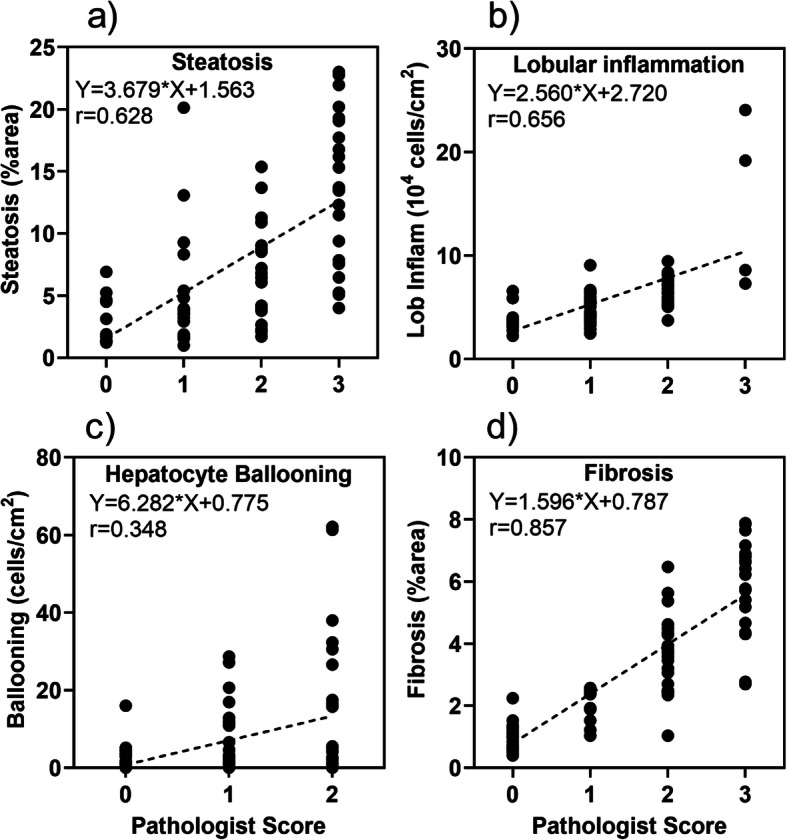
“A semi-quantitative scoring was performed by a pathologist blinded to different study groups based on a standard Non-alcoholic fatty liver disease (NAFLD) Activity Score (NAS) or criteria [26] which commonly used in preclinical animal models and in patients [27, 28] from H&E staining.”
MethodMondal, M., Bala, J., Mondal, K. R., Afrin, S., Saha, P., Saha, M., Jamaddar, S., Roy, U. K., & Sarkar, C. K. (2023) · Heliyon · doi:10.1016/j.heliyon.2023.e23065 · Cited by 6
“These findings are consistent with past research [15,38].”
ResultHepatoprotective Effect of a New FFAR1 Agonist—N-Alkylated Isobornylamine
Pon`kina, D., Kuranov, S. O., Khvostov, M. V., Zhukova, N., Meshkova, Y. V., Marenina, M. K., Luzina, O. A., Tolstikova, T. G., & Salakhutdinov, N. F. (2023) · Molecules · doi:10.3390/molecules28010396 · Cited by 5
“By using a more gentle protocol for its administration, it is possible to simulate liver damage that will be closer in severity to that observed in metabolic disorders [23,24] or disorders associated with the intake of xenobiotics, such as drugs [25].”
BackgroundNeuroblastoma RAS viral oncogene homolog (N-RAS) deficiency aggravates liver injury and fibrosis
Zheng, K., Hao, F., Medrano-Garcia, S., Chen, C., Guo, F., Morán-Blanco, L., Rodríguez, S., Torres-Ruiz, R., Peligros, M. I., Vaquero, J., et al. (2023) · Cell Death and Disease · doi:10.1038/s41419-023-06029-y · Cited by 6
Salem, B. A.-A., Elkaliny, H. H., El-Hafez, A. A. A. A., & Sarhan, N. I. (2022) · Journal of Microscopy and Ultrastructure · doi:10.4103/jmau.jmau_62_21 · Cited by 4
“[33,34] CCl 4 -induced hepatotoxicity causing death of large number of hepatocytes, with subsequent collapse of the underlying reticulin, preventing regeneration of hepatocytes.”
BackgroundCzernuszewicz, T. J., Wang, Y., Jiang, L., Kim, K., Mikulski, Z., Aji, A. M., Rojas, J. D., Gessner, R. C., & Schnabl, B. (2024) · Liver International · doi:10.1111/liv.16141 · Cited by 4
Self-citationFitrya, F. (2025) · Tropical Journal of Natural Product Research · doi:10.26538/tjnpr/v9i7.21 · Cited by 4
Eslami, Z., Mirghani, S. J., Moghanlou, A. E., Norouzi, A., Naseh, H., Joshaghani, H., Peres, W. A. F., Younesian, O., Hosseinzadeh, S., & Bideskan, J. A. (2021) · Hepatitis Monthly · doi:10.5812/hepatmon.117696 · Cited by 5
Establishment of animal models for NASH and utilization for mining associated gut microbiotaPreprint
Sheen, L., Panyod, S., Wu, W., Hsieh, Y.-C., Tseng, Y.-J., Peng, S.-Y., Chen, R.-A., Huang, H., Chen, Y., Shen, T. D., et al. (2022) · Research Square · doi:10.21203/rs.3.rs-1826044/v1 · Cited by 4
Márquez-Quiroga, L. V., Cardoso-Lezama, I., Alarcón‐Sánchez, B. R., Gaitán-González, P., Idelfonso-García, O. G., Vargas-Pozada, E. E., Piña‐Vázquez, C., Ramos‐Tovar, E., Villa‐Treviño, S., Arellanes‐Robledo, J., et al. (2025) · Biochemical Pharmacology · doi:10.1016/j.bcp.2025.117369 · Cited by 5
Bhopale, K. K., & Srinivasan, M. P. (2026) · Livers · doi:10.3390/livers6030045 · Cited by 3
Experimental VX2 Rabbit Liver Tumor Model in Carbon Tetrachloride–Induced Cirrhosis of the Liver
Santana, J. G., Shewarega, A., Nam, D., Kahl, V. H., Madoff, D. C., Zhang, X., & Chapiro, J. (2022) · Journal of Vascular and Interventional Radiology · doi:10.1016/j.jvir.2022.11.026 · Cited by 2
Zhang, R., Li, X., Liang, X., Kuang, Y., Chen, X., Niu, Y., Ye, L., Li, D., Zhou, X., & Sun, C. (2025) · Exploration of Endocrine and Metabolic Diseases · doi:10.37349/eemd.2025.101433 · Cited by 2
Ezz-Eldin, Y. M., Azouz, A. A., Khalaf, M. M., & Ewees, M. G. (2026) · Immunopharmacology and Immunotoxicology · doi:10.1080/08923973.2026.2638333 · Cited by 2
“…high-sucrose) diet in a mouse model to accelerate the incidence of MASH features within 15 weeks [44]. in another mouse model of a western diet supplemented with fructose, ccl4 shortened the time required for the progression of MASH to fibrosis, while maintaining MASH pathologic changes [45].”
Rosada, M., Wasityastuti, W., Pratama, Y. Y., Siwi, K., Widasari, D. I., & Wahyuni, T. S. (2022) · Advances in biological sciences research/Advances in Biological Sciences Research · doi:10.2991/absr.k.220406.075 · Cited by 2
Sánchez-Quevedo, J., Ocampo-Rodríguez, E., Alvarez‐Ayala, E., Rodríguez‐López, A., Duarte‐Vázquez, M. A., Rosado, J. L., & Rodríguez‐Fragoso, L. (2022) · BMC Pharmacology and Toxicology · doi:10.1186/s40360-022-00613-2 · Cited by 2
Liang, C., Murray, S., Li, Y., Lee, R. G., Low, A., Sasaki, S., Chiang, A. W. T., Lin, W.-J., Mathews, J. A., Barnes, W., et al. (2023) · Metabolic Engineering · doi:10.1016/j.ymben.2024.01.004 · Cited by 3
Susanto, H., Taufiq, A., Malek, N. A. N. N., & Putra, W. E. (2022) · Biogenesis Jurnal Ilmiah Biologi · doi:10.24252/bio.v10i1.27464 · Cited by 1
“Damages on the liver are marked by decreasing body mass and liver mass, followed by an increase of AST and ALT levels (Zhang et al., 2020).”
BackgroundEstudando Língua Portuguesa, História e Geografia por meio da toponímia: uma proposta
Tavares, M., & Velasco, D. (2017) · ArReDia · doi:10.30612/arredia.v6i11.6884
Eslami, Z., Kandi, Y. M., Norouzi, A., Moghanlou, A. E., Arabi, M. S., Kazeminejad, V., Alarzi, S. S. H., Saidi, A., & Joshaghani, H. (2022) · شهباز. · doi:10.61186/mlj.16.3.7 · Cited by 1
Alcohol Plus Additional Risk Factors: Rodent Model of Liver Injury
Wu, Q., Yang, D., Liu, C., & Xu, T. (2024) · Seminars in Liver Disease · doi:10.1055/a-2490-4278 · Cited by 1
Animal models of nonalcoholic fatty liver disease
Kaur, S., & Tripathi, D. M. (2025) · Elsevier eBooks · doi:10.1016/b978-0-323-99478-1.00004-3
Shoieb, D., Abd-Elbaset, M., Gouida, M. S. O., Kamel, I. S., Abdel‐Moneim, A., Hassan, A., Soliman, R., Shiha, G. E.-S., & Nabil, A. (2025) · Research Square · doi:10.21203/rs.3.rs-6886613/v1
CD8 T Cell Hyperfunction and Reduced Tumour Control in Murine Models of Advanced Liver Disease
Madani, J., Li, J., Ching, M. E. A., Vranjkovic, A., Jorritsma, K., Hasim, M. S., Daneshmand, M., Campeau, N., Lawton, D., Bagheri, S., et al. (2025) · European Journal of Immunology · doi:10.1002/eji.70026 · Cited by 1
Fisetinidin chloride ameliorates carbon tetrachloride-induced hepatotoxicity in HepaRG cells
Wang, Z.-B., Zhai, Y.-Z., Deng, W., Bai, X.-L., Long, Y., Ullah, K., Sammad, A., & Feng, J. (2025) · Journal of Bioenergetics and Biomembranes · doi:10.1007/s10863-025-10080-z
“These findings are in alignment with prior studies, which demonstrated fisetin’s efficacy in reducing acetaminophen-induced liver injury via Nrf2 activation (Zhao et al. 2019; Zhang et al. 2020b).”
Hu, D., Lai, J., Chen, Q., & Bai, L. (2024) · Figshare · doi:10.6084/m9.figshare.26197443
Hu, D., 赖洁娟, Chen, Q., & Bai, L. (2024) · Figshare · doi:10.6084/m9.figshare.26197508
Hu, D., Lai, J., Chen, Q., & Bai, L. (2024) · Figshare · doi:10.6084/m9.figshare.26745368
Islam, F., Ahmad, S., Rodru, F. I., Hasan, M. N., Zilani, M. N. H., Kamal, M., & Aktar, A. (2026) · Journal of Ethnopharmacology · doi:10.1016/j.jep.2026.121403 · Cited by 2
Research progress on animal models of metabolic dysfunction-associated fatty liver disease
Lin-Yun, Z. H. A. O., Zhang, X., Zi-Meng, X. I., ZHANG, Q., Chun-Li, M. A., & Bao, Y. (2026) · Shengming kexue · doi:10.3724/cbls.2026017
“…20%~30% 或饮水添 加 10% )、 胆固醇 ( 0.2%~2% w/ w ) 及胆酸盐 ( 0.5% cholic acid ) [ 17 ] 。此类配方通过多通路协同作用 /L ) [ 19 ] 。 该模型体系的核心优势在于其病理表型与人类 制了其在高通量药物筛选中的应用 [ 20 ] 。近年开发的 复合模型 ( 如高脂高糖高胆固醇 + 四氯化碳腹腔注射 ) 通过整合代谢打击与直接肝损伤 , 将 NASH 纤维化诱 导时间缩短至 8~12 周 , 同时保持代谢综合征表型 ( 肥 胖率 100% 、 空腹血糖受损发生率 75% ), 为抗纤维化…”
InfluentialColonic metabolomic and transcriptomic alterations in a mouse model of metabolic syndromePreprint
Rivas, J. A., Scieszka, D. P., Peralta-Herrera, E., Enriquez, C. M., Merkley, S. D., Nava, A., Gullapalli, R. R., & Castillo, E. F. (2026) · bioRxiv (Cold Spring Harbor Laboratory) · doi:10.64898/2026.04.02.716131
Amalina, T. N., Alsagaff, H., Sofa, S. L., Shofiyah, S., Sunaryo, B. F., Lova, K., Zakky, A., Febrianto, H., & Azis, R. (2026) · Molecular Biology Reports · doi:10.1007/s11033-026-12587-z
“…model of general liver fibrosis, distinct from diet-induced NASH models; and was selected to broadly represent fibrotic liver injury regardless of etiology, consistent with Pouyanfard et al. (2021), who aimed to develop a therapy applicable across diverse fibrotic diseases [95 , 96 ].”
Александровна, П. В., Максимовна, М. Т., Doroshchuk, K. S., Fedorova, A. A., Karev, V. E., Samarich, A. S., Евгеньевич, К. В., Karelina, E. A., Muraveva, N. A., Pyatchenkov, M. O., et al. (2026) · Drug development & registration · doi:10.33380/2305-2066-2026-15-3-2389
Mechanism-Oriented Model Selection in MASH Research: Insights from the iHFC Diet and TSOD/TSNO Mice
Ichimura‐Shimizu, M., Shao, W., Ogawa, H., Tachibana, S., & Tsuneyama, K. (2026) · Livers · doi:10.3390/livers6050089
Præstholm, S. M., Correia, J. C., Justiniano, R. H., da Rocha, A. L., Leuchtmann, A. B., Sereiva, T., Porsmyr‐Palmertz, M., Rothamel, K., Kamińska, D., Ganji, R. S., et al. (2026) · Molecular Metabolism · doi:10.1016/j.molmet.2026.102457
Metadata
- Authors
- Zhang, G., Wang, X., Chung, T.-Y., Ye, W., Hodge, L., Zhang, L., Chng, K., Xiao, Y.-F., & Wang, Y. J.
- Affiliations
- Crown Bioscience (China) (CN)
- Corresponding author
- Wang, Yixin Jim
- Venue
- BMC Gastroenterology
- Published
- 2020-10-15
- Volume
- 20
- Issue
- 1
- Pages
- 339-339
- ISSN
- 1471-230X (ISSN-L)
- PMC
- PMC7560288
- OpenAlex
- W3092705668
- Semantic Scholar
- 49de3cc999ca45802b7b48ad4bc071ac27485899
- Cited by
- 59
- References
- 49
- Citations by year
- 2026: 9 · 2025: 7 · 2024: 13 · 2023: 12 · 2022: 14 · 2021: 3
- FWCI
- 5.20
- Type
- journal article
- Language
- en
- Open access
- gold
- doi.org
- Licence
- cc-by
- creativecommons.org/licenses/by/4.0 (tdm)
- creativecommons.org/licenses/by/4.0 (vor)
- Locations
- BMC Gastroenterology (publishedVersion, cc-by)
- Research Square (acceptedVersion, cc-by)
- PubMed Central (publishedVersion, cc-by)
- PubMed (publishedVersion)
- DOAJ (DOAJ: Directory of Open Access Journals) (submittedVersion, cc-by-sa)
- Topics
- Health Sciences › Medicine › Hepatology › Liver Disease Diagnosis and Treatment
- Health Sciences › Medicine › Hepatology › Liver physiology and pathology
- Life Sciences › Pharmacology, Toxicology and Pharmaceutics › Pharmacology › Drug-Induced Hepatotoxicity and Protection
- Keywords
- carbon tetrachloride, non-alcoholic fatty liver disease, nonalcoholic steatohepatitis, Western diet, fructose, liver fibrosis, hepatic steatosis, obeticholic acid, NASH mouse model, hepatotoxicity, hepatic triglycerides
- MeSH terms
- Animals, Carbon Tetrachloride, Disease Models, Animal, Fructose, Liver, Male, Mice, Inbred C57BL, Mice, Diet, High-Fat, Non-alcoholic Fatty Liver Disease, Diet, Western
About these checks
Registry, retraction, Cites and statistics results are computed, not judged, with one exception: a printed reference that no index lists is read once by a model before it counts as a citation error. Claims are extracted by a model and kept only when their quote appears verbatim in the text; each cited source is then checked, with a model’s help, for whether it says what the claim relies on. Those verdicts can be wrong — read the claim’s quote and the cited source before relying on one.
Statistics and arithmetic are recomputed, not judged.
Confidence bands are shown only for fields calibrated on our annotated test set. None is calibrated yet, so no band is shown.
What counts as a claim ›How we measure confidence ›How we check this ›
Are you an author, or do you see a problem with this page? Request a review
Data sources
Bibliographic data: Semantic Scholar, OpenAlex, Crossref.
Contains information from the Semantic Scholar Academic Graph Datasets, made available under the ODC Attribution License (ODC-BY 1.0).
Semantic Scholar’s data is described in: Kinney, R., et al. (2023). The Semantic Scholar Open Data Platform. arXiv:2301.10140.
