

Validation of the Identification and Intervention for Dementia in Elderly Africans (IDEA) cognitive screen in Nigeria and Tanzania
Open accessThe DOI matches its Crossref record; 22 of the 23 references it cites were found in a registry or an index.
Abstract
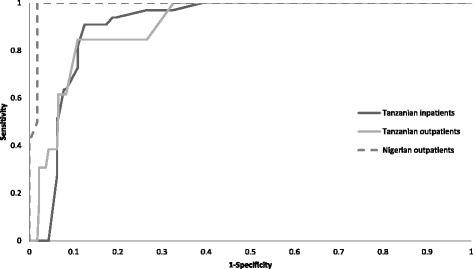
BACKGROUND: We have previously described the development of the Identification and Intervention for Dementia in Elderly Africans (IDEA) cognitive screen for use in populations with low levels of formal education. The IDEA cognitive screen was developed and field-tested in an elderly, community-based population in rural Tanzania with a relatively high prevalence of cognitive impairment. The aim of this study was to validate the IDEA cognitive screen as an assessment of major cognitive impairment in hospital settings in Nigeria and Tanzania. METHODS: In Nigeria, 121 consecutive elderly medical clinic outpatients reviewed at the University College Hospital, Ibadan were screened using the IDEA cognitive screen. In Tanzania, 97 consecutive inpatients admitted to Mawenzi Regional Hospital (MRH), Moshi, and 108 consecutive medical clinic outpatients attending the geriatric medicine clinic at MRH were screened. Inter-rater reliability was assessed in Tanzanian outpatients attending St Joseph's Hospital in Moshi using three raters. A diagnosis of dementia or delirium (DSM-IV criteria) was classified as major cognitive impairment and was provided independently by a physician blinded to the results of the screening assessment. RESULTS: The area under the receiver operating characteristic (AUROC) curve in Nigerian outpatients, Tanzanian outpatients and Tanzanian inpatients was 0.990, 0.919 and 0.917 respectively. Inter-rater reliability was good (intra-class correlation coefficient 0.742 to 0.791). In regression models, the cognitive screen did not appear to be educationally biased. CONCLUSIONS: The IDEA cognitive screen performed well in these populations and should prove useful in screening for dementia and delirium in other areas of sub-Saharan Africa.
Overview
The claims and statistics of this paper haven’t been checked yet.
Free: it reads the open-access text and checks the first 5 claims that cite a source we can check. Create a free account to check every claim.
Integrity signals
Registry
Cites
Statistics
Figures
Verification
Claims the paper makes
The claims and statistics of this paper haven’t been checked yet.
Free: it reads the open-access text and checks the first 5 claims that cite a source we can check. Create a free account to check every claim.
Claims other papers make about this one
Each is checked against this paper’s own text: does it say what the citing paper says it does?
The source backs part of the claim, not all of it — or backs it for a different population, condition or comparison.
In the citing paper
“The IDEA cognitive screen18,19,31 has been validated in a number of SSA settings, appears not to be educationally biased in low literacy settings and has been utilized as an outcome measure in SSA research studies.”
From Effectiveness of App-Based Cognitive Screening for Dementia by Lay Health Workers in Low Resource Settings. A Validation and Feasibility Study in Rural Tanzania (2021) · cites this paper as [18]
Experimental — accuracy not yet measuredThe cited source says what the claim attributes to it.
In the citing paper
“Our team have previously-validated culturally appropriate low-literacy paper and pencil dementia screening tools for use in SSA, including the IDEA cognitive screen17-19 and IDEA-instrumental activities of daily living (IDEA-IADL) questionnaire for identification of functional impairment.20,21”
Self-check
Percentages, sums and reported differences re-computed from the paper’s own numbers.
The self-check needs the paper’s full text.
Citations
Cites
Diagnostic and Statistical Manual of Mental Disorders
Williams, J. B. W., & First, M. (2013) · Encyclopedia of Social Work · doi:10.1093/acrefore/9780199975839.013.104 · Cited by 109,519
Diagnostic and Statistical Manual of Mental Disorders
(2012) · SpringerReference · doi:10.1007/springerreference_121117 · Cited by 20,570
Consortium to Establish a Registry for Alzheimer's Disease (CERAD)
Fillenbaum, G. G., & Heyman, A. (2002) · Principles and Practice of Geriatric Psychiatry · doi:10.1002/0470846410.ch42(iii · Cited by 2,410
Resources for mental health: scarcity, inequity, and inefficiency
Saxena, S., Thornicroft, G., Knapp, M., & Whiteford, H. (2007) · The Lancet · doi:10.1016/s0140-6736(07)61239-2 · Cited by 1,789 · cited 3×
“There are 200 times fewer qualified mental health workers per 100,000 population in SSA compared to HICs [4].”
BackgroundMitchell, A. J. (2009) · Journal of Psychiatric Research · doi:10.1016/j.jpsychires.2008.04.014 · Cited by 1,129 · cited 3×
“There are 200 times fewer qualified mental health workers per 100,000 population in SSA compared to HICs [4].”
MethodDelirium in elderly adults: diagnosis, prevention and treatment
Fong, T. G., Tulebaev, S. R., & Inouye, S. K. (2009) · Nature Reviews Neurology · doi:10.1038/nrneurol.2009.24 · Cited by 987 · cited 1×
“The existing evidence base strongly suggests that identification of cognitive impairment can improve outcomes and reduce morbidity and mortality through prevention of delirium [23].”
BackgroundWelsh, K. A., Butters, N., Mohs, R. C., Beekly, D., Edland, S., Fillenbaum, G., & Heyman, A. (1994) · Neurology · doi:10.1212/wnl.44.4.609 · Cited by 951
Scale up of services for mental health in low-income and middle-income countries
Eaton, J., McCay, L., Semrau, M., Chatterjee, S., Baingana, F., Araya, R., Ntulo, C., Thornicroft, G., & Saxena, S. (2011) · The Lancet · doi:10.1016/s0140-6736(11)60891-x · Cited by 698 · cited 1×
“This task-shifting approach is recommended by the World Health Organization (WHO) for other mental and neurological conditions in low-resource settings [5].”
MethodThe GPCOG: A New Screening Test for Dementia Designed for General Practice
Brodaty, H., Pond, D., Kemp, N. M., Luscombe, G., Harding, L., Berman, K., & Huppert, F. A. (2002) · Journal of the American Geriatrics Society · doi:10.1046/j.1532-5415.2002.50122.x · Cited by 493 · cited 1×
“The general practitioner assessment of cognition (GPCOG) combines the clock-drawing test with items assessing recall and orientation; its sensitivity was 85% and specificity 86% [20].”
MethodCognitive assessment in the elderly: a review of clinical methods
Woodford, H. J., & George, J. (2007) · QJM · doi:10.1093/qjmed/hcm051 · Cited by 342 · cited 1×
“A review of other brief screening instruments was carried out in 2007 [21].”
BackgroundPrince, M., Acosta, D., Ferri, C. P., Guerra, M., Huang, Y., Jacob, K. S., Llibre Rodriguez, J. J., Salas, A., Sosa, A. L., Williams, J. D., et al. (2011) · International Journal of Geriatric Psychiatry · doi:10.1002/gps.2622 · Cited by 136 · cited 1×
“The IDEA cognitive screen performed well in comparison with other major cognitive impairment screening instruments developed for use in populations with low levels of formal education [14,15].”
MethodAn Evaluation of Two Screening Tools for Cognitive Impairment in Older Emergency Department Patients
Wilber, S. T. (2005) · Academic Emergency Medicine · doi:10.1197/j.aem.2005.01.017 · Cited by 121
Geriatric medicine: services and training in Africa
Dotchin, C. L., Akinyemi, R. O., Gray, W. K., & Walker, R. W. (2013) · Age and Ageing · doi:10.1093/ageing/afs119 · Cited by 120 · cited 1×
“by a serious shortage of specialist clinicians including neurologists, geriatricians and psychiatrists [2,3].”
BackgroundSelf-citationNeurologic services in the nations of Africa
Bower, J. H., & Zenebe, G. (2005) · Neurology · doi:10.1212/01.wnl.0000150894.53961.e2 · Cited by 111 · cited 1×
“by a serious shortage of specialist clinicians including neurologists, geriatricians and psychiatrists [2,3].”
BackgroundLarner, A. J., & Mitchell, A. J. (2014) · International Psychogeriatrics · doi:10.1017/s1041610213002329 · Cited by 111 · cited 3×
“There are 200 times fewer qualified mental health workers per 100,000 population in SSA compared to HICs [4].”
MethodThe Stick Design test: A new measure of visuoconstructional ability
BAIYEWU, O., UNVERZAGT, F. W., LANE, K. A., GUREJE, O., OGUNNIYI, A., MUSICK, B., GAO, S., HALL, K. S., & HENDRIE, H. C. (2005) · Journal of the International Neuropsychological Society · doi:10.1017/s135561770505071x · Cited by 88 · cited 1×
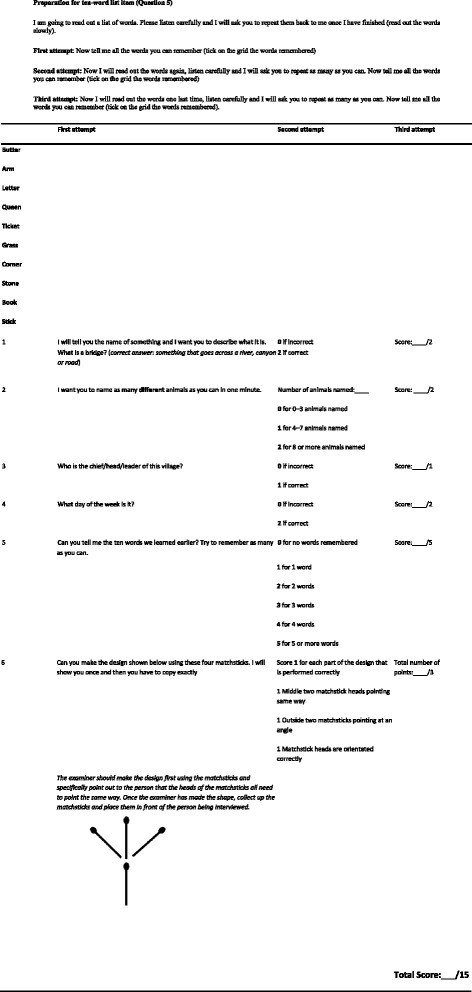
“[10], with scores ranging from 0 (no matchsticks placed correctly), to 3 (all four matchsticks placed correctly in the shape of a rake).”
BackgroundSelf-citationThe Six‐item Screener to Detect Cognitive Impairment in Older Emergency Department Patients
Wilber, S. T., Carpenter, C. R., & Hustey, F. M. (2008) · Academic Emergency Medicine · doi:10.1111/j.1553-2712.2008.00158.x · Cited by 70 · cited 1×
“77 [18].”
Dementia prevalence estimates in sub-Saharan Africa: comparison of two diagnostic criteria
Paddick, S.-M., Longdon, A. R., Kisoli, A., Dotchin, C., Gray, W. K., Dewhurst, F., Chaote, P., Kalaria, R., Jusabani, A. M., & Walker, R. (2013) · Global Health Action · doi:10.3402/gha.v6i0.19646 · Cited by 68 · cited 1×
“Major cognitive impairment becomes more common with increasing age and is thought to be more common in women than men and more common in those with no formal education [12,13].”
BackgroundSelf-citationParaïso, M. N., Houinato, D., Guerchet, M., Aguèh, V., Nubukpo, P., Preux, P.-M., & Marin, B. (2010) · Neuroepidemiology · doi:10.1159/000301715 · Cited by 59 · cited 1×
“Where age was not accurately known, a validated method of estimation based on significant past events was used [7].”
MethodGray, W. K., Paddick, S.-M., Kisoli, A., Dotchin, C. L., Longdon, A. R., Chaote, P., Samuel, M., Jusabani, A. M., & Walker, R. W. (2014) · Journal of Geriatric Psychiatry and Neurology · doi:10.1177/0891988714522695 · Cited by 59 · cited 8×
“In SSA, perhaps more than in other LMIC settings, this problem is compounded article distributed under the terms of the Creative Commons Attribution License which permits unrestricted use, distribution, and reproduction in any medium, .”
MethodResultInfluentialSelf-citationJackson, T. A., Naqvi, S. H., & Sheehan, B. (2013) · Age and Ageing · doi:10.1093/ageing/aft145 · Cited by 56 · cited 1×
“[24].”
The association between educational level and dementia in rural Tanzania
Paddick, S.-M., Longdon, A., Gray, W. K., Dotchin, C., Kisoli, A., Chaote, P., & Walker, R. (2014) · Dementia & Neuropsychologia · doi:10.1590/s1980-57642014dn82000006 · Cited by 41 · cited 1×
“Major cognitive impairment becomes more common with increasing age and is thought to be more common in women than men and more common in those with no formal education [12,13].”
BackgroundSelf-citation
Research works printed but not linked: 4
- Prince M Guerchet M Prina M Policy brief for heads of government: the global impact of dementia 2013–2050 2013 London Alzheimer Disease International
- Hall KS Hendrie HC Brittain HM Norton JA Rodgers DD Prince CS Pillay N Blue AW Kaufert JN Nath A The development of a dementia screening interview in 2 distinct languages Int J Methods Psychiatr Res 1993 3 1 28
- Touré K Coumé M Ndiaye NND Thiam MH Zunzunegui MV Bacher Y Gueye L Tal/Dia A Ndiaye MM The test of senegal: a valid and reliable screening tool to assess for dementia in a senegalese elderly population Afr J Neurol Sci 2008 27 4 13
- National Institute for Health and Care Excellence (NICE) Delirium: Diagnosis, prevention and management 2010 London NICE
Cited by
Dementia in Africa: current evidence, knowledge gaps, and future directions
Akinyemi, R. O., Yaria, J., Ojagbemi, A., Guerchet, M., Okubadejo, N., Njamnshi, A. K., Sarfo, F. S., Akpalu, A., Ogbole, G., Ayantayo, T., et al. (2022) · Alzheimer's & Dementia · doi:10.1002/alz.12432 · Cited by 184
Self-citationThe prevalence and characteristics of frailty by frailty phenotype in rural Tanzania
Lewis, E. G., Coles, S., Howorth, K., Kissima, J., Gray, W. K., Urasa, S. J., Walker, R. W., & Dotchin, C. L. (2018) · BMC Geriatrics · doi:10.1186/s12877-018-0967-0 · Cited by 71
“Depression symptoms, as reported by the EURO-D screening tool [18], were significantly associated with frailty, as was a score indicative of cognitive impairment, according to the IDEA cognitive screening tool [17].”
MethodSelf-citationPaddick, S.-M., Mkenda, S., Mbowe, G., Kisoli, A., Gray, W. K., Dotchin, C. L., Ternent, L., Ogunniyi, A., Kissima, J., Olakehinde, O., et al. (2017) · International Psychogeriatrics · doi:10.1017/s1041610217000163 · Cited by 58
Self-citationMorley, J. E., Arai, H., Cao, L., Dong, B., Merchant, R. A., Vellas, B. J., Visvanathan, R., & Woo, J. (2017) · Journal of the American Medical Directors Association · doi:10.1016/j.jamda.2017.03.015 · Cited by 68
Heward, J., Stone, L., Paddick, S.-M., Mkenda, S., Gray, W. K., Dotchin, C. L., Kissima, J., Collingwood, C., Swai, B., & Walker, R. W. (2018) · International Psychogeriatrics · doi:10.1017/s1041610217002861 · Cited by 52
Self-citation
Metadata
- Authors
- Paddick, S.-M., Gray, W. K., Ogunjimi, L., lwezuala, B., Olakehinde, O., Kisoli, A., Kissima, J., Mbowe, G., Mkenda, S., Dotchin, C. L., Walker, R. W., Mushi, D., Collingwood, C., & Ogunniyi, A.
- Affiliations
- North Tyneside General Hospital (GB)
- University of Ibadan (NG)
- Mawenzi Regional Referral Hospital (TZ)
- Government of Tanzania (TZ)
- Kilimanjaro Christian Medical Centre (TZ)
- Newcastle University (GB)
- Corresponding author
- Ogunniyi, Adesola
- ORCID
- Venue
- BMC Geriatrics
- Published
- 2015-04-25
- Volume
- 15
- Issue
- 1
- Pages
- 53-53
- ISSN
- 1471-2318 (ISSN-L)
- PMC
- PMC4455989
- OpenAlex
- W2010354682
- Cited by
- 78
- References
- 23
- Citations by year
- 2026: 13 · 2025: 8 · 2024: 10 · 2023: 8 · 2022: 4 · 2021: 10 · 2020: 4 · 2019: 4 · 2018: 6 · 2017: 7 · 2016: 4
- FWCI
- 4.59
- Type
- journal article
- Language
- en
- Open access
- gold
- doi.org
- Locations
- BMC Geriatrics (publishedVersion, cc-by)
- PubMed Central (publishedVersion, cc-by)
- PubMed (publishedVersion)
- Newcastle University ePrints (Newcastle Univesity) (cc-by)
- Funders
- Newcastle University
- Grand Challenges Canada (0086-04)
- Topics
- Health Sciences › Medicine › Psychiatry and Mental health › Dementia and Cognitive Impairment Research
- Social Sciences › Psychology › Clinical Psychology › Historical and Modern Theater Studies
- Health Sciences › Medicine › Oncology › Cancer-related cognitive impairment studies
- Keywords
- dementia screening, cognitive impairment, delirium, older adults, low literacy, inter-rater reliability, hospital outpatients, hospitalized patients, sub-Saharan Africa, Nigeria, Tanzania
- MeSH terms
- Aged, Cognition, Delirium, Dementia, Female, Humans, Male, Mass Screening, Nigeria, Predictive Value of Tests, ROC Curve, Tanzania, Reproducibility of Results, Cohort Studies, Geriatric Assessment, Black People
About these checks
Registry, retraction, Cites and statistics results are computed, not judged, with one exception: a printed reference that no index lists is read once by a model before it counts as a citation error. Claims are extracted by a model and kept only when their quote appears verbatim in the text; each cited source is then checked, with a model’s help, for whether it says what the claim relies on. Those verdicts can be wrong — read the claim’s quote and the cited source before relying on one.
Statistics and arithmetic are recomputed, not judged.
Confidence bands are shown only for fields calibrated on our annotated test set. None is calibrated yet, so no band is shown.
What counts as a claim ›How we measure confidence ›How we check this ›
Are you an author, or do you see a problem with this page? Request a review
Data sources
Bibliographic data: Semantic Scholar, OpenAlex, Crossref.
Contains information from the Semantic Scholar Academic Graph Datasets, made available under the ODC Attribution License (ODC-BY 1.0).
Semantic Scholar’s data is described in: Kinney, R., et al. (2023). The Semantic Scholar Open Data Platform. arXiv:2301.10140.
