

Dysbiosis, gut barrier dysfunction and inflammation in dementia: a pilot study
Open accessPublished version of a preprint
The DOI matches its Crossref record; 73 of the 73 references it cites were found in a registry or an index.
Abstract
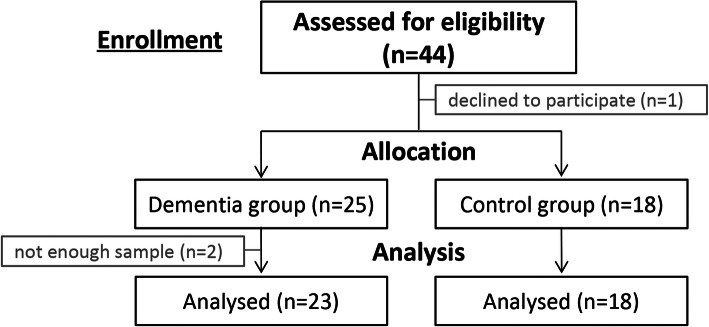
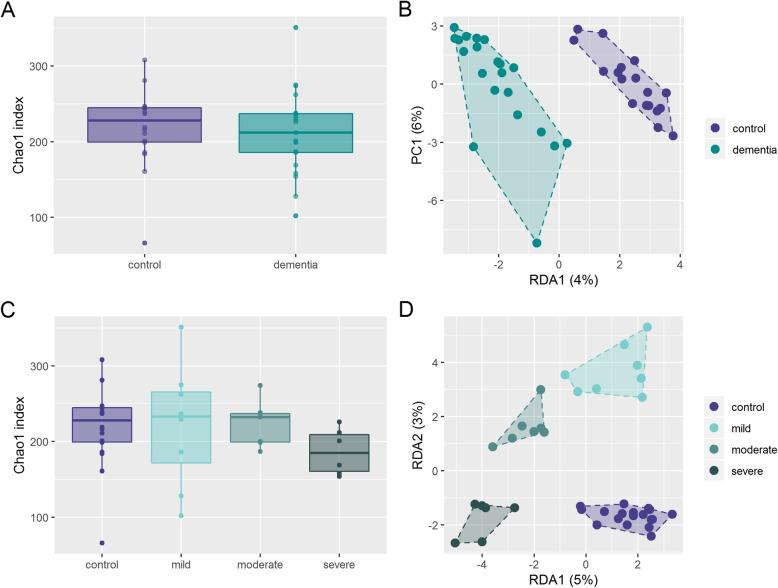
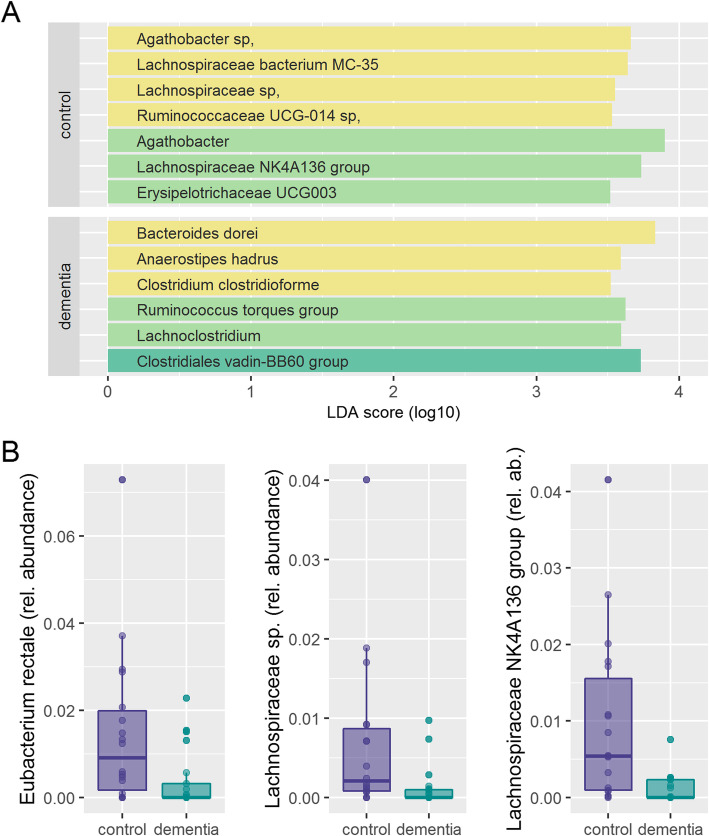
Background: Dementia is an increasing public health threat worldwide. The pathogenesis of dementia has not been fully elucidated yet. Inflammatory processes are hypothesized to play an important role as a driver for cognitive decline but the origin of inflammation is not clear. We hypothesize that disturbances in gut microbiome composition, gut barrier dysfunction, bacterial translocation and resulting inflammation are associated with cognitive dysfunction in dementia. Methods: To test this hypothesis, a cohort of 23 patients with dementia and 18 age and sex matched controls without cognitive impairments were studied. Gut microbiome composition, gut barrier dysfunction, bacterial translocation and inflammation were assessed from stool and serum samples. Malnutrition was assessed by Mini Nutritional Assessment Short Form (MNA-SF), detailed information on drug use was collected. Microbiome composition was assessed by 16S rRNA sequencing, QIIME 2 and Calypso 7.14 tools. Results: Dementia was associated with dysbiosis characterized by differences in beta diversity and changes in taxonomic composition. Gut permeability was increased as evidenced by increased serum diamine oxidase (DAO) levels and systemic inflammation was confirmed by increased soluble cluster of differentiation 14 levels (sCD14). BMI and statin use had the strongest impact on microbiome composition. Conclusion: Dementia is associated with changes in gut microbiome composition and increased biomarkers of gut permeability and inflammation. Lachnospiraceae NK4A136 group as potential butyrate producer was reduced in dementia. Malnutrition and drug intake were factors, that impact on microbiome composition. Increasing butyrate producing bacteria and targeting malnutrition may be promising therapeutic targets in dementia. Trial registration: NCT03167983 .
Overview
The claims and statistics of this paper haven’t been checked yet.
Free: it reads the open-access text and checks the first 5 claims that cite a source we can check. Create a free account to check every claim.
Integrity signals
Registry
Cites
Statistics
Figures
Verification
Claims the paper makes
The claims and statistics of this paper haven’t been checked yet.
Free: it reads the open-access text and checks the first 5 claims that cite a source we can check. Create a free account to check every claim.
Claims other papers make about this one
Each is checked against this paper’s own text: does it say what the citing paper says it does?
The source backs part of the claim, not all of it — or backs it for a different population, condition or comparison.
In the citing paper
“This condition, known as intestinal permeability or leaky gut, has been implicated in the pathophysiology of various GI, as well as extraintestinal disorders [120,121,122], including PD [117,123,124,125,126,127,128]”
From The Interplay between Gut Microbiota and Parkinson’s Disease: Implications on Diagnosis and Treatment (2022) · cites this paper as [120]
Experimental — accuracy not yet measured
Self-check
Percentages, sums and reported differences re-computed from the paper’s own numbers.
The self-check needs the paper’s full text.
Citations
Cites
1 retracted
Zhu, Q. R., Huang, L., Zhu, J., Lu, J., & Qin, H. (2018) · Mechanisms of Ageing and Development · doi:10.1016/j.mad.2018.11.001 · Cited by 4
RetractedR: A Language and Environment for Statistical Computing
R Core Team (2025) · doi:10.32614/r.manuals · Cited by 352,181
Folstein, M. F., Folstein, S. E., & McHugh, P. R. (1975) · Journal of Psychiatric Research · doi:10.1016/0022-3956(75)90026-6 · Cited by 88,282 · cited 1×
“The Mini-Mental State Examination [19] and the clock drawing test [20] were used to quantify cognitive function.”
MethodDADA2: High–resolution sample inference from Illumina amplicon data
Callahan, B. J., McMurdie, P. J., Rosen, M. J., Han, A. W., Johnson, A. J. A., & Holmes, S. P. (2016) · Nature Methods · doi:10.1038/nmeth.3869 · Cited by 35,698 · cited 2×
“Denoising (primers removing, quality filtering, correcting errors in marginal sequences, removing chimeric sequences, removing singletons, joining paired-end reads, and dereplication) was done with DADA2 [25].”
MethodClassification and Regression by randomForest
Liaw, A. I., & Wiener, M. C. (2007) · Cited by 18,594
Metagenomic biomarker discovery and explanation
Segata, N., Izard, J., Waldron, L., Gevers, D., Miropolsky, L., Garrett, W. S., & Huttenhower, C. (2011) · Genome Biology · doi:10.1186/gb-2011-12-6-r60 · Cited by 16,192 · cited 1×
“Feature selection was performed using the supervised machine learning tool Linear Discriminant analysis Effect Size (LEfSe) [29].”
Methodmice: Multivariate Imputation by Chained Equations in R
Buuren, S. V., & Groothuis-Oudshoorn, K. (2011) · Journal of Statistical Software · doi:10.18637/jss.v045.i03 · Cited by 13,870
Database resources of the National Center for Biotechnology Information: update
Wheeler, D. L. (2004) · Nucleic Acids Research · doi:10.1093/nar/gkh073 · Cited by 10,641
Applied and Environmental Microbiology
(2018) · Applied and Environmental Microbiology · doi:10.1128/eissn.1098-5336 · Cited by 5,297
Host microbiota constantly control maturation and function of microglia in the CNS
Erny, D., Hrabě de Angelis, A. L., Jaitin, D., Wieghofer, P., Staszewski, O., David, E., Keren-Shaul, H., Mahlakoiv, T., Jakobshagen, K., Buch, T., et al. (2015) · Nature Neuroscience · doi:10.1038/nn.4030 · Cited by 3,569 · cited 2×
“Microglia maturation and function is critically dependent on short-chain fatty acids produced by the gut microbiome and therefore highlights the microbiome as a potential diagnostic and therapeutic target in dementia [3].”
Background
Research works printed but not linked: 3
- Dementia WHO fact sheet 2016
- S3-Leitlinie Demenzen Deutsche Gesellschaft für Neurologie, Hrsg. Leitlinien für Diagnostik und Therapie in der Neurologie 2016
- Rundel C Cetinkaya-Rundel M Clyde M Banks D statsr: Companion package for statistics with 2018
Cited by
Items 101–183 of 183
Xu, M., Shao, Q., Zhou, Y., Yu, Y., Wang, S., Wang, A., & Cai, Y. (2024) · Frontiers in Microbiology · doi:10.3389/fmicb.2024.1322947 · Cited by 16
Zhang, R., Sun, X., Han, L., Zhang, X., Zhang, M., Ji, X., Yu, X., Tang, C., Wu, Z., Mao, Y., et al. (2025) · Microbial Biotechnology · doi:10.1111/1751-7915.70083 · Cited by 11
“Low relative abundance of Lachnospiraceae_ NK4A136_group is associated with a variety of diseases, such as asthma (Wang et al. 2021), NAFLD (Mu et al. 2020) and cognitive decline (Stadlbauer et al. 2020).”
Zhou, M., Tao, Y., Wang, T., Wang, R., & Yong, Q. (2024) · LWT · doi:10.1016/j.lwt.2024.117309 · Cited by 10
Huang, H., Zhao, T., & Ma, W. (2025) · Brain Behavior and Immunity · doi:10.1016/j.bbi.2025.03.015 · Cited by 9
Shoubridge, A. P., Carpenter, L., Flynn, E. F., Papanicolas, L. E., Collins, J., Gordon, D., Lynn, D. J., Whitehead, C., Leong, L. E. X., Cations, M., et al. (2025) · The Journals of Gerontology Series A · doi:10.1093/gerona/glaf053 · Cited by 10
“Similarly, Wasser and colleagues reported reduced alpha diversity in those with Huntington’s disease (34), while 2 other studies have reported no significant relationship between CI severity and alpha diversity (39,113).”
Wang, W., Hao, Z., Wu, Z., Cui, J., & Liu, H. (2023) · Applied Microbiology and Biotechnology · doi:10.1007/s00253-023-12446-y · Cited by 11
Knight, R. O., Cedillo, Y. E., Judd, S. E., Baker, E. H., Frugé, A. D., & Moellering, D. R. (2024) · BMC Women s Health · doi:10.1186/s12905-024-02968-6 · Cited by 12
“…a high-fat diet protocol that induced dysbiosis in mice [66], was found to be diminished in a small pilot study including individuals with dementia [67], and was among other short-chain fatty acid producing bacteria that were increased following an inflammation-reducing prebiotic trial in mice…”
BackgroundZhou, L., Chen, H., He, J., Ma, H., Wang, P., Wu, X., Wang, G., Li, Y., Li, H., Xu, B., et al. (2025) · International Journal of Biological Macromolecules · doi:10.1016/j.ijbiomac.2025.143758 · Cited by 11
Predicting superagers: a machine learning approach utilizing gut microbiome features
Kim, H. E., Kim, B. R., Hong, S. H., Song, S. Y., Jeong, J. H., & Kim, G. H. (2024) · Frontiers in Aging Neuroscience · doi:10.3389/fnagi.2024.1444998 · Cited by 9
Quoilin, C., Amadieu, C., Fievez, F., Delzenne, N. M., de Timary, P., Duqué, J., & Leclercq, S. (2022) · Neuropharmacology · doi:10.1016/j.neuropharm.2022.109384 · Cited by 8
The Common Alzheimer's Disease Research Ontology (CADRO) for biomarker categorization
Osse, A. M. L., Kinney, J. W., & Cummings, J. L. (2025) · Alzheimer s & Dementia Translational Research & Clinical Interventions · doi:10.1002/trc2.70050 · Cited by 11
“…Branched-chainaminoacids (valine,leucine,isoleucine) BCAA [153] Calprotectin [154] Lithocholicacid(bileacids) LCA [155] Microbiomecomposition [156,157] Shortchainfattyacids SCFAs [158,159] Zonulin [160] Circadianrhythm Orexin [161] Sleeppatterns [162] Wake/sleepcorticalactivity [163]…”
Analyzing the gut microbiota and microbial-associated metabolites of tomato-based sauces
Cárdenas-Castro, A. P., Sost, M. M., Gutiérrez-Sarmiento, W., Ruíz-Valdiviezo, V. M., Mateos, R., Sáyago‐Ayerdi, S. G., & Venema, K. (2024) · Food Chemistry · doi:10.1016/j.foodchem.2024.140664 · Cited by 6
Sait, A. M., & Day, P. J. (2024) · International Journal of Molecular Sciences · doi:10.3390/ijms25168619 · Cited by 9
“It also resulted in increased gut permeability, as indicated by higher serum diamine oxidase (DAO) levels, and systemic inflammation, shown by elevated levels of soluble cluster of differentiation 14 (sCD14) [70].”
BackgroundKang, D. W., Lee, J.-W., Park, M. Y., Kim, S., Um, Y. H., Wang, S., Lee, C. U., & Lim, H. K. (2024) · GeroScience · doi:10.1007/s11357-024-01284-z · Cited by 10
“Imbalances in the gut microbiota can result in increased intestinal permeability, allowing microbial metabolites and pro-inflammatory cytokines to enter the bloodstream and reach the brain, potentially triggering or exacerbating neuroinflammation and neurodegeneration [40, 41, 42].”
Faysal, M. F., Zehravi, M., Amin, M. A., Rab, S. O., Jahnavi, P., Arjun, U. V. N. V., Gupta, J. K., Billah, A. A. M., Vodeti, R., Prasad, P. D., et al. (2025) · Pathology - Research and Practice · doi:10.1016/j.prp.2025.156090 · Cited by 7
Li, H., Christman, L. M., Yağız, Y., Washington, T. L., Wang, G. P., & Gu, L. (2023) · Food & Function · doi:10.1039/d3fo00047h · Cited by 7
RetractedXie, Y., Xu, D., Yan, S., Hu, X., Chen, S., Guo, K., Wang, J., Chen, Q., & Guan, W. (2023) · The FASEB Journal · doi:10.1096/fj.202300179rr · Cited by 7
Khezri, M. R., Esmaeili, A., & Ghasemnejad‐Berenji, M. (2023) · ACS Chemical Neuroscience · doi:10.1021/acschemneuro.3c00418 · Cited by 8
Martinez, O. D. M., Gomes, M. J. C., Grancieri, M., José, V. P. B. D. S., Toledo, R. C. L., Queiróz, V. A. V., da Silva, B. P., & Martino, H. S. D. (2022) · European Journal of Nutrition · doi:10.1007/s00394-022-03018-3 · Cited by 17
Sun, Y., Cui, L. H., Peng, W., Chen, R., Guan, X., & Liu, J. (2025) · Biomacromolecules · doi:10.1021/acs.biomac.5c00967 · Cited by 7
Li, J., Shan, W., & Zuo, Z. (2023) · CNS Neuroscience & Therapeutics · doi:10.1111/cns.14491 · Cited by 8
“23 Intestinal permeability measured also using FITC-dextran is increased in endogenous melatonin reduction mice.”
MethodExploring the gut microbiota-hippocampus-metabolites axis dysregulation in sepsis mice
Song, F., Li, Q., Cui, J., Wang, J., Xiao, S., Yu, B., Sun, Y., Song, W., Wu, L., & Yongqin, Z. (2024) · Frontiers in Microbiology · doi:10.3389/fmicb.2024.1302907 · Cited by 7
Chen, C.-W., Chen, H.-C., She, S.-C., Lai, C., Chen, W. J., Kuo, T. B. J., & Yang, C. C. H. (2024) · Life Sciences · doi:10.1016/j.lfs.2024.122804 · Cited by 5
Unraveling Alzheimer’s: Exploring the Gut Microbiota–Brain Axis as a New Frontier in Understanding
Rashid, S. M., Razak, R., Tantray, A. K., James, A. W., Showkat, N., Shehjar, F., Jan, F., Ahmad, S. B., Khan, A., & Shah, Z. A. (2024) · Journal of dementia and Alzheimer's disease · doi:10.3390/jdad1010003 · Cited by 5
Eggers, S. I., Hoggarth, Z. E., Nagdeo, K. P., Banas, M. J., Lane, J. M., Rechtman, E., Gennings, C., O’Neal, E. E., Peppard, P. E., Sethi, A. K., et al. (2025) · npj Aging · doi:10.1038/s41514-025-00241-0 · Cited by 7
Barandouzi, Z. A., Eng, T. Y., Shelton, J. W., Khanna, N., Scott, I., Meador, R., & Bruner, D. W. (2023) · Supportive Care in Cancer · doi:10.1007/s00520-023-08058-x · Cited by 8
“However, the exact function of this genus is still unclear and needs further investigation [44, 45].”
BackgroundYehualashet, A. S., Melaku, E. E., Shenkute, D., Wassie, T. A., & Yitayew, B. (2025) · Discover Medicine · doi:10.1007/s44337-025-00220-0 · Cited by 6
Zhang, N., & Dong, X. (2025) · Journal of Affective Disorders · doi:10.1016/j.jad.2025.02.091 · Cited by 4
Statins - From Lipid-Lowering Benefits to Pleiotropic Effects
Liu, D. (2023) · IntechOpen eBooks · doi:10.5772/intechopen.1001540 · Cited by 5
Statin therapy and gut microbiota
Chen, P., & Li, K. (2023) · IntechOpen eBooks · doi:10.5772/intechopen.1001098 · Cited by 5
The Gut microbiota and Alzheimer's disease
Morales, M., Cuervo-Zanatta, D., Hernández-Acosta, J., Chacón, M., Sánchez-Valle, V., & Perez‐Cruz, C. (2023) · Elsevier eBooks · doi:10.1016/b978-0-323-89834-8.00050-7 · Cited by 4
Quattrini, G., Gatti, E., Peretti, D. E., Aiello, M., Chevalier, C., Lathuilière, A., Park, R., Pievani, M., Salvatore, M., Scheffler, M., et al. (2025) · European Journal of Nuclear Medicine and Molecular Imaging · doi:10.1007/s00259-025-07299-8 · Cited by 4
Ayala-García, J. C., Díaz-Benítez, C. E., Lagunas-Martínez, A., Orihuela, Y. C. O., Castañeda-Márquez, A. C., Ortiz‐Panozo, E., Bermúdez-Morales, V. H., Cruz, M., & Burguete-García, A. I. (2023) · Children · doi:10.3390/children10081382 · Cited by 4
Copper fabric improves the metabolic profile of obese mice: Potential role of the gut microbiota
Song, E., Vu, V., Varin, T. V., Botta, A. M., Marette, A., & Sweeney, G. (2022) · Basic & Clinical Pharmacology & Toxicology · doi:10.1111/bcpt.13778 · Cited by 3
“High throughput 16S rRNA gene sequencing from faeces of HFHC mice housed in control or copper cage liner groups suggests that copper bedding can increase, but not significantly, the abundance of beneficial gut bacteria genera such as Akkermansia known to maintain gut barrier integrity and improve metabolic syndrome de…”
BackgroundGrabrucker, S., Marizzoni, M., Silajdžić, E., Lopizzo, N., Mombelli, E., Nicolas, S., Dohm-Hansen, S., Scassellati, C., Moretti, D. V., Rosa, M., et al. (2022) · bioRxiv (Cold Spring Harbor Laboratory) · doi:10.1101/2022.11.04.515189 · Cited by 3
Assessment of the reproducibility of bacterial membrane vesicle isolation and characterization
Verbunt, J., Jocken, J. W. E., Canfora, E. E., Barnett, D. J. M., Blaak, E. E., Savelkoul, P. H. M., & Stassen, F. R. M. (2025) · Extracellular Vesicles and Circulating Nucleic Acids · doi:10.20517/evcna.2025.71 · Cited by 2
Jiang, S., Meng, Q., Jiang, C., Lv, Y., Liu, L., Xie, R., Ya, F., & Gao, Q. (2026) · Food & Function · doi:10.1039/d5fo04882f · Cited by 4
What we have learned to date from the omics approach to non-Alzheimer's dementias
Demırci, M., & Kadırhan, Ö. A. (2022) · Journal of Integrative Neuroscience · doi:10.31083/j.jin2103076 · Cited by 2
“[49] studied gut microbiota in dementia patients and showed that the hypothesis could be correct.”
BackgroundXu, H., Wang, Y., Li, X., Wu, X., Lu, L. W., He, J., Wang, M., Liu, B., Xu, H., Chen, J., et al. (2024) · Food Science and Human Wellness · doi:10.26599/fshw.2024.9250284 · Cited by 3
Cervino, A., Fabre, R., Plassais, J., Gbikpi‐Benissan, G., Petat, E., Quellenec, E. L., Neuberger-Castillo, L., Laurent, J.-M., Iordache, L., Bouchahda, M., et al. (2022) · medRxiv · doi:10.1101/2022.02.06.22269945 · Cited by 3
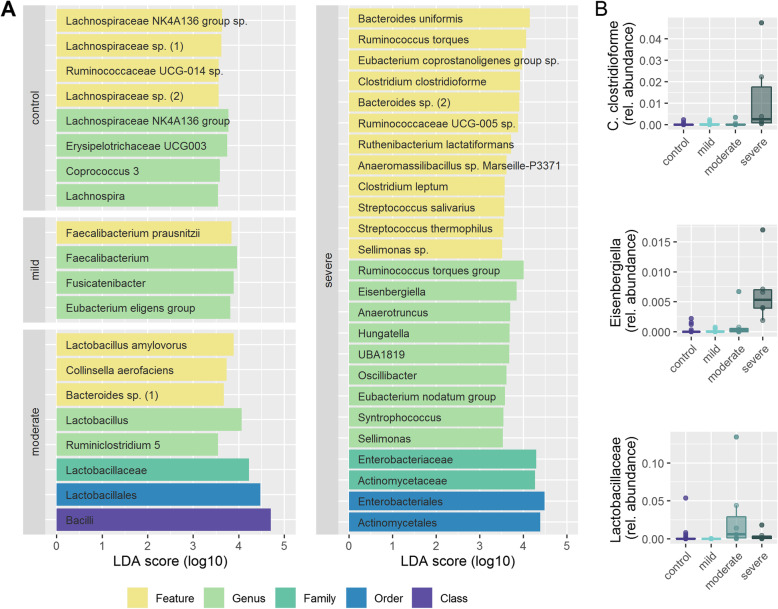
“The genus Eisenbergiella has been reported to be correlated to cognitive impairment (Stadlbauer et al. 2020).”
BackgroundSchmit, K. J., Sciortino, A., Aho, V. T. E., Garcia, P., Rodriguez, B. P., Thomas, M. H., Gérardy, J., Halder, R., Cialini, C., Heurtaux, T., et al. (2022) · bioRxiv (Cold Spring Harbor Laboratory) · doi:10.1101/2022.03.21.485143 · Cited by 2
Jin, H., Yang, D., Guo, J., Xu, B., Fu, Y., Xue, L., & Wang, Y. (2024) · Food Science and Human Wellness · doi:10.26599/fshw.2024.9250109 · Cited by 1
“For instance, in dementia, Lachnospiraceae NK4A136 working as a potential butyrate producer, was reduced 27 .”
Antiinflammatory effects of postbiotics
Megha, J. K., & Ravi, L. (2025) · Elsevier eBooks · doi:10.1016/b978-0-443-22188-0.00027-9 · Cited by 1
Zeng, Y.-C., Li, C., Song, X., Huang, S., Xie, Y., Zeng, J., & Yuan, R. (2025) · Frontiers in Immunology · doi:10.3389/fimmu.2025.1650705 · Cited by 1
Han, S. H., He, M. T., Baek, K., Kim, H. Y., Lee, S., & Lee, A. R. (2026) · Journal of Agricultural and Food Chemistry · doi:10.1021/acs.jafc.5c12437 · Cited by 4
Zhang, Z., Feng, L., Zhang, B., Wang, Z., Hu, Z., & Zhai, R. (2026) · Frontiers in Nutrition · doi:10.3389/fnut.2026.1852838 · Cited by 2
“The enrichment of the Lachnospiraceae NK4A136 group has been demonstrated to be closely associated with improvements in intestinal barrier function (89).”
Matz, L. M., Shah, N. S., Porterfield, L. R., Stuyck, O. M., Jochum, M. D., Kayed, R., Taglialatela, G., Urban, R. J., & Buffington, S. A. (2024) · Frontiers in Microbiomes · doi:10.3389/frmbi.2024.1456642 · Cited by 1
Jun, Y. K., Lee, S. W., Kim, K. W., Moon, J. M., Koh, S., Lee, H. J., Kim, J. S., Han, K., & Im, J. P. (2023) · Journal of Alzheimer s Disease · doi:10.3233/jad-220770 · Cited by 1
Zhang, S., Jin, M., Huang, B., Hou, Z., Fei, D., Zhang, X., Gao, C., Lv, P., Shi, H., & Wang, T. (2024) · Research Square · doi:10.21203/rs.3.rs-5279490/v1 · Cited by 1
Multifactor Progression of Parkinson's Disease: Role of Diet and Exposure to Microbiome-Borne CurliPreprint
Schmit, K. J., Sciortino, A., Aho, V. T. E., Garcia, P., Rodriguez, B. P., Thomas, M. H., Gérardy, J., Acha, I. B., Halder, R., Cialini, C., et al. (2022) · SSRN Electronic Journal · doi:10.2139/ssrn.4182866
Grabrucker, S., Marizzoni, M., Silajdžić, E., Lopizzo, N., Mombelli, E., Nicolas, S., Dohm-Hansen, S., Scassellati, C., Moretti, D. V., Rosa, M., et al. (2022) · Research Square · doi:10.21203/rs.3.rs-2272240/v1
Feng, J., Wan, J., Sun, Y., Chen, F., Chen, Y., Guo, P., Sun, Q., Zhang, W., & Liu, X. (2023) · Research Square · doi:10.21203/rs.3.rs-3320987/v1
Matz, L. M., Shah, N. S., Porterfield, L. R., Stuyck, O. M., Jochum, M. D., Kayed, R., Taglialatela, G., Urban, R. J., & Buffington, S. A. (2024) · medRxiv · doi:10.1101/2024.03.20.24304637
Feng, J., Wan, J., Guo, P., Sun, Y., Chen, F., Chen, Y., Sun, Q., Zhang, W., & Liu, X. (2024) · Clinical and Experimental Pharmacology and Physiology · doi:10.1111/1440-1681.13873
“39 Its decline is associated with many diseases, such as Graves' disease, 40 dementia, 39 chronic pancreatiti 41 and ankylosing spondylitis.”
BackgroundBasina, O., Derovs, A., Derova, J., & Lejniece, S. (2024) · Proceedings of the Latvian Academy of Sciences Section B Natural Exact and Applied Sciences · doi:10.2478/prolas-2024-0034
Chen, Y., Shi, H., Lu, H., Zhang, H., Fengjiao, W., Wu, Y., Xu, M., Ni, J., Hu, Y., Wu, Y., et al. (2025) · SSRN Electronic Journal · doi:10.2139/ssrn.5114040
Abdel-Sater, K. A. (2025) · The Russian Archives of Internal Medicine · doi:10.20514/2226-6704-2025-15-3-165-177
The role of diet, gut microbiome, and inflammation in vascular dementia: a mini review
Lam, F., Chen, R., & Chan, D. K. Y. (2025) · Translational Medicine of Aging · doi:10.1016/j.tma.2025.08.004
Xu, L., Zhang, M., Shi, M., Lin, X., Qin, G., Fu, W. E., & Huang, B. (2025) · Scientific Reports · doi:10.1038/s41598-025-21101-7
“Abnormal serum levels of DAO may be related to cognitive impairments in dementia, Alzheimer’s disease, and prenatal behavioral disorders 40–42 .”
Modern approaches to microbiome fingerprinting
Anikin, A. A., Ilyina, E. G., Лобанова, М. А., Komarova, I. A., & Balázs, I. (2025) · Molecular Genetics Microbiology and Virology (Russian) · doi:10.17116/molgen20254304233
Self-citationMokrani, M., Charradi, K., Limam, F., Aouani, E., & Urdaci, M. C. (2022) · Figshare · doi:10.6084/m9.figshare.20252711
Shi, H., Ge, X., Ma, X., Zheng, M., Cui, X., Pan, W., Zheng, P., Yang, X., Zhang, P., Hu, M., et al. (2021) · Figshare · doi:10.6084/m9.figshare.16986964
Mokrani, M., Charradi, K., Limam, F., Aouani, E., & Urdaci, M. C. (2022) · Figshare · doi:10.6084/m9.figshare.20252714
Beul, E. D., Heyse, J., Jurgelewicz, M., Baudot, A., Vu, L. D., & den Abbeele, P. V. (2026) · Nutrients · doi:10.3390/nu18020210 · Cited by 2
“…non-alcoholic fatty liver disease [10]), auto-immune diseases (lupus [11], ankylosing spondylitis [12], and psoriasis [13]), allergic responses (allergies [14], asthma [15], and eczema [16]), and neurological or psychiatric conditions (autism [17], ADHD [18], depression [19], and dementia [20]).”
Chen, H., Gong, J., Wang, J., Li, Y., Yang, W., Guo, J., Wang, J., Wang, Y., Zhou, L., Zhang, L., et al. (2026) · Frontiers in Microbiology · doi:10.3389/fmicb.2025.1716958
Modern Approaches to Microbiome Fingerprinting
Anikin, A. A., Ilyina, E. G., Лобанова, М. А., Komarova, I. A., & Balazs, I. A. (2025) · Molecular Genetics Microbiology and Virology · doi:10.3103/s0891416825700302
Self-citationNew Vistas for Withania somnifera in Signal Transduction of Inflammation and Aging
Sharma, E., Mehta, D., Muthuraj, P., Panda, S., Ajgaonkar, S., Maniar, D., Biju, A., & Nair, S. (2026) · Pharmaceutical Research · doi:10.1007/s11095-026-04060-0 · Cited by 1
“Dementia has also been associated with gut microbiome composition modifications, elevated concentrations of gut permeability biomarkers and inflammation [41].”
The Neurological Risks of Long-Term PPI Use: Dementia, Gut-Brain Axis, and Vitamin B12 Deficiency
Mumtaz, Khan, Z., Bano, A., & Ruqaiya (2026) · Current Behavioral Neuroscience Reports · doi:10.1007/s40473-026-00326-4
Zheng, C., Ma, Y., Wang, Z. P., Wang, Y., Cheng, L., Liu, Y., Hao, X., Yuan, X., Zhang, T., & Fang, B. (2026) · Model Organisms Research · doi:10.1016/j.mores.2026.100006
Shi, H., Zhang, H., Yang, J., Xu, M., Hu, Y., Wu, Y., Li, L., 吴仲文, & Lu, H. (2026) · Research Square · doi:10.21203/rs.3.rs-9959123/v1
Gut microbiota homeostasis alleviates mycobacterial granuloma pathology in zebrafish
Zhong, Y., Xia, D., Cui, T., Wang, H., Zhai, J., Wu, Z., Zhou, J., Li, Z., Zeng, L., Wu, M., et al. (2026) · Microbial Pathogenesis · doi:10.1016/j.micpath.2026.108723
CNS limitations in elderly kidney patients
Fadem, S. Z., & Chatterjee, T. S. (2026) · Elsevier eBooks · doi:10.1016/b978-0-443-34069-7.00026-4
Li, L., Qin, M., Xu, Z., Xu, Y., Hong, Y., Cheng, L., & Gu, Z. (2026) · Food Research International · doi:10.1016/j.foodres.2026.120359
Chen, W.-L., Chang, Y., Lin, Y., & Chang, K. (2026) · 童綜合醫學雜誌 · doi:10.4103/etmj.etmj-d-25-00033
Huang, K., Wei, Y.-Y., Zhang, S., He, L., Zhou, J., Zhou, L.-S., Su, H.-B., & Lu, G. (2026) · Medicine · doi:10.1097/md.0000000000050227
“[4,24,37,38] In the present study, the Chao1, Shannon, PD whole tree, and observed species indices did not differ significantly between the AD and MCI groups.”
Ossandón-Pino, N., Mardones, L., & Vidal, P. M. (2026) · Life Sciences · doi:10.1016/j.lfs.2026.124659
Du, Y., Li, Q., Yang, F., Zhang, B., Lei, M., Zhao, D., Xu, X., Yang, H., & Lian-kui, W. (2026) · Journal of Agricultural and Food Chemistry · doi:10.1021/acs.jafc.6c08126
Gut microbiota as a modulator of HDAC: insights into Alzheimer’s disease treatment
Verma, E., Mishra, S., Chellammal, H. S. J., Khandige, P. S., & Gasmi, A. (2026) · Pharmacological Reports · doi:10.1007/s43440-026-00897-9 · Cited by 1
Beltrán, Ó. G., Angarita-Rodríguez, A., González, J., Hernández-Álvarez, E. D., & Pinzón, A. (2026) · Frontiers in Microbiology · doi:10.3389/fmicb.2026.1895237
“…(Sheng et al., 2021; Zhang et al., 2021) and in this way to restore balance, and potentially prevent delay, or manage the symptoms of neurodegenerative and neuropsychiatric diseases (Auclair-Ouellet et al., 2025; Hall et al., 2023; Nagpal et al., 2020; Rykalo et al., 2024; Stadlbauer et al., 2020).”
Morphological changes of the digestive canal organs in animals with a model of Alzheimer's disease
Pokidova, K., Kuzmin, E. A., & Yatskovskiy, A. N. (2026) · Sechenov Medical Journal · doi:10.47093/2218-7332.2026.17.2.1517 · Cited by 1
Pazmay, G. V. B., D’Aquila, P., Fortunato, C., Cianfruglia, L., Limongi, D., Prezioso, C., Novazzi, F., Spezia, P. G., Balietti, M., Malavolta, M., et al. (2026) · Nutrients · doi:10.3390/nu18203387
“Nutritional deficiencies may further exacerbate these alterations, potentially contributing to increased passage of microbial products into the circulation and systemic inflammation, as previously described in older individuals with dementia [47].”
Hu, D. (2024) · Zenodo (CERN European Organization for Nuclear Research) · doi:10.5281/zenodo.10719493
Metadata
- Authors
- Stadlbauer, V., Engertsberger, L., Komarova, I., Feldbacher, N., Leber, B., Pichler, G., Fink, N., Scarpatetti, M., Schippinger, W., Schmidt, R., & Horvath, A.
- Affiliations
- Medical University of Graz (AT)
- Geriatrische Gesundheitszentren (AT)
- Corresponding author
- Stadlbauer, Vanessa
- ORCID
- Venue
- BMC Geriatrics
- Published
- 2020-07-20
- Volume
- 20
- Issue
- 1
- Pages
- 248-248
- ISSN
- 1471-2318 (ISSN-L)
- PMC
- PMC7372911
- OpenAlex
- W3043167826
- Cited by
- 182
- References
- 71
- Citations by year
- 2026: 20 · 2025: 29 · 2024: 30 · 2023: 41 · 2022: 41 · 2021: 21
- FWCI
- 8.35
- Type
- journal article
- Language
- en
- Open access
- gold
- doi.org
- Licence
- cc-by
- creativecommons.org/licenses/by/4.0 (tdm)
- creativecommons.org/licenses/by/4.0 (vor)
- Locations
- BMC Geriatrics (publishedVersion, cc-by)
- Research Square (acceptedVersion, cc-by)
- PubMed Central (publishedVersion, cc-by)
- PubMed (publishedVersion)
- DOAJ (DOAJ: Directory of Open Access Journals) (submittedVersion, cc-by-sa)
- Funders
- Österreichische Forschungsförderungsgesellschaft (Center for Biomarker Research in Medicine)
- Topics
- Life Sciences › Biochemistry, Genetics and Molecular Biology › Molecular Biology › Gut microbiota and health
- Health Sciences › Medicine › Gastroenterology › Gastrointestinal motility and disorders
- Health Sciences › Medicine › Psychiatry and Mental health › Dementia and Cognitive Impairment Research
- Keywords
- dementia, gut dysbiosis, gut microbiota, intestinal barrier dysfunction, intestinal permeability, bacterial translocation, systemic inflammation, cognitive decline, malnutrition, statin use, butyrate-producing bacteria, Lachnospiraceae NK4A136, soluble CD14, diamine oxidase, body mass index
- MeSH terms
- Gastrointestinal Microbiome, Bacteria, Dementia, Feces, Humans, Inflammation, Pilot Projects, RNA, Ribosomal, 16S, Dysbiosis
About these checks
Registry, retraction, Cites and statistics results are computed, not judged, with one exception: a printed reference that no index lists is read once by a model before it counts as a citation error. Claims are extracted by a model and kept only when their quote appears verbatim in the text; each cited source is then checked, with a model’s help, for whether it says what the claim relies on. Those verdicts can be wrong — read the claim’s quote and the cited source before relying on one.
Statistics and arithmetic are recomputed, not judged.
Confidence bands are shown only for fields calibrated on our annotated test set. None is calibrated yet, so no band is shown.
What counts as a claim ›How we measure confidence ›How we check this ›
Are you an author, or do you see a problem with this page? Request a review
Data sources
Bibliographic data: Semantic Scholar, OpenAlex, Crossref.
Contains information from the Semantic Scholar Academic Graph Datasets, made available under the ODC Attribution License (ODC-BY 1.0).
Semantic Scholar’s data is described in: Kinney, R., et al. (2023). The Semantic Scholar Open Data Platform. arXiv:2301.10140.
