

Dysbiosis, gut barrier dysfunction and inflammation in dementia: a pilot study
Open accessPublished version of a preprint
The DOI matches its Crossref record; 73 of the 73 references it cites were found in a registry or an index.
Abstract
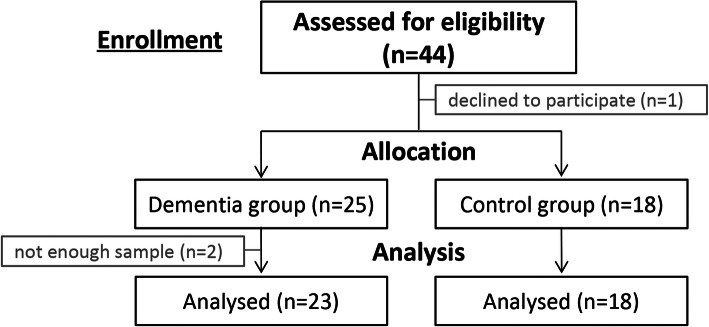
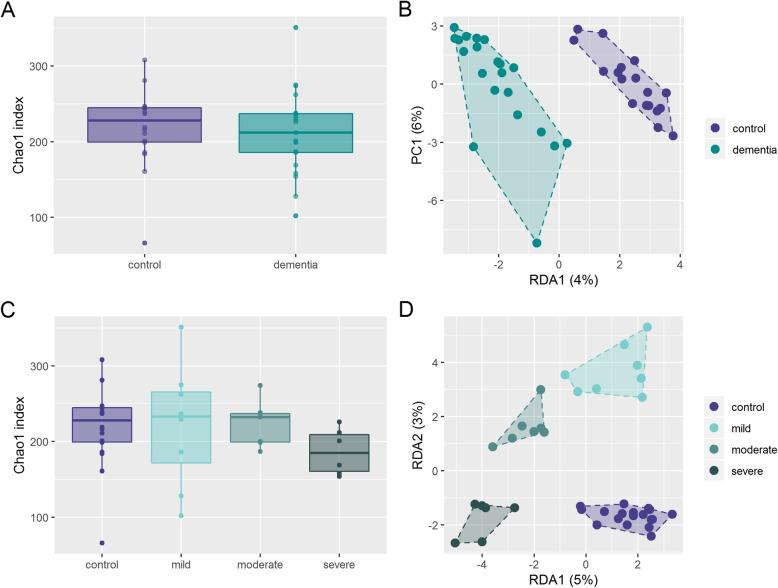
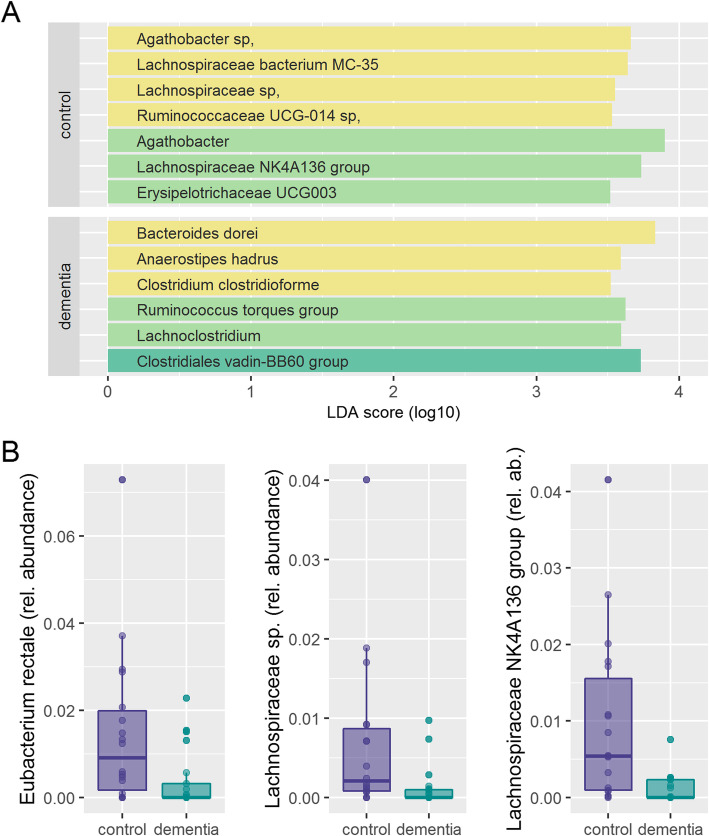
Background: Dementia is an increasing public health threat worldwide. The pathogenesis of dementia has not been fully elucidated yet. Inflammatory processes are hypothesized to play an important role as a driver for cognitive decline but the origin of inflammation is not clear. We hypothesize that disturbances in gut microbiome composition, gut barrier dysfunction, bacterial translocation and resulting inflammation are associated with cognitive dysfunction in dementia. Methods: To test this hypothesis, a cohort of 23 patients with dementia and 18 age and sex matched controls without cognitive impairments were studied. Gut microbiome composition, gut barrier dysfunction, bacterial translocation and inflammation were assessed from stool and serum samples. Malnutrition was assessed by Mini Nutritional Assessment Short Form (MNA-SF), detailed information on drug use was collected. Microbiome composition was assessed by 16S rRNA sequencing, QIIME 2 and Calypso 7.14 tools. Results: Dementia was associated with dysbiosis characterized by differences in beta diversity and changes in taxonomic composition. Gut permeability was increased as evidenced by increased serum diamine oxidase (DAO) levels and systemic inflammation was confirmed by increased soluble cluster of differentiation 14 levels (sCD14). BMI and statin use had the strongest impact on microbiome composition. Conclusion: Dementia is associated with changes in gut microbiome composition and increased biomarkers of gut permeability and inflammation. Lachnospiraceae NK4A136 group as potential butyrate producer was reduced in dementia. Malnutrition and drug intake were factors, that impact on microbiome composition. Increasing butyrate producing bacteria and targeting malnutrition may be promising therapeutic targets in dementia. Trial registration: NCT03167983 .
Overview
The claims and statistics of this paper haven’t been checked yet.
Free: it reads the open-access text and checks the first 5 claims that cite a source we can check. Create a free account to check every claim.
Integrity signals
Registry
Cites
Statistics
Figures
Verification
Claims the paper makes
The claims and statistics of this paper haven’t been checked yet.
Free: it reads the open-access text and checks the first 5 claims that cite a source we can check. Create a free account to check every claim.
Claims other papers make about this one
Each is checked against this paper’s own text: does it say what the citing paper says it does?
The source backs part of the claim, not all of it — or backs it for a different population, condition or comparison.
In the citing paper
“This condition, known as intestinal permeability or leaky gut, has been implicated in the pathophysiology of various GI, as well as extraintestinal disorders [120,121,122], including PD [117,123,124,125,126,127,128]”
From The Interplay between Gut Microbiota and Parkinson’s Disease: Implications on Diagnosis and Treatment (2022) · cites this paper as [120]
Experimental — accuracy not yet measured
Self-check
Percentages, sums and reported differences re-computed from the paper’s own numbers.
The self-check needs the paper’s full text.
Citations
Cites
1 retracted
Zhu, Q. R., Huang, L., Zhu, J., Lu, J., & Qin, H. (2018) · Mechanisms of Ageing and Development · doi:10.1016/j.mad.2018.11.001 · Cited by 4
RetractedR: A Language and Environment for Statistical Computing
R Core Team (2025) · doi:10.32614/r.manuals · Cited by 352,181
Folstein, M. F., Folstein, S. E., & McHugh, P. R. (1975) · Journal of Psychiatric Research · doi:10.1016/0022-3956(75)90026-6 · Cited by 88,282 · cited 1×
“The Mini-Mental State Examination [19] and the clock drawing test [20] were used to quantify cognitive function.”
MethodDADA2: High–resolution sample inference from Illumina amplicon data
Callahan, B. J., McMurdie, P. J., Rosen, M. J., Han, A. W., Johnson, A. J. A., & Holmes, S. P. (2016) · Nature Methods · doi:10.1038/nmeth.3869 · Cited by 35,698 · cited 2×
“Denoising (primers removing, quality filtering, correcting errors in marginal sequences, removing chimeric sequences, removing singletons, joining paired-end reads, and dereplication) was done with DADA2 [25].”
MethodClassification and Regression by randomForest
Liaw, A. I., & Wiener, M. C. (2007) · Cited by 18,594
Metagenomic biomarker discovery and explanation
Segata, N., Izard, J., Waldron, L., Gevers, D., Miropolsky, L., Garrett, W. S., & Huttenhower, C. (2011) · Genome Biology · doi:10.1186/gb-2011-12-6-r60 · Cited by 16,192 · cited 1×
“Feature selection was performed using the supervised machine learning tool Linear Discriminant analysis Effect Size (LEfSe) [29].”
Methodmice: Multivariate Imputation by Chained Equations in R
Buuren, S. V., & Groothuis-Oudshoorn, K. (2011) · Journal of Statistical Software · doi:10.18637/jss.v045.i03 · Cited by 13,870
Database resources of the National Center for Biotechnology Information: update
Wheeler, D. L. (2004) · Nucleic Acids Research · doi:10.1093/nar/gkh073 · Cited by 10,641
Applied and Environmental Microbiology
(2018) · Applied and Environmental Microbiology · doi:10.1128/eissn.1098-5336 · Cited by 5,297
Host microbiota constantly control maturation and function of microglia in the CNS
Erny, D., Hrabě de Angelis, A. L., Jaitin, D., Wieghofer, P., Staszewski, O., David, E., Keren-Shaul, H., Mahlakoiv, T., Jakobshagen, K., Buch, T., et al. (2015) · Nature Neuroscience · doi:10.1038/nn.4030 · Cited by 3,569 · cited 2×
“Microglia maturation and function is critically dependent on short-chain fatty acids produced by the gut microbiome and therefore highlights the microbiome as a potential diagnostic and therapeutic target in dementia [3].”
Backgroundpsych: Procedures for Personality and Psychological Research
Revelle, W. (2017) · Cited by 3,321
Rubenstein, L. Z., Harker, J. O., Salva, A., Guigoz, Y., & Vellas, B. (2001) · The Journals of Gerontology Series A: Biological Sciences and Medical Sciences · doi:10.1093/gerona/56.6.m366 · Cited by 2,751 · cited 4×
“Malnutrition was assessed by Mini Nutritional Assessment Short Form (MNA-SF), detailed information on drug use was collected.”
MethodInfluentialGut microbiome alterations in Alzheimer’s disease
Vogt, N. M., Kerby, R. L., Dill-McFarland, K. A., Harding, S. J., Merluzzi, A. P., Johnson, S. C., Carlsson, C. M., Asthana, S., Zetterberg, H., Blennow, K., et al. (2017) · Scientific Reports · doi:10.1038/s41598-017-13601-y · Cited by 2,137 · cited 5×
“[38] Recently, in patients with dementia a reduction in diversity of the microbiome has been described, however data on taxonomic microbiome composition are varying between different studies from different geographical locations [9, 10, 39].”
BackgroundResultInfluentialAnalysis of composition of microbiomes: a novel method for studying microbial composition
Mandal, S., Van Treuren, W., White, R. A., Eggesbø, M., Knight, R., & Peddada, S. D. (2015) · Microbial Ecology in Health & Disease · doi:10.3402/mehd.v26.27663 · Cited by 1,942 · cited 6×
“ANCOM identified several of these taxa as well as some taxa that were not discriminative on LEfSe to be differentially abundant taxa between drug user and nonuser.”
BackgroundInfluentialClinical consequences of polypharmacy in elderly
Maher, R. L., Hanlon, J., & Hajjar, E. R. (2014) · Expert Opinion on Drug Safety · doi:10.1517/14740338.2013.827660 · Cited by 1,938 · cited 1×
“The known consequences of polypharmacy are among others, cognitive impairment, a higher risk of falls and non-compliance, but interventions to reduce polypharmacy are difficult [61, 62].”
BackgroundPopulation-based metagenomics analysis reveals markers for gut microbiome composition and diversity
Zhernakova, A., Kurilshikov, A., Bonder, M. J., Tigchelaar, E. F., Schirmer, M., Vatanen, T., Mujagic, Z., Vila, A. V., Falony, G., Vieira-Silva, S., et al. (2016) · Science · doi:10.1126/science.aad3369 · Cited by 1,914 · cited 1×
“A population based deep sequencing study revealed, that proton pump inhibitors (PPI) were associated with the most profound microbiome changes, followed by statins, antibiotics, laxatives and beta blockers [17].”
BackgroundExtensive impact of non-antibiotic drugs on human gut bacteria
Maier, L., Pruteanu, M., Kuhn, M., Zeller, G., Telzerow, A., Anderson, E. E., Brochado, A. R., Fernandez, K. C., Dose, H., Mori, H., et al. (2018) · Nature · doi:10.1038/nature25979 · Cited by 1,905 · cited 1×
“It has been shown experimentally that not only classic antimicrobials but also many other humantargeted drugs have an extensive impact on human gut bacteria [15].”
BackgroundComposition, variability, and temporal stability of the intestinal microbiota of the elderly
Claesson, M. J., Cusack, S., O'Sullivan, O., Greene-Diniz, R., de Weerd, H., Flannery, E., Marchesi, J. R., Falush, D., Dinan, T., Fitzgerald, G., et al. (2011) · Proceedings of the National Academy of Sciences · doi:10.1073/pnas.1000097107 · Cited by 1,754 · cited 1×
“Microbial diversity depends on many factors, especially in elderly, where the microbiome is likely to be less stable [40].”
BackgroundDatabase resources of the National Center for Biotechnology Information
(2016) · Nucleic Acids Research · doi:10.1093/nar/gkv1290 · Cited by 1,470
European Journal of Clinical Nutrition
(2019) · European Journal of Clinical Nutrition · doi:10.1038/41430.1476-5640 · Cited by 1,445
Cattaneo, A., Cattane, N., Galluzzi, S., Provasi, S., Lopizzo, N., Festari, C., Ferrari, C., Guerra, U. P., Paghera, B., Muscio, C., et al. (2017) · Neurobiology of Aging · doi:10.1016/j.neurobiolaging.2016.08.019 · Cited by 1,382 · cited 1×
“Eubacterium rectale is a well-known butyrate producing bacterium [43] and has already previously been associated with cognitive decline [44].”
BackgroundClock-drawing: is it the ideal cognitive screening test?
Shulman, K. I. (2000) · International Journal of Geriatric Psychiatry · doi:10.1002/1099-1166(200006)15:6<548::aid-gps242>3.0.co;2-u · Cited by 1,361 · cited 1×
“The Mini-Mental State Examination [19] and the clock drawing test [20] were used to quantify cognitive function.”
MethodO’Toole, P. W., & Jeffery, I. B. (2015) · Science · doi:10.1126/science.aac8469 · Cited by 1,202 · cited 1×
“[4] Diet and the place of residence play an important role in the shaping of the microbiome.”
BackgroundGupta, V. K., Paul, S., & Dutta, C. (2017) · Frontiers in Microbiology · doi:10.3389/fmicb.2017.01162 · Cited by 1,019 · cited 1×
“Differences in analysis techniques [41] and also in geographic location [42] may be further factors that impact on diversity and composition of the gut microbiome.”
BackgroundPhylogenetic Relationships of Butyrate-Producing Bacteria from the Human Gut
Barcenilla, A., Pryde, S. E., Martin, J. C., Duncan, S. H., Stewart, C. S., Henderson, C., & Flint, H. J. (2000) · Applied and Environmental Microbiology · doi:10.1128/aem.66.4.1654-1661.2000 · Cited by 995 · cited 1×
“Eubacterium rectale is a well-known butyrate producing bacterium [43] and has already previously been associated with cognitive decline [44].”
BackgroundReduction of Abeta amyloid pathology in APPPS1 transgenic mice in the absence of gut microbiota
Harach, T., Marungruang, N., Duthilleul, N., Cheatham, V., Mc Coy, K. D., Frisoni, G., Neher, J. J., Fåk, F., Jucker, M., Lasser, T., et al. (2017) · Scientific Reports · doi:10.1038/srep41802 · Cited by 901 · cited 1×
“Furthermore, genetic alterations in amyloid genes can influence microbiome composition in mice, pointing towards a vicious cycle in AD development [8].”
BackgroundThe Prolongation of Life: Optimistic Studies
Metchnikoff, É. (2003) · Cited by 874
Interventions to improve the appropriate use of polypharmacy for older people
Patterson, S. M., Cadogan, C. A., Kerse, N., Cardwell, C. R., Bradley, M. C., Ryan, C., & Hughes, C. (2014) · Cochrane Database of Systematic Reviews · doi:10.1002/14651858.cd008165.pub3 · Cited by 754
Meehan, C. J., & Beiko, R. G. (2014) · Genome Biology and Evolution · doi:10.1093/gbe/evu050 · Cited by 715 · cited 1×
“Members of the Lachnospiraceae family have been linked to obesity on the one hand and protection from colon cancer in humans on the other hand, likely due to the association of many species within the group with the production of butyric acid, a SCFA that is important for host epithelial cell growth and integrity [45].”
Background16S rRNA Gene Analysis with QIIME2
Hall, M., & Beiko, R. G. (2018) · Methods in Molecular Biology · doi:10.1007/978-1-4939-8728-3_8 · Cited by 611 · cited 2×
“For microbiome analysis generated FASTQ files were processed for analysis using Qiime2 [24] tools implemented in Galaxy (https://galaxy.medunigraz.at).”
MethodCalypso: a user-friendly web-server for mining and visualizing microbiome–environment interactions
Zakrzewski, M., Proietti, C., Ellis, J. J., Hasan, S., Brion, M.-J., Berger, B., & Krause, L. (2017) · Bioinformatics · doi:10.1093/bioinformatics/btw725 · Cited by 567 · cited 1×
“net/calypso/).[27] For alpha diversity assessment, data was rarefied with a sampling depth of 24771 reads and Chao1 index, Simpson reciprocal index and Faith phylogenetic diversity was calculated to quantify microbial diversity.”
MethodAction and function of Faecalibacterium prausnitzii in health and disease
Ferreira-Halder, C. V., Faria, A. V. D. S., & Andrade, S. S. (2017) · Best Practice & Research Clinical Gastroenterology · doi:10.1016/j.bpg.2017.09.011 · Cited by 471 · cited 1×
“[46] Increasing the number of butyrate producing bacteria in dementia may therefore be a promising therapeutic approach, since SCFA such as butyrate are critically involved in microglia maturation and function.”
BackgroundDietary effects on human gut microbiome diversity
Xu, Z., & Knight, R. (2015) · British Journal Of Nutrition · doi:10.1017/s0007114514004127 · Cited by 456 · cited 1×
“Diet and the place of residence play an important role in the shaping of the microbiome [5, 6].”
BackgroundAltered Gut Microbiota in a Mouse Model of Alzheimer’s Disease
Zhang, L., Wang, Y., Xiayu, X., Shi, C., Chen, W., Song, N., Fu, X., Zhou, R., Xu, Y.-F., Huang, L., et al. (2017) · Journal of Alzheimer s Disease · doi:10.3233/jad-170020 · Cited by 449 · cited 1×
“Animal studies suggest that AD is associated with changes in the gut microbiome composition with a decrease in beneficial, anti-inflammatory genera [7].”
BackgroundESPEN guidelines on nutrition in dementia
Volkert, D., Chourdakis, M., Faxen-Irving, G., Frühwald, T., Landi, F., Suominen, M. H., Vandewoude, M., Wirth, R., & Schneider, S. M. (2015) · Clinical Nutrition · doi:10.1016/j.clnu.2015.09.004 · Cited by 442 · cited 1×
“Malnutrition is common in dementia and nutrition care is an integral part of dementia care [69].”
BackgroundHaran, J. P., Bhattarai, S. K., Foley, S. E., Dutta, P., Ward, D. V., Bucci, V., & McCormick, B. A. (2019) · mBio · doi:10.1128/mbio.00632-19 · Cited by 412 · cited 2×
“Recent in vitro data suggest that the altered stool microbiome composition in dementia directly modulates intestinal epithelial homeostasis via the anti-inflammatory Pglycoprotein pathway [11].”
BackgroundAllali, I., Arnold, J. W., Roach, J., Cadenas, M. B., Butz, N., Hassan, H. M., Koci, M., Ballou, A., Mendoza, M., Ali, R., et al. (2017) · BMC Microbiology · doi:10.1186/s12866-017-1101-8 · Cited by 298 · cited 1×
“Differences in analysis techniques [41] and also in geographic location [42] may be further factors that impact on diversity and composition of the gut microbiome.”
BackgroundPsychobiotics in mental health, neurodegenerative and neurodevelopmental disorders
Cheng, L.-H., Liu, Y.-W., Wu, C.-C., Wang, S., & Tsai, Y.-C. (2019) · Journal of Food and Drug Analysis · doi:10.1016/j.jfda.2019.01.002 · Cited by 291 · cited 1×
“have been conducted with varying success in neurodegenerative diseases [53].”
BackgroundProbiotic Supplementation in Patients with Alzheimer’s Dementia - An Explorative Intervention Study
Leblhuber, F., Steiner, K., Schuetz, B., Fuchs, D., & Gostner, J. M. (2018) · Current Alzheimer Research · doi:10.2174/1389200219666180813144834 · Cited by 269 · cited 2×
“Another study in dementia showed a decrease in previously elevated zonulin levels after probiotic treatment as a possible hint towards a causal link between dysbiosis and gut permeability in dementia [48].”
Köhler, C., Maes, M., Slyepchenko, A., Berk, M., Solmi, M., Lanctôt, K., & Carvalho, A. (2016) · Current Pharmaceutical Design · doi:10.2174/1381612822666160907093807 · Cited by 233 · cited 4×
“In AD, pathologic protein aggregates and neuroinflammation mediated by microglia cells are involved in the pathogenesis, however, the exact mechanism is still unclear [2].”
BackgroundInfluentialSaji, N., Niida, S., Murotani, K., Hisada, T., Tsuduki, T., Sugimoto, T., Kimura, A., Toba, K., & Sakurai, T. (2019) · Scientific Reports · doi:10.1038/s41598-018-38218-7 · Cited by 224 · cited 3×
“Alpha diversity data in dementia so far are conflicting, since a lower alpha diversity has been observed in the study from the USA [9], whereas in the Japanese study a lower alpha diversity was observed in the control group [10] but we found unchanged alpha diversity of the gut microbiome between European dementia pat…”
BackgroundResultGut microbiota and malnutrition
Million, M., Diallo, A., & Raoult, D. (2017) · Microbial Pathogenesis · doi:10.1016/j.micpath.2016.02.003 · Cited by 219 · cited 1×
“In general, malnutrition has been associated with differences in microbiome composition, such as loss of bifidobacteria, however, most studies were performed in malnourished children and not in elderly people [70].”
ResultAssociation of dietary type with fecal microbiota in vegetarians and omnivores in Slovenia
Matijašić, B. B., Obermajer, T., Lipoglavšek, L., Grabnar, I., Avguštin, G., & Rogelj, I. (2014) · European Journal of Nutrition · doi:10.1007/s00394-013-0607-6 · Cited by 218 · cited 1×
“described as a human pathogen [49] but has also been described to be associated with vegetarian diet [50].”
BackgroundGut microbiota, cognitive frailty and dementia in older individuals: A systematic review
Ticinesi, A., Tana, C., Nouvenne, A., Prati, B., Lauretani, F., & Meschi, T. (2018) · Clinical Interventions in Aging · doi:10.2147/cia.s139163 · Cited by 215 · cited 1×
“[38] Recently, in patients with dementia a reduction in diversity of the microbiome has been described, however data on taxonomic microbiome composition are varying between different studies from different geographical locations [9, 10, 39].”
BackgroundInterventions to improve the appropriate use of polypharmacy for older people
Patterson, S. M., Hughes, C., Kerse, N., Cardwell, C. R., & Bradley, M. C. (2012) · Cochrane Database of Systematic Reviews · doi:10.1002/14651858.cd008165.pub2 · Cited by 207 · cited 1×
“The known consequences of polypharmacy are among others, cognitive impairment, a higher risk of falls and non-compliance, but interventions to reduce polypharmacy are difficult [61, 62].”
BackgroundC-reactive protein and Hypertension
Hage, F. G. (2014) · Journal of Human Hypertension · doi:10.1038/jhh.2013.111 · Cited by 205 · cited 1×
“Antihypertensive use was associated with slightly, but significantly elevated CRP levels, which is most likely due to the underlying disease and not to the drug itself, since arterial hypertension is associated with elevated CRP levels [68] and therefore validates the relevance of our findings al-”
Resultggcorrplot: Visualization of a Correlation Matrix using 'ggplot2'
Kassambara, A. (2016) · doi:10.32614/cran.package.ggcorrplot · Cited by 159
fmsb: Functions for Medical Statistics Book with some Demographic Data
<minatonakazawa@gmail.com>, M. N. (2010) · doi:10.32614/cran.package.fmsb · Cited by 154
Leber, B., Tripolt, N. J., Blattl, D., Eder, M., Wascher, T. C., Pieber, T. R., Stauber, R. E., Sourij, H., Oettl, K., & Stadlbauer, V. (2012) · European Journal of Clinical Nutrition · doi:10.1038/ejcn.2012.103 · Cited by 138
Self-citationLi, J., Wu, T., Li, N., Wang, X., Chen, G., & Lyu, X. (2019) · Food & Function · doi:10.1039/c8fo01962b · Cited by 133 · cited 1×
“A dietary intervention with bilberry anthocyanin extract was able to increase Lachnospiraceae NK4A136 group abundance and improve gut barrier function in ageing rats [47].”
BackgroundElevated fecal calprotectin in patients with Alzheimer’s dementia indicates leaky gut
Leblhuber, F., Geisler, S., Steiner, K., Fuchs, D., & Schütz, B. (2015) · Journal of Neural Transmission · doi:10.1007/s00702-015-1381-9 · Cited by 119 · cited 1×
“Increased calprotectin levels in stool as a sign of intestinal inflammation have been observed in a pilot study [55].”
BackgroundHorvath, A., Leber, B., Schmerboeck, B., Tawdrous, M., Zettel, G., Hartl, A., Madl, T., Stryeck, S., Fuchs, D., Lemesch, S., et al. (2016) · Alimentary Pharmacology & Therapeutics · doi:10.1111/apt.13788 · Cited by 118 · cited 1×
“Bacterial products (endotoxin, peptidoglycan and bacterial DNA) were detected in serum using HEKBlue hTLR4, HEK-Blue hNOD2 and HEK-Blue hTLR9 reporter cells (Invivogen, Toulouse, France), respectively as published previously [23].”
MethodSelf-citationThe Human Gastric Microbiome Is Predicated upon Infection with Helicobacter pylori
Klymiuk, I., Bilgilier, C., Stadlmann, A., Thannesberger, J., Kastner, M.-T., Högenauer, C., Püspök, A., Biowski-Frotz, S., Schrutka-Kölbl, C., Thallinger, G. G., et al. (2017) · Frontiers in Microbiology · doi:10.3389/fmicb.2017.02508 · Cited by 107 · cited 2×
“Total DNA was isolated from frozen stool samples using MagnaPure LC DNA Isolation Kit III (Bacteria, Fungi) (Roche, Mannheim, Germany) according to manufacturer’s instructions including mechanic and enzymatic lysis [22].”
MethodClostridium clostridioforme: a mixture of three clinically important species
Finegold, S. M., Song, Y., Liu, C., Hecht, D. W., Summanen, P. H., Könönen, E., & Allen, S. D. (2005) · European Journal of Clinical Microbiology & Infectious Diseases · doi:10.1007/s10096-005-1334-6 · Cited by 105 · cited 1×
“described as a human pathogen [49] but has also been described to be associated with vegetarian diet [50].”
BackgroundHaran, J. P., Bucci, V., Dutta, P., Ward, D., & McCormick, B. (2018) · Journal of Medical Microbiology · doi:10.1099/jmm.0.000640 · Cited by 97 · cited 1×
“Diet and the place of residence play an important role in the shaping of the microbiome [5, 6].”
BackgroundLinsalata, M., Riezzo, G., D’Attoma, B., Clemente, C., Orlando, A., & Russo, F. (2018) · BMC Gastroenterology · doi:10.1186/s12876-018-0888-6 · Cited by 95 · cited 1×
“[56-59] Also, Ginko biloba, a commonly used phytotherapeutic drug in dementia, was able to reduce DAO levels in an animal model of alcoholic liver disease, indicating both the validity of DAO as a permeability biomarker and that gut hyperpermeability may be a modifiable and relevant therapeutic target.”
BackgroundHorvath, A., Rainer, F., Bashir, M., Leber, B., Schmerboeck, B., Klymiuk, I., Groselj-Strele, A., Durdevic, M., Freedberg, D. E., Abrams, J. A., et al. (2019) · Scientific Reports · doi:10.1038/s41598-019-48352-5 · Cited by 93 · cited 11×
“Antidepressants, laxatives, opioids, antidementia drugs, sedatives, vitamin D and metamizole were prescribed nearly exclusively in the dementia group, whereas proton pump inhibitors (PPI), antihypertensive drugs, statins, nonsteroidal anti-inflammatory drugs (NSAIDS), paracetamol, antidiabetics, thyroid hormones, calc…”
BackgroundInfluentialSelf-citationPoullis, A., Foster, R., & Mendall, M. A. (2003) · European Journal of Gastroenterology & Hepatology · doi:10.1097/00042737-200305000-00021 · Cited by 82 · cited 1×
“This has been previously described in the context of other diseases [65-67] and we have recently linked dysbiosis, gut permeability and intestinal inflammation to adverse outcome in patients with liver cirrhosis who use PPI.”
BackgroundThe composition of polypharmacy: A register-based study of Swedes aged 75 years and older
Wastesson, J. W., Cedazo-Mı́nguez, Á., Fastbom, J., Maioli, S., & Johnell, K. (2018) · PLoS ONE · doi:10.1371/journal.pone.0194892 · Cited by 81 · cited 1×
“[15-17] We hypothesize that dementia is associated with dysbiosis, gut barrier dysfunction and inflammation and we aim to identify external factors influencing microbiome composition in dementia, such as nutrition and drug intake.”
BackgroundRainer, F., Horvath, A., Sandahl, T. D., Leber, B., Schmerboeck, B., Blesl, A., Groselj‐Strele, A., Stauber, R. E., Fickert, P., Stiegler, P., et al. (2018) · Alimentary Pharmacology & Therapeutics · doi:10.1111/apt.14474 · Cited by 65
Self-citationSanders, C. L., Wengreen, H. J., Schwartz, S., Behrens, S. J., Corcoran, C., Lyketsos, C. G., & Tschanz, J. T. (2018) · Alzheimer Disease & Associated Disorders · doi:10.1097/wad.0000000000000274 · Cited by 64
Lundgren, D., Eklöf, V., Palmqvist, R., Hultdin, J., & Karling, P. (2019) · Scandinavian Journal of Gastroenterology · doi:10.1080/00365521.2019.1566493 · Cited by 63 · cited 1×
“This has been previously described in the context of other diseases [65-67] and we have recently linked dysbiosis, gut permeability and intestinal inflammation to adverse outcome in patients with liver cirrhosis who use PPI.”
BackgroundAuer, S. R., Höfler, M., Linsmayer, E., Beránková, A., Prieschl, D., Ratajczak, P., Šteffl, M., & Holmerová, I. (2018) · BMC Geriatrics · doi:10.1186/s12877-018-0870-8 · Cited by 59 · cited 1×
“Potentially influencing factors could be malnutrition, which is common in dementia and associated with disease severity, [12-14] or drug intake, since polypharmacy is a common problem in elderly persons and the impact of drugs on the microbiome has recently gained attention.”
BackgroundVandewoude, M. F. J., van Wijngaarden, J. P., Maesschalck, L. D., Luiking, Y. C., & Gossum, A. V. (2018) · Aging Clinical and Experimental Research · doi:10.1007/s40520-018-0957-2 · Cited by 50 · cited 1×
“Potentially influencing factors could be malnutrition, which is common in dementia and associated with disease severity, [12-14] or drug intake, since polypharmacy is a common problem in elderly persons and the impact of drugs on the microbiome has recently gained attention.”
BackgroundChanges of plasma D(-)-lactate, diamine oxidase and endotoxin in patients with liver cirrhosis.
Ruan, P., Gong, Z., & Quan-rong, Z. (2004) · PubMed · Cited by 44
Fecal Microbiome Among Nursing Home Residents with Advanced Dementia and Clostridium difficile
Araos, R., Andreatos, N., Ugalde, J., Mitchell, S., Mylonakis, E., & D’Agata, E. M. C. (2018) · Digestive Diseases and Sciences · doi:10.1007/s10620-018-5030-7 · Cited by 29 · cited 1×
“[38] Recently, in patients with dementia a reduction in diversity of the microbiome has been described, however data on taxonomic microbiome composition are varying between different studies from different geographical locations [9, 10, 39].”
BackgroundSocial factors and the outcome of dementia
Orrell, M. W., Butler, R., & Bebbington, P. (2000) · International Journal of Geriatric Psychiatry · doi:10.1002/1099-1166(200006)15:6<515::aid-gps147>3.0.co;2-u · Cited by 28
Stadlbauer, V., Komarova, I., Klymiuk, I., Durdević, M., Reisinger, A. C., Blesl, A., Rainer, F., & Horvath, A. (2020) · Liver International · doi:10.1111/liv.14382 · Cited by 28 · cited 1×
“We recently showed that PPI are one of the main drivers of dysbiosis in liver cirrhosis [63, 64].”
BackgroundSelf-citationLi, H., Qiu, P., Wang, J., Niu, C., & Suhua, P. (2015) · Food & Function · doi:10.1039/c4fo00739e · Cited by 24 · cited 1×
“Also, Ginko biloba, a commonly used phytotherapeutic drug in dementia, was able to reduce DAO levels in an animal model of alcoholic liver disease, indicating both the validity of DAO as a permeability biomarker and that gut hyperpermeability may be a modifiable and relevant therapeutic target [60].”
BackgroundrobustHD: Robust Methods for High-Dimensional Data
Alfons, A. (2012) · doi:10.32614/cran.package.robusthd · Cited by 21
Singh, P., Chung, H., Lee, I., D’Souza, R., Kim, H., & Hong, S. (2018) · BMC Genomics · doi:10.1186/s12864-018-4672-3 · Cited by 16 · cited 1×
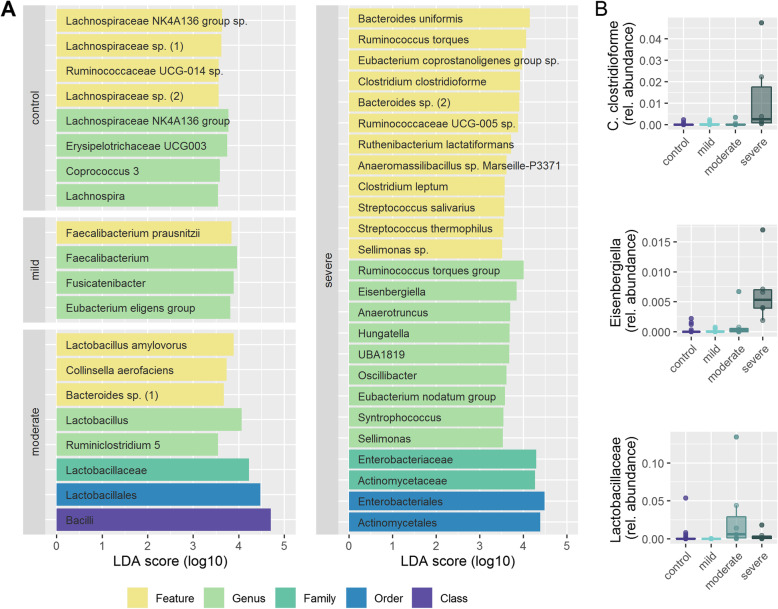
“Lactobacillus amylovorus has been described as a novel probiotic strain that is able to reduce ammonia levels and may therefore be associated with cognitive function [54].”
BackgroundProton pump inhibitors may cause elevation in faecal calprotectin levels
Cohen, M. (2016) · British Journal of General Practice · doi:10.3399/bjgp16x685813 · Cited by 12 · cited 1×
“This has been previously described in the context of other diseases [65-67] and we have recently linked dysbiosis, gut permeability and intestinal inflammation to adverse outcome in patients with liver cirrhosis who use PPI.”
BackgroundRobust Methods for High-Dimensional Data
Alfons, A. (2016) · Cited by 9
Research works printed but not linked: 3
- Dementia WHO fact sheet 2016
- S3-Leitlinie Demenzen Deutsche Gesellschaft für Neurologie, Hrsg. Leitlinien für Diagnostik und Therapie in der Neurologie 2016
- Rundel C Cetinkaya-Rundel M Clyde M Banks D statsr: Companion package for statistics with 2018
Cited by
Shi, H., Ge, X., Ma, X., Zheng, M., Cui, X., Pan, W., Zheng, P., Yang, X., Zhang, P., Hu, M., et al. (2021) · Microbiome · doi:10.1186/s40168-021-01172-0 · Cited by 247
“For example, intestinal permeability is increased in dementia patients with endotoxemia, a threefold increase in serum lipopolysaccharide (LPS, the major outer membrane component of Gram-negative bacteria) [12, 13].”
BackgroundThe intestinal barrier in disorders of the central nervous system
Pellegrini, C., Fornai, M., D'Antongiovanni, V., Antonioli, L., Bernardini, N., & Derkinderen, P. (2023) · The Lancet Gastroenterology & Hepatology · doi:10.1016/s2468-1253(22)00241-2 · Cited by 239
Mitrea, L., Nemeş, S.-A., Szabo, K., Teleky, B.-E., & Vodnar, D.-C. (2022) · Frontiers in Medicine · doi:10.3389/fmed.2022.813204 · Cited by 237
Microbiota from Alzheimer’s patients induce deficits in cognition and hippocampal neurogenesis
Grabrucker, S., Marizzoni, M., Silajdžić, E., Lopizzo, N., Mombelli, E., Nicolas, S., Dohm-Hansen, S., Scassellati, C., Moretti, D. V., Rosa, M., et al. (2023) · Brain · doi:10.1093/brain/awad303 · Cited by 236
“This is interesting considering a previously published observation that genus Eisenbergiella increases with severity of cognitive impairment 117 and that genus Desulfovibrio was negatively correlated with MMSE scores.”
Leibovitzh, H., Lee, S.-H., Xue, M., Raygoza Garay, J. A., Hernandez-Rocha, C., Madsen, K. L., Meddings, J. B., Guttman, D. S., Espin-Garcia, O., Smith, M. I., et al. (2022) · Gastroenterology · doi:10.1053/j.gastro.2022.07.004 · Cited by 202
Metadata
- Authors
- Stadlbauer, V., Engertsberger, L., Komarova, I., Feldbacher, N., Leber, B., Pichler, G., Fink, N., Scarpatetti, M., Schippinger, W., Schmidt, R., & Horvath, A.
- Affiliations
- Medical University of Graz (AT)
- Geriatrische Gesundheitszentren (AT)
- Corresponding author
- Stadlbauer, Vanessa
- ORCID
- Venue
- BMC Geriatrics
- Published
- 2020-07-20
- Volume
- 20
- Issue
- 1
- Pages
- 248-248
- ISSN
- 1471-2318 (ISSN-L)
- PMC
- PMC7372911
- OpenAlex
- W3043167826
- Cited by
- 182
- References
- 71
- Citations by year
- 2026: 20 · 2025: 29 · 2024: 30 · 2023: 41 · 2022: 41 · 2021: 21
- FWCI
- 8.35
- Type
- journal article
- Language
- en
- Open access
- gold
- doi.org
- Licence
- cc-by
- creativecommons.org/licenses/by/4.0 (tdm)
- creativecommons.org/licenses/by/4.0 (vor)
- Locations
- BMC Geriatrics (publishedVersion, cc-by)
- Research Square (acceptedVersion, cc-by)
- PubMed Central (publishedVersion, cc-by)
- PubMed (publishedVersion)
- DOAJ (DOAJ: Directory of Open Access Journals) (submittedVersion, cc-by-sa)
- Funders
- Österreichische Forschungsförderungsgesellschaft (Center for Biomarker Research in Medicine)
- Topics
- Life Sciences › Biochemistry, Genetics and Molecular Biology › Molecular Biology › Gut microbiota and health
- Health Sciences › Medicine › Gastroenterology › Gastrointestinal motility and disorders
- Health Sciences › Medicine › Psychiatry and Mental health › Dementia and Cognitive Impairment Research
- Keywords
- dementia, gut dysbiosis, gut microbiota, intestinal barrier dysfunction, intestinal permeability, bacterial translocation, systemic inflammation, cognitive decline, malnutrition, statin use, butyrate-producing bacteria, Lachnospiraceae NK4A136, soluble CD14, diamine oxidase, body mass index
- MeSH terms
- Gastrointestinal Microbiome, Bacteria, Dementia, Feces, Humans, Inflammation, Pilot Projects, RNA, Ribosomal, 16S, Dysbiosis
About these checks
Registry, retraction, Cites and statistics results are computed, not judged, with one exception: a printed reference that no index lists is read once by a model before it counts as a citation error. Claims are extracted by a model and kept only when their quote appears verbatim in the text; each cited source is then checked, with a model’s help, for whether it says what the claim relies on. Those verdicts can be wrong — read the claim’s quote and the cited source before relying on one.
Statistics and arithmetic are recomputed, not judged.
Confidence bands are shown only for fields calibrated on our annotated test set. None is calibrated yet, so no band is shown.
What counts as a claim ›How we measure confidence ›How we check this ›
Are you an author, or do you see a problem with this page? Request a review
Data sources
Bibliographic data: Semantic Scholar, OpenAlex, Crossref.
Contains information from the Semantic Scholar Academic Graph Datasets, made available under the ODC Attribution License (ODC-BY 1.0).
Semantic Scholar’s data is described in: Kinney, R., et al. (2023). The Semantic Scholar Open Data Platform. arXiv:2301.10140.
