

Impact of relational continuity of primary care in aged care: a systematic review
Open accessThe DOI matches its Crossref record; 77 of the 82 references it cites were found in a registry or an index.
Abstract
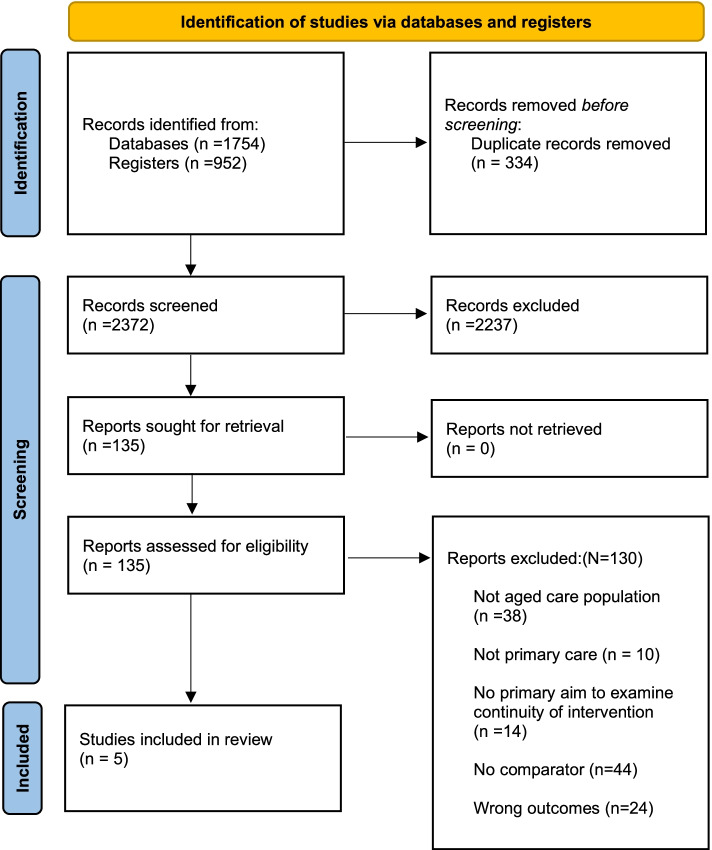
Background: Greater continuity of care has been associated with lower hospital admissions and patient mortality. This systematic review aims to examine the impact of relational continuity between primary care professionals and older people receiving aged care services, in residential or home care settings, on health care resource use and person-centred outcomes. Methods: Systematic review of five databases, four trial registries and three grey literature sources to October 2020. Included studies (a) aimed to increase relational continuity with a primary care professional, (b) focused on older people receiving aged care services (c) included a comparator and (d) reported outcomes of health care resource use, quality of life, activities of daily living, mortality, falls or satisfaction. Cochrane Collaboration or Joanna Briggs Institute criteria were used to assess risk of bias and GRADE criteria to rate confidence in evidence and conclusions. Results: Heterogeneity in study cohorts, settings and outcome measurement in the five included studies (one randomised) precluded meta-analysis. None examined relational continuity exclusively with non-physician providers. Higher relational continuity with a primary care physician probably reduces hospital admissions (moderate certainty evidence; high versus low continuity hazard ratio (HR) 0.94; 95% confidence interval (CI) 0.92–0.96, n = 178,686; incidence rate ratio (IRR) 0.99, 95%CI 0.76–1.27, n = 246) and emergency department (ED) presentations (moderate certainty evidence; high versus low continuity HR 0.90, 95%CI 0.89–0.92, n = 178,686; IRR 0.91, 95%CI 0.72–1.15, n = 246) for older community-dwelling aged care recipients. The benefit of providing on-site primary care for relational continuity in residential settings is uncertain (low certainty evidence, 2 studies, n = 2,468 plus 15 care homes); whilst there are probably lower hospitalisations and may be fewer ED presentations, there may also be an increase in reported mortality and falls. The benefit of general practitioners’ visits during hospital admission is uncertain (very low certainty evidence, 1 study, n = 335). Conclusion: Greater relational continuity with a primary care physician probably reduces hospitalisations and ED presentations for community-dwelling aged care recipients, thus policy initiatives that increase continuity may have cost offsets. Further studies of approaches to increase relational continuity of primary care within aged care, particularly in residential settings, are needed. Review registration: CRD42021215698.
Overview
The claims and statistics of this paper haven’t been checked yet.
Free: it reads the open-access text and checks the first 5 claims that cite a source we can check. Create a free account to check every claim.
Integrity signals
Registry
Cites
Statistics
Figures
Verification
Claims the paper makes
The claims and statistics of this paper haven’t been checked yet.
Free: it reads the open-access text and checks the first 5 claims that cite a source we can check. Create a free account to check every claim.
Claims other papers make about this one
Each is checked against this paper’s own text: does it say what the citing paper says it does?
The source backs part of the claim, not all of it — or backs it for a different population, condition or comparison.
In the citing paper
“In addition, increased continuity of care, particularly with a family physician, is associated with decreased hospitalizations, fewer emergency visits, more preventive care, improved patient satisfaction, safer prescribing, lower rates of major adverse events and reduced mortality [11–17].”
From Improved access to and continuity of primary care after attachment to a family physician: longitudinal cohort study on centralized waiting lists for unattached patients in Quebec, Canada (2022) · cites this paper as [15]
Experimental — accuracy not yet measured
Self-check
Percentages, sums and reported differences re-computed from the paper’s own numbers.
The self-check needs the paper’s full text.
Citations
Cites
The PRISMA 2020 statement: An updated guideline for reporting systematic reviews
Page, M. J., McKenzie, J. E., Bossuyt, P. M., Boutron, I., Hoffmann, T. C., Mulrow, C. D., Shamseer, L., Tetzlaff, J. M., Akl, E. A., Brennan, S. E., et al. (2021) · BMJ · doi:10.1136/bmj.n71 · Cited by 108,283
Preferred Reporting Items for Systematic Reviews and Meta-Analyses: the PRISMA statement
Moher, D., Liberati, A., Tetzlaff, J., Altman, D. G., & for the PRISMA Group (2009) · BMJ · doi:10.1136/bmj.b2535 · Cited by 83,823
RoB 2: a revised tool for assessing risk of bias in randomised trials
Sterne, J. A. C., Savović, J., Page, M. J., Elbers, R. G., Blencowe, N. S., Boutron, I., Cates, C. J., Cheng, H.-Y., Corbett, M. S., Eldridge, S. M., et al. (2019) · BMJ · doi:10.1136/bmj.l4898 · Cited by 34,787 · cited 1×
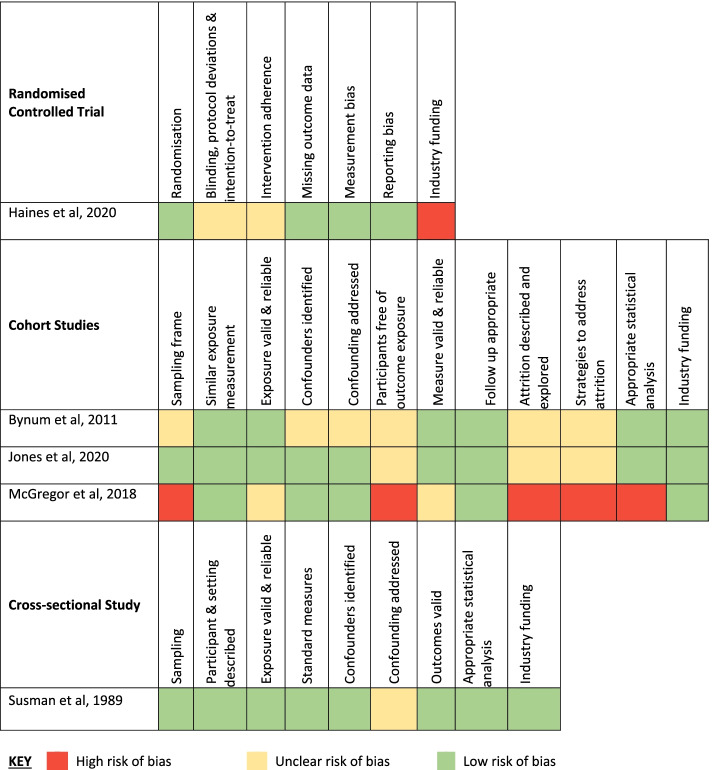
“The Cochrane Risk of Bias tool version 2 assessing six areas for risk of bias was used for randomised controlled trials (RCTs) and the Joanna Briggs Critical Appraisal Tool was used for cohort and crosssectional studies [45, 46].”
MethodDermyshi, E., Wang, Y., Yan, C., Hong, W., Qiu, G., Gong, X., & Zhang, T. (2017) · Neonatology · doi:10.1159/000454668 · Cited by 24,451
Preferred Reporting Items for Systematic Reviews and Meta-Analyses: The PRISMA Statement
Moher, D., Liberati, A., Tetzlaff, J., & Altman, D. G. (2009) · Journal of Clinical Epidemiology · doi:10.1016/j.jclinepi.2009.06.005 · Cited by 19,575
GRADE guidelines: 1. Introduction—GRADE evidence profiles and summary of findings tables
Guyatt, G., Oxman, A. D., Akl, E. A., Kunz, R., Vist, G., Brozek, J., Norris, S., Falck-Ytter, Y., Glasziou, P., & deBeer, H. (2011) · Journal of Clinical Epidemiology · doi:10.1016/j.jclinepi.2010.04.026 · Cited by 10,681 · cited 1×
“The overall certainty in the evidence supporting review findings for each setting/intervention category was assessed using the Grades of Recommendation, Assessment, Development, and Evaluation (GRADE) approach [47].”
MethodShea, B. J., Reeves, B. C., Wells, G., Thuku, M., Hamel, C., Moran, J., Moher, D., Tugwell, P., Welch, V., Kristjansson, E., et al. (2017) · BMJ · doi:10.1136/bmj.j4008 · Cited by 10,636 · cited 1×
“4% agreement on independent screening [39].”
Norderyd, O. M., Koch, G., Papias, A., Köhler, A. A., Helkimo, A. N., Brahm, C., Lindmark, U., Lindfors, N., Mattsson, A., Rolander, B., et al. (2015) · PubMed · Cited by 3,584
The role of google scholar in evidence reviews and its applicability to grey literature searching
Haddaway, N. R., Collins, A. M., Coughlin, D., & Kirk, S. (2015) · PLOS ONE · doi:10.1371/journal.pone.0138237 · Cited by 2,387 · cited 3×
“gov) and three sources of grey literature (Open Grey, ProQuest Dissertations & Thesis Global and first 100 records from Google Scholar [38]).”
BackgroundInfluentialContinuity of care: a multidisciplinary review
Haggerty, J. L., Reid, R. J., Freeman, G. K., Starfield, B. H., Adair, C. E., & McKendry, R. (2003) · BMJ · doi:10.1136/bmj.327.7425.1219 · Cited by 2,374 · cited 5×
“Relational continuity refers to the continuous relationship between a practitioner and a patient, beyond a specific episode of illness [27, 29].”
BackgroundInfluential
Research works printed but not linked: 6
- Dyer SM,; Valeri, M.; Arora, N.; Ross, T.; Winsall, M.; Tilden, D.; Crotty, M.: Aged Care Royal Commission Research Paper 2 – Review of International Systems for Long-Term Care of Older People. In. Adelaide: Royal Commission into Aged Care Quality and Safety; 2019.
- Purdy S: Avoiding hospital admissions. What does the research evidence say? In. London: The Kings Fund; 2010: 28.
- Australian Institute of Heath and Welfare: Home care packages program data report 1 July– 30 September 2020. In: Home Care Packages Program Data Reports. Canberra: Australian Government; 2020: 30.
- Lei L Continuity of Care and Health Care Utilization and Cost Among Community-dwelling Older Veterans with Dementia 2020 Ph.D. Ann Arbor University of Rochester
- Fedele R: How nurse-led models of care are reshaping healthcare. Australian Nursing and Midwifery Journal 2020.
- Medicare Benefits Schedule Review Taskforce: Report from the Nurse Practitioner Reference Group. In.: Medicare Benefits Schedule Review Taskforce; 2018.
Cited by
Personal GP continuity improves healthcare outcomes in primary care populations: a systematic review
Engström, S., André, M., Arvidsson, E., Östgren, C. J., Troein, M., & Borgqúist, L. (2025) · British Journal of General Practice · doi:10.3399/bjgp.2024.0568 · Cited by 32
Sinnott, C., Ansari, A., Price, E., Fisher, R. F., Beech, J., Alderwick, H., & Dixon‐Woods, M. (2024) · British Journal of General Practice · doi:10.3399/bjgp.2024.0033 · Cited by 31
“66,241,242 Because the supply-focused model has dominated policy responses, continuity has not been ‘designed in’ at policy level in the same way that fast access to appointments has been.”
BackgroundSmithman, M. A., Haggerty, J., Gaboury, I., & Breton, M. (2022) · BMC Primary Care · doi:10.1186/s12875-022-01850-4 · Cited by 25
Nordaunet, O. M., Gjevjon, E. R., Olsson, C., Aagaard, H., & Borglin, G. (2024) · BMC Nursing · doi:10.1186/s12912-023-01675-1 · Cited by 24
“Although earlier research has targeted nurse-led interventions [130] and continuity of care [26, 131–133], we could not detect interventions focusing on continuous fundamental nursing addressing older people in home-and facility-based care.”
MethodContinuity of care as central theme in perinatal care: A systematic review
BAART, A., Brunsveld‐Reinders, A. H., Pijnappel, L., HAAN, M. D., & Ginkel, J. M. D. M. (2024) · Midwifery · doi:10.1016/j.midw.2024.104273 · Cited by 25
The Wall of Evidence for Continuity of Care: How Many More Bricks Do We Need?
Maarsingh, O. R. (2024) · The Annals of Family Medicine · doi:10.1370/afm.3116 · Cited by 18
Personal care workers' intention to stay in residential aged care: An integrative review
Wang, D., Maneze, D., Everett, B., George, A., Tan, J. D. L., & Salamonson, Y. (2024) · Journal of Advanced Nursing · doi:10.1111/jan.16242 · Cited by 15
Keche, Y. N., Gaikwad, N., Wasnik, P. N., Siddiqui, S., Nagpure, K., & Dhaneria, S. (2022) · Journal of Family Medicine and Primary Care · doi:10.4103/jfmpc.jfmpc_733_22 · Cited by 15
“[16] The quality of primary care becomes important because of an advanced age, disease complexity, and multi‐morbidity, resulting in hospitalization which can be improved by interventions targeting primary care[17,30] and use of screening tools such as STOPP/START and Beers criteria by the primary/family physician.”
MethodYang, S., Zhou, M., Liao, J., Ding, X., Hu, N., & Kuang, L. (2022) · International Journal of Environmental Research and Public Health · doi:10.3390/ijerph191912979 · Cited by 12
Remote consultations in primary care: Patient experiences and suggestions for improvement
de Visser, R. O., Nwamba, C., Brearley, E., Shafiei, V., & Hart, L. (2024) · Journal of Health Psychology · doi:10.1177/13591053241240383 · Cited by 13
“…a patient-doctor dyad, and it is important because it may foster better understanding of each other’s views and priorities (Gray et al., 2003), and it is also an important influence on patient satisfaction and health outcomes (Bazemore et al., 2023; Dyer et al., 2022; Pereira Gray et al., 2018).”
BackgroundLee, I., Choo, E., Kim, S., Je, N. K., Jo, A. J., & Jang, E. J. (2024) · BMJ Open Respiratory Research · doi:10.1136/bmjresp-2024-002472 · Cited by 7
Arwin, H., Halldórsson, Á., & Hellström, A. (2024) · European Management Journal · doi:10.1016/j.emj.2024.11.009 · Cited by 7
Ménard, A., Podinic, I., Conklin, J., Hossain, S., Arya, A., Archibald, D., Elliott, J. B., Kothari, A. R., Stolee, P., Sveistrup, H., et al. (2025) · Geriatric Nursing · doi:10.1016/j.gerinurse.2025.01.038 · Cited by 8
Inacio, M. C. S., Schwabe, J., Crotty, M., Williams, H., Wesselingh, S. L., Kellie, A. R., Roder, P. D., Nixon, K.-L., Harvey, G., Sluggett, J. K., et al. (2026) · Age and Ageing · doi:10.1093/ageing/afag026 · Cited by 6
“Similarly,whilesomesupporting evidenceexistsforthedeliveryofalliedhealthservices[15], includingeye[16],mental[17]andoralhealth[18],aswellas medicationreviews[19]andthepositiveimpactofcontinuity ofprimarycareafterenteringLTC[6,20],theevidence formostservicesisnotrobust.”
Self-citationHealth needs of older people: a challenge for primary health care
Santoyo-Sánchez, G., & Reyes‐Morales, H. (2024) · Gaceta Médica de México · doi:10.24875/gmm.m24000895 · Cited by 6
Inacio, M. C. S., Collier, L. R., Air, T., Thapaliya, K., Crotty, M., Williams, H., Wesselingh, S. L., Kellie, A. R., Roder, D. M., Lewis, A., et al. (2023) · Australian Journal on Ageing · doi:10.1111/ajag.13199 · Cited by 6
Self-citationKim, S., Choo, E., Jang, E. J., Je, N. K., & Lee, I. (2025) · PLoS ONE · doi:10.1371/journal.pone.0325553 · Cited by 5
Primary health care service utilisation before and after entry into long-term care in Australia
Caughey, G. E., Rahja, M., Collier, L. R., Air, T., Thapaliya, K., Crotty, M., Williams, H., Harvey, G., Sluggett, J. K., Gill, T. K., et al. (2023) · Archives of Gerontology and Geriatrics · doi:10.1016/j.archger.2023.105210 · Cited by 5
Self-citationWatson, J. B., Green, M. A., Giebel, C. M., & Akpan, A. (2024) · BMC Geriatrics · doi:10.1186/s12877-024-04744-5 · Cited by 5
“Meeting specific and changing needs of PLWD is essential to providing the quality and consistency of care required to allow better quality of life and reduce mortality risk [8, 67].”
BackgroundNystrøm, V., Öhinmaa, A., & Leonardsen, A. L. (2024) · BMC Health Services Research · doi:10.1186/s12913-024-11985-y · Cited by 4
Moreno, X., & Cornejo, N. (2025) · Frontiers in Medicine · doi:10.3389/fmed.2025.1615842 · Cited by 4
“These include greater user satisfaction, adherence to treatment or recommendations, reduced risk of complications among people with chronic conditions, fewer hospitalizations, less frequent use of emergency services, decreased mortality, and lower health care costs (19–23).”
Caughey, G. E., Schwabe, J., Pulling, B. W., Crotty, M., Williams, H., Kellie, A. R., Harvey, G., Wesselingh, S. L., Roder, P. D., Nixon, K., et al. (2026) · Journal of the American Geriatrics Society · doi:10.1111/jgs.70465 · Cited by 3
“Importantly, strategies investing in relational continuity of primary care, need to overcome previously identified barriers including workforce, equity of access in regional and remote areas and appropriate renumeration [30].”
Self-citationLee, I.-H., Kim, S., Choo, E., Jang, E. J., & Je, N. K. (2024) · Scientific Reports · doi:10.1038/s41598-024-78057-3 · Cited by 3
Continuity of care between dyslipidemia patients and multiple providers: A cohort study
Choi, E.-Y., Lee, J., Choo, E., Jang, E. J., & Lee, I. (2024) · PLoS ONE · doi:10.1371/journal.pone.0300745 · Cited by 2
Matta, R., Shaw, J., Mohamud, H., Morais, S., Saskin, R., Hird, A. E., Neu, S., Herschorn, S., & Nam, R. K. (2026) · JAMA Network Open · doi:10.1001/jamanetworkopen.2025.60058 · Cited by 2
Policy nudges toward medicalizing death and their impact on planetary health
Nix, H. P., Sergeant, M., & Shetty, N. (2025) · Healthcare Management Forum · doi:10.1177/08404704251348813 · Cited by 2
“25,27,28 Palliative care access blocks The Canadian Society for Palliative Care Physicians estimates that Canada needs double the number of palliative care physicians.”
Shin, H., Kim, K., Lee, H., & Lee, J. (2025) · BMC Health Services Research · doi:10.1186/s12913-025-13518-7 · Cited by 2
“Globally, reinforcing primary care is considered a principal approach to meet the demands generated by aging societies and the escalating prevalence of chronic diseases [6].”
Dufour, É. (2022) · Papyrus : Institutional Repository (Université de Montréal) · doi:10.71781/6796 · Cited by 2
Navigating (Long-Term) Care in Crisis: A Critical Ethnography of Care Partners in a Pandemic
Ménard, A., Sun, A. H., Bourbonnais, A., Fleming, M., Macaulay, S., & Hsu, A. T. (2025) · Canadian Journal on Aging / La Revue canadienne du vieillissement · doi:10.1017/s0714980825100275 · Cited by 1
“The theme from interaction to isolation builds on relational continuity theory (Dyer et al., 2022), reinforcing the importance of consistent social connections for resident well-being.”
Martínez‐Angulo, P., & Millán‐Eslava, M. J. (2026) · Nursing Inquiry · doi:10.1111/nin.70089 · Cited by 1
“This pattern dovetails with a strong and maturing evidence base linking higher personal continuity with better outcomes—including reduced mortality and fewer avoidable admissions—especially for older adults with multimorbidity (Dyer et al. 2022; Pereir-a Gray et al. 2018).”
Between Ideal and Actual Care: Patients’ and Family Carers’ Experiences of Cancer Care Relationships
Venuleo, C., Miccoli, S., Petrachi, A., & Marinaci, T. (2026) · European Journal of Investigation in Health Psychology and Education · doi:10.3390/ejihpe16050058 · Cited by 1
“Previous research indicates that regularity of contact is more important than frequency, particularly for patients facing uncertainty (Dyer et al., 2022).”
Sylgren, I., Jämsen, E., & Torkki, P. M. (2026) · International Journal of Integrated Care · doi:10.5334/ijic.9881 · Cited by 1
Jansson, A. (2023) · Mspace (University of Manitoba) · Cited by 1
Coma, E. (2023) · Actualización en Medicina de Familia · doi:10.55783/amf.190707
Richardson, H., Payne, A., Richardson, E., Oo, M., Weir, M., Byrne, A., Lagadec, D. L., & Hayman, M. (2024) · Working with Older People · doi:10.1108/wwop-09-2024-0060
Answering the “100 Most Important Family Medicine Research Questions” from the 1985 Hames Consortium
Ledford, C. J. W., Britz, J. B., McKew, M., von Gal, M. V., Balachandran, N., Middleton, L. A., & Seehusen, D. A. (2024) · The Journal of the American Board of Family Medicine · doi:10.3122/jabfm.2024.240130r1
“Research has shown the value of continuity of care and coordination of care, and the clear value of family medicine (eg, Dyer et al 12 and Yang et al 13 ).”
Tops, L., Nevens, A., den Bossche, T. V., Fonseca, L. D. A. F., Goderis, G., & Andreou, V. (2025) · Research Square · doi:10.21203/rs.3.rs-7199591/v1
Wu, Y., & Wu, C.-C. (2025) · IGI Global eBooks · doi:10.4018/979-8-3373-1852-3.ch008
Watson, J. B., Green, M. A., Giebel, C. M., & Akpan, A. (2024) · Figshare · doi:10.6084/m9.figshare.26680637
Watson, J. B., Green, M. A., Giebel, C. M., & Akpan, A. (2024) · Figshare · doi:10.6084/m9.figshare.26680634
Exploring the Causative Factors to Non-Adherence to Continuity of Care of Geriatric Patients
Panday, A. M. (2025) · Aloysian Interdisciplinary Journal of Social Sciences, Education, and Allied Fields · doi:10.5281/zenodo.16821499
Watson, J. B., Green, M. A., Giebel, C. M., & Akpan, A. (2024) · Figshare · doi:10.6084/m9.figshare.26680619
Watson, J. B., Green, M. A., Giebel, C. M., & Akpan, A. (2024) · Figshare · doi:10.6084/m9.figshare.26680628
Watson, J. B., Green, M. A., Giebel, C. M., & Akpan, A. (2024) · Figshare · doi:10.6084/m9.figshare.26680622
Nordaunet, O. M., Gjevjon, E. R., Olsson, C., Aagaard, H., & Borglin, G. (2024) · Figshare · doi:10.6084/m9.figshare.26670600
Watson, J. B., Green, M. A., Giebel, C. M., & Akpan, A. (2024) · Figshare · doi:10.6084/m9.figshare.26680631
Smithman, M. A., Haggerty, J. L., Gaboury, I., & Breton, M. (2022) · Figshare · doi:10.6084/m9.figshare.21151186
Nordaunet, O. M., Gjevjon, E. R., Olsson, C., Aagaard, H., & Borglin, G. (2024) · Figshare · doi:10.6084/m9.figshare.26670597
Nordaunet, O. M., Gjevjon, E. R., Olsson, C., Aagaard, H., & Borglin, G. (2024) · Figshare · doi:10.6084/m9.figshare.26670606
Watson, J. B., Green, M. A., Giebel, C. M., & Akpan, A. (2024) · Figshare · doi:10.6084/m9.figshare.26680625
Nordaunet, O. M., Gjevjon, E. R., Olsson, C., Aagaard, H., & Borglin, G. (2024) · Figshare · doi:10.6084/m9.figshare.26670603
Bergeron-Drolet, L.-A. (2023) · Corpus Université Laval (Université Laval)
Paunu, M., & Yski, M. (2025) · Theseus (Ammattikorkeakoulujen)
Healthcare Experiences of Elderly Patients and Managers’ Reactions to Video Testimonies
Hardy, M.-S., Bergeron-Drolet, L.-A., Corbeil, D., & Côté, I. (2025) · Springer proceedings in mathematics & statistics · doi:10.1007/978-3-031-95659-1_13
Optimizing Health Information Exchange during Patient Transitions into Long-term Care
Okoh, A. (2025) · MacSphere (McMaster University) · doi:10.71548/11734
Jiang, X., Zhang, Y., & Gao, J. (2026) · Social Science & Medicine · doi:10.1016/j.socscimed.2026.118987
Hirakawa, Y., Komatsu, A., Saito, T., Yamanaka, T., Hirahara, S., Okochi, J., Kuzuya, M., & Miura, H. (2026) · Journal of Rural Medicine · doi:10.2185/jrm.2025-022
Continuity of Primary Care and Delayed Opioid Initiation in Non‐Cancer Pain: A Cohort Study
Jo, A. J., Choo, E., Kim, S., Je, N. K., & Lee, I. (2026) · European Journal of Pain · doi:10.1002/ejp.70226
Castro, J., Calderón, J. S. D. O., Sanfurgo, E., Riffo, C., & Catalán, L. (2026) · Nursing Reports · doi:10.3390/nursrep16020064
“Population aging is reshaping clinical practice and the priorities of health systems, demanding a shift from disease-centered approaches toward functional capacity, continuity of care, and integrated models focused on older people [1,2].”
Shah, A. Q., Elma, A., Shnitzer, H., Yang, L., Price, D. J., Howard, M., François, J., Katz, A., & Grierson, L. (2026) · Canadian Family Physician · doi:10.46747/cfp.7205332
“…individuals with at least 1 chronic condition (DM, COPD, CHF) compared to FHT and non-team cohorts, and FHT practices had significantly greater visits from this subgroup than the non-team cohort ( P <.0001; grassroots mean [SD] 934.56 [42.59]; FHT 725.49 [49.37]; non-team 385.36 [27.98]; Table 1 ).”
Influentialvan Erp, H., Bussemaker, J., Slager, M. T., & Ginkel, J. M. D. M. (2026) · International Journal of Nursing Studies Advances · doi:10.1016/j.ijnsa.2026.100560
Exploring nurses’ experiences of the presence of a wound care specialist: a qualitative study
Farzi, Z., Farzi, S., Madhani, N., & Sharifian, M. (2026) · BMC Nursing · doi:10.1186/s12912-026-04845-z
“Evidence indicates that strong continuity of care is associated with improved patient outcomes and reduced hospitalizations, particularly for older adults and patients with complex or chronic conditions [18].”
Patient-Centered Care: Strengthening Trust and Communication in Healthcare Relationships
(2026) · Frontiers research topics · doi:10.3389/978-2-8325-7910-7
Experiences of older people with moderate care needs and their carers
Marczak, J., Matosevic, T., Jeffreson, A., Blake, M., Gregory, F., Byrd, W., Cartagena‐Farias, J., & Fernández, J. (2025) · London School of Economics and Political Science Theses Online (London School of Economics and Political Science) · doi:10.21953/researchonline.lse.ac.uk.00138988
Stakeholder-Perceived Needs in Early Community Nursing Implementation: A Qualitative Study
Feichtinger, C., Beichler, H., Tiainen, M., & Grabovac, I. (2026) · Nursing Reports · doi:10.3390/nursrep16070228
Wood, R. M., Thomson, P. M., & Creavin, S. (2026) · Health Care Management Science · doi:10.1007/s10729-026-09785-3
Berre, M. L., Leblanc, F., Hotton, M., Gagnon, M., Pageau, F., Dionne, É., Hardy, M., Sasseville, M., Amil, S., Cody, M., et al. (2026) · Geriatrics · doi:10.3390/geriatrics11040099
“Yet, continuity in the individuals providing care has been shown to be particularly important to residents and may influence overall patterns of healthcare service use [48].”
Smithman, M. A. (2022) · Knowledge UdeS (Institutional Deposit of the University of Sherbrooke)
Lancaster, H., Hawes, F. M., Tang, E. Y. H., & Sabatini, S. (2026) · Healthcare · doi:10.3390/healthcare14162601
“Second, about delivering person-centred and relationship-based care, the importance of undertaking a holistic approach and of providing personalized care have been widely discussed as essential elements of good dementia care in general [48,49].”
Hlomendlini, Z., Khosa, N. V., Ncitakalo, N., Ncance, Z., Pahlana, S., & Sithole, N. (2026) · F1000Research · doi:10.12688/f1000research.186908.1
Chukavina, A. (2026) · Social Aspects of Population Health · doi:10.21045/2071-5021-2026-72-3-1
Oliver, S., Ramme, R. A., Kondiboyina, A., Gardner, K., McLeod, A., Weeding, S., Pearce, C., Douglas, J. M., & Winkler, D. (2026) · Australian Journal of Social Issues · doi:10.1002/ajs4.70138
Bring, H., Bergqvist, M., Gustafsson, L. L., Modig, K., Bastholm‐Rahmner, P., & Schmidt‐Mende, K. (2026) · BMJ Open · doi:10.1136/bmjopen-2026-118687
“25 26 Although most research focuses on the patient-physician relationship, patients receiving HBPC often interact primarily with nurses.”
Motivations to Enter and Remain in Community Nursing: Implications for Workforce Sustainability
Feichtinger, C., Beichler, H., Rappold, E., & Grabovac, I. (2026) · Journal of Nursing Management · doi:10.1155/jonm/7221720
“In countries with well-established community-based care systems, community nurses similarly report high levels of professional autonomy, fexible working structures [45] and strong relational continuity with clients [46].”
Zhou, Y., Bolster, M., Gerstorf, D., Kohl, R., Haase, D., Wolff, M., Chan, A., Gellert, P. R., & Herrmann, W. J. (2026) · BMC Family Practice · doi:10.1186/s12875-026-03566-1
“Older adults with higher CoC also tend to have fewer emergency department visits [3, 18, 19] and hospitalizations [18–22].”
Schwabe, J., Pulling, B. W., Caughey, G. E., Crotty, M., Williams, H., Kellie, A. R., Harvey, G., Roder, D. M., Nixon, K.-L., Sluggett, J. K., et al. (2026) · Family Practice · doi:10.1093/fampra/cmag065
“Often precipitated by increasing frailty and care needs, entry is a major life transition that can un-settle social and living arrangements and disrupt established healthcare relationships [3].”
InfluentialSelf-citationAfet ve Kriz Durumlarına Multidisipliner Yaklaşım
Türk, A., İyiat, B., Uluçam, Ş., Koca, E., ELBAY, B., Özkan, B., ERŞAN, Ş., Taşkın, Ç., & Ozcelik, S. (2026) · Akademisyen Kitabevi eBooks · doi:10.37609/akya.4463
Metadata
- Authors
- Dyer, S. M., Suen, J., Williams, H., Inacio, M. C., Harvey, G., Roder, D., Wesselingh, S., Kellie, A., Crotty, M., & Caughey, G. E.
- Affiliations
- Flinders University (AU)
- University of South Australia (AU)
- South Australian Health and Medical Research Institute (AU)
- Corresponding author
- Dyer, Suzanne M.
- ORCID
- Venue
- BMC Geriatrics
- Published
- 2022-07-14
- Volume
- 22
- Issue
- 1
- Pages
- 579-579
- ISSN
- 1471-2318 (ISSN-L)
- PMC
- PMC9281225
- OpenAlex
- W4285495542
- Cited by
- 56
- References
- 82
- Citations by year
- 2026: 13 · 2025: 9 · 2024: 27 · 2023: 3 · 2022: 4
- FWCI
- 2.08
- Type
- journal article
- Language
- en
- Open access
- gold
- doi.org
- Licence
- cc-by
- creativecommons.org/licenses/by/4.0 (tdm)
- creativecommons.org/licenses/by/4.0 (vor)
- Locations
- BMC Geriatrics (publishedVersion, cc-by)
- PubMed Central (publishedVersion, cc-by)
- PubMed (publishedVersion)
- UniSA Research Outputs Repository (University of South Australia) (submittedVersion, cc-by)
- Adelaide Research & Scholarship (AR&S) (University of Adelaide) (submittedVersion, cc-by)
- DOAJ (DOAJ: Directory of Open Access Journals) (submittedVersion, cc-by-sa)
- Funders
- Hospital Research Foundation (APP119378, MCF-27-2019)
- Medical Research Council
- National Health and Medical Research Council (APP119378)
- Medical Research Future Fund (MRF1200056)
- Topics
- Health Sciences › Medicine › Family Practice › Primary Care and Health Outcomes
- Health Sciences › Medicine › Geriatrics and Gerontology › Geriatric Care and Nursing Homes
- Health Sciences › Nursing › Leadership and Management › Hospital Admissions and Outcomes
- Keywords
- relational continuity, continuity of care, primary care, elderly care, older adults, nursing homes, home care, hospitalization, emergency department presentation, care homes, general practitioners, health care utilization, quality of life, falls, mortality, person-centred care, community-dwelling older adults, activities of daily living
- MeSH terms
- Activities of Daily Living, Aged, Hospitalization, Humans, Primary Health Care, Quality of Life, Independent Living
About these checks
Registry, retraction, Cites and statistics results are computed, not judged, with one exception: a printed reference that no index lists is read once by a model before it counts as a citation error. Claims are extracted by a model and kept only when their quote appears verbatim in the text; each cited source is then checked, with a model’s help, for whether it says what the claim relies on. Those verdicts can be wrong — read the claim’s quote and the cited source before relying on one.
Statistics and arithmetic are recomputed, not judged.
Confidence bands are shown only for fields calibrated on our annotated test set. None is calibrated yet, so no band is shown.
What counts as a claim ›How we measure confidence ›How we check this ›
Are you an author, or do you see a problem with this page? Request a review
Data sources
Bibliographic data: Semantic Scholar, OpenAlex, Crossref.
Contains information from the Semantic Scholar Academic Graph Datasets, made available under the ODC Attribution License (ODC-BY 1.0).
Semantic Scholar’s data is described in: Kinney, R., et al. (2023). The Semantic Scholar Open Data Platform. arXiv:2301.10140.
