

Risk factors and outcome in patients with primary sclerosing cholangitis with persistent biliary candidiasis
Open accessThe DOI matches its Crossref record; 38 of the 38 references it cites were found in a registry or an index.
Abstract
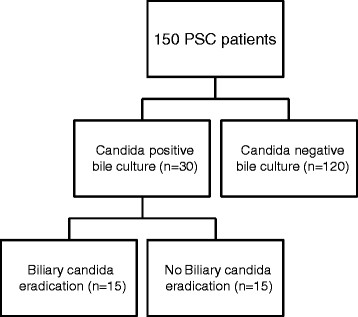
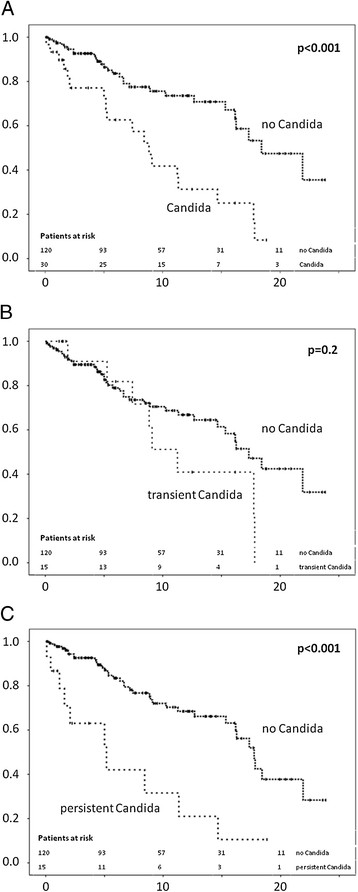
BACKGROUND: Candidiasis is commonly observed in patients with primary sclerosing cholangitis (PSC), but the clinical risk factors associated with its presence have not been fully investigated. In this study, we aimed to analyse the incidence, risk factors, and transplantation-free survival in primary sclerosing cholangitis (PSC) patients with persistent biliary candidiasis. METHODS: We retrospectively analysed patients diagnosed with PSC who were admitted to our department during 2002 to 2012. One-hundred fifty patients whose bile cultures were tested for fungal species were selected, and their clinical and laboratory parameters were investigated. The results of endoscopic retrograde cholangiography (ERC) and bile cultures were analysed using chart reviews. The cases of biliary candidiasis were sub-classified as transient or persistent. RESULTS: Thirty out of 150 (20.0%) patients had biliary candidiasis. Although all patients demonstrated comparable baseline characteristics, those with biliary candidiasis showed significantly reduced transplantation-free survival (p < 0.0001) along with a markedly elevated frequency of cholangiocarcinoma (CCA) (p = 0.04). The patients were further sub-classified according to the transient (15/30) or persistent (15/30) nature of their biliary candidiasis. A subgroup analysis showed reduced survival with a greater necessity for orthotopic liver transplantation (OLT) only in patients with persistence of Candida (p = 0.007). The survival in the patients with transient biliary candidiasis was comparable to that in candidiasis-free patients. In a multivariate regression analysis that included Mayo risk score (MRS), sex, age, dominant stenosis, inflammatory bowel disease, autoimmune hepatitis overlap syndrome, and number of times ERC was performed, biliary candidiasis was an independent risk factor for reduced survival (p = 0.008). Risk factors associated with acquisition of biliary candidiasis were age at PSC diagnosis and number of ERCs. CONCLUSIONS: The persistence of biliary candidiasis is associated with markedly reduced transplantation-free survival in PSC patients. By contrast, actuarial survival in patients with transient biliary candidiasis approaches that for patients without any evidence of biliary candidiasis. Further studies on the treatment of persistent biliary candidiasis in patients with PSC are warranted.
Overview
The claims and statistics of this paper haven’t been checked yet.
Free: it reads the open-access text and checks the first 5 claims that cite a source we can check. Create a free account to check every claim.
Integrity signals
Registry
Cites
Statistics
Figures
Verification
Claims the paper makes
The claims and statistics of this paper haven’t been checked yet.
Free: it reads the open-access text and checks the first 5 claims that cite a source we can check. Create a free account to check every claim.
Claims other papers make about this one
Each is checked against this paper’s own text: does it say what the citing paper says it does?
The cited source says what the claim attributes to it.
In the citing paper
“In a follow-up retrospective single centre analysis form Heidelberg, 30 out of 150 (20%) patients had biliary candidiasis.240”
From EASL Clinical Practice Guidelines on sclerosing cholangitis (2022) · cites this paper as [240]
In the citing paper
“Risk factors associated with the acquisition of biliary candidiasis were age at PSC diagnosis and number of ERCPs.240”
From EASL Clinical Practice Guidelines on sclerosing cholangitis (2022) · cites this paper as [240]
In the citing paper
“However, since the advantage of antifungal treatment of biliary Candida is unclear, patients are often not treated for their fungal infection in the absence of an immunosuppressive condition or overt cholangitis.95,239,240”
From EASL Clinical Practice Guidelines on sclerosing cholangitis (2022) · cites this paper as [240]
In the citing paper
“Although all patients demonstrated comparable baseline characteristics, those with persistent biliary candidiasis showed reduced transplantation-free survival along with a markedly elevated frequency of CCA.”
From EASL Clinical Practice Guidelines on sclerosing cholangitis (2022) · cites this paper as [240]
Self-check
Percentages, sums and reported differences re-computed from the paper’s own numbers.
The self-check needs the paper’s full text.
Citations
Cites
Diagnosis and Management of Primary Sclerosing Cholangitis
Chapman, R., Fevery, J., Kalloo, A., Nagorney, D. M., Boberg, K. M., Shneider, B., & Gores, G. J. (2010) · Hepatology · doi:10.1002/hep.23294 · Cited by 1,224
Boonstra, K., Weersma, R. K., van Erpecum, K. J., Rauws, E. A., Spanier, B. W. M., Poen, A. C., van Nieuwkerk, K. M., Drenth, J. P., Witteman, B. J., Tuynman, H. A., et al. (2013) · Hepatology · doi:10.1002/hep.26565 · Cited by 725 · cited 1×
“The average time from first diagnosis to liver transplantation is about 12 to 15 years [10].”
BackgroundHigh-dose ursodeoxycholic acid for the treatment of primary sclerosing cholangitis
Lindor, K. D., Kowdley, K. V., Luketic, V. A. C., Harrison, E. M., McCashland, T., Befeler, A. S., Harnois, D., Jorgensen, R., Petz, J., Keach, J., et al. (2009) · Hepatology · doi:10.1002/hep.23082 · Cited by 720
Primary sclerosing cholangitis
Hirschfield, G. M., Karlsen, T. H., Lindor, K. D., & Adams, D. H. (2013) · The Lancet · doi:10.1016/s0140-6736(13)60096-3 · Cited by 592
Pardi, D. S., Loftus, E. V., Kremers, W. K., Keach, J., & Lindor, K. D. (2003) · Gastroenterology · doi:10.1053/gast.2003.50156 · Cited by 562 · cited 1×
“Therapeutic options for this condition are limited, and although the data regarding the survival benefits of ursodeoxycholic acid treatment are conflicting [5-8], it remains the most frequently used therapeutic agent.”
BackgroundUrsodeoxycholic acid for treatment of primary sclerosing cholangitis: a placebo-controlled trial
Beuers, U., Spengler, U., Kruis, W., Aydemir, Ü., Wiebecke, B., Heldwein, W., Weinzierl, M., Pape, G. R., Sauerbruch, T., & Paumgartner, G. (1992) · Hepatology · doi:10.1002/hep.1840160315 · Cited by 448 · cited 1×
“Therapeutic options for this condition are limited, and although the data regarding the survival benefits of ursodeoxycholic acid treatment are conflicting [5-8], it remains the most frequently used therapeutic agent.”
BackgroundPathogenesis of Primary Sclerosing Cholangitis and Advances in Diagnosis and Management
Eaton, J. E., Talwalkar, J. A., Lazaridis, K. N., Gores, G. J., & Lindor, K. D. (2013) · Gastroenterology · doi:10.1053/j.gastro.2013.06.052 · Cited by 436 · cited 1×
“Background Primary sclerosing cholangitis (PSC) is a chronic cholestatic liver disease characterized by inflammation and stricture formation of the intra- and extrahepatic biliary system, which progresses to liver cirrhosis in the majority of cases [1-3].”
BackgroundThe UK-PSCSC Consortium, Liu, J. Z., The International IBD Genetics Consortium, The International PSC Study Group, Hov, J. R., Folseraas, T., Ellinghaus, E., Rushbrook, S. M., Doncheva, N. T., Andreassen, O. A., et al. (2013) · Nature Genetics · doi:10.1038/ng.2616 · Cited by 391 · cited 1×
“Recent studies highlighted the influence of numerous genetic risk factors [11-13], and it is well accepted that immunological and environmental factors, such as transmission of bacterial pathogens from the gut due to increased permeability of the portal venous system, are also involved [14-16].”
BackgroundSelf-citationPrimary Sclerosing Cholangitis
(2007) · Gastroenterology Nursing · doi:10.1097/01.sga.0000267930.44372.16 · Cited by 382
Genome-Wide Association Analysis in Primary Sclerosing Cholangitis
Karlsen, T. H., Franke, A., Melum, E., Kaser, A., Hov, J. R., Balschun, T., Lie, B. A., Bergquist, A., Schramm, C., Weismüller, T. J., et al. (2010) · Gastroenterology · doi:10.1053/j.gastro.2009.11.046 · Cited by 361 · cited 1×
“Recent studies highlighted the influence of numerous genetic risk factors [11-13], and it is well accepted that immunological and environmental factors, such as transmission of bacterial pathogens from the gut due to increased permeability of the portal venous system, are also involved [14-16].”
BackgroundSelf-citation
Cited by
Weismüller, T. J., Trivedi, P. J., Bergquist, A., Imam, M., Lenzen, H., Ponsioen, C. Y., Holm, K., Gotthardt, D., Färkkilä, M. A., Marschall, H.-U., et al. (2017) · Gastroenterology · doi:10.1053/j.gastro.2017.02.038 · Cited by 533
Self-citationPrimary sclerosing cholangitis
Dyson, J. K., Beuers, U., Jones, D. E. J., Lohse, A. W., & Hudson, M. (2018) · The Lancet · doi:10.1016/s0140-6736(18)30300-3 · Cited by 462
EASL Clinical Practice Guidelines on sclerosing cholangitis
Chazouilleres, O., Beuers, U., Bergquist, A., Karlsen, T. H., Levy, C., Samyn, M., Schramm, C., & Trauner, M. (2022) · Journal of Hepatology · doi:10.1016/j.jhep.2022.05.011 · Cited by 419
Molecular Pathogenesis of Cholangiocarcinoma
Labib, P. L., Goodchild, G., & Pereira, S. P. (2019) · BMC Cancer · doi:10.1186/s12885-019-5391-0 · Cited by 310
Clinical presentation, risk factors and staging systems of cholangiocarcinoma
Plentz, R. R., & Malek, N. P. (2015) · Best Practice & Research Clinical Gastroenterology · doi:10.1016/j.bpg.2015.02.001 · Cited by 99
“Interestingly, persistent biliary candidiasis in patients with PSC was recently discovered as a new risk factor for CCA development [19].”
BackgroundS2k Leitlinie Autoimmune Lebererkrankungen: AWMF-Reg. Nr. 021-27
Authors, Collaborators:, durch:, E. B., Deutsche Gesellschaft für Gastroenterologie, V. U. S. (. (., (DGIM), D. G. F. I. M., (DCCV), D. M. C. U. V., e.V., D. L., (DEGUM), D. G. F. U. I. D. M., (DGE-BV), D. G. F. E. U. B. V., (DGKJ), D. G. F. K. U. J., et al. (2017) · Zeitschrift für Gastroenterologie · doi:10.1055/s-0043-120199 · Cited by 93
The Microbiome in Primary Sclerosing Cholangitis: Current Evidence and Potential Concepts
Hov, J., & Karlsen, T. (2017) · Seminars in Liver Disease · doi:10.1055/s-0037-1608801 · Cited by 65
Reuken, P. A., Torres, D., Baier, M., Löffler, B., Lübbert, C., Lippmann, N., Stallmach, A., & Bruns, T. (2017) · PLoS ONE · doi:10.1371/journal.pone.0169900 · Cited by 64
Lübbert, C., Wendt, K., Feisthammel, J., Moter, A., Lippmann, N., Busch, T., Mössner, J., Hoffmeister, A., & Rodloff, A. C. (2016) · PLoS ONE · doi:10.1371/journal.pone.0155479 · Cited by 58
The intestinal and biliary microbiome in autoimmune liver disease—current evidence and concepts
Liwinski, T., Heinemann, M., & Schramm, C. (2022) · Seminars in Immunopathology · doi:10.1007/s00281-022-00936-6 · Cited by 64
“In another study, the persistence of biliary candidiasis was associated with markedly reduced transplantation-free survival in PSC patients [64].”
BackgroundFungal infections and the fungal microbiome in hepatobiliary disorders
Hartmann, P., & Schnabl, B. (2022) · Journal of Hepatology · doi:10.1016/j.jhep.2022.12.006 · Cited by 56
Rupp, C., Bode, K. A., Weiss, K. H., Rudolph, G., Bergemann, J., Kloeters-Plachky, P., Chahoud, F., Stremmel, W., Gotthardt, D. N., & Sauer, P. (2016) · Medicine · doi:10.1097/md.0000000000002390 · Cited by 58
Self-citationMattner, J. (2016) · International Journal of Molecular Sciences · doi:10.3390/ijms17111864 · Cited by 46
“Thus, it has been reported that persistent biliary candidiasis is associated with a markedly reduced transplantation-free survival of PSC patients [98].”
BackgroundZigmond, E., Zecher, B. F., Bartels, A.-L., Ziv‐Baran, T., Rösch, T., Schachschal, G., Lohse, A. W., Ehlken, H., & Schramm, C. (2022) · Clinical Gastroenterology and Hepatology · doi:10.1016/j.cgh.2022.09.006 · Cited by 51
Cholangiocarcinoma in patients with primary sclerosing cholangitis
Fung, B. M., & Tabibian, J. H. (2019) · Current Opinion in Gastroenterology · doi:10.1097/mog.0000000000000616 · Cited by 41
“or presence of biliary candidiasis may be associated with increased risk of developing CCA [74,75].”
BackgroundRole of microbiome in autoimmune liver diseases
Schneider, K. M., Kummen, M., Trivedi, P. J., & Hov, J. R. (2023) · Hepatology · doi:10.1097/hep.0000000000000506 · Cited by 40
“[109,110] The presence of biliary antigens to mucosal-associated invariant T cells and natural killer T cells, which could be of microbial origin, [104,111] is of interest since these atypical T cells could be speculated to modulate the bile duct inflammation, and mucosal-associated invariant T…”
BackgroundCandida spp. in Human Intestinal Health and Disease: More than a Gut Feeling
Kreulen, I. A. M., de Jonge, W. J., van den Wijngaard, R. M., & van Thiel, I. A. M. (2023) · Mycopathologia · doi:10.1007/s11046-023-00743-z · Cited by 42
“A retrospective analysis of 150 PSC patients indicated that 20% has experienced either transient or persistent biliary candidiasis (i.e., a single versus consecutive positive cultures), which significantly reduced transplantation-free survival and an increased frequency of bile duct cancer [78].”
BackgroundAntifungal activity of acetone extracts from Punica granatum L., Quercus suber L. and Vicia faba L.
Akroum, S. (2016) · Journal de Mycologie Médicale · doi:10.1016/j.mycmed.2016.10.004 · Cited by 34
Impact of age at diagnosis on disease progression in patients with primary sclerosing cholangitis
Rupp, C., Rössler, A., Zhou, T., Rauber, C., Friedrich, K., Wannhoff, A., Weiss, K. H., Sauer, P., Schirmacher, P., Süsal, C., et al. (2018) · United European Gastroenterology Journal · doi:10.1177/2050640617717156 · Cited by 30
Self-citationMicrobial Players in Primary Sclerosing Cholangitis: Current Evidence and Concepts
Özdirik, B., & Schnabl, B. (2023) · Cellular and Molecular Gastroenterology and Hepatology · doi:10.1016/j.jcmgh.2023.12.005 · Cited by 27
Wannhoff, A., & Gotthardt, D. N. (2018) · Clinics and Research in Hepatology and Gastroenterology · doi:10.1016/j.clinre.2018.08.013 · Cited by 22
Self-citationEvaluation of Biliary Calprotectin as a Biomarker in Primary Sclerosing Cholangitis
Gauss, A., Sauer, P., Stiehl, A., Rupp, C., Krisam, J., Leopold, Y., Kloeters-Plachky, P., Stremmel, W., & Gotthardt, D. N. (2016) · Medicine · doi:10.1097/md.0000000000003510 · Cited by 16
“The presence of dominant bile duct stenoses has been reported to be a predictor of disease outcome as well.(5,21,22) To identify dominant bile duct stenoses, it is common routine in rm magnetic resonance cholangiopanand/or endoscopic retrograde cholangiogular intervals, as repeated balloon”
BackgroundResultSelf-citationAzim, A., Ahmed, A., Baronia, A. K., Marak, R. S. K., & Muzzafar, N. (2017) · EMJ Nephrology · doi:10.33590/emjnephrol/10310735 · Cited by 14
Management of primary sclerosing cholangitis: Current state-of-the-art
Cançado, G. G. L., & Hirschfield, G. M. (2024) · Hepatology Communications · doi:10.1097/hc9.0000000000000590 · Cited by 21
Immunobiology of bile and cholangiocytes
Yang, L., Leung, P. S. C., Zhang, W., Zhang, S., Liu, Z., Kurth, M. J., Patterson, A. D., Gershwin, M. E., & Song, J. (2025) · Journal of Autoimmunity · doi:10.1016/j.jaut.2025.103376 · Cited by 14
Özdirik, B., Scherf, M., Brumercek, A., Nicklaus, J. M., Kruis, T., Haber, P. K., Pratschke, J., Tacke, F., & Sigal, M. J. (2023) · Hepatology Communications · doi:10.1097/hc9.0000000000000156 · Cited by 13
“[28,31] Thus, to our knowledge, our data are the first to reveal PPI intake as a feature associated with biliary candidiasis in patients with PSC.”
Infectious diseases in solid organ transplant recipients: Analysis of autopsied cases in Japan
Suzuki, Y., Kenjo, A., Togano, T., Yamamoto, N., Ohto, H., & Kume, H. (2017) · Journal of Infection and Chemotherapy · doi:10.1016/j.jiac.2017.05.001 · Cited by 10
Fung, B. M., & Tabibian, J. H. (2021) · Expert Review of Gastroenterology & Hepatology · doi:10.1080/17474124.2021.1900732 · Cited by 8
“may be associated with an increased risk of developing CCA in patients with PSC [50,51].”
BackgroundKim, I., Choi, J.-K., Lee, D., Lee, I. S., Hong, T. H., You, Y. K., Chun, H. J., & Lee, M. A. (2016) · Hepatobiliary & pancreatic diseases international · doi:10.1016/s1499-3872(16)60109-1 · Cited by 6
Bruns, T., & Stallmach, A. (2022) · Der Internist · doi:10.1007/s00108-022-01277-0 · Cited by 6
Wijarnpreecha, K., Panjawatanan, P., Mousa, O. Y. S., Cheungpasitporn, W., Pungpapong, S., & Ungprasert, P. (2018) · Clinics and Research in Hepatology and Gastroenterology · doi:10.1016/j.clinre.2018.03.011 · Cited by 6
Elzubeir, A., Patel, M., & Rushbrook, S. (2026) · Autoimmunity Reviews · doi:10.1016/j.autrev.2026.104095 · Cited by 3
Schregel, I., Steinmann, S., & Schramm, C. (2022) · Gastroenterologie up2date · doi:10.1055/a-1922-9264 · Cited by 1
Peschel, G., Ilkhtchoui, R., Zeman, F., Sinner, B., Scherer, M., Schmid, S. A., Müller-Schilling, M., & Weigand, K. (2021) · Japanese Journal of Gastroenterology and Hepatology · doi:10.47829/jjgh.2021.51001
“Ten out of these patients had invasive infection caused by MDRP. Interestingly, 95% of patients with proof of candida ssp. had ACLF.”
BackgroundInfluentialCANDIDA PARAPSILOSIS IN A CASE OF METASTATIC CARCINOMA OF GALL BLADDER WITH OBSTRUCTIVE BILIOPATHY
Yadav, C., Sengupta, S., Pandey, A., & Mehta, V. (2024) · GLOBAL JOURNAL FOR RESEARCH ANALYSIS · doi:10.36106/paripex/8006096
Samadder, S. (2025) · medRxiv · doi:10.1101/2025.06.16.25329710
“Candidiasis was reported to be most frequently found fungal infection in cholangiocarcinoma patients [3, 26].”
Natt, N., May, T. J., Malhi, G., Dumond, J., Gulamhusein, A. F., & Tandon, P. (2025) · Journal of the Canadian Association of Gastroenterology · doi:10.1093/jcag/gwaf023
Charpentier, G., Smith, K. A., Slaven, J. E., Emeli, T. O., Susler, R. G., Chehab, H., Gromski, M. A., Khan, H., Gupta, S. K., & Barros, N. (2026) · Journal of Fungi · doi:10.3390/jof12030208
Metadata
- Authors
- Rupp, C., Bode, K. A., Chahoud, F., Wannhoff, A., Friedrich, K., Weiss, K.-H., Sauer, P., Stremmel, W., & Gotthardt, D. N.
- Affiliations
- University Hospital Heidelberg (DE)
- Heidelberg University (DE)
- Corresponding author
- Gotthardt, Daniel Nils
- ORCID
- Venue
- BMC Infectious Diseases
- Published
- 2014-10-23
- Volume
- 14
- Issue
- 1
- Pages
- 562-562
- ISSN
- 1471-2334 (ISSN-L)
- PMC
- PMC4209225
- OpenAlex
- W2166846669
- Cited by
- 38
- References
- 38
- Citations by year
- 2026: 2 · 2025: 3 · 2024: 2 · 2023: 4 · 2022: 6 · 2021: 2 · 2019: 2 · 2018: 3 · 2017: 7 · 2016: 6 · 2015: 1
- FWCI
- 2.60
- Type
- journal article
- Language
- en
- Open access
- gold
- doi.org
- Locations
- BMC Infectious Diseases (publishedVersion, cc-by)
- Europe PMC (PubMed Central) (publishedVersion, cc-by)
- PubMed Central (publishedVersion, cc-by)
- PubMed (publishedVersion)
- heiDOK (Heidelberg University) (acceptedVersion, other-oa)
- Funders
- Deutsche Forschungsgemeinschaft
- Universität Heidelberg
- Topics
- Health Sciences › Medicine › Hepatology › Liver Diseases and Immunity
- Health Sciences › Medicine › Surgery › Pediatric Hepatobiliary Diseases and Treatments
- Health Sciences › Medicine › Gastroenterology › Gallbladder and Bile Duct Disorders
- Keywords
- primary sclerosing cholangitis, transplant-free survival, cholangiocarcinoma, orthotopic liver transplantation, risk factors, Mayo risk score, endoscopic retrograde cholangiography, bile culture, Candida
- MeSH terms
- Adult, Bile Ducts, Candidiasis, Female, Humans, Male, Retrospective Studies, Risk Factors, Cholangitis, Sclerosing, Incidence, Multivariate Analysis, Liver Transplantation, Treatment Outcome, Disease-Free Survival
About these checks
Registry, retraction, Cites and statistics results are computed, not judged, with one exception: a printed reference that no index lists is read once by a model before it counts as a citation error. Claims are extracted by a model and kept only when their quote appears verbatim in the text; each cited source is then checked, with a model’s help, for whether it says what the claim relies on. Those verdicts can be wrong — read the claim’s quote and the cited source before relying on one.
Statistics and arithmetic are recomputed, not judged.
Confidence bands are shown only for fields calibrated on our annotated test set. None is calibrated yet, so no band is shown.
What counts as a claim ›How we measure confidence ›How we check this ›
Are you an author, or do you see a problem with this page? Request a review
Data sources
Bibliographic data: Semantic Scholar, OpenAlex, Crossref.
Contains information from the Semantic Scholar Academic Graph Datasets, made available under the ODC Attribution License (ODC-BY 1.0).
Semantic Scholar’s data is described in: Kinney, R., et al. (2023). The Semantic Scholar Open Data Platform. arXiv:2301.10140.
