

Maternal creatine homeostasis is altered during gestation in the spiny mouse: is this a metabolic adaptation to pregnancy?
Open accessThe DOI matches its Crossref record; 54 of the 54 references it cites were found in a registry or an index.
Abstract
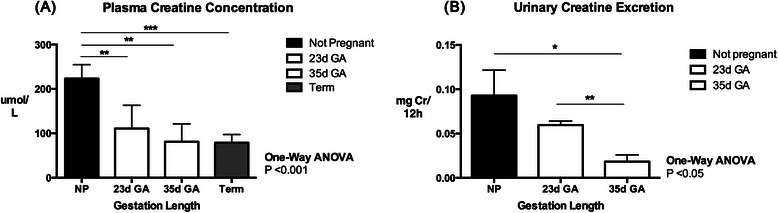
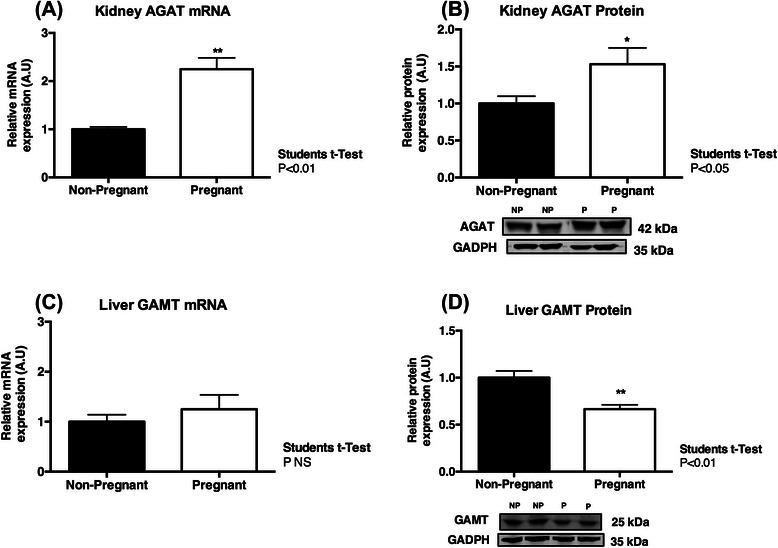
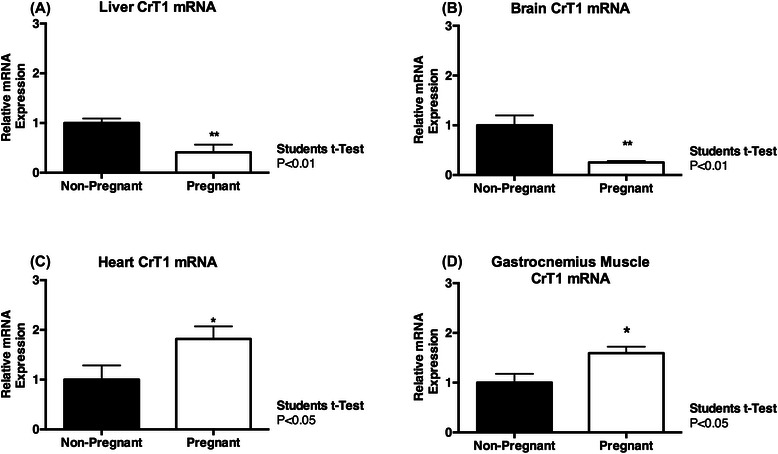
BACKGROUND: Pregnancy induces adaptations in maternal metabolism to meet the increased need for nutrients by the placenta and fetus. Creatine is an important intracellular metabolite obtained from the diet and also synthesised endogenously. Experimental evidence suggests that the fetus relies on a maternal supply of creatine for much of gestation. However, the impact of pregnancy on maternal creatine homeostasis is unclear. We hypothesise that alteration of maternal creatine homeostasis occurs during pregnancy to ensure adequate levels of this essential substrate are available for maternal tissues, the placenta and fetus. This study aimed to describe maternal creatine homeostasis from mid to late gestation in the precocial spiny mouse. METHODS: Plasma creatine concentration and urinary excretion were measured from mid to late gestation in pregnant (n = 8) and age-matched virgin female spiny mice (n = 6). At term, body composition and organ weights were assessed and tissue total creatine content determined. mRNA expression of the creatine synthesising enzymes arginine:glycine amidinotransferase (AGAT) and guanidinoacetate methyltransferase (GAMT), and the creatine transporter (CrT1) were assessed by RT-qPCR. Protein expression of AGAT and GAMT was also assessed by western blot analysis. RESULTS: Plasma creatine and renal creatine excretion decreased significantly from mid to late gestation (P < 0.001, P < 0.05, respectively). Pregnancy resulted in increased lean tissue (P < 0.01), kidney (P < 0.01), liver (P < 0.01) and heart (P < 0.05) mass at term. CrT1 expression was increased in the heart (P < 0.05) and skeletal muscle (P < 0.05) at term compared to non-pregnant tissues, and creatine content of the heart (P < 0.05) and kidney (P < 0.001) were also increased at this time. CrT1 mRNA expression was down-regulated in the liver (<0.01) and brain (<0.01) of pregnant spiny mice at term. Renal AGAT mRNA (P < 0.01) and protein (P < 0.05) expression were both significantly up-regulated at term, with decreased expression of AGAT mRNA (<0.01) and GAMT protein (<0.05) observed in the term pregnant heart. Brain AGAT (<0.01) and GAMT (<0.001) mRNA expression were also decreased at term. CONCLUSION: Change of maternal creatine status (increased creatine synthesis and reduced creatine excretion) may be a necessary adjustment of maternal physiology to pregnancy to meet the metabolic demands of maternal tissues, the placenta and developing fetus.
Overview
The claims and statistics of this paper haven’t been checked yet.
Free: it reads the open-access text and checks the first 5 claims that cite a source we can check. Create a free account to check every claim.
Integrity signals
Registry
Cites
Statistics
Figures
Verification
Claims the paper makes
The claims and statistics of this paper haven’t been checked yet.
Free: it reads the open-access text and checks the first 5 claims that cite a source we can check. Create a free account to check every claim.
Claims other papers make about this one
Each is checked against this paper’s own text: does it say what the citing paper says it does?
The source backs part of the claim, not all of it — or backs it for a different population, condition or comparison.
In the citing paper
“There is additional data that metabolic demand from the placenta during gestation further lowers the creatine pool of the mother [166], which may be associated with low birth weight and pre-term birth.”
From Common questions and misconceptions about creatine supplementation: what does the scientific evidence really show? (2021) · cites this paper as [166]
Experimental — accuracy not yet measured
Self-check
Percentages, sums and reported differences re-computed from the paper’s own numbers.
The self-check needs the paper’s full text.
Citations
Cites
A Flexible System of Enzymatic Analysis
(1972) · Elsevier eBooks · doi:10.1016/b978-0-12-457950-7.x5001-3 · Cited by 4,051
Creatine and Creatinine Metabolism
Wyss, M., & Kaddurah-Daouk, R. (2000) · Physiological Reviews · doi:10.1152/physrev.2000.80.3.1107 · Cited by 2,950 · cited 2×
“Typically, entry of creatine into the maternal plasma would involve its absorption across the gut following ingestion of dietary creatine, and/or the release of creatine into the circulation from organs involved in de novo synthesis, mainly the liver [11].”
BackgroundWallimann, T., Wyss, M., Brdiczka, D., Nicolay, K., & Eppenberger, H. M. (1992) · Biochemical Journal · doi:10.1042/bj2810021 · Cited by 2,011 · cited 4×
“Once synthesised or absorbed creatine is moved into tissues by the creatine transporter-1 protein (CrT1) [13] where ~75% is phosphorylated and used as a source of phosphate for the regeneration of ATP [14].”
BackgroundInfluentialAppendicular skeletal muscle mass: measurement by dual-photon absorptiometry
Heymsfield, S., Smith, R., Aulet, M., Bensen, B., Lichtman, S., Wang, J., & Pierson, R. (1990) · The American Journal of Clinical Nutrition · doi:10.1093/ajcn/52.2.214 · Cited by 820 · cited 1×
“Previous studies in humans suggest that skeletal muscle contributes to 38-42% of lean tissue mass [33,34], and as skeletal muscle is the largest store of creatine in the body, this increased total mass together with the increase of CrT1 mRNA in pregnancy would be expected to result in increased creatine uptake from th…”
BackgroundChanges in the Blood Volume During Pregnancy and Delivery
Pritchard, J. A. (1965) · Anesthesiology · doi:10.1097/00000542-196507000-00004 · Cited by 631
Adaptation of the maternal heart in pregnancy
Hunter, S., & Robson, S. C. (1992) · Heart · doi:10.1136/hrt.68.12.540 · Cited by 603 · cited 1×
“These increases may reflect the need for increased phosphate buffering and preservation of ATP associated with the increased cardiac output of 4050% during pregnancy [31,32].”
BackgroundAdaptations of Glucose Metabolism During Pregnancy and Lactation
Bell, A. W., & Bauman, D. E. (1997) · Journal of Mammary Gland Biology and Neoplasia · doi:10.1023/a:1026336505343 · Cited by 534 · cited 1×
“This allows for fat accumulation in the mother, to be used as an energy source for maternal tissues during the third trimester, when a switch to catabolic metabolism takes place to ensure an enhanced nutrient supply to the growing fetus [2-6].”
BackgroundEnergy requirements during pregnancy and lactation
Butte, N. F., & King, J. C. (2005) · Public Health Nutrition · doi:10.1079/phn2005793 · Cited by 512 · cited 1×
“An inability of the maternal system to make these adjustments and ensure appropriate nutrient supply for both maternal and fetal tissues may underpin some of the obstetric complications associated with poor fetal growth and placental insufficiency [8].”
BackgroundCreatine: Biosynthesis, Regulation, and Function
Walker, J. B. (1979) · Advances in Enzymology - and Related Areas of Molecular Biology · doi:10.1002/9780470122952.ch4 · Cited by 496 · cited 2×
“Removal of circulating creatine may occur during pregnancy by the active transport of creatine into maternal tissues, the spontaneous (non-enzymatic) conversion of creatine to creatinine, excretion of creatine in the urine, or the transfer of creatine across the placenta [9,10,28,29].”
BackgroundCarbohydrate metabolism in pregnancy
Herrera, E., Knopp, R. H., & Freinkel, N. (1969) · Journal of Clinical Investigation · doi:10.1172/jci106192 · Cited by 379 · cited 1×
“This allows for fat accumulation in the mother, to be used as an energy source for maternal tissues during the third trimester, when a switch to catabolic metabolism takes place to ensure an enhanced nutrient supply to the growing fetus [2-6].”
BackgroundHemodynamic changes in pregnancy
Thornburg, K. L., Jacobson, S.-L., Giraud, G. D., & Morton, M. J. (2000) · Seminars in Perinatology · doi:10.1016/s0146-0005(00)80047-6 · Cited by 360 · cited 1×
“These increases may reflect the need for increased phosphate buffering and preservation of ATP associated with the increased cardiac output of 4050% during pregnancy [31,32].”
BackgroundHerrera, E. (2000) · European Journal of Clinical Nutrition · doi:10.1038/sj.ejcn.1600984 · Cited by 347 · cited 4×
“As creatine delivery to the placenta and fetus appears to be of maternal origin in precocial species, changes to maternal creatine homeostasis maybe a necessary adjustment of maternal metabolism to pregnancy in much the same way that alterations to glucose, amino acid, carbohydrate, lipid and fatty acid metabolism are…”
BackgroundInfluentialEnergy requirements during pregnancy based on total energy expenditure and energy deposition
Butte, N. F., Wong, W. W., Treuth, M. S., Ellis, K. J., & O'Brian Smith, E. (2004) · The American Journal of Clinical Nutrition · doi:10.1093/ajcn/79.6.1078 · Cited by 309 · cited 1×
“Background Maternal metabolic adaptations are required during pregnancy to meet the nutrient demands of the growing placenta and fetus [1].”
BackgroundGuimbal, C., & Kilimann, M. W. (1993) · Journal of Biological Chemistry · doi:10.1016/s0021-9258(18)52891-x · Cited by 298 · cited 1×
“Once synthesised or absorbed creatine is moved into tissues by the creatine transporter-1 protein (CrT1) [13] where ~75% is phosphorylated and used as a source of phosphate for the regeneration of ATP [14].”
BackgroundSkeletal muscle mass: evaluation of neutron activation and dual-energy X-ray absorptiometry methods
Wang, Z. M., Visser, M., Ma, R., Baumgartner, R. N., Kotler, D., Gallagher, D., & Heymsfield, S. B. (1996) · Journal of Applied Physiology · doi:10.1152/jappl.1996.80.3.824 · Cited by 256 · cited 1×
“Previous studies in humans suggest that skeletal muscle contributes to 38-42% of lean tissue mass [33,34], and as skeletal muscle is the largest store of creatine in the body, this increased total mass together with the increase of CrT1 mRNA in pregnancy would be expected to result in increased creatine uptake from th…”
BackgroundEffect of pregnancy on gastrointestinal transit
Wald, A., Van Thiel, D. H., Hoechstetter, L., Gavaler, J. S., Egler, K. M., Verm, R., Scott, L., & Lester, R. (1982) · Digestive Diseases and Sciences · doi:10.1007/bf01391748 · Cited by 221 · cited 1×
“Changes to the gastrointestinal tract have been well characterised in rodent and human pregnancies, including the progesterone-induced decrease in gastrointestinal tract motility [43,44].”
BackgroundFolic acid supplementation during pregnancy for maternal health and pregnancy outcomes
Lassi, Z. S., Salam, R. A., Haider, B. A., & Bhutta, Z. A. (2013) · Cochrane Database of Systematic Reviews · doi:10.1002/14651858.cd006896.pub2 · Cited by 221 · cited 1×
“Recent literature suggests targeted dietary supplementation can play an essential role in reducing obstetric complications and neonatal mortality [50,51].”
BackgroundGastrointestinal Motility Disorders during Pregnancy
Baron, T. H., Ramirez, B., & Richter, J. E. (1993) · Annals of Internal Medicine · doi:10.7326/0003-4819-118-5-199303010-00008 · Cited by 195 · cited 1×
“These adaptations facilitate increased nutrient absorption without an increase in dietary consumption [45].”
BackgroundCreatine and the creatine transporter: A review
Snow, R. J., & Murphy, R. M. (2001) · Molecular and Cellular Biochemistry · doi:10.1023/a:1011908606819 · Cited by 192 · cited 1×
“Note: due to the lack of a specific CrT1 antibody we were unable to perform western blots for this protein [26,27].”
BackgroundSelf-citationLong chain fatty acids and dietary fats in fetal nutrition
Cetin, I., Alvino, G., & Cardellicchio, M. (2009) · The Journal of Physiology · doi:10.1113/jphysiol.2009.173062 · Cited by 165 · cited 1×
“These adaptations to meet fetal requirements for growth encompass large changes in maternal glucose, carbohydrate, amino acid, lipid and fatty acid metabolism [2,7].”
BackgroundGASTROINTESTINAL MOTILITY IN PREGNANCY
Everson, G. T. (1992) · Gastroenterology Clinics of North America · doi:10.1016/s0889-8553(21)00599-9 · Cited by 134
Creatine metabolism and the urea cycle
Brosnan, J. T., & Brosnan, M. E. (2010) · Molecular Genetics and Metabolism · doi:10.1016/j.ymgme.2010.02.020 · Cited by 129 · cited 1×
“Creatine is readily obtained from a diet of animal products and is also synthesised by the body through the production of guanidinoacetate (GAA), catalysed by the enzyme arginine:glycine aminotransferase (AGAT) predominately in the kidney, followed by the methylation of GAA, mainly in the liver, to produce creatine [1…”
BackgroundBraissant, O., Henry, H., Villard, A.-M., Speer, O., Wallimann, T., & Bachmann, C. (2005) · BMC Developmental Biology · doi:10.1186/1471-213x-5-9 · Cited by 125 · cited 1×
“In rats, AGAT, GAMT, and CrT1 are expressed in most tissues of the embryo from early in gestation [15].”
BackgroundChanges in water and electrolyte balance, plasma volume and composition during pregnancy in the rat.
Atherton, J. C., Dark, J. M., Garland, H. O., Morgan, M. R., Pidgeon, J., & Soni, S. (1982) · The Journal of Physiology · doi:10.1113/jphysiol.1982.sp014330 · Cited by 119 · cited 1×
“Maternal blood volume was not measured in this study, but would be expected to increase, as this is a fundamental, well-characterised adaptation that occurs in both rodent and human pregnancy [41,42].”
BackgroundSERUM IMMUNOREACTIVE SOMATOMEDIN-C IS ELEVATED LATE IN PREGNANCY1
FURLANETTO, R. W., UNDERWOOD, L. E., WYK, J. J. V., & HANDWERGER, S. (1978) · The Journal of Clinical Endocrinology & Metabolism · doi:10.1210/jcem-47-3-695 · Cited by 102 · cited 1×
“Mediators of increased CrT1 expression may be IGF-1 and triiodothyronine, both of which are up-regulated during pregnancy [35,36], and both of which have been shown to increase CrT1 expression and creatine uptake in skeletal myoblast cells by virtue of their effects on the Na transmembrane potential [37].”
BackgroundThe regulation of total creatine content in a myoblast cell line
Odoom, J., Kemp, G., & Radda, G. (1996) · Molecular and Cellular Biochemistry · doi:10.1007/bf00225844 · Cited by 101 · cited 1×
“Mediators of increased CrT1 expression may be IGF-1 and triiodothyronine, both of which are up-regulated during pregnancy [35,36], and both of which have been shown to increase CrT1 expression and creatine uptake in skeletal myoblast cells by virtue of their effects on the Na transmembrane potential [37].”
BackgroundCreatine transporters: A reappraisal
Speer, O., Neukomm, L. J., Murphy, R. M., Zanolla, E., Schlattner, U., Henry, H., Snow, R. J., & Wallimann, T. (2003) · Molecular and Cellular Biochemistry · doi:10.1023/b:mcbi.0000009886.98508.e7 · Cited by 94 · cited 1×
“Note: due to the lack of a specific CrT1 antibody we were unable to perform western blots for this protein [26,27].”
BackgroundSelf-citationIreland, Z., Dickinson, H., Snow, R. J., & Walker, D. W. (2008) · American Journal of Obstetrics and Gynecology · doi:10.1016/j.ajog.2007.10.790 · Cited by 87 · cited 3×
“Extracted samples were used to determine total creatine content by enzymatic analysis of creatine and phosphocreatine with fluorometric detection as previously described [9,23,24].”
BackgroundMethodSelf-citationThe spiny mouse (Acomys cahirinus) completes nephrogenesis before birth
Dickinson, H., Walker, D. W., Cullen-McEwen, L., Wintour, E. M., & Moritz, K. (2005) · American Journal of Physiology-Renal Physiology · doi:10.1152/ajprenal.00400.2004 · Cited by 84 · cited 1×
“Yet studies in the spiny mouse, a precocial species that has a number of reproductive similarities to human pregnancy in terms of in utero organ development [16-18] and endocrine function [19], identified that creatine was accrued during gestation by the placenta and fetal tissues, but that the fetus had limited capac…”
BackgroundSelf-citationTotal and Free Thyroxine and Triiodothyronine in Normal and Complicated Pregnancy
Osathanondh, R., Tulchinsky, D., & CHOPRA, I. J. (1976) · The Journal of Clinical Endocrinology & Metabolism · doi:10.1210/jcem-42-1-98 · Cited by 82 · cited 1×
“Mediators of increased CrT1 expression may be IGF-1 and triiodothyronine, both of which are up-regulated during pregnancy [35,36], and both of which have been shown to increase CrT1 expression and creatine uptake in skeletal myoblast cells by virtue of their effects on the Na transmembrane potential [37].”
BackgroundCreatine and Creatine Kinase in Health and Disease
Salomons, G. S., & Wyss, M. (2007) · Sub-cellular biochemistry/Subcellular biochemistry · doi:10.1007/978-1-4020-6486-9 · Cited by 76
Ireland, Z., Castillo-Melendez, M., Dickinson, H., Snow, R., & Walker, D. W. (2011) · Neuroscience · doi:10.1016/j.neuroscience.2011.05.012 · Cited by 74 · cited 1×
“Indeed, previous studies conducted in the spiny mouse indicate increasing maternal dietary creatine improves neonatal outcomes following birth asphyxia [53-55].”
BackgroundSelf-citationDickinson, H., Ellery, S., Ireland, Z., LaRosa, D., Snow, R., & Walker, D. W. (2014) · BMC Pregnancy and Childbirth · doi:10.1186/1471-2393-14-150 · Cited by 74 · cited 1×
“As a simple dietary intervention, creatine may have the ability to increase the cellular energy reserves of the mother, placenta and fetal organs, and may better outcomes following obstetric complications that lead to cellular energy failure and/or oxidative stress [52].”
BackgroundSelf-citationIreland, Z., Russell, A. P., Wallimann, T., Walker, D. W., & Snow, R. (2009) · BMC Developmental Biology · doi:10.1186/1471-213x-9-39 · Cited by 63 · cited 3×
“Data obtained from qPCR were analysed using the CT method [20,25], with results expressed relative to non-pregnant controls.”
BackgroundMethodSelf-citationSynthesis of guanidinoacetate and creatine from amino acids by rat pancreas
da Silva, R. P., Clow, K., Brosnan, J. T., & Brosnan, M. E. (2014) · British Journal of Nutrition · doi:10.1017/s0007114513003012 · Cited by 61 · cited 1×
“Consideration of subsidiary sites of creatine synthesis such as the pancreas [49], and the changes to AGAT and GAMT expression observed in the brain, heart and gastrocnemius muscle identified in this study should also be considered when evaluating global maternal creatine production during pregnancy.”
BackgroundQuinn, T. A., Ratnayake, U., Dickinson, H., Nguyen, T.-H., McIntosh, M., Castillo-Melendez, M., Conley, A. J., & Walker, D. W. (2013) · Endocrinology · doi:10.1210/en.2012-1953 · Cited by 60 · cited 1×
“Yet studies in the spiny mouse, a precocial species that has a number of reproductive similarities to human pregnancy in terms of in utero organ development [16-18] and endocrine function [19], identified that creatine was accrued during gestation by the placenta and fetal tissues, but that the fetus had limited capac…”
BackgroundSelf-citationDual X-Ray Absorptiometry: Recognizing Image Artifacts and Pathology
Jacobson, J. A., Jamadar, D. A., & Hayes, C. W. (2000) · American Journal of Roentgenology · doi:10.2214/ajr.174.6.1741699 · Cited by 59
Abplanalp, J., Laczko, E., Philp, N. J., Neidhardt, J., Zuercher, J., Braun, P., Schorderet, D. F., Munier, F. L., Verrey, F., Berger, W., et al. (2013) · Human Molecular Genetics · doi:10.1093/hmg/ddt175 · Cited by 59 · cited 1×
“to perform facilitated diffusion of creatine was also not assessed in this study, but may play a role in the urinary creatine recovery observed with pregnancy in the spiny mouse [30].”
O'Connell, B. A., Moritz, K. M., Roberts, C. T., Walker, D. W., & Dickinson, H. (2011) · Biology of Reproduction · doi:10.1095/biolreprod.111.093369 · Cited by 59 · cited 1×
“Data obtained from qPCR were analysed using the CT method [20,25], with results expressed relative to non-pregnant controls.”
MethodSelf-citationWatt, K. K. O., Garnham, A. P., & Snow, R. J. (2004) · International Journal of Sport Nutrition and Exercise Metabolism · doi:10.1123/ijsnem.14.5.517 · Cited by 58 · cited 1×
“Extracted samples were used to determine total creatine content by enzymatic analysis of creatine and phosphocreatine with fluorometric detection as previously described [9,23,24].”
MethodSelf-citationCannata, D. J., Ireland, Z., Dickinson, H., Snow, R. J., Russell, A. P., West, J., & Walker, D. W. (2010) · Pediatric Research · doi:10.1203/pdr.0b013e3181f1c048 · Cited by 55 · cited 1×
“Indeed, previous studies conducted in the spiny mouse indicate increasing maternal dietary creatine improves neonatal outcomes following birth asphyxia [53-55].”
BackgroundSelf-citationMaternal Factors Modulating Nutrient Transfer to Fetus
Lasunción, M. A., Lorenzo, J., Palacin, M., & Herrera, E. (1987) · Neonatology · doi:10.1159/000242637 · Cited by 51
LAMERS, W. H., MOOREN, P. G., DE GRAAF, A., & CHARLES, R. (1985) · European Journal of Biochemistry · doi:10.1111/j.1432-1033.1985.tb08675.x · Cited by 49 · cited 1×
“Yet studies in the spiny mouse, a precocial species that has a number of reproductive similarities to human pregnancy in terms of in utero organ development [16-18] and endocrine function [19], identified that creatine was accrued during gestation by the placenta and fetal tissues, but that the fetus had limited capac…”
BackgroundCreatine and Creatine Kinase in Health and Disease – A Bright Future Ahead?
Wyss, M., Braissant, O., Pischel, I., Salomons, G. S., Schulze, A., Stockler, S., & Wallimann, T. (2007) · Subcellular Biochemistry · doi:10.1007/978-1-4020-6486-9_16 · Cited by 46
Estrogen-related receptor gamma modulates energy metabolism target genes in human trophoblast
Poidatz, D., Santos, E. D., Brulé, A., de Mazancourt, P., & Dieudonné, M. (2012) · Placenta · doi:10.1016/j.placenta.2012.06.002 · Cited by 45 · cited 1×
“The estrogen-related receptors (ERRα, β and γ) are highly expressed in the human placenta from the 2nd trimester and have been linked with energy metabolism within placental cells [38,39].”
BackgroundCreatine pretreatment prevents birth asphyxia-induced injury of the newborn spiny mouse kidney
Ellery, S. J., Ireland, Z., Kett, M. M., Snow, R., Walker, D. W., & Dickinson, H. (2013) · Pediatric Research · doi:10.1038/pr.2012.174 · Cited by 45 · cited 1×
“Indeed, previous studies conducted in the spiny mouse indicate increasing maternal dietary creatine improves neonatal outcomes following birth asphyxia [53-55].”
BackgroundSelf-citationEstrogen-related receptor expression in placenta throughout gestation
Fujimoto, J., Nakagawa, Y., Toyoki, H., Sakaguchi, H., Sato, E., & Tamaya, T. (2005) · The Journal of Steroid Biochemistry and Molecular Biology · doi:10.1016/j.jsbmb.2004.12.030 · Cited by 43 · cited 1×
“The estrogen-related receptors (ERRα, β and γ) are highly expressed in the human placenta from the 2nd trimester and have been linked with energy metabolism within placental cells [38,39].”
BackgroundBrunjes, P. C. (1989) · Developmental Brain Research · doi:10.1016/0165-3806(89)90055-2 · Cited by 30 · cited 1×
“Yet studies in the spiny mouse, a precocial species that has a number of reproductive similarities to human pregnancy in terms of in utero organ development [16-18] and endocrine function [19], identified that creatine was accrued during gestation by the placenta and fetal tissues, but that the fetus had limited capac…”
BackgroundPGC-1α and PGC-1β increase CrT expression and creatine uptake in myotubes via ERRα
Brown, E. L., Snow, R. J., Wright, C. R., Cho, Y., Wallace, M. A., Kralli, A., & Russell, A. P. (2014) · Biochimica et Biophysica Acta (BBA) - Molecular Cell Research · doi:10.1016/j.bbamcr.2014.08.010 · Cited by 27 · cited 1×
“Recently, studies have described the role of ERRα in the up-regulation of CrT1 mRNA and creatine uptake in a L6 myotubule cell line [40].”
BackgroundSelf-citationDevelopmental decrease in rat small intestinal creatine uptake
Rubio, M. J. P., Gálvez, M., Soria, M. L., & Ilundáin, A. A. (2004) · Mechanisms of Ageing and Development · doi:10.1016/j.mad.2004.11.005 · Cited by 26 · cited 1×
“As creatine absorption is limited to certain regions of the gut, intestinal transit time is thought to be a factor in creatine uptake under normal physiological conditions [46,47].”
BackgroundA Creatine Transporter Is Operative at the Brush Border Level of the Rat Jejunal Enterocyte
Tosco, M., Faelli, A., Sironi, C., Gastaldi, G., & Orsenigo, M. (2004) · The Journal of Membrane Biology · doi:10.1007/s00232-004-0721-8 · Cited by 25 · cited 1×
“As creatine absorption is limited to certain regions of the gut, intestinal transit time is thought to be a factor in creatine uptake under normal physiological conditions [46,47].”
BackgroundDual X-ray Absorptiometry: Clinical Evaluation of a New Cone-Beam System
Blake, G. M., KNAPP, K. M., & Fogelman, I. (2005) · Calcified Tissue International · doi:10.1007/s00223-004-0080-6 · Cited by 18
Antonio Zorzano, A., & Herrera, E. (1986) · International Journal of Biochemistry · doi:10.1016/0020-711x(86)90237-5 · Cited by 10 · cited 1×
“This allows for fat accumulation in the mother, to be used as an energy source for maternal tissues during the third trimester, when a switch to catabolic metabolism takes place to ensure an enhanced nutrient supply to the growing fetus [2-6].”
BackgroundForsum, E., Forsberg, A. M., Nilsson, E., Bergström, J., & Hultman, E. (2000) · Annals of Nutrition and Metabolism · doi:10.1159/000012837 · Cited by 9 · cited 1×
“Removal of circulating creatine may occur during pregnancy by the active transport of creatine into maternal tissues, the spontaneous (non-enzymatic) conversion of creatine to creatinine, excretion of creatine in the urine, or the transfer of creatine across the placenta [9,10,28,29].”
Background
Research works printed but not linked: 3
- Miller R Davis B Brent R Koszalka T Transport of Creatine in the Human Placenta Pharmacologist 1974 2014 Rockville Pike,Bethesda, MD Amer Soc Pharn Exp Ther 9650 305 305
- Dickinson H Walker D Managing a colony of spiny mice (Acomys cahirinus) for perinatal research Australian and New Zealand Council for the Care of Animals in Research and Training (ANZCCART) News 2007 20 1 4 11
- Neves AL Guimarães AI Rolão C Preventive oral iron supplementation for non-anemic women during pregnancy Acta Obstet Ginecol Port 2012 6 1 16 19
Cited by
Antonio, J., Candow, D. G., Forbes, S. C., Gualano, B., Jagim, A. R., Kreider, R. B., Rawson, E. S., Smith-Ryan, A. E., VanDusseldorp, T. A., Willoughby, D. S., et al. (2021) · Journal of the International Society of Sports Nutrition · doi:10.1186/s12970-021-00412-w · Cited by 345
“There is additional data that metabolic demand from the placenta during gestation further lowers the creatine pool of the mother [166], which may be associated with low birth weight and pre-term birth.”
BackgroundCreatine Metabolism in Female Reproduction, Pregnancy and Newborn Health
Muccini, A. M., Tran, N. T., de Guingand, D. L., Philip, M., Della Gatta, P. A., Galinsky, R., Sherman, L. S., Kelleher, M. A., Palmer, K. R., Berry, M. J., et al. (2021) · Nutrients · doi:10.3390/nu13020490 · Cited by 78
“There is now strong evidence that alterati ns to creatine homeostasis occur with the normal progressio of a healthy female reproductive cycle and with pregnancy [11,12].”
BackgroundInfluentialSelf-citationCreatine supplementation in women's health: a lifespan perspective
Smith-Ryan, A. E., Cabre, H. E., Eckerson, J. M., & Candow, D. G. (2021) · Nutrients · doi:10.3390/nu13030877 · Cited by 92
“Increased metabolic demand from growth and development during gestation, particularly from the placenta, has been associated with a reduced creatine pool [53].”
BackgroundA multi-tissue metabolome atlas of primate pregnancy
Yu, D., Wan, H., Tong, C., Guang, L., Chen, G., Su, J., Zhang, L., Wang, Y., Xiao, Z., Zhai, J., et al. (2024) · Cell · doi:10.1016/j.cell.2023.11.043 · Cited by 54
Ellery, S. J., Walker, D. W., & Dickinson, H. (2016) · Amino Acids · doi:10.1007/s00726-016-2199-y · Cited by 39
Self-citation
Metadata
- Authors
- Ellery, S. J., LaRosa, D. A., Kett, M. M., Della Gatta, P. A., Snow, R. J., Walker, D. W., & Dickinson, H.
- Affiliations
- Monash Medical Centre (AU)
- Monash University (AU)
- Corresponding author
- Ellery, Stacey J
- Venue
- BMC Pregnancy and Childbirth
- Published
- 2015-04-14
- Volume
- 15
- Issue
- 1
- Pages
- 92-92
- ISSN
- 1471-2393 (ISSN-L)
- PMC
- PMC4423481
- OpenAlex
- W2010648064
- Cited by
- 27
- References
- 54
- Citations by year
- 2025: 3 · 2024: 4 · 2023: 1 · 2022: 1 · 2021: 4 · 2020: 1 · 2019: 3 · 2018: 1 · 2017: 3 · 2016: 4 · 2015: 2
- FWCI
- 1.66
- Type
- journal article
- Language
- en
- Open access
- gold
- doi.org
- Locations
- BMC Pregnancy and Childbirth (publishedVersion, cc-by)
- PubMed Central (publishedVersion, cc-by)
- PubMed (publishedVersion)
- Monash University Research Portal (Monash University) (submittedVersion, cc-by)
- RMIT Research Repository (RMIT University Library) (submittedVersion)
- Deakin Research Online (Deakin University) (submittedVersion)
- Figshare (submittedVersion, cc-by)
- Funders
- National Heart Foundation of Australia
- State Government of Victoria
- Medical Research Council
- National Health and Medical Research Council (1047504)
- Topics
- Life Sciences › Biochemistry, Genetics and Molecular Biology › Biochemistry › Amino Acid Enzymes and Metabolism
- Health Sciences › Nursing › Nutrition and Dietetics › Muscle metabolism and nutrition
- Health Sciences › Medicine › Pediatrics, Perinatology and Child Health › Birth, Development, and Health
- Keywords
- pregnancy, spiny mouse, creatine synthesis, arginine:glycine amidinotransferase, GAMT, plasma creatine, organ mass, body composition, placenta, fetus
- MeSH terms
- Amidinotransferases, Animals, Creatine, Female, Gene Expression Regulation, Homeostasis, Pregnancy, RNA, Messenger, Blotting, Western, Reverse Transcriptase Polymerase Chain Reaction, Membrane Transport Proteins, Guanidinoacetate N-Methyltransferase, Murinae
About these checks
Registry, retraction, Cites and statistics results are computed, not judged, with one exception: a printed reference that no index lists is read once by a model before it counts as a citation error. Claims are extracted by a model and kept only when their quote appears verbatim in the text; each cited source is then checked, with a model’s help, for whether it says what the claim relies on. Those verdicts can be wrong — read the claim’s quote and the cited source before relying on one.
Statistics and arithmetic are recomputed, not judged.
Confidence bands are shown only for fields calibrated on our annotated test set. None is calibrated yet, so no band is shown.
What counts as a claim ›How we measure confidence ›How we check this ›
Are you an author, or do you see a problem with this page? Request a review
Data sources
Bibliographic data: Semantic Scholar, OpenAlex, Crossref.
Contains information from the Semantic Scholar Academic Graph Datasets, made available under the ODC Attribution License (ODC-BY 1.0).
Semantic Scholar’s data is described in: Kinney, R., et al. (2023). The Semantic Scholar Open Data Platform. arXiv:2301.10140.
