

Continuity of care by a primary midwife (caseload midwifery) increases women’s satisfaction with antenatal, intrapartum and postpartum care: results from the COSMOS randomised controlled trial
Open accessThe DOI matches its Crossref record; 19 of the 19 references it cites were found in a registry or an index; 6 of the 34 sources its claims cite were checked for support.
Abstract
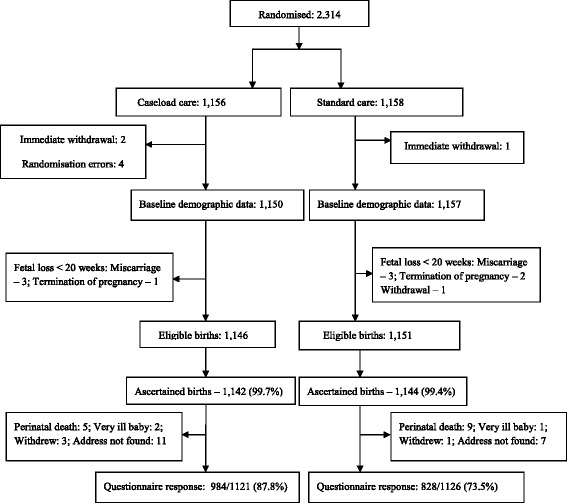
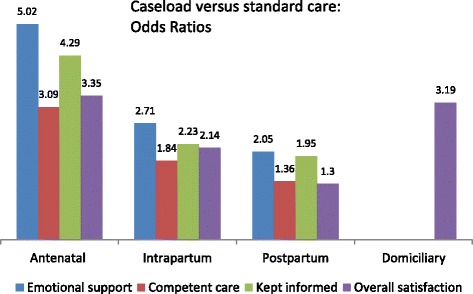
BACKGROUND: Continuity of care by a primary midwife during the antenatal, intrapartum and postpartum periods has been recommended in Australia and many hospitals have introduced a caseload midwifery model of care. The aim of this paper is to evaluate the effect of caseload midwifery on women's satisfaction with care across the maternity continuum. METHODS: Pregnant women at low risk of complications, booking for care at a tertiary hospital in Melbourne, Australia, were recruited to a randomised controlled trial between September 2007 and June 2010. Women were randomised to caseload midwifery or standard care. The caseload model included antenatal, intrapartum and postpartum care from a primary midwife with back-up provided by another known midwife when necessary. Women allocated to standard care received midwife-led care with varying levels of continuity, junior obstetric care, or community-based general practitioner care. Data for this paper were collected by background questionnaire prior to randomisation and a follow-up questionnaire sent at two months postpartum. The primary analysis was by intention to treat. A secondary analysis explored the effect of intrapartum continuity of carer on overall satisfaction rating. RESULTS: Two thousand, three hundred fourteen women were randomised: 1,156 to caseload care and 1,158 to standard care. The response rate to the two month survey was 88% in the caseload group and 74% in the standard care group. Compared with standard care, caseload care was associated with higher overall ratings of satisfaction with antenatal care (OR 3.35; 95% CI 2.79, 4.03), intrapartum care (OR 2.14; 95% CI 1.78, 2.57), hospital postpartum care (OR 1.56, 95% CI 1.32, 1.85) and home-based postpartum care (OR 3.19; 95% CI 2.64, 3.85). CONCLUSION: For women at low risk of medical complications, caseload midwifery increases women's satisfaction with antenatal, intrapartum and postpartum care. TRIAL REGISTRATION: Australian New Zealand Clinical Trials Registry ACTRN012607000073404 (registration complete 23rd January 2007).
Overview
CoChat Summary
TL;DR
In the COSMOS randomised controlled trial of 2,314 low-risk pregnant women in Melbourne, caseload midwifery was associated with higher satisfaction across antenatal, intrapartum, hospital postpartum, and home-based postpartum care compared with standard care. Secondary analyses suggested continuity of carer may contribute to satisfaction, but group allocation had a stronger effect and dose-response analyses were underpowered.
Key findings
- Among 2,314 randomised women (1,156 caseload; 1,158 standard care), caseload care was associated with higher overall satisfaction with antenatal care (OR 3.35; 95% CI 2.79, 4.03), intrapartum care (OR 2.14; 95% CI 1.78, 2.57), hospital postpartum care (OR 1.56; 95% CI 1.32, 1.85), and home-based postpartum care (OR 3.19; 95% CI 2.64, 3.85).
- Women in caseload care reported fewer different midwives during pregnancy (mean 2.8 vs 4.6, p < 0.001), fewer midwives during labour and birth (mean 2.4 vs 3.3, p < 0.001), and were far more likely to have previously met at least one midwife providing labour care (88.3% vs 9.0%, p < 0.001).
- In the caseload group, having previously met at least one midwife providing labour care was associated with higher overall labour and birth satisfaction (OR 1.83; 95% CI 1.07, 3.12; p = 0.03); no such association was found in standard care (OR 1.07; 95% CI 0.60, 1.91; p = 0.82).
- Satisfaction with intrapartum care in the caseload group increased with the number of prior meetings up to four times (OR 3.38; 95% CI 1.36, 8.34), but the study was underpowered to conclude on the dose-response pattern.
Methods
- Two-arm randomised controlled trial stratified by parity, conducted at the Royal Women’s Hospital, Melbourne, Australia, recruiting low-risk English-speaking women with singleton pregnancies at less than 24 weeks’ gestation between September 2007 and June 2010; women with previous caesarean section were excluded.
- Women were randomised to caseload midwifery (primary midwife with back-up) or standard care (midwife-led care with varying continuity, obstetric trainee care, or GP shared care); data came from a pre-randomisation background questionnaire and a postal questionnaire at two months postpartum.
- Primary analysis was by intention to treat using ordinal logistic regression for seven-point satisfaction scales, reported as proportional odds ratios with 95% CIs; secondary analyses of continuity of carer in labour used binary logistic regression.
Limitations
- The paper states this was a single-site trial of English-speaking women who were low risk at booking; participants were more likely to be married or living with a partner or expecting a first baby and less likely to be born in Australia than the overall Victorian population, and survey responders were slightly less likely to have low family income or government benefits as main income and slightly more likely to be Australian-born and have English as a first language.
- The paper states it evaluated a package of care, so it cannot conclude which specific aspects increased satisfaction; the secondary continuity analyses were not intention-to-treat and were underpowered for dose-response, and only 9.0% of standard care women reported having previously met a midwife who provided labour care.
- Evident from the text: the two-month survey response was substantially higher in caseload care (87.8%) than standard care (73.5%), and satisfaction was self-reported without blinding, which may bias comparisons.
Model-written summary. Check it against the paper before relying on it.
Integrity signals
Registry
Cites
Statistics
Figures
Verification
Claims the paper makes
6 Valid · 0 Not valid · 12 Not checked · 68 Own results and interpretations
Every source the paper cites for this claim was checked and supports it.
In the paper
“Although the caseload model was not tied to length of stay, women allocated to the caseload care arm in the original sample stayed less time in hospital postpartum that those allocated to standard care on average (55.4 h [SD 0.97] vs 60.5 h [SD 0.78]; p < 0.001) [2].”
§ Continuity of care by a primary midwife (caseload midwifery) increases women’s satisfaction with antenatal, intrapartum and postpartum care: results from the COSMOS randomised controlled trial > Results > Satisfaction with care
What the sources say
- Supportedcites [2] McLachlan H Forster D Davey M Farrell T Gold L Biro M Effects of continuity of care by a primary midwife (caseload midwifery) on caesarean section rates in women of low obstetric risk: the COSMOS randomised controlled trial BJOG 2012 119 12 1483 1492 10.1111/j.1471-0528.2012.03446.x 22830446 source
The Other outcomes section reports the same mean postpartum hospital stays for women allocated to caseload and standard care, with the same standard deviations and P value. The passage directly supports the attributed comparison. (LLM, conf=0.95)
plainstates an association- Asserted: passes — The authors put it forward as true.
- Checkable: passes — It can be checked against evidence.
- Load-bearing: unclear — It is unclear whether the paper’s conclusions depend on it.
- Based: passes — The paper gives a reason why it holds.
- Supported
Every source the paper cites for this claim was checked and supports it.
In the paper
“Although evaluations of a ‘package’ of care such as caseload midwifery do not allow conclusions about which specific aspects of care contribute to the outcomes [2], secondary analyses of the data can contribute to the ongoing debate regarding the significance of continuity of carer, and whether or not it is associated with satisfaction.”
§ Continuity of care by a primary midwife (caseload midwifery) increases women’s satisfaction with antenatal, intrapartum and postpartum care: results from the COSMOS randomised controlled trial > Background
What the sources say
- Supportedcites [2] McLachlan H Forster D Davey M Farrell T Gold L Biro M Effects of continuity of care by a primary midwife (caseload midwifery) on caesarean section rates in women of low obstetric risk: the COSMOS randomised controlled trial BJOG 2012 119 12 1483 1492 10.1111/j.1471-0528.2012.03446.x 22830446 source
The Discussion states directly that evaluating a package of care such as caseload midwifery does not allow conclusions about which specific aspects contribute to outcomes. It also says the component affecting the trial’s primary outcome is unknown. (LLM, conf=0.95)
plain- Asserted: passes — The authors put it forward as true.
- Checkable: passes — It can be checked against evidence.
- Load-bearing: passes — The paper’s conclusions depend on it.
- Based: passes — The paper gives a reason why it holds.
- Supported
A result the paper reports from its own data — it cites no other source for it, so there is none to check. The quote shows it is in the paper.
In the paper
“Compared to women in standard care, women in the caseload group reported higher satisfaction with postnatal care overall (OR 1.56, 95 % CI 1.32, 1.85; p < 0.001)”
§ Continuity of care by a primary midwife (caseload midwifery) increases women’s satisfaction with antenatal, intrapartum and postpartum care: results from the COSMOS randomised controlled trial > Results > Satisfaction with care
plainstates an association- Asserted: passes — The authors put it forward as true.
- Checkable: passes — It can be checked against evidence.
- Load-bearing: passes — The paper’s conclusions depend on it.
- Based: passes — The paper gives a reason why it holds.
A result the paper reports from its own data — it cites no other source for it, so there is none to check. The quote shows it is in the paper.
In the paper
“Women randomised to caseload midwifery were more satisfied with all midwife-related measures of intrapartum care than women in standard care (Table 4).”
§ Continuity of care by a primary midwife (caseload midwifery) increases women’s satisfaction with antenatal, intrapartum and postpartum care: results from the COSMOS randomised controlled trial > Results > Satisfaction with care
plainstates a cause- Asserted: passes — The authors put it forward as true.
- Checkable: passes — It can be checked against evidence.
- Load-bearing: passes — The paper’s conclusions depend on it.
- Based: passes — The paper gives a reason why it holds.
A result the paper reports from its own data — it cites no other source for it, so there is none to check. The quote shows it is in the paper.
In the paper
“Women in caseload care also reported that they were happier with the physical and emotional support provided by midwives, but were less satisfied with care provided by doctors than women in standard care.”
§ Continuity of care by a primary midwife (caseload midwifery) increases women’s satisfaction with antenatal, intrapartum and postpartum care: results from the COSMOS randomised controlled trial > Results > Satisfaction with care
plainstates an association- Asserted: passes — The authors put it forward as true.
- Checkable: passes — It can be checked against evidence.
- Load-bearing: unclear — It is unclear whether the paper’s conclusions depend on it.
- Based: passes — The paper gives a reason why it holds.
- Rests on an assumption not shown here.
49 more claims
Create a free account to see all 86 claims and to verify the 3 references still open.
- Probably not a substantial claim. 23
- It may state two separate claims as one. 16
Claims other papers make about this one
Each is checked against this paper’s own text: does it say what the citing paper says it does?
The source backs part of the claim, not all of it — or backs it for a different population, condition or comparison.
In the citing paper
“However, many studies have shown that mothers have important physical and emotional needs during the year after childbirth.155,158,160,162–179”
From Consequences of maternal postpartum depression: A systematic review of maternal and infant outcomes (2019) · cites this paper as [165]
Experimental — accuracy not yet measuredThe source backs part of the claim, not all of it — or backs it for a different population, condition or comparison.
In the citing paper
“The results of this study indicate that women in the MSCOC group experience more positive maternity care during pregnancy, childbirth, and postpartum, as well as greater satisfaction with both normal and caesarean deliveries, which are consistent with findings from a pilot study conducted in Norway and an RCT in Australia.”
From Effect of midwifery students’ continuity of care program on women’s experiences of maternity care: A randomised controlled trial (2026) · cites this paper as [48]
Experimental — accuracy not yet measuredThe source backs part of the claim, not all of it — or backs it for a different population, condition or comparison.
In the citing paper
“These results support the notion that the adequacy between care and the needs of women fl uctuates according to the perinatal period. 15”
From Comprehensive maternity support and shared care in Switzerland: Comparison of levels of satisfaction (2018) · cites this paper as [15]
Experimental — accuracy not yet measuredThe source backs part of the claim, not all of it — or backs it for a different population, condition or comparison.
In the citing paper
“These data underscore the bene fi cial effects of perinatal care provided by the midwife on satisfaction in various cultural and linguistic contexts. 4,15”
From Comprehensive maternity support and shared care in Switzerland: Comparison of levels of satisfaction (2018) · cites this paper as [15]
Experimental — accuracy not yet measuredThe cited source says what the claim attributes to it.
In the citing paper
“The assistance given in thecaseload compared with that supplied in the standard carewas associated to a major degree of satisfaction for the assistance during the pregnancy (OR 3.35; 95 % RC 2.79, 4.03)”
From The midwifery-led care model: a continuity of care model in the birth path (2019) · doi:10.23750/abm.v90i6-s.8621 · cites this paper as [20]
5 more claims about this paper
Create a free account to see every claim other papers make about this one.
Self-check
Percentages, sums and reported differences re-computed from the paper’s own numbers.
Each contradiction between two passages listed here was confirmed by an independent check.
Rated minor: it would not touch a result — a value no result rests on, a p-value that stays on the same side of the significance level, or a conflict that is clerical, resolved elsewhere in the paper, or outside its own findings.
In the paper
“17 % (172/828) shared care with a family doctor (GP)”
§ Continuity of care by a primary midwife (caseload midwifery) increases women’s satisfaction with antenatal, intrapartum and postpartum care: results from the COSMOS randomised controlled trial > Results > Trial participants
Reported 17 · recomputed 20.772947
Rated minor: it would not touch a result — a value no result rests on, a p-value that stays on the same side of the significance level, or a conflict that is clerical, resolved elsewhere in the paper, or outside its own findings.
In the paper
§ Continuity of care by a primary midwife (caseload midwifery) increases women’s satisfaction with antenatal, intrapartum and postpartum care: results from the COSMOS randomised controlled trial > Results > Satisfaction with care
“I was happy with the physical care I received in pregnancy from doctors (925/818) | 2.3 | 3.6 | 5.1 | 15.4 | 16.9 | 25.1 | 31.8 | 1.26”
§ Continuity of care by a primary midwife (caseload midwifery) increases women’s satisfaction with antenatal, intrapartum and postpartum care: results from the COSMOS randomised controlled trial > Results > Satisfaction with care
“1.46, 1.49 | 0.008”
Rated minor: it would not touch a result — a value no result rests on, a p-value that stays on the same side of the significance level, or a conflict that is clerical, resolved elsewhere in the paper, or outside its own findings.
In the paper
“| Had a least one postnatal visit at home with midwife met before (n, %) (957/777) | 896 | 96.3 | 123 | 15.8 | Chi2 p < 0.001 |”
§ Continuity of care by a primary midwife (caseload midwifery) increases women’s satisfaction with antenatal, intrapartum and postpartum care: results from the COSMOS randomised controlled trial > Results > Satisfaction with care
Reported 96.3 · recomputed 93.625914
Rated minor: it would not touch a result — a value no result rests on, a p-value that stays on the same side of the significance level, or a conflict that is clerical, resolved elsewhere in the paper, or outside its own findings.
In the paper
“| English first language | 892 | 79.8 | 681 | 82.3 |”
§ Continuity of care by a primary midwife (caseload midwifery) increases women’s satisfaction with antenatal, intrapartum and postpartum care: results from the COSMOS randomised controlled trial > Results > Respondents at two months postpartum
Reported 79.8 · recomputed 90.650407
Citations
Cites
Intention-to-treat concept: A review
Gupta, S. (2011) · Perspectives in Clinical Research · doi:10.4103/2229-3485.83221 · Cited by 1,921 · cited 1×
“The primary analyses were by intention to treat, that is, data were analysed by randomised group regardless of care received or of any protocol deviations [21].”
MethodMidwife-led continuity models versus other models of care for childbearing women
Sandall, J., Soltani, H., Gates, S., Shennan, A., & Devane, D. (2013) · Cochrane Database of Systematic Reviews · doi:10.1002/14651858.cd004667.pub3 · Cited by 1,226
Midwife‐led versus other models of care for childbearing women
Hatem, M., Sandall, J., Devane, D., Soltani, H., & Gates, S. (2008) · Cochrane Database of Systematic Reviews · doi:10.1002/14651858.cd004667.pub2 · Cited by 621 · cited 1×
“These findings confirm those of other RCTs of midwife-led care [3], suggesting that these models reduce interventions without jeopardising health outcomes.”
ResultMcLachlan, H., Forster, D., Davey, M., Farrell, T., Gold, L., Biro, M., Albers, L., Flood, M., Oats, J., & Waldenström, U. (2012) · BJOG: An International Journal of Obstetrics & Gynaecology · doi:10.1111/j.1471-0528.2012.03446.x · Cited by 268 · cited 7×
“Other factors are also likely to have an impact, for example women’s views and experiences of any interventions, and caseload midwives’ personal attributes [2].”
BackgroundMethodResultInfluentialSelf-citationSatisfaction With Care in Labor and Birth: A Survey of 790 Australian Women
Brown, S., & Lumley, J. (1994) · Birth · doi:10.1111/j.1523-536x.1994.tb00909.x · Cited by 255
Rowley, M. J., Hensley, M. J., Brinsmead, M. W., & Wlodarczyk, J. H. (1995) · Medical Journal of Australia · doi:10.5694/j.1326-5377.1995.tb124592.x · Cited by 183 · cited 2×
“Many of the RCTs of midwife-led care report increased satisfaction associated with being allocated to the midwife-led care trial arm [4–6].”
BackgroundResultWaldenström, U., Brown, S., McLachlan, H., Forster, D., & Brennecke, S. (2000) · Birth · doi:10.1046/j.1523-536x.2000.00156.x · Cited by 148 · cited 12×
“Melbourne: State Government of Victoria; 2014.”
BackgroundMethodResultInfluentialSelf-citationContinuity of carer: what matters to women? A review of the evidence
Green, J. M., Renfrew, M. J., & Curtis, P. A. (2000) · Midwifery · doi:10.1054/midw.1999.0208 · Cited by 140 · cited 4×
“[15] found no difference in satisfaction between women who had a known care provider during labour compared with those who had not.”
BackgroundResultInfluentialSatisfaction with Team Midwifery Care for Low‐ and High‐Risk Women: A Randomized Controlled Trial
Biró, M. A., Waldenström, U., Brown, S., & Pannifex, J. H. (2003) · Birth · doi:10.1046/j.1523-536x.2003.00211.x · Cited by 131 · cited 2×
“were generally higher than those we have reported in RCTs of team midwifery care in similar populations [4, 6].”
BackgroundResultSelf-citationGoberna-Tricas, J., Banús-Giménez, M. R., Palacio-Tauste, A., & Linares-Sancho, S. (2011) · Midwifery · doi:10.1016/j.midw.2010.10.004 · Cited by 88 · cited 2×
“Other studies have reported associations between positive ratings of satisfaction and different aspects of care, such as conveniently located care [8], safe care with skilled professionals [8, 9], positive staff attitudes and behaviours (e.”
Background
Research works printed but not linked: 5
- Department of Human Services Victoria Future directions for Victoria’s maternity services 2004 Melbourne Victorian Department of Human Services
- StataCorp STATA 10.0 Statistics/Data Analysis. College Station 2007 Texas StataCorp
- StataCorp STATA 2009 Texas StataCorp LP
- Consultative Council on Obstetric and Paediatric Mortality and Morbidity 2010 and 2011, Victoria’s Mothers and Babies, Victoria’s Maternal, Perinatal, Child and Adolescent Mortality 2014 Melbourne State Government of Victoria
- Consultative Council on Obstetric and Paediatric Mortality and Morbidity Quality SaPEB Births in Victoria 2007 and 2008 2010 Melbourne Department of Health
Cited by
Items 101–200 of 237
A survey of Greek women’s satisfaction of postnatal care
Panagopoulou, V., Kalokairinou, A., Tzavella, F., & Tziaferi, S. (2018) · AIMS Public Health · doi:10.3934/publichealth.2018.2.158 · Cited by 21
“These results are in agreement with the results of other studies which found that improved professional support, including continuity of midwifery care, results in higher satisfaction rates of postpartum women [27,28].”
ResultCan continuity bring birth back to women and normality back to midwives?
Moncrieff, G. (2018) · British Journal of Midwifery · doi:10.12968/bjom.2018.26.10.642 · Cited by 17
Kaewwimol, P., Ruchiwit, M., & Liaw, J.-J. (2022) · The Open Public Health Journal · doi:10.2174/18749445-v15-e2206080 · Cited by 10
Tjernström, K., Lindberg, I., Wiklund, M., & Persson, M. (2024) · BMC Health Services Research · doi:10.1186/s12913-024-11037-5 · Cited by 13
“Recent advances in women’s healthcare in industrial countries and mid-wifery research show development towards continuity of care models with a woman-centred approach in different caseload-midwifery projects and informed choice regarding place of childbirth [28, 59–61].”
BackgroundMoncrieff, G., Martin, C. J. H., Norris, G., & MacVicar, S. (2022) · Women and Birth · doi:10.1016/j.wombi.2022.09.009 · Cited by 11
Xu, Y., Han, Y., Li, W., Xue, H., Liu, Y., Men, Y., Chen, Y., Zhou, X., & Li, Q. (2025) · Women and Birth · doi:10.1016/j.wombi.2025.102138 · Cited by 17
Psychometric Properties of the Disrespect and Abuse Questionnaire in Iranian Parturient Women
Hajizadeh, K., Jafarabadi, M. A., Vaezi, M., Meedya, S., Mohammad‐Alizadeh‐Charandabi, S., & Mirghafourvand, M. (2023) · Iranian Journal of Nursing and Midwifery Research · doi:10.4103/ijnmr.ijnmr_228_21 · Cited by 12
“It increases satisfaction and improves neonatal and maternal outcomes.[19,20] Mother’s deprivation is an item of the ill‐treatment domain in the original version of the questionnaire that includes negligence in providing pain relief and a parturient woman’s nutritional needs (food and fluid).”
BackgroundWomen’s experience of continuity of midwifery care in North-Eastern Italy: A qualitative study
Poggianella, S., Ambrosi, E., & Mortari, L. (2023) · European Journal of Midwifery · doi:10.18332/ejm/159358 · Cited by 17
A pathway to establish a publicly funded home birth program in Australia
White, C., Tarrant, M., Hodges, R. L., et al. (2019) · Women and Birth · doi:10.1016/j.wombi.2019.09.007 · Cited by 8
Larsson, B., Thies‐Lagergren, L., Karlström, A., & Hildingsson, I. (2021) · European Journal of Midwifery · doi:10.18332/ejm/133573 · Cited by 15
Adelson, P. L., Fleet, J., & McKellar, L. V. (2022) · Women and Birth · doi:10.1016/j.wombi.2022.03.004 · Cited by 11
Hu, Y., Gamble, J. A., Allen, J., Creedy, D. K., Toohill, J., & Callander, E. J. (2024) · Midwifery · doi:10.1016/j.midw.2024.103998 · Cited by 9
Moxibustion: An alternative option for breech presentation
Morris, S. E., Geraghty, S., & Sundin, D. (2018) · British Journal of Midwifery · doi:10.12968/bjom.2018.26.7.440 · Cited by 7
Hildingsson, I., Parment, H., Öhrn, U., & Johansson, M. (2023) · European Journal of Midwifery · doi:10.18332/ejm/172573 · Cited by 8
Jong, E. F., Dalmaijer, M., van der Stouwe, R. A., Jansen, D. E. M. C., & Warmelink, J. C. (2022) · BMC Pregnancy and Childbirth · doi:10.1186/s12884-022-04847-0 · Cited by 12
“It is known that continuity of care yields better results for mothers and their babies [31].”
BackgroundWalsh, D. J., Spiby, H., McCourt, C., Coleby, D., Grigg, C. P., Bishop, S., Scanlon, M., Culley, L. A., Wilkinson, J., Pacanowski, L., et al. (2020) · Health Services and Delivery Research · doi:10.3310/hsdr08120 · Cited by 12
Women’s experiences of continuity of care from student midwives - a qualitative study from Norway
Aune, I., Haugen, K., Holst-Jenson, M., & Lund-Tyvoll, I. (2023) · Sexual & Reproductive Healthcare · doi:10.1016/j.srhc.2023.100814 · Cited by 6
Exploring women’s experiences in a midwifery continuity of care model following a traumatic birth
Tafe, A., Cummins, A. M., & Catling, C. (2023) · Women and Birth · doi:10.1016/j.wombi.2023.01.006 · Cited by 7
Çankaya, S., Tezgören, E., & Dikmen, H. A. (2024) · Archives of Gynecology and Obstetrics · doi:10.1007/s00404-024-07844-0 · Cited by 7
“Women reported that the continuous care and support provided during and after childbirth met all their needs in terms of breastfeeding, infant care, their own health and recovery [52, 53].”
de Wolff, M. G., Ladekarl, M., Pagh, N. B., & Overgaard, C. (2025) · Midwifery · doi:10.1016/j.midw.2025.104301 · Cited by 12
Process lessons from evaluating a combined continuity of carer and home birth scheme
Symon, A., Shinwell, S., & Craig, J. (2020) · Birth · doi:10.1111/birt.12514 · Cited by 10
Perriman, N., Davis, D. L., & Muggleton, S. (2021) · Women and Birth · doi:10.1016/j.wombi.2021.01.008 · Cited by 9
The meaning of caring in prenatal care from Swedish women's perspectives
Larsson, Å., Wärnå‐Furu, C., & Näsman, Y. (2016) · Scandinavian Journal of Caring Sciences · doi:10.1111/scs.12383 · Cited by 8
Longitudinal continuity of care during antenatal and delivery in the Volta Region of Ghana
Dery, S. K. K., Aikins, M., & Maya, E. T. (2020) · International Journal of Gynecology & Obstetrics · doi:10.1002/ijgo.13301 · Cited by 6
Hewitt, L., Dadich, A., Hartz, D. L., & Dahlen, H. G. (2021) · Women and Birth · doi:10.1016/j.wombi.2021.05.002 · Cited by 6
Mashayekh‐Amiri, S., Nourizadeh, R., Mohammad‐Alizadeh‐Charandabi, S., Vaezi, M., Meedya, S., & Mirghafourvand, M. (2023) · Reproductive Health · doi:10.1186/s12978-023-01681-1 · Cited by 8
“Finally, for midwives, it helps to strengthen midwives’ interaction with women, professional independence and job satisfaction of mid-wives [19–21].”
BackgroundInfluentialShahinfar, S., Abedi, P., Najafian, M., Abbaspoor, Z., Mohammadi, E., Alianmoghaddam, N., & Maraghi, E. (2024) · Scientific Reports · doi:10.1038/s41598-024-73751-8 · Cited by 12
“There is ongoing debate about whether the type of continuity of care is the primary determinant of maternal satisfaction or if other factors, such as care content, caregiver attitudes, care philosophy, and care delivery environment, play a more significant role 45 .”
BackgroundAtalaia, A., Schnegg, C., Bodenhofer, J., Grabner, B., & Roth, M. (2025) · Primary Health Care Research & Development · doi:10.1017/s1463423625000234 · Cited by 11
“Continuity of care by a midwife has been shown to increase women ’ s satisfaction from antenatal until postpartum care (Della Forster et al. , 2016), leading to positive health outcomes for women and newborns (Sandall et al. , 2024).”
ASUHAN KEBIDANAN CONTINUITY OF CARE DI KLINIK MEDIKA UTAMA SIDOARJO
Fitri, F. J. (2020) · Jurnal Kebidanan · doi:10.47560/keb.v9i2.248 · Cited by 5
“Menurut Forster et al (2016) CoC adalah rancangan pembelajaran berbasis pasien dengan klien sebagai bahan ajar, sehingga mampu meningkatkan pengetahuan mahasiswa bidan terhadap filosofi asuhan kebidanan secara menyeluruh dan terintegrasi (5). b. Asuhan kehamilan Asuhan kebidanan pada Ny.”
BackgroundKloester, J., Brand, G., & Willey, S. (2023) · Midwifery · doi:10.1016/j.midw.2023.103868 · Cited by 6
Song, J.-E., Lee, S., Lee, M. K., & Chae, H.-J. (2023) · BMC Pregnancy and Childbirth · doi:10.1186/s12884-023-05770-8 · Cited by 17
Cummins, A. M., Booth, C., Lennon, K., McLaughlin, K., Prussing, E., & Newnham, L. (2024) · Women and Birth · doi:10.1016/j.wombi.2024.101642 · Cited by 9
Kehinde, J., O’Donnell, C., & Grealish, A. (2024) · PLoS ONE · doi:10.1371/journal.pone.0315269 · Cited by 11
Cummins, A., Eaves, T., Newnham, E., Melov, S., Hilsabeck, C., Baird, K., Prussing, E., & Pasupathy, D. (2025) · Women and Birth · doi:10.1016/j.wombi.2025.101886 · Cited by 5
Intrapartum Care Working Patterns of Midwives: The Long Road to Models of Care in Germany
Groß, M. M., Michelsen, C., Vaske, B., & Helbig, S. (2018) · Zeitschrift für Geburtshilfe und Neonatologie · doi:10.1055/s-0043-122888 · Cited by 5
Mode of delivery and traumatic birth experience: The role of the midwife
Kyrou, M. (2020) · European Journal of Midwifery · doi:10.18332/ejm/127264 · Cited by 5
Heidweiller‐Schreurs, C. A. V., de Boer, M. A., van der Meij, K. R. M., Bax, C. J., de Groot, C. J. M., & Henneman, L. (2019) · PLoS ONE · doi:10.1371/journal.pone.0216052 · Cited by 4
Nagle, C., McDonald, S., Morrow, J., Kruger, G., Cramer, R. L., Couch, S., Hartney, N., Bryce, J., Birks, M., & Heartfield, M. (2019) · Midwifery · doi:10.1016/j.midw.2019.05.007 · Cited by 11
Better Births: early findings from North-West London
Lang, N., José, S., Rogers, A., et al. (2019) · British Journal of Midwifery · doi:10.12968/bjom.2019.27.9.555 · Cited by 5
Racial disparities in intrapartum care experiences and birth hospital characteristics
Weeks, F. H., Myerson, R. M., Gangnon, R. E., Dykema, J., Cornelius, C., & Green, T. (2025) · Social Science & Medicine · doi:10.1016/j.socscimed.2025.117720 · Cited by 4
Perspectives and experiences of induction of labour: An Australian cross-sectional study
Bradfield, Z., Griffin, G., Wood, J., Finley, L., Barnes, C., Mahoney, S., White, S. W., & Kindinger, L. M. (2025) · Women and Birth · doi:10.1016/j.wombi.2025.101927 · Cited by 7
Wang, X., Zhu, C., Liu, H., Sun, L., Zhu, W., & Gu, C. (2022) · International Journal of Nursing Studies · doi:10.1016/j.ijnurstu.2022.104387 · Cited by 4
RetractedMakarova, N., Janke, T. M., Schmittinger, J., Agricola, C. J., Ebinghaus, M., Blome, C., & Zyriax, B. (2024) · Midwifery · doi:10.1016/j.midw.2024.103990 · Cited by 6
Women’s views and experiences of a new Midwifery Group Practice model in rural Australia
Whitburn, L. Y., Cullinane, M., Benzie, C. A., Newton, M. S., McLachlan, H., & Forster, D. A. (2024) · Women and Birth · doi:10.1016/j.wombi.2024.101603 · Cited by 8
Self-citationShifman, J., Jones, L. E., Davey, M., East, C. E., & Whitburn, L. Y. (2024) · Midwifery · doi:10.1016/j.midw.2024.104055 · Cited by 4
Self-citationAnumba, D. O. C., Soma‐Pillay, P., Bianchi, A. B., González, C. M. V., & Jacobsson, B. (2024) · International Journal of Gynecology & Obstetrics · doi:10.1002/ijgo.15833 · Cited by 8
“…shown to improve birth outcomes, virtually all of them have been repeatedly shown in most studies to demonstrate higher rates of maternal 14,22,29–34 and health professional satisfaction 35–37 across the continuum of prenatal and postnatal care, and for high-risk as well low-risk pregnancies,…”
Global Perspectives of Childbirth Fear Including the Relevant Evidence
Haines, H. M. (2019) · Springer eBooks · doi:10.1007/978-3-030-21063-2_2 · Cited by 3
Grylka‐Baeschlin, S., Borner, B., & Pehlke‐Milde, J. (2020) · Zeitschrift für Geburtshilfe und Neonatologie · doi:10.1055/a-1083-7028 · Cited by 4
“[9] Forster DA, McLachlan HL, Davey M-A et al.”
BackgroundAlcaraz‐Vidal, L., León-Larios, F., Robleda, G., & Vila‐Candel, R. (2023) · Journal of Advanced Nursing · doi:10.1111/jan.15989 · Cited by 8
Child and maternal benefits and risks of caseload midwifery–a systematic review and meta-analysis
Wassén, L., Borgström Bolmsjö, B., Frantz, S., Hagman, A., Lindroth, M., Rubertsson, C., Strandell, A., Svanberg, T., Wessberg, A., & Wallerstedt, S. M. (2023) · BMC Pregnancy and Childbirth · doi:10.1186/s12884-023-05967-x · Cited by 3
“Parent experience/satisfaction was reported in four publications [15, 16, 22, 23], based on three RCTs [14, 21, 23].”
Backgroundvan Wijngaarden, M., Blonk, H., Simmelink, R., van der Lee, N., Torij, H. W., Nieuwenhuijze, M. J., de Jonge, A., & Verhoeven, C. J. M. (2024) · Women and Birth · doi:10.1016/j.wombi.2024.101663 · Cited by 5
Mollart, L. J., Gibberd, A. J., Prussing, E., Hainsworth, N., Gillett, K., & Cummins, A. M. (2025) · Women and Birth · doi:10.1016/j.wombi.2025.101870 · Cited by 4
Mahmood, H. R., Hossain, L., Sayeed, A., Azrin, F., Mallick, T., Hayder, T., Ahmed, A., Jabeen, S., Tonmon, T. T., Rahman, M. M., et al. (2025) · Journal of Global Health · doi:10.7189/jogh.15.04183 · Cited by 5
Newton, M. S., Crawford, S. B., Holmlund, S., McCalman, P., McLardie-Hore, F. E., Forster, D. A., & McLachlan, H. (2025) · Women and Birth · doi:10.1016/j.wombi.2025.102086 · Cited by 4
Self-citationAre women attending a midwifery-led birthing center at increased risk of anal sphincter injury?
OʼLeary, B. D., & Ciprike, V. (2020) · International Urogynecology Journal · doi:10.1007/s00192-019-04218-y · Cited by 2
Using epidemiological and health economic measures to inform maternity staffing decisions: A guide
Callander, E. J., Bull, C. F., & Forster, D. A. (2021) · Women and Birth · doi:10.1016/j.wombi.2021.12.001 · Cited by 3
Self-citationMidwives’ experiences with accompaniment service work in Norway: A qualitative study
Jakobsen, M., Udjus, E., Røseth, I., et al. (2023) · European Journal of Midwifery · doi:10.18332/ejm/160074 · Cited by 3
Prevalencia del inicio precoz de la lactancia materna
Luna‐Bertos, E. D., Gómez, A. H., Ramos‐Torrecillas, J., Ruíz, C., Peinado, F. O., & García‐Martínez, O. (2019) · Nutrición Hospitalaria · doi:10.20960/nh.02510 · Cited by 14
Laureij, L. T., Breunis, L. J., Steegers‐Theunissen, R. P. M., & Rosman, A. N. (2020) · JMIR Formative Research · doi:10.2196/16202 · Cited by 5
Enfermera-matrona: beneficios, competencias e intervenciones
Castiblanco-Montañez, R. A., Berruecos-Prada, D. C., Calderón-Rivas, E. M., et al. (2021) · Revista Ciencia y Cuidado · doi:10.22463/17949831.2633 · Cited by 3
Bywater, T. J., Berry, V., Blower, S. L., Bursnall, M., Cox, E., Mason‐Jones, A. J., McGilloway, S., McKendrick, K., Mitchell, S. B., Pickett, K. E., et al. (2022) · Public Health Research · doi:10.3310/bcfv2964 · Cited by 4
Wahyuni, S. I., Yogi, R., Suci, E. S., et al. (2022) · Indonesian Journal of Community Services · doi:10.30659/ijocs.4.1.11-21 · Cited by 3
“Hal ini sesuai dengan peneliti yang berpendapat Continuity of Care (CoC) dalam pelayanan kebidanan sangat disarankan dan dianjurkan oleh banyak negara maju maupun berkembang di dunia (Forster et al., 2016).”
BackgroundSmith, P. A., Kilgour, C., Rice, D., Callaway, L. K., & Martin, E. K. (2022) · BMC Health Services Research · doi:10.1186/s12913-022-08633-8 · Cited by 5
“Quality evidence drawn from Australian studies [10, 13] builds confidence amongst stakeholders, which is a strong enabler.”
BackgroundFilippetti, M. L., Clarke, A. D. F., & Rigato, S. (2021) · doi:10.31234/osf.io/4328p · Cited by 3
Fahlbeck, H., Hildingsson, I., Larsson, B., & Johansson, M. (2025) · Journal of Midwifery & Women s Health · doi:10.1111/jmwh.70035 · Cited by 5
Advocating for evidence in birth
Ford, A. (2019) · Medicine Anthropology Theory · doi:10.17157/mat.6.2.674 · Cited by 7
“For example, there have been randomized controlled trials looking at the continuity of care in midwifery (see, for example, Forster et al. 2016), and observational studies are in the biomedical evidence pyramid.”
BackgroundKakaşçı, Ç. G., & Durmaz, A. (2022) · Health Care For Women International · doi:10.1080/07399332.2022.2046752 · Cited by 2
Arang, F., Barkin, J. L., Farid, M., & Kamrani, M. A. (2024) · Journal of Clinical Medicine · doi:10.3390/jcm13206062 · Cited by 3
“Furthermore, these results align with the favorable outcomes reported in prior research concerning midwifery continuity of care [25,34–36].”
BackgroundResultInoue, N., Nakao, Y., & Yoshidome, A. (2023) · International Journal of Environmental Research and Public Health · doi:10.3390/ijerph20031859 · Cited by 2
“Moreover, women who give birth in midwife-led care have expressed higher satisfaction toward childbirth [2,3] and are known to perceive the birthing experience positively.”
BackgroundWahyuni, S., Wardhani, Y., Iriani, F. A., et al. (2023) · Indonesian Journal of Community Services · doi:10.30659/ijocs.5.1.107-113 · Cited by 2
Outcome of induction of labour at 41 weeks with foley catheter in midwifery-led care
Velthuijs, E. L. M., Jacod, B. C., Videler-Sinke, L., Kooij, C., & van Rheenen‐Flach, L. E. (2024) · Midwifery · doi:10.1016/j.midw.2024.104026 · Cited by 2
Hildingsson, I. (2021) · International Journal of Childbirth · doi:10.1891/ijcbirth-d-20-00048 · Cited by 3
Kurniati, C. H., Azizah, A. N., Ambarwati, D., et al. (2022) · Jurnal Kebidanan Indonesia · doi:10.36419/jki.v13i1.565 · Cited by 2
“Faktor ini meliputi faktor sikap dan perilaku tokoh masyarakat tokoh agama, sikap dan perilaku para petugas kesehatan, dan dukungan dari keluarga (Forster, 2016).”
Young, K., & Miller, Y. D. (2023) · Birth · doi:10.1111/birt.12762 · Cited by 1
Russell, J. A., & King, D. R. (2025) · Midwifery · doi:10.1016/j.midw.2025.104314 · Cited by 3
Fumagalli, S., Nespoli, A., Panzeri, M., Antolini, L., Colciago, E., Adami, A., Canepa, M. M., Bo, E. D., Ferrara, R., Mauri, P. A., et al. (2025) · Birth · doi:10.1111/birt.12909 · Cited by 1
Aleni, M., Epuitai, J., Akao, M. G., Ayiasi, R. M., Assusi, M. E., Andru, M., Otim, D. T., & Kakyo, T. A. (2026) · International Journal of Africa Nursing Sciences · doi:10.1016/j.ijans.2026.101022 · Cited by 2
Uncu, B., Gök, H., & Akın, B. (2026) · Clinical Nursing Research · doi:10.1177/10547738261428073 · Cited by 1
“The recovery processes of mothers were closely monitored during the postpartum period (Forster et al., 2016).”
Interrante, J. D., Carroll, C. E., & Kozhimannil, K. B. (2023) · Health Affairs Scholar · doi:10.1093/haschl/qxad020 · Cited by 1
Continuity of Clinician Type and Intrapartum Experiences During the Perinatal Period in California
Ranchoff, B. L., Paterno, M. T., & Attanasio, L. B. (2024) · Journal of Midwifery & Women s Health · doi:10.1111/jmwh.13603 · Cited by 1
Mode of delivery and traumatic birth experience – the role of the midwife. A qualitative pilot study
Kyrou, M. (2023) · Eleutho · doi:10.18332/eleutho/166617 · Cited by 1
Forster, D. A., Matthews, R. P., Hyde, R. L., Fox, D. J., Dyson, K., & Ryan, T. (2024) · Pilot and Feasibility Studies · doi:10.1186/s40814-024-01501-8 · Cited by 3
“The questionnaire used data tools from the team’s previous studies [18] [19].”
BackgroundMethodSelf-citationPerriman, N., Taylor, J., & Davis, D. L. (2024) · Women and Birth · doi:10.1016/j.wombi.2024.101628 · Cited by 2
Nakamura, S., Masuzawa, Y., Okatsu, A., YAMAMOTO, M., & Kataoka, Y. (2024) · Journal of Japan Academy of Midwifery · doi:10.3418/jjam.jjam-2023-0050 · Cited by 1
Kontinuität in der Hebammenbetreuung fördern – ermutigende Praxisbeispiele
Krahl, A. (2024) · Hebamme · doi:10.1055/a-2405-2133 · Cited by 1
Fahlbeck, H., Hildingsson, I., Larsson, B., & Johansson, M. (2025) · Midwifery · doi:10.1016/j.midw.2025.104302 · Cited by 1
“Women also report high levels satisfaction with continuity of midwifery care (Allen et al., 2019; Forster et al., 2016; Perriman et al., 2018).”
The process of implementation of OMGP: staff experiences of service change
Wilkinson, S. A., Day, K., Homel, N., & Laurie, J. G. (2025) · Midwifery · doi:10.1016/j.midw.2025.104528 · Cited by 1
Continuity of carer and application of the Code: how student midwives can be agents of change
Corrigan, A. (2017) · British Journal of Midwifery · doi:10.12968/bjom.2017.25.8.519 · Cited by 1
Kelompok Pendamping Kehamilan Risiko Tinggi (Kp-Krt) Berbasis Continuity Of Care
Wahyuni, S., Rahayu, T., & Distinarista, H. (2019) · Adi Widya Jurnal Pengabdian Masyarakat · doi:10.33061/awpm.v3i2.3364 · Cited by 1
Influence of Continuous Nursing Intervention on Treatment Compliance of Patients with Depression
He, Y., He, J., & Hou, X. (2022) · Evidence-based Complementary and Alternative Medicine · doi:10.1155/2022/7080678 · Cited by 2
“So it could improve relationships between nurses and patients and make patient’s nursing job satisfaction increase [4].”
BackgroundRetractedPrudêncio, P. S. (2017) · Digital Library of Theses and Dissertations (Universidade de São Paulo) · doi:10.11606/t.22.2017.tde-27092017-134829 · Cited by 4
Slomian, J., Reginster, J., Emonts, P., et al. (2020) · doi:10.21203/rs.3.rs-30564/v1 · Cited by 1
Stem [Stem en Ervaringen van Moeders]
Vogels-Broeke, M. A. (2023) · Research Publications (Maastricht University) · doi:10.26481/dis.20230209mv · Cited by 3
Jafari, E., Mirghafourvand, M., Abbasalizadeh, S., Meedya, S., Doshmangir, L., & Mohammad-Alizadeh-Charandabi, S. (2026) · PLOS One · doi:10.1371/journal.pone.0353118 · Cited by 1
“These studies demonstrated that MSCOC and MCOC enhance women’s satisfaction with maternity care at all stages [47,48].”
Angelsen, H., Norum, J., Angelsen, V., Mürer, F. A., & Erlandsen, R. (2016) · Global Journal of Health Science · doi:10.5539/gjhs.v9n1p191
Caseload midwifery – A way forward for a model of care with historical roots
Larsson, M. (2018) · Sexual & Reproductive Healthcare · doi:10.1016/j.srhc.2018.04.011
A Narrative Inquiry into Ghanaian Midwives' Experiences of Caring for Women during Labour
Ampofo, E. A. (2018) · ERA: Education and Research Archive (University of Alberta) · doi:10.7939/r3kd1r15m · Cited by 1
Midwives autonomy in discharge women after physiological childbirth
Ricchi, A., Covezzi, I. P., Biase, L. D., et al. (2019) · Gazzetta Medica Italiana Archivio per le Scienze Mediche · doi:10.23736/s0393-3660.18.03874-3
Yani, L. Y., & Yanti, A. D. (2019) · INTERNATIONAL JOURNAL OF NURSING AND MIDWIFERY SCIENCE (IJNMS) · doi:10.29082/ijnms/2019/vol3/iss2/240
“Continuity of Care (CoC) in midwifery services it is highly recommended and recommended by many developed and developing countries in the world (Forster et al., 2016b).”
BackgroundBirth satisfaction among low risk women in a Public Healthcare Center in India
Murry, L. L., Thomas, P., Razdan, G., Kaur, R., & Maward, S. (2020) · Indian Journal of Continuing Nursing Education · doi:10.4103/ijcn.ijcn_21_19
Metadata
- Authors
- Forster, D. A., McLachlan, H. L., Davey, M.-A., Biro, M. A., Farrell, T., Gold, L., Flood, M., Shafiei, T., & Waldenström, U.
- Affiliations
- Royal Women's Hospital (AU)
- La Trobe University (AU)
- Deakin University (AU)
- Karolinska Institutet (SE)
- Corresponding author
- Forster, Della A.
- ORCID
- Venue
- BMC Pregnancy and Childbirth
- Published
- 2016-02-03
- Volume
- 16
- Issue
- 1
- Pages
- 28-28
- ISSN
- 1471-2393 (ISSN-L)
- PMC
- PMC4739100
- OpenAlex
- W2252728976
- Semantic Scholar
- 9acadcd2997db4eb8c0ba41145b1e9b68d06a4ad
- Cited by
- 251
- References
- 19
- Citations by year
- 2026: 17 · 2025: 23 · 2024: 35 · 2023: 37 · 2022: 28 · 2021: 30 · 2020: 24 · 2019: 29 · 2018: 16 · 2017: 9 · 2016: 3
- FWCI
- 24.50
- Type
- journal article
- Language
- en
- Open access
- gold
- doi.org
- Licence
- cc-by
- Locations
- BMC Pregnancy and Childbirth (publishedVersion, cc-by)
- PubMed Central (publishedVersion, cc-by)
- PubMed (publishedVersion)
- Monash University Research Portal (Monash University) (submittedVersion, other-oa)
- Figshare (submittedVersion, cc-by)
- La Trobe University (cc-by)
- Funders
- National Health and Medical Research Council (AU) (433040)
- Topics
- Health Sciences › Medicine › Obstetrics and Gynecology › Maternal and Perinatal Health Interventions
- Health Sciences › Medicine › Pediatrics, Perinatology and Child Health › Maternal and Neonatal Healthcare
- Health Sciences › Health Professions › General Health Professions › Patient Satisfaction in Healthcare
- Keywords
- caseload midwifery, continuity of care, midwife-led care, prenatal care, intrapartum care, postpartum care, low-risk pregnancy, maternity care models, COSMOS trial, general practitioner care
- MeSH terms
- Adult, Continuity of Patient Care, Female, Follow-Up Studies, Humans, Midwifery, Postnatal Care, Pregnancy, Prenatal Care, Surveys and Questionnaires, Victoria, Patient Satisfaction, Perinatal Care
About these checks
Registry, retraction, Cites and statistics results are computed, not judged, with one exception: a printed reference that no index lists is read once by a model before it counts as a citation error. Claims are extracted by a model and kept only when their quote appears verbatim in the text; each cited source is then checked, with a model’s help, for whether it says what the claim relies on. Those verdicts can be wrong — read the claim’s quote and the cited source before relying on one.
A language model drew the claims from the paper on 2026-10-10, under version 3 of the claim definition (model deepseek-v4.1-flash, prompt extract-v3).
A second model labelled each claim on 2026-10-10 (model jev-1.13-20260917, definition revision gold-guideline-v0.2).
Cited sources are checked with a language model’s help (gpt-6-sol).
Statistics and arithmetic are recomputed, not judged.
Confidence bands are shown only for fields calibrated on our annotated test set. None is calibrated yet, so no band is shown.
What counts as a claim ›How we measure confidence ›How we check this ›
Are you an author, or do you see a problem with this page? Request a review
Data sources
Bibliographic data: Semantic Scholar, OpenAlex, Crossref.
Contains information from the Semantic Scholar Academic Graph Datasets, made available under the ODC Attribution License (ODC-BY 1.0).
Semantic Scholar’s data is described in: Kinney, R., et al. (2023). The Semantic Scholar Open Data Platform. arXiv:2301.10140.
