

Continuity of care by a primary midwife (caseload midwifery) increases women’s satisfaction with antenatal, intrapartum and postpartum care: results from the COSMOS randomised controlled trial
Open accessThe DOI matches its Crossref record; 19 of the 19 references it cites were found in a registry or an index; 6 of the 34 sources its claims cite were checked for support.
Abstract
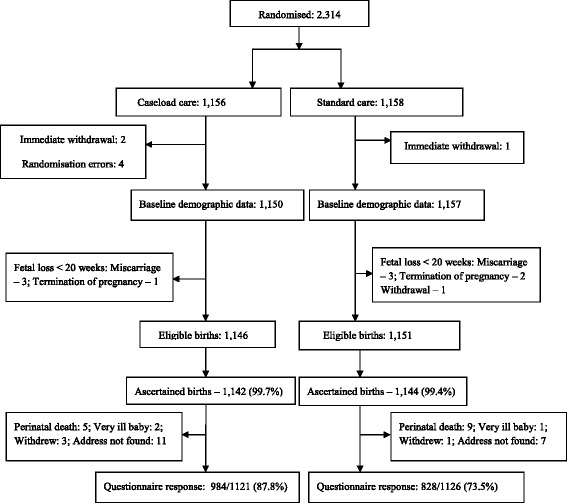
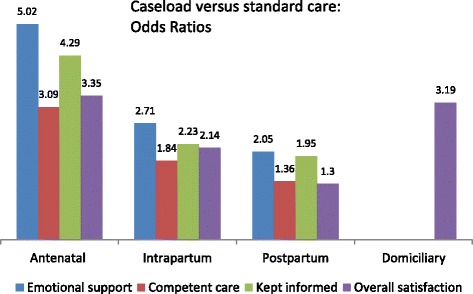
BACKGROUND: Continuity of care by a primary midwife during the antenatal, intrapartum and postpartum periods has been recommended in Australia and many hospitals have introduced a caseload midwifery model of care. The aim of this paper is to evaluate the effect of caseload midwifery on women's satisfaction with care across the maternity continuum. METHODS: Pregnant women at low risk of complications, booking for care at a tertiary hospital in Melbourne, Australia, were recruited to a randomised controlled trial between September 2007 and June 2010. Women were randomised to caseload midwifery or standard care. The caseload model included antenatal, intrapartum and postpartum care from a primary midwife with back-up provided by another known midwife when necessary. Women allocated to standard care received midwife-led care with varying levels of continuity, junior obstetric care, or community-based general practitioner care. Data for this paper were collected by background questionnaire prior to randomisation and a follow-up questionnaire sent at two months postpartum. The primary analysis was by intention to treat. A secondary analysis explored the effect of intrapartum continuity of carer on overall satisfaction rating. RESULTS: Two thousand, three hundred fourteen women were randomised: 1,156 to caseload care and 1,158 to standard care. The response rate to the two month survey was 88% in the caseload group and 74% in the standard care group. Compared with standard care, caseload care was associated with higher overall ratings of satisfaction with antenatal care (OR 3.35; 95% CI 2.79, 4.03), intrapartum care (OR 2.14; 95% CI 1.78, 2.57), hospital postpartum care (OR 1.56, 95% CI 1.32, 1.85) and home-based postpartum care (OR 3.19; 95% CI 2.64, 3.85). CONCLUSION: For women at low risk of medical complications, caseload midwifery increases women's satisfaction with antenatal, intrapartum and postpartum care. TRIAL REGISTRATION: Australian New Zealand Clinical Trials Registry ACTRN012607000073404 (registration complete 23rd January 2007).
Overview
CoChat Summary
TL;DR
In the COSMOS randomised controlled trial of 2,314 low-risk pregnant women in Melbourne, caseload midwifery was associated with higher satisfaction across antenatal, intrapartum, hospital postpartum, and home-based postpartum care compared with standard care. Secondary analyses suggested continuity of carer may contribute to satisfaction, but group allocation had a stronger effect and dose-response analyses were underpowered.
Key findings
- Among 2,314 randomised women (1,156 caseload; 1,158 standard care), caseload care was associated with higher overall satisfaction with antenatal care (OR 3.35; 95% CI 2.79, 4.03), intrapartum care (OR 2.14; 95% CI 1.78, 2.57), hospital postpartum care (OR 1.56; 95% CI 1.32, 1.85), and home-based postpartum care (OR 3.19; 95% CI 2.64, 3.85).
- Women in caseload care reported fewer different midwives during pregnancy (mean 2.8 vs 4.6, p < 0.001), fewer midwives during labour and birth (mean 2.4 vs 3.3, p < 0.001), and were far more likely to have previously met at least one midwife providing labour care (88.3% vs 9.0%, p < 0.001).
- In the caseload group, having previously met at least one midwife providing labour care was associated with higher overall labour and birth satisfaction (OR 1.83; 95% CI 1.07, 3.12; p = 0.03); no such association was found in standard care (OR 1.07; 95% CI 0.60, 1.91; p = 0.82).
- Satisfaction with intrapartum care in the caseload group increased with the number of prior meetings up to four times (OR 3.38; 95% CI 1.36, 8.34), but the study was underpowered to conclude on the dose-response pattern.
Methods
- Two-arm randomised controlled trial stratified by parity, conducted at the Royal Women’s Hospital, Melbourne, Australia, recruiting low-risk English-speaking women with singleton pregnancies at less than 24 weeks’ gestation between September 2007 and June 2010; women with previous caesarean section were excluded.
- Women were randomised to caseload midwifery (primary midwife with back-up) or standard care (midwife-led care with varying continuity, obstetric trainee care, or GP shared care); data came from a pre-randomisation background questionnaire and a postal questionnaire at two months postpartum.
- Primary analysis was by intention to treat using ordinal logistic regression for seven-point satisfaction scales, reported as proportional odds ratios with 95% CIs; secondary analyses of continuity of carer in labour used binary logistic regression.
Limitations
- The paper states this was a single-site trial of English-speaking women who were low risk at booking; participants were more likely to be married or living with a partner or expecting a first baby and less likely to be born in Australia than the overall Victorian population, and survey responders were slightly less likely to have low family income or government benefits as main income and slightly more likely to be Australian-born and have English as a first language.
- The paper states it evaluated a package of care, so it cannot conclude which specific aspects increased satisfaction; the secondary continuity analyses were not intention-to-treat and were underpowered for dose-response, and only 9.0% of standard care women reported having previously met a midwife who provided labour care.
- Evident from the text: the two-month survey response was substantially higher in caseload care (87.8%) than standard care (73.5%), and satisfaction was self-reported without blinding, which may bias comparisons.
Model-written summary. Check it against the paper before relying on it.
Integrity signals
Registry
Cites
Statistics
Figures
Verification
Claims the paper makes
6 Valid · 0 Not valid · 12 Not checked · 68 Own results and interpretations
Every source the paper cites for this claim was checked and supports it.
In the paper
“Although the caseload model was not tied to length of stay, women allocated to the caseload care arm in the original sample stayed less time in hospital postpartum that those allocated to standard care on average (55.4 h [SD 0.97] vs 60.5 h [SD 0.78]; p < 0.001) [2].”
§ Continuity of care by a primary midwife (caseload midwifery) increases women’s satisfaction with antenatal, intrapartum and postpartum care: results from the COSMOS randomised controlled trial > Results > Satisfaction with care
What the sources say
- Supportedcites [2] McLachlan H Forster D Davey M Farrell T Gold L Biro M Effects of continuity of care by a primary midwife (caseload midwifery) on caesarean section rates in women of low obstetric risk: the COSMOS randomised controlled trial BJOG 2012 119 12 1483 1492 10.1111/j.1471-0528.2012.03446.x 22830446 source
The Other outcomes section reports the same mean postpartum hospital stays for women allocated to caseload and standard care, with the same standard deviations and P value. The passage directly supports the attributed comparison. (LLM, conf=0.95)
plainstates an association- Asserted: passes — The authors put it forward as true.
- Checkable: passes — It can be checked against evidence.
- Load-bearing: unclear — It is unclear whether the paper’s conclusions depend on it.
- Based: passes — The paper gives a reason why it holds.
- Supported
Every source the paper cites for this claim was checked and supports it.
In the paper
“Although evaluations of a ‘package’ of care such as caseload midwifery do not allow conclusions about which specific aspects of care contribute to the outcomes [2], secondary analyses of the data can contribute to the ongoing debate regarding the significance of continuity of carer, and whether or not it is associated with satisfaction.”
§ Continuity of care by a primary midwife (caseload midwifery) increases women’s satisfaction with antenatal, intrapartum and postpartum care: results from the COSMOS randomised controlled trial > Background
What the sources say
- Supportedcites [2] McLachlan H Forster D Davey M Farrell T Gold L Biro M Effects of continuity of care by a primary midwife (caseload midwifery) on caesarean section rates in women of low obstetric risk: the COSMOS randomised controlled trial BJOG 2012 119 12 1483 1492 10.1111/j.1471-0528.2012.03446.x 22830446 source
The Discussion states directly that evaluating a package of care such as caseload midwifery does not allow conclusions about which specific aspects contribute to outcomes. It also says the component affecting the trial’s primary outcome is unknown. (LLM, conf=0.95)
plain- Asserted: passes — The authors put it forward as true.
- Checkable: passes — It can be checked against evidence.
- Load-bearing: passes — The paper’s conclusions depend on it.
- Based: passes — The paper gives a reason why it holds.
- Supported
A result the paper reports from its own data — it cites no other source for it, so there is none to check. The quote shows it is in the paper.
In the paper
“Compared to women in standard care, women in the caseload group reported higher satisfaction with postnatal care overall (OR 1.56, 95 % CI 1.32, 1.85; p < 0.001)”
§ Continuity of care by a primary midwife (caseload midwifery) increases women’s satisfaction with antenatal, intrapartum and postpartum care: results from the COSMOS randomised controlled trial > Results > Satisfaction with care
plainstates an association- Asserted: passes — The authors put it forward as true.
- Checkable: passes — It can be checked against evidence.
- Load-bearing: passes — The paper’s conclusions depend on it.
- Based: passes — The paper gives a reason why it holds.
A result the paper reports from its own data — it cites no other source for it, so there is none to check. The quote shows it is in the paper.
In the paper
“Women randomised to caseload midwifery were more satisfied with all midwife-related measures of intrapartum care than women in standard care (Table 4).”
§ Continuity of care by a primary midwife (caseload midwifery) increases women’s satisfaction with antenatal, intrapartum and postpartum care: results from the COSMOS randomised controlled trial > Results > Satisfaction with care
plainstates a cause- Asserted: passes — The authors put it forward as true.
- Checkable: passes — It can be checked against evidence.
- Load-bearing: passes — The paper’s conclusions depend on it.
- Based: passes — The paper gives a reason why it holds.
A result the paper reports from its own data — it cites no other source for it, so there is none to check. The quote shows it is in the paper.
In the paper
“Women in caseload care also reported that they were happier with the physical and emotional support provided by midwives, but were less satisfied with care provided by doctors than women in standard care.”
§ Continuity of care by a primary midwife (caseload midwifery) increases women’s satisfaction with antenatal, intrapartum and postpartum care: results from the COSMOS randomised controlled trial > Results > Satisfaction with care
plainstates an association- Asserted: passes — The authors put it forward as true.
- Checkable: passes — It can be checked against evidence.
- Load-bearing: unclear — It is unclear whether the paper’s conclusions depend on it.
- Based: passes — The paper gives a reason why it holds.
- Rests on an assumption not shown here.
49 more claims
Create a free account to see all 86 claims and to verify the 3 references still open.
- Probably not a substantial claim. 23
- It may state two separate claims as one. 16
Claims other papers make about this one
Each is checked against this paper’s own text: does it say what the citing paper says it does?
The source backs part of the claim, not all of it — or backs it for a different population, condition or comparison.
In the citing paper
“However, many studies have shown that mothers have important physical and emotional needs during the year after childbirth.155,158,160,162–179”
From Consequences of maternal postpartum depression: A systematic review of maternal and infant outcomes (2019) · cites this paper as [165]
Experimental — accuracy not yet measuredThe source backs part of the claim, not all of it — or backs it for a different population, condition or comparison.
In the citing paper
“The results of this study indicate that women in the MSCOC group experience more positive maternity care during pregnancy, childbirth, and postpartum, as well as greater satisfaction with both normal and caesarean deliveries, which are consistent with findings from a pilot study conducted in Norway and an RCT in Australia.”
From Effect of midwifery students’ continuity of care program on women’s experiences of maternity care: A randomised controlled trial (2026) · cites this paper as [48]
Experimental — accuracy not yet measuredThe source backs part of the claim, not all of it — or backs it for a different population, condition or comparison.
In the citing paper
“These results support the notion that the adequacy between care and the needs of women fl uctuates according to the perinatal period. 15”
From Comprehensive maternity support and shared care in Switzerland: Comparison of levels of satisfaction (2018) · cites this paper as [15]
Experimental — accuracy not yet measuredThe source backs part of the claim, not all of it — or backs it for a different population, condition or comparison.
In the citing paper
“These data underscore the bene fi cial effects of perinatal care provided by the midwife on satisfaction in various cultural and linguistic contexts. 4,15”
From Comprehensive maternity support and shared care in Switzerland: Comparison of levels of satisfaction (2018) · cites this paper as [15]
Experimental — accuracy not yet measuredThe cited source says what the claim attributes to it.
In the citing paper
“The assistance given in thecaseload compared with that supplied in the standard carewas associated to a major degree of satisfaction for the assistance during the pregnancy (OR 3.35; 95 % RC 2.79, 4.03)”
From The midwifery-led care model: a continuity of care model in the birth path (2019) · doi:10.23750/abm.v90i6-s.8621 · cites this paper as [20]
5 more claims about this paper
Create a free account to see every claim other papers make about this one.
Self-check
Percentages, sums and reported differences re-computed from the paper’s own numbers.
Each contradiction between two passages listed here was confirmed by an independent check.
Rated minor: it would not touch a result — a value no result rests on, a p-value that stays on the same side of the significance level, or a conflict that is clerical, resolved elsewhere in the paper, or outside its own findings.
In the paper
“17 % (172/828) shared care with a family doctor (GP)”
§ Continuity of care by a primary midwife (caseload midwifery) increases women’s satisfaction with antenatal, intrapartum and postpartum care: results from the COSMOS randomised controlled trial > Results > Trial participants
Reported 17 · recomputed 20.772947
Rated minor: it would not touch a result — a value no result rests on, a p-value that stays on the same side of the significance level, or a conflict that is clerical, resolved elsewhere in the paper, or outside its own findings.
In the paper
§ Continuity of care by a primary midwife (caseload midwifery) increases women’s satisfaction with antenatal, intrapartum and postpartum care: results from the COSMOS randomised controlled trial > Results > Satisfaction with care
“I was happy with the physical care I received in pregnancy from doctors (925/818) | 2.3 | 3.6 | 5.1 | 15.4 | 16.9 | 25.1 | 31.8 | 1.26”
§ Continuity of care by a primary midwife (caseload midwifery) increases women’s satisfaction with antenatal, intrapartum and postpartum care: results from the COSMOS randomised controlled trial > Results > Satisfaction with care
“1.46, 1.49 | 0.008”
Rated minor: it would not touch a result — a value no result rests on, a p-value that stays on the same side of the significance level, or a conflict that is clerical, resolved elsewhere in the paper, or outside its own findings.
In the paper
“| Had a least one postnatal visit at home with midwife met before (n, %) (957/777) | 896 | 96.3 | 123 | 15.8 | Chi2 p < 0.001 |”
§ Continuity of care by a primary midwife (caseload midwifery) increases women’s satisfaction with antenatal, intrapartum and postpartum care: results from the COSMOS randomised controlled trial > Results > Satisfaction with care
Reported 96.3 · recomputed 93.625914
Rated minor: it would not touch a result — a value no result rests on, a p-value that stays on the same side of the significance level, or a conflict that is clerical, resolved elsewhere in the paper, or outside its own findings.
In the paper
“| English first language | 892 | 79.8 | 681 | 82.3 |”
§ Continuity of care by a primary midwife (caseload midwifery) increases women’s satisfaction with antenatal, intrapartum and postpartum care: results from the COSMOS randomised controlled trial > Results > Respondents at two months postpartum
Reported 79.8 · recomputed 90.650407
Citations
Cites
Intention-to-treat concept: A review
Gupta, S. (2011) · Perspectives in Clinical Research · doi:10.4103/2229-3485.83221 · Cited by 1,921 · cited 1×
“The primary analyses were by intention to treat, that is, data were analysed by randomised group regardless of care received or of any protocol deviations [21].”
MethodMidwife-led continuity models versus other models of care for childbearing women
Sandall, J., Soltani, H., Gates, S., Shennan, A., & Devane, D. (2013) · Cochrane Database of Systematic Reviews · doi:10.1002/14651858.cd004667.pub3 · Cited by 1,226
Midwife‐led versus other models of care for childbearing women
Hatem, M., Sandall, J., Devane, D., Soltani, H., & Gates, S. (2008) · Cochrane Database of Systematic Reviews · doi:10.1002/14651858.cd004667.pub2 · Cited by 621 · cited 1×
“These findings confirm those of other RCTs of midwife-led care [3], suggesting that these models reduce interventions without jeopardising health outcomes.”
ResultMcLachlan, H., Forster, D., Davey, M., Farrell, T., Gold, L., Biro, M., Albers, L., Flood, M., Oats, J., & Waldenström, U. (2012) · BJOG: An International Journal of Obstetrics & Gynaecology · doi:10.1111/j.1471-0528.2012.03446.x · Cited by 268 · cited 7×
“Other factors are also likely to have an impact, for example women’s views and experiences of any interventions, and caseload midwives’ personal attributes [2].”
BackgroundMethodResultInfluentialSelf-citationSatisfaction With Care in Labor and Birth: A Survey of 790 Australian Women
Brown, S., & Lumley, J. (1994) · Birth · doi:10.1111/j.1523-536x.1994.tb00909.x · Cited by 255
Rowley, M. J., Hensley, M. J., Brinsmead, M. W., & Wlodarczyk, J. H. (1995) · Medical Journal of Australia · doi:10.5694/j.1326-5377.1995.tb124592.x · Cited by 183 · cited 2×
“Many of the RCTs of midwife-led care report increased satisfaction associated with being allocated to the midwife-led care trial arm [4–6].”
BackgroundResultWaldenström, U., Brown, S., McLachlan, H., Forster, D., & Brennecke, S. (2000) · Birth · doi:10.1046/j.1523-536x.2000.00156.x · Cited by 148 · cited 12×
“Melbourne: State Government of Victoria; 2014.”
BackgroundMethodResultInfluentialSelf-citationContinuity of carer: what matters to women? A review of the evidence
Green, J. M., Renfrew, M. J., & Curtis, P. A. (2000) · Midwifery · doi:10.1054/midw.1999.0208 · Cited by 140 · cited 4×
“[15] found no difference in satisfaction between women who had a known care provider during labour compared with those who had not.”
BackgroundResultInfluentialSatisfaction with Team Midwifery Care for Low‐ and High‐Risk Women: A Randomized Controlled Trial
Biró, M. A., Waldenström, U., Brown, S., & Pannifex, J. H. (2003) · Birth · doi:10.1046/j.1523-536x.2003.00211.x · Cited by 131 · cited 2×
“were generally higher than those we have reported in RCTs of team midwifery care in similar populations [4, 6].”
BackgroundResultSelf-citationGoberna-Tricas, J., Banús-Giménez, M. R., Palacio-Tauste, A., & Linares-Sancho, S. (2011) · Midwifery · doi:10.1016/j.midw.2010.10.004 · Cited by 88 · cited 2×
“Other studies have reported associations between positive ratings of satisfaction and different aspects of care, such as conveniently located care [8], safe care with skilled professionals [8, 9], positive staff attitudes and behaviours (e.”
Background
Research works printed but not linked: 5
- Department of Human Services Victoria Future directions for Victoria’s maternity services 2004 Melbourne Victorian Department of Human Services
- StataCorp STATA 10.0 Statistics/Data Analysis. College Station 2007 Texas StataCorp
- StataCorp STATA 2009 Texas StataCorp LP
- Consultative Council on Obstetric and Paediatric Mortality and Morbidity 2010 and 2011, Victoria’s Mothers and Babies, Victoria’s Maternal, Perinatal, Child and Adolescent Mortality 2014 Melbourne State Government of Victoria
- Consultative Council on Obstetric and Paediatric Mortality and Morbidity Quality SaPEB Births in Victoria 2007 and 2008 2010 Melbourne Department of Health
Cited by
Consequences of maternal postpartum depression: A systematic review of maternal and infant outcomes
Slomian, J., Honvo, G., Emonts, P., Reginster, J.-Y., & Bruyère, O. (2019) · Women's Health · doi:10.1177/1745506519844044 · Cited by 1,496
What women value in the midwifery continuity of care model: a systematic review with meta-synthesis
Perriman, N., Davis, D. L., & Ferguson, S. (2018) · Midwifery · doi:10.1016/j.midw.2018.04.011 · Cited by 258
Midwife continuity of care models versus other models of care for childbearing women
Sandall, J., Fernandez Turienzo, C., Devane, D., Soltani, H., Gillespie, P., Gates, S., Jones, L. V., Shennan, A. H., & Rayment-Jones, H. (2024) · Cochrane Database of Systematic Reviews · doi:10.1002/14651858.cd004667.pub6 · Cited by 192
Women’s experiences of birth trauma: A scoping review
Watson, K., White, C., Hall, H., & Hewitt, A. (2021) · Women and Birth · doi:10.1016/j.wombi.2020.09.016 · Cited by 153
Slomian, J., Emonts, P., Vigneron, L., Acconcia, A., Glowacz, F., Reginster, J. Y., Oumourgh, M., & Bruyère, O. (2017) · BMC Pregnancy and Childbirth · doi:10.1186/s12884-017-1398-1 · Cited by 97
Dawson, K., Newton, M. S., Forster, D. A., & McLachlan, H. (2018) · Midwifery · doi:10.1016/j.midw.2018.04.026 · Cited by 103
Self-citationHajizadeh, K., Vaezi, M., Meedya, S., Mohammad Alizadeh Charandabi, S., & Mirghafourvand, M. (2020) · BMC Pregnancy and Childbirth · doi:10.1186/s12884-020-03118-0 · Cited by 71
Hildingsson, I., Rubertsson, C., Karlström, A., & Haines, H. M. (2019) · Sexual & Reproductive Healthcare · doi:10.1016/j.srhc.2019.06.004 · Cited by 93
“However, fragmented care (where a woman is cared for by different people at various stages of her pregnancy, birth, and postnatal period) is well known to reduce satisfaction with care for all women regardless of fear [25,39].”
BackgroundBye, A., Shawe, J., Bick, D., Easter, A., Kash-Macdonald, M., & Micali, N. (2018) · BMC Pregnancy and Childbirth · doi:10.1186/s12884-018-1745-x · Cited by 88
Falck, F., Frisén, L., Dhejne, C., & Armuand, G. M. (2020) · International Journal of Transgender Health · doi:10.1080/26895269.2020.1845905 · Cited by 82
Kildea, S. V., Simcock, G. P., Liu, A., Elgbeili, G., Laplante, D. P., Kahler, A., Austin, M., Tracy, S., Kruske, S., Tracy, M. B., et al. (2017) · Archives of Women s Mental Health · doi:10.1007/s00737-017-0781-2 · Cited by 78
Filippetti, M. L., Clarke, A. D. F., & Rigato, S. (2022) · BMC Pregnancy and Childbirth · doi:10.1186/s12884-022-04387-7 · Cited by 75
“Previous research has demonstrated that frequent support from pregnancy to the postnatal period, such as the one provided through continuity of care, weakens the association between high levels of stress experienced by women in the context of a natural disaster and mental health symptoms [53, 54].”
BackgroundStyles, C., Kearney, L. N., & George, K. (2019) · Women and Birth · doi:10.1016/j.wombi.2019.08.008 · Cited by 70
The role of midwives and obstetrical nurses in the promotion of healthy lifestyle during pregnancy
Bahri Khomami, M., Walker, R., Kilpatrick, M., de Jersey, S., Skouteris, H., & Moran, L. J. (2021) · Therapeutic Advances in Reproductive Health · doi:10.1177/26334941211031866 · Cited by 50
Whole Systems Research Methods in Health Care: A Scoping Review
Ijaz, N., Rioux, J., Elder, C. R., & Weeks, J. (2019) · The Journal of Alternative and Complementary Medicine · doi:10.1089/acm.2018.0499 · Cited by 55
“’s study includes pre-, intra-, and postpartum care components.(100) Behavioral interventions.”
BackgroundCronie, D., Perdok, H., Verhoeven, C. J. M., Jans, S. M. P. J., Hermus, M. A. A., Vries, R. G. D., & Rijnders, M. E. B. (2019) · BMC Health Services Research · doi:10.1186/s12913-019-4454-x · Cited by 60
Tolu, L. B., Yigezu, E., Urgie, T., & Feyissa, G. T. (2020) · PLoS ONE · doi:10.1371/journal.pone.0230638 · Cited by 67
Muluneh, M. D., Assefa, G. M., Abebe, S., Hailu, Y., Makonnen, M., & Stulz, V. M. (2021) · Women and Birth · doi:10.1016/j.wombi.2021.02.002 · Cited by 46
Measuring respect and autonomy in Dutch maternity care: Applicability of two measures
Jong, E. F., Pijl, M., Vedam, S., Jansen, D. E. M. C., & Peters, L. L. (2019) · Women and Birth · doi:10.1016/j.wombi.2019.10.008 · Cited by 51
Midwife experiences of providing continuity of carer: A qualitative systematic review
Pace, C. A., Crowther, S., & Lau, A. (2021) · Women and Birth · doi:10.1016/j.wombi.2021.06.005 · Cited by 65
Comprehensive maternity support and shared care in Switzerland: Comparison of levels of satisfaction
Floris, L., Irion, O., Bonnet, J., Politis Mercier, M.-P., & de Labrusse, C. (2018) · Women and Birth · doi:10.1016/j.wombi.2017.06.021 · Cited by 43
Women’s experiences and satisfaction with having a cesarean birth: An integrative review
Coates, D., Thirukumar, P., & Henry, A. (2019) · Birth · doi:10.1111/birt.12478 · Cited by 211
Cummins, A., Coddington, R., Fox, D., & Symon, A. (2020) · Women and Birth · doi:10.1016/j.wombi.2019.03.013 · Cited by 41
Allen, J., Kildea, S., Tracy, M. B., Hartz, D. L., Welsh, A. W., & Tracy, S. K. (2019) · Birth · doi:10.1111/birt.12436 · Cited by 41
Mengistu, T. S., Khatri, R. B., Erku, D., & Assefa, Y. A. (2023) · Journal of Global Health · doi:10.7189/jogh.13.04043 · Cited by 48
“(2016) (115) Victoria Sep 2007 to June 2010 Randomised controlled trial - Women presented to antenatal, intrapartum, and postpartum care - 2,314 women (1,156 trial arm and 1,158 standard care) - Compared with standard care, caseload care”
BackgroundStulz, V. M., Bradfield, Z., Cummins, A., Catling, C., Sweet, L., McInnes, R., McLaughlin, K., Taylor, J., Hartz, D., & Sheehan, A. (2022) · Women and Birth · doi:10.1016/j.wombi.2021.10.006 · Cited by 35
“Midwifery continuity of care improves clinical outcomes for mothers and babies [32], provides personalised care and trust through the mid-wife – woman relationship and increases women ’ s satisfaction with their care [33].”
McLachlan, H., Newton, M. S., McLardie-Hore, F. E., McCalman, P., Jackomos, M., Bundle, G., Kildea, S. V., Chamberlain, C., Browne, J., Ryan, J., et al. (2022) · EClinicalMedicine · doi:10.1016/j.eclinm.2022.101415 · Cited by 49
Self-citationPenman, S. V., Beatson, R. M., Walker, E. H., Goldfeld, S. R., & Molloy, C. S. (2023) · Journal of Advanced Nursing · doi:10.1111/jan.15724 · Cited by 53
“For example, Forster et al. (2016) found that compared with women receiving standard care, women ran - domly allocated to caseload midwifery were significantly more likely to report that, during pregnancy, they were asked if they had any questions, were kept informed, were given a say in decisions,…”
BackgroundResultFernandez Turienzo, C., Silverio, S. A., Coxon, K., Brigante, L., Seed, P. T., Shennan, A. H., Sandall, J., & On behalf of the POPPIE Collaborative Group (2021) · PLOS ONE · doi:10.1371/journal.pone.0248588 · Cited by 34
“The significant differences in advice and support women in the POPPIE group received in the immediate and late postnatal periods are important and aligned with findings from a previous study [38].”
ResultAltman, M. R., Afulani, P. A., Melbourne, D., & Kuppermann, M. (2022) · Birth · doi:10.1111/birt.12675 · Cited by 39
Women’s satisfaction with midwife-led continuity of care: an observational study in Palestine
Mortensen, B., Diep, L. M., Lukasse, M., Lieng, M., Dwekat, I., Elias, D., & Fosse, E. (2019) · BMJ Open · doi:10.1136/bmjopen-2019-030324 · Cited by 33
Sharma, E., Tseng, P.-C., Harden, A., Li, L., & Puthussery, S. (2023) · BMC Health Services Research · doi:10.1186/s12913-023-09536-y · Cited by 37
“Midwifery continuity of carer is well known to foster greater support, information and satisfaction for women of all backgrounds [54, 55].”
BackgroundDawson, K., Forster, D. A., McLachlan, H. L., & Newton, M. S. (2018) · Women and Birth · doi:10.1016/j.wombi.2017.08.132 · Cited by 31
Self-citationAddressing a need. Holistic midwifery in the Netherlands: A qualitative analysis
Hollander, M., de Miranda, E., Vandenbussche, F. P. H. A., van Dillen, J., & Holten, L. (2019) · PLoS ONE · doi:10.1371/journal.pone.0220489 · Cited by 37
Baratieri, T., Lentsck, M. H., Falavina, L. P., Soares, L. G., Prezotto, K. H., & Pitilin, É. D. B. (2022) · Cadernos de Saúde Pública · doi:10.1590/0102-311x00103221 · Cited by 75
Middlemiss, A. L., Channon, S., Sanders, J., Kenyon, S. L., Milton, R., Prendeville, T., Barry, S., Strange, H., & Jones, A. (2024) · BMC Pregnancy and Childbirth · doi:10.1186/s12884-024-06649-y · Cited by 47
“Some papers also separately cited specific clinical trials [49–51] as strong evidence for MCoC effectiveness.”
Women's satisfaction with childbirth and postpartum care and associated variables
Navas-Arrebola, R., Peteiro-Mahía, L., Blanco-López, S., López-Castiñeira, N., Seoane‐Pillado, T., & Pértega-Díaz, S. (2021) · Revista da Escola de Enfermagem da USP · doi:10.1590/s1980-220x2020006603720 · Cited by 61
“Some authors associate maternal satisfaction with continuous and personalized support from caregivers, especially the midwife, during delivery(5-7).”
BackgroundGidaszewski, B., Khajehei, M., Gibbs, E., & Chua, S. C. (2018) · Midwifery · doi:10.1016/j.midw.2018.10.010 · Cited by 32
Rayment‐Jones, H., Harris, J. M., Harden, A., Turienzo, C. F., & Sandall, J. (2022) · Women and Birth · doi:10.1016/j.wombi.2022.11.006 · Cited by 33
“relief, were more likely to feel in control in labour and proud of themselves, and less anxious [19,20] • had higher levels of satisfaction with the antenatal, intrapartum and postnatal maternity care they received [21] • experienced reduced intervention rates including more spontaneous vaginal delivery, and less caes…”
BackgroundSutter, M. B., Watson, H., Bauers, A., JOHNSON, K., Hatley, M., Yonke, N., & Leeman, L. M. (2019) · Journal of Midwifery & Women s Health · doi:10.1111/jmwh.12960 · Cited by 32
The first 20 weeks of pregnancy is a high‐risk period for eating disorder relapse
Sollid, C. P., Clausen, L., & Maimburg, R. D. (2021) · International Journal of Eating Disorders · doi:10.1002/eat.23620 · Cited by 29
Experienced job autonomy among maternity care professionals in The Netherlands
Perdok, H., Cronie, D., van der Speld, C., van Dillen, J., de Jonge, A., Rijnders, M. E. B., de Graaf, I. M., Schellevis, F., & Verhoeven, C. J. M. (2017) · Midwifery · doi:10.1016/j.midw.2017.07.015 · Cited by 38
“As well as this caseload midwifery increases women's satisfaction with antenatal, intrapartum and postpartum care (Forster et al., 2016).”
BackgroundSlomian, J., Emonts, P., Vigneron, L., Acconcia, A., Reginster, J.-Y., Oumourgh, M., & Bruyère, O. (2017) · JMIR Research Protocols · doi:10.2196/resprot.6831 · Cited by 26
“This need for continuity has already been shown in several studies [23-26].”
Susanti, A. I., Ali, M., Hernawan, A. H., Rinawan, F. R., Purnama, W. G., Puspitasari, I. W., & Stellata, A. G. (2022) · International Journal of Environmental Research and Public Health · doi:10.3390/ijerph192113893 · Cited by 62
“Midwifery continuity of care (MCOC) starts from pregnancy, childbirth, and postpartum to provide satisfaction for mothers to receive midwifery care [4,5].”
BackgroundRao, V. S., Dahlen, H. G., & Razee, H. (2019) · Women and Birth · doi:10.1016/j.wombi.2019.09.006 · Cited by 32
Bradow, J., Smith, S.-A. D.-V., Davis, D. L., & Atchan, M. (2021) · Midwifery · doi:10.1016/j.midw.2021.103094 · Cited by 32
Women’s perception of continuity of team midwifery care in Iran: a qualitative content analysis
Shahinfar, S., Abedi, P., Najafian, M., Abbaspoor, Z., Mohammadi, E., & Alianmoghaddam, N. (2021) · BMC Pregnancy and Childbirth · doi:10.1186/s12884-021-03666-z · Cited by 42
The midwifery-led care model: a continuity of care model in the birth path
Ricchi, A., Rossi, F., Borgognoni, P., Bassi, M. C., Artioli, G., Foà, C., & Neri, I. (2019) · Acta bio-medica dell'Ateneo parmense/Acta biomedica · doi:10.23750/abm.v90i6-s.8621 · Cited by 24
“(20) aimed to examine the score of satisfaction of women in the assistance during pregnancy, delivery and puerperium.”
BackgroundLundborg, L., Åberg, K., Liu, X., Norman, M., Stephansson, O., Pettersson, K. O., Ekborn, M., Cnattingius, S., & Ahlberg, M. (2024) · Birth · doi:10.1111/birt.12875 · Cited by 36
Barriers and facilitators for implementation of continuity of midwife care: A review of reviews
Zarbiv, G., Perlman, S., & Ellen, M. (2025) · Women and Birth · doi:10.1016/j.wombi.2025.101892 · Cited by 33
Newton, M. S., Dawson, K., Forster, D. A., & McLachlan, H. (2020) · Women and Birth · doi:10.1016/j.wombi.2020.06.006 · Cited by 29
Self-citationCummins, A. M., Griew, K., Devonport, C., Ebbett, W., Catling, C., & Baird, K. M. (2021) · Women and Birth · doi:10.1016/j.wombi.2021.03.006 · Cited by 39
Midwives’ experiences of facilitating informed decision-making – a narrative literature review
Kloester, J., Willey, S., Hall, H. G., & Brand, G. (2022) · Midwifery · doi:10.1016/j.midw.2022.103322 · Cited by 42
Optimising the continuity experiences of student midwives: an integrative review
Moncrieff, G., MacVicar, S., Norris, G., & Martin, C. J. H. (2020) · Women and Birth · doi:10.1016/j.wombi.2020.01.007 · Cited by 28
A scoping review of evidence comparing models of maternity care in Australia
Talukdar, S., Dingle, K. D., & Miller, Y. D. (2021) · Midwifery · doi:10.1016/j.midw.2021.102973 · Cited by 24
Hauck, Y. L., Nathan, E., Ball, C., Hutchinson, M., Somerville, S., Hornbuckle, J., & Doherty, D. A. (2018) · Women and Birth · doi:10.1016/j.wombi.2018.11.017 · Cited by 31
Symon, A., McFadden, A., White, M., Fraser, K., & Cummins, A. M. (2019) · Midwifery · doi:10.1016/j.midw.2019.03.002 · Cited by 27
Women’s experience of receiving team-midwifery care in Japan: A qualitative descriptive study
Iida, M., Horiuchi, S., & Nagamori, K. (2020) · Women and Birth · doi:10.1016/j.wombi.2020.09.020 · Cited by 27
Carter, J., Sidebotham, M., & Dietsch, E. (2021) · Women and Birth · doi:10.1016/j.wombi.2021.03.013 · Cited by 30
Pregnant women’s perception of midwifery-led continuity care model in Ethiopia: a qualitative study
Mose, A., Geda, Y. F., Zewdie, A., Haile, K., Shitu, S., Kasahun, A. W., & Metebo, K. N. (2023) · BMC Women s Health · doi:10.1186/s12905-023-02456-3 · Cited by 26
“The finding is in agreement with studies conducted in the Royal Women’s Hospital, Australia which showed that women who had received midwifery-led care had a higher rate of satisfaction and positive experience with their antenatal care follow-up, intrapartum care, and postpartum care [28, 29].”
ResultMcCalman, P., McLardie-Hore, F. E., Newton, M. S., McLachlan, H., & Forster, D. A. (2022) · Women and Birth · doi:10.1016/j.wombi.2022.06.001 · Cited by 21
Self-citationIncreasing levels of burnout in Swedish midwives – A ten-year comparative study
Hildingsson, I., Fahlbeck, H., Larsson, B., & Johansson, M. (2023) · Women and Birth · doi:10.1016/j.wombi.2023.10.010 · Cited by 29
Aune, I., Tysland, T., & Vollheim, S. A. (2020) · Nordic journal of nursing research · doi:10.1177/2057158520973202 · Cited by 24
“This model of care contributes to an increased number of homebirths and higher breastfeeding rates(15) and women report that midwives keep them informed, that they are involved in decision-making, that their concerns are taken seriously and that they are more satisfied with the support provided by midwives.(12) When m…”
BackgroundFreytsis, M., Phillippi, J. C., Cox, K. J., Romano, A. M., & Cragin, L. (2016) · Journal of Midwifery & Women s Health · doi:10.1111/jmwh.12521 · Cited by 24
Wessberg, A., Lundgren, I., & Elden, H. (2017) · BMC Pregnancy and Childbirth · doi:10.1186/s12884-017-1342-4 · Cited by 24
“Continuity of care has been shown to influence patient satisfaction [54].”
BackgroundWho owns the baby? A video ethnography of skin-to-skin contact after a caesarean section
Stevens, J., Schmied, V. A., Burns, E., & Dahlen, H. G. (2018) · Women and Birth · doi:10.1016/j.wombi.2018.02.005 · Cited by 29
Forster, D. A., McKay, H. A., Davey, M., Small, R. E., Cullinane, F., Newton, M. S., Powell, R. L., & McLachlan, H. (2018) · Women and Birth · doi:10.1016/j.wombi.2018.07.019 · Cited by 18
Self-citationCarter, J., Dietsch, E., & Sidebotham, M. (2020) · Nurse Education in Practice · doi:10.1016/j.nepr.2020.102859 · Cited by 23
Huang, J., Lu, H. S., Li, J., Zhou, N., Zang, Y., Ren, L., & Wang, J. (2020) · Journal of Clinical Nursing · doi:10.1111/jocn.15514 · Cited by 22
Midwifery care based on a precautionary approach
Aune, I., Holsether, O. V., & Kristensen, A. M. T. (2018) · Sexual & Reproductive Healthcare · doi:10.1016/j.srhc.2018.03.005 · Cited by 32
Factors That Contribute to Excessive Sleepiness in Midwives Practicing in the United States
Arbour, M. W., Tanner, T., Hensley, J., Beardsley, J., Wika, J., & GARVAN, C. W. (2019) · Journal of Midwifery & Women s Health · doi:10.1111/jmwh.12945 · Cited by 20
Johansson, M., Östlund, P., Holmqvist, C., & Wells, M. B. (2021) · Midwifery · doi:10.1016/j.midw.2021.103199 · Cited by 20
Hailemeskel, S., Alemu, K., Christensson, K., Tesfahun, E., & Lindgren, H. E. (2022) · Women and Birth · doi:10.1016/j.wombi.2022.01.005 · Cited by 26
McCalman, P., Forster, D. A., Springall, T. L., Newton, M. S., McLardie-Hore, F. E., & McLachlan, H. (2023) · Women and Birth · doi:10.1016/j.wombi.2023.06.003 · Cited by 17
Self-citationMcCalman, P., Forster, D. A., Newton, M. S., McLardie-Hore, F. E., & McLachlan, H. (2024) · Women and Birth · doi:10.1016/j.wombi.2024.01.009 · Cited by 17
Self-citationLarsson, B., Rubertsson, C., & Hildingsson, I. (2020) · Sexual & Reproductive Healthcare · doi:10.1016/j.srhc.2020.100504 · Cited by 24
Why ARRIVE should not thrive in Australia
Davies-Tuck, M. L., Wallace, E. M., & Homer, C. (2018) · Women and Birth · doi:10.1016/j.wombi.2018.08.168 · Cited by 16
Hailemeskel, S., Alemu, K., Christensson, K., Tesfahun, E., & Lindgren, H. E. (2021) · PLoS ONE · doi:10.1371/journal.pone.0258248 · Cited by 20
“In the present study, consistent with other studies [3, 4, 34], midwives identified some of the disadvantages of the non-midwife continuity of care model; care becomes fragmented and unit based, non-continuity of care provider and information which could cause loss of information, because of the presence of new provid…”
ResultBuultjens, M., Gill, J., Fielding, J., Lambert, K. A., Vondeling, K., Mastwyk, S., Sloane, S., Fedele, W., Karimi, L., Milgrom, J., et al. (2022) · Women and Birth · doi:10.1016/j.wombi.2022.09.007 · Cited by 16
Brigante, L., Coxon, K., Turienzo, C. F., & Sandall, J. (2023) · Women and Birth · doi:10.1016/j.wombi.2023.01.003 · Cited by 17
Coates, D., Donnolley, N. R., Foureur, M. J., Thirukumar, P., & Henry, A. (2021) · Midwifery · doi:10.1016/j.midw.2021.102944 · Cited by 17
de Wolff, M. G., Midtgaard, J., Johansen, M., Rom, A. L., Rosthøj, S., Tabor, A., & Hegaard, H. K. (2021) · International Journal of Environmental Research and Public Health · doi:10.3390/ijerph18157875 · Cited by 14
“In the previous studies [18,19,49,50], satisfaction was measured in midwifery continuity of care models, where known midwives provide continuity of care throughout the childbearing experience from antenatal intrapartum and postpartum care [18,19,55] for women at both high and low risk.”
ResultMaimburg, R. D. (2018) · Sexual & Reproductive Healthcare · doi:10.1016/j.srhc.2018.02.011 · Cited by 14
Medway, P., Sweet, L. P., & Müller, A. (2020) · Women and Birth · doi:10.1016/j.wombi.2020.06.001 · Cited by 17
Women’s engagement with community perinatal mental health services: a realist evaluation
Fisher, L., Davey, A. F., Wong, G., Morgan‐Trimmer, S., Howard, L. M., Sharp, H. M., Atmore, K. H., Brook, J., Collins, G. S., Domoney, J., et al. (2024) · BMC Psychiatry · doi:10.1186/s12888-024-05804-1 · Cited by 21
“There is increasing recognition of the importance of continuity of care in both health [25, 26] and mental health [27], with maternity services in many countries adopting small team, “case loading” approaches [28, 29].”
BackgroundSlomian, J., Reginster, J., Emonts, P., & Bruyère, O. (2021) · BMC Pregnancy and Childbirth · doi:10.1186/s12884-021-03858-7 · Cited by 24
Health literacy among fathers and fathers-to-be: a multi-country, cross-sectional survey
Wynter, K. H., Watkins, V. J., Kavanagh, S., Hosking, S., Rasmussen, B., Maindal, H. T., & Macdonald, J. A. (2023) · Health Promotion International · doi:10.1093/heapro/daad131 · Cited by 13
“…reported benefits among mothers associated with relational continuity during the perinatal period, including: ‘feeling more than numbers’ (Jepsen et al ., 2017), satisfaction with care (Haines et al ., 2015; Forster et al ., 2016), and improved perinatal mental health (Hildingsson et al ., 2019).”
BackgroundJittitaworn, W., Fox, D. J., Catling, C., & Homer, C. (2019) · Women and Birth · doi:10.1016/j.wombi.2019.03.015 · Cited by 19
Opdam, F., van Dillen, J., de Vries, M., & Hollander, M. (2021) · International Journal of Environmental Research and Public Health · doi:10.3390/ijerph182111627 · Cited by 16
“However, some community midwives work with a caseload model of care, in which their clients receive care from one known midwife throughout their pregnancy, birth and the early postpartum period [18,19].”
BackgroundDilcen, H. Y., Akın, B., & Türkmen, H. (2021) · Perspectives In Psychiatric Care · doi:10.1111/ppc.12875 · Cited by 13
Hewitt, L., Dadich, A., Hartz, D. L., & Dahlen, H. G. (2022) · BMC Health Services Research · doi:10.1186/s12913-022-08532-y · Cited by 24
Callander, E. J., Jackson, H., McLachlan, H. L., Davey, M.-A., & Forster, D. A. (2024) · Gynecology and Obstetrics Clinical Medicine · doi:10.1136/gocm-2024-000008 · Cited by 12
Self-citationMiller, Y. D., Tone, J., Talukdar, S., & Martin, E. K. (2022) · PLoS ONE · doi:10.1371/journal.pone.0271105 · Cited by 18
Homer, C., Davis, D. L., Mollart, L. J., Turkmani, S., Smith, R., Bullard, M., Leiser, B., & Foureur, M. J. (2021) · Women and Birth · doi:10.1016/j.wombi.2021.05.010 · Cited by 14
Amiri‐Farahani, L., Gharacheh, M., Sadeghzadeh, N., Peyravi, H., & Pezaro, S. (2022) · BMC Pregnancy and Childbirth · doi:10.1186/s12884-022-05040-z · Cited by 19
“Indeed, midwifery continuity of care is considered the optimal model of care [11, 12], and may further strengthen relationships [26].”
BackgroundModel of care matters: An integrative review
Cutajar, L., Dahlen, H. G., Auwers, A. L., Vir, S., Berberovic, B., Jedrzejewski, T., & Burns, E. (2023) · Women and Birth · doi:10.1016/j.wombi.2022.12.007 · Cited by 13
Bowden, E. R., Chang, A. B., & McCallum, G. B. (2023) · Midwifery · doi:10.1016/j.midw.2023.103674 · Cited by 15
Continuity of care as central theme in perinatal care: A systematic review
BAART, A., Brunsveld‐Reinders, A. H., Pijnappel, L., HAAN, M. D., & Ginkel, J. M. D. M. (2024) · Midwifery · doi:10.1016/j.midw.2024.104273 · Cited by 25
Kuipers, Y., van Beeck, E., Kammeraat, L., & Rutten, F. (2019) · International Journal of Childbirth · doi:10.1891/2156-5287.9.2.92 · Cited by 11
“…Bonferroni ID:t0690 ID:t0710 ID:t0725 ID:t0740 ID:t0755 ID:p0190 ID:p0190 2017; Forster et al., 2016; McPherson, Roqué-Sanchez, Legget, Fuertes, & Segarra, 2016)—contributing to the explanation of perceived high…”
A Bibliometric Analysis of Research Articles on Midwifery Based on the Web of Science
Li, T., Zeng, Y., Fan, X., Yang, J., Yang, C., Xiong, Q., & Liu, P. (2023) · Journal of Multidisciplinary Healthcare · doi:10.2147/jmdh.s398218 · Cited by 12
Metadata
- Authors
- Forster, D. A., McLachlan, H. L., Davey, M.-A., Biro, M. A., Farrell, T., Gold, L., Flood, M., Shafiei, T., & Waldenström, U.
- Affiliations
- Royal Women's Hospital (AU)
- La Trobe University (AU)
- Deakin University (AU)
- Karolinska Institutet (SE)
- Corresponding author
- Forster, Della A.
- ORCID
- Venue
- BMC Pregnancy and Childbirth
- Published
- 2016-02-03
- Volume
- 16
- Issue
- 1
- Pages
- 28-28
- ISSN
- 1471-2393 (ISSN-L)
- PMC
- PMC4739100
- OpenAlex
- W2252728976
- Semantic Scholar
- 9acadcd2997db4eb8c0ba41145b1e9b68d06a4ad
- Cited by
- 251
- References
- 19
- Citations by year
- 2026: 17 · 2025: 23 · 2024: 35 · 2023: 37 · 2022: 28 · 2021: 30 · 2020: 24 · 2019: 29 · 2018: 16 · 2017: 9 · 2016: 3
- FWCI
- 24.50
- Type
- journal article
- Language
- en
- Open access
- gold
- doi.org
- Licence
- cc-by
- Locations
- BMC Pregnancy and Childbirth (publishedVersion, cc-by)
- PubMed Central (publishedVersion, cc-by)
- PubMed (publishedVersion)
- Monash University Research Portal (Monash University) (submittedVersion, other-oa)
- Figshare (submittedVersion, cc-by)
- La Trobe University (cc-by)
- Funders
- National Health and Medical Research Council (AU) (433040)
- Topics
- Health Sciences › Medicine › Obstetrics and Gynecology › Maternal and Perinatal Health Interventions
- Health Sciences › Medicine › Pediatrics, Perinatology and Child Health › Maternal and Neonatal Healthcare
- Health Sciences › Health Professions › General Health Professions › Patient Satisfaction in Healthcare
- Keywords
- caseload midwifery, continuity of care, midwife-led care, prenatal care, intrapartum care, postpartum care, low-risk pregnancy, maternity care models, COSMOS trial, general practitioner care
- MeSH terms
- Adult, Continuity of Patient Care, Female, Follow-Up Studies, Humans, Midwifery, Postnatal Care, Pregnancy, Prenatal Care, Surveys and Questionnaires, Victoria, Patient Satisfaction, Perinatal Care
About these checks
Registry, retraction, Cites and statistics results are computed, not judged, with one exception: a printed reference that no index lists is read once by a model before it counts as a citation error. Claims are extracted by a model and kept only when their quote appears verbatim in the text; each cited source is then checked, with a model’s help, for whether it says what the claim relies on. Those verdicts can be wrong — read the claim’s quote and the cited source before relying on one.
A language model drew the claims from the paper on 2026-10-10, under version 3 of the claim definition (model deepseek-v4.1-flash, prompt extract-v3).
A second model labelled each claim on 2026-10-10 (model jev-1.13-20260917, definition revision gold-guideline-v0.2).
Cited sources are checked with a language model’s help (gpt-6-sol).
Statistics and arithmetic are recomputed, not judged.
Confidence bands are shown only for fields calibrated on our annotated test set. None is calibrated yet, so no band is shown.
What counts as a claim ›How we measure confidence ›How we check this ›
Are you an author, or do you see a problem with this page? Request a review
Data sources
Bibliographic data: Semantic Scholar, OpenAlex, Crossref.
Contains information from the Semantic Scholar Academic Graph Datasets, made available under the ODC Attribution License (ODC-BY 1.0).
Semantic Scholar’s data is described in: Kinney, R., et al. (2023). The Semantic Scholar Open Data Platform. arXiv:2301.10140.
