

Adherence to Mediterranean diet impacts gastrointestinal microbial diversity throughout pregnancy
Open accessThe DOI matches its Crossref record; 48 of the 48 references it cites were found in a registry or an index.
Abstract
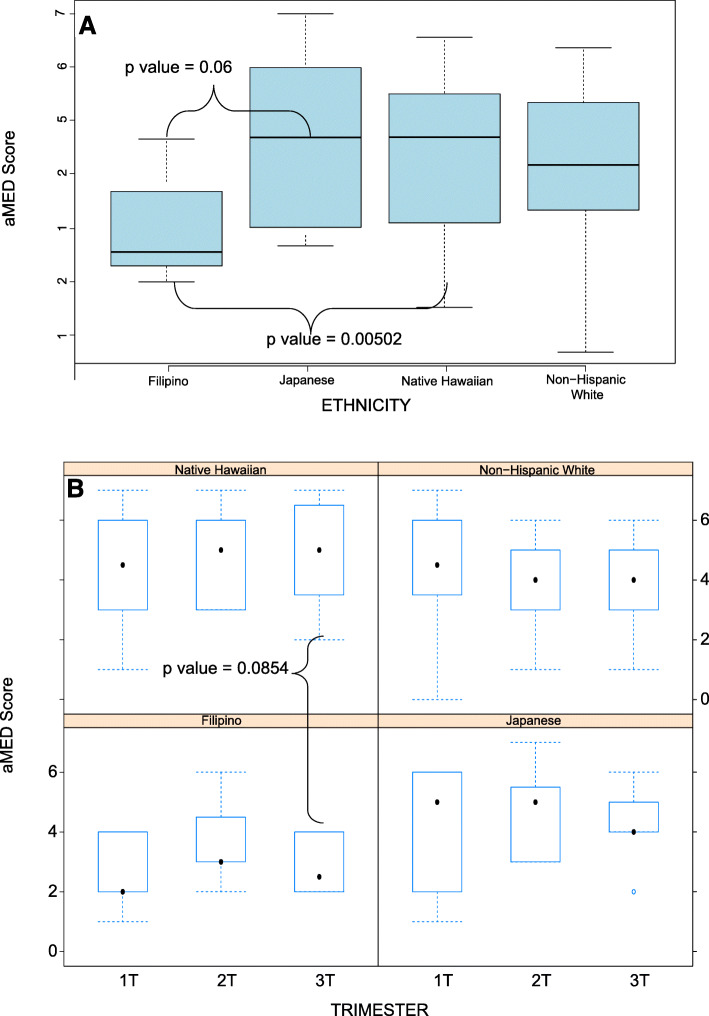
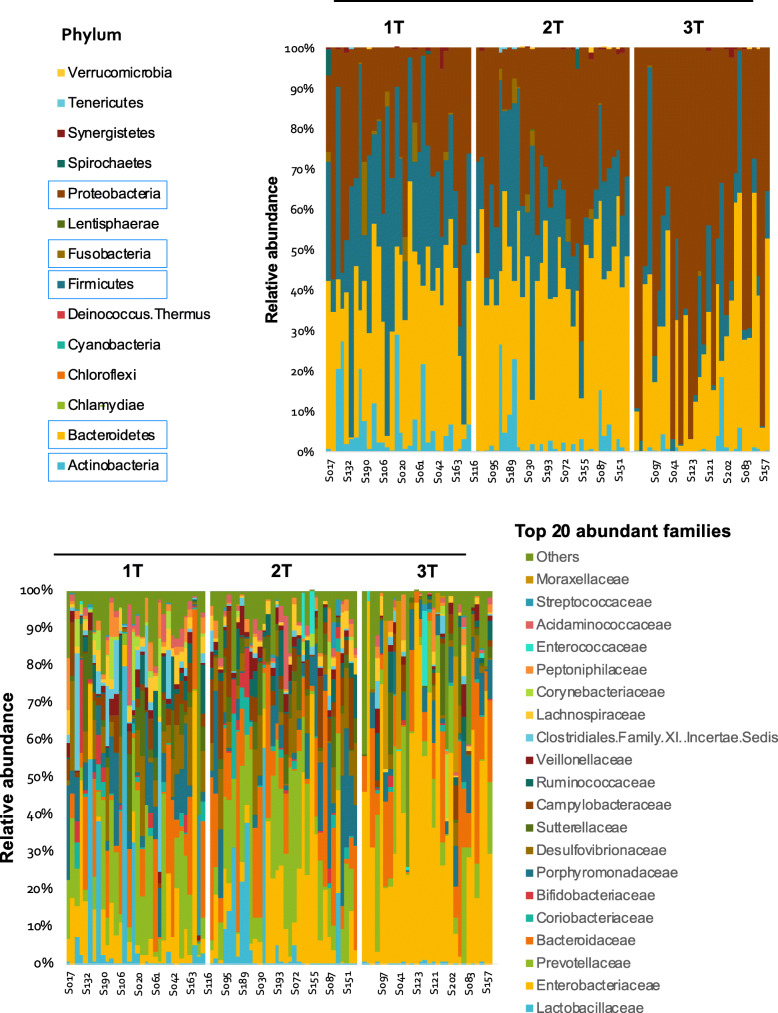
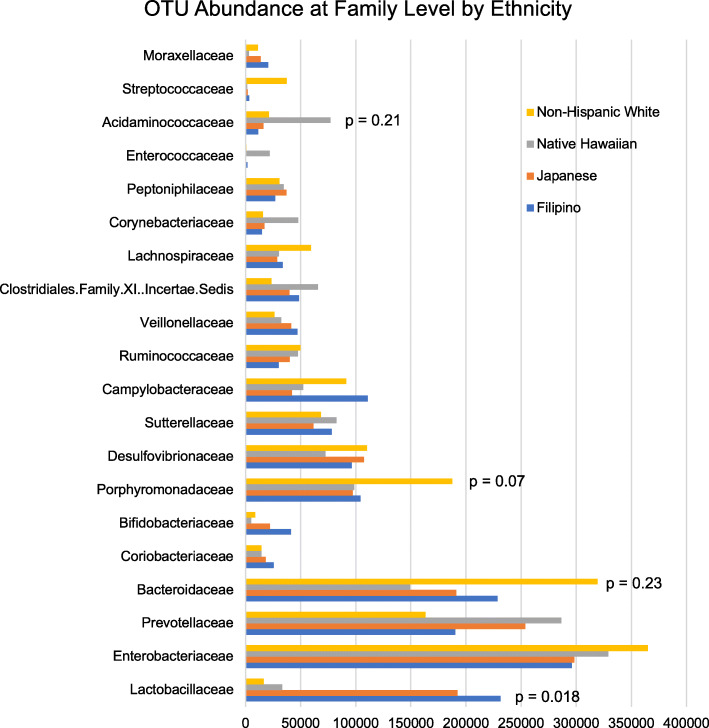
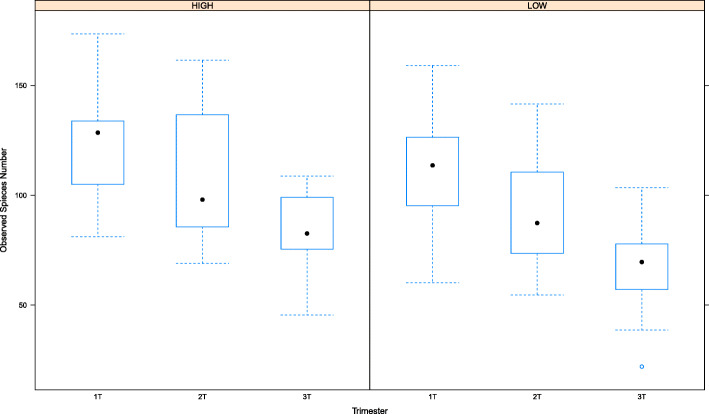
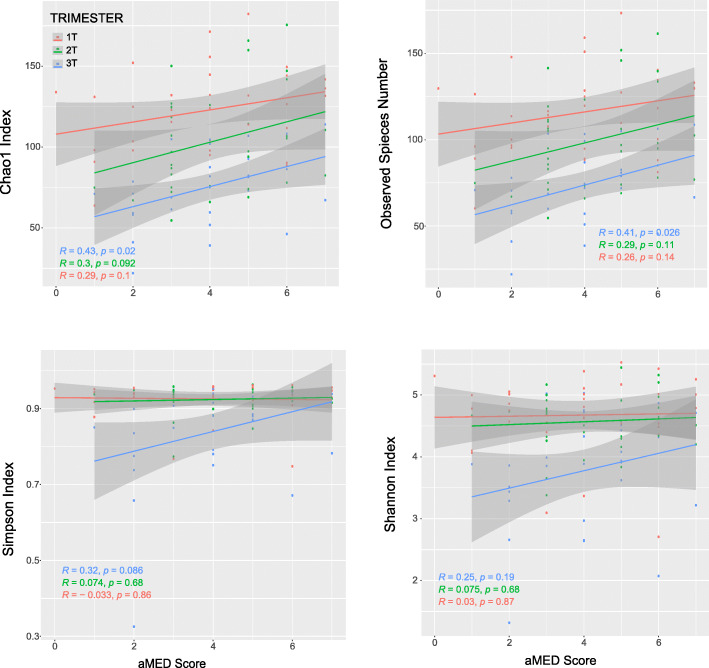
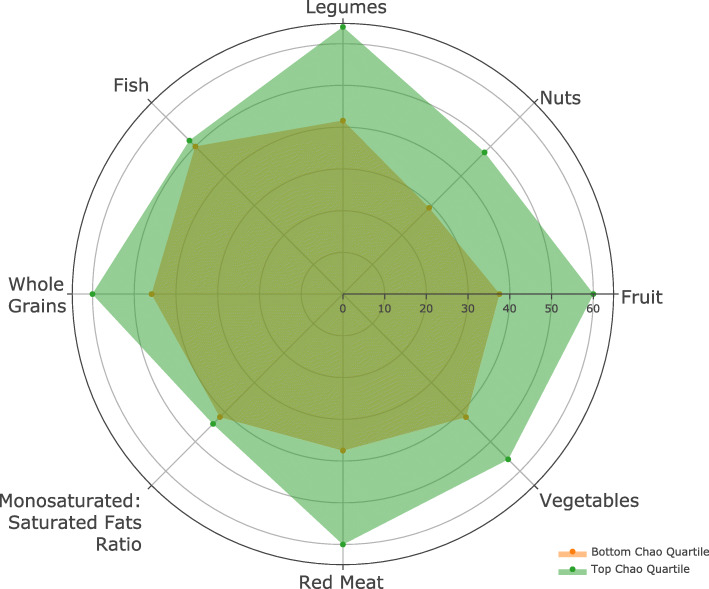
Background: Consumption of a diet with high adherence to a Mediterranean diet pattern (MDP) has been associated with a favorable gastrointestinal tract (GIT) microbiome. A healthy GIT microbiome in pregnancy, as defined by increased alpha diversity, is associated with lower chance of adverse perinatal outcomes. This study aimed to evaluate the impact of adherence to an MDP on GIT microbial diversity longitudinally throughout pregnancy. Methods: Adherence to MDP was scored by the Alternate Mediterranean (aMED) Diet Quality Score, after being applied to a validated Food Frequency Questionnaire. Association of aMED Scores with GIT alpha diversity profiles were compared linearly and across time using a linear mixed model, including covariates of age, body mass index (BMI), ethnicity, and parity. Results: Forty-one participants of Filipino, Japanese, Native Hawaiian, and Non-Hispanic White descent provided dietary information and microbiome samples during each trimester of pregnancy. Alpha diversity profiles changed over gestation, with decreased microbial diversity in the third trimester. aMED scores positively correlated with Chao1 Index and Observed Species Number (r = 0.244, p = 0.017, and r = 0.233, p = 0.023, respectively). The strongest association was detected in the third trimester (Chao 1: r = 0.43, p = 0.020, Observed Species Number: r = 0.41, p = 0.026). Participants with higher aMED scores had higher relative abundance of Acidaminoacaeae at the family level ( p = 0.0169), as well as higher abundance of several species known to increase production of short chain fatty acids within the GIT. Conclusions: Adherence to MDP pattern is associated with increased maternal GIT microbial diversity, and promotes the abundance of bacteria that produce short chain fatty acids. Increased consumption of fruits, vegetables and legumes with low red meat consumption were key components driving this association. The effect of nutrition however, was less of an effect than pregnancy itself. Further studies are needed to determine if adherence to a Mediterranean diet translates not only into microbial health, but also into reduced risk of adverse pregnancy outcomes.
Overview
The claims and statistics of this paper haven’t been checked yet.
Free: it reads the open-access text and checks the first 5 claims that cite a source we can check. Create a free account to check every claim.
Integrity signals
Registry
Cites
Statistics
Figures
Verification
Claims the paper makes
The claims and statistics of this paper haven’t been checked yet.
Free: it reads the open-access text and checks the first 5 claims that cite a source we can check. Create a free account to check every claim.
Self-check
Percentages, sums and reported differences re-computed from the paper’s own numbers.
The self-check needs the paper’s full text.
Citations
Cites
Linking long-term dietary patterns with gut microbial enterotypes
Wu, G. D., Chen, J., Hoffmann, C., Bittinger, K., Chen, Y.-Y., Keilbaugh, S. A., Bewtra, M., Knights, D., Walters, W. A., Knight, R., et al. (2011) · Science · doi:10.1126/science.1208344 · Cited by 6,513 · cited 2×
“012 Actively ferments carbohydrates, produces butyric and acetic acids with formic or propionic and/or lactic acid [24]”
BackgroundDe Filippo, C., Cavalieri, D., Di Paola, M., Ramazzotti, M., Poullet, J. B., Massart, S., Collini, S., Pieraccini, G., & Lionetti, P. (2010) · Proceedings of the National Academy of Sciences · doi:10.1073/pnas.1005963107 · Cited by 5,579 · cited 1×
“both describe a Prevotella dominant enterotype is prevalent in populations eating a more traditional diet versus Westernized dietary pattern [41] [42].”
BackgroundSokol, H., Pigneur, B., Watterlot, L., Lakhdari, O., Bermúdez-Humarán, L. G., Gratadoux, J.-J., Blugeon, S., Bridonneau, C., Furet, J.-P., Corthier, G., et al. (2008) · Proceedings of the National Academy of Sciences · doi:10.1073/pnas.0804812105 · Cited by 4,413 · cited 2×
“018 Produces short-chain fatty acids, including acetate and propionate, upregulated by metformin in animal models [25]”
BackgroundHost Remodeling of the Gut Microbiome and Metabolic Changes during Pregnancy
Koren, O., Goodrich, J. K., Cullender, T. C., Spor, A., Laitinen, K., Kling Bäckhed, H., Gonzalez, A., Werner, J. J., Angenent, L. T., Knight, R., et al. (2012) · Cell · doi:10.1016/j.cell.2012.07.008 · Cited by 2,165 · cited 8×
“Lopez-Siles M, Duncan SH, Garcia-Gil LJ, Martinez-Medina M. Faecalibacterium prausnitzii: from microbiology to diagnostics and prognostics.”
BackgroundResultInfluentialDe Filippis, F., Pellegrini, N., Vannini, L., Jeffery, I. B., La Storia, A., Laghi, L., Serrazanetti, D. I., Di Cagno, R., Ferrocino, I., Lazzi, C., et al. (2016) · Gut · doi:10.1136/gutjnl-2015-309957 · Cited by 1,638
Feskanich, D., Rimm, E. B., Giovannucci, E. L., Colditz, G. A., Stampfer, M. J., Litin, L. B., & Willett, W. C. (1993) · Journal of the American Dietetic Association · doi:10.1016/0002-8223(93)91754-e · Cited by 1,070 · cited 1×
“FFQs have been shown to be as accurate as 24-h recall in correlation with biologic specimens showing metabolites and nutrients [50].”
MethodA Multiethnic Cohort in Hawaii and Los Angeles: Baseline Characteristics
Kolonel, L. N., Henderson, B. E., Hankin, J. H., Nomura, A. M. Y., Wilkens, L. R., Pike, M. C., Stram, D. O., Monroe, K. R., Earle, M. E., & Nagamine, F. S. (2000) · American Journal of Epidemiology · doi:10.1093/oxfordjournals.aje.a010213 · Cited by 1,021 · cited 1×
“The MEC-FFQ was developed and validated in a large healthy adult population from 1993 to 1996 in Hawai’i and California [21].”
MethodDiet-quality scores and plasma concentrations of markers of inflammation and endothelial dysfunction
Fung, T. T., McCullough, M. L., Newby, P., Manson, J. E., Meigs, J. B., Rifai, N., Willett, W. C., & Hu, F. B. (2005) · The American Journal of Clinical Nutrition · doi:10.1093/ajcn/82.1.163 · Cited by 1,001
Faecalibacterium prausnitzii: from microbiology to diagnostics and prognostics
Lopez-Siles, M., Duncan, S. H., Garcia-Gil, L. J., & Martinez-Medina, M. (2017) · The ISME Journal · doi:10.1038/ismej.2016.176 · Cited by 874 · cited 1×
“Likewise, Faecalibacterium prausnitzii is associated with decreased cytokine production in patients with Crohn’s disease [25, 40].”
BackgroundGarcia-Mantrana, I., Selma-Royo, M., Alcantara, C., & Collado, M. C. (2018) · Frontiers in Microbiology · doi:10.3389/fmicb.2018.00890 · Cited by 574
Cited by
The Influence of Dietary Factors on the Gut Microbiota
Nova, E., Gómez-Martinez, S., & González-Soltero, R. (2022) · Microorganisms · doi:10.3390/microorganisms10071368 · Cited by 126
“Preliminary evidence, however, showed that adherence to a MD pattern was associated with higher diversity in pregnant women microbiota [78], and another study showed that in obese pregnant women, consumption of recommended levels of fat and fiber resulted in lower level of Bacteroidetes, and higher bacterial richness…”
BackgroundSun, Z., Pan, X., Li, X., Jiang, L., Hu, P., Wang, Y., Ye, Y., Wu, P., Zhao, B., Xu, J., et al. (2023) · Advanced Science · doi:10.1002/advs.202205289 · Cited by 67
Dietary Habits and Nutritional Knowledge of Pregnant Women: The Importance of Nutrition Education
Mundet, M. J. O., Cavia, M. D. M., Alonso-Torre, S. R., & Carrillo, C. (2024) · Foods · doi:10.3390/foods13193189 · Cited by 63
“…that stricter adherence to the Mediterranean diet during pregnancy is associated with a greater diversity in the intestinal microbiota of pregnant woman, which could have beneficial effects for the mother, as well as for the colonization of the intestinal microbiota of the baby after birth [6].”
BackgroundHost–gut microbiota interactions during pregnancy
Amato, K. R., Pradhan, P. P., Mallott, E. K., Shirola, W., & Lu, A. (2024) · Evolution Medicine and Public Health · doi:10.1093/emph/eoae001 · Cited by 34
“In 12 studies of humans [12, 14, 21–31] and 13 studies of non-human mammals [7, 9–11, 13, 15–20, 79] (Table 1) differences in microbial taxonomic composition and/or function have been identified across gestational stages (Table 1).”
BackgroundManipulation of the diet–microbiota–brain axis in Alzheimer’s disease
Lee, D. D., Lee, V. M. ‐., & Hur, S. K. (2022) · Frontiers in Neuroscience · doi:10.3389/fnins.2022.1042865 · Cited by 29
Metadata
- Authors
- Miller, C. B., Benny, P., Riel, J., Boushey, C., Perez, R., Khadka, V., Qin, Y., Maunakea, A. K., & Lee, M.-J.
- Affiliations
- University of Hawaiʻi at Mānoa (US)
- University of Hawaii Cancer Center (US)
- Corresponding author
- Miller, Corrie B.
- ORCID
- Venue
- BMC Pregnancy and Childbirth
- Published
- 2021-08-16
- Volume
- 21
- Issue
- 1
- Pages
- 558-558
- ISSN
- 1471-2393 (ISSN-L)
- PMC
- PMC8369757
- OpenAlex
- W3193450232
- Cited by
- 26
- References
- 48
- Citations by year
- 2026: 1 · 2025: 7 · 2024: 8 · 2023: 6 · 2022: 4
- FWCI
- 1.41
- Type
- journal article
- Language
- en
- Open access
- gold
- doi.org
- Licence
- cc-by
- creativecommons.org/licenses/by/4.0 (tdm)
- creativecommons.org/licenses/by/4.0 (vor)
- Locations
- BMC Pregnancy and Childbirth (publishedVersion, cc-by)
- PubMed Central (publishedVersion, cc-by)
- PubMed (publishedVersion)
- DOAJ (DOAJ: Directory of Open Access Journals) (submittedVersion, cc-by-sa)
- Funders
- National Institute on Minority Health and Health Disparities (U54MD007601)
- Lakshmi Devi and Devraj Sharma Foundation (Lakshmi Devi and Devraj Sharma Foundation)
- Topics
- Life Sciences › Biochemistry, Genetics and Molecular Biology › Molecular Biology › Gut microbiota and health
- Health Sciences › Medicine › Public Health, Environmental and Occupational Health › Nutritional Studies and Diet
- Life Sciences › Agricultural and Biological Sciences › Food Science › Probiotics and Fermented Foods
- Keywords
- Mediterranean diet, dietary adherence, gut microbiota, microbial diversity, pregnancy, pregnancy trimesters, short-chain fatty acids, diet quality, perinatal outcomes, maternal nutrition
- MeSH terms
- Gastrointestinal Microbiome, Adolescent, Adult, Asian, Female, Hawaii, Humans, Japan, Middle Aged, Philippines, Pregnancy, Pregnancy Complications, Pregnancy Trimesters, Diet, Mediterranean, White People, Young Adult
About these checks
Registry, retraction, Cites and statistics results are computed, not judged, with one exception: a printed reference that no index lists is read once by a model before it counts as a citation error. Claims are extracted by a model and kept only when their quote appears verbatim in the text; each cited source is then checked, with a model’s help, for whether it says what the claim relies on. Those verdicts can be wrong — read the claim’s quote and the cited source before relying on one.
Statistics and arithmetic are recomputed, not judged.
Confidence bands are shown only for fields calibrated on our annotated test set. None is calibrated yet, so no band is shown.
What counts as a claim ›How we measure confidence ›How we check this ›
Are you an author, or do you see a problem with this page? Request a review
Data sources
Bibliographic data: Semantic Scholar, OpenAlex, Crossref.
Contains information from the Semantic Scholar Academic Graph Datasets, made available under the ODC Attribution License (ODC-BY 1.0).
Semantic Scholar’s data is described in: Kinney, R., et al. (2023). The Semantic Scholar Open Data Platform. arXiv:2301.10140.
