

"Everywhere you see, C-sections are happening": examining trends and reasons for a rise in cesarean-section deliveries among women in urban informal settlements, Mumbai Metropolitan Region, using a mixed methods approach
Open accessThe DOI matches its Crossref record; 37 of the 39 references it cites were found in a registry or an index; 29 of the 49 sources its claims cite were checked for support.
Abstract
This study examined trends and underlying reasons for C-sections in informal settlements in the Mumbai Metropolitan Region, drawing insights from both women and obstetric practitioners.
Overview
CoChat Summary
## TL;DR
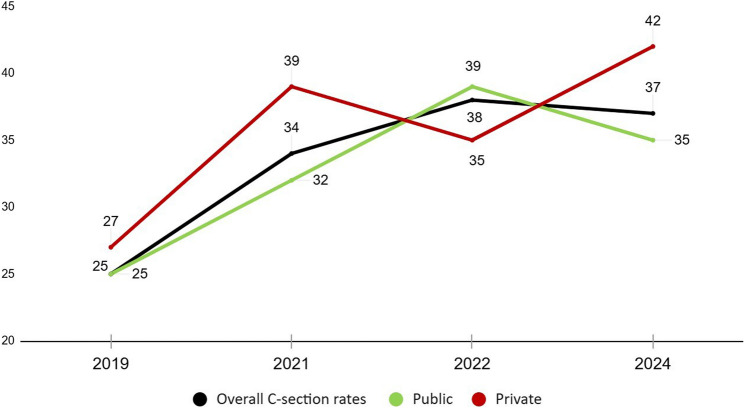
This mixed-methods study in urban informal settlements in the Mumbai Metropolitan Region found that C-section delivery rates rose from 25% in 2019 to 37% in 2024 among a pooled sample of 5,162 mothers. The authors argue that the increase is driven by intertwined clinical, institutional, and social factors—not just private-sector incentives—and that reducing avoidable C-sections will require both community-based and health-system interventions.
## Key findings
- C-section deliveries increased from 25% in 2019 to 37% in 2024 in the study settings; the paper also reports a 15% increase in private facilities and a 10% increase in public facilities over the period.
- In adjusted logistic regression, higher odds of C-section were associated with age 35+ vs. under 20 (AOR 2.55, 95% CI 1.32–4.96), while women with three or more pregnancies had lower odds than primigravida women (AOR 0.64, 95% CI 0.53–0.78).
- Later ANC registration was associated with lower C-section likelihood, while more ANC visits increased the odds of C-section (AOR 1.71, 95% CI 1.22–2.39); residence in the city for more than 10 years was associated with higher odds (AOR 2.00, 95% CI 1.01–3.93).
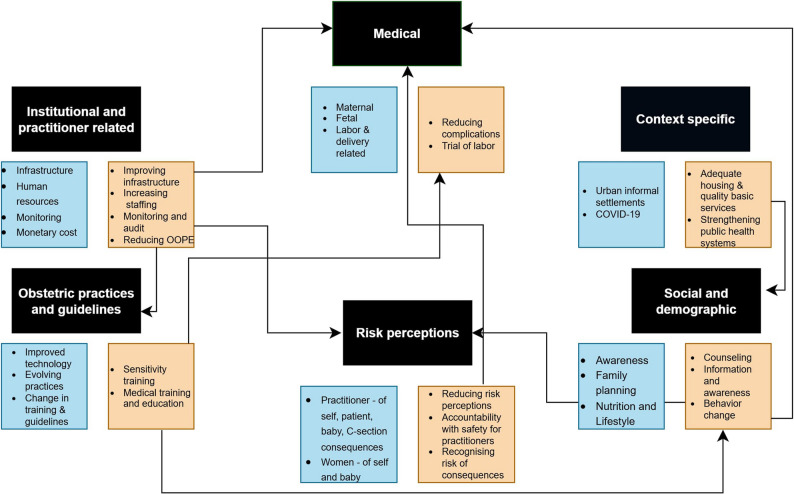
- Qualitative findings identified interconnected reasons for C-sections: institutional limitations, evolving obstetric practices, risk perceptions, awareness and lifestyle changes, plus context-specific pressures such as the COVID-19 pandemic and urban informal-settlement conditions.
## Methods
- Design: Explanatory sequential mixed methods study: quantitative surveys first, followed by qualitative interviews to explain the survey findings.
- Data/sample: Quantitative cross-sectional surveys from 2019, 2021, 2022, and 2024 with a pooled analytic sample of 5,162 mothers of children aged 0–2 years; qualitative data from 44 in-depth interviews (October 2024–February 2025) with women who had C-sections and public/private obstetric practitioners.
- Analysis: Quantitative descriptive statistics, bivariate chi-square tests, and logistic regression; qualitative thematic analysis with substantive coding (open and axial coding) to inductively develop themes.
## Limitations
- The quantitative surveys were cross-sectional, so the study states that causal relationships cannot be inferred.
- Because the quantitative analysis pooled data from multiple survey rounds and time points, the authors note possible contextual differences across rounds that may affect comparability.
- The quantitative analysis had limited variables and did not account for factors such as medical indications and maternal health conditions; this is stated in the paper.
- The paper also states that the qualitative sample was limited to women in SNEHA intervention areas, that family members and nurses were not included, and that recall bias may have affected qualitative reports; additionally, public practitioners were approached through existing SNEHA relationships, which may have shaped responses.
Model-written summary. Check it against the paper before relying on it.
Integrity signals
Registry
Cites
Statistics
Figures
Verification
Claims the paper makes
12 Valid · 1 Not valid · 12 Not checked · 132 Own results and interpretations
The cited sources support only part of this claim — read each source’s verdict below.
In the paper
“Research related to C-section deliveries among women in urban informal settlements and the reasons thereof has, however, been limited”
§ “Everywhere you see, C-sections are happening”: examining trends and reasons for a rise in cesarean-section deliveries among women in urban informal settlements, Mumbai Metropolitan Region, using a mixed methods approach > Background
What the sources say
- Partly supportedcites [24] Sultana J, Sutradhar I, Rahman M, Khan A, Chowdhury M, Hasib E, et al. An Uninformed Decision-Making Process for Cesarean Section: A Qualitative Exploratory Study among the Slum Residents of Dhaka City, Bangladesh. Int J Environ Res Public Health. 2022;19(3):1465. 10.3390/ijerph19031465. 35162487 PMC8835678 sourceExperimental — accuracy not yet measured
The Introduction (page not available) says there is little evidence in Bangladesh about whether decisions to have C-sections are shared, and the study examines that process among Dhaka slum residents. This supports a narrower research gap than the claim: the paper does not say that research on C-section deliveries and their reasons in urban informal settlements is generally limited. (LLM, conf=0.83)
- Supportedcites [25] Mia M, Islam M, Chowdhury M, Razzaque A, Chin B, Rahman M. Socio-demographic, health and institutional determinants of caesarean section among the poorest segment of the urban population: Evidence from selected slums in Dhaka, Bangladesh. SSM Popul Health. 2019;8:100415. 10.1016/j.ssmph.2019.100415. 31206004 PMC6558294 source
The Introduction states that very limited research had assessed determinants of caesarean delivery among Bangladesh’s poorest urban residents, especially those in slum settlements. The Discussion likewise says that evidence on caesarean delivery in this population was limited. This supports the citing sentence’s characterization of research on deliveries and their associated factors as limited. (LLM, conf=0.93)
- Partly supportedcites [26] Neuman M, Alcock G, Azad K, Kuddus A. Prevalence and determinants of caesarean section in private and public health facilities in underserved South Asian communities: cross-sectional analysis of data from Bangladesh, India and Nepal. BMJ Open. 2014;4(10):e005982. 10.1136/bmjopen-2014-005982. 25550293 PMC4283435 sourceExperimental — accuracy not yet measured
The Introduction (page unavailable) says there are few large, recent community-based South Asian studies of caesarean rates by facility type and identifies a need to examine their determinants. The Methods include Mumbai informal settlements, but the paper does not specifically say that research on caesarean deliveries in urban informal settlements and the reasons for them has been limited. (LLM, conf=0.82)
- Partly supportedcites [27] Sendo E, Chauke M, Ganga-Limando M. Women’s perspectives on the measures that need to be taken to increase the use of health-care facility delivery service among slums women, Addis Ababa, Ethiopia: a qualitative study. Reprod Health. 2021;18(1):174. 10.1186/s12978-021-01221-9. 34425837 PMC8381586 sourceExperimental — accuracy not yet measured
The Strengths and limitations section (page unavailable) calls this one of the first Ethiopian studies of access to facility-based delivery care in urban slums. The Themes section discusses women’s fears of caesarean sections, but the paper does not say that research specifically on C-section deliveries or their reasons in urban informal settlements has been limited. (LLM, conf=0.76)
plain- Asserted: passes — The authors put it forward as true.
- Checkable: passes — It can be checked against evidence.
- Load-bearing: passes — The paper’s conclusions depend on it.
- Based: passes — The paper gives a reason why it holds.
- Partly supported
The cited sources support only part of this claim — read each source’s verdict below.
In the paper
“Few studies have explored both practitioner and patient perspectives regarding C-sections and the reasons thereof”
§ “Everywhere you see, C-sections are happening”: examining trends and reasons for a rise in cesarean-section deliveries among women in urban informal settlements, Mumbai Metropolitan Region, using a mixed methods approach > Background
What the sources say
- Partly supportedcites [11] Begum T, Ellis C, Sarker M, Rostoker J, Rahman A, Anwar I, et al. A qualitative study to explore the attitudes of women and obstetricians towards caesarean delivery in rural Bangladesh. BMC Pregnancy Childbirth. 2018;18(1):310. 10.1186/s12884-018-1993-9. 30208874 PMC6134512 sourceExperimental — accuracy not yet measured
The Results (Study themes and findings; page unavailable) show that this study explored both women’s and obstetricians’ perspectives on caesarean delivery and factors behind decisions to perform it. The paper does not establish the broader claim that few studies have examined both perspectives. (LLM, conf=0.84)
- Supportedcites [20] Jirra K, Prasad S, Shamanna B. Understanding The Reasons for High Rates of Caesarean Section Deliveries in Telangana, South India: An Explorative Study. Natl J Community Med. 2024;14(11):704–10. 10.55489/njcm.141120233324. source
The INTRODUCTION of our copy states that "it is essential to understand decision making for C-section employing a multi-stakeholder perspective involving mothers, family members and healthcare providers" while "little is known about the important reasons for the expectant mothers and their families to opt for C-section deliveries", and the Abstract frames the work as addressing "the crucial research gap" by qualitatively exploring reasons for high C-section rates. Its METHODOLOGY implements exactly the combined perspective — a "360-degree inquiry approach" covering family members (mothers, mothers-in-law, spouses) alongside staff nurses, ASHAs, ANMs, Medical Officers and Specialist Obstetricians. The gap the citing sentence describes (few studies combining practitioner and patient views on the reasons for C-sections) is thus the gap this source asserts and fills, though the source's "little is known" statement is anchored to Telangana/India rather than stated globally. (LLM, conf=0.80)
- Partly supportedcites [35] Tadevosyan M, Ghazaryan A, Harutyunyan A, Khachatryan N, Hovhannisyan M, Harutyunyan T, et al. Factors contributing to rapidly increasing rates of cesarean section in Armenia: a partially mixed concurrent quantitative-qualitative equal status study. BMC Pregnancy Childbirth. 2019;19(2):29. 10.1186/s12884-018-2158-6. 30606147 PMC6318900 sourceExperimental — accuracy not yet measured
The Methods (Study design; page not available) describe focus groups with women and interviews with obstetrician-gynecologists about C-section preferences and reasons, so this paper is an example of a study exploring both perspectives. The cited passages do not establish the broader claim that few studies have done so. (LLM, conf=0.82)
plain- Asserted: passes — The authors put it forward as true.
- Checkable: passes — It can be checked against evidence.
- Load-bearing: passes — The paper’s conclusions depend on it.
- Based: passes — The paper gives a reason why it holds.
- Partly supported
The cited sources support only part of this claim — read each source’s verdict below.
In the paper
“High section rates among those accessing public facilities then points to the need to look beyond the public-private dichotomy [3, 16] in analyzing a rise in C-sections.”
§ “Everywhere you see, C-sections are happening”: examining trends and reasons for a rise in cesarean-section deliveries among women in urban informal settlements, Mumbai Metropolitan Region, using a mixed methods approach > Discussion
What the sources say
- Not matchedcites [3] Das S, Sahoo H. Caesarean section delivery in India: public and private dichotomy. Demography India. 2019;48(1):36–48.
Its entry has no title and year that we can search by.
- Partly supportedcites [16] Bhatia M, Banerjee K, Dixit P, Dwivedi L. Assessment of Variation in Cesarean Delivery Rates Between Public and Private Health Facilities in India from 2005 to 2016. JAMA Netw Open. 2020;3(8):e2015022. 10.1001/jamanetworkopen.2020.15022. 32857148 PMC7455857 sourceExperimental — accuracy not yet measured
The Discussion (page not available) reports that cesarean delivery rates in public facilities rose from 7.2% to 11.9%, supporting the point that the rise was not confined to private facilities. It does not characterize the public-facility rate as high; its emphasis is the much larger increase in private facilities, to 40.9%. The call to look beyond the public–private dichotomy is the citing authors’ interpretation, not an explicit conclusion of this paper. (LLM, conf=0.78)
plainstates an association- Asserted: passes — The authors put it forward as true.
- Checkable: passes — It can be checked against evidence.
- Load-bearing: passes — The paper’s conclusions depend on it.
- Based: passes — The paper gives a reason why it holds.
- Not matched
Every source the paper cites for this claim was checked and supports it.
In the paper
“While rising C-section rates have long been attributed to private facilities [15, 16], women in these settlements who underwent C-sections primarily accessed public facilities.”
§ “Everywhere you see, C-sections are happening”: examining trends and reasons for a rise in cesarean-section deliveries among women in urban informal settlements, Mumbai Metropolitan Region, using a mixed methods approach > Discussion
What the sources say
- Supportedcites [15] Pandey A, Raushan M, Gautam D, Neogi S. Alarming Trends of Cesarean Section-Time to Rethink: Evidence from a Large-Scale Cross-sectional Sample Survey in India. J Med Internet Res. 2023;25:e41892. 10.2196/41892. 36780228 PMC9972201 source
The citation is attached to the background claim about rising C-section rates in private facilities, not to the citing authors’ finding about women in these settlements. The source’s Discussion (Principal Findings) reports an increase in C-section deliveries in private facilities from 20% in 1998–99 to 47% in 2019–20. (LLM, conf=0.92)
- Supportedcites [16] Bhatia M, Banerjee K, Dixit P, Dwivedi L. Assessment of Variation in Cesarean Delivery Rates Between Public and Private Health Facilities in India from 2005 to 2016. JAMA Netw Open. 2020;3(8):e2015022. 10.1001/jamanetworkopen.2020.15022. 32857148 PMC7455857 source
The citations attach to the statement that rising C-section rates have been attributed to private facilities, not to the citing authors’ observation about women in these settlements. The source’s Conclusions (page unavailable) associate private facilities with increasing C-section rates in India; it does not assess the settlements. (LLM, conf=0.91)
plainstates an association- Asserted: passes — The authors put it forward as true.
- Checkable: passes — It can be checked against evidence.
- Load-bearing: passes — The paper’s conclusions depend on it.
- Based: passes — The paper gives a reason why it holds.
- Supported
A result the paper reports from its own data — it cites no other source for it, so there is none to check. The quote shows it is in the paper.
In the paper
“Duration of residence in the city also influenced outcomes, with women residing for over 10 years showing increased odds of C-section delivery (AOR: 2.00, 95% CI: 1.01–3.93).”
§ “Everywhere you see, C-sections are happening”: examining trends and reasons for a rise in cesarean-section deliveries among women in urban informal settlements, Mumbai Metropolitan Region, using a mixed methods approach > Results and findings > Trends and determinants of rising C-sections: quantitative analysis
plainstates an association- Asserted: passes — The authors put it forward as true.
- Checkable: passes — It can be checked against evidence.
- Load-bearing: unclear — It is unclear whether the paper’s conclusions depend on it.
- Based: passes — The paper gives a reason why it holds.
68 more claims
Create a free account to see all 157 claims and to verify the 4 references still open.
- Probably not a substantial claim. 46
- It may state two separate claims as one. 53
- Borderline: one of the tests for a substantial claim is unclear. 1
Citations
Cites
The SAGE Encyclopedia of Qualitative Research Methods
Given, L. (2008) · doi:10.4135/9781412963909 · Cited by 6,134
The Increasing Trend in Caesarean Section Rates: Global, Regional and National Estimates: 1990-2014
Betrán, A. P., Ye, J., Moller, A.-B., Zhang, J., Gülmezoglu, A. M., & Torloni, M. R. (2016) · PLOS ONE · doi:10.1371/journal.pone.0148343 · Cited by 2,195 · cited 1×
“5% in the Caribbean, 32.2% in North America, 25% in Europe and 19.2% in Asia [6].”
InfluentialKeag, O. E., Norman, J. E., & Stock, S. J. (2018) · PLOS Medicine · doi:10.1371/journal.pmed.1002494 · Cited by 909 · cited 1×
“Conversely, C-sections can have adverse consequences such as a higher risk of infection and post-natal complications [1, 2].”
Interventions to reduce unnecessary caesarean sections in healthy women and babies
Betrán, A. P., Temmerman, M., Kingdon, C., Mohiddin, A., Opiyo, N., Torloni, M. R., Zhang, J., Musana, O., Wanyonyi, S. Z., Gülmezoglu, A. M., et al. (2018) · The Lancet · doi:10.1016/s0140-6736(18)31927-5 · Cited by 600 · cited 1×
“Particularly, given that public facilities are crucial health access points for residents in vulnerable settings, we strongly believe that there is a need for state spending on improving staffing and infrastructure of public facilities, also suggested by others [11, 50].”
Taguette: open-source qualitative data analysis
Rampin, R., & Rampin, V. (2021) · Journal of Open Source Software · doi:10.21105/joss.03522 · Cited by 425 · cited 1×
“Transcripts and detailed notes were analyzed and coded by authors JS and SR using the Taguette Qualitative Analysis Software [40].”
Magne, F., Puchi Silva, A., Carvajal, B., & Gotteland, M. (2017) · Frontiers in Pediatrics · doi:10.3389/fped.2017.00192 · Cited by 300 · cited 1×
“Conversely, C-sections can have adverse consequences such as a higher risk of infection and post-natal complications [1, 2].”
Neuman, M., Alcock, G., Azad, K., Kuddus, A., Osrin, D., More, N. S., Nair, N., Tripathy, P., Sikorski, C., Saville, N., et al. (2014) · BMJ Open · doi:10.1136/bmjopen-2014-005982 · Cited by 195 · cited 1×
“Further, most qualitative studies have explored experiences and perceptions of C-Sections [32–34], whereas reasons have been studied mainly quantitatively [25, 26].”
Panda, S., Begley, C., & Daly, D. (2018) · PLOS ONE · doi:10.1371/journal.pone.0200941 · Cited by 165
Experiences of Emergency Cesarean Section: A Phenomenological Study of 53 Women
Ryding, E. L., Wijma, K., Wijma, B., & Elsa Lena Ryding is a consultant at the Department of Obstetrics and Gynaecology, C. H. (1998) · Birth · doi:10.1046/j.1523-536x.1998.00246.x · Cited by 143 · cited 1×
“Further, most qualitative studies have explored experiences and perceptions of C-Sections [32–34], whereas reasons have been studied mainly quantitatively [25, 26].”
Maternal health-care utilization among women in an urban slum in Delhi
Garg, S., Agarwal, P., & Singh, M. M. (2007) · Indian Journal of Community Medicine · doi:10.4103/0970-0218.36829 · Cited by 109 · cited 1×
“It is important to note that a large proportion of the urban population in low-and middle-income countries (LMICs) lives in inadequate housing and experiences disparities in terms of basic services and healthcare [28].”
Bhatia, M., Banerjee, K., Dixit, P., & Dwivedi, L. K. (2020) · JAMA Network Open · doi:10.1001/jamanetworkopen.2020.15022 · Cited by 91 · cited 3×
“High section rates among those accessing public facilities then points to the need to look beyond the public-private dichotomy [3, 16] in analyzing a rise in C-sections.”
Elnakib, S., Abdel-Tawab, N., Orbay, D., & Hassanein, N. (2019) · BMC Pregnancy and Childbirth · doi:10.1186/s12884-019-2558-2 · Cited by 84 · cited 1×
“The rise of C-section deliveries has also been attributed to commercial interests of private facilities [15, 16] and institutional limitations in health facilities [12, 17–19].”
Pandey, A. K., Raushan, M. R., Gautam, D., & Neogi, S. B. (2023) · Journal of Medical Internet Research · doi:10.2196/41892 · Cited by 64 · cited 2×
“The rise of C-section deliveries has also been attributed to commercial interests of private facilities [15, 16] and institutional limitations in health facilities [12, 17–19].”
Tadevosyan, M., Ghazaryan, A., Harutyunyan, A., Petrosyan, V., Atherly, A., & Hekimian, K. (2019) · BMC Pregnancy and Childbirth · doi:10.1186/s12884-018-2158-6 · Cited by 62 · cited 1×
“Few studies have explored both practitioner and patient perspectives regarding C-sections and the reasons thereof [11, 20, 35].”
Begum, T., Ellis, C., Sarker, M., Rostoker, J.-F., Rahman, A., Anwar, I., & Reichenbach, L. (2018) · BMC Pregnancy and Childbirth · doi:10.1186/s12884-018-1993-9 · Cited by 60 · cited 4×
“Few studies have focused on the issues of poor awareness and agency among women in low-income settings [11, 21, 31].”
InfluentialUtilization of Antenatal care among pregnant women of Urban Slums of Dhaka City, Bangladesh
Kabir, R. (2013) · IOSR Journal of Nursing and health Science · doi:10.9790/1959-0221519 · Cited by 54 · cited 1×
“Women in these vulnerable environments often find themselves caught in a cycle of poor health exacerbated by childbirth and limited access to quality obstetric care, which can lead to complications during pregnancy and delivery [29].”
Roy, A., Paul, P., Chouhan, P., Rahaman, M., & Kapasia, N. (2021) · BMC Public Health · doi:10.1186/s12889-021-11750-4 · Cited by 44 · cited 2×
“Demographic changes, including pregnancies among older women, higher education, higher incomes and awareness of women have been identified with high C-section rates [13, 14].”
Khatony, A., Soroush, A., Andayeshgar, B., Saedpanah, N., & Abdi, A. (2019) · Archives of Public Health · doi:10.1186/s13690-019-0364-y · Cited by 43
Mia, M. N., Islam, M. Z., Chowdhury, M. R., Razzaque, A., Chin, B., & Rahman, M. S. (2019) · SSM - Population Health · doi:10.1016/j.ssmph.2019.100415 · Cited by 41 · cited 1×
“Further, most qualitative studies have explored experiences and perceptions of C-Sections [32–34], whereas reasons have been studied mainly quantitatively [25, 26].”
Determinants of cesarean delivery: a classification tree analysis
Stivanello, E., Rucci, P., Lenzi, J., & Fantini, M. P. (2014) · BMC Pregnancy and Childbirth · doi:10.1186/1471-2393-14-215 · Cited by 32 · cited 1×
“These include emergency C-sections due to complications such as fetal distress, breech position, placenta previa, and preterm birth [9, 10].”
Bhartia, A., Dhar, R. S. G., & Bhartia, S. (2020) · BMC Pregnancy and Childbirth · doi:10.1186/s12884-020-03234-x · Cited by 32 · cited 2×
“Other studies in similar contexts have reported benefits of improved counseling in the ANC period [49].”
Nuampa, S., Ratinthorn, A., Lumbiganon, P., Rungreangkulkij, S., Rujiraprasert, N., Buaboon, N., Jampathong, N., Dumont, A., Hanson, C., de Loenzien, M., et al. (2023) · BMC Pregnancy and Childbirth · doi:10.1186/s12884-023-05576-8 · Cited by 32 · cited 2×
“The rise of C-section deliveries has also been attributed to commercial interests of private facilities [15, 16] and institutional limitations in health facilities [12, 17–19].”
Trends and correlates of cesarean section rates over two decades in Nepal
Bhandari, A. K. C., Dhungel, B., & Rahman, M. (2020) · BMC Pregnancy and Childbirth · doi:10.1186/s12884-020-03453-2 · Cited by 31 · cited 2×
“Demographic changes, including pregnancies among older women, higher education, higher incomes and awareness of women have been identified with high C-section rates [13, 14].”
Sultana, J., Sutradhar, I., Rahman, M. J., Khan, A. N. S., Chowdhury, M. A. K., Hasib, E., Chhetri, C., Mahmud, S. M. H., Kashem, T., Kumar, S., et al. (2022) · International Journal of Environmental Research and Public Health · doi:10.3390/ijerph19031465 · Cited by 16 · cited 2×
“A fractured patient-practitioner relationship, as seen in other LMIC contexts as well [24, 31, 34], ultimately led to negative C-section experiences, maintaining a stigma surrounding C-sections and contributing to C-section deliveries.”
Zahroh, R. I., Hazfiarini, A., Martiningtyas, M. A., Ekawati, F. M., Emilia, O., Cheong, M., Betran, A. P., Homer, C. S., & Bohren, M. A. (2024) · BMJ Global Health · doi:10.1136/bmjgh-2023-014602 · Cited by 15 · cited 2×
“Few studies have focused on the issues of poor awareness and agency among women in low-income settings [11, 21, 31].”
Unger, V., Gasparics, Á., Nagy, Z., Hernádfői, M., Nagy, R., Walter, A., Farkas, N., Szabó, M., Hegyi, P., Garami, M., et al. (2024) · American Journal of Obstetrics and Gynecology · doi:10.1016/j.ajog.2024.06.015 · Cited by 15 · cited 1×
“These include emergency C-sections due to complications such as fetal distress, breech position, placenta previa, and preterm birth [9, 10].”
Ferreira, D. P., Bolognani, C. V., Santana, L. A., Fernandes, S. E. S., de Moraes, M. S. F., Fernandes, L. A. S., Pereira, C., Ferreira, G. B., Göttems, L. B. D., & Amorim, F. F. (2023) · International Journal of Women s Health · doi:10.2147/ijwh.s429122 · Cited by 12 · cited 1×
“This was also seen in other studies done during the pandemic [42, 43].”
Nantume, S., Baluku, E. M., Kwesiga, D., & Waiswa, P. (2023) · Risk Management and Healthcare Policy · doi:10.2147/rmhp.s422705 · Cited by 11 · cited 2×
“The rise of C-section deliveries has also been attributed to commercial interests of private facilities [15, 16] and institutional limitations in health facilities [12, 17–19].”
Sendo, E. G., Chauke, M. E., & Ganga-Limando, M. (2021) · Reproductive Health · doi:10.1186/s12978-021-01221-9 · Cited by 9 · cited 1×
“Research related to C-section deliveries among women in urban informal settlements and the reasons thereof has, however, been limited [24–27].”
Exploring Perceptions of Cesarean Sections among Postpartum Women in Nigeria: A Qualitative Study
Michael, T. O., Agbana, R. D., & Naidoo, K. (2024) · Women · doi:10.3390/women4010006 · Cited by 9 · cited 2×
“Further, most qualitative studies have explored experiences and perceptions of C-Sections [32–34], whereas reasons have been studied mainly quantitatively [25, 26].”
Migrant mothers’ experiences of Caesarean section: a transcultural qualitative study
Rodriguez, J., Moro, M. R., & Radjack, R. (2023) · Frontiers in Psychiatry · doi:10.3389/fpsyt.2023.1152810 · Cited by 8
Jirra, K., Prasad M, S. D., & BR, S. (2023) · National Journal of Community Medicine · doi:10.55489/njcm.141120233324 · Cited by 4 · cited 3×
“Few other studies have also related C-sections to primigravida women; however, these were mainly attributed to patient fear and risk perceptions [20, 44].”
Gadappa, S. N., Gemavat, H., Deshpande, S. S., et al. (2020) · International Journal of Reproduction Contraception Obstetrics and Gynecology · doi:10.18203/2320-1770.ijrcog20201224 · Cited by 3 · cited 1×
“Secondly, sensitivity training for healthcare staff [46] is required to bridge the gap between patient and practitioner perceptions and to create a collaborative environment of shared agency, ensuring not just access to healthcare but also quality, dignity and respect.”
Mor, S. S., Jain, S. M., Shivkumar, P., et al. (2023) · Apollo Medicine · doi:10.4103/am.am_150_22 · Cited by 3 · cited 1×
“This was also seen in other studies done during the pandemic [42, 43].”
Bıdık, N. Ü., & Turfan, E. Ç. (2024) · Bangladesh Journal of Medical Science · doi:10.3329/bjms.v23i2.72155 · Cited by 3 · cited 1×
“Several studies have shown how perceptions of pregnant women, their families and obstetric health staff influence the decision of having C-section deliveries [17, 20–23].”
Sugiyo, D., Kyvernitakis, I., Bahlmann, F., Brüggmann, D., & Naimi, A. A. (2025) · Medicine · doi:10.1097/md.0000000000041104 · Cited by 3 · cited 1×
“While clinical interventions to reduce C-sections are useful [45–47], WHO reports that addressing C-sec-tions through non-clinical interventions could be beneficial in reducing C-Sections [48].”
Khan, A. S., & Shahid, M. (2022) · The International Journal of Community and Social Development · doi:10.1177/25166026221128182 · Cited by 2 · cited 1×
“Few studies have focused on the issues of poor awareness and agency among women in low-income settings [11, 21, 31].”
Ünlü Bıdık, N., & Çeber Turfan, E. (2024) · Cyprus Journal of Medical Sciences · doi:10.4274/cjms.2023.2023-44 · Cited by 1
Grounded Theory Methods for Qualitative Psychology
Charmaz, K., & Henwood, K. (2017) · The SAGE Handbook of Qualitative Research in Psychology · doi:10.4135/9781526405555.n14
Research works printed but not linked: 3
- Das S, Sahoo H. Caesarean section delivery in India: public and private dichotomy. Demography India. 2019;48(1):36–48.
- Saumure K, Given L. Data Saturation. In: Given L, editor. The Sage Encyclopaedia of Qualitative Research Methods. Thousand Oaks: Sage; 2008. pp. 195–6.
- Charmaz K, Thornberg R, Keane E. Evolving Grounded Theory and Social Justice Inquiry. In: Denzin N, Lincoln Y, editors. The Sage Handbook of Qualitative Research. Thousand Oaks: Sage; 2018. pp. 720–76.
Metadata
- Authors
- Spencer, J., Rajan, S., Sawant, R., Patil, S., Pantvaidya, S., D’Souza, V., & Das, S.
- Affiliations
- Society for Nutrition Education and Health Action (IN)
- Corresponding author
- Das, Sushmita
- Venue
- BMC Pregnancy and Childbirth
- Published
- 2026-05-04
- Volume
- 26
- Issue
- 1
- ISSN
- 1471-2393 (ISSN-L)
- PMC
- PMC13285392
- OpenAlex
- W7160049684
- Semantic Scholar
- 8c160b4ec504e7e320d10a469bec20b1d6606402
- Cited by
- 0
- References
- 37
- FWCI
- 0.00
- Type
- journal article
- Language
- en
- Open access
- gold
- doi.org
- Licence
- cc-by
- creativecommons.org/licenses/by/4.0 (tdm)
- creativecommons.org/licenses/by/4.0 (vor, 49 d)
- Locations
- BMC Pregnancy and Childbirth (publishedVersion, cc-by)
- PubMed (publishedVersion)
- DOAJ (DOAJ: Directory of Open Access Journals) (submittedVersion)
- Funders
- Epic Foundation
- Topics
- Health Sciences › Medicine › Obstetrics and Gynecology › Maternal and Perinatal Health Interventions
- Health Sciences › Medicine › Pediatrics, Perinatology and Child Health › Global Maternal and Child Health
- Health Sciences › Medicine › Public Health, Environmental and Occupational Health › Reproductive Health and Contraception
- Keywords
- cesarean section rate, urban informal settlements, Mumbai Metropolitan Region, public healthcare facilities, obstetric practice, risk perception, prenatal care, primigravida, repeat cesarean section, obstetric care quality, maternal health, delivery experience, maternal age, lifestyle modification
- MeSH terms
- Adolescent, Adult, Cesarean Section, Cross-Sectional Studies, Female, Health Services Accessibility, Humans, India, Infant, Newborn, Pregnancy, Urban Population, Qualitative Research, Young Adult
About these checks
Registry, retraction, Cites and statistics results are computed, not judged, with one exception: a printed reference that no index lists is read once by a model before it counts as a citation error. Claims are extracted by a model and kept only when their quote appears verbatim in the text; each cited source is then checked, with a model’s help, for whether it says what the claim relies on. Those verdicts can be wrong — read the claim’s quote and the cited source before relying on one.
The claim verdicts this report counts are experimental: their accuracy is not yet measured.
A language model drew the claims from the paper on 2026-10-10, under version 3 of the claim definition (model deepseek-v4.1-flash, prompt extract-v3).
A second model labelled each claim on 2026-10-10 (model jev-1.13-20260917, definition revision gold-guideline-v0.2).
Cited sources are checked with a language model’s help (gpt-6-sol and qwen3.8-omni-flash).
Statistics and arithmetic are recomputed, not judged.
Confidence bands are shown only for fields calibrated on our annotated test set. None is calibrated yet, so no band is shown.
What counts as a claim ›How we measure confidence ›How we check this ›
Are you an author, or do you see a problem with this page? Request a review
Data sources
Bibliographic data: Semantic Scholar, OpenAlex, Crossref.
Contains information from the Semantic Scholar Academic Graph Datasets, made available under the ODC Attribution License (ODC-BY 1.0).
Semantic Scholar’s data is described in: Kinney, R., et al. (2023). The Semantic Scholar Open Data Platform. arXiv:2301.10140.
