

Ascorbic acid and ascorbate-2-phosphate decrease HIF activity and malignant properties of human melanoma cells
Open accessThe DOI matches its Crossref record; 55 of the 56 references it cites were found in a registry or an index.
Abstract
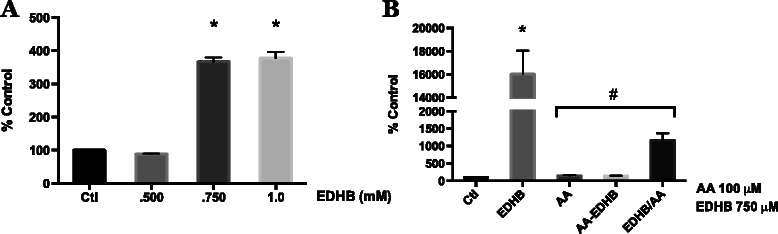
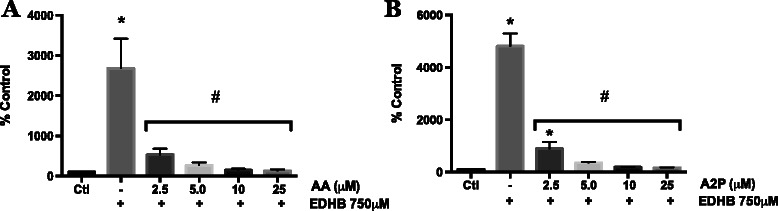
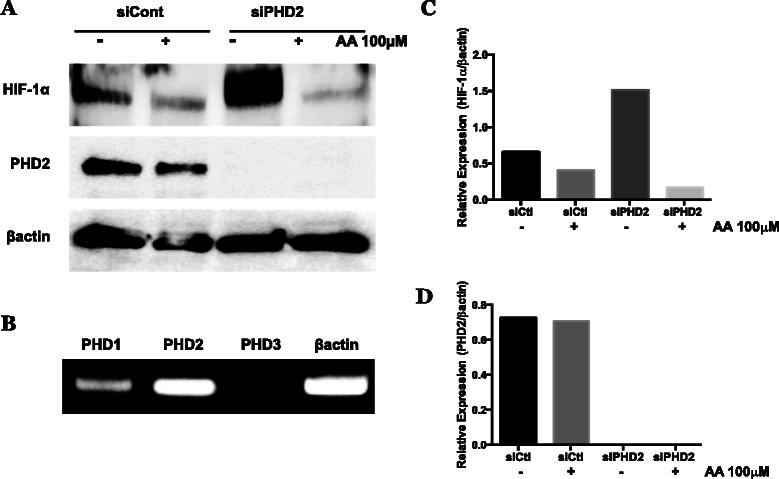
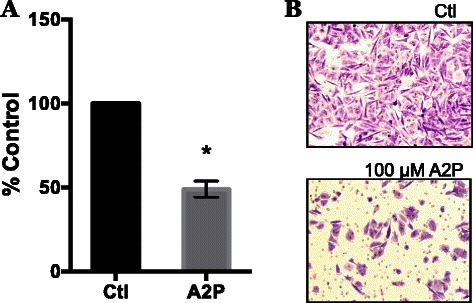
BACKGROUND: Hypoxia inducible factor-1 alpha (HIF-1α) is thought to play a role in melanoma carcinogenesis. Posttranslational regulation of HIF-1α is dependent on Prolyl hydroxylase (PHD 1-3) and Factor Inhibiting HIF (FIH) hydroxylase enzymes, which require ascorbic acid as a co-factor for optimal function. Depleted intra-tumoral ascorbic acid may thus play a role in the loss of HIF-1α regulation in melanoma. These studies assess the ability of ascorbic acid to reduce HIF-1α protein and transcriptional activity in metastatic melanoma and reduce its invasive potential. METHODS: HIF-1α protein was evaluated by western blot, while transcriptional activity was measured by HIF-1 HRE-luciferase reporter gene activity. Melanoma cells were treated with ascorbic acid (AA) and ascorbate 2-phosphate (A2P) to assess their ability to reduce HIF-1α accumulation and activity. siRNA was used to deplete cellular PHD2 in order to evaluate this effect on AA's ability to lower HIF-1α levels. A2P's effect on invasive activity was measured by the Matrigel invasion assay. Data was analyzed by One-way ANOVA with Tukey's multiple comparisons test, or Student-T test as appropriate, with p < .05 considered significant. RESULTS: Supplementation with both AA and A2P antagonized normoxic as well as cobalt chloride- and PHD inhibitor ethyl 3, 4-dihydroxybenzoate induced HIF-1α protein stabilization and transcriptional activity. Knockdown of the PHD2 isoform with siRNA did not impede the ability of AA to reduce normoxic HIF-1α protein. Additionally, reducing HIF-1α levels with A2P resulted in a significant reduction in the ability of the melanoma cells to invade through Matrigel. CONCLUSION: These studies suggest a positive role for AA in regulating HIF-1α in melanoma by demonstrating that supplementation with either AA, or its oxidation-resistant analog A2P, effectively reduces HIF-1α protein and transcriptional activity in metastatic melanoma cells. Our data, while supporting the function of AA as a necessary cofactor for PHD and likely FIH activity, also suggests a potential non-PHD/FIH role for AA in HIF-1α regulation by its continued ability to reduce HIF-1α in the presence of PHD inhibition. The use of the oxidation-resistant AA analog, A2P, to reduce the ability of HIF-1α to promote malignant progression in melanoma cells and enhance their response to therapy warrants further investigation.
Overview
The claims and statistics of this paper haven’t been checked yet.
Free: it reads the open-access text and checks the first 5 claims that cite a source we can check. Create a free account to check every claim.
Integrity signals
Registry
Cites
Statistics
Figures
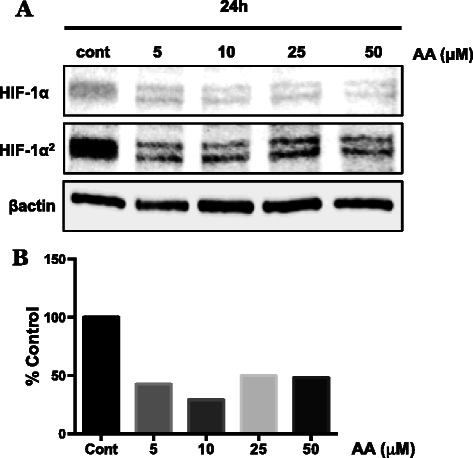
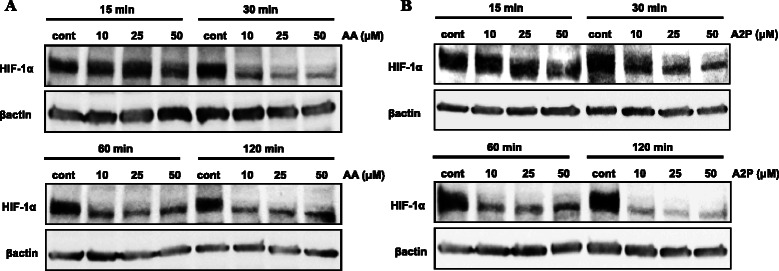
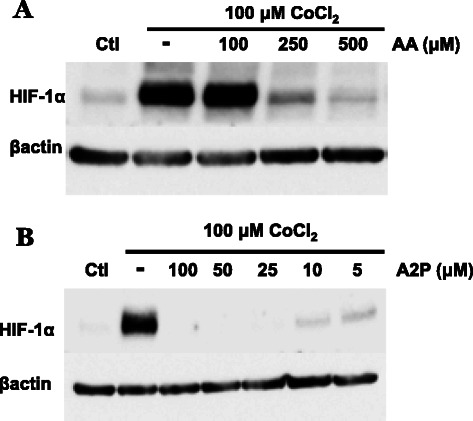
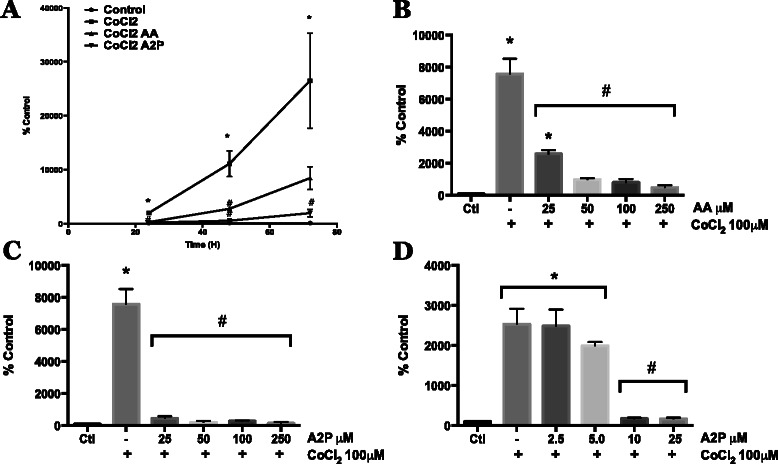
Verification
Claims the paper makes
The claims and statistics of this paper haven’t been checked yet.
Free: it reads the open-access text and checks the first 5 claims that cite a source we can check. Create a free account to check every claim.
Claims other papers make about this one
Each is checked against this paper’s own text: does it say what the citing paper says it does?
In the citing paper
“Another study found that ascorbic acid reduces HIF-1α activity and protein levels in metastatic melanoma, reducing invasion of melanoma cells122.”
From Mechanisms and prevention of UV‐induced melanoma (2018) · cites this paper as [122]
Self-check
Percentages, sums and reported differences re-computed from the paper’s own numbers.
The self-check needs the paper’s full text.
Citations
Cites
Tumor cell metabolism: cancer's Achilles' heel
Kroemer, G., & Pouyssegur, J. (2008) · Cancer Cell · doi:10.1016/j.ccr.2008.05.005 · Cited by 2,337
(1999) · PubMed · Cited by 2,204
Berra, E., Benizri, E., Ginouvès, A., Volmat, V., Roux, D., & Pouysségur, J. (2003) · The EMBO Journal · doi:10.1093/emboj/cdg392 · Cited by 1,348
Vitamin C pharmacokinetics in healthy volunteers: evidence for a recommended dietary allowance
Levine, M., Conry-Cantilena, C., Wang, Y., Welch, R. W., Washko, P. W., Dhariwal, K. R., Park, J. B., Lazarev, A., Graumlich, J. F., King, J., et al. (1996) · Proceedings of the National Academy of Sciences · doi:10.1073/pnas.93.8.3704 · Cited by 1,325 · cited 1×
“determine whether physiologically attainable serum concentrations of AA [35, 36], which would be achievable through the consumption of vitamin C rich foods (yielding up to 100 μM serum AA) or oral dietary supplements (up to 250 μM serum AA), could effectively impact HIF-1α in melanoma cells [36].”
BackgroundIndian Journal of Physiology and Pharmacology
(2020) · Indian Journal of Physiology and Pharmacology · doi:10.25259/ijpp · Cited by 1,030
Management of Cutaneous Melanoma
Tsao, H., Atkins, M. B., & Sober, A. J. (2004) · New England Journal of Medicine · doi:10.1056/nejmra041245 · Cited by 855
Characterization of the human prolyl 4-hydroxylases that modify the hypoxia-inducible factor
Hirsilä, M., Koivunen, P., Günzler, V., Kivirikko, K. I., & Myllyharju, J. (2003) · Journal of Biological Chemistry · doi:10.1074/jbc.m304982200 · Cited by 794
Guidelines of care for the management of primary cutaneous melanoma
Bichakjian, C. K., Halpern, A. C., Johnson, T. M., Foote Hood, A., Grichnik, J. M., Swetter, S. M., Tsao, H., Barbosa, V. H., Chuang, T.-Y., Duvic, M., et al. (2011) · Journal of the American Academy of Dermatology · doi:10.1016/j.jaad.2011.04.031 · Cited by 616
Discovery of small molecule cancer drugs: Successes, challenges and opportunities
Hoelder, S., Clarke, P. A., & Workman, P. (2012) · Molecular Oncology · doi:10.1016/j.molonc.2012.02.004 · Cited by 587
Intracellular localisation of human HIF-1α hydroxylases:implications for oxygen sensing
Metzen, E., Berchner-Pfannschmidt, U., Stengel, P., Marxsen, J. H., Stolze, I., Klinger, M., Huang, W. Q., Wotzlaw, C., Hellwig-Bürgel, T., Jelkmann, W., et al. (2003) · Journal of Cell Science · doi:10.1242/jcs.00318 · Cited by 432
Cited by
The use of cobalt chloride as a chemical hypoxia model
Muñoz‐Sánchez, J., & Chánez‐Cárdenas, M. E. (2019) · Journal of Applied Toxicology · doi:10.1002/jat.3749 · Cited by 530
Mechanisms and prevention of UV‐induced melanoma
Sample, A., & He, Y. (2018) · Photodermatology, Photoimmunology & Photomedicine · doi:10.1111/phpp.12329 · Cited by 372
Role of Vitamin C in Skin Diseases
Wang, K., Jiang, H., Li, W., Qiang, M., Dong, T., & Li, H. (2018) · Frontiers in Physiology · doi:10.3389/fphys.2018.00819 · Cited by 158
“, 2015), although vitamin C has an inhibitory effect on the invasion and metastasis of melanoma (Bedogni and Powell, 2009; Miles et al., 2015).”
BackgroundTherapeutic Perspective of Vitamin C and Its Derivatives
Meščić Macan, A., Gazivoda Kraljević, T., & Raić-Malić, S. (2019) · Antioxidants · doi:10.3390/antiox8080247 · Cited by 142
Zhang, J., Yao, M., Xia, S., Zeng, F., & Liu, Q. (2025) · Cellular & Molecular Biology Letters · doi:10.1186/s11658-024-00682-7 · Cited by 126
Regulation of redox signaling in HIF‐1‐dependent tumor angiogenesis
Manuelli, V., Pecorari, C., Filomeni, G., & Zito, E. (2022) · The FEBS Journal · doi:10.1111/febs.16110 · Cited by 96
Vitamin C increases 5-hydroxymethylcytosine level and inhibits the growth of bladder cancer
Ding, P., Ge, G., Gong, Y., Zhan, Y., He, S., Guan, B., Li, Y., Xu, Z., Hao, H., He, Z., et al. (2018) · Clinical Epigenetics · doi:10.1186/s13148-018-0527-7 · Cited by 86
The potential role of vitamin C in empowering cancer immunotherapy
Bedhiafi, T., Inchakalody, V. P., Fernandes, Q., Mestiri, S., Billa, N., Shahab Uddin, M. S., Merhi, M., & Dermime, S. (2021) · Biomedicine & Pharmacotherapy · doi:10.1016/j.biopha.2021.112553 · Cited by 82
High-Dose Vitamin C in Advanced-Stage Cancer Patients
Zasowska‐Nowak, A., Nowak, P. J., & Ciałkowska-Rysz, A. D. (2021) · Nutrients · doi:10.3390/nu13030735 · Cited by 82
Mendoza, E. N., Ciriolo, M. R., & Ciccarone, F. (2025) · Antioxidants · doi:10.3390/antiox14010094 · Cited by 74
Vitamin C Transporters and Their Implications in Carcinogenesis
Linowiecka, K., Foksiński, M., & Brożyna, A. A. (2020) · Nutrients · doi:10.3390/nu12123869 · Cited by 68
He, X., Wang, Q., Cheng, X., Wang, W., Li, Y., Nan, Y., Wu, J., Xiu, B., Jiang, T., Bergholz, J. S., et al. (2025) · Cell · doi:10.1016/j.cell.2025.01.043 · Cited by 65
IDH Mutations in Glioma: Molecular, Cellular, Diagnostic, and Clinical Implications
Choate, K. A., Pratt, E. P. S., Jennings, M. J., Winn, R. J., & Mann, P. B. (2024) · Biology · doi:10.3390/biology13110885 · Cited by 61
Ding, P., He, A., He, S., Ge, G., Wang, S., Ci, W., Li, X., Xia, D., & Zhou, L. (2022) · International Journal of Biological Sciences · doi:10.7150/ijbs.67329 · Cited by 60
High-Dose Vitamin C: Preclinical Evidence for Tailoring Treatment in Cancer Patients
Giansanti, M., Karimi, T., Faraoni, I., & Graziani, G. (2021) · Cancers · doi:10.3390/cancers13061428 · Cited by 57
Prescott, J. D., Drake, V., & Stevens, J. F. (2018) · Journal of Pharmacy Technology · doi:10.1177/8755122518780742 · Cited by 55
Natural protection against oxidative stress in human skin melanocytes
Mucha, M., Skrzydlewska, E., & Gęgotek, A. (2025) · Communications Biology · doi:10.1038/s42003-025-08725-1 · Cited by 55
Role of HIF1 α Regulatory Factors in Stem Cells
Lee, H. J., Jung, Y. H., Choi, G. E., Kim, J. S., Chae, C. W., & Han, H. J. (2019) · International Journal of Stem Cells · doi:10.15283/ijsc18109 · Cited by 51
Zhou, M., Li, X., Li, Y., Yao, Q., Ming, Y., Li, Z., Lu, L., & Shi, S. (2017) · Drug Delivery · doi:10.1080/10717544.2017.1370619 · Cited by 52
Vaishampayan, P., & Lee, Y. (2024) · Redox Biology · doi:10.1016/j.redox.2024.103288 · Cited by 43
Meščić, A., Harej, A., Cazin, I., Klobučar, M., Stepanić, V., Pavelić, K., Pavelić, S. K., Schols, D., Snoeck, R., Andreï, G., et al. (2019) · European Journal of Medicinal Chemistry · doi:10.1016/j.ejmech.2019.111739 · Cited by 43
Roles of Copper in Hepatocarcinogenesis via the Activation of Hypoxia-Inducible Factor-1α
Himoto, T., Fujita, K., Nomura, T., Tani, J., Miyoshi, H., Morishita, A., Yoneyama, H., Kubota, S., Haba, R., Suzuki, Y., et al. (2016) · Biological Trace Element Research · doi:10.1007/s12011-016-0702-7 · Cited by 40
RIG-I Resists Hypoxia-Induced Immunosuppression and Dedifferentiation
Engel, C., Brügmann, G., Lambing, S., Mühlenbeck, L. H., Marx, S., Hagen, C., Horváth, D., Goldeck, M., Ludwig, J., Herzner, A., et al. (2017) · Cancer Immunology Research · doi:10.1158/2326-6066.cir-16-0129-t · Cited by 35
Fischer, A. P., & Miles, S. L. (2017) · Biochemical and Biophysical Research Communications · doi:10.1016/j.bbrc.2017.06.017 · Cited by 34
Self-citationFischer, A. P., & Miles, S. L. (2016) · Biomedicine & Pharmacotherapy · doi:10.1016/j.biopha.2016.12.056 · Cited by 33
Self-citationMartínez‐García, M. Á., Riveiro‐Falkenbach, E., Rodríguez‐Peralto, J. L., Nagore, E., Martorell, A., Campos‐Rodríguez, F., Farré, R., Blasco, L., Roca, J. B., Vives, E. C., et al. (2017) · Melanoma Research · doi:10.1097/cmr.0000000000000393 · Cited by 30
Mirea, M. A., Eckensperger, S., Hengstschläger, M., & Mikula, M. (2020) · Cancers · doi:10.3390/cancers12092508 · Cited by 23
The Antioxidant and Antiproliferative Activities of 1,2,3-Triazolyl-L-Ascorbic Acid Derivatives
Harej, A., Meščić, A., Stepanić, V., Klobučar, M., Pavelić, K., Pavelić, S. K., & Raić‐Malić, S. (2019) · International Journal of Molecular Sciences · doi:10.3390/ijms20194735 · Cited by 23
Reversal of TET-mediated 5-hmC loss in hypoxic fibroblasts by ascorbic acid
Liu, Y., Xu, S., Zu, T., Li, F., Sang, S., Liu, C., An, Y., Mi, B., Orgill, D. P., Murphy, G. F., et al. (2019) · Laboratory Investigation · doi:10.1038/s41374-019-0235-8 · Cited by 23
Zhao, H., Fu, W., Yang, X., Zhang, W., Wu, S., Ma, J., Zhang, T., Yao, H., & Zhang, Z. (2025) · Genes & Diseases · doi:10.1016/j.gendis.2025.101742 · Cited by 21
Role of Vitamin C in Targeting Cancer Stem Cells and Cellular Plasticity
Lee, Y. (2023) · Cancers · doi:10.3390/cancers15235657 · Cited by 20
Molecular and Cellular Response of the Myocardium (H9C2 Cells) Towards Hypoxia and HIF-1α Inhibition
Osuru, H. P., Lavallee, M., & Thiele, R. H. (2022) · Frontiers in Cardiovascular Medicine · doi:10.3389/fcvm.2022.711421 · Cited by 20
Kondo, T., Takeda, K., Muko, R., Ito, A., Chang, Y., Magae, J., & Kataoka, T. (2019) · The Journal of Antibiotics · doi:10.1038/s41429-019-0157-0 · Cited by 9
Ge, P., Tao, X., Qu, J., He, J., Xing, C., Wang, S., Zhao, Y., Yu, S., Xu, J., Wang, L., et al. (2026) · International Journal of Nanomedicine · doi:10.2147/ijn.s559426 · Cited by 6
Knyazev, E. N., Kulagin, T., Antipenko, I. D., & Tonevitsky, A. (2026) · Placenta · doi:10.1016/j.placenta.2026.02.005 · Cited by 5
Phytochemical Screening of the Fruit of Garcinia cochinchinensis Choisy
Farinazzi-Machado, F. M. V., Barbalho, S. M., Guiguer, É. L., Marinelli, P. S., Ishida, I. B., Vieites, R. L., & Groppo, M. (2016) · International Journal of Current Research in Biosciences and Plant Biology · doi:10.20546/ijcrbp.2016.307.012 · Cited by 5
Ricol, M., Lipinski, O., Moali, C., & Sée, V. (2026) · Matrix Biology · doi:10.1016/j.matbio.2026.102007 · Cited by 4
Mikirova, N. A., & Hunninghake, R. (2017) · Functional Foods in Health and Disease · doi:10.31989/ffhd.v7i7.360 · Cited by 4
El-Far, M., Essam, A., El‐Senduny, F. F., El‐Azim, A. O. A., Yahia, S., & El-sherbiny, I. M. (2023) · Journal of Drug Delivery Science and Technology · doi:10.1016/j.jddst.2023.104405 · Cited by 3
The Redox Paradox of Natural Supplements in Cancer: A Narrative Review to Guide Clinical Practice
Martinez, P., Martínez, E. M., Gillot, L., Makis, W., Peavler, C., Vega‐Gálvez, A., Joulia, F., & Grant, W. B. (2026) · Antioxidants · doi:10.3390/antiox15070809 · Cited by 3
Cutaneous melanoma: An update on pathogenesis, prevention, and treatment
Frech, F. S., Bommareddy, K. J., Hernandez, L. E. D. L. C., Dreyfuss, I., Urbonas, R., & Nouri, K. (2022) · Dermatological Reviews · doi:10.1002/der2.153 · Cited by 3
Liang, L., He, M., Zhang, Y., Wang, C., Qin, Z. S., Li, Q., Yang, T., Meng, F., Zhou, Y., Ge, H., et al. (2023) · Cell & Bioscience · doi:10.1186/s13578-023-01160-x · Cited by 2
FACULTE MIXTE DE MEDECINE ET DE PHARMACIE DE ROUEN
Eltchaninoff, H., Lacroix, D., & Savoure, D. A. (2013) · Cited by 2
Pan, S., Hong, Y., Jian, Y., Shen, P., Lu, X., Chen, Y., Lin, Y., Zha, S., Jiang, L., & Fang, X. (2025) · Chemistry - An Asian Journal · doi:10.1002/asia.202500124 · Cited by 2
Антонова, Е. И., Фирсова, Н. В., Lengesova, N. A., & Ачилов, А. Б. (2024) · ТЕНДЕНЦИИ РАЗВИТИЯ НАУКИ И ОБРАЗОВАНИЯ · doi:10.18411/trnio-01-2024-446 · Cited by 2
Uso de megadosis de vitamina C en la cicatrización y desinflamación de heridas quirúrgicas
Logroño, I. N., Veloz, A. F. V., Lara, D. E. R., Andrade, K. C. V., & Hidalgo, K. O. R. (2017) · LA CIENCIA AL SERVICIO DE LA SALUD Y NUTRICIÓN · doi:10.47187/cssn.vol8.iss2.17 · Cited by 1
Barbalho, S. M., Otoboni, A. M. M. B., Marinelli, P. S., Bezerra, C., Meneghini, A., Oliva, É., Lopes, R. A. R., Souza, T. R., Oshiiwa, M., Nicolau, C. C. T., et al. (2016) · Journal of Food Research · doi:10.5539/jfr.v5n2p50 · Cited by 1
Ascorbic acid in cancer management – time for a second look
Izuegbuna, O. (2023) · European Journal of Clinical and Experimental Medicine · doi:10.15584/ejcem.2023.4.7
Brown, R. L. (2019) · Spiral (Imperial College London) · doi:10.25560/81682
ROS/HIF-1 signaling in alveolar macrophages: implications for lung fibrosis
Jenkins, E., THICKETT, D. R., Parekh, D., & Scott, A. (2026) · American Journal of Physiology-Lung Cellular and Molecular Physiology · doi:10.1152/ajplung.00192.2026
Ricol, M., Dieryckx, C., Callies, C., Goff, S. V., Vincourt, J., Moali, C., & Sée, V. (2026) · bioRxiv (Cold Spring Harbor Laboratory) · doi:10.64898/2026.09.14.750894
Regulation of molecular subtypes of pancreatic cancer by TET2 and 5'hmC
Eyres, M. (2019) · Oxford University Research Archive (ORA) (University of Oxford) · doi:10.5287/ora-aeoyrvepm
Wavhale, S. R., & Shaikh, A. R. (2026) · Mini-Reviews in Medicinal Chemistry · doi:10.2174/0113895575257065251113073957
The influence of hypoxia on RIG-I-mediated melanoma immunotherapy
Engel, C. (2016) · bonndoc (University of Bonn)
Osuru, H. P., and, M. L., & Thiele, R. H. (2022) · doi:10.3389/fcvm.2022.711421.s002
Rijlaarsdam, D. J., Chang, J., Helms, J. B., Zaal, E. A., & Berkers, C. R. (2026) · bioRxiv (Cold Spring Harbor Laboratory) · doi:10.64898/2026.10.26.761674
Lima, M. F. D. O., de Oliveira, F., Lisboa, M. J. S., Stabille, S. R., da Purificação, N. R. C., Soaressouto, M., Quintana, H. T., Liberti, É. A., & Clébis, N. K. (2018) · SM Musculoskeletal Disorders · doi:10.36876/smmd.1030
Metadata
- Authors
- Miles, S. L., Fischer, A. P., Joshi, S. J., & Niles, R. M.
- Affiliations
- Marshall University (US)
- University of Maryland, Baltimore (US)
- Corresponding author
- Miles, Sarah L.
- ORCID
- Miles, Sarah L.
- Venue
- BMC Cancer
- Published
- 2015-11-07
- Volume
- 15
- Issue
- 1
- Pages
- 867-867
- ISSN
- 1471-2407 (ISSN-L)
- PMC
- PMC4636772
- OpenAlex
- W2161121641
- Cited by
- 51
- References
- 56
- Citations by year
- 2026: 5 · 2025: 6 · 2024: 4 · 2023: 5 · 2022: 3 · 2021: 4 · 2020: 2 · 2019: 6 · 2018: 5 · 2017: 6 · 2016: 4
- FWCI
- 1.65
- Type
- journal article
- Language
- en
- Open access
- gold
- doi.org
- Licence
- Locations
- BMC Cancer (publishedVersion, cc-by)
- Europe PMC (PubMed Central) (publishedVersion, cc-by)
- PubMed Central (publishedVersion, cc-by)
- PubMed (publishedVersion)
- Topics
- Life Sciences › Biochemistry, Genetics and Molecular Biology › Cancer Research › Cancer, Hypoxia, and Metabolism
- Health Sciences › Nursing › Nutrition and Dietetics › Vitamin C and Antioxidants Research
- Life Sciences › Biochemistry, Genetics and Molecular Biology › Molecular Biology › Angiogenesis and VEGF in Cancer
- Keywords
- vitamin C, HIF-1α, hypoxia-inducible factor-1α, melanoma, metastatic melanoma, prolyl hydroxylase, PHD2, factor inhibiting HIF, tumor invasion, cobalt chloride
- MeSH terms
- Ascorbic Acid, Humans, Melanoma, Neoplasm Metastasis, Transcription, Genetic, Cell Hypoxia, Gene Expression, Gene Expression Regulation, Neoplastic, Genes, Reporter, Cell Line, Tumor, Hypoxia-Inducible Factor 1, alpha Subunit, Protein Stability
About these checks
Registry, retraction, Cites and statistics results are computed, not judged, with one exception: a printed reference that no index lists is read once by a model before it counts as a citation error. Claims are extracted by a model and kept only when their quote appears verbatim in the text; each cited source is then checked, with a model’s help, for whether it says what the claim relies on. Those verdicts can be wrong — read the claim’s quote and the cited source before relying on one.
Statistics and arithmetic are recomputed, not judged.
Confidence bands are shown only for fields calibrated on our annotated test set. None is calibrated yet, so no band is shown.
What counts as a claim ›How we measure confidence ›How we check this ›
Are you an author, or do you see a problem with this page? Request a review
Data sources
Bibliographic data: Semantic Scholar, OpenAlex, Crossref.
Contains information from the Semantic Scholar Academic Graph Datasets, made available under the ODC Attribution License (ODC-BY 1.0).
Semantic Scholar’s data is described in: Kinney, R., et al. (2023). The Semantic Scholar Open Data Platform. arXiv:2301.10140.
