

Extracellular matrix collagen I promotes the tumor progression of residual hepatocellular carcinoma after heat treatment
Open accessThe DOI matches its Crossref record; 51 of the 52 references it cites were found in a registry or an index.
Abstract
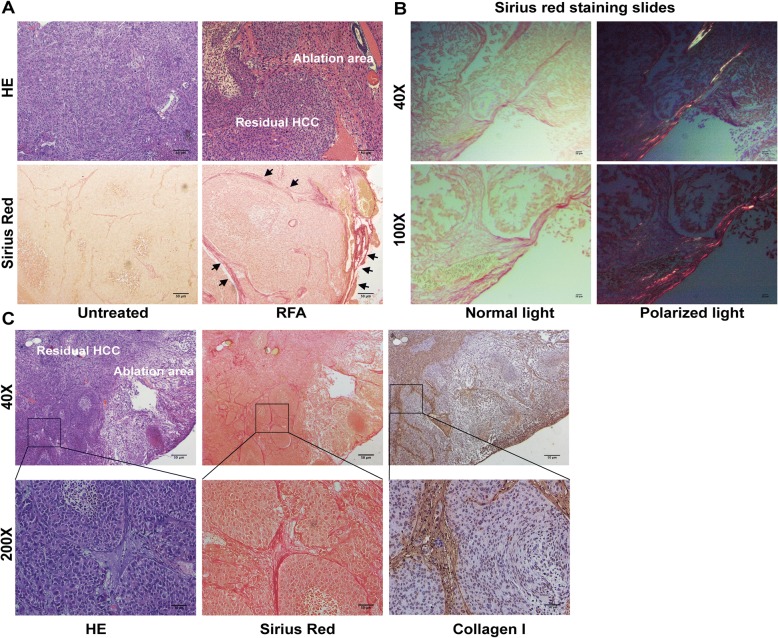
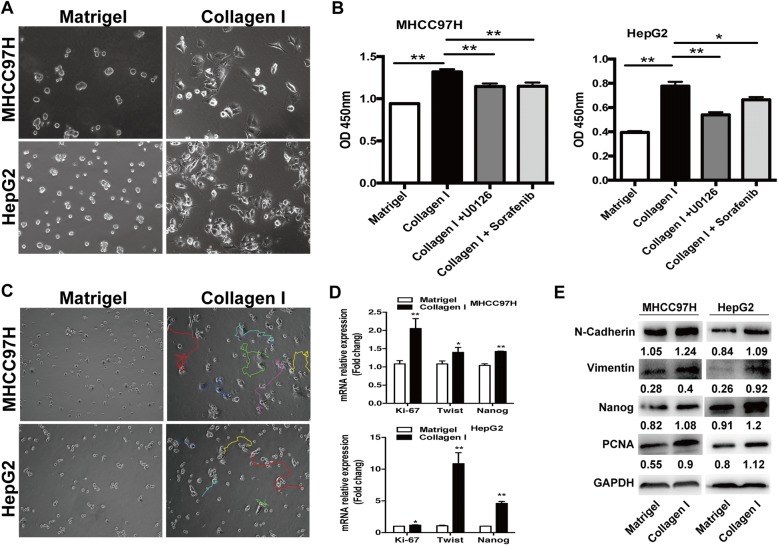
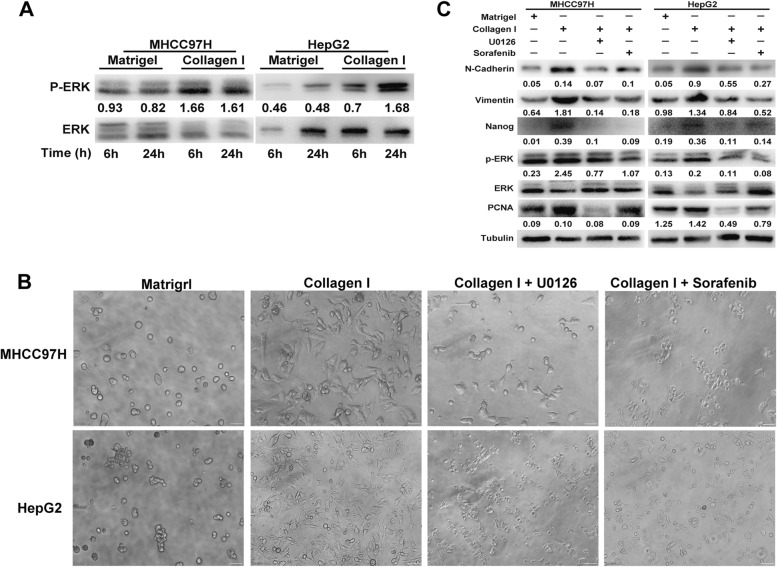
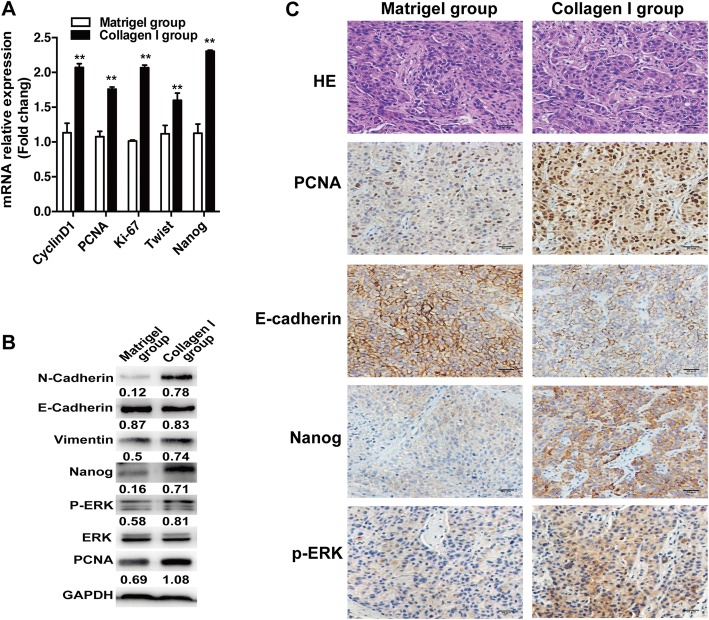
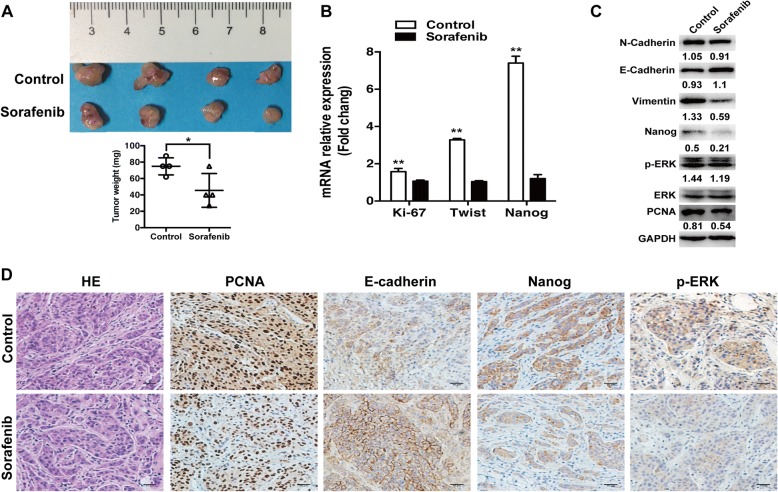
BACKGROUND: Accelerated malignant behaviors induced by insufficient thermal ablation have been increasingly reported, however, the exact mechanisms are still unclear. Here, we investigated the importance of the extracellular matrix (ECM) in modulating the progression of residual hepatocellular carcinoma (HCC) after heat treatment. METHODS: Heat-exposed residual HCC cells were cultured in different ECM gels. We used basement membrane gel (Matrigel) to simulate the normal microenvironment and collagen I to model the pathological stromal ECM. The alterations of morphology and parameters of proliferation, epithelial-mesenchymal transition (EMT) and stemness were analyzed in vitro and in vivo. RESULTS: Increased collagen I deposition was observed at the periablational zone after incomplete RFA of HCC in a xenograft model. The markers of cell proliferation, EMT, motility and progenitor-like traits of heat-exposed residual HCC cells were significantly induced by collagen I as compared to Matrigel (p values all < 0.05). Importantly, collagen I induced the activation of ERK phosphorylation in heat-exposed residual HCC cells. ERK1/2 inhibitor reversed the collagen I-promoted ERK phosphorylation, cell proliferative, protrusive and spindle-like appearance of heat-treated residual HCC cells in vitro. Moreover, collagen I promoted the in vivo tumor progression of heat-exposed residual HCC cells, and sorafenib markedly reversed the collagen I-mediated protumor effects. CONCLUSIONS: Our findings demonstrate that collagen I could enhance the aggressive progression of residual HCC cells after suboptimal heat treatment and sorafenib may be a treatment approach to thwart this process.
Overview
The claims and statistics of this paper haven’t been checked yet.
Free: it reads the open-access text and checks the first 5 claims that cite a source we can check. Create a free account to check every claim.
Integrity signals
Registry
Cites
Statistics
Figures
Verification
Claims the paper makes
The claims and statistics of this paper haven’t been checked yet.
Free: it reads the open-access text and checks the first 5 claims that cite a source we can check. Create a free account to check every claim.
Claims other papers make about this one
Each is checked against this paper’s own text: does it say what the citing paper says it does?
The check wasn’t confident either way, so it gives no verdict — never disputed.
In the citing paper
“Synthesis of collagen can be regulated by cancer cells, mutated genes, signaling pathways/receptors, and transcription factors [123].”
From Tumor microenvironment complexity and therapeutic implications at a glance (2020) · cites this paper as [123]
Experimental — accuracy not yet measured
Self-check
Percentages, sums and reported differences re-computed from the paper’s own numbers.
The self-check needs the paper’s full text.
Citations
Cites
1 retracted
Wu, L., Fu, Z., Zhou, S., Gong, J., Liu, C. A., Qiao, Z., & Li, S. (2014) · PLoS ONE · doi:10.1371/journal.pone.0088913 · Cited by 34
RetractedSorafenib in advanced hepatocellular carcinoma
Llovet, J. M., Ricci, S., Mazzaferro, V., Hilgard, P., Gane, E., Blanc, J.-F., de Oliveira, A. C., Santoro, A., Raoul, J.-L., Forner, A., et al. (2008) · New England Journal of Medicine · doi:10.1056/nejmoa0708857 · Cited by 13,097
Molecular Mechanisms of Stress-Responsive Changes in Collagen and Elastin Networks in Skin
Aziz, J., Shezali, H., Radzi, Z., Yahya, N. A., Abu Kassim, N. H., Czernuszka, J., & Rahman, M. T. (2016) · Skin Pharmacology and Physiology · doi:10.1159/000447017 · Cited by 7,323
A New Era of Systemic Therapy for Hepatocellular Carcinoma with Regorafenib and Lenvatinib
Kudo, M. (2017) · Liver Cancer · doi:10.1159/000462153 · Cited by 5,936
Cellular and molecular mechanisms of fibrosis
Wynn, T. (2008) · The Journal of Pathology · doi:10.1002/path.2277 · Cited by 4,495
Matrix Crosslinking Forces Tumor Progression by Enhancing Integrin Signaling
Levental, K. R., Yu, H., Kass, L., Lakins, J. N., Egeblad, M., Erler, J. T., Fong, S. F. T., Csiszar, K., Giaccia, A., Weninger, W., et al. (2009) · Cell · doi:10.1016/j.cell.2009.10.027 · Cited by 4,101
Forner, A., Llovet, J. M., & Bruix, J. (2012) · The Lancet · doi:10.1016/s0140-6736(11)61347-0 · Cited by 4,022
The extracellular matrix: A dynamic niche in cancer progression
Lu, P., Weaver, V. M., & Werb, Z. (2012) · Journal of Cell Biology · doi:10.1083/jcb.201102147 · Cited by 3,024
Schuppan, D., & Afdhal, N. H. (2008) · The Lancet · doi:10.1016/s0140-6736(08)60383-9 · Cited by 2,089
Human primary liver cancer–derived organoid cultures for disease modeling and drug screening
Broutier, L., Mastrogiovanni, G., Verstegen, M. M., Francies, H. E., Gavarró, L. M., Bradshaw, C. R., Allen, G. E., Arnes-Benito, R., Sidorova, O., Gaspersz, M. P., et al. (2017) · Nature Medicine · doi:10.1038/nm.4438 · Cited by 1,471
Research works printed but not linked: 1
- Lau WY Lai ECH The current role of radiofrequency ablation in the management of hepatocellular carcinoma Ann Surg 2009 249 20 25 10.1097/SLA.0b013e31818eec29 19106671 · DOI · Paper page
Cited by
Tumor microenvironment complexity and therapeutic implications at a glance
Baghban, R., Roshangar, L., Jahanban-Esfahlan, R., Seidi, K., Ebrahimi-Kalan, A., Jaymand, M., Kolahian, S., Javaheri, T., & Zare, P. (2020) · Cell Communication and Signaling · doi:10.1186/s12964-020-0530-4 · Cited by 1,784
“Synthesis of collagen can be regulated by cancer cells, mutated genes, signaling pathways/receptors, and transcription factors [123] .”
BackgroundChemoresistance and the Self-Maintaining Tumor Microenvironment
Yeldag, G., Rice, A., & Del Río Hernández, A. (2018) · Cancers · doi:10.3390/cancers10120471 · Cited by 214
“Collagen I has been shown to promote MAPK activation in hepatocellular carcinoma cells [124], and to promote chemoresistance in ovarian cancer cells through the activation of Akt and pyruvate dehydrogenase kinase 1 (PDK1) [125].”
BackgroundCombination of Ablation and Immunotherapy for Hepatocellular Carcinoma: Where We Are and Where to Go
Wang, K., Wang, C., Jiang, H., Zhang, Y., Lin, W., Mo, J., & Jin, C. (2021) · Frontiers in Immunology · doi:10.3389/fimmu.2021.792781 · Cited by 99
Tan, L., Chen, S., Wei, G., Li, Y., Liao, J., Jin, H., Zou, Y., Huang, M., Peng, Z., Guo, Y., et al. (2019) · Cancer Letters · doi:10.1016/j.canlet.2019.05.041 · Cited by 69
Zhong, C., Tao, B., Tang, F., Yang, X., Peng, T., You, J., Xia, K., Xia, X., Chen, L., & Peng, L. (2020) · Theranostics · doi:10.7150/thno.50613 · Cited by 78
“Type I collagen is the major structural protein of the extracellular matrix in the tumor microenvironment, tightly associated with tumor progression [32, 33].”
BackgroundFilliol, A., & Schwabe, R. F. (2019) · Seminars in Liver Disease · doi:10.1055/s-0039-1685539 · Cited by 58
Niu, D., Luo, T. L., Wang, H., Xia, Y., & Xie, Z. (2021) · Clinica Chimica Acta · doi:10.1016/j.cca.2021.08.011 · Cited by 63
Engineering the Extracellular Matrix to Model the Evolving Tumor Microenvironment
Micek, H. M., Visetsouk, M. R., Masters, K. S. B., & Kreeger, P. K. (2020) · iScience · doi:10.1016/j.isci.2020.101742 · Cited by 58
Matrix stiffness promotes glioma cell stemness by activating BCL9L/Wnt/β-catenin signaling
Tao, B., Song, Y., Wu, Y., Yang, X., Peng, T., Peng, L., Xia, K., Xia, X., Chen, L., & Zhong, C. (2021) · Aging · doi:10.18632/aging.202449 · Cited by 54
“Moreover, compelling research has demonstrated that compounds such as collagen and fibronectin from the extracellular matrix can directly stimulate pro-survival signaling pathways and promote stemness in tumor cells [33, 38].”
Imodoye, S. O., Adedokun, K. A., & Bello, I. O. (2024) · Histochemistry and Cell Biology · doi:10.1007/s00418-023-02258-6 · Cited by 50
“The most prominent ECM component is collagen, and its synthesis is coordinated by cancer cells, signaling pathways, and transcription factors (Zhang et al. 2018a, b).”
LncRNA influence sequential steps of hepatocellular carcinoma metastasis
Lv, E., Sheng, J., Yu, C., Rao, D., & Huang, W. (2021) · Biomedicine & Pharmacotherapy · doi:10.1016/j.biopha.2021.111224 · Cited by 43
Acun, A., Oganesyan, R., Uygun, K., Yeh, H., Yarmush, M. L., & Uygun, B. E. (2021) · Biomaterials · doi:10.1016/j.biomaterials.2021.120689 · Cited by 39
“The reason for this could be that collagen type I was shown to cause significantly higher induction of hepatocellular carcinoma cell proliferation compared to Matrigel through activation of ERK pathway[55].”
BackgroundAn Overview of Hepatocellular Carcinoma After Insufficient Radiofrequency Ablation
Guo, Y., Ren, Y., Dong, X., Kan, X., & Zheng, C. (2022) · Journal of Hepatocellular Carcinoma · doi:10.2147/jhc.s358539 · Cited by 40
Mutant P53 in the formation and progression of the tumor microenvironment: Friend or foe
Asl, E. R., Rostamzadeh, D., Duijf, P. H. G., Mafi, S., Mansoori, B., Barati, S., Cho, W. C. S., & Mansoori, B. (2023) · Life Sciences · doi:10.1016/j.lfs.2022.121361 · Cited by 40
Wang, H., Zhou, H., Ni, H., & Shen, X. (2022) · Biomolecules · doi:10.3390/biom12030391 · Cited by 37
“EMT can be initiated by various intrinsic and extrinsic signals, including the transforming growth factor β (TGFβ) [10], hepatocyte growth factor (HGF) [11], Snail [12], collagen I [13], and hyaluronan [14].”
BackgroundKong, J., Yao, C., Ding, X., Dong, S., Wu, S., Sun, W., & Zheng, L. (2020) · Frontiers in Oncology · doi:10.3389/fonc.2020.01080 · Cited by 31
Engineering Biomimetic Extracellular Matrix with Silica Nanofibers: From 1D Material to 3D Network
Zhou, J., Nie, Y., Jin, C., & Zhang, J. X. J. (2022) · ACS Biomaterials Science & Engineering · doi:10.1021/acsbiomaterials.1c01525 · Cited by 31
Li, M., Wu, F., Zheng, Q., Wu, Y., & Wu, Y. (2020) · DNA and Cell Biology · doi:10.1089/dna.2019.5170 · Cited by 36
“Studies show that changes in the tumor microenvironment are closely related to tumor metastasis and recurrence (Bonora et al. , 2015; Guerra et al. , 2017; Zhang et al. , 2018).”
Gao, X., Chen, H., Huang, X., Li, H., Liu, Z., & Bo, X. (2019) · OncoTargets and Therapy · doi:10.2147/ott.s196713 · Cited by 27
Arciga, B. M., Walters, D. M., Kimchi, E. T., Staveley-O’Carroll, K. F., Li, G., Teixeiro, E., Rachagani, S., & Kaifi, J. T. (2024) · Cancer Letters · doi:10.1016/j.canlet.2024.217361 · Cited by 25
Ali, E., Trailin, A. V., Ambrożkiewicz, F., Liška, V., & Hemminki, K. (2022) · International Journal of Molecular Sciences · doi:10.3390/ijms232315292 · Cited by 26
“HSCs produce collagen I [53], which has been associated with the increased aggressiveness of HCC [54], where silencing its expression in HSCs may treat liver fibrosis [55].”
BackgroundProgression of hepatocellular carcinoma after radiofrequency ablation: Current status of research
Wu, S., Li, Z., Yao, C., Dong, S., Gao, J., Ke, S., Zhu, R., Huang, S., Wang, S., Xu, L., et al. (2022) · Frontiers in Oncology · doi:10.3389/fonc.2022.1032746 · Cited by 27
“(38) revealed that an increase in the ECM protein collagen I promotes progression of heat-exposed residual HCC cells, indicating the importance of collagen I in modulating residual HCC after incomplete heat treatment, and proposed that sorafenib could reverse collagen I-induced protumor effects.”
BackgroundRole of exosomes in hepatocellular carcinoma and the regulation of traditional Chinese medicine
Yao, M., Liang, S., & Cheng, B. (2023) · Frontiers in Pharmacology · doi:10.3389/fphar.2023.1110922 · Cited by 23
Engineering Biomaterials to Model Immune‐Tumor Interactions In Vitro
Skirzynska, A., Xue, C., & Shoichet, M. S. (2024) · Advanced Materials · doi:10.1002/adma.202310637 · Cited by 19
Hongqing, Z., Liu, M., Deng, T., Xie, P., Wang, W., Shao, T., Wu, Y., & Zhang, P. (2019) · OncoTargets and Therapy · doi:10.2147/ott.s212596 · Cited by 20
Yan, L., Xu, F., & Dai, C. (2020) · OncoTargets and Therapy · doi:10.2147/ott.s247133 · Cited by 15
Wu, J., Bai, X.-M., Wang, H., Xu, Q., Wang, S., Wu, W., Yan, K., & Yang, W. (2020) · Frontiers in Oncology · doi:10.3389/fonc.2020.01464 · Cited by 13
“The mechanisms of malignant behaviors from recurrent HCC after RFA have been increasingly reported (22).”
BackgroundPatil, A., Salvatori, R., Smith, L., Jenkins, S. M., Cannon, A. C., Hartley, C., Graham, R. P., & Moreira, R. K. (2023) · Histopathology · doi:10.1111/his.15001 · Cited by 13
Macdonald, J. K., Taylor, H. B., Wang, M., DelaCourt, A. T., Edge, C., Lewin, D., Kubota, N., Fujiwara, N., Rasha, F. A., Marquez, C. A., et al. (2024) · Journal of Proteome Research · doi:10.1021/acs.jproteome.4c00099 · Cited by 11
Collettini, F., Reimann, C., Brangsch, J., Chapiro, J., Savic, L. J., Onthank, D. C., Robinson, S. P., Kärst, U., Buchholz, R., Keller, S., et al. (2021) · Scientific Reports · doi:10.1038/s41598-021-86417-6 · Cited by 11
Laursen, T. L., Villesen, I. F., Leeming, D. J., Karsdal, M. A., Sølund, C. S., Tarp, B., Kristensen, L. H., Holmboe, C. H., Leutscher, P. D. C., Laursen, A. L., et al. (2020) · Journal of Viral Hepatitis · doi:10.1111/jvh.13416 · Cited by 11
“FibroScan (kPa) (n = 53) 11 (8-15) 25 (21-36)*”
Shuai, Q., Xu, X., Liang, Y., Halbiyat, Z., Lu, X., Hu, Z., Peng, Z., An, J., Feng, Z., Huang, T., et al. (2024) · Bioengineering & Translational Medicine · doi:10.1002/btm2.10648 · Cited by 10
“40,41 In lung cancer, FN expression is abnormal, especially in non-small cell lung cancer.”
BackgroundPrognostic and Diagnostic Roles of Prolyl 4-Hydroxylase Subunit α Members in Breast Cancer
Li, M., Wang, Q., Zheng, Q., Wu, L., Zhao, B., & Wu, Y. (2021) · Biomarkers in Medicine · doi:10.2217/bmm-2020-0323 · Cited by 11
Yang, J., Guo, W., & Lu, M. (2022) · Frontiers in Oncology · doi:10.3389/fonc.2022.895678 · Cited by 10
“ERK1/2 inhibitors can reverse ERK phosphorylation induced by extracellular matrix type I collagen (102).”
BackgroundAberrant Distributions of Collagen I, III, and IV in Hirschsprung Disease
Gao, N., Wang, J., Zhang, Q., Zhou, T., Mu, W., Hou, P., Wang, D., Lv, X., & Li, A. (2020) · Journal of Pediatric Gastroenterology and Nutrition · doi:10.1097/mpg.0000000000002627 · Cited by 11
“Other analyses have identified Col I and Col III as major genes involved in carcinoma invasion, including colorectal carcinoma, malignant astrocytoma and hepatocellular carcinoma (13,19,20).”
BackgroundYan, P., Lyu, X., Wang, S., Dong, S., Zhu, Z., Cheng, B., Sun, Y., Jiang, Q., Liu, J., & Li, F. (2021) · International Journal of Hyperthermia · doi:10.1080/02656736.2021.1947530 · Cited by 9
Castro‐Gil, M. P., Torres‐Mena, J. E., Salgado, R. M., Muñoz-Montero, S. A., Martínez-Garcés, J. M., López‐Torres, C. D., Mendoza-Vargas, A., Gabiño‐López, N. B., Villa‐Treviño, S., del Pozo‐Yauner, L., et al. (2021) · Genomics · doi:10.1016/j.ygeno.2021.11.035 · Cited by 9
Correlation analysis of structural and biomechanical properties of hepatocellular carcinoma tissue
Chen, Y., Li, R., Yang, Y., Ma, D., Zhou, J., Wang, C., Kong, L., Chen, Y., Yan, F., & Feng, Y. (2022) · Journal of Biomechanics · doi:10.1016/j.jbiomech.2022.111227 · Cited by 8
Nafie, E. H. O., Pastori, C., Acharya, R., Kaviani, R., Hunter, D. W., Shalaby, W. S. W., Krimsky, W. S., & Neal, R. E. (2025) · PLoS ONE · doi:10.1371/journal.pone.0318440 · Cited by 7
Chen, K., Tang, H., Zhu, P., Ye, J., Liu, D., Pu, Y., Zhang, L., & Zhai, W. (2020) · Journal of Cancer · doi:10.7150/jca.40656 · Cited by 6
“Accumulating evidence suggests the cooperation of signal pathways take part in the stepwise EMT regulatory network in GBC, including ERK [18] and NF-κB [19].”
BackgroundYe, F., Xie, L., Liang, L., Zhou, Z., He, S., Li, R., Lin, L., & Zhu, K. (2023) · Journal of interventional medicine · doi:10.1016/j.jimed.2023.10.004 · Cited by 7
“60 Their subsequent study was performed using cell culture gels with different stiffnesses to explore the effect of matrix stiffness change on residual HCC after TA.”
BackgroundShafie, F., Nabavizadeh, F., Ardestani, M. S., Panahi, M., Adeli, S., Samandari, H., & Ashabi, G. (2019) · Canadian Journal of Physiology and Pharmacology · doi:10.1139/cjpp-2019-0141 · Cited by 5
Lactic acid metabolism: gynecological cancer's Achilles’ heel
Zhang, T., Zhou, W., Fan, T., Yuan, Y., Tang, X., Zhang, Q., Zou, J., & Li, Y. (2025) · Discover Oncology · doi:10.1007/s12672-025-02364-y · Cited by 4
“…membrane is remodeled through the adjustment of its components, including collagen type I synthesis, collagen IV, collagen VII and glycoprotein degradation, leading to a decrease in tumor cell-basement membrane adhesion, loss of adhesion properties and acquisition of migratory capacity [122, 123].”
Mechanisms of tumor aggressiveness driven by ablation-induced niche remodeling
Gao, S., Luo, T., Fan, F., Liang, P., & Yu, J. (2025) · Biochimica et Biophysica Acta (BBA) - Reviews on Cancer · doi:10.1016/j.bbcan.2025.189449 · Cited by 4
Devcic, Z., Elboraey, M., Vidal, L. L. C., Mody, K., Harnois, D. M., Patel, T. C., & Toskich, B. B. (2019) · Seminars in Interventional Radiology · doi:10.1055/s-0039-1698755 · Cited by 4
Recent Developments in the Study of the Microenvironment of Cancer and Drug Delivery
Chaudhary, B., Kumar, P., Arya, P., Singla, D., Kumar, V., Kumar, D., Roshan, S., Wadhwa, S., Gulati, M., Singh, S. K., et al. (2022) · Current Drug Metabolism · doi:10.2174/1389200224666230110145513 · Cited by 5
Stulpinas, R., Morkūnas, M., Rasmusson, A., Drachneris, J., Augulis, R., Gulla, A., Strupas, K., & Laurinavičius, A. (2023) · Cancers · doi:10.3390/cancers16010106 · Cited by 4
“…association between cirrhosis and hepatocarcinogenesis, the exact role of Type I collagen remains unclear: some studies associate it with HCC progression [19], whereas others propose that Type I collagen accumulation may have a beneficial effect by mechanically restraining tumor spread [20].”
BackgroundBiswas, B. N., Sugimoto, M., & Hoque, M. A. (2025) · Biology · doi:10.3390/biology14040431 · Cited by 3
Mohamed, A. A., Abo-Amer, Y. E.-E., Aalkhalegy, A., Fathalla, L. A., Elmaghraby, M. B., Elhoseeny, M. M., Mostafa, S. M., El-Abgeegy, M., Khattab, R. A., El-damasy, D. A., et al. (2021) · The Open Biomarkers Journal · doi:10.2174/1875318302111010108 · Cited by 3
Sorafenib-associated translation reprogramming in hepatocellular carcinoma cells
Contreras, L., Rodríguez‐Gil, A., Muntané, J., & de la Cruz, J. (2025) · RNA Biology · doi:10.1080/15476286.2025.2483484 · Cited by 3
“In conso-nance with our data, it has been described that Sfb reduces collagen synthesis in mouse and human fibroblasts [53,54] and attenuates liver fibrosis in rats by decreasing collagen accumulation [55,56].”
Ding, R., Zhao, C., Jing, Y., Chen, R., & Meng, Q. (2023) · BMC Medical Genomics · doi:10.1186/s12920-023-01504-z · Cited by 3
“Moreover, extracellular matrix protein I has been found to promote tumor progression in HCC after heat treatment [14].”
BackgroundSelf-citationUpcycling the TCA cycle—rewiring tumour-associated fibroblasts
Bacigalupa, Z. A., & Rathmell, W. K. (2021) · Nature Metabolism · doi:10.1038/s42255-021-00473-w · Cited by 3
Blersch, P.-R., Hoyer, T., Alexiou, C., Heindl, L. M., Gostian, A., & Lyer, S. (2025) · Investigative Ophthalmology & Visual Science · doi:10.1167/iovs.66.12.71 · Cited by 2
“43,44 48 The enhanced efficacy of CP under hyperthermic conditions aligns with existing literature demonstrating that alkylating agents and platinum compounds exhibit supra-additive effects when combined with mild hyperthermia.”
Tao, R., Guo, Y., Zhang, Y., Li, W., Yang, P., & Zhou, D. (2026) · The Journal of Immunology · doi:10.1093/jimmun/vkaf327 · Cited by 2
Zou, M., Chen, X., Li, N., Zhou, Z., Feng, W., Xu, R., Zhao, X., & Cui, L. (2026) · Materials Today Bio · doi:10.1016/j.mtbio.2026.103167 · Cited by 3
“Similarly, in residual HCC following suboptimal heat treatment, collagen I accumulation at the periablational margin promotes aggressive behavior of surviving tumor cells [85].”
Korhan, P., Bağırsakçı, E., Islakoğlu, Y. Ö., & Atabey, N. (2025) · Methods in molecular biology · doi:10.1007/7651_2024_595 · Cited by 1
Li, H., Ju, S., Wang, J., Kuang, D., Chen, P., Zhang, M., Qian, R., Liang, C., Han, D., & Duan, X. (2025) · Cell Death Discovery · doi:10.1038/s41420-025-02795-0 · Cited by 1
“V ), ** p < 0.01, compared with EV + Iso; # p < 0.05, ## p < 0.01, compared with EV + Hyper; + p < 0.05, compared with ALDH7A1-OE + Hyper; NS not signi fi cant. extracellular collagen I-mediated ERK signal [22], or VEGF/VEGFR1 signal [5].”
InfluentialHou, W., Ge, G., Chen, X., & Xu, X. (2025) · Frontiers in Cell and Developmental Biology · doi:10.3389/fcell.2025.1678304 · Cited by 2
“These proteins facilitate tumor cell invasion and metastasis by activating multiple downstream pathways, ultimately driving tumor recurrence and progression. significantly mitigated the pro-tumorigenic effects mediated by type I collagen (Zhang et al., 2018).”
Chen, P., Lin, Y., Xia, M., Feng, H.-B., Pan, Y., Tan, Y., Xu, M., Xing, X.-H., Yao, X., Hu, B., et al. (2025) · Cancer Letters · doi:10.1016/j.canlet.2025.218226 · Cited by 1
Cao, Y., Zhong, X., Li, Q., Li, P., Peng, Q., Wang, L., & Niu, C. (2026) · ACS Applied Materials & Interfaces · doi:10.1021/acsami.6c02230 · Cited by 1
Akbulut, Z., KAVAKLI, A. O., Köroğlu, A. K., Maraş, H., & Aktaş, R. G. (2020) · Research and Science Today · doi:10.38173/rst.2020.20.2.20:193-204 · Cited by 1
Fibrosis and Immunotherapy in Hepatocellular Carcinoma
White, S. B., & Maddirela, D. R. (2023) · Interdisciplinary cancer research · doi:10.1007/16833_2022_122 · Cited by 1
Matrix stiffness mediates glioma cells stemness through an integrin/JAK/STAT3 signaling pathwayPreprint
Wu, Y., Bei, T., Tangming, P., Xiaobo, Y., Peng, L., Xia, X., Ligang, C., & Zhong, C. (2021) · Research Square · doi:10.21203/rs.3.rs-153935/v1 · Cited by 1
Stiffness Correlates Significantly with Diffusivity in Hepatocellular Carcinoma TissuePreprint
Chen, Y., Li, R., Yang, Y., Ma, D., Zhou, J., Kong, L., Chen, Y., Yan, F., & Feng, Y. (2022) · SSRN Electronic Journal · doi:10.2139/ssrn.4001347
Ding, R., Zhao, C., Jing, Y., Chen, R., & Meng, Q. (2024) · Figshare · doi:10.6084/m9.figshare.26583720
Self-citationDing, R., Zhao, C., Jing, Y., Chen, R., & Meng, Q. (2024) · Figshare · doi:10.6084/m9.figshare.26583723
Self-citationDing, R., Zhao, C., Jing, Y., Chen, R., & Meng, Q. (2024) · Figshare · doi:10.6084/m9.figshare.26583726
Self-citationFu, X.-K., & Liu, Y. (2026) · World Chinese Journal of Digestology · doi:10.11569/wcjd.v34.i1.37
Wang, P., Li, N., Chen, Q., Yao, Y., Ren, Y. Y., Liu, S., Hou, X., Zhang, B., Xiong, F., Zhu, X., et al. (2026) · Journal of Nanobiotechnology · doi:10.1186/s12951-026-04429-8
“Notably, type I collagen in the PEI + [¹⁷⁷Lu]Lu-DOTA-COL combination group was more concentrated at the tumor edges, forming “island-like” clusters that may provide a matrix niche supporting residual tumor cells [45].”
Smesseim, I., Perez, P., Fernández-Bussy, S., & Sterman, D. H. (2026) · Journal of Thoracic Disease · doi:10.21037/jtd-2025-aw-2417
“RFA has been shown to increase stiffness and elevate elastin and collagen I deposits within the intratumoral ECM, which may impair tissue integrity and healing (see Figure 1 ) (8,9).”
Mosbbah, R., El-Maksoud, M. A., El‐khair, S. M. A., Shiha, U., El-Eraky, A., & Shabana, W. (2026) · Asian Pacific Journal of Cancer Prevention · doi:10.31557/apjcp.2026.27.8.2941
“Hsp47 is a collagen-specific molecular chaperone that is vital for collagen maturation and secretion [24], which accumulates at the periphery of RFA zone in HCC and increases resistance to heat ablation and promotes tumor progression [25].”
Metadata
- Authors
- Zhang, R., Ma, M., Lin, X.-H., Liu, H.-H., Chen, J., Chen, J., Gao, D.-M., Cui, J.-F., Ren, Z.-G., & Chen, R.-X.
- Affiliations
- Fudan University (CN)
- Venue
- BMC Cancer
- Published
- 2018-09-18
- Volume
- 18
- Issue
- 1
- Pages
- 901-901
- ISSN
- 1471-2407 (ISSN-L)
- PMC
- PMC6145107
- OpenAlex
- W2890559153
- Cited by
- 68
- References
- 52
- Citations by year
- 2026: 5 · 2025: 10 · 2024: 7 · 2023: 7 · 2022: 9 · 2021: 12 · 2020: 11 · 2019: 6 · 2018: 1
- FWCI
- 4.70
- Type
- journal article
- Language
- en
- Open access
- gold
- doi.org
- Licence
- cc-by
- creativecommons.org/licenses/by/4.0/ (tdm)
- Locations
- BMC Cancer (publishedVersion, cc-by)
- Europe PMC (PubMed Central) (publishedVersion, other-oa)
- PubMed Central (publishedVersion, cc-by)
- PubMed (publishedVersion)
- DOAJ (DOAJ: Directory of Open Access Journals) (submittedVersion, cc-by-sa)
- Funders
- National Natural Science Foundation of China (81472217)
- Topics
- Health Sciences › Medicine › Hepatology › Hepatocellular Carcinoma Treatment and Prognosis
- Health Sciences › Medicine › Hepatology › Liver physiology and pathology
- Health Sciences › Medicine › Oncology › Cancer Cells and Metastasis
- Keywords
- type I collagen, hepatocellular carcinoma, radiofrequency ablation, extracellular matrix, tumor microenvironment, epithelial-mesenchymal transition, cancer stemness, ERK1/2 phosphorylation, sorafenib, tumor progression, Matrigel
- MeSH terms
- Sorafenib, Animals, Cell Movement, Extracellular Matrix, Carcinoma, Hepatocellular, Humans, Hyperthermia, Induced, Liver Neoplasms, Niacinamide, Phenylurea Compounds, Catheter Ablation, Disease Progression, Xenograft Model Antitumor Assays, Collagen Type I, Cell Line, Tumor, Cell Proliferation, Mice, Epithelial-Mesenchymal Transition
About these checks
Registry, retraction, Cites and statistics results are computed, not judged, with one exception: a printed reference that no index lists is read once by a model before it counts as a citation error. Claims are extracted by a model and kept only when their quote appears verbatim in the text; each cited source is then checked, with a model’s help, for whether it says what the claim relies on. Those verdicts can be wrong — read the claim’s quote and the cited source before relying on one.
Statistics and arithmetic are recomputed, not judged.
Confidence bands are shown only for fields calibrated on our annotated test set. None is calibrated yet, so no band is shown.
What counts as a claim ›How we measure confidence ›How we check this ›
Are you an author, or do you see a problem with this page? Request a review
Data sources
Bibliographic data: Semantic Scholar, OpenAlex, Crossref.
Contains information from the Semantic Scholar Academic Graph Datasets, made available under the ODC Attribution License (ODC-BY 1.0).
Semantic Scholar’s data is described in: Kinney, R., et al. (2023). The Semantic Scholar Open Data Platform. arXiv:2301.10140.
