

Extracellular matrix collagen I promotes the tumor progression of residual hepatocellular carcinoma after heat treatment
Open accessThe DOI matches its Crossref record; 51 of the 52 references it cites were found in a registry or an index.
Abstract
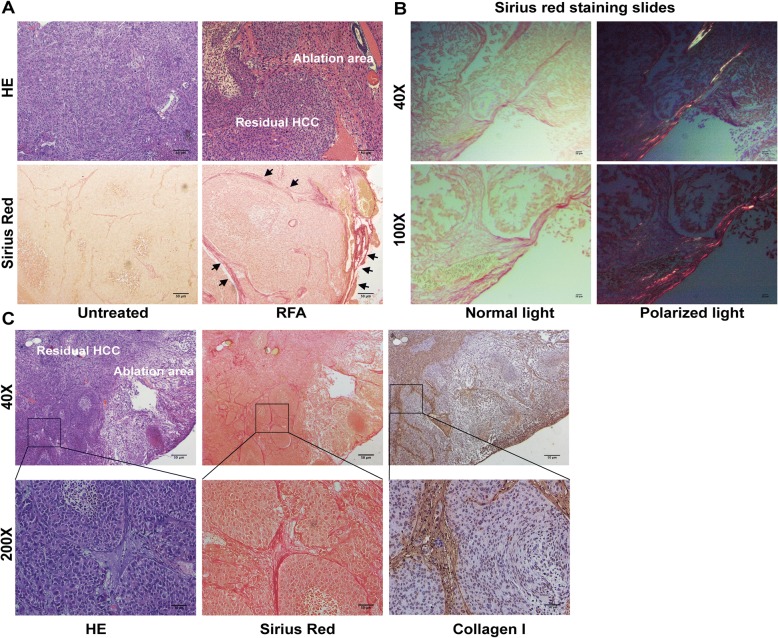
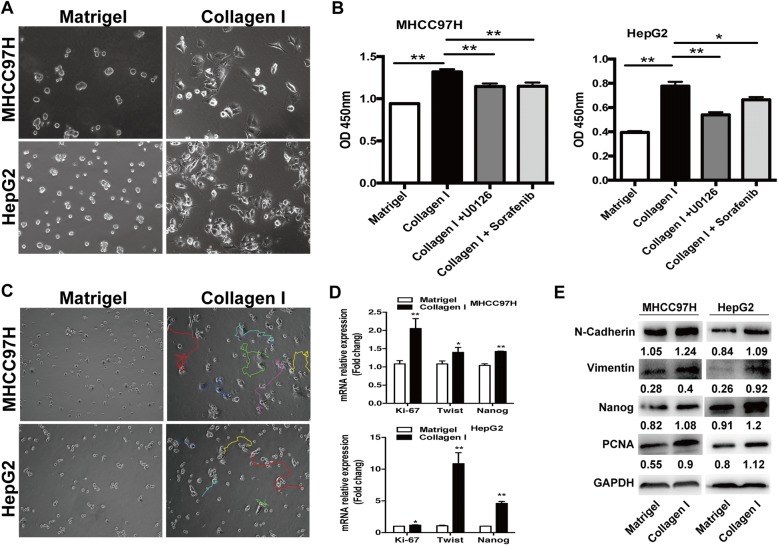
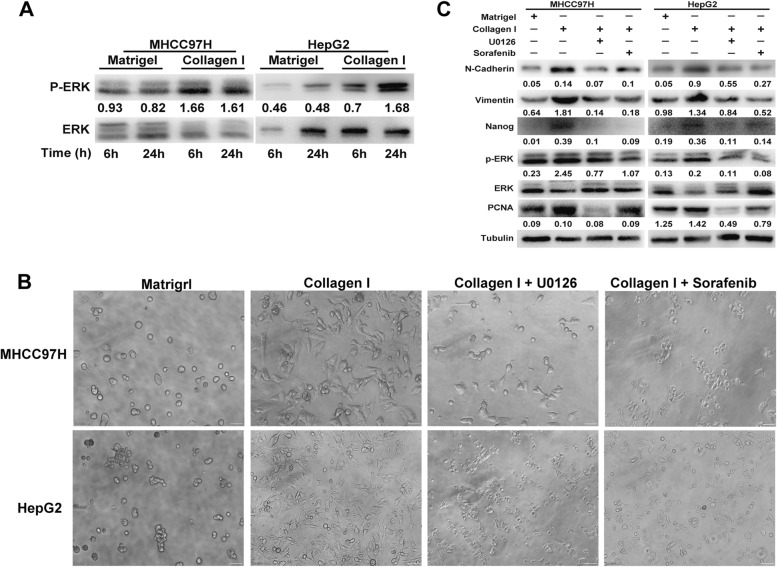
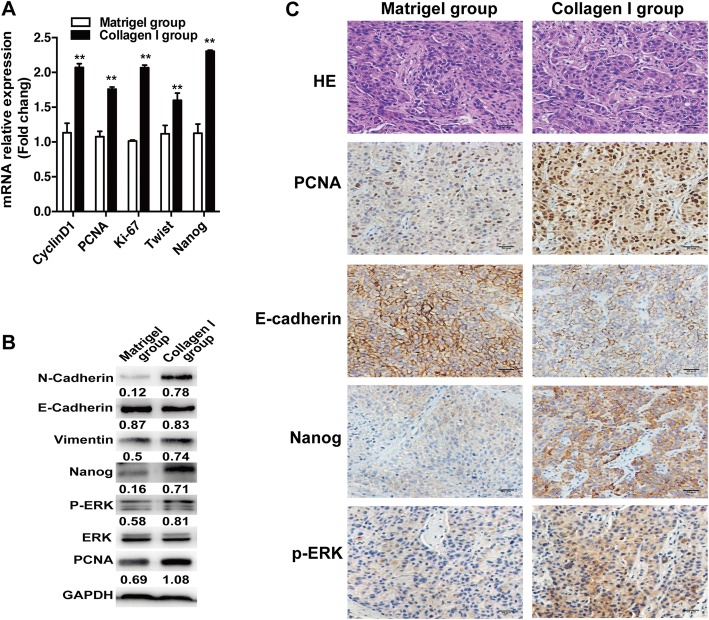
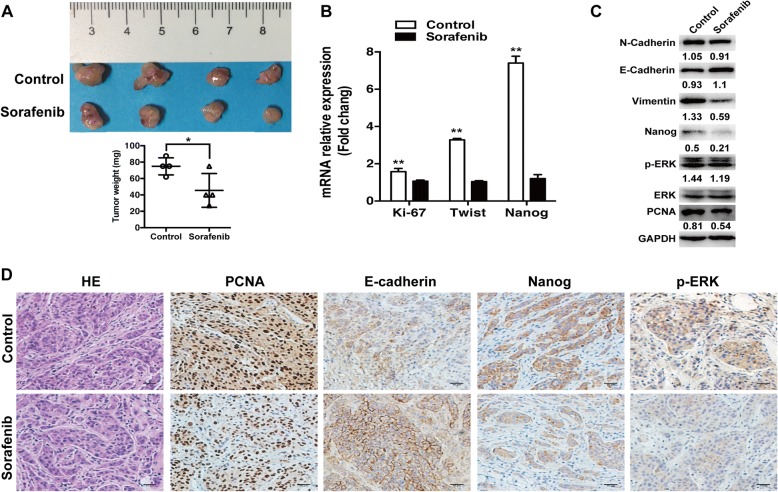
BACKGROUND: Accelerated malignant behaviors induced by insufficient thermal ablation have been increasingly reported, however, the exact mechanisms are still unclear. Here, we investigated the importance of the extracellular matrix (ECM) in modulating the progression of residual hepatocellular carcinoma (HCC) after heat treatment. METHODS: Heat-exposed residual HCC cells were cultured in different ECM gels. We used basement membrane gel (Matrigel) to simulate the normal microenvironment and collagen I to model the pathological stromal ECM. The alterations of morphology and parameters of proliferation, epithelial-mesenchymal transition (EMT) and stemness were analyzed in vitro and in vivo. RESULTS: Increased collagen I deposition was observed at the periablational zone after incomplete RFA of HCC in a xenograft model. The markers of cell proliferation, EMT, motility and progenitor-like traits of heat-exposed residual HCC cells were significantly induced by collagen I as compared to Matrigel (p values all < 0.05). Importantly, collagen I induced the activation of ERK phosphorylation in heat-exposed residual HCC cells. ERK1/2 inhibitor reversed the collagen I-promoted ERK phosphorylation, cell proliferative, protrusive and spindle-like appearance of heat-treated residual HCC cells in vitro. Moreover, collagen I promoted the in vivo tumor progression of heat-exposed residual HCC cells, and sorafenib markedly reversed the collagen I-mediated protumor effects. CONCLUSIONS: Our findings demonstrate that collagen I could enhance the aggressive progression of residual HCC cells after suboptimal heat treatment and sorafenib may be a treatment approach to thwart this process.
Overview
The claims and statistics of this paper haven’t been checked yet.
Free: it reads the open-access text and checks the first 5 claims that cite a source we can check. Create a free account to check every claim.
Integrity signals
Registry
Cites
Statistics
Figures
Verification
Claims the paper makes
The claims and statistics of this paper haven’t been checked yet.
Free: it reads the open-access text and checks the first 5 claims that cite a source we can check. Create a free account to check every claim.
Claims other papers make about this one
Each is checked against this paper’s own text: does it say what the citing paper says it does?
The check wasn’t confident either way, so it gives no verdict — never disputed.
In the citing paper
“Synthesis of collagen can be regulated by cancer cells, mutated genes, signaling pathways/receptors, and transcription factors [123].”
From Tumor microenvironment complexity and therapeutic implications at a glance (2020) · cites this paper as [123]
Experimental — accuracy not yet measured
Self-check
Percentages, sums and reported differences re-computed from the paper’s own numbers.
The self-check needs the paper’s full text.
Citations
Cites
1 retracted
Wu, L., Fu, Z., Zhou, S., Gong, J., Liu, C. A., Qiao, Z., & Li, S. (2014) · PLoS ONE · doi:10.1371/journal.pone.0088913 · Cited by 34
RetractedSorafenib in advanced hepatocellular carcinoma
Llovet, J. M., Ricci, S., Mazzaferro, V., Hilgard, P., Gane, E., Blanc, J.-F., de Oliveira, A. C., Santoro, A., Raoul, J.-L., Forner, A., et al. (2008) · New England Journal of Medicine · doi:10.1056/nejmoa0708857 · Cited by 13,097
Molecular Mechanisms of Stress-Responsive Changes in Collagen and Elastin Networks in Skin
Aziz, J., Shezali, H., Radzi, Z., Yahya, N. A., Abu Kassim, N. H., Czernuszka, J., & Rahman, M. T. (2016) · Skin Pharmacology and Physiology · doi:10.1159/000447017 · Cited by 7,323
A New Era of Systemic Therapy for Hepatocellular Carcinoma with Regorafenib and Lenvatinib
Kudo, M. (2017) · Liver Cancer · doi:10.1159/000462153 · Cited by 5,936
Cellular and molecular mechanisms of fibrosis
Wynn, T. (2008) · The Journal of Pathology · doi:10.1002/path.2277 · Cited by 4,495
Matrix Crosslinking Forces Tumor Progression by Enhancing Integrin Signaling
Levental, K. R., Yu, H., Kass, L., Lakins, J. N., Egeblad, M., Erler, J. T., Fong, S. F. T., Csiszar, K., Giaccia, A., Weninger, W., et al. (2009) · Cell · doi:10.1016/j.cell.2009.10.027 · Cited by 4,101
Forner, A., Llovet, J. M., & Bruix, J. (2012) · The Lancet · doi:10.1016/s0140-6736(11)61347-0 · Cited by 4,022
The extracellular matrix: A dynamic niche in cancer progression
Lu, P., Weaver, V. M., & Werb, Z. (2012) · Journal of Cell Biology · doi:10.1083/jcb.201102147 · Cited by 3,024
Schuppan, D., & Afdhal, N. H. (2008) · The Lancet · doi:10.1016/s0140-6736(08)60383-9 · Cited by 2,089
Human primary liver cancer–derived organoid cultures for disease modeling and drug screening
Broutier, L., Mastrogiovanni, G., Verstegen, M. M., Francies, H. E., Gavarró, L. M., Bradshaw, C. R., Allen, G. E., Arnes-Benito, R., Sidorova, O., Gaspersz, M. P., et al. (2017) · Nature Medicine · doi:10.1038/nm.4438 · Cited by 1,471
Collagen density promotes mammary tumor initiation and progression
Provenzano, P. P., Inman, D. R., Eliceiri, K. W., Knittel, J. G., Yan, L., Rueden, C. T., White, J. G., & Keely, P. J. (2008) · BMC Medicine · doi:10.1186/1741-7015-6-11 · Cited by 1,361
Phase II Study of Sorafenib in Patients With Advanced Hepatocellular Carcinoma
Abou-Alfa, G. K., Schwartz, L., Ricci, S., Amadori, D., Santoro, A., Figer, A., De Greve, J., Douillard, J.-Y., Lathia, C., Schwartz, B., et al. (2006) · Journal of Clinical Oncology · doi:10.1200/jco.2005.01.3441 · Cited by 1,195
Curley, S. A., Izzo, F., Delrio, P., Ellis, L. M., Granchi, J., Vallone, P., Fiore, F., Pignata, S., Daniele, B., & Cremona, F. (1999) · Annals of Surgery · doi:10.1097/00000658-199907000-00001 · Cited by 1,068
Huang, J., Yan, L., Cheng, Z., Wu, H., Du, L., Wang, J., Xu, Y., & Zeng, Y. (2010) · Annals of Surgery · doi:10.1097/sla.0b013e3181efc656 · Cited by 844
Feng, K., Yan, J., Li, X., Xia, F., Ma, K., Wang, S., Bie, P., & Dong, J. (2012) · Journal of Hepatology · doi:10.1016/j.jhep.2012.05.007 · Cited by 767
Nguyen-Ngoc, K.-V., Cheung, K. J., Brenot, A., Shamir, E. R., Gray, R. S., Hines, W. C., Yaswen, P., Werb, Z., & Ewald, A. J. (2012) · Proceedings of the National Academy of Sciences · doi:10.1073/pnas.1212834109 · Cited by 449
Hepatocellular Carcinoma: Reasons for Phase III Failure and Novel Perspectives on Trial Design
Llovet, J. M., & Hernandez-Gea, V. (2014) · Clinical Cancer Research · doi:10.1158/1078-0432.ccr-13-0547 · Cited by 397
Type I Collagen Promotes the Malignant Phenotype of Pancreatic Ductal Adenocarcinoma
Armstrong, T., Packham, G., Murphy, L. B., Bateman, A. C., Conti, J. A., Fine, D. R., Johnson, C. D., Benyon, R. C., & Iredale, J. P. (2004) · Clinical Cancer Research · doi:10.1158/1078-0432.ccr-03-0825 · Cited by 317
Schmitz, K. J., Wohlschlaeger, J., Lang, H., Sotiropoulos, G. C., Malago, M., Steveling, K., Reis, H., Cicinnati, V. R., Schmid, K. W., & Baba, H. A. (2008) · Journal of Hepatology · doi:10.1016/j.jhep.2007.08.018 · Cited by 309
The Ras/Raf/MEK/ERK signaling pathway and its role in the occurrence and development of HCC
Li, L., Zhao, G.-D., Shi, Z., Qi, L.-L., Zhou, L.-Y., & Fu, Z.-X. (2016) · Oncology Letters · doi:10.3892/ol.2016.5110 · Cited by 305
Lau, W. Y., & Lai, E. C. H. (2009) · Annals of Surgery · doi:10.1097/sla.0b013e31818eec29 · Cited by 304
Shintani, Y., Maeda, M., Chaika, N., Johnson, K. R., & Wheelock, M. J. (2008) · American Journal of Respiratory Cell and Molecular Biology · doi:10.1165/rcmb.2007-0071oc · Cited by 259
Urtasun, R., Lopategi, A., George, J., Leung, T.-M., Lu, Y., Wang, X., Ge, X., Fiel, M. I., & Nieto, N. (2012) · Hepatology · doi:10.1002/hep.24701 · Cited by 257
Newell, P., Toffanin, S., Villanueva, A., Chiang, D. Y., Minguez, B., Cabellos, L., Savic, R., Hoshida, Y., Lim, K. H., Melgar-Lesmes, P., et al. (2009) · Journal of Hepatology · doi:10.1016/j.jhep.2009.03.028 · Cited by 222
Collagen 1A1 (COL1A1) promotes metastasis of breast cancer and is a potential therapeutic target.
Liu, J., Shen, J., Wu, H.-T., Li, X.-L., Wen, X.-F., Du, C., & Zhang, G. (2018) · PubMed · Cited by 219
Wissniowski, T. T., Hänsler, J., Neureiter, D., Frieser, M., Schaber, S., Esslinger, B., Voll, R. E., Strobel, D. D., Hahn, E. G., Schuppan, D., et al. (2003) · PubMed · Cited by 208
Yoshida, S., Kornek, M., Ikenaga, N., Schmelzle, M., Masuzaki, R., Csizmadia, E., Wu, Y., Robson, S. C., & Schuppan, D. (2013) · Hepatology · doi:10.1002/hep.26526 · Cited by 162
Over-expression of c-raf-1 proto-oncogene in liver cirrhosis and hepatocellular carcinoma*1
Hwang, Y. (2004) · Hepatology Research · doi:10.1016/j.hepres.2004.02.009 · Cited by 154
Local ablative treatments for hepatocellular carcinoma: An updated review
Facciorusso, A., Serviddio, G., & Muscatiello, N. (2016) · World Journal of Gastrointestinal Pharmacology and Therapeutics · doi:10.4292/wjgpt.v7.i4.477 · Cited by 133
Rozenblum, N., Zeira, E., Bulvik, B. E., Gourevitch, S., Yotvat, H., Galun, E., & Goldberg, S. N. (2015) · Radiology · doi:10.1148/radiol.15141918 · Cited by 117 · cited 2×
“However, it attracted our attention that collagen deposit was apparently observed at the perimeter of ablational zone after RFA of heart or liver [16, 17].”
Zou, X., Feng, B., Dong, T., Yan, G., Tan, B., Shen, H., Huang, A., Zhang, X., Zhang, M. H., Yang, P., et al. (2013) · Journal of Proteomics · doi:10.1016/j.jprot.2013.10.020 · Cited by 109
Hayashi, M., Nomoto, S., Hishida, M., Inokawa, Y., Kanda, M., Okamura, Y., Nishikawa, Y., Tanaka, C., Kobayashi, D., Yamada, S., et al. (2014) · BMC Cancer · doi:10.1186/1471-2407-14-108 · Cited by 101
Oncogenesis: An “Off-Target” Effect of Radiofrequency Ablation
Rozenblum, N., Zeira, E., Scaiewicz, V., Bulvik, B. E., Gourevitch, S., Yotvat, H., Galun, E., & Goldberg, S. N. (2015) · Radiology · doi:10.1148/radiol.2015141695 · Cited by 93 · cited 1×
“After thermal ablation, stromal cells will be recruited around the ablative zone [44] resulting in the increased collagen I deposition at the periablational zone.”
You, A., Cao, M., Guo, Z., Zuo, B., Gao, J., Zhou, H., Li, H., Cui, Y., Fěng, F., Zhang, W., et al. (2016) · Journal of Hematology & Oncology · doi:10.1186/s13045-016-0253-6 · Cited by 85
Obara, K., Matsumoto, N., Okamoto, M., Kobayashi, M., Ikeda, H., Takahashi, H., Katakura, Y., Matsunaga, K., Ishii, T., Okuse, C., et al. (2008) · Hepatology International · doi:10.1007/s12072-007-9040-3 · Cited by 81
Yang, M.-C., Wang, C., Liao, P., Yen, C., & Shan, Y. (2014) · Europe PMC (PubMed Central) · Cited by 72
Behm, B., Fazio, P. D., Michl, P., Neureiter, D., Kemmerling, R., Hahn, E. G., Strobel, D. D., Gress, T. M., Schuppan, D., & Wissniowski, T. T. (2014) · Gut · doi:10.1136/gutjnl-2014-308286 · Cited by 66
Yamazaki, S., Higuchi, Y., Ishibashi, M., Hashimoto, H., Yasunaga, M., Matsumura, Y., Tsuchihara, K., Tsuboi, M., Goto, K., Ochiai, A., et al. (2018) · Cancer Science · doi:10.1111/cas.13624 · Cited by 60
Zhang, R., Ma, M., Dong, G., Yao, R., Li, J., Zheng, Q., Dong, Y., Ma, H., Gao, D., Cui, J., et al. (2017) · Cancer Science · doi:10.1111/cas.13322 · Cited by 54
Self-citationXu, M. T., Xie, X., Xie, X., Xu, Z.-F., Liu, G.-J., Zheng, Y.-L., Huang, G., Wang, W., Zheng, S.-G., & Lü, M.-D. (2012) · Acta Radiologica · doi:10.1258/ar.2012.120249 · Cited by 51
Osteopontin promotes collagen I synthesis in hepatic stellate cells by miRNA-129-5p inhibition
Chen, Y., Ou, Y., Dong, J., Yang, G., Zeng, Z., Liu, Y., Liu, B., Li, W., He, X., & Lan, T. (2017) · Experimental Cell Research · doi:10.1016/j.yexcr.2017.11.035 · Cited by 50
Pathophysiology of recurrent hepatocellular carcinoma after radiofrequency ablation
Ikemoto, T., Shimada, M., & Yamada, S. (2016) · Hepatology Research · doi:10.1111/hepr.12705 · Cited by 49
Nishikawa, H., Osaki, Y., Iguchi, E., Takeda, H., Matsuda, F., Nakajima, J., Sakamoto, A., Hatamaru, K., Saito, S., Nasu, A., et al. (2012) · Journal of Gastroenterology · doi:10.1007/s00535-012-0690-0 · Cited by 47
Song, Y., Kim, J.-S., Choi, E. K., Kim, J., Kim, K. M., & Seo, H. R. (2017) · Oncotarget · doi:10.18632/oncotarget.15521 · Cited by 45
Ahmed, M., Kumar, G., Gourevitch, S., Levchenko, T. S., Galun, E., Torchilin, V. P., & Goldberg, S. N. (2018) · International Journal of Hyperthermia · doi:10.1080/02656736.2018.1462535 · Cited by 44
Zhang, R., Yao, R., Li, J., Dong, G., Ma, M., Zheng, Q., Gao, D., Cui, J., Ren, Z., & Chen, R. (2017) · Scientific Reports · doi:10.1038/s41598-017-01177-6 · Cited by 40
Self-citationKumar, G., Goldberg, S. N., Wang, Y., Velez, E. M., Gourevitch, S., Galun, E., & Ahmed, M. (2016) · European Radiology · doi:10.1007/s00330-016-4405-4 · Cited by 38
Molokanova, O., Schönig, K., Weng, S., Wang, X., Bros, M., Diken, M., Ohngemach, S., Karsdal, M. A., Strand, D. J., Nikolaev, A., et al. (2017) · Matrix Biology · doi:10.1016/j.matbio.2017.11.002 · Cited by 35
Thompson, S. M., Callstrom, M. R., Butters, K. A., Sutor, S. L., Knudsen, B. E., Grande, J. P., Roberts, L. R., & Woodrum, D. A. (2014) · CardioVascular and Interventional Radiology · doi:10.1007/s00270-013-0828-3 · Cited by 18
Frühkarzinom der Leber: Hepatozelluläres Karzinom
Scherber, P. R., Gäbelein, G., Eisele, R., Igna, D., & Glanemann, M. (2017) · Der Chirurg · doi:10.1007/s00104-017-0538-5 · Cited by 6
Change in Size of Lesions Over 3 Weeks After Radiofrequency Ablation of Left Ventricle
Kovoor, P., DALY, M., Mikhail, M., EIPPER, V. E., Dewsnap, B. I., & Ross, D. L. (2006) · Journal of Cardiovascular Electrophysiology · doi:10.1111/j.1540-8167.2006.00428.x · Cited by 5
Research works printed but not linked: 1
- Lau WY Lai ECH The current role of radiofrequency ablation in the management of hepatocellular carcinoma Ann Surg 2009 249 20 25 10.1097/SLA.0b013e31818eec29 19106671 · DOI · Paper page
Cited by
Tumor microenvironment complexity and therapeutic implications at a glance
Baghban, R., Roshangar, L., Jahanban-Esfahlan, R., Seidi, K., Ebrahimi-Kalan, A., Jaymand, M., Kolahian, S., Javaheri, T., & Zare, P. (2020) · Cell Communication and Signaling · doi:10.1186/s12964-020-0530-4 · Cited by 1,784
“Synthesis of collagen can be regulated by cancer cells, mutated genes, signaling pathways/receptors, and transcription factors [123] .”
BackgroundChemoresistance and the Self-Maintaining Tumor Microenvironment
Yeldag, G., Rice, A., & Del Río Hernández, A. (2018) · Cancers · doi:10.3390/cancers10120471 · Cited by 214
“Collagen I has been shown to promote MAPK activation in hepatocellular carcinoma cells [124], and to promote chemoresistance in ovarian cancer cells through the activation of Akt and pyruvate dehydrogenase kinase 1 (PDK1) [125].”
BackgroundCombination of Ablation and Immunotherapy for Hepatocellular Carcinoma: Where We Are and Where to Go
Wang, K., Wang, C., Jiang, H., Zhang, Y., Lin, W., Mo, J., & Jin, C. (2021) · Frontiers in Immunology · doi:10.3389/fimmu.2021.792781 · Cited by 99
Tan, L., Chen, S., Wei, G., Li, Y., Liao, J., Jin, H., Zou, Y., Huang, M., Peng, Z., Guo, Y., et al. (2019) · Cancer Letters · doi:10.1016/j.canlet.2019.05.041 · Cited by 69
Zhong, C., Tao, B., Tang, F., Yang, X., Peng, T., You, J., Xia, K., Xia, X., Chen, L., & Peng, L. (2020) · Theranostics · doi:10.7150/thno.50613 · Cited by 78
“Type I collagen is the major structural protein of the extracellular matrix in the tumor microenvironment, tightly associated with tumor progression [32, 33].”
Background
Metadata
- Authors
- Zhang, R., Ma, M., Lin, X.-H., Liu, H.-H., Chen, J., Chen, J., Gao, D.-M., Cui, J.-F., Ren, Z.-G., & Chen, R.-X.
- Affiliations
- Fudan University (CN)
- Venue
- BMC Cancer
- Published
- 2018-09-18
- Volume
- 18
- Issue
- 1
- Pages
- 901-901
- ISSN
- 1471-2407 (ISSN-L)
- PMC
- PMC6145107
- OpenAlex
- W2890559153
- Cited by
- 68
- References
- 52
- Citations by year
- 2026: 5 · 2025: 10 · 2024: 7 · 2023: 7 · 2022: 9 · 2021: 12 · 2020: 11 · 2019: 6 · 2018: 1
- FWCI
- 4.70
- Type
- journal article
- Language
- en
- Open access
- gold
- doi.org
- Licence
- cc-by
- creativecommons.org/licenses/by/4.0/ (tdm)
- Locations
- BMC Cancer (publishedVersion, cc-by)
- Europe PMC (PubMed Central) (publishedVersion, other-oa)
- PubMed Central (publishedVersion, cc-by)
- PubMed (publishedVersion)
- DOAJ (DOAJ: Directory of Open Access Journals) (submittedVersion, cc-by-sa)
- Funders
- National Natural Science Foundation of China (81472217)
- Topics
- Health Sciences › Medicine › Hepatology › Hepatocellular Carcinoma Treatment and Prognosis
- Health Sciences › Medicine › Hepatology › Liver physiology and pathology
- Health Sciences › Medicine › Oncology › Cancer Cells and Metastasis
- Keywords
- type I collagen, hepatocellular carcinoma, radiofrequency ablation, extracellular matrix, tumor microenvironment, epithelial-mesenchymal transition, cancer stemness, ERK1/2 phosphorylation, sorafenib, tumor progression, Matrigel
- MeSH terms
- Sorafenib, Animals, Cell Movement, Extracellular Matrix, Carcinoma, Hepatocellular, Humans, Hyperthermia, Induced, Liver Neoplasms, Niacinamide, Phenylurea Compounds, Catheter Ablation, Disease Progression, Xenograft Model Antitumor Assays, Collagen Type I, Cell Line, Tumor, Cell Proliferation, Mice, Epithelial-Mesenchymal Transition
About these checks
Registry, retraction, Cites and statistics results are computed, not judged, with one exception: a printed reference that no index lists is read once by a model before it counts as a citation error. Claims are extracted by a model and kept only when their quote appears verbatim in the text; each cited source is then checked, with a model’s help, for whether it says what the claim relies on. Those verdicts can be wrong — read the claim’s quote and the cited source before relying on one.
Statistics and arithmetic are recomputed, not judged.
Confidence bands are shown only for fields calibrated on our annotated test set. None is calibrated yet, so no band is shown.
What counts as a claim ›How we measure confidence ›How we check this ›
Are you an author, or do you see a problem with this page? Request a review
Data sources
Bibliographic data: Semantic Scholar, OpenAlex, Crossref.
Contains information from the Semantic Scholar Academic Graph Datasets, made available under the ODC Attribution License (ODC-BY 1.0).
Semantic Scholar’s data is described in: Kinney, R., et al. (2023). The Semantic Scholar Open Data Platform. arXiv:2301.10140.
