

Multi gene mutation signatures in colorectal cancer patients: predict for the diagnosis, pathological classification, staging and prognosis
Open accessThe DOI matches its Crossref record; 44 of the 44 references it cites were found in a registry or an index.
Abstract
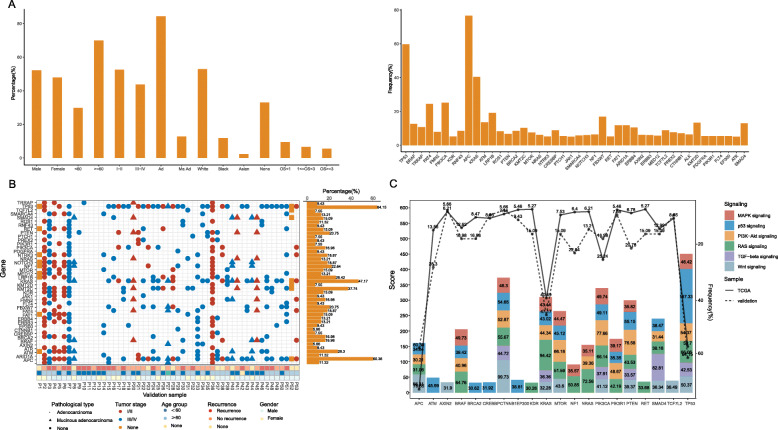
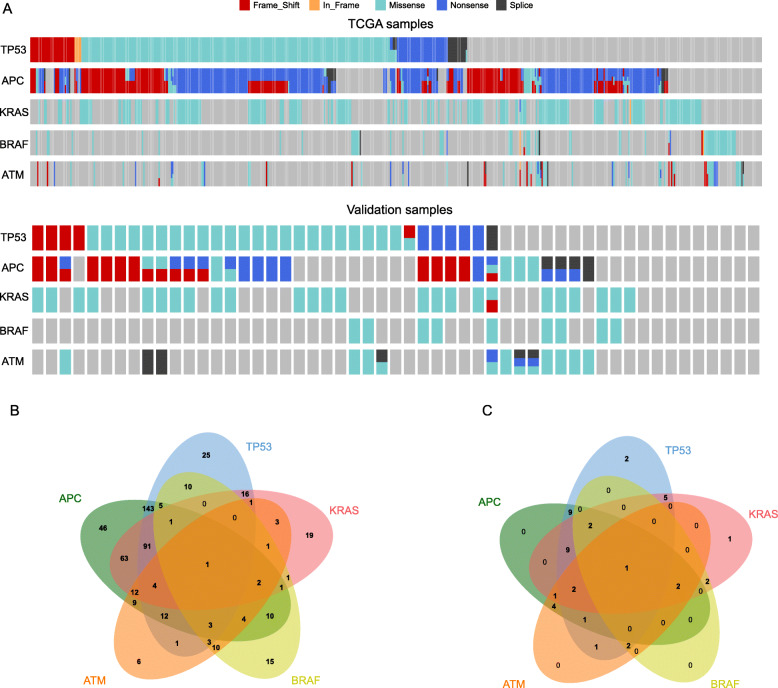
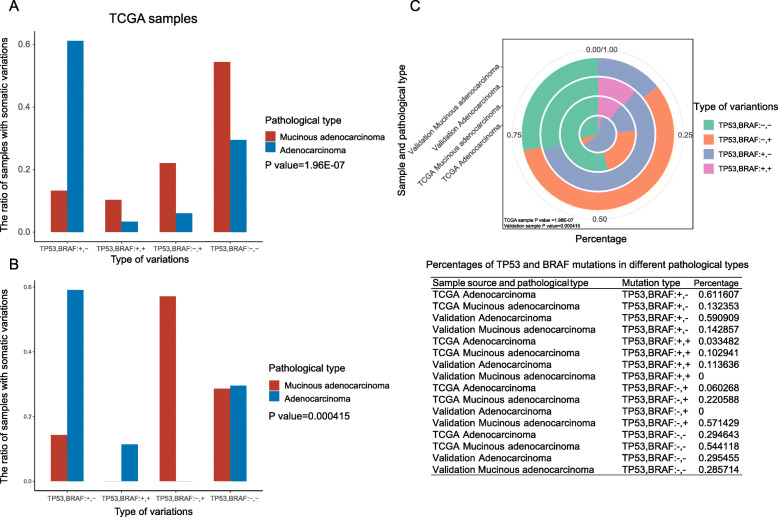
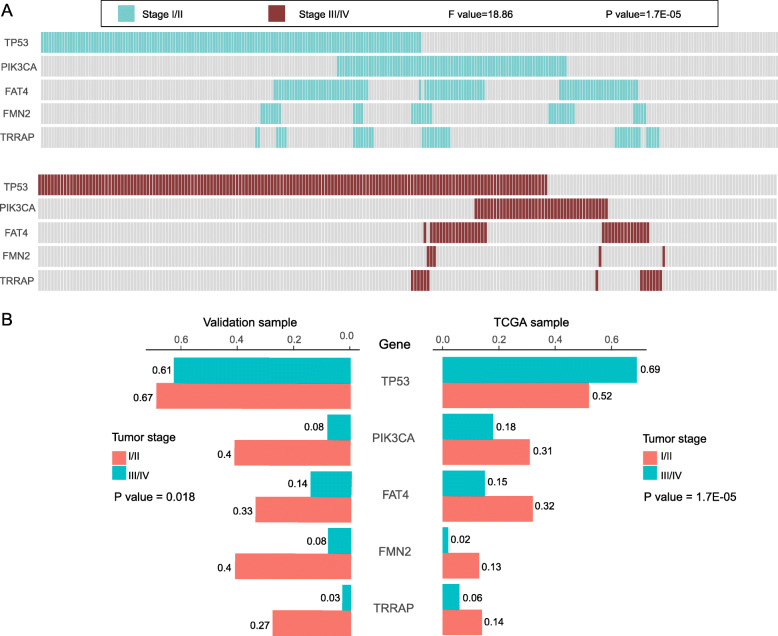
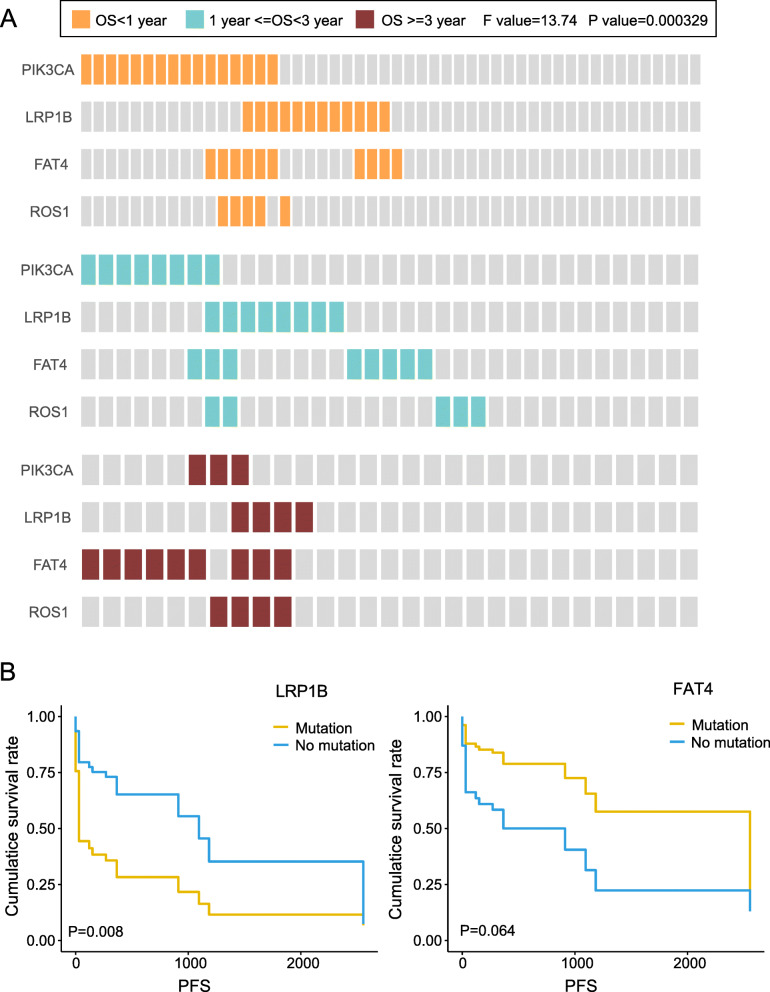
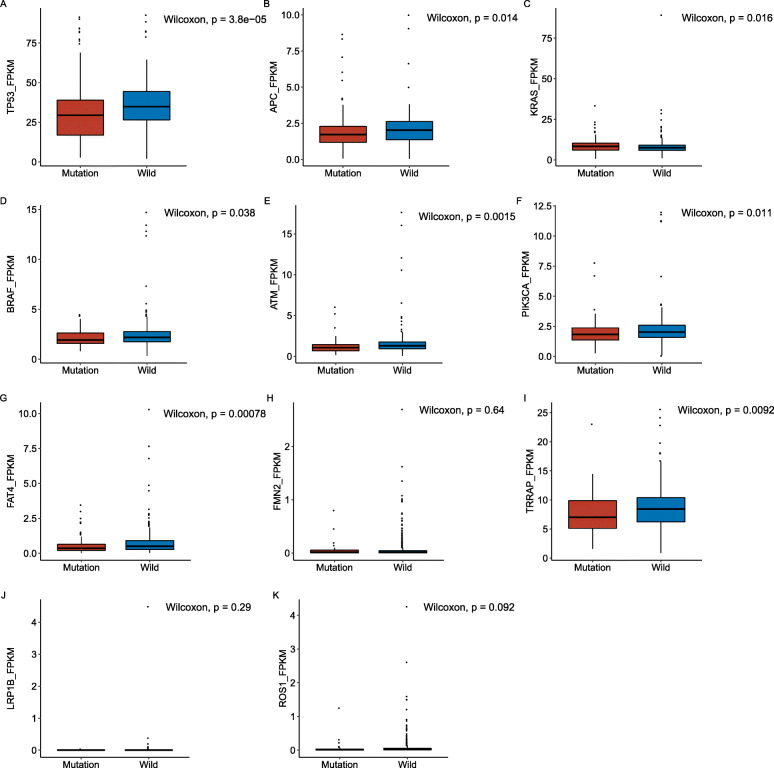
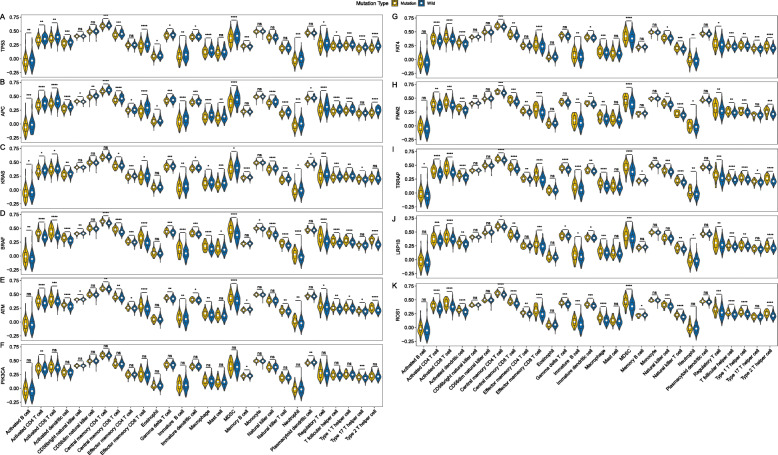
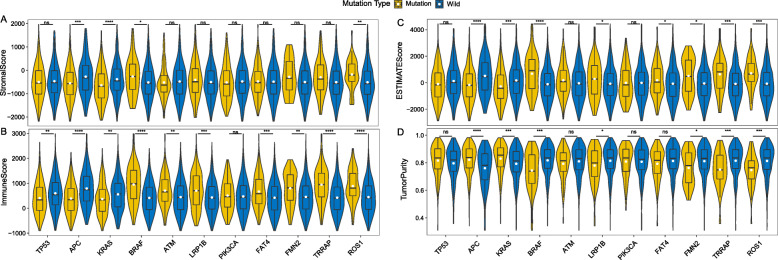
Background: Identifying gene mutation signatures will enable a better understanding for the occurrence and development of colorectal cancer (CRC), and provide some potential biomarkers for clinical practice. Currently, however, there is still few effective biomarkers for early diagnosis and prognostic judgment in CRC patients. The purpose was to identify novel mutation signatures for the diagnosis and prognosis of CRC. Methods: Clinical information of 531 CRC patients and their sequencing data were downloaded from TCGA database (training group), and 53 clinical patients were collected and sequenced with targeted next generation sequencing (NGS) technology (validation group). The relationship between the mutation genes and the diagnosis, pathological type, stage and prognosis of CRC were compared to construct signatures for CRC, and then analyzed their relationship with RNA expression, immunocyte infiltration and tumor microenvironment (TME). Results: Mutations of TP53, APC, KRAS, BRAF and ATM covered 97.55% of TCGA population and 83.02% validation patients. Moreover, 57.14% validation samples and 22.06% TCGA samples indicated that patients with mucinous adenocarcinoma tended to have BRAF mutation, but no TP53 mutation. Mutations of TP53, PIK3CA, FAT4, FMN2 and TRRAP had a remarkable difference between I-II and III-IV stage patients (P < 0.0001). Besides, the combination of PIK3CA, LRP1B, FAT4 and ROS1 formed signatures for the prognosis and survival of CRC patients. The mutations of TP53, APC, KRAS, BRAF, ATM, PIK3CA, FAT4, FMN2, TRRAP, LRP1B, and ROS1 formed the signatures for predicting diagnosis and prognosis of CRC. Among them, mutation of TP53, APC, KRAS, BRAF, ATM, PIK3CA, FAT4 and TRRAP significantly reduced their RNA expression level. Stromal score, immune score and ESTIMATE score were lower in patients with TP53, APC, KRAS, PIK3CA mutation compared non-mutation patients. All the 11 gene mutations affected the distributions of immune cells. Conclusion: This study constructed gene mutation signatures for the diagnosis, treatment and prognosis in CRC, and proved that their mutations affected RNA expression levels, TME and immunocyte infiltration. Our results put forward further insights into the genotype of CRC.
Overview
The claims and statistics of this paper haven’t been checked yet.
Free: it reads the open-access text and checks the first 5 claims that cite a source we can check. Create a free account to check every claim.
Integrity signals
Registry
Cites
Statistics
Figures
Verification
Claims the paper makes
The claims and statistics of this paper haven’t been checked yet.
Free: it reads the open-access text and checks the first 5 claims that cite a source we can check. Create a free account to check every claim.
Claims other papers make about this one
Each is checked against this paper’s own text: does it say what the citing paper says it does?
The source backs part of the claim, not all of it — or backs it for a different population, condition or comparison.
In the citing paper
“Loss-of-function mutations in the tumor suppressor genes TP53 (mutated in 50–60% of CRCs) and SMAD4 (mutated in ~15% of CRCs) also occur frequently [13,16].”
From Mechanisms and Strategies to Overcome Drug Resistance in Colorectal Cancer (2025) · cites this paper as [13]
Experimental — accuracy not yet measuredThe source backs part of the claim, not all of it — or backs it for a different population, condition or comparison.
In the citing paper
“Almost all sporadic CRCs have mutations in the Wnt/β-catenin signaling pathway, most being partial or complete loss-of-function of the tumor suppressor APC protein (APC mutated in ~80% of CRCs), which leads to unrestricted activation of Wnt signaling and downstream expression of genes important for cell proliferation, stemness, and survival [12,13].”
From Mechanisms and Strategies to Overcome Drug Resistance in Colorectal Cancer (2025) · cites this paper as [13]
Experimental — accuracy not yet measuredThe source backs part of the claim, not all of it — or backs it for a different population, condition or comparison.
In the citing paper
“In addition, the epidermal growth factor receptor (EGFR)/RAS/MAPK signaling pathway is often constitutively activated, either through activation of signaling proteins RAS (KRAS mutated in ~40% of CRCs) or RAF (BRAF mutated in 10–15% of CRCs), which stimulates cell proliferation [13,14,15].”
From Mechanisms and Strategies to Overcome Drug Resistance in Colorectal Cancer (2025) · cites this paper as [13]
Experimental — accuracy not yet measuredThe source backs part of the claim, not all of it — or backs it for a different population, condition or comparison.
In the citing paper
“Loss-of-function mutations in the tumor suppressor genes TP53 (mutated in 50–60% of CRCs) and SMAD4 (mutated in ~15% of CRCs) also occur frequently [13,16].”
From Mechanisms and Strategies to Overcome Drug Resistance in Colorectal Cancer (2025) · cites this paper as [13]
Experimental — accuracy not yet measuredThe source backs part of the claim, not all of it — or backs it for a different population, condition or comparison.
In the citing paper
“Mutations in PIK3CA (mutated in ~20% of CRCs) result in activation of the PI3K/AKT/mTOR signaling pathway, which promotes cell proliferation and survival [13,18].”
From Mechanisms and Strategies to Overcome Drug Resistance in Colorectal Cancer (2025) · cites this paper as [13]
Experimental — accuracy not yet measured
Self-check
Percentages, sums and reported differences re-computed from the paper’s own numbers.
The self-check needs the paper’s full text.
Citations
Cites
Sung, H., Ferlay, J., Siegel, R. L., Laversanne, M., Soerjomataram, I., Jemal, A., & Bray, F. (2021) · CA: A Cancer Journal for Clinicians · doi:10.3322/caac.21660 · Cited by 108,699
Hallmarks of Cancer: The Next Generation
Hanahan, D., & Weinberg, R. A. (2011) · Cell · doi:10.1016/j.cell.2011.02.013 · Cited by 66,590
Inferring tumour purity and stromal and immune cell admixture from expression data
Yoshihara, K., Shahmoradgoli, M., Martínez, E., Vegesna, R., Kim, H., Torres-Garcia, W., Treviño, V., Shen, H., Laird, P. W., Levine, D. A., et al. (2013) · Nature Communications · doi:10.1038/ncomms3612 · Cited by 9,778
Signatures of mutational processes in human cancer
Initiative, A. P. C. G., Alexandrov, L. B., ICGC Breast Cancer Consortium, ICGC MMML-Seq Consortium, PedBrain, I., Nik-Zainal, S., Wedge, D. C., Aparicio, S. A. J. R., Behjati, S., Biankin, A. V., et al. (2013) · Nature · doi:10.1038/nature12477 · Cited by 9,660
Encorafenib, Binimetinib, and Cetuximab in BRAF V600E–Mutated Colorectal Cancer
Kopetz, S., Grothey, A., Yaeger, R., Van Cutsem, E., Desai, J., Yoshino, T., Wasan, H., Ciardiello, F., Loupakis, F., Hong, Y. S., et al. (2019) · New England Journal of Medicine · doi:10.1056/nejmoa1908075 · Cited by 1,491
Increasing incidence of colorectal cancer in young adults in Europe over the last 25 years
Vuik, F. E., Nieuwenburg, S. A., Bardou, M., Lansdorp-Vogelaar, I., Dinis-Ribeiro, M., Bento, M. J., Zadnik, V., Pellisé, M., Esteban, L., Kaminski, M. F., et al. (2019) · Gut · doi:10.1136/gutjnl-2018-317592 · Cited by 886
Roock, W. D., Vriendt, V. D., Normanno, N., Ciardiello, F., & Tejpar, S. (2011) · The Lancet Oncology · doi:10.1016/s1470-2045(10)70209-6 · Cited by 603
Mutations in APC, Kirsten-ras, and p53—alternative genetic pathways to colorectal cancer
Smith, G., Carey, F. A., Beattie, J., Wilkie, M. J. V., Lightfoot, T. J., Coxhead, J., Garner, R. C., Steele, R. J. C., & Wolf, C. R. (2002) · Proceedings of the National Academy of Sciences · doi:10.1073/pnas.122612899 · Cited by 521
Changes in colorectal cancer incidence in seven high-income countries: a population-based study
Araghi, M., Soerjomataram, I., Bardot, A., Ferlay, J., Cabasag, C. J., Morrison, D. S., De, P., Tervonen, H., Walsh, P. M., Bucher, O., et al. (2019) · The Lancet Gastroenterology & Hepatology · doi:10.1016/s2468-1253(19)30147-5 · Cited by 479
Microsatellite Instability and BRAF Mutation Testing in Colorectal Cancer Prognostication
Lochhead, P., Kuchiba, A., Imamura, Y., Liao, X., Yamauchi, M., Nishihara, R., Qian, Z. R., Morikawa, T., Shen, J., Meyerhardt, J. A., et al. (2013) · JNCI: Journal of the National Cancer Institute · doi:10.1093/jnci/djt173 · Cited by 442
Cited by
Mechanisms and Strategies to Overcome Drug Resistance in Colorectal Cancer
Haynes, J., & Manogaran, P. (2025) · International Journal of Molecular Sciences · doi:10.3390/ijms26051988 · Cited by 82
“Loss-of-function mutations in the tumor suppressor genes TP53 (mutated in 50–60% of CRCs) and SMAD4 (mutated in ~15% of CRCs) also occur frequently [13,16].”
InfluentialZheng, X., Ma, Y., Bai, Y., Huang, T., Lv, X., Deng, J., Wang, Z., Lian, W., Tong, Y., Zhang, X., et al. (2022) · Frontiers in Immunology · doi:10.3389/fimmu.2022.984480 · Cited by 68
Labat‐de‐Hoz, L., & Alonso, M. A. (2021) · Cells · doi:10.3390/cells10102554 · Cited by 66
Using Machine Learning Methods to Study Colorectal Cancer Tumor Micro-Environment and Its Biomarkers
Wei, W., Li, Y., & Huang, T. (2023) · International Journal of Molecular Sciences · doi:10.3390/ijms241311133 · Cited by 54
Self-citationThe role of PIK3CA gene mutations in colorectal cancer and the selection of treatment strategies
Wang, H., Tang, R., Ling, J., & Jia, Y. (2024) · Frontiers in Pharmacology · doi:10.3389/fphar.2024.1494802 · Cited by 65
Self-citationFuruhashi, S., Bustos, M. A., Mizuno, S., Ryu, S., Naeini, Y. B., Bilchik, A. J., & Hoon, D. S. �. (2023) · npj Precision Oncology · doi:10.1038/s41698-023-00474-w · Cited by 37
“…there were no signi fi cant differences in the mutation frequency of the most frequently mutated oncogenes and tumor suppressor genes ( APC , KRAS , TP53 , BRAF , NRAS , and PIK3CA 24 ); or in the proportion of the consensus molecular subtypes (CMS) 25 , Supplementary Table 4, Supplementary Fig.”
Feng, C. H., Disis, M. L., Cheng, C., & Zhang, L. (2021) · Laboratory Investigation · doi:10.1038/s41374-021-00662-x · Cited by 34
Carotenuto, P., Pecoraro, A., Brignola, C., Barbato, A., Franco, B., Longobardi, G., Conte, C., Quaglia, F., Russo, G., & Russo, A. (2023) · Molecular Pharmaceutics · doi:10.1021/acs.molpharmaceut.2c00876 · Cited by 28
Shakhpazyan, N. K., Михалева, Л. М., Bedzhanyan, A. L., Владиславовна, Г. З., Sadykhov, N. K., Mikhalev, A., Atiakshin, D., Buchwalow, I., Tiemann, M., & Orekhov, A. N. (2023) · Biomedicines · doi:10.3390/biomedicines11092361 · Cited by 23
Shi, J., Bao, M., Wang, W.-F., Wu, X., Li, Y., Changdong, Z., & Liu, W. (2021) · Frontiers in Immunology · doi:10.3389/fimmu.2021.722807 · Cited by 22
Self-citationBenmokhtar, S., Laraqui, A., Hilali, F., Bajjou, T., Zaitouni, S. E., Jafari, M., Baba, W., Elannaz, H., Lahlou, I. A., Chahdi, H., et al. (2024) · Clinical Medicine Insights Oncology · doi:10.1177/11795549241255651 · Cited by 21
Expanded targeting scope of LbCas12a variants allows editing of multiple oncogenic mutations
Choi, E., Hwang, H.-Y., Kwon, E., Kim, D., & Koo, T. (2022) · Molecular Therapy — Nucleic Acids · doi:10.1016/j.omtn.2022.09.005 · Cited by 19
Gholami, N., Haghparast, A., Alipourfard, I., & Nazari, M. (2022) · Cancer Cell International · doi:10.1186/s12935-022-02691-y · Cited by 21
Gustav, M., van Treeck, M., Reitsam, N. G., Carrero, Z. I., Loeffler, C. M. L., Meneghetti, A. R., Märkl, B., Boardman, L. A., French, A. J., Goode, E. L., et al. (2025) · The Lancet Digital Health · doi:10.1016/j.landig.2025.100891 · Cited by 24
“Association rule mining reinforced robust MSI correlations in cluster 2 (eg, BMPR2 and RNF43), contrasting with the observation of inverse relationships in cluster 1 genes linked to MSS (eg, TP53 and KRAS; appendix pp 17–19, 34–35).”
Sakthikumar, S., Warrier, M., Whitley, D. B., Facista, S. J., Adkins, J. R., Aman, S., Tsinajinnie, D., Duran, N., Siravegna, G., Ahmed, Z. A., et al. (2023) · Veterinary and Comparative Oncology · doi:10.1111/vco.12944 · Cited by 19
Yu, J., Yang, K., Zheng, J., Sun, X., & Zhao, W. (2021) · Gene · doi:10.1016/j.gene.2021.145990 · Cited by 11
Sun, W., Su, Y., & Zhang, Z. (2024) · Discover Oncology · doi:10.1007/s12672-024-01298-1 · Cited by 10
“About 60–70% of colorectal tumors have P53 gene mutations, and point mutations in this gene will seriously interfere with the normal cell cycle, thereby accelerating the growth and invasion of colorectal cancer cells [9, 10].”
BackgroundGu, Q., Meroueh, C., Levernier, J., Kroneman, T. N., Flotte, T. J., & Hart, S. N. (2023) · Journal of Pathology Informatics · doi:10.1016/j.jpi.2023.100336 · Cited by 13
“Identifying TP53 mutation status correlates with higher stage and influences the overall survival rate.(7) EGFR inhibitor therapies are not effective for CRC patients with positive mutations in KRAS, BRAF, PI3KCA, and PTEN, highlighting the need for accurate genetic mutation status, that will ensure successful selecti…”
BackgroundNguyen, H. T., Nguyen, T. V., Hoang, V. N., Tran, D. H., Trinh, N. A. L., Lê, M. T., Tran, T.-A. N., Pham, T. H., Dinh, T. C., Nguyen, T. S., et al. (2022) · Frontiers in Oncology · doi:10.3389/fonc.2022.1069296 · Cited by 10
Fang, L., Yao, Y., Guan, X., Liao, Y., Wang, B., Cui, L., Han, S., Zou, H., Su, D., Ma, Y., et al. (2023) · International Journal of Cancer · doi:10.1002/ijc.34539 · Cited by 10
Cheng, B., Xu, L., Zhang, Y., Yang, H.-M., Liu, S., Ding, S., Zhao, H., Sui, Y., Wang, C., Quan, L., et al. (2024) · Heliyon · doi:10.1016/j.heliyon.2024.e29299 · Cited by 8
“Furthermore, high MSI (MSI-H) associated with downstream frame-shift mutations is a biomarker that guides immunotherapy for CRC [9 – 11].”
BackgroundInfluentialSelf-citationHrudka, J., Kalinová, M., Fišerová, H., Jelínková, K., Nikov, A., Waldauf, P., & Matěj, R. (2024) · Scientific Reports · doi:10.1038/s41598-024-72687-3 · Cited by 8
Ayubi, E., Farashi, S., Tapak, L., & Afshar, S. (2024) · Heliyon · doi:10.1016/j.heliyon.2024.e41443 · Cited by 8
Yang, Z., Yang, B., Wang, J., Yu, Q., Du, W., Meng, Y., Li, Q., Xu, H. Y., Wang, W., & Lyu, J. (2025) · Sensors and Actuators B Chemical · doi:10.1016/j.snb.2025.138453 · Cited by 9
Identification of FAT4 as a positive prognostic biomarker in DLBCL by comprehensive genomic analysis
Lv, L., Qi, X., Wang, C., Ma, Y., Nie, Y., Renaguli, A., Zhang, F., Shi, Q., Kou, Z., Muhebaier, A., et al. (2023) · Clinical and Experimental Medicine · doi:10.1007/s10238-023-01018-z · Cited by 9
“reported that FAT4 mutations significantly down-regulated their RNA expression levels and were remarkably enriched in early-stage (I/II) colorectal cancer patients, portending a low recurrence rate and longer PFS [38].”
BackgroundSelf-citationWeng, W., He, S., Zhang, G., Zhou, X., Li, K., & Lai, J. (2024) · Clinics · doi:10.1016/j.clinsp.2024.100516 · Cited by 7
Gu, X., Xu, H., Liu, Y., Li, L., Yu, Y., Zhang, X., Wang, X., Wang, W., Du, L., Duan, S.-X., et al. (2023) · Frontiers in Oncology · doi:10.3389/fonc.2023.1168078 · Cited by 12
Self-citationRajtmajerová, M., Ambrożkiewicz, F., Hlaváč, V., Trailin, A. V., Červenková, L., Brůha, J., Šůsová, S., Souček, P., Vodička, P., Vodičková, L., et al. (2025) · International Journal of Cancer · doi:10.1002/ijc.70116 · Cited by 6
“Mutation frequencies also varied among less common genes, and co-occurring mutations were observed in synchronous patients, warranting further investigation of the molecular landscape of chronicity in CRC.”
InfluentialWu, T., Fang, L., Ruan, Y., Shi, M., Su, D., Ma, Y., Ma, M., Wang, B., Liao, Y., Han, S., et al. (2025) · Journal of Translational Medicine · doi:10.1186/s12967-025-06141-x · Cited by 8
Zhou, X., Lu, Y., Wu, Y., Yu, Y., Liu, Y., Wang, C., Zhao, Z., Wang, C., Gao, Z., Li, Z., et al. (2024) · European Journal of Surgical Oncology · doi:10.1016/j.ejso.2024.108369 · Cited by 9
Signature Gene Mutations in Colorectal Cancer: Potential Neoantigens for Cancer Vaccines
Yoon, J., Moon, H., Jeon, Y., Choe, S., & Yoon, H. (2025) · International Journal of Molecular Sciences · doi:10.3390/ijms26104559 · Cited by 7
“Furthermore, cancer cells actively remodel the TME by recruiting immunosuppressive mediators such as myeloid-derived suppressor cells (MDSCs), Tregs, tumor-associated macrophages (TAMs), and CAFs, while simultaneously modulating their own immunogenicity through signature gene mutations [88,89].”
Gheibi, M., Sadeghi, S., Hessami, A., Erfani, Z., Ghadirzadeh, E., & Moosazadeh, M. (2025) · Cancer Genetics · doi:10.1016/j.cancergen.2025.10.003 · Cited by 7
Comprehensive genomic profiling of small bowel adenocarcinoma by tissue and plasma biopsy
Yu, D., Wang, J., Zheng, B. J., Yuan, M., Gu, D., Chen, R., & Chen, X. (2023) · Genomics · doi:10.1016/j.ygeno.2023.110766 · Cited by 7
Nano-energy interference: A novel strategy for blunting tumor adaptation and metastasis
Teng, F., Fu, D., Shi, C.-C., Xiong, A., Yang, M., Su, C., Lei, M., Cao, Y., Shen, X., Chen, Y., et al. (2024) · Materials Today Bio · doi:10.1016/j.mtbio.2024.100984 · Cited by 9
“Mutations in pivotal genes such as APC, KRAS and TP53 genes have been identified as key driving factors in CRC [10 – 12].”
BackgroundMarvalim, C., & Chan, D. K. H. (2025) · Human Genomics · doi:10.1186/s40246-025-00889-5 · Cited by 4
“In the context of established neoplasia, tumors with PIK3CA mutations are often accompanied by other mutations, namely KRAS , BRAF , and TP53 [66, 67].”
Li, Y., Li, H., Sun, G., Xu, S., Tang, X., Zhang, L., Wan, L., Zhang, L., & Tang, M. (2024) · Heliyon · doi:10.1016/j.heliyon.2024.e32744 · Cited by 7
Self-citationJones, D. T., Cruz, G., Lugue, M. T., Heer, M. S., Sai, M., Pace, C., Bui, L., & Silver, S. A. (2024) · Cureus · doi:10.7759/cureus.68203 · Cited by 4
“This includes a thorough baseline assessment to identify risk factors such as hypertension and previous cerebrovascular events, as well as careful screening for pre-existing conditions that might predispose patients to hemorrhage [2].”
BackgroundInfluentialWang, C., Yan, J., Lin, S., Ding, Y., & Qin, Y. (2023) · Journal of Cancer Research and Clinical Oncology · doi:10.1007/s00432-023-04801-3 · Cited by 3
“LRP1B mutation has been reported to be associated with shorter survival in patients with hepatocellular carcinoma, colorectal cancer, and squamous cell carcinoma of the head and neck (Liu et al. 2021; Zhuang et al. 2021; Cao et al. 2021).”
BackgroundAltered Wnt Pathway and Cancer Stem Cells
Mubashra, Srivastava, A., Shukla, A., Baptist, A. S., & Srivastava, S. (2024) · Stem cell biology and regenerative medicine · doi:10.1007/978-3-031-74842-4_4 · Cited by 1
Shao, L., Kou, Z., Renaguli, A., Shi, Q., Qi, X., Wang, Z., Zhai, S., Li, A., Huang, Q. M., Wufuer, G., et al. (2025) · Acta Haematologica · doi:10.1159/000548543 · Cited by 1
Self-citationKrishnakumar, B., Paul, B. C., Prince, S. E., & Baskaran, U. L. (2026) · Personalized Medicine · doi:10.1080/17410541.2026.2634747 · Cited by 1
Colorectal Cancer and Its Microenvironment: A Brief Review
Imanbayev, N. M., Koyshybaev, A. K., Kereyeva, N. M., Aitmagambetova, M. A., & Zharylgapov, A. (2024) · Medical Journal of the Islamic Republic of Iran · doi:10.47176/mjiri.38.108 · Cited by 2
“Similarly, another study demonstrates these findings too and places more emphasis on how complex it can be between mutations involving genes that affect the progression of CRC or those without similar changes in TP53 (33).”
Gustav, M., van Treeck, M., Reitsam, N. G., Carrero, Z. I., Loeffler, C. M. L., Meneghetti, A. R., Märkl, B., Boardman, L. A., French, A. J., Goode, E. L., et al. (2025) · medRxiv · doi:10.1101/2025.02.04.25321660 · Cited by 1
Ung thư đại trực tràng có đột biến gen braf: kết quả tại bệnh viện trung ương Huế và hồi cứu y văn
Cường, P. N., Xuân, N. T., Tâm, N. Đ. T., Tường, P. M., & Đức, Đ. P. M. (2023) · Tạp chí Y học lâm sàng Bệnh viện Trung Ương Huế · doi:10.38103/jcmhch.85.10
Lokal ileri rektum kanserinde sağkalımı etkileyen faktörler - Tek merkez deneyimi
Yaşar, A., Örüncü, M. B., Utkan, G., & Akbulut, H. (2023) · Akademik Gastroenteroloji Dergisi · doi:10.17941/agd.1349002
Long noncoding RNAs and drug resistance in colorectal cancer
Mbita, Z., Makgoo, L., Savkovic, S. D., Miya, T. V., & Dlamini, Z. (2024) · Elsevier eBooks · doi:10.1016/b978-0-443-33475-7.00002-0
Detection of postoperative recurrence in colorectal cancer: Exploring the value of liquid biopsy
Костюченко, В. В., Vynnychenko, I. O., Moskalenko, Y., & Pohorila, V. (2025) · Regulatory Mechanisms in Biosystems · doi:10.15421/0225020 · Cited by 1
LRP1B in cancer: From a mutation landscape to predictive biomarkers for precision oncology
Yang, L., Wang, X., Yu, X., & Xun, J. (2025) · Mutation Research/Reviews in Mutation Research · doi:10.1016/j.mrrev.2025.108568 · Cited by 1
Self-citationFeng, S., Wang, Y., Ren, R., Liu, S., Wang, X., & Han, L. (2025) · Functional & Integrative Genomics · doi:10.1007/s10142-025-01766-z
“…researchers used an online database to study the relationship between FMN2 expression and the immune microenvironment in colorectal cancer, and proposed that FMN2 gene mutation could affect the distribution of immune cells and thus influence the immune microenviron - ment (Zhuang et al. 2021 ).”
Self-citationGebhart, A. R., Berns, M. M. M., Snoeys, J., Elassaiss‐Schaap, J., & de Lange, E. C. M. (2026) · npj Systems Biology and Applications · doi:10.1038/s41540-025-00622-x
François, A. (2023) · theses.fr (ABES) · doi:10.70675/9de3f722zafc2z40a0za6e8z8f7c7cc0450b
Anand, R., Kaliyamoorthy, S., Boopathy, V., Ramasamy, J., & Sambandam, R. (2026) · Exploration of Immunology · doi:10.37349/ei.2026.1003252
Le, K. T., Tran, H. D., Do, M. D., Nguyen, T. H., Nguyen, T. T., & Tran, T. T. (2026) · BMC Cancer · doi:10.1186/s12885-026-16331-5
“…is also characterized by a higher prevalence of hereditary cancer syndromes and distinct molecular alterations, including mutations in DNA repair pathways and other oncogenic drivers [5, 6, 8–14], some of which have been associated with more favorable outcomes or improved treatment responsiveness.”
Ji, H., Liu, B., & Xie, L. (2026) · Medicine · doi:10.1097/md.0000000000050646
“Through a study on multi-gene mutation signatures, Zhuang et al [8] confirmed the association of pathological grade with diagnostic staging and prognosis in colorectal cancer.”
Metadata
- Authors
- Zhuang, Y., Wang, H., Jiang, D., Li, Y., Feng, L., Tian, C., Pu, M., Wang, X., Zhang, J., Hu, Y., & Liu, P.
- Affiliations
- Tianjin Medical University Cancer Institute and Hospital (CN)
- Fourth Hospital of Hebei Medical University (CN)
- Tianjin Central Hospital of Gynecology Obstetrics (CN)
- Corresponding author
- Hu, Yuanjing
- Liu, Pengfei
- ORCID
- Venue
- BMC Cancer
- Published
- 2021-04-09
- Volume
- 21
- Issue
- 1
- Pages
- 380-380
- ISSN
- 1471-2407 (ISSN-L)
- PMC
- PMC8034139
- OpenAlex
- W3145382638
- Cited by
- 54
- References
- 44
- Citations by year
- 2026: 5 · 2025: 13 · 2024: 14 · 2023: 14 · 2022: 4 · 2021: 4
- FWCI
- 6.00
- Type
- journal article
- Language
- en
- Open access
- gold
- doi.org
- Licence
- cc-by
- creativecommons.org/licenses/by/4.0/ (tdm)
- creativecommons.org/licenses/by/4.0/ (vor)
- Locations
- BMC Cancer (publishedVersion, cc-by)
- PubMed Central (publishedVersion, cc-by)
- PubMed (publishedVersion)
- DOAJ (DOAJ: Directory of Open Access Journals) (submittedVersion, cc-by-sa)
- Funders
- Tianjin Science and Technology Plan Project (17ZXMFSY00160)
- Topics
- Health Sciences › Medicine › Pathology and Forensic Medicine › Genetic factors in colorectal cancer
- Health Sciences › Medicine › Oncology › Colorectal Cancer Treatments and Studies
- Life Sciences › Biochemistry, Genetics and Molecular Biology › Cancer Research › Cancer Genomics and Diagnostics
- Keywords
- colorectal cancer, TP53 mutation, APC mutation, KRAS mutation, BRAF mutation, ATM mutations, PIK3CA mutation, ROS1 mutation, prognostic factors, diagnostic biomarkers, tumor microenvironment, immune cell infiltration, stromal score, immune score, tumor stage, mucinous adenocarcinoma, gene expression
- MeSH terms
- Adult, Aged, Alleles, Female, Genotype, Humans, Male, Middle Aged, Mutation, Neoplasm Staging, Prognosis, Proto-Oncogene Proteins, Biomarkers, Tumor, Colorectal Neoplasms, Survival Analysis, Computational Biology, Tumor Suppressor Proteins, Genetic Association Studies, High-Throughput Nucleotide Sequencing, Tumor Microenvironment, Neoplasm Grading
About these checks
Registry, retraction, Cites and statistics results are computed, not judged, with one exception: a printed reference that no index lists is read once by a model before it counts as a citation error. Claims are extracted by a model and kept only when their quote appears verbatim in the text; each cited source is then checked, with a model’s help, for whether it says what the claim relies on. Those verdicts can be wrong — read the claim’s quote and the cited source before relying on one.
Statistics and arithmetic are recomputed, not judged.
Confidence bands are shown only for fields calibrated on our annotated test set. None is calibrated yet, so no band is shown.
What counts as a claim ›How we measure confidence ›How we check this ›
Are you an author, or do you see a problem with this page? Request a review
Data sources
Bibliographic data: Semantic Scholar, OpenAlex, Crossref.
Contains information from the Semantic Scholar Academic Graph Datasets, made available under the ODC Attribution License (ODC-BY 1.0).
Semantic Scholar’s data is described in: Kinney, R., et al. (2023). The Semantic Scholar Open Data Platform. arXiv:2301.10140.
