

Multi gene mutation signatures in colorectal cancer patients: predict for the diagnosis, pathological classification, staging and prognosis
Open accessThe DOI matches its Crossref record; 44 of the 44 references it cites were found in a registry or an index.
Abstract
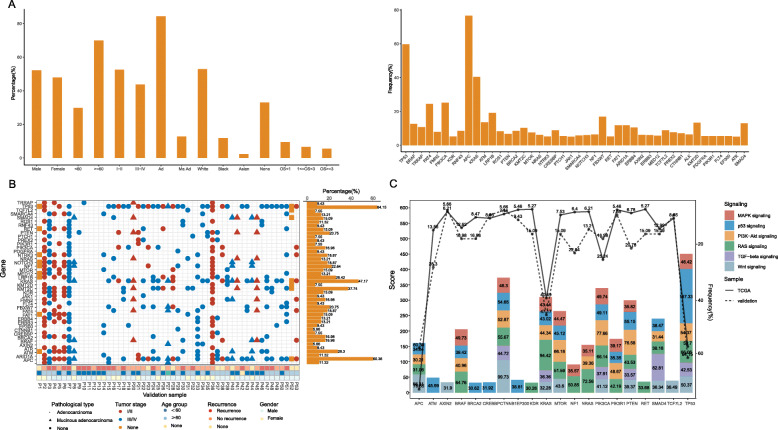
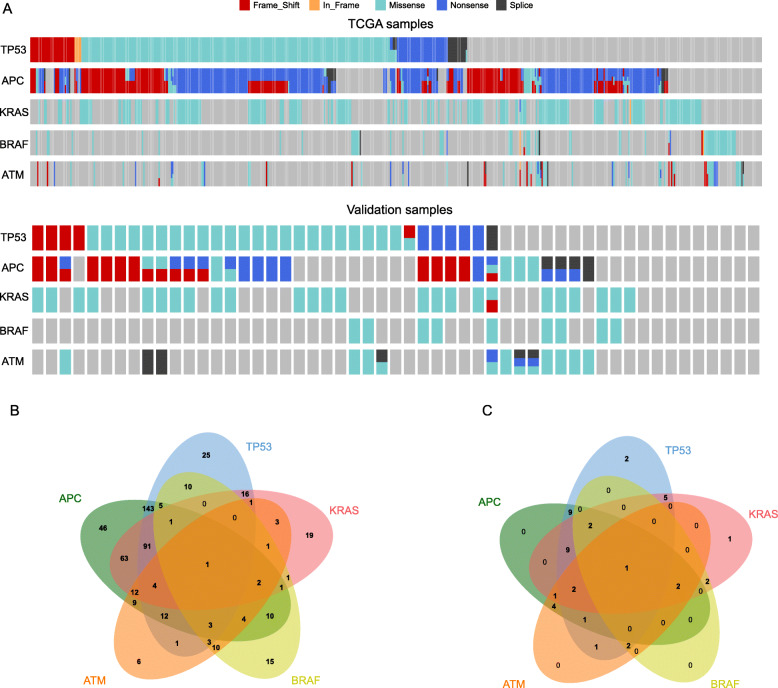
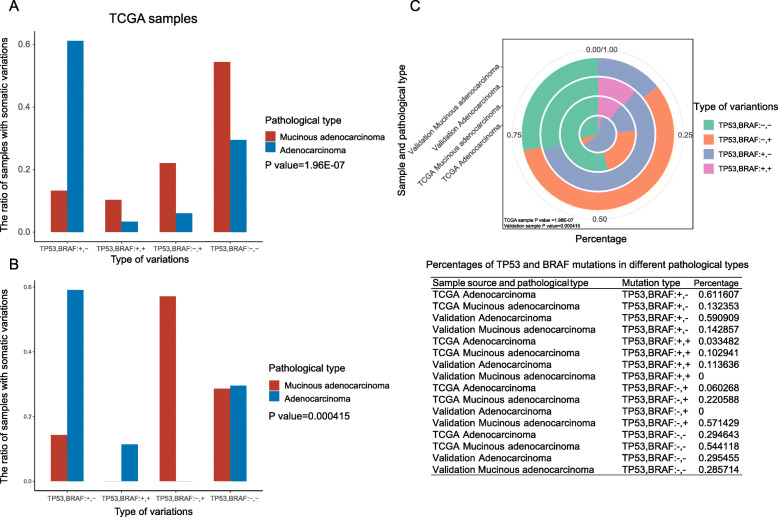
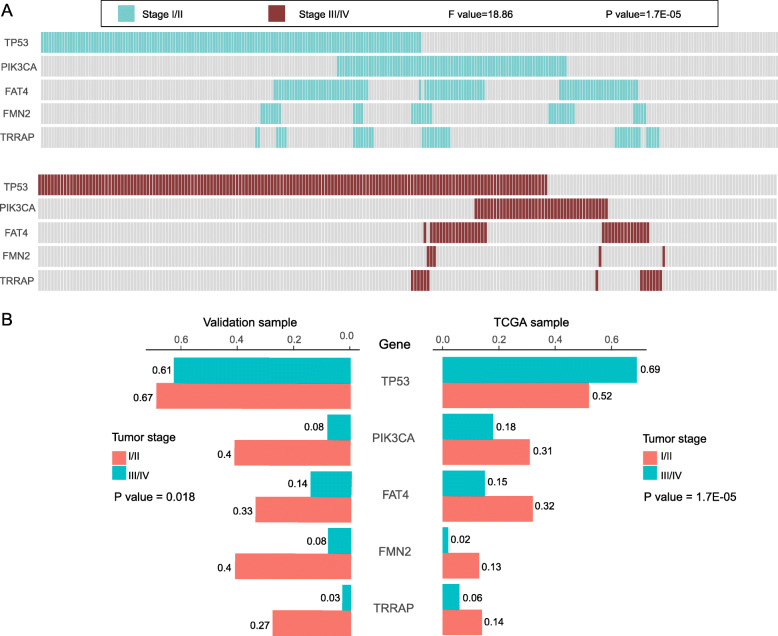
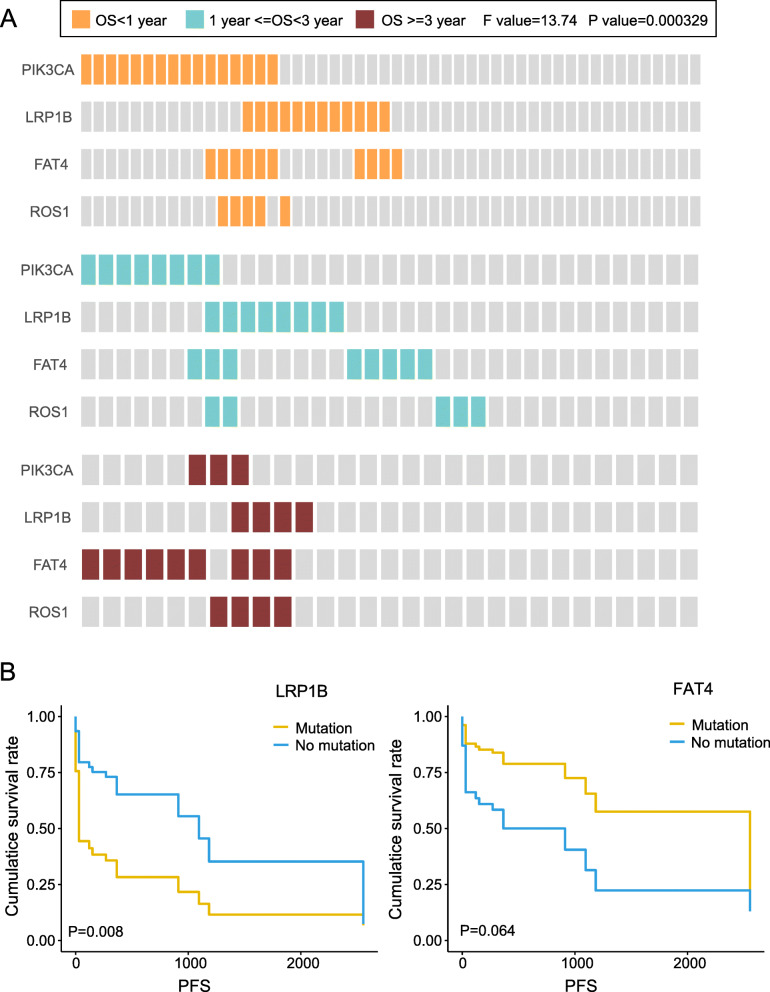
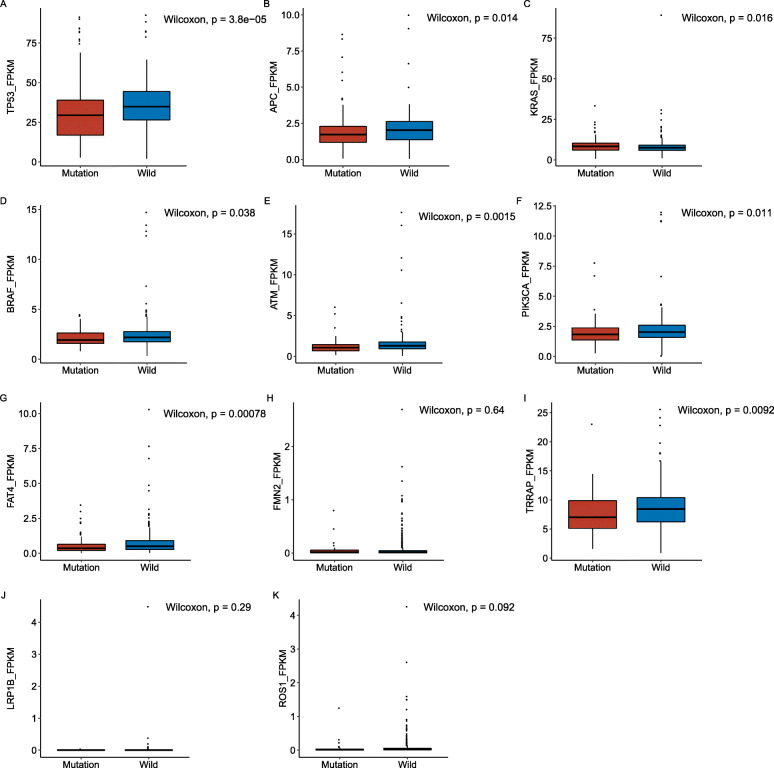
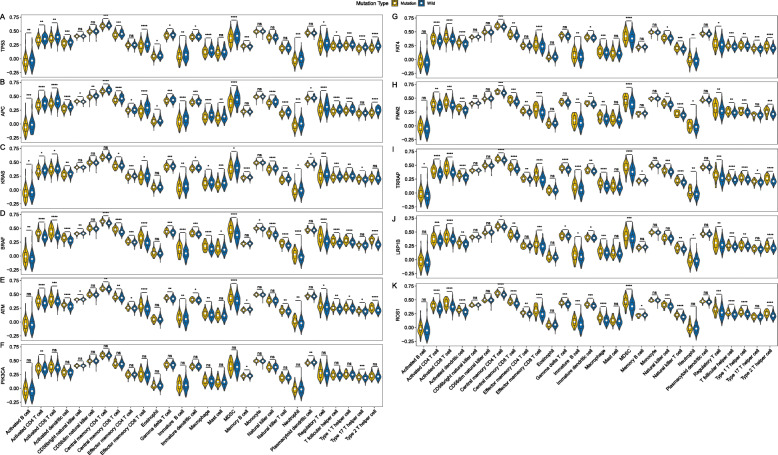
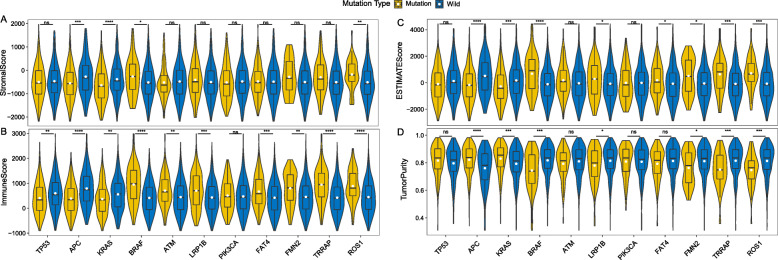
Background: Identifying gene mutation signatures will enable a better understanding for the occurrence and development of colorectal cancer (CRC), and provide some potential biomarkers for clinical practice. Currently, however, there is still few effective biomarkers for early diagnosis and prognostic judgment in CRC patients. The purpose was to identify novel mutation signatures for the diagnosis and prognosis of CRC. Methods: Clinical information of 531 CRC patients and their sequencing data were downloaded from TCGA database (training group), and 53 clinical patients were collected and sequenced with targeted next generation sequencing (NGS) technology (validation group). The relationship between the mutation genes and the diagnosis, pathological type, stage and prognosis of CRC were compared to construct signatures for CRC, and then analyzed their relationship with RNA expression, immunocyte infiltration and tumor microenvironment (TME). Results: Mutations of TP53, APC, KRAS, BRAF and ATM covered 97.55% of TCGA population and 83.02% validation patients. Moreover, 57.14% validation samples and 22.06% TCGA samples indicated that patients with mucinous adenocarcinoma tended to have BRAF mutation, but no TP53 mutation. Mutations of TP53, PIK3CA, FAT4, FMN2 and TRRAP had a remarkable difference between I-II and III-IV stage patients (P < 0.0001). Besides, the combination of PIK3CA, LRP1B, FAT4 and ROS1 formed signatures for the prognosis and survival of CRC patients. The mutations of TP53, APC, KRAS, BRAF, ATM, PIK3CA, FAT4, FMN2, TRRAP, LRP1B, and ROS1 formed the signatures for predicting diagnosis and prognosis of CRC. Among them, mutation of TP53, APC, KRAS, BRAF, ATM, PIK3CA, FAT4 and TRRAP significantly reduced their RNA expression level. Stromal score, immune score and ESTIMATE score were lower in patients with TP53, APC, KRAS, PIK3CA mutation compared non-mutation patients. All the 11 gene mutations affected the distributions of immune cells. Conclusion: This study constructed gene mutation signatures for the diagnosis, treatment and prognosis in CRC, and proved that their mutations affected RNA expression levels, TME and immunocyte infiltration. Our results put forward further insights into the genotype of CRC.
Overview
The claims and statistics of this paper haven’t been checked yet.
Free: it reads the open-access text and checks the first 5 claims that cite a source we can check. Create a free account to check every claim.
Integrity signals
Registry
Cites
Statistics
Figures
Verification
Claims the paper makes
The claims and statistics of this paper haven’t been checked yet.
Free: it reads the open-access text and checks the first 5 claims that cite a source we can check. Create a free account to check every claim.
Claims other papers make about this one
Each is checked against this paper’s own text: does it say what the citing paper says it does?
The source backs part of the claim, not all of it — or backs it for a different population, condition or comparison.
In the citing paper
“Loss-of-function mutations in the tumor suppressor genes TP53 (mutated in 50–60% of CRCs) and SMAD4 (mutated in ~15% of CRCs) also occur frequently [13,16].”
From Mechanisms and Strategies to Overcome Drug Resistance in Colorectal Cancer (2025) · cites this paper as [13]
Experimental — accuracy not yet measuredThe source backs part of the claim, not all of it — or backs it for a different population, condition or comparison.
In the citing paper
“Almost all sporadic CRCs have mutations in the Wnt/β-catenin signaling pathway, most being partial or complete loss-of-function of the tumor suppressor APC protein (APC mutated in ~80% of CRCs), which leads to unrestricted activation of Wnt signaling and downstream expression of genes important for cell proliferation, stemness, and survival [12,13].”
From Mechanisms and Strategies to Overcome Drug Resistance in Colorectal Cancer (2025) · cites this paper as [13]
Experimental — accuracy not yet measuredThe source backs part of the claim, not all of it — or backs it for a different population, condition or comparison.
In the citing paper
“In addition, the epidermal growth factor receptor (EGFR)/RAS/MAPK signaling pathway is often constitutively activated, either through activation of signaling proteins RAS (KRAS mutated in ~40% of CRCs) or RAF (BRAF mutated in 10–15% of CRCs), which stimulates cell proliferation [13,14,15].”
From Mechanisms and Strategies to Overcome Drug Resistance in Colorectal Cancer (2025) · cites this paper as [13]
Experimental — accuracy not yet measuredThe source backs part of the claim, not all of it — or backs it for a different population, condition or comparison.
In the citing paper
“Loss-of-function mutations in the tumor suppressor genes TP53 (mutated in 50–60% of CRCs) and SMAD4 (mutated in ~15% of CRCs) also occur frequently [13,16].”
From Mechanisms and Strategies to Overcome Drug Resistance in Colorectal Cancer (2025) · cites this paper as [13]
Experimental — accuracy not yet measuredThe source backs part of the claim, not all of it — or backs it for a different population, condition or comparison.
In the citing paper
“Mutations in PIK3CA (mutated in ~20% of CRCs) result in activation of the PI3K/AKT/mTOR signaling pathway, which promotes cell proliferation and survival [13,18].”
From Mechanisms and Strategies to Overcome Drug Resistance in Colorectal Cancer (2025) · cites this paper as [13]
Experimental — accuracy not yet measured
Self-check
Percentages, sums and reported differences re-computed from the paper’s own numbers.
The self-check needs the paper’s full text.
Citations
Cites
Sung, H., Ferlay, J., Siegel, R. L., Laversanne, M., Soerjomataram, I., Jemal, A., & Bray, F. (2021) · CA: A Cancer Journal for Clinicians · doi:10.3322/caac.21660 · Cited by 108,699
Hallmarks of Cancer: The Next Generation
Hanahan, D., & Weinberg, R. A. (2011) · Cell · doi:10.1016/j.cell.2011.02.013 · Cited by 66,590
Inferring tumour purity and stromal and immune cell admixture from expression data
Yoshihara, K., Shahmoradgoli, M., Martínez, E., Vegesna, R., Kim, H., Torres-Garcia, W., Treviño, V., Shen, H., Laird, P. W., Levine, D. A., et al. (2013) · Nature Communications · doi:10.1038/ncomms3612 · Cited by 9,778
Signatures of mutational processes in human cancer
Initiative, A. P. C. G., Alexandrov, L. B., ICGC Breast Cancer Consortium, ICGC MMML-Seq Consortium, PedBrain, I., Nik-Zainal, S., Wedge, D. C., Aparicio, S. A. J. R., Behjati, S., Biankin, A. V., et al. (2013) · Nature · doi:10.1038/nature12477 · Cited by 9,660
Encorafenib, Binimetinib, and Cetuximab in BRAF V600E–Mutated Colorectal Cancer
Kopetz, S., Grothey, A., Yaeger, R., Van Cutsem, E., Desai, J., Yoshino, T., Wasan, H., Ciardiello, F., Loupakis, F., Hong, Y. S., et al. (2019) · New England Journal of Medicine · doi:10.1056/nejmoa1908075 · Cited by 1,491
Increasing incidence of colorectal cancer in young adults in Europe over the last 25 years
Vuik, F. E., Nieuwenburg, S. A., Bardou, M., Lansdorp-Vogelaar, I., Dinis-Ribeiro, M., Bento, M. J., Zadnik, V., Pellisé, M., Esteban, L., Kaminski, M. F., et al. (2019) · Gut · doi:10.1136/gutjnl-2018-317592 · Cited by 886
Roock, W. D., Vriendt, V. D., Normanno, N., Ciardiello, F., & Tejpar, S. (2011) · The Lancet Oncology · doi:10.1016/s1470-2045(10)70209-6 · Cited by 603
Mutations in APC, Kirsten-ras, and p53—alternative genetic pathways to colorectal cancer
Smith, G., Carey, F. A., Beattie, J., Wilkie, M. J. V., Lightfoot, T. J., Coxhead, J., Garner, R. C., Steele, R. J. C., & Wolf, C. R. (2002) · Proceedings of the National Academy of Sciences · doi:10.1073/pnas.122612899 · Cited by 521
Changes in colorectal cancer incidence in seven high-income countries: a population-based study
Araghi, M., Soerjomataram, I., Bardot, A., Ferlay, J., Cabasag, C. J., Morrison, D. S., De, P., Tervonen, H., Walsh, P. M., Bucher, O., et al. (2019) · The Lancet Gastroenterology & Hepatology · doi:10.1016/s2468-1253(19)30147-5 · Cited by 479
Microsatellite Instability and BRAF Mutation Testing in Colorectal Cancer Prognostication
Lochhead, P., Kuchiba, A., Imamura, Y., Liao, X., Yamauchi, M., Nishihara, R., Qian, Z. R., Morikawa, T., Shen, J., Meyerhardt, J. A., et al. (2013) · JNCI: Journal of the National Cancer Institute · doi:10.1093/jnci/djt173 · Cited by 442
TP53 mutation in colorectal cancer
Iacopetta, B. (2003) · Human Mutation · doi:10.1002/humu.10175 · Cited by 345
ALK, ROS1, and NTRK Rearrangements in Metastatic Colorectal Cancer
Pietrantonio, F., Di Nicolantonio, F., Schrock, A. B., Lee, J., Tejpar, S., Sartore-Bianchi, A., Hechtman, J. F., Christiansen, J., Novara, L., Tebbutt, N., et al. (2017) · JNCI: Journal of the National Cancer Institute · doi:10.1093/jnci/djx089 · Cited by 317
Mucinous colorectal adenocarcinoma: clinical pathology and treatment options
Luo, C., Cen, S., Ding, G., & Wu, W. (2019) · Cancer Communications · doi:10.1186/s40880-019-0361-0 · Cited by 313
Prognostic Role of PIK3CA Mutation in Colorectal Cancer: Cohort Study and Literature Review
Liao, X., Morikawa, T., Lochhead, P., Imamura, Y., Kuchiba, A., Yamauchi, M., Nosho, K., Qian, Z. R., Nishihara, R., Meyerhardt, J. A., et al. (2012) · Clinical Cancer Research · doi:10.1158/1078-0432.ccr-11-2410 · Cited by 258 · cited 2×
“important roles in colorectal carcinogenesis, and are prognosis biomarkers [27].”
BackgroundPrognostic and Predictive Roles of KRAS Mutation in Colorectal Cancer
Arrington, A. K., Heinrich, E. L., Lee, W., Duldulao, M., Patel, S., Sanchez, J., Garcia-Aguilar, J., & Kim, J. (2012) · International Journal of Molecular Sciences · doi:10.3390/ijms131012153 · Cited by 244 · cited 1×
“It was reported 30–50% of CRC harbor KRAS mutations, and KRAS mutations in CRC have been associated with poorer survival and increased tumor aggressiveness [20].”
BackgroundWei, R., Xiao, Y., Song, Y., Yuan, H., Luo, J., & Xu, W. (2019) · Journal of Experimental & Clinical Cancer Research · doi:10.1186/s13046-019-1043-0 · Cited by 197
Novel recurrently mutated genes and a prognostic mutation signature in colorectal cancer
Yu, J., Wu, W. K. K., Li, X., He, J., Li, X.-X., Ng, S. S. M., Yu, C., Gao, Z., Yang, J., Li, M., et al. (2015) · Gut · doi:10.1136/gutjnl-2013-306620 · Cited by 188
Self-citationAn overview of colorectal cancer survival rates and prognosis in Asia
Moghimi-Dehkordi, B. (2012) · World Journal of Gastrointestinal Oncology · doi:10.4251/wjgo.v4.i4.71 · Cited by 186
PIK3CA mutation is predictive of poor survival in patients with colorectal cancer
Kato, S., Iida, S., Higuchi, T., Ishikawa, T., Takagi, Y., Yasuno, M., Enomoto, M., Uetake, H., & Sugihara, K. (2007) · International Journal of Cancer · doi:10.1002/ijc.22890 · Cited by 141
BRAF Mutation in Colorectal Cancer: An Update: Supplementary Issue: Biomarkers for Colon Cancer
Barras, D. (2015) · Biomarkers in Cancer · doi:10.4137/bic.s25248 · Cited by 138 · cited 3×
“Kopetz S, Grothey A, Yaeger R, Van Cutsem E, Desai J, Yoshino T, et al. Encorafenib, binimetinib, and cetuximab in BRAF V600E–mutated colorectal cancer.”
BackgroundInfluentialIshaque, N., Abba, M. L., Hauser, C., Patil, N., Paramasivam, N., Huebschmann, D., Leupold, J. H., Balasubramanian, G. P., Kleinheinz, K., Toprak, U. H., et al. (2018) · Nature Communications · doi:10.1038/s41467-018-07041-z · Cited by 132 · cited 1×
“More specifically, it is basically formed a consensus that CRC progression is sequential gains of mutations in Wnt signaling, RAS signaling, TGF-beta signaling, p53 signaling, PI3K-Akt signaling and MAPK signaling [29].”
BackgroundBi, K., Wei, X.-G., Qin, X., & Li, B. (2020) · Frontiers in Oncology · doi:10.3389/fonc.2020.00424 · Cited by 132
Tian, S., Simon, I., Moreno, V., Roepman, P., Tabernero, J., Snel, M., van't Veer, L., Salazar, R., Bernards, R., & Capella, G. (2013) · Gut · doi:10.1136/gutjnl-2012-302423 · Cited by 128
Aisner, D. L., Nguyen, T. T., Paskulin, D. D., Le, A. T., Haney, J., Schulte, N., Chionh, F. J. M., Hardingham, J. E., Mariadason, J. M., Tebbutt, N. C., et al. (2014) · Molecular Cancer Research · doi:10.1158/1541-7786.mcr-13-0479-t · Cited by 124
ATM-Deficient Colorectal Cancer Cells Are Sensitive to the PARP Inhibitor Olaparib
Wang, C., Jette, N., Moussienko, D., Bebb, D. G., & Lees-Miller, S. P. (2017) · Translational Oncology · doi:10.1016/j.tranon.2017.01.007 · Cited by 122
Functional variomics and network perturbation: connecting genotype to phenotype in cancer
Yi, S., Lin, S., Li, Y., Zhao, W., Mills, G. B., & Sahni, N. (2017) · Nature Reviews Genetics · doi:10.1038/nrg.2017.8 · Cited by 97
Self-citationFAT4 functions as a tumour suppressor in gastric cancer by modulating Wnt/β-catenin signalling
Cai, J., Feng, D., Hu, L., Chen, H., Yang, G., Cai, Q., Gao, C., & Wei, D. (2015) · British Journal of Cancer · doi:10.1038/bjc.2015.367 · Cited by 84
Impacts of somatic mutations on gene expression: an association perspective
Jia, P., & Zhao, Z. (2016) · Briefings in Bioinformatics · doi:10.1093/bib/bbw037 · Cited by 75
Pan, S., Zhan, Y., Chen, X., Wu, B., & Liu, B. (2019) · Frontiers in Oncology · doi:10.3389/fonc.2019.01101 · Cited by 56
A Methylation-Based Reclassification of Bladder Cancer Based on Immune Cell Genes
Luo, Q., & Vögeli, T. (2020) · Cancers · doi:10.3390/cancers12103054 · Cited by 51
Ye, Z., Qiu, M., Tang, T., Wang, F., Zhou, Y., Lei, M., Guan, W., & He, C. (2019) · Cancer Medicine · doi:10.1002/cam4.2727 · Cited by 50
Role of genetic polymorphisms and mutations in colorectal cancer therapy (Review)
Libra, M. (2010) · Molecular Medicine Reports · doi:10.3892/mmr.2010.408 · Cited by 43
Prognostic implication of mucinous histology in resected colorectal cancer liver metastases
Lupinacci, R. M., de Mello, E. S., Coelho, F. F., Krüger, J. A. P., Perini, M. V., Pinheiro, R. S., Fonseca, G. M., Cecconello, I., & Herman, P. (2014) · Surgery · doi:10.1016/j.surg.2014.01.011 · Cited by 43
Screening of potential diagnostic markers and therapeutic targets against colorectal cancer
Fang, J., Tian, X.-Q., Sun, D.-F., Zhao, S., & Xiong, H. (2015) · OncoTargets and Therapy · doi:10.2147/ott.s81621 · Cited by 40
Kwak, M. S., Cha, J. M., Yoon, J. Y., Jeon, J. W., Shin, H. P., Chang, H. J., Kim, H. K., Joo, K. R., & Lee, J. I. (2017) · Medicine · doi:10.1097/md.0000000000007882 · Cited by 36
Geißler, A.-L., Geissler, M., Kottmann, D., Lutz, L., Fichter, C. D., Fritsch, R., Weddeling, B., Makowiec, F., Werner, M., & Laßmann, S. (2017) · Oncotarget · doi:10.18632/oncotarget.15211 · Cited by 34
Molecular pathology of colorectal cancer
Bosman, F. T. (1999) · Cytogenetic and Genome Research · doi:10.1159/000015362 · Cited by 32
Patterns of somatic uniparental disomy identify novel tumor suppressor genes in colorectal cancer
Torabi, K., Miró, R., Fernández‐Jiménez, N., Quintanilla, I., Ramos, L., Prat, E., del Rey, J., Pujol, N., Killian, J. K., Meltzer, P. S., et al. (2015) · Carcinogenesis · doi:10.1093/carcin/bgv115 · Cited by 31
Hosseini, S., Bananzadeh, A., Salek, R., Zare-Bandamiri, M., Kermani, A., & Mohammadianpanah, Μ. (2017) · Annals of Coloproctology · doi:10.3393/ac.2017.33.2.57 · Cited by 26
Clinical-pathological correlation of K-Ras mutation and ERK phosphorylation in colorectal cancer.
Tai, C.-J., Chang, C.-C., Jiang, M.-C., Yeh, C., Su, T., Wu, P.-R., Chen, C., Yeh, K.-T., Lin, S.-H., & Chen, H.-C. (2012) · PubMed · Cited by 25
Kowalczyk, A. E., Kraziński, B. E., Godlewski, J., Kiewisz, J., Kwiatkowski, P., Śliwińska-Jewsiewicka, A., Kieżun, J., Sulik, M., & Kmieć, Z. (2017) · Oncology Reports · doi:10.3892/or.2017.5687 · Cited by 21
Isolation of prolactin from the “granular fraction” of pituitary-tumour transplants
Kwa, H. G., Verstraeten, A. A., & Scheijde-Bakker, M. G. M. (1972) · European Journal of Cancer (1965) · doi:10.1016/0014-2964(72)90081-3 · Cited by 10
In vitro stability of APC gene sequences and the influence of DNA repair status
Turnbull, C., Bacon, A. L., Dunlop, M. G., & Farrington, S. M. (2012) · Mutagenesis · doi:10.1093/mutage/ger069 · Cited by 6
Hughes, D., O'Morain, C. A., Lee, N., Kelley, L., McMurray, H. R., Latten, M. J., & Ebert, M. A. (2010) · European Journal of Cancer Supplements · doi:10.1016/s1359-6349(10)70936-8 · Cited by 3
Cited by
Mechanisms and Strategies to Overcome Drug Resistance in Colorectal Cancer
Haynes, J., & Manogaran, P. (2025) · International Journal of Molecular Sciences · doi:10.3390/ijms26051988 · Cited by 82
“Loss-of-function mutations in the tumor suppressor genes TP53 (mutated in 50–60% of CRCs) and SMAD4 (mutated in ~15% of CRCs) also occur frequently [13,16].”
InfluentialZheng, X., Ma, Y., Bai, Y., Huang, T., Lv, X., Deng, J., Wang, Z., Lian, W., Tong, Y., Zhang, X., et al. (2022) · Frontiers in Immunology · doi:10.3389/fimmu.2022.984480 · Cited by 68
Labat‐de‐Hoz, L., & Alonso, M. A. (2021) · Cells · doi:10.3390/cells10102554 · Cited by 66
Using Machine Learning Methods to Study Colorectal Cancer Tumor Micro-Environment and Its Biomarkers
Wei, W., Li, Y., & Huang, T. (2023) · International Journal of Molecular Sciences · doi:10.3390/ijms241311133 · Cited by 54
Self-citationThe role of PIK3CA gene mutations in colorectal cancer and the selection of treatment strategies
Wang, H., Tang, R., Ling, J., & Jia, Y. (2024) · Frontiers in Pharmacology · doi:10.3389/fphar.2024.1494802 · Cited by 65
Self-citation
Metadata
- Authors
- Zhuang, Y., Wang, H., Jiang, D., Li, Y., Feng, L., Tian, C., Pu, M., Wang, X., Zhang, J., Hu, Y., & Liu, P.
- Affiliations
- Tianjin Medical University Cancer Institute and Hospital (CN)
- Fourth Hospital of Hebei Medical University (CN)
- Tianjin Central Hospital of Gynecology Obstetrics (CN)
- Corresponding author
- Hu, Yuanjing
- Liu, Pengfei
- ORCID
- Venue
- BMC Cancer
- Published
- 2021-04-09
- Volume
- 21
- Issue
- 1
- Pages
- 380-380
- ISSN
- 1471-2407 (ISSN-L)
- PMC
- PMC8034139
- OpenAlex
- W3145382638
- Cited by
- 54
- References
- 44
- Citations by year
- 2026: 5 · 2025: 13 · 2024: 14 · 2023: 14 · 2022: 4 · 2021: 4
- FWCI
- 6.00
- Type
- journal article
- Language
- en
- Open access
- gold
- doi.org
- Licence
- cc-by
- creativecommons.org/licenses/by/4.0/ (tdm)
- creativecommons.org/licenses/by/4.0/ (vor)
- Locations
- BMC Cancer (publishedVersion, cc-by)
- PubMed Central (publishedVersion, cc-by)
- PubMed (publishedVersion)
- DOAJ (DOAJ: Directory of Open Access Journals) (submittedVersion, cc-by-sa)
- Funders
- Tianjin Science and Technology Plan Project (17ZXMFSY00160)
- Topics
- Health Sciences › Medicine › Pathology and Forensic Medicine › Genetic factors in colorectal cancer
- Health Sciences › Medicine › Oncology › Colorectal Cancer Treatments and Studies
- Life Sciences › Biochemistry, Genetics and Molecular Biology › Cancer Research › Cancer Genomics and Diagnostics
- Keywords
- colorectal cancer, TP53 mutation, APC mutation, KRAS mutation, BRAF mutation, ATM mutations, PIK3CA mutation, ROS1 mutation, prognostic factors, diagnostic biomarkers, tumor microenvironment, immune cell infiltration, stromal score, immune score, tumor stage, mucinous adenocarcinoma, gene expression
- MeSH terms
- Adult, Aged, Alleles, Female, Genotype, Humans, Male, Middle Aged, Mutation, Neoplasm Staging, Prognosis, Proto-Oncogene Proteins, Biomarkers, Tumor, Colorectal Neoplasms, Survival Analysis, Computational Biology, Tumor Suppressor Proteins, Genetic Association Studies, High-Throughput Nucleotide Sequencing, Tumor Microenvironment, Neoplasm Grading
About these checks
Registry, retraction, Cites and statistics results are computed, not judged, with one exception: a printed reference that no index lists is read once by a model before it counts as a citation error. Claims are extracted by a model and kept only when their quote appears verbatim in the text; each cited source is then checked, with a model’s help, for whether it says what the claim relies on. Those verdicts can be wrong — read the claim’s quote and the cited source before relying on one.
Statistics and arithmetic are recomputed, not judged.
Confidence bands are shown only for fields calibrated on our annotated test set. None is calibrated yet, so no band is shown.
What counts as a claim ›How we measure confidence ›How we check this ›
Are you an author, or do you see a problem with this page? Request a review
Data sources
Bibliographic data: Semantic Scholar, OpenAlex, Crossref.
Contains information from the Semantic Scholar Academic Graph Datasets, made available under the ODC Attribution License (ODC-BY 1.0).
Semantic Scholar’s data is described in: Kinney, R., et al. (2023). The Semantic Scholar Open Data Platform. arXiv:2301.10140.
