

The anti-estrogen receptor drug, tamoxifen, is selectively Lethal to P-glycoprotein-expressing Multidrug resistant tumor cells
Open accessPublished version of a preprint
The DOI matches its Crossref record; 63 of the 64 references it cites were found in a registry or an index.
Abstract
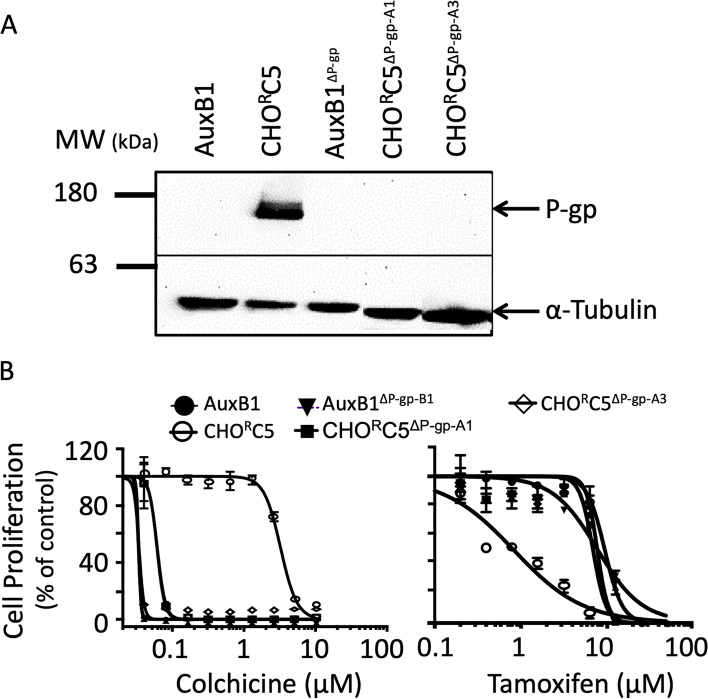
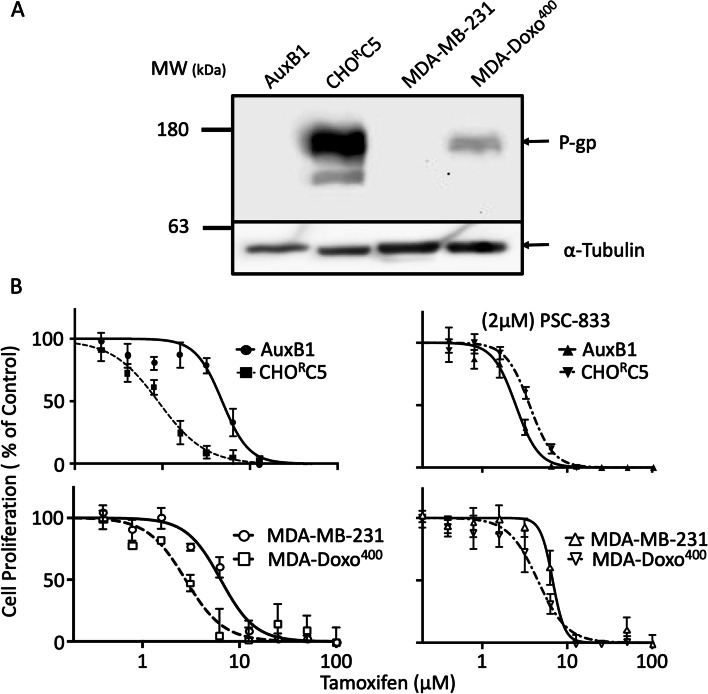
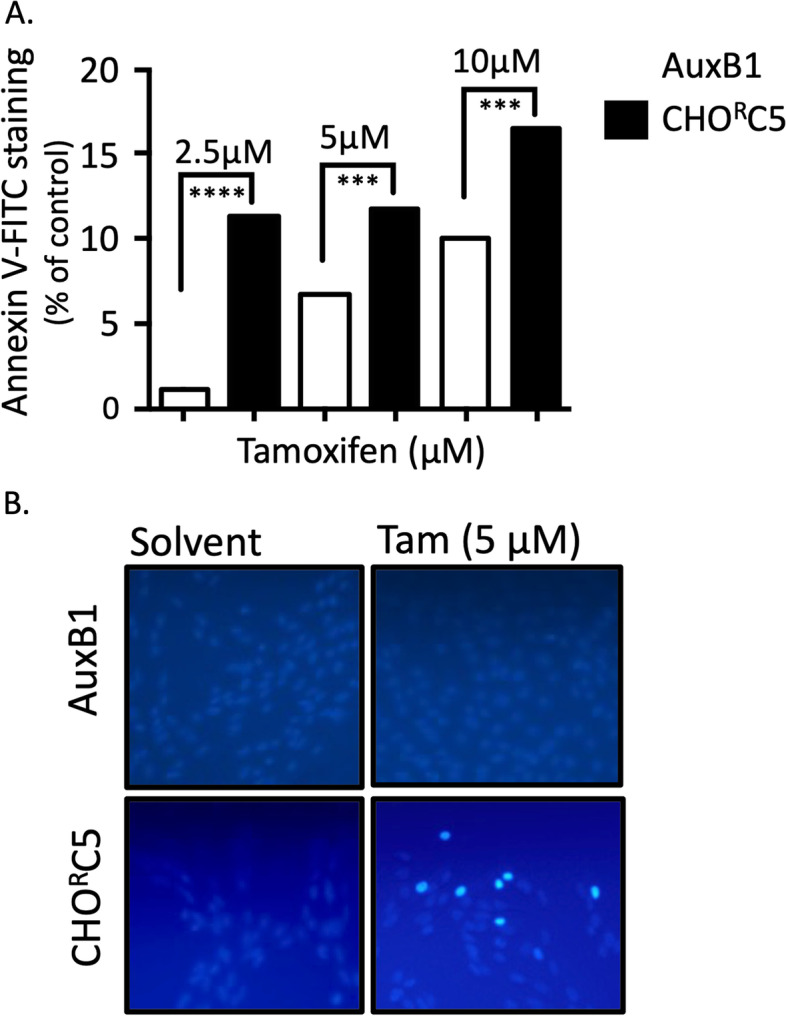
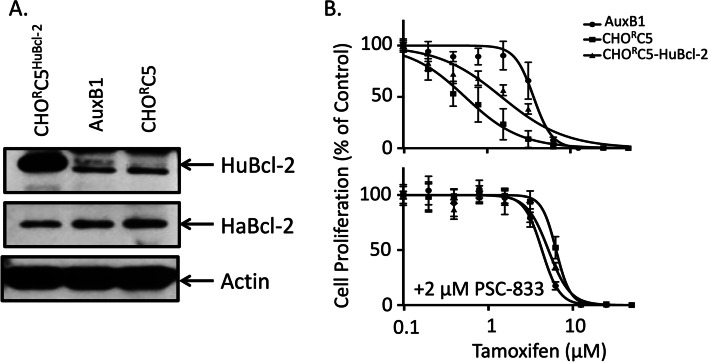
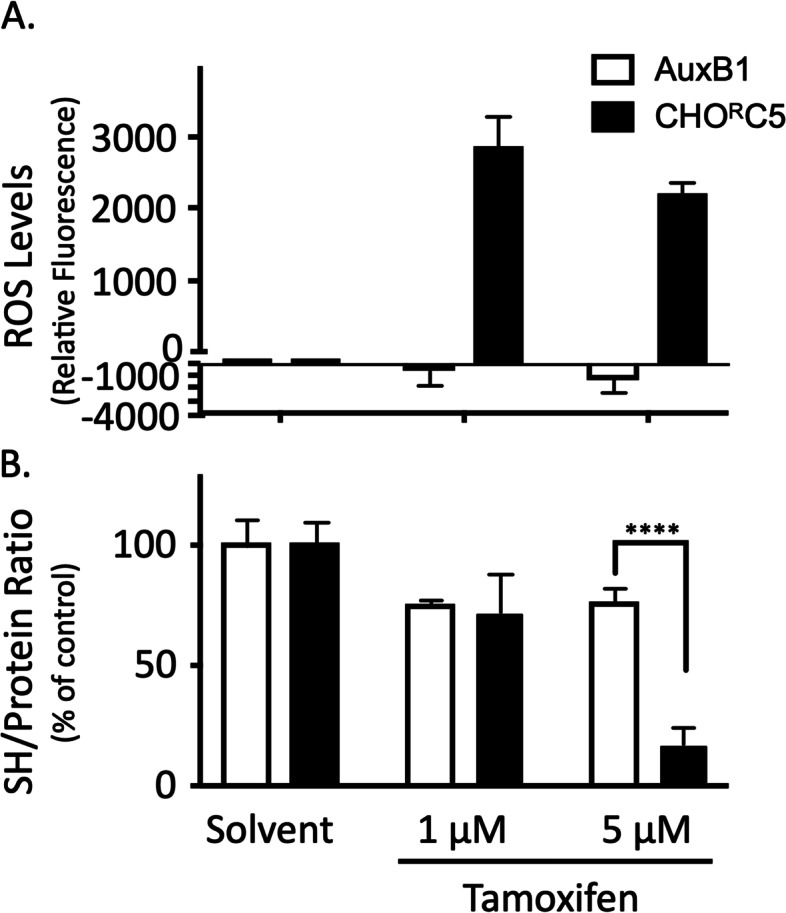
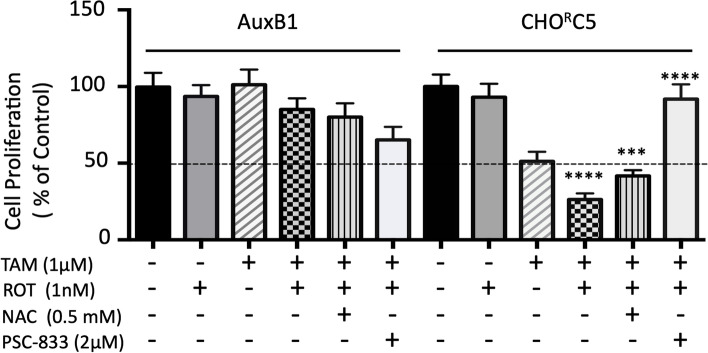
Background: P-glycoprotein (P-gp), a member of the ATP Binding Cassette B1 subfamily (ABCB1), confers resistance to clinically relevant anticancer drugs and targeted chemotherapeutics. However, paradoxically P-glycoprotein overexpressing drug resistant cells are “collaterally sensitive” to non-toxic drugs that stimulate its ATPase activity. Methods: Cell viability assays were used to determine the effect of low concentrations of tamoxifen on the proliferation of multidrug resistant cells (CHO R C5 and MDA-Doxo 400 ), expressing P-gp, their parental cell lines (AuxB1 and MDA-MB-231) or P-gp-CRISPR knockout clones of AuxB1 and CHO R C5 cells. Western blot analysis was used to estimate P-gp expression in different cell lines. Apoptosis of tamoxifen-induced cell death was estimated by flow cytometry using Annexin-V-FITC stained cells. Oxidative stress of tamoxifen treated cells was determined by measuring levels of reactive oxygen species and reduced thiols using cell-permeant 2',7'-dichlorodihydrofluorescein diacetate (H2DCFDA) and 5,5-dithio-bis-(2-nitrobenzoic acid) DTNB, respectively. Results: In this report, we show that P-gp-expressing drug resistant cells (CHO R C5 and MDA-Doxo 400 ) are collaterally sensitive to the anti-estrogen tamoxifen or its metabolite (4-hydroxy-tamoxifen). Moreover, P-gp-knockout clones of CHO R C5 cells display complete reversal of collateral sensitivity to tamoxifen. Drug resistant cells exposed to low concentrations of tamoxifen show significant rise in reactive oxygen species, drop of reduced cellular thiols and increased apoptosis. Consistent with the latter, CHO R C5 cells expressing high levels of human Bcl-2 (CHO R C5-Bcl-2) show significant resistance to tamoxifen. In addition, the presence of the antioxidant N-acetylcysteine or P-gp ATPase inhibitor, PSC-833, reverse the collateral sensitivity of resistant cells to tamoxifen. By contrast, the presence of rotenone (specific inhibitor of mitochondria complex I) synergizes with tamoxifen. Conclusion: This study demonstrates the use of tamoxifen as collateral sensitivity drug that can preferentially target multidrug resistant cells expressing P-gp at clinically achievable concentrations. Given the widespread use of tamoxifen in the treatment of estrogen receptor-positive breast cancers, this property of tamoxifen may have clinical applications in treatment of P-gp-positive drug resistant breast tumors. Graphical Abstract:
Overview
The claims and statistics of this paper haven’t been checked yet.
Free: it reads the open-access text and checks the first 5 claims that cite a source we can check. Create a free account to check every claim.
Integrity signals
Registry
Cites
Statistics
Figures
Verification
Claims the paper makes
The claims and statistics of this paper haven’t been checked yet.
Free: it reads the open-access text and checks the first 5 claims that cite a source we can check. Create a free account to check every claim.
Claims other papers make about this one
Each is checked against this paper’s own text: does it say what the citing paper says it does?
The cited source doesn’t support the claim as written.
In the citing paper
“Overexpression of epidermal growth factor receptor (EGFR), variations in TAM metabolism, and increased expression of drug-resistant proteins (P-glycoprotein, P-gp) all contribute to the development of TAM-resistant breast cancer.”
From Multifunctional and dual-targeting polymeric prodrug nanomicelles against tamoxifen-resistant breast cancer (2026) · cites this paper as [20]
Checked by a reasoning model — may be wrong.
Experimental — accuracy not yet measured
Self-check
Percentages, sums and reported differences re-computed from the paper’s own numbers.
The self-check needs the paper’s full text.
Citations
Cites
Proceedings of the National Academy of Sciences of the United States of America
Dowling, J. E., & Wald, G. (2009) · Nutrition Reviews · doi:10.1111/j.1753-4887.1981.tb06752.x · Cited by 17,893
Chou, T.-C., & Talalay, P. (1984) · Advances in Enzyme Regulation · doi:10.1016/0065-2571(84)90007-4 · Cited by 7,178 · cited 1×
“To assess the combined effects of different drugs, and measure potential drug synergy on cell proliferation, the method of Chou-Talay was used [25].”
MethodBiochemical and Biophysical Research Communications
(1960) · Nature · doi:10.1038/186124d0 · Cited by 6,700
Multidrug resistance in cancer: role of ATP–dependent transporters
Gottesman, M. M., Fojo, T., & Bates, S. E. (2002) · Nature Reviews Cancer · doi:10.1038/nrc706 · Cited by 5,536
Antimicrobial agents and chemotherapy—1969
Parker, R. H. (1971) · Journal of Chronic Diseases · doi:10.1016/0021-9681(71)90113-5 · Cited by 2,504
Synergy, antagonism, and what the chequerboard puts between them
Odds, F. C. (2003) · Journal of Antimicrobial Chemotherapy · doi:10.1093/jac/dkg301 · Cited by 2,481
THE JOURNAL OF ANTIMICROBIAL CHEMOTHERAPY
(1975) · Medical Journal of Australia · doi:10.5694/j.1326-5377.1975.tb105896.x · Cited by 1,899
Carter, H. E., Bhattacharyya, P. K., Weidman, K. R., & Fraenkel, G. (2009) · Nutrition Reviews · doi:10.1111/j.1753-4887.1981.tb06727.x · Cited by 1,896
Tamoxifen in the Treatment of Breast Cancer
Osborne, C. K. (1998) · New England Journal of Medicine · doi:10.1056/nejm199811263392207 · Cited by 1,320
P-glycoprotein: from genomics to mechanism
Ambudkar, S. V., Kimchi-Sarfaty, C., Sauna, Z. E., & Gottesman, M. M. (2003) · Oncogene · doi:10.1038/sj.onc.1206948 · Cited by 1,074 · cited 1×
“P-glycoprotein (P-gp or ABCB1), a member of a large family of ATP Binding Cassette (ABC) transporters, mediates the active efflux of anticancer drugs [4].”
BackgroundThe chemistry and biological activities of N-acetylcysteine
Samuni, Y., Goldstein, S., Dean, O. M., & Berk, M. (2013) · Biochimica et Biophysica Acta (BBA) - General Subjects · doi:10.1016/j.bbagen.2013.04.016 · Cited by 876 · cited 6×
“To decode tamoxifen-induced changes in cellular redox potential in treated cells, an in vitro cell proliferation assay was performed on AuxB1 and CHORC5 cells treated with tamoxifen in combination with ROS generating drug (rotenone [41]), thiol regenerating agent (N-acetylcysteine (NAC) [42]) and P-gp-ATPase inhibitor…”
MethodInfluentialThe Role of ABC Transporters in Clinical Practice
Leonard, G. D., Fojo, T., & Bates, S. E. (2003) · The Oncologist · doi:10.1634/theoncologist.8-5-411 · Cited by 817 · cited 2×
“Increased P-gp expression in tumors post chemotherapeutic treatment have been shown in several cancers [6].”
BackgroundMauvezin, C., & Neufeld, T. P. (2015) · Autophagy · doi:10.1080/15548627.2015.1066957 · Cited by 817 · cited 1×
“However, if tamoxifen-induced collateral sensitivity was mediated through increased autophagy; the addition of bafilomycin A1 (an inhibitor of V-type ATPase and an inhibitor of autophagy [53]) was expected to reverse tamoxifen induced collateral sensitivity.”
BackgroundThe molecular basis of multidrug resistance in cancer: The early years of P‐glycoprotein research
Gottesman, M. M., & Ling, V. (2006) · FEBS Letters · doi:10.1016/j.febslet.2005.12.060 · Cited by 558
P-Glycoprotein Expression as a Predictor of the Outcome of Therapy for Neuroblastoma
Chan, H. S. L., Haddad, G., Thorner, P. S., DeBoer, G., Lin, Y. P., Ondrusek, N., Yeger, H., & Ling, V. (1991) · New England Journal of Medicine · doi:10.1056/nejm199112053252304 · Cited by 441 · cited 2×
“Moreover, its expression in tumors from breast, neuroblastoma and lung cancers have been associated with poor prognosis and patients outcome [7, 8].”
BackgroundCircu, M. L., & Yee Aw, T. (2008) · Free Radical Research · doi:10.1080/10715760802317663 · Cited by 393 · cited 1×
“This divergence between the differential rise in ROS and drop in reduced-thiol levels between drug sensitive and resistance cells is not entirely clear; but maybe due to enhanced rebound in the production of reductive molecules or potential in cells following an initial rise in ROS [40].”
BackgroundDetection of P-glycoprotein isoforms by gene-specific monoclonal antibodies.
Georges, E., Bradley, G., Gariepy, J., & Ling, V (1990) · Proceedings of the National Academy of Sciences · doi:10.1073/pnas.87.1.152 · Cited by 384 · cited 3×
“It is important to note that both human and hamster P-gp contain the same epitope sequence for C219 mAb [26], hence differences in antibody antigen binding is not responsible for differences in P-gp signal in the two cell lines.”
BackgroundMethodSelf-citationGeneration of superoxide by the mitochondrial Complex I
Grivennikova, V. G., & Vinogradov, A. D. (2006) · Biochimica et Biophysica Acta (BBA) - Bioenergetics · doi:10.1016/j.bbabio.2006.03.013 · Cited by 379 · cited 1×
“To decode tamoxifen-induced changes in cellular redox potential in treated cells, an in vitro cell proliferation assay was performed on AuxB1 and CHORC5 cells treated with tamoxifen in combination with ROS generating drug (rotenone [41]), thiol regenerating agent (N-acetylcysteine (NAC) [42]) and P-gp-ATPase inhibitor…”
MethodCellular Thiols and Reactive Oxygen Species in Drug-Induced Apoptosis
Davis, W., Ronai, Z., & Tew, K. D. (2001) · The Journal of Pharmacology and Experimental Therapeutics · doi:10.1016/s0022-3565(24)29655-5 · Cited by 351 · cited 1×
“Given the differential effect of tamoxifen on ROS levels in P-gp-expressing cells and the correlation between ROS and cellular thiols [39], we sought to measure total thiol levels of AuxB1 and CHORC5 cells in the absence and presence of tamoxifen (1—5 μM).”
BackgroundEstrogen-Receptor Biology: Continuing Progress and Therapeutic Implications
Osborne, C. K., & Schiff, R. (2005) · Journal of Clinical Oncology · doi:10.1200/jco.2005.10.036 · Cited by 351 · cited 1×
“Its anti-proliferative effect as transcription inhibitor of estrogen-responsive genes is well established [43].”
BackgroundFivelman, Q. L., Adagu, I. S., & Warhurst, D. C. (2004) · Antimicrobial Agents and Chemotherapy · doi:10.1128/aac.48.11.4097-4102.2004 · Cited by 319 · cited 1×
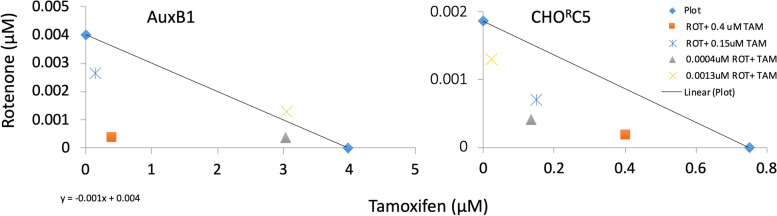
“This method is usually adopted to measure the degree of chemo-sensitization of a given compound and to detect if the effect between two drugs is synergistic, additive, or antagonistic [27].”
MethodPleiotropic phenotype of colchicine‐resistant CHO cells: Cross‐resistance and collateral sensitivity
Bech‐Hansen, N. T., Till, J. E., & Ling, V. (1976) · Journal of Cellular Physiology · doi:10.1002/jcp.1040880104 · Cited by 309
Collateral sensitivity as a strategy against cancer multidrug resistance
Pluchino, K. M., Hall, M. D., Goldsborough, A. S., Callaghan, R., & Gottesman, M. M. (2012) · Drug Resistance Updates · doi:10.1016/j.drup.2012.03.002 · Cited by 305 · cited 2×
“, NSC-73306) that do not stimulate P-gp ATPase [18], but trigger oxidative cell death conditional on P-gp expression and basal ATPase activity.”
BackgroundDrug resistance: Still a daunting challenge to the successful treatment of AML
Shaffer, B. C., Gillet, J.-P., Patel, C., Baer, M. R., Bates, S. E., & Gottesman, M. M. (2012) · Drug Resistance Updates · doi:10.1016/j.drup.2012.02.001 · Cited by 259
Characterization of a new drug-resistant human myeloma cell line that expresses P-glycoprotein.
Dalton, W. S., Durie, B. G. M., Alberts, D. S., Gerlach, J. H., & Cress, A. E. (1986) · PubMed · Cited by 259
The controversial role of ABC transporters in clinical oncology
Tamaki, A., Ierano, C., Szakacs, G., Robey, R. W., & Bates, S. E. (2011) · Essays in Biochemistry · doi:10.1042/bse0500209 · Cited by 235 · cited 1×
“Clinical trials using increasingly more potent and specific inhibitors of P-gp drug efflux function (1st to 3rd generation MDR-reversing drugs) have been largely unsuccessful due to unacceptable toxicity, when combined with cytotoxic anti-cancer drugs, likely due to altered drug pharmaco-kinetics [9, 10].”
BackgroundQuantifying ROS levels using CM-H 2 DCFDA and HyPer
Oparka, M., Walczak, J., Malinska, D., van Oppen, L. M. P. E., Szczepanowska, J., Koopman, W. J. H., & Wieckowski, M. R. (2016) · Methods · doi:10.1016/j.ymeth.2016.06.008 · Cited by 227 · cited 1×
“To determine if the presence of low concentrations of tamoxifen causes a differential increase of ROS levels in CHORC5 versus AuxB1, cells were exposed for 24 h to tamoxifen (1 μM and 5 μM) and intracellular ROS was quantified using 2’,7’-dichlorodihydrofluorescein diacetate (H2DCFDA) dye [38].”
MethodAmiri-Kordestani, L., Basseville, A., Kurdziel, K., Fojo, A. T., & Bates, S. E. (2012) · Drug Resistance Updates · doi:10.1016/j.drup.2012.02.002 · Cited by 219 · cited 2×
“Moreover, its expression in tumors from breast, neuroblastoma and lung cancers have been associated with poor prognosis and patients outcome [7, 8].”
BackgroundTrump, D. L., Smith, D. C., Ellis, P. G., Rogers, M. P., Schold, S. C., Winer, E. P., Panella, T. J., Jordan, V. C., & Fine, R. L. (1992) · JNCI Journal of the National Cancer Institute · doi:10.1093/jnci/84.23.1811 · Cited by 207 · cited 3×
“Based on the working hypothesis of P-gp-dependent collateral sensitivity [14–17], we examined the ability of tamoxifen as a collateral sensitivity drug for two reasons: a) tamoxifen has been previously shown to activate P-gp ATPase at clinically achievable concentration (4–6 μM) [20, 21], and b) tamoxifen is widely us…”
BackgroundMultidrug-resistance phenotype in Chinese hamster ovary cells.
Ling, V. W. T., Kartner, N., Sudo, T., Siminovitch, L., & Riordan, J. R. (1983) · PubMed · Cited by 194
Ramu, A., Glaubiger, D. L., & FUKS, Z. Y. (1984) · PubMed · Cited by 179
Journal of Bioenergetics and Biomembranes
(2013) · Journal of Bioenergetics and Biomembranes · doi:10.1007/10863.1573-6881 · Cited by 178
Ludwig, J. A., Szakács, G., Martin, S. E., Chu, B. F., Cardarelli, C., Sauna, Z. E., Caplen, N. J., Fales, H. M., Ambudkar, S. V., Weinstein, J. N., et al. (2006) · Cancer Research · doi:10.1158/0008-5472.can-05-3322 · Cited by 176 · cited 2×
“Although P-gp-dependent collateral sensitivity has been described in several tumor cell lines with intrinsic or acquired MDR phenotype [15, 19], certain MDR cell lines do not show P-gp-dependent collateral sensitivity.”
BackgroundOxidation of NADH and ROS production by respiratory complex I
Vinogradov, A. D., & Grivennikova, V. G. (2015) · Biochimica et Biophysica Acta (BBA) - Bioenergetics · doi:10.1016/j.bbabio.2015.11.004 · Cited by 167 · cited 1×
“In support of the latter, it is noteworthy that the addition of rotenone, potent inhibitors of complex I of mETC [50], to CHO cells showed modest collateral sensitivity, significantly less than tamoxifen alone (supplemental Fig.”
BackgroundYu, M., Ocaña, A., & Tannock, I. F. (2012) · Cancer and Metastasis Reviews · doi:10.1007/s10555-012-9402-8 · Cited by 164 · cited 1×
“Clinical trials using increasingly more potent and specific inhibitors of P-gp drug efflux function (1st to 3rd generation MDR-reversing drugs) have been largely unsuccessful due to unacceptable toxicity, when combined with cytotoxic anti-cancer drugs, likely due to altered drug pharmaco-kinetics [9, 10].”
BackgroundLitman, T., Zeuthen, T., Skovsgaard, T., & Stein, W. D. (1997) · Biochimica et Biophysica Acta (BBA) - Molecular Basis of Disease · doi:10.1016/s0925-4439(97)00027-6 · Cited by 164 · cited 1×
“Tamoxifen has been shown by several investigators to increase P-gp ATPase at clinically relevant concentrations (< 5 μM [21, 36, 37]).”
BackgroundLum, B. L., & Gosland, M. P. (1995) · Hematology/Oncology Clinics of North America · doi:10.1016/s0889-8588(18)30097-2 · Cited by 156 · cited 1×
“P-gp is expressed on the cell surface in normal tissues and organs, where it mediates the secretion of xenobiotic and normal cell metabolites [5].”
BackgroundBekele, R. T., Venkatraman, G., Liu, R.-Z., Tang, X., Mi, S., Benesch, M. G. K., Mackey, J. R., Godbout, R., Curtis, J. M., McMullen, T. P. W., et al. (2016) · Scientific Reports · doi:10.1038/srep21164 · Cited by 148 · cited 2×
“The tamoxifen-induced mitochondrial stress has been attributed to its inhibition of complex I and III of the mitochondria electron transport complexes (mETC) [46–48] and a consequent increase of intracellular ROS in both ER-α + and ER-α- cells [49].”
BackgroundResultTu, S., Chang, C.-C., Chen, C.-S., Tam, K., Wang, Y., Lee, C., Lin, H. W., Cheng, T., Huang, C.-S., Chu, J., et al. (2009) · Breast Cancer Research and Treatment · doi:10.1007/s10549-009-0492-0 · Cited by 145 · cited 1×
“[54] demonstrated that increased expression of enolase I in human breast cancer patients’ tumors correlate with increased resistance to tamoxifen.”
BackgroundZheng, A., Kallio, A., & Härkönen, P. (2007) · Endocrinology · doi:10.1210/en.2006-1269 · Cited by 144 · cited 1×
“However, tamoxifen has non-genomic effects that include the promotion of protein kinase C activity, intracellular calcium, mitochondrial stress, and stimulation of P-gp ATPase activity [24, 44, 45].”
BackgroundLeslie, E. M., Deeley, R. G., & Cole, S. P. C. (2003) · Drug Metabolism and Disposition · doi:10.1124/dmd.31.1.11 · Cited by 140 · cited 1×
“With respect to the latter, we have previously demonstrated that apigenin or verapamil, which stimulate ABCC1-mediated drug efflux [57], led to the selective oxidative cell death of multidrug resistant cells expressing ABCC1, in the absence of cytotoxic drugs, due to rapid efflux of intracellular glutathione and a ris…”
BackgroundMoreira, P. I., Custódio, J., Moreno, A., Oliveira, C. R., & Santos, M. S. (2006) · Journal of Biological Chemistry · doi:10.1074/jbc.m510249200 · Cited by 128
Antiestrogens and steroid hormones: Substrates of the human P-glycoprotein
Rao, U. S., Fine, R. L., & Scarborough, G. A. (1994) · Biochemical Pharmacology · doi:10.1016/0006-2952(94)90099-x · Cited by 116
Interaction of tamoxifen with the multidrug resistance P-glycoprotein
Callaghan, R., & Higgins, C. (1995) · British Journal of Cancer · doi:10.1038/bjc.1995.59 · Cited by 114 · cited 1×
“Based on the working hypothesis of P-gp-dependent collateral sensitivity [14–17], we examined the ability of tamoxifen as a collateral sensitivity drug for two reasons: a) tamoxifen has been previously shown to activate P-gp ATPase at clinically achievable concentration (4–6 μM) [20, 21], and b) tamoxifen is widely us…”
BackgroundAkoachere, M., Buchholz, K., Fischer, E., Burhenne, J., Haefeli, W. E., Schirmer, R. H., & Becker, K. (2005) · Antimicrobial Agents and Chemotherapy · doi:10.1128/aac.49.11.4592-4597.2005 · Cited by 108 · cited 1×
“Fractional inhibitory concentrations (FICs) were then calculated using the equations below, as previously described [28, 29].”
MethodTaylor, C. M., Blanchard, B., & Zava, D. T. (1984) · PubMed · Cited by 99
Drug-stimulated ATPase activity of the human P-glycoprotein
Scarborough, G. A. (1995) · Journal of Bioenergetics and Biomembranes · doi:10.1007/bf02110329 · Cited by 97 · cited 1×
“Tamoxifen has been shown by several investigators to increase P-gp ATPase at clinically relevant concentrations (< 5 μM [21, 36, 37]).”
BackgroundModulation of GSH levels in ABCC1 expressing tumor cells triggers apoptosis through oxidative stress
Laberge, R.-M., Karwatsky, J., Lincoln, M. C., Leimanis, M. L., & Georges, E. (2007) · Biochemical Pharmacology · doi:10.1016/j.bcp.2007.02.005 · Cited by 90 · cited 3×
“Leslie EM, Deeley RG, Cole SP. Bioflavonoid stimulation of glutathione transport by the 190-kDa multidrug resistance protein 1 (MRP1).”
BackgroundSelf-citationA Mechanism for P-Glycoprotein-Mediated Apoptosis As Revealed by Verapamil Hypersensitivity
Karwatsky, J., Lincoln, M. C., & Georges, E. (2003) · Biochemistry · doi:10.1021/bi034149+ · Cited by 82
Self-citationMitochondria: the gateway for tamoxifen-induced liver injury
Ribeiro, M. P. C., Santos, A. E., & Custódio, J. B. A. (2014) · Toxicology · doi:10.1016/j.tox.2014.05.009 · Cited by 70
Al-Akra, L., Bae, D.-H., Sahni, S., Huang, M. L. H., Park, K. C., Lane, D. J. R., Jansson, P. J., & Richardson, D. R. (2018) · Journal of Biological Chemistry · doi:10.1074/jbc.m116.772699 · Cited by 54 · cited 1×
“[52] have suggested that the thiosemicarbazone-mediated collateral sensitivity is likely due to the presence of external stress that leads to increased reactive oxygen species and internalization of P-gp which actively accumulates copper bound-thiosemicarbazone into lysosomal compartments leading to autophagic cell de…”
BackgroundLaberge, R.-M., Ambadipudi, R., & Georges, E. (2009) · Archives of Biochemistry and Biophysics · doi:10.1016/j.abb.2009.09.012 · Cited by 52 · cited 20×
“In addition, the presence of the antioxidant N-acetylcysteine or P-gp ATPase inhibitor, PSC-833, reverse the collateral sensitivity of resistant cells to tamoxifen.”
BackgroundResultSelf-citationXie, F. (2012) · Oncology Reports · doi:10.3892/or.2012.1728 · Cited by 52 · cited 1×
“However, tamoxifen has non-genomic effects that include the promotion of protein kinase C activity, intracellular calcium, mitochondrial stress, and stimulation of P-gp ATPase activity [24, 44, 45].”
BackgroundPSC-833, a frontier in modulation of P-glycoprotein mediated multidrug resistance
Atadja, P. W., Watanabe, T., Xu, H., & Cohen, D. (1998) · Cancer and Metastasis Reviews · doi:10.1023/a:1006046201497 · Cited by 50 · cited 3×
“, CHORC5 and MDA-Doxo400) expressing different levels of P-gp were allowed to proliferate in the presence of increasing concentrations of tamoxifen, without or with specific inhibitor of P-gp-ATPase activity (PSC-833 [33];).”
BackgroundMethodLiu, B., Sun, D., Yu, D., Xia, W., & Hung, M. (1997) · JNCI Journal of the National Cancer Institute · doi:10.1093/jnci/89.20.1524 · Cited by 47 · cited 1×
“1A is due to cross-reactivity of C219 mAb with HER2 protein migrating with a molecular mass of ~ 185 kDa [31, 32]; a Western blot containing”
BackgroundPedro, M., Lourenço, C. F., Cidade, H. M., Kijjoa, A., Pinto, M. M. M., & Nascimento, M. S. J. (2005) · Toxicology Letters · doi:10.1016/j.toxlet.2005.11.007 · Cited by 40 · cited 1×
“It is noteworthy that the observed collateral sensitivity of MDA-Doxo400 cells to tamoxifen is estrogen receptor-independent [34].”
BackgroundGorka, A. P., Jacobs, L., & Roepe, P. D. (2013) · Malaria Journal · doi:10.1186/1475-2875-12-332 · Cited by 39 · cited 1×
“Fractional inhibitory concentrations (FICs) were then calculated using the equations below, as previously described [28, 29].”
MethodRadin, D. P., & Patel, P. (2016) · European Journal of Pharmacology · doi:10.1016/j.ejphar.2016.04.017 · Cited by 36 · cited 2×
“addition, an earlier study has shown that tamoxifen acts and an MDR-reversing drug in drug resistant P388/ADR murine leukemia cells [23], and can induce apoptosis, in both estrogen receptor-α positive and –negative breast cancer cells, by increasing intracellular ROS levels [24].”
BackgroundP-glycoprotein mediates the collateral sensitivity of multidrug resistant cells to steroid hormones
Laberge, R.-M., Ambadipudi, R., & Georges, E. (2014) · Biochemical and Biophysical Research Communications · doi:10.1016/j.bbrc.2014.04.045 · Cited by 24 · cited 1×
“3B), consistent with earlier findings [14, 15, 17].”
Self-citationTheodossiou, T. A., Yannakopoulou, K., Aggelidou, C., & Hothersall, J. S. (2012) · Photochemistry and Photobiology · doi:10.1111/j.1751-1097.2012.01144.x · Cited by 23
Chan, H. S. L., & Ling, V. W. T. (1997) · JNCI Journal of the National Cancer Institute · doi:10.1093/jnci/89.20.1473 · Cited by 17 · cited 1×
“1A is due to cross-reactivity of C219 mAb with HER2 protein migrating with a molecular mass of ~ 185 kDa [31, 32]; a Western blot containing”
BackgroundGeorges, E., Lian, J., & Laberge, R.-M. (2014) · Biochemical Pharmacology · doi:10.1016/j.bcp.2014.04.017 · Cited by 13 · cited 1×
“3B), consistent with earlier findings [14, 15, 17].”
Self-citationLimniatis, G., & Georges, E. (2022) · The Journal of Biochemistry · doi:10.1093/jb/mvac032 · Cited by 10 · cited 1×
“The latter results are consistent with our recent findings [55], whereby enolase I expression is inversely linked to P-gp expression, and drug resistant P-gp-expressing tumor cells escape tamoxifen sensitivity by down-regulating P-gp expression to decrease their ATP requirement to fuel P-gp function (e.”
ResultSelf-citation
Cited by
Berberine: Potential preventive and therapeutic strategies for human colorectal cancer
Feng, Y., Lu, J., Jiang, J., Wang, M., Guo, K., & Lin, S. (2024) · Cell Biochemistry and Function · doi:10.1002/cbf.4033 · Cited by 24
“94 The expression and function of P ‐ gp is related to the occurrence and development of IBD.”
BackgroundNguyen, H. M., Nguyen, T. Y. N., Le, N. T. H., Le, T. N. T., Chau, N. T. N., Le, T. M. H., & Nguyen, B. Q. H. (2024) · Heliyon · doi:10.1016/j.heliyon.2024.e39229 · Cited by 24
“The prevention development of breast cancer cell tamoxifen resistance through probably inhibited P-gp expression was reported [107].”
BackgroundMansour, E., Abdrabou, A., Zaghlool, S. S., Sayed, A. M., Nassar, I. F., & Elewa, S. I. (2025) · Journal of Molecular Structure · doi:10.1016/j.molstruc.2025.141471 · Cited by 12
The role of ABC-transporters in homeostasis, cancer pathogenesis and therapy
Boichuk, S., & Ivoilova, T. V. (2024) · Advances in molecular oncology · doi:10.17650/2313-805x-2024-11-1-8-21 · Cited by 7
Kim, S. G., Kim, S. J., Duong, T. V., Cho, Y., Park, B., Kadam, U. S., Park, H. S., & Hong, J. C. (2024) · International Journal of Molecular Sciences · doi:10.3390/ijms252111714 · Cited by 4
Retracted
Metadata
- Authors
- Bakadlag, R., Limniatis, G., Georges, G., & Georges, E.
- Affiliations
- Collège MacDonald (CA)
- Institut universitaire de cardiologie et de pneumologie de Québec (CA)
- Corresponding author
- Georges, Elias
- Venue
- BMC Cancer
- Published
- 2023-01-06
- Volume
- 23
- Issue
- 1
- Pages
- 24-24
- ISSN
- 1471-2407 (ISSN-L)
- PMC
- PMC9824978
- OpenAlex
- W4313613090
- Cited by
- 9
- References
- 64
- Citations by year
- 2026: 3 · 2025: 1 · 2024: 5
- FWCI
- 1.09
- Type
- journal article
- Language
- en
- Open access
- gold
- doi.org
- Licence
- cc-by
- creativecommons.org/licenses/by/4.0 (tdm)
- creativecommons.org/licenses/by/4.0 (vor)
- Locations
- BMC Cancer (publishedVersion, cc-by)
- Research Square (acceptedVersion, cc-by)
- PubMed Central (publishedVersion, cc-by)
- PubMed (publishedVersion)
- DOAJ (DOAJ: Directory of Open Access Journals) (submittedVersion, cc-by-sa)
- Funders
- Natural Sciences and Engineering Research Council of Canada (2017-05009)
- Topics
- Health Sciences › Medicine › Oncology › Drug Transport and Resistance Mechanisms
- Health Sciences › Medicine › Microbiology (medical) › Antibiotic Resistance in Bacteria
- Life Sciences › Pharmacology, Toxicology and Pharmaceutics › Pharmacology › Pharmacogenetics and Drug Metabolism
- Keywords
- tamoxifen, P-glycoprotein, multidrug resistance, collateral sensitivity, 4-hydroxytamoxifen, reactive oxygen species, oxidative stress, apoptosis, Bcl-2, PSC833, N-acetylcysteine, rotenone, mitochondrial complex I
- MeSH terms
- Adenosine Triphosphatases, Humans, Receptors, Estrogen, Tamoxifen, Reactive Oxygen Species, Drug Resistance, Multiple, ATP Binding Cassette Transporter, Subfamily B, Drug Resistance, Neoplasm, Proto-Oncogene Proteins c-bcl-2, ATP Binding Cassette Transporter, Subfamily B, Member 1, Cell Line, Tumor
About these checks
Registry, retraction, Cites and statistics results are computed, not judged, with one exception: a printed reference that no index lists is read once by a model before it counts as a citation error. Claims are extracted by a model and kept only when their quote appears verbatim in the text; each cited source is then checked, with a model’s help, for whether it says what the claim relies on. Those verdicts can be wrong — read the claim’s quote and the cited source before relying on one.
Statistics and arithmetic are recomputed, not judged.
Confidence bands are shown only for fields calibrated on our annotated test set. None is calibrated yet, so no band is shown.
What counts as a claim ›How we measure confidence ›How we check this ›
Are you an author, or do you see a problem with this page? Request a review
Data sources
Bibliographic data: Semantic Scholar, OpenAlex, Crossref.
Contains information from the Semantic Scholar Academic Graph Datasets, made available under the ODC Attribution License (ODC-BY 1.0).
Semantic Scholar’s data is described in: Kinney, R., et al. (2023). The Semantic Scholar Open Data Platform. arXiv:2301.10140.
