

Viewpoints from families for improving transition from NICU-to-home for infants with medical complexity at a safety net hospital: a qualitative study
Open accessThe DOI matches its Crossref record; 71 of the 71 references it cites were found in a registry or an index.
Abstract
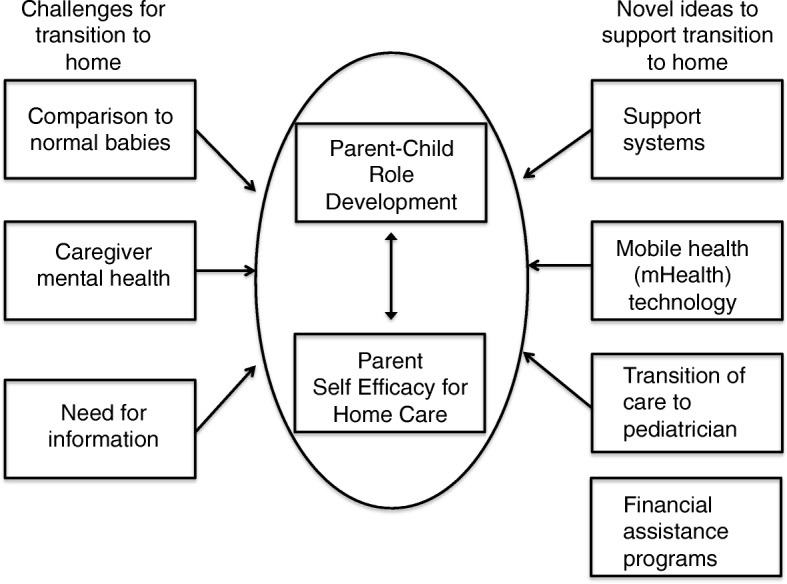
BACKGROUND: We have limited information on families' experiences during transition and after discharge from the neonatal intensive care unit. METHODS: Open-ended semi-structured interviews were conducted with English or Spanish- speaking families enrolled in Medicaid in an urban high-risk infant follow up clinic at a safety-net center, which serves preterm and high-risk term infants. We generated salient themes using inductive-deductive thematic analysis. RESULTS: Twenty-one participants completed the study. The infant's median (IQR) birth weight was 1750 (1305, 2641) grams; 71% were Hispanic and 10% were Black non-Hispanic; 62% reported living in a neighborhood with 3-4th quartile economic hardship. All were classified as having chronic disease per the Pediatric Medical Complexity Algorithm and 67% had medical complexity. A conceptual model was constructed and the analysis revealed major themes describing families' challenges and ideas to support transition centered on the parent-child role and parent self-efficacy. The challenges were: (1) comparison to normal babies, (2) caregiver mental health, (3) need for information. Ideas to support transition included, (1) support systems, (2) interventions using mobile health technology (3) improved communication to the primary care provider and (4) information regarding financial assistance programs. Specific subthemes differed in frequency counts between infants with and without medical complexity. CONCLUSIONS: Families often compare their preterm or high-risk infant to their peers and mothers feel great anxiety and stress. However, families often found hope and resilience in peer support and cited that in addition to information needs, interventions using mobile health technology and transition and financial systems could better support families after discharge.
Overview
The claims and statistics of this paper haven’t been checked yet.
Free: it reads the open-access text and checks the first 5 claims that cite a source we can check. Create a free account to check every claim.
Integrity signals
Registry
Cites
Statistics
Figures
Verification
Claims the paper makes
The claims and statistics of this paper haven’t been checked yet.
Free: it reads the open-access text and checks the first 5 claims that cite a source we can check. Create a free account to check every claim.
Claims other papers make about this one
Each is checked against this paper’s own text: does it say what the citing paper says it does?
The source backs part of the claim, not all of it — or backs it for a different population, condition or comparison.
In the citing paper
“Recently,Lakshmanan et al. 2019) highlighted the limited information on families' experiences during transition and after discharge from the neonatal unit.”
From The transition home of extremely premature babies: An integrative review (2021) · cites this paper as Lakshmanan et al. 2019
Experimental — accuracy not yet measuredThe cited source says what the claim attributes to it.
In the citing paper
“Their conceptual model described families' challenges and ideas to support transition; namely: comparison to normal babies, caregiver mental health and the need for information.”
From The transition home of extremely premature babies: An integrative review (2021) · cites this paper as Lakshmanan et al. 2019
In the citing paper
“Proposed ideas to support transition included provision of adequate support systems, interventions using mobile health technology, improved communication to the family and information regarding practical support at home.”
From The transition home of extremely premature babies: An integrative review (2021) · cites this paper as Lakshmanan et al. 2019
Self-check
Percentages, sums and reported differences re-computed from the paper’s own numbers.
The self-check needs the paper’s full text.
Citations
Cites
Screening for Depression in Adults: US Preventive Services Task Force Recommendation Statement
Siu, A. L., and the US Preventive Services Task Force (USPSTF), Bibbins-Domingo, K., Grossman, D. C., Baumann, L. C., Davidson, K. W., Ebell, M., García, F. A. R., Gillman, M., Herzstein, J., et al. (2016) · JAMA · doi:10.1001/jama.2015.18392 · Cited by 1,407
Qualitative research in healthcare: An introduction to grounded theory using thematic analysis
Chapman, A., Hadfield, M., & Chapman, C. (2015) · Journal of the Royal College of Physicians of Edinburgh · doi:10.4997/jrcpe.2015.305 · Cited by 654
Hospital Discharge of the High-Risk Neonate
Committee on Fetus and Newborn (2008) · Pediatrics · doi:10.1542/peds.2008-2174 · Cited by 537
Access Barriers to Health Care for Latino Children
Flores, G., Abreu, M., Olivar, M. A., & Kastner, B. (1998) · Archives of Pediatrics & Adolescent Medicine · doi:10.1001/archpedi.152.11.1119 · Cited by 459
Rosenberg, S. A., Zhang, D., & Robinson, C. C. (2008) · Pediatrics · doi:10.1542/peds.2007-1680 · Cited by 429
Annual Summary of Vital Statistics: 2010–2011
Hamilton, B. E., Hoyert, D. L., Martin, J. A., Strobino, D. M., & Guyer, B. (2013) · Pediatrics · doi:10.1542/peds.2012-3769 · Cited by 375
A systematic approach for using qualitative methods in primary prevention research
Willms, D. G., Best, J. A., Taylor, D. W., Gilbert, J. R., Wilson, D. M. C., Lindsay, E. A., & Singer, J. (1990) · Medical Anthropology Quarterly · doi:10.1525/maq.1990.4.4.02a00020 · Cited by 310
Hospital discharge of the high-risk neonate
Zarbock, S. F. (1998) · Home Care Provider · doi:10.1016/s1084-628x(98)90006-5 · Cited by 282
Neonatal Abstinence Syndrome and High School Performance
Oei, J. L., Melhuish, E., Uebel, H., Azzam, N., Breen, C., Burns, L., Hilder, L., Bajuk, B., Abdel-Latif, M. E., Ward, M., et al. (2017) · Pediatrics · doi:10.1542/peds.2016-2651 · Cited by 275
Development and Validation of the Pediatric Medical Complexity Algorithm (PMCA) Version 3.0
Simon, T. D., Haaland, W., Hawley, K., Lambka, K., & Mangione-Smith, R. (2018) · Academic Pediatrics · doi:10.1016/j.acap.2018.02.010 · Cited by 233
Cited by
A brief history of telemedicine and the evolution of teleneonatology
Jagarapu, J., & Savani, R. C. (2021) · Seminars in Perinatology · doi:10.1016/j.semperi.2021.151416 · Cited by 115
Ronan, S., Brown, M., & Marsh, L. (2020) · Journal of Clinical Nursing · doi:10.1111/jocn.15396 · Cited by 58
Parent Experiences in the NICU and Transition to Home
Spence, C. M., Stuyvenberg, C. L., Kane, A. E., Burnsed, J., & Dusing, S. C. (2023) · International Journal of Environmental Research and Public Health · doi:10.3390/ijerph20116050 · Cited by 57
“Many families took a prolonged leave of absence from work, which was required to meet the intensity of their preterm infant’s needs [24,25].”
BackgroundThe transition home of extremely premature babies: An integrative review
Green, J., Fowler, C., Petty, J., & Whiting, L. (2021) · Journal of Neonatal Nursing · doi:10.1016/j.jnn.2020.09.011 · Cited by 47
Garfield, C. F., Kerrigan, E., Christie, R., Jackson, K., & Lee, Y. S. (2022) · The Journal of Pediatrics · doi:10.1016/j.jpeds.2022.01.004 · Cited by 49
Kenny, T., Bogart, K. R., Freedman, A., Garthwaite, C., Henley, S. M. D., Bolz-Johnson, M., Mohammed, S. N., Walton, J., Winter, K., & Woodman, D. (2022) · Rare Disease and Orphan Drugs Journal · doi:10.20517/rdodj.2022.04 · Cited by 50
The financial burden on families of infants requiring neonatal intensive care
King, B., Mowitz, M. E., & Zupancic, J. A. F. (2021) · Seminars in Perinatology · doi:10.1016/j.semperi.2021.151394 · Cited by 47
Litt, J. S., Halfon, N., Msall, M. E., Russ, S. A., & Hintz, S. R. (2024) · Children · doi:10.3390/children11020146 · Cited by 60
“Parents report that travel logistics and costs prohibit adhering to recommended follow-up [41–43].”
Background“Fitting the Pieces Together”: The Experiences of Caregivers of Children With Medical Complexity
Hirt, E., Wright, A., Kehring, A., Wang, Y., Toraño, V., & Boles, J. C. (2023) · Hospital Pediatrics · doi:10.1542/hpeds.2022-007112 · Cited by 45
High-Risk Infant Follow-Up After NICU Discharge
Litt, J. S., & Campbell, D. E. (2023) · Clinics in Perinatology · doi:10.1016/j.clp.2022.11.004 · Cited by 44
Telemedicine in neonatal medicine and resuscitation
Lapcharoensap, W., Lund, K. C., & Huynh, T. K. (2021) · Current Opinion in Pediatrics · doi:10.1097/mop.0000000000000995 · Cited by 28
“In a recent study of NICU-to-home transition in a safety net hospital, mHealth applications such as video chat with providers for live assessment of physical examination findings, online resources (mental health, social and financial services), online parent forums and on-demand communication with providers online or…”
BackgroundBeyond income: material hardship and the health and healthcare of premature children
Cordova-Ramos, E. G., Brochier, A., Tripodis, Y., Garg, A., & Parker, M. G. K. (2022) · Journal of Perinatology · doi:10.1038/s41372-022-01560-w · Cited by 28
“After discharge from the NICU, high-risk infant follow-up settings should continue to track material hardships identified and resources provided during the NICU hospitalization, as well as identify and address material hardships that may emerge over time [47].”
BackgroundLakshmanan, A., Rogers, E. E., Lu, T., Gray, E. E., Vernon, L., Briscoe, H., Profit, J., Jocson, M. A. L., & Hintz, S. R. (2022) · The Journal of Pediatrics · doi:10.1016/j.jpeds.2022.05.026 · Cited by 26
Self-citationEnvironmental influences on child health outcomes: cohorts of individuals born very preterm
O’Shea, T. M., McGrath, M., Aschner, J. L., Lester, B. M., Junior, H. P. D. O. S., Marsit, C. J., Stroustrup, A., Emmanuel, C. J., Hudak, M. L., McGowan, E., et al. (2022) · Pediatric Research · doi:10.1038/s41390-022-02230-5 · Cited by 24
Worrall, S., Christiansen, P., Khalil, A. A., Silverio, S. A., & Fallon, V. (2024) · Frontiers in Psychiatry · doi:10.3389/fpsyt.2024.1323773 · Cited by 25
“…mothers feeling anxious about their baby ’ s survival (55), and hypervigilant surrounding discharge (11); this may be more prevalent in mothers of later premature infants as they transition home, particularly regarding the perceived fragility of their infant in comparison to other babies (56).”
BackgroundMorrison, A. K., Gibson, C., Higgins, C., & Gutzeit, M. F. (2021) · Pediatric Quality and Safety · doi:10.1097/pq9.0000000000000425 · Cited by 28
Haffner, D. N., & Huang, S. L. B. (2023) · Clinics in Perinatology · doi:10.1016/j.clp.2022.10.006 · Cited by 16
Household unmet basic needs in the first 1000 days and preterm birth status
Parker, M. G. K., de Cuba, S. E., Rateau, L. J., Sandel, M. T., Frank, D. A., Cutts, D. B., Heeren, T., Lê‐Scherban, F., Black, M. M., Ochoa, E. R., et al. (2022) · Journal of Perinatology · doi:10.1038/s41372-022-01325-5 · Cited by 14
“Qualitative data from families with recently discharged infants similarly reported the financial strains they accrued from the NICU hospitalization, which exacerbated underlying stressors [41] and need for information regarding financial assistance programs [42].”
BackgroundNorton, M., & Hagstrom, A. (2021) · Advances in Neonatal Care · doi:10.1097/anc.0000000000000850 · Cited by 17
“Gestational age at birth, mean (range), wk 27 (23-36)”
BackgroundChandrasekaran, S. A., John, H. B., Ross, B. J., Arumugam, A., Balan, I., & Samuel, R. (2022) · BMJ Open · doi:10.1136/bmjopen-2022-063732 · Cited by 16
The association of care transitions measure-15 score and outcomes after discharge from the NICU
Yeh, A. M., Song, A., Vanderbilt, D. L., Gong, C. L., Friedlich, P. S., Williams, R. G., & Lakshmanan, A. (2021) · BMC Pediatrics · doi:10.1186/s12887-020-02463-5 · Cited by 15
Self-citationvan de Riet, L., Alsem, M. W., van der Leest, E. C., van Etten‐Jamaludin, F. S., Maaskant, J. M., van Woensel, J. B. M., & van Karnebeek, C. (2023) · Orphanet Journal of Rare Diseases · doi:10.1186/s13023-023-02942-9 · Cited by 19
“With the exception of one study that offered participants the option of using a second language [43], a good understanding of the country’s main language by the participants was a requirement in all other studies.”
BackgroundHarris, M., Cusatis, R. N., Malnory, M. E., Dawson, S. K., Konduri, G. G., & Lagatta, J. M. (2024) · Journal of Perinatology · doi:10.1038/s41372-024-01880-z · Cited by 14
“This framework can help inform measurement, quality, and system initiatives to improve the process of discharge for infants with BPD.”
Taylor, B., & Hambridge, K. (2025) · Journal of Neonatal Nursing · doi:10.1016/j.jnn.2024.12.004 · Cited by 14
“This theme presented across five of the studies (Aydon et al., 2018; Berman et al., 2019; Kristiawati et al., 2022; Lakshmanan et al., 2019; Petty et al.,2018).”
InfluentialHintz, S. R., deRegnier, R.-A. O., & Vohr, B. R. (2023) · Clinics in Perinatology · doi:10.1016/j.clp.2022.10.001 · Cited by 12
Discharge Best Practices of High-Risk Infants From Regional Children’s Hospital NICUs
Bourque, S. L., Machut, K. Z., Chuo, J., Cohen, S. S., Johnson, Y. R., Nanda, S. H., Parsons, K., & Ponzek, R. (2023) · Hospital Pediatrics · doi:10.1542/hpeds.2022-007063 · Cited by 14
Towards AI-governance in psychosocial care: A systematic literature review analysis
Wang, X., Oussalah, M., Niemilä, M., Ristikari, T., & Virtanen, P. J. (2023) · Journal of Open Innovation Technology Market and Complexity · doi:10.1016/j.joitmc.2023.100157 · Cited by 13
Tele-medicine: Innovative tools for a safe transition to home in neonatal care
Azzuqa, A. A., Chuo, J., & Zenge, J. P. (2021) · Seminars in Perinatology · doi:10.1016/j.semperi.2021.151427 · Cited by 10
Qualidade do seguimento do bebê prematuro na rede de Atenção Primária à Saúde: guia “Qualiprematuro”
da Silva, R. M. M., & de Mello, D. F. (2022) · Revista Brasileira de Enfermagem · doi:10.1590/0034-7167-2022-0241 · Cited by 9
Healthcare access and adverse family impact among U.S. children ages 0–5 years by prematurity status
Lindly, O. J., Crossman, M. K., Shui, A. M., Kuo, D. Z., Earl, K. M., Kleven, A. R., Perrin, J. M., & Kuhlthau, K. A. (2020) · BMC Pediatrics · doi:10.1186/s12887-020-02058-0 · Cited by 10
Bracken, L. E., Clark, J., Gill, A., O’Brien, F., Dewey, R., Barker, C. E., & Carter, B. (2023) · Frontiers in Communication · doi:10.3389/fcomm.2023.1204599 · Cited by 7
van de Riet, L., Aris, A. M., Verouden, N. W., van Rooij, T., van Woensel, J. B. M., van Karnebeek, C., & Alsem, M. W. (2024) · PEC Innovation · doi:10.1016/j.pecinn.2024.100280 · Cited by 7
“[ 28,29] Examples of these eHealth solutions encompass educational portals that show instruction videos, social media platforms fostering peer support, and improved communication with HCP through videocalls.”
BackgroundTelemedicine Follow-Up Appointments After NICU Discharge May Facilitate Easier Transition to Home
Bathgate, J. R., Barnes, D., Fry, J. T., de Regnier, R.-A. O., & Machut, K. Z. (2025) · Advances in Neonatal Care · doi:10.1097/anc.0000000000001264 · Cited by 6
Wilson, A., Bedwell, C., Danna, V. A., Tate, N., Dwan, K. M., Portela, A. G., & Lavender, T. (2026) · PLOS Global Public Health · doi:10.1371/journal.pgph.0005690 · Cited by 7
“This is a particularly difficult time for parents, who have reported feeling vulnerable and inadequate in caring for their newborn when transitioning from a facility where support was available to being left to cope alone [6].”
InfluentialLongitudinal medical needs for periviable NICU survivors
Adams, W. A., Malcolm, W., Goldstein, R. F., Lemmon, M. E., Mago-Shah, D. D., Cotten, M., Peterson, J. K., Fisher, K. A., & Younge, N. E. (2022) · Early Human Development · doi:10.1016/j.earlhumdev.2022.105580 · Cited by 6
Brown, A., Tornberg, Å. B., & Hallström, I. (2024) · Annals of Medicine · doi:10.1080/07853890.2024.2309606 · Cited by 9
Miller, K., Willett, S. L., McCarty, D. B., & Dusing, S. C. (2024) · Developmental Medicine & Child Neurology · doi:10.1111/dmcn.16075 · Cited by 9
Welke, N., Lagatta, J. M., Leuthner, S. R., & Acharya, K. (2023) · The Journal of Pediatrics · doi:10.1016/j.jpeds.2023.113779 · Cited by 5
Wolf, M. F., Montoya‐Williams, D., & Peña, M.-M. (2025) · Seminars in Perinatology · doi:10.1016/j.semperi.2025.152141 · Cited by 4
Sehn, L., den Otter, M. A. A. W., Will, J., Visscher, R. M. S., Kus, S., Coenen, M., Flemmer, A. W., Schouten, E., Tannen, A., & Fischer, U. (2025) · BMJ Open · doi:10.1136/bmjopen-2025-104346 · Cited by 4
Supporting the Paternal Role and Transition Home From the NICU: A Mixed Method Study
Salazar, B. L. (2022) · The Open Journal of Occupational Therapy · doi:10.15453/2168-6408.1838 · Cited by 6
The feasibility of virtual home visits to address unmet needs after NICU discharge
Litt, J. S., Belmont, J., Church, P., Howland, J., & Stewart, J. E. (2024) · Journal of Perinatology · doi:10.1038/s41372-024-02180-2 · Cited by 3
A Compassion-Focused Approach to Support Parents After Preterm Birth
Lloyd-Collins, T. M., Fitzallen, G. C., & Kirby, J. N. (2025) · Clinical Child and Family Psychology Review · doi:10.1007/s10567-025-00549-z · Cited by 3
Post‐discharge family resilience in premature infants and their mothers: A longitudinal study
Hsiao, J.-P., Chu, S., Chang, H., Liu, C., Liu, P., & Chen, C. (2025) · Nursing in Critical Care · doi:10.1111/nicc.13229 · Cited by 4
Zhang, L., He, J., Zhou, Y., Li, J., Qiu, J., & Li, X. (2025) · International Journal of Nursing Studies Advances · doi:10.1016/j.ijnsa.2025.100372 · Cited by 4
“Thus, they have higher requirements and face greater difficulties with home care after discharge(Lakshmanan et al., 2019).”
Driansky, A., Pilapil, M., & Mastrogiannis, A. M. (2022) · Current Opinion in Pediatrics · doi:10.1097/mop.0000000000001116 · Cited by 3
The Role of Nurses in Preparing Mothers of Premature Infants for Discharge and Home Care
Çelik, R. (2023) · Journal of Education and Research in Nursing · doi:10.14744/jern.2023.22480 · Cited by 6
“17,26 For this reason, nurses should be with mothers during the transition to home and should continue their follow-ups after discharge.”
BackgroundUnderstanding the Challenges Nurses Encounter with Monitoring Technologies in a NICU
Venkatasubramanian, K., Ranalli, T.-M., Kirupaharan, P., Solanki, D., & Mankodiya, K. (2023) · International Journal of Human-Computer Interaction · doi:10.1080/10447318.2023.2278297 · Cited by 5
“This includes mobile applications to facilitate the baby’s transition to the home (H. N. Kim et al., 2015; Lakshmanan et al., 2019; Lee et al., 2011), co-designing with nurses and parents technologies to support parents (H. N. Kim et al., 2015; Mburu et al., 2018), understanding, supporting and…”
Challenges with Access to Early Intervention Services following NICU Discharge in California
Richter, M., Kellner, P., Kwon, J., Vargas, L. G., Biniwale, M. A., Yeh, A. M., & Pineda, R. G. (2025) · American Journal of Perinatology · doi:10.1055/a-2662-8594 · Cited by 6
Families’ perspectives on monitoring infants’ health and development after discharge from NICUs
O’Shea, T. M. (2020) · Pediatric Research · doi:10.1038/s41390-020-01243-2 · Cited by 3
Lagatta, J. M., Malnory, M. E., Fischer, E. A., Davis, M., Radke-Connell, P., Weber, C., & Cohen, S. S. (2022) · Journal of Perinatology · doi:10.1038/s41372-021-01303-3 · Cited by 3
Lyon, J., McAndrew, N. S., Geich, A., AbuZahra, T., Leuthner, S. R., Lagatta, J. M., & Acharya, K. (2025) · Journal of Perinatology · doi:10.1038/s41372-025-02255-8 · Cited by 4
“Prior research has suggested that incorporating mobile health technology to provide discharge education and ongoing support to these families whether through video chat or e-consults may provide an avenue for families to better navigate healthcare for their child [37, 38].”
Palaza, A., CALLAS, P. W., Dayan, P. S., Kuo, D. Z., Riney, L. C., Spencer, S. P., Stapleton, R., Stevens, M. W., Studts, C. R., & Pulcini, C. D. (2025) · BMJ Open · doi:10.1136/bmjopen-2025-106842 · Cited by 2
Boakye, P. N., Prendergast, N., Bacchini, F., & Obewu, O. A. T. (2025) · Journal of Neonatal Nursing · doi:10.1016/j.jnn.2025.101762 · Cited by 3
COVID-19 Experiences of Turkish Intensive Care Nurses: A Qualitative Study
Besen, D. B., Günbaş, M., & Dervişoğlu, M. (2022) · Türk yoğun bakım derneği dergisi/Türk yoğun bakım dergisi · doi:10.4274/tybd.galenos.2022.65807 · Cited by 2
Wyles, C. L., Gephart, S. M., & Nunez, F. (2022) · The Journal of Perinatal & Neonatal Nursing · doi:10.1097/jpn.0000000000000644 · Cited by 2
“While parents are increasingly invited to participate during the development of consumer health literature, few studies engage bilingual-speaking parents to understand their perspective.(13,14) In addition, the complexities of a community further challenge “knowledge” gaps and the inequities”
BackgroundNICU discharge preparation and transition planning: editorial
Vohr, B. R. (2022) · Journal of Perinatology · doi:10.1038/s41372-022-01310-y · Cited by 2
Tutar, Ş., Günbayı, İ., & Yirik, N. (2025) · Journal of Pediatric Nursing · doi:10.1016/j.pedn.2025.08.011 · Cited by 3
Amiri, S., Prelipcean, I., Pazandak, C. C., Hoge, M. K., Punar, M., Spencer, M., & Shaw, R. J. (2025) · Journal of Perinatology · doi:10.1038/s41372-025-02473-0 · Cited by 1
“In the United States, ~10% of infants require medical care in the NICU [1, 2].”
Telemedicine Visits After Hospital Discharge in Children With Medical Complexity
Simmers, C. W., Teague, M. S., Letzkus, L., Fang, C., & Stevenson, E. L. (2024) · The Journal for Nurse Practitioners · doi:10.1016/j.nurpra.2024.105285 · Cited by 1
Alam, L., & France, D. J. (2026) · BMC Pediatrics · doi:10.1186/s12887-026-07173-y · Cited by 1
“Three trials aligned with structured and/or digital discharge supports were identified from WHO ICTRP records: study with families (i.e. semi-structured interview) also supported the value of sustained transition supports during early post-discharge life [17].”
Prematurity and Autism Spectrum Disorder
Garcia, M. G. D., Bhat, R., Manzar, S., Mhanna, M. J., & Walyat, N. (2022) · Autism and child psychopathology series · doi:10.1007/978-3-031-06120-2_15 · Cited by 1
Parents and Health Care Teams Perceptions of Communication in Neonatal Intensive Care Unit
Mardani‐Hamooleh, M., & Heidari, H. (2024) · The Qualitative Report · doi:10.46743/2160-3715/2024.6233 · Cited by 4
“Most families with premature babies face several problems due to long term outcomes (Donoho et al., 2021; Garne Holm et al., 2019; Lakshmanan et al., 2019).”
BackgroundScoping Review on Transitions in the Context of Pediatric Palliative Care
Champagne, E., Chénard, J., Simard, C., Bonanno, M., Bogossian, A., Roberge, V., Olivier-d’Avignon, M., Ummel, D., Fortin, G., Bergeron, F., et al. (2024) · Journal of Palliative Medicine · doi:10.1089/jpm.2023.0673 · Cited by 1
Simulating Telehealth Experiences in the Neonatal Care Environment: Improving Access to Care
Watts, P. I., Smith, T. S., Currie, E. R., Knight, C. C., & Bordelon, C. (2021) · Neonatal Network The Journal of Neonatal Nursing · doi:10.1891/11-t-710
Palliative Care in the Perinatal and Neonatal Setting
Leimena, M. L., & Rusch, R. (2022) · Oxford University Press eBooks · doi:10.1093/med/9780197537855.003.0032
da Silva, R. M. M., Zilly, A., Fonseca, L. M. M., & de Mello, D. F. (2022) · Revista Enfermagem UERJ · doi:10.12957/reuerj.2022.64966 · Cited by 4
Follow-Up to Ensure Continuity of Care and Support Preventive Care
Ferrante, G., Antona, V., Giuffrè, M., Piro, E., Serra, G., & Corsello, G. (2023) · Springer eBooks · doi:10.1007/978-3-031-24307-3_16 · Cited by 1
Xue, X., Zong, X., Valentine, G., & Hussey-Gardner, B. T. (2023) · Journal of Early Intervention · doi:10.1177/10538151231179113
“Future qualitative research, similar to the work of Lakshmanan et al. (2019), is warranted to better understand the experiences of parents in BWP and BWOP and their decision to withdraw from or stay in the program.”
Charlotte, E. E., Yolande, F. D. P., Iyawa, H., Edgar, M. M. L., Patricia, É., Bitsie, D. M., & Daniele-Christiane, K. M. K. (2024) · Open Journal of Pediatrics · doi:10.4236/ojped.2024.144065
First-Time Mothers’ Experiences of Caring for Their Preterm Infant in India
Sahoo, R., Lewis, L., & Dsouza, S. A. (2025) · Occupational Therapy In Health Care · doi:10.1080/07380577.2025.2472420 · Cited by 1
“As indicated by the study findings, further research should explore feasible strategies to support mothers in caring for their infants and themselves after discharge (Lakshmanan et al., 2019).”
Unmet Health and Childcare Needs after Neonatal Intensive Care Unit Discharge
Younge, T., Jacobs, M. B., Soghier, L. M., & Fratantoni, K. R. (2025) · American Journal of Perinatology · doi:10.1055/a-2593-8807 · Cited by 1
Understanding the Emotional and Psychological Impact of Parental Stress in the NICU
Farmer, M. L., Hull, W., & Bell, T. R. (2025) · Neonatal Network The Journal of Neonatal Nursing · doi:10.1891/nn-2025-0024
van de Riet, L., Alsem, M. W., van der Leest, E. C., Etten-Jamaludin, V. F., Maaskant, J. M., van Woensel, J. B. M., & van Karnebeek, C. (2024) · Figshare · doi:10.6084/m9.figshare.26652105
van de Riet, L., Alsem, M. W., van der Leest, E. C., Etten-Jamaludin, V. F., Maaskant, J. M., van Woensel, J. B. M., & van Karnebeek, C. (2024) · Figshare · doi:10.6084/m9.figshare.24792415
van de Riet, L., Alsem, M. W., van der Leest, E. C., van Etten-Jamaludin, F. S., Maaskant, J. M., van Woensel, J. B. M., & van Karnebeek, C. (2023) · Figshare · doi:10.6084/m9.figshare.24792348
van de Riet, L., Alsem, M. W., van der Leest, E. C., Etten-Jamaludin, V. F., Maaskant, J. M., van Woensel, J. B. M., & van Karnebeek, C. (2024) · Figshare · doi:10.6084/m9.figshare.26652108
Efendi, E. C., Mustika, R., & Hadi, W. (2025) · Rangkiang · doi:10.70072/rangkiang.v3i2.174
“The qualitative method was chosen because it allows the researcher to understand the meanings, social interactions, and contextual dynamics behind cooperative economic practices within their natural setting (Lakshmanan, 2019).”
Follow-Up and Follow-Through after Discharge and Early Intervention Services
Hintz, S. R., Lakshmanan, A., Litt, J. S., & Mcmanus, B. (2026) · Cambridge University Press eBooks · doi:10.1017/9781009418034.054
Self-citationArnold, C., Birrer, R., Odermatt, K., Bubl, B., Busso, M., Jaisli, S., Schmid, S. V., & Kidszun, A. (2026) · Journal of Perinatology · doi:10.1038/s41372-026-02875-8
Engaging families to improve high-risk infant follow-up participation: a mixed methods study
Sugimoto, C., Murphy, M. M., Kendrick-Allwood, S. R., Croft, V., & Maitre, N. L. (2026) · Journal of Perinatology · doi:10.1038/s41372-026-02885-6
Harizopoulou, V. C., Bolou, A., Tsiakiri, E., Bouroutzoglou, M., Vivilaki, V. G., & Metallinou, D. (2026) · Pediatric Reports · doi:10.3390/pediatric18050116
“Consequently, many survivors are discharged with complex medical needs and technological support [22], translating into a sustained financial and psychological burden for families [7,23].”
From NICU monitoring to home caregiving: a qualitative study of parents of preterm infants
Sunzi, K., Deng, Q., Huang, Q., Xu, Y., Gao, Y., Zeng, T., Hui, L., & Cheng, L. (2026) · BMC Nursing · doi:10.1186/s12912-026-05398-x
Matsushima, A., Iwatani, S., Matsui, S., & Yoshimoto, S. (2026) · American Journal of Medical Genetics Part A · doi:10.1002/ajmg.a.70309
Pentz, B. A., & Pilkington, M. (2026) · Surgery · doi:10.1016/j.surg.2026.110717
Shen, S., Jiang, L., Ma, Y., Jinyu, Z., & Zhang, Y. (2026) · BMJ Paediatrics Open · doi:10.1136/bmjpo-2026-004695
Carson, M. C., Matić, T., Burke, R. V., Mirzaian, C. B., Yuen, J., Vanderbilt, D. L., & Williams, M. E. (2026) · Behavioral Sciences · doi:10.3390/bs16101940
“Parents of infants discharged from the NICU have also commented about the importance of peer support and being able to talk to someone who also had a premature baby (Lakshmanan et al., 2019).”
Self-citation
Metadata
- Authors
- Lakshmanan, A., Kubicek, K., Williams, R., Robles, M., Vanderbilt, D. L., Mirzaian, C. B., Friedlich, P. S., & Kipke, M.
- Affiliations
- University of Southern California (US)
- Children's Hospital Los Angeles (US)
- Corresponding author
- Lakshmanan, Ashwini
- ORCID
- Venue
- BMC Pediatrics
- Published
- 2019-07-05
- Volume
- 19
- Issue
- 1
- Pages
- 223-223
- ISSN
- 1471-2431 (ISSN-L)
- PMC
- PMC6610911
- OpenAlex
- W2954106482
- Cited by
- 89
- References
- 71
- Citations by year
- 2026: 10 · 2025: 15 · 2024: 15 · 2023: 15 · 2022: 22 · 2021: 8 · 2020: 4
- FWCI
- 8.84
- Type
- journal article
- Language
- en
- Open access
- gold
- doi.org
- Licence
- cc-by
- creativecommons.org/licenses/by/4.0/ (tdm)
- creativecommons.org/licenses/by/4.0/ (vor)
- Locations
- BMC Pediatrics (publishedVersion, cc-by)
- PubMed Central (publishedVersion, cc-by)
- PubMed (publishedVersion)
- DOAJ (DOAJ: Directory of Open Access Journals) (submittedVersion, cc-by-sa)
- Funders
- National Center for Advancing Translational Sciences (KL2TR001854)
- Topics
- Health Sciences › Medicine › Pediatrics, Perinatology and Child Health › Infant Development and Preterm Care
- Health Sciences › Medicine › Pediatrics, Perinatology and Child Health › Adolescent and Pediatric Healthcare
- Social Sciences › Psychology › Clinical Psychology › Family and Disability Support Research
- Keywords
- neonatal intensive care unit discharge, transition to home, family experiences, parental self-efficacy, caregiver mental health, peer support, mobile health technology, primary care communication, financial assistance programs, preterm infants, high-risk infants, safety-net hospitals, Medicaid, Latino families
- MeSH terms
- Transitional Care, Psychosocial Support Systems, Black or African American, Child Development, Family, Financial Support, Gestational Age, Hispanic or Latino, Humans, Infant, Infant, Premature, Intensive Care Units, Neonatal, Health Knowledge, Attitudes, Practice, Mental Health, Parents, Patient Discharge, Prospective Studies, Referral and Consultation, Parenting, Telemedicine, Self Efficacy, Needs Assessment, Qualitative Research, White People, Asian People, Quality Improvement, Early Medical Intervention, Safety-net Providers
About these checks
Registry, retraction, Cites and statistics results are computed, not judged, with one exception: a printed reference that no index lists is read once by a model before it counts as a citation error. Claims are extracted by a model and kept only when their quote appears verbatim in the text; each cited source is then checked, with a model’s help, for whether it says what the claim relies on. Those verdicts can be wrong — read the claim’s quote and the cited source before relying on one.
Statistics and arithmetic are recomputed, not judged.
Confidence bands are shown only for fields calibrated on our annotated test set. None is calibrated yet, so no band is shown.
What counts as a claim ›How we measure confidence ›How we check this ›
Are you an author, or do you see a problem with this page? Request a review
Data sources
Bibliographic data: Semantic Scholar, OpenAlex, Crossref.
Contains information from the Semantic Scholar Academic Graph Datasets, made available under the ODC Attribution License (ODC-BY 1.0).
Semantic Scholar’s data is described in: Kinney, R., et al. (2023). The Semantic Scholar Open Data Platform. arXiv:2301.10140.
