

Music medicine and music therapy in neonatal care: a scoping review of passive music listening research applications and findings on infant development and medical practice
Open accessPublished version of a preprint
The DOI matches its Crossref record; 53 of the 53 references it cites were found in a registry or an index.
Abstract
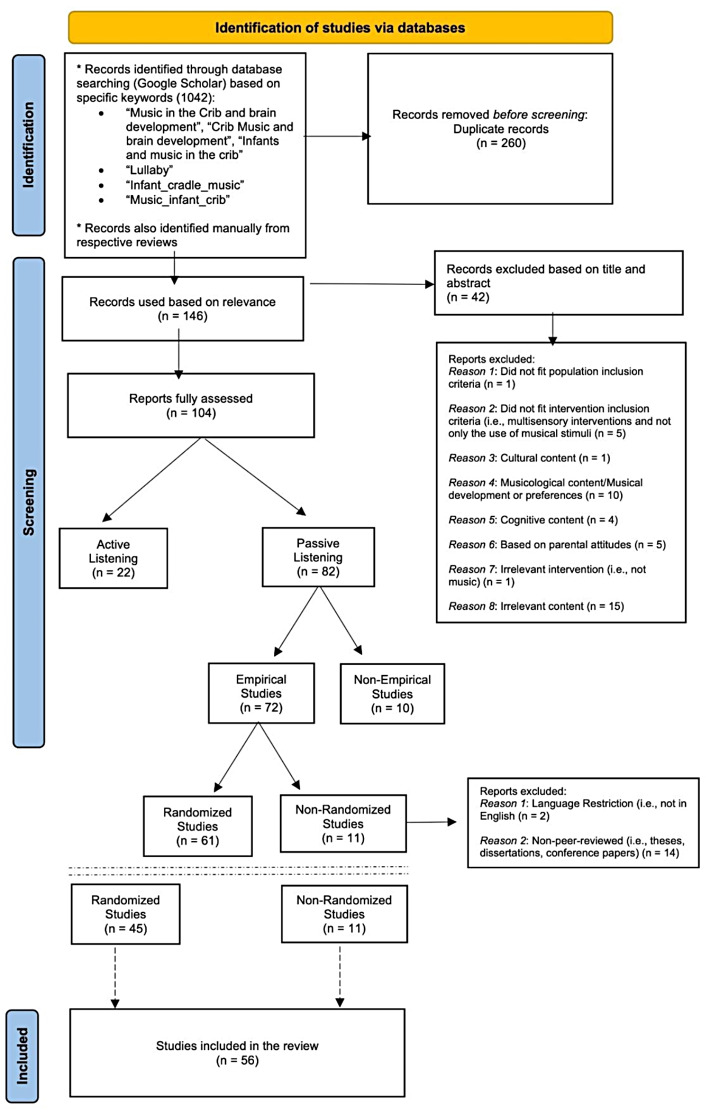
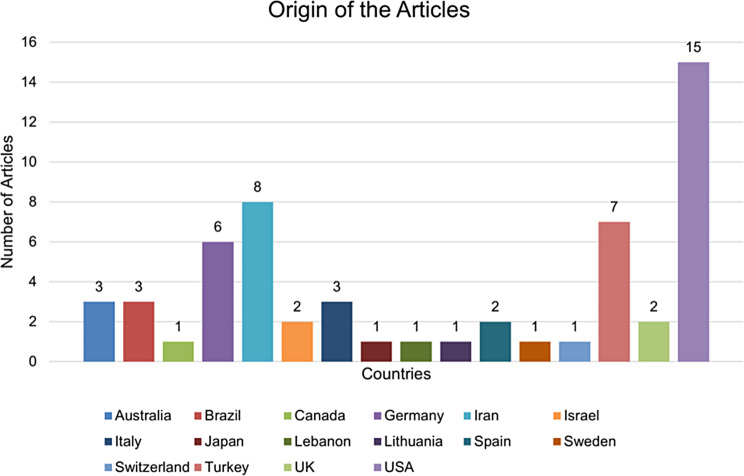
Background: In recent years, the use of music as a therapeutic and developmental tool for infants, especially within neonatal intensive care units (NICUs), has seen a surge in interest. Despite a growing body of research underscoring the potential benefits of music therapy and music medicine in enhancing infant development and aiding medical practices, the specific characteristics of music that maximize these benefits remain poorly understood. Objectives: This scoping review aims to provide a comprehensive foundation by mapping the existing literature on passive music listening and identifying gaps, trends, and patterns that are crucial precursors to the development of best practices. Methods: Following the PRISMA guidelines, a comprehensive literature search was conducted, covering studies published up until December 2022. The focus was on passive music listening, with a deliberate exclusion of active music interventions. Out of the initial pool of studies, 56 met the inclusion criteria, determined by the PICO framework, focusing on passive music exposure among full-term and preterm infants. Starting with a descriptive analysis approach, the study employed Non-negative Matrix Factorization (NMF) and Latent Dirichlet Allocation (LDA) to identify key themes, including the physiological impacts of music, its role in pain management, effects on sleep and stress, and influences on feeding and weight gain. Results: The review revealed a predominance of quantitative research methods, a significant concentration of studies from the United States, suggesting potential geographical bias, and a notable clinical setting bias. These findings indicate a critical need for methodological diversity and a more culturally inclusive and interdisciplinary approach to research. They also point to the necessity for standardized music intervention protocols to optimize therapeutic and developmental outcomes for this vulnerable population. Future research should aim to bridge the methodological gaps identified, integrating both qualitative and quantitative approaches to provide a comprehensive understanding of music’s impact on infant development and medical practices in a global, culturally nuanced context.
Overview
The claims and statistics of this paper haven’t been checked yet.
Free: it reads the open-access text and checks the first 5 claims that cite a source we can check. Create a free account to check every claim.
Integrity signals
Registry
Cites
Statistics
Figures
Verification
Claims the paper makes
The claims and statistics of this paper haven’t been checked yet.
Free: it reads the open-access text and checks the first 5 claims that cite a source we can check. Create a free account to check every claim.
Claims other papers make about this one
Each is checked against this paper’s own text: does it say what the citing paper says it does?
The source backs part of the claim, not all of it — or backs it for a different population, condition or comparison.
In the citing paper
“Listening to music may be beneficial for sleep across ages, with strong data in studies of preterm and term infants, in particular for music therapy in neonatal intensive care units.229,230”
From Digital Ecosystems, Children, and Adolescents: Technical Report (2026) · cites this paper as [229]
Experimental — accuracy not yet measured
Self-check
Percentages, sums and reported differences re-computed from the paper’s own numbers.
The self-check needs the paper’s full text.
Citations
Cites
Preferred reporting items for systematic reviews and meta-analyses: The PRISMA statement
Moher, D., Liberati, A., Tetzlaff, J., Altman, D. G., & the PRISMA Group* (2009) · Annals of Internal Medicine · doi:10.7326/0003-4819-151-4-200908180-00135 · Cited by 37,554
Evidence based medicine: what it is and what it isn't
Sackett, D. L., Rosenberg, W. M. C., Gray, J. A. M., Haynes, R. B., & Richardson, W. S. (1996) · BMJ · doi:10.1136/bmj.312.7023.71 · Cited by 15,769 · cited 1×
“…studies, it could also imply a lack of innovation in both research and practice approaches or subjects, an element that, if evident, may hinder professional development and individual clinical expertise resulting in turn, in suboptimal practice of evidence-based medicine and therapy protocols [34].”
Choi, B. C. K., & Pak, A. W. P. (2006) · PubMed · Cited by 1,978
Feeling the Beat: Movement Influences Infant Rhythm Perception
Phillips-Silver, J., & Trainor, L. J. (2005) · Science · doi:10.1126/science.1110922 · Cited by 656
Qualitative Methods in Health Care Research
Renjith, V., Yesodharan, R., Noronha, J. A., Ladd, E., & George, A. (2021) · International Journal of Preventive Medicine · doi:10.4103/ijpvm.ijpvm_321_19 · Cited by 542
Joint drumming: Social context facilitates synchronization in preschool children
Kirschner, S., & Tomasello, M. (2009) · Journal of Experimental Child Psychology · doi:10.1016/j.jecp.2008.07.005 · Cited by 494 · cited 1×
“Additionally, active musical participation has been shown to bolster motor skills, coordination and rhythm synchronization, by furnishing a structured, temporally organized context for movement [17, 18, 30, 36].”
Music acquisition: Effects of enculturation and formal training on development
Hannon, E. E., & Trainor, L. J. (2007) · Trends in Cognitive Sciences · doi:10.1016/j.tics.2007.08.008 · Cited by 493
The effects of music therapy on vital signs, feeding, and sleep in premature infants
Loewy, J., Stewart, K., Dassler, A.-M., Telsey, A., & Homel, P. (2013) · Pediatrics · doi:10.1542/peds.2012-1367 · Cited by 482 · cited 1×
“Furthermore, the calming and soothing effects of passively listening to lullabies are well-established in both premature and healthy infants, shown to impact medical practices, including pain management, stress reduction, and sleep promotion [4, 6, 11, 20, 26, 35, 38, 39].”
The developmental origins of musicality
Trehub, S. E. (2003) · Nature Neuroscience · doi:10.1038/nn1084 · Cited by 479
Mothers and infants and communicative musicality
Malloch, S. N. (1999) · Musicae Scientiae · doi:10.1177/10298649000030s104 · Cited by 444
Music therapy for premature infants and their parents: an integrative review
Haslbeck, F. B. (2012) · Nordic Journal of Music Therapy · doi:10.1080/08098131.2011.648653 · Cited by 410
Correa, V. C., Lugo-Agudelo, L. H., Aguirre-Acevedo, D. C., Contreras, J. A. P., Borrero, A. M. P., Patiño-Lugo, D. F., & Valencia, D. A. C. (2020) · Health Research Policy and Systems · doi:10.1186/s12961-020-00588-8 · Cited by 407 · cited 1×
“This clinical orientation, however, may not fully address the broader considerations necessary for policy development, such as accessibility, cost-effectiveness, and integration into existing health systems, a concern that is also reflected in other conjoining domains in the same context [9].”
Learning-induced neural plasticity of speech processing before birth
Partanen, E., Kujala, T., Näätänen, R., Liitola, A., Sambeth, A., & Huotilainen, M. (2013) · Proceedings of the National Academy of Sciences · doi:10.1073/pnas.1302159110 · Cited by 276
Active music classes in infancy enhance musical, communicative and social development
Gerry, D., Unrau, A., & Trainor, L. J. (2012) · Developmental Science · doi:10.1111/j.1467-7687.2012.01142.x · Cited by 265
Music and Early Language Acquisition
Brandt, A., Gebrian, M., & Slevc, L. R. (2012) · Frontiers in Psychology · doi:10.3389/fpsyg.2012.00327 · Cited by 240
Music Therapy for Preterm Infants and Their Parents: A Meta-analysis
Bieleninik, Ł., Ghetti, C., & Gold, C. (2016) · Pediatrics · doi:10.1542/peds.2016-0971 · Cited by 224
Self-citationMusic Therapy Research in the NICU: An Updated Meta-Analysis
Standley, J. (2012) · Neonatal Network · doi:10.1891/0730-0832.31.5.311 · Cited by 223
Musical intervention enhances infants’ neural processing of temporal structure in music and speech
Zhao, T. C., & Kuhl, P. K. (2016) · Proceedings of the National Academy of Sciences · doi:10.1073/pnas.1603984113 · Cited by 172
Music in premature infants enhances high-level cognitive brain networks
Lordier, L., Meskaldji, D. E., Grouiller, F., Pittet, M. P., Vollenweider, A., Vasung, L., Borradori-Tolsa, C., Lazeyras, F., Grandjean, D., Ville, D. V. D., et al. (2019) · Proceedings of the National Academy of Sciences · doi:10.1073/pnas.1817536116 · Cited by 169
Premature Birth and Developmental Programming: Mechanisms of Resilience and Vulnerability
Lammertink, F., Vinkers, C. H., Tataranno, M. L., & Benders, M. J. N. L. (2021) · Frontiers in Psychiatry · doi:10.3389/fpsyt.2020.531571 · Cited by 168
Abu‐Odah, H., Said, N. B., Nair, S. C., Allsop, M. J., Currow, D. C., Salah, M. S., Hamad, B. A. A., Elessi, K. A., Alkhatib, A., ElMokhallalati, Y., et al. (2022) · Health & Social Care in the Community · doi:10.1111/hsc.13898 · Cited by 165
A Pacifier-Activated Music Player With Mother’s Voice Improves Oral Feeding in Preterm Infants
Chorna, O. D., Slaughter, J. C., Wang, L., Stark, A. R., & Maitre, N. L. (2014) · PEDIATRICS · doi:10.1542/peds.2013-2547 · Cited by 142
The Ethics of Research with Children and Young People: A Practical Handbook
Alderson, P., & Morrow, V. (2020) · SAGE Publications Ltd eBooks · doi:10.4135/9781529682694 · Cited by 139
Becoming musically enculturated: effects of music classes for infants on brain and behavior
Trainor, L. J., Marie, C., Gerry, D., Whiskin, E. E., & Unrau, A. (2012) · Annals of the New York Academy of Sciences · doi:10.1111/j.1749-6632.2012.06462.x · Cited by 134
Kuhn, D. (2002) · Journal of Music Therapy · doi:10.1093/jmt/39.1.30 · Cited by 118
van der Heijden, M. J. E., Oliai Araghi, S., Jeekel, J., Reiss, I. K. M., Hunink, M. G. M., & van Dijk, M. (2016) · PLOS ONE · doi:10.1371/journal.pone.0161848 · Cited by 106
Wulff, V., Hepp, P., Wolf, O. T., Balan, P., Hagenbeck, C., Fehm, T., & Schaal, N. K. (2021) · Archives of gynecology and obstetrics · doi:10.1007/s00404-020-05727-8 · Cited by 101 · cited 1×
“Active musical engagement in this framework, involving singing and musical interaction with caregivers, can enhance attachment and bonding while also promoting empathy, emotional regulation, and social communication skills [22, 40, 42].”
Merlo, G., Page, K., Ratcliffe, J., Halton, K. A., & Graves, N. (2014) · Applied Health Economics and Health Policy · doi:10.1007/s40258-014-0132-7 · Cited by 92
Analysis of Neonatal Neurobehavior and Developmental Outcomes Among Preterm Infants
McGowan, E. C., Hofheimer, J. A., O’Shea, T. M., Kilbride, H. W., Carter, B. S., Check, J. F., Helderman, J., Neal, C. R., Pastyrnak, S., Smith, L. M., et al. (2022) · JAMA Network Open · doi:10.1001/jamanetworkopen.2022.22249 · Cited by 84
Music Therapy or Music Medicine?
Gold, C., Erkkilä, J., Bonde, L. O., Trondalen, G., Maratos, A., & Crawford, M. J. (2011) · Psychotherapy and Psychosomatics · doi:10.1159/000323166 · Cited by 70
Self-citationCaparrós-González, R. A., de la Torre‐Luque, A., Díaz-Piedra, C., Vico, F. J., & Buela‐Casal, G. (2017) · Advances in Neonatal Care · doi:10.1097/anc.0000000000000448 · Cited by 67
Musical and vocal interventions to improve neurodevelopmental outcomes for preterm infants
Haslbeck, F. B., Mueller, K. F., Karen, T., Loewy, J. V., Meerpohl, J. J., & Bassler, D. (2023) · Cochrane Database of Systematic Reviews · doi:10.1002/14651858.cd013472.pub2 · Cited by 67
A review of the strengths and weaknesses of quantitative methods used in health impact assessment
O’Connell, E., & Hurley, F. (2009) · Public Health · doi:10.1016/j.puhe.2009.02.008 · Cited by 65
The impact of sound stimulations during pregnancy on fetal learning: a systematic review
Movalled, K., Sani, A., Nikniaz, L., & Ghojazadeh, M. (2023) · BMC Pediatrics · doi:10.1186/s12887-023-03990-7 · Cited by 64
Costa, V. S. L. P., Bündchen, D. C., Sousa, H., Pires, L. B., & Felipetti, F. A. (2021) · Acta Paediatrica · doi:10.1111/apa.16222 · Cited by 60
Zimmerman, E., Keunen, K., Norton, M., & Lahav, A. (2013) · American Journal of Perinatology · doi:10.1055/s-0033-1333669 · Cited by 60
Constructing optimal experience for the hospitalized newborn through neuro-based music therapy
Shoemark, H., Hanson‐Abromeit, D., & Stewart, L. (2015) · Frontiers in Human Neuroscience · doi:10.3389/fnhum.2015.00487 · Cited by 57
Self-citationMohan, A., Gokulakrishnan, G., El‐Saie, A., Brickley, A., Hagan, J. L., & Pammi, M. (2021) · Acta Paediatrica · doi:10.1111/apa.16055 · Cited by 45
Abromeit, D. H. (2003) · Music Therapy Perspectives · doi:10.1093/mtp/21.2.60 · Cited by 41
Samadani, A., Kim, S. J., Moon, J., Kang, K., & Chau, T. T. (2021) · Frontiers in Neuroscience · doi:10.3389/fnins.2021.531915 · Cited by 39
Arenillas‐Alcón, S., Ribas‐Prats, T., Puertollano, M., Mondéjar‐Segovia, A., Gómez‐Roig, M. D., Costa‐Faidella, J., & Escera, C. (2023) · Developmental Science · doi:10.1111/desc.13362 · Cited by 38
Fung, C. V., & Gromko, J. E. (2001) · Psychology of Music · doi:10.1177/0305735601292003 · Cited by 37
Namjoo, R., Mehdipour‐Rabori, R., Bagherian, B., & Nematollahi, M. (2021) · Journal of Complementary and Integrative Medicine · doi:10.1515/jcim-2020-0507 · Cited by 31
Active versus passive listening to auditory streaming stimuli: a near-infrared spectroscopy study
Remijn, G. B., & Kojima, H. (2010) · Journal of Biomedical Optics · doi:10.1117/1.3431104 · Cited by 29
Music exposure and maturation of late preterm sleep–wake cycles: a randomised crossover trial
Stokes, A., Agthe, A. G., & El‐Metwally, D. (2017) · Acta Paediatrica · doi:10.1111/apa.14079 · Cited by 27
Pino, O., Pietro, S. D., & Poli, D. (2023) · International Journal of Environmental Research and Public Health · doi:10.3390/ijerph20032718 · Cited by 27
Opinion & Special Article: Preventive Neurology
Sabayan, B., Isaacson, R., & Rost, N. (2021) · Neurology · doi:10.1212/wnl.0000000000012554 · Cited by 26
Dur, Ş., Çevik, S. G., & Yıldız, N. U. (2022) · Early Child Development and Care · doi:10.1080/03004430.2022.2051501 · Cited by 24
The Effect of Mother’s Lullaby on Preterm Infants’ Physiological Parameters
Shafiei, E., Ameri, Z. D., Sheikhbardsiri, H., Yaseri, M., & Baniasadi, H. (2020) · The Journal of Pediatric Research · doi:10.4274/jpr.galenos.2019.88942 · Cited by 21
Kang, K., Orlandi, S., Lorenzen, N., Chau, T. T., & Thaut, M. H. (2022) · Developmental Neurorehabilitation · doi:10.1080/17518423.2022.2051628 · Cited by 17
Quality standards and recommendations for research in music and neuroplasticity
Papatzikis, E., Agapaki, M., Selvan, R. N., Pandey, V., & Zeba, F. (2022) · Annals of the New York Academy of Sciences · doi:10.1111/nyas.14944 · Cited by 16
Self-citationMidilli, T. S., & Ergın, E. (2023) · PubMed · Cited by 5
Neuroimaging-Guided Music Interventions for Infants in NICU
Papatzikis, E. (2024) · Archives of Pediatrics and Adolescent Medicine · doi:10.1001/jamapediatrics.2024.1886 · Cited by 5
Self-citation
Cited by
Digital Ecosystems, Children, and Adolescents: Technical Report
Munzer, T., Milkovich, L. M., Madigan, S., Tomopoulos, S., Parga-Belinkie, J., Ajumobi, T., Cross, C., Gerwin, R., Council on Communications and Media, Radesky, J., et al. (2026) · Pediatrics · doi:10.1542/peds.2025-075321 · Cited by 14
Soleymani, N., Moattar, M. H., & Sheibani, R. (2025) · Computer Science Review · doi:10.1016/j.cosrev.2025.100788 · Cited by 7
Hanson‐Abromeit, D. (2025) · Frontiers in Psychology · doi:10.3389/fpsyg.2025.1577176 · Cited by 3
Self-citationPapatzikis, E., Dimitropoulos, K., Tataropoulou, K., Kyrtsoudi, M., Pasoudi, E., O’Toole, J. M., & Nika, A. (2024) · medRxiv · doi:10.1101/2024.09.29.24314570 · Cited by 2
Self-citationAzhdarloo, M., Ataei, R., Alamdarloo, S. M. M., Mirzakhani, A., & Nazari, A. (2026) · BMC Medicine · doi:10.1186/s12916-026-04728-9 · Cited by 1
Metadata
- Authors
- Papatzikis, E., Agapaki, M., Selvan, R. N., Hanson-Abromeit, D., Gold, C., Epstein, S., Lok, U. W. V., Barda, E., & Pandey, V.
- Affiliations
- OsloMet – Oslo Metropolitan University (NO)
- Metropolitan College (GR)
- University of Münster (DE)
- University of Vienna (AT)
- University of Kansas (US)
- Corresponding author
- Papatzikis, Efthymios
- Venue
- BMC Pediatrics
- Published
- 2024-12-23
- Volume
- 24
- Issue
- 1
- Pages
- 829-829
- ISSN
- 1471-2431 (ISSN-L)
- PMC
- PMC11664842
- OpenAlex
- W4405688926
- Cited by
- 16
- References
- 53
- Citations by year
- 2026: 11 · 2025: 4 · 2024: 1
- FWCI
- 1.40
- Type
- journal article
- Language
- en
- Open access
- gold
- doi.org
- Licence
- cc-by
- creativecommons.org/licenses/by/4.0 (tdm)
- creativecommons.org/licenses/by/4.0 (vor)
- Locations
- BMC Pediatrics (publishedVersion, cc-by)
- medRxiv (acceptedVersion, cc-by-nc-nd)
- PubMed Central (publishedVersion, cc-by)
- PubMed (publishedVersion)
- GoeScholar The Publication Server of the Georg-August-Universität Göttingen (Georg-August-Universität Göttingen) (publishedVersion, other-oa)
- PUBLISSO (German National Library of Medicine) (submittedVersion, cc-by)
- DOAJ (DOAJ: Directory of Open Access Journals) (submittedVersion)
- NORA - Norwegian Open Research Archives (submittedVersion, other-oa)
- Funders
- OsloMet - Oslo Metropolitan University
- Topics
- Social Sciences › Psychology › Social Psychology › Music Therapy and Health
- Health Sciences › Medicine › Pediatrics, Perinatology and Child Health › Infant Development and Preterm Care
- Health Sciences › Medicine › Pediatrics, Perinatology and Child Health › Infant Health and Development
- Keywords
- music therapy, music medicine, passive music listening, neonatal intensive care, preterm infants, infant development, pain management, infant sleep, infant stress, infant feeding, infant weight gain, physiological effects of music
- MeSH terms
- Child Development, Humans, Infant, Newborn, Infant, Premature, Intensive Care Units, Neonatal, Music, Music Therapy, Pain Management
About these checks
Registry, retraction, Cites and statistics results are computed, not judged, with one exception: a printed reference that no index lists is read once by a model before it counts as a citation error. Claims are extracted by a model and kept only when their quote appears verbatim in the text; each cited source is then checked, with a model’s help, for whether it says what the claim relies on. Those verdicts can be wrong — read the claim’s quote and the cited source before relying on one.
Statistics and arithmetic are recomputed, not judged.
Confidence bands are shown only for fields calibrated on our annotated test set. None is calibrated yet, so no band is shown.
What counts as a claim ›How we measure confidence ›How we check this ›
Are you an author, or do you see a problem with this page? Request a review
Data sources
Bibliographic data: Semantic Scholar, OpenAlex, Crossref.
Contains information from the Semantic Scholar Academic Graph Datasets, made available under the ODC Attribution License (ODC-BY 1.0).
Semantic Scholar’s data is described in: Kinney, R., et al. (2023). The Semantic Scholar Open Data Platform. arXiv:2301.10140.
