

Prevalence and associated factors of self-medication with antibiotics among pediatric population in India: a systematic review and meta-analysis
Open accessThe DOI matches its Crossref record; 46 of the 46 references it cites were found in a registry or an index; 32 of the 64 sources its claims cite were checked for support.
Abstract
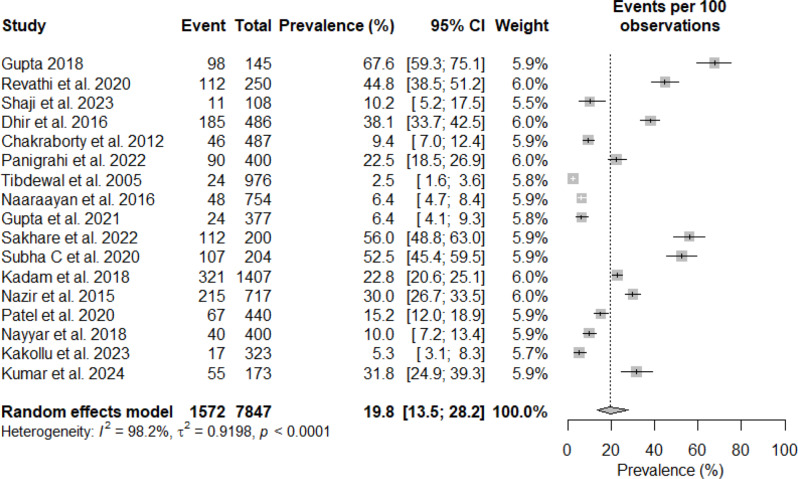
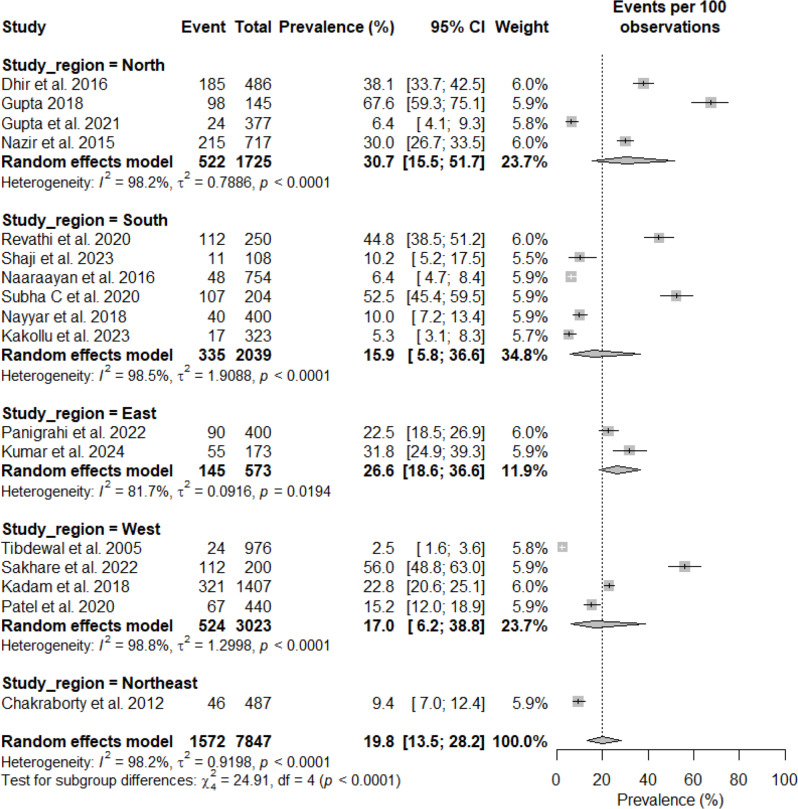
Antibiotic resistance presents a substantial threat to global public health. One of the primary contributors to antibiotic resistance is the irrational use of antibiotics. This study aimed to comprehensively assess the prevalence and associated factors of antibiotic self-medication (ASM) practices among the pediatric population in India. ... Seventeen studies involving 7847 children were analyzed. The pooled prevalence of pediatric ASM in India was 19.8% (95% CI: 13.5; 28.2; I2 = 98.2%; p < 0.01). Regional disparities were observed (p < 0.01), with the northern region exhibiting the highest prevalence at 30.7%. ... Key factors associated with pediatric ASM included financial constraints, time constraints, perceptions of mild illness, and limited healthcare access. ...
Overview
CoChat Summary
## TL;DR
This systematic review and meta-analysis found that self-medication with antibiotics (ASM) among children in India was common, with a pooled prevalence of 19.8% across 17 studies. Prevalence varied markedly by region and was linked in the included studies to financial/time constraints, mild-illness perceptions, and limited healthcare access.
## Key findings
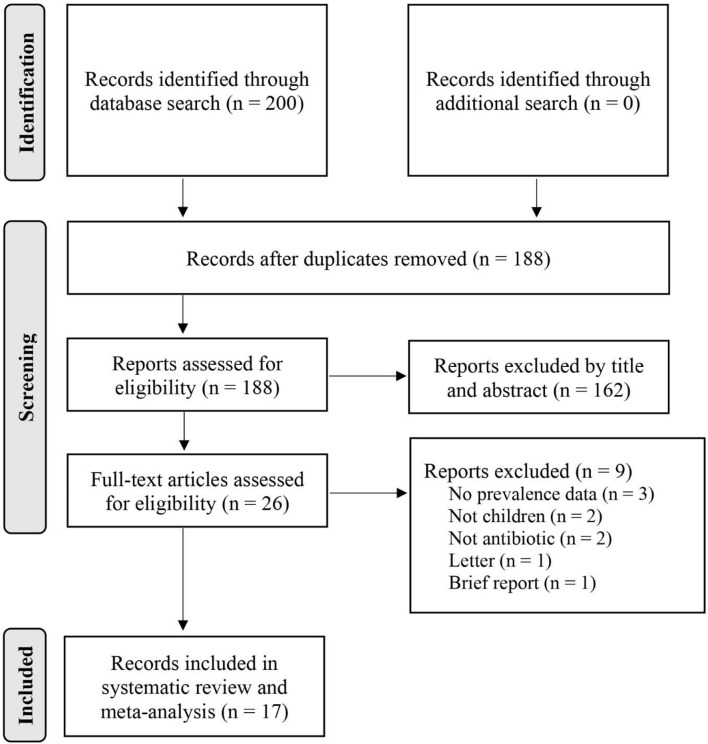
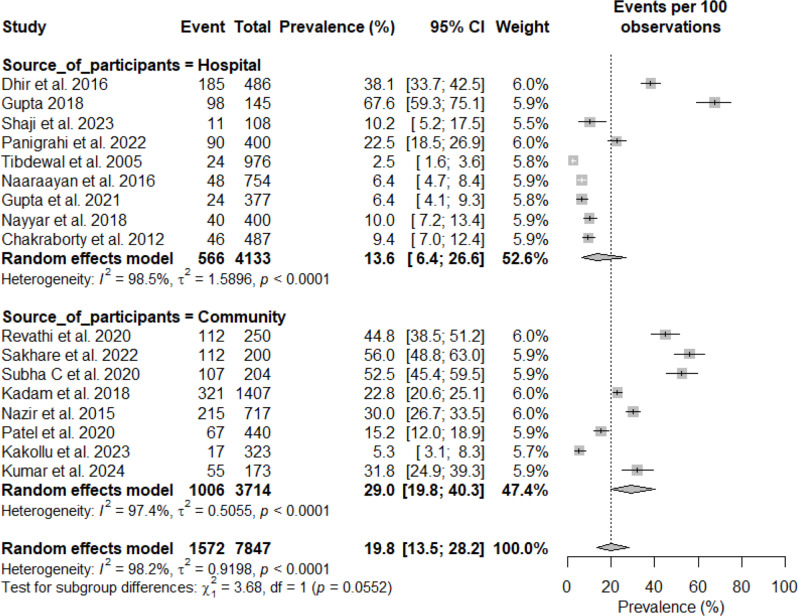
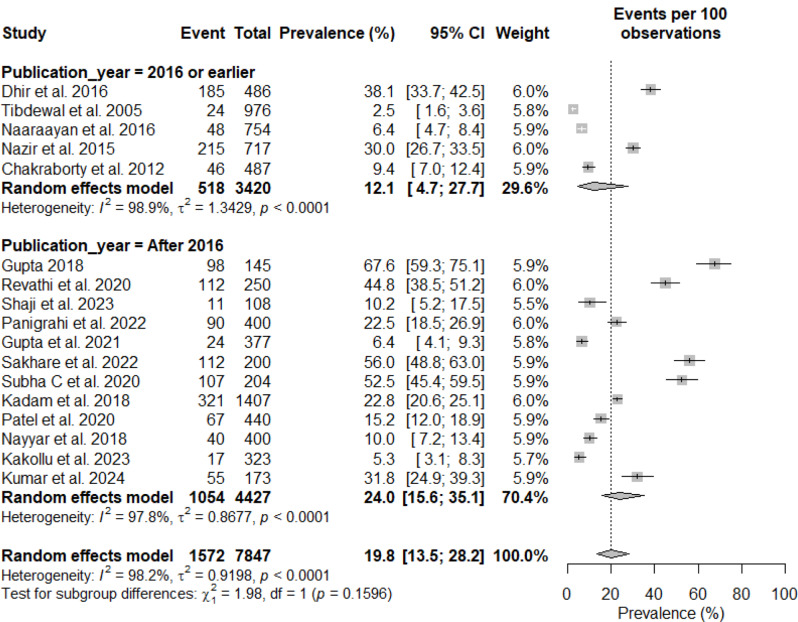
- Across 17 studies including 7,847 children, the pooled prevalence of pediatric ASM in India was 19.8% (95% CI 13.5–28.2; I² = 98.2%; p < 0.01), with 1,572/7,847 children reported as self-medicating.
- Regional prevalence differed significantly (p < 0.01): north 30.7% (4 studies, 522/1,725), east 26.6% (2 studies, 145/573), west 17.0% (4 studies, 524/3,023), south 15.9% (6 studies, 335/2,039), and northeast 9.4% (1 study, 46/487).
- Community-based studies had a higher prevalence than hospital-based studies: 29.0% vs 13.6%, but this difference was not statistically significant (p = 0.0552).
- Commonly reported reasons for ASM were financial constraints (14/17; 82.4%), time constraints (9/17; 52.9%), previous medicine experience (6/17; 35.3%), limited healthcare access (5/17; 29.4%), and perceiving illness as mild (4/17; 23.5%). Common antibiotic sources were local pharmacies/retail drug stores/e-pharmacies (11/17; 64.7%) and leftover medications (7/17; 41.2%).
## Methods
- Design: Systematic review and meta-analysis reported under PRISMA 2020 and registered in PROSPERO (CRD42024572332).
- Data/sample: Searches of PubMed, Embase, Scopus, and Google Scholar for studies published up to December 31, 2024; 17 cross-sectional studies from India met inclusion criteria.
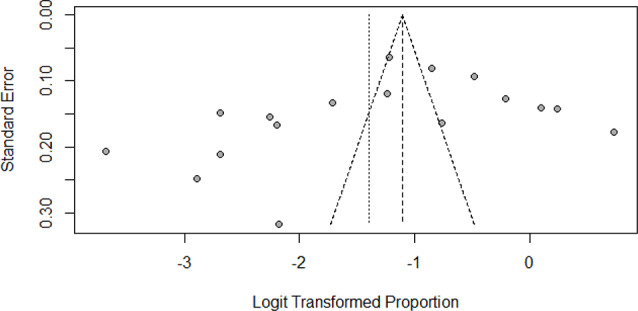
- Analysis: Study quality assessed with the JBI critical appraisal checklist for prevalence studies; pooled prevalence estimated in R using a random-effects model (DerSimonian and Laird), with subgroup analyses by region, setting, and publication year, plus publication-bias checks using funnel plot, Egger’s test, and Begg’s test.
## Limitations
- The paper states that it relied on self-recall data, which may introduce recall bias and affect accuracy.
- It notes that some studies lacked crucial information on aspects of self-medication, limiting comprehensive analysis.
- It reports that the limited databases used restricted the pool of available studies, and that some included studies had moderate risk of bias; high heterogeneity was also present (I² = 98.2%).
Model-written summary. Check it against the paper before relying on it.
Integrity signals
Registry
Cites
Statistics
Figures
Verification
Claims the paper makes
17 Valid · 1 Not valid · 5 Not checked · 50 Own results and interpretations
The cited sources support only part of this claim — read each source’s verdict below.
In the paper
“The effectiveness of specific medicines based on previous experiences significantly influences caregivers’ choices [16, 17, 19, 28, 33].”
§ Prevalence and associated factors of self-medication with antibiotics among pediatric population in India: a systematic review and meta-analysis > Discussion
What the sources say
- Supportedcites [16] Naaraayan SA, Rathinabalan I, Seetha V. Self-medication pattern among children attending a tertiary hospital in South India: a cross-sectional study. Int J Contemp Pediatr. 2016;3:1267–71. source
The Discussion says previous experience of a drug’s efficacy was the most common reason caregivers gave for self-medicating children. The Conclusion repeats that finding, supporting the claim that prior experience influences their medicine choices. (LLM, conf=0.91)
- Supportedcites [17] Panigrahi M, Marndi G, Beshra S. To determine the self-medication pattern among children. Int J Health Sci. 2022;6:9925–31. source
The Results report that past experience with a medicine’s effectiveness was the most prevalent reason given for children’s self-medication, cited for 200 children (50%). The Discussion likewise identifies experience with a drug’s effectiveness as the most prevalent explanation. (LLM, conf=0.92)
- Not checked — no full text of the sourcecites [19] Nazir S, Goel K, Mittal A, Singh J, Goel R, Rashid A. Parent induced self-medication among under five children: an observational cross sectional study. TAF Prev Med Bull. 2015;14:81–6. source
- Not matchedcites [28] Gupta S, Bala S, Manhas RS, Kumar N. A prospective study of self-medication pattern among children attending a tertiary care hospital. Int J Health Clin Res. 2021;4:3335.
Its entry has no title and year that we can search by.
- Partly supportedcites [33] Patel SJ, Dumra GH. Assessment of parents induced self-medication in paediatric population in rural and urban areas of Ahmedabad, Gujarat. Int J Basic Clin Pharmacol. 2020;9:776–81. sourceExperimental — accuracy not yet measured
The Results (p. 779) report that previous experience with drugs used for the illness influenced brand selection for 31 parents (8.18%). They do not establish that perceived effectiveness was the reason for those choices or that its influence was significant; an old prescription was the leading factor (63.06%). (LLM, conf=0.87)
plainstates a cause- Asserted: passes — The authors put it forward as true.
- Checkable: passes — It can be checked against evidence.
- Load-bearing: unclear — It is unclear whether the paper’s conclusions depend on it.
- Based: passes — The paper gives a reason why it holds.
- Supported
The cited sources support only part of this claim — read each source’s verdict below.
In the paper
“Low and middle-income families often resort to self-medication as a cost-saving measure. This cost-driven decision is significant and is primarily due to the financial constraints faced by these families [6, 18, 26, 33].”
§ Prevalence and associated factors of self-medication with antibiotics among pediatric population in India: a systematic review and meta-analysis > Discussion
What the sources say
- Partly supportedcites [6] Revathi B, Pandurangan KK. A cross sectional survey of knowledge, attitude and practice of antibiotic use for children in Chennai among mothers. J Pharm Res Int. 2020;32:103–12. sourceExperimental — accuracy not yet measured
The INTRODUCTION of Revathi & Pandurangan (2020) does tie growing self-medication practice in communities to 'low socio-economic status', but only as one of several co-equal drivers (inadequate time, lack of knowledge about antibiotic resistance, ignorance, urge to self-care) — it never frames self-medication as a cost-saving measure or as primarily financially driven. The only place the paper calls money a primary reason is the DISCUSSION ('time constraints and financial status are the most important reasons for this attitude'), and that sentence is about the 30.8% who prefer expensive antibiotics, not about self-medication. Its income data (Fig. 3 / DISCUSSION: mothers earning <30,000 rupees do not prefer expensive antibiotics, p<0.05) concern antibiotic choice in Chennai mothers, a narrower population than 'low and middle-income families', so the 'primarily due to financial constraints' element attributed here is not supported by this source. (LLM, conf=0.72)
- Partly supportedcites [18] Subha CJ, Nesan GSC, Charumathi B, Jain T. Knowledge, attitude and practices about acute respiratory infection among mothers of under 5 children in an urban area of Tamil Nadu. Int J Res Pharm Sci. 2020;11(SPL2):16–20. sourceExperimental — accuracy not yet measured
Our copy supports only the prevalence half of the claim: the Socio-demographic details section reports that 52.5% of the 204 mothers in a semi-urban Chennai area took self-medication without doctors' consultation and 52.4% gave antibiotics without consultation (Table 3). No passage in our copy attributes that self-medication to cost-saving or financial constraints; the paper's own income data (60% with total family income Rs. 20,000-50,000, described elsewhere as upper-middle-class socioeconomic status) is reported descriptively, and where the paper explains variation in self-medication/home-remedy use across studies (Discussion/Socio-demographic details) it credits 'different levels of education and awareness', not money. Poverty appears only in the INTRODUCTION as one of several ARI-associated factors borrowed from Prajapati et al. (2012), not as a driver of self-medication. Thus the cost-driven motive the citing sentence asserts is not supported by this source, and the population is mothers of under-5 children in one Indian semi-urban setting rather than low- and middle-income families generally. (LLM, conf=0.70)
- Not matchedcites [26] Tibdewal S, Gupta M. Mother’s use of medication in their children of preschool age. Indian J Public Health. 2005;49:27–9. 15989158
Its entry has no title and year that we can search by.
- Partly supportedcites [33] Patel SJ, Dumra GH. Assessment of parents induced self-medication in paediatric population in rural and urban areas of Ahmedabad, Gujarat. Int J Basic Clin Pharmacol. 2020;9:776–81. sourceExperimental — accuracy not yet measured
The Discussion says self-medication is a cheap alternative for people who cannot afford medical practitioners and was most prevalent among lower-middle and low socioeconomic groups in this Ahmedabad study. But the Results identify an old prescription or medicines already at home—not financial constraints—as the most commonly reported reason (37.20%); high consultation fees were reported by 17.15%. The claim overstates finances as the primary reason and generalizes beyond parents self-medicating children in this study. (LLM, conf=0.88)
plainstates a cause- Asserted: passes — The authors put it forward as true.
- Checkable: passes — It can be checked against evidence.
- Load-bearing: unclear — It is unclear whether the paper’s conclusions depend on it.
- Based: passes — The paper gives a reason why it holds.
- Partly supported
The cited sources support only part of this claim — read each source’s verdict below.
In the paper
“Parents often resort to self-medication for their children when they experience common symptoms like fever, cough, and sore throat [14–16].”
§ Prevalence and associated factors of self-medication with antibiotics among pediatric population in India: a systematic review and meta-analysis > Discussion
What the sources say
- Not matchedcites [14] Chakraborty K, Chakraborty A, Devi S, Devi J. Family self medication in children attending a tertiary care hospital in Northeast India. Int J Pharm Sci Res. 2012;3:4899–902.
Its entry has no title and year that we can search by.
- Partly supportedcites [15] Dhir SK, Jain A, Batta M, Singh G. Patterns and practice of self-medication among children presenting with acute respiratory tract infection or diarrhoea. Int J Basic Clin Pharmacol. 2016;5:33–7. sourceExperimental — accuracy not yet measured
The Practice of self-medication section (page not available) reports that 308 of 486 eligible parents (63.3%) had self-medicated their children. The study concerns children with acute respiratory tract infection or diarrhoea, but our copy does not establish that fever, cough, and sore throat were the specific symptoms prompting self-medication. (LLM, conf=0.86)
- Partly supportedcites [16] Naaraayan SA, Rathinabalan I, Seetha V. Self-medication pattern among children attending a tertiary hospital in South India: a cross-sectional study. Int J Contemp Pediatr. 2016;3:1267–71. sourceExperimental — accuracy not yet measured
The Results and Conclusion report fever and cough/cold as common reasons for self-medicating children. They do not identify sore throat as a common symptom, so that part of the claim is unsupported by this paper. (LLM, conf=0.88)
plainstates a cause- Asserted: passes — The authors put it forward as true.
- Checkable: passes — It can be checked against evidence.
- Load-bearing: unclear — It is unclear whether the paper’s conclusions depend on it.
- Based: passes — The paper gives a reason why it holds.
- Not matched
The cited sources that could be checked couldn’t confirm or dispute this claim.
In the paper
“Limited accessibility to healthcare facilities, particularly in rural areas, and long distances from home are linked to a higher prevalence of pediatric self-medication.”
§ Prevalence and associated factors of self-medication with antibiotics among pediatric population in India: a systematic review and meta-analysis > Discussion
What the sources say
- Not matchedcites [14] Chakraborty K, Chakraborty A, Devi S, Devi J. Family self medication in children attending a tertiary care hospital in Northeast India. Int J Pharm Sci Res. 2012;3:4899–902.
Its entry has no title and year that we can search by.
- Not checked — no full text of the sourcecites [19] Nazir S, Goel K, Mittal A, Singh J, Goel R, Rashid A. Parent induced self-medication among under five children: an observational cross sectional study. TAF Prev Med Bull. 2015;14:81–6. source
- Not checked — no full text of the sourcecites [26] Tibdewal S, Gupta M. Mother’s use of medication in their children of preschool age. Indian J Public Health. 2005;49:27–9. 15989158
- Not matchedcites [29] Nayyar A, Tavargeri A. Self-medication practices by parents in children for dental conditions. Int J Curr Res. 2017;10:65684–8.
Its entry has no title and year that we can search by.
- Could not verifycites [31] Kakollu HV, Nirmala S, Nuvvula S, Arepogu D. Parental knowledge, attitudes, and practices towards self-medication for various oral health-related problems in children: A cross-sectional study. J Clin Diag Res. 2023;17:ZC21–9. sourceExperimental — accuracy not yet measured
The Discussion (page unavailable) identifies expensive dental treatment as the most common reason parents gave for not visiting a dentist, and the Results (page unavailable) associate that reason with lower socioeconomic status. Our copy does not report an association between pediatric self-medication and rural healthcare access or distance from home (searched: rural, distance, healthcare access). (LLM, conf=0.74)
plainstates an association- Asserted: passes — The authors put it forward as true.
- Checkable: passes — It can be checked against evidence.
- Load-bearing: unclear — It is unclear whether the paper’s conclusions depend on it.
- Based: passes — The paper gives a reason why it holds.
- Not matched
The cited sources support only part of this claim — read each source’s verdict below.
In the paper
“These variations may be attributed to varying healthcare infrastructure, socioeconomic conditions, and cultural factors [42, 43].”
§ Prevalence and associated factors of self-medication with antibiotics among pediatric population in India: a systematic review and meta-analysis > Discussion
What the sources say
- Not checked — no full text of the sourcecites [42] Chaudhary V, Kumari S, Khurana N, Azharuddin M, Singh AP, Devi V, et al. Prevalence of self-medication practices among pregnant women in India: A systematic review and meta-analysis. Pharmacoepidemiol Drug Saf. 2024;33:e5791. 38565527 source
- Partly supportedcites [43] Rathod P, Sharma S, Ukey U, Sonpimpale B, Ughade S, Narlawar U, et al. Prevalence, pattern, and reasons for self-medication: a community-based cross-sectional study from central India. Cureus. 2023;15:e33917. 36819304 PMC9936784 sourceExperimental — accuracy not yet measured
The Discussion (page not provided) suggests that variation in self-medication prevalence may reflect sociocultural factors, while the Introduction (page not provided) identifies region-specific socioeconomic factors and access to health services. The study surveyed adults in one Central Indian community; it does not establish that these factors explain regional disparities in pediatric self-medication within India. (LLM, conf=0.87)
hedgedstates a possible cause- Asserted: passes — The authors put it forward as true.
- Checkable: passes — It can be checked against evidence.
- Load-bearing: unclear — It is unclear whether the paper’s conclusions depend on it.
- Based: passes — The paper gives a reason why it holds.
45 more claims · 4 with their cited sources checked
Create a free account to see all 73 claims and to verify the 8 references still open.
- Probably not a substantial claim. 11
- It may state two separate claims as one. 15
- The quote only partly states this claim. 1
Statistics recomputed
Every reported test result, recomputed from its test statistic and degrees of freedom. A result shows as not adding up only once an independent check has confirmed it.
- Consistentz = -1.07reported p = .2842 · recomputed p = .285
“(z = -1.07, p = .2842”
Self-check
Percentages, sums and reported differences re-computed from the paper’s own numbers.
Self-check results appear here once an independent check has confirmed them.
Citations
Cites
The PRISMA 2020 statement: An updated guideline for reporting systematic reviews
Page, M. J., McKenzie, J. E., Bossuyt, P. M., Boutron, I., Hoffmann, T. C., Mulrow, C. D., Shamseer, L., Tetzlaff, J. M., Akl, E. A., Brennan, S. E., et al. (2021) · BMJ · doi:10.1136/bmj.n71 · Cited by 108,283
Bias in meta-analysis detected by a simple, graphical test
Egger, M., Smith, G. D., Schneider, M., & Minder, C. (1997) · BMJ · doi:10.1136/bmj.315.7109.629 · Cited by 56,722 · cited 1×
“Potential publication bias was assessed by visually examining the funnel plot and confirmed through Egger’s test [24] and Begg’s test [25].”
Meta-analysis in clinical trials
DerSimonian, R., & Laird, N. (1986) · Controlled Clinical Trials · doi:10.1016/0197-2456(86)90046-2 · Cited by 39,552 · cited 1×
“A random-effects model (DerSimonian and Laird) [22] meta-analysis was employed with the “metaprop” function within “meta” R package [23] to estimate the pooled prevalence of pediatric ASM.”
Operating characteristics of a rank correlation test for publication bias
Begg, C. B., & Mazumdar, M. (1994) · Biometrics · doi:10.2307/2533446 · Cited by 16,955 · cited 1×
“Potential publication bias was assessed by visually examining the funnel plot and confirmed through Egger’s test [24] and Begg’s test [25].”
How to perform a meta-analysis with R: a practical tutorial
Balduzzi, S., Rücker, G., & Schwarzer, G. (2019) · Evidence Based Mental Health · doi:10.1136/ebmental-2019-300117 · Cited by 5,827 · cited 1×
“A random-effects model (DerSimonian and Laird) [22] meta-analysis was employed with the “metaprop” function within “meta” R package [23] to estimate the pooled prevalence of pediatric ASM.”
Munn, Z., Moola, S., Lisy, K., Riitano, D., & Tufanaru, C. (2015) · International Journal of Evidence-Based Healthcare · doi:10.1097/xeb.0000000000000054 · Cited by 3,131 · cited 1×
“Quality assessment of the included articles was conducted independently by two authors using the JBI critical appraisal checklist for prevalence studies [21].”
Llor, C., & Bjerrum, L. (2014) · Therapeutic Advances in Drug Safety · doi:10.1177/2042098614554919 · Cited by 2,079 · cited 3×
“This use of antibacterial drugs in treating viral infections was mostly reported in studies conducted in the Middle East and Asia [13, 48].”
Progress in Alternative Strategies to Combat Antimicrobial Resistance: Focus on Antibiotics
Murugaiyan, J., Kumar, P. A., Rao, G. S., Iskandar, K., Hawser, S., Hays, J. P., Mohsen, Y., Adukkadukkam, S., Awuah, W. A., Jose, R. A. M., et al. (2022) · Antibiotics · doi:10.3390/antibiotics11020200 · Cited by 567 · cited 1×
“The consequences of antibiotic resistance are indeed severe, with this phenomenon directly causing over 1.27 million deaths annually and contributing to an additional 4.95 million fatalities world-wide [8].”
InfluentialAntibiotic consumption and link to resistance
Goossens, H. (2009) · Clinical Microbiology and Infection · doi:10.1111/j.1469-0691.2009.02725.x · Cited by 379
Critical Importance of a One Health Approach to Antimicrobial Resistance
White, A., & Hughes, J. M. (2019) · EcoHealth · doi:10.1007/s10393-019-01415-5 · Cited by 276 · cited 1×
“Keywords Antibiotics, Self-medication, Pediatric, Children, Epidemiology, India Graphical Abstract ten threats to global health in 2019 [9].”
Self-medication with Antibiotics in WHO Southeast Asian Region: A Systematic Review
Nepal, G., & Bhatta, S. (2018) · Cureus · doi:10.7759/cureus.2428 · Cited by 272 · cited 2×
“This is similar to the experience in other low-and middle-income countries in the Middle East and Southeast Asia [41, 49].”
Survey of non-prescribed use of antibiotics for children in an urban community in Mongolia
Togoobaatar, G., Ikeda, N., Ali, M., Sonomjamts, M., Dashdemberel, S., Mori, R., & Shibuya, K. (2010) · Bulletin of the World Health Organization · doi:10.2471/blt.10.079004 · Cited by 199 · cited 1×
“[38], Tanzania (47.7”
InfluentialSelf-medication in children and adolescents
Pereira, F. S. V. T., Bucaretchi, F., Stephan, C., & Cordeiro, R. (2007) · Jornal de Pediatria · doi:10.2223/jped.1703 · Cited by 175 · cited 1×
“ASM involves the use of antibiotics without a medical prescription or supervision, including the practice of altering prescribed medication dosages [1].”
Torres, N. F., Chibi, B., Kuupiel, D., Solomon, V. P., Mashamba-Thompson, T. P., & Middleton, L. E. (2021) · Archives of Public Health · doi:10.1186/s13690-020-00517-9 · Cited by 118 · cited 1×
“In low-and middle-income countries, the prevalence is even higher, reaching 78% [4].”
Gashaw, T., Yadeta, T. A., Weldegebreal, F., Regassa, L. D., Jambo, A., & Assefa, N. (2025) · Systematic Reviews · doi:10.1186/s13643-025-02783-6 · Cited by 102 · cited 1×
“Globally, the prevalence of ASM among adults was estimated to be 43.0% [2].”
InfluentialRathod, P., Sharma, S., Ukey, U., Sonpimpale, B., Ughade, S., Narlawar, U., Gaikwad, S., Nair, P., Masram, P., & Pandey, S. (2023) · Cureus · doi:10.7759/cureus.33917 · Cited by 101 · cited 2×
“These variations may be attributed to varying healthcare infrastructure, socioeconomic conditions, and cultural factors [42, 43].”
Haenssgen, M. J., Charoenboon, N., Zanello, G., Mayxay, M., Reed‐Tsochas, F., Lubell, Y., Wertheim, H. F. L., Lienert, J., Xayavong, T., Zaw, Y. K., et al. (2019) · BMJ Open · doi:10.1136/bmjopen-2018-028224 · Cited by 96 · cited 1×
“This is similar to the experience in other low-and middle-income countries in the Middle East and Southeast Asia [41, 49].”
Rashid, M., Chhabra, M., Kashyap, A., Undela, K., & Gudi, S. K. (2020) · Current Clinical Pharmacology · doi:10.2174/1574884714666191122103953 · Cited by 94 · cited 1×
“A recent meta-analysis published in 2024 [11] showed that 64.4% of people in India practice self-medication, which is higher than the 53.6% reported in a 2020 meta-analysis [12].”
InfluentialKotwani, A., Joshi, J., & Lamkang, A. S. (2021) · Antibiotics · doi:10.3390/antibiotics10091123 · Cited by 87 · cited 2×
“This trend is consistent with previous research, underscoring the accessibility of antibiotics in community settings, where medications are often readily available without strict prescription requirements [44], emphasizing the need for targeted interventions to mitigate pediatric ASM effectively.”
Self-medication with Antibiotic in Children in Sana’a City, Yemen
Mohanna, M. (2010) · Oman Medical Journal · doi:10.5001/omj.2010.10 · Cited by 78 · cited 1×
“[40].”
Antibiotics Self Medication among Children: A Systematic Review
Bert, F., Previti, C., Calabrese, F., Scaioli, G., & Siliquini, R. (2022) · Antibiotics · doi:10.3390/antibiotics11111583 · Cited by 71 · cited 3×
“[34] and specific countries like Jordan (39.2”
InfluentialSimon, B., & Kazaura, M. (2020) · Patient Preference and Adherence · doi:10.2147/ppa.s263517 · Cited by 48
India draws a red line under antibiotic misuse
Travasso, C. (2016) · BMJ · doi:10.1136/bmj.i1202 · Cited by 37 · cited 1×
“Additionally, we analyzed trends in pediatric ASM before and after 2016, following the introduction of the “red line” campaign in India, which aimed to regulate prescription antibiotic sales and reduce misuse [45].”
Parental self‐medication of antibiotics for children in Jordan
Mukattash, T. L., Alkhatatbeh, M. J., Andrawos, S., Jarab, A. S., AbuFarha, R. K., & Nusair, M. B. (2020) · Journal of Pharmaceutical Health Services Research · doi:10.1111/jphs.12331 · Cited by 36 · cited 1×
“[37], Mongolia (42.3”
InfluentialAyenew, W. A., Tessema, T. A., Anagaw, Y. K., Siraj, E. A., Zewdie, S., Simegn, W., Limenh, L. W., Tafere, C., & Yayehrad, A. T. (2024) · Antimicrobial Resistance and Infection Control · doi:10.1186/s13756-024-01417-1 · Cited by 33 · cited 1×
“In Ethiopia, the prevalence has been reported as 46.1% [3].”
InfluentialAdrizain, R., Setiabudi, D., & Chairulfatah, A. (2019) · PLOS Neglected Tropical Diseases · doi:10.1371/journal.pntd.0007438 · Cited by 25 · cited 1×
“This use of antibacterial drugs in treating viral infections was mostly reported in studies conducted in the Middle East and Asia [13, 48].”
Qu, W., Wang, X., Liu, Y., Mao, J., Liu, M., Zhong, Y., Gao, B., Zhao, M., & Gao, Y. (2023) · Infection and Drug Resistance · doi:10.2147/idr.s431034 · Cited by 22 · cited 1×
“[35] and Pakistan (21.8”
InfluentialSelf Medication with Antibiotics among Medical and Pharmacy Students in North India
Pal, B., Murti, K., Gupta, A. K., Choudhury, U., Rastogi, M., Pandey, H., Lal, C. S., Pandey, K., & Das, P. (2016) · American Medical Journal · doi:10.3844/amjsp.2016.7.12 · Cited by 18 · cited 1×
“Alarmingly, antibiotics are often inappropriately administered for viral infections, which can exacerbate health conditions [47].”
Self-citation(2005) · PubMed · Cited by 16
Naaraayan, S., Rathinabalan, I., & Seetha, V. (2016) · International Journal of Contemporary Pediatrics · doi:10.18203/2349-3291.ijcp20163657 · Cited by 13 · cited 5×
“The highest number of studies in terms of geographical distribution was conducted in Maharashtra [7, 26, 32] and Tamil Nadu [6, 16, 18], with three studies each.”
InfluentialParental Self-Medication with Antibiotics in Pakistan
Salam, A., Waseem, S., Akhtar, L., Manan, H. A., Malik, M. A. B. A., & Siddique, N. (2023) · Pakistan Journal of Medical and Health Sciences · doi:10.53350/pjmhs2023174228 · Cited by 11 · cited 1×
“[36].”
Prevalence and patterns of self-medication practices in India: A systematic review and meta-analysis
Chaudhary, V., Kumari, S., Sharma, B., Ahuja, C., Kishore, H., & Pal, B. (2025) · Medical Journal Armed Forces India · doi:10.1016/j.mjafi.2024.11.008 · Cited by 11 · cited 1×
“A recent meta-analysis published in 2024 [11] showed that 64.4% of people in India practice self-medication, which is higher than the 53.6% reported in a 2020 meta-analysis [12].”
InfluentialSelf-citationParent induced self-medication among under five children: an observational cross sectional study
Nazir, S., Goel, K., Mittal, A., Singh, J., Goel, R., & Rashid, A. (2015) · TAF Preventive Medicine Bulletin · doi:10.5455/pmb.1-1381246690 · Cited by 10 · cited 10×
“Despite these strict regulations, multiple studies conducted in India consistently reported a high rate of self-medication with antibiotics across the country [6, 7, 10, 15, 18, 19].”
InfluentialChaudhary, V., Kumari, S., Khurana, N., Azharuddin, M., Singh, A. P., Devi, V., Dhir, D., & Pal, B. (2024) · Pharmacoepidemiology and Drug Safety · doi:10.1002/pds.5791 · Cited by 10 · cited 1×
“These variations may be attributed to varying healthcare infrastructure, socioeconomic conditions, and cultural factors [42, 43].”
Self-citationMateti, U. V., Garipelly, R., & Garg, S. (2012) · Journal of Research in Pharmacy Practice · doi:10.4103/2279-042x.108370 · Cited by 9 · cited 1×
“The evolving PharmD program in India can also help address this concern [50].”
Radhakrishnan, R., Maheswary, D., Leela, K. V., & Damodharan, N. (2023) · Clinical Epidemiology and Global Health · doi:10.1016/j.cegh.2022.101191 · Cited by 9 · cited 1×
“Lower education levels are often associated with an increased tendency toward self-medication along with limited knowledge regarding the proper use of antibiotics [6, 10, 18, 46].”
Primary Caregiver Knowledge about Self-Medication of Antibiotics in Children Aged 0-12 Years
Kumar, S., Agrawal, S., Sinha, S., & Yasmeen, T. (2024) · Chonnam Medical Journal · doi:10.4068/cmj.2024.60.3.174 · Cited by 8 · cited 3×
“One study was conducted in each of the following states: Uttar Pradesh [10], Ker-ala [30], Punjab [15], Manipur [14], Odisha [17], Jammu and Kashmir [28], Haryana [19], Gujarat [33], Karnataka [29], Andhra Pradesh [31], and Bihar [27].”
Patel, S. J., & Dumra, G. H. (2020) · International Journal of Basic & Clinical Pharmacology · doi:10.18203/2319-2003.ijbcp20201757 · Cited by 6
Revathi, B., & Pandurangan, K. K. (2020) · Journal of Pharmaceutical Research International · doi:10.9734/jpri/2020/v32i2030734 · Cited by 6 · cited 10×
“The highest number of studies in terms of geographical distribution was conducted in Maharashtra [7, 26, 32] and Tamil Nadu [6, 16, 18], with three studies each.”
Influential(2018) · DOAJ (DOAJ: Directory of Open Access Journals) · Cited by 3
Dhir, S., Jain, A., Batta, M., & Singh, G. (2016) · International Journal of Basic and Clinical Pharmacology · doi:10.18203/2319-2003.ijbcp20160097 · Cited by 2 · cited 6×
“Despite these strict regulations, multiple studies conducted in India consistently reported a high rate of self-medication with antibiotics across the country [6, 7, 10, 15, 18, 19].”
InfluentialJeya Subha, C., Shiny Chrism Queen Nesan, G., Charumathi, B., & Jain, T. (2020) · International Journal of Research in Pharmaceutical Sciences · doi:10.26452/ijrps.v11ispl2.2054 · Cited by 2 · cited 9×
“The highest number of studies in terms of geographical distribution was conducted in Maharashtra [7, 26, 32] and Tamil Nadu [6, 16, 18], with three studies each.”
InfluentialAgarwal, S. S., Chaudhary, D. C., Datana, S., et al. (2023) · Medical Journal Armed Forces India · doi:10.1016/j.mjafi.2023.03.011 · Cited by 2
Shaji, S. M., Issac, J. S., Girija, P., Arjun, D. S., Siddik, A. J., & Ashmi, A. (2023) · International Journal of Medical and Oral Research · doi:10.4103/ijmo.ijmo_22_22 · Cited by 2 · cited 2×
“One study was conducted in each of the following states: Uttar Pradesh [10], Ker-ala [30], Punjab [15], Manipur [14], Odisha [17], Jammu and Kashmir [28], Haryana [19], Gujarat [33], Karnataka [29], Andhra Pradesh [31], and Bihar [27].”
determine the self-medication pattern among children
Panigrahi, M., Marndi, G., & Beshra, S. (2022) · International journal of health sciences · doi:10.53730/ijhs.v6ns3.8603 · Cited by 1 · cited 7×
“Additionally, high medical consultation costs, long waiting times at public healthcare facilities, and the belief in the effectiveness of antibiotics for common illnesses further encourage the practice of self-medication [14–17].”
InfluentialKakollu, H. V., Nirmala, S., Nuvvula, S., & Arepogu, D. (2023) · JOURNAL OF CLINICAL AND DIAGNOSTIC RESEARCH · doi:10.7860/jcdr/2023/63841.18487
Research works printed but not linked: 4
- Gupta KC. Knowledge, attitude and practice of parents towards antibiotic usage in children. J Adv Med Dent Sci Res. 2018;6:80–3.
- Chakraborty K, Chakraborty A, Devi S, Devi J. Family self medication in children attending a tertiary care hospital in Northeast India. Int J Pharm Sci Res. 2012;3:4899–902.
- Gupta S, Bala S, Manhas RS, Kumar N. A prospective study of self-medication pattern among children attending a tertiary care hospital. Int J Health Clin Res. 2021;4:3335.
- Nayyar A, Tavargeri A. Self-medication practices by parents in children for dental conditions. Int J Curr Res. 2017;10:65684–8.
Cited by
Zihindula, F., Akilimali, A., Alhassan, A., Moubarak, E. S., Shangalume, F. I., Sadia, Z., Mukherjee, A., Balagizi, F., Bavurhe, R. F., Wei, C. R., et al. (2026) · Discover Public Health · doi:10.1186/s12982-026-01810-8 · Cited by 2
Agu, I. C., Agu, C. I., Obiobasi, C., Mbachu, C. O., King, R. A., Onwujekwe, O. E., & Das, M. (2026) · Discover Public Health · doi:10.1186/s12982-026-02079-7 · Cited by 1
“In India, self-medication with antibiotics is widespread [34, 35], often driven by cultural beliefs that antibiotics provide immediate relief.”
Shakya, A., Bhatta, R., Khadgi, A., Rauniyar, A., Shrestha, S., Panta, P. P., & Shrestha, S. (2026) · INQUIRY The Journal of Health Care Organization Provision and Financing · doi:10.1177/00469580261452843 · Cited by 1
Rodrigues, G. F., Oliveira, A. P. A. D., Sadra, M. F. A., & Oliveira, L. A. S. (2025) · LUMEN ET VIRTUS · doi:10.56238/levv16n54-016
Atem, T. D., Singh, R., Newbury-Birch, D., Pal, B., & Chaudhary, V. (2026) · BMC Pediatrics · doi:10.1186/s12887-025-06394-x
“A recent systematic review and meta-analysis reported a pooled prevalence of self-medication with antibiotics of 19.8% among the pediatric population in India [21].”
InfluentialSelf-citation
Metadata
- Authors
- Atem, T. D., Singh, R., Newbury-Birch, D., Pal, B., & Chaudhary, V.
- Affiliations
- Lovely Professional University (IN)
- Christian Medical College (IN)
- Corresponding author
- Atem, Tambe Daniel
- Pal, Biplab
- Venue
- BMC Pediatrics
- Published
- 2025-06-04
- Volume
- 25
- Issue
- 1
- Pages
- 451-451
- ISSN
- 1471-2431 (ISSN-L)
- PMC
- PMC12135438
- OpenAlex
- W4411042937
- Semantic Scholar
- fa1152617d16cfdc940b06ee792ddea0b166e8f4
- Cited by
- 8
- References
- 45
- Citations by year
- 2026: 7 · 2025: 1
- FWCI
- 0.71
- Type
- journal article
- Language
- en
- Open access
- gold
- doi.org
- Licence
- cc-by-nc-nd
- creativecommons.org/licenses/by-nc-nd/4.0 (tdm)
- creativecommons.org/licenses/by-nc-nd/4.0 (vor)
- Locations
- BMC Pediatrics (publishedVersion, cc-by-nc-nd)
- Europe PMC (PubMed Central) (publishedVersion, cc-by-nc-nd)
- PubMed Central (publishedVersion, cc-by-nc-nd)
- PubMed (publishedVersion)
- Teesside University Research Portal (Teesside University) (publishedVersion, cc-by-nc-nd)
- DOAJ (DOAJ: Directory of Open Access Journals) (submittedVersion, cc-by-sa)
- TeesRep (Teesside University) (submittedVersion, cc-by-nc-nd)
- Topics
- Health Sciences › Medicine › Infectious Diseases › Antibiotic Use and Resistance
- Physical Sciences › Environmental Science › Pollution › Pharmaceutical and Antibiotic Environmental Impacts
- Health Sciences › Health Professions › Pharmacy › Pharmacy and Medical Practices
- Keywords
- antibiotic self-medication, antibiotic resistance, inappropriate antibiotic use, prevalence, associated factors, financial constraints, health care access, regional disparities, India
- MeSH terms
- Anti-Bacterial Agents, Child, Humans, India, Self Medication, Prevalence
About these checks
Registry, retraction, Cites and statistics results are computed, not judged, with one exception: a printed reference that no index lists is read once by a model before it counts as a citation error. Claims are extracted by a model and kept only when their quote appears verbatim in the text; each cited source is then checked, with a model’s help, for whether it says what the claim relies on. Those verdicts can be wrong — read the claim’s quote and the cited source before relying on one.
The claim verdicts this report counts are experimental: their accuracy is not yet measured.
A language model drew the claims from the paper on 2026-10-11, under version 3 of the claim definition (model deepseek-v4.1-flash, prompt extract-v3).
A second model labelled each claim on 2026-10-11 (model jev-1.13-20260917, definition revision gold-guideline-v0.2).
Cited sources are checked with a language model’s help (gpt-6-sol and qwen3.8-omni-flash).
Statistics and arithmetic are recomputed, not judged.
Confidence bands are shown only for fields calibrated on our annotated test set. None is calibrated yet, so no band is shown.
What counts as a claim ›How we measure confidence ›How we check this ›
Are you an author, or do you see a problem with this page? Request a review
Data sources
Bibliographic data: Semantic Scholar, OpenAlex, Crossref.
Contains information from the Semantic Scholar Academic Graph Datasets, made available under the ODC Attribution License (ODC-BY 1.0).
Semantic Scholar’s data is described in: Kinney, R., et al. (2023). The Semantic Scholar Open Data Platform. arXiv:2301.10140.
