

A history of childhood trauma is associated with slower improvement rates: Findings from a one-year follow-up study of patients with a first-episode psychosis
Open accessThe DOI matches its Crossref record; 43 of the 43 references it cites were found in a registry or an index.
Abstract
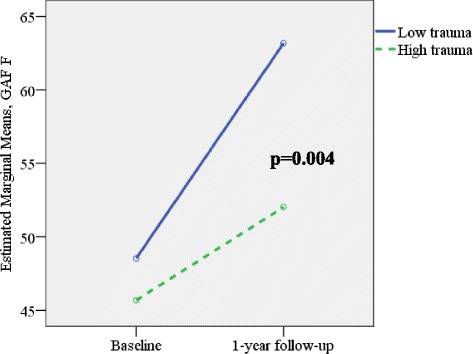
BACKGROUND: The aim of this study was to investigate whether childhood trauma was associated with more severe clinical features in patients with first-episode psychosis, both at the initial assessment and after one year. METHODS: Ninety-six patients with a first-episode of a DSM-IV diagnosis of psychosis, in addition to 264 healthy controls from the same catchment area, were recruited to the TOP NORMENT study. A history of childhood trauma was obtained using the Childhood Trauma Questionnaire (CTQ). Function and symptom severity were measured using the Global Assessment of Functioning (GAF) Scale divided into function (GAF-F) and symptoms (GAF-S), the Positive and Negative Syndrome Scale (PANSS) and the Young Mania Rating Scale (YMRS). All clinical assessments were completed at two time points: At an initial assessment within the first year of initiating treatment for psychosis and after one year. RESULTS: Childhood trauma was associated with significantly reduced global functioning and more severe clinical symptoms at both baseline and follow-up, whereas emotional neglect was associated with a significantly reduced improvement rate for global functioning (GAF-F) over the follow-up period. CONCLUSION: Our data indicate that patients with first-episode psychosis who report a history of childhood trauma constitute a subgroup characterized by more severe clinical features over the first year of treatment, as well as slower improvement rates.
Overview
The claims and statistics of this paper haven’t been checked yet.
Free: it reads the open-access text and checks the first 5 claims that cite a source we can check. Create a free account to check every claim.
Integrity signals
Registry
Cites
Statistics
Figures
Verification
Claims the paper makes
The claims and statistics of this paper haven’t been checked yet.
Free: it reads the open-access text and checks the first 5 claims that cite a source we can check. Create a free account to check every claim.
Claims other papers make about this one
Each is checked against this paper’s own text: does it say what the citing paper says it does?
The cited source says what the claim attributes to it.
In the citing paper
“Previous studies have found more negative outcomes for those individuals with psychotic disorders (PDs) and a history of adverse events (AEs), both in terms of course of illness (e.g., more distressing hallucinations, greater risk of suicide) [1, 2] and treatment outcomes (e.g., fewer treatment goals met, slower improvement) [3, 4].”
Self-check
Percentages, sums and reported differences re-computed from the paper’s own numbers.
The self-check needs the paper’s full text.
Citations
Cites
Child abuse: Adolescent records vs. adult recall
Femina, D. D., Yeager, C. A., & Lewis, D. O. (1990) · Child Abuse & Neglect · doi:10.1016/0145-2134(90)90033-p · Cited by 8,820
A Rating Scale for Mania: Reliability, Validity and Sensitivity
Young, R. C., Biggs, J. T., Ziegler, V. E., & Meyer, D. A. (1978) · British Journal of Psychiatry · doi:10.1192/bjp.133.5.429 · Cited by 8,744 · cited 4×
“Current manic symptoms were measured with the Young Mania Rating Scale (YMRS) [17].”
MethodInfluentialDevelopment and validation of a brief screening version of the Childhood Trauma Questionnaire
Bernstein, D. P., Stein, J. A., Newcomb, M. D., Walker, E., Pogge, D., Ahluvalia, T., Stokes, J., Handelsman, L., Medrano, M., Desmond, D., et al. (2003) · Child Abuse & Neglect · doi:10.1016/s0145-2134(02)00541-0 · Cited by 6,419 · cited 2×
“This is a self-report questionnaire with 28 items [22], yielding scores on five subscales of trauma: emotional abuse (EA), physical abuse (PA), sexual abuse (SA), physical neglect (PN) and emotional neglect (EN), as well as a total score; for more detailed information, see [21, 23].”
BackgroundMethodVarese, F., Smeets, F., Drukker, M., Lieverse, R., Lataster, T., Viechtbauer, W., Read, J., van Os, J., & Bentall, R. P. (2012) · Schizophrenia Bulletin · doi:10.1093/schbul/sbs050 · Cited by 2,436 · cited 1×
“31) [1].”
Read, J., van Os, J., Morrison, A. P., & Ross, C. A. (2005) · Acta Psychiatrica Scandinavica · doi:10.1111/j.1600-0447.2005.00634.x · Cited by 1,534 · cited 1×
“Here, we replicated former reports of more prevalent childhood trauma experiences in first-episode psychosis compared to healthy controls [6, 25, 26].”
ResultMeasurement of Premorbid Adjustment in Chronic Schizophrenia
Cannon-Spoor, H. E., Potkin, S. G., & Wyatt, R. J. (1982) · Schizophrenia Bulletin · doi:10.1093/schbul/8.3.470 · Cited by 1,201 · cited 6×
“For the CTQ and the clinical data that were not normally distributed, the data were log transformed before being added into the following parametric analysis (this included CTQ, PANSS items, DUP and a premorbid adjustment score in childhood from the PAS; the CTQ and the PAS were still skewed after transformation, and…”
MethodInfluentialDevelopmental traumatology part II: brain development∗∗See accompanying Editorial, in this issue.
De Bellis, M. D., Keshavan, M. S., Clark, D. B., Casey, B. J., Giedd, J. N., Boring, A. M., Frustaci, K., & Ryan, N. D. (1999) · Biological Psychiatry · doi:10.1016/s0006-3223(99)00045-1 · Cited by 974
Wallwork, R. S., Fortgang, R., Hashimoto, R., Weinberger, D. R., & Dickinson, D. (2012) · Schizophrenia Research · doi:10.1016/j.schres.2012.01.031 · Cited by 839 · cited 1×
“A recent five-factor model for the PANSS was conducted [15] and used in this study.”
MethodAbsolute Risk of Suicide After First Hospital Contact in Mental Disorder
Nordentoft, M. (2011) · Archives of General Psychiatry · doi:10.1001/archgenpsychiatry.2011.113 · Cited by 689 · cited 1×
“Depression is common in first-episode psychosis [27], with an increased risk of suicide during the early phases of psychotic illness, in addition to a reduced quality of life [28, 29].”
BackgroundTraining and quality assurance with the structured clinical interview for DSM-iV (SCID-I/P)
Ventura, J., Liberman, R. P., Green, M. F., Shaner, A., & Mintz, J. (1998) · Psychiatry Research · doi:10.1016/s0165-1781(98)00038-9 · Cited by 591 · cited 1×
“All clinicians who performed the clinical assessments were trained and supervised by the UCLA training programme [14].”
Method
Research works printed but not linked: 1
- Alberson CL. Applied Power Analysis for the Behavioural Sciences. Routledge: Taylor and Francis group, LLC; 2010.
Cited by
Pruessner, M., Cullen, A. E., Aas, M., & Walker, E. F. (2017) · Neuroscience & Biobehavioral Reviews · doi:10.1016/j.neubiorev.2016.12.013 · Cited by 315
Self-citationBloomfield, M. A. P., Chang, T., Woodl, M. J., Lyons, L. M., Cheng, Z., Bauer‐Staeb, C., Hobbs, C., Bracke, S., Kennerley, H., Isham, L., et al. (2021) · World Psychiatry · doi:10.1002/wps.20841 · Cited by 155
Childhood Trauma and Psychosis
Stanton, K. J., Denietolis, B., Goodwin, B. J., & Dvir, Y. (2020) · Child and Adolescent Psychiatric Clinics of North America · doi:10.1016/j.chc.2019.08.004 · Cited by 149
The prevalence of childhood trauma in psychiatric outpatients
Devi, F., Shahwan, S., Teh, W. L., Sambasivam, R., Zhang, Y. J., Lau, Y. W., Ong, S. H., Fung, D. S. S., Gupta, B., Chong, S. A., et al. (2019) · Annals of General Psychiatry · doi:10.1186/s12991-019-0239-1 · Cited by 110
“Childhood trauma has been well documented as a potential risk factor for psychosis [20, 21].”
BackgroundAas, M., Pizzagalli, D. A., Laskemoen, J. F., Reponen, E. J., Ueland, T., Melle, I., Agartz, I., Steen, N. E., & Andreassen, O. A. (2019) · Schizophrenia Research · doi:10.1016/j.schres.2019.01.011 · Cited by 102
“This is supported by our recent study of patients with first-episode psychosis who reported a history of childhood trauma experiences had more severe symptoms at baseline and after 12months (Aas et al., 2016a, 2016b), compared to patients who did not report childhood trauma.”
BackgroundResultSelf-citationAas, M., Dieset, I., Hope, S., Hoseth, E. Z., Mørch, R. H., Reponen, E. J., Steen, N. E., Laskemoen, J. F., Ueland, T., Aukrust, P., et al. (2017) · Brain Behavior and Immunity · doi:10.1016/j.bbi.2017.06.005 · Cited by 100
Self-citationGu, W., Zhao, Q., Yuan, C., Yi, Z., Zhao, M., & Wang, Z. (2022) · General Psychiatry · doi:10.1136/gpsych-2021-100741 · Cited by 74
Vila‐Badia, R., Butjosa, A., Cacho, N. D., Serra‐Arumí, C., Esteban‐Sanjusto, M., Ochoa, S., & Usall, J. (2021) · Schizophrenia Research · doi:10.1016/j.schres.2020.11.047 · Cited by 72
Bloomfield, M., Yusuf, F. N. I. B., Srinivasan, R., Kelleher, I., Bell, V., & Pitman, A. (2020) · The Lancet Psychiatry · doi:10.1016/s2215-0366(20)30041-9 · Cited by 72
Quidé, Y., Tozzi, L., Corcoran, M., Cannon, D. M., & Dauvermann, M. R. (2020) · Neuropsychiatric Disease and Treatment · doi:10.2147/ndt.s285540 · Cited by 68
Mansueto, G., Schruers, K. R. J., Cosci, F., van Os, J., Alizadeh, B. Z., Bartels‐Velthuis, A. A., van Beveren, N. J. M., Bruggeman, R., Cahn, W., de Haan, L., et al. (2018) · Schizophrenia Research · doi:10.1016/j.schres.2018.11.028 · Cited by 66
“, 2011) as well as with disorganization, excitement, and emotional distress (Aas et al., 2016; Chae et al., 2015; Schalinski et al., 2015).”
BackgroundLaskemoen, J. F., Aas, M., Vaskinn, A., Berg, A. O., Lunding, S. H., Barrett, E. A., Melle, I. S., & Simonsen, C. (2020) · Psychological Medicine · doi:10.1017/s0033291720000914 · Cited by 55
“…symptoms are also found in people with bipolar disorder(BD) exposed to childhood trauma (Agnew-Blais & Danese, 2016; Etain et al., 2013), while more severe depressive symptoms are found in people with SCZ exposed to childhood trauma (Aas et al., 2016a; Kelly et al., 2016; Sahin et al., 2013).”
Self-citationChildhood maltreatment and polygenic risk in bipolar disorders
Aas, M., Bellivier, F., Bettella, F., Henry, C., Gard, S., Kahn, J., Lagerberg, T. V., Aminoff, S. R., Melle, I. S., Leboyer, M., et al. (2019) · Bipolar Disorders · doi:10.1111/bdi.12851 · Cited by 52
“…Brain Derived Neurotrophic Factor (BDNF), serotonin transporter gene, Toll Like Receptor 2 (TLR2), calcium‐re‐ lated genes and circadian genes (for review, see Aas et al., 2016).1 Even when suggesting some interactions between these genes and childhood maltreatment, studying single candidate…”
BackgroundSelf-citationEpigenetics and gene expression profile in first-episode psychosis: the role of childhood trauma
Tomassi, S., & Tosato, S. (2017) · Neuroscience & Biobehavioral Reviews · doi:10.1016/j.neubiorev.2017.10.018 · Cited by 51
“, 2010) and influences psychosis course and outcomes: CT has been associated with a poorer premorbid adjustment (Aas et al., 2016; Conus et al., 2010; Stain et al., 2014), a longer duration of untreated psychosis (Aas et al.”
InfluentialFachim, H., Zuelli, F. M. D. G. C., Loureiro, C. M., Iamjan, S.-A., Shuhama, R., Joca, S. R. L., Menezes, P. R., Heald, A. H., Louzada‐Júnior, P., Dalton, C., et al. (2020) · Progress in Neuro-Psychopharmacology and Biological Psychiatry · doi:10.1016/j.pnpbp.2020.110188 · Cited by 45
Aas, M., Vecchio, C., Pauls, A. M., Mehta, M. A., Williams, S., Hazelgrove, K. M., Biaggi, A., Pawlby, S. J., Conroy, S., Seneviratne, G., et al. (2019) · Psychoneuroendocrinology · doi:10.1016/j.psyneuen.2019.104558 · Cited by 43
Self-citationFares‐Otero, N. E., Alameda, L., Pfaltz, M. C., Martínez‐Arán, A., Schäfer, I., & Vieta, E. (2023) · Psychological Medicine · doi:10.1017/s0033291723001678 · Cited by 42
“There is emerging evidence (from one study in each mediator), through the duration of untreated psychosis and poor premorbid functioning (Aas et al., 2016) in the association between CM and social outcomes.”
BackgroundResultInfluentialChristy, A., Cavero, D., Navajeeva, S., Murray-O’Shea, R., Rodríguez, V., Aas, M., Trotta, G., Moudiab, S., Torres, N. G., Zamora, B., et al. (2022) · Schizophrenia Bulletin · doi:10.1093/schbul/sbac105 · Cited by 40
Self-citationØstefjells, T., Lystad, J. U., Berg, A. O., Hagen, R., Loewy, R. L., Sandvik, L., Melle, I. S., & Røssberg, J. I. (2017) · Psychological Medicine · doi:10.1017/s0033291717000848 · Cited by 40
“Early trauma is linked to a higher prevalence of bipolar (Daruy-Filho et al. 2011; Aas et al. 2016b; Agnew-Blais & Danese, 2016; Palmier-Claus et al. 2016) and psychotic (Varese et al. 2012; Bonoldi et al. 2013; Gibson et al. 2016; Longden and Read, 2016) disorders, and a more severe course and…”
BackgroundSelf-citationCurrent evidence of childhood traumatic experiences in psychosis – focus on gender differences
Comacchio, C., Lasalvia, A., & Ruggeri, M. (2019) · Psychiatry Research · doi:10.1016/j.psychres.2019.112507 · Cited by 38
Aas, M., Dieset, I., Mørch, R., Steen, N. E., Hope, S., Reponen, E. J., Laskemoen, J. F., Ueland, T., Aukrust, P., Melle, I., et al. (2019) · Schizophrenia Research · doi:10.1016/j.schres.2018.08.007 · Cited by 38
“Furthermore, childhood trauma, drug addiction and poor lifestyle are environmental factors associated with both of these disorders (Aas et al., 2016; Di Forti et al., 2015; Varese et al., 2012).”
Self-citationChildhood Trauma in Persons With Schizophrenia and a History of Interpersonal Violence
Storvestre, G. B., Jensen, A., Bjerke, E., Tesli, N., Røsæg, C., Friestad, C., Andreassen, O. A., Melle, I. S., & Haukvik, U. K. (2020) · Frontiers in Psychiatry · doi:10.3389/fpsyt.2020.00383 · Cited by 37
Self-citationVaskinn, A., Melle, I. S., Aas, M., & Berg, A. O. (2020) · Schizophrenia Research Cognition · doi:10.1016/j.scog.2020.100189 · Cited by 35
“, 2018) and slower improvement rates (Aas et al., 2016) in persons with a psychotic disorder.”
BackgroundSelf-citationLøkhammer, S., Stavrum, A.-K., Polushina, T. V., Aas, M., Ottesen, A. A., Andreassen, O. A., Melle, I. S., & Hellard, S. L. (2022) · Translational Psychiatry · doi:10.1038/s41398-022-01936-8 · Cited by 34
“This cut-off is consistent with previous research [33].”
ResultSelf-citationImpact of childhood trauma on positive and negative symptom remission in first episode psychosis
Pruessner, M., King, S., Veru, F., Schalinski, I., Vracotas, N., Abadi, S., Jordan, G., Lepage, M., Iyer, S. N., MALLA, A. K., et al. (2021) · Schizophrenia Research · doi:10.1016/j.schres.2021.02.023 · Cited by 33
“A recent study was suggestive of CT effects on illness course as it reported reduced improvement of global functioning over a one-year follow-up period in FEP patients with CT (Aas et al., 2016).”
BackgroundAdverse Childhood Experiences and Methylation of the FKBP5 Gene in Patients with Psychotic Disorders
Misiak, B., Karpiński, P., Szmida, E., Grąźlewski, T., Jabłoński, M., Cyranka, K., Rymaszewska, J., Piotrowski, P., Kotowicz, K., & Frydecka, D. (2020) · Journal of Clinical Medicine · doi:10.3390/jcm9123792 · Cited by 32
“Moreover, a history of ACEs has been associated with more severe symptomatic manifestation [4,5], cognitive impairment [6] and worse treatment outcomes [7,8].”
BackgroundChildhood trauma in schizophrenia spectrum disorders as compared to substance abuse disorders
Mørkved, N., Winje, D., Dovran, A., Arefjord, K., Johnsen, E., Kroken, R. A., Anda, L. G., Thimm, J. C., Sinkeviciute, I., Rettenbacher, M. A., et al. (2018) · Psychiatry Research · doi:10.1016/j.psychres.2018.01.011 · Cited by 34
Erzın, G., Pries, L.-K., Dimitrakopoulos, S., Ralli, I., Xenaki, L.-A., Soldatos, R. F., Vlachos, I., Selakovic, M., Foteli, S., Kosteletos, I., et al. (2021) · Psychological Medicine · doi:10.1017/s0033291721004542 · Cited by 30
Hjelseng, I. V., Vaskinn, A., Ueland, T., Lunding, S. H., Reponen, E. J., Steen, N. E., Andreassen, O. A., & Aas, M. (2022) · Schizophrenia Research · doi:10.1016/j.schres.2020.03.015 · Cited by 29
Self-citationA Transdiagnostic Network Analysis of Childhood Trauma and Psychopathology
Huang, Y., Liu, C., Zhang, J., Li, S., Wang, L., Hu, H., Cai, Y., Zhu, Z., Chu, M., Wang, Y., et al. (2024) · Schizophrenia Bulletin · doi:10.1093/schbul/sbae137 · Cited by 26
“24,89,92 More research is needed in this area.”
Wrobel, A. L., Jayasinghe, A., Russell, S. E., Marx, W., Alameda, L., Dean, O. M., Cotton, S., Berk, M., & Turner, A. (2021) · Journal of Affective Disorders · doi:10.1016/j.jad.2021.09.103 · Cited by 26
Childhood Adversity and Emerging Psychotic Experiences: A Network Perspective
Qiao, Z., Lafit, G., Lecei, A., Achterhof, R., Kirtley, O. J., Hiekkaranta, A. P., Hagemann, N., Hermans, K. S. F. M., Boets, B., Reininghaus, U., et al. (2023) · Schizophrenia Bulletin · doi:10.1093/schbul/sbad079 · Cited by 25
Kim, Y., Kwon, A., Min, D., Kim, S., Jin, M. J., & Lee, S.-H. (2019) · Psychiatry Investigation · doi:10.30773/pi.2019.07.28 · Cited by 24
Berthelot, N., Garon‐Bissonnette, J., Jomphe, V., Doucet-Beaupré, H., Bureau, A., & Maziade, M. (2022) · Schizophrenia Bulletin Open · doi:10.1093/schizbullopen/sgac017 · Cited by 23
“8 Moreover, exposure to trauma would be associated with a less favorable psychiatric illness course 9–12 and poorer response to treatment.”
Vila‐Badia, R., Cacho, N. D., Butjosa, A., Arumí, C. S., Santjusto, M. E., Abella, M., Cuevas‐Esteban, J., Morelló, G., Pardo, M., Muñoz‐Samons, D., et al. (2021) · Journal of Psychiatric Research · doi:10.1016/j.jpsychires.2021.12.033 · Cited by 21
The association between childhood trauma and treatment outcomes in schizophrenia spectrum disorders
Kilian, S., Asmal, L., Phahladira, L., du Plessis, S. S., Luckhoff, H. K., Scheffler, F., Buckle, C., & Emsley, R. A. (2020) · Psychiatry Research · doi:10.1016/j.psychres.2020.113004 · Cited by 21
Nation, L., Spence, N., Parker, S., Wheeler, M., Powe, K., Siew, M., Nevin, T., McKay, M., White, M., & Dark, F. L. (2022) · Frontiers in Psychiatry · doi:10.3389/fpsyt.2021.810814 · Cited by 19
The effect of childhood trauma on age of onset in patients with schizophrenia
İngeç, C., & Kılıçaslan, E. E. (2020) · International Journal of Social Psychiatry · doi:10.1177/0020764020943629 · Cited by 13
“46 (23.00) symptoms with CT and subscales (Aas et al., 2016).”
InfluentialZhao, J., Lu, X., Liu, Y., Wang, N., Chen, D.-Y., Lin, I., Li, X., Zhou, F., & Wang, C. (2022) · Frontiers in Psychiatry · doi:10.3389/fpsyt.2022.839630 · Cited by 12
Stone, L., Millman, Z. B., Öngür, D., & Shinn, A. K. (2021) · Schizophrenia Bulletin Open · doi:10.1093/schizbullopen/sgab050 · Cited by 11
Subcortical structures associated with childhood trauma and perceived stress in schizophrenia
Fan, F., Tan, S., Liu, S., Chen, S., Huang, J., Wang, Z., Yang, F., Li, C. R., & Tan, Y. (2022) · Psychological Medicine · doi:10.1017/s0033291722002860 · Cited by 11
Childhood trauma, antipsychotic medication, and symptom remission in first-episode psychosis
Berg, A. O., Hegelstad, W. T. V., Joa, I., Opjordsmoen, S., Rund, B. R., Røssberg, J. I., Simonsen, E. H., Johannessen, J. O., Larsen, T. K., Haahr, U., et al. (2021) · Psychological Medicine · doi:10.1017/s003329172100427x · Cited by 11
“Studies also suggest slower improvement and higher persistence of https://doi.org/10.1017/S003329172100427X Published online by Cambridge University Press psychotic experiences (Trotta, Murray, & Fisher, 2015) and depressive symptoms (Aas et al., 2016) in FEP with CIT.”
BackgroundMethodSelf-citationMaternal childhood trauma and observed maternal care behaviors with 4-month-old infants.
VanBronkhorst, S. B., McCormack, C. A., Scorza, P., Lee, S., Feng, T., Hane, A. A., Duarte, C. S., & Monk, C. E. (2024) · Psychological Trauma Theory Research Practice and Policy · doi:10.1037/tra0001554 · Cited by 10
Childhood trauma and real-world social experiences in psychosis
Steenkamp, L. R., Parrish, E. M., Chalker, S. A., Badal, V. D., Pinkham, A. E., Harvey, P. D., & Depp, C. A. (2023) · Schizophrenia Research · doi:10.1016/j.schres.2022.12.039 · Cited by 9
A pilot spectroscopy study of adversity in adolescents
Sonmez, A. I., Lewis, C. P., Port, J. D., Athreya, A. P., Choi, D.-S., Zaccariello, M. J., Shekunov, J., Blacker, C. J., & Croarkin, P. E. (2021) · Biomarkers in Neuropsychiatry · doi:10.1016/j.bionps.2021.100043 · Cited by 9
“Other studies have demonstrated that an increased frequency of childhood adversity is associated with more severe psychiatric illness course and outcome (Aas et al., 2016).”
BackgroundJung, M., Baik, S. Y., Kim, Y., Kim, S., Min, D., Kim, J.-Y., Won, S., & Lee, S. (2020) · Clinical Psychopharmacology and Neuroscience · doi:10.9758/cpn.2020.18.3.362 · Cited by 9
“well as in the judgement and labeling of facial expressions, recognition memory for unfamiliar faces, and identification of facial identity [1-7].”
BackgroundSzwajca, M., Kazek, G., Śmierciak, N., Mizera, J., Pomierny-Chamioło, L., Szwajca, K., Biesaga, B., & Pilecki, M. W. (2024) · Frontiers in Psychiatry · doi:10.3389/fpsyt.2024.1320650 · Cited by 9
Richardson, T. H., Sood, M., Bayliss, P., & Newman‐Taylor, K. (2023) · British Journal of Clinical Psychology · doi:10.1111/bjc.12429 · Cited by 8
“CSA in psychosis is also linked to poor functioning (Aas et al., 2016), depression, suicidal thoughts and anxiety (Turner et al., 2020).”
Goh, K. K., Kanahara, N., Chiu, Y.-H., & Lu, M. (2023) · Psychological Medicine · doi:10.1017/s003329172300274x · Cited by 8
Lunding, S. H., Ueland, T., Aas, M., Høegh, M. C., Werner, M. C. F., Rødevand, L. N., Johansen, I. T., Hjell, G., Ormerod, M. B. E. G., Ringen, P. A., et al. (2023) · Schizophrenia Research · doi:10.1016/j.schres.2023.09.041 · Cited by 7
“Childhood trauma is a well-recognized risk factor for development of SMDs and has an impact on illness severity and course (Aas et al., 2016; Alameda et al., 2021; Etain and Aas, 2021; Misiak et al., 2017).”
BackgroundSelf-citationKiakos, D., Alameda, L., Lepreux, I., Conchon, C., Alerci, L., Gorgellino, M., Mebdouhi, N., Petrova, T., Golay, P., Empson, L. A., et al. (2025) · Schizophrenia · doi:10.1038/s41537-025-00620-2 · Cited by 7
“Several studies investigating the impact of CT on functioning in schizophrenia 6,7 , fi rst-episode psychosis 8 (FEP), and ultra-high risk (UHR) for psychosis 9 have found a signi fi cant association between early traumatic experiences and impaired functioning in adulthood, as well as slower…”
Trabsa, A., Redolar-Ripoll, E., Vargas, L. X., Llimona, A., Hogg, B., Valiente-Gómez, A., Pérez, V., Moreno‐Alcázar, A., & Amann, B. L. (2023) · European Journal of Psychotraumatology · doi:10.1080/20008066.2023.2263151 · Cited by 6
“These results have relevant clinical implications, since in individuals with psychotic disorders, comorbid childhood trauma has been associated with a more severe disease course and a greater number of hospitalizations (Aas et al., 2016; Levine et al., 2014).”
BackgroundPharmacoepigenetics in schizophrenia: Predicting drug response
Yıldırım, S. A., Dal, I., Özkan-Kotiloğlu, S., Başkak, B., & Kaya-Akyüzlü, D. (2025) · World Journal of Psychiatry · doi:10.5498/wjp.v15.i7.107597 · Cited by 5
Sabella, K. A., Lane, I. A., O'Neill, M., & Tincknell, N. (2024) · Child Protection and Practice · doi:10.1016/j.chipro.2024.100067 · Cited by 5
Mason, A., Harada‐Laszlo, M., Wanduragala, M., Tang, R., Jung, P., Oommen, S., Brewin, C. R., Burgess, N., Bisby, J. A., & Bloomfield, M. (2025) · Journal of Psychiatry and Neuroscience · doi:10.1503/jpn.240150 · Cited by 5
The relationship between bullying and symptom presentation in first-episode psychosis
Kosteletos, I., Hatzimanolis, A., Xenaki, L., Ralli, I., Dimitrakopoulos, S., Vlahos, I., Selakovic, M., Foteli, S., Soldatos, R. F., Nianiakas, N., et al. (2023) · Psychiatriki · doi:10.22365/jpsych.2023.021 · Cited by 4
The Invisible Co-Worker Among Us: Understanding Childhood Trauma and Workplace Well-Being
Neilio, R. M., Toohill, K. A., McCreedy, R. T. W., Young, A. F., & Tortez, L. M. (2022) · European journal of behavioral sciences · doi:10.33422/ejbs.v5i3.918 · Cited by 4
Bins, H. D. D. C., Panichi, R. M. D., Taborda, J., & Ferrão, Y. A. (2020) · International Journal of Law and Psychiatry · doi:10.1016/j.ijlp.2020.101574 · Cited by 4
D’Andrea, G., Ouellet‐Plamondon, C., Villeneuve, M., Shah, J. L., Iyer, S. N., & Abdel‐Baki, A. (2024) · Psychiatry Research · doi:10.1016/j.psychres.2024.116184 · Cited by 3
“ACEs are more prevalent among individuals with non-affective compared with affective psychosis and predict slower remission (Aas et al., 2016).”
The Texas child mental health network: A child and adolescent research registry
Tamminga, C. A., Trivedi, M. H., Wagner, K. D., Wakefield, S. M., Newport, D. J., Norcross, J. S., Lakey, D. L., & Nemeroff, C. B. (2024) · Personalized Medicine in Psychiatry · doi:10.1016/j.pmip.2024.100124 · Cited by 3
Chabake, S. A., Daigneault, I., Giguère, C., & Lecomte, T. (2025) · Schizophrenia Research · doi:10.1016/j.schres.2025.06.020 · Cited by 3
Kamphuis, S., Arias-Magnasco, A., Gangadin, S. S., Begemann, M., Wijnen, B. F. M., Veling, W., de Haan, L., Sommer, I. E., van Os, J., Bakker, P. R., et al. (2025) · Schizophrenia Research · doi:10.1016/j.schres.2025.09.023 · Cited by 3
Wold, K. F., Ottesen, A., Flaaten, C. B., Kreis, I. V., Lagerberg, T. V., Romm, K. L., Simonsen, C., Widing, L. H., Åsbø, G., & Melle, I. S. (2024) · Schizophrenia Research · doi:10.1016/j.schres.2024.07.001 · Cited by 3
“However, the results are not equivocal as some studies do not find robust associations be-tween CT and early symptomatic outcomes (Trotta et al., 2016), but instead indicate that CT mainly contributes to decreased social (Stain et al., 2014) and global functioning (Aas et al., 2016).”
ResultSelf-citationASSOCIATION OF CHILDHOOD TRAUMA AND PERSONALITY DIMENSIONS WITH THE DURATION OF UNTREATED PSYCHOSIS
Lovretić, V., Kurtović, A., Ivezić, E., Šago, D., Jandrić, S., Filipčić, I., & Restek-Petrović, B. (2022) · Psychiatria Danubina · doi:10.24869/psyd.2022.41 · Cited by 3
“Recent study showed that history of childhood trauma is potential underlying factor behind longer DUP and worse premorbid functioning, and eventually more severe chronic illness (Aas et al. 2016).”
BackgroundYao, B., Hall, M., Tusuzian, E., Cohen, B. M., Öngür, D., & Chouinard, V. (2025) · Schizophrenia Research · doi:10.1016/j.schres.2025.07.006 · Cited by 2
Smit, R., Luckhoff, H. K., Phahladira, L., Kilian, S., Robin, E., & Asmal, L. (2025) · Schizophrenia Research · doi:10.1016/j.schres.2025.01.007 · Cited by 2
Frydecka, D., Hamza, E. A., Helal, A. A., & Moustafa, A. A. (2021) · Current Psychology · doi:10.1007/s12144-021-02650-2 · Cited by 2
“Moreover, early adverse events correlate with more severe symptomatology in psychotic patients (Aas et al., 2016).”
BackgroundPatterson, V. C., Tibbo, P. G., Stewart, S. H., Town, J., Crocker, C. E., Ursuliak, Z., Lee, S., Morrison, J., Abidi, S., Dempster, K., et al. (2024) · BMC Psychiatry · doi:10.1186/s12888-024-06050-1 · Cited by 1
“…outcomes for those individuals with psychotic disorders (PDs) and a history of adverse events (AEs), both in terms of course of illness (e.g., more distressing hallucinations, greater risk of suicide) [1, 2] and treatment outcomes (e.g., fewer treatment goals met, slower improvement) [3, 4].”
BackgroundPatterson, V. C., Tibbo, P. G., Stewart, S. H., Town, J. M., Crocker, C. E., Ursuliak, Z., Lee, S., Morrison, J., Abidi, S., Dempster, K., et al. (2022) · Frontiers in Psychology · doi:10.3389/fpsyg.2022.1012776 · Cited by 1
Butjosa, A., Usall, J., Vila‐Badia, R., Mezquida, G., Cuesta, M. J., Rodríguez-Toscano, E., Amoretti, S., Lobo, A., González-Pinto, A. M., Espliego, A., et al. (2022) · International Journal of Social Psychiatry · doi:10.1177/00207640211070398 · Cited by 1
“Considering functional outcomes, some studies found that having suffered more TLEs was associated with poor premorbid adjustment and reduced global functioning at initial assessment (Aas et al., 2016; Conus et al., 2010; Haahr et al., 2018).”
BackgroundResultHasan, A., Maier, B., & Pross, B. (2023) · InFo Neurologie + Psychiatrie · doi:10.1007/s15005-023-3347-z · Cited by 1
How Does the Parents-related Factors Exacerbate and Improve Schizophrenia?
Zhou, T., Zhang, Y., & Zhu, Z. (2021) · Advances in Social Science, Education and Humanities Research/Advances in social science, education and humanities research · doi:10.2991/assehr.k.210806.142 · Cited by 1
An Overview of Histrionic Personality Disorder
Li, Y. I. (2025) · Journal of Education Humanities and Social Sciences · doi:10.54097/2ba7a783 · Cited by 1
Dahmardeh, H., Hezbiyan, Z., Abbasinia, M., Babaii, A., Asgari, H., Moghadam, A., مافی, ا., & Aghaie, B. (2024) · Qom Univ Med Sci J · doi:10.32598/qums.18.2933.1 · Cited by 1
Stress Influences on Neuroendocrine and Immune System
Aas, M. (2021) · Elsevier eBooks · doi:10.1016/b978-0-12-819641-0.00101-8
Self-citationLoureiro, C. M. (2021) · Digital Library of Theses and Dissertations (Universidade de São Paulo) · doi:10.11606/t.17.2021.tde-04082021-134444
McCarthy, J. M., Dow, J. F., Shepherd, J. M., & Mueser, K. T. (2026) · British Journal of Clinical Psychology · doi:10.1111/bjc.70099
Dumas, L.-É., Askenazy-Gittard, F., & Fernandez, A. (2025) · PLoS ONE · doi:10.1371/journal.pone.0332910
“Studies show that repeated traumatic events increase the risk of PTSD [25] as well as other psychiatric comorbidities [26] with, in particular, hallucinatory experiences and a risk of progression to a psychotic disorder [27–31].”
Du, Y., Huang, H., Qiu, Y., Chen, T., Liu, X., Su, L., Li, X., & Huang, R. (2025) · Journal of Affective Disorders · doi:10.1016/j.jad.2025.119746
Azamet, I., Nakonezny, P. A., Bakır, Ç. N., Sangster-Carrasco, L., Delaney, K., & Croarkin, P. E. (2026) · Progress in Neuro-Psychopharmacology and Biological Psychiatry · doi:10.1016/j.pnpbp.2026.111761
Davison, H., Sopp, M., & Bennetts, A. (2025) · Community Mental Health Journal · doi:10.1007/s10597-025-01529-x
“Therefore, it further enhances the knowledge around how adverse experiences are being recorded within service-user records of people experiencing FEP.”
InfluentialNischk, D., Kügler, F., Rockstroh, B. S., & Schalinski, I. (2019) · Zeitschrift für Klinische Psychologie und Psychotherapie · doi:10.1026/1616-3443/a000560
Borges, V. F. (2018) · Digital Library of Theses and Dissertations (Universidade de São Paulo) · doi:10.11606/t.17.2019.tde-08042019-170231
Evaluating psychosis-specific effects of trauma exposure in early-onset and adult-onset psychosis
Saavedra, J. U., Mathias, S. R., Lanzagorta, N., Mollon, J., Knowles, E. E. M., Deaso, E., Cadavid, L., Brownstein, C. A., D’Angelo, E. J., Gonzalez–Heydrich, J., et al. (2026) · Psychological Medicine · doi:10.1017/s0033291726104401
“These findings support prior research indicating that trauma can negatively influence clinical features (Aas et al., 2016) and illness course (Kraan et al., 2015).”
Lamb, P. S., Talley, J., Griesmer, A., Rushworth, S., Smith, A. N., & Brown, W. J. (2025) · Residential Treatment for Children & Youth · doi:10.1080/0886571x.2025.2523033
“For instance, among traumatized individuals, comorbid psychotic symptoms may index relatively greater functional impairment (Stanton et al., 2020), poorer global functioning (Aas et al., 2016), and increased comorbidity with other forms of psychopathology (Van Nierop et al., 2015).”
Keller, S., Savitsky, B., Manor, O., Heresco‐Levy, U., & Lichtenberg, P. (2025) · Social Psychiatry and Psychiatric Epidemiology · doi:10.1007/s00127-025-02979-0
“…survivors endured multi-layered trauma (genocide, displacement, and acculturative stress), the Israeli-born cohort’s psychiatric hospitalizations as adults may reflect delayed manifestations of childhood war exposure, as seen in non-Holocaust populations exposed to early-life violence [31, 46, 48].”
Mason, A., Bhavsar, V., Roberts, A., Botelle, R., Kadra-Scalzo, G., Perera, G., & Stewart, R. J. (2026) · The British Journal of Psychiatry · doi:10.1192/bjp.2026.10648
A comprehensive approach to heightened stress-sensitivity as a psychosis-proneness mechanism
Gizdić, A. (2023) · Tesis Doctorals en Xarxa (Consorci de Serveis Universitaris de Catalunya)
Pham, D.-T., Kennedy, L., Addington, J., Bearden, C. E., Cannon, T. D., Cornblatt, B. A., Keshavan, M. S., Mathalon, D. H., Perkins, D. O., Stone, W. S., et al. (2026) · Early Intervention in Psychiatry · doi:10.1111/eip.70188
Szwajca, M., Kazek, G., Śmierciak, N., Mizera, J., Pomierny-Chamiolo, L., Szwajca, K., Biesaga, B., & Pilecki, M. (2024) · doi:10.3389/fpsyt.2024.1320650.s001
Interpersonal functioning in psychosis : an empirical study and systematic review
Hannon, J. E. (2019) · ERA
COHERENCE OF NEGATIVE FAMILY EXPERIENCES IN CHILDHOOD AND OBSESSIVE STATES IN EARLY ADULTHOOD
Літвінова, О. В., & Kliushnichenko, O. D. (2023) · Habitus · doi:10.32782/2663-5208.2023.53.34
Metadata
- Authors
- Aas, M., Andreassen, O. A., Aminoff, S. R., Færden, A., Romm, K. L., Nesvåg, R., Berg, A. O., Simonsen, C., Agartz, I., & Melle, I.
- Affiliations
- Oslo University Hospital (NO)
- Norwegian Institute of Public Health (NO)
- Corresponding author
- Aas, Monica
- ORCID
- Venue
- BMC Psychiatry
- Published
- 2016-05-04
- Volume
- 16
- Issue
- 1
- Pages
- 126-126
- ISSN
- 1471-244X (ISSN-L)
- PMC
- PMC4855869
- OpenAlex
- W2345956444
- Cited by
- 88
- References
- 43
- Citations by year
- 2026: 3 · 2025: 13 · 2024: 7 · 2023: 12 · 2022: 12 · 2021: 13 · 2020: 12 · 2019: 8 · 2018: 4 · 2017: 3 · 2016: 1
- FWCI
- 4.74
- Type
- journal article
- Language
- en
- Open access
- gold
- doi.org
- Licence
- cc-by
- Locations
- BMC Psychiatry (publishedVersion, cc-by)
- PubMed Central (publishedVersion, cc-by)
- PubMed (publishedVersion)
- Research Portal (King's College London) (publishedVersion, other-oa)
- BIBSYS Brage (BIBSYS (Norway)) (submittedVersion)
- NORA - Norwegian Open Research Archives (submittedVersion, other-oa)
- NORA - Norwegian Open Research Archives (submittedVersion, cc-by)
- Funders
- National Alliance for Research on Schizophrenia and Depression (22388)
- Universitetet i Oslo
- Norges Forskningsråd (223273, 213837, 190311/V 50)
- Diakonhjemmet
- Akershus Universitetssykehus
- Norwegian Institute of Public Health
- Topics
- Health Sciences › Medicine › Psychiatry and Mental health › Schizophrenia research and treatment
- Social Sciences › Psychology › Clinical Psychology › Child Abuse and Trauma
- Social Sciences › Psychology › Clinical Psychology › Psychoanalysis and Psychopathology Research
- Keywords
- childhood trauma, first-episode psychosis, emotional neglect, global functioning, symptom severity, treatment response, clinical improvement, childhood abuse
- MeSH terms
- Adolescent, Adult, Child Behavior Disorders, Female, Follow-Up Studies, Humans, Male, Psychotic Disorders, Risk Factors, Severity of Illness Index
About these checks
Registry, retraction, Cites and statistics results are computed, not judged, with one exception: a printed reference that no index lists is read once by a model before it counts as a citation error. Claims are extracted by a model and kept only when their quote appears verbatim in the text; each cited source is then checked, with a model’s help, for whether it says what the claim relies on. Those verdicts can be wrong — read the claim’s quote and the cited source before relying on one.
Statistics and arithmetic are recomputed, not judged.
Confidence bands are shown only for fields calibrated on our annotated test set. None is calibrated yet, so no band is shown.
What counts as a claim ›How we measure confidence ›How we check this ›
Are you an author, or do you see a problem with this page? Request a review
Data sources
Bibliographic data: Semantic Scholar, OpenAlex, Crossref.
Contains information from the Semantic Scholar Academic Graph Datasets, made available under the ODC Attribution License (ODC-BY 1.0).
Semantic Scholar’s data is described in: Kinney, R., et al. (2023). The Semantic Scholar Open Data Platform. arXiv:2301.10140.
