

What’s wrong with John? a randomised controlled trial of Mental Health First Aid (MHFA) training with nursing students
Open accessThe DOI matches its Crossref record; 58 of the 58 references it cites were found in a registry or an index.
Abstract
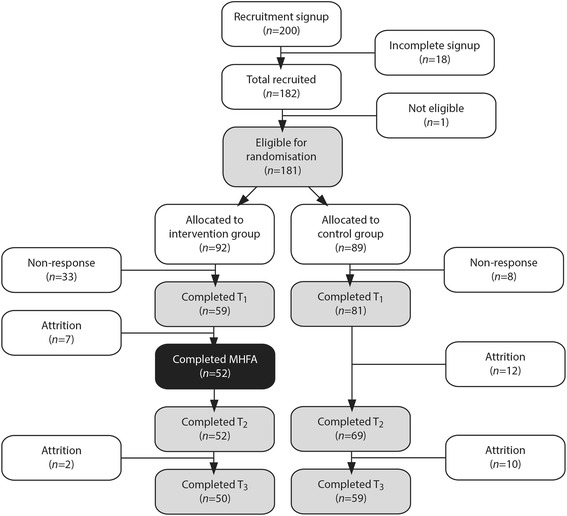
The prevalence of mental health problems have been found to be higher among university students compared to their non-student peers. Nursing students in particular face a range of additional stressors which may impact their undergraduate performance and their careers. Mental Health First Aid (MHFA) aims to increase mental health literacy and to reduce stigma and may positively impact on the student population. This paper describes a MHFA randomised controlled trial targeting nursing students at a large Australian university. This study aimed to measure the impact of the MHFA course on mental health literacy, mental health first aid intentions, confidence in helping someone with a mental health problem and stigmatising attitudes including social distance. Participants were first year nursing students (n = 181) randomly allocated to the intervention (n = 92) or control (n = 89) group. Intervention group participants received the standardised MHFA course for nursing students. Online self-report questionnaires were completed at three time intervals: baseline (one week prior to the intervention: T1) (n = 140), post intervention (T2) (n = 120), and two months post intervention (T3) (n = 109). Measures included demographics, mental health knowledge, recognition of depression, confidence in helping, mental health first aid intentions and stigmatising attitudes including social distance. Repeated measures ANOVA was computed to measure if the impact of time (T1, T2, T3) and group (intervention and control) on the outcome variables. There was a significant improvement among intervention compared to control group participants across the three time periods for knowledge scores (p < 0.001), confidence in helping (p < 0.001), mental health first aid intentions (p < 0.001), total personal stigma (p < 0.05), personal dangerous/unpredictable stigma (p < 0.05) and social distance (p < 0.05) scores. MHFA is useful training to embed in university courses and has the potential to enhance mental health literacy and reduce stigmatising attitudes and social distance. While this course has particular salience for nursing and other health science students, there are broader benefits to the general university population that should be considered and opportunities accordingly explored for all students to complete the course. Australian New Zealand Clinical Trials Registry ACTRN12614000861651 . Retrospectively registered 11 August 2014.
Overview
The claims and statistics of this paper haven’t been checked yet.
Free: it reads the open-access text and checks the first 5 claims that cite a source we can check. Create a free account to check every claim.
Integrity signals
Registry
Cites
Statistics
Figures
Verification
Claims the paper makes
The claims and statistics of this paper haven’t been checked yet.
Free: it reads the open-access text and checks the first 5 claims that cite a source we can check. Create a free account to check every claim.
Claims other papers make about this one
Each is checked against this paper’s own text: does it say what the citing paper says it does?
The cited source says what the claim attributes to it.
In the citing paper
“We attempted to contact authors to resolve any uncertainties or to obtain missing information, and received information from 10 studies [13–22].”
From Systematic review and meta-analysis of Mental Health First Aid training: Effects on knowledge, stigma, and helping behaviour (2018) · cites this paper as [14]
The cited source says what the claim attributes to it.
In the citing paper
“A final 18 studies were included in the review, with a total of 5936 participants [13–22, 42–49].”
From Systematic review and meta-analysis of Mental Health First Aid training: Effects on knowledge, stigma, and helping behaviour (2018) · cites this paper as [14]
Self-check
Percentages, sums and reported differences re-computed from the paper’s own numbers.
The self-check needs the paper’s full text.
Citations
Cites
CONSORT 2010 Statement: updated guidelines for reporting parallel group randomised trials
the CONSORT Group, Schulz, K. F., Altman, D. G., & Moher, D. (2010) · BMC Medicine · doi:10.1186/1741-7015-8-18 · Cited by 13,371
Foundations of Clinical Research: Applications to Practice,
(2002) · Survey of Ophthalmology · doi:10.1016/s0039-6257(02)00362-4 · Cited by 9,489 · cited 3×
“MHFA is a standardised course [36, 37], facilitated by accredited professionals therefore enhancing the fidelity of the course and reducing risk of Type 111 error [38].”
BackgroundCONSORT 2010 Statement: updated guidelines for reporting parallel group randomised trials
Schulz, K. F., Altman, D. G., Moher, D., & for the CONSORT Group (2010) · BMJ · doi:10.1136/bmj.c332 · Cited by 9,329
Diagnostic and Statistical Manual of Mental Disorders ( DSM ‐ IV ‐ TR )
Segal, D. L. (2010) · The Corsini Encyclopedia of Psychology · doi:10.1002/9780470479216.corpsy0271 · Cited by 4,666
Mental health of young people: A global public-health challenge
Patel, V., Flisher, A. J., Hetrick, S., & McGorry, P. (2007) · The Lancet · doi:10.1016/s0140-6736(07)60368-7 · Cited by 3,126 · cited 2×
“employment and contribution to community [1, 2].”
BackgroundA systematic review of studies of depression prevalence in university students
Ibrahim, A. K., Kelly, S. J., Adams, C. E., & Glazebrook, C. (2013) · Journal of Psychiatric Research · doi:10.1016/j.jpsychires.2012.11.015 · Cited by 1,988 · cited 1×
“6% among undergraduate university students [8].”
Public conceptions of mental illness: labels, causes, dangerousness, and social distance.
Link, B. G., Phelan, J. C., Bresnahan, M., Stueve, A., & Pescosolido, B. A. (1999) · American Journal of Public Health · doi:10.2105/ajph.89.9.1328 · Cited by 1,949 · cited 5×
“Social distance was measured by a scale adapted from the previously validated Social Distance Scale (SDS) [44] and used in other MHFA studies [27, 46].”
MethodInfluentialBlanco, C., Okuda, M., Wright, C., Hasin, D. S., Grant, B. F., Liu, S.-M., & Olfson, M. (2008) · Archives of General Psychiatry · doi:10.1001/archpsyc.65.12.1429 · Cited by 1,582 · cited 1×
“Financial strain and lower socio economic status, being in first or second year of study, being female, and living off campus or alone increases the risk of poorer mental health outcomes for students [4, 5, 7, 9, 10].”
BackgroundPsychological distress in university students: A comparison with general population data
Stallman, H. M. (2010) · Australian Psychologist · doi:10.1080/00050067.2010.482109 · Cited by 1,372 · cited 1×
“Financial strain and lower socio economic status, being in first or second year of study, being female, and living off campus or alone increases the risk of poorer mental health outcomes for students [4, 5, 7, 9, 10].”
BackgroundWhen and how do young people seek professional help for mental health problems?
Rickwood, D. J., Deane, F. P., & Wilson, C. J. (2007) · Medical Journal of Australia · doi:10.5694/j.1326-5377.2007.tb01334.x · Cited by 1,195
Research works printed but not linked: 6
- Australian Bureau of Statistics: National Survey of Mental Health and Wellbeing: Summary of Results. In., vol. 4326.0. Canberra: Australian Bureau of Statistics; 2008.
- Wang L Co-occuring academic and mental health problems in high school: a longitudinal study 2009 Chapel Hill The University of North Carolina
- World Health Organization The ICD-10 classification of mental and behavioural disorders: Clinical descriptions and diagnostic guidelines 1992 Geneva World Health Organisation
- Australian Bureau of Statistics Australian Social Trends: Education Differences Between Men and Women 2012 Canberra Australian Bureau of Statistics
- Health Workforce Australia (HWA) Australia’s Health Workforce Series – Nurses in focus 2013 Adelaide HWA
- Office of Strategy and Planning CU School of Nursing, Midwifery and Paramedicine Student Headcount 2016 Perth Curtin University
Cited by
Morgan, A. J., Ross, A., & Reavley, N. J. (2018) · PLOS ONE · doi:10.1371/journal.pone.0197102 · Cited by 461
Waqas, A., Malik, S., Fida, A., Abbas, N., Mian, N., Miryala, S., Amray, A. N., Shah, Z., & Naveed, S. (2020) · Psychiatric Quarterly · doi:10.1007/s11126-020-09751-4 · Cited by 176
Tembo, C. P., Burns, S. K., & Kalembo, F. W. (2017) · PLoS ONE · doi:10.1371/journal.pone.0178142 · Cited by 187
Self-citationAndérson, G. S., Nota, P. M. D., Groll, D., & Carleton, R. N. (2020) · International Journal of Environmental Research and Public Health · doi:10.3390/ijerph17207645 · Cited by 153
“All studies were rated at a low risk of bias regarding selection of the non-exposed cohort, which was either randomly selected from the same population in the case of RCTs [31,32,35,37], or compared to a sample from the same larger population that did not offer the service in question [27,34,36,38], or not applicable…”
BackgroundMethodResultInfluentialMorgan, A. J., Wright, J., & Reavley, N. J. (2021) · International Journal of Mental Health Systems · doi:10.1186/s13033-020-00423-1 · Cited by 82
The effects of educational interventions on suicide: A systematic review and meta-analysis
Pistone, I., Beckman, U., Eriksson, E., Lagerlöf, H., & Sager, M. (2019) · International Journal of Social Psychiatry · doi:10.1177/0020764019852655 · Cited by 81
Reis, A. C., Saheb, R., Moyo, T., Smith, C., & Sperandei, S. (2022) · Prevention Science · doi:10.1007/s11121-021-01283-y · Cited by 60
“Furthermore, in comparison to their peers who are currently not pursuing university education, students have been found to be more prone to mental ill-health (Burns et al., 2017; Evans et al., 2018; Leahy et al., 2010).”
BackgroundCrespo-González, C., Dineen‐Griffin, S., Rae, J., & Hill, R. A. (2022) · Research in Social and Administrative Pharmacy · doi:10.1016/j.sapharm.2022.06.006 · Cited by 63
Effectiveness of Mental Health First Aid: a meta-analysis
Maslowski, A. K., LaCaille, R. A., LaCaille, L. J., Reich, C. M., & Klingner, J. (2019) · Mental Health Review Journal · doi:10.1108/mhrj-05-2019-0016 · Cited by 73
Mental Health First Aid training and assessment among university students: A systematic review
El‐Den, S., Moles, R. J., Choong, H.-J., & O’Reilly, C. L. (2020) · Journal of the American Pharmacists Association · doi:10.1016/j.japh.2019.12.017 · Cited by 69
Mental Health First Aid as a tool for improving mental health and well-being
Richardson, R., Dale, H. E., Robertson, L., Meader, N., Wellby, G., McMillan, D., & Churchill, R. C. (2023) · Cochrane Database of Systematic Reviews · doi:10.1002/14651858.cd013127.pub2 · Cited by 64
The Relationship Between Health Literacy and Mental Health Attitudes and Beliefs
Fleary, S. A., Joseph, P. L., Gonçalves, C., Somogie, J., & Angeles, J. (2022) · HLRP Health Literacy Research and Practice · doi:10.3928/24748307-20221018-01 · Cited by 69
“MH first aid training programs teach community members to identify, understand, respond to, and support individuals with mental illnesses and have successfully reduced stigma (Burns et al., 2017; Hadlaczky et al., 2014; Jorm, 2012; Morgan et al., 2018).”
BackgroundMental health first aid improves mental health literacy among college students: A meta-analysis
Liang, M., Chen, Q., Guo, J., Mei, Z., Wang, J., Zhang, Y., He, L., & Li, Y. (2021) · Journal of American College Health · doi:10.1080/07448481.2021.1925286 · Cited by 56
Wong, J. C. M., Chua, J. Y. X., Chan, P. Y., & Shorey, S. (2024) · Journal of Advanced Nursing · doi:10.1111/jan.16127 · Cited by 84
Hart, L., Morgan, A. J., Rossetto, A., Kelly, C. M., Gregg, K. J., Gross, M., Johnson, C. L., & Jorm, A. F. (2022) · BMC Public Health · doi:10.1186/s12889-022-13554-6 · Cited by 49
Frick, A., Osae, L., Ngo, S., Anksorus, H. N., Williams, C. R., Rodgers, P. T., & Harris, S. C. (2021) · Currents in Pharmacy Teaching and Learning · doi:10.1016/j.cptl.2021.01.027 · Cited by 39
Gu, L., Jiao, W., Xia, H., & Yu, M. (2021) · Nurse Education in Practice · doi:10.1016/j.nepr.2021.103009 · Cited by 32
Pham, L., Moles, R. J., O’Reilly, C. L., Carrillo, M., & El‐Den, S. (2022) · BMC Medical Education · doi:10.1186/s12909-022-03131-1 · Cited by 31
“MHFA training has demonstrated its value in significantly improving confidence, mental health literacy and stigma in medicine [16], nursing [17] and pharmacy [18] students.”
BackgroundEvaluation of Mental Health First Aid skills in an Australian university population
Ashoorian, D. M., Albrecht, K., Baxter, C., Giftakis, E., Clifford, R. M., Greenwell-Barnden, J. N., & Wylde, T. J. (2018) · Early Intervention in Psychiatry · doi:10.1111/eip.12742 · Cited by 36
“Evaluations of the MHFA course delivered to university students have found positive changes to knowledge and awareness of mental health problems (Bond et al., 2015; Burns et al., 2017; O'Reilly et al., 2011).”
BackgroundResultInfluentialCrawford, G., & Burns, S. K. (2020) · BMC Medical Education · doi:10.1186/s12909-020-1983-2 · Cited by 41
Self-citationHung, M. S. Y., Chow, M. C. M., Chien, W. T., & Wong, P. (2020) · Collegian Journal of the Royal College of Nursing Australia · doi:10.1016/j.colegn.2020.04.006 · Cited by 31
O'Connell, J., Pote, H., & Shafran, R. (2021) · Early Intervention in Psychiatry · doi:10.1111/eip.12964 · Cited by 26
“…police (eg, Booth et al., 2017), government and public sector workers (eg, Kitchener & Jorm, 2004; Svensson & Hansson, 2014), nurses (eg, Bingham & O'Brien, 2018; Burns et al., 2017), medics (eg, Davies, Beever, & Glazebrook, 2018), and pharmacy students (eg, ElDen, O'reilly, Chen, & Moles, 2016).”
Liu, W. (2020) · Issues in Mental Health Nursing · doi:10.1080/01612840.2020.1793248 · Cited by 30
Moghimi, E., Knyahnytska, Y., Omrani, M., Nikjoo, N., Stephenson, C., Layzell, G., Simpson, A. I. F., & Alavi, N. (2022) · Frontiers in Psychiatry · doi:10.3389/fpsyt.2022.921527 · Cited by 30
Kameg, B., Fradkin, D., & Lee, H. (2021) · Journal of Psychosocial Nursing and Mental Health Services · doi:10.3928/02793695-20210513-01 · Cited by 26
Milbourn, B. T., Black, M. H., Afsharnejad, B., Snyman, Z., Baker-Young, E., Thompson, C., McGarry, S., Scott, M., Clifford, R. M., Zimmermann, F., et al. (2021) · Contemporary Clinical Trials · doi:10.1016/j.cct.2021.106645 · Cited by 19
Associated factors of stigma toward people with mental illness among university and school students
Omari, O. A., Khalaf, A., Sabei, S. D. A., Wynaden, D., Ballad, C. A. C., Dameery, K. A., & Qadire, M. I. A. (2021) · Perspectives In Psychiatric Care · doi:10.1111/ppc.12982 · Cited by 26
Patients and Caregivers Helping to Shape the Undergraduate Pharmacy Mental Health Curriculum
Keating, D., McWilliams, S., Hynes, C., Purcell, A., Clarke, M., & Strawbridge, J. (2019) · American Journal of Pharmaceutical Education · doi:10.5688/ajpe7138 · Cited by 18
“MHFA training has been shown to improve attitudes and willingness to provide care to people experiencing mental ill-health among undergraduate pharmacy, medical and nursing students.(51,61,62) While further research is required to explore how the training actually impacts on service delivery, the training is an import…”
BackgroundChen, M., Lin, G., Wang, G., Li, Y., Lyu, N., Chen, Q., Lan, J., Zhou, Y., & Zhong, B. (2023) · Asia-Pacific Psychiatry · doi:10.1111/appy.12542 · Cited by 17
Preventing suicide; nurse education and the occluded issue of gender
Kerr, S., Martin, C. R., & Fleming, M. P. (2018) · Nurse Education in Practice · doi:10.1016/j.nepr.2018.07.004 · Cited by 19
Mental Health Literacy of University Students in Vietnam and Cambodia
Dessauvagie, A., Dang, H., Truong, T. T. A., Nguyen, T. D., Nguyen, B. H., Cao, H., Kim, S., & Groen, G. (2022) · International Journal of Mental Health Promotion · doi:10.32604/ijmhp.2022.018030 · Cited by 21
Mental Health First Aid training for paramedic students: An evaluation study
Wadsworth, D., Warren-James, M., Duncan, D. R., & Clegg, L. (2022) · Australasian Emergency Care · doi:10.1016/j.auec.2022.09.003 · Cited by 14
Evans, J., Romaniuk, M., & Theal, R. (2021) · BMC Psychiatry · doi:10.1186/s12888-021-03139-9 · Cited by 16
“82) and has been commonly used in evaluating the effectiveness of MHFA programs in reducing stigmatic beliefs [13, 24, 25].”
MethodRodgers, G., Burns, S. K., & Crawford, G. (2019) · Advances in Mental Health · doi:10.1080/18387357.2019.1663709 · Cited by 18
“After reading the vignette participants were asked “How confident would you be in your ability to help John?” and scored using a 5-point Likert scale ranging from 5 (“very confident”) to 1 (“don’t know”), referred to as confidence [helping John] (Burns et al., 2017).”
BackgroundMethodResultInfluentialSelf-citationEdgar, S., & Connaughton, J. (2020) · Physiotherapy Canada · doi:10.3138/ptc-2019-0036 · Cited by 12
Dzemaili, S., Pasquier, J., Bachmann, A. O., & Mohler‐Kuo, M. (2023) · International Journal of Environmental Research and Public Health · doi:10.3390/ijerph20021303 · Cited by 23
“This said, further studies highlighted some attenuation in knowledge scores over time [41,66], suggesting that refresher courses might be of value.”
BackgroundMethodResultInfluentialEfetividade do programa de primeiros socorros em saúde mental em estudantes de enfermagem
Loureiro, L. M. D. J., & Freitas, P. (2020) · Revista de Enfermagem Referência · doi:10.12707/riv19078 · Cited by 24
“Este dado é também ele positivo e está de acordo com a evidência acerca da efetividade do programa (Bond et al., 2015; Burns et al., 2017; Loureiro & Sousa, 2019; Loureiro & Valente, 2019, Morgan et al., 2018).”
InfluentialCarpini, J. A., Chandra, J., Lin, J., Teo, R., Truong, N., Boyne, E., Wylde, T. J., Clifford, R. M., & Ashoorian, D. M. (2020) · Early Intervention in Psychiatry · doi:10.1111/eip.13072 · Cited by 15
Evaluation of the Mental Health First Aid program in undergraduate nursing students
Loureiro, L. M. D. J., & Costa, L. (2019) · Revista de Enfermagem Referência · doi:10.12707/riv18087 · Cited by 21
MENtal health first aid in The wORkplace (MENTOR): a feasibility study
Narayanasamy, M. J., Geraghty, J., Coole, C., Nouri, F., Thomson, L., Callaghan, P., & Drummond, A. E. (2018) · Repository@Nottingham (University of Nottingham) · Cited by 12
A national study of the mental health literacy of community pharmacists
Rimal, R., Lin, J. C., Chan, A. H. Y., Chen, T. F., Sheridan, J. L., & Sundram, F. (2022) · Research in Social and Administrative Pharmacy · doi:10.1016/j.sapharm.2022.01.002 · Cited by 13
Mospan, C. M., & Gillette, C. (2020) · American Journal of Pharmaceutical Education · doi:10.5688/ajpe7588 · Cited by 11
Wold, C., Hallett, J., Crawford, G., Chih, H., Burns, S. K., & Jancey, J. M. (2020) · Health Promotion Journal of Australia · doi:10.1002/hpja.331 · Cited by 10
Self-citationAssessing the Utility of Mental Health First Aid Training for Physician Assistant Students
Forbes, J., Noller, D. T., Henriquez, M., Scantamburlo, S., Ward, I., & Lee, H. (2022) · The Journal of Physician Assistant Education · doi:10.1097/jpa.0000000000000467 · Cited by 13
“Extensive peer-reviewed studies have shown the effectiveness of MHFA training, and evaluations of the program have shown increased mental health literacy, improved knowledge of appropriate first aid strategies, increased supportive behaviors toward individuals with mental health problems, decreased stigmatizing attitu…”
BackgroundLi, L., Ma, X., Wu, Z., Xie, C., & Li, Y. (2025) · BMC Psychology · doi:10.1186/s40359-025-02519-0 · Cited by 13
“Four studies [17, 18, 27, 28] analyzed stigma.”
InfluentialLiu, W. (2021) · CIN Computers Informatics Nursing · doi:10.1097/cin.0000000000000745 · Cited by 11
Refuting Mental Health Misconceptions: A Quasi-Experiment with Abnormal Psychology Courses
LaCaille, R. A., LaCaille, L. J., Damsgard, E., & Maslowski, A. K. (2019) · Psychology Learning & Teaching · doi:10.1177/1475725719856269 · Cited by 14
“Importantly, increasing individuals’ accurate knowledge about mental health may also reduce negative stereotypes and stigma attitudes (Burns et al., 2017).”
BackgroundA model of intention to provide mental health first aid in college students
Spiker, D. A., & Hammer, J. H. (2019) · Journal of Mental Health · doi:10.1080/09638237.2019.1644493 · Cited by 13
Effectiveness of Mental Health First Aid for Chinese-Speaking International Students in Melbourne
Zhuang, X., Wong, D. F. K., Ng, T. K., & Poon, A. (2019) · Research on Social Work Practice · doi:10.1177/1049731519890398 · Cited by 9
Australian paramedic students’ mental health literacy and attitudes towards mental health
King, S. C., Rebar, A. L., Oliveri, P., & Stanton, R. (2021) · The Journal of Mental Health Training Education and Practice · doi:10.1108/jmhtep-03-2021-0027 · Cited by 8
Pursehouse, L. (2022) · The Journal of Mental Health Training Education and Practice · doi:10.1108/jmhtep-09-2021-0112 · Cited by 8
Programa de Primeiros Socorros em Saúde Mental: Estudo piloto
Loureiro, L. M. D. J., & Sousa, C. (2019) · Revista Portuguesa de Investigação Comportamental e Social · doi:10.31211/rpics.2019.5.1.108 · Cited by 12
Pilot of a consumer based anti-stigma mentorship program for nursing students
Fokuo, J. K., Maroney, M. M., & Corrigan, P. W. (2019) · Journal of Public Mental Health · doi:10.1108/jpmh-02-2019-0020 · Cited by 11
Karazeybek, E., & Özdemir, C. (2023) · Anatolian Journal of Health Research · doi:10.29228/anatoljhr.70126 · Cited by 6
Murphy, K. L., Klug, K. B., & Kasimatis, M. D. (2023) · Education in the Health Professions · doi:10.4103/ehp.ehp_1_23 · Cited by 6
Improving Nurses' Behavioral Health Knowledge and Skills With Mental Health First Aid
Baker, M. W., Dower, C. M., Winter, P. B., Rutherford, M. M., & Betts, V. T. (2019) · Journal for Nurses in Professional Development · doi:10.1097/nnd.0000000000000543 · Cited by 5
“We did not assess outcomes that have been assessed in trials of MHFA (Burns et al., 2017).”
BackgroundMethodLoureiro, L. M. D. J., Rosa, A., Frajuca, M., da Cunha, S. R., Correia, S., Morgado, T. M. M., & Costa, L. (2020) · Revista Portuguesa de Investigação Comportamental e Social · doi:10.31211/rpics.2020.6.2.184 · Cited by 5
O’Connell, J., Shafran, R., & Pote, H. L. (2021) · Frontiers in Psychiatry · doi:10.3389/fpsyt.2020.570125 · Cited by 7
“These results have been shown across a variety of different settings internationally including in government workplace settings (18, 19), educational settings (20, 21), with nursing students (22), and across the general public (23).”
BackgroundMcGregor, K. E., Boyd, S. E. M., Collins, E. L., Mcdonald, A. M., Pereira-Edwards, M. P. A., Scott, S., Neufeld, T. D., Harrigan, T., Sawatzky, B. L., Chorney, M. A., et al. (2023) · Quality Advancement in Nursing Education - Avancées en formation infirmière · doi:10.17483/2368-6669.1381 · Cited by 4
Llopis, N., Antoine, E., Grové, C., Marinucci, A., Touchard, F., & Montagni, I. (2023) · Early Intervention in Psychiatry · doi:10.1111/eip.13471 · Cited by 7
“After the training, students felt more self-confident, empathic and legitimized to support others (Burns et al., 2017; Davies et al., 2018; Lo et al., 2018).”
BackgroundResultInfluentialBredimus, B. “. (2019) · Nurse Leader · doi:10.1016/j.mnl.2019.11.008 · Cited by 4
Ostrowski, J. L., Sampson, S., McGoldrick, E., Karabin, C., & Shields, K. N. (2023) · Journal of Occupational Therapy Education · doi:10.26681/jote.2023.070205 · Cited by 4
“Previous research with pharmacy students (O’Reilly et al., 2011), nursing and medical students (Bond et al., 2015; Burns et al., 2017), and members of the Australian public (Jorm et al., 2010) found decreased stigma surrounding mental health after MHFA training.”
BackgroundMethodResultInfluentialBasic life support for mental health crisis: You can be a hero
Poornaselvan, C. (2020) · Indian Journal of Continuing Nursing Education · doi:10.4103/ijcn.ijcn_60_20 · Cited by 4
Evaluation of Mental Health First Aid training program in Bangladesh: A modified Delphi studyPreprint
Huque, A. U., Kawser, U., Rahman, M., Gnani, S., Rao, M., Baskin, C., Mallick, P. P., & Armstrong, S. (2021) · Research Square · doi:10.21203/rs.3.rs-491319/v1 · Cited by 2
Hung, M. S. Y., Ng, W. W. M., & Choi, E. K. Y. (2024) · Healthcare · doi:10.3390/healthcare12060682 · Cited by 1
“In recent years, online or internet-based interventional studies have been adopted to promote or improve mental health, including MHFA programs and laughter activities [41,43,49,83,84].”
BackgroundLi, L., Zhang, H., Lu, S., Ma, X., Tan, H., Zhang, Y., Xie, C., & Li, Y. C. (2025) · BMC Psychology · doi:10.1186/s40359-025-03624-w · Cited by 1
“WHO points out that when there is a shortage of mental health resources, the task of preventing and intervening in patients’ mental health problems can be appropriately shifted to clinical healthcare workers, especially nurses [18].”
The Long-Term Outcomes of Mental Health First Aid Training for University Students
Lancaster, C., Sperandei, S., Saheb, R., & Reis, A. C. (2023) · Psychological Studies · doi:10.1007/s12646-023-00745-3 · Cited by 2
“Other gaps in research are the length of time that participants experience the positive outcomes of MHFA (Burns et al., 2017; Rose et al., 2019), the impact of MHFA on help-seeking behaviours and how MHFA impacts the mental health of the participant (Gorczynski et al.”
BackgroundResultInfluentialAnderson, A. S., Pitney, W. A., Armstrong, K. J., & Kinslow, B. (2023) · Athletic Training Education Journal · doi:10.4085/1947-380x-23-001 · Cited by 1
Anderson, A. S., Pitney, W. A., Armstrong, K. J., & Kinslow, B. (2023) · Athletic Training Education Journal · doi:10.4085/1947-380x-23-002 · Cited by 1
Mossholder, J. (2024) · The Interactive Journal of Global Leadership and Learning · doi:10.55354/2692-3394.1053
YALÇIN, İ., & Ergün, A. (2025) · Clinical and Experimental Health Sciences · doi:10.33808/clinexphealthsci.1553470 · Cited by 1
Tiemens, B. G. (2017) · Nederlands Tijdschrift voor Evidence Based Practice · doi:10.1007/s12468-017-0026-4 · Cited by 1
Mental health literacy dissemination project
McQuerrey, S. (2019) · Library, Museums and Press - UDSpace (University of Delaware) · doi:10.58088/mhm2-dv18
Evaluating the effectiveness of the PA Foundation's Mental Health Outreach fellowship
Forbes, J., Pierce, C., & Sappe-Watkins, L. (2020) · JAAPA · doi:10.1097/01.jaa.0000697256.65328.ef
Programa de primeira ajuda em saúde mental em estudantes do 1.º ano ensino superior
da Cunha, S. R., & Loureiro, L. M. D. J. (2021) · International Journal of Developmental and Educational Psychology Revista INFAD de psicología · doi:10.17060/ijodaep.2021.n1.v2.2106
Terry, A. N. (2024) · Journal of Criminal Justice Education · doi:10.1080/10511253.2024.2365695
“They found a significant improvement in the intervention group compared to the control group on knowledge, confidence in helping, MHFA intentions, and stigmatizing attitudes (Burns et al., 2017).”
Krusinsky, M. P. (2024) · Journal of Criminal Justice Education · doi:10.1080/10511253.2024.2431275
A Systematic Scoping Review of Nursing’s Pivotal Role in Dismantling Mental Health Discrimination
Alalwi, A., Khamseen, A. B., Shulian, A. A., Aljarri, N., Albashah, L., Alismail, K., Hakeem, F. A., Aljuaidan, S., Aljafar, N., Alaithan, F. M. A., et al. (2025) · Open Journal of Nursing · doi:10.4236/ojn.2025.1511068
Hallajian, F., Jamshidi, E., Sayarifard, A., Ghadirian, L., & Ahmadi, A. (2025) · Trials · doi:10.1186/s13063-025-09252-4 · Cited by 1
“The research team reviewed several studies, including those by Reavley et al. [29], Svensson and Hanson [30], Jensen et al. [31], Burns et al. [32], Kitchener and Jorm [54], McKiernan et al. [33], Wang et al. [34], Hong et al. [35], Morgan et al. [36], Subedi et al. [37] and Marsico et al. [38].”
Hart, L., Morgan, A. J., Rossetto, A., Kelly, C. M., Gregg, K. J., Gross, M., Johnson, C., & Jorm, A. F. (2022) · Figshare · doi:10.6084/m9.figshare.20047259
Evans, J., Romaniuk, M., & Theal, R. (2021) · Figshare · doi:10.6084/m9.figshare.14432075
Morgan, A. J., Wright, J., & Reavley, N. J. (2021) · Figshare · doi:10.6084/m9.figshare.13605572
Duan, R., & Yang, H. (2026) · Perspectives In Psychiatric Care · doi:10.1155/ppc/9954133
Lebrat, M., Carrouel, F., de Vigneulles, B. D. S., Lamure, M. P., Salque, C., Salamon, R., Massoubre, C., Nicolas Franck, B., & Dussart, C. (2026) · JMIR Public Health and Surveillance · doi:10.2196/93207
Shan, Y., Zhao, M., Zhou, X., Li, Y., Liu, M., & Li, L. (2026) · Social Psychiatry and Psychiatric Epidemiology · doi:10.1007/s00127-026-03197-y
“A second group of studies drew upon structured educational models, most notably the MHFA programme [ 24, 33].”
InfluentialStudent-led implementation of Mental Health First Aid training in undergraduate medical education
McCormack, Z., Yousif, K., Abramova, E., Arora, S., Prabnoor, J., Keating, D., & Strawbridge, J. (2026) · Frontiers in Psychiatry · doi:10.3389/fpsyt.2026.1893636
“Although originally designed for the general public, MHFA has demonstrated bene fi ts for healthcare students, including nursing, pharmacy, and medicine (15 – 30).”
Strom, J. (2026) · Archives of Psychiatric Nursing · doi:10.1016/j.apnu.2026.152253
ElKhalil, R., Alrabee, N., Gaydhanker, A. P., Zaatari, W. E., Maalouf, I., AlMaqbali, M., Elhadi, Y. A. M., Sherif, M., Darwish, A., Belfakir, M., et al. (2026) · PLoS ONE · doi:10.1371/journal.pone.0360403
“Several studies also drew on the Mental Health First Aid (MHFA) program, including its ALGEE action plan (Approach, Listen, Give support, Encourage professional help, and Encourage other supports) [25,28].”
Metadata
- Authors
- Burns, S., Crawford, G., Hallett, J., Hunt, K., Chih, H. J., & Tilley, P. J. M.
- Affiliations
- Curtin University (AU)
- Corresponding author
- Burns, Sharyn
- Venue
- BMC Psychiatry
- Published
- 2017-03-23
- Volume
- 17
- Issue
- 1
- Pages
- 111-111
- ISSN
- 1471-244X (ISSN-L)
- PMC
- PMC5364573
- OpenAlex
- W2598908263
- Semantic Scholar
- 0bdfdc916afee0f98d9751b7ba9a8010c7a1908b
- Cited by
- 88
- References
- 58
- Citations by year
- 2026: 6 · 2025: 5 · 2024: 6 · 2023: 11 · 2022: 11 · 2021: 16 · 2020: 15 · 2019: 12 · 2018: 4 · 2017: 2
- FWCI
- 12.93
- Type
- journal article
- Language
- en
- Open access
- gold
- doi.org
- Licence
- cc-by
- Locations
- BMC Psychiatry (publishedVersion, cc-by)
- PubMed Central (publishedVersion, cc-by)
- PubMed (publishedVersion)
- eSpace (Curtin University) (submittedVersion, cc-by)
- Funders
- Curtin University of Technology
- Topics
- Health Sciences › Medicine › Psychiatry and Mental health › Mental Health Treatment and Access
- Health Sciences › Medicine › Public Health, Environmental and Occupational Health › School Health and Nursing Education
- Social Sciences › Psychology › Clinical Psychology › Suicide and Self-Harm Studies
- Keywords
- mental health first aid, nursing students, mental health literacy, mental health stigma, social distance, depression detection, university students, mental health education
- MeSH terms
- Adult, Attitude of Health Personnel, Australia, Mental Disorders, Career Choice, Curriculum, Education, Nursing, Female, First Aid, Humans, Male, New Zealand, Psychiatric Nursing, Psychological Distance, Stress, Psychological, Students, Nursing, Social Stigma
About these checks
Registry, retraction, Cites and statistics results are computed, not judged, with one exception: a printed reference that no index lists is read once by a model before it counts as a citation error. Claims are extracted by a model and kept only when their quote appears verbatim in the text; each cited source is then checked, with a model’s help, for whether it says what the claim relies on. Those verdicts can be wrong — read the claim’s quote and the cited source before relying on one.
Statistics and arithmetic are recomputed, not judged.
Confidence bands are shown only for fields calibrated on our annotated test set. None is calibrated yet, so no band is shown.
What counts as a claim ›How we measure confidence ›How we check this ›
Are you an author, or do you see a problem with this page? Request a review
Data sources
Bibliographic data: Semantic Scholar, OpenAlex, Crossref.
Contains information from the Semantic Scholar Academic Graph Datasets, made available under the ODC Attribution License (ODC-BY 1.0).
Semantic Scholar’s data is described in: Kinney, R., et al. (2023). The Semantic Scholar Open Data Platform. arXiv:2301.10140.
