

Music interventions to reduce stress and anxiety in pregnancy: a systematic review and meta-analysis
Open accessThe DOI matches its Crossref record; 41 of the 43 references it cites were found in a registry or an index.
Abstract
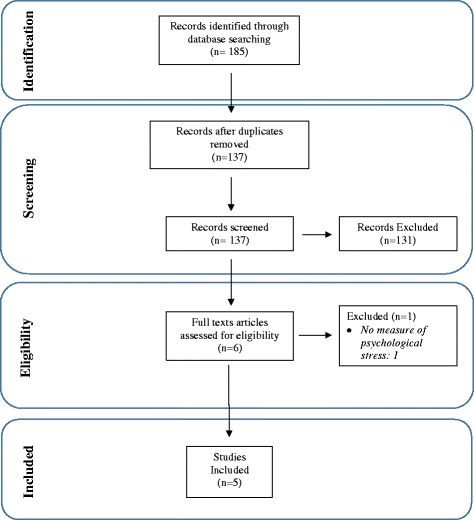
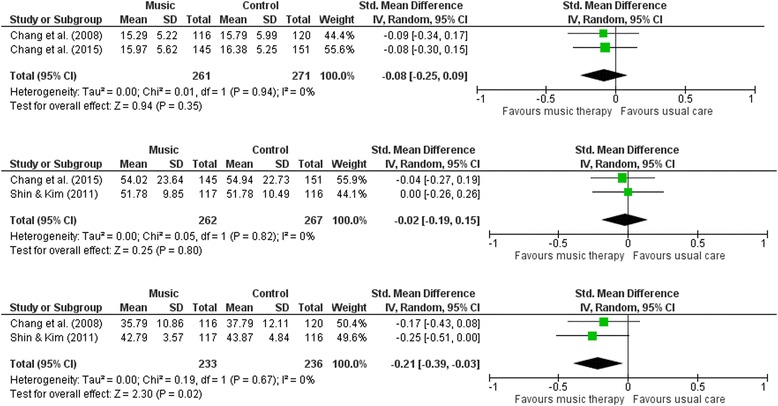
BACKGROUND: Stress and anxiety are common in pregnancy and shown to have adverse effects on maternal and infant health outcomes. The aim of this review and meta-analysis was to assess the effectiveness of music-based interventions in reducing levels of stress or anxiety among pregnant women. METHODS: Six databases were searched using key terms relating to pregnancy, psychological stress, anxiety and music. Inclusion criteria were randomised controlled or quasi-experimental trials that assessed the effect of music during pregnancy and measured levels of psychological stress or anxiety as a primary or secondary outcome. Two authors independently assessed and extracted data. Quality assessment was performed using The Cochrane Collaboration risk of bias criteria. Meta-analyses were conducted to assess stress and anxiety reduction following a music-based intervention compared to a control group that received routine antenatal care. RESULTS: Five studies with 1261 women were included. Music interventions significantly reduced levels of maternal anxiety (Standardised Mean Difference (SMD): -0.21; 95% Confidence Interval (CI) -0.39, -0.03; p = 0.02). There was no significant effect on general stress (SMD: -0.08; 95% CI -0.25, 0.09; p = 0.35) or pregnancy-specific stress (SMD: -0.02; 95% CI -0.19, 0.15; p = 0.80). The methodological quality of included studies was moderate to weak, all studies having a high or unclear risk of bias in allocation concealment, blinding and selective outcome reporting. CONCLUSIONS: There is evidence that music-based interventions may reduce anxiety in pregnancy; however, the methodological quality of the studies was moderate to weak. Additional research is warranted focusing on rigour of assessment, intensity of interventions delivered and methodological limitations.
Overview
The claims and statistics of this paper haven’t been checked yet.
Free: it reads the open-access text and checks the first 5 claims that cite a source we can check. Create a free account to check every claim.
Integrity signals
Registry
Cites
Statistics
Figures
Verification
Claims the paper makes
The claims and statistics of this paper haven’t been checked yet.
Free: it reads the open-access text and checks the first 5 claims that cite a source we can check. Create a free account to check every claim.
Claims other papers make about this one
Each is checked against this paper’s own text: does it say what the citing paper says it does?
The source backs part of the claim, not all of it — or backs it for a different population, condition or comparison.
In the citing paper
“Several reviews highlight that music interventions during pregnancy also have a general anxiety reducing effect [50, 80, 84].”
From The effects of a music and singing intervention during pregnancy on maternal well-being and mother-infant bonding: a randomised, controlled study. (2021) · cites this paper as [80]
Experimental — accuracy not yet measured
Self-check
Percentages, sums and reported differences re-computed from the paper’s own numbers.
The self-check needs the paper’s full text.
Citations
Cites
Preferred Reporting Items for Systematic Reviews and Meta-Analyses: the PRISMA statement
Moher, D., Liberati, A., Tetzlaff, J., Altman, D. G., & for the PRISMA Group (2009) · BMJ · doi:10.1136/bmj.b2535 · Cited by 83,823
The Hospital Anxiety and Depression Scale
Zigmond, A. S., & Snaith, R. P. (1983) · Acta Psychiatrica Scandinavica · doi:10.1111/j.1600-0447.1983.tb09716.x · Cited by 47,139
Preferred reporting items for systematic reviews and meta-analyses: The PRISMA statement
Moher, D., Liberati, A., Tetzlaff, J., Altman, D. G., & the PRISMA Group* (2009) · Annals of Internal Medicine · doi:10.7326/0003-4819-151-4-200908180-00135 · Cited by 37,554
A Global Measure of Perceived Stress
Cohen, S., Kamarck, T., & Mermelstein, R. (1983) · Journal of Health and Social Behavior · doi:10.2307/2136404 · Cited by 32,807
Detection of Postnatal Depression: Development of the 10-item Edinburgh Postnatal Depression Scale
Cox, J. L., Holden, J. M., & Sagovsky, R. (1987) · British Journal of Psychiatry · doi:10.1192/bjp.150.6.782 · Cited by 14,183
Depression and quality of life in older persons: A review
Sivertsen, H., Bjørkløf, G. H., Engedal, K., Selbæk, G., & Helvik, A.-S. (2015) · Dementia and Geriatric Cognitive Disorders · doi:10.1159/000437299 · Cited by 14,152
Prevalence of antenatal and postnatal anxiety: Systematic review and meta-analysis
Dennis, C.-L., Falah-Hassani, K., & Shiri, R. (2017) · British Journal of Psychiatry · doi:10.1192/bjp.bp.116.187179 · Cited by 1,491 · cited 1×
“6% in the third trimester, suggesting that both stress and anxiety pose concerns for a significant proportion of pregnant women [4].”
BackgroundSelf-citationAalbers, S., Fusar-Poli, L., Freeman, R. E., Spreen, M., Ket, J. C., Vink, A. C., Maratos, A., Crawford, M., Chen, X.-J., & Gold, C. (2017) · Cochrane Database of Systematic Reviews · doi:10.1002/14651858.cd004517.pub3 · Cited by 838
Music interventions for improving psychological and physical outcomes in cancer patients
Bradt, J., Dileo, C., Magill, L., & Teague, A. (2016) · Cochrane Database of Systematic Reviews · doi:10.1002/14651858.cd006911.pub3 · Cited by 668 · cited 2×
“also found in their systematic review of 30 trials music significantly improved outcomes for cancer patients including a reduction in anxiety [9].”
BackgroundResultPsychosocial stress during pregnancy
Woods, S. M., Melville, J. L., Guo, Y., Fan, M.-Y., & Gavin, A. (2010) · American Journal of Obstetrics and Gynecology · doi:10.1016/j.ajog.2009.07.041 · Cited by 451 · cited 1×
“While an overall prevalence is unknown, a large US-based study found that approximately 84% of women experienced some level of stress during their pregnancy, with 6% reporting high levels [3].”
BackgroundMusic interventions for preoperative anxiety
Bradt, J., Dileo, C., & Shim, M. (2013) · Cochrane Database of Systematic Reviews · doi:10.1002/14651858.cd006908.pub2 · Cited by 411
The prevalence of antenatal and postnatal co-morbid anxiety and depression: a meta-analysis
Falah-Hassani, K., Shiri, R., & Dennis, C.-L. (2017) · Psychological Medicine · doi:10.1017/s0033291717000617 · Cited by 381 · cited 1×
“5% of women who reported having anxiety also reported having depression during their pregnancy [38].”
BackgroundSelf-citationCoping and distress in pregnancy: An investigation of medically high risk women
Yali, A. M., & Lobel, M. (1999) · Journal of Psychosomatic Obstetrics & Gynecology · doi:10.3109/01674829909075575 · Cited by 364 · cited 2×
“In recent decades, a number of standardised, reliable and valid antenatal measures have been developed that can be included in future research, for example, the Prenatal Distress Questionnaire (PDQ) [34] and the Pregnancyrelated Anxiety Questionnaire (PRAQ) [35].”
BackgroundSelf-citationMaratos, A., Gold, C., Wang, X., & Crawford, M. (2008) · Cochrane Database of Systematic Reviews · doi:10.1002/14651858.cd004517.pub2 · Cited by 352 · cited 1×
“found music therapy may also improve mood among those diagnosed with depression [10].”
BackgroundMusic therapy for people with schizophrenia and schizophrenia-like disorders
Geretsegger, M., Mössler, K. A., Bieleninik, Ł., Chen, X.-J., Heldal, T. O., & Gold, C. (2017) · Cochrane Database of Systematic Reviews · doi:10.1002/14651858.cd004025.pub4 · Cited by 348
Music for stress and anxiety reduction in coronary heart disease patients
Bradt, J., & Dileo, C. (2009) · Cochrane Database of Systematic Reviews · doi:10.1002/14651858.cd006577.pub2 · Cited by 343
The psychoneuroimmunological effects of music: A systematic review and a new model
Fancourt, D., Ockelford, A., & Belai, A. (2014) · Brain, Behavior, and Immunity · doi:10.1016/j.bbi.2013.10.014 · Cited by 316 · cited 1×
“lessons, group workshops or therapy) [7].”
Reporting Guidelines for Music-based Interventions
Robb, S. L., Carpenter, J. S., & Burns, D. S. (2011) · Journal of Health Psychology · doi:10.1177/1359105310374781 · Cited by 261
Music interventions for improving psychological and physical outcomes in cancer patients
Bradt, J., Dileo, C., Grocke, D., & Magill, L. (2011) · Cochrane Database of Systematic Reviews · doi:10.1002/14651858.cd006911.pub2 · Cited by 247
Effects of music therapy on psychological health of women during pregnancy
Chang, M., Chen, C., & Huang, K. (2008) · Journal of Clinical Nursing · doi:10.1111/j.1365-2702.2007.02064.x · Cited by 236 · cited 10×
“[2, 18] gave women the option of lullabies, classical music, nature sounds, or crystal music, all of which mimicked the human heart rate.”
BackgroundMethodInfluentialA review and psychometric evaluation of pregnancy-specific stress measures
Alderdice, F., Lynn, F., & Lobel, M. (2012) · Journal of Psychosomatic Obstetrics & Gynecology · doi:10.3109/0167482x.2012.673040 · Cited by 204 · cited 4×
“Yali A, Lobel M. Coping and distress in pregnancy: an investigation of medically high risk women.”
MethodSelf-citationMeasuring the ups and downs of pregnancy stress
DiPietro, J., Ghera, M., Costigan, K., & Hawkins, M. (2004) · Journal of Psychosomatic Obstetrics & Gynecology · doi:10.1080/01674820400017830 · Cited by 198 · cited 1×
“Due to the multidimensional nature of maternal stress, this outcome is often underestimated if the measure does not take into account the unique aspects of maternal stress or anxiety [32] and the psychological and social challenges experienced during pregnancy [33].”
BackgroundNast, I., Bolten, M., Meinlschmidt, G., & Hellhammer, D. H. (2013) · Paediatric and Perinatal Epidemiology · doi:10.1111/ppe.12051 · Cited by 197 · cited 1×
“Due to the multidimensional nature of maternal stress, this outcome is often underestimated if the measure does not take into account the unique aspects of maternal stress or anxiety [32] and the psychological and social challenges experienced during pregnancy [33].”
BackgroundMind-Body Interventions During Pregnancy
Beddoe, A. E., & Lee, K. A. (2008) · Journal of Obstetric, Gynecologic & Neonatal Nursing · doi:10.1111/j.1552-6909.2008.00218.x · Cited by 189
Music therapy for people with schizophrenia and schizophrenia-like disorders
Mössler, K., Chen, X., Heldal, T. O., & Gold, C. (2011) · Cochrane Database of Systematic Reviews · doi:10.1002/14651858.cd004025.pub3 · Cited by 182
Mind-body interventions during pregnancy for preventing or treating women's anxiety
Marc, I., Toureche, N., Ernst, E., Hodnett, E. D., Blanchet, C., Dodin, S., & Njoya, M. M. (2011) · Cochrane Database of Systematic Reviews · doi:10.1002/14651858.cd007559.pub2 · Cited by 154
Reporting Guidelines for Music-Based Interventions
Robb, S. L., Burns, D. S., & Carpenter, J. S. (2011) · Music and Medicine · doi:10.1177/1943862111420539 · Cited by 147 · cited 1×
“Guidelines for music-based interventions highlight the importance of clear reporting to ensure studies can be replicated in both future research and in clinical settings [30].”
BackgroundThe effects of sedative and stimulative music on stress reduction depend on music preference
Jiang, J., Zhou, L., Rickson, D., & Jiang, C. (2013) · The Arts in Psychotherapy · doi:10.1016/j.aip.2013.02.002 · Cited by 133 · cited 1×
“The choice of music is an important component, with stress reduction being dependent on the music preference of the participant [31].”
BackgroundSensory environment on health-related outcomes of hospital patients
Drahota, A., Ward, D., Mackenzie, H., Stores, R., Higgins, B., Gal, D., & Dean, T. P. (2012) · Cochrane Database of Systematic Reviews · doi:10.1002/14651858.cd005315.pub2 · Cited by 107
The effects of music listening on psychosocial stress and maternal–fetal attachment during pregnancy
Chang, H.-C., Yu, C.-H., Chen, S.-Y., & Chen, C. (2015) · Complementary Therapies in Medicine · doi:10.1016/j.ctim.2015.05.002 · Cited by 91 · cited 10×
“[2, 18] gave women the option of lullabies, classical music, nature sounds, or crystal music, all of which mimicked the human heart rate.”
BackgroundMethodInfluentialFontein‐Kuipers, Y., Nieuwenhuijze, M., Ausems, M., Budé, L., & de Vries, R. (2014) · BJOG: An International Journal of Obstetrics & Gynaecology · doi:10.1111/1471-0528.12500 · Cited by 91
Shin, H. S., & Kim, J. H. (2011) · Asian Nursing Research · doi:10.1016/s1976-1317(11)60010-8 · Cited by 84 · cited 14×
“Within the domain of blinding participants, personnel and outcome assessors two studies had a high risk of bias [17, 19], while three had an unclear risk of bias.”
BackgroundMethodInfluentialAnxiety in the perinatal period: antenatal and postnatal influences and women’s experience of care
Henderson, J., & Redshaw, M. (2013) · Journal of Reproductive and Infant Psychology · doi:10.1080/02646838.2013.835037 · Cited by 73 · cited 1×
“In addition to this, women who have anxiety antenatally are more likely to have long term mental health problems, as they are at a higher risk of experiencing anxiety in the postnatal period than those who did not have antenatal anxiety [39].”
BackgroundMusic Therapy To Relieve Anxiety In Pregnant Women On Bedrest: A Randomized, Controlled Trial
Yang, M., Li, L., Zhu, H., Alexander, I. M., Liu, S., Zhou, W., & Ren, X. (2009) · MCN: The American Journal of Maternal/Child Nursing · doi:10.1097/01.nmc.0000360425.52228.95 · Cited by 69 · cited 10×
“[20] chose “slow rhythm, low or moderate pitch, and a harmonious melody” music with a choice of Chinese folk, pleasant (contemporary) or classical.”
BackgroundMethodInfluentialGrace, T., Bulsara, M., Robinson, M., & Hands, B. (2016) · Child Development · doi:10.1111/cdev.12449 · Cited by 52 · cited 1×
“For example, severe stress in the first trimester has been associated with congenital malformations [5] while stress later in pregnancy may have a more negative effect on motor development [6].”
BackgroundBauer, C. L., Victorson, D., Rosenbloom, S., Barocas, J., & Silver, R. K. (2010) · Journal of Women's Health · doi:10.1089/jwh.2008.1344 · Cited by 51 · cited 10×
“Four of the five studies were conducted in Asia (two in Taiwan, one in South Korea, and one in China), the fifth in the United States [17].”
BackgroundMethodInfluentialPsychological stressors in antepartum hospitalization: reports from pregnant women.
White, M., & Ritchie, J. (1984) · PubMed · Cited by 50
Measuring fluctuations in maternal well-being and mood across pregnancy
Newham, J. J., & Martin, C. R. (2013) · Journal of Reproductive and Infant Psychology · doi:10.1080/02646838.2013.834040 · Cited by 37 · cited 1×
“However, there has been evidence to show that levels of stress vary during pregnancy dependent on gestation, with self-reported questionnaire scores relating to poor mood being higher in the first and third trimester than in the second trimester [29].”
BackgroundStress in pregnancy: identifying and supporting women
Alderdice, F. A., & Lynn, F. A. (2009) · British Journal of Midwifery · doi:10.12968/bjom.2009.17.9.43787 · Cited by 33 · cited 1×
“While both concepts are separate and can be defined individually, the terms are often used interchangeably [1, 2].”
BackgroundSelf-citationPsychological adversity in pregnancy: what works to improve outcomes?
Glover, V. A. S., & Barlow, J. (2014) · Journal of Children s Services · doi:10.1108/jcs-01-2014-0003 · Cited by 29 · cited 3×
“For example, severe stress in the first trimester has been associated with congenital malformations [5] while stress later in pregnancy may have a more negative effect on motor development [6].”
BackgroundArabin, B., & Jahn, M. (2012) · The Journal of Maternal-Fetal & Neonatal Medicine · doi:10.3109/14767058.2012.733763 · Cited by 25 · cited 3×
“Arabin and Jahn [14] conducted a study examining pregnant women’s music preferences in relation to passive listening of music to active singing and performing music.”
BackgroundInfluential
Research works printed but not linked: 3
- Higgins J Green S Cochrane handbook for systematic reviews of interventions, version 5 2011
- Spielberger CD State–trait anxiety inventory: a comprehensive bibliography 1989 Palo Alto Consulting Psychologists Press
- Van den Bergh B The influence of maternal emotions during pregnancy on fetal and neonatal behavior J Prenat Perinat Psychol Heal 1990 5 119 130
Cited by
Traylor, C. S., Johnson, J. D., Kimmel, M. C., & Manuck, T. A. (2020) · American Journal of Obstetrics & Gynecology MFM · doi:10.1016/j.ajogmf.2020.100229 · Cited by 320
“For example, other nonpharmacologic approaches to reduce stress in pregnancy, including music therapy and a smartphone app specifically designed to reduce stress in pregnancy, have also been evaluated, but more data are needed to determine the effectiveness of these additional modalities.(86,87) The application of the…”
Stress & sleep: A relationship lasting a lifetime
Lo Martire, V., Caruso, D., Palagini, L., Zoccoli, G., & Bastianini, S. (2020) · Neuroscience & Biobehavioral Reviews · doi:10.1016/j.neubiorev.2019.08.024 · Cited by 290
Glover, V., O'Donnell, K. J., O'Connor, T. G., & Fisher, J. (2018) · Development and Psychopathology · doi:10.1017/s095457941800038x · Cited by 271
“There is evidence that appropriate music can reduce anxiety and depression (Corbijn van Willenswaard et al., 2017).”
BackgroundEffects of music therapy on anxiety: A meta-analysis of randomized controlled trials
Lu, G., Jia, R., Liang, D., Yu, J., Wu, Z., & Chen, C. (2021) · Psychiatry Research · doi:10.1016/j.psychres.2021.114137 · Cited by 180
The transformative power of music: Insights into neuroplasticity, health, and disease
Zaatar, M. T., Alhakim, K., Enayeh, M., & Tamer, R. (2023) · Brain Behavior & Immunity - Health · doi:10.1016/j.bbih.2023.100716 · Cited by 197
Metadata
- Authors
- Corbijn van Willenswaard, K., Lynn, F., McNeill, J., McQueen, K., Dennis, C.-L., Lobel, M., & Alderdice, F.
- Affiliations
- Queen's University Belfast (GB)
- Lakehead University (CA)
- University of Toronto (CA)
- Stony Brook University (US)
- Corresponding author
- Alderdice, Fiona
- Venue
- BMC Psychiatry
- Published
- 2017-07-27
- Volume
- 17
- Issue
- 1
- Pages
- 271-271
- ISSN
- 1471-244X (ISSN-L)
- PMC
- PMC5531014
- OpenAlex
- W2740482280
- Cited by
- 140
- References
- 43
- Citations by year
- 2026: 8 · 2025: 19 · 2024: 18 · 2023: 21 · 2022: 15 · 2021: 23 · 2020: 13 · 2019: 17 · 2018: 6
- FWCI
- 1.55
- Type
- journal article
- Language
- en
- Open access
- gold
- doi.org
- Licence
- cc-by
- Locations
- BMC Psychiatry (publishedVersion, cc-by)
- PubMed Central (publishedVersion, cc-by)
- PubMed (publishedVersion)
- TSpace (University of Toronto) (submittedVersion, cc-by)
- DOAJ (DOAJ: Directory of Open Access Journals) (submittedVersion, cc-by-sa)
- Research Portal (Queen's University Belfast) (submittedVersion, cc-by)
- Funders
- School of Nursing and Midwifery, Queen's University Belfast
- Topics
- Social Sciences › Psychology › Social Psychology › Music Therapy and Health
- Health Sciences › Medicine › Public Health, Environmental and Occupational Health › Maternal Mental Health During Pregnancy and Postpartum
- Health Sciences › Medicine › Obstetrics and Gynecology › Pregnancy-related medical research
- Keywords
- music intervention, pregnancy, maternal anxiety, psychological stress, pregnancy-specific stress, prenatal care, maternal mental health, intervention effectiveness
- MeSH terms
- Anxiety Disorders, Female, Humans, Music Therapy, Pregnancy, Pregnancy Complications, Stress, Psychological, Treatment Outcome
About these checks
Registry, retraction, Cites and statistics results are computed, not judged, with one exception: a printed reference that no index lists is read once by a model before it counts as a citation error. Claims are extracted by a model and kept only when their quote appears verbatim in the text; each cited source is then checked, with a model’s help, for whether it says what the claim relies on. Those verdicts can be wrong — read the claim’s quote and the cited source before relying on one.
Statistics and arithmetic are recomputed, not judged.
Confidence bands are shown only for fields calibrated on our annotated test set. None is calibrated yet, so no band is shown.
What counts as a claim ›How we measure confidence ›How we check this ›
Are you an author, or do you see a problem with this page? Request a review
Data sources
Bibliographic data: Semantic Scholar, OpenAlex, Crossref.
Contains information from the Semantic Scholar Academic Graph Datasets, made available under the ODC Attribution License (ODC-BY 1.0).
Semantic Scholar’s data is described in: Kinney, R., et al. (2023). The Semantic Scholar Open Data Platform. arXiv:2301.10140.
